


Many backyards have seating zones that stay unused because they feel bare without any soft elements to hold the space together.
I tend to focus on how the textiles can make the area practical first before worrying about the look.
Placing rugs under furniture and mixing in cushions and blankets brings a sense of order and warmth that pulls the whole space together.
Small swaps often do more than expected.
A few of the layered combinations here look like they could adapt well to different backyard setups.
Layer Outdoor Textiles To Define A Patio Seating Area
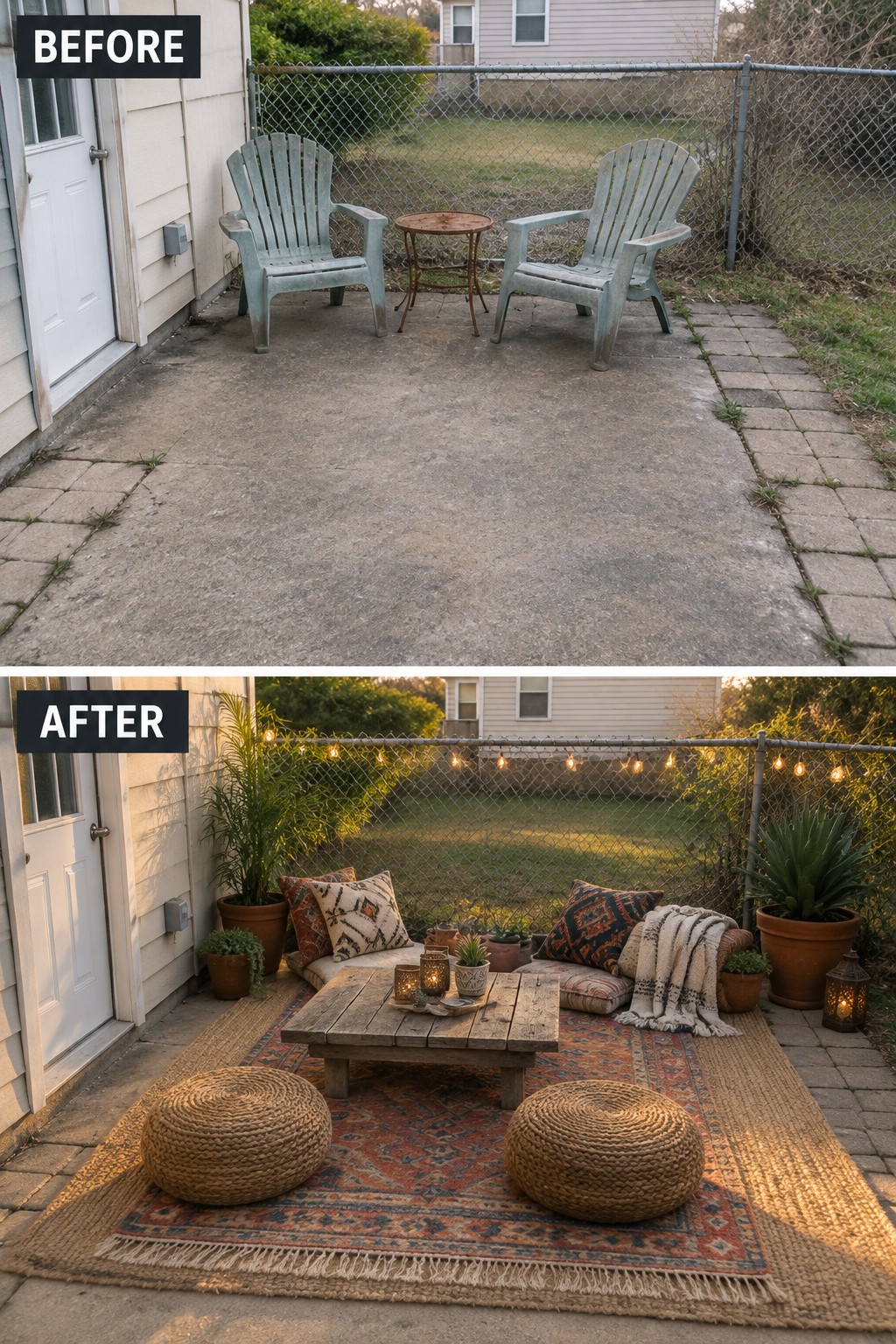
A bare concrete slab with just two chairs feels empty and unused. Adding a large rug as the base, then layering smaller textiles like cushions, throws, and floor poufs turns the same space into a clear seating zone that actually invites people to sit.
This approach works best on patios or decks where you need to create boundaries without permanent changes. Start with one large weather-resistant rug to anchor everything, then add a few low seats and soft layers in similar tones. Keep the rest of the area open so there is still room to walk around.
Layer Textiles To Define An Outdoor Deck

The deck started as a plain wooden platform with nothing but a bench and one pot. Adding a large rug, sheer curtains tied to the posts, and a mix of pillows and a throw instantly gave the space a clear seating zone and made it feel finished.
This idea works on most decks or porches that feel too open. Put down a rug first to mark where the furniture belongs, then hang simple curtains from the beams above. The textiles add softness and a bit of privacy while still keeping the outdoor feel.
Layer Textiles To Turn A Bare Patio Into A Seating Area
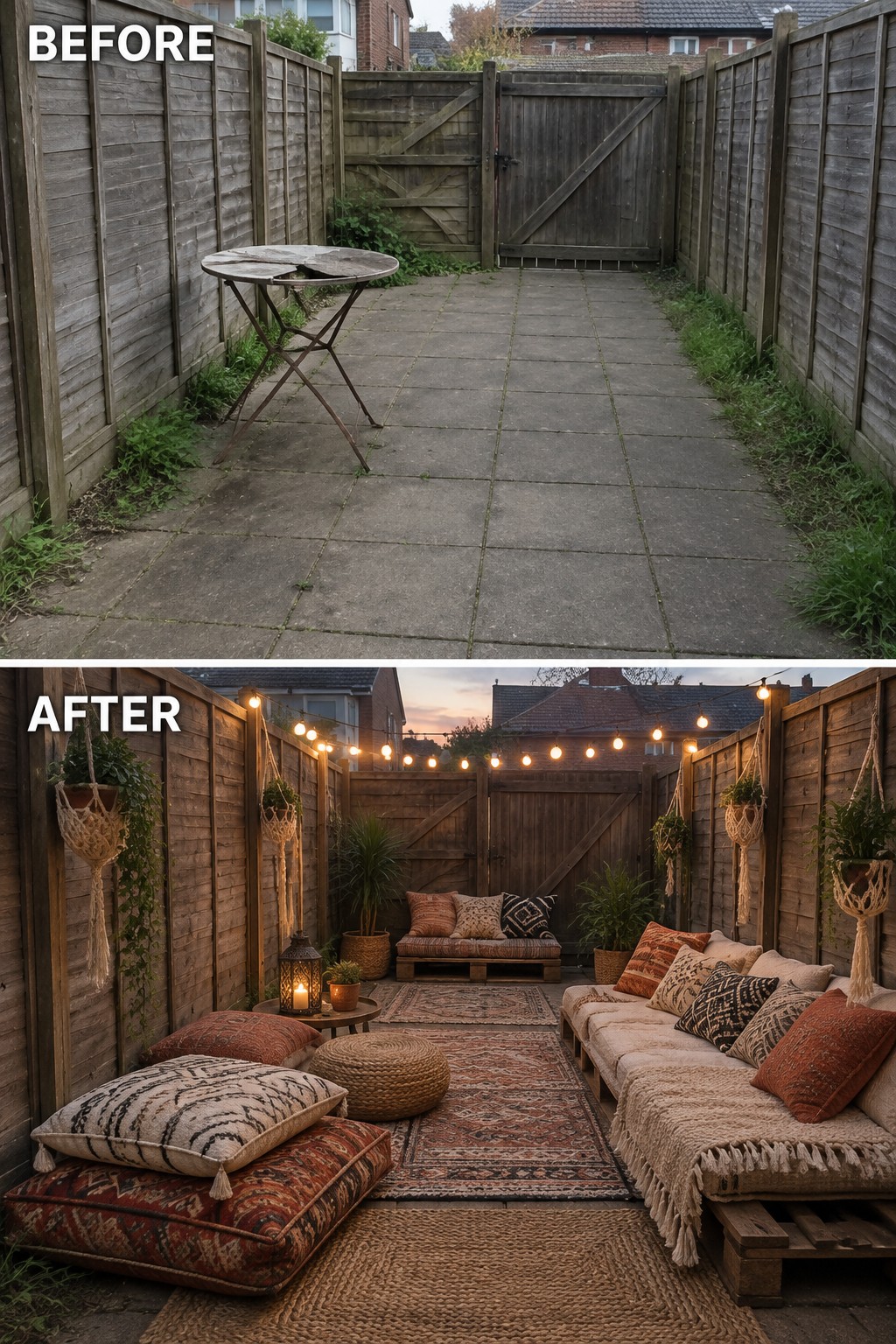
A plain concrete slab with nothing but a small table feels empty and unused. Adding rugs, cushions, and a low pallet sofa turns the same space into a place where people actually want to sit. The textiles define the area, soften the hard surface, and make the patio feel like an outdoor room instead of leftover space.
This works best on small or medium patios where you need one clear zone for relaxing. Start with one or two large rugs to mark the seating area, then build up with weather-resistant cushions and throws in a few patterns. Keep the furniture low and simple so the textiles stay the main focus.
Layer Outdoor Textiles To Define A Patio Seating Area
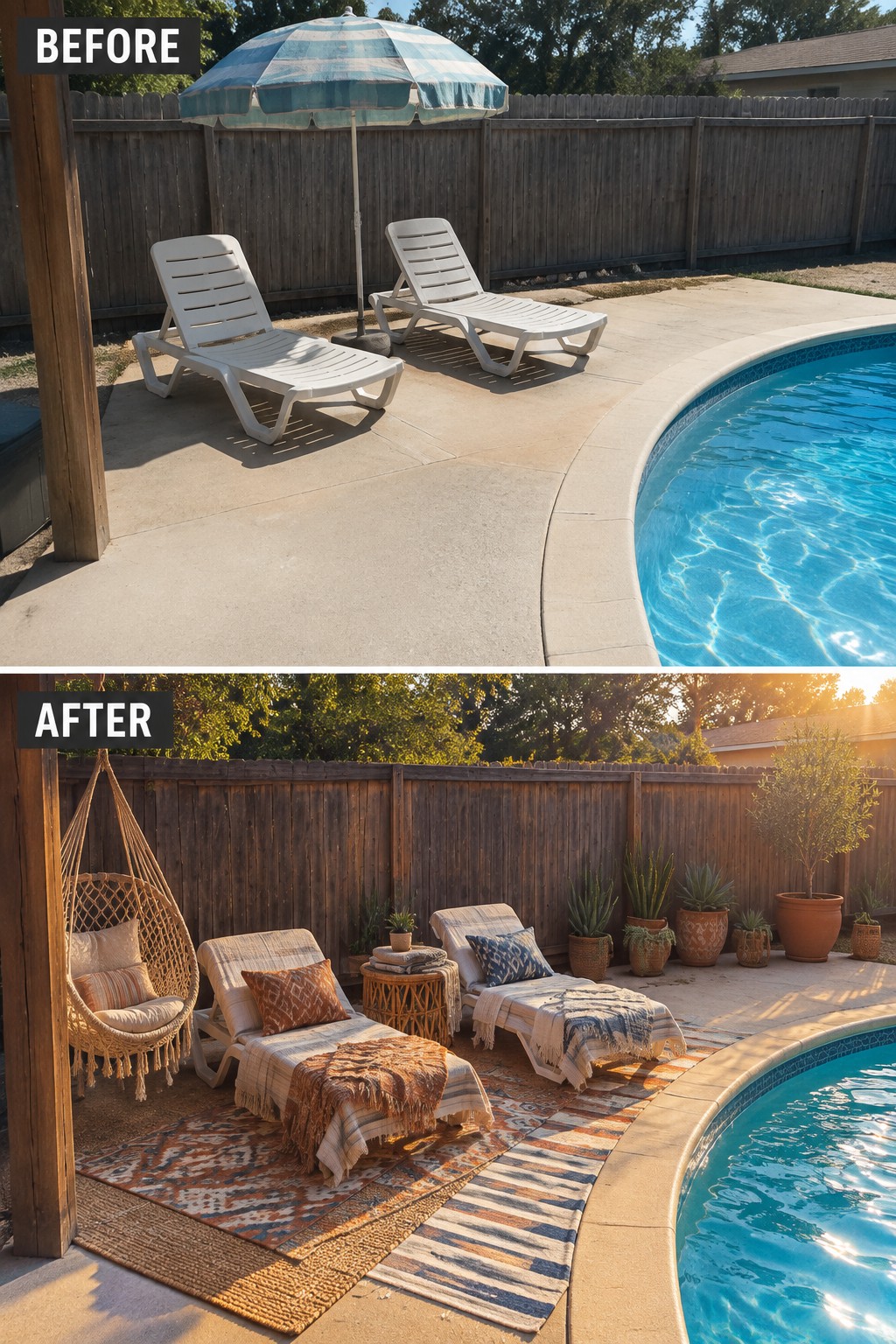
A bare concrete patio next to a pool often feels unfinished even with a couple of lounge chairs in place. Adding rugs, throws, and pillows creates a clear seating zone and makes the space feel much more comfortable to use.
This works well on any hard outdoor surface where you want to soften the look without big construction. Start with one large rug to mark the area, then layer a smaller one or some textiles on the furniture. Weather-resistant fabrics hold up best, and keeping the scale simple prevents the space from feeling crowded.
Layer Textiles To Define A Fire Pit Area
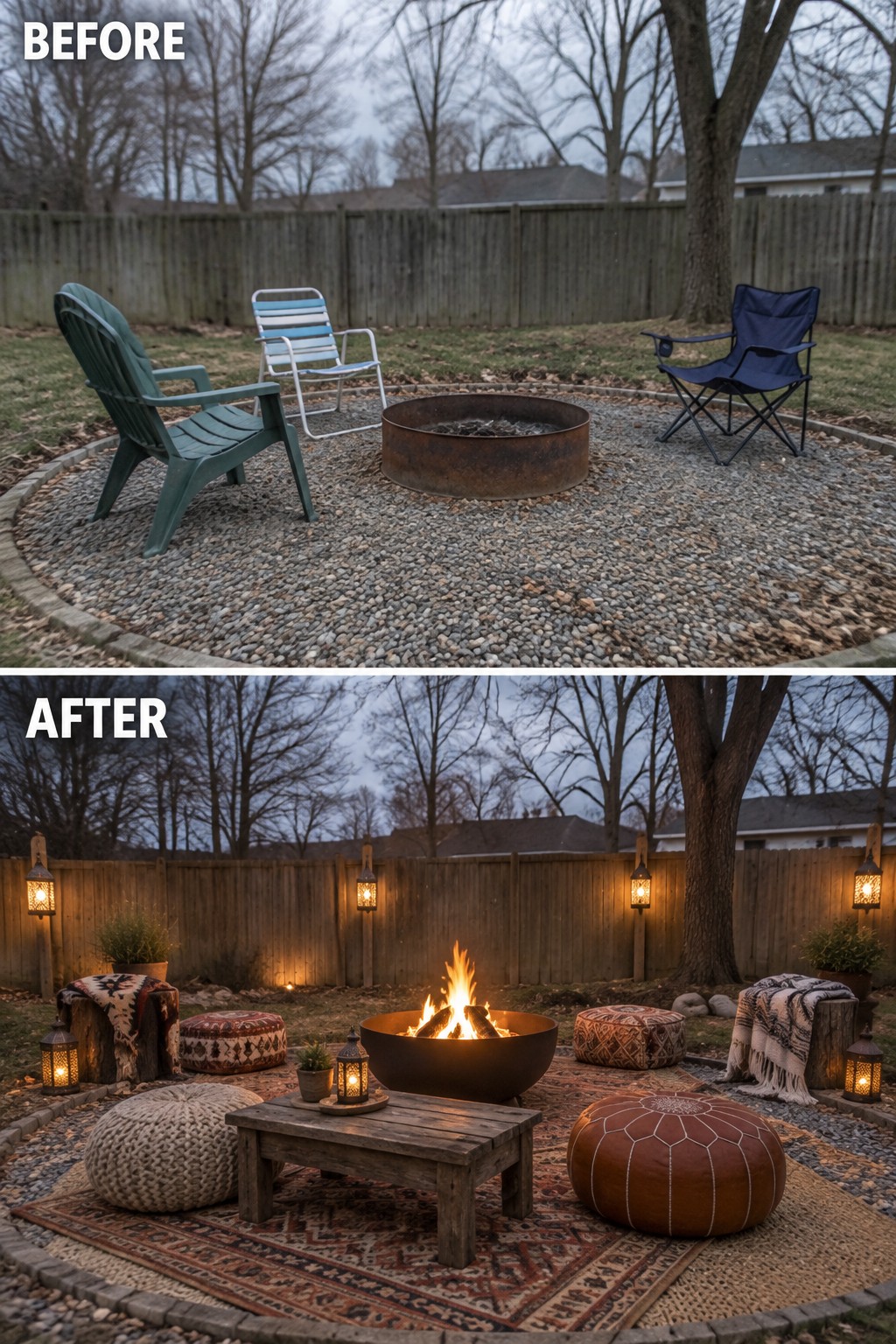
The before photo shows a basic gravel circle with just a few chairs around the fire pit. In the after, the same spot feels much more usable because a large rug anchors the whole area and smaller textiles add soft seating around it.
Start with one outdoor rug big enough to cover the main sitting zone, then layer in poufs, throws, and a low table. This approach works best in backyards where you already have a fire pit but want the space to feel like a real room rather than just a circle of chairs.
Turn A Bare Balcony Into A Seating Area
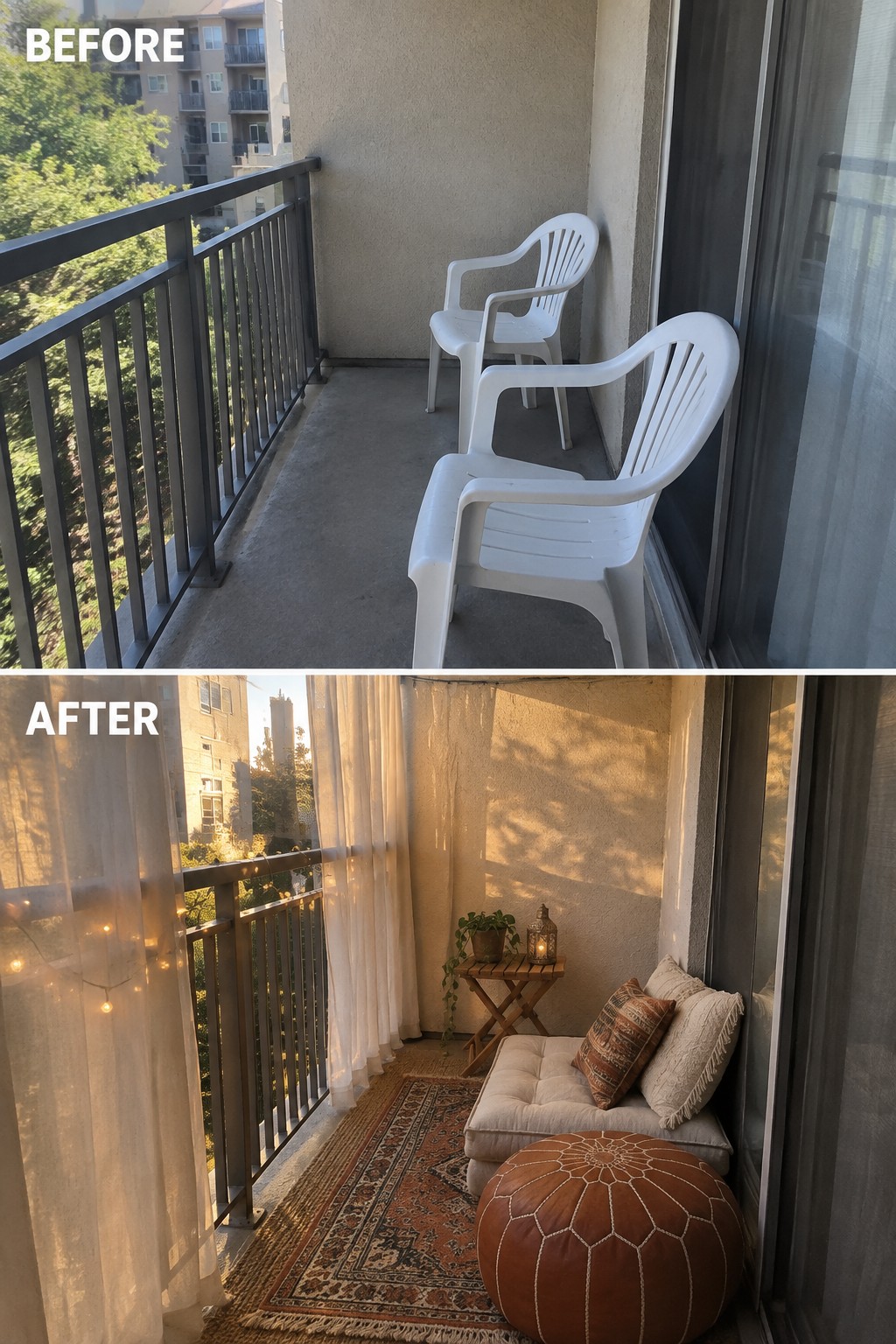
A balcony that only holds two plastic chairs often stays empty because it feels unfinished. Laying down a rug and adding a low seat with a few cushions gives the space a clear purpose and makes it comfortable enough to use. The rug anchors everything and turns plain concrete into a defined spot.
This idea suits small balconies or narrow patios where furniture has to stay low and simple. Start with one rug to mark the seating zone, then add weather-safe cushions and a pouf so the area feels intentional without taking up too much room. Keep the layout open enough to walk through and store the textiles when bad weather hits.
Layer Outdoor Rugs To Create Seating In A Narrow Side Yard

A narrow strip of dirt between the house and fence rarely feels like a place to sit. Adding a long runner rug with a smaller one layered on top instantly defines the space and makes it feel like an outdoor room instead of leftover ground. The simple wooden chair with a throw and pillow completes the setup without crowding the walkway.
This approach works best in tight side yards or alley spaces where furniture alone would feel scattered. Start with one or two durable outdoor rugs to set the floor, then add seating and a few textiles that can handle weather. Keep the rest of the area clear so people can still walk through comfortably.
Layer Textiles Over A Simple Patio Table
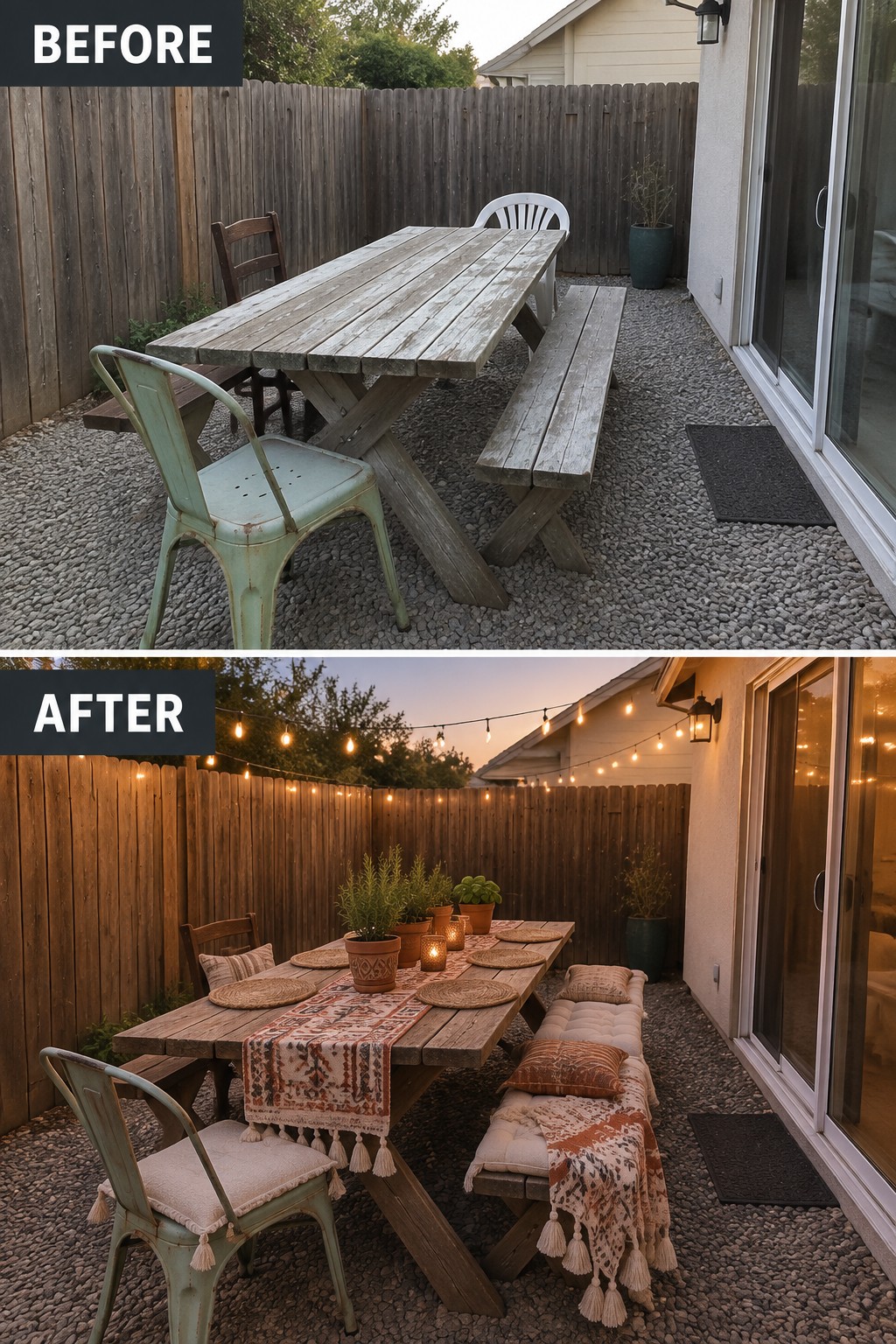
The before photo shows a basic wooden table and bench sitting on gravel with just a couple of metal chairs. In the after, the same setup feels much more finished because of the cushions on the seats, the patterned runner down the center, and the pillows and throw layered across the bench. Those textiles add softness, color, and a clear sense of place without changing the furniture itself.
This approach works well on any existing outdoor table that already has decent structure. Start with one or two cushions and a runner, then add a throw or a few pillows in the same color family. Keep the layers simple so the space still feels usable, and choose fabrics made for outdoor conditions so they hold up through weather and regular use.
Use Layered Rugs To Turn A Bare Yard Into A Seating Area
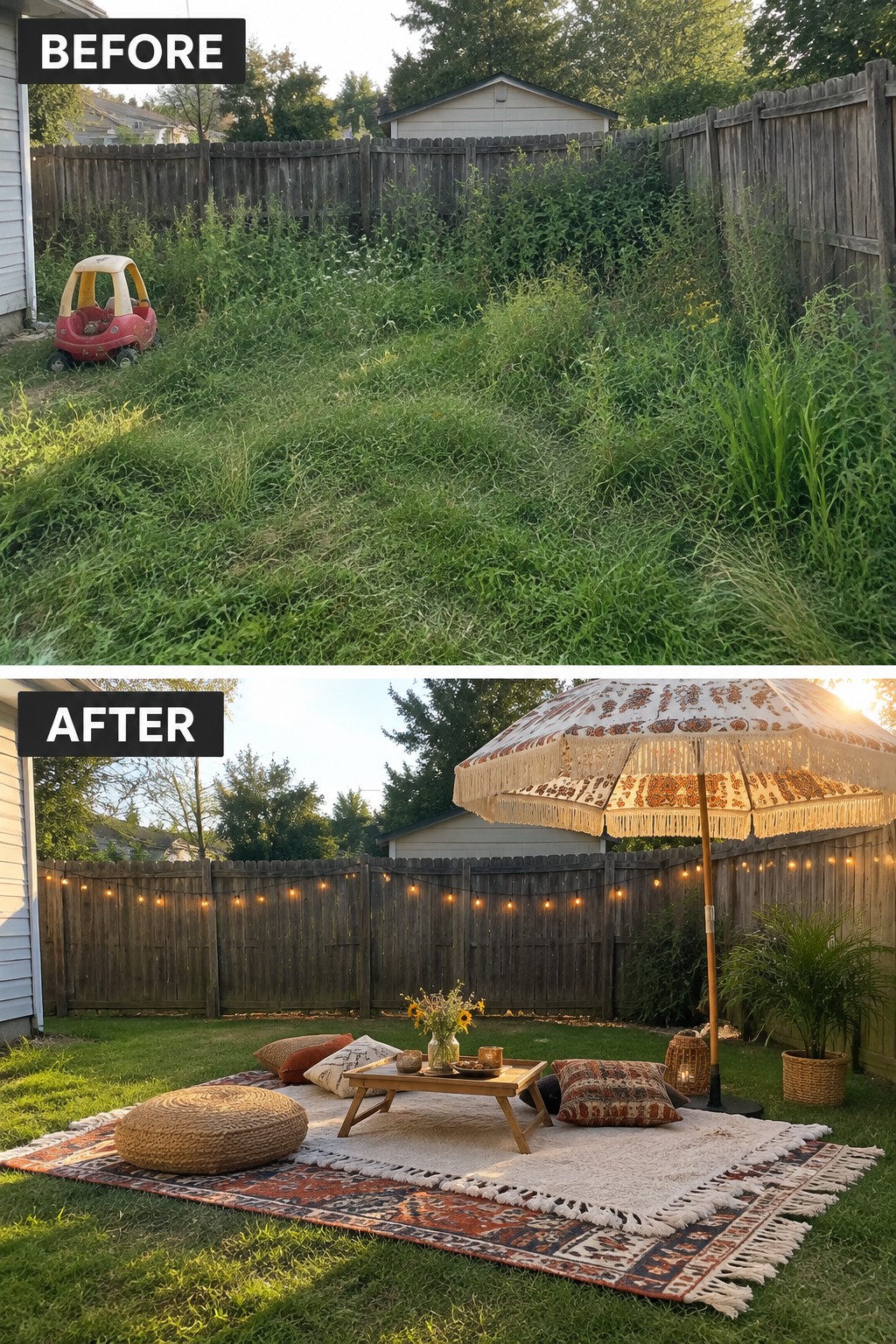
The main shift happened once the overgrowth was cleared and rugs were added to mark off a sitting zone. Without that base layer the cushions and low table would have looked scattered on the grass. The rugs give the space a clear floor, which makes the area feel like an outdoor room instead of a few pieces set out in the yard.
This idea works best on a flat patch of lawn where you already have room to move around. Start with one large weatherproof rug, then layer a smaller one with a different pattern on top. Keep the scale simple so the setup does not crowd the space, and choose textiles that can stay outside without damage.
Layer Textiles To Turn A Bare Patio Into An Outdoor Room

An empty pergola with just a stone floor often feels unfinished, no matter how nice the structure looks. Adding a large rug, sheer curtains on the sides, and a full seating setup with pillows and throws makes the space feel like an actual room instead of a leftover deck area. The textiles pull everything together and give the patio a clear purpose.
This approach works well on covered patios or decks where you already have a solid floor and overhead structure. Start with one or two large rugs to define the seating zone, then add curtains for privacy and softness. Keep the furniture scale reasonable so there is still room to walk around, and choose weather-resistant fabrics that can stay outside.
Layer Rugs And Cushions To Turn A Bare Patio Into A Seating Area
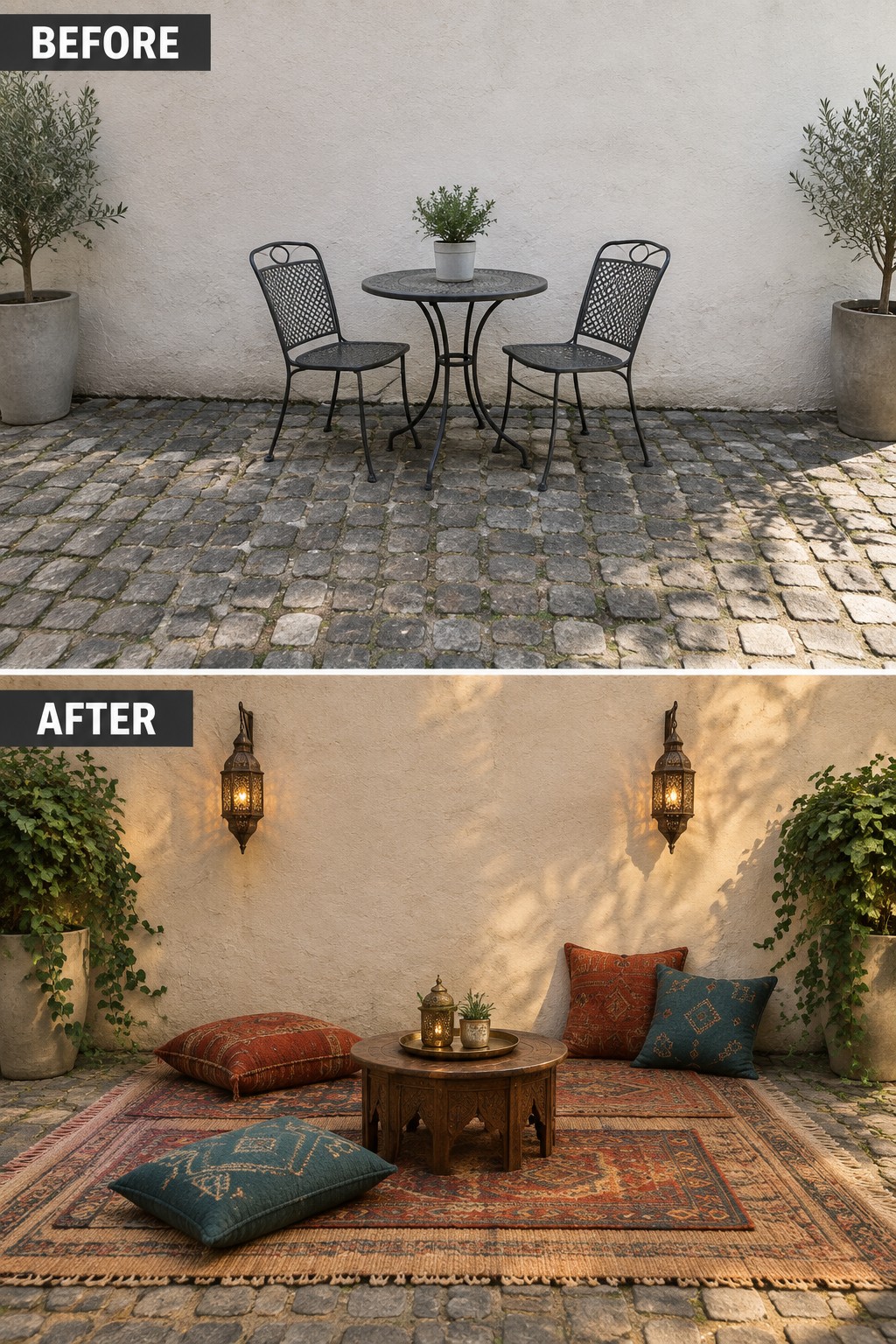
A simple patio with just a table and chairs can feel cold and unfinished on its own. Adding layered rugs across the stone floor and placing cushions around a low table instantly creates a defined spot that feels more comfortable and usable. The lanterns add a bit of warmth once the sun goes down.
This approach works best on small courtyards or paved areas where you want casual seating without building anything new. Start with one or two durable outdoor rugs to mark the zone, then choose weather-resistant pillows and a low table that can stay outside. Keep the surrounding space clear so the seating area does not feel cramped.
Turn A Bare Backyard Into A Cozy Outdoor Room
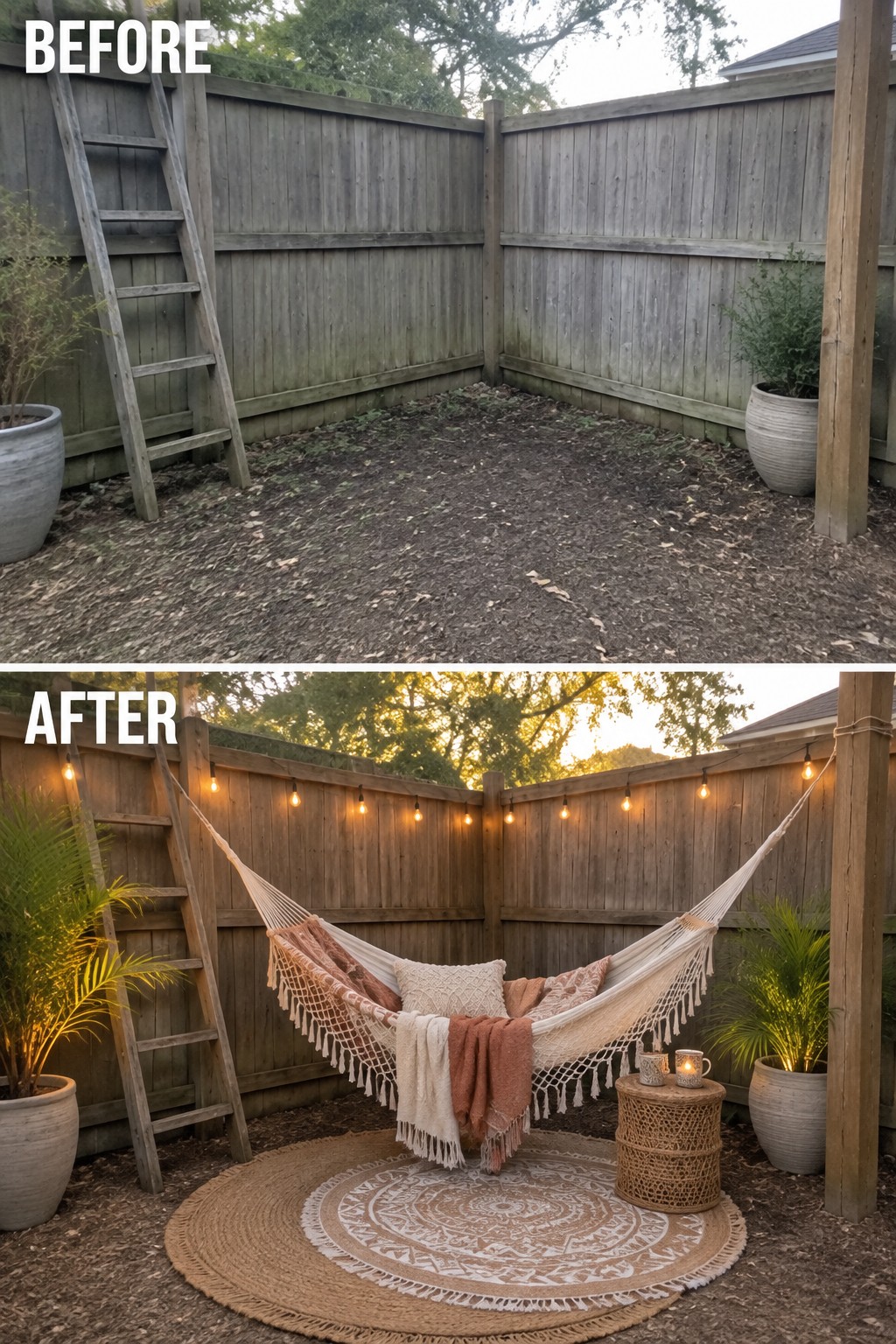
An empty dirt corner with nothing but a ladder and a couple of pots does not give anyone a reason to stay outside. Stringing up a hammock, laying down a round rug, and adding a few throws turns the same space into a spot that actually feels finished and ready to use.
This idea works best in smaller yards where you only need one defined area rather than trying to furnish the whole thing. Hang the hammock first to set the scale, then add the rug underneath so the seating zone feels intentional. Outdoor textiles and simple lighting do most of the work without requiring major construction or a big budget.
Layer Textiles To Define A Backyard Seating Area
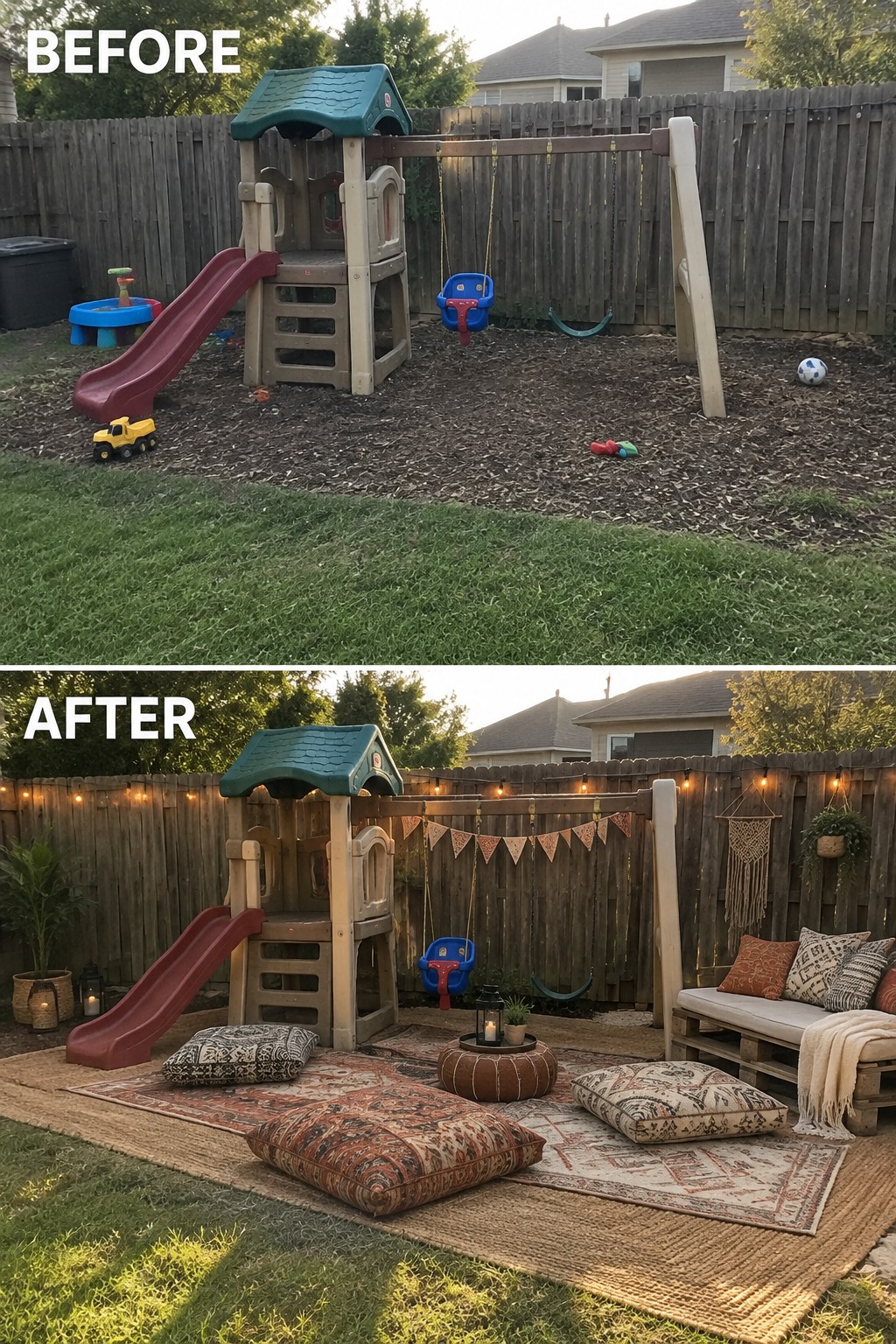
A bare backyard with just a playset and mulch can feel unfinished for anything other than play. Adding several rugs layered on the ground, along with pillows and a low bench, turns the same space into a usable seating zone without removing the existing equipment.
This idea works best in medium or small yards where you want both play space and adult seating. Start with one large rug to mark the main area, then add a second smaller rug and a few weather-safe pillows. Keep the textiles in similar tones so the layers feel connected rather than scattered.
Layer Rugs To Turn A Bare Deck Into A Cozy Seating Spot

A bare deck with just a couple of folding chairs feels unfinished and hard to use. Adding several overlapping rugs along with pillows and a throw on the seating instantly makes the space feel like an actual room. The textiles pull everything together and give people a reason to stay outside longer.
This approach works well on rooftops, balconies, or patios that get a lot of sun and wind. Start with one large, durable rug to mark the seating area, then layer a smaller one if you want more pattern. Keep the furniture simple so the rugs and textiles stay the main focus, and make sure there is still clear space to walk around the edges.
Layer Outdoor Textiles To Define A Patio Seating Area
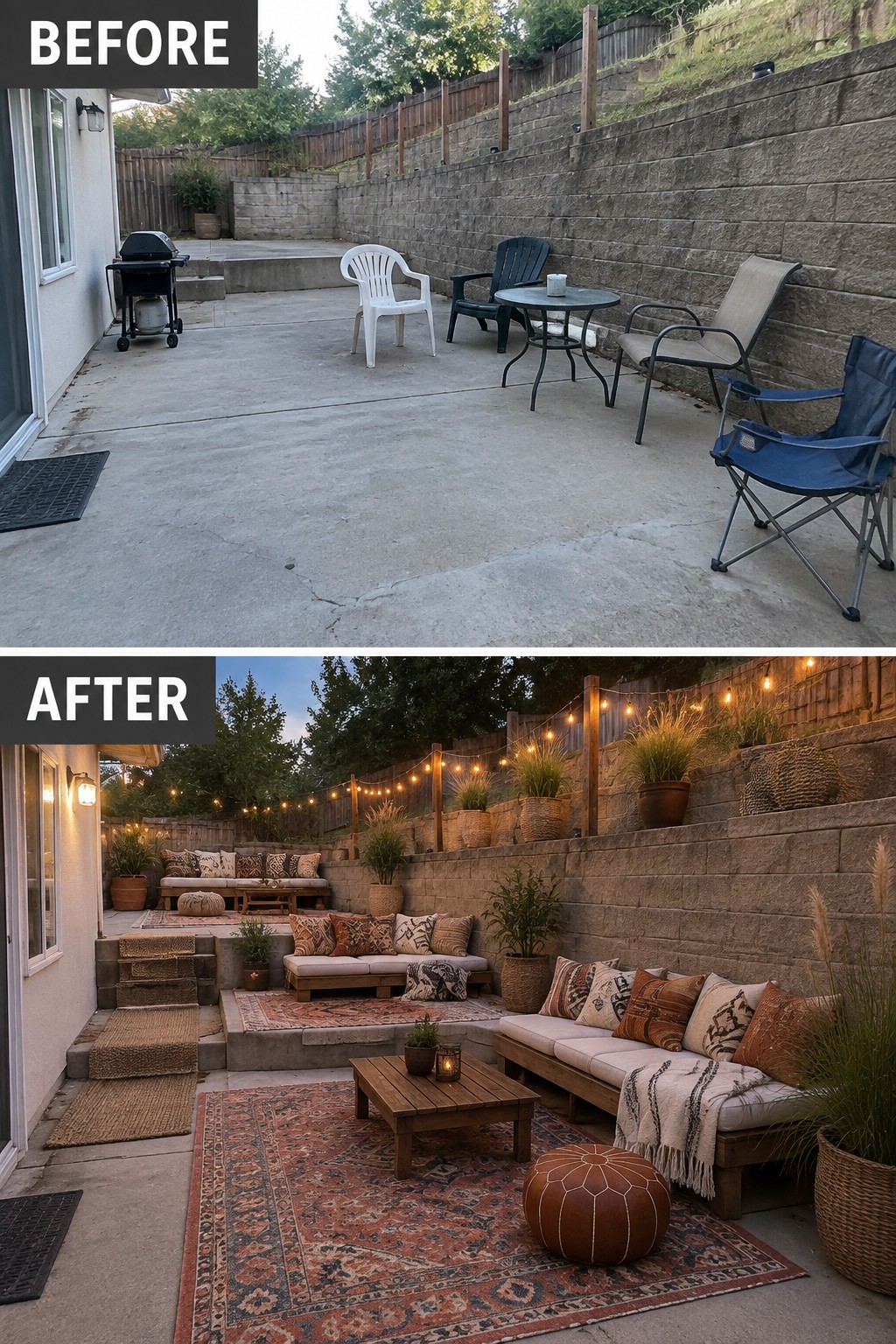
A bare concrete patio often feels cold and unfinished no matter what chairs you set out. Laying down large rugs first creates soft ground and marks clear seating zones, which instantly makes the space feel more like a room than a leftover slab.
This idea works especially well on rental patios or small yards where you cannot change the flooring. Use one or two durable outdoor rugs to anchor low seating, then add cushions and throws in similar tones so the layers feel connected rather than scattered. Keep a clear path around the rugs so the space stays easy to walk through.
Layer Rugs To Define An Outdoor Seating Area
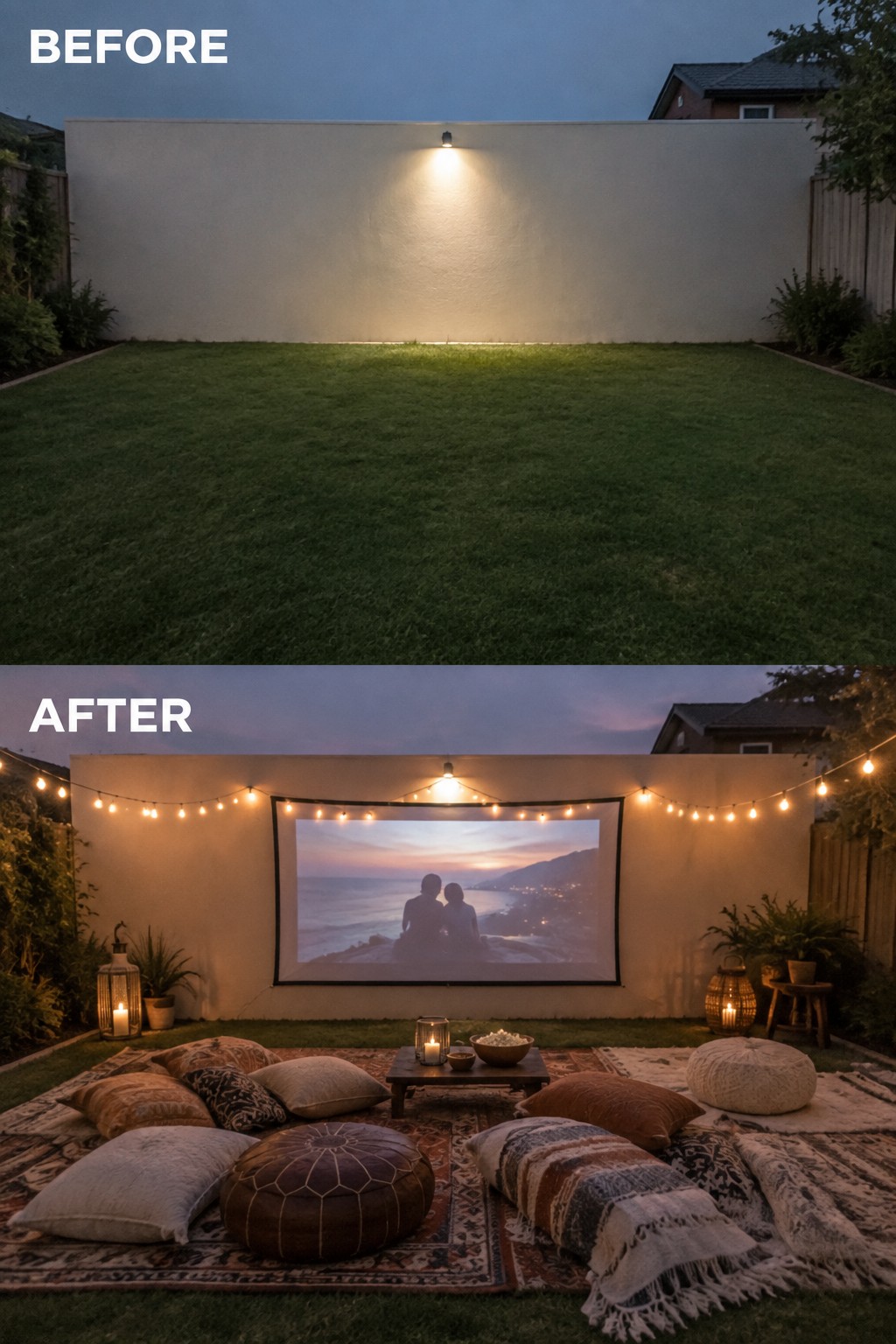
An empty lawn often feels like wasted space once the sun goes down. Layering rugs across the grass gives the area a clear boundary, turning it into a spot where people actually want to sit and stay.
This works best in backyards with a flat patch and a solid wall to face. Start with two or three rugs that overlap slightly so the edges feel intentional, then add cushions and throws in a few similar colors. Keep the scale low and leave walking room around the edges so the setup stays practical for regular use.
Layer Rugs To Define A Bare Entry
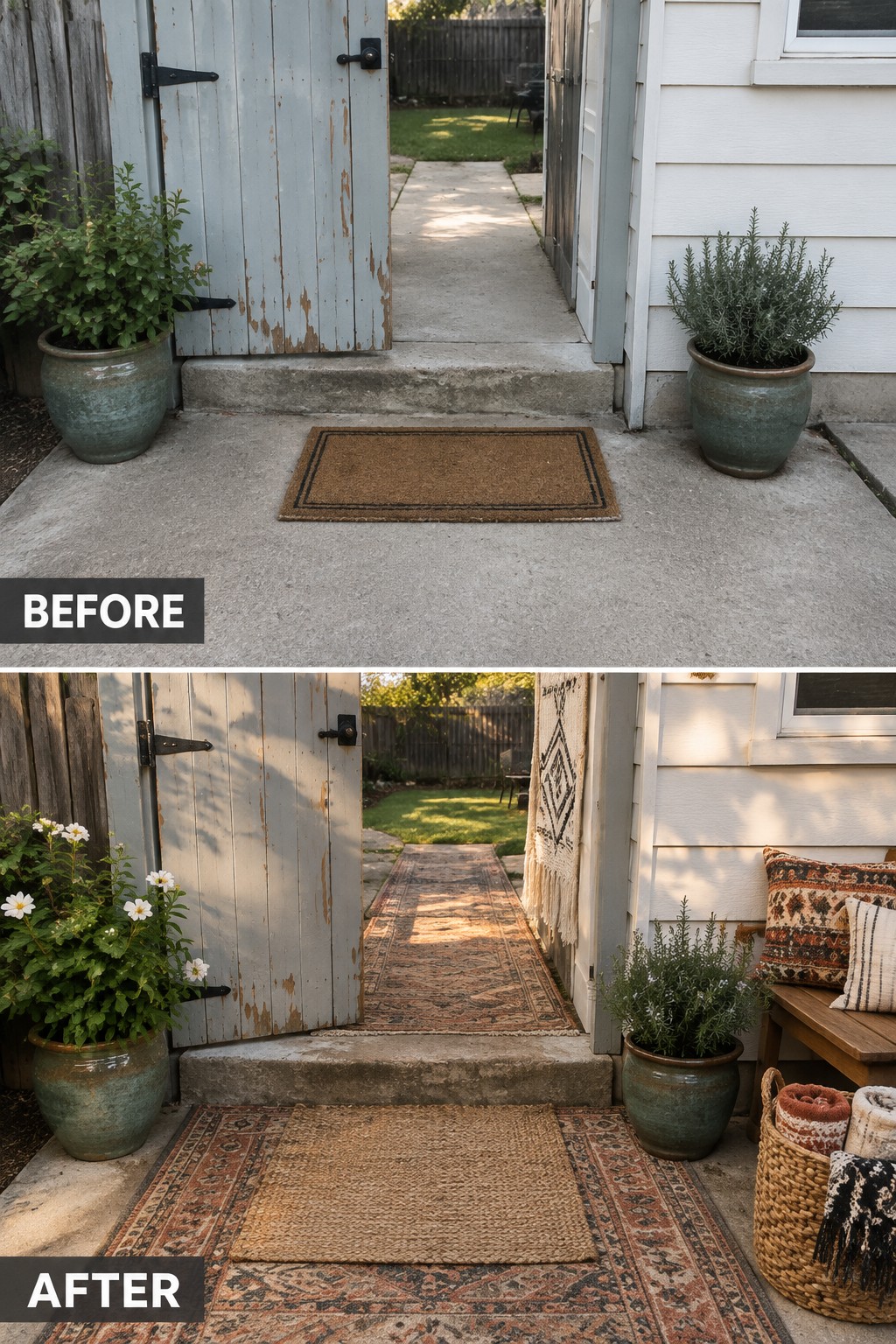
The before photo shows a plain concrete step with nothing but a small doormat. In the after, several rugs layered together turn that same spot into a clear entry zone that feels settled and ready for use.
This idea works best on porches, side doors, or any outdoor threshold that gets daily traffic. Choose durable outdoor rugs in a few patterns or sizes, start with the largest one flat on the ground, and overlap the others so the layers look intentional. Leave enough clear space for the door to swing open and for people to walk through.
Layer Rugs And Textiles Over Concrete To Define An Outdoor Kitchen

The concrete grill station felt bare and purely functional before. Two simple rugs on the ground plus a few patterned textiles draped over the cabinet doors turned the same spot into a defined area that feels ready for meals and evenings outside.
This works best on hardscaped patios that already have a grill or counter but lack any sense of room. Place one larger rug to mark the main standing zone and a smaller one nearby for balance. Choose outdoor fabrics that can stay out in the weather, and keep the pattern count low so the textiles read as layers rather than clutter.
Turn An Empty Patio Into A Seating Area
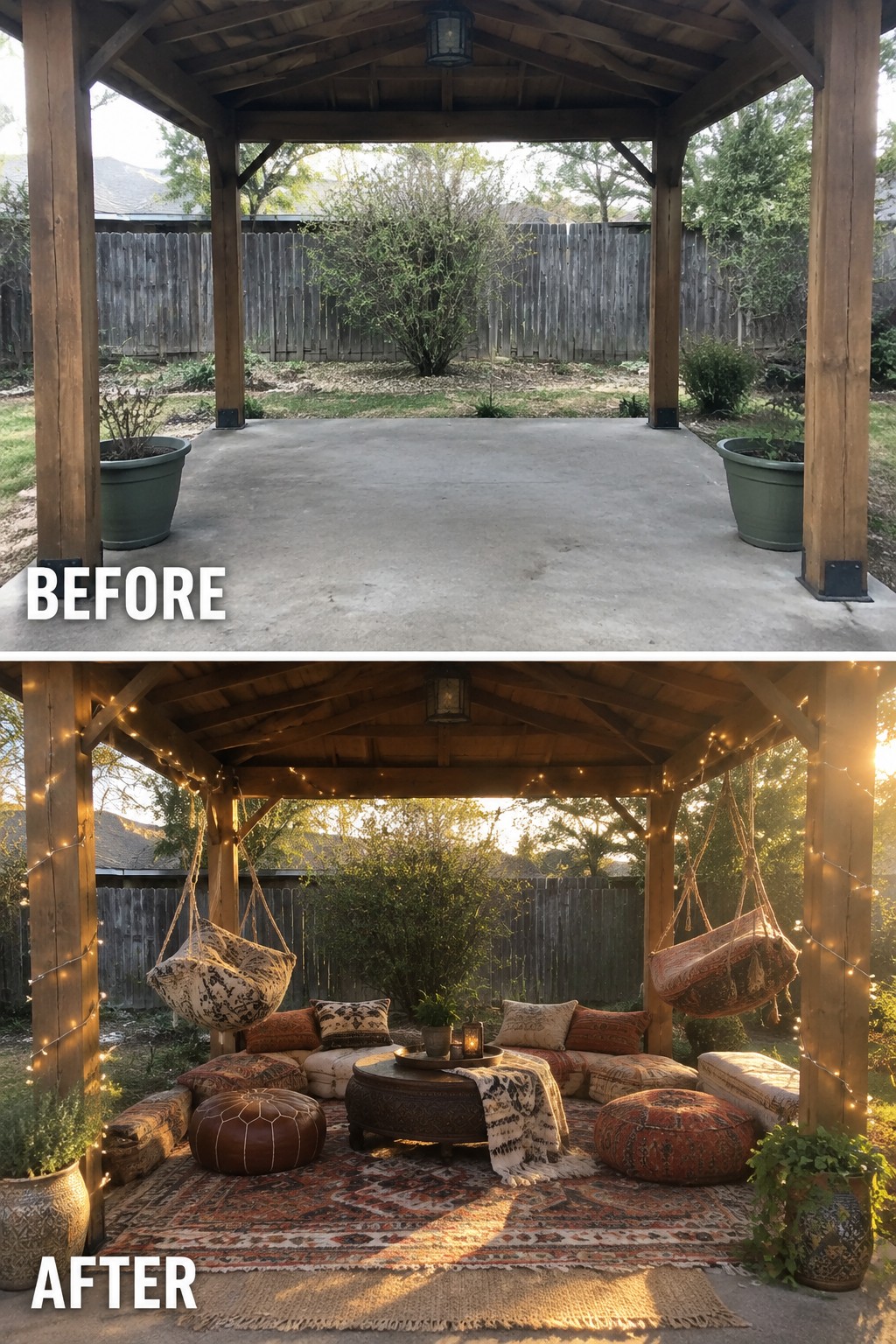
An empty concrete slab under a covered structure often sits unused because it feels like just a floor with no purpose. Laying down a large rug, adding low seating with pillows, and hanging a couple of chairs immediately makes the space feel like a room where people can gather and relax.
This approach works best on any covered patio or deck that already has a solid roof and posts. Start with one or two weather-resistant rugs to mark the seating zone, then layer cushions and throws in similar tones so the look stays simple rather than crowded. Keep walkways clear around the edges so the space remains easy to move through.
Frequently Asked Questions
Q: How do I keep rugs from sliding around on a deck or patio? A: Anchor the biggest rug first with a few heavy planters at the corners. Layer smaller mats on top and let their edges catch under the main one for grip. Move things around until the stack feels solid underfoot.
Q: Can I mix cheap finds with outdoor fabrics without it looking off? A: Start with one or two weatherproof pieces as your base. Add thrift-store blankets or scarves on top for pattern and color. Swap the soft layers indoors when storms hit.
Q: How do I handle cleaning when everything sits in layers? A: Lift the top pieces once a week and shake them out. Hose the bottom rugs every couple of months and let them dry in the sun before restacking.
Q: What works if my space gets strong afternoon sun? A: Use fade-resistant material for the rugs that stay down longest. Rotate pillows and throws every week so nothing bleaches in one spot.
