

Many cottage backyards start with uneven lawns that meet ragged beds and paths that feel more like afterthoughts than useful routes.
I usually begin by sorting out the planting layers and edging first because those changes give everything else a better chance to settle in place.
Informal garden details such as loose clusters of perennials or low shrubs can soften the lines without requiring a complete overhaul of the space.
Small tests matter most.
Over time these adjustments create areas that feel easier to spend time in rather than spots you simply pass through on the way to something else.
Add A Gravel Path To Give Your Backyard Clear Shape
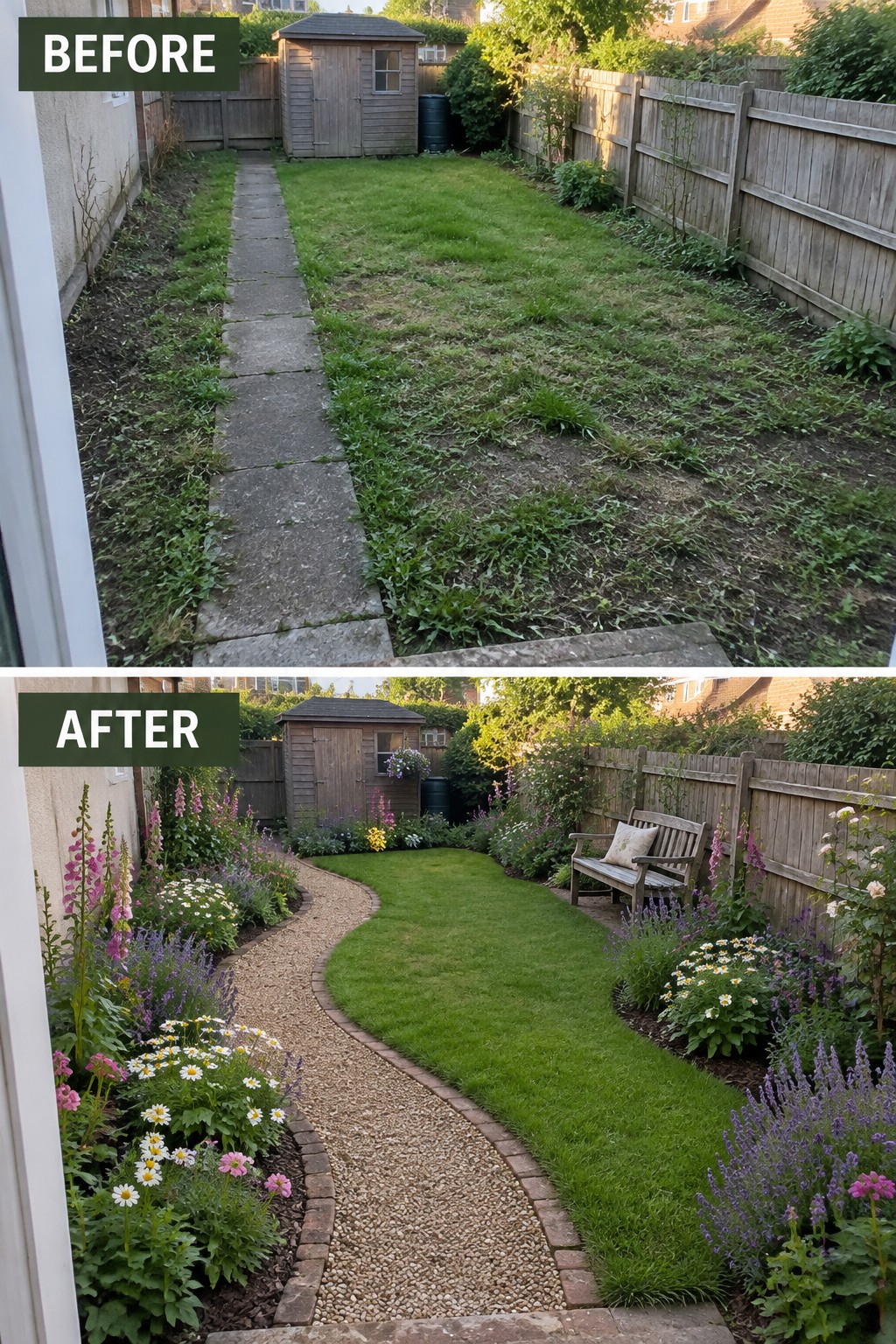
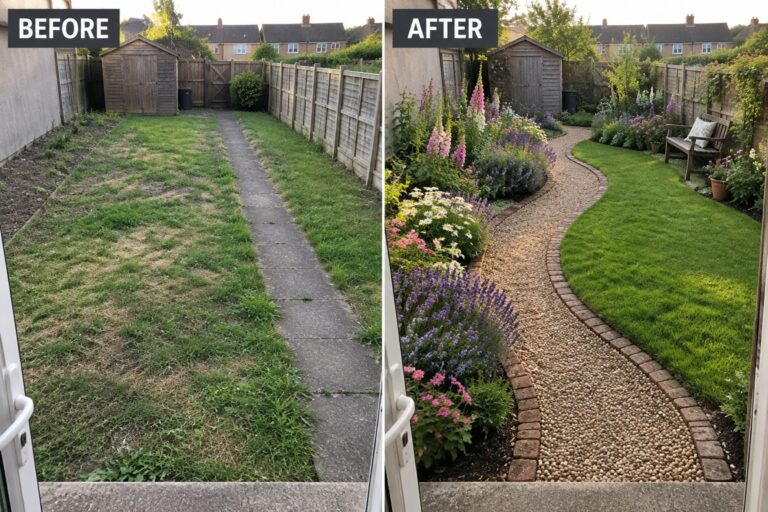
A straight concrete path through a patchy lawn often leaves the space feeling unfinished and hard to use. Switching to a curving gravel path with brick edging creates a simple route that guides movement and separates the lawn from the garden beds on either side.
This approach suits long or narrow yards that need more definition. Lay the path first so the shape of the lawn and borders becomes obvious, then add planting along the edges. Keep the gravel contained with a solid border and choose plants that can handle the conditions in your area.
Turn A Bare Concrete Patio Into A Seating Area

A plain concrete slab with two plastic chairs feels more like a leftover space than a place to spend time. Switching to brick paving, adding a small table with two chairs, and hanging string lights overhead turns the same area into a spot that actually invites people to sit down after dark.
This approach works best on small backyards where you want to define one clear zone without crowding the rest of the yard. Start with the flooring if the concrete is cracked or stained, then keep furniture minimal so there is still room to walk around the table. String lights add the final layer that makes the space feel finished once the sun goes down.
Add Structure To An Overgrown Side Yard
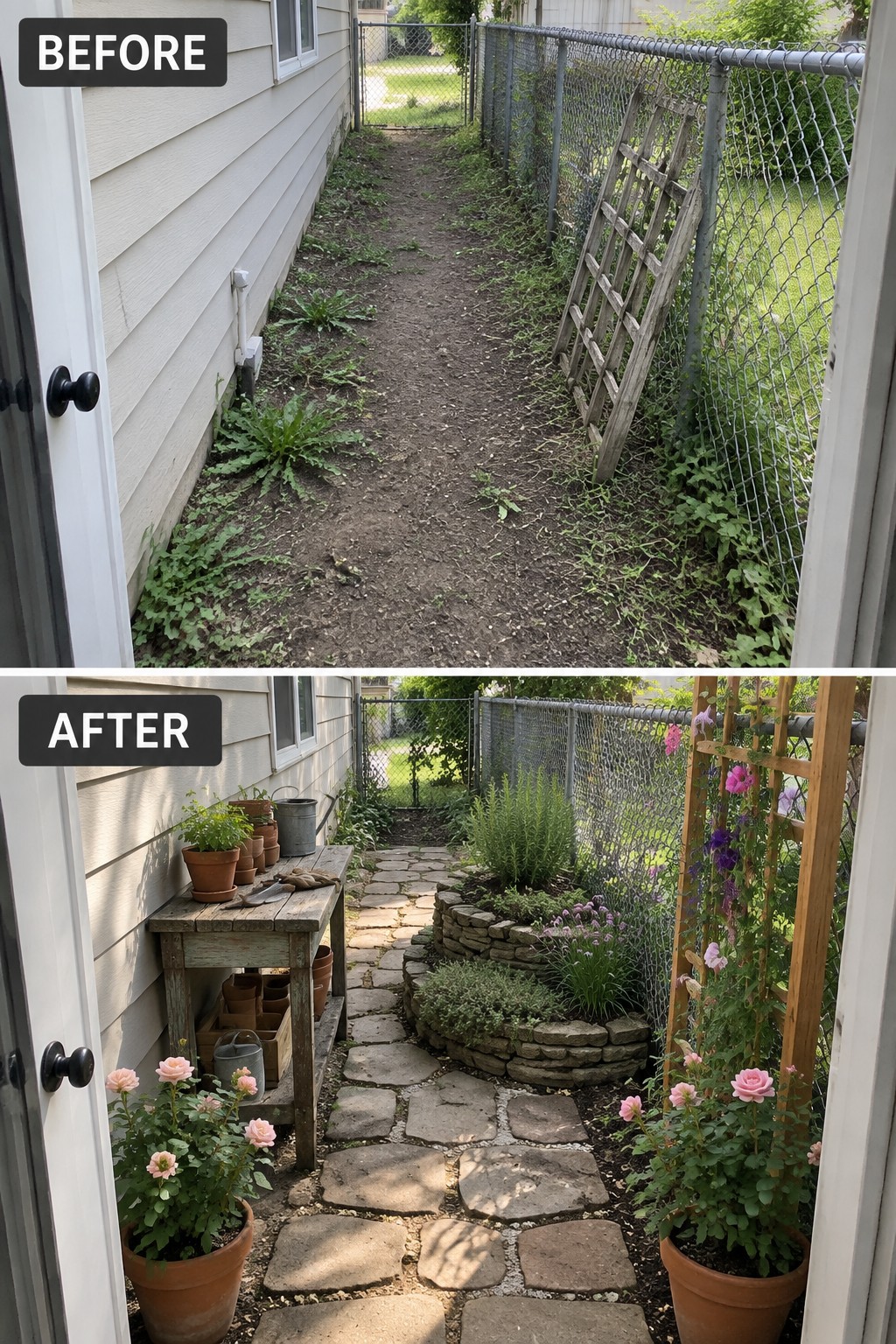
A narrow side yard often becomes a strip of packed dirt and weeds because there is no clear path or planting lines. Adding a simple stone walkway and low stone-edged beds turns the same space into a usable garden walk that feels intentional rather than neglected.
This idea works best in tight areas where you want to keep access open while still adding plants. Lay the path first so the route stays practical, then use low edging and a few larger pots to create layers without crowding the space. The result stays informal and cottage-like while making the yard much easier to walk through and maintain.
Add A Fire Pit To Turn A Bare Backyard Into An Outdoor Room
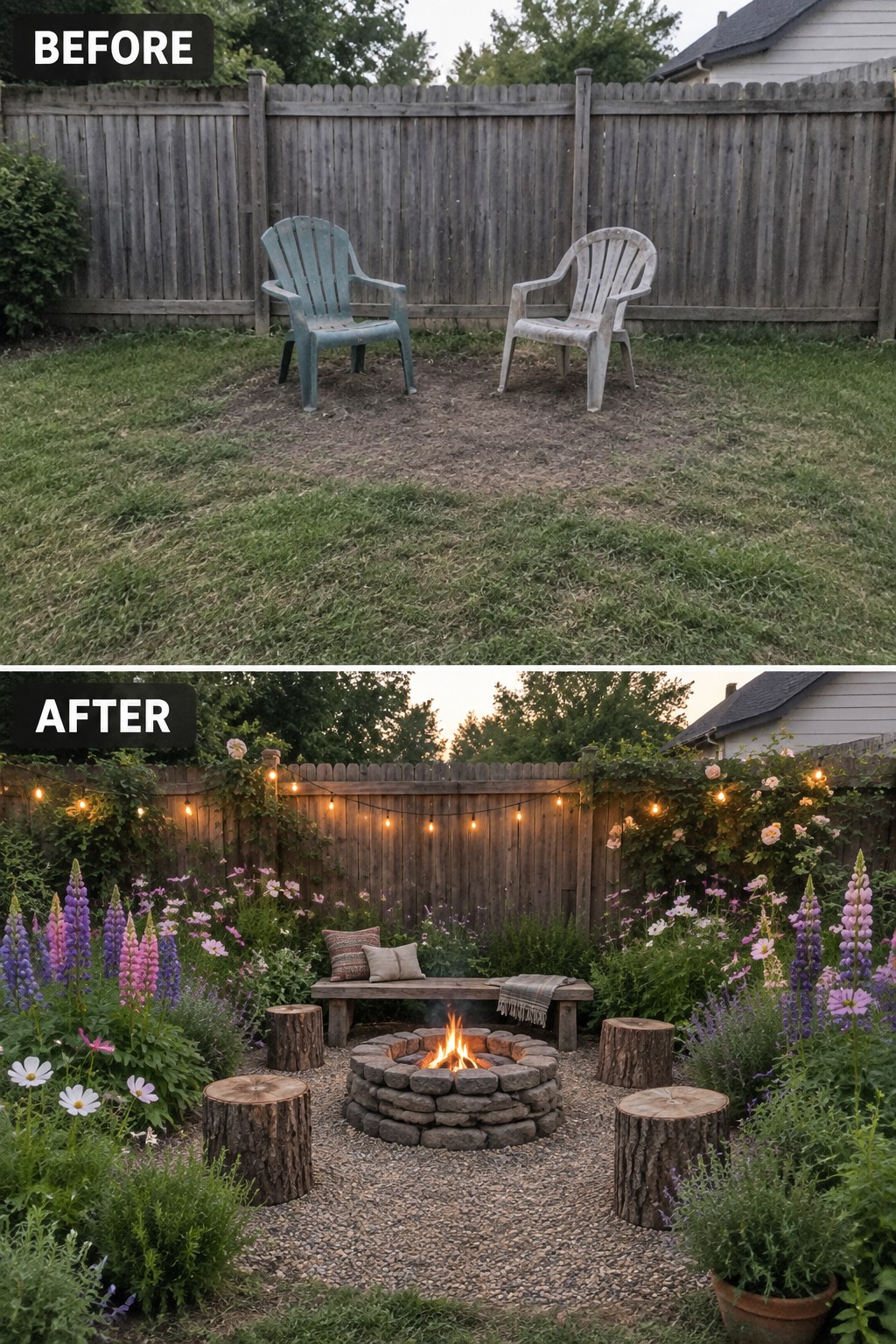
A plain patch of grass with two chairs does not invite anyone to stay. Building a stone fire pit on a gravel base gives the space a clear center, and the simple bench plus tree stump seats keep the focus on gathering rather than on fancy furniture. The flowers planted right up to the edge soften the hard materials and make the area feel like part of the garden instead of a separate zone.
This idea works best in modest backyards where you want one usable spot instead of spreading things thin. Put the fire pit in first so you know where to place the seating, then fill in with easy cottage-style plants that can grow a little wild around the edges. String lights hung along the fence add warmth without much cost or effort.
Create An Informal Garden Path With Stepping Stones

A straight concrete path often feels too rigid for a cottage backyard. Replacing it with irregular stepping stones lets the walkway blend into the garden instead of cutting through it. The planting on both sides then becomes the main feature, with layers of flowers and foliage softening the edges and giving the space a more relaxed feel.
This approach works well in smaller yards where a full patio would take up too much room. Start by removing the old path, then set the stones with enough space between them for low ground cover to grow. Keep the plant choices simple and repeat a few colors so the beds look full without becoming crowded.
Define A Fence Line With Layered Garden Beds
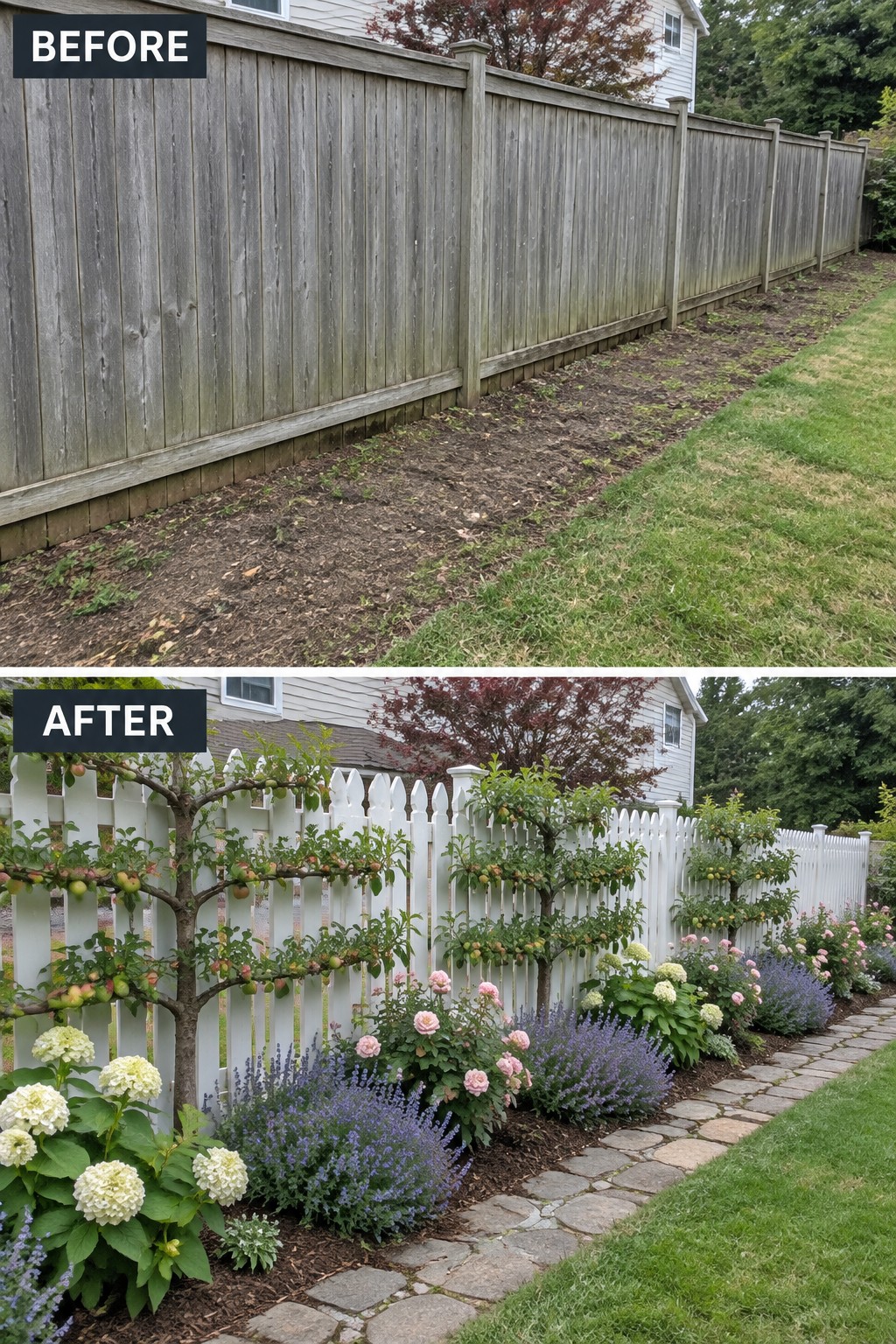
A long fence with nothing but dirt and grass along the base often feels unfinished. Adding a defined border with a path and layered planting turns that empty strip into the main feature of the yard. The white fence and low stone edging give the beds clear shape, while the mix of small trees, roses, lavender, and hydrangeas fills the space without crowding it.
This approach works well in smaller backyards where you want structure without losing the informal cottage feel. Start with the edging and path to set the layout, then plant in loose groups rather than straight rows. Keep taller elements like the trained fruit trees toward the back so the lower flowers stay visible from the lawn.
Add Structure To A Bare Backyard
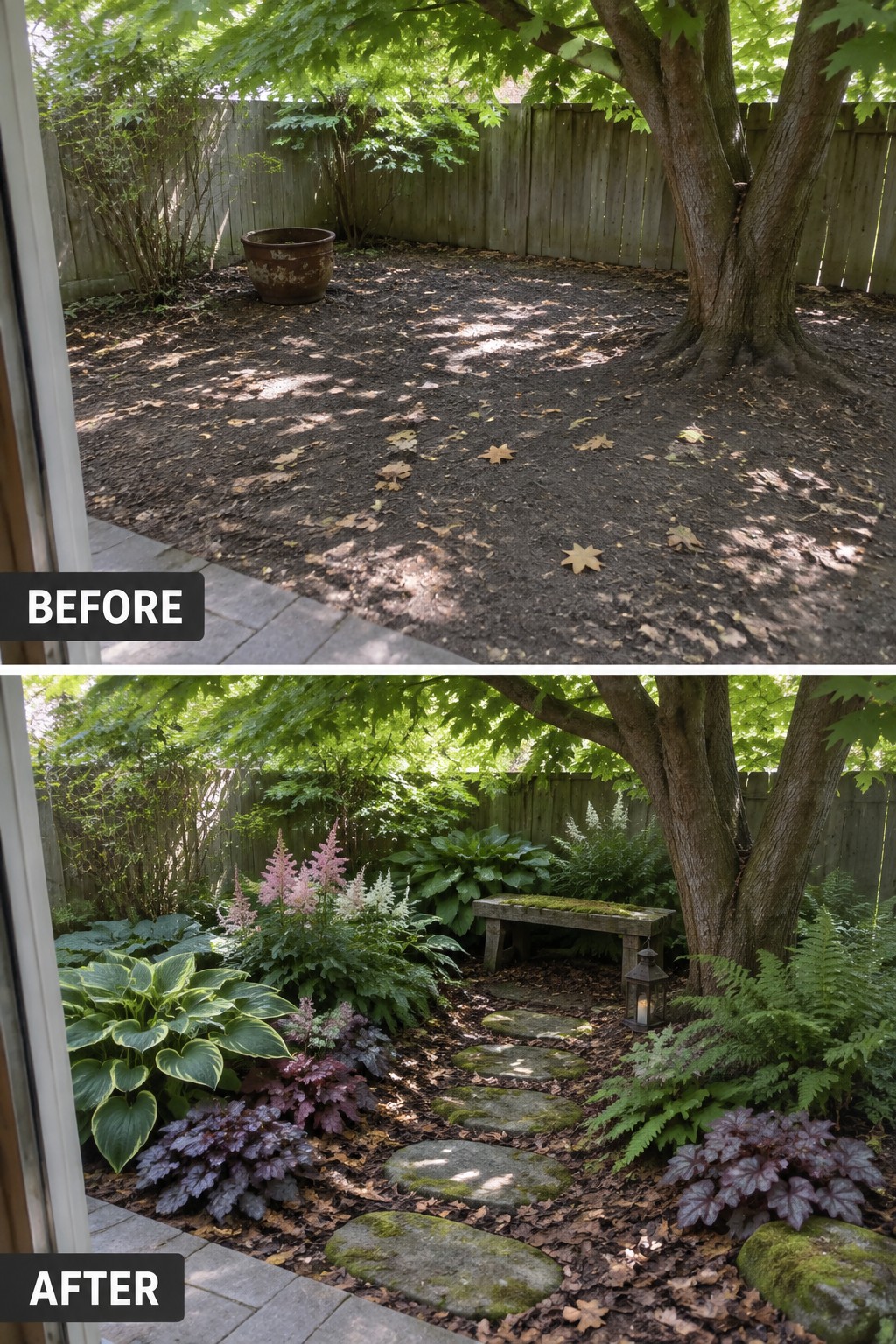
A bare patch of dirt behind the house does not need much to start feeling like a real garden. Adding a simple stone path and some layered planting turns the space from empty ground into something you can walk through and enjoy. The path gives the eye a route to follow while the plants soften the edges and create a sense of enclosure without closing the yard in.
This approach works well in small or shady backyards where big features would feel crowded. Start with the path to set the layout, then fill in beds on either side with a mix of heights and textures. Keep the planting simple at first so the space stays easy to maintain and still leaves room to move around.
Create A Layered Border Garden Along A Fence

A bare fence line often looks unfinished when it only has a few scattered shrubs. Adding a layered border changes that by filling the space with different heights and bloom times, so the fence becomes part of a full garden rather than just a backdrop. The main shift here is moving from open dirt and isolated plants to a continuous mix of taller flowers, mid-size shrubs, and low edging plants that give the whole area structure.
This approach works best along straight property lines or fence runs where you want cottage-style planting without crowding the path. Clear the soil first, lay down mulch, then place taller plants toward the back and shorter ones in front so everything stays visible. It suits older homes with existing fences and gives you room to add more plants over time as the border fills in.
Add Terracing To A Sloped Backyard

A bare, weedy hillside is hard to maintain and never feels like part of the yard. The simple fix here was building low stone retaining walls to create flat planting levels. Once the slope had structure, the beds could be filled with vegetables, flowers, and mulch, and a stepping-stone path made the whole area easy to walk through.
This approach works best on yards where the grade makes mowing or planting difficult. Start with the walls or edging first, then add plants. Keep the beds narrow enough to reach across, and use the same material for walls and paths so the slope reads as one planned space rather than scattered patches.
Define A Soggy Lawn Edge With Gravel And Planting
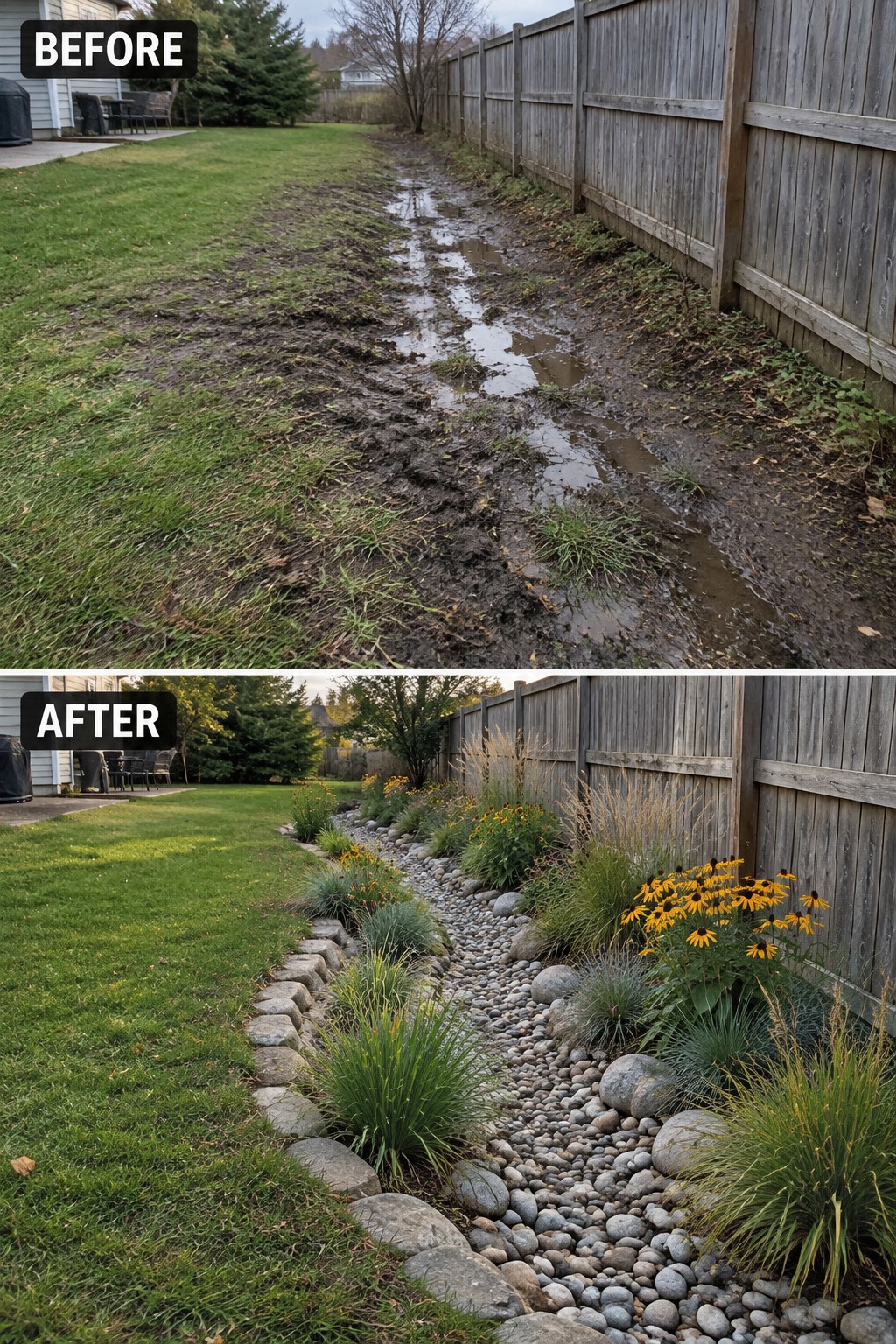
A muddy strip along the fence often forms from foot traffic or poor drainage, and it tends to stay that way season after season. Laying down a gravel bed with larger stones for edging and filling it with tough grasses and simple perennials turns the problem area into a low bed that moves water and looks intentional.
This approach suits cottage backyards where the goal is structure without formality. Clear the worst of the mud first, add a border of stones to hold the gravel in place, and choose plants that can handle occasional wet feet. The result gives the lawn a clear boundary while keeping the overall feel relaxed and easy to maintain.
Add Structure To A Plain Backyard
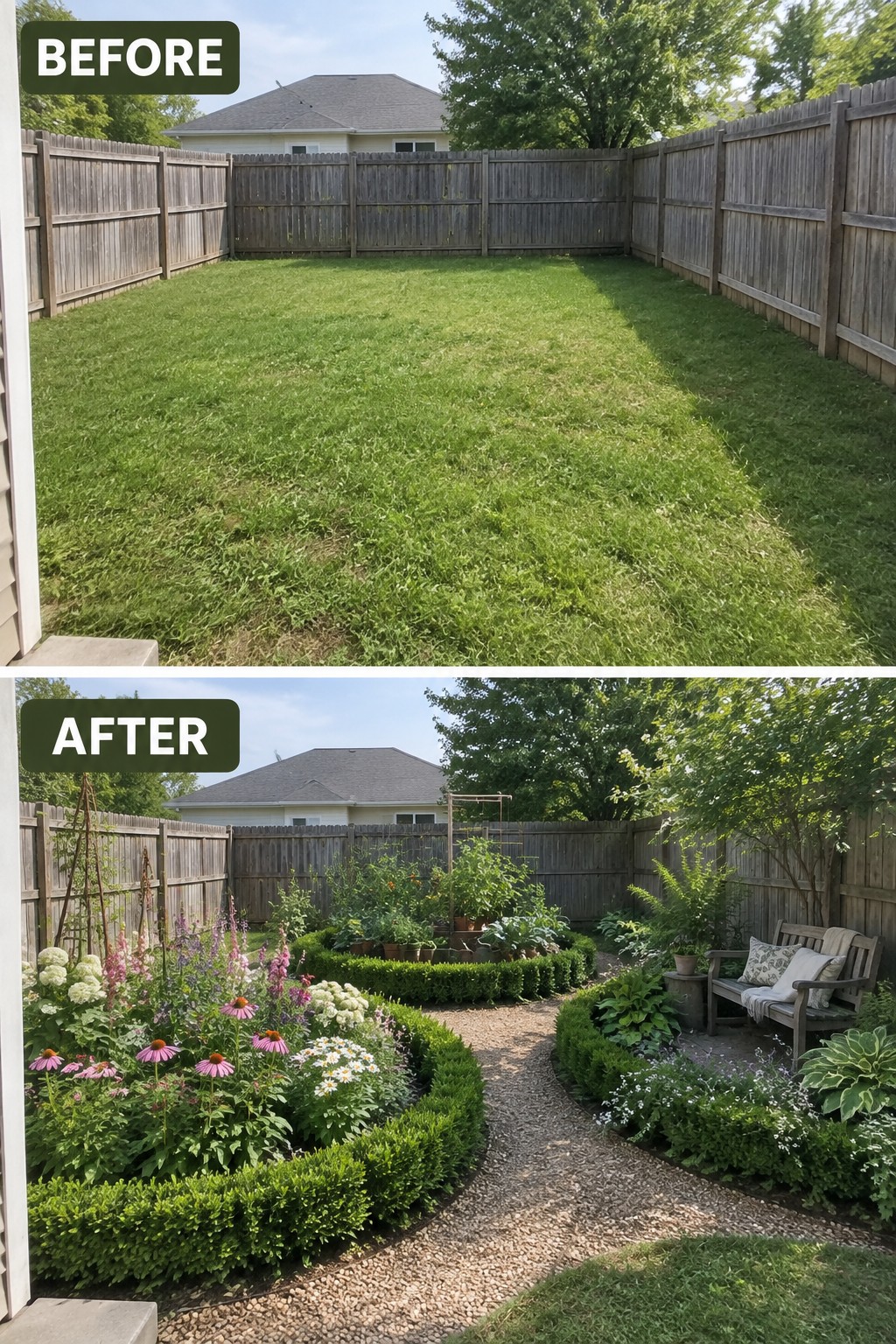
A flat lawn with nothing but grass and a fence often feels like wasted space. Adding curved beds, a gravel path, and layered plantings gives the yard shape and turns it into a garden you can actually walk through and enjoy.
This idea works best in average-sized backyards where you want a cottage look without major construction. Start by marking the bed edges with a hose so you can adjust the curves before you dig. Keep the path wide enough for comfortable walking and choose a mix of shrubs and flowers that fill in over time rather than planting everything at once.
Add A Pergola To Turn A Plain Deck Into A Seating Area

A bare deck with just a couple of chairs often feels unfinished and unused. Adding a simple pergola creates overhead structure, defines the space, and makes the area feel like a real room instead of leftover deck boards. In this case the change from two loose plastic chairs to a built-in bench with a vine-covered pergola shows how one main addition can pull everything together.
This idea works best on decks that already have decent flooring but lack shade or a clear purpose. Start with the pergola size so it fits the seating zone without crowding the rest of the deck, then add weatherproof seating and a few large pots. Keep the rest of the surface clear so people can still move around easily.
Turn A Plain Concrete Path Into A Cottage Garden Walk
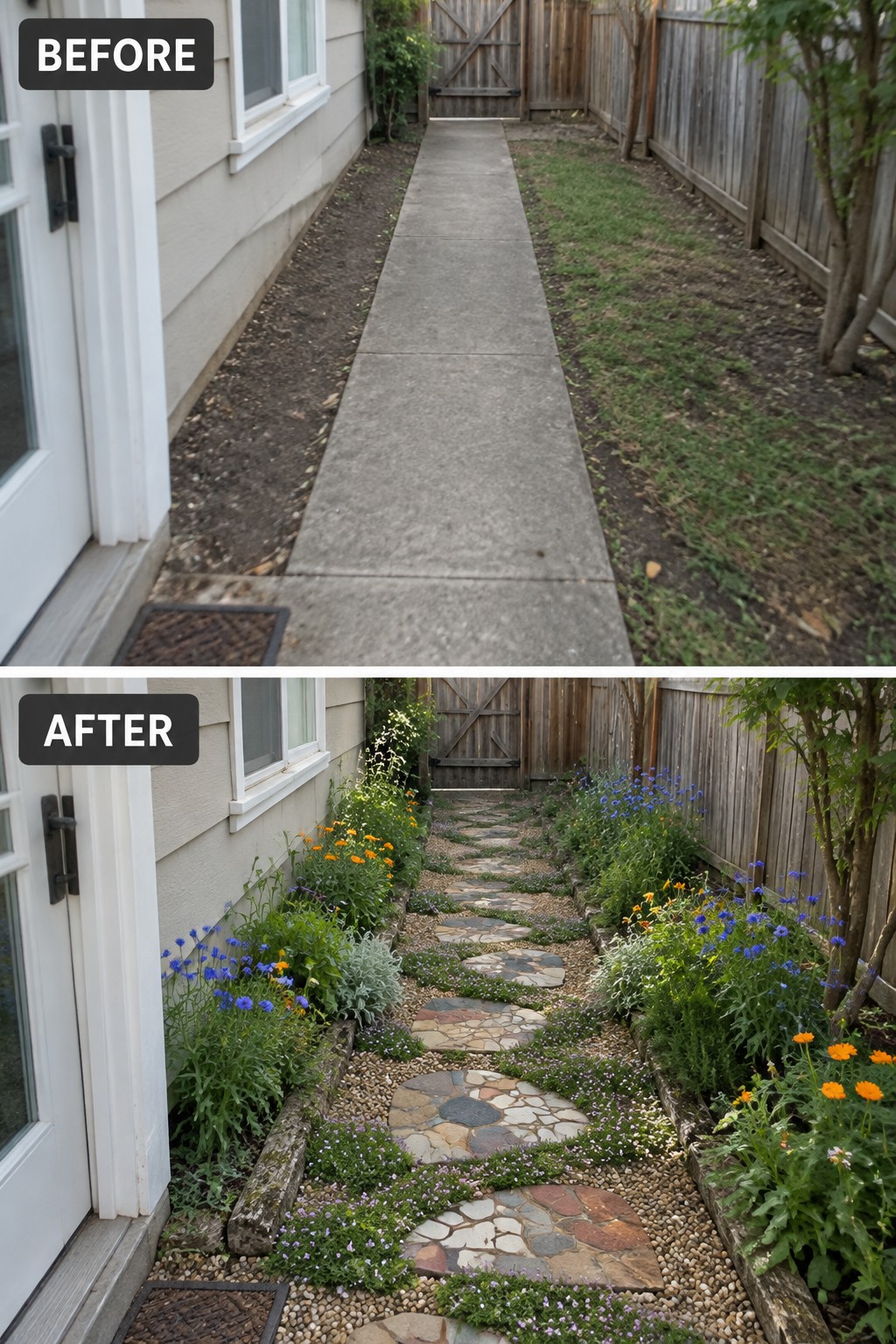
A straight concrete slab makes a side yard feel more like a utility corridor than a garden. Switching to irregular stepping stones set in gravel, with planted borders running along both sides, softens the whole space and turns the path into part of the landscape instead of the main feature.
This idea suits narrow backyards or side passages where you want a relaxed cottage feel without losing the walkway. Lay the stones with gaps for low ground cover, then fill the beds with a simple mix of flowers and greenery that can spill over the edges. Keep the planting informal so the path still feels like it belongs in the garden rather than sitting on top of it.
Add Defined Garden Beds To A Bare Backyard
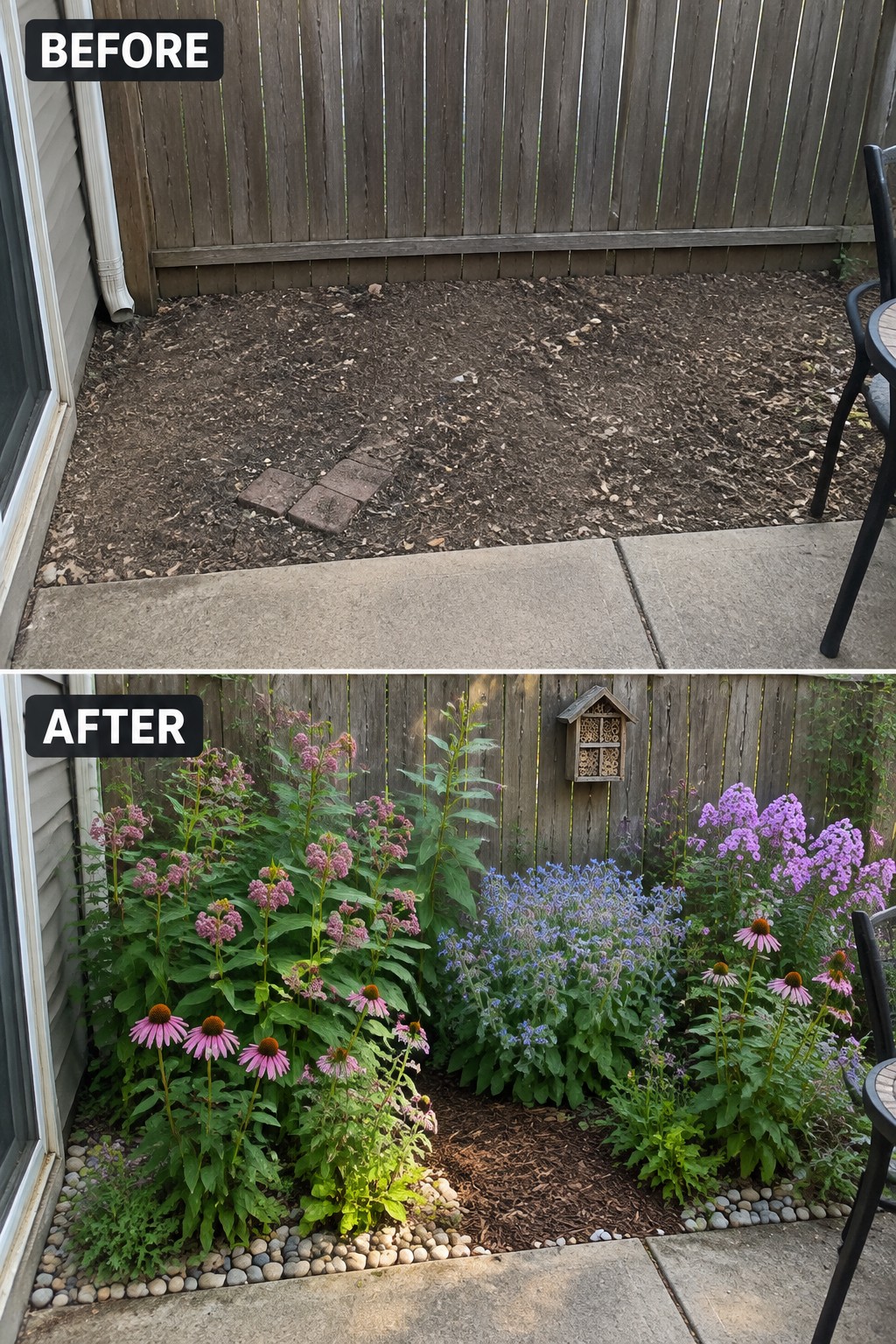
A patch of bare dirt along a fence usually stays that way because it feels like too much work to fix. Putting in a few simple beds with a mix of taller and shorter flowers, then covering the soil with mulch, gives the space a clear purpose without needing a full redesign.
This idea suits small backyards or side areas where you want color and life but still need room to walk or sit. Keep the beds narrow enough to reach across, repeat a few plant types instead of buying one of everything, and let the planting fill out over a season or two.
Add Structure To An Overgrown Backyard
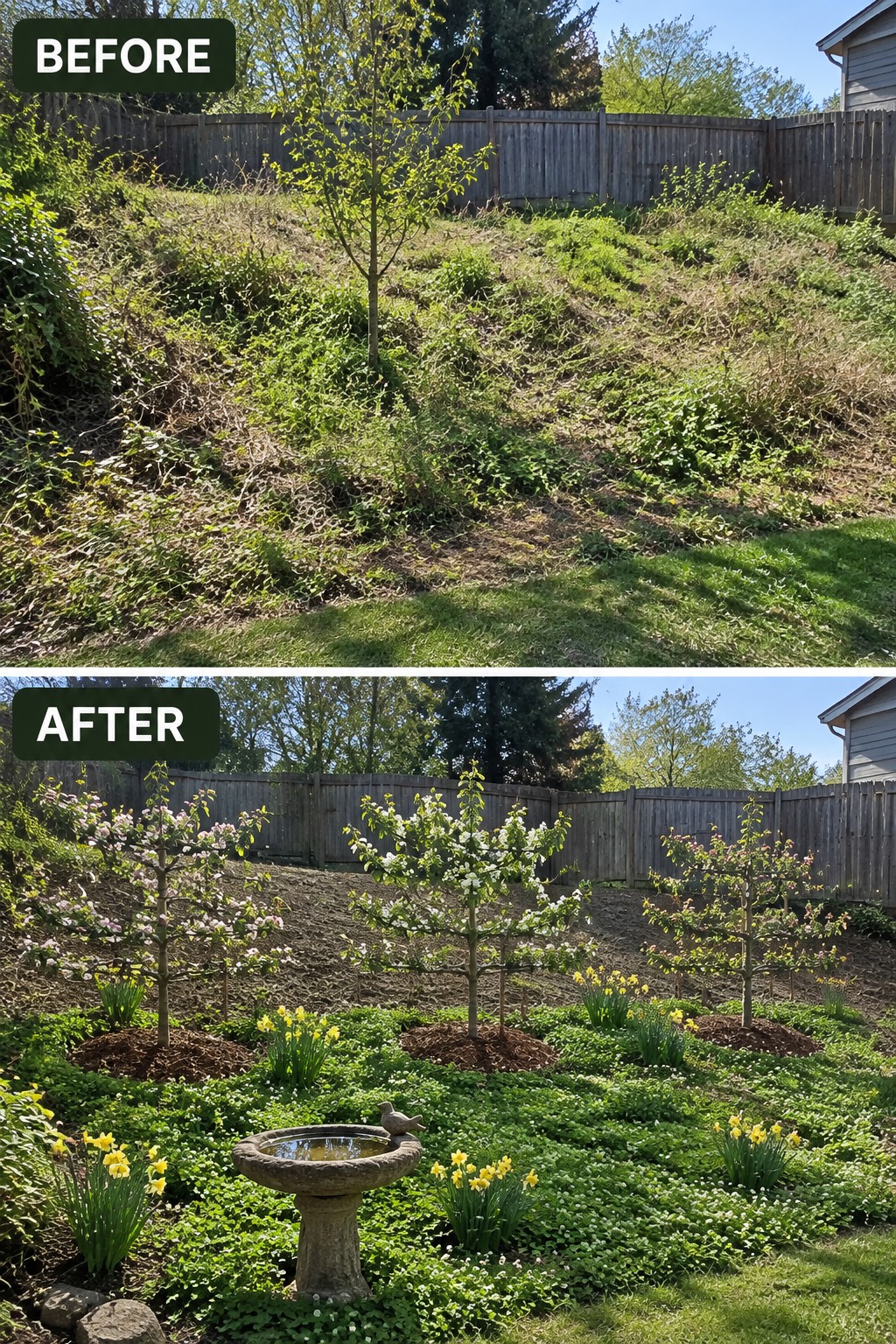
The before photo shows a hillside covered in weeds and patchy grass with no clear planting plan. After clearing the overgrowth, the slope now has a simple row of young trees set in mulched beds, with low ground cover filling the spaces between them.
This works because the trees give the eye a place to rest and the mulch keeps everything looking neat without much effort. The idea suits sloped yards or neglected corners where you want cottage style without a full redesign. Start by removing the worst weeds first, then plant a few small trees in a loose line and add mulch and ground cover right away.
Add Raised Beds To Define A Garden Border

A bare strip of dirt along a fence often gets ignored because it feels too narrow or awkward to plant. Raised beds change that by giving the space clear edges, better soil, and room for both ground-level flowers and climbers on simple trellises.
This idea suits long side yards or back fences where you want color without losing lawn space. Keep the beds low and the planting relaxed so the border feels like part of the yard instead of a separate project. String lights can be added later once the plants are in place.
Add Structure To A Bare Backyard With A Lawn And Borders
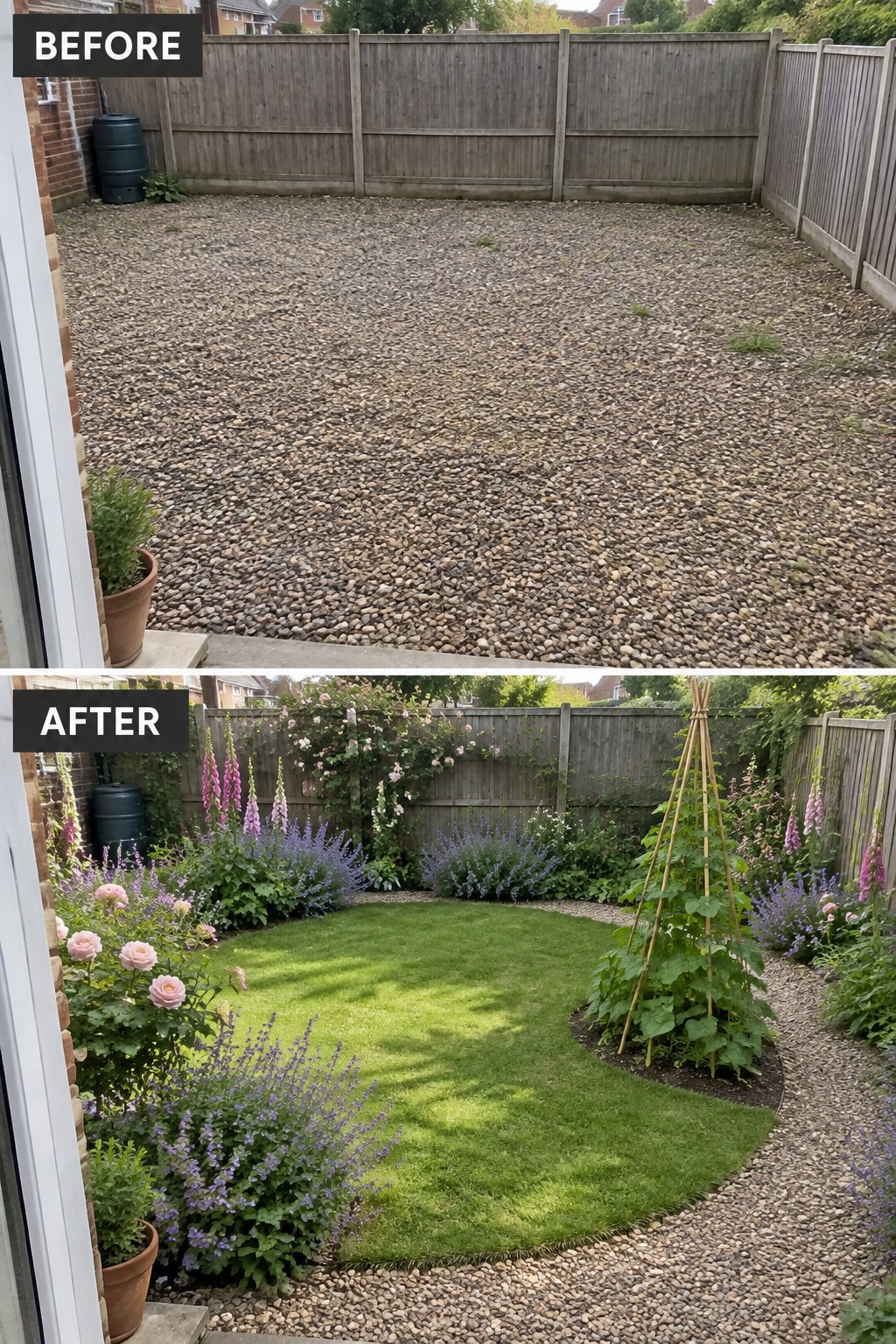
A flat gravel yard offers little to work with, but laying out a simple lawn shape and filling the edges with planting gives the space purpose. The curved lawn creates a clear center while the borders around it soften the fence line and add layers of color and height without crowding the area.
This approach works well in small to medium backyards where you want an easy-to-maintain green space that still feels full. Start by marking out the lawn shape with a hose so you can adjust the curve before committing, then plant the borders densely enough that they fill in and hide the fence base over time.
Add Raised Beds To Turn A Bare Backyard Into A Garden

A plain concrete slab does not offer much to work with, but adding a few raised beds changes the whole feel of the space. Instead of an empty stretch of pavement, the backyard now has clear growing areas that keep plants organized and easy to reach. The beds also lift the soil above the hard surface, which helps with drainage and makes the garden feel more intentional.
This approach works well in small yards or on lots where the ground is mostly paved. Start with three or four beds placed with room to walk between them, then add simple trellises for tomatoes or beans if you want vertical growth. Keep the planting practical by grouping crops by type and leaving a spot for a compost bin nearby.
Add Structure To An Overgrown Backyard
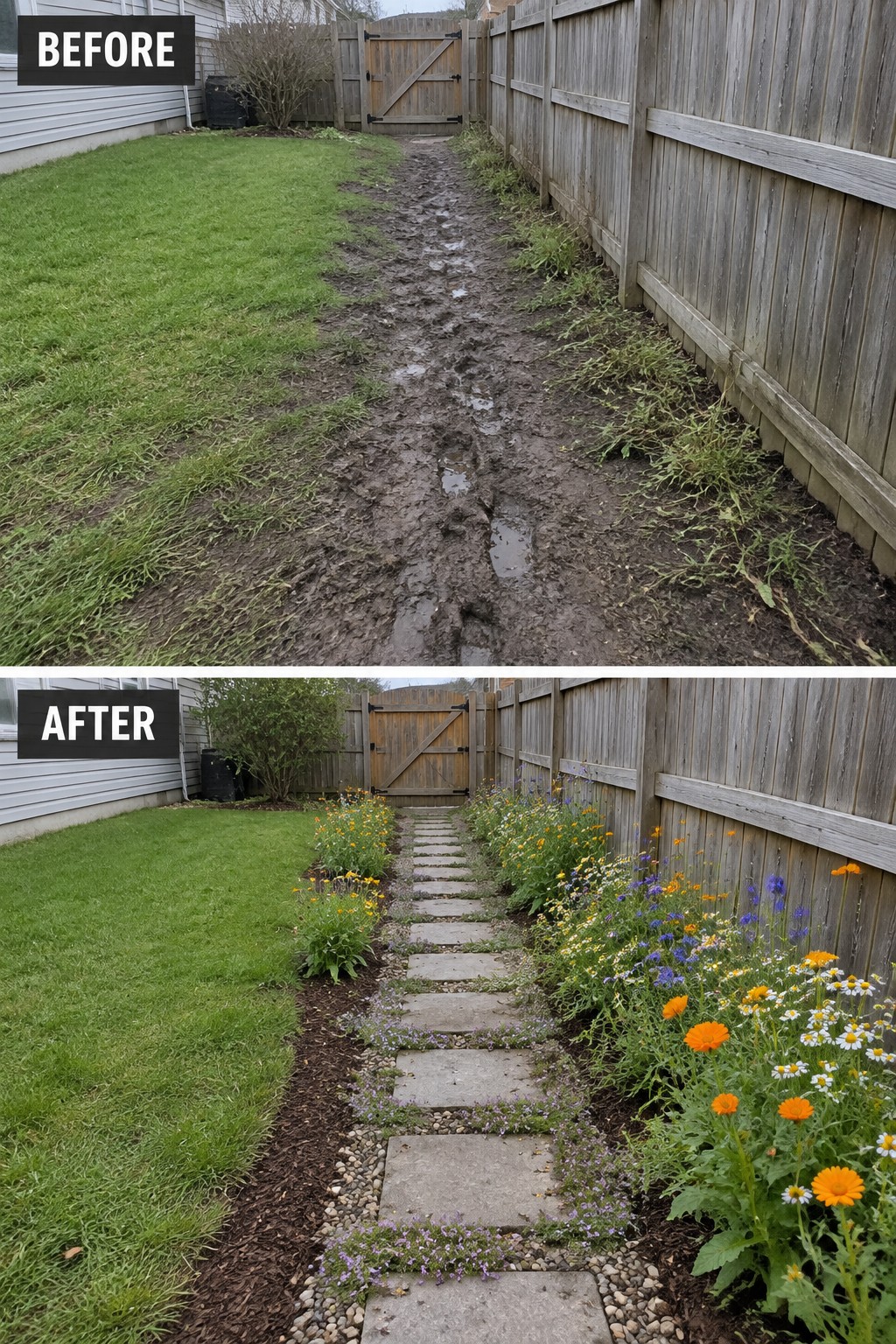
A muddy track that forms along a fence line makes the whole yard feel unfinished and difficult to walk through. Laying a simple stone path with gravel and adding planted borders on both sides turns the same narrow space into something that feels intentional and easy to use.
This idea works best in side yards or along property lines where grass gets worn down. Focus on the hardscaping first so the path stays usable in wet weather, then add the planting once the ground is stable.
Refresh An Old Shed With Paint And Simple Borders
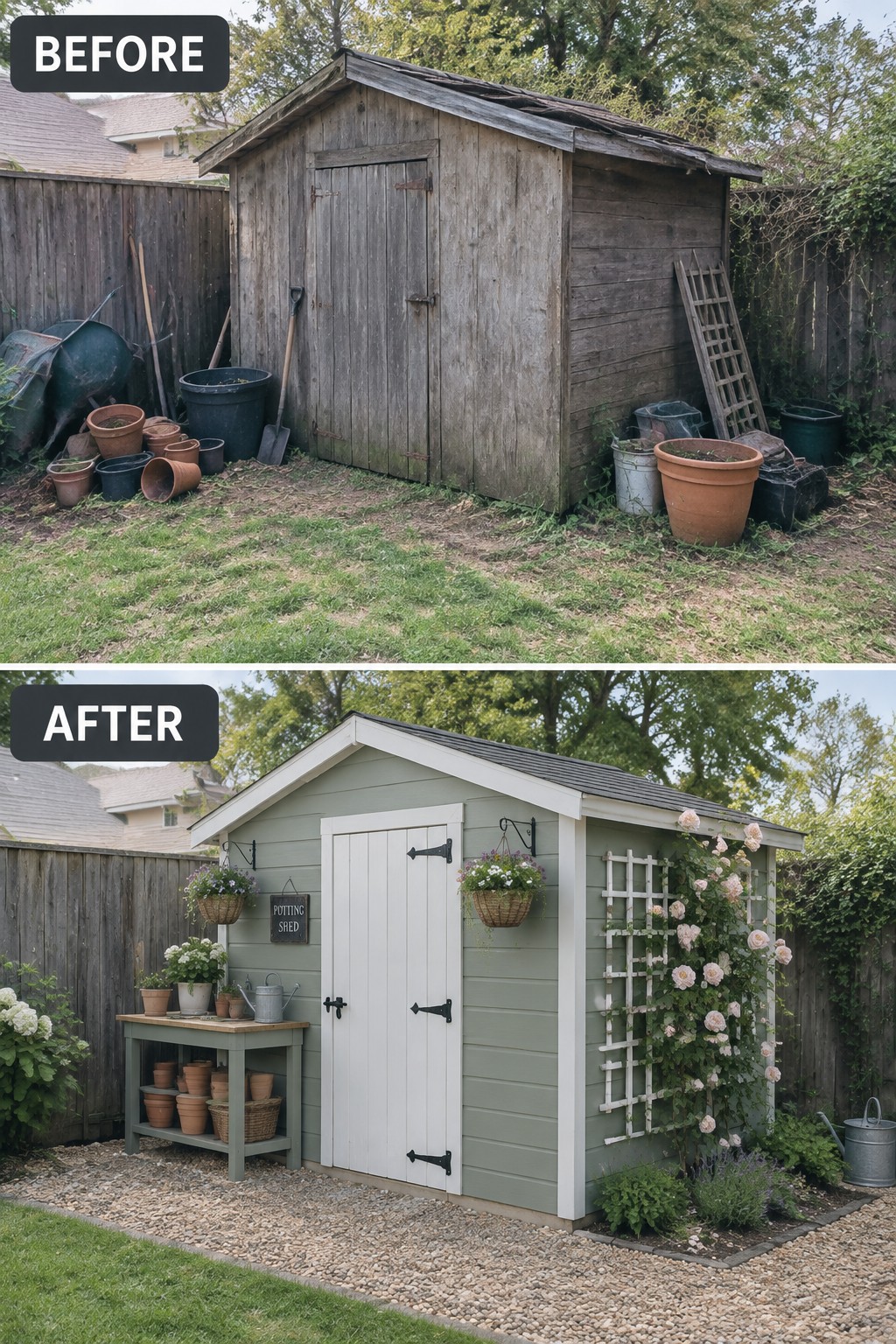
An old shed often ends up as the messiest spot in the yard, surrounded by scattered pots and tools. Painting the shed a soft green with white trim and laying down gravel around the base instantly changes how the whole area feels. The addition of a trellis and a few hanging baskets turns the shed from something you want to hide into a quiet focal point that fits right into a cottage garden.
This approach works best when you start with a good cleanup before adding any color or plants. Choose a muted exterior paint that echoes the garden rather than stands out, then keep the new plantings simple so the shed still feels like part of the landscape instead of a separate feature. Gravel or mulch helps define the space without needing a big budget or complex hardscaping.
Frequently Asked Questions
Q: What if my backyard is mostly shade? A: Focus on ferns and hostas mixed with a few flowering shrubs. They fill in nicely under trees and keep the relaxed cottage feel going all season.
Q: How often should I weed to maintain that informal garden look? A: Pull weeds every couple weeks but leave some self-seeded flowers where they pop up. This way the garden stays natural without turning into a jungle.
Q: Can I add a path without making it look too formal? A: Use stepping stones or gravel in a winding pattern. Tuck in low plants along the edges so the path blends right into the beds.
