

I often find that a backyard feels overlooked when there is no real place to sit and eat together.
A few well placed chairs and a solid table can turn the space into something we actually use on weekends without a lot of extra work.
Layout choices usually make the biggest difference.
I have seen how simple structures like defined seating areas help keep things comfortable even when the weather changes.
Some of the approaches here look like they could adapt well if I tried them out gradually in our own yard.
Turn An Empty Patio Into A Covered Dining Area

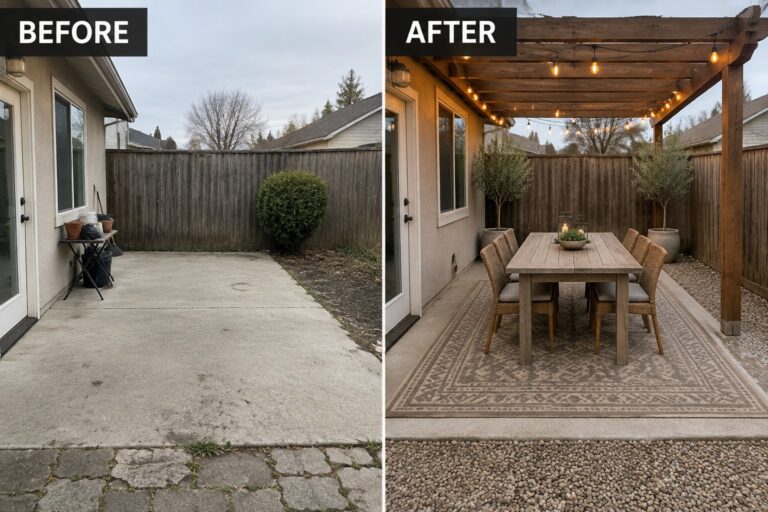
Adding a pergola with string lights turns a plain concrete slab into a usable spot for meals. The overhead structure gives shade and definition while the lights make the space feel ready for evening use without needing much else.
This idea works best on patios that sit right off the house and already have a flat surface. Keep the furniture simple and weatherproof, use one rug to mark the dining zone, and leave enough open space around the table so people can move around easily.
Turn A Bare Backyard Into An Outdoor Seating Area

A neglected corner of the yard can become a usable spot for meals or evening drinks once the clutter is cleared and a few simple pieces are added. The before photo shows an empty patch of dirt and weeds with tools leaning against the fence. In the after version, a small table and two chairs sit on fresh grass, with string lights running along the fence to mark the space.
This approach works best in modest yards where you want one defined area rather than trying to furnish the whole lawn. Start by cleaning up the ground and laying sod or turf if needed, then choose a compact table and chairs that leave room to walk around. Add string lights or a couple of lanterns so the spot feels finished once the sun goes down.
Turn A Bare Patio Into An Outdoor Kitchen

A plain concrete slab often sits unused because it lacks any real purpose. Adding a built-in kitchen island with bar seating and basic appliances gives the space a clear function for cooking and gathering right outside.
This approach works best on a flat, open patio that already has decent access from the house. Keep the island size reasonable so there is still room to walk around it, and choose weatherproof materials that hold up without constant maintenance.
Turn A Sloped Backyard Into A Level Patio For Dining
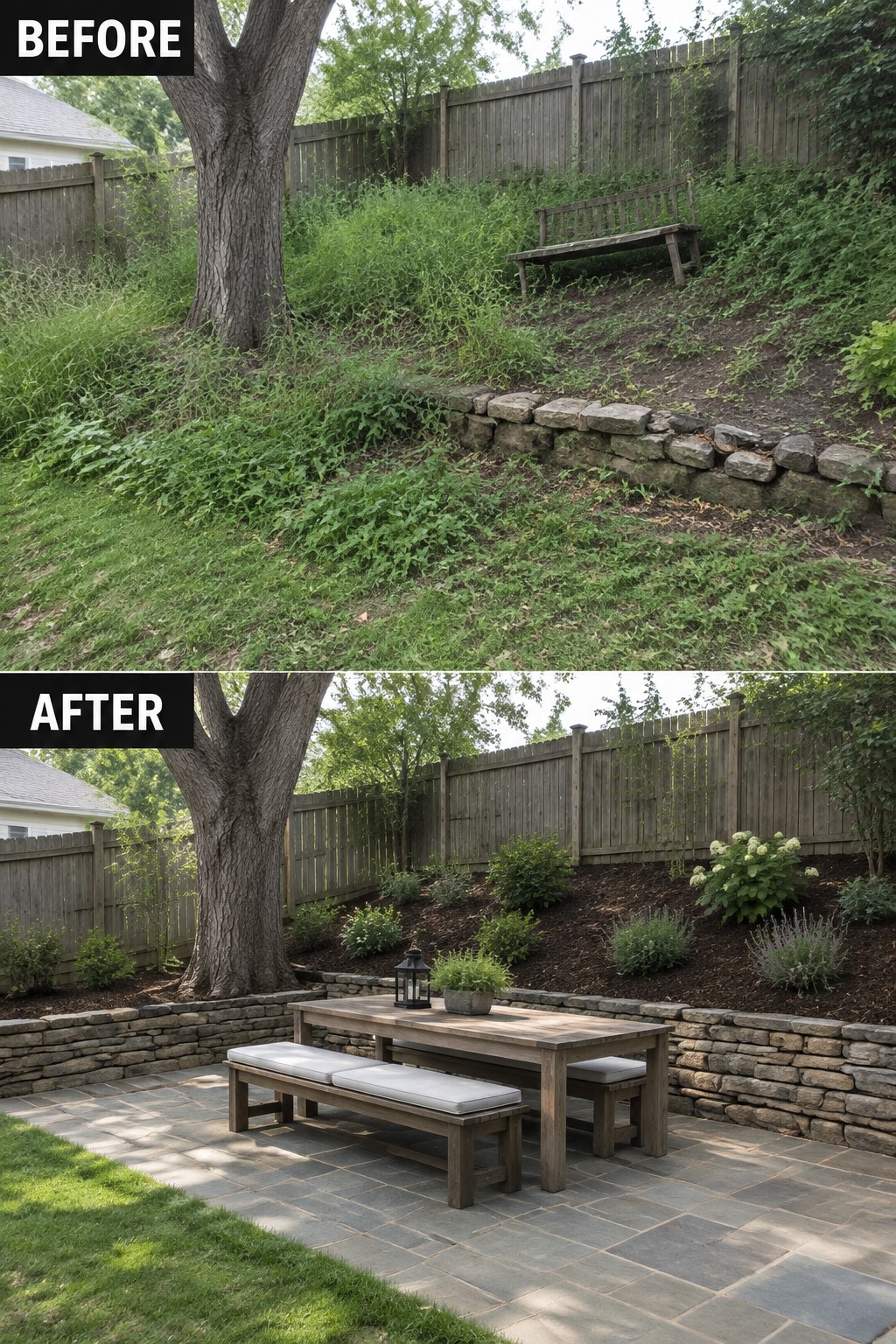
A steep, overgrown slope rarely feels like a place to linger, let alone eat outside. Adding low stone retaining walls and a paved surface turns the same spot into a flat, usable dining area that stays level and comfortable.
This approach works best on yards with noticeable grade changes where the ground is otherwise too uneven for furniture. Start with the walls to hold the soil, then lay pavers or stone for the floor. Keep the table and seating simple so the space still feels open enough to move around.
Turn An Empty Deck Into An Outdoor Dining Area
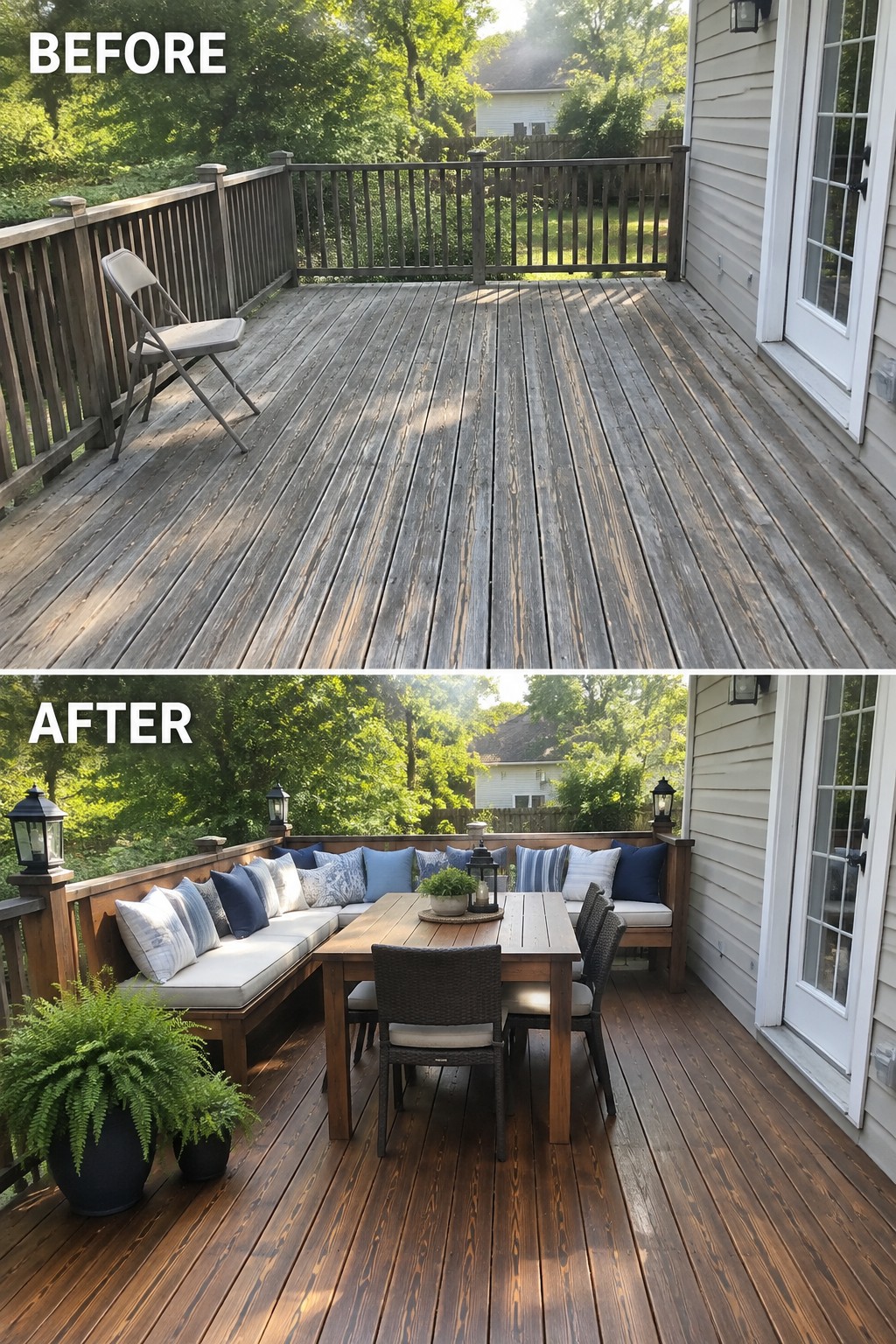
An empty deck often stays unused because it has no clear purpose. Adding a dining table with chairs and a built-in bench along the railing turns the space into a spot meant for meals and time outside.
This idea works best on decks that already have decent sun or partial shade. Start with a table size that still leaves walking room, then add seating along one edge so the layout feels open but purposeful. Keep cushions and plants simple so the space stays easy to maintain.
Turn A Narrow Side Yard Into An Outdoor Dining Area

A side yard that runs between the house and fence often gets used for storage instead of anything else. Clearing out the clutter and placing a simple table with benches turns the space into a place where people can actually sit and eat. String lights and a few vertical planters along the fence help define the area without taking up much room.
This approach works best on homes with long, narrow passages that still get some daylight. Focus on weatherproof furniture that leaves enough walking space, and add lighting near seating so the area feels usable after dark. Keep the layout simple so the path stays clear.
Add A Pergola To Create An Outdoor Dining Area
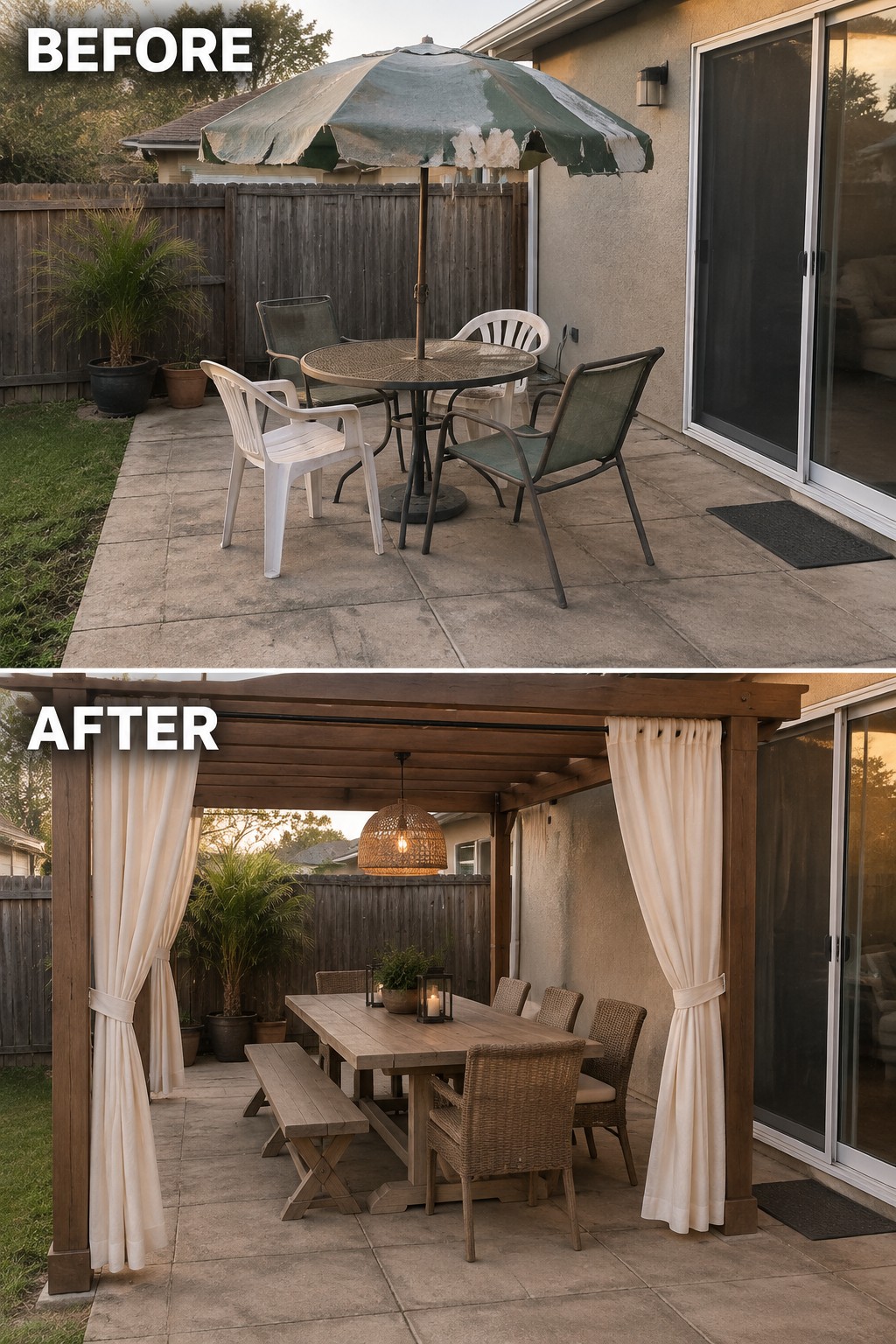
Adding a pergola over an open patio gives the space a clear sense of room and shelter. The before photo shows a flat concrete area with no overhead cover and furniture scattered around. Once the wooden structure and side curtains go in, the same spot becomes a shaded place where a table and chairs can actually stay set up for meals.
This idea works best on patios that sit in full sun or feel too open to the yard. Keep the frame simple and the curtains easy to tie back so the space does not feel closed in. Choose a table and seating that fit the size of the covered area and leave room to walk around the ends.
Turn A Bare Backyard Corner Into An Outdoor Entertaining Area
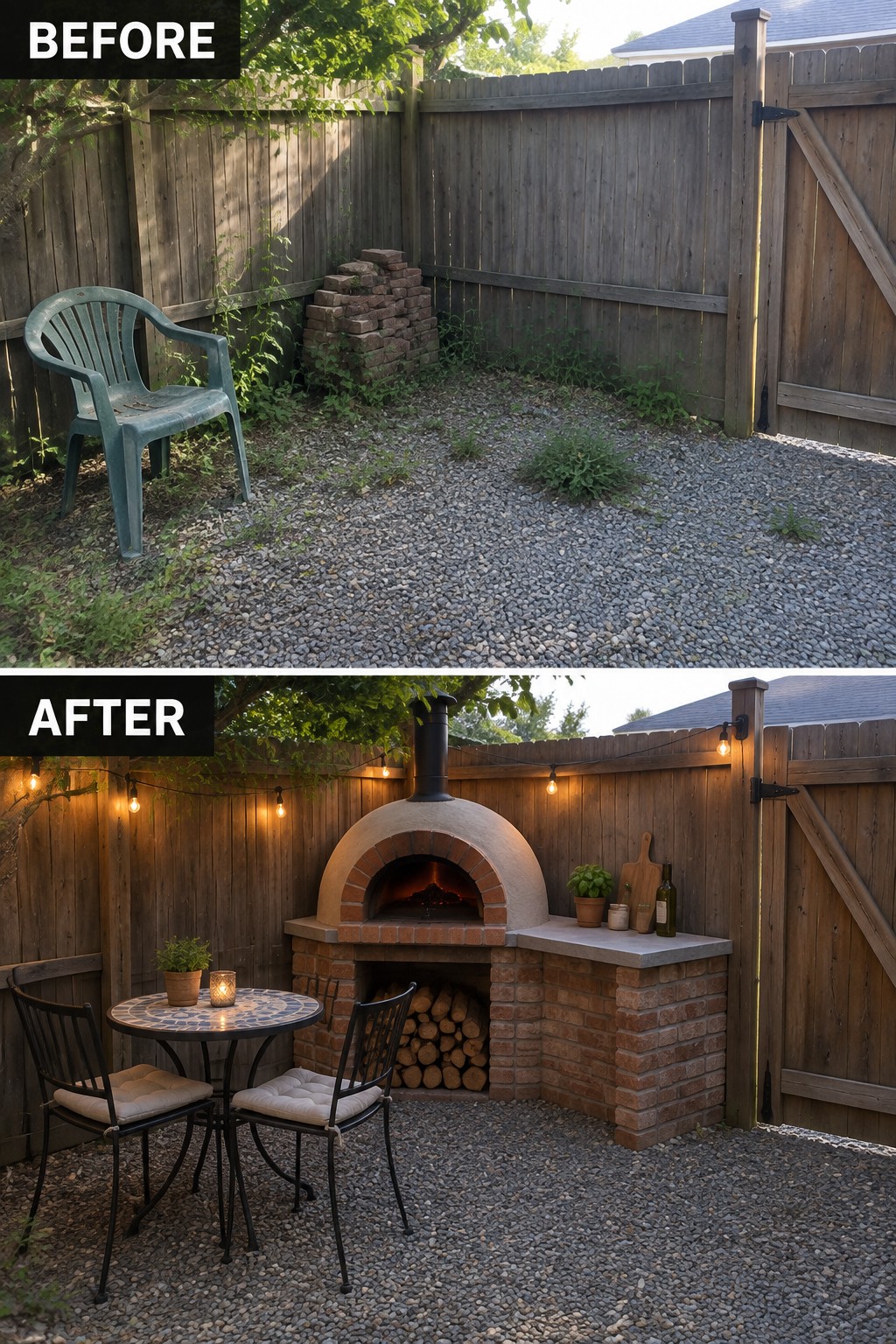
A plain gravel patch with one plastic chair does not invite anyone to linger. Adding a built-in pizza oven as the main feature, along with a small table and chairs, gives the space a clear purpose. String lights overhead make the area usable after dark without needing a full renovation.
This approach works well in small or medium backyards where you want one zone that handles both cooking and seating. Start with the oven or fire feature first, then add seating that fits the scale of the space. Keep the rest of the yard simple so the dining area stays the focus.
Turn An Empty Patio Into A Seating And Dining Area

The before photo shows a plain concrete slab next to the pool with only two lounge chairs and a small side table. The after photo adds a full dining set with an umbrella, cushioned lounge chairs, potted plants, and an outdoor rug that pulls the whole space together. Those few key pieces turn the empty area into a spot where people can actually sit, eat, and spend time.
This idea works well on any home with a pool deck or large concrete patio that feels unused. Start with shade and a table if you entertain often, then add a rug to mark the seating zone. Keep the furniture scale reasonable so there is still room to walk around the pool.
Create A Defined Seating Area With Gravel And A Fire Pit
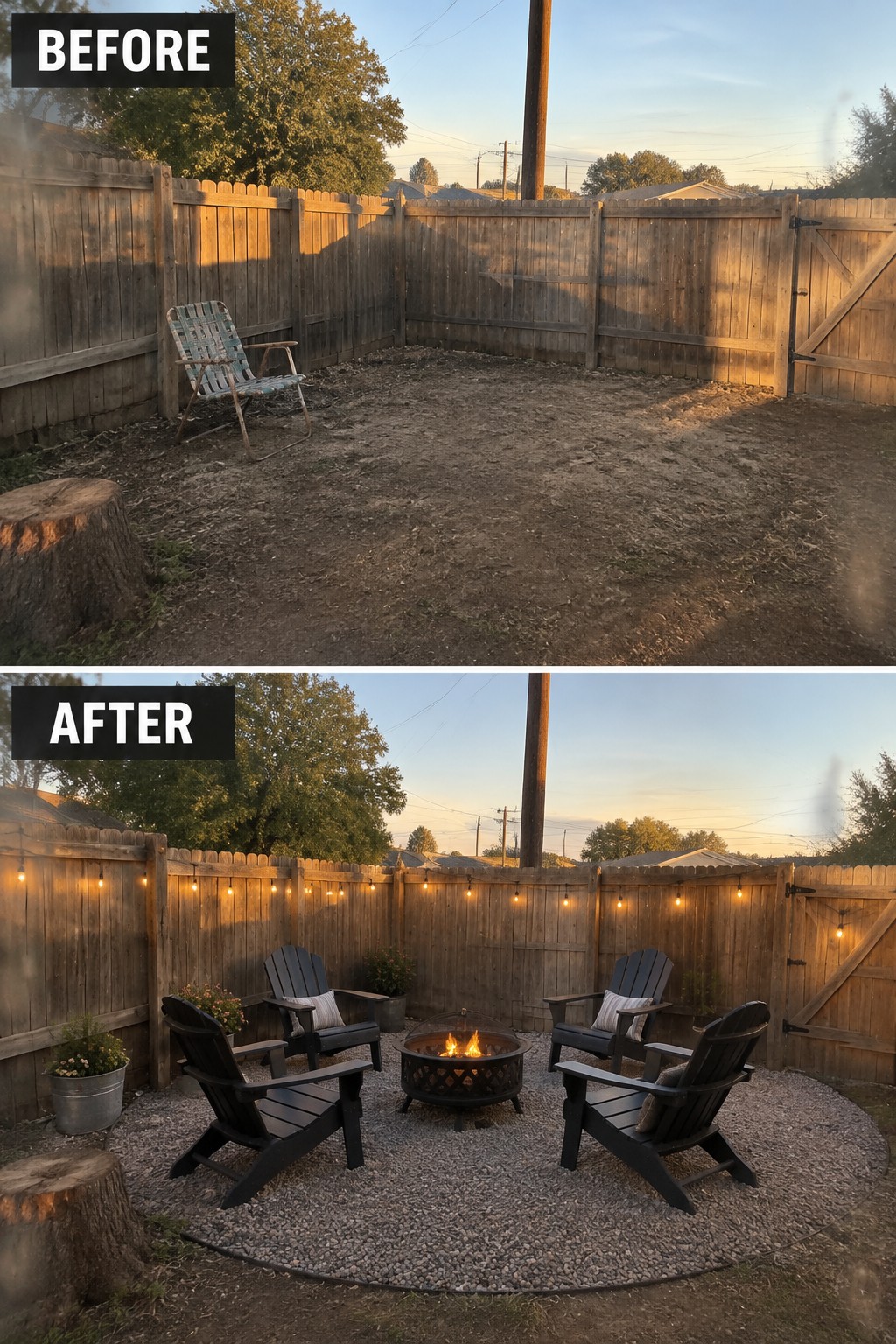
A bare dirt yard often feels like wasted space because there is no clear spot to sit or gather. Adding a gravel circle around a fire pit gives the area a simple boundary and turns it into a place people actually want to use. The string lights along the fence help tie everything together without needing much else.
This approach works best in smaller yards where you want one solid zone rather than trying to fill the whole space. Lay the gravel first so the seating area stays contained and easy to maintain, then add weatherproof chairs and a fire pit sized for the group you usually host. Keep extra furniture minimal so the space stays open and usable.
Use Lighting To Make A Deck Feel Cozy

A deck can sit empty once the sun drops because it feels too dark to use. Adding a layer of string lights overhead and smaller lights along the railing gives the space enough glow to make it comfortable for dinner or conversation without needing a full renovation.
This approach works on most wooden decks because it builds on what is already there. Run the string lights from the house to a post or tree so they cover the main seating area, then add rail-mounted lights for safety on the steps. Keep the fixtures simple and weatherproof so the setup lasts more than one season.
Turn A Bare Patio Into An Outdoor Dining Area

A plain concrete slab often sits unused because it feels unfinished and offers nowhere comfortable to sit for a meal. In this case the fix was straightforward. The old cracked surface got replaced with pavers that create a clean, level floor, and a full-size dining table with eight chairs now fits without crowding the space.
The same approach works on most basic patios or side yards. Start by deciding how many people you want to seat regularly, then choose a table size that still leaves room to walk around the chairs. Add one or two large pots or a narrow planting bed along the edge if you want a bit of greenery without losing open floor space. Keep the furniture weatherproof and the layout simple so the area stays usable instead of turning into extra storage.
Add A Vertical Garden Wall Along Your Fence

A plain fence with bare dirt underneath does not give you much to work with for outdoor meals. Adding a simple vertical planter wall turns that same stretch into the main feature of a backyard dining spot. The after photo shows how a few rows of pots, a bit of lumber, and string lights create a clear reason to set up a table right there.
This idea works well in smaller yards where you want to keep the ground open but still add interest. Use a sturdy fence, choose pots that can handle weather, and keep the number of plants realistic so nothing feels overcrowded. String lights help the space feel usable after dark without needing much else.
Use String Lights And A Rug To Define An Outdoor Dining Area
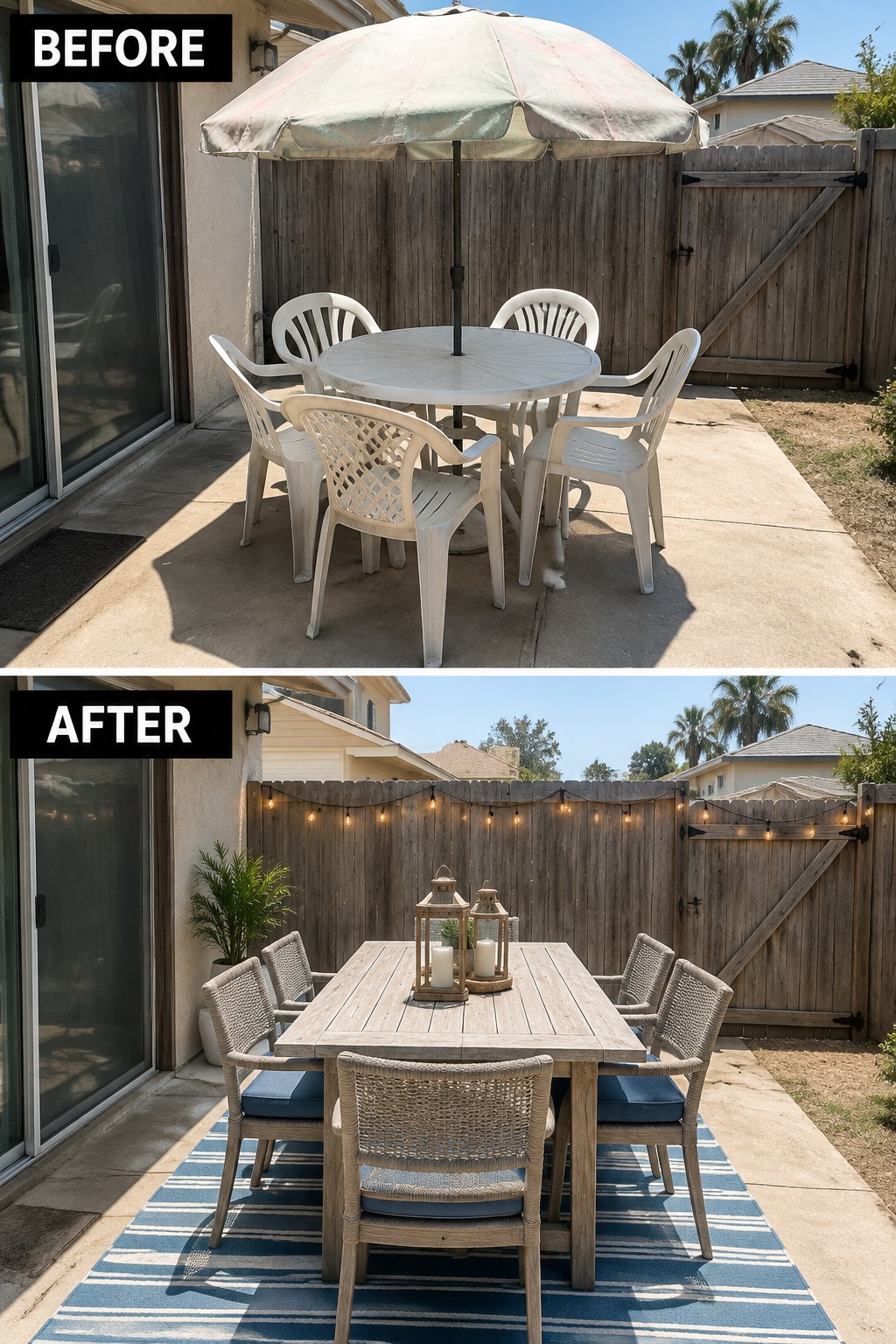
A basic concrete patio often feels unfinished even when it has a table and chairs. Running string lights along the fence and adding a striped rug under the dining set gives the space clear boundaries and makes it feel like an actual room you would want to use after dark.
This idea works well on any patio that already has decent furniture but lacks warmth. Start with the lights first since they make the biggest difference in the evening, then add a rug to pull the seating area together and keep it from looking scattered.
Add An Outdoor Bar Counter Along Your House

A narrow side yard often ends up as wasted space, especially when it is just bare concrete next to the house. Mounting a simple wood counter to the wall and adding a few stools turns that strip into a usable spot for drinks or quick meals without needing a full patio set.
This idea works best on long, fairly straight exterior walls where you still need room to walk through. Keep the counter at standing height, use weather-safe wood, and hang a short run of string lights so the area feels intentional at night. Leave enough clearance in front so people can pull out the stools without blocking the path.
Add Shade To Make A Patio Usable For Dining

A patio with no cover often stays empty because the sun makes it too hot to sit comfortably. Adding a shade sail over the table and chairs turns the space into a place people actually want to use, especially during the middle of the day.
This idea works best on patios that face south or west and get strong afternoon light. Keep the sail a neutral color so it blends with the fence and house, and angle it slightly so water drains off instead of pooling. Start with shade before adding more furniture or plants.
Create Defined Paths To Make Your Backyard More Usable
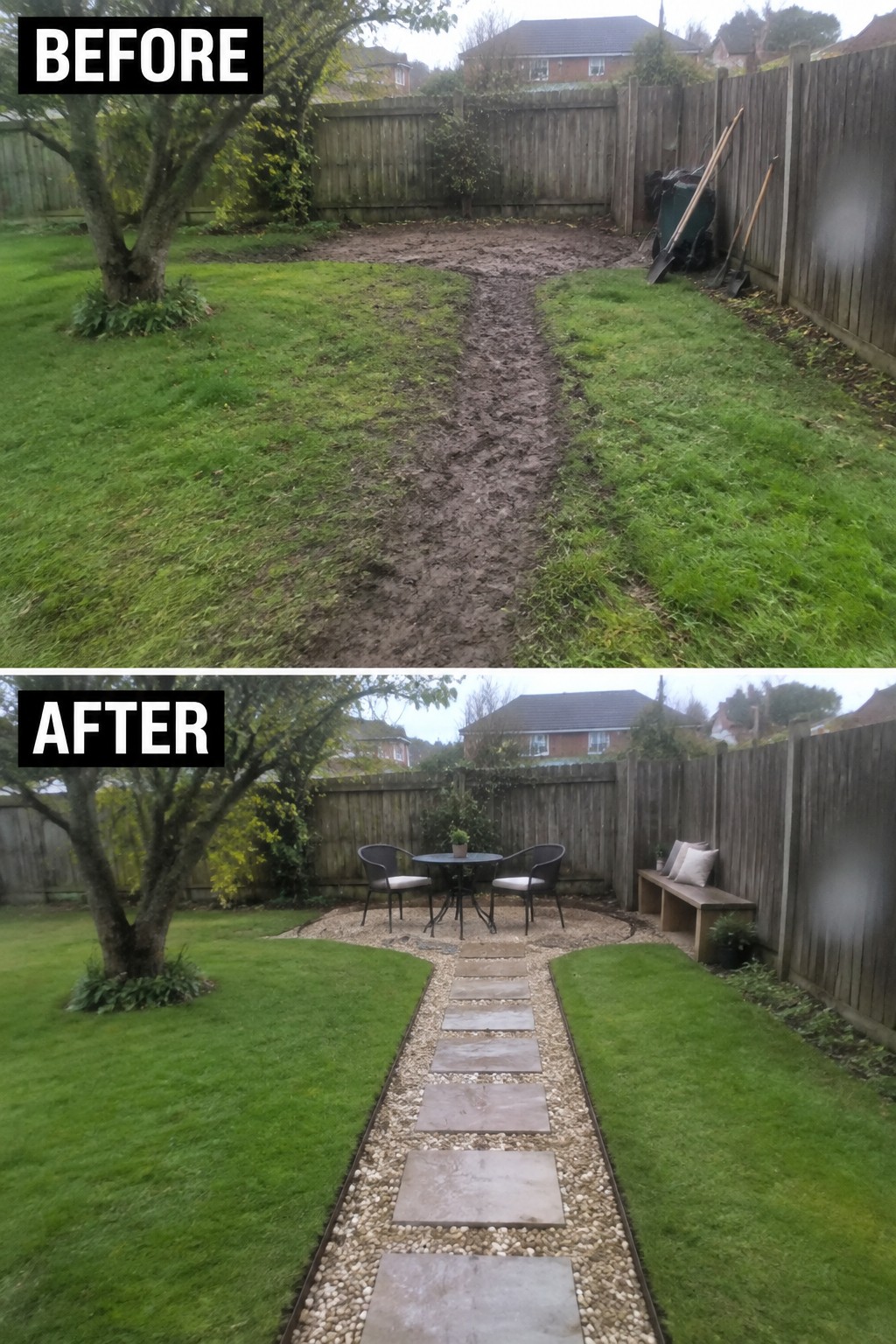
A worn muddy track through the lawn makes a backyard feel unfinished and hard to use. Replacing it with a gravel path and stepping stones gives the space clear structure and turns the far end into a spot where you can actually sit.
This idea works best in smaller or average yards where people already walk the same route. Lay the path first before adding furniture so the seating area feels connected rather than stuck in a corner. Keep the gravel contained with edging and leave enough lawn on either side so the space still feels open.
Add Privacy Screens And Planters To Define A Patio
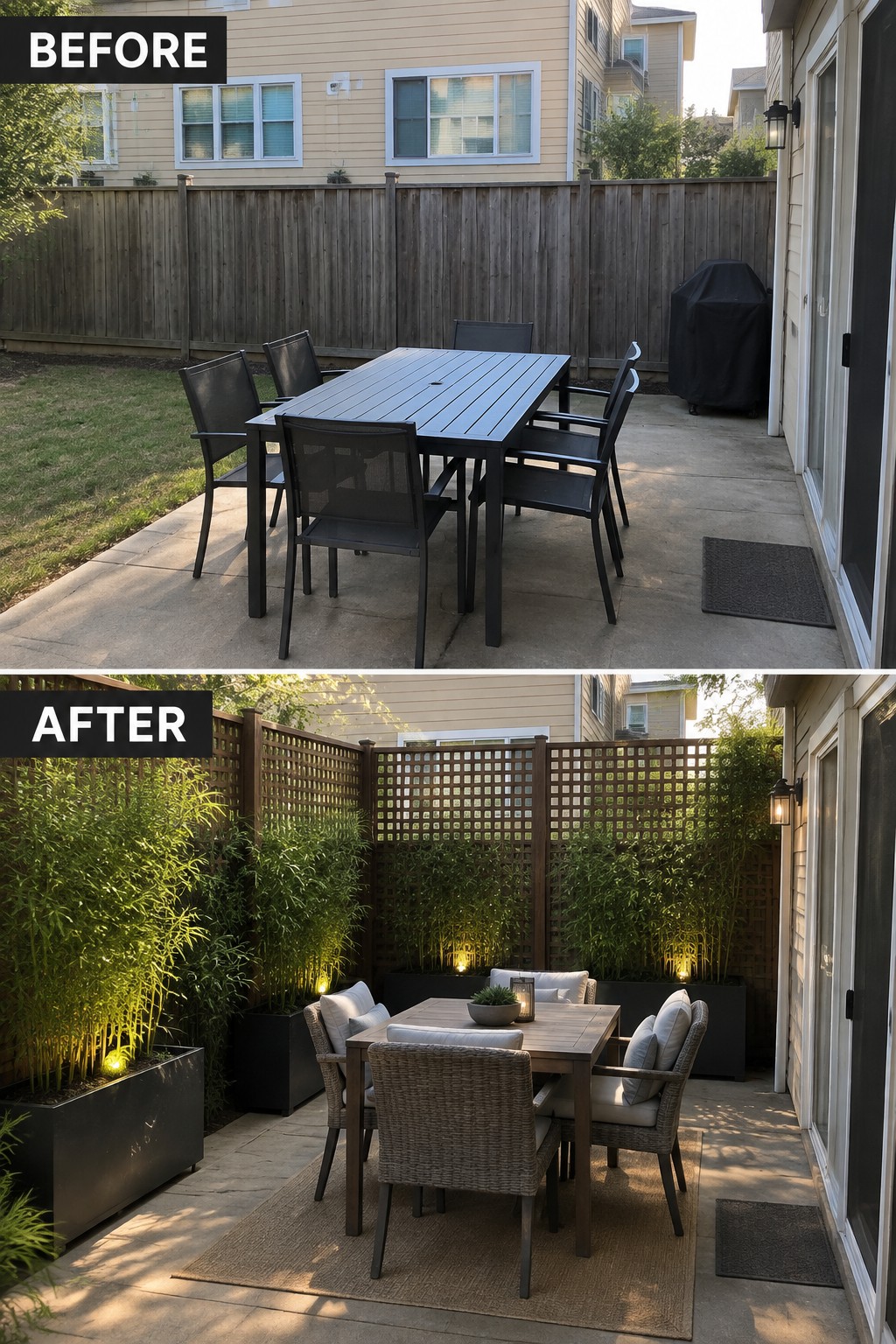
Many patios start as a flat slab with a table sitting out in the open. Tall planters with bamboo and lattice panels along the fence line create side boundaries and give the space a clearer shape so it feels more like a room than just a corner of the yard.
This idea works best on patios that sit close to neighbors or feel exposed. Start with the vertical elements first, then add a rug and furniture that fits the new scale. Stick with one or two plant types so the look stays simple and easy to maintain over time.
Turn A Bare Patio Into An Outdoor Dining Area

Clearing away the old cushions and debris made room for a simple built-in bench and a solid dining table. That one change turned empty concrete into a space that actually works for meals and gathering.
This approach suits smaller yards or corner patios where you need seating without crowding the area. Keep the furniture scale modest and stick to weather-safe materials so the setup stays practical through the seasons.
Turn Bare Concrete Into An Outdoor Dining Area

A plain concrete slab often sits unused because it feels unfinished and hard underfoot. Laying patterned tile over the surface and adding a table with chairs turns the same spot into a place meant for meals.
This idea works on any flat patio or deck that lacks definition. Choose durable outdoor tile first, then scale the furniture to leave walking room around the table.
Turn A Bare Backyard Into An Outdoor Dining Area

A simple way to make a backyard more usable is to give it one clear purpose instead of leaving it open. The old rusty table was swapped for a round dining table with benches and a large umbrella that creates a real spot for meals.
String lights add just enough glow once the sun goes down. This idea works best in medium or larger yards where the space feels empty. Pick furniture that can handle weather, keep the layout open enough for chairs to pull out, and add shade first so the area gets used during the day.
Define A Patio With Furniture And A Rug
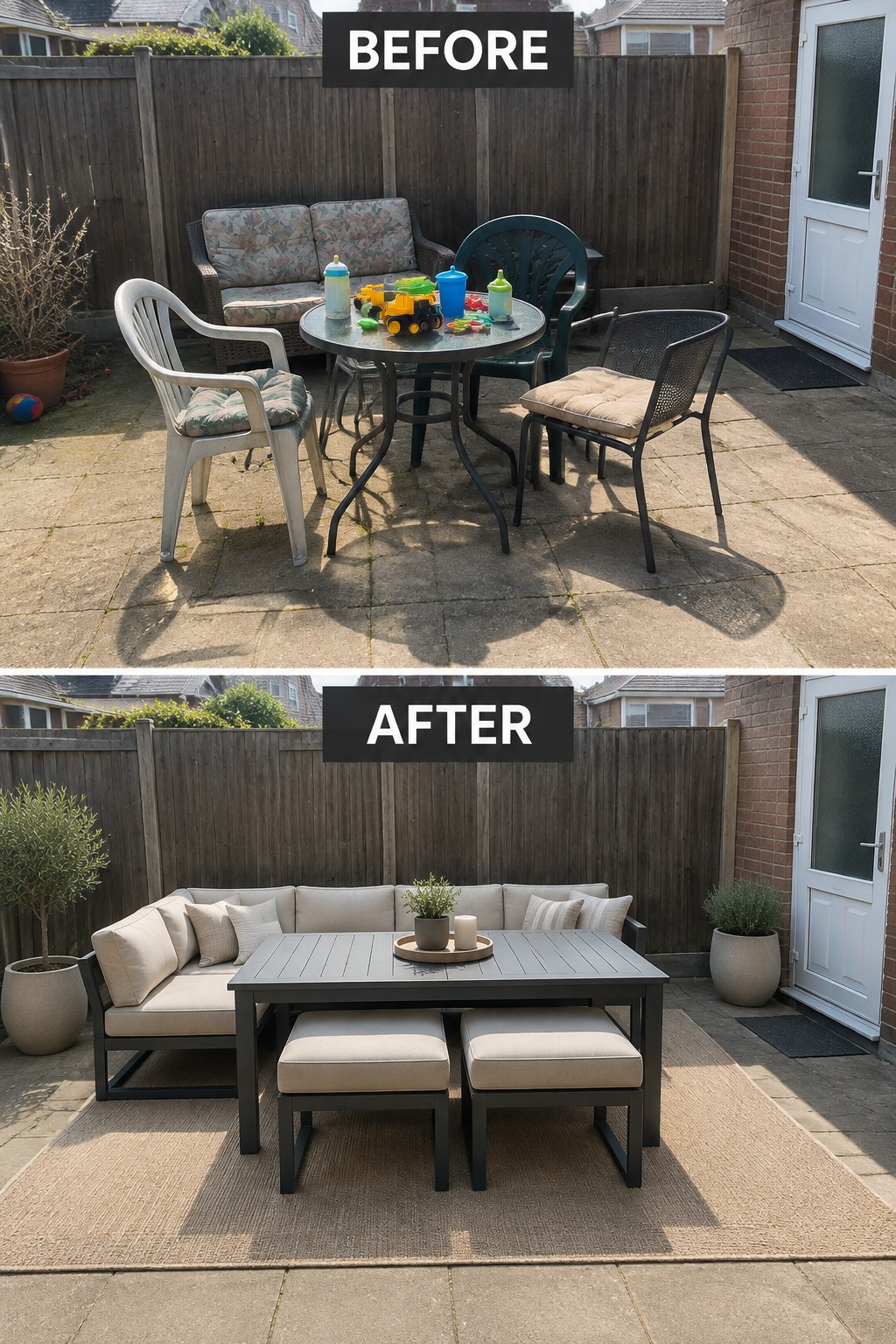
A scattered mix of chairs and a small table does not give a patio much purpose. Swapping that setup for one large sectional, a dining table, and two matching stools creates a clear place to sit and eat. The rug underneath pulls everything together and keeps the furniture from feeling like it was just placed on the concrete.
This approach works well on any patio or deck that gets regular use. Start with the biggest pieces first, then add the rug so the seating area has a visible boundary. Keep the furniture scale in line with the space so there is still room to walk around the table and chairs.
Turn A Bare Deck Into An Outdoor Dining Area

An empty deck with nothing but stacked chairs feels like wasted space once the sun goes down. Adding a simple dining table, a few chairs, and string lights along the railing turns the same deck into a spot that actually gets used after dark.
This idea works best on decks or patios that already have a solid floor and railing. Keep the furniture scale modest so there is still room to walk around, and run the lights at railing height rather than overhead so the glow stays even and useful for sitting.
Turn A Cluttered Patio Into An Outdoor Dining Area

A messy backyard corner filled with lawn tools, bins, and random storage rarely gets used for anything. Clearing that space and adding a simple canopy with curtains and a small dining set turns it into a spot where people actually want to sit and eat. The change feels practical because the structure gives the area a clear purpose and some protection from sun or light rain.
This idea works well on a plain concrete slab or deck that sits right off the house. Focus on removing everything that does not belong first, then choose a canopy size that fits your table and chairs without crowding the walkway. Weather-resistant furniture and a couple of potted plants keep the look simple while making the space feel finished.
Frequently Asked Questions
Q: What if my yard is mostly shade and I still want a spot for dinner parties? A: Hang a few warm lights from tree branches or a simple frame to brighten things up. Pick light-colored cushions and rugs that reflect what light you have. Guests will feel the space open up once the food hits the table.
Q: How do I stop the table from feeling cramped with more than four people? A: Use a bench on one side instead of extra chairs. It slides in close and frees up floor space for walking around. Add a folding side table nearby for drinks and plates.
Q: My evenings get buggy fast. What helps without much hassle? A: Set out a couple of small fans near the seating area. They keep air moving and push insects away while everyone eats.
