


Backyards often end up ignored when they feel too exposed, turning what could be usable space into something that just gets mowed and forgotten.
I keep coming back to how adding even modest screening makes the area feel more settled and ready for actual use rather than just looking out at it from the window.
Privacy changes everything in a yard.
It is worth looking at options that combine screening with seating or planting so the whole setup stays practical instead of turning into extra work.
Some of these setups might work well if I ever tackle the side of the house that always feels a bit open.
Add Privacy Fencing To Create A Secluded Backyard Space
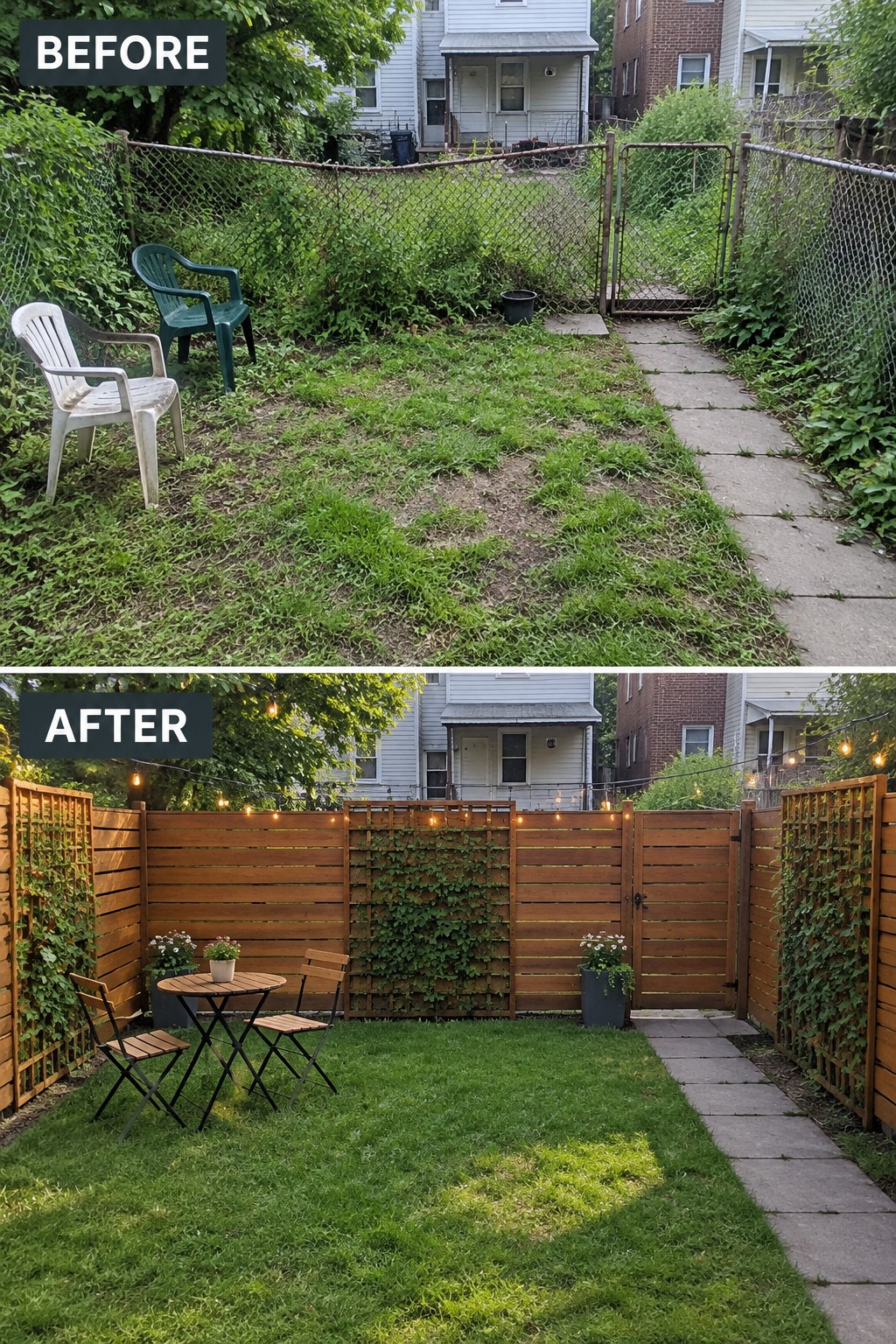
The main change in this yard is swapping out the chain-link fence for a solid wood privacy fence with lattice panels. That single update turns an open, exposed lawn into a contained outdoor room where people can sit without feeling watched from the sides.
This idea works best in smaller or narrow backyards that sit close to other houses. Keep the fence height consistent, add simple string lights along the top if you want evening use, and leave the center of the lawn open so the space still feels usable rather than boxed in.
Screen A Narrow Side Yard With Bamboo And Tall Grasses
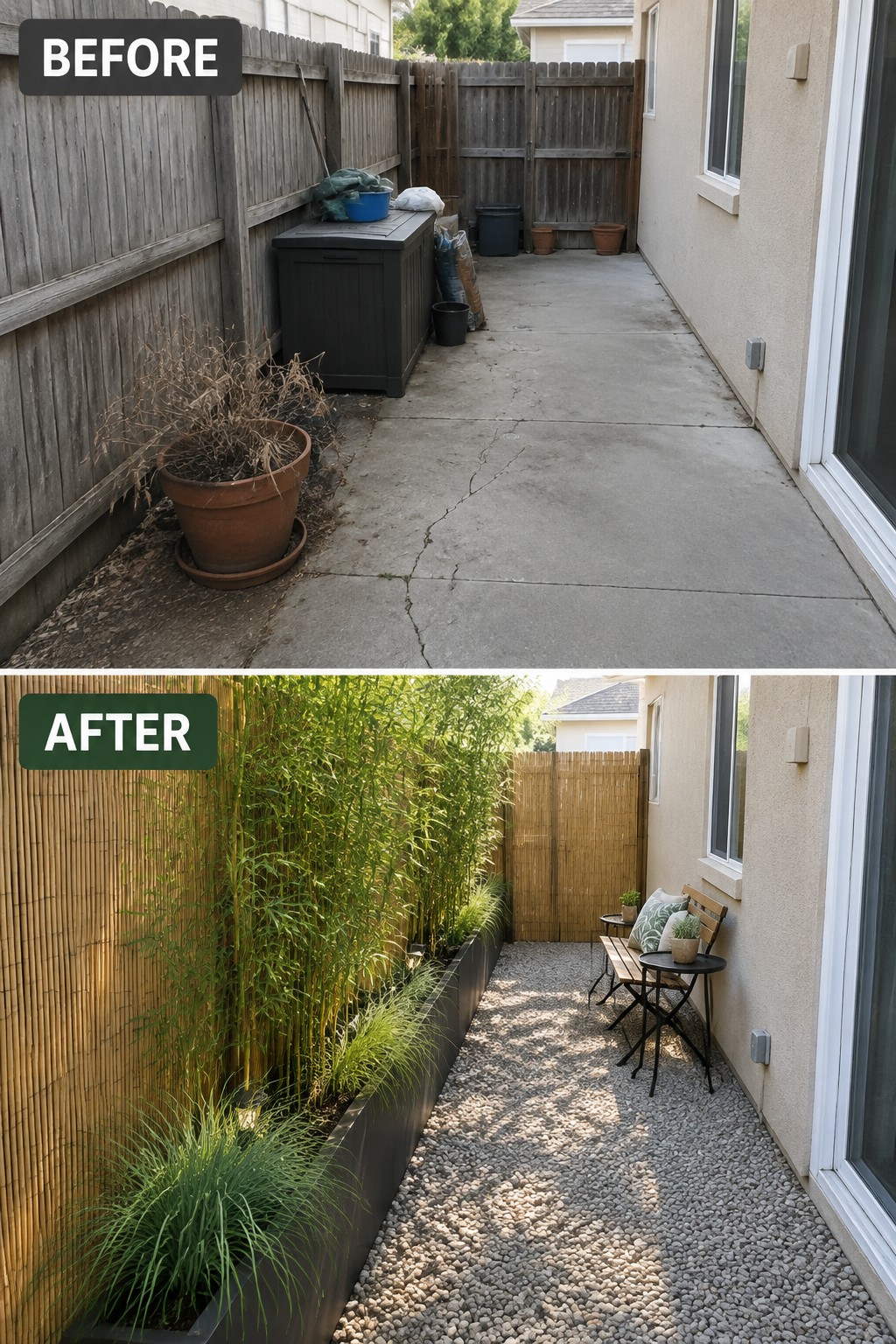
A plain concrete walkway next to the house often feels exposed and unused. Adding a bamboo screen along one fence and a long planter filled with tall grasses turns the space into a private path. The gravel underfoot replaces the cracked concrete, and the planting softens the walls without crowding the narrow area.
This approach works well in tight side yards where you need privacy but still want to keep the space passable. Start with the screen and the planter bed first, then add simple seating once the plants start to fill in. It suits homes with long, narrow lots and gives you a usable outdoor zone without major construction.
Add Curtains To Create Privacy On An Open Patio

An open concrete pad next to a chain link fence often feels too exposed for comfortable seating. Adding a pergola with side curtains changes that by creating a defined space that feels more private while still staying open to the yard. The fabric panels block the direct view from outside without making the area feel closed in.
This approach works best on existing patios that already have a solid surface and decent sun. Hang the curtains on the sides that face the most traffic or neighboring homes, and choose a fabric that can handle weather. It suits smaller backyards where you want some seclusion without building a full fence or enclosure.
Add Privacy Screening With Vertical Planters On The Fence
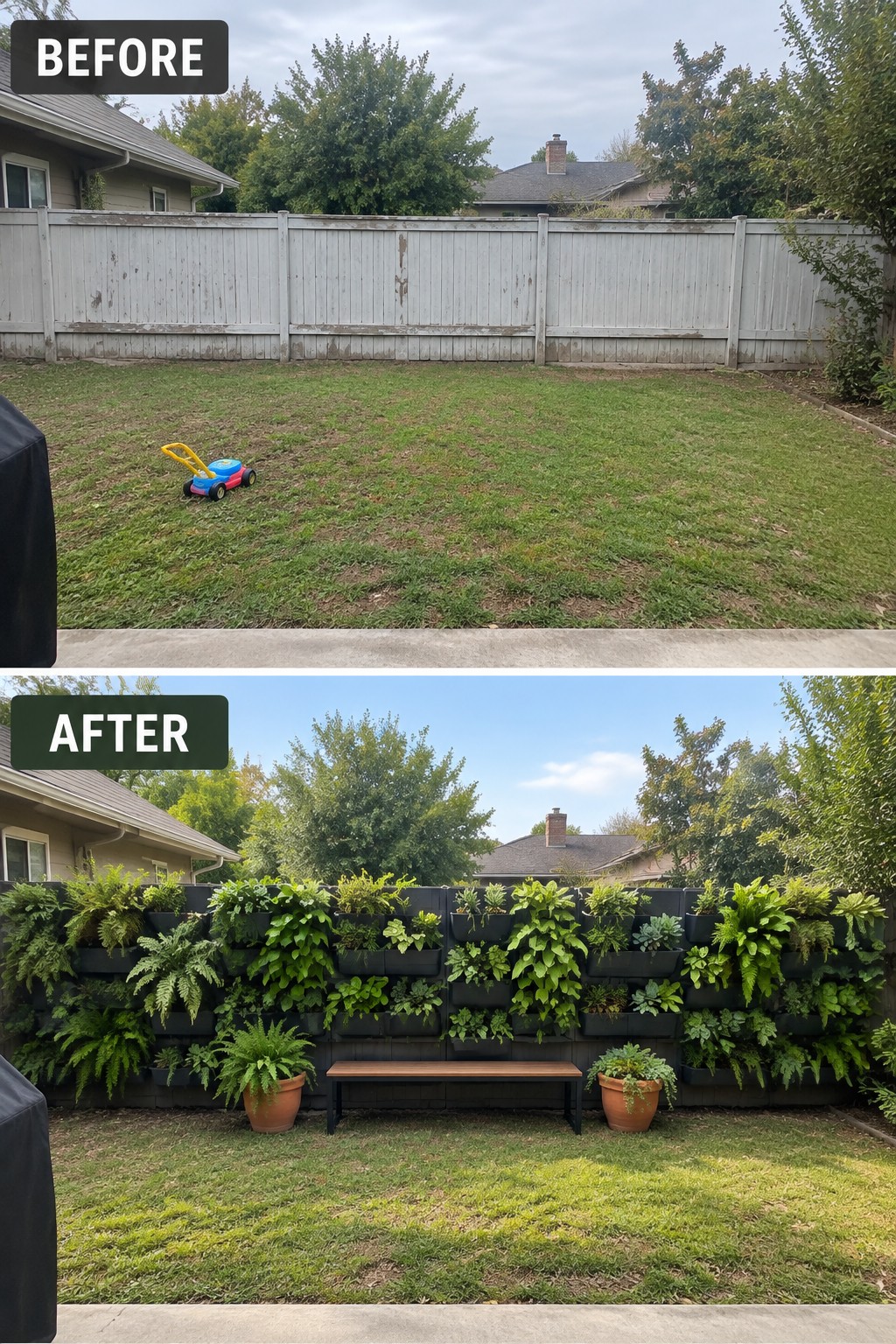
A plain fence often leaves a backyard feeling exposed. Covering it with vertical planters turns that same fence into a living screen that blocks views from neighboring yards while adding greenery at eye level. The change here shows how a basic wood fence can go from open and flat to dense with plants without needing extra structures or taller barriers.
This idea works best in smaller lots where you want privacy but still need the yard to feel open. Use sturdy, weatherproof planters in rows, mix ferns with broader leaves for quick coverage, and keep the ground level clear for a bench or a couple of pots so the space stays usable.
Add A Privacy Screen To Make Your Patio Usable

A plain concrete slab next to a chain link fence rarely gets much use. Adding a tall wooden privacy screen with a built-in planter changes that quickly. The screen blocks the view from the yard behind, while the long planter adds height and softness right where you need it most.
This idea works well on small lots or anywhere neighbors can see into your space. Keep the screen simple, use a planter wide enough for a mix of tall grasses and flowers, and set a rug and table underneath. Leave walking room around the furniture so the area still feels open rather than crowded.
Add Privacy Screening To Define An Open Backyard

The main change here is replacing a basic wooden fence with a solid privacy screen that has built-in planter boxes along the base. This single update turns an empty stretch of grass into a space that feels enclosed and intentional instead of wide open. The perforated panels block the view from neighboring yards while still letting some light through, and the shrubs in the planters soften the base so the fence does not feel like a wall.
This approach works well in suburban backyards where houses sit close together. Start with the fence or screen first, then add planting at the bottom to keep the look grounded. Choose a material that matches your climate and maintenance level, and keep the lawn area clear so the space stays usable for seating or play rather than getting crowded with too many features at once.
Plant A Hedge For Backyard Privacy
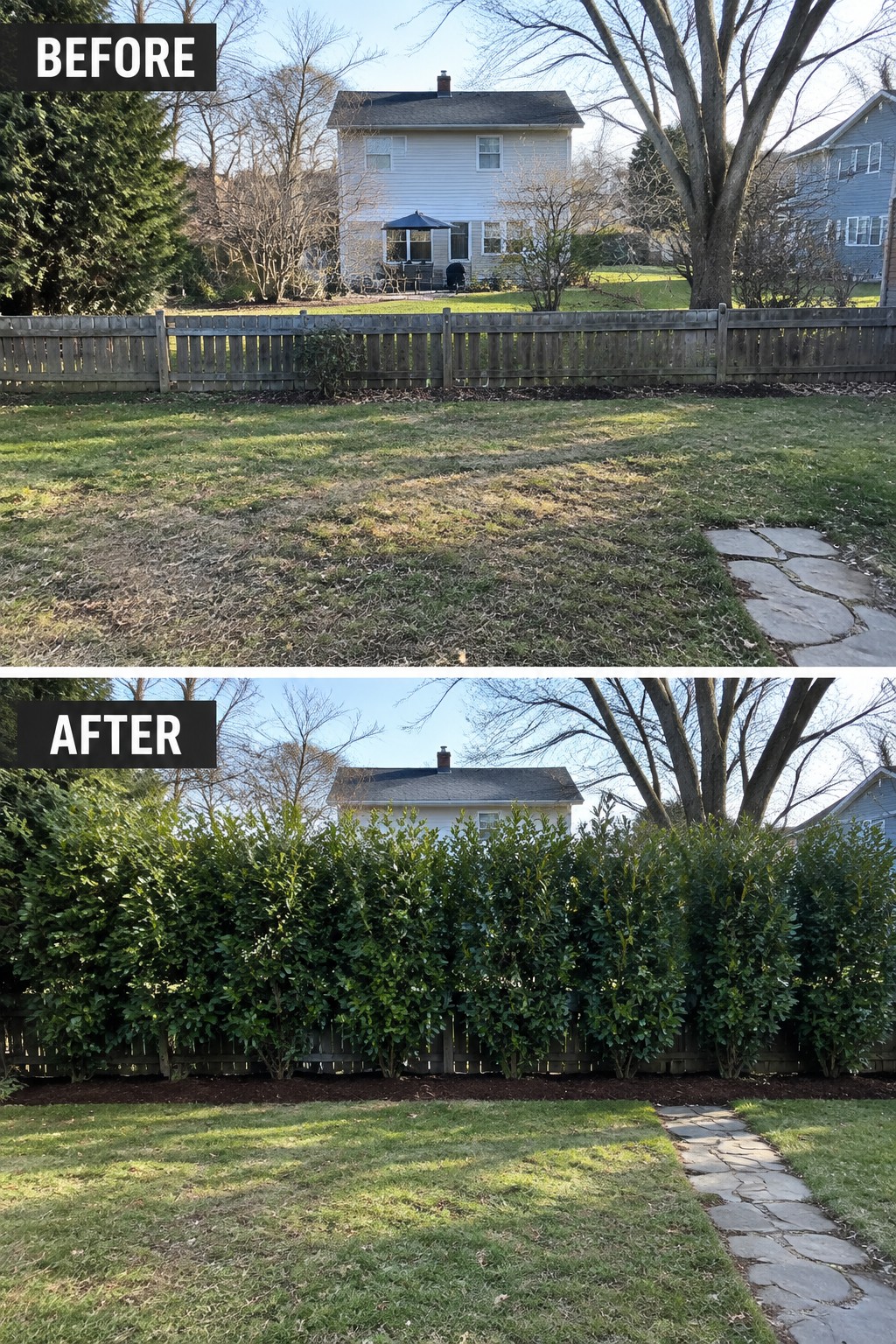
A simple way to add privacy is to plant a dense hedge right along the fence line. The patchy grass and open fence became much more enclosed once a row of full shrubs filled in the space and blocked the view from the other side.
This idea works best on smaller lots or anywhere you want screening without a taller structure. Pick evergreen shrubs that grow thick and reach the height you need, then keep the bed mulched so the planting stays neat and the grass edge stays clean.
Add Privacy Screening To Make A Patio Feel Private

An open rooftop or balcony often feels too exposed for real use. Adding privacy screens along the edges instantly creates a sense of enclosure without making the space feel closed in. The screens here block the view from surrounding buildings while still allowing light and air to pass through.
This idea works best on rooftops, upper decks, or side patios where neighbors or city views make the space feel public. Keep the screening on one or two sides only, and add a few tall planters to soften the look. Choose weatherproof materials and simple panels so the area stays usable year after year.
Create Privacy With Climbing Plants On A Lattice Fence

An overgrown backyard corner with no clear boundary can feel exposed and unused. Adding a lattice fence and training climbing roses and clematis across it turns the same space into a defined, private seating spot. The plants fill in the gaps over time, softening the structure while blocking the view beyond.
This idea suits side yards or back corners where a solid fence would feel too heavy. Install the lattice on sturdy posts first, then plant climbers that reach eye level quickly. Mulch the ground underneath to keep weeds down and give the area a finished look without crowding it with too many extras.
Use Pallets To Create A Vertical Privacy Garden
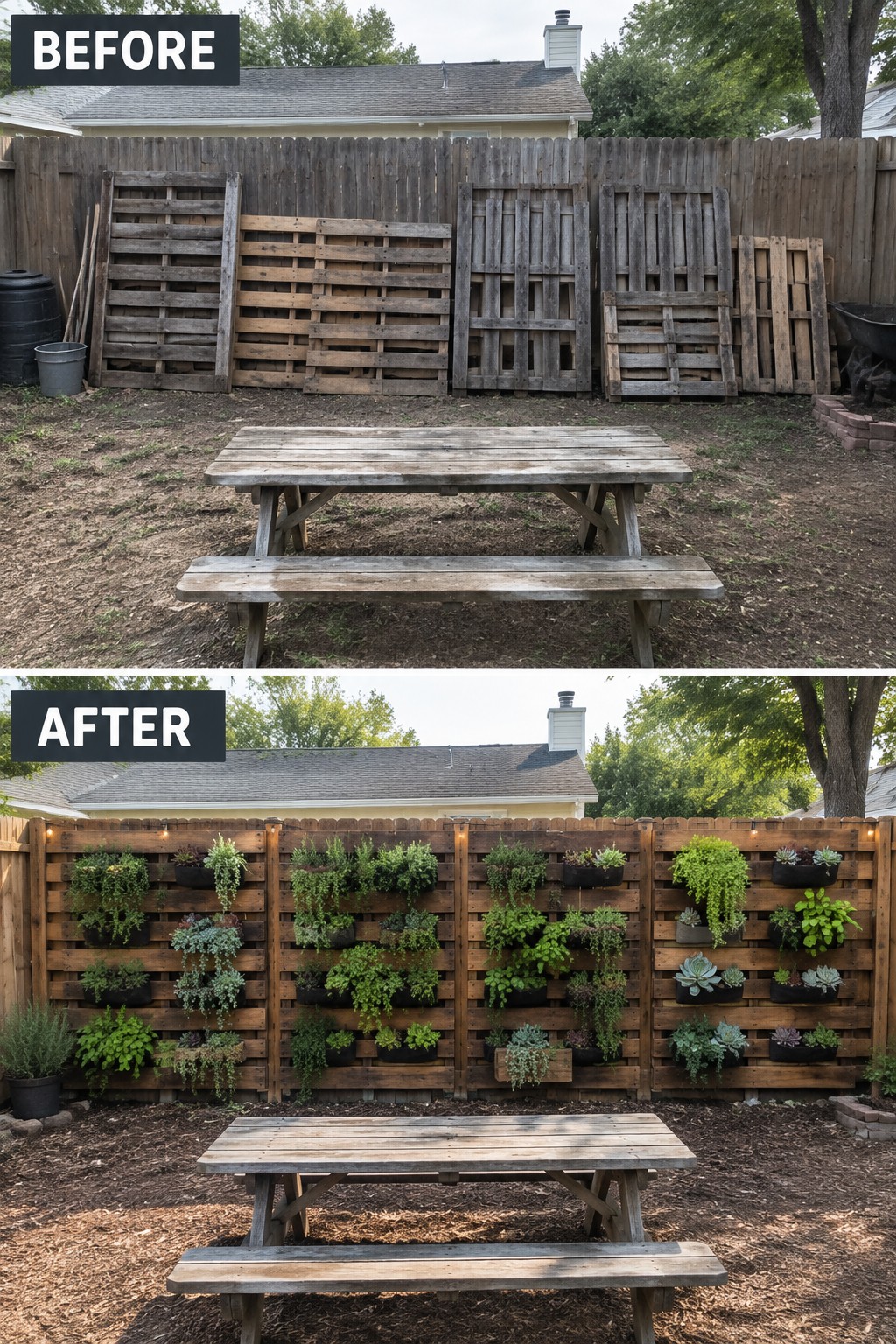
A bare fence and open yard leave little privacy, but mounting old pallets upright and filling them with plants changes that fast. The wood adds structure while the pockets of soil let trailing greens and succulants spill over, forming a living screen that blocks the view without feeling heavy.
This approach works best along a property line or behind a seating area where you need coverage but want to keep the space open. Start with a few pallets screwed to the fence, line the pockets, and choose hardy plants that can handle sun and wind. Keep the layout simple so the screen stays easy to water and maintain over time.
Add Tall Grasses For Poolside Privacy
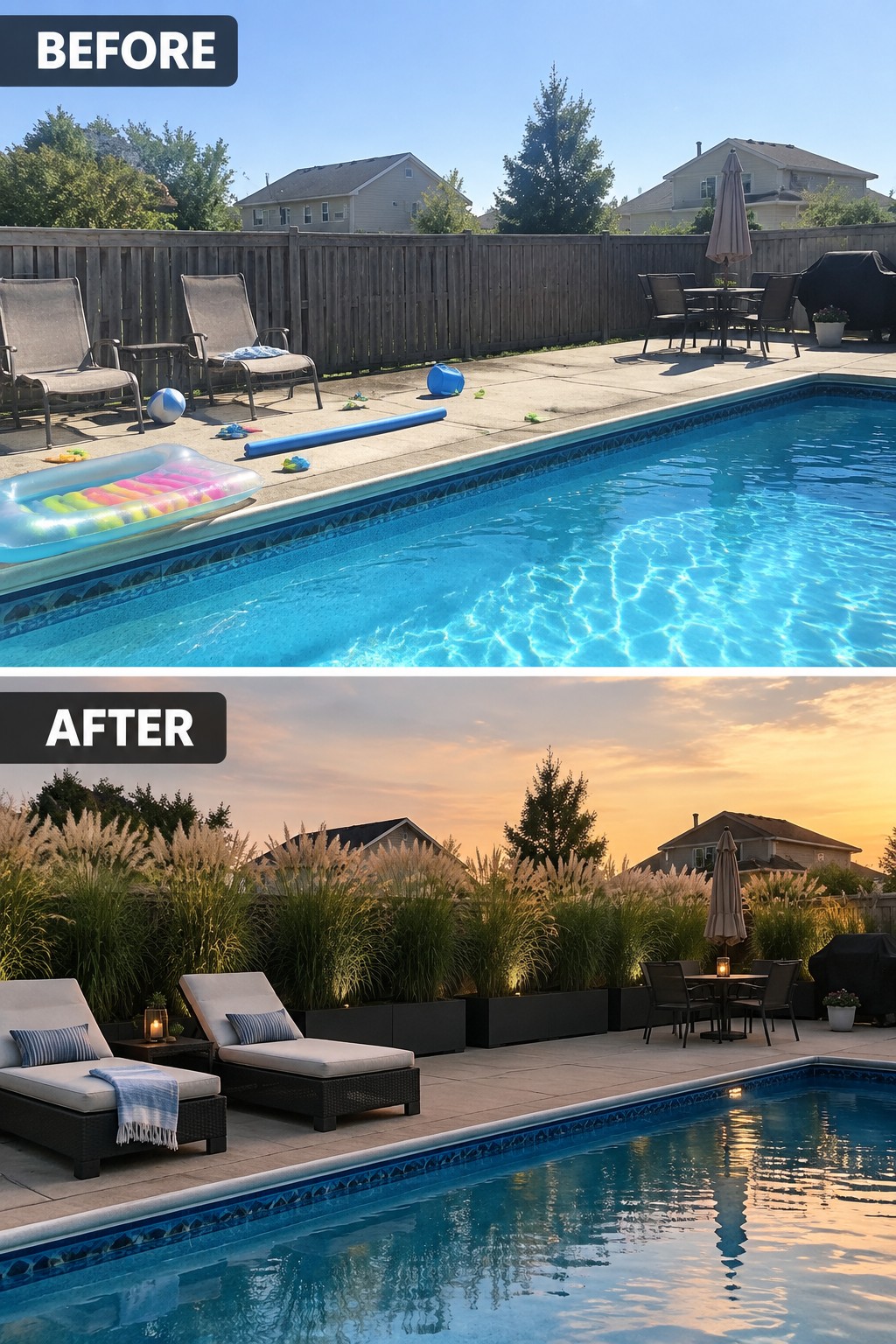
One simple way to make an open pool deck feel more private is to add a row of tall grasses in large planters along the back edge. The before version sat right against a plain fence with nothing to block the view, while the after version uses dense planting to create a soft screen that still lets in light and air.
This approach works best on concrete pool decks where you want some seclusion without building a full fence or structure. Use planters in a dark finish so they blend with the furniture, and choose grasses that hold height through summer. Leave enough space between the planters and the pool edge so the area stays easy to walk around.
Add Privacy Screening To Define A Backyard Garden

An open backyard with an old fence often feels exposed and messy. Replacing it with a solid horizontal slat fence adds real privacy while giving the whole space a cleaner shape. The raised bed stays in the same spot but now sits against a defined backdrop instead of blending into the weeds and grass beyond it.
This approach works well in smaller yards where you want separation without losing light. Start with the fence to set the boundary, then add gravel and a simple path so the garden bed feels like a finished zone rather than an afterthought. Keep the planting simple at first so the fence remains the main feature.
Add Privacy Screens To Turn An Open Patio Into A Living Space

Adding privacy screens on the sides is one of the simplest ways to make an exposed patio feel like a real room. The before photo shows an open concrete area with just a rug and no real way to sit comfortably. Once the screens go up, the space becomes enclosed enough to add a full sofa, coffee table, and plants without feeling overlooked or blasted by sun.
This approach works best on covered patios that already have a roof and floor but sit right next to a yard or neighboring homes. Use a light-colored mesh that softens the light while still letting air move through. Focus on the two longest sides first, then decide if you need more coverage later.
Add Privacy With Woven Screening And Climbing Plants
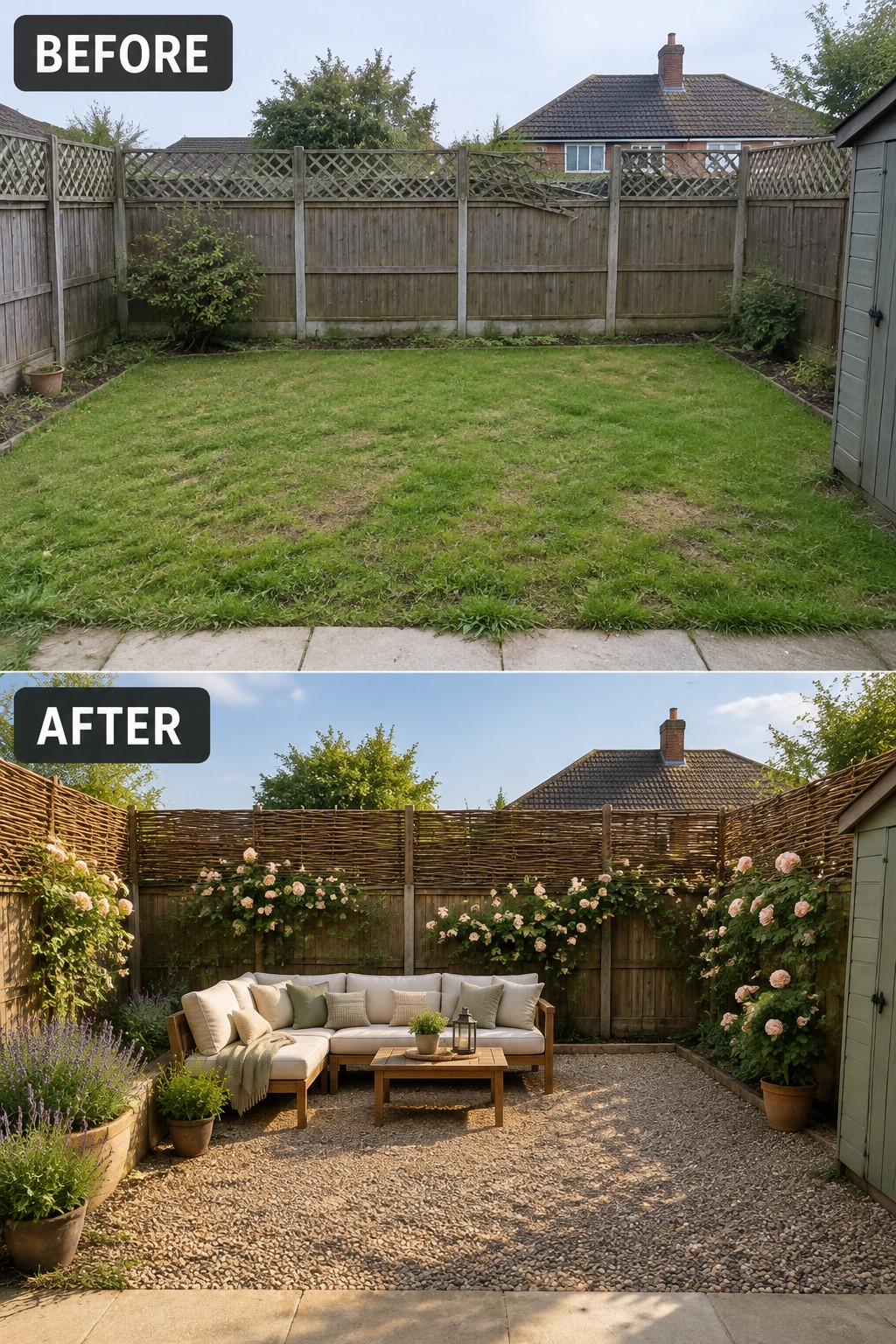
A plain fence leaves the whole yard feeling exposed. Here the fence was updated with woven panels and climbing roses that quickly fill in the gaps, turning an open lawn into a much more private space. The gravel base and seating area then sit comfortably inside that new boundary instead of floating in the middle of the yard.
This approach works best on yards with existing fencing where you need screening without building a solid wall. Add the woven panels first for instant coverage, then choose fast-growing climbers that suit your climate. Keep the planting simple so the roses and foliage do most of the work over time.
Add Privacy Screening To Define A Patio Space

A bare concrete patio often feels too open and exposed when it sits right against a tall fence. Adding vertical privacy panels along the back and side walls changes the feel right away. The space becomes more enclosed without losing light, which makes it easier to use for everyday seating.
This idea suits smaller backyards or homes with close neighbors. Choose panels that match the height of your fence and leave room for a simple furniture layout and rug. Keep the rest of the area uncluttered so the screening does the main job of creating privacy.
Add Decorative Privacy Screening To Your Fence
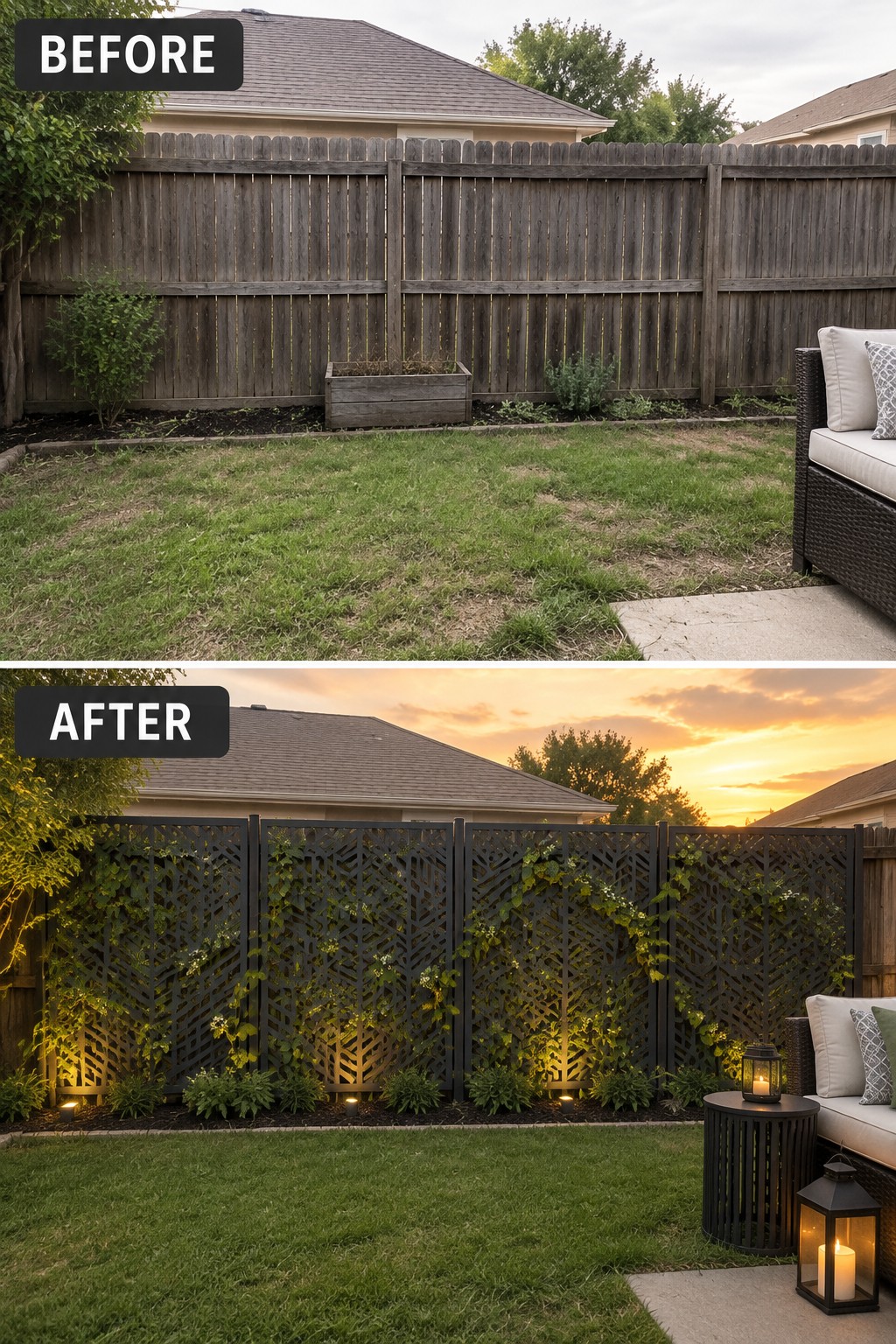
A basic wood fence often leaves a backyard feeling open and exposed. Swapping in patterned metal panels creates a screen that blocks the view from neighbors while still letting light and air through. The cutout design also gives climbing vines something to grab onto, which softens the look over time.
This idea works best in smaller yards where you need privacy without losing the open feel of grass and lawn. Choose panels that are easy to attach to an existing fence, add a few low plants along the base, and place simple lanterns nearby so the space feels usable after dark. Keep the pattern consistent across the panels so the whole line reads as one clean feature rather than a collection of separate pieces.
Add Privacy Screening To Define An Outdoor Dining Area

A simple privacy screen can turn an open patio into a space that actually feels like a room. The before photo shows a basic concrete pad with mismatched chairs and no real boundary from the lawn. Adding a horizontal wood slat screen behind the table creates a clear back wall and blocks the view from the rest of the yard.
This approach works best on patios that sit right off the house but still feel exposed. Keep the screen height around six feet so it gives privacy without making the space feel closed in. One overhead light is usually enough to make the table usable at night, and a couple of large planters on the sides help soften the edges.
Create Privacy On A Deck With Tall Potted Trees

A deck often feels too open when it sits close to other houses or yards. A simple row of tall evergreen trees in matching pots creates a living screen that blocks the view while still letting in light and air. The plastic chairs in the before photo gave way to a low wooden bench, but the real shift came from the trees that now line the railing.
This works well on decks where you cannot plant in the ground or want to keep things movable. Use narrow trees in large, weatherproof pots so the floor space stays usable. Keep the number of pots modest so the deck does not feel crowded.
Add Privacy Screens To Make A Patio Feel Private
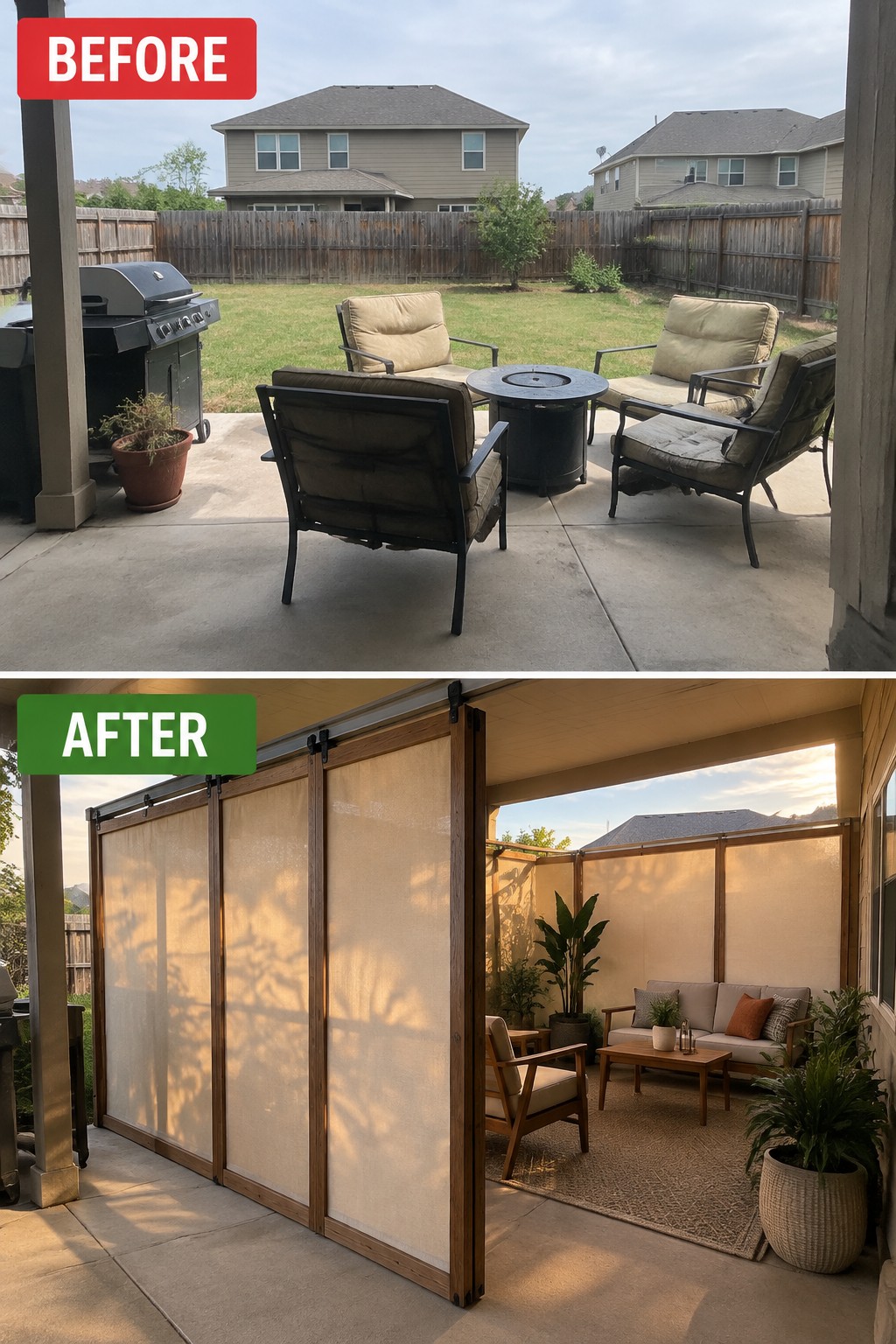
An open patio next to a yard can feel too exposed when you want to sit outside. Adding privacy screens along the sides turns the space into a more contained area where you can relax without the whole neighborhood looking in. Here the screens were placed right at the edge of the concrete, using wood frames and fabric panels to create simple walls that still let light through.
This idea works best on patios or decks that sit close to other houses or open yards. The screens can be fixed or sliding, and they pair well with existing seating and a rug to define the zone. Just keep the furniture layout loose enough that the space does not feel cramped once the screens are up.
Add Privacy Screening Around A Fire Pit
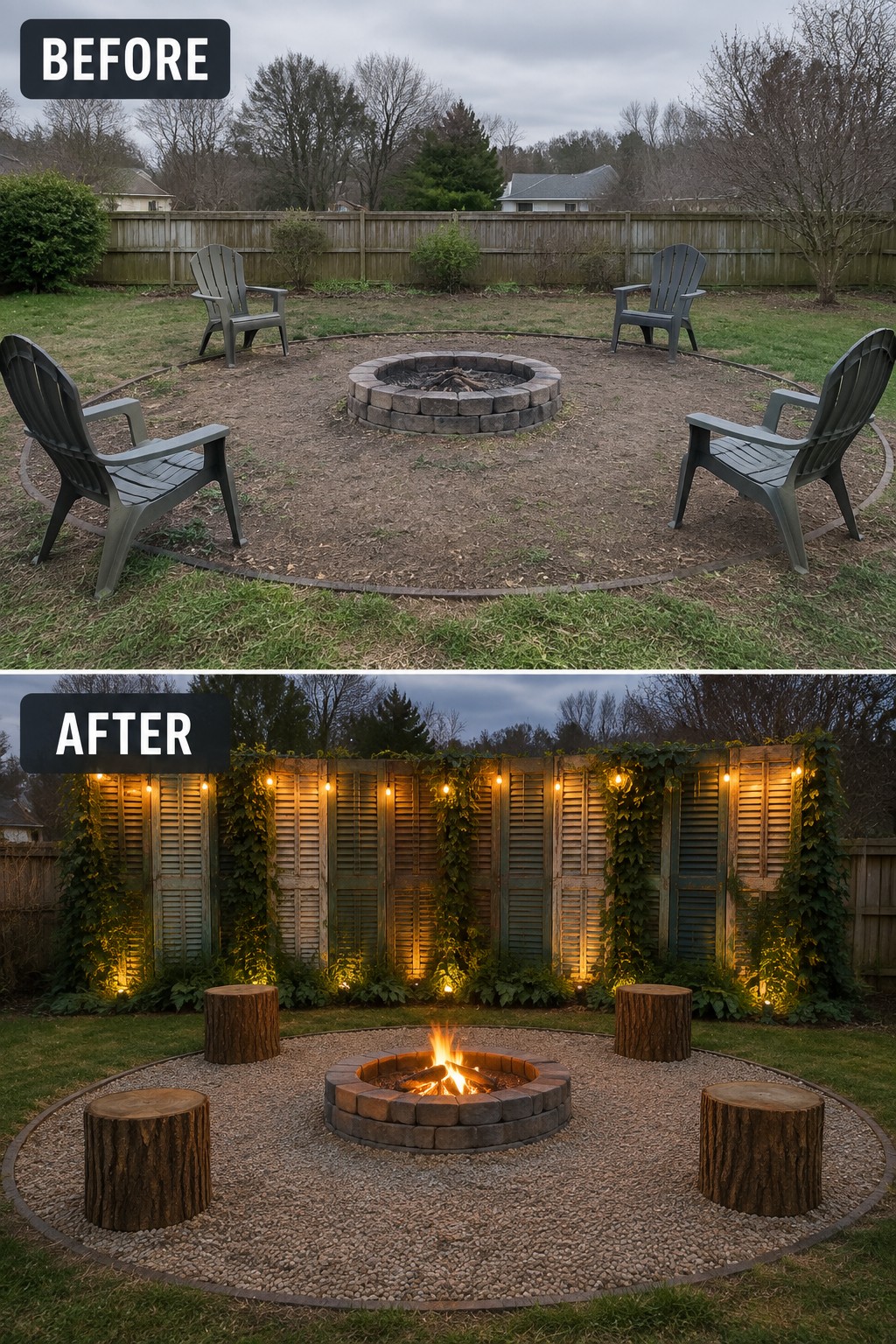
An open fire pit area often feels exposed, especially when it sits right against a basic fence with no cover. Adding a privacy screen along the back edge changes the whole feel. Here the fence was fitted with tall shutters and climbing vines that block the view from behind while still letting light through.
This idea works best in smaller yards or spots that back up to neighbors. Use shutters, lattice, or tall planters as the base, then let vines fill in over a season or two. Keep the screen height consistent so the space feels enclosed without turning into a solid wall.
Add Privacy With Tall Grasses And A Fence Extension
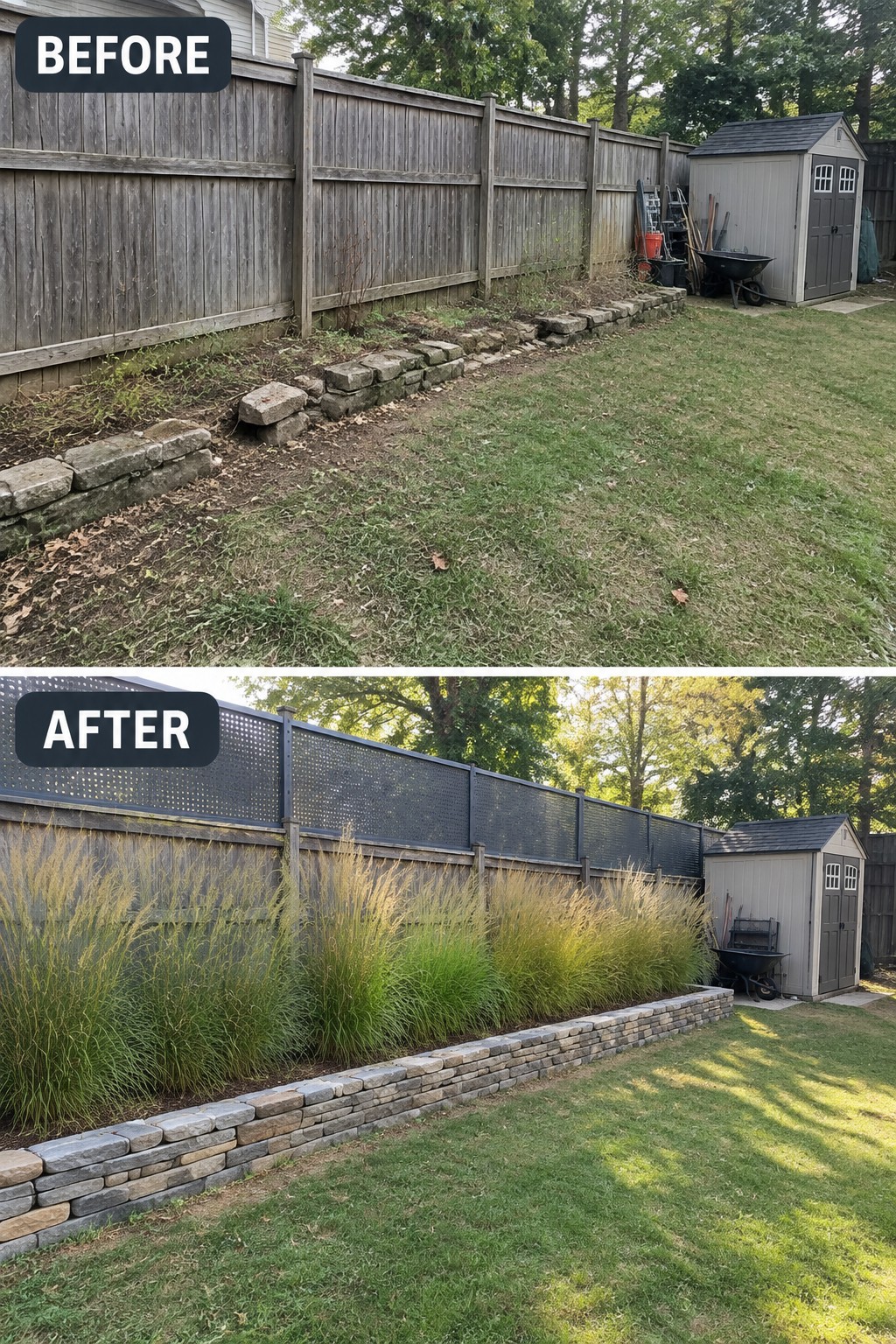
One of the simplest ways to improve a backyard is to add height and screening along the fence line. In this case, the before photo shows an uneven stone border with bare soil and little separation from the neighbor. The after photo shows how a perforated metal panel added to the top of the fence, paired with a row of tall ornamental grasses, creates a much more private feel without closing the space in completely.
This approach works well in yards where you want privacy but still need light and airflow. Start by cleaning up the edge and fixing the border, then choose grasses that grow tall enough to block the view from sitting height. The fence panel adds quick vertical coverage while the plants soften the look and fill in over time. Keep the planting in one or two rows so it does not crowd the lawn.
Frequently Asked Questions
Q: How high does a privacy screen need to go to keep things private?
A: Aim for at least six feet tall in most spots. That height usually lines up with eye level from a neighbor’s window or deck. You can always add a bit more height in key areas where people sit outside.
Q: Do living screens like hedges need a lot of upkeep compared to a fence?
A: Hedges take regular trimming to stay full and neat. Water them well in the first year so roots settle in strong. A fence might save time if you want zero fuss after installation.
Q: Can I start with just one or two ideas from the list instead of doing the whole backyard at once?
A: Pick one screen option and test it in the spot that bothers you most. Add another feature next season if it works out. This keeps things simple from the start.
