

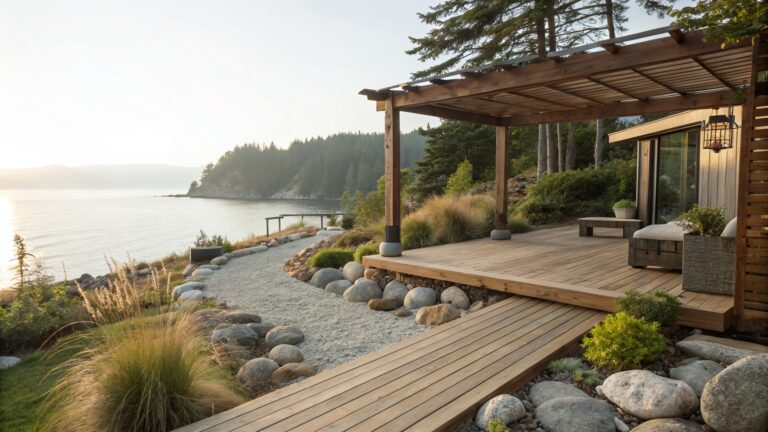
I’ve noticed that the strip of ground around a deck often gets overlooked, yet it shapes how the whole outdoor area feels over the seasons. Rocks work well there because they handle foot traffic and weather without fading, but the key is layering sizes to create natural pathways and edges that guide your eye outward. Folks usually spot first whether the setup blends the deck seamlessly into the yard or leaves it floating awkwardly. One idea I keep coming back to involves stacking flat stones low along the perimeter, which has held up better than planted borders in my own yard through a few harsh winters. These approaches make it easy to adapt something sturdy for your space.
Boulders and Gravel Framing Deck Paths
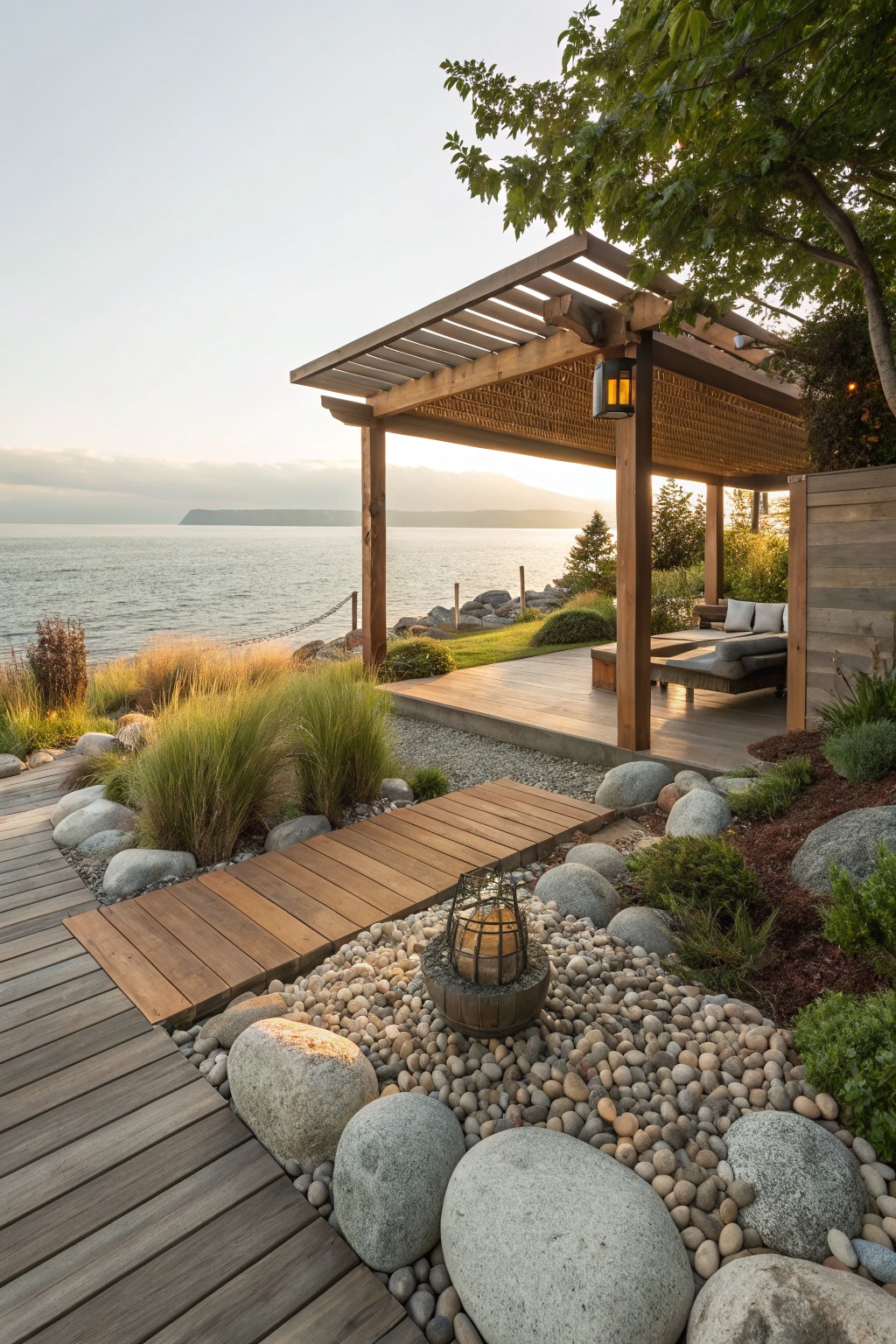
Big boulders paired with smooth gravel make a simple border around wooden decks like this one. They add weight and texture without much upkeep. The mix of large stones holding down pea gravel, plus a few tall grasses, keeps weeds at bay and echoes the natural shore nearby. It’s a quiet way to define space.
Use this in yards near water or with rocky terrain. Set the boulders along path edges first, then fill gaps with gravel. Add low grasses for movement. It suits modern decks best, but watch soil drainage to avoid pooling. Easy to scale for smaller spots too.
Fire Pit in a Stone Retaining Wall
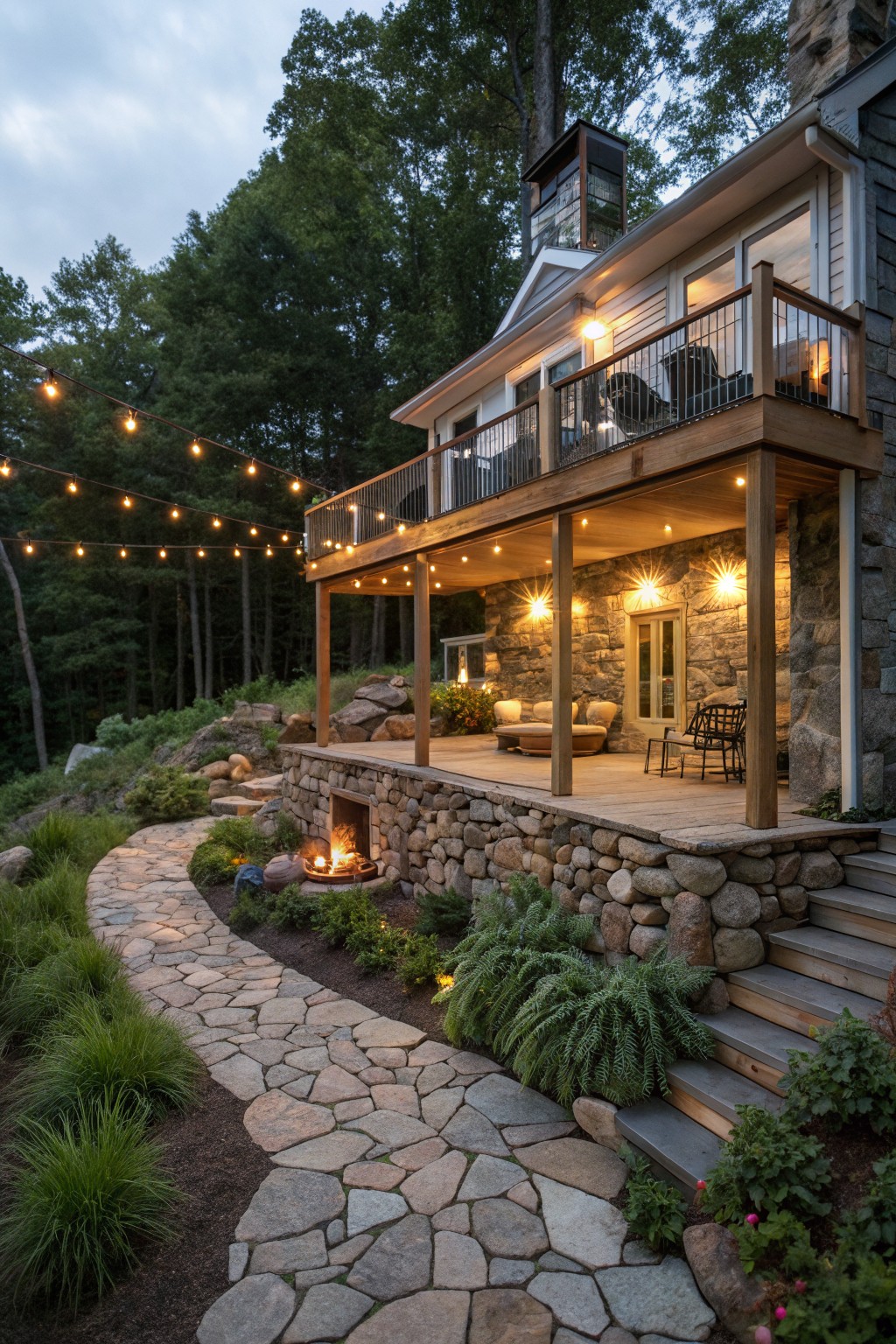
One smart way to handle a sloped yard around a deck is to build a sturdy stone retaining wall right at the base. Here, the wall uses rugged fieldstone to hold back the hill, and they’ve tucked a simple fire pit right into it. That fire glows nicely against the rocks, pulling the deck down to yard level without extra structures.
It works best where you’ve got a drop-off under the deck. Pick stones that match your area’s look, stack them solid with good drainage behind, and keep the fire pit shallow for safety. Add a flagstone path like this one to connect it all. Suits wooded lots or spots with uneven ground. Just check local codes on fire features.
Natural Rock Path Around the Deck
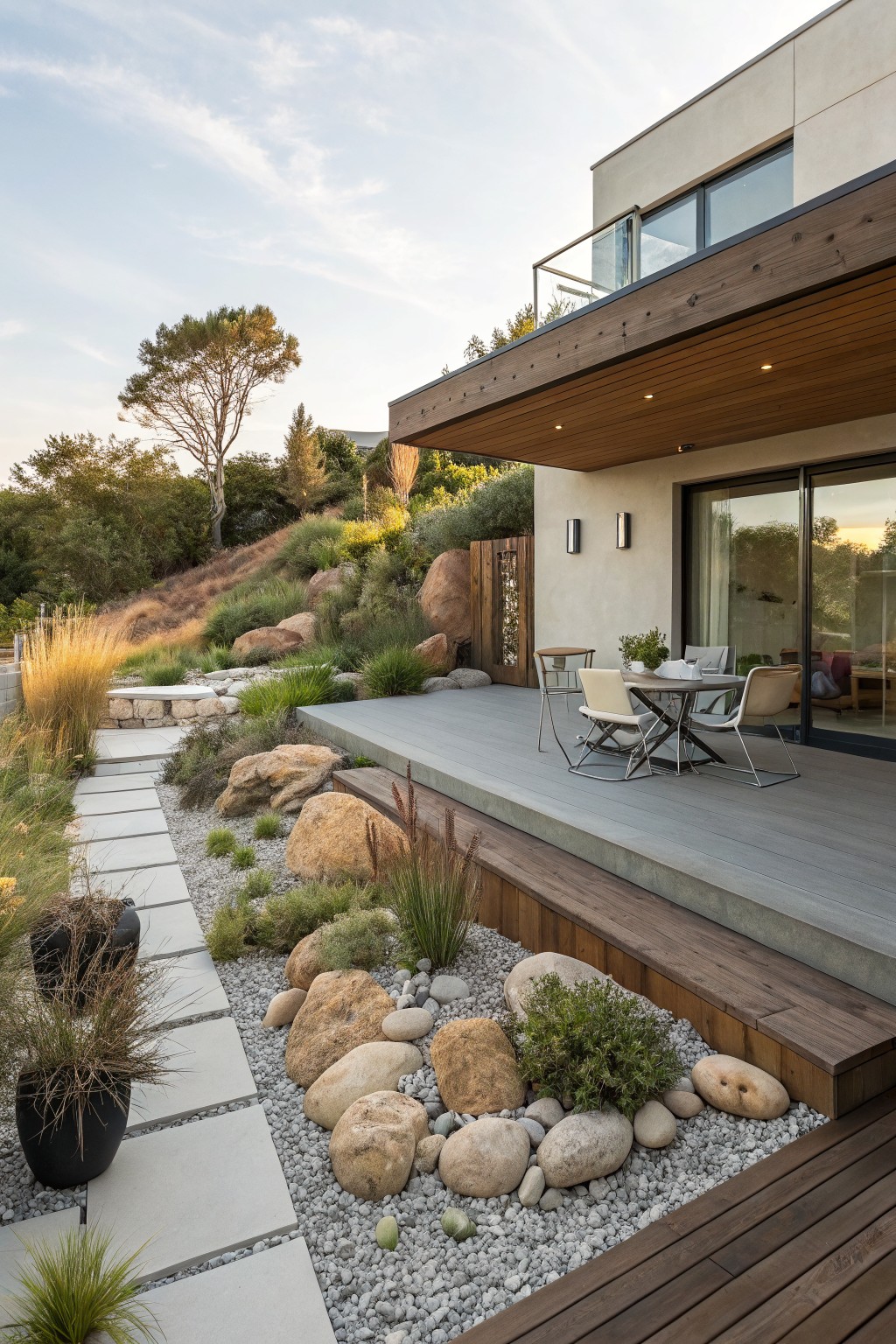
Big boulders placed along a gravel base with wide pavers make a simple path that pulls you toward the deck without any fuss. It fits right into the slope and uses the rocks to hold everything in place, keeping the look rugged but tidy.
This works best on hillsides or dry areas where grass won’t grow easy. Size the boulders to match your space, tuck in some drought-tolerant grasses for color, and it suits modern decks or casual outdoor spots. Skip tiny pebbles, they shift too much.
Pebble Retaining Walls Next to Deck Steps
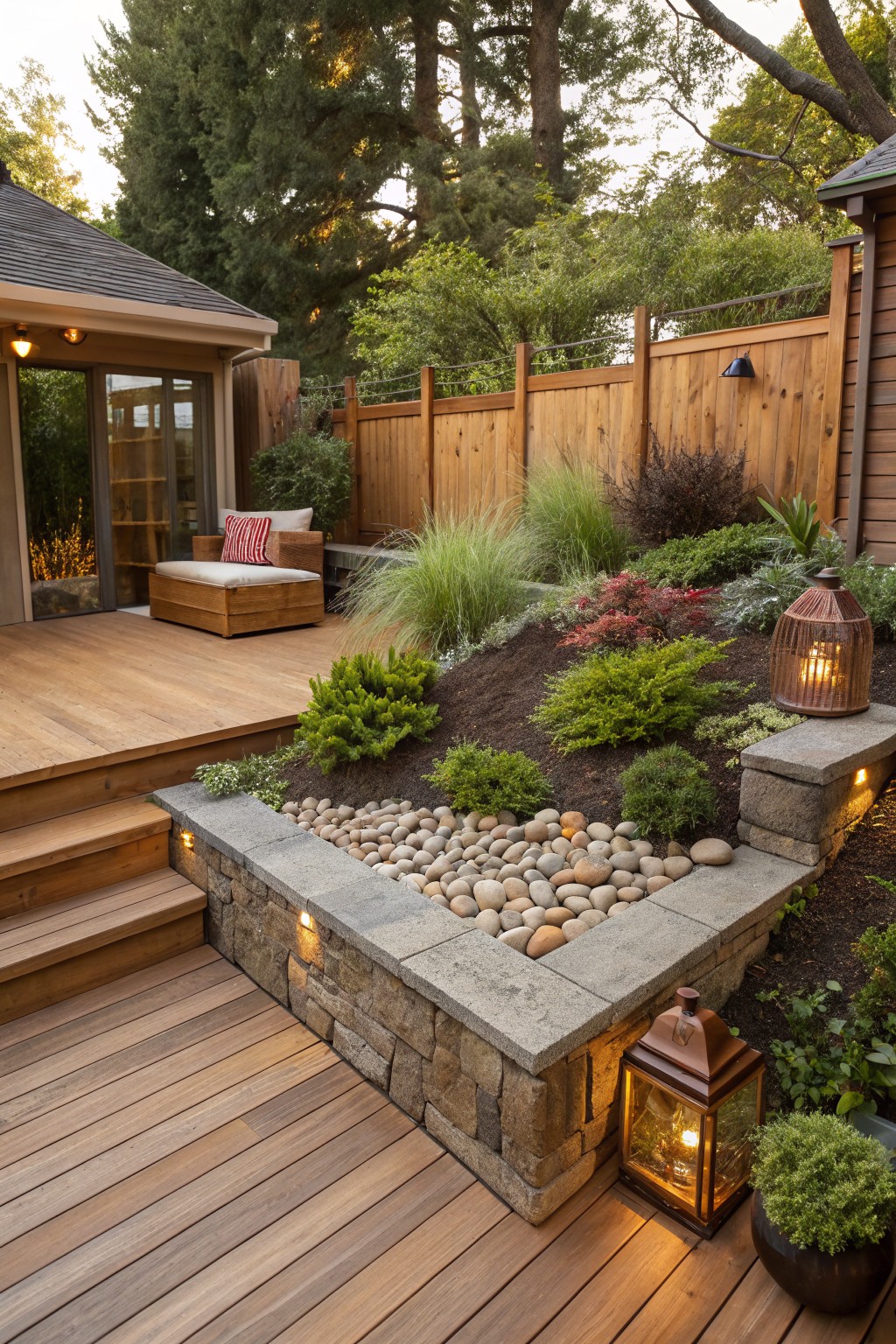
One straightforward way to handle a slope by your deck is filling a low stone retaining wall with smooth pebbles. It creates a tidy transition from the wood deck down to yard level, with just enough plants tucked in for color. Those rounded rocks look natural and stay put without much weeding.
This works best on smaller slopes where you want low upkeep. Build the wall sturdy with mortar if needed, source affordable river rocks from a local supplier, and plant tough evergreens that won’t overtake the space. Suits wooded backyards or any deck setup that backs to a hill.
Pebble Edging for Walkways Next to Decks
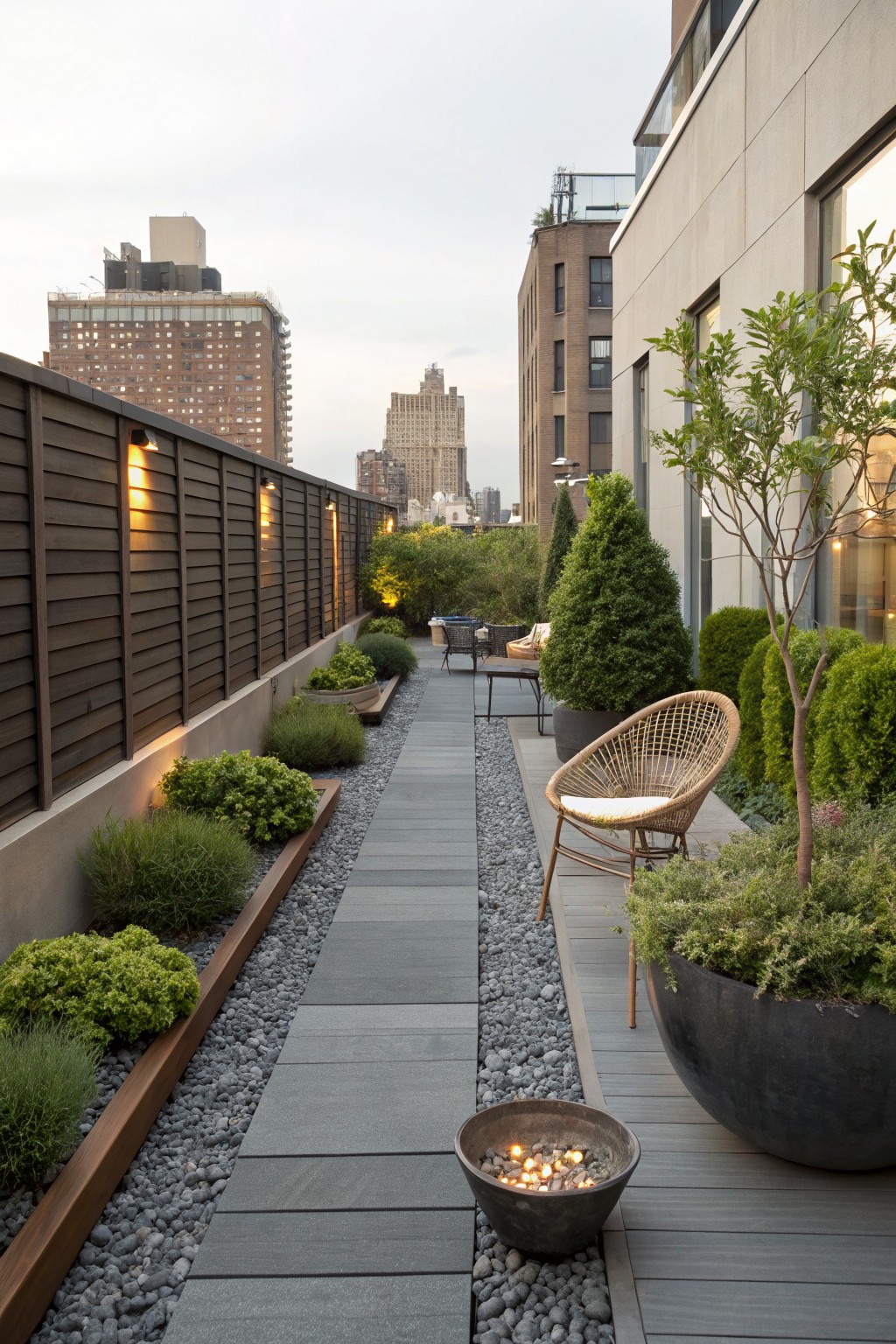
One straightforward way to add interest around a deck is to run a narrow walkway right alongside it, edged with smooth pebbles. In this setup, large gray slate pavers form the path, with pebbles filling the gaps and spilling over into borders contained by simple wood edging. It keeps things tidy while the low plants tucked in add some green without crowding the space. Folks like it because it’s easy on the eyes and doesn’t need much upkeep.
You can pull this off on rooftops, patios, or any flat deck edge where you want a bit of separation from the planted areas. Works best in modern or clean-lined yards, especially urban spots with limited room. Just make sure the wood edging matches your deck material so it all ties together, and go for rounded pebbles to avoid any sharp edges underfoot.
Boulder Retaining Walls Around Decks
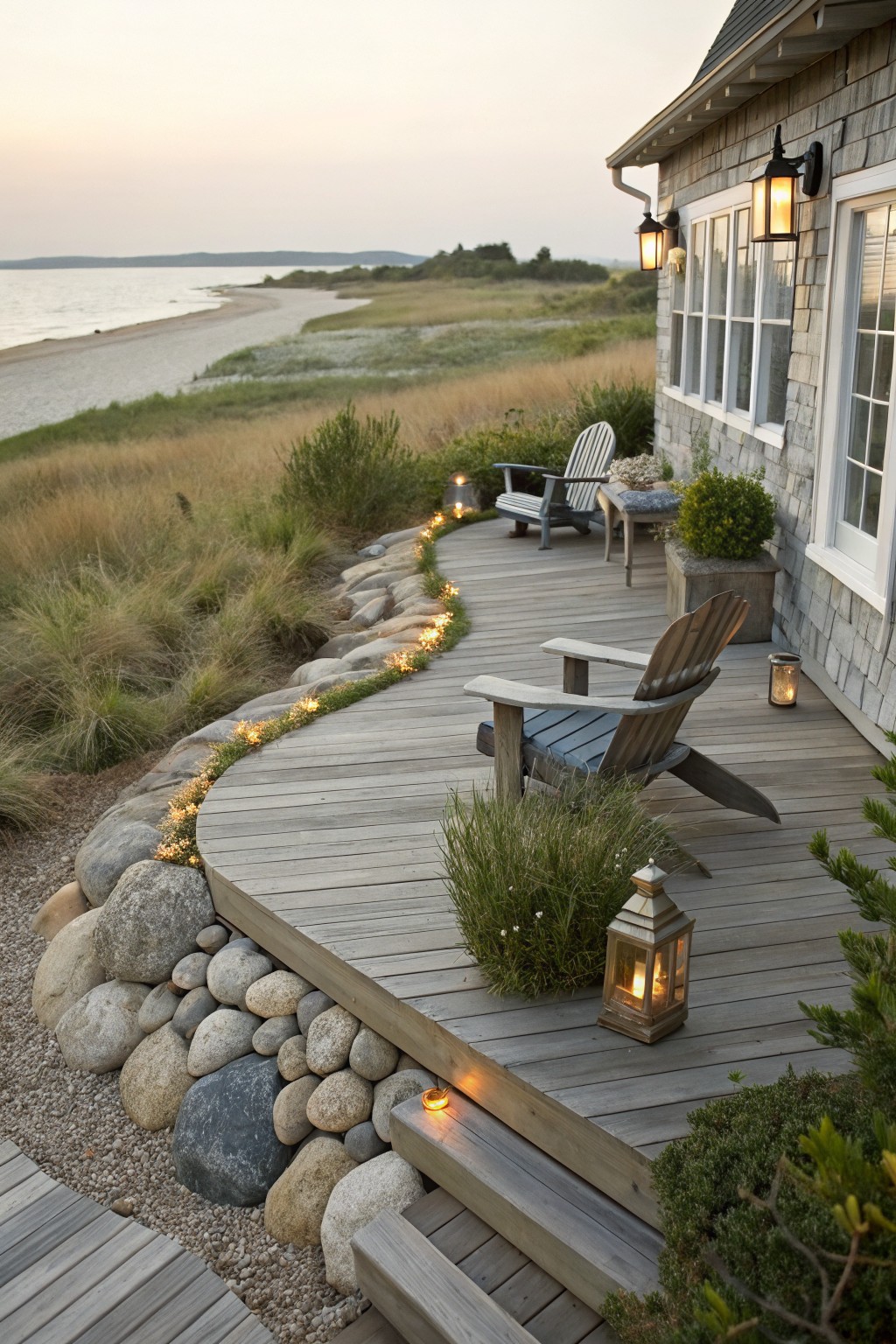
Big rounded boulders stacked along the base of this deck create a solid, natural edge that holds back the slope without looking forced. The rocks follow the deck’s gentle curve, mixing right in with the tall grasses nearby. It’s a simple way to make an elevated deck feel part of the yard instead of plunked on top.
This works best on sloped coastal lots or anywhere soil shifts. Pick boulders in a mix of sizes from a local quarry so they blend with your spot. Stack them loosely, no mortar needed, and plant grasses or low shrubs in the pockets. Just check stability first if your slope is steep.
Rocks and Stepping Stones Beside the Deck
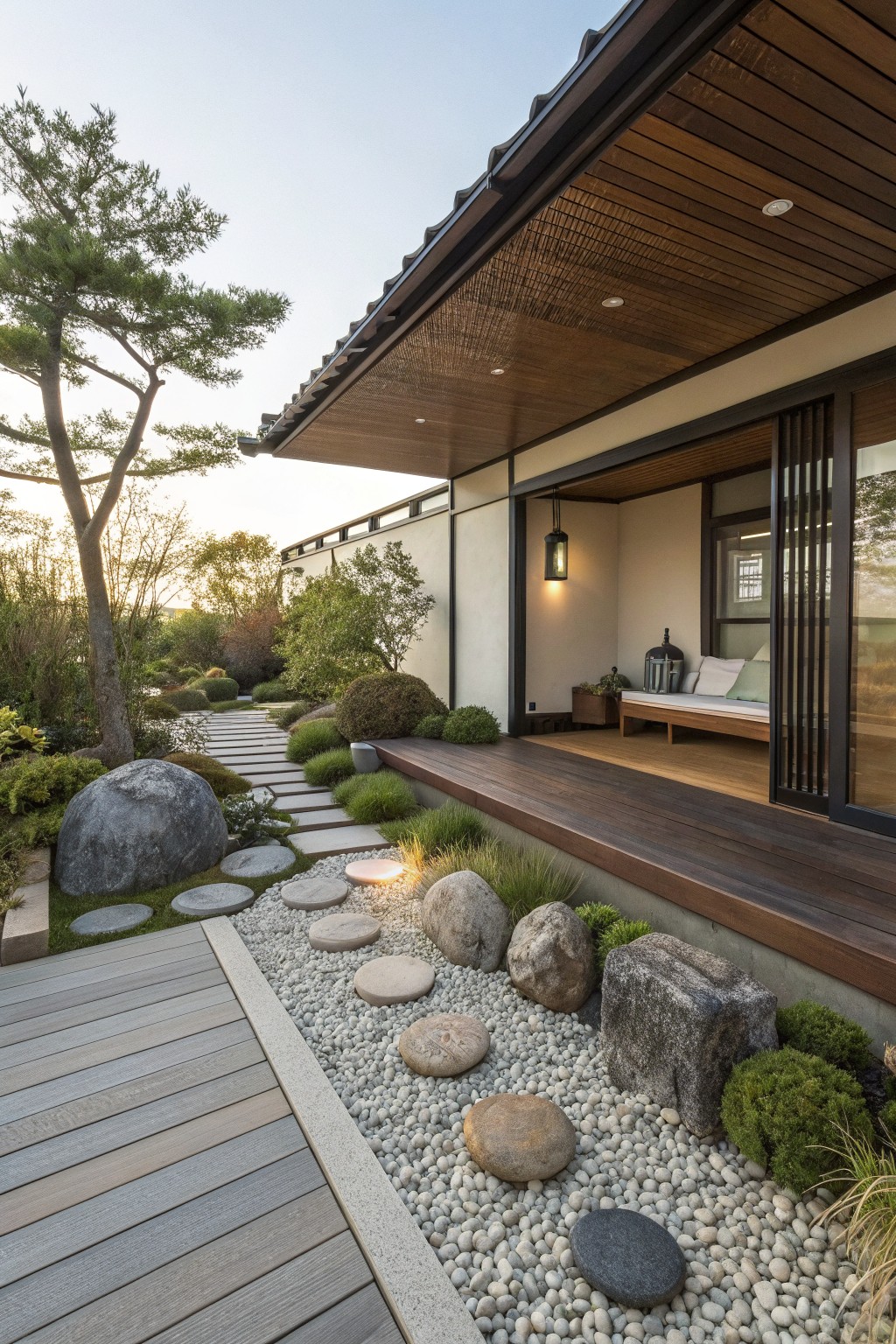
One easy way to landscape around your deck is with a mix of gravel, big boulders, and flat stepping stones. It makes a clean path that leads right up to the deck without needing much upkeep. The rocks add some weight and interest, while the stones give you spots to step on. Folks like it because it feels natural but stays simple, especially next to wood decks like this one.
You can pull this off in small backyards or bigger lots. Start by edging a gravel bed along the deck, drop in a few large rocks for structure, then set the stepping stones where people will walk. It suits homes with a modern or Japanese vibe… just keep the gravel fresh and watch for weeds popping up.
Rock Retaining Walls Around Deck Edges
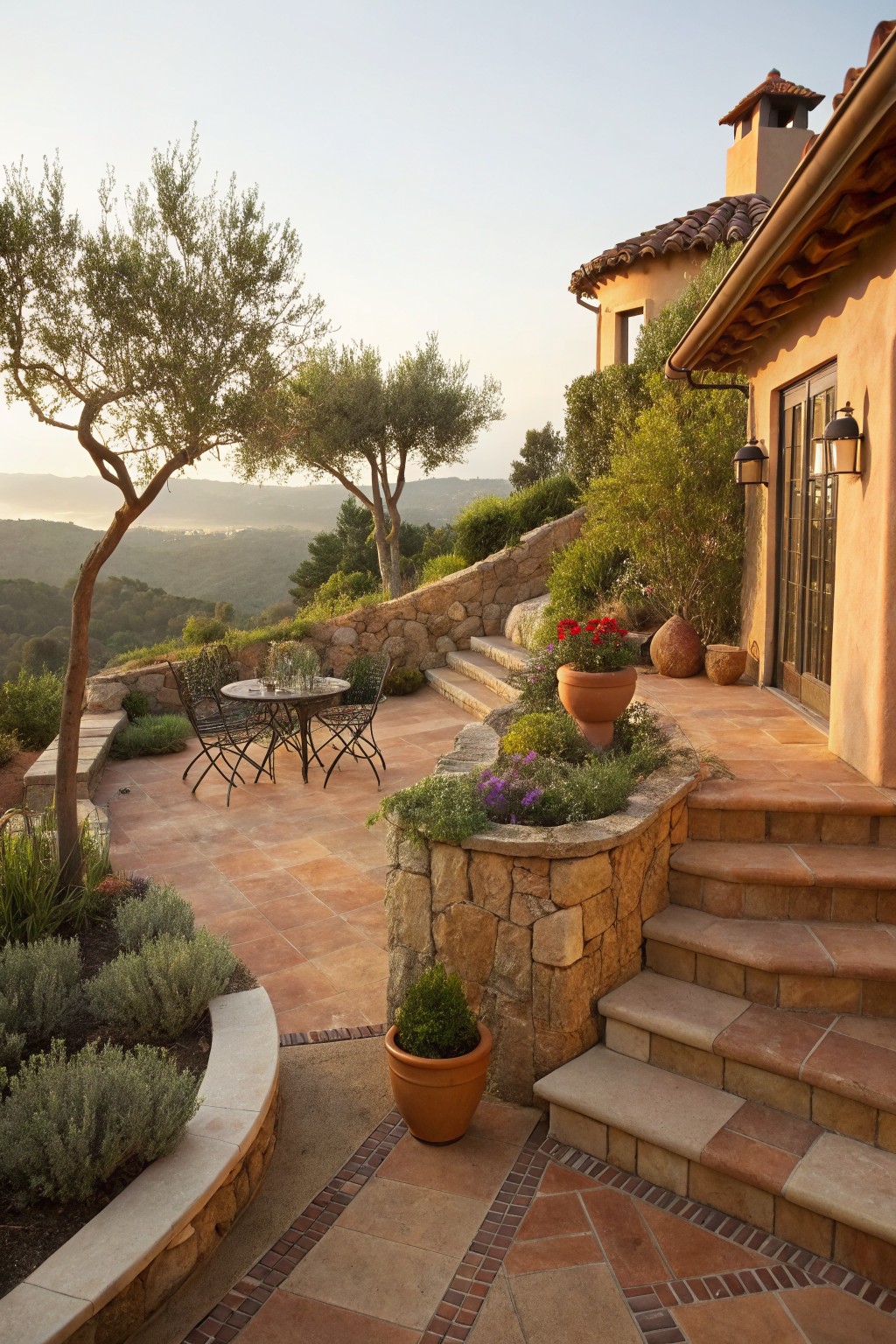
One smart way to handle a sloped yard is with rock retaining walls that wrap right around your deck or patio. They hold back the earth while giving a sturdy base for plants and steps. In this setup, the rough stone pairs well with terracotta tiles and lets greenery spill over naturally. It keeps everything from sliding downhill and adds that solid, grounded feel without much upkeep.
These walls work best where you’ve got some drop-off from the house. Stack local fieldstone or dry-laid boulders two or three feet high, tuck in low plants like lavender or sedum for color. Suits hillside homes or terraced lots. Just make sure drainage is good at the base, or water buildup could shift things over time.
Boulder and Gravel Beds Around the Deck
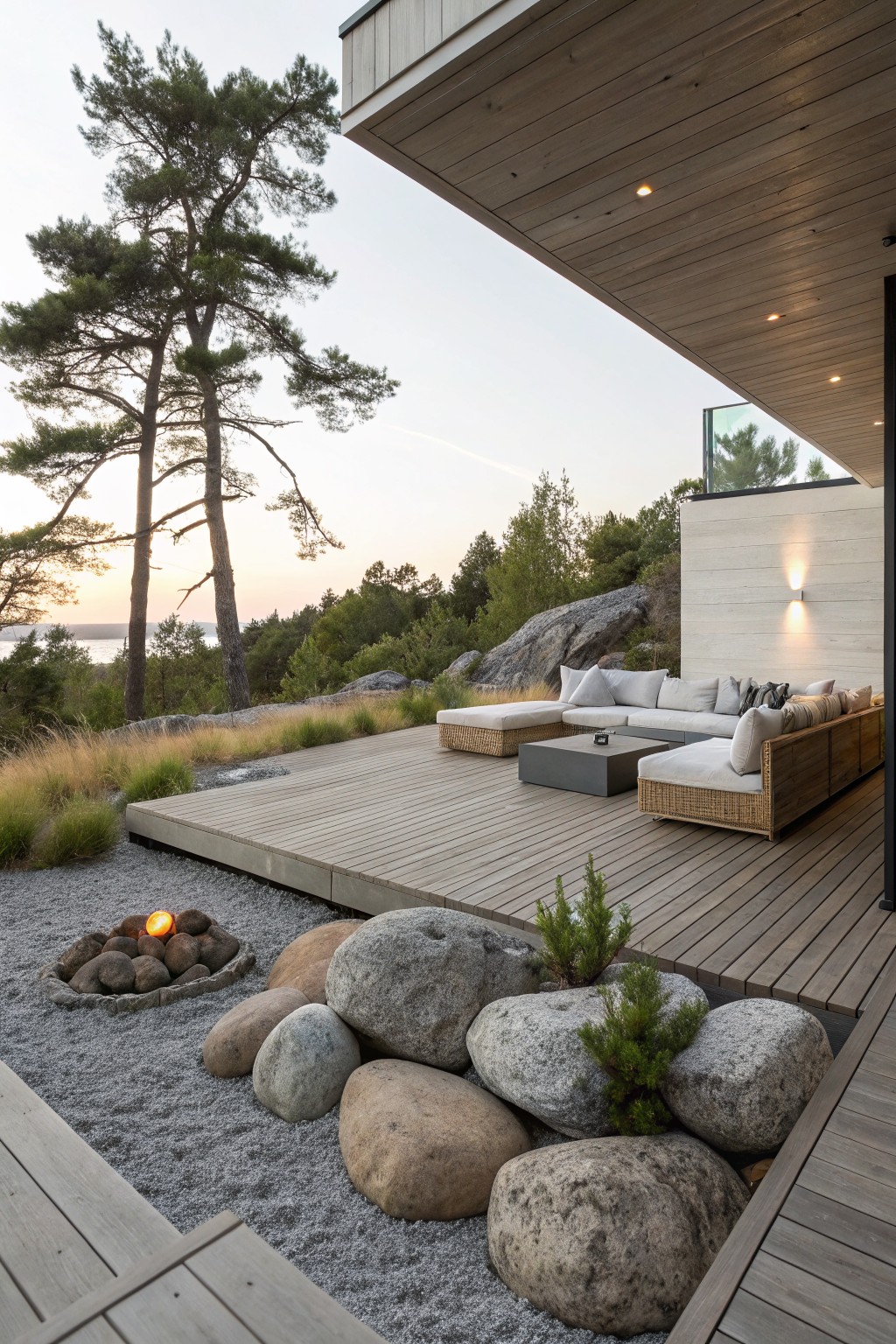
One easy way to finish off a deck is with a bed of gravel and big boulders right next to it. This setup keeps things low-maintenance while giving a natural edge that blends the deck into the yard. In this spot, the large rocks sit in smooth gravel, and a simple fire pit nestles in among them. It looks clean and lets the wooden deck stand out without feeling too built-up.
You can pull this off in most backyard decks, especially where you want less mowing or planting. Pick rounded boulders in a mix of sizes for interest, and use pea gravel to fill around them. It works great in wooded or coastal areas, but watch the gravel doesn’t scatter onto the deck. Just rake it back now and then.
Stone Wall Benches Next to the Deck
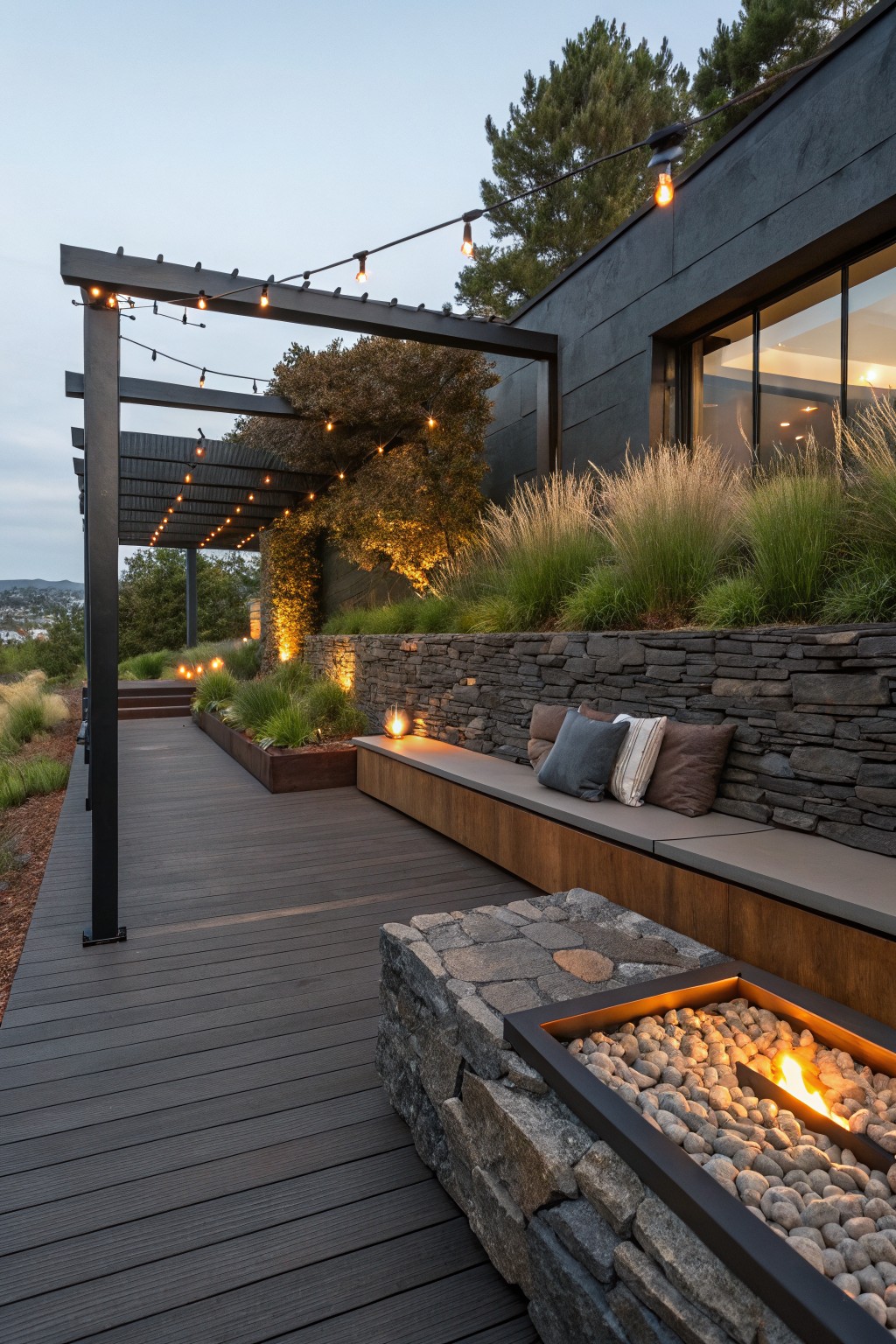
One smart way to add seating without taking up deck space is to build benches right into a stone retaining wall along the edge. Here the wall uses rugged, dry-stacked rocks that hold back the slope while creating a sturdy backrest for the concrete bench top. Cushions make it comfy, and grasses tucked into the stones soften things up. It ties the deck straight into the yard, and that fire pit nearby keeps it practical for evenings.
This works best on sloped lots where you need to manage levels anyway. Pick local stone to keep costs down and the look natural. It suits modern or rustic homes with wood decks. Just make sure the wall is solid, maybe get an engineer if the drop is big. Low plants like those tall grasses help it blend without much upkeep.
Natural Boulders Around Deck Edges
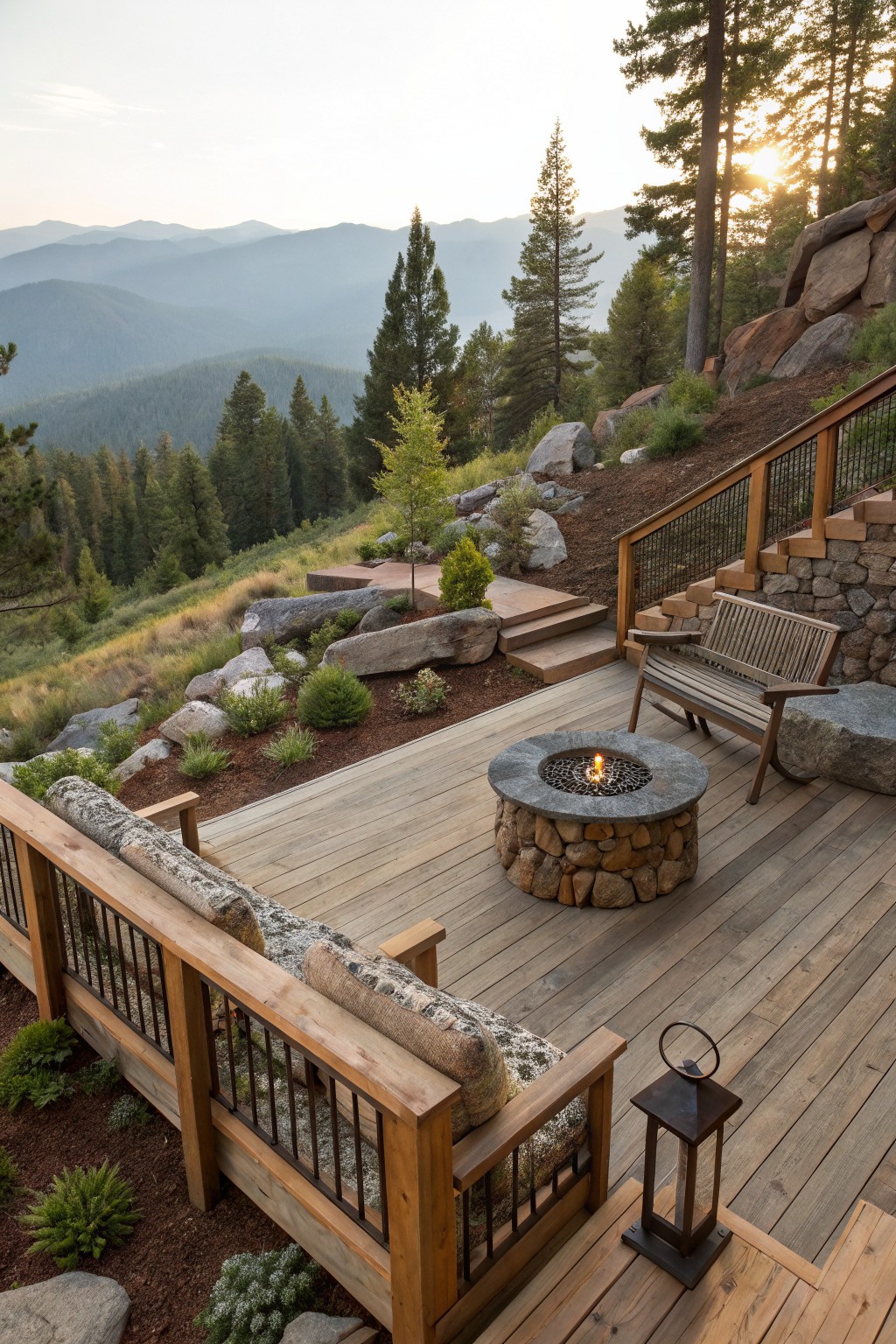
Big boulders placed right along the deck make this outdoor spot feel like it grew out of the hillside. They match the rocky terrain perfectly, so the wooden deck doesn’t stick out. Instead, it blends in with low plants tucked between the rocks, keeping things simple and tough against weather.
This works best on sloped lots where you want the deck to settle into the land. Source rocks from nearby if you can, for that real local look. Stack a few for low walls or seats, but get them set firm so nothing shifts over time. Suits cabin-style homes or any place with rough ground.
Boulders and Pebbles Around Deck Stairs
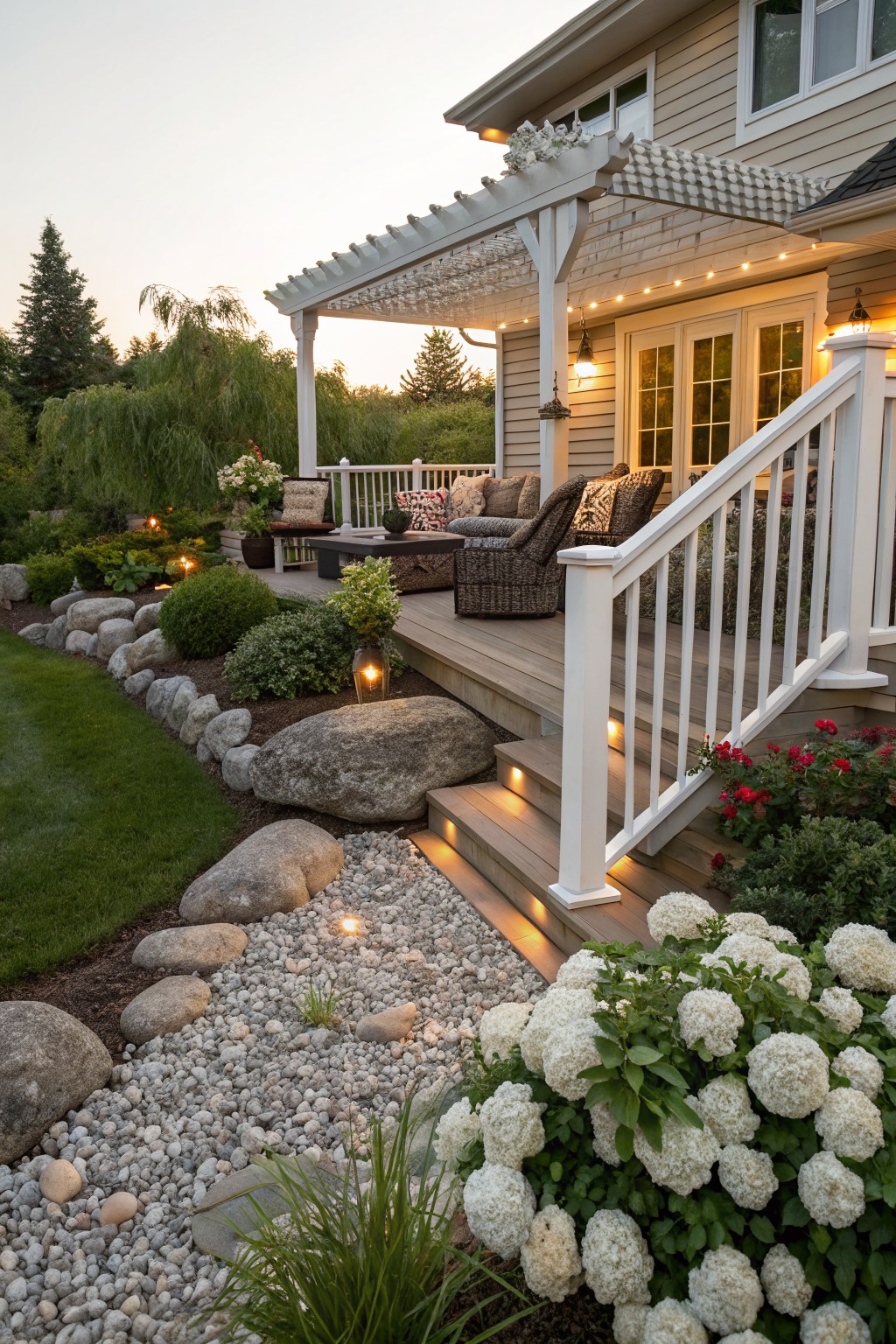
Big boulders stacked along the grass edge make a solid border that keeps the lawn neat and adds some natural texture right at the deck base. A simple pebble path runs from the stairs through it all, tying the hard deck surface to the softer yard without any fussy mowing. It’s low-key but pulls the whole area together.
This works best where the yard slopes a bit or you want less grass to trim. Tuck in a few plants like those white hydrangeas for seasonal pops. It fits ranch homes or craftsman styles pretty easily. Just check your drainage so water doesn’t pool under the deck.
Curved Rock Walls Around Deck Bases
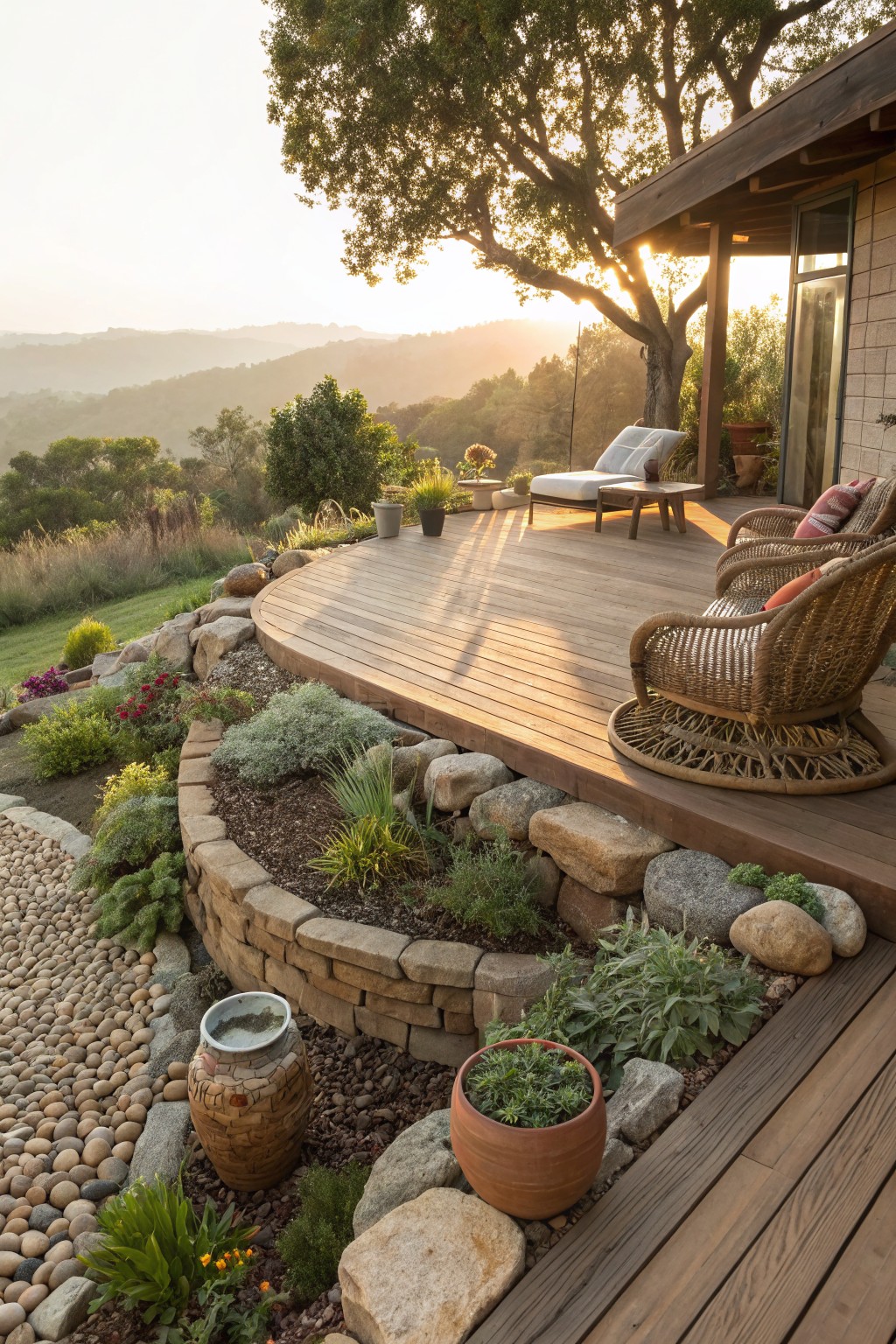
One smart way to handle a deck on a slope is curving rock retaining walls right along the base. Here you see them hugging a wooden deck, stacked with gravel mulch inside and boulders tucked nearby. It keeps soil in place while making the deck blend into the hillside. No sharp lines. Just a smooth flow from wood to stone to plants.
These walls work best where the ground drops off quick. Pick stones that match your area, maybe rounded fieldstone, and keep the curves gentle. Plant drought-tough stuff like grasses or sedum in the pockets. Avoid overplanting… lets the rocks do the main job. Fits modern or rustic homes easy.
Gravel Groundcover Around Garden Paths
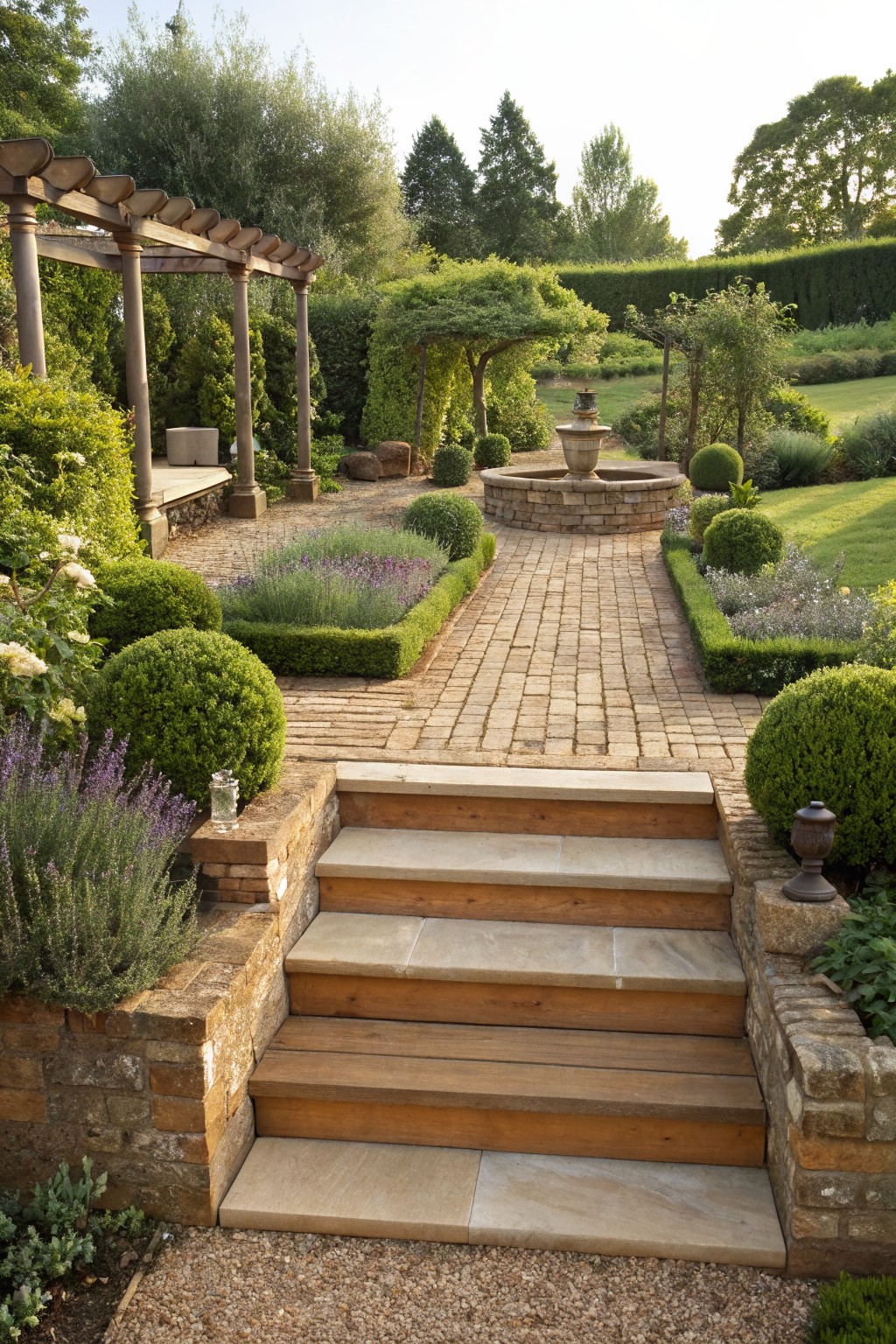
Gravel works great as a simple groundcover in structured gardens like this one. It fills in around the boxwoods and lavender beds without much upkeep, keeping weeds at bay while letting the plants stand out. That clean look pairs nicely with brick paths and stone elements, giving the whole space a tidy, old-world feel without feeling fussy.
You can use gravel like this around deck steps or entry paths where foot traffic mixes with plantings. It suits traditional homes or cottage-style yards best, especially if you want low water needs. Just make sure to lay down landscape fabric first to really hold back the weeds, and top it off now and then.
Gravel and Rocks Around Deck Steps
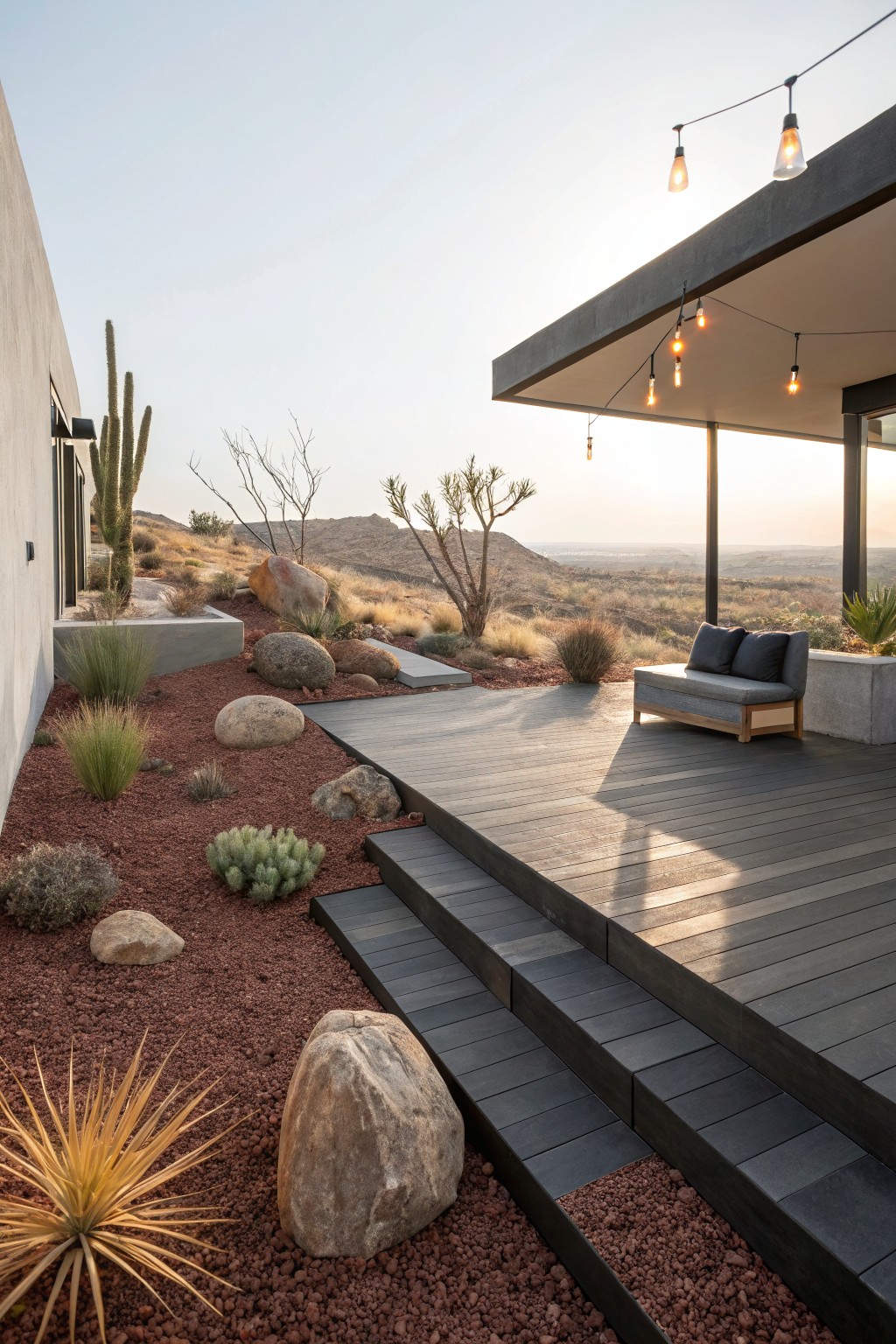
One smart way to landscape around a deck is filling in the edges with coarse gravel and big boulders. Here you see red gravel beds packed with succulents and spiky grasses, plus those hefty rocks placed right along the black steps. It makes the deck feel like part of the yard instead of plopped on top. Plus it’s tough… handles drought without much fuss.
This works best in dry spots or hilly backyards where you want low upkeep. Grab rocks from nearby if you can, to blend right in. Skip fancy edging. Just let the gravel spill naturally under the steps, and add a few plants for color. Suits modern decks or desert-style homes.
Edging Decks with River Rocks and Boulders
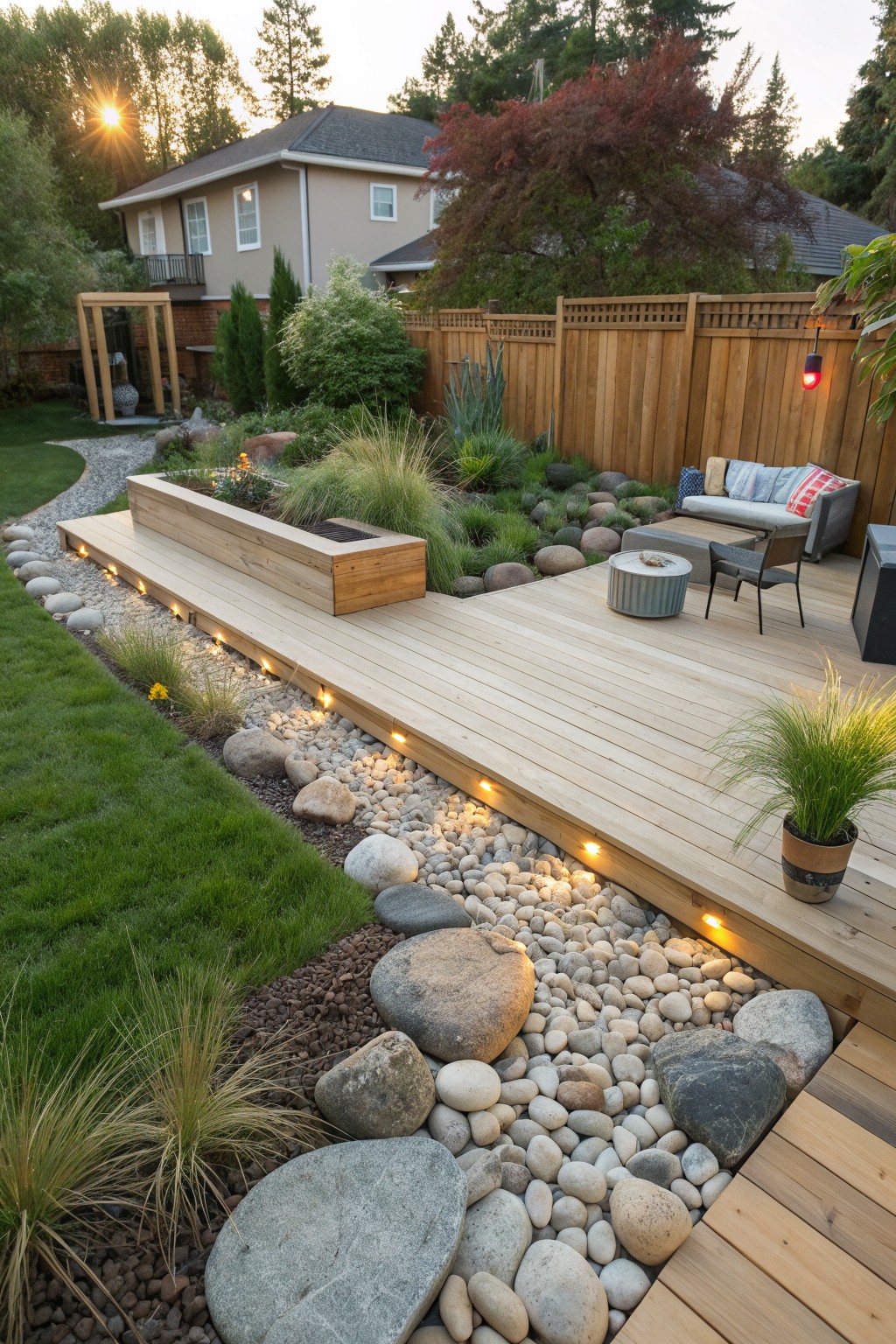
One smart way to finish off a deck is to run a narrow bed of smooth white pebbles and larger gray boulders right along the edge. It creates a clean break from the lawn without needing fussy plants everywhere. Those grasses that poke through keep it from looking too stark, and the low lights tucked under the deck boards add a nice glow after dark.
This works best in backyards with some slope or open space around the deck. Lay down fabric first to block weeds, then pile in the rocks for easy upkeep. It suits wooden decks like this one, but skip it if your yard floods a lot. Simple to do yourself over a weekend.
Pebble Borders Around Deck Pools
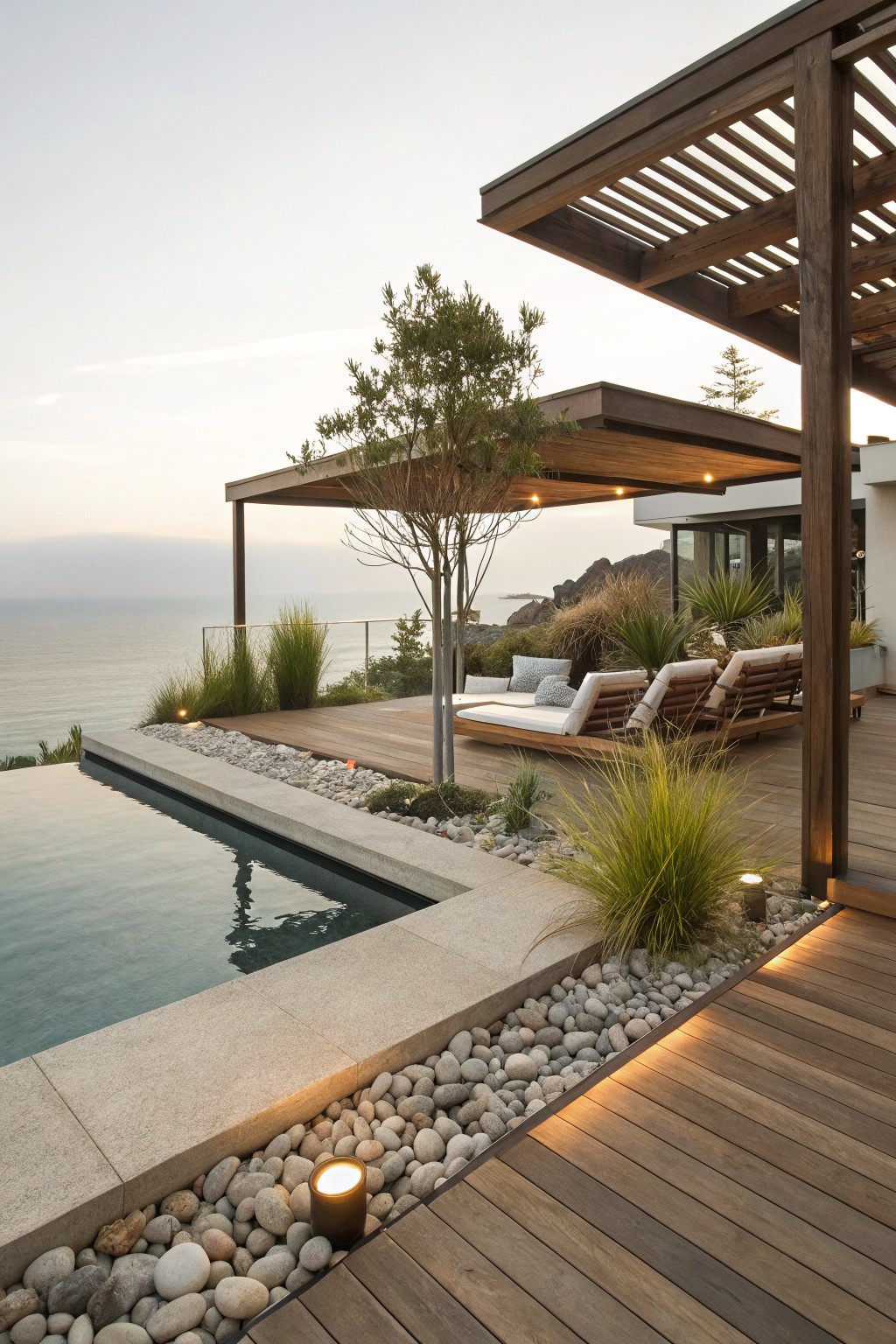
One smart way to finish off a deck or pool area is with a border of smooth pebbles. They sit right along the edge of the concrete pool surround and wooden deck boards here, making a clean break between hard surfaces and plantings. It’s low fuss and gives that natural beachy feel without much upkeep.
You can use this in any backyard deck setup, especially where you want to soften straight lines or fill narrow strips along the pool or patio. Go for rounded river rocks in white or gray tones to keep it light and modern. Just make sure the base is edged with something sturdy so they don’t wander onto the deck over time.
Frequently Asked Questions
Q: Do I need landscape fabric under the rocks around my deck?
A: Lay down landscape fabric before adding rocks. It blocks weeds from growing up through the stones and keeps soil from muddying the look. Pin it securely so it stays flat.
Q: How do I stop rocks from washing away in rain?
A: Build a slight trench around the bed and line it with edging stones. Water flows into the trench instead of scattering your rocks everywhere. Add a thin gravel base layer for extra hold.
Q: What if my deck sits on uneven ground?
A: Level the soil first with a shovel and rake. Then mound rocks higher in low spots to create a smooth transition. It makes the whole area feel connected.
Q: Can gravel get too hot for walking barefoot?
A: Pick light-colored gravel to reflect sun better. Dark stones soak up heat fast… switch to those for cooler feet. Rake it smooth after rain to fluff it up.
