

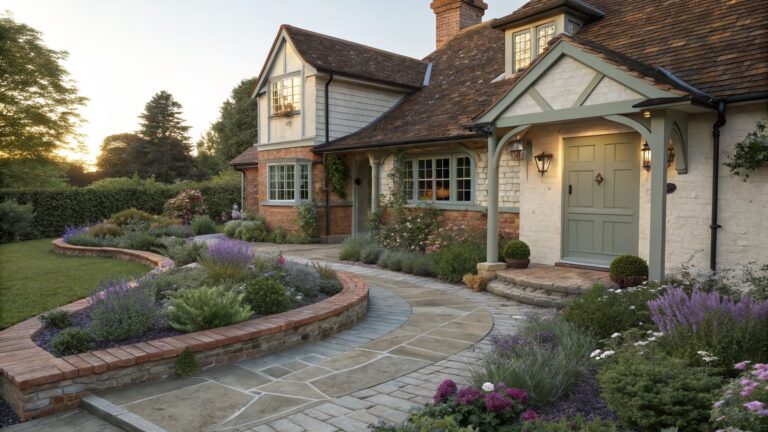
I’ve spent enough time digging in my own yard to know that flower beds do the heavy lifting in any good landscape layout. They frame pathways and soften hard edges in ways that make the whole space feel purposeful from day one. What stands out most to me is how strong planting structure holds up over seasons, letting low growers anchor the front while taller blooms rise behind. In real yards, that kind of thoughtful layering turns flat dirt into something alive and balanced. The ideas here give you spots to borrow from for your next refresh.
Winding Stone Path with Brick Edging
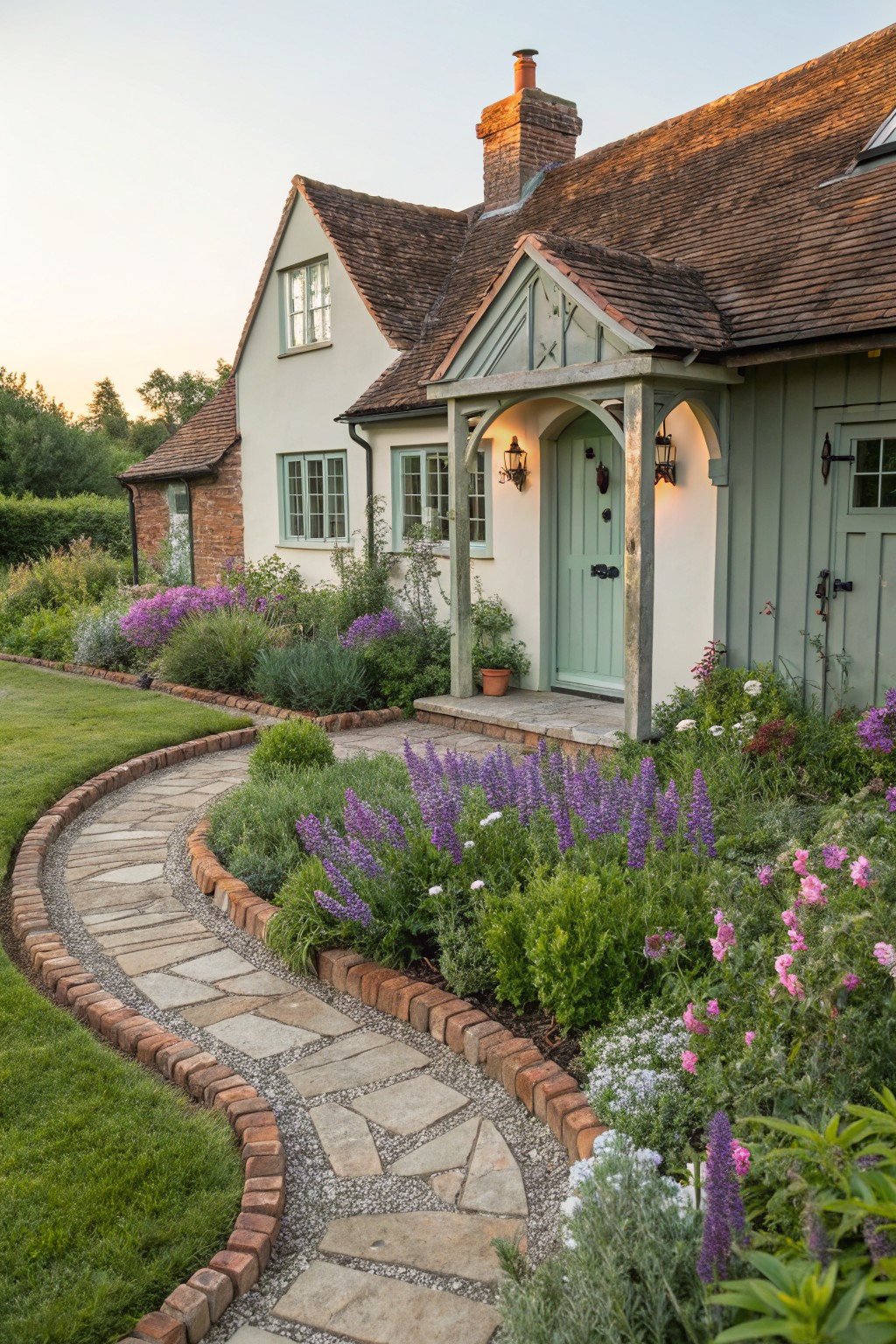
A simple curving path like this one makes a front yard garden feel easy to wander through. Made from rough stone slabs and neatly trimmed with low brick edging, it snakes gently between beds packed with tall lavender and soft pink flowers. That curve keeps things from looking too stiff, and it pulls the eye right to the door without much fuss.
You can pull this off in smaller front yards or along a driveway side. Pick stones that match your local area for less upkeep, and plant perennials that lean over the edges a bit. It suits older homes with some character, but watch the brick height so it does not trip anyone. Just enough gravel fill between stones stops weeds cold.
Gravel Succulent Beds Line the Path
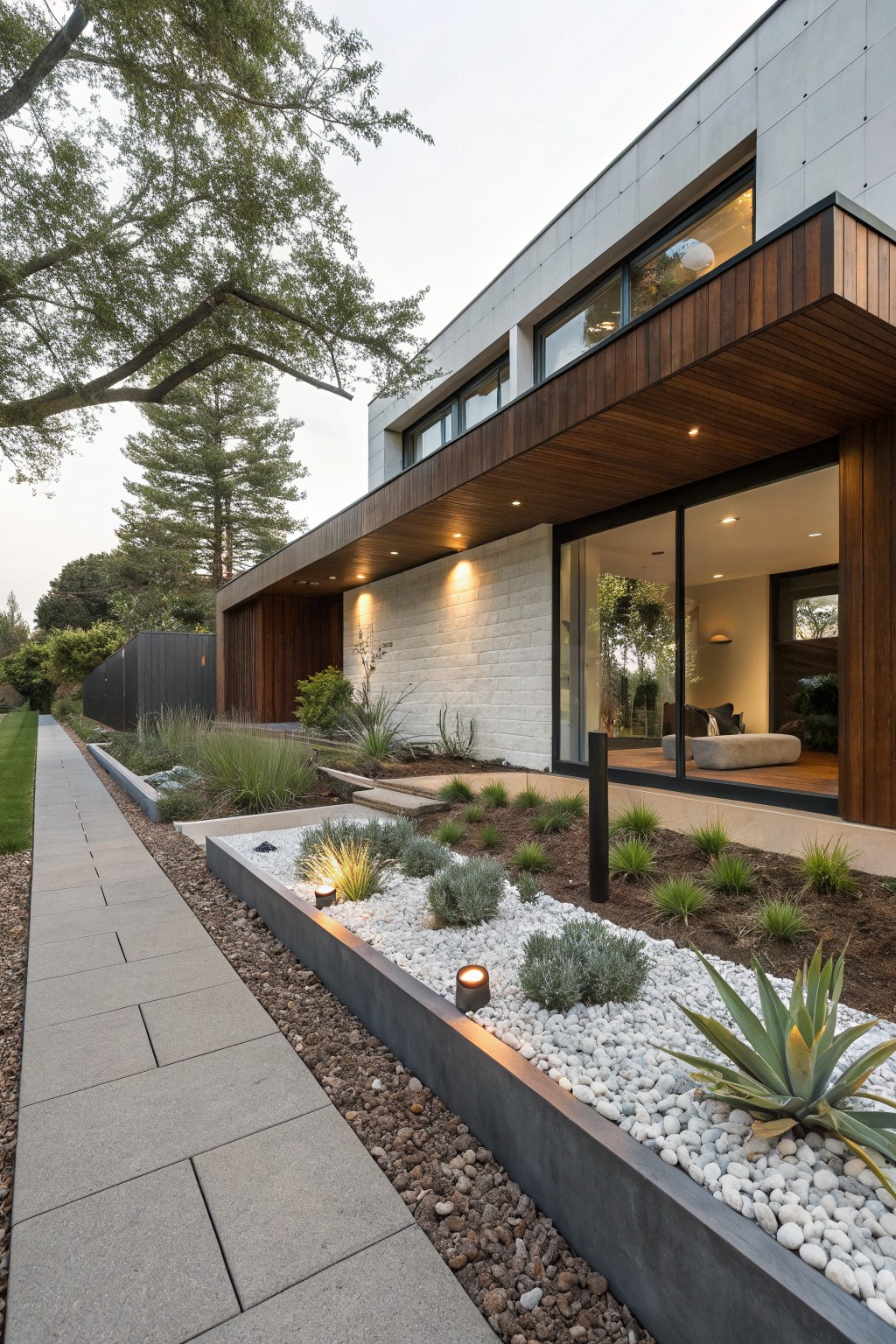
Gravel beds packed with succulents make a smart, low-fuss border for pathways. Here, white pebbles fill simple raised planters edged in concrete, with tough plants like agave and grasses spilling over just right. The look stays neat without much trimming, and those small path lights add a glow at dusk.
This works best in sunny spots where water is short or soil is tricky. Pair it with a modern house or clean paver walk, and skip thirsty flowers. Just drop in the plants, spread gravel, and you’re set… easy refresh for the side yard.
Lavender Beds Along a Stone Path
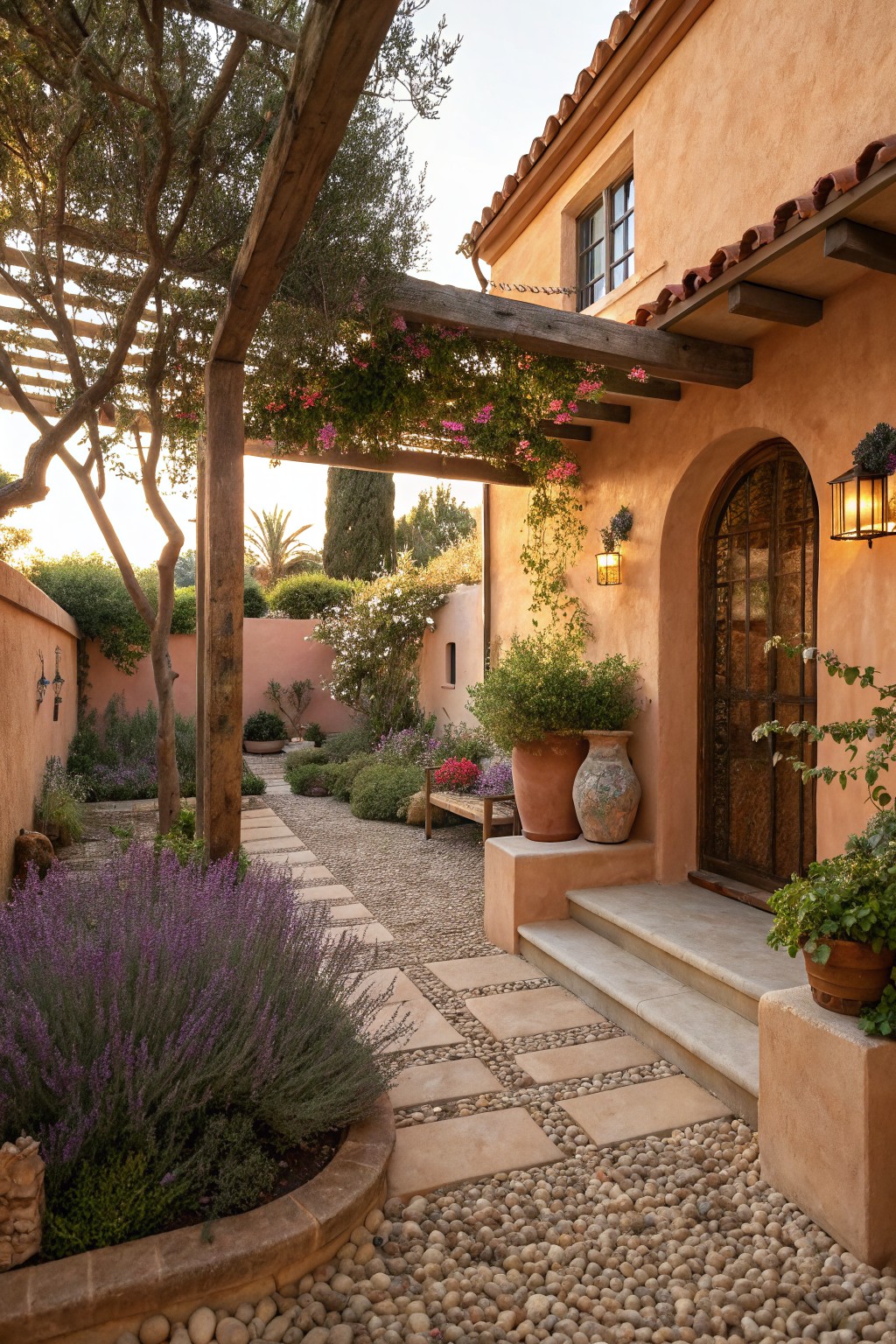
One easy way to make a garden path feel more alive is to line it with thick beds of lavender. Here the plants hug both sides of a simple stone-and-gravel walkway, leading right up to the house door. The purple blooms and silvery leaves add color and scent without much fuss. It’s a natural edge that keeps things tidy and draws the eye forward.
This works great in sunny spots with dry soil, like along a side yard or front entry. Plant lavender in curved raised beds edged with gravel for drainage, and add a few terracotta pots nearby for height. Skip it in shady or wet areas though. Keeps the upkeep low once it’s going.
Terraced Stone Walls for Sloped Yards
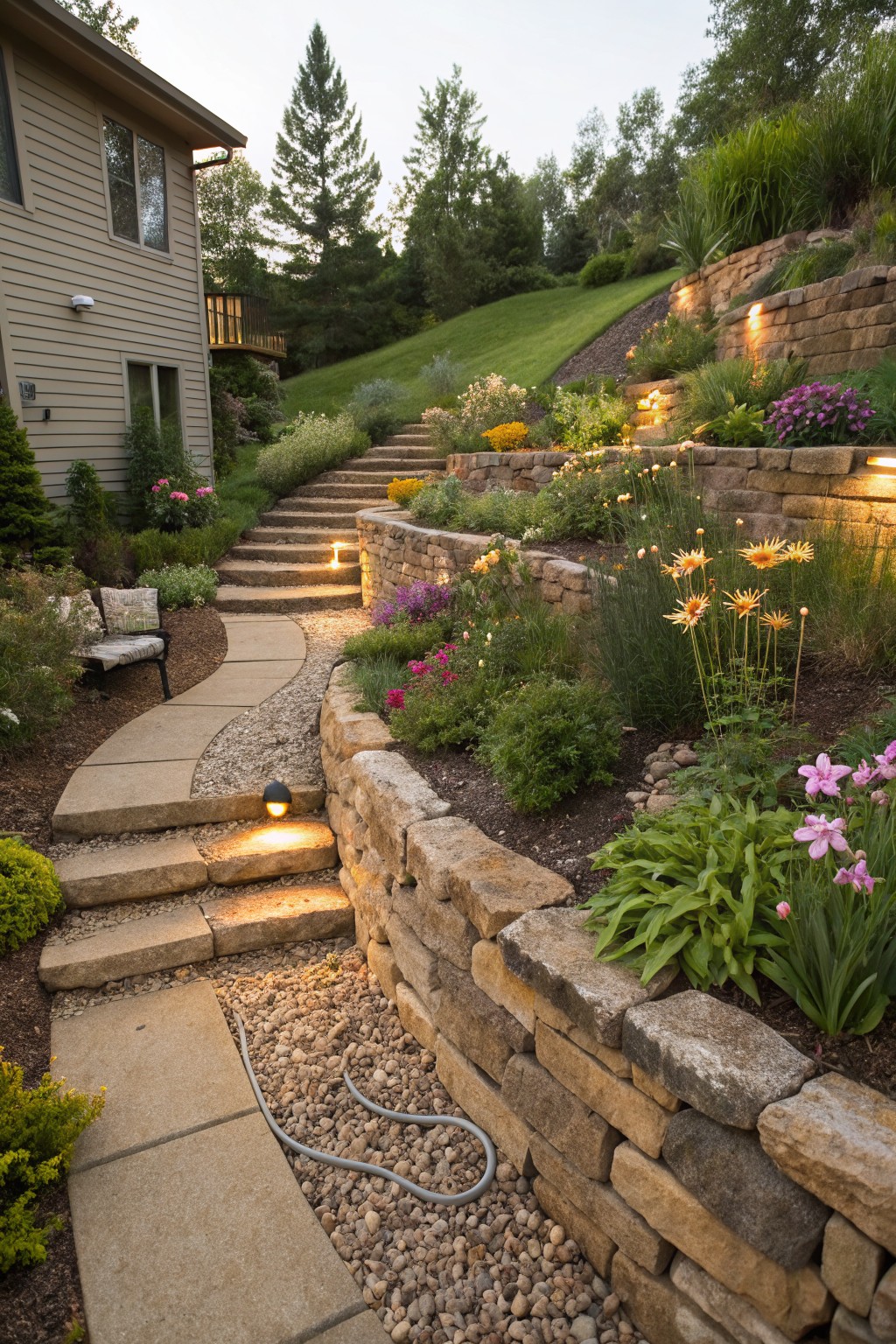
Sloped yards can be tough to work with but terraced stone walls make them into something special. They create flat pockets for flower beds right on the hill, like these stacked walls filled with daisies, phlox, and hostas. A winding path connects the levels, and the low lights along the way make it all feel welcoming even after dark.
This setup suits homes on any kind of incline, especially where erosion is an issue. Pick rugged local stone that blends with the landscape, fill the terraces with perennials that don’t need much water, and weave in steps or paths for easy access. It takes some upfront work… but pays off in a yard that’s pretty and practical year after year.
Native Pollinator Beds Along Walkways
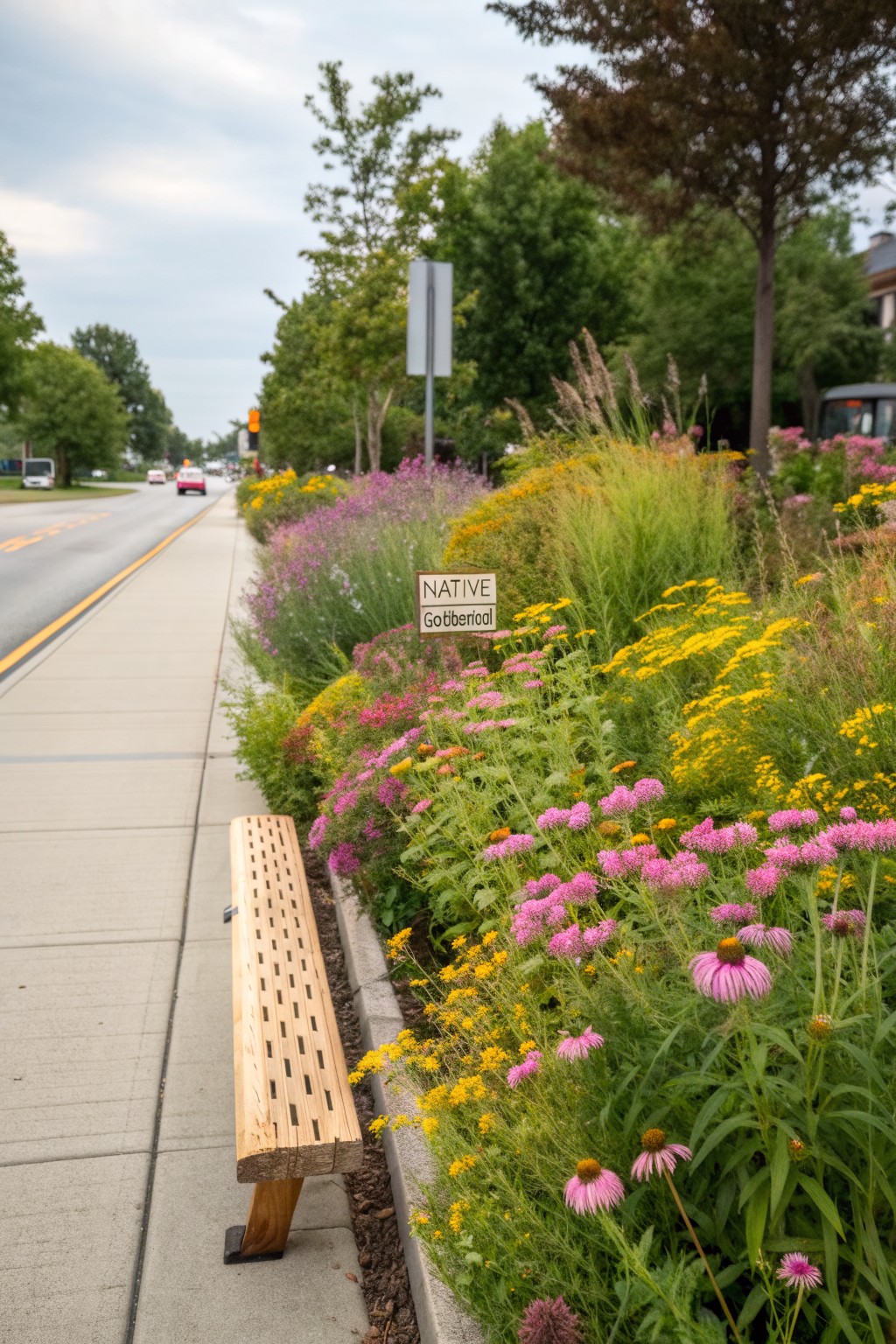
A native pollinator garden bed like this one turns a plain sidewalk strip into something alive with color and activity. Packed with plants such as coneflowers, milkweed, and tall grasses, it draws bees and butterflies while needing little upkeep once established. That sign marks it clearly, and the wooden bench nearby makes it a spot to pause and enjoy.
Set one up along your driveway edge or street front for easy yard refresh. Pick natives for your zone to match the soil and weather, layer heights for structure, and keep edges neat with simple stone or mulch. It suits townhomes or suburban lots best… just ensure good sun and drainage to avoid soggy spots.
Raised Flower Beds with Boxwood Edges
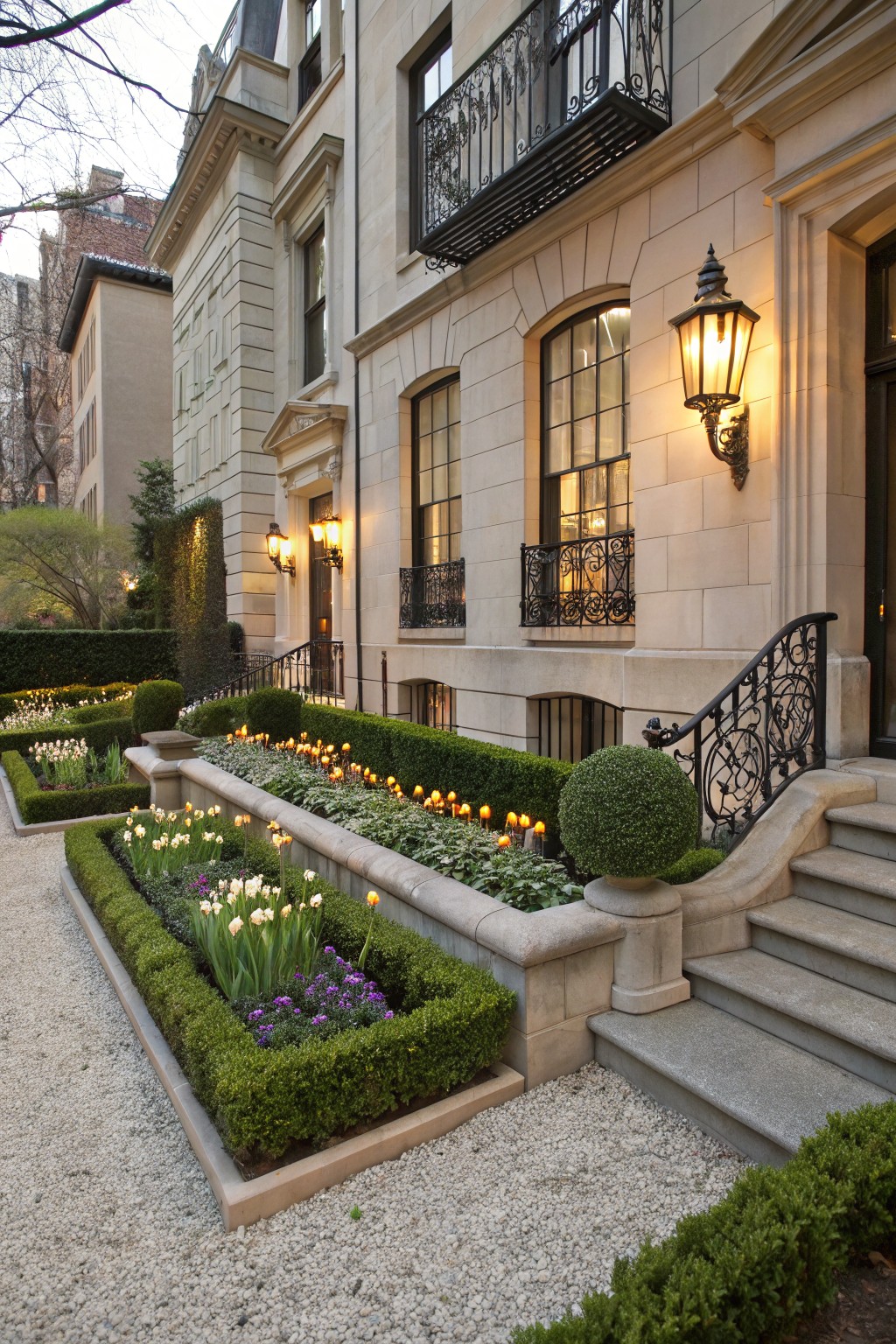
One simple way to make a front yard look put-together is with raised stone beds edged in clipped boxwoods. You see tulips and other spring blooms tucked inside, plus little candles glowing along the edges at dusk. This setup keeps things neat and structured without much fuss. It leads the eye right up to the house door, making the whole entry feel more deliberate.
These beds work best on smaller lots near a street or sidewalk, like in front of a townhouse. Boxwoods stay green all year for steady shape, so you just swap in bulbs or annuals for color. Keep the beds low enough to walk past easily, and use gravel paths to fill gaps. Avoid overcrowding, or it starts looking busy.
Terraced Raised Beds with Step Lighting
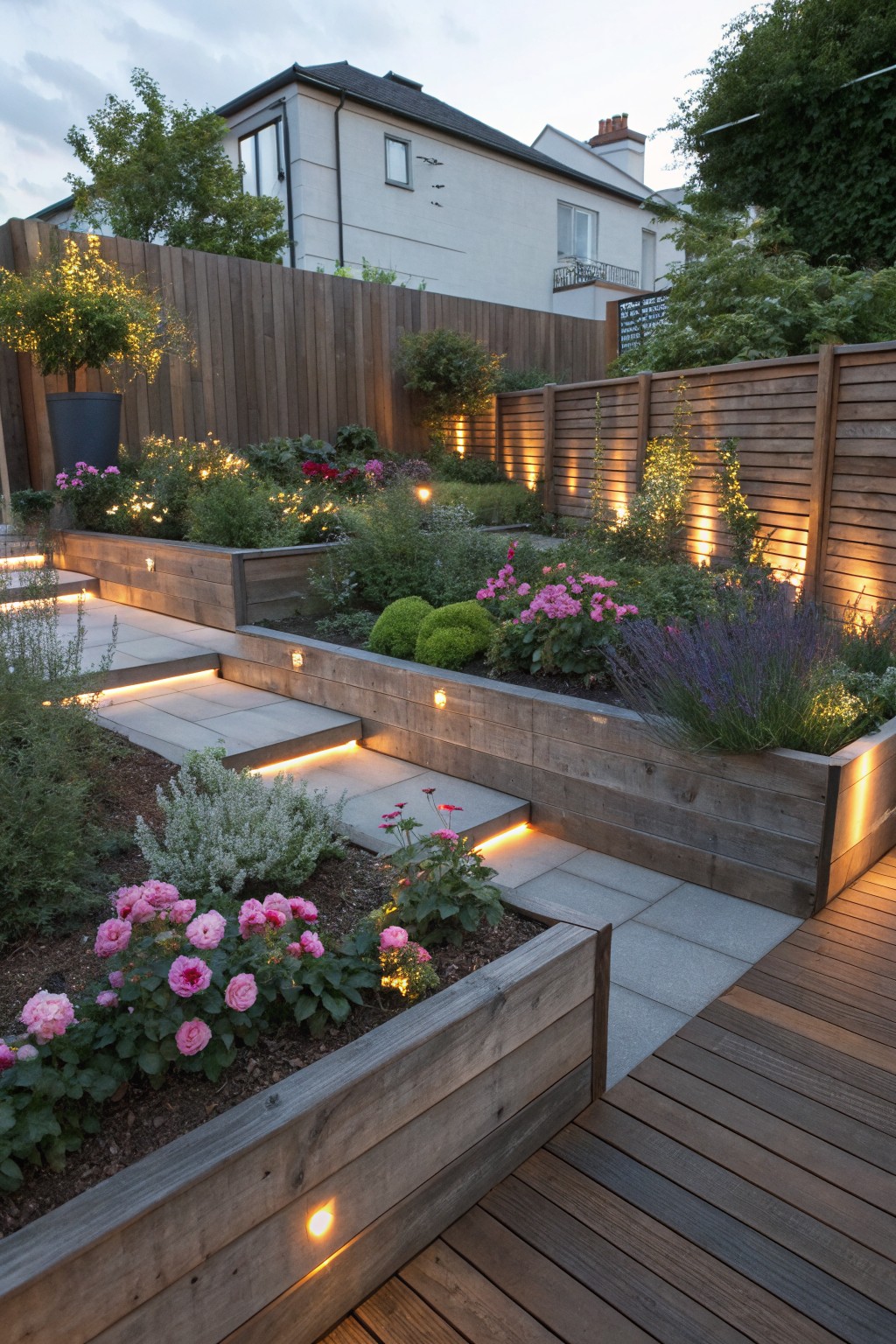
Raised wooden beds like these turn a sloped yard into neat terraces, holding back soil while giving flowers a good spot to grow. The LED strips tucked under the steps and bed edges light everything up softly at dusk. It keeps the garden looking tidy and makes it easy to enjoy after dark.
This works best on any gentle slope where you want levels without big retaining walls. Build the beds from treated lumber or cedar, plant perennials like roses and lavender in them, and run low-voltage lights along the edges. It fits most backyards, especially if you have a patio nearby to connect to.
Terraced Flower Beds on Stone Retaining Walls
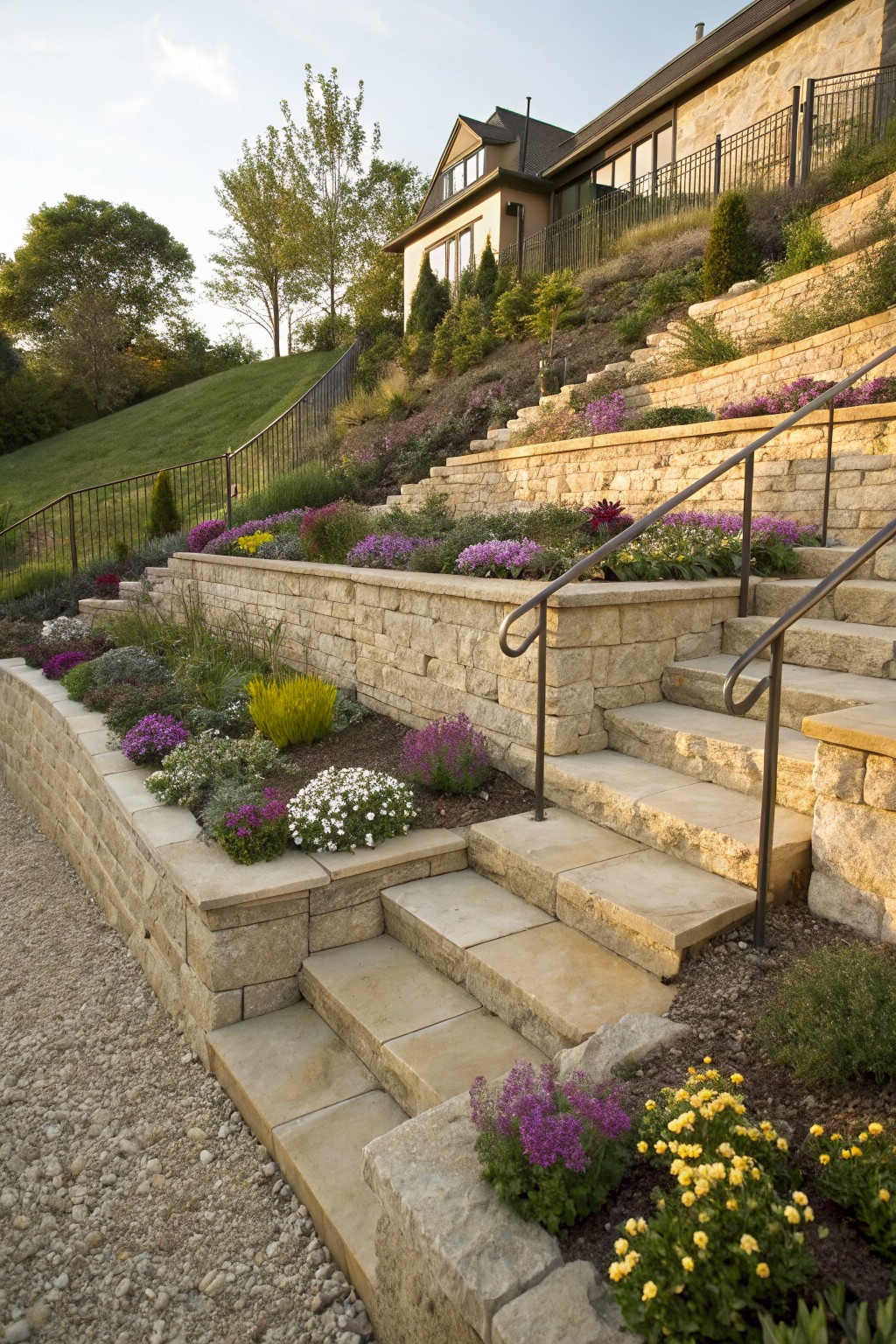
Slopes can be tricky in a yard. They erode easily and leave little flat space for planting. One solid fix is terraced flower beds built right into stone retaining walls. This setup turns that hillside into neat levels of color and texture. You get pockets of purple blooms, yellow accents, and low greens hugging the warm stone. It holds soil in place and makes the garden climb up toward the house in a natural way.
These work best on any yard with a noticeable drop, especially if you want low upkeep once plants fill in. Pick durable limestone or similar for the walls to match most homes. Mix tough perennials that spill over edges… that keeps it looking full without constant fuss. Just make sure steps between levels are wide enough for easy walking. Fits traditional or craftsman houses without overpowering the look.
Garden Shed Nestled in Flower Beds
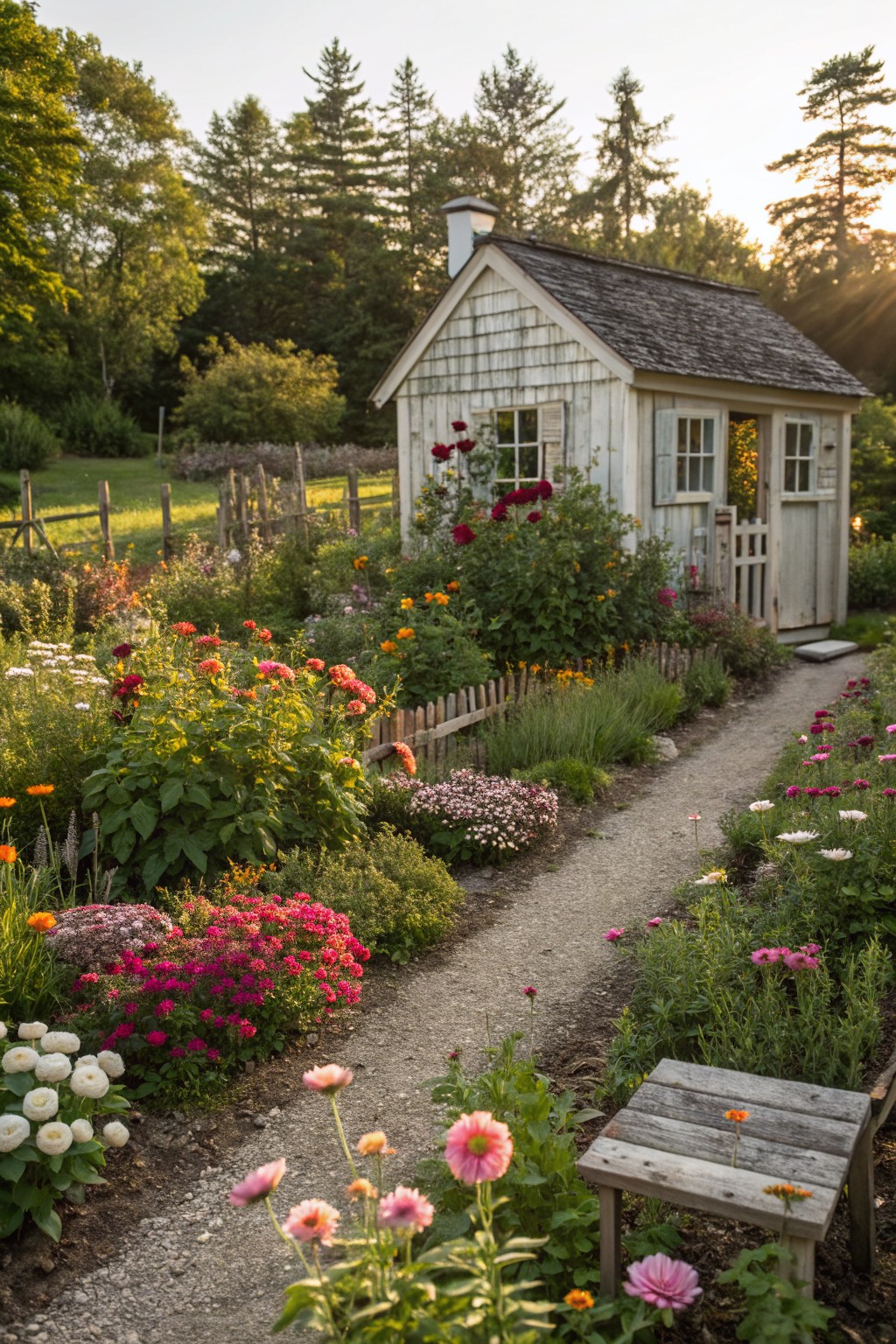
A small garden shed like this one becomes the perfect focal point when you surround it with packed flower beds. The mix of tall zinnias, bushy roses, and low daisies creates that full, cottage-style overflow that makes the whole yard feel alive. It’s simple but pulls everything together around the shed.
To pull this off, start with a gravel path winding right up to the door, like the one here with a little wooden bench nearby. Layer your plants by height for easy access and year-round interest. This works best in a side yard or backyard nook, especially on older homes where you want some whimsy without big changes.
Gravel Succulent Beds for Dry Climates
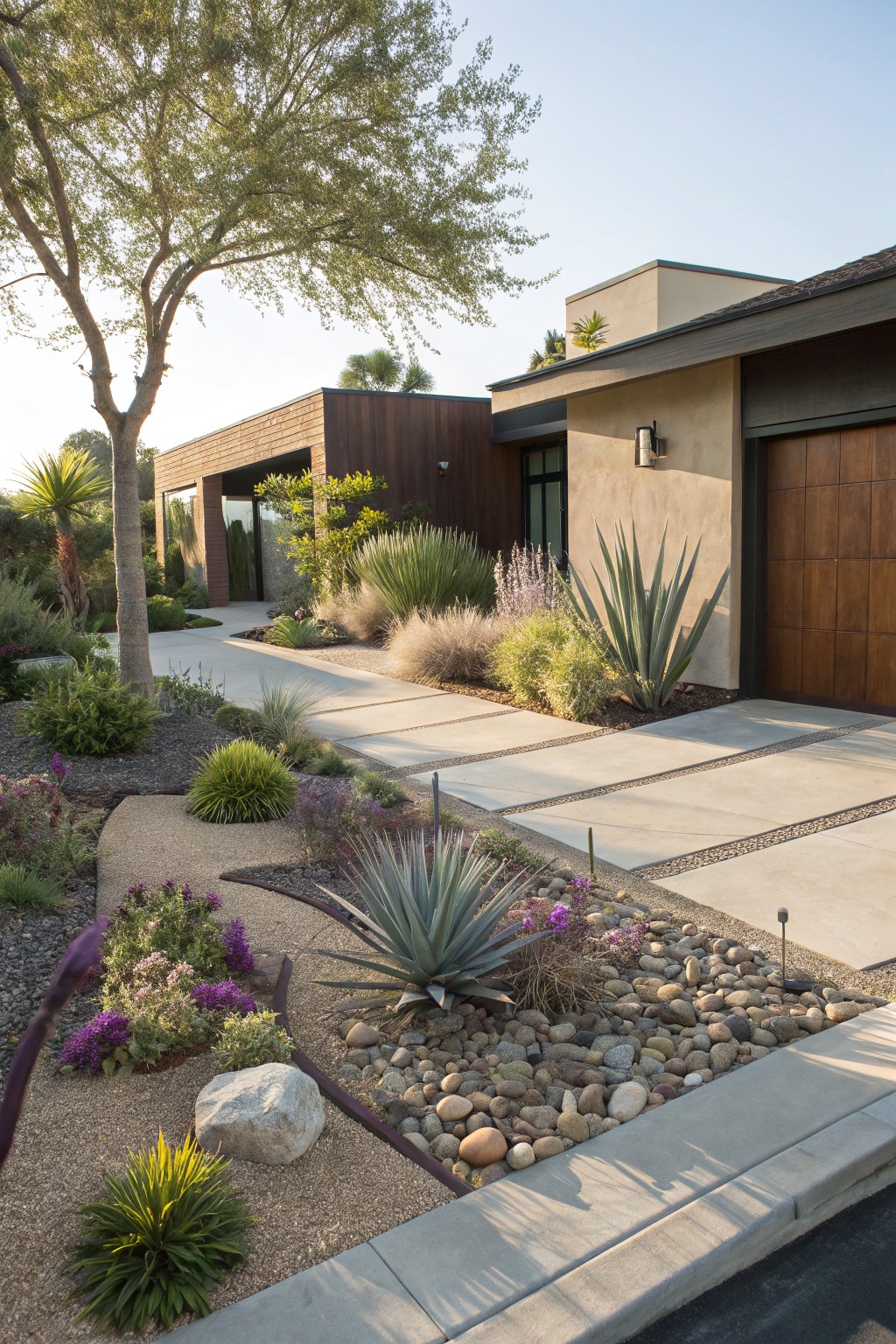
One simple way to refresh a front yard is with gravel beds shaped into soft curves and planted with tough succulents like agave. These beds hug the driveway nicely here, using dark gravel mulch to set off spiky blue-green leaves and wispy grasses. It keeps things low-maintenance while giving a modern, sculpted feel that doesn’t fade in hot sun.
Try this along a walkway or beside your garage where watering is a hassle. Pick gravel in a color that picks up your house tones, and space big focal plants like agave farther apart so they have room to grow. It suits contemporary homes or any spot needing curb appeal without much upkeep… just watch for critters that like the rocks.
Stone-Edged Beds Along Walkways
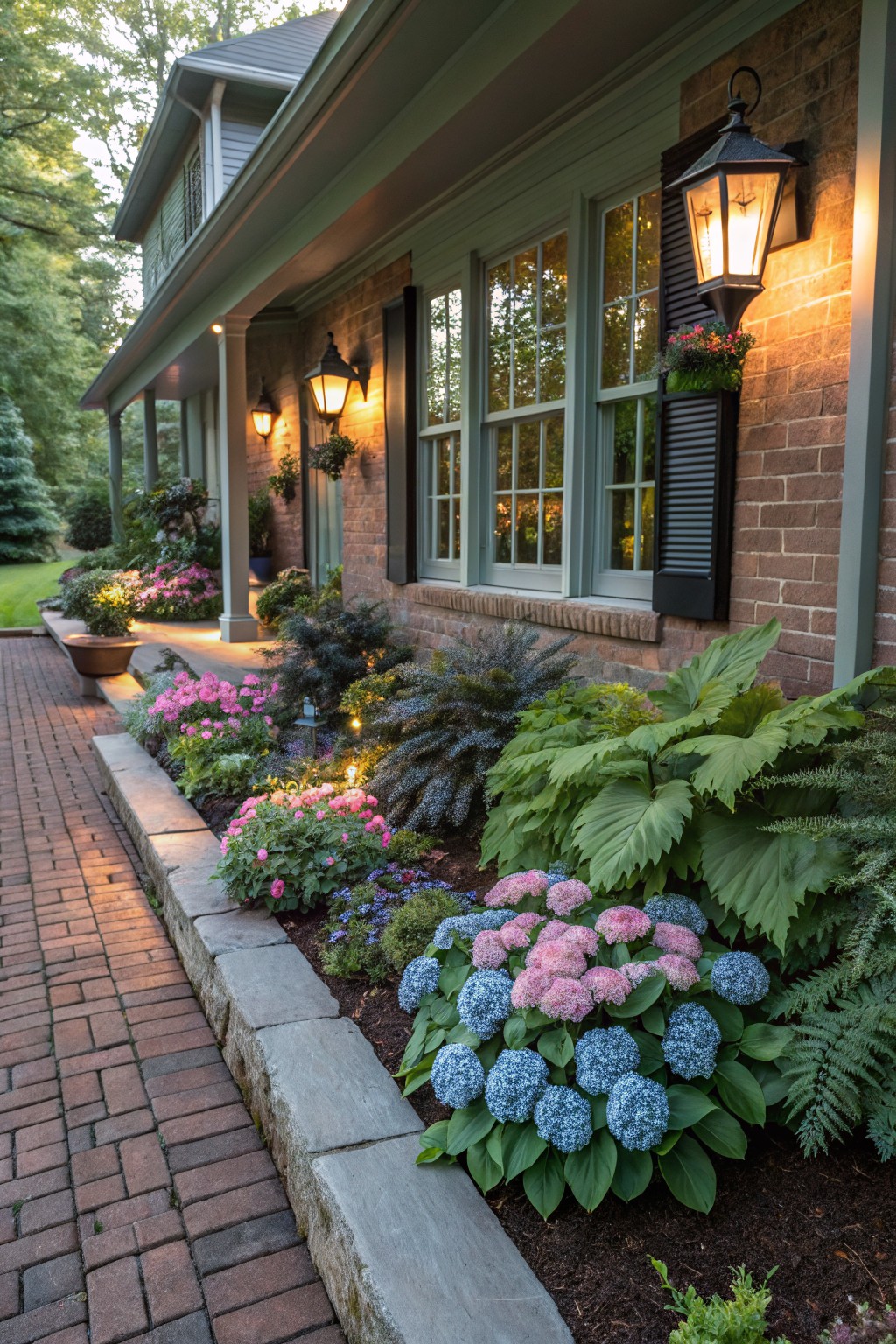
A simple raised stone border turns a plain walkway into something with real character. In this setup, the low wall holds back a mix of plants, with big mophead hydrangeas in soft pink and blue stealing the show alongside ferns and low growers. That edging keeps everything neat and makes the bed feel full without spilling over onto the path.
Try this where you have a straight brick or paver walk leading to the door. It suits traditional homes best, giving curb appeal without much upkeep. Just plant the hydrangeas deep enough for good roots, and fill gaps with tougher greens that handle shade. Watch the soil doesn’t wash out after heavy rain.
Circular Tree Bed with Gravel and Rocks
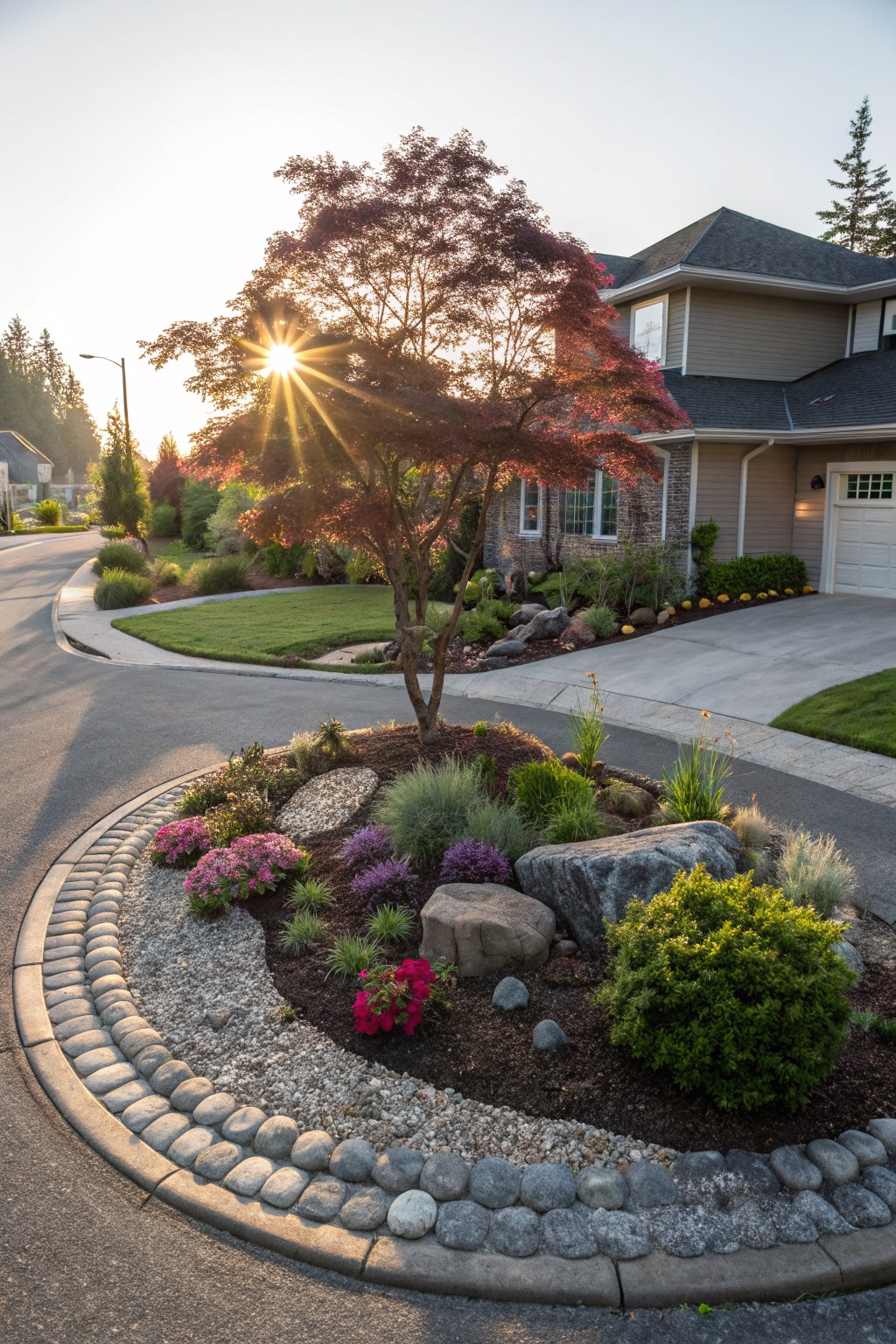
One simple way to add interest to your yard is a round flower bed built right around a tree. Here a Japanese maple sits in the center, with gravel mulch, big boulders, and colorful flowers like pinks and purples filling out the space. It turns an ordinary tree into a real focal point, and the curved shape fits nicely along a driveway curve.
This kind of bed works best in front yards where you want curb appeal without a lot of upkeep. Go for tough plants that handle some shade from the tree, and use rounded stones for the edging to keep mulch in place. It’s perfect for suburban lots… just scale it to your tree’s drip line so roots have room.
Vertical Planters for Narrow Paths
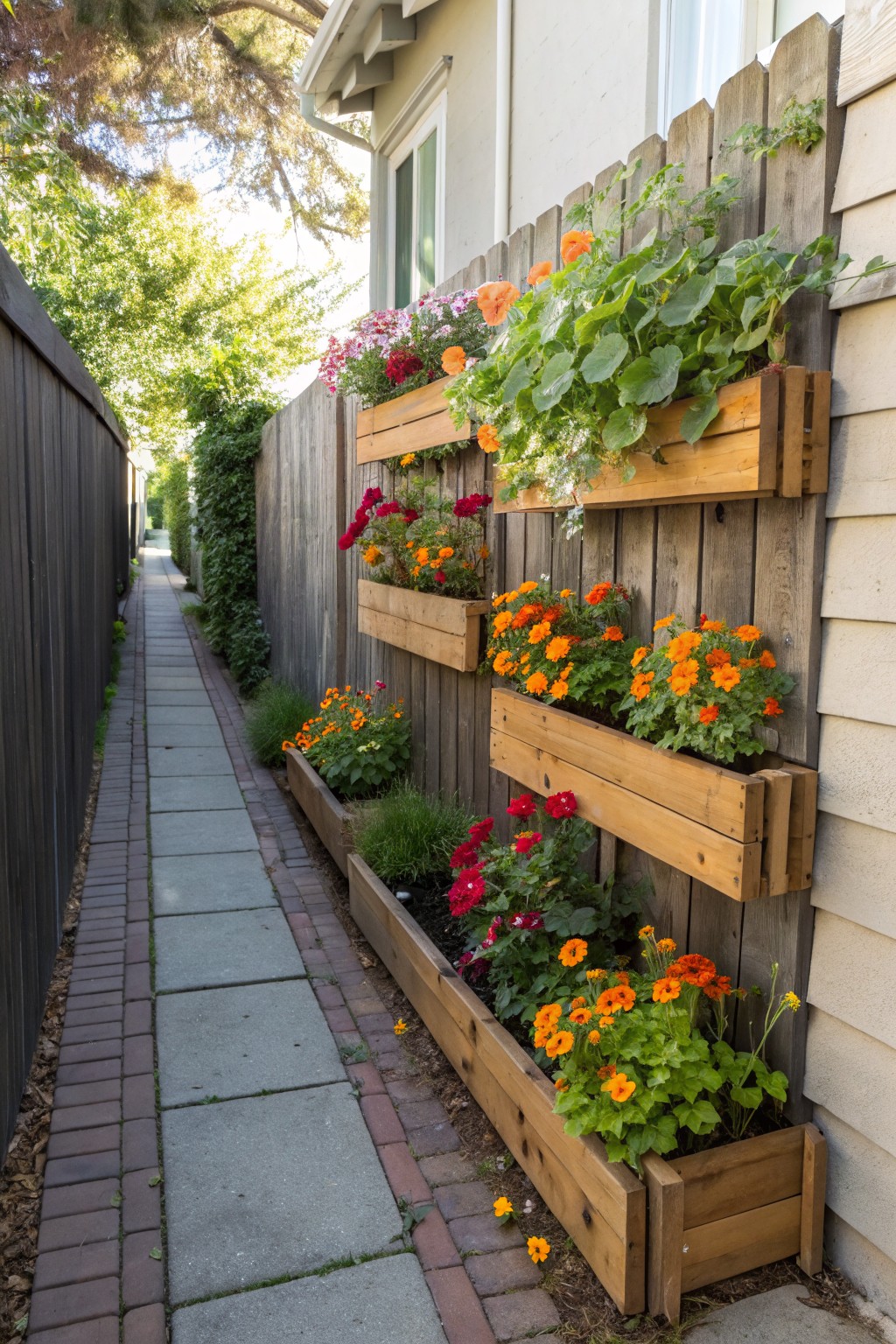
Sometimes you have a skinny walkway or side alley where ground space for flowers is zero. Vertical planters solve that. These wooden boxes stacked right on the fence turn a plain wall into a blooming display. Orange marigolds and red geraniums spill out, making the path feel wider and more alive.
Build or buy simple wood crates, attach them securely in tiers. They fit anywhere with a fence or sturdy wall, like between houses or along a driveway. Go for mix of upright and trailing plants to fill it out. Keeps maintenance easy since everything’s at waist height.
Flower Beds with Path Lighting
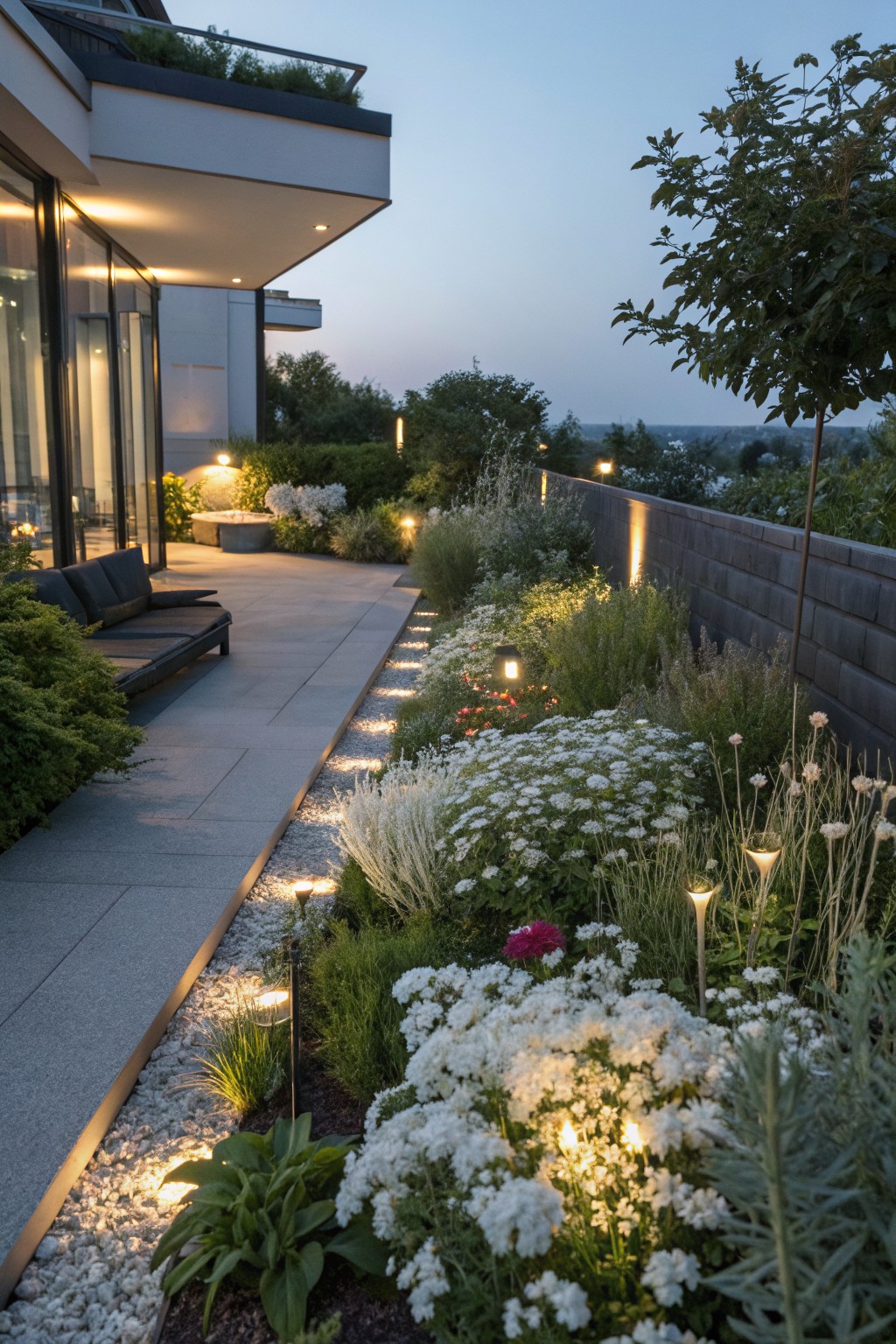
A narrow stone path runs alongside tall white flower beds, edged in gravel and dotted with slim bollard lights. At dusk, those lights come on low and soft, making the whole planting strip glow just enough to highlight the blooms without stealing the show. It’s a quiet way to enjoy your garden after dark.
This works great next to a house wall or in a side yard where space is tight. Pick perennials like those fluffy white ones that fill out easy, and tuck the lights right into the gravel border. Keep wiring buried and lights on timers so it’s hassle-free year round.
Lavender Beds Along Pool Edges
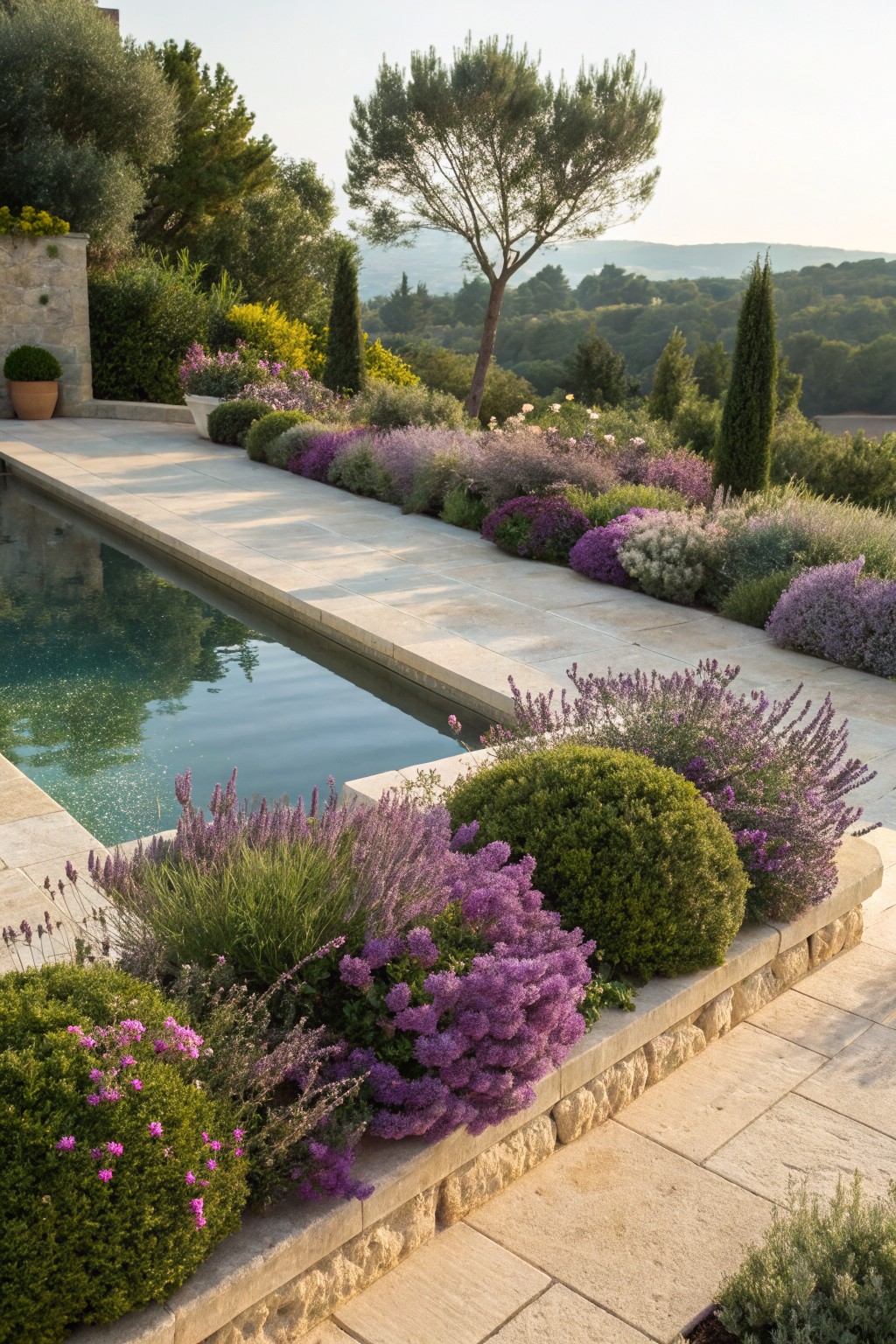
One simple way to make a pool area feel more like part of the garden is to line the edges with flower beds full of lavender. Here the beds are packed with blooming lavender plants and clipped boxwood balls, tucked right against the stone coping. It softens that hard pool line without taking up much space. The purple color pops nicely in the sun too.
These beds work best in warm, dry spots where lavender thrives. Plant them along infinity pools or any straight-edge design to add rhythm as you walk by. Keep the beds narrow so they don’t crowd swimmers. Just trim the boxwoods now and then… easy upkeep for a big look.
Linear Flower Beds Along a Pool Edge
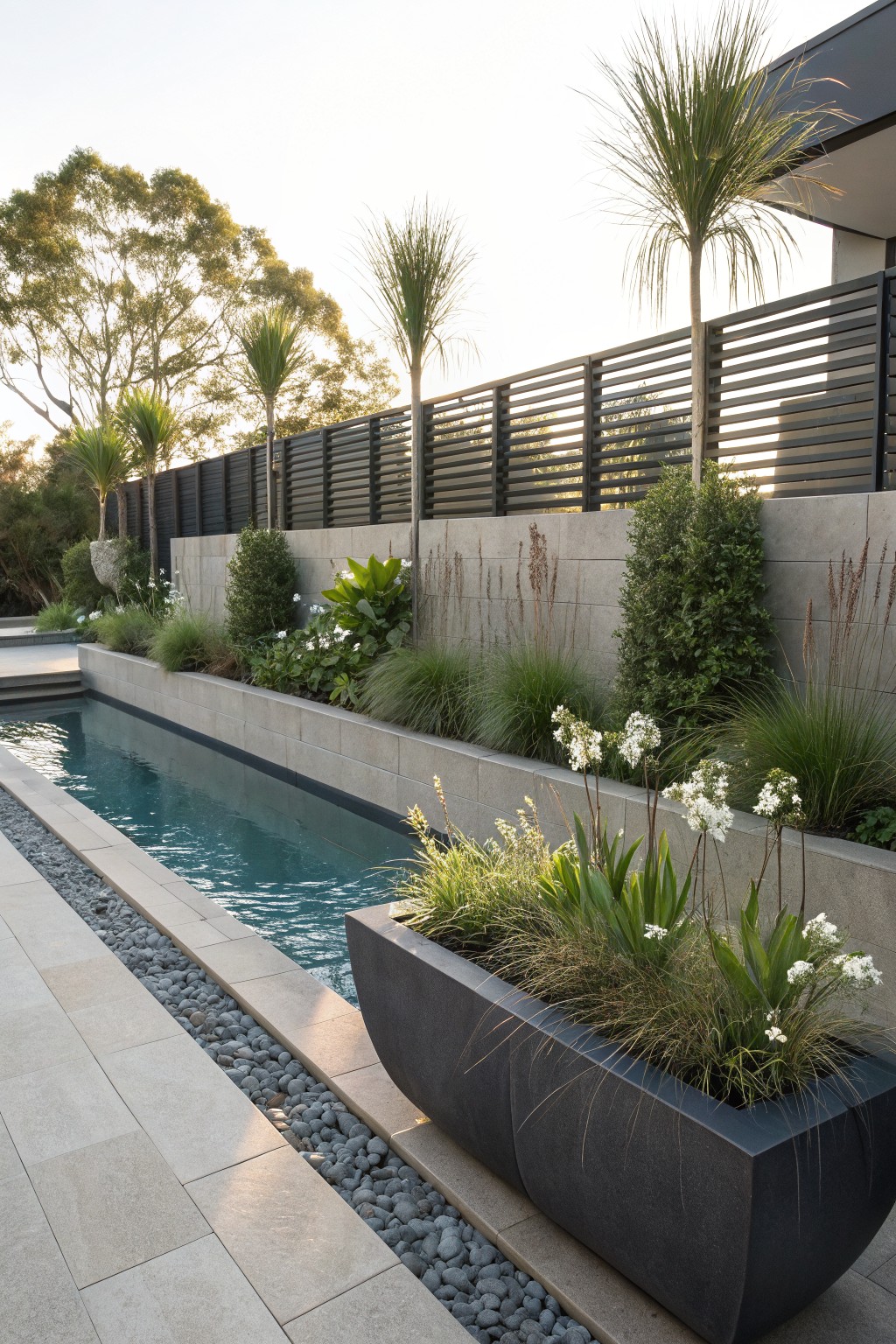
One clean way to edge a pool is with straight raised beds packed with tall grasses and white flower clusters. The grasses sway a bit for movement. Those white blooms pop against the green without overwhelming the space. It keeps things simple and modern. Stone walls hold it all in place nicely.
This works best in slim yards where you want definition but not bulk. Pick tough grasses like miscanthus and repeat bloomers such as agapanthus. Line them right up with the pool for that sleek run. Avoid overcrowding. Just a few layers do the trick.
Boulder-Edged Flower Beds
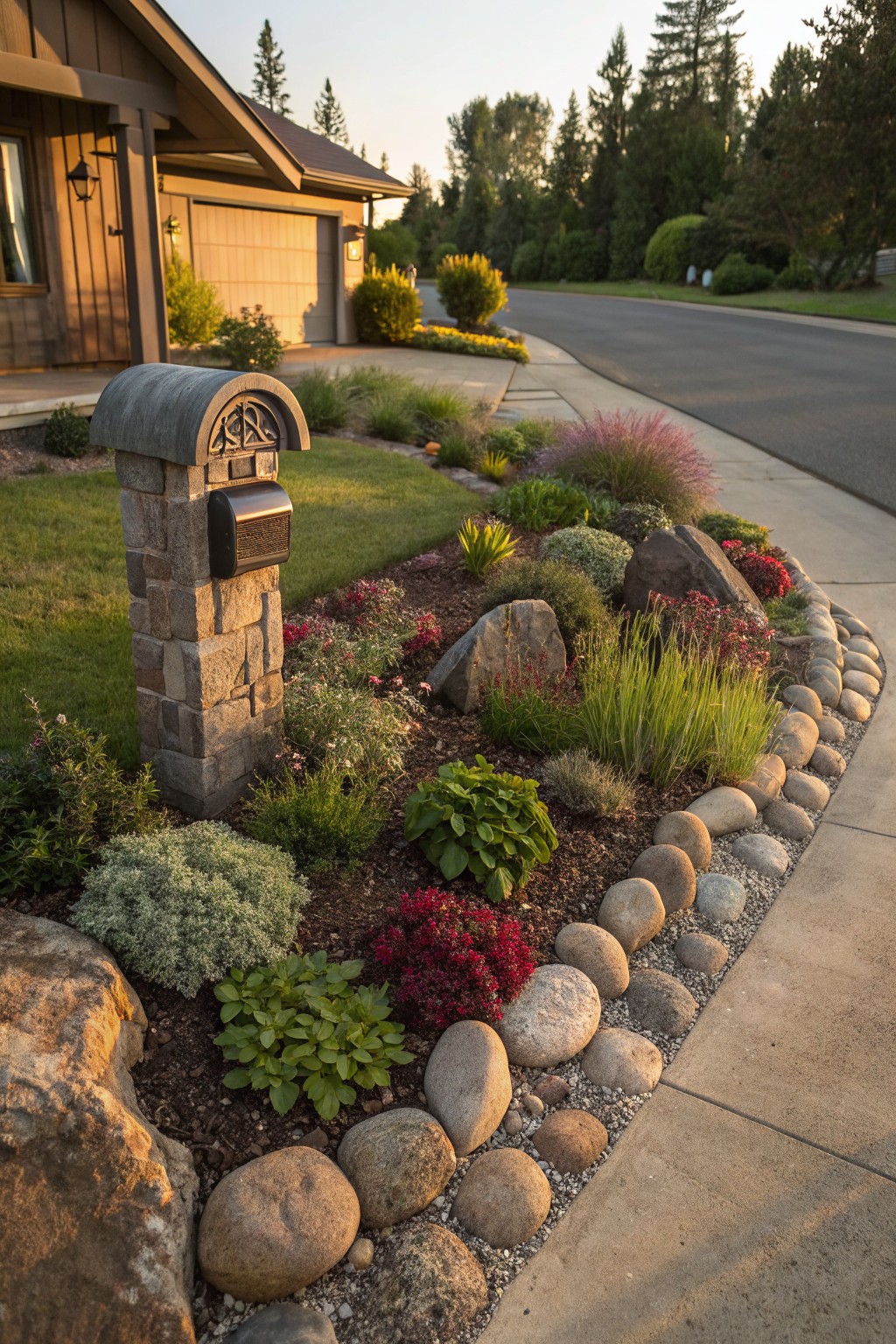
One simple way to define a flower bed is lining it with big boulders and rounded river rocks. This keeps soil and mulch in place while adding a natural rugged look. Here, the bed sits right along the curb, packed with colorful plants like red sedum and feathery grasses that soften those stones.
Try this along driveways or streetsides for instant curb appeal. It suits sloped spots or anywhere weeds creep in easy. Go for local stone to blend in, and pick tough plants that handle sun and dry spells. Just watch the scale, boulders can overwhelm small yards.
Stone Walkway Lined with Rose Beds
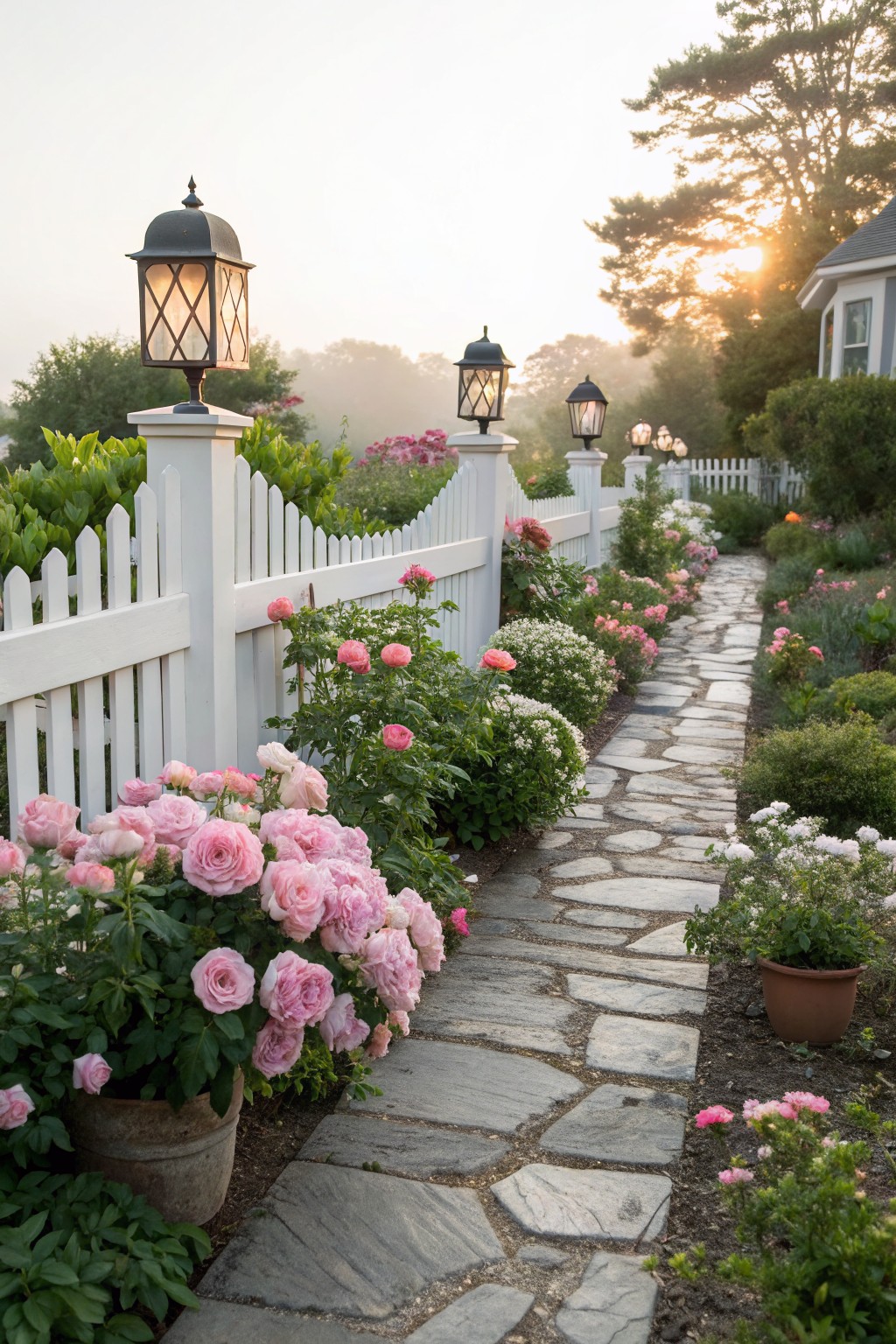
A simple stone path like this one draws you right through the garden. It’s edged with big clusters of pink roses in soft, mounded flower beds. That white picket fence keeps everything neat but lets the flowers spill over a bit. The look feels old-fashioned and easygoing. People like how it turns a plain walkway into something you actually want to stroll along.
You can pull this off in most yards with average sun. Pick bush roses that bloom a lot and mound the soil so they lean toward the path. Add the fence if you want that storybook edge… or skip it for a more natural feel. It suits cottage-style homes best. Watch the thorns though. Trim them back near the walking area.
Natural Flower Beds with Grasses and Boulders
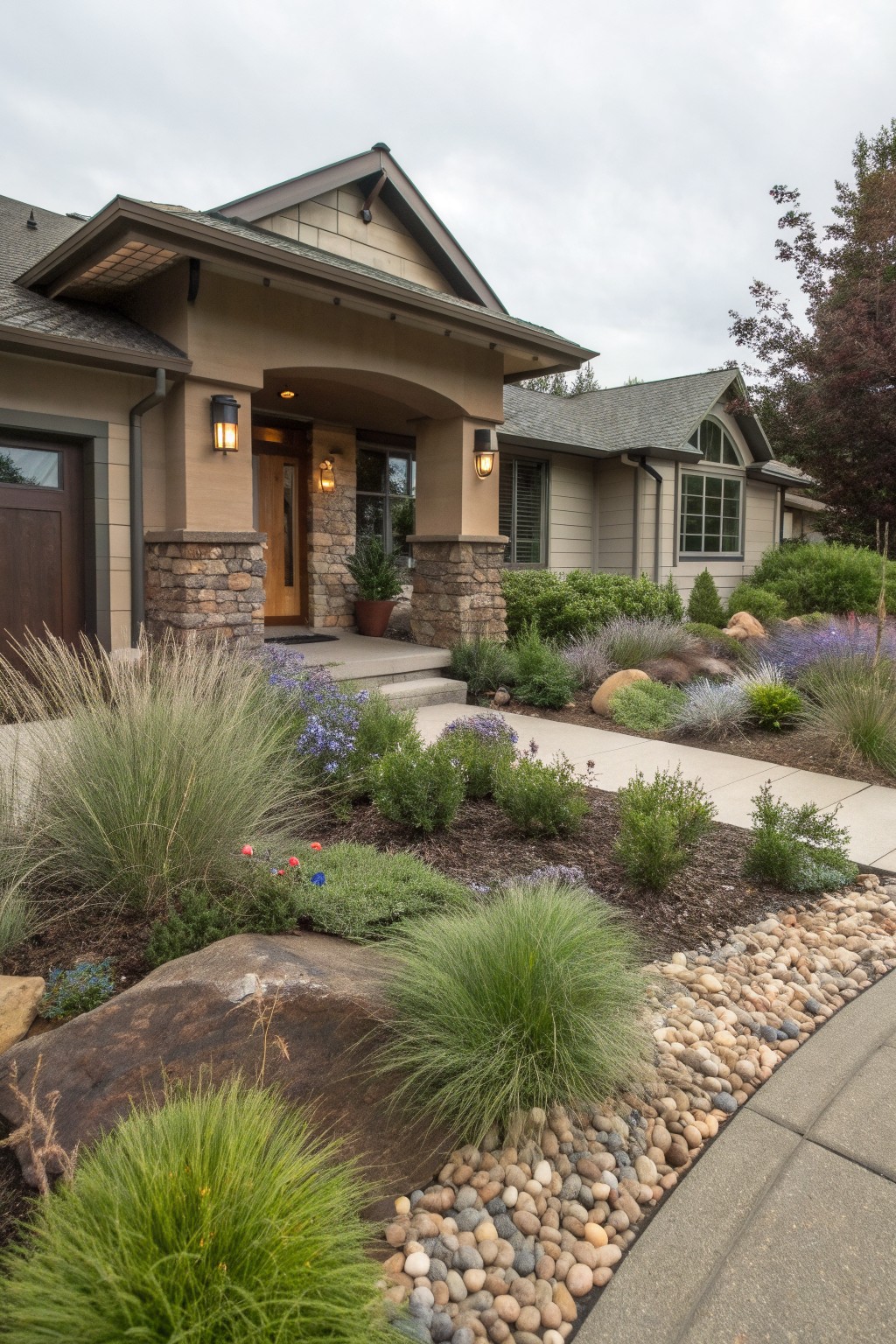
Tall ornamental grasses fill out these curved beds nicely, mixed with lavender and low ground covers. A few big boulders sit right in the plantings, along with dark mulch to hold it together. The whole thing looks established and easygoing, softening the walkway without looking fussy.
Put this kind of bed along your front path or driveway where you want some movement from swaying grasses. It suits drier yards best, since these plants handle less water once they’re going. Just space the grasses for air flow and drop in rocks early to set the scale.
Flower Beds Along Curved Stone Walls
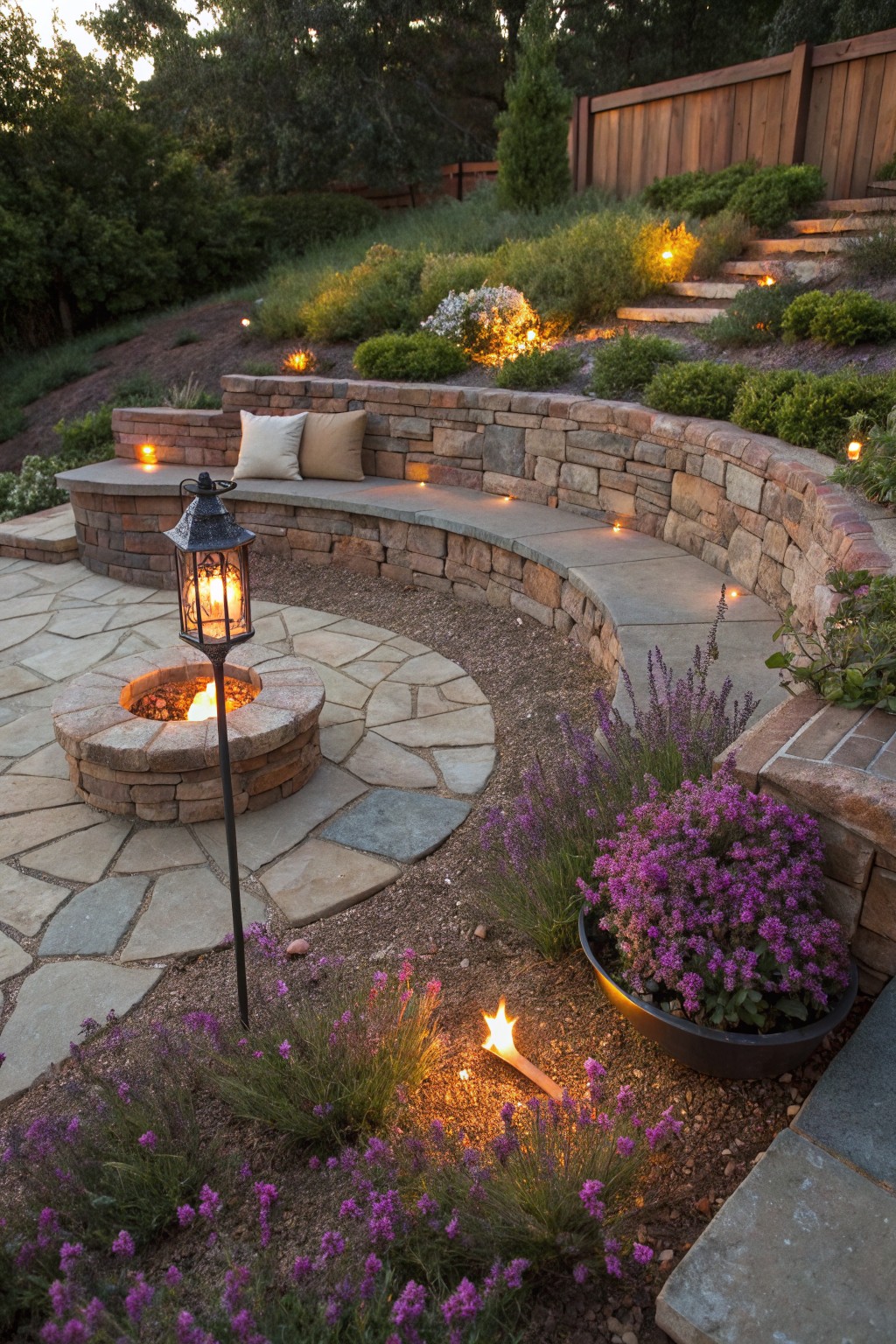
One nice way to handle a sloped yard is planting flower beds tight against curved stone retaining walls. Here, low purple lavender fills the beds right up to the wall’s edge, where it turns into a built-in bench. The soft plants balance the rough stone, and everything curves around a simple fire pit. It makes the space feel pulled together without much flat ground needed.
This works best in backyards with some hill, where you want seating and color but not big flat patios. Pick tough, drought-friendly flowers like lavender or heather that spill over the edge a bit. Keep the stone local if you can, for that natural look. Watch the scale though, too low a wall won’t hold back soil well.
Boxwood-Edged Beds Along a Garden Path
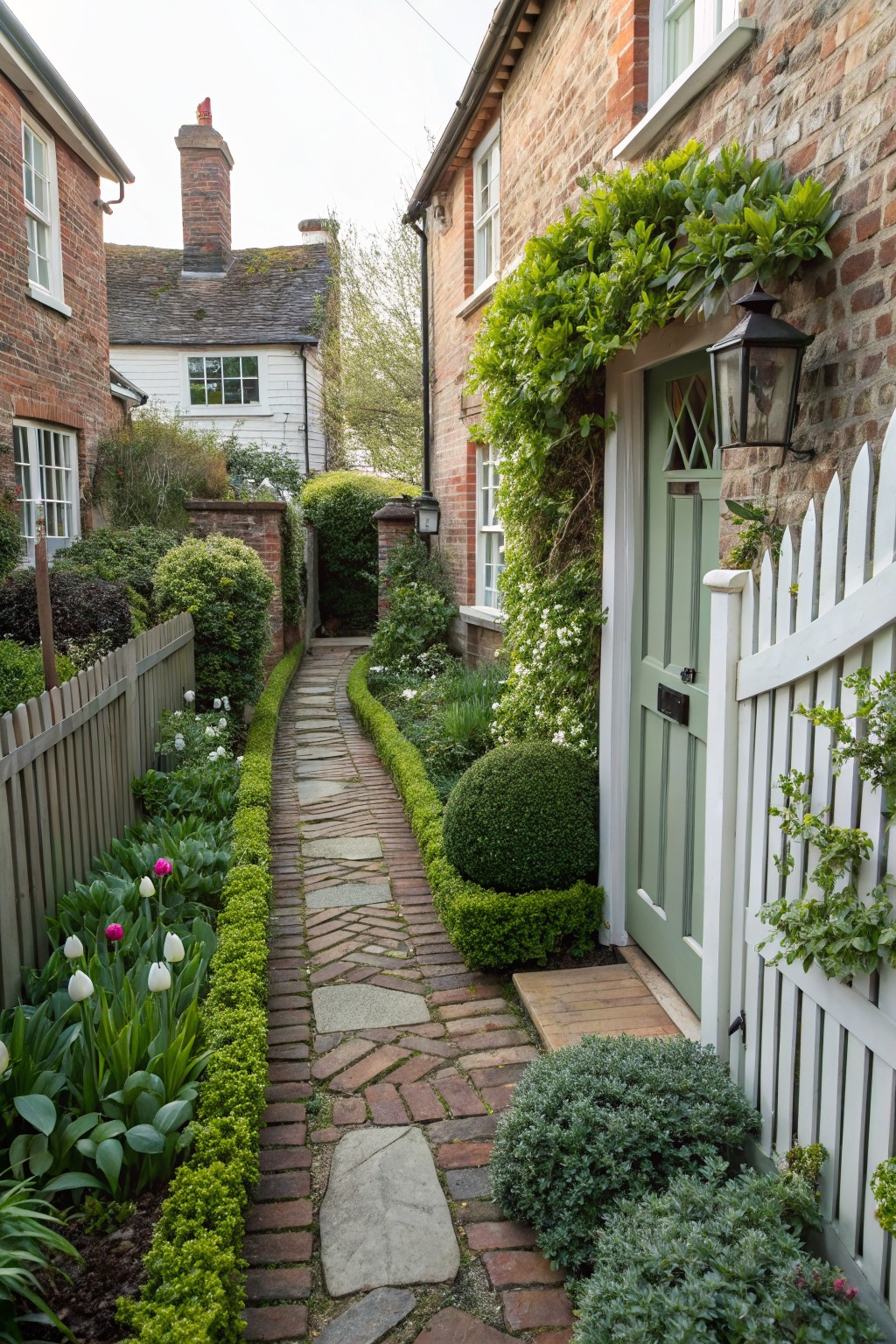
One simple way to make a narrow yard feel special is to line a path with low boxwood hedges that edge flower beds. The boxwoods keep everything tidy and give a classic cottage look, while spring tulips add pops of pink and white right along the way. It turns a plain walkway into something you actually want to stroll down.
This setup works best in side yards or leading to a back door, especially on older homes with brick walls. Plant the boxwoods close to the path edge, then fill beds with bulbs or perennials that come back each year. Keep it low key. Trim the hedges once a year, and it stays neat without much work.
Stone Steps with Flower Beds
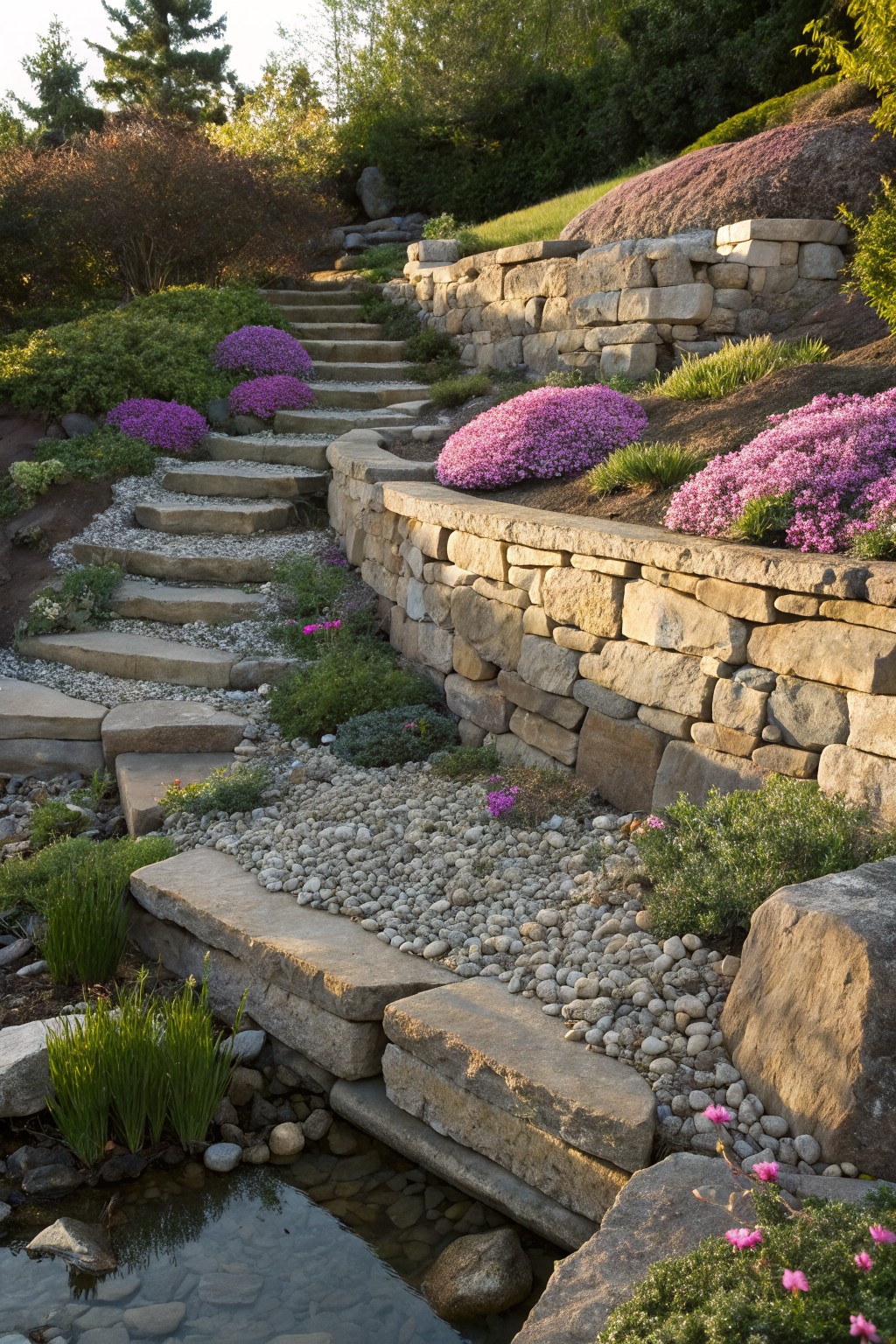
One simple way to handle a sloped yard is to build stone steps right into flower beds along retaining walls. Here the rough-cut stones form wide, easy steps that wind up the hill, with clusters of pink flowers spilling over the edges. It turns a tricky slope into something you actually want to walk up. The gravel patches and bits of grass fill in the gaps without much fuss.
This works best where you have a change in levels, like from yard to patio or garden entrance. Use local stone for a natural fit, and pick tough, spreading plants like creeping phlox that hang on through seasons. Keep the beds narrow so they don’t overwhelm the path… and watch for spots where water pools at the bottom.
Stone Path Lined with Tall Foxgloves
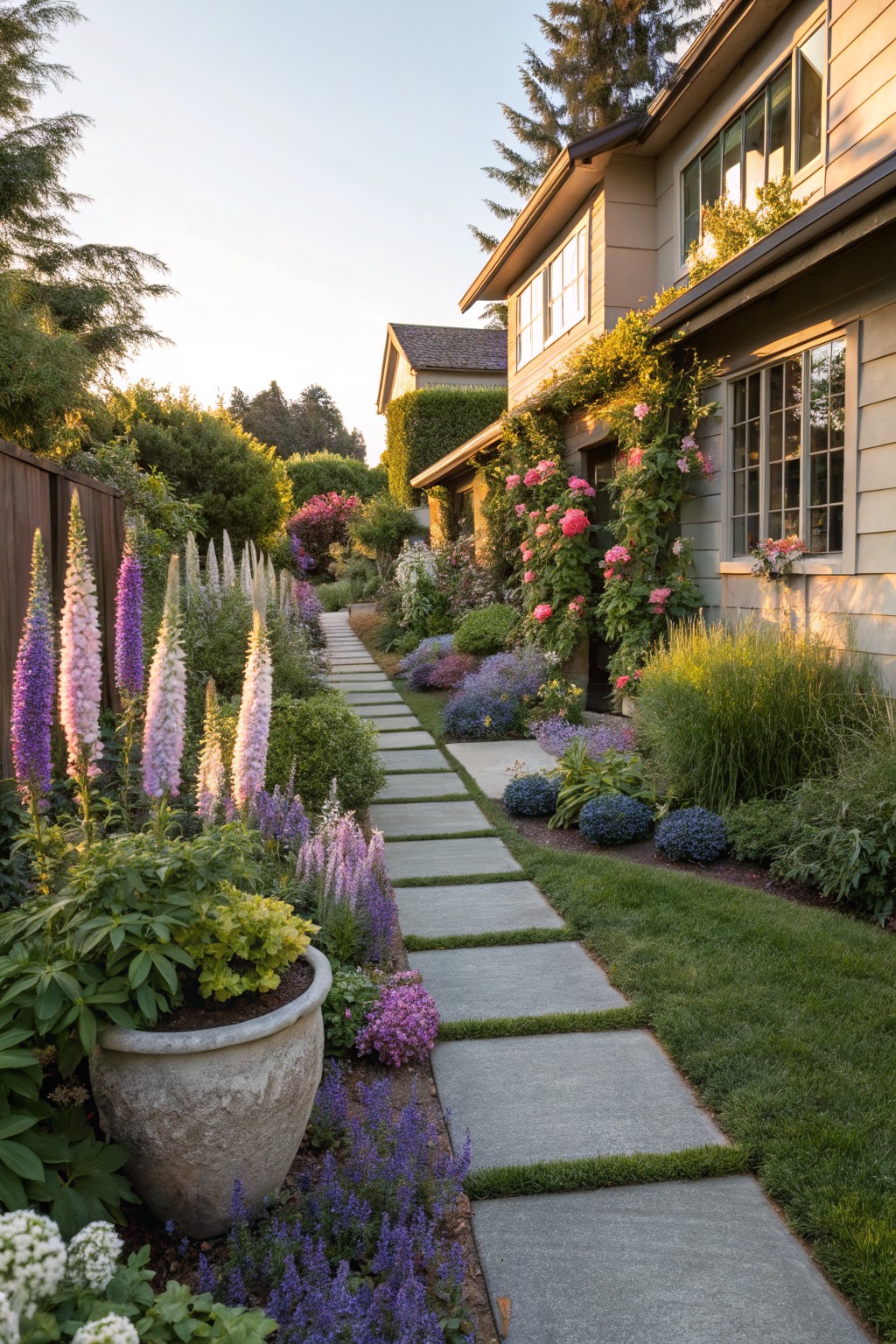
One simple way to make a garden path feel more alive is to plant tall foxgloves right along the edges. These spiky purple and pink flowers reach up high, giving the walkway some natural rhythm and height that pulls your eye right down the path. They mix well with lower plants like lavender and grasses, filling out the beds without much fuss.
This setup works great in side yards or entry paths where you want a cottage look without constant trimming. Plant them in drifts every few feet, and they’ll self-seed a bit for easy repeat. Just watch they get some afternoon shade, or the colors fade. Fits older homes with that cozy backyard feel.
Frequently Asked Questions
Q: When’s the best time to start digging a new flower bed?
A: Go for early spring in most spots, right after your last frost. Plants get a solid root start before the heat kicks in. Local garden centers know your zone’s sweet spot.
Q: My soil’s hard and rocky. How do I get it ready for flowers?
A: Break it up with a shovel or tiller, then stir in compost to a foot deep. This loosens everything and feeds the roots right away. Skip fancy tests, just dig a hole and see if it crumbles nicely.
Q: How do I edge a flower bed without spending much?
A: Grab some bricks or stones you already have and bury them halfway along the border. Tamp the soil firm around them for a clean line. Fresh mulch on top ties it all together…
Q: What’s a quick way to fight weeds in a new bed?
A: Spread thick newspaper or cardboard over bare soil first. Top it with 3 inches of mulch to smother seeds. Yank anything that pokes through while it’s small.
