

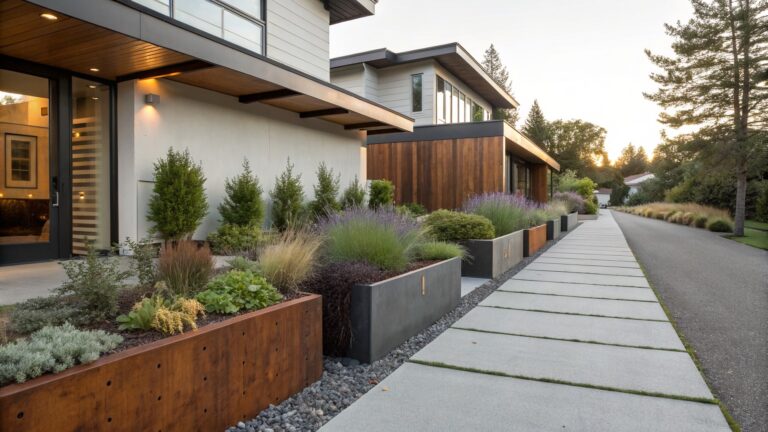
I’ve noticed over years of tending my yard that sleek flower beds make the biggest difference in pulling a garden together without much fuss.
They rely on smart layouts where plants stack in layers, backed by clean edging that stands up to seasons of growth and weather.
In my last project, I skipped fussy borders and went with simple steel ones instead, which kept everything crisp even as perennials filled out.
What draws the eye first is usually that structured feel, like the beds are carved right into the lawn.
A couple of these designs have me eyeing my side yard to test how they’d shape the paths there.
Corten Steel Beds Line the Entry Path
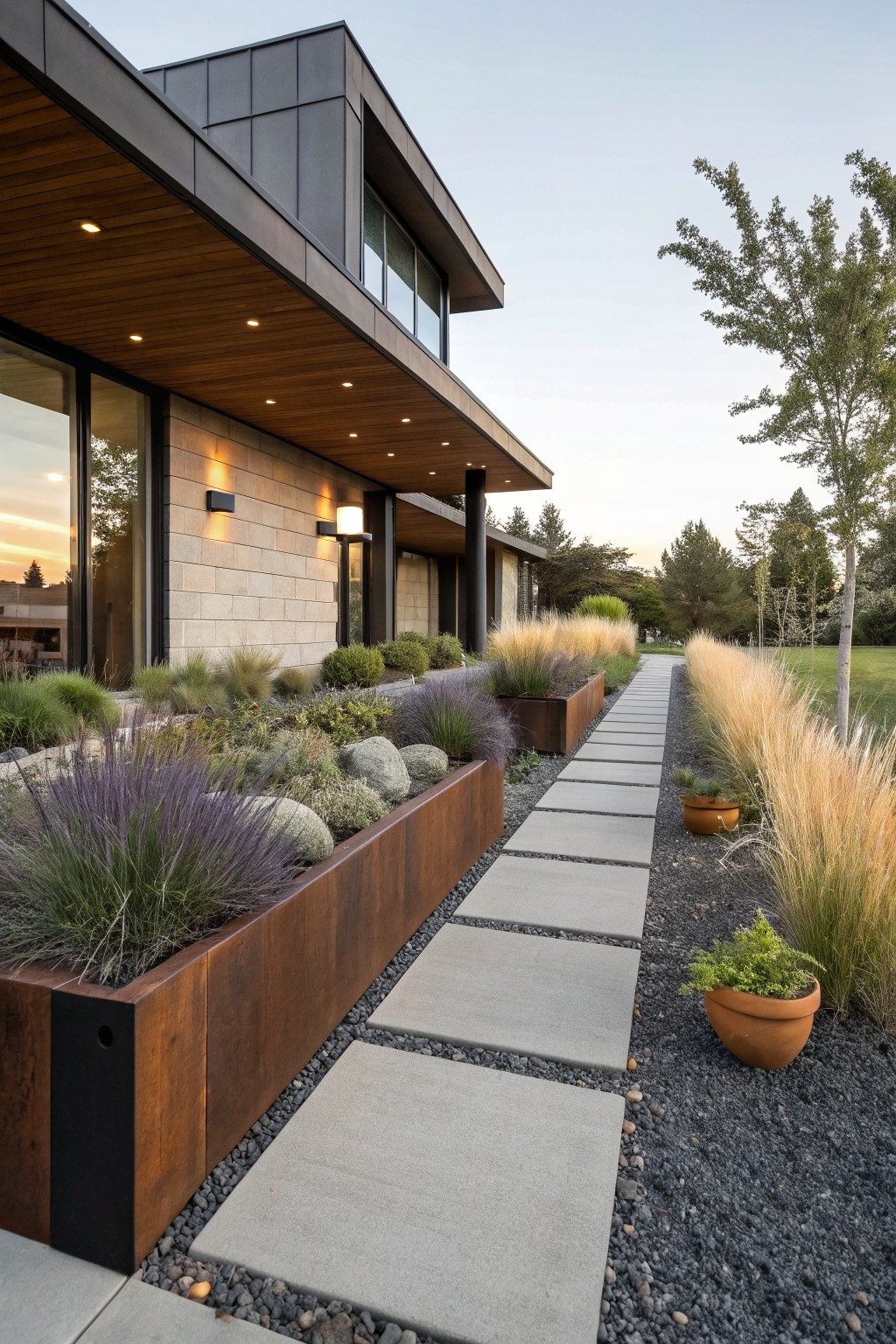
Raised beds like these, made from corten steel, add a rugged modern edge to a simple walkway. The rusty finish develops over time, and when you fill them with tall grasses and sedges, they frame the path without much fuss. It keeps things low and structured, letting the house stand out while guiding you in.
This setup suits homes with clean lines or a bit of contemporary style. Plant drought-tolerant stuff in there, like fountain grass or lavender, and pair it with gravel mulch between pavers. Easy to maintain, but check for good drainage so roots don’t rot. Works best in full sun spots.
Sleek Trough Planters for Modern Beds
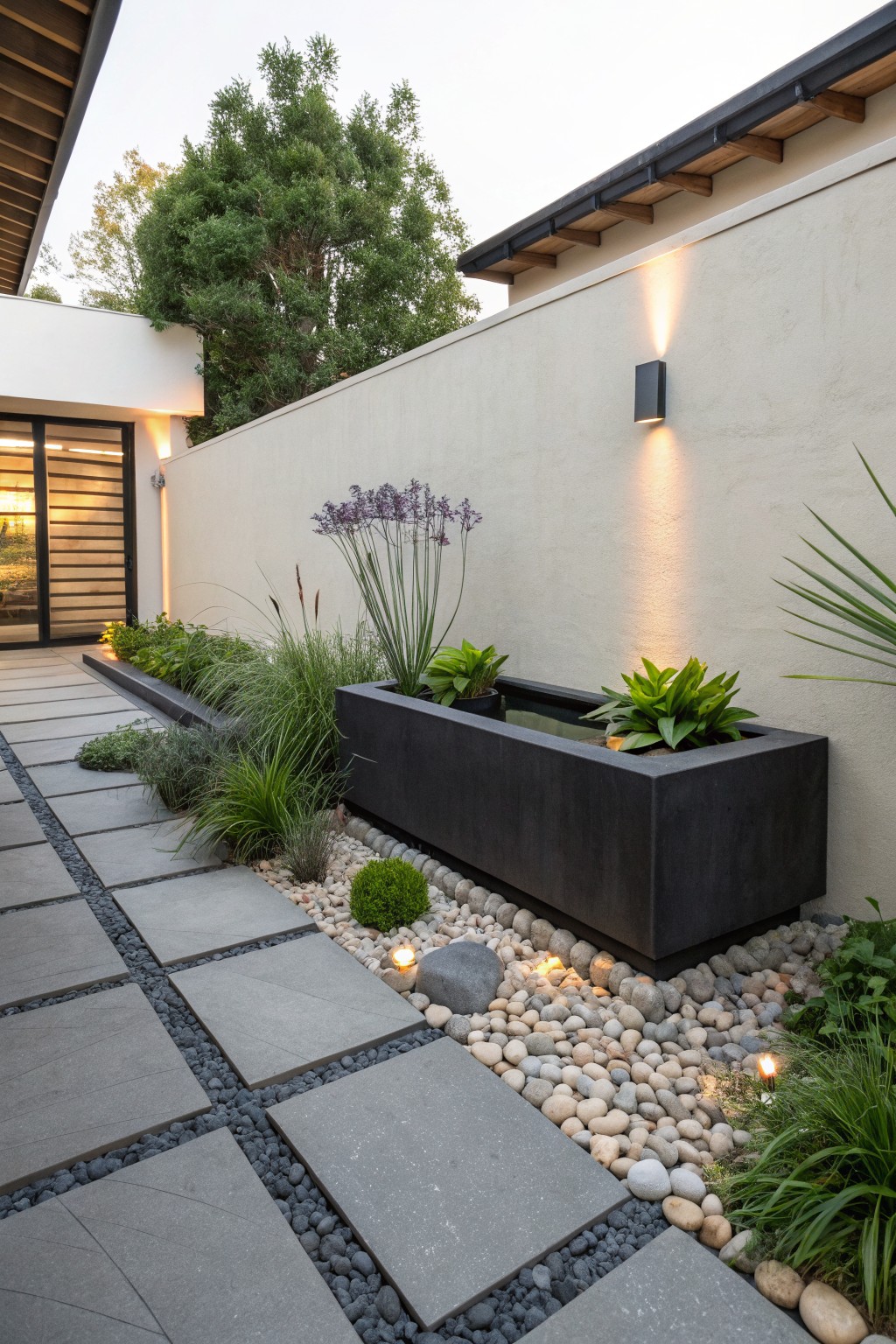
One simple way to get a sharp modern look in the garden is with these long, raised trough planters. Made from dark concrete, they sit low along a path and hold both water and plants like tall grasses and broad-leaf greens. The black color keeps things bold against light walls and stone paths, and the shallow water adds a calm reflective touch without much upkeep.
You can use this setup in narrow side yards or entry walks where space is tight. It works best on homes with clean lines, like midcentury or contemporary styles. Just line the edges with pebbles for drainage and easy weeding, and pick tough plants that handle wet feet. Avoid overcrowding. the trough, or it loses that open feel.
Curved Raised Flower Beds

Raised flower beds shaped in a gentle curve work really well when you want your garden to flow with the lines of a modern house. Here the stone wall follows the building’s rounded corner, filled with lavender, silvery shrubs, and little bursts of pink flowers. It softens the hard edges of the architecture without taking over, and keeps everything looking tidy.
You can pull this off on a slope or just to edge a walkway. Pick tough, drought-friendly plants that don’t need much fussing. It suits homes with clean lines, especially if you have some drop from the yard to the patio. Just make sure the wall material matches your house so it all blends.
Modern Raised Planter Beds Along Pathways
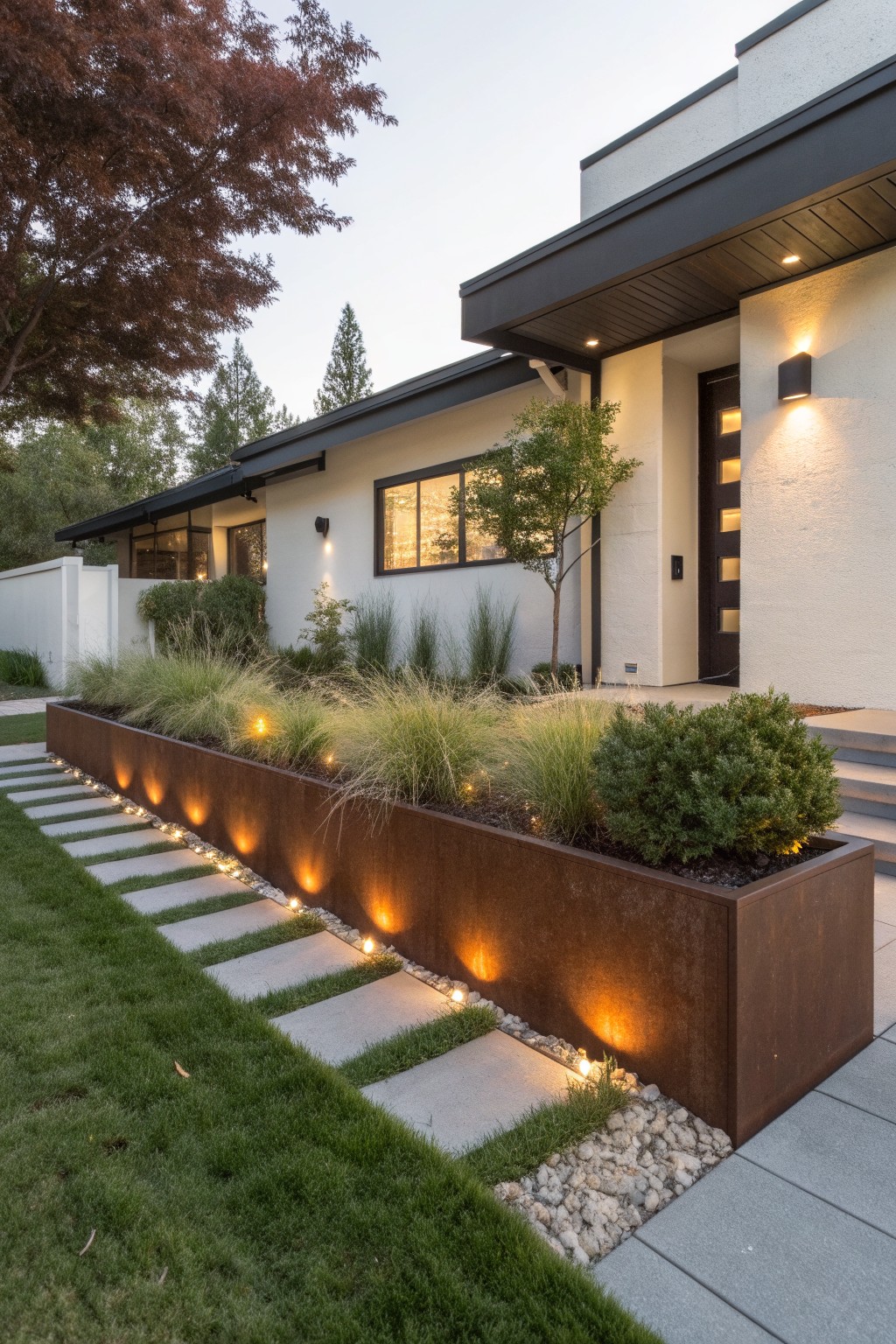
A long raised planter bed hugging the edge of your front path can give the whole yard a clean, put-together look. In this setup, corten steel forms the box, packed with tall grasses and a few low shrubs. Small lights along the base light it up nicely come evening, without overpowering things.
You can pull this off in front yards with simple paths leading to the house. It suits modern or midcentury-style homes best. Go for weathered metal that ages well, and stick to drought-tolerant plants. Just make sure the bed isn’t too tall, or it might block the view.
Linear Gravel Beds with Ornamental Grasses
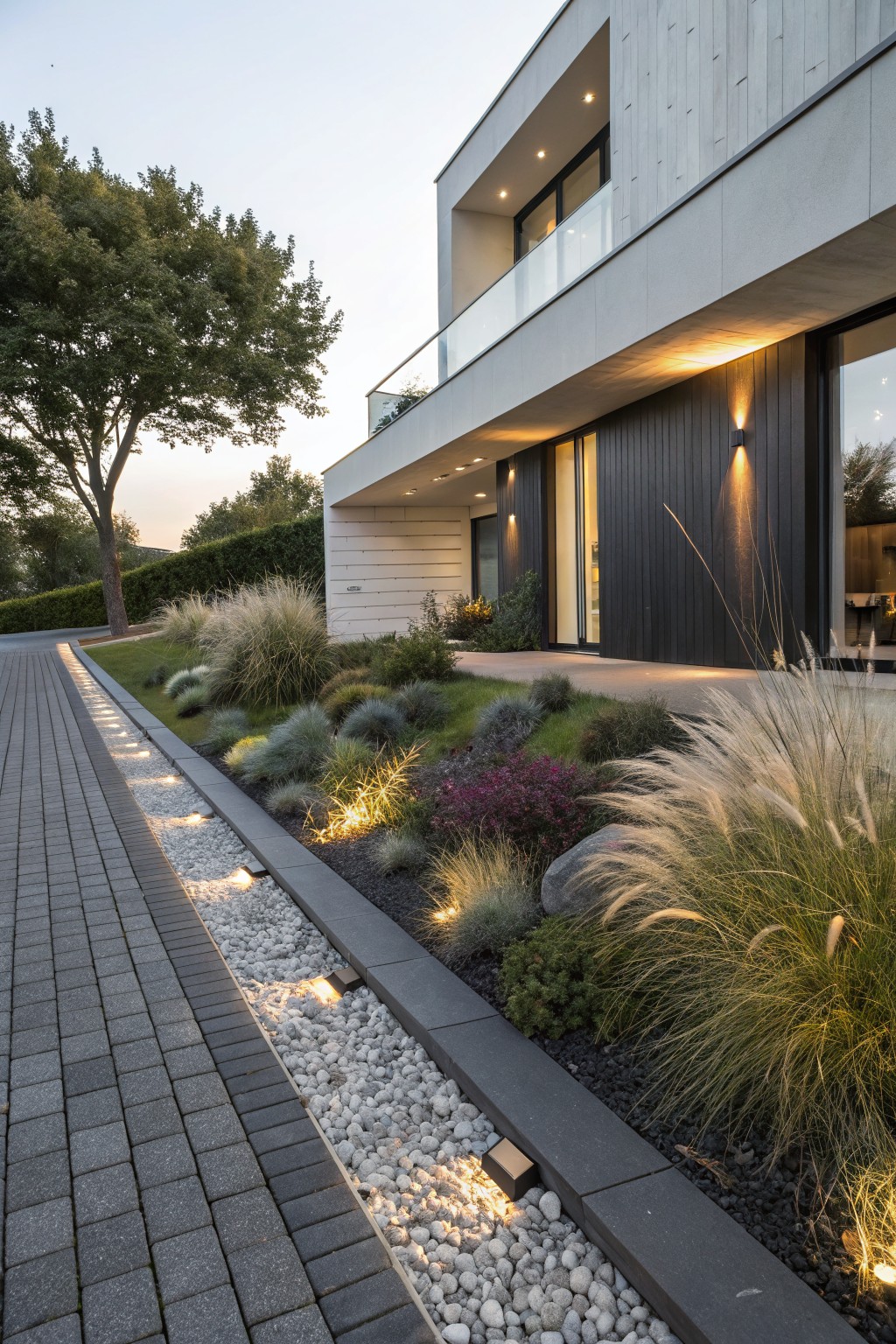
One clean way to edge a driveway is with straight concrete borders filled in with white gravel mulch and tall, feathery grasses. It keeps things simple and ties right into a modern house facade without much upkeep. The grasses sway a bit, adding movement, but the overall lines stay sharp and controlled.
This works best along paths or entryways where you want low plants that won’t block views. Pick tough varieties like miscanthus or pennisetum that handle dry spots well. Skip flowers if you like the minimal vibe… just gravel, a few shrubs, and path lights for evenings.
Raised Concrete Planters for Patio Edges

Raised concrete planters like these make a clean edge around outdoor seating areas. Filled with simple grasses and a few ferns, they keep the look modern and low fuss. The built-in bench and table sit right against them, so the beds feel like part of the space. Backlighting along the edges adds a nice glow after dark.
These work best in small city backyards where you want definition without eating up room. Go for upright grasses that sway a bit, and keep the concrete dark to match patios. They hide boundaries well behind bamboo screens too. Just watch watering, since raised beds dry out faster.
Winding Stone Paths in Flower Beds
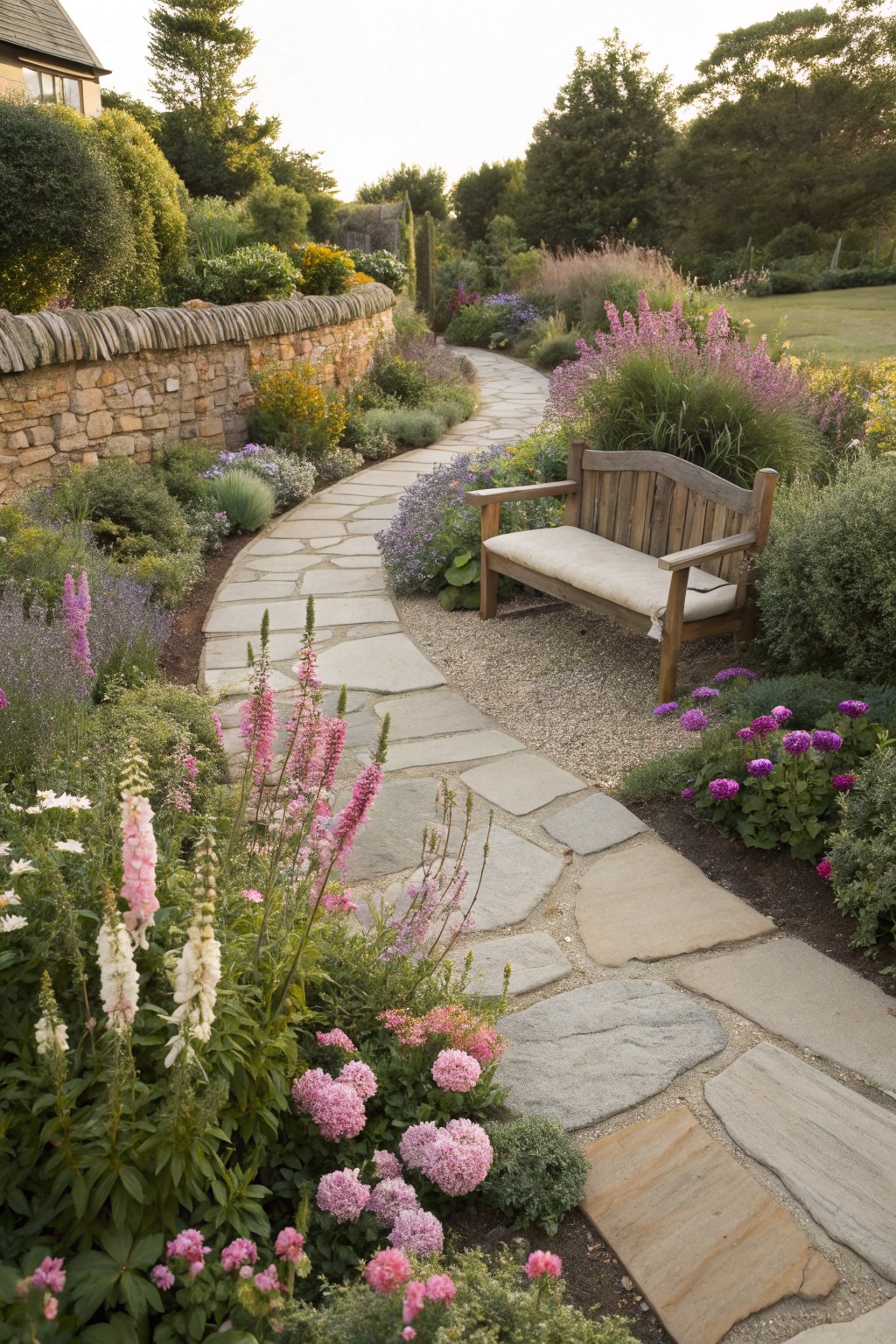
A simple winding path made from irregular flagstones pulls you right through the heart of a flower garden. It works because it slows your steps past layers of tall perennials like foxgloves and lavender, all edged soft with gravel and low shrubs. That bench halfway along? Perfect spot to sit and take it in.
You can do this in most backyard gardens, especially ones with a bit of curve or slope already. Set the stones in gravel for good drainage, then plant densely on both sides to fill out quick. It suits cottage looks best… keeps things feeling loose and lived-in, not too fussy.
Layered Perennials Along the Walkway
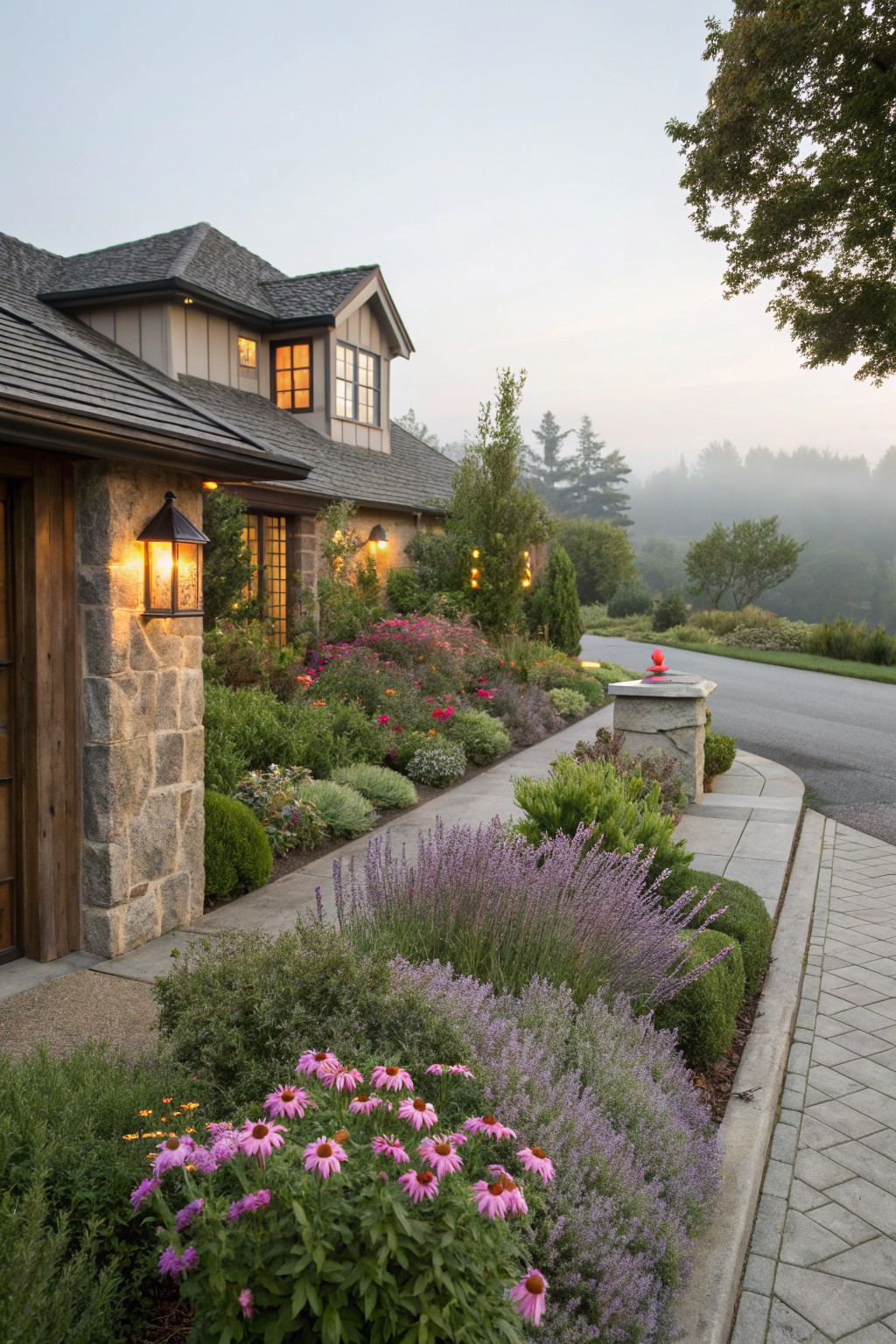
One simple way to boost curb appeal is layering perennials in beds right along your walkway or driveway. Taller plants like lavender go toward the back or house wall. Then mid-sized bloomers such as coneflowers fill the middle. Low growers edge the front. This setup adds natural rhythm and keeps things from looking flat.
It works best on homes with stone or wood siding where you want some softness next to hard paths. Curve the beds a bit to follow the walkway. Pick tough repeat bloomers that match your sun and soil. Skip anything too fussy. You’ll get color from spring into fall without much fuss.
Raised Concrete Planters for Clean Lines
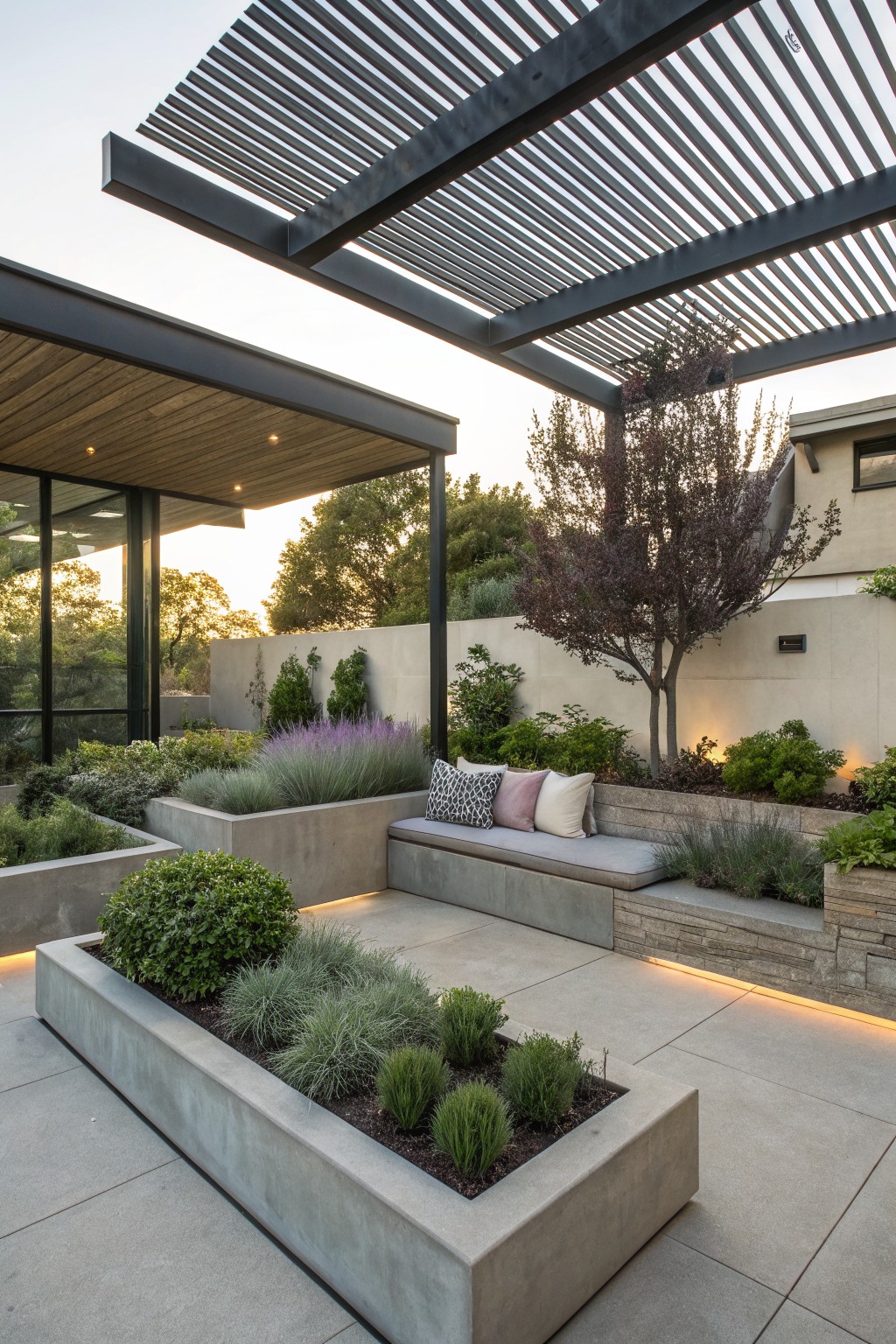
Large concrete planters like these make flower beds feel modern and put-together. They’re raised up off the ground, which keeps plants tidy and easy to tend. Filled mostly with grasses and small shrubs, the look stays simple without a lot of color fuss. It fits right into hard surfaces around a patio or terrace.
You can use this in small yards or urban gardens where space is tight. They work best near a house with clean walls or concrete floors. Just pick drought-tolerant plants so you don’t have to water much. One thing… make sure the concrete isn’t too thin or it might crack over time.
Boxwoods Line the Garden Path
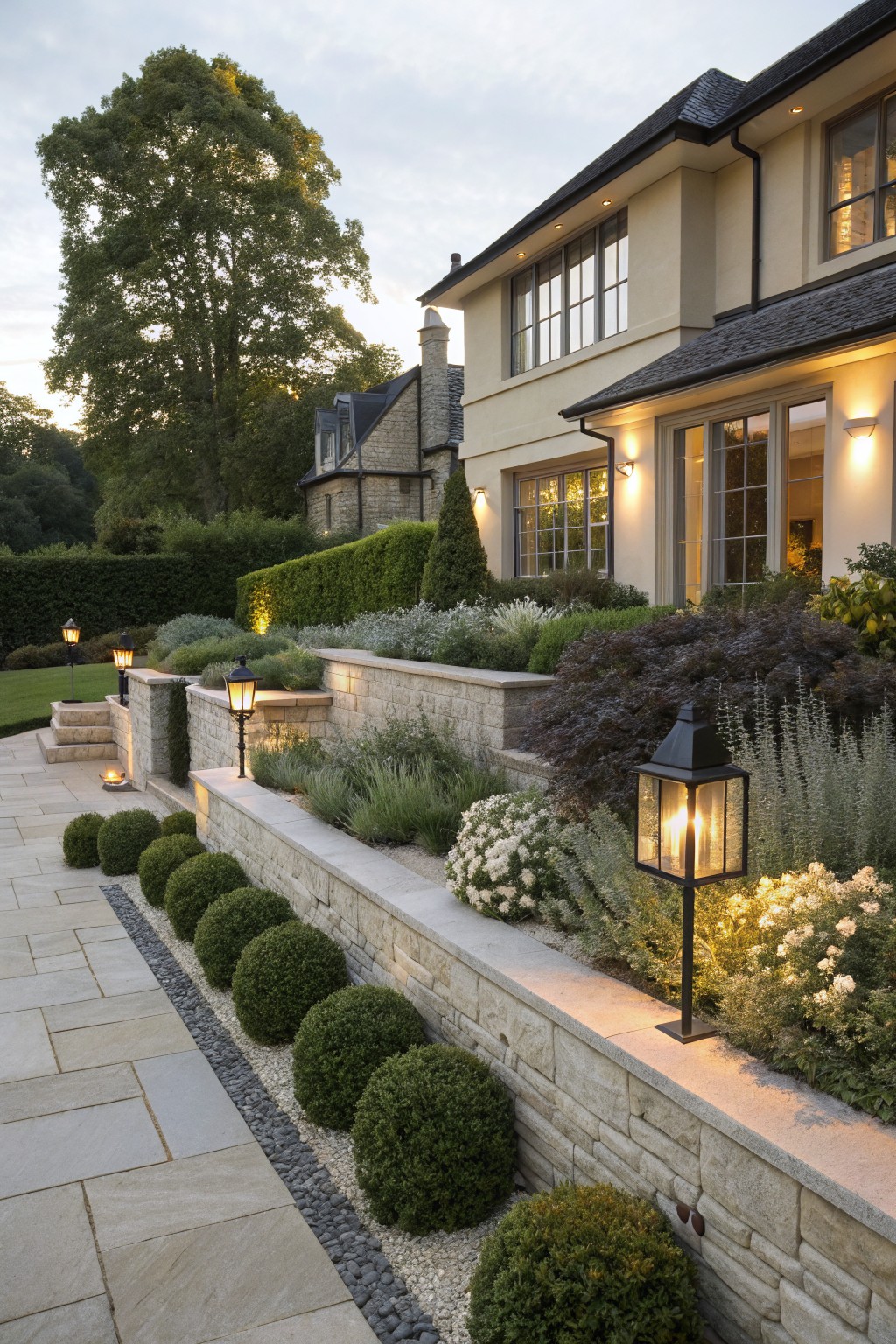
Boxwood spheres trimmed into neat balls make a clean edge along this stone path. They add structure to the flower beds without taking over, letting softer plants like grasses and white blooms fill in the beds behind. It’s a low-fuss way to keep garden borders sharp and modern.
Try this in side yards or entry paths where space is tight. The rounds repeat nicely against a retaining wall, working on slopes to hold back soil. Pick a sunny spot and shear them once a year… suits homes with simple architecture.
Modern Raised Beds Edging Patios
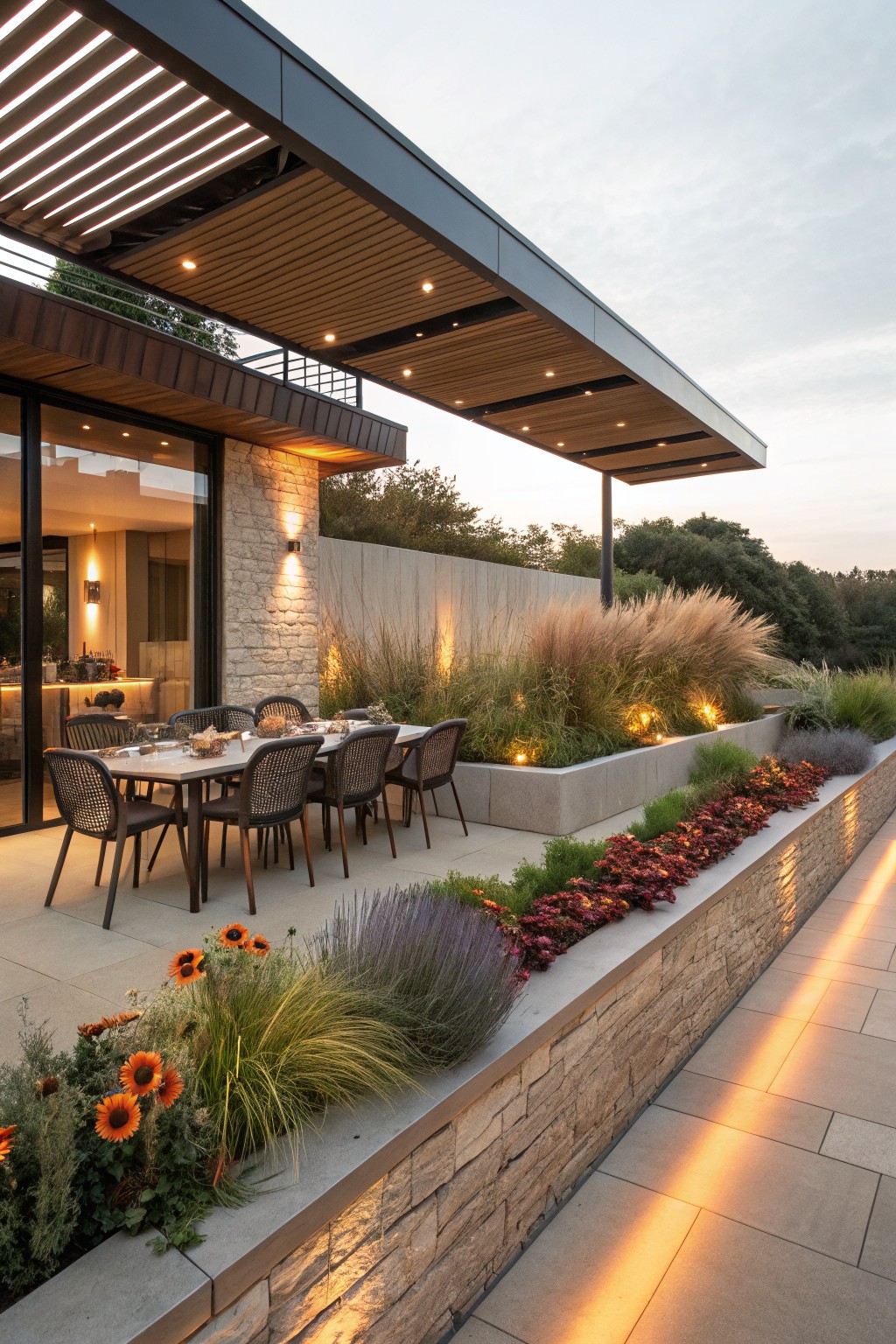
Raised beds like these hug right up against the patio pavers, using smooth concrete forms that match the clean lines of the house. Tall grasses sway above lower flowers such as daisies, giving height and texture without crowding the dining space. The warm LED lights tucked into the beds make it all glow nicely at dusk.
This works well around a terrace or deck where you want some planting but not a full garden takeover. Stick to drought-tolerant picks like pampas grass and lavender for easy care. It suits modern homes with stone or stucco walls… just keep the beds low enough so they don’t block views from the table.
Clean White Brick Raised Beds
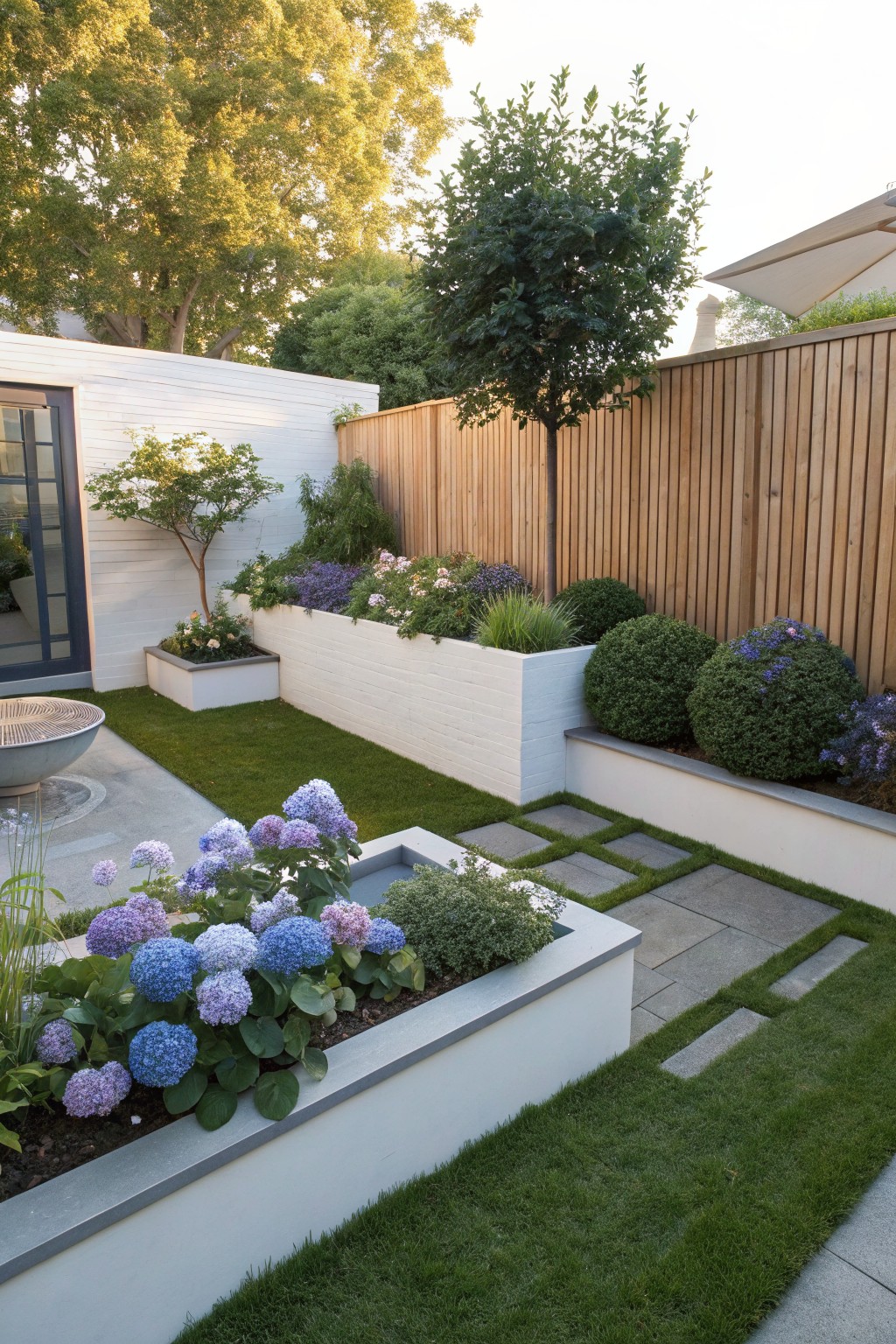
Raised beds made from white brick give flower gardens a sharp, modern edge. They keep everything neat and contained, letting colorful plants like those big blue hydrangeas pop against the clean lines. The brick ties right into nearby walls too, so the yard feels pulled together without much fuss.
These work great in smaller backyards or along a patio where you want structure but not a lot of maintenance. Stack them low for easy reach, pair with simple grass or stone paths, and fill with perennials that bloom reliably. Skip super tall versions unless you have room. They suit modern homes best, but soften them with softer plants if your style leans more traditional.
Tall Grasses Line a Narrow Path
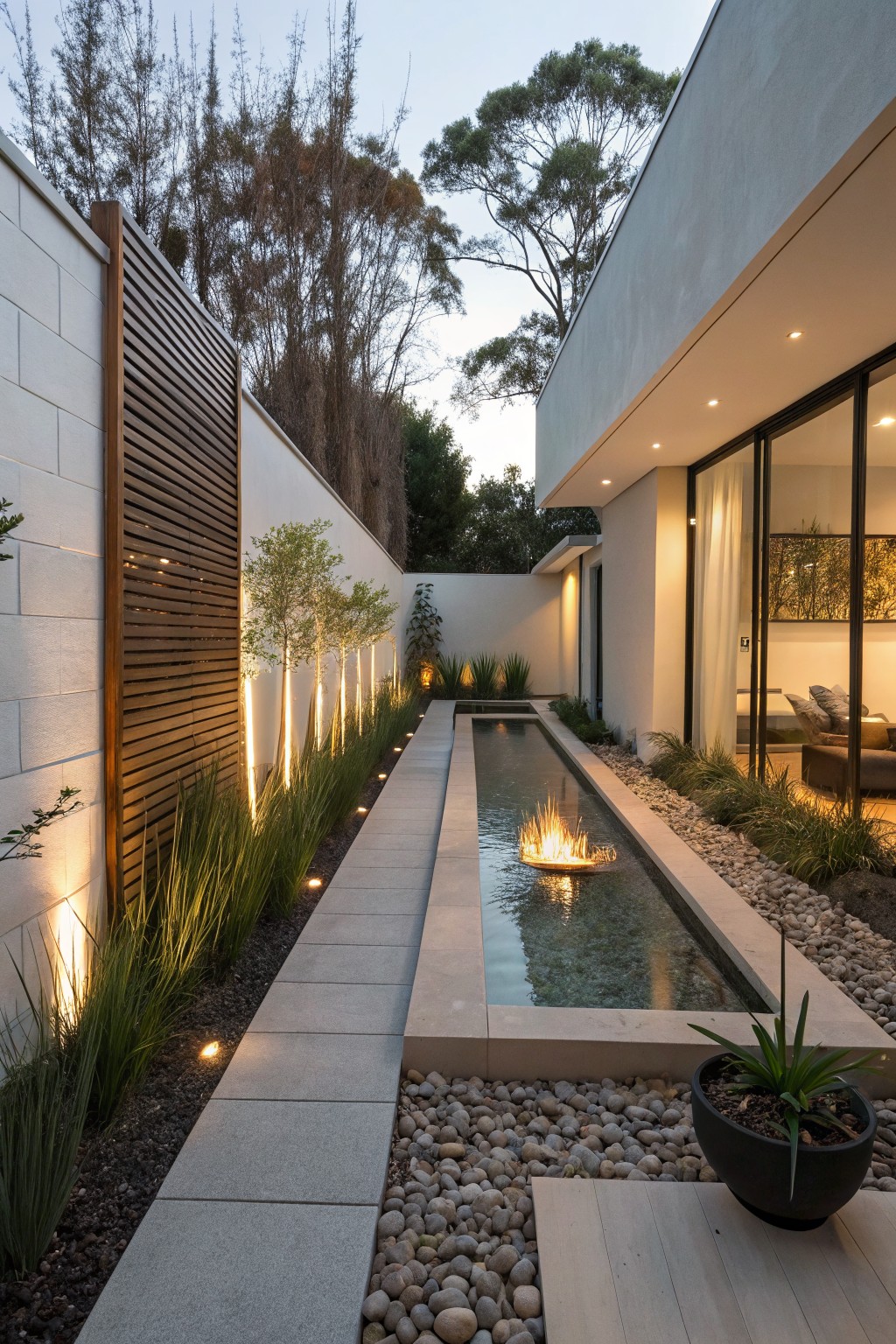
Tall grasses planted tight along both sides of a stone walkway make a simple modern statement. They form straight edges that draw your eye forward, especially with those slim uplights tucked in at the base. Paired here with a shallow water channel that holds a small fire feature, the grasses add height and movement without crowding the space.
This look fits side yards or entry paths where room is tight. Go for varieties like flax or lomandra that stay upright and need little water. Plant them about a foot from the path edge, and mulch with pebbles to keep weeds down. It softens hard surfaces nicely… just watch that the grasses don’t flop over in wind.
Stone-Edged Raised Flower Beds
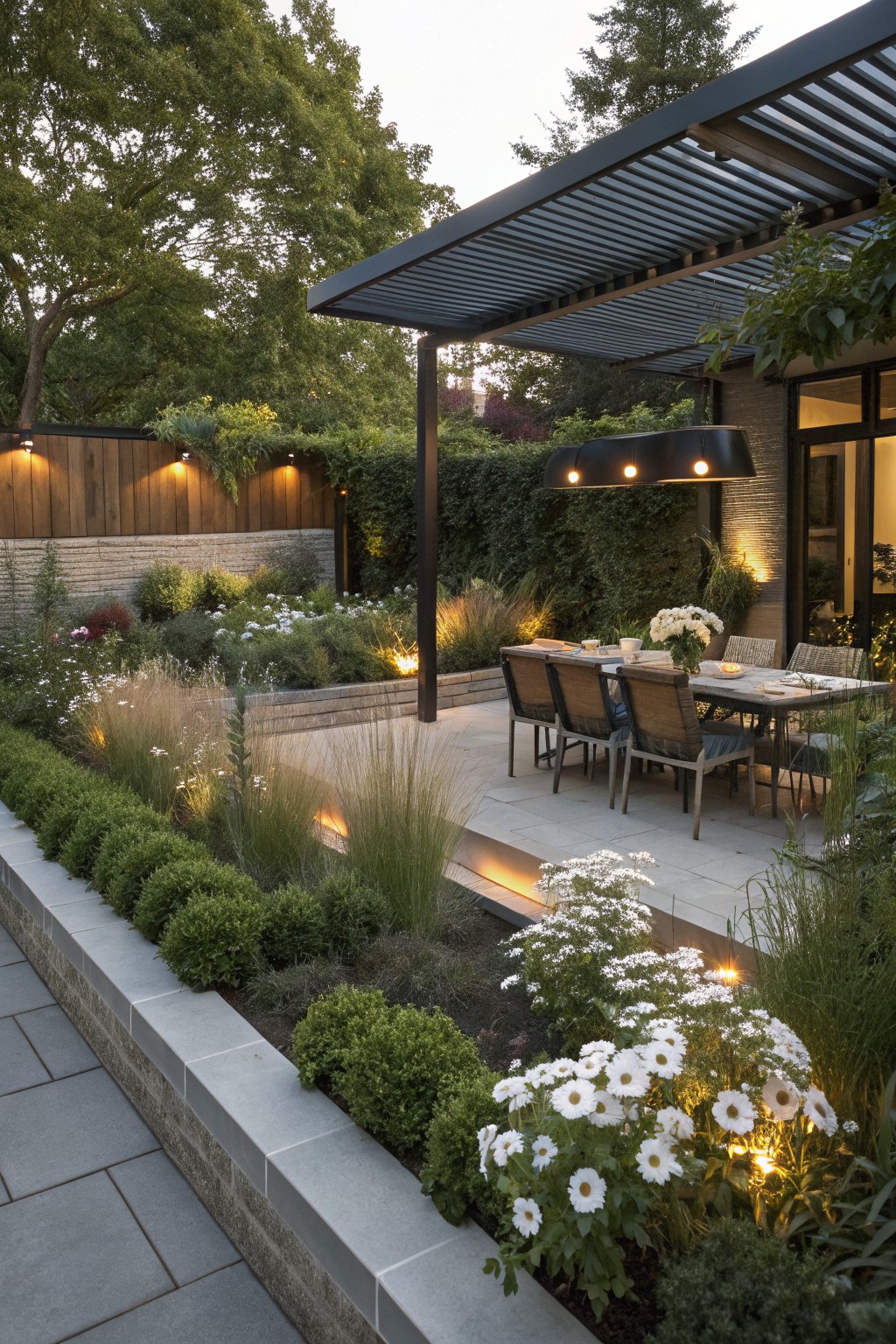
Raised stone walls make neat borders for flower beds right along a patio or walkway. You plant low boxwoods at the front, then taller grasses and white blooms behind them. It keeps everything looking structured and modern, without messy edges spilling over.
This works best next to outdoor seating or along house walls, where you want some separation but not big barriers. The low height fits smaller spaces, and adding lights in the beds brings it alive at night. Suits homes with clean lines, like mid-century or new builds. Just keep the stone simple to match.
Frequently Asked Questions
Q: How do I get that crisp edge on modern flower beds without fancy tools?
A: Grab a flat-edged shovel or even a half-moon edger from your garage.
Run it along your desired line after marking with string and stakes. Water the soil first so it cuts clean, then trim grass back weekly to hold the shape.
Q: What plants fit best in these sleek designs if I hate high-maintenance stuff?
A: Go for ornamental grasses like fescue or switchgrass. They sway neatly and need little water or pruning. Tuck in a few agave or black mondo grass for punch without the chaos.
Q: My yard’s mostly shady – do any of these 14 ideas still work there?
A: Pick beds four or eight from the list. They swap sun lovers for hostas and ferns that keep the modern lines sharp. Just bump up mulch to two inches thick.
Q: How do I stop weeds from messing up my new modern beds?
And: Layer cardboard under three inches of mulch right after planting.
A: Pull any stragglers by hand every couple weeks at first. That simple barrier smothers them long-term while feeding the soil.
