

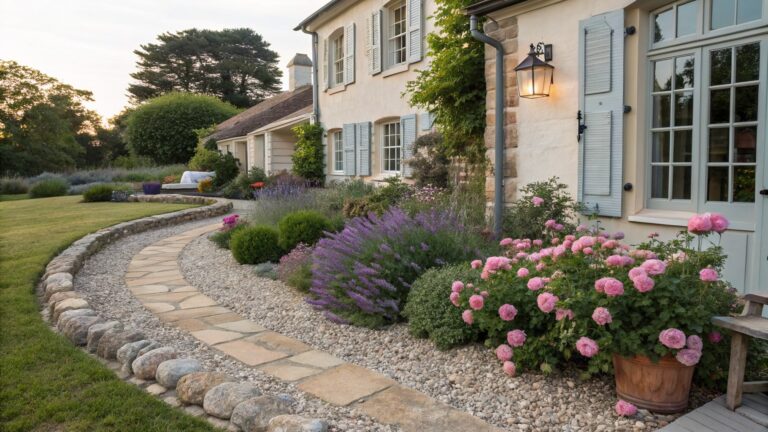
I’ve spent enough time tending my own yard to know that stone edging around flower beds is one of those details that quietly holds a garden together as plants mature and seasons shift. It defines the layout so cleanly, separating vibrant blooms from grass or gravel paths without overpowering the natural flow. A few years back, I replaced some crumbling plastic borders with local fieldstone, and it transformed how the beds read from the patio. These edges resist weathering, curb soil spillover, and even discourage weeds, letting you focus more on planting than upkeep. Good ones endure.
Stone Edging for Winding Garden Paths
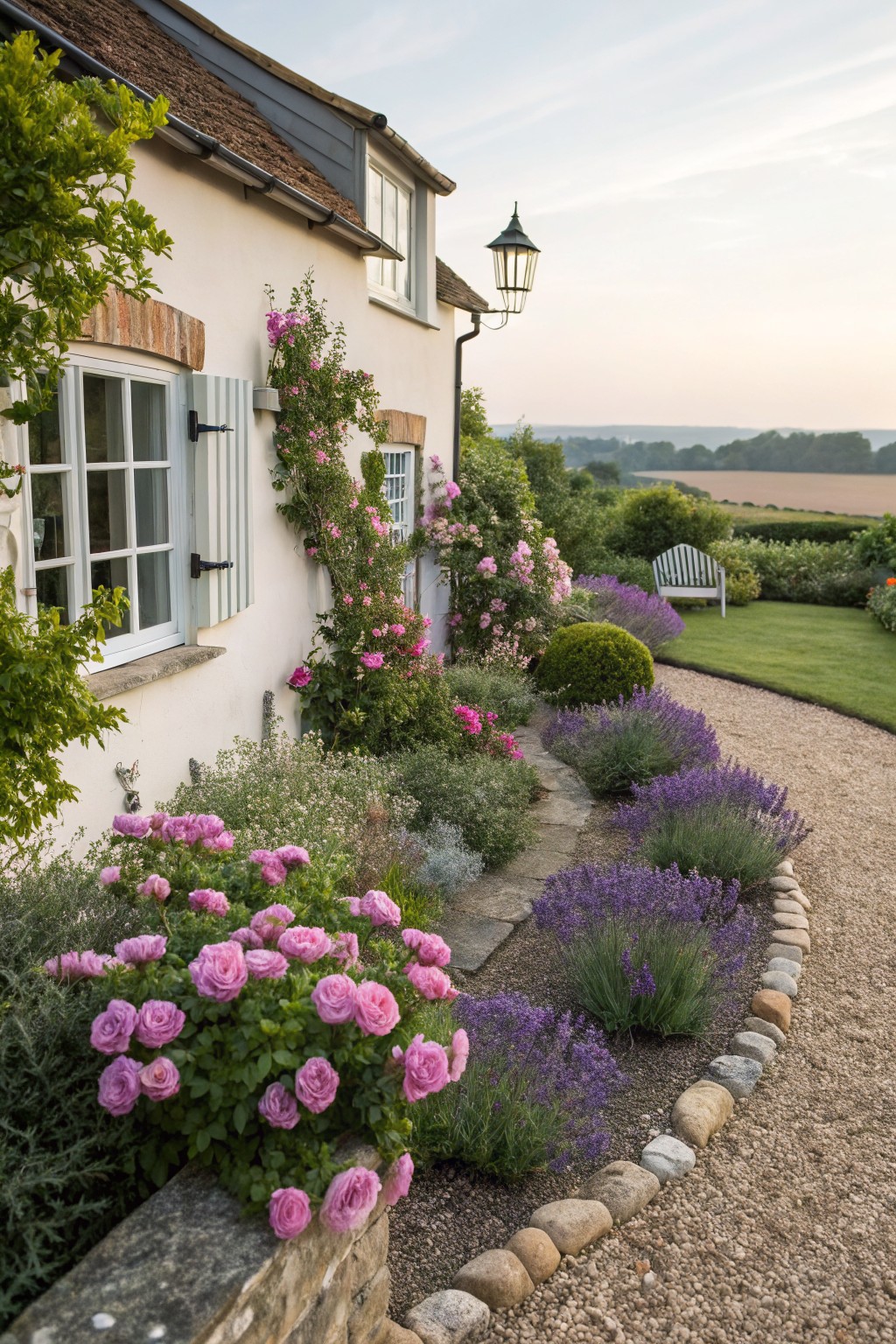
One reliable way to tidy up flower beds is with rounded stones along a gravel path. It gives a clean line that lets plants like pink roses and lavender tumble over without mess. The stones hold back the soil nicely and fit right into cottage-style yards.
This edging works best in softer landscapes around older homes. Lay the stones in a gentle curve to guide the path through the beds. Pick mid-sized rounded ones for easy handling. They stand up to weather over time. Just keep weeds out from between them now and then.
Long Terracotta Planters Line a Pebble Path
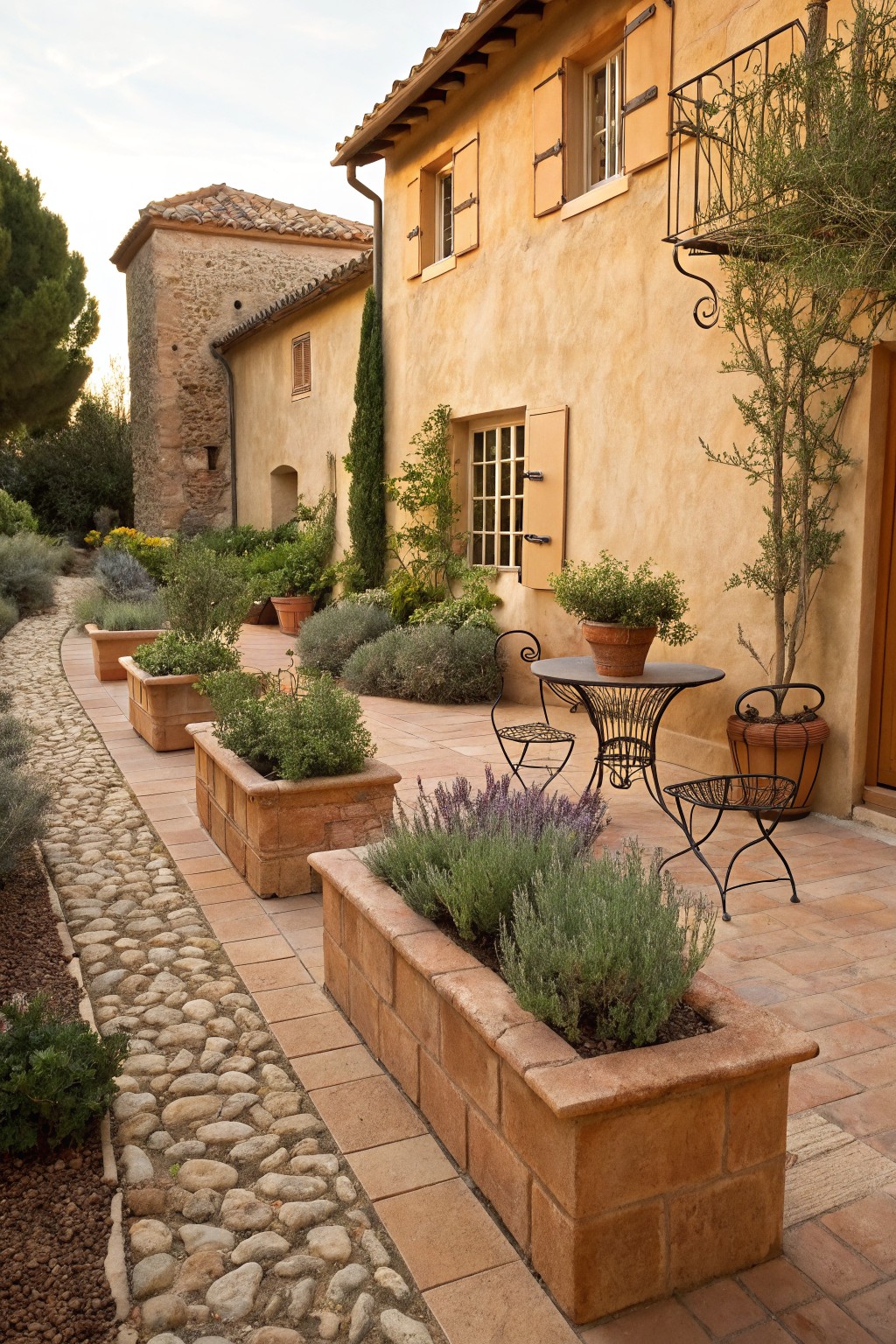
One straightforward way to edge flower beds is with these long rectangular terracotta planters set right along the walkway. They hold lavender and low shrubs nicely, keeping everything tidy without much fuss. The pebble path in between gives a soft crunch underfoot, and it all flows toward the house patio without feeling crowded.
You can pull this off in a sunny side yard or entry walk, especially where you want low upkeep. Fill them with drought-tolerant plants like lavender or rosemary that match a Mediterranean vibe. Just make sure the planters are sturdy and level, or they’ll tip over time… and keep the path edged clean so weeds don’t sneak in.
Stone Slab Path with Gravel and Rock Edging
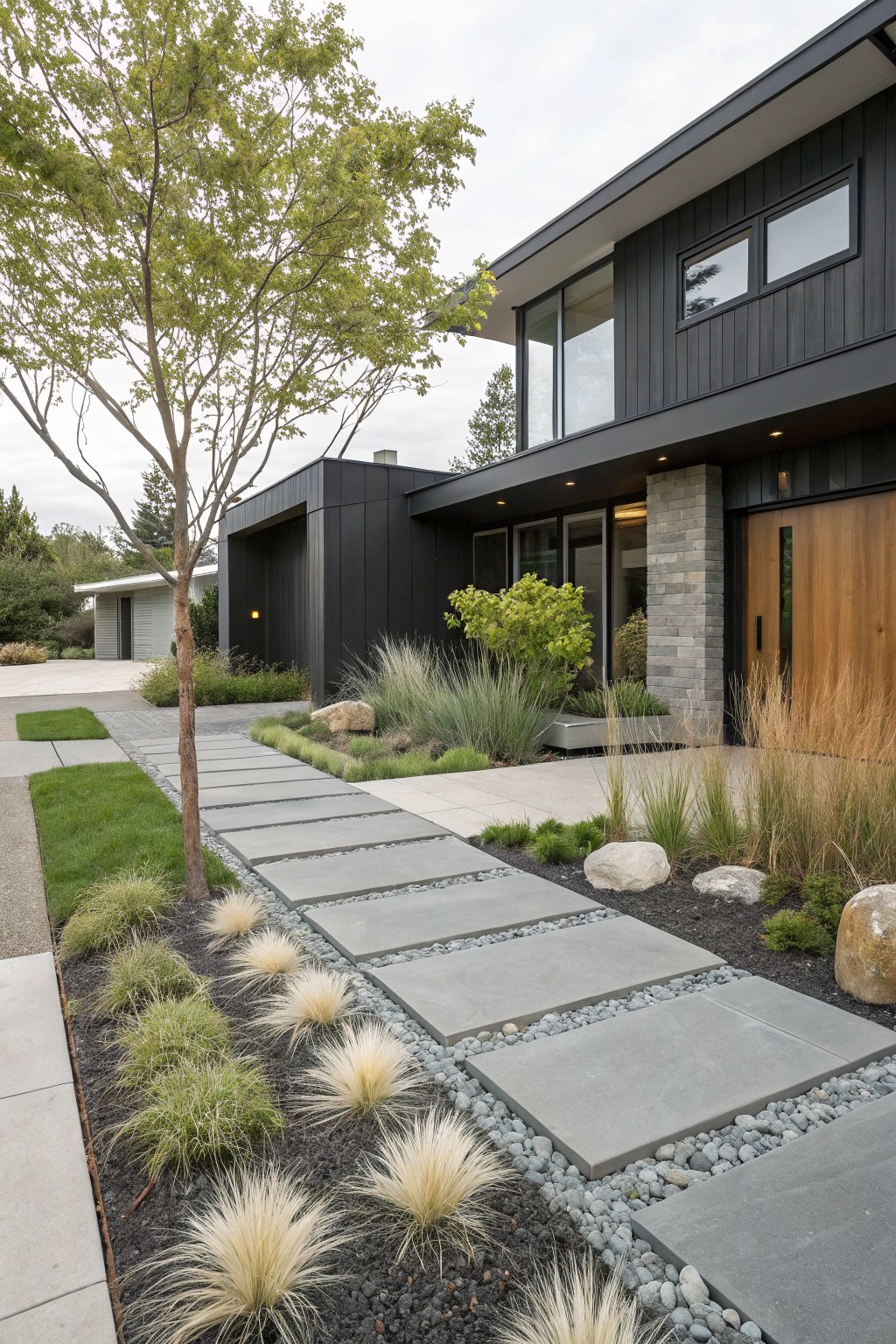
A simple pathway made from wide gray stone slabs set into gravel makes for an easy walk to the door. The beds along it use larger rocks and boulders as edging for clumps of tall grasses. That keeps everything neat without much trimming, and the stones last forever through weather.
This works best in front yards around modern or midcentury homes, where you want clean lines but some natural feel. Space the slabs wide enough for two people, fill gaps with gravel for drainage, and pick tough grasses like fescue. Skip it on super formal lots, though. It stays sharp with just occasional weeding.
Stone Edging for Curved Flower Beds
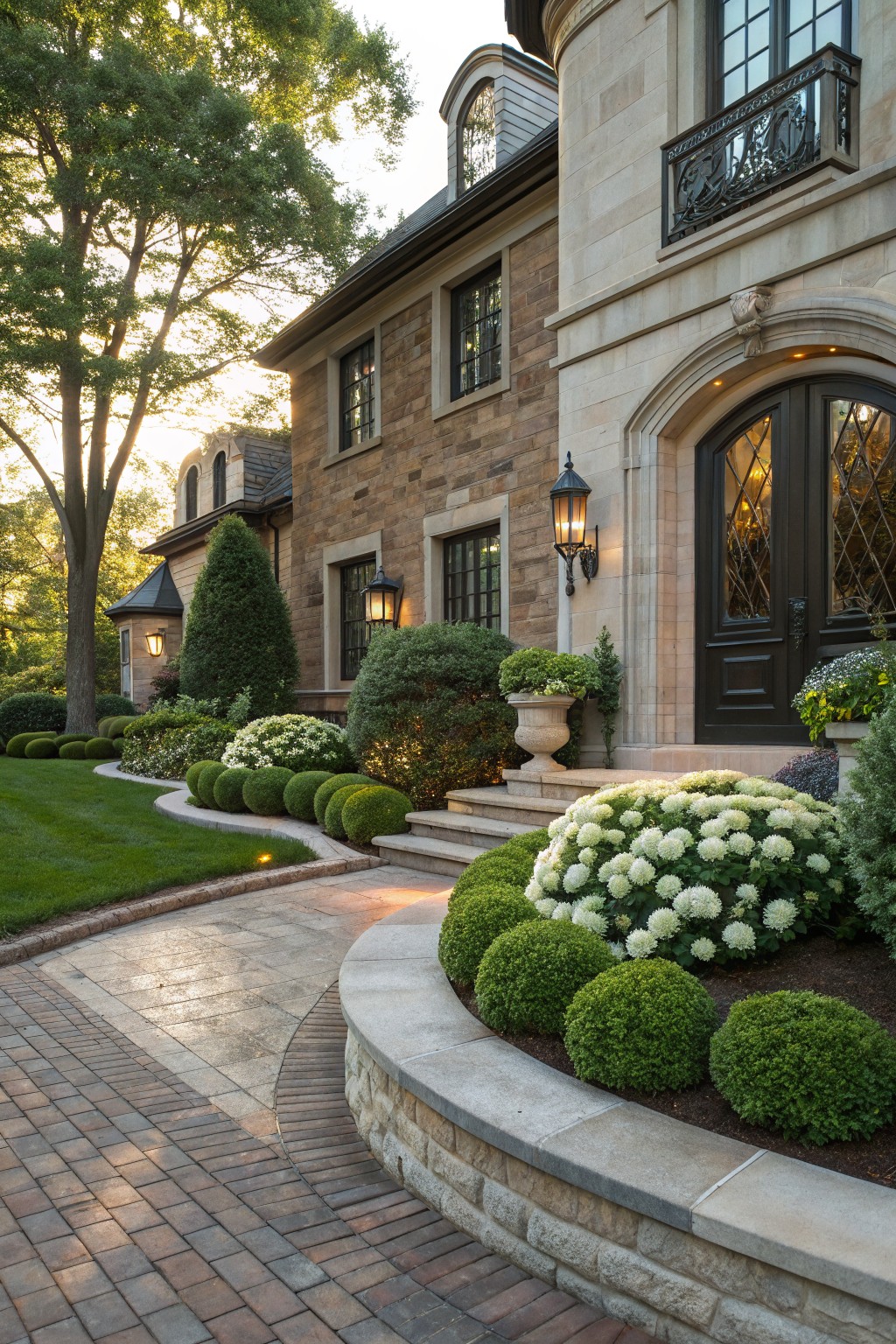
One clean way to handle flower beds is with low stone edging that follows a curving path right up to the house. Here it’s a simple retaining wall in the same limestone as the home, keeping the beds neat where white hydrangeas and round boxwoods grow. That edge stops grass from creeping in and gives the whole entry a finished look without much fuss.
This works best on bigger lots where you want a formal feel leading to the front door. Match the stone to your house stone or brick path for easy flow. Plant low evergreens like those boxwoods along the edge for year-round shape, then add seasonal flowers in the center. Just keep the curves gentle so mowing stays simple.
Flagstone Path with Pebble Edging
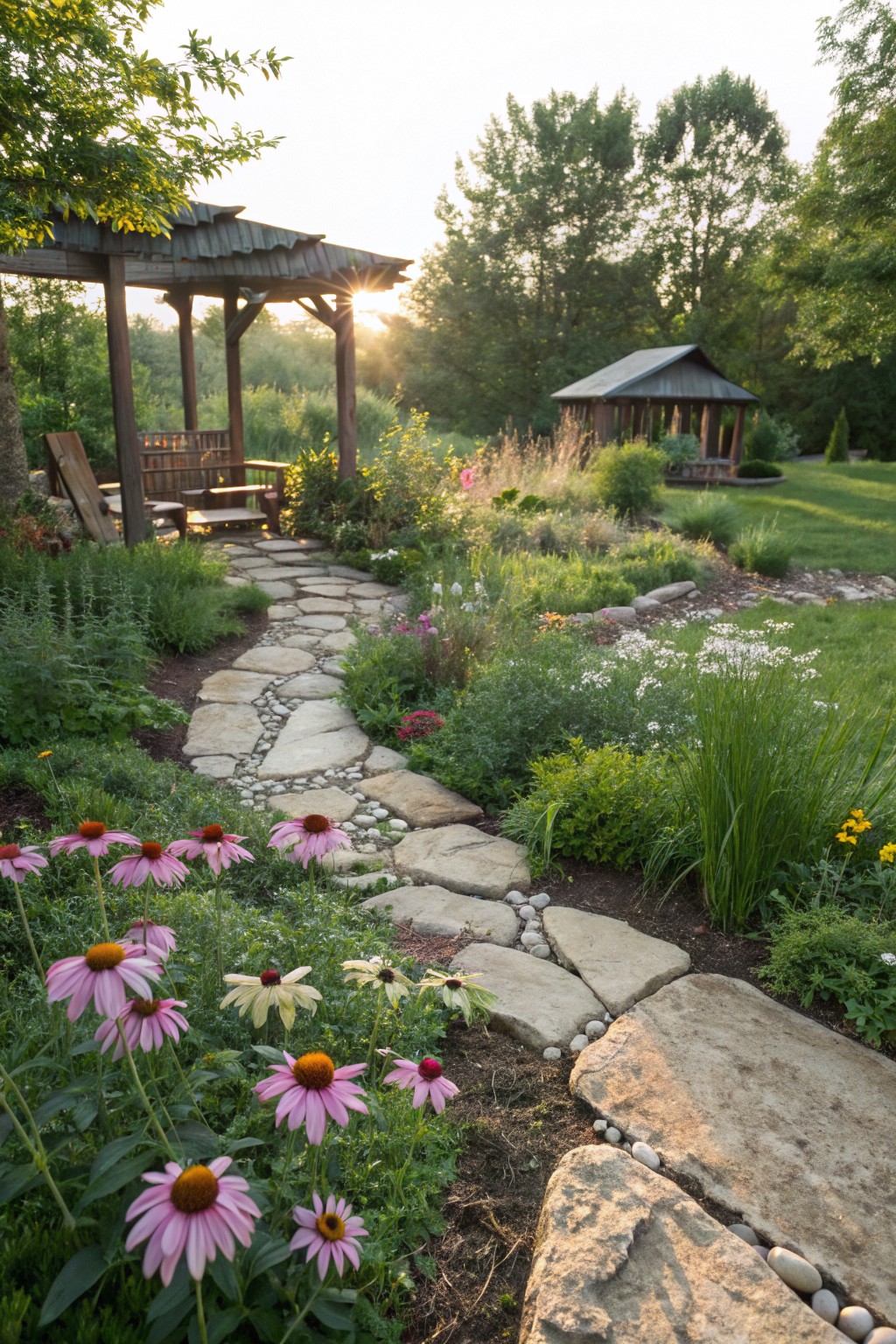
One simple way to define your flower beds is with a meandering flagstone path edged in small pebbles. The flat stones lay out a natural walkway that curves gently through the plants, while the pebbles fill the gaps and soften the edges. It keeps everything looking casual and grown-in, like the path has always been there. Those pink coneflowers popping up along the sides add to the easy charm.
This setup works great in a backyard garden where you want low upkeep and a bit of whimsy. Lay the stones on a gravel base for good drainage, then tuck pebbles around them to hold back the soil from spreading. It suits cottage-style yards or any spot with perennials… just avoid super formal layouts where straight lines matter more.
Gravel and Stone Edging for Flower Beds
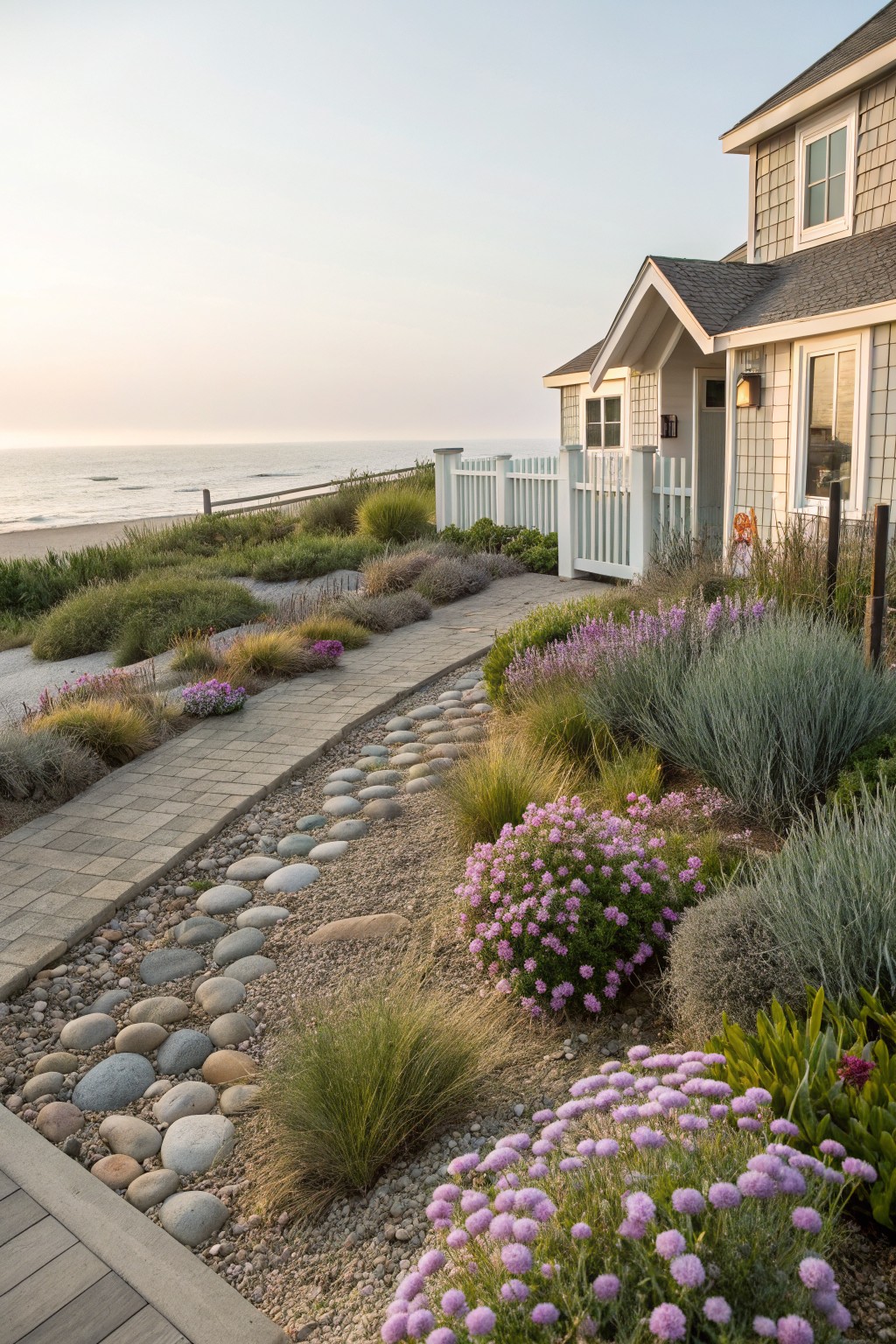
One straightforward way to keep flower beds tidy is lining them with gravel and smooth rounded stones right next to a paver path. Here the beds are packed with low pink flowers and silvery grasses that spill over just a bit. That edging holds it all in place without much upkeep. It gives a natural feel that fits dry sunny yards.
You can pull this off along any walkway to your door or patio. It suits beach houses or places with tough soil best. Go for stones about fist-sized mixed with finer gravel. Set them into the dirt a few inches so weeds stay out and nothing washes away in rain.
Natural Stone Edging Along Garden Paths
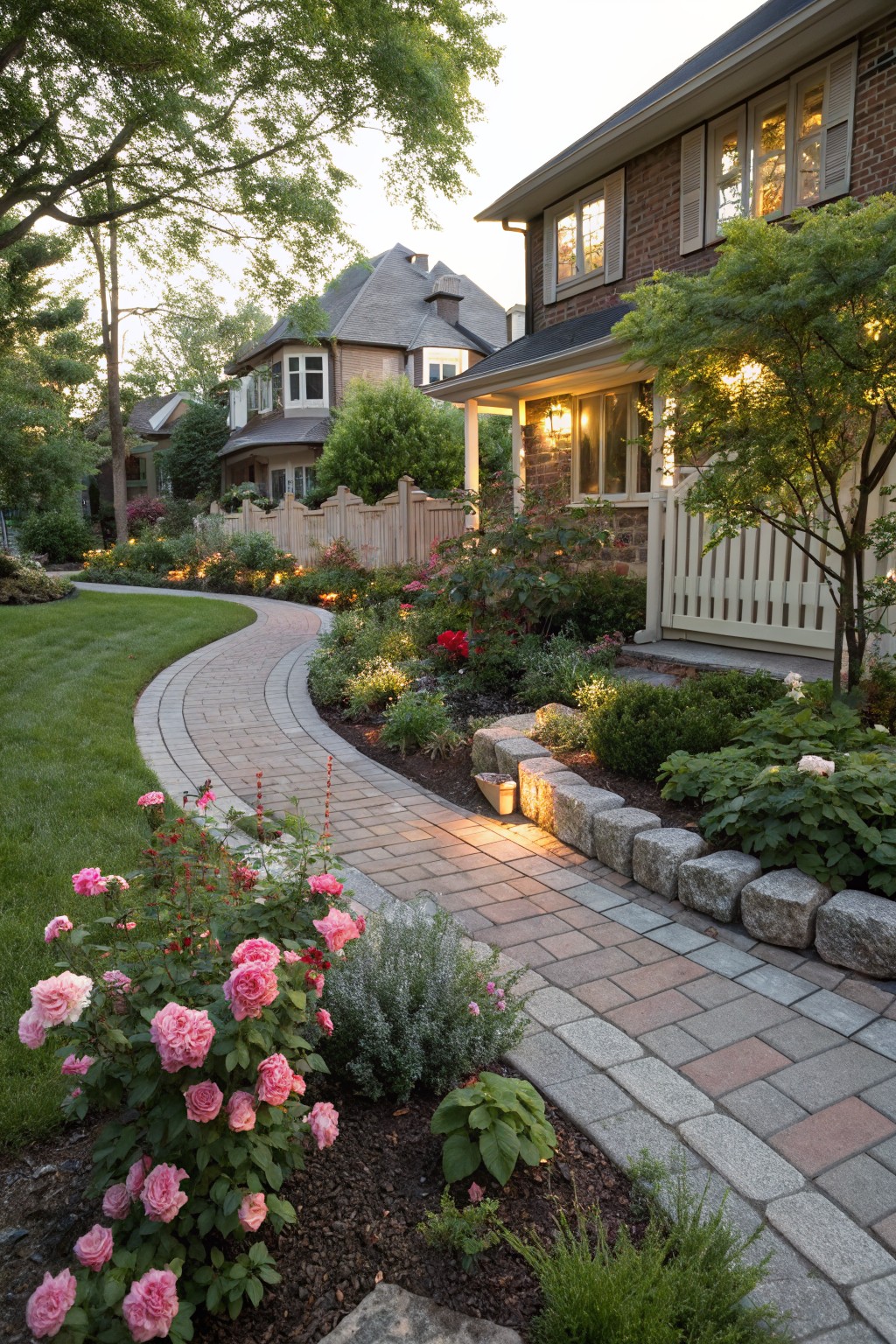
One simple way to make flower beds last is to edge them with natural stone like these rough granite blocks. They hold back the soil and mulch without much upkeep, and the uneven shapes mix right in with plants like those pink roses spilling over the edge. Paired with a brick path, it keeps everything neat but still looks casual and grown-in.
You can use this in a front walk or side yard where you want low borders that won’t rot or shift over time. It suits older homes or any spot with curves in the layout. Pick stones from a local quarry so they blend with your area’s look, and set them in a shallow trench for stability.
Stepping Stone Paths with Gravel Edging
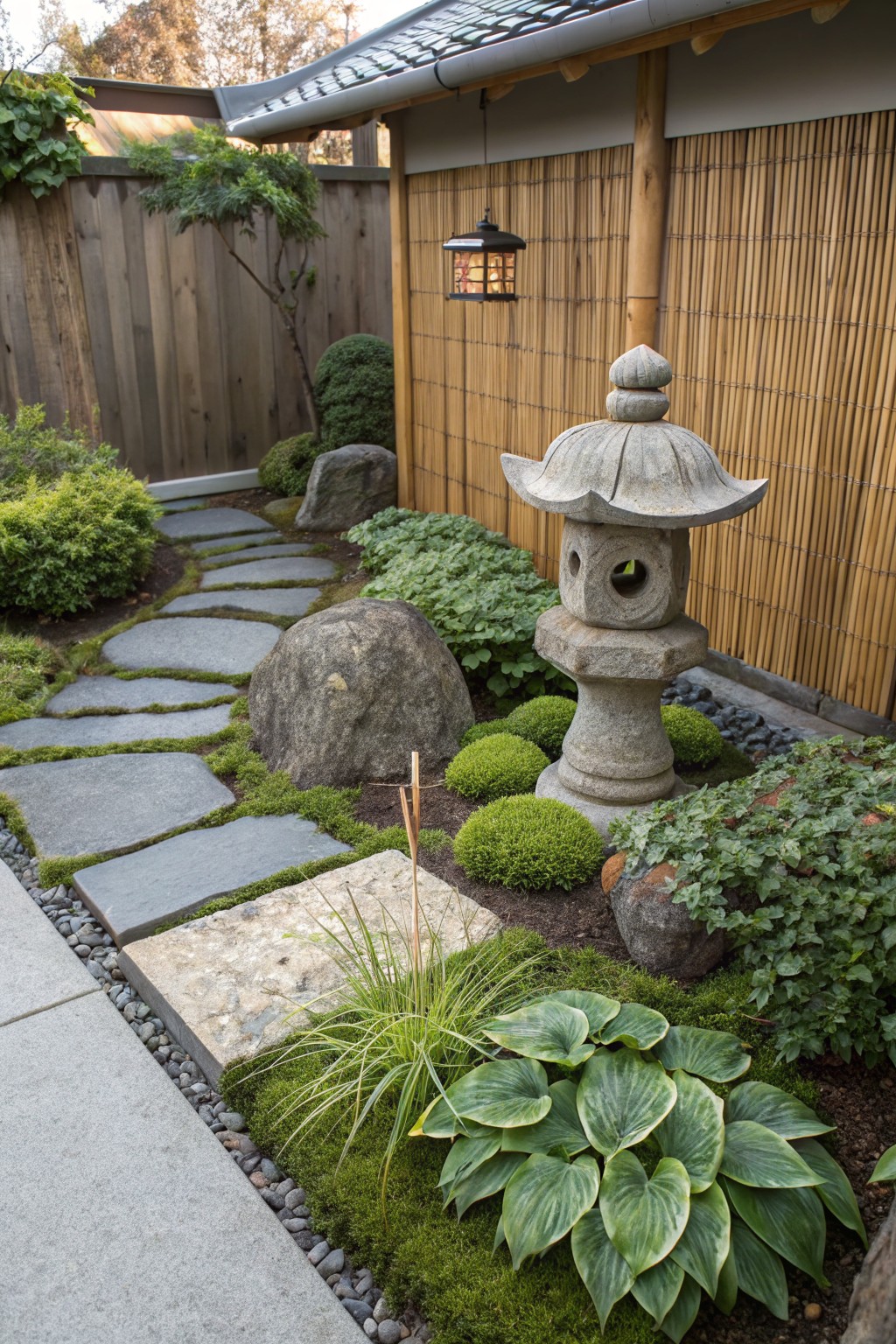
One reliable way to edge flower beds and paths is with large irregular stepping stones set into gravel. You see it here around low plants and moss, where the stones guide your steps while the gravel keeps everything neat and drained. It fits right into this Asian-style yard, making beds feel structured without hard borders.
This works best in smaller gardens or side yards where you want low upkeep. Lay stones about two feet apart on leveled gravel, then plant around them with groundcovers like moss or sedum to soften edges. It suits most homes, even if you’re mixing modern with a bit of tradition, but skip it in wet spots unless you add good drainage underneath.
Stone Stepping Path with Gravel Edging
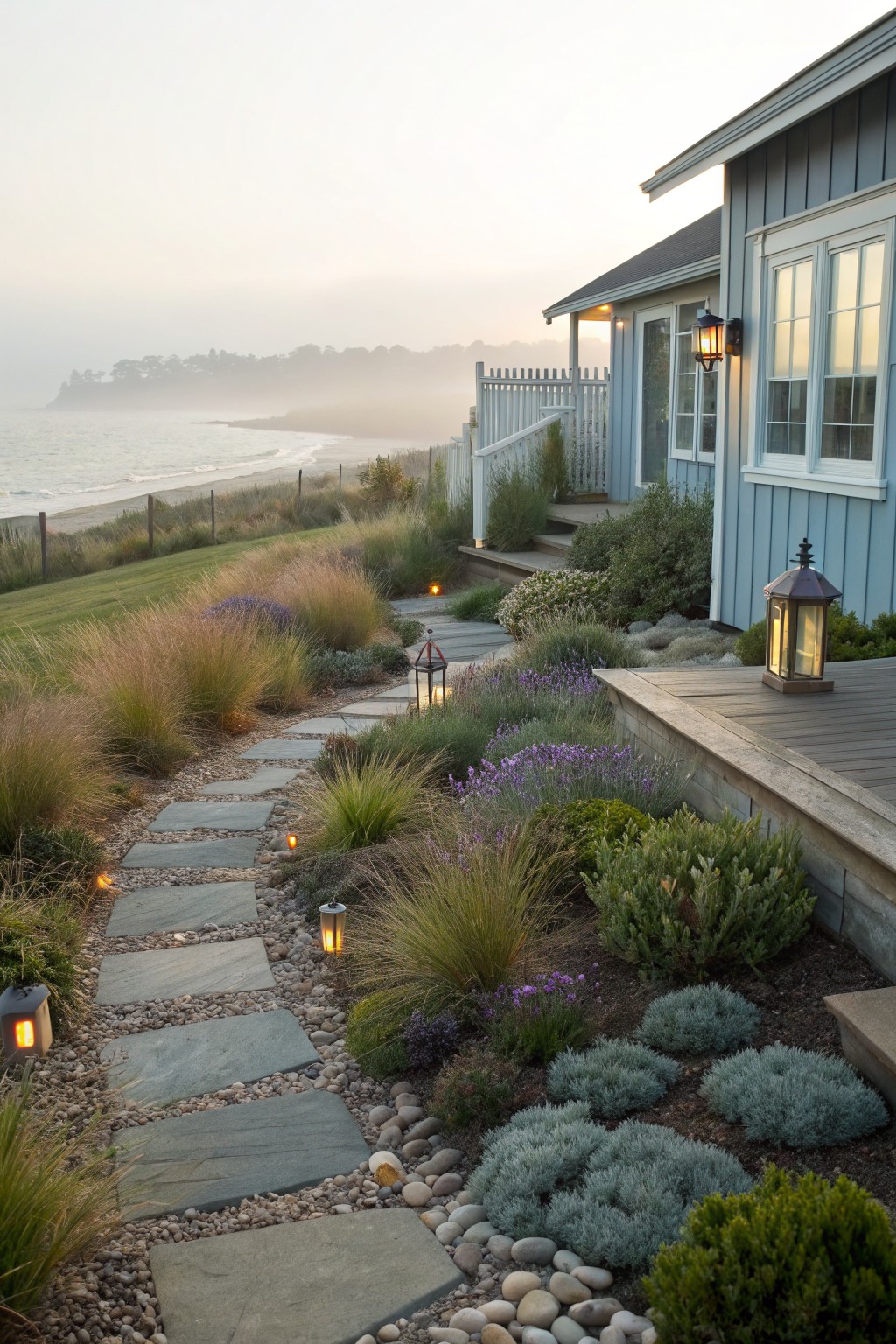
A simple way to edge flower beds is laying big irregular stone slabs as stepping stones right through a gravel base. The plants tuck in close around them, like the tall grasses and lavender here. Gravel fills the gaps and mulch areas, keeping things neat without fussy borders. It holds up well over time and gives that natural coastal feel without much upkeep.
This works best on a gentle slope to a deck or patio, where you want a path that blends into the yard. Suits beach houses or dry spots, since the gravel drains fast and plants like these shrug off tough weather. Set the stones deep enough so they stay put, and skip anything too formal. Easy to add solar lanterns along the way for evenings.
Stone Edging for Neat Flower Beds
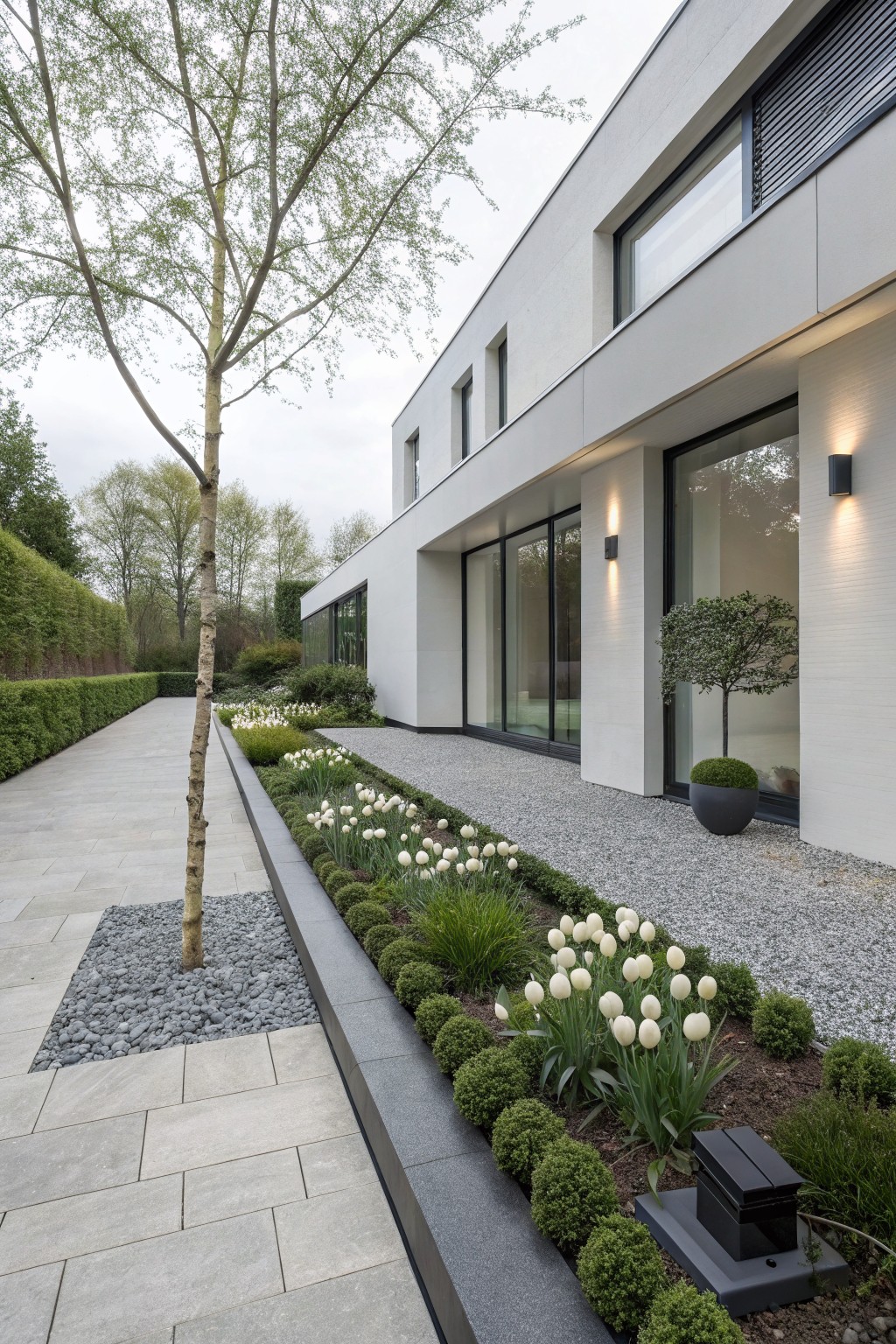
Dark stone edging runs right along these flower beds, keeping everything in line next to the path. White tulips fill the beds, and the dark border stands out against the light gravel patches. It’s a simple way to make plantings look tidy and contained, especially with a modern house backdrop.
This works best in side yards or along walks where you want clean separation between plants and hardscape. Go for cut stone or pavers in a dark shade to hold up over time. It suits low-fuss gardens… just watch the scale so it doesn’t overwhelm smaller beds.
Wide Stone Edging for Linear Beds
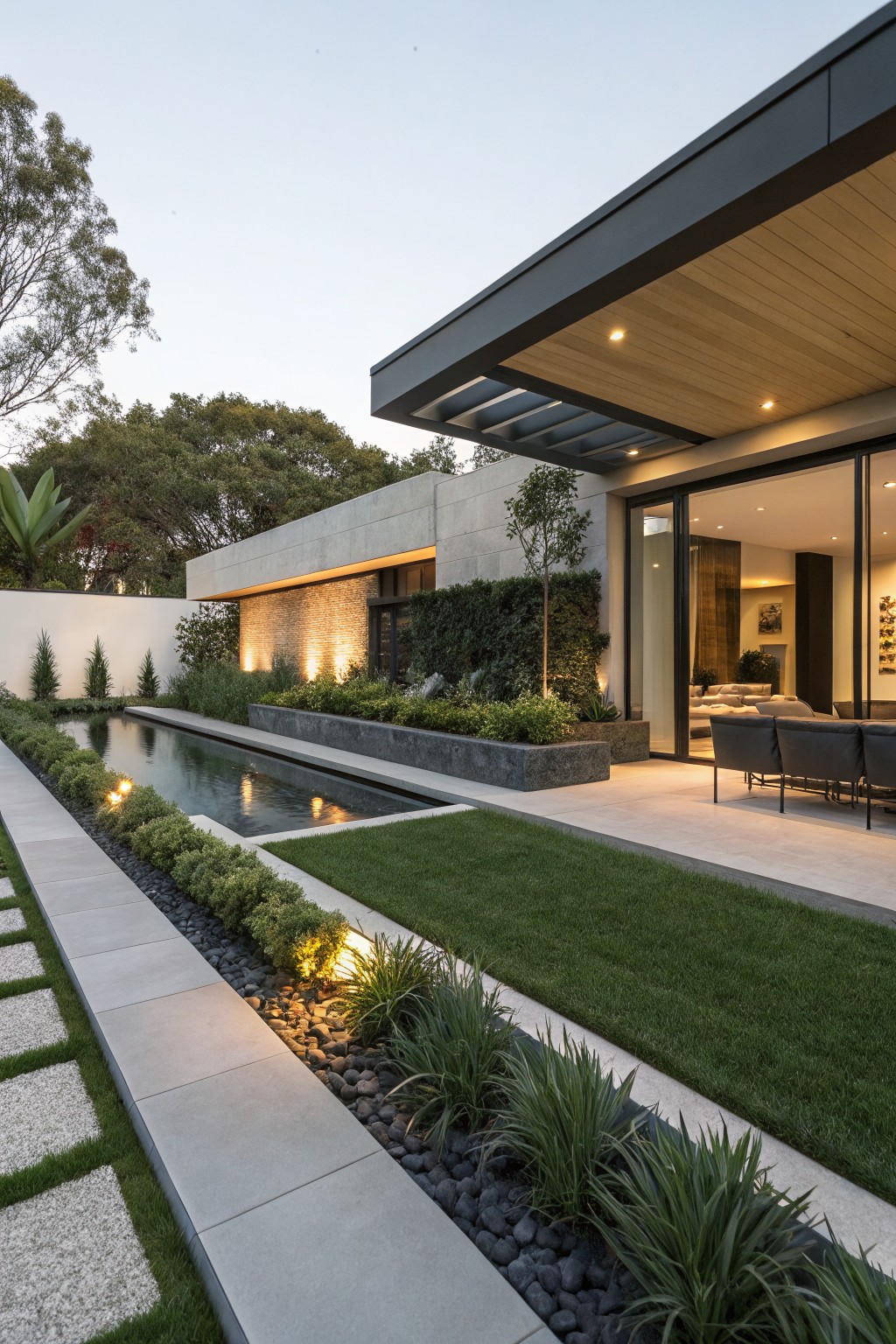
Wide slabs of concrete form the edging here, holding back beds of dark pebbles and spiky grasses right along the path. It keeps everything neat and contained without much upkeep. The straight lines match the pool and walkway, making the yard feel put together.
You can pull this off in skinny spaces next to driveways or patios, especially where you want low fuss. Pick tough plants like those agaves that don’t need constant trimming. It suits flat modern yards best… just make sure the slabs are level so water drains right.
Natural Stone Edging for Sloped Beds
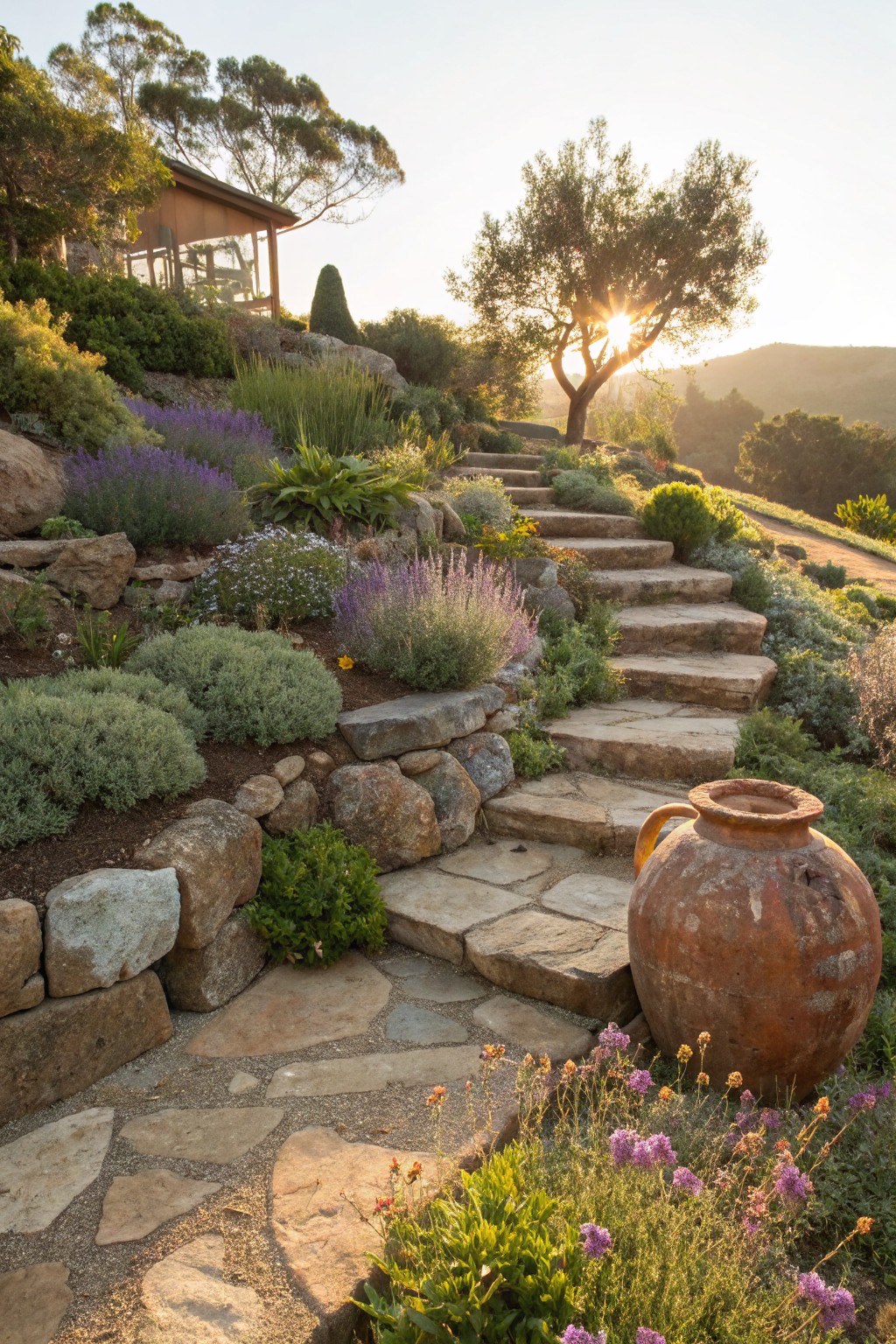
Stone edging works well on slopes because it keeps soil in place for flower beds and steps without looking forced. Here rough boulders and cut slabs form low walls that tuck right into the hill, letting plants spill over naturally. That big terracotta pot adds a simple accent too.
Try this in yards with a drop-off, especially dry spots. Pick stones from nearby quarries to match your land, then fill beds with tough growers like lavender or grasses. It lasts years with little fuss… just watch for weeds in the cracks.
Natural Stone Edging for Flower Beds
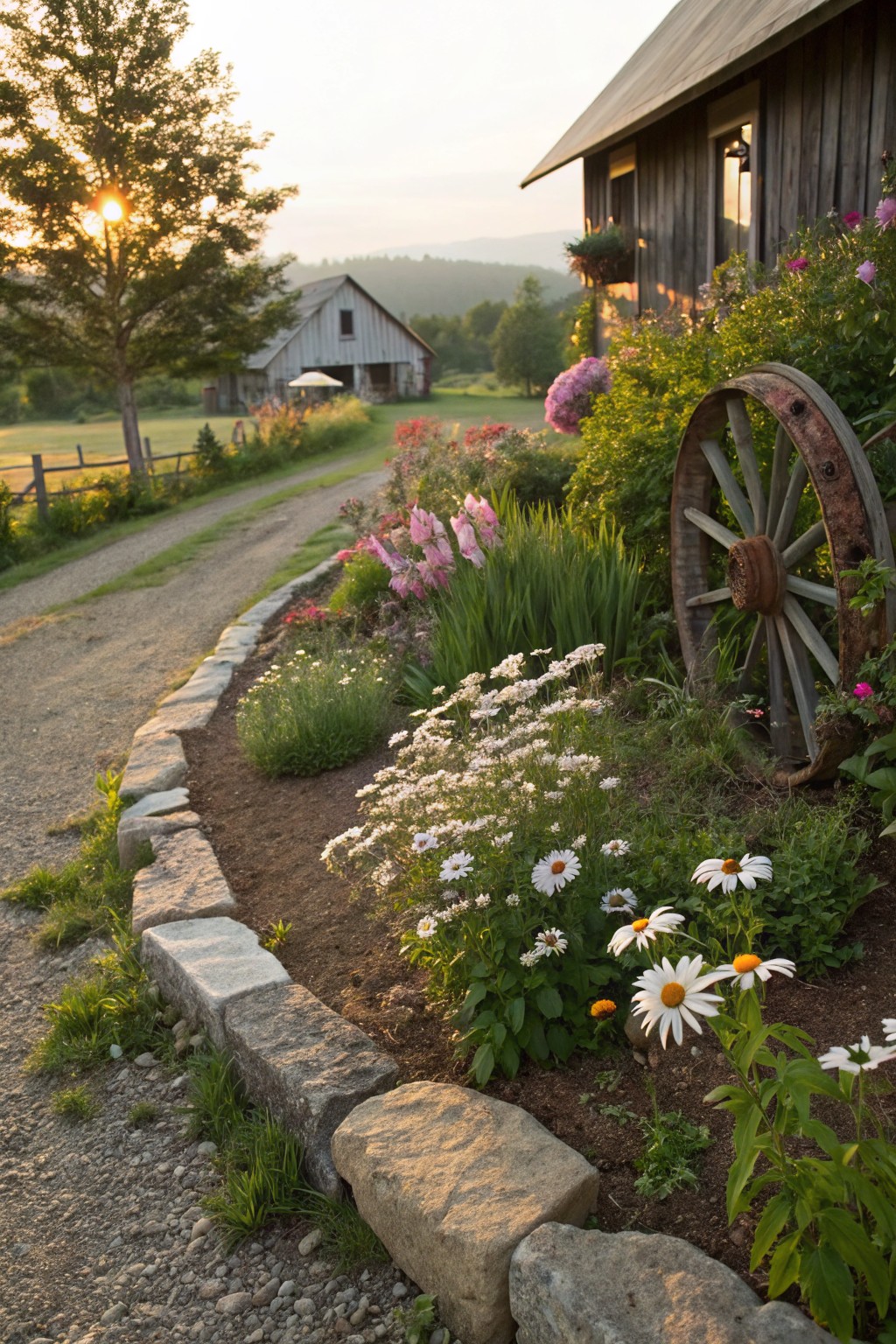
One reliable way to keep flower beds in check is with natural stone edging. These rough fieldstones stacked along a gravel path hold back the soil and let plants spill over just enough. Daisies and taller blooms fill the bed nicely, and the whole thing looks like it grew there over time. No fussy maintenance, just a clean line that lasts.
Stack local stones dry, no mortar, for yards with a country or cottage feel. It suits sloped spots or winding paths best, tying into barns or open fields without overpowering. Skip it for super formal gardens, though. Might shift a bit in heavy rain, so check the base now and then.
Raised Succulent Beds with Stone Edging
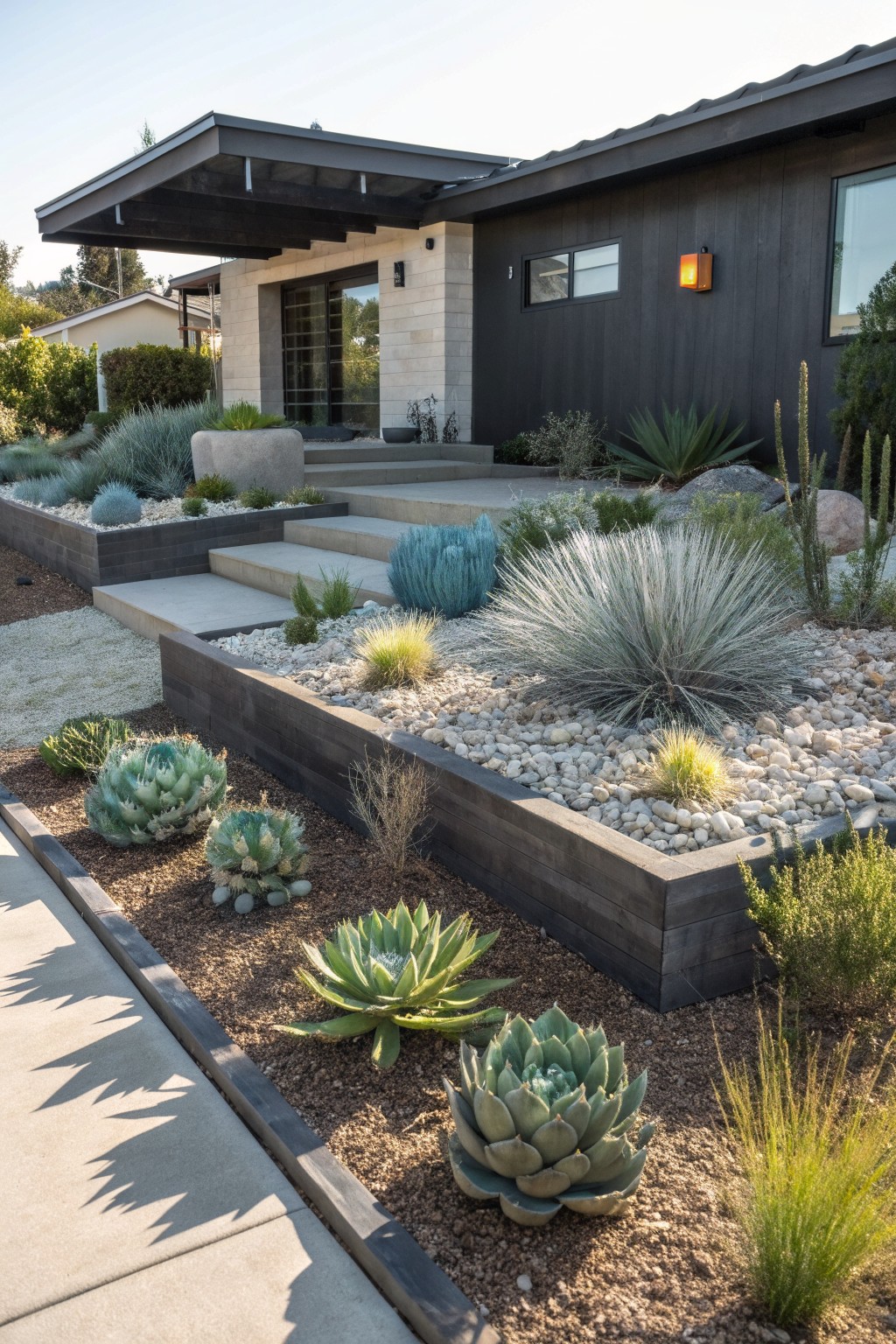
One straightforward way to handle flower beds is to build them up with simple raised wooden frames, then edge them neatly with stones. Here, dark wood boxes hold gravel mulch and tough plants like agaves and blue succulents. The stones keep everything in place and give a crisp line that ties right into the concrete path. It feels modern but holds up year after year without much fuss.
This works best along driveways or walkways where you want low upkeep. Pick rounded white pebbles for the fill and drought plants that don’t need watering often. It suits homes in dry spots, or any yard aiming for that clean desert look. Just make sure the wood is treated so it doesn’t rot fast.
Stone Wall Edging for Flower Beds
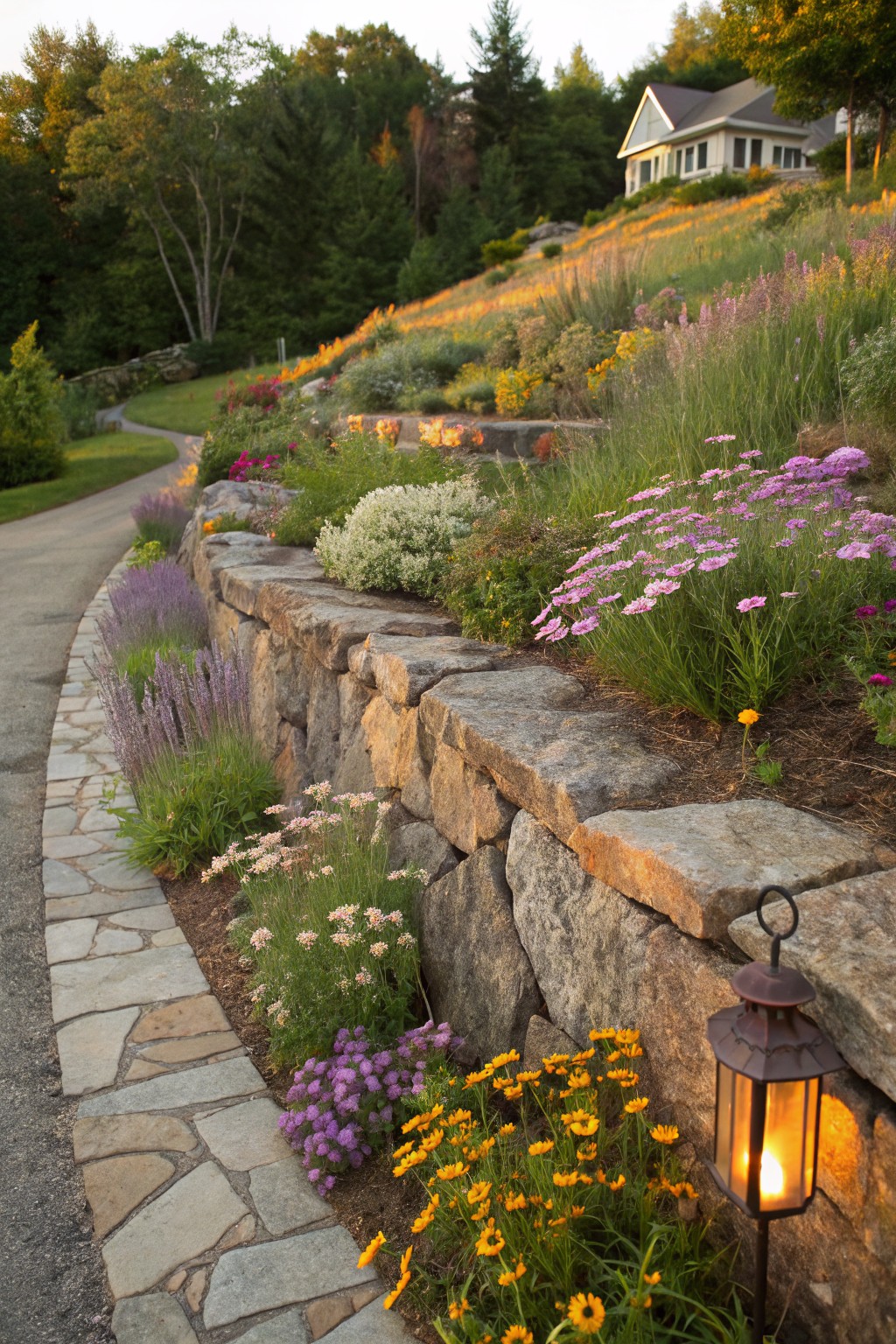
Rugged dry-stacked stone walls make great edging for flower beds, especially along a driveway or path. They hold back soil on slopes and let plants spill over the top in a natural way. Here, lavenders and daisies hug the stones, giving a tidy base with plenty of color above. It’s simple and holds up year after year.
Try this where you have a gentle hill or need to define garden edges without straight lines. Local fieldstone fits right in with the landscape. Go for tough perennials that don’t mind some dry spots. It suits country homes or cottages best, but watch the height so it doesn’t block the path.
Stone Stepping Path with Pebble Edging
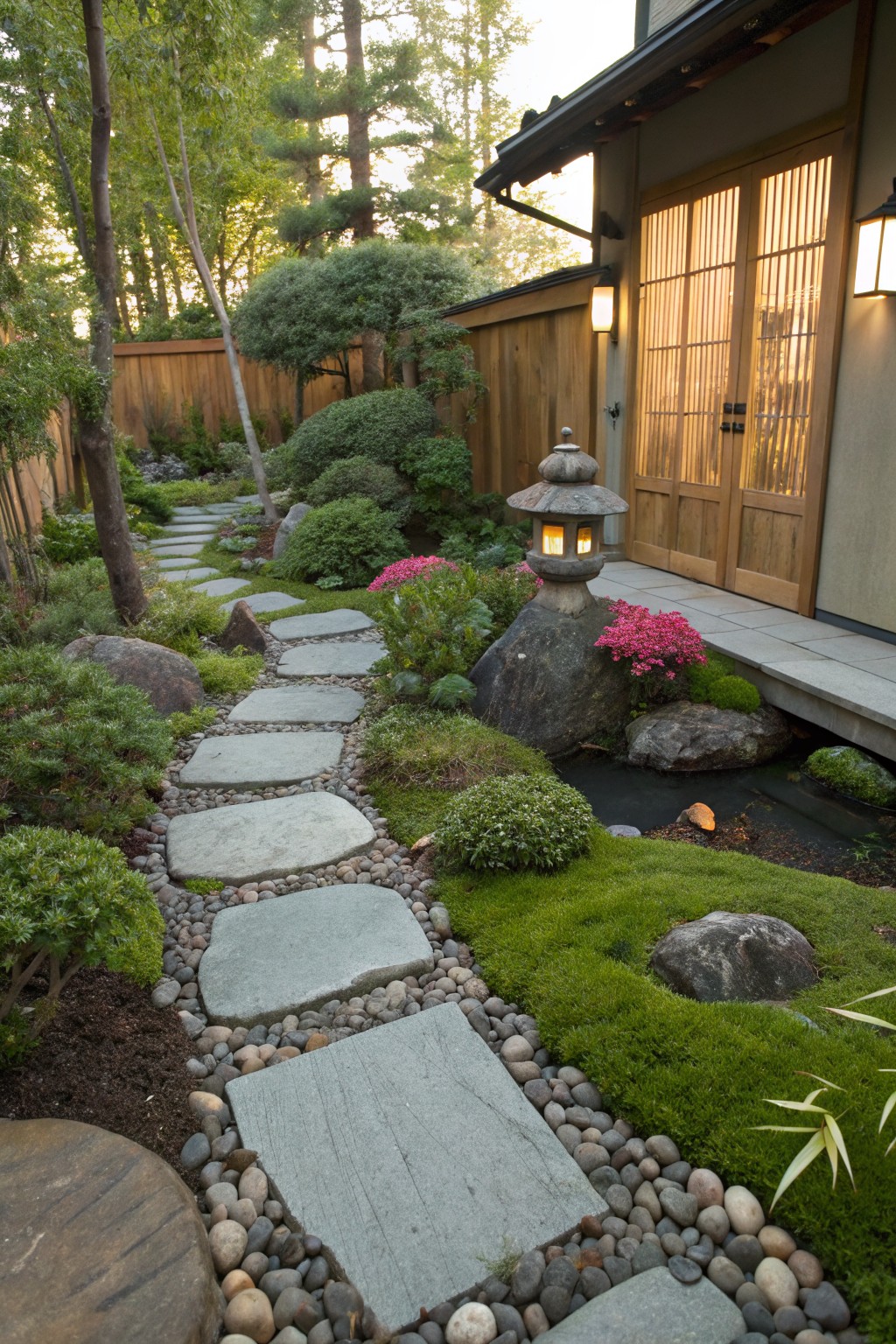
A simple way to edge flower beds and paths is with smooth pebbles around large flat stone steps. This setup keeps everything neat without looking too formal. The stones stay firm underfoot, and the pebbles fill in the gaps nicely, letting low plants like moss spill over just a bit. That stone lantern nearby adds a quiet touch too.
It works best in smaller gardens or side yards where you want low upkeep. Lay the stones first on a gravel base for drainage, then add pebbles around them to define the beds. Skip it on steep slopes unless you add steps. Fits homes with an Asian vibe, but plain enough for any backyard.
Dry-Stacked Stone for Roadside Flower Beds
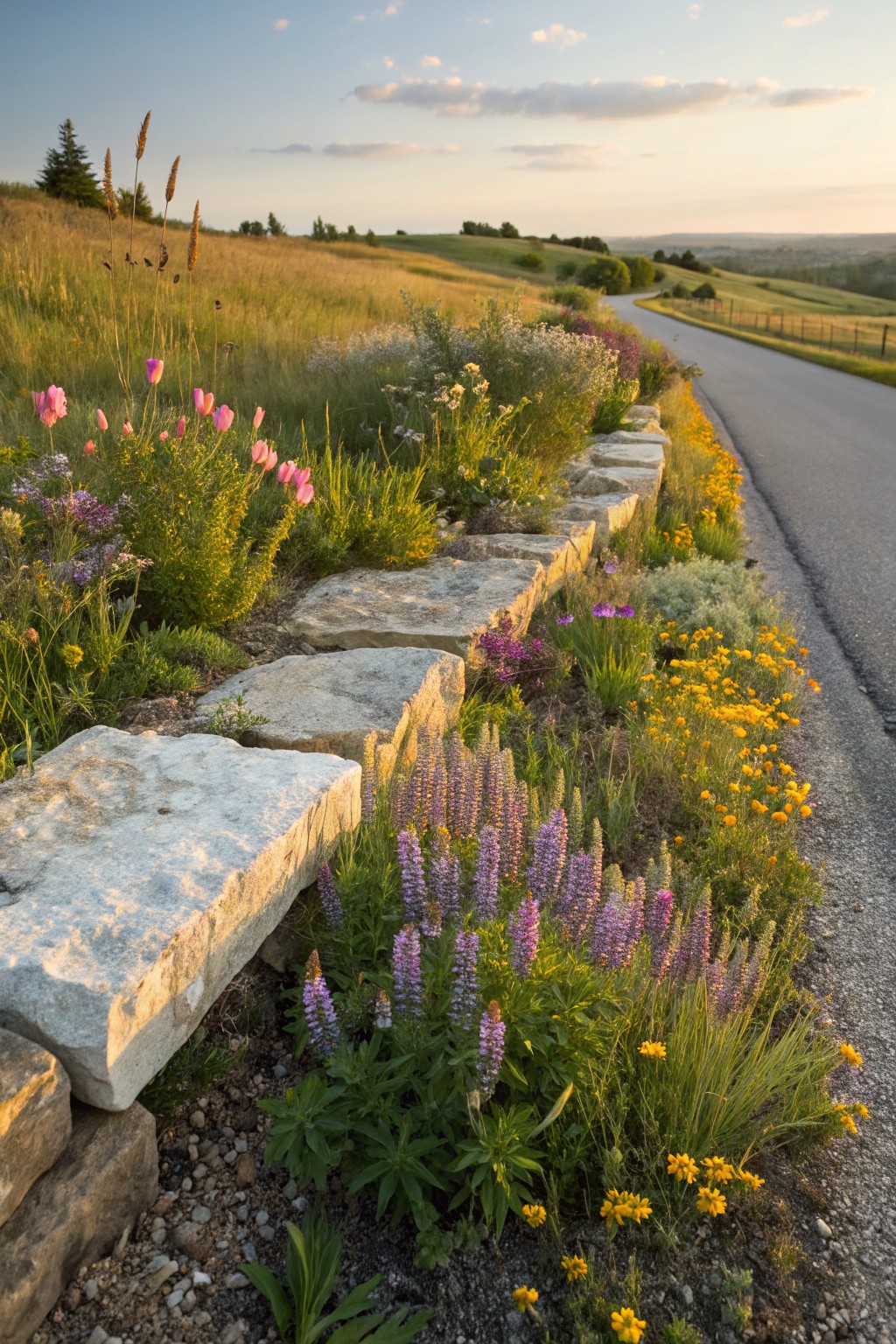
One simple way to edge flower beds that holds up year after year is dry-stacked stone. You see it here along a curving road, where rough limestone blocks form a low wall that supports clumps of lupines, yarrow, and grasses. It feels natural, not fussy. The stones settle right into the earth, and plants spill over casually. That’s what makes it last. No mortar to crack or weeds to fight.
This works best in rural spots or along driveways where you want something tough and low-care. Pick local fieldstone so it matches the ground. Layer in perennials that come back strong, like these pinks and purples. Keep the height low, maybe two feet. Watch the slope though. It needs good drainage or the bed turns to mud after rain. Suits country homes perfectly.
Stone Edging for Curved Flower Beds
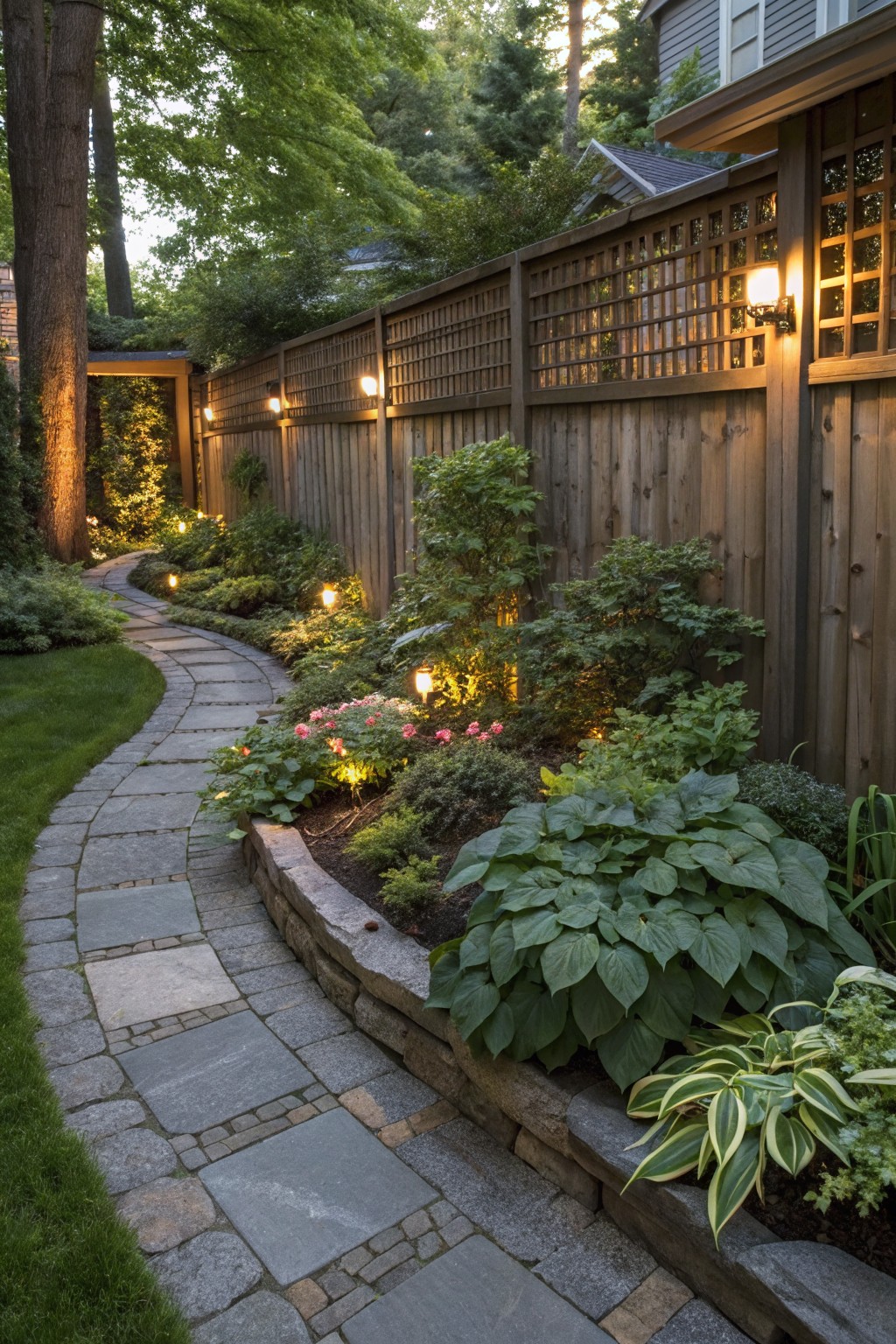
A low stone wall runs right along this winding garden path, holding back the soil and plants in the flower beds. You see hostas and ferns spilling over the edge just a bit, which keeps things looking full and natural. That edge gives the whole yard a tidy shape without feeling stiff. It’s simple but pulls the garden together.
Try this in smaller backyards where space curves around trees or fences. Pick stones that match your local area, like flat slabs or rough chunks, and stack them dry for easy changes later. It suits shady spots with mixed greens best. Just make sure the base is level so plants don’t wash out in rain.
Stone-Edged Raised Beds with Built-In Seating
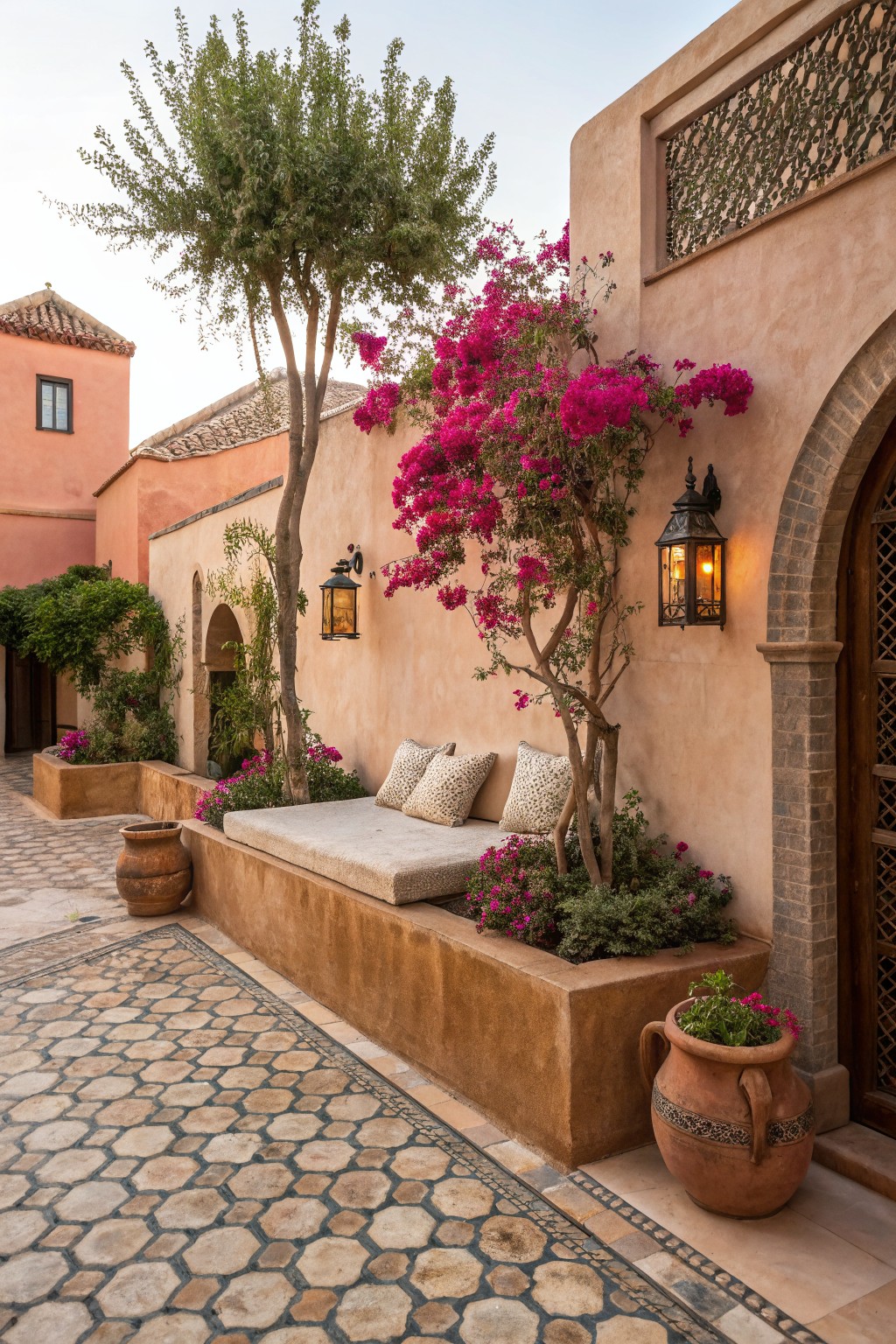
One smart way to edge flower beds is to build them up into raised planters that double as a bench. You see it here with a long, low wall topped by cushions, edged neatly in matching stone. Flowers like bougainvillea spill right over the edge, and a few terracotta pots sit nearby. It keeps everything contained while giving you a spot to sit and enjoy the garden.
This works best in courtyards or along patios where space is tight. It fits homes with a bit of Mediterranean or rustic style, tying the path to the planting. Just make sure the height feels right for sitting, around 18 inches, and use sturdy edging that holds soil without crumbling over time.
Terraced Flower Beds with Stone Retaining Walls
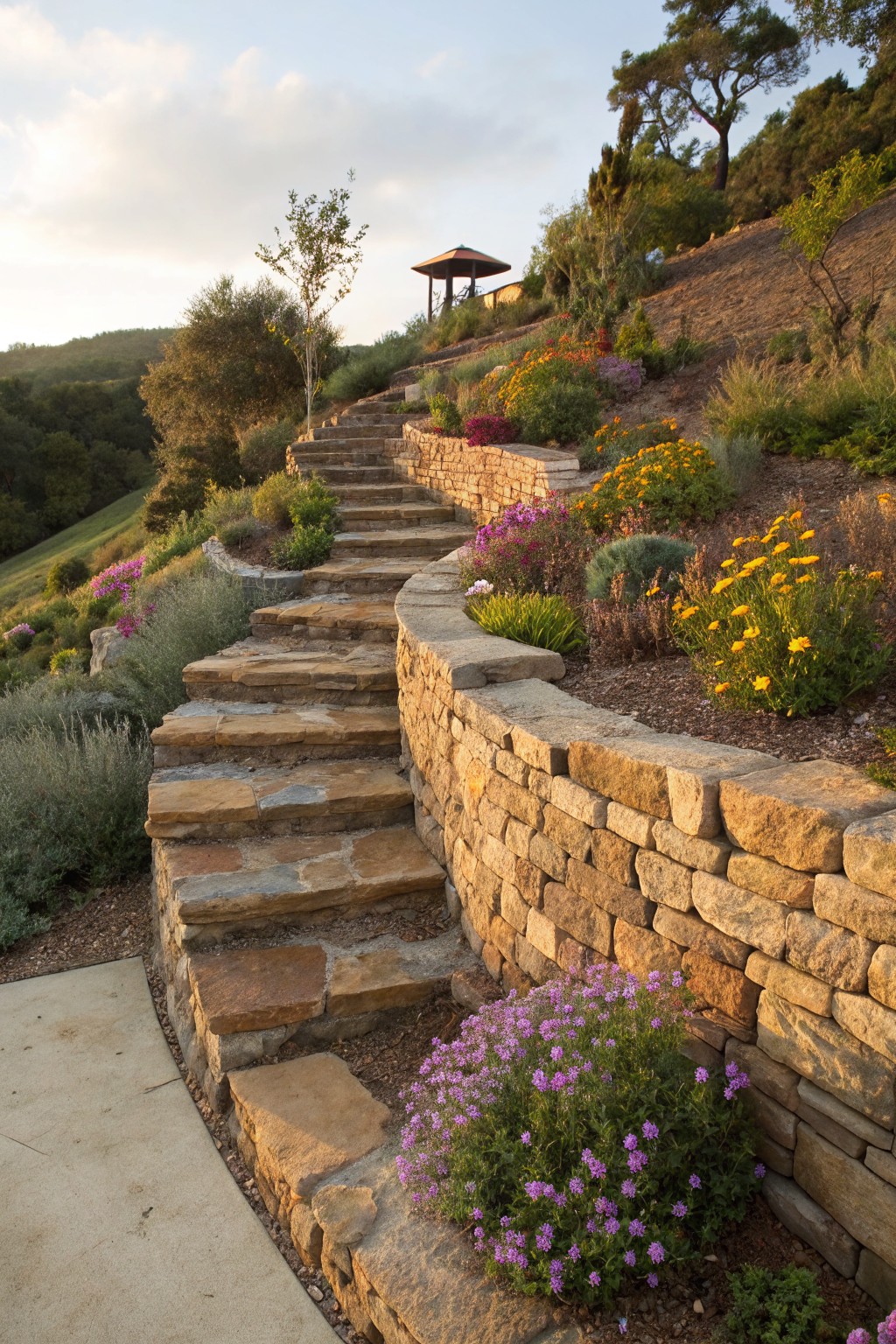
Stone retaining walls work so well for edging flower beds on slopes. They turn a tricky hill into neat terraces where plants can root in without washing away. Rough natural stone steps wind right through, and flowers like pink blooms and yellow clusters tuck into the edges. It’s sturdy. And it blends right into the landscape.
Try this in yards with any kind of rise. Local fieldstone keeps costs down and looks at home. Go dry-stacked for easy building, no mortar needed. Plant tough perennials that spill over. One thing: check your wall’s base stays firm over time.
Stone Edging Around Poolside Beds
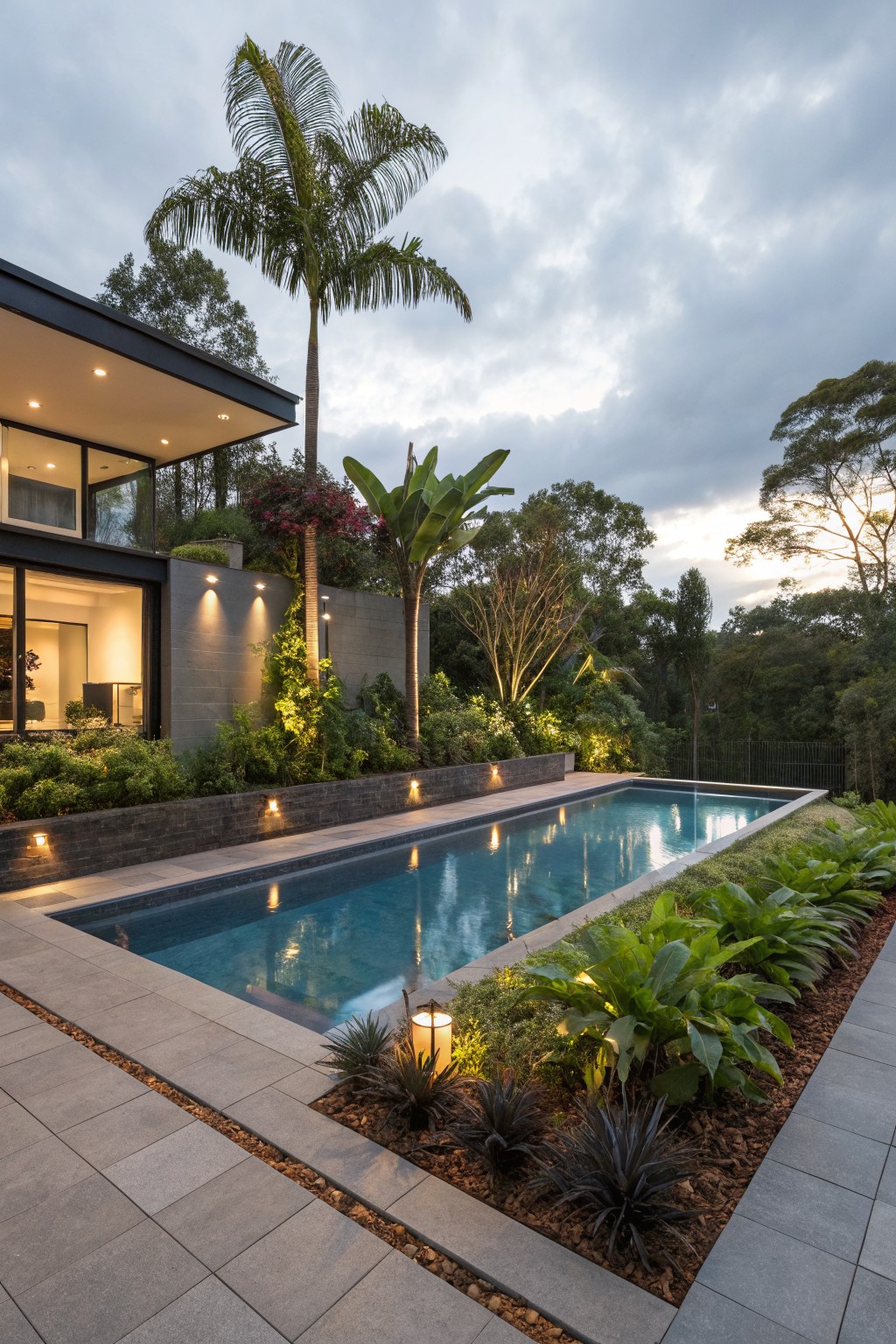
Stone edging like this keeps everything neat around the pool and garden beds. You see those low gray stone walls holding back the plants, palms, and ferns without any fuss. It makes the whole area feel put together, even on a slope, and lets the water reflect the lights at night.
Try it where you have a pool or patio next to planting beds. It suits modern houses in warm spots with tropical plants. Pick stone that matches your house color, keep the height low, and leave room for plants to grow over the edge a bit. Just don’t go too high or it starts looking like a fortress.
Stone Edging Along Walkway Beds
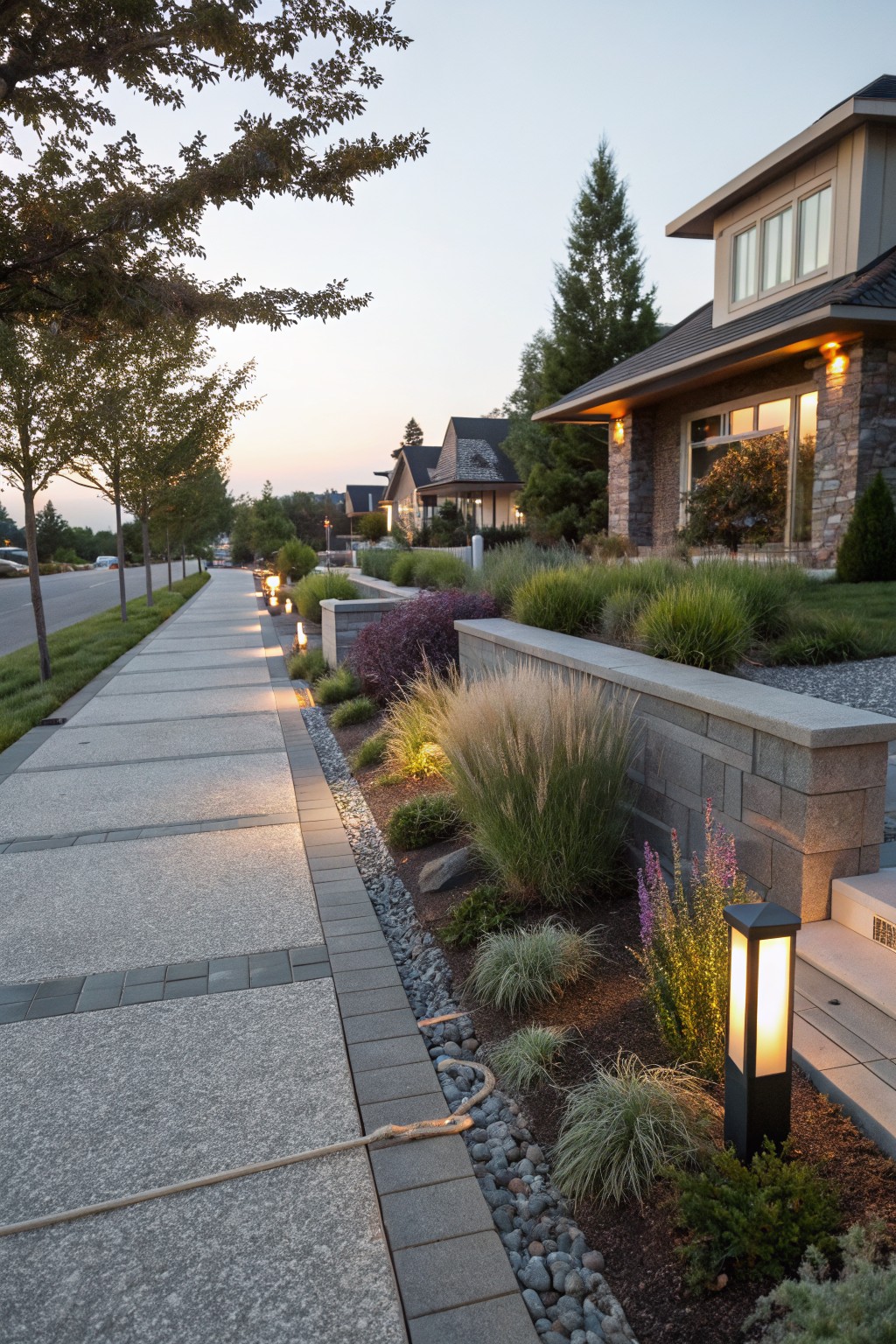
A low stone block wall runs right along this sidewalk, edging the flower beds and keeping plants from spilling onto the path. A narrow gravel strip sits between the wall and the concrete pavers, adding clean separation. Ornamental grasses and low shrubs fill the beds, staying tidy without much upkeep.
This edging works best in front yards near streets or driveways, where you want definition without fuss. It suits most homes, from modern to traditional. Pick durable local stone, keep the gravel fresh, and plant drought-tolerant stuff. One note… scale the wall height to your beds so it doesn’t overwhelm.
Low Stone Walls for Flower Beds
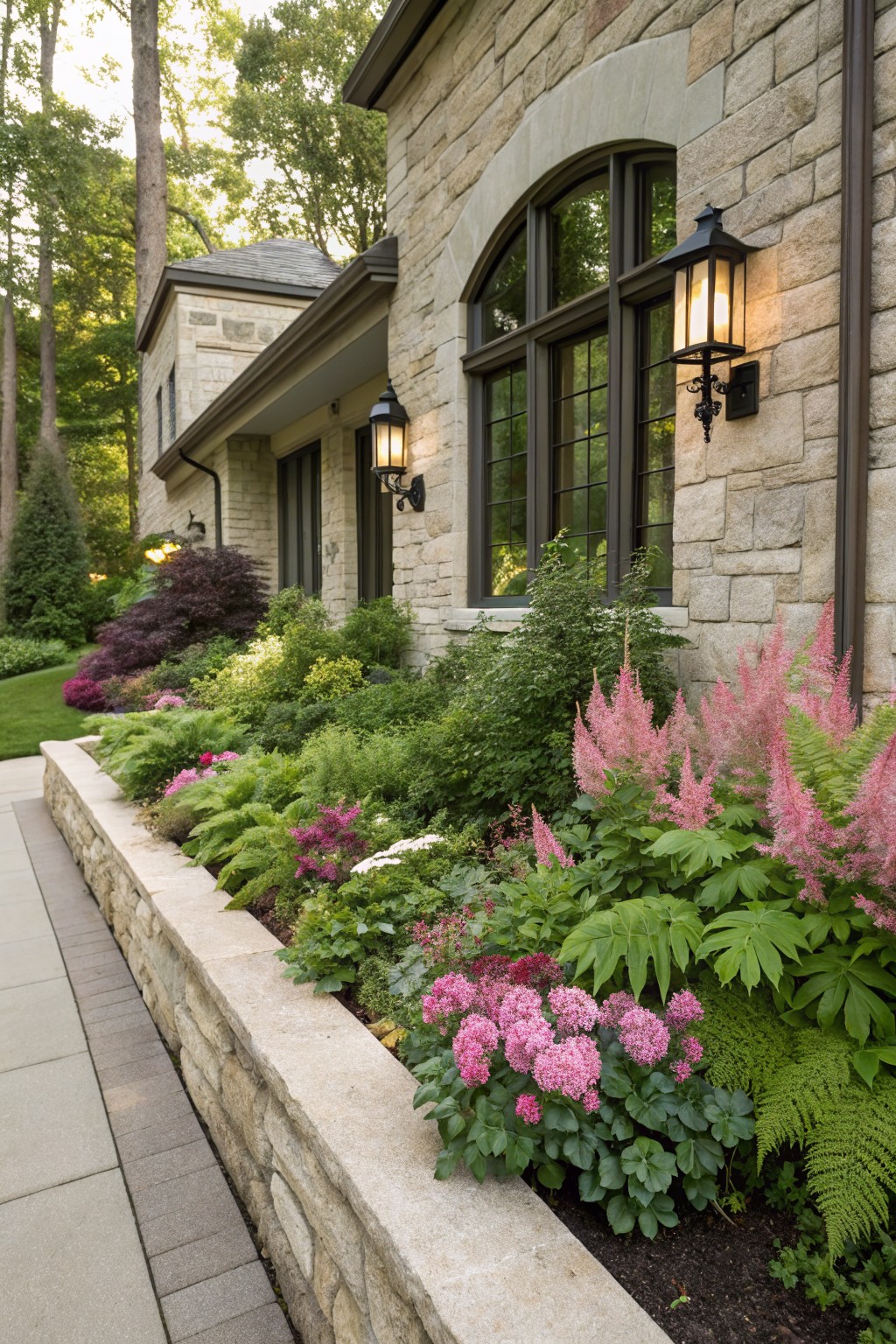
One simple way to make flower beds last is with low stone retaining walls like this. They match the house stone perfectly, so the garden feels like part of the building. You get that clean edge without much upkeep, and plants like astilbe and ferns tuck right in along the base.
These walls work best where you have a slight slope or want to keep soil from spilling onto paths. Pair them with a paved walkway for easy access. They suit older homes with stone facades… just make sure drainage is good underneath to avoid wet roots.
Natural Stone Edging for Terrace Beds
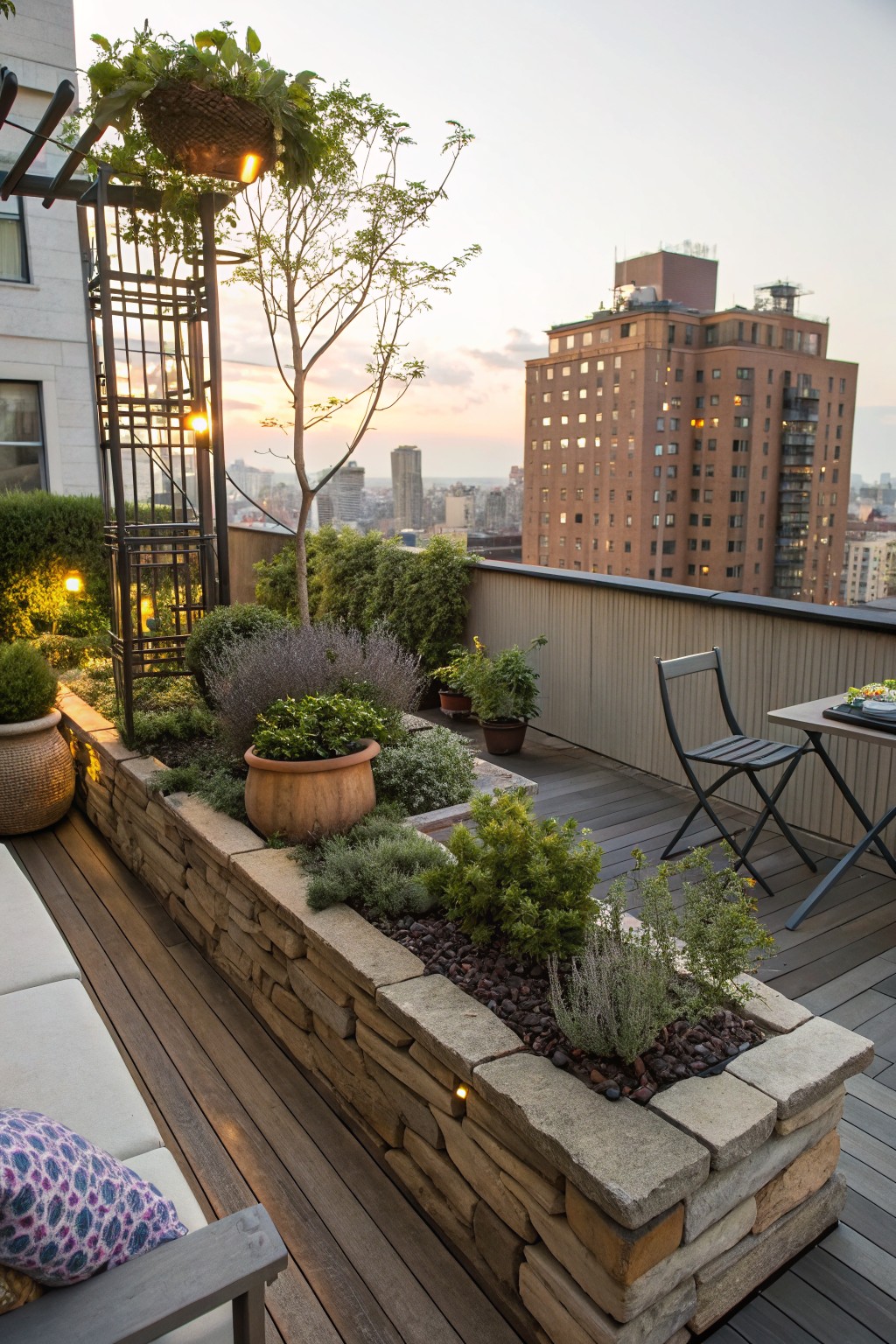
One straightforward way to organize plants on a terrace or balcony is with low natural stone edging. Here you see rough fieldstone stacked into simple walls that hold back soil and define the beds neatly. It keeps everything in place, even on a windy rooftop, and gives that solid, lasting feel without looking too fussy.
This works best on urban decks or patios where you want low-maintenance borders. Use stones in earth tones that match your house or fence. Fill with herbs, grasses, or perennials that don’t need much water. Just make sure the structure can handle the added weight, and leave room for a path or seating nearby.
Frequently Asked Questions
Q: How deep should I dig the trench for stone edging?
A: Dig about 4 to 6 inches deep, just enough to bury one-third of the stone. This keeps everything stable without turning your yard into a digging marathon. Pack the soil tight at the bottom for extra hold.
Q: Can I install stone edging on sloped ground?
A: Start at the lowest point and work uphill, stacking stones so each one overlaps the one below. Use gravel backfill to lock them in place against shifting. Your flowers stay neat even on a hill.
Q: What stops stones from shifting after rain?
A: Tamp down a layer of sand or fine gravel behind the stones right after you set them. It fills gaps and grips everything tight. Check once a year and add more if needed.
Q: Do I need mortar to make it last?
A: Skip the mortar. Dry-laid stones with good backfill hold up for decades. Just pick stones with flat bottoms.
