

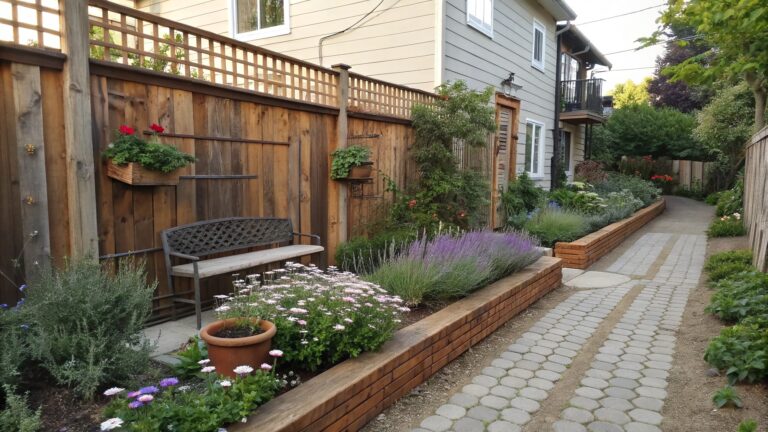
Even tiny backyards can feel more put-together when flower beds carve out real structure amid the grass and paths. I tried a narrow bed edged with basic stones in my own yard years back, and it instantly made the whole space read as intentional rather than accidental. What draws the eye first is usually the bed’s outline and how it layers low growers against taller blooms, letting the garden evolve naturally through the seasons. These setups work because they respect the limits of small spots, weaving in walkways and repeats that keep maintenance straightforward as plants mature. Test a couple that suit your soil and sun.
Narrow Pathway with Raised Brick Beds
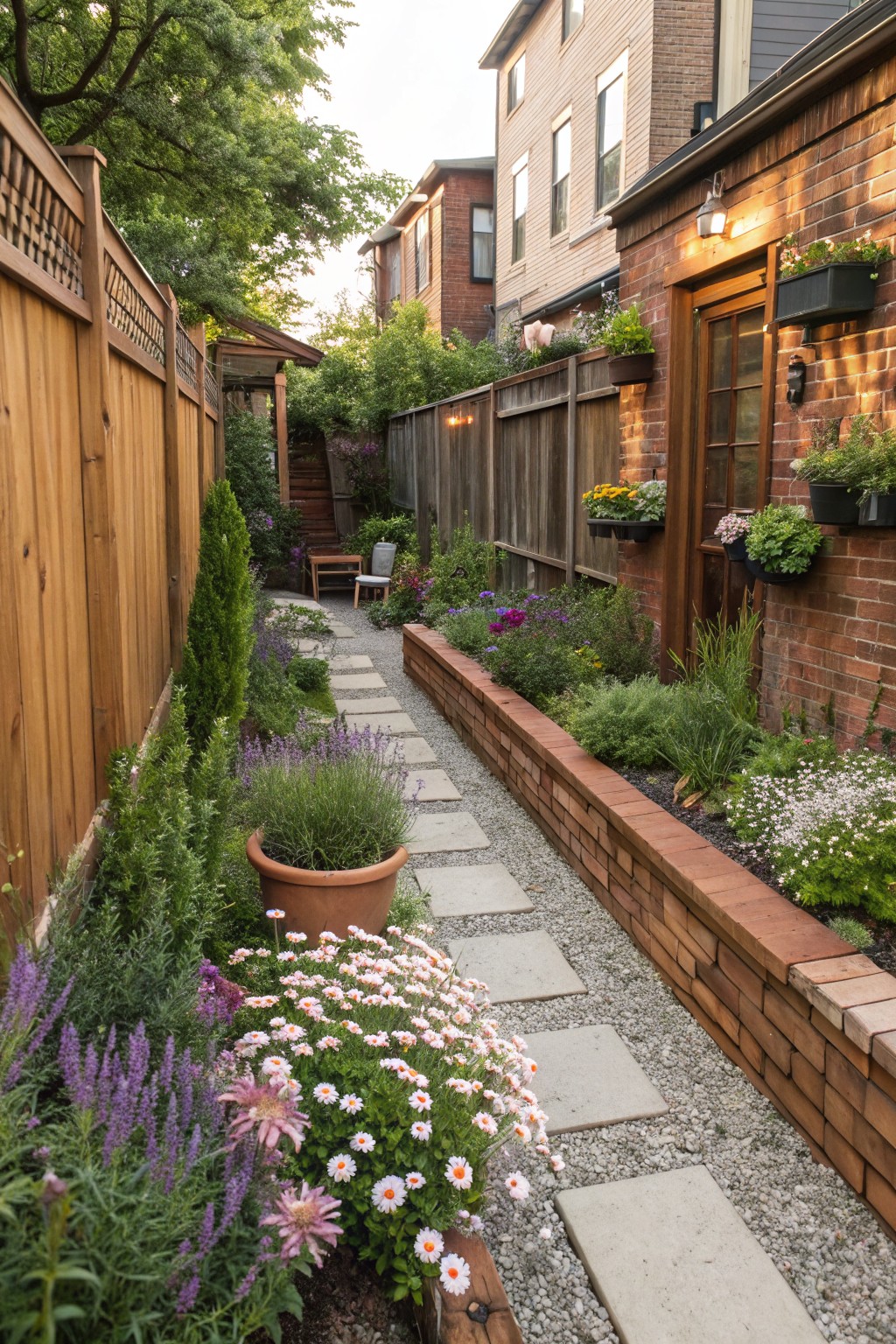
A straightforward stepping stone path runs right down the middle of a slim backyard space. Raised brick beds line both sides, stuffed full of lavender, daisies, and herbs. This layout turns a tight squeeze into a real garden walk without feeling cramped.
It fits perfect in those narrow urban lots or alley-style yards behind row houses. Go for low-growing perennials that don’t flop over the path. Watch the scale though… too much height up front and it blocks the view ahead.
Vertical Wall Planters for Tight Spaces
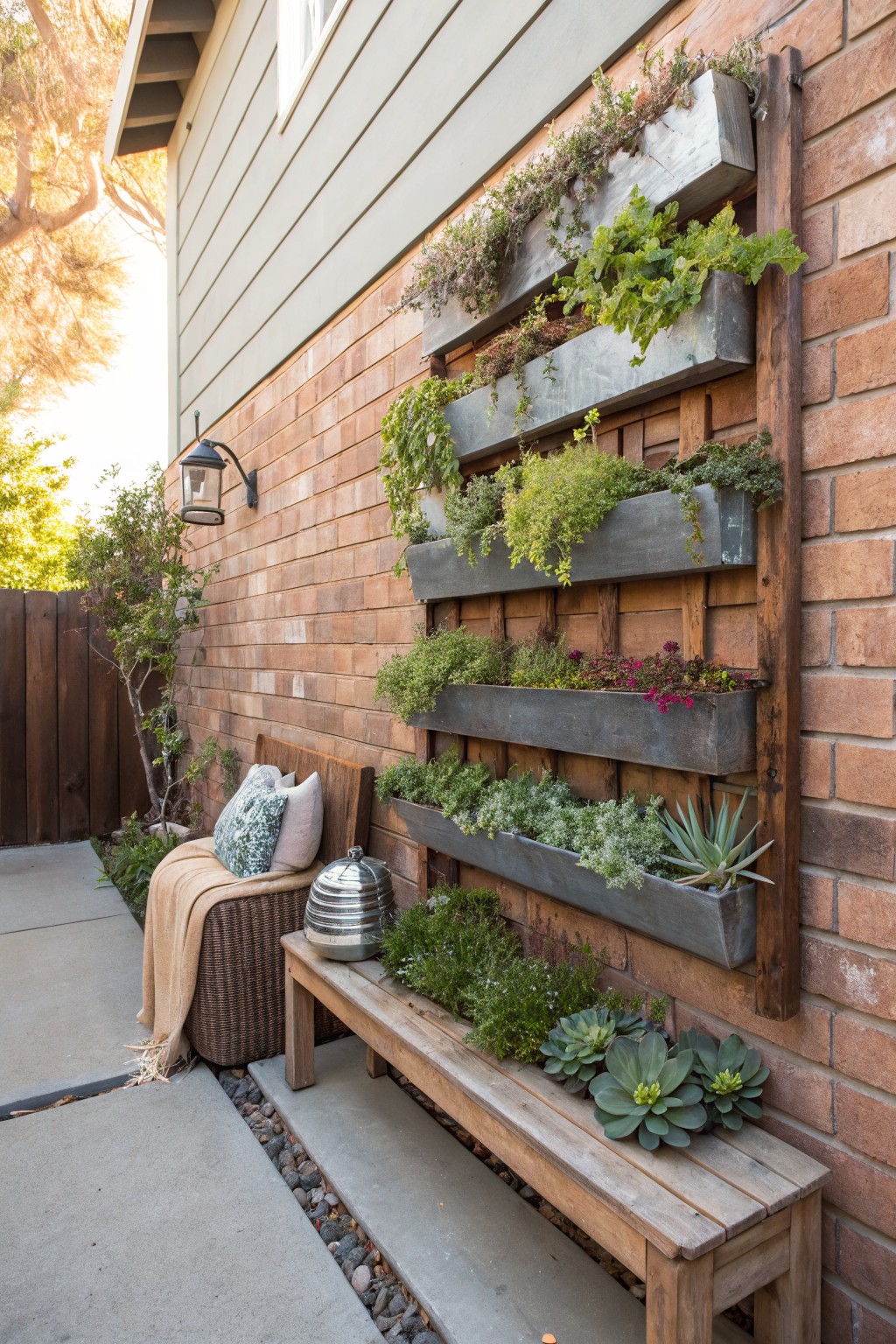
One smart way to add plants to a small backyard is by mounting metal troughs right on the wall. Here you see them staggered up a brick wall, packed with succulents, herbs, and trailing greens. It keeps the ground clear for walking or a bench, and the vertical setup makes even a narrow spot feel fuller and more alive.
This works best along fences or side yards where you have no room for beds. Pick sturdy troughs that won’t rust, fill with low-water plants like sedums or lavender, and secure them well. Add a spot to sit underneath, and you’ve got a little green oasis… without crowding the patio.
Winding Stone Path in Narrow Flower Beds
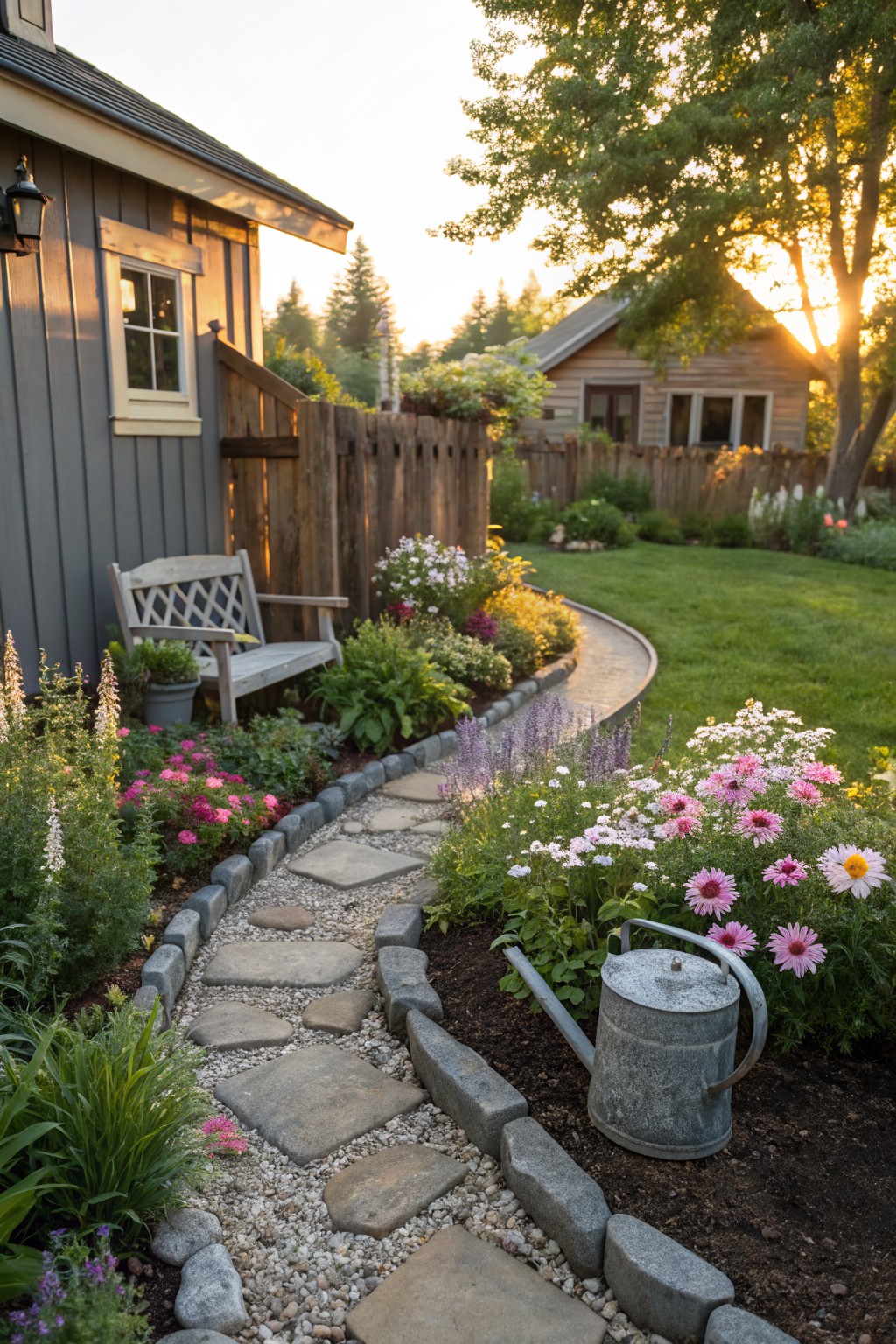
A simple winding path made from flat stones runs right through this tight flower bed, edged with sturdy concrete blocks. It turns a skinny strip of yard into something you actually want to walk through. The path pulls your eye along, letting flowers spill over on both sides without crowding the way.
This works best in those awkward narrow spots between a shed and fence, where straight lines would feel boxed in. Just lay the stones loose for a natural rhythm, plant low growers like foxgloves and daisies that hug the edges. Keep the blocks low so they don’t block the plants… and you’ll have room for a bench or watering can too.
Raised Concrete Beds with Grasses and Pebbles
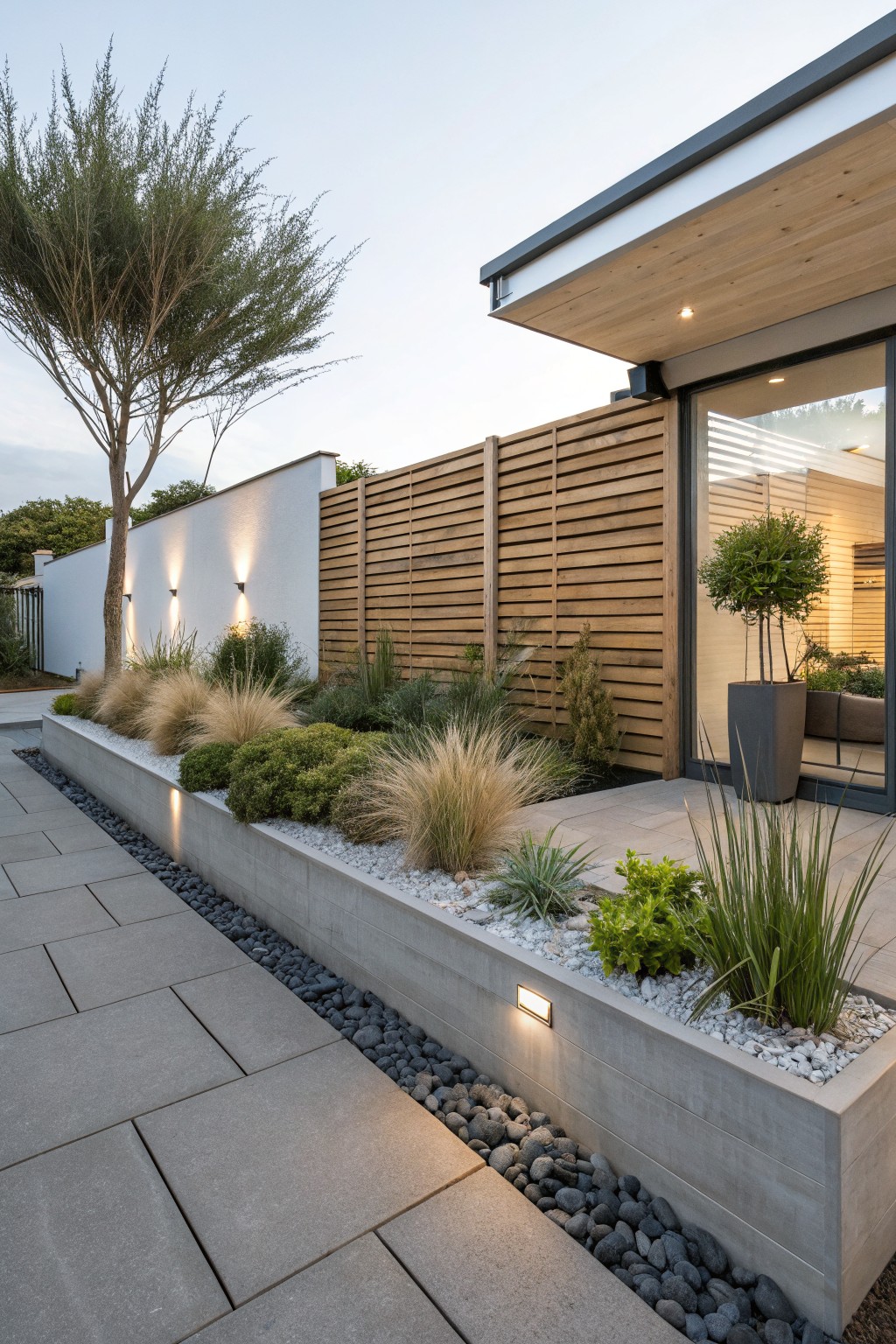
One straightforward way to edge a small backyard path is with raised concrete beds planted mostly in tough ornamental grasses. These beds keep things neat and modern without much upkeep. The grasses sway a bit for texture, and white pebbles fill in around them to cut down on weeding. A low concrete wall holds it all in place, right up against the pavers.
This setup works great in tight spots next to a house or fence, where you want some green but not a lot of fuss. Pick drought-tolerant grasses like fescue or miscanthus that handle shade or sun. Add a few boxwoods for shape if you like. Just make sure the concrete isn’t too high, or it might block the view from your patio doors.
Winding Stepping Stone Paths for Small Yards
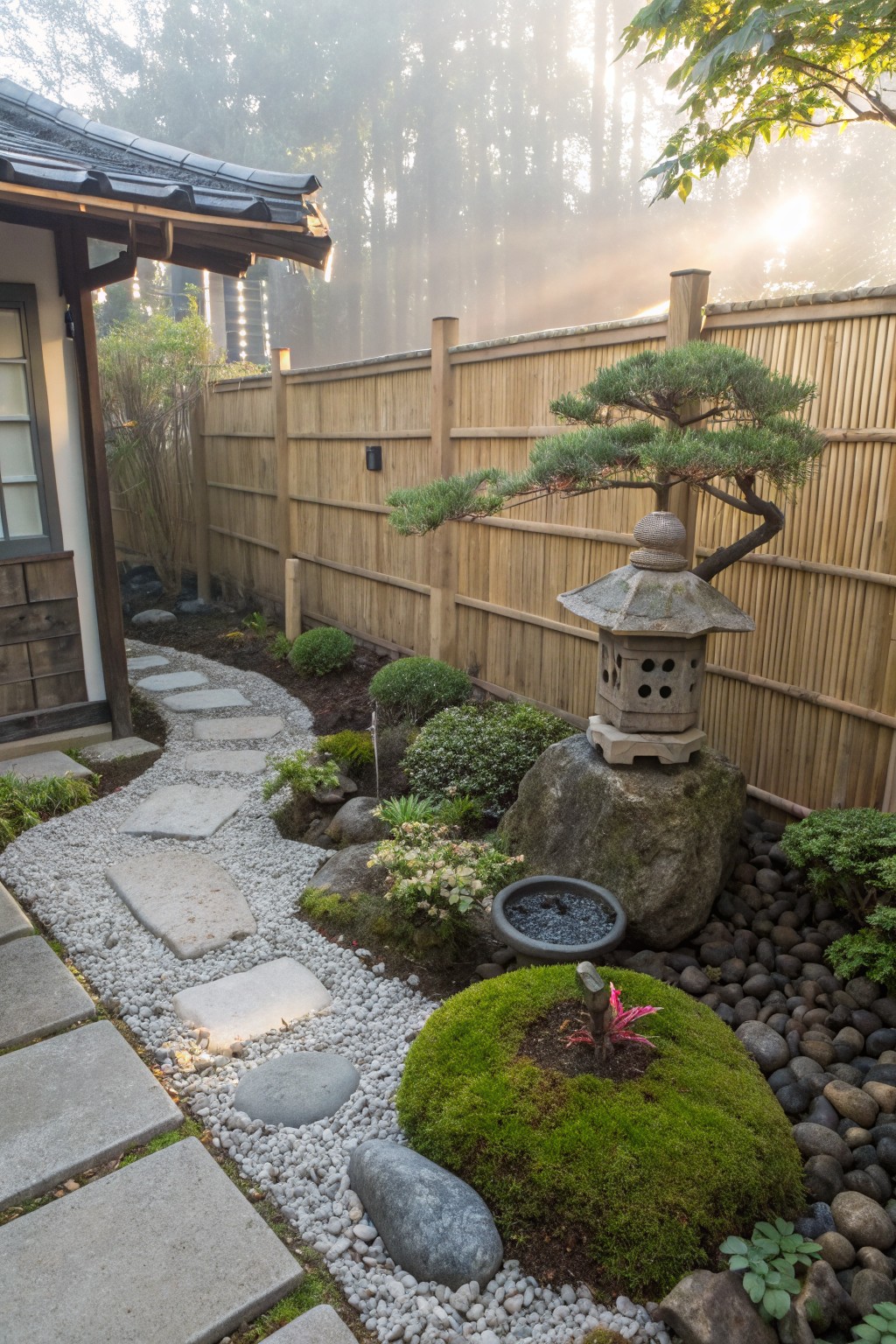
A simple winding path of flat stones set right into gravel makes even the tiniest backyard feel bigger and more usable. It snakes through flower beds and plant clusters without taking up much room. You get that gentle guide from one spot to another, past low shrubs and mossy rocks. Keeps things practical for walking while letting plants fill in the edges.
Lay gravel over fabric first, then drop in irregular stones to set the curve. Works best in narrow side yards or tight patios near a house. Go for low ground covers around the sides so it stays neat and easy to step on. Suits any small space wanting a bit of garden rhythm… without the hassle.
Ladder Planter for Small Yard Gardening
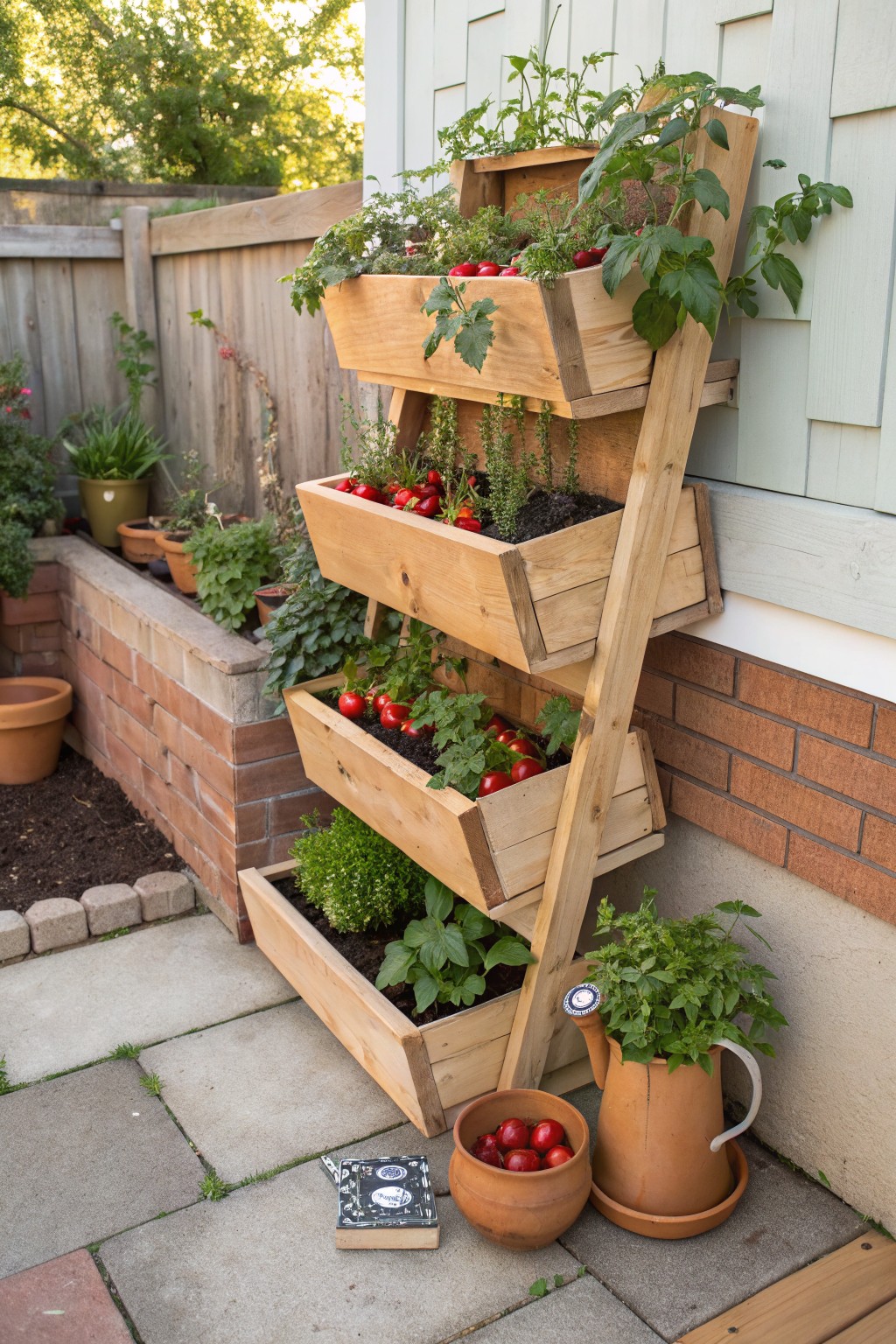
A ladder planter like this one uses vertical space to grow fresh veggies and herbs without taking up much ground. It’s built from simple wooden crates angled against a wall on a leaning frame, holding tomatoes, basil, and other easy plants. The setup feels practical and turns a blank wall into something productive right away.
This works best in tiny backyards or patios where flat space is scarce. Lean it next to a fence or house side for stability, and pick sun-loving plants that trail a bit. Go with untreated pine or cedar boxes to keep costs low, but line them to hold soil. Just watch for weight as plants grow, and secure the base on firm pavers.
Raised Beds Along a Narrow Path
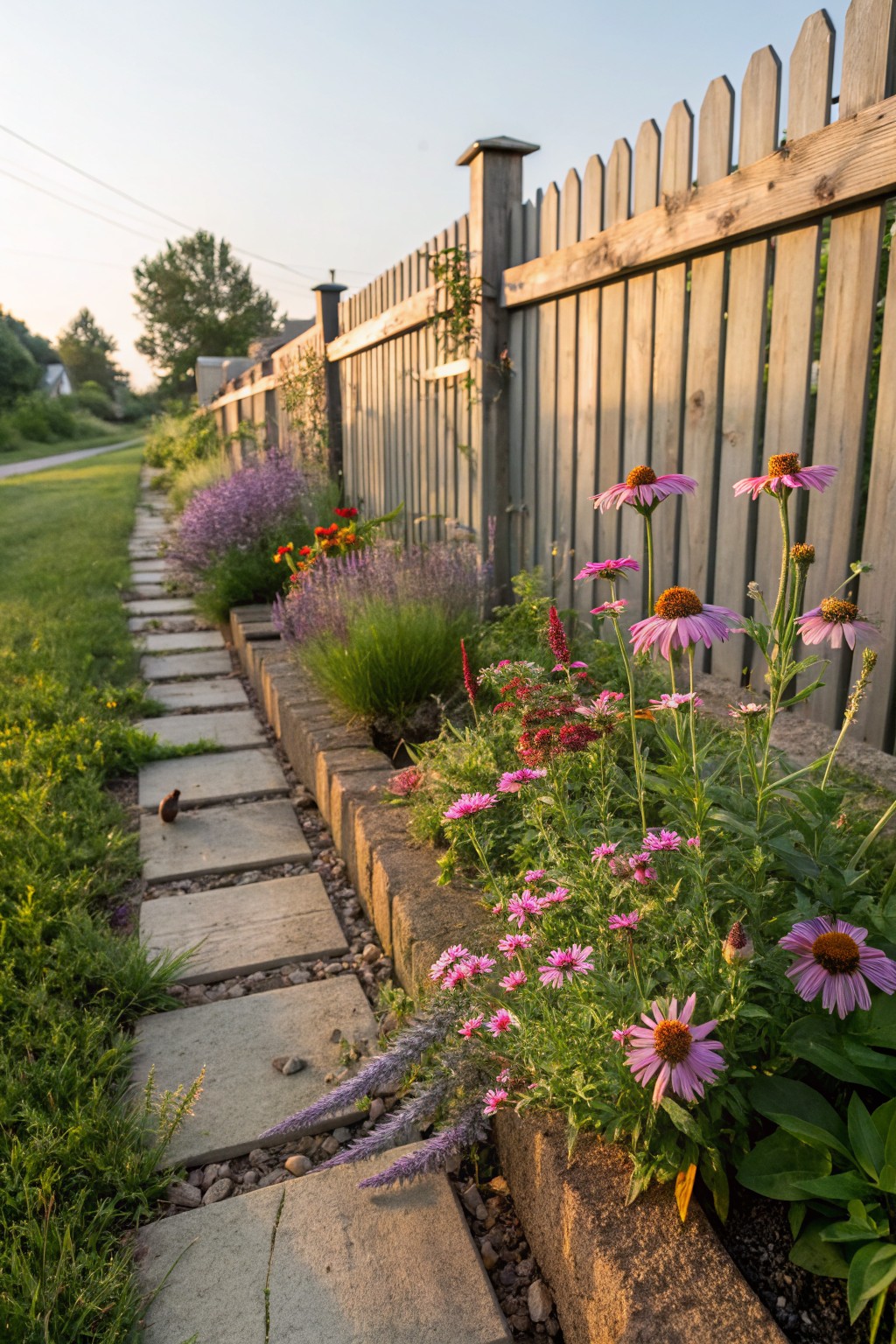
A simple raised bed tucked right against a wooden fence creates instant color in tight backyard spots. Here, bricks form the low wall, holding back perennials like pink coneflowers and lavender that spill over just enough. The stone path beside it gives easy access without stepping into the plants. It turns a skinny strip into something pretty and useful.
This works best in small yards where space hugs the fence line. Keep the bed under two feet wide, pick tough growers that don’t need much fuss, and add gravel mulch to cut down on weeding. Watch the height so it doesn’t block fence views… or your neighbor’s side-eye.
Boulders Shape Tight Flower Beds
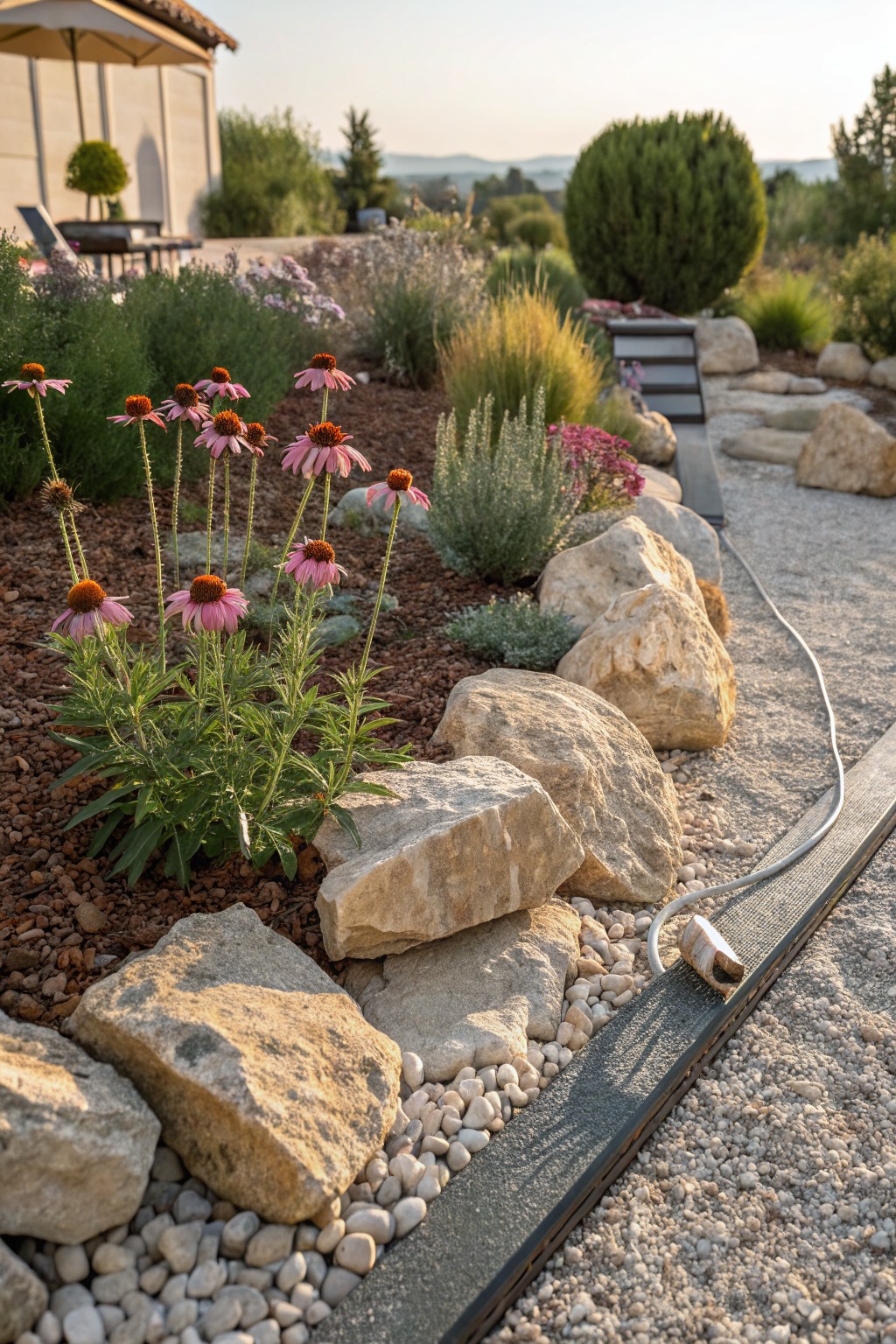
Big boulders work great to outline flower beds in small backyards. They give a natural edge that holds back soil and mulch without much fuss. Here, pink coneflowers stand tall amid grasses and low shrubs, all tucked against the rocks. It keeps the planting tidy and lets color pop in a compact spot.
Use this in narrow side yards or along fences where space is short. Pick stones that match your soil tones, stack a few for height if needed, then fill with tough perennials. Gravel paths beside them drain fast and stay low-maintenance. Watch the scale though. Too many big rocks can crowd things out.
Winding Stone Path Through Flower Beds
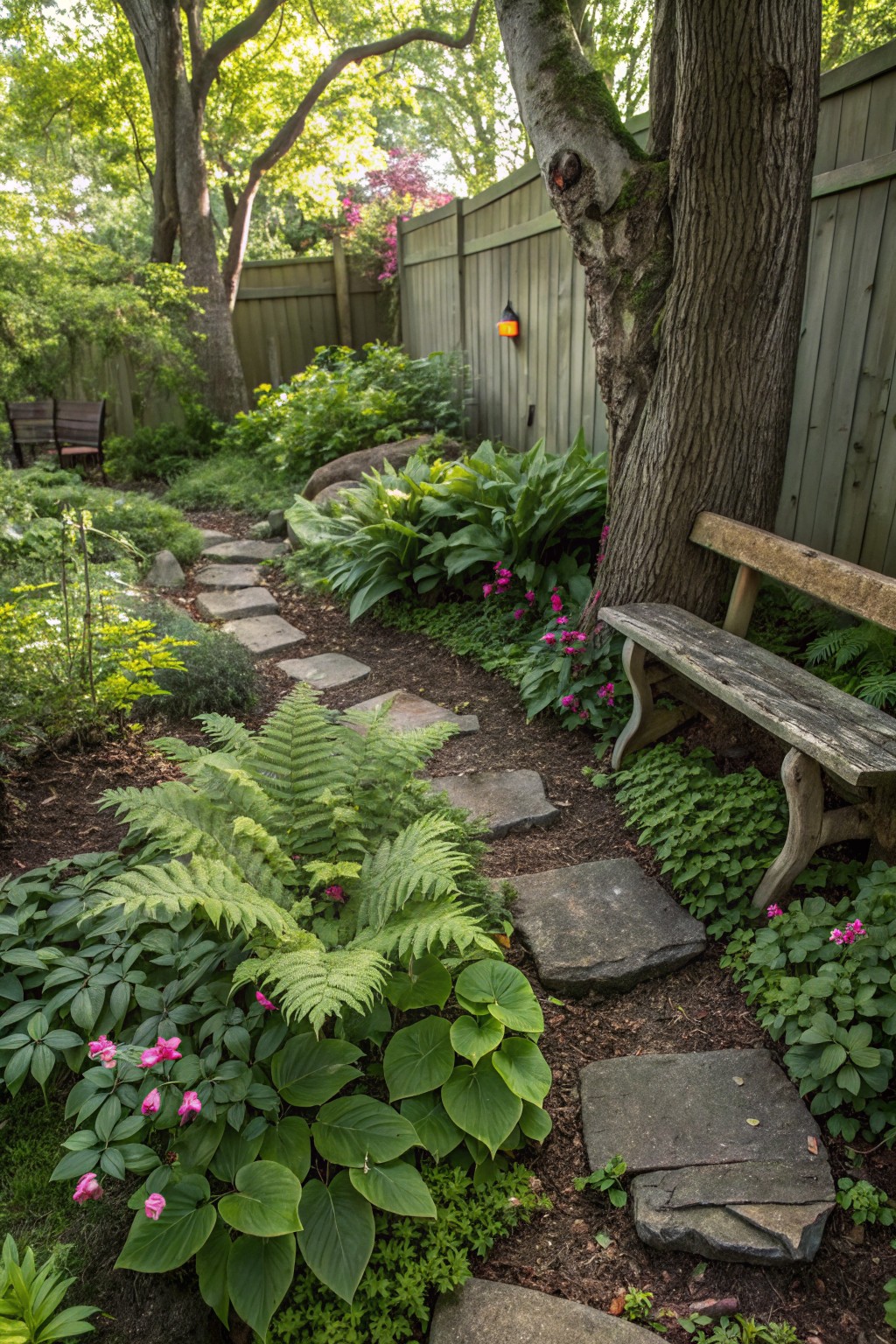
A simple winding path made from irregular stone slabs works wonders in a tight backyard. It snakes gently between layers of plants like ferns and hostas, drawing you deeper into the garden without eating up precious space. That curve makes even a small area feel longer and more peaceful.
Try this in any narrow yard backed by a fence. Start with flat stones set into mulch or soil, then fill the edges with low-growing perennials and bold leaves for that full look. Keep the path just wide enough for one person. It holds up well and stays low maintenance once the plants fill in.
Planter Box Bench for Small Backyards
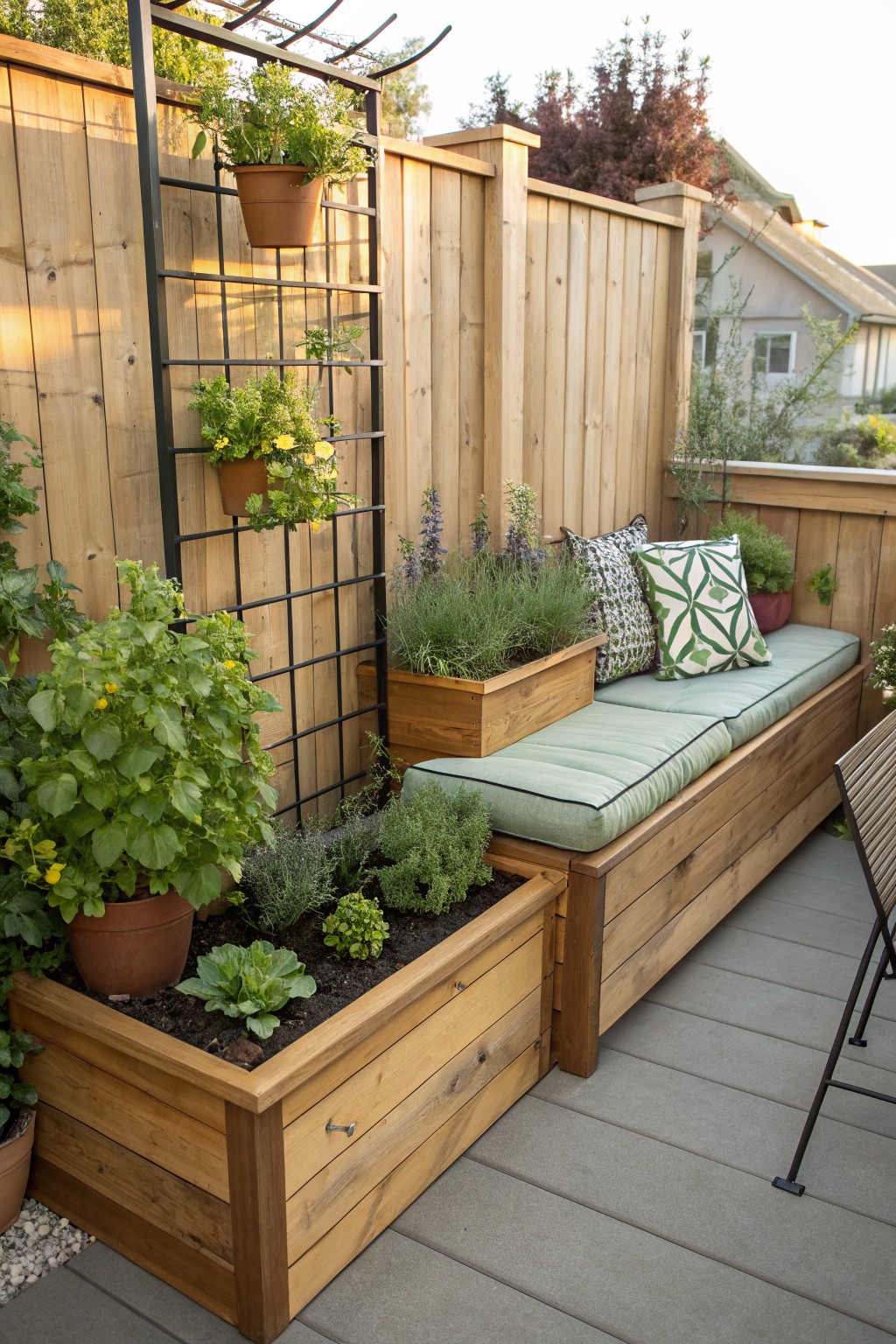
One smart way to fit more into a tight backyard is turning planter boxes into a bench. Here, cedar boxes line up along the fence, filled with herbs, greens, and flowers. A cushion on top makes a ready seat. It gives you planting space without eating up the yard, and the flowers are right there when you sit down.
This setup works great against a fence or wall in urban lots or narrow spaces. Build the boxes sturdy enough to hold soil and people, maybe 18 inches high. Add weatherproof cushions and drainage holes so plants stay happy. It’s low fuss once set up, and keeps the deck clear for other uses.
Winding Path Through Tiered Flower Beds
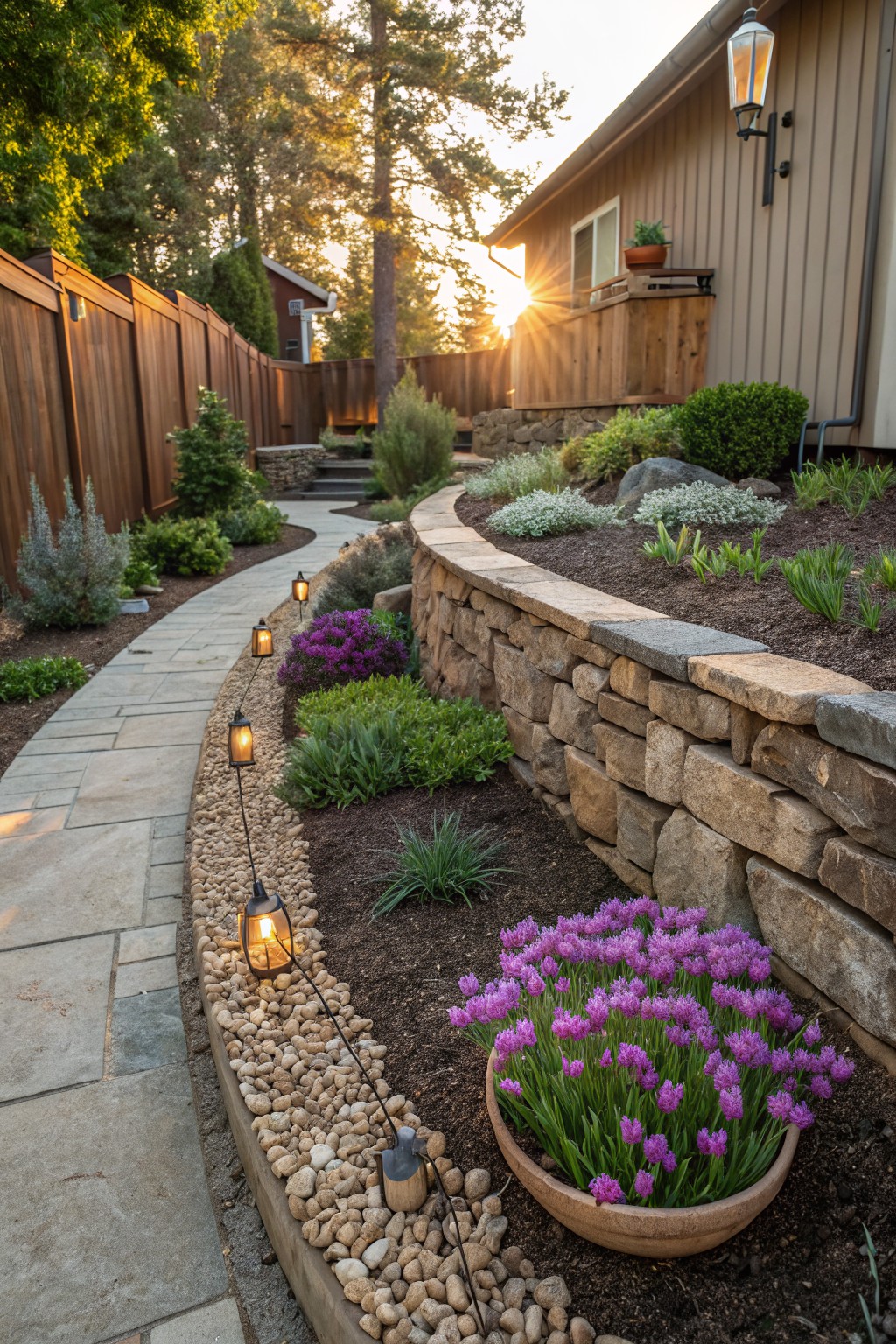
A simple curving stone path works wonders in tight sloped backyards. It runs alongside low retaining walls packed with plants, turning awkward terrain into an easy walk to the house. Those small lantern lights strung along the edge add just enough glow for evening strolls, without much wiring hassle.
This fits best behind starter homes or cottages with a bit of hill. Build the walls from nearby stone to keep costs down, then fill beds with tough bloomers like lavender or low shrubs. Skip straight lines. The curve makes the yard feel bigger and draws you up naturally.
Tall Basket Planters for Small Spaces
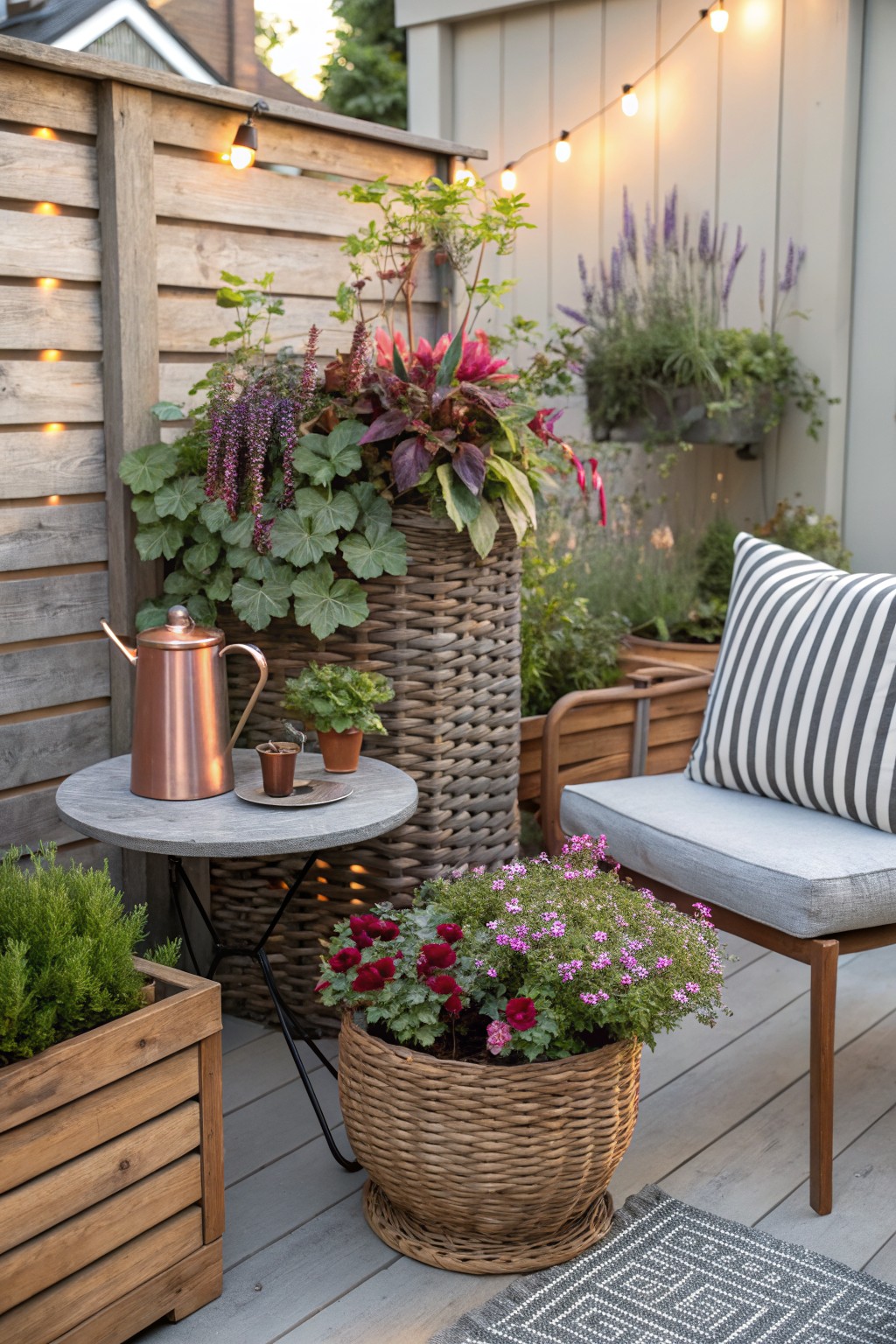
Tall woven baskets like the ones holding ferns and salvias here make a real difference in tiny backyards. They bring plants up high without eating up precious floor room. You get that lush green wall feel around your seating spot. It turns a plain deck corner into something cozy and private.
Put a couple of these oversized baskets behind a chair or table on your small patio or balcony. Go for trailing plants up top and bushier ones below to layer it. They work great where ground planting won’t fit. Just line the bottoms with plastic pots for good drainage so the roots don’t rot.
Raised Gravel Flower Beds
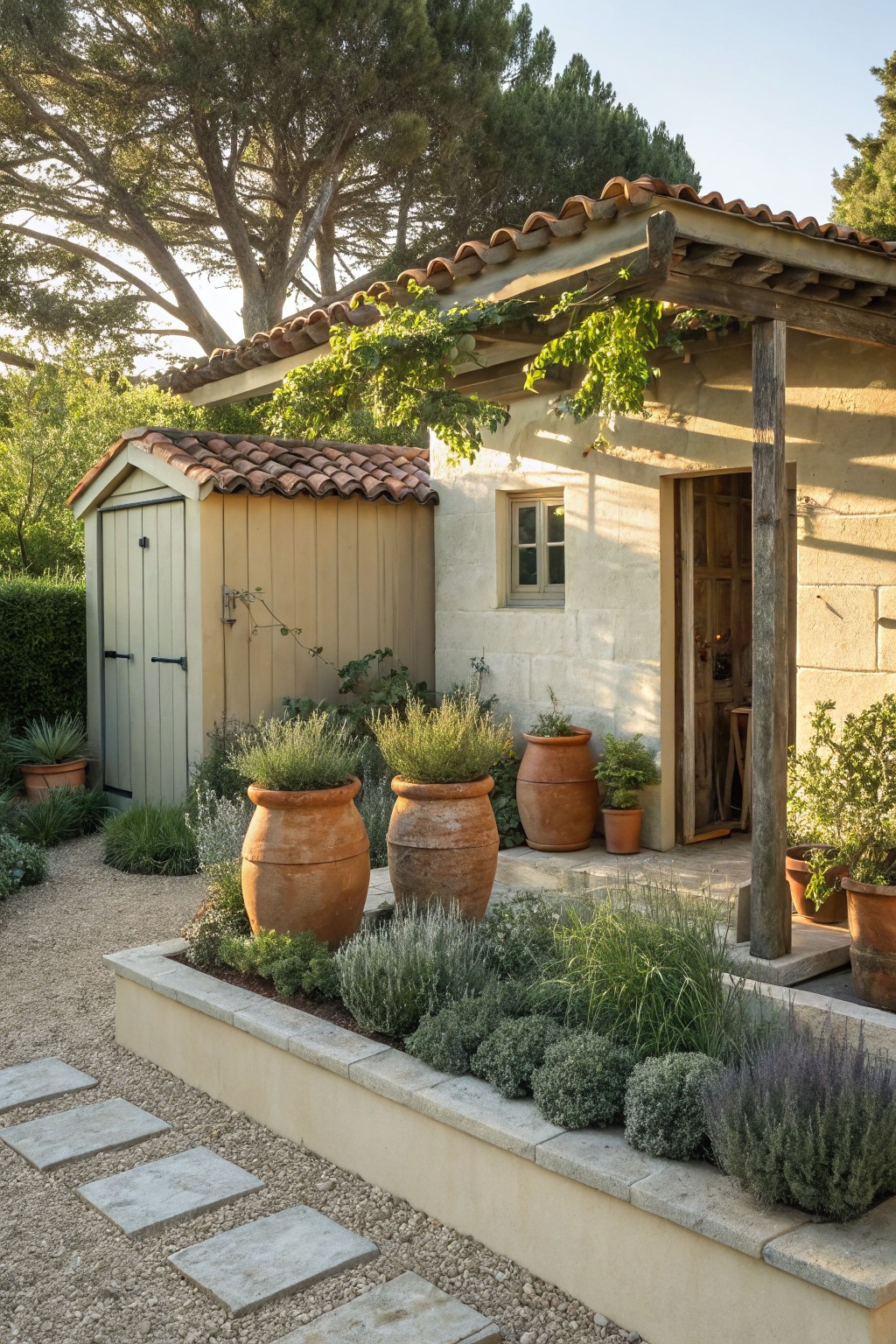
These raised beds made from simple stone edging and filled with gravel make a tidy spot for plants in a tight backyard. You see them hugging the base of a house or shed, with low shrubs like lavender tucked in and big terracotta pots clustered nearby. The gravel keeps things neat without much weeding, and it lets water drain fast. It’s practical for small spaces where you want color and green without the fuss.
Try this along a walkway or patio edge where you have just a few feet to work with. Pick drought-tough plants that won’t outgrow the spot, and group pots in threes for punch. Works best in sunny, dry areas… keeps the look clean year-round. Just make sure the edging sits level so gravel stays put.
Winding Stone Path Through Flower Beds
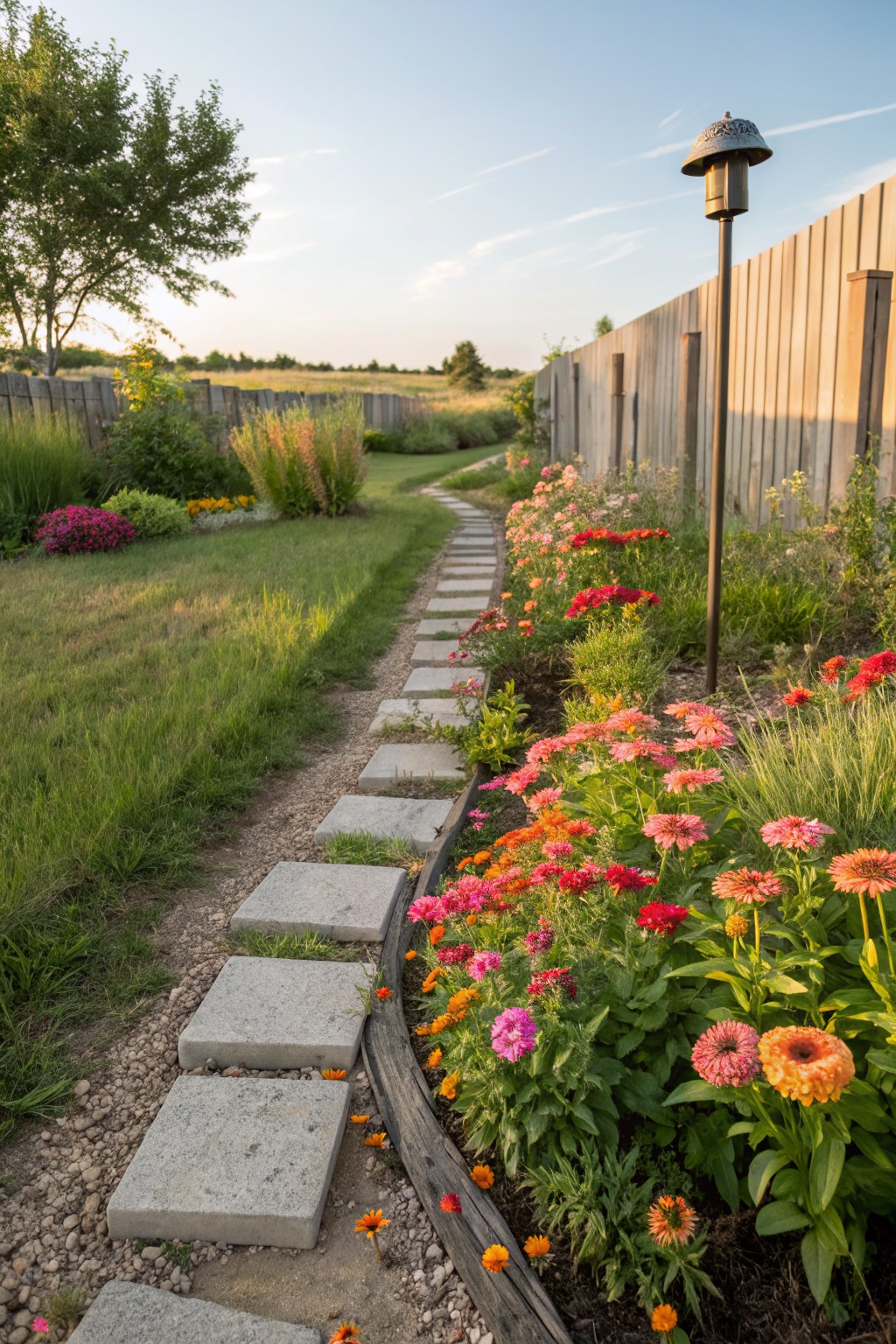
A simple stone path like this winds gently through a small backyard, edged tight with colorful flower beds. It keeps the grass open for play or sitting while the blooms add nonstop color right along the way. Those orange zinnias and pink cosmos make it feel alive without crowding the space.
This works best in tiny yards where you need to squeeze in beauty and access both. Lay flat pavers in gravel for easy drainage, use log borders to hold back the soil, and plant low-growing annuals that come back easy each year. Keep the path at least three feet wide. Suits most sunny backyards… just watch for tripping spots if stones shift.
Terraced Stone Walls for Sloped Flower Beds
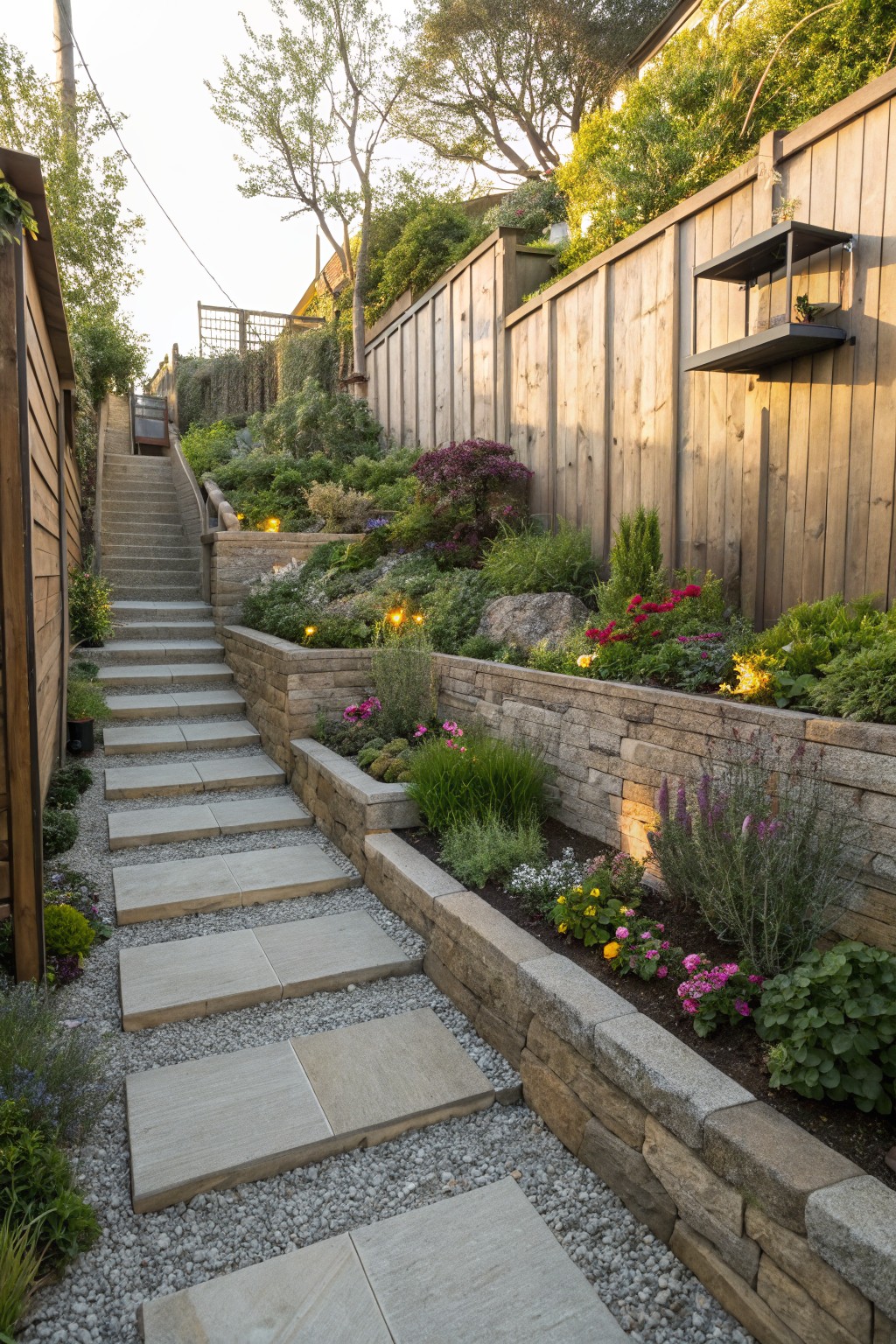
Sloped backyards often feel tricky. But terraced stone walls fix that by turning the hill into neat flower beds. Wide concrete steps run right up the center, with plants spilling over each level. Low lights tucked in add a soft glow at dusk. It’s a simple way to make the space useful and pretty without much flat ground.
This setup works best in tiny yards where you need every inch. Stack natural stone blocks for the walls, then fill with tough perennials like lavender and sedum. Gravel fills gaps between steps to keep it low maintenance. Just make sure good drainage so roots don’t rot… especially on a hill.
Raised Edge Planters for Tiny Terraces
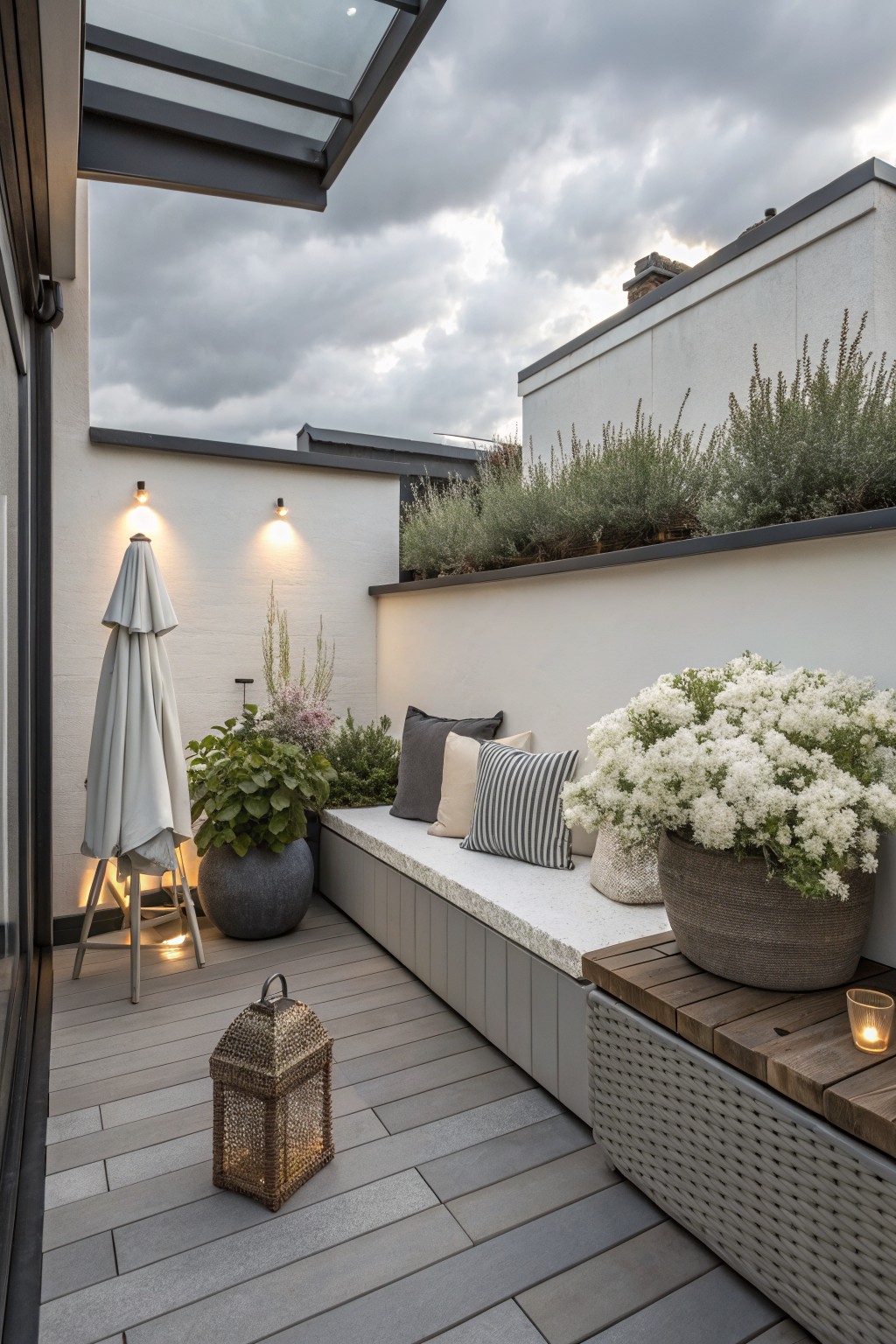
These raised planters run right along the top of the walls, packed with tall silvery shrubs that soften the edges of a small balcony. They take up no floor space at all, which makes them perfect for tight spots like rooftops or narrow backyards. The greenery adds a garden feel without crowding the seating area below, and it helps block views from neighbors too.
You can set something like this up on any small outdoor ledge or parapet wall. Pick tough plants such as lavender or Russian sage that handle wind and sun well. Keep pots simple in gray or wicker to match decking, and place a big flowering pot nearby for more color. It works best where you want low upkeep but still some real planting presence.
Raised Planters Lining a Narrow Path
In tight backyard spots like side yards, long raised planters work wonders. They hug the path and wall, turning unused strips into flower beds full of color and green. You get layers of plants without crowding the walkway, and everything stays neat.
Build these from simple wood boxes, maybe a couple feet high, and fill them with herbs, perennials, or annuals that trail a bit. They suit small homes best, especially where ground space is limited. Just make sure good drainage… keeps roots happy.
Raised Planters Line Narrow Paths
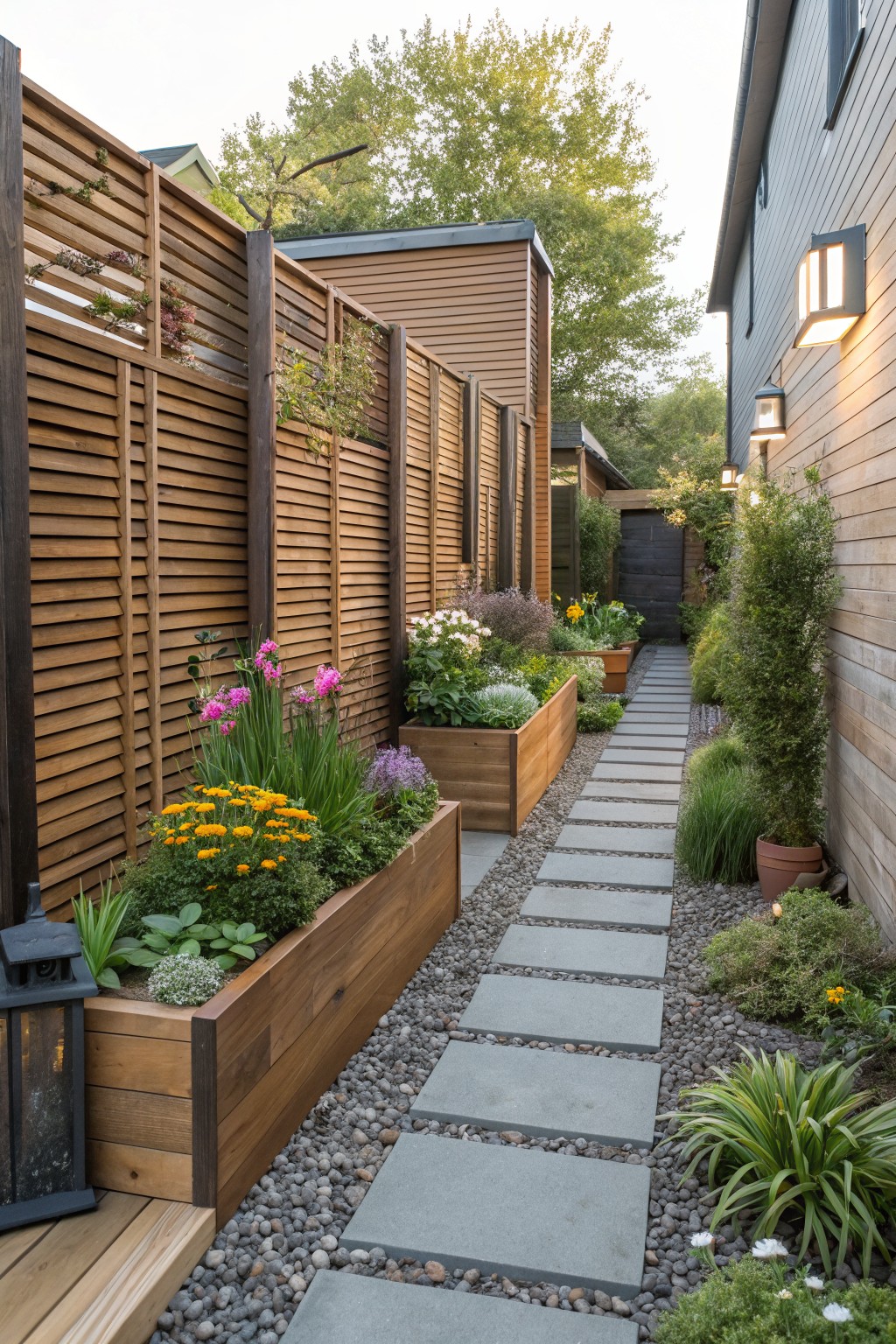
In small backyards with skinny walkways, raised wooden planters work well to squeeze in more plants. They hug the path here, full of flowers like pink blooms and marigolds, without crowding the steps. This setup turns wasted edges into growing space.
Put these in tight side yards or between fences where ground planting feels fussy. Build them from treated wood about two feet high, then fill with easy perennials. Gravel between the stones keeps weeds down and drainage good… just right for tiny lots.
Winding Stone Paths in Small Backyard Beds
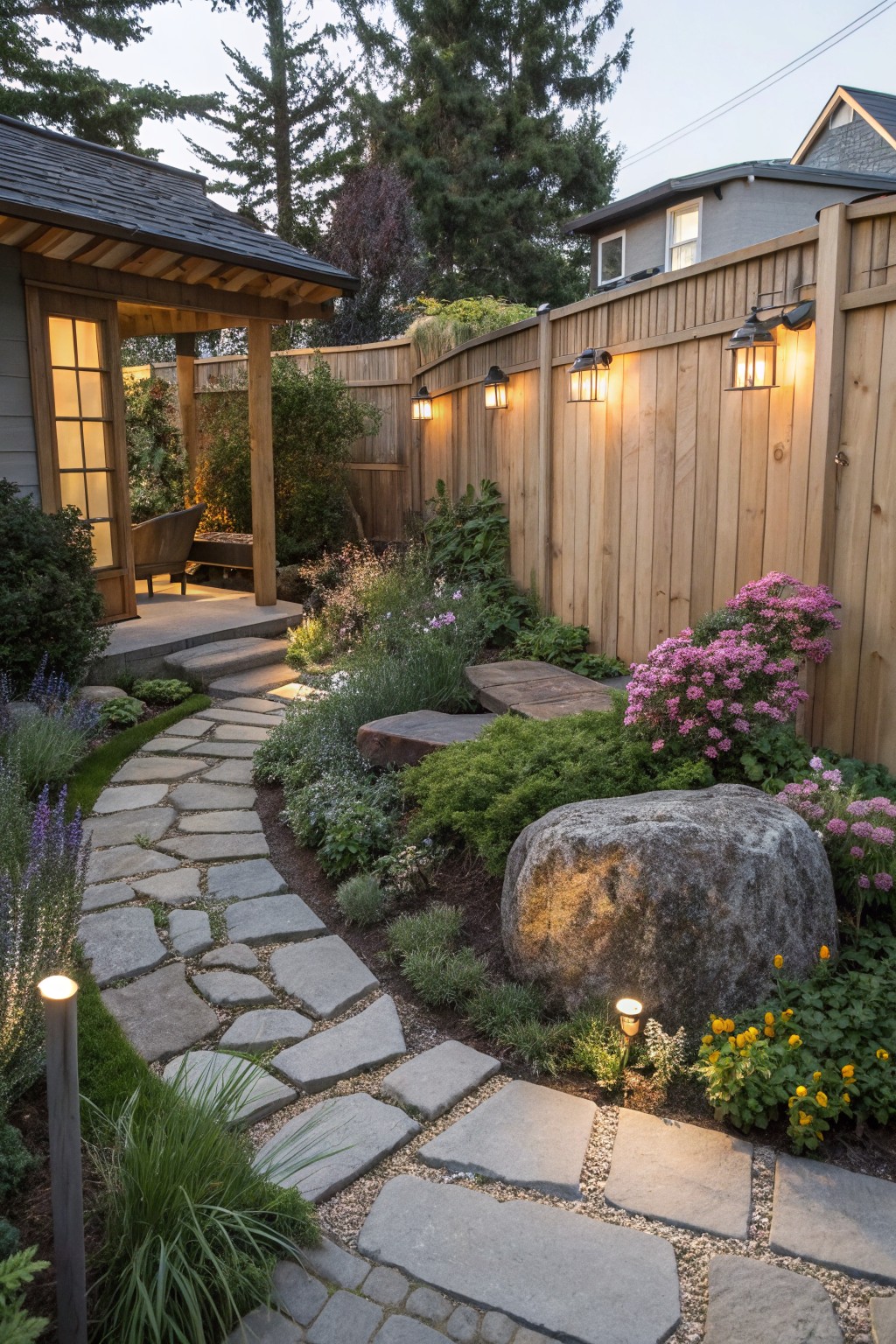
A simple winding path made from irregular stone slabs works great in tight backyard flower beds. It pulls you right through the plants without taking up much room. Here, the path curves gently past low shrubs, pink blooms, and a big boulder, keeping the space open yet full of interest. That natural shape makes even a skinny strip of yard feel like a real garden stroll.
You can lay these paths in any narrow bed along a fence or house side. Use flat stones set in gravel or sand for easy drainage, and add low lights along the edges for evening walks. It suits small urban lots best, where straight paths would look boxy. Just space the stones unevenly to avoid a stiff look.
Raised Brick Beds for Tight Yards
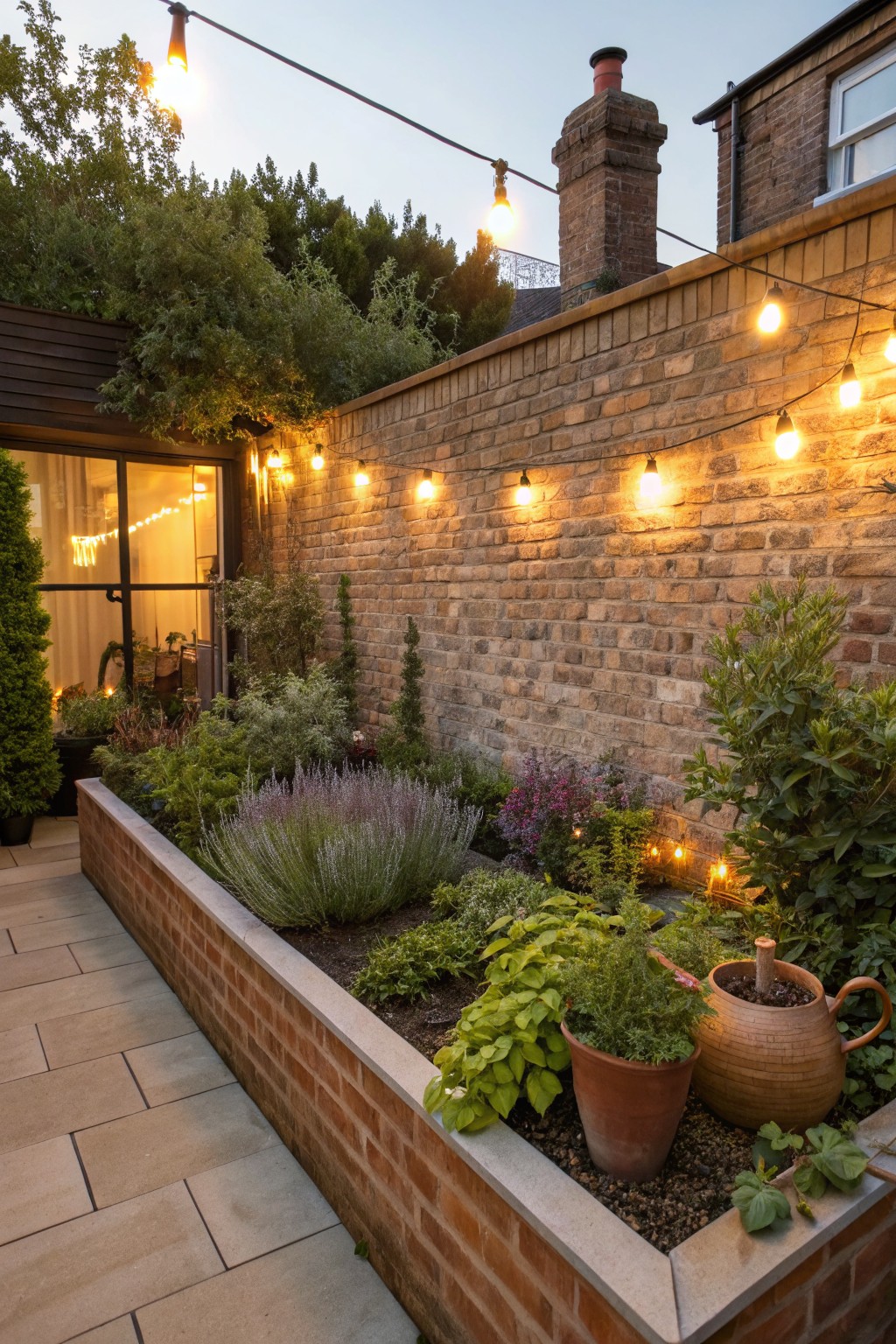
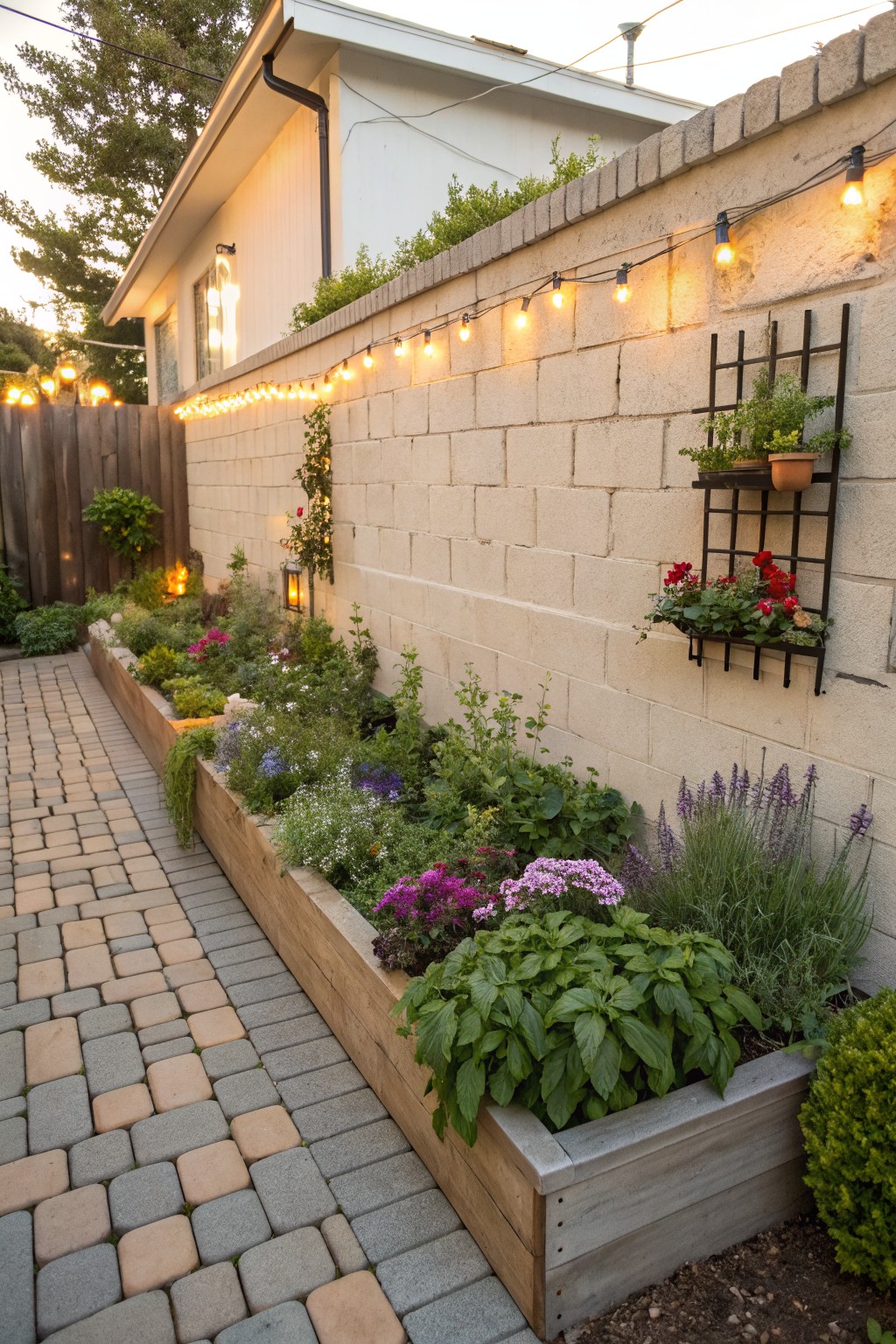
A raised brick bed tucked along the back wall turns a skinny yard into something useful right away. It keeps plants off the ground and close to the house, so you can snip herbs without bending much. The brick matches the walls here, making the whole setup feel like it belongs.
This idea fits narrow urban spots or any small patio edge. Go for a simple rectangular shape about two feet high. Fill it with tough growers like lavender or basil that don’t need much fuss. String lights overhead help at night, but watch the soil drainage to keep things healthy.
Frequently Asked Questions
Q: My yard gets a ton of shade. Do any of these flower bed ideas work there? A: Pick shade-lovers like impatiens, hostas, or ferns from the list. They thrive without full sun and add color to dark corners. Group them tight for impact.
Q: How do I stop weeds from taking over my new small flower bed? A: Lay down landscape fabric or cardboard before adding soil and plants. Top it with two inches of mulch to block light and smother weeds. Pull any strays early, and you’ll stay ahead.
Q: What’s a cheap way to edge a tiny flower bed? A: Grab bricks, stones, or even repurposed wood scraps from around the house. Bury them halfway along the border for a clean line that lasts.
Q: Can I set one of these up if I’ve never gardened before? A: Start with the simplest design, like a curved row along a fence. Buy pre-started plants instead of seeds, and follow the spacing tips in the ideas. You’ll see results fast… and gain confidence.
