

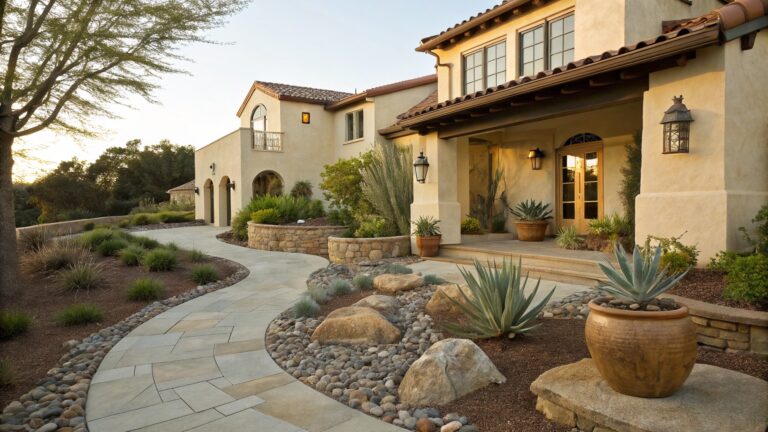
I’ve spent years watching gardens come and go in neighbors’ yards, and the ones that truly endure start with a solid rock and succulent base that handles drought and neglect without losing their shape. Succulents bring that lush, layered look to flower beds when you group them thoughtfully around boulders and gravel paths, creating a structure that evolves nicely over time instead of turning into a weedy mess. In my own backyard tweaks, I found that simple edging around those beds keeps the whole layout crisp, making the space feel intentional from the street. People tend to notice the bold textures and clean lines first, the kind that frame a walkway or soften a slope without overwhelming the yard. A few of these setups are straightforward enough to scale for any plot.
Winding Stone Path Through Succulent Beds
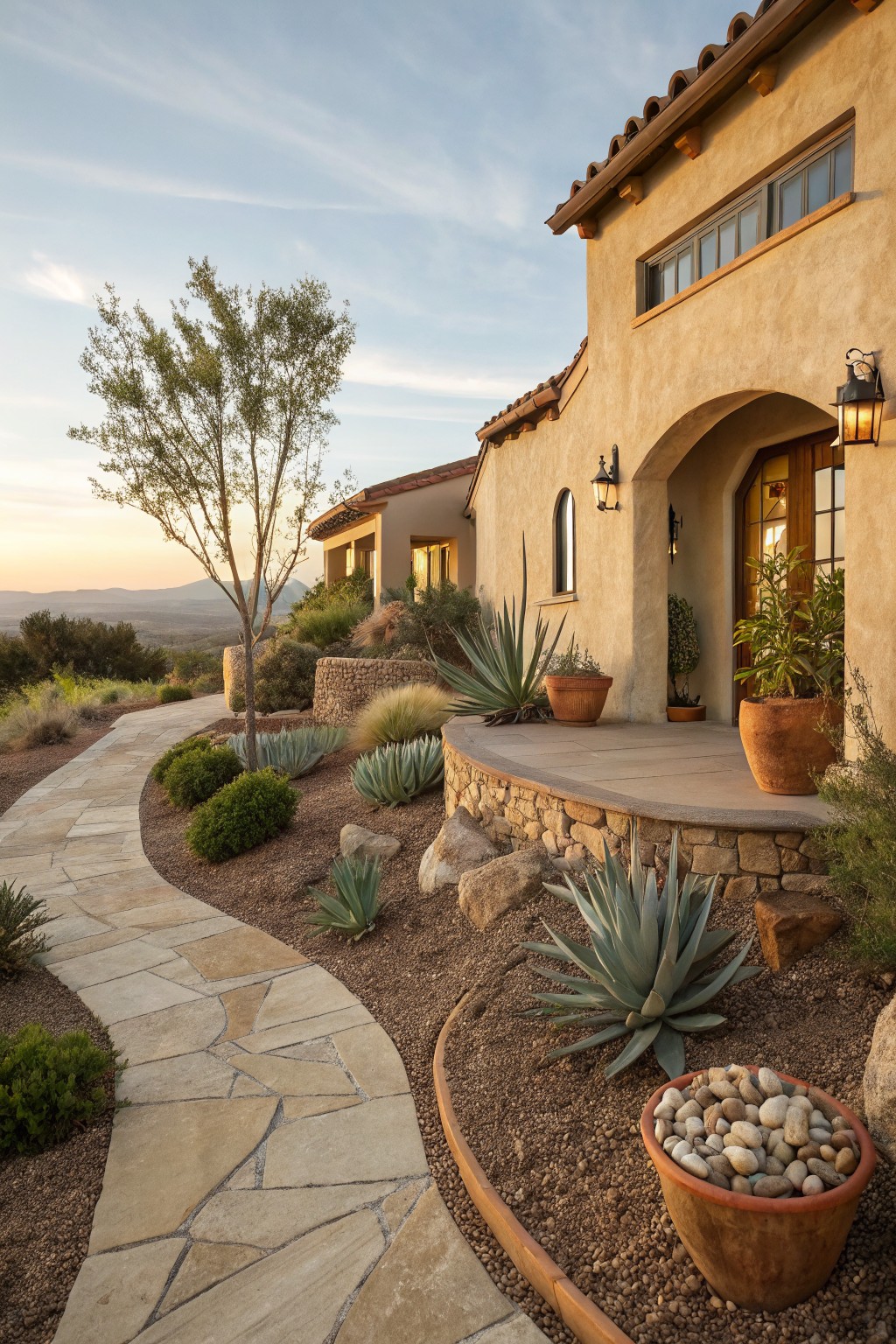
A curving flagstone path like this one works great as a low-key way to guide folks to your front door. It meanders through gravel beds packed with tough succulents like agave and aloes, plus a few rocks for texture. No fussy grass or trimming needed. The path feels organic against the house stucco, and those big terracotta pots near the entry add a homey touch without overdoing it.
You can pull this off in sunny, dry spots where water’s at a premium. Lay irregular stone slabs for the path, edge with low rocks or metal, then fill beds with gravel and drought-proof plants. Suits ranch-style homes or any place wanting easy curb appeal… just keep the plants spaced so they don’t crowd the walk over time.
Rock Garden Pathway with Stepping Stones
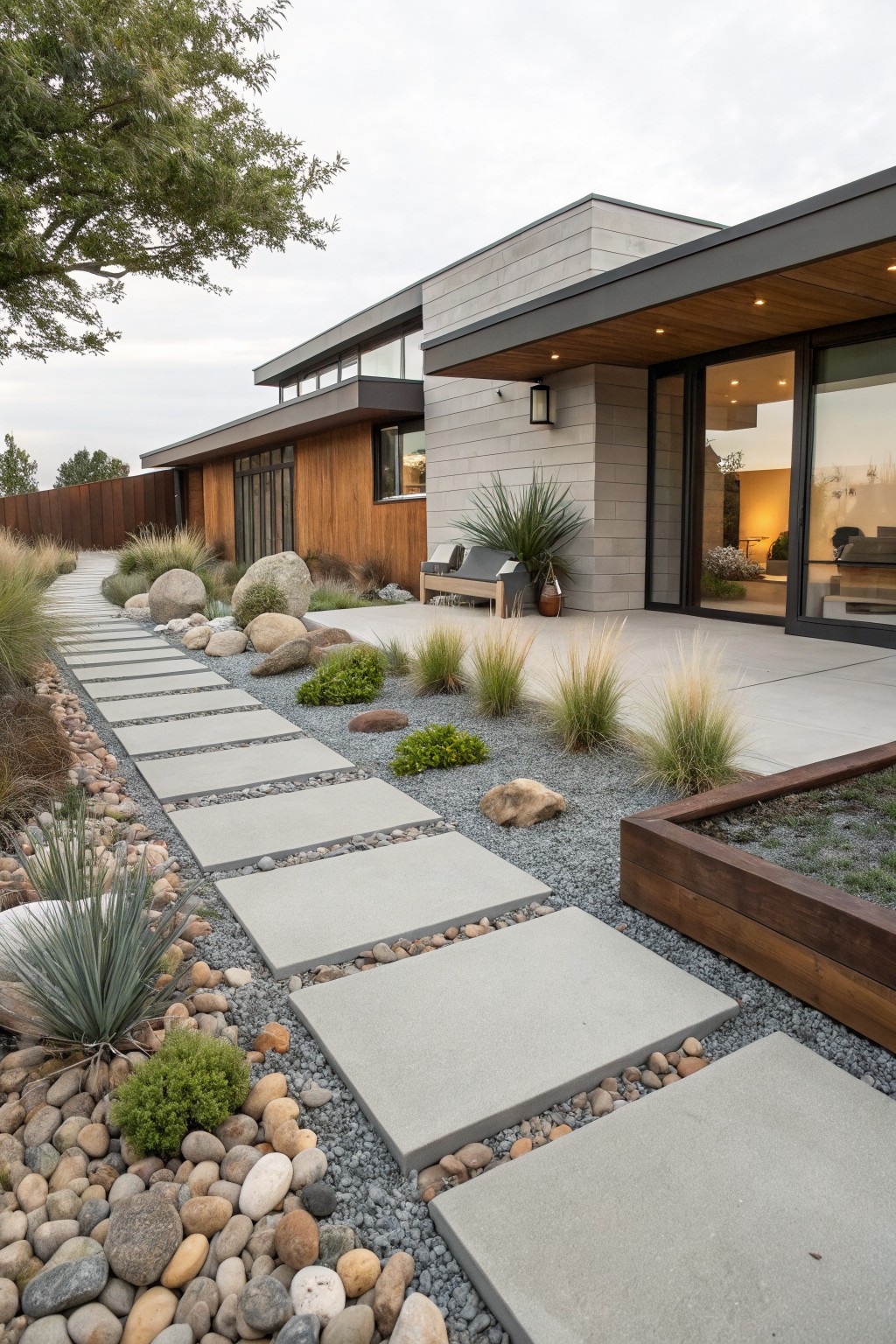
A straight-up gravel bed filled with succulents, grasses, and boulders gets a lot more walkable when you drop in large concrete stepping stones like this. It keeps the low-water look but adds that natural flow toward the house entry. No mud, no mowing. Just clean lines that pull your eye right along.
This setup works great for dry yards or front approaches where you want easy access without grass. Space the stones wide enough for regular steps, about 24 to 30 inches apart, and tuck in tough plants like agave or feather grass around the edges. It suits modern homes with clean architecture… fits right in without overpowering.
Meandering Gravel Path in Succulent Rock Garden
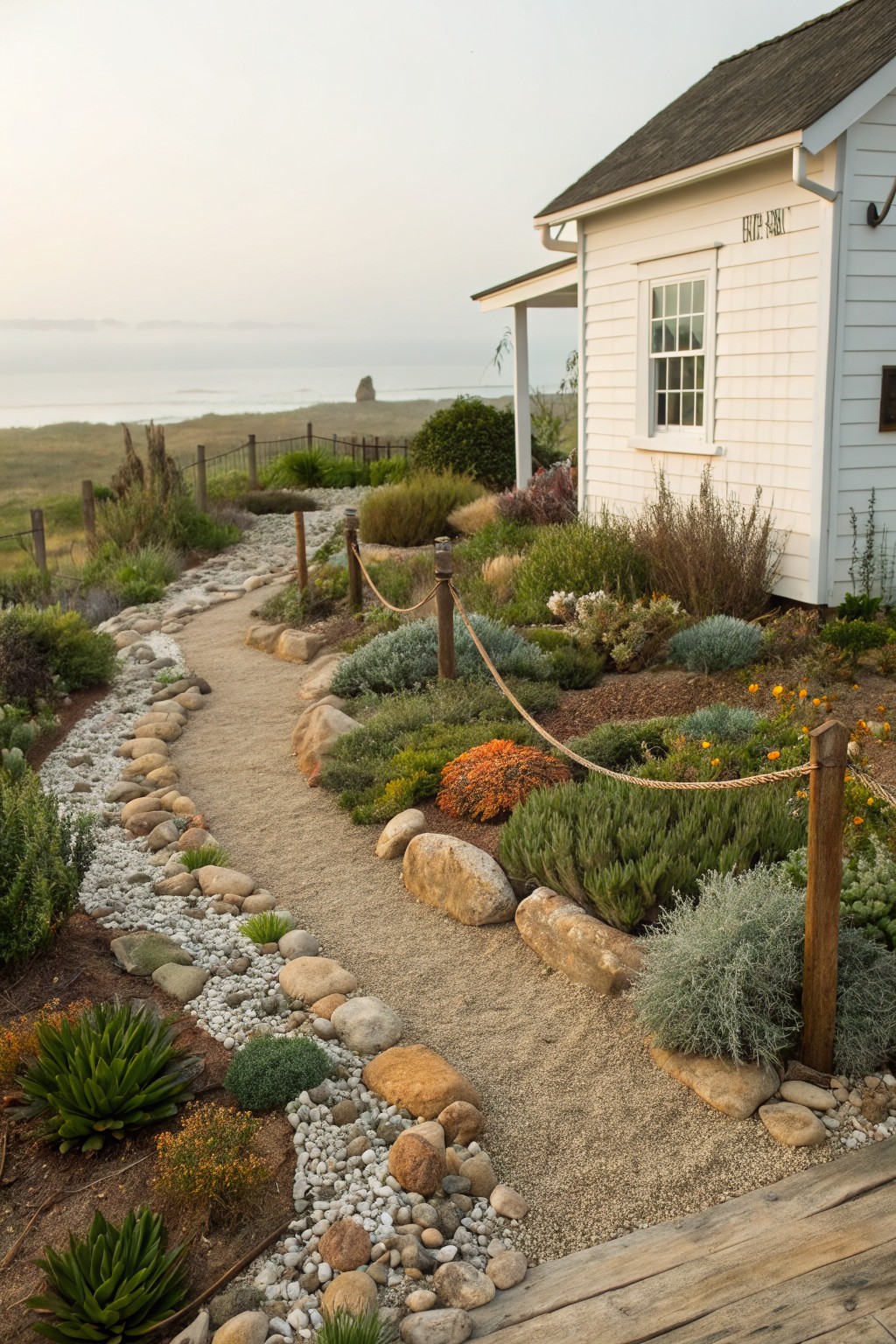
One simple way to tie a garden together is with a meandering gravel path like this. It winds gently through low beds of succulents and grasses, edged by big boulders that keep everything in place. The path pulls your eye right to the house without feeling too rigid. And since gravel drains fast, it works great in areas that stay damp or get heavy rain now and then.
You can set this up along a side yard or entry approach, especially where you want low upkeep. Pick drought-tolerant plants like sedums and agaves to fill in around the rocks. Just make sure the boulders aren’t too heavy to move when you’re laying it out… source them locally if you can. It suits coastal spots or dry slopes best, giving that natural, lived-in feel without much weeding.
Succulent Rock Beds Along a Path
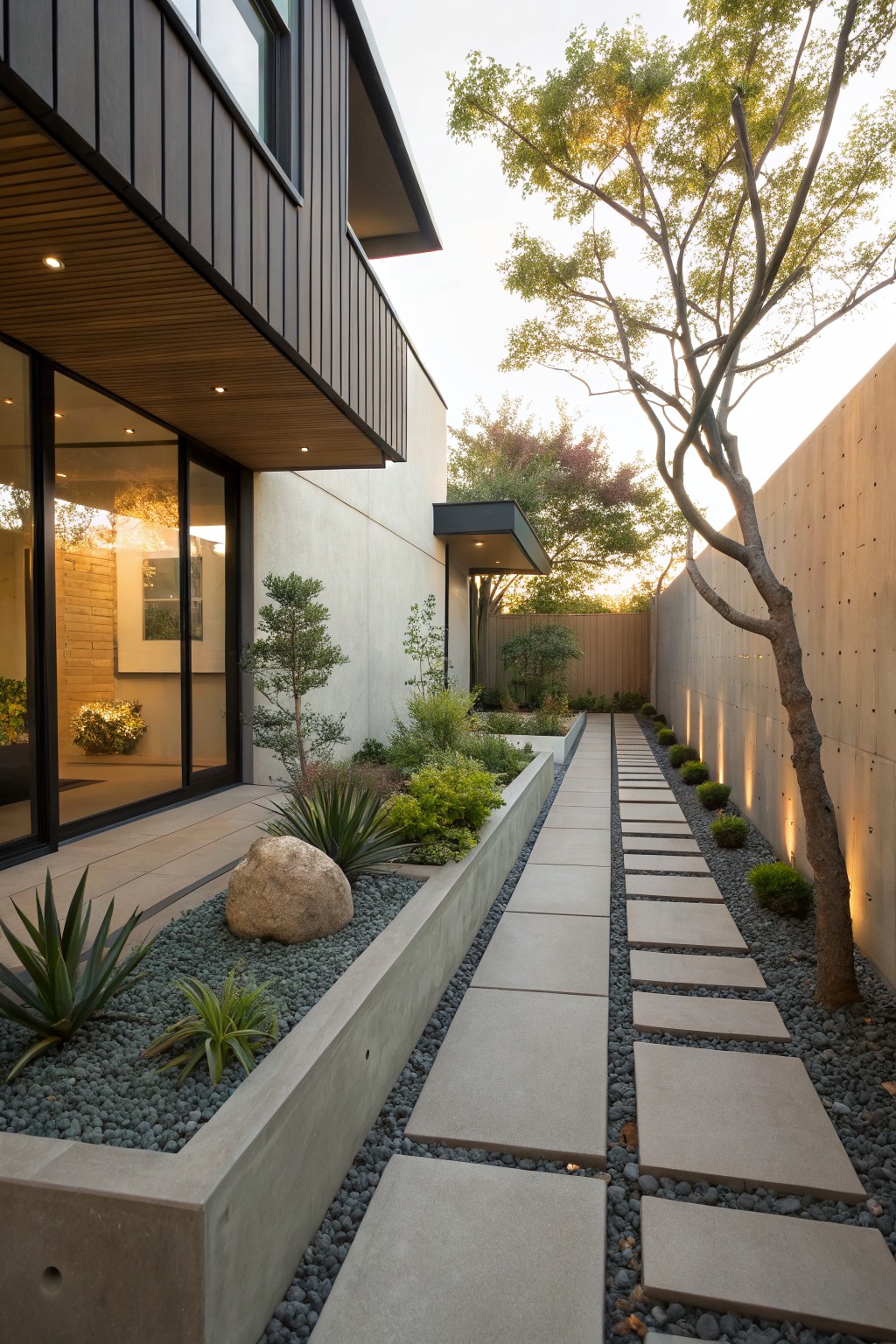
One straightforward way to edge a walkway is with low concrete beds packed with gravel mulch and succulents. Here, agaves and small grasses fill the beds, plus a big boulder for scale. It gives a clean, structured feel that ties right into the house without needing constant watering or weeding.
This works best for narrow side paths or entry approaches on modern homes. The concrete keeps soil in place and lets gravel drain fast. Skip it in wet climates unless you add good drainage. Easy to copy with basic forms and local stone.
Stone Retaining Walls Filled with Succulents
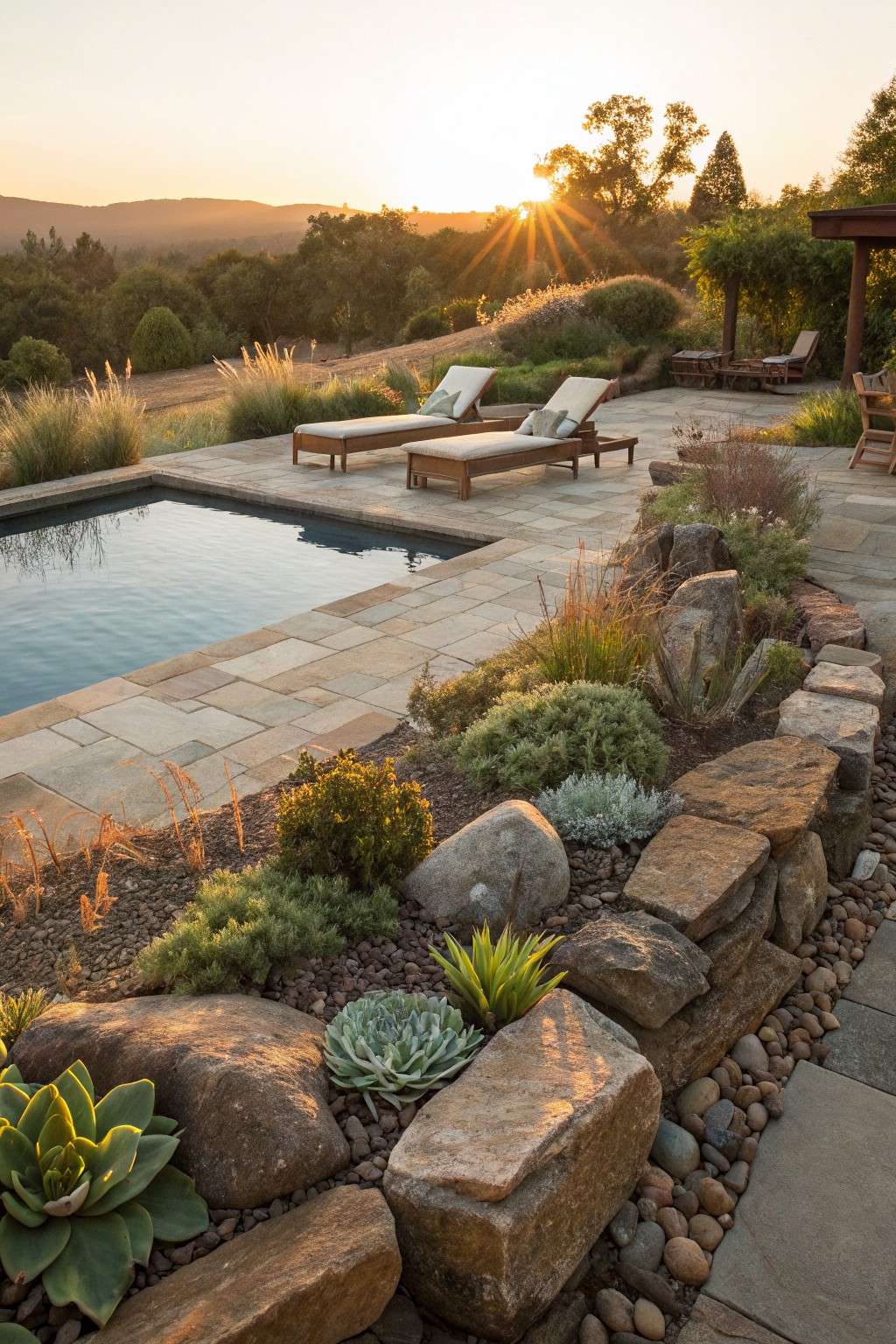
One smart way to edge a pool or patio is with dry-stacked stone walls tucked full of succulents. Those chunky rocks hold back soil on a slope while agaves and echeverias spill out from the crevices. It looks rugged and natural, like the garden grew up around the hardscape. Plus these plants barely need water once established, so the beds stay full and green year-round.
Put this kind of border anywhere you want to define outdoor spaces without fuss. It suits sloped yards or dry spots near seating areas. Stack local stones for a seamless tie-in to the landscape, and mix in taller grasses for height. Watch that you leave gaps for roots to spread… poor drainage can rot succulents quick.
Balcony Succulent Rock Gardens
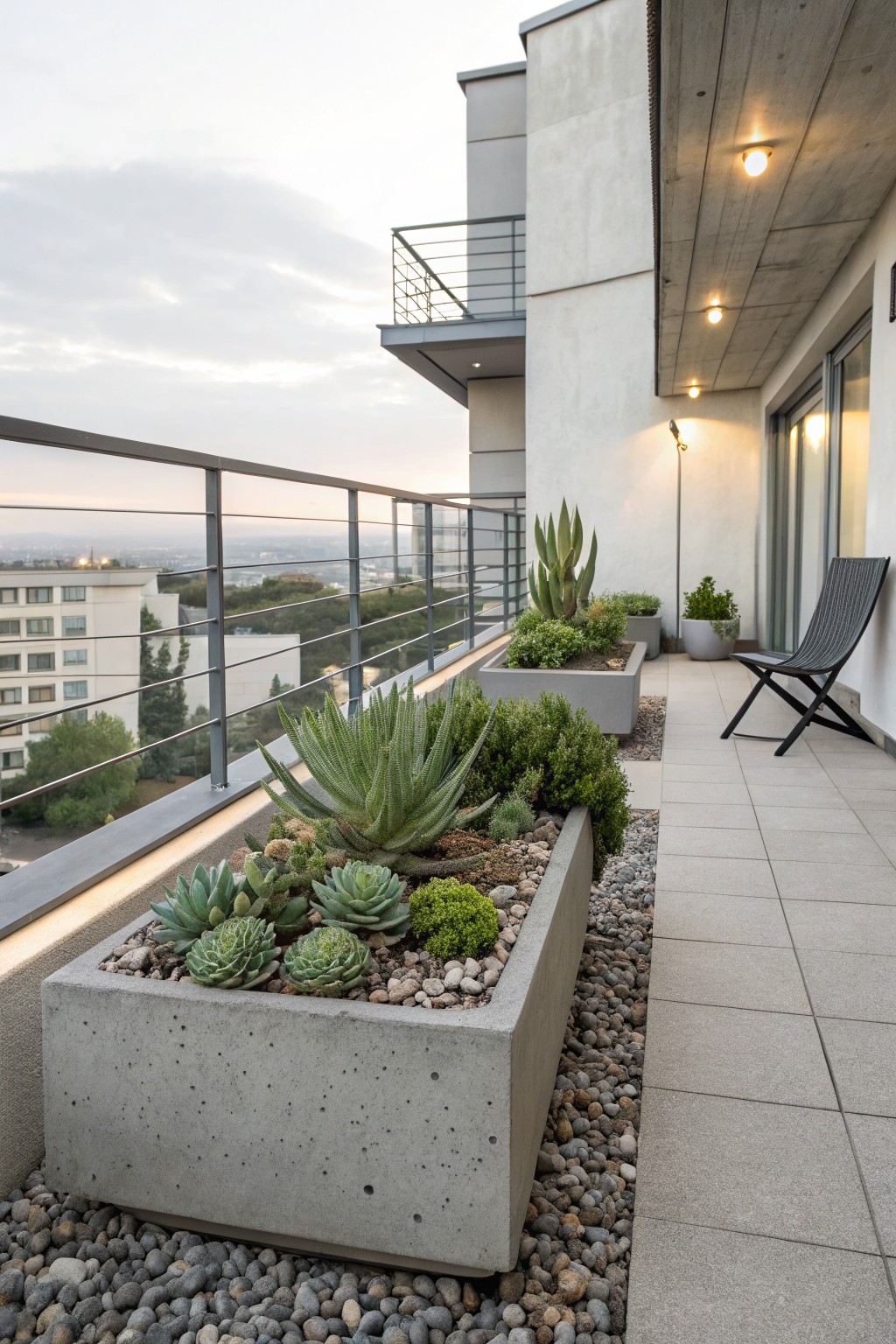
Big concrete planters like these make a simple way to build a succulent garden right on your balcony. Filled with different sizes of succulents and topped with pebbles, they hold up well in wind and sun. The gray tones match modern buildings, and the rocks help with drainage while keeping weeds down.
These work best on high-up spots or patios with good light but not much soil to dig into. Go for low-water plants like agaves or sedums that last years. Space a few along the rail for a green edge that softens the view without much upkeep.
Succulent Rock Beds Line the Entry Path
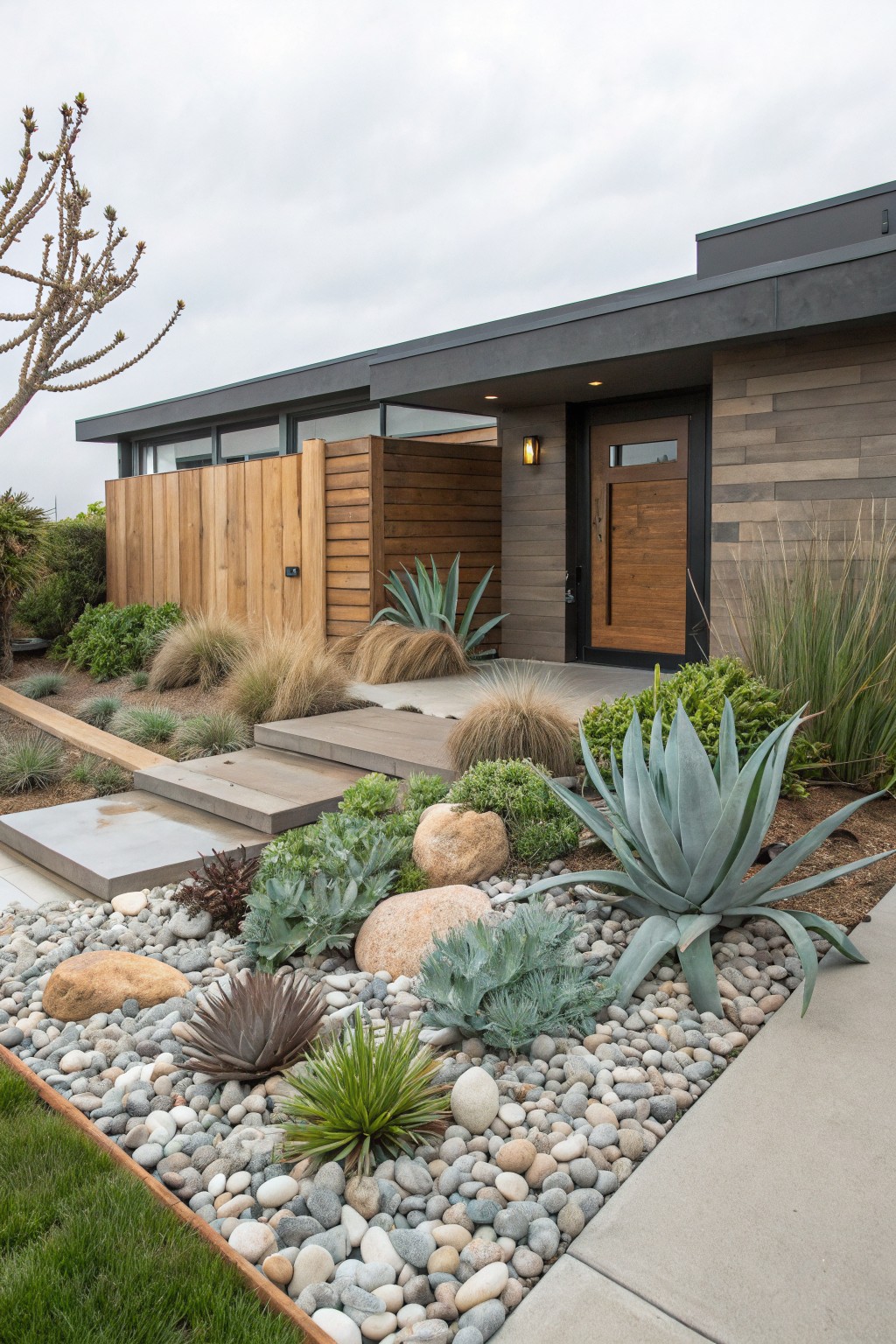
One simple way to make a front yard feel put-together is with succulent rock beds like these. Big agaves and spiky grasses sit among smooth pebbles and boulders, filling the space without much fuss. It ties right into the house’s clean lines and adds some real texture as you walk up.
These beds shine in sunny, dry spots where regular plants struggle. Layer taller succulents at the back, tuck smaller ones in front, and use rocks to keep soil from washing out. They suit modern homes or anywhere you want low-water curb appeal… just watch for sharp leaves near paths.
Terraced Succulent Beds with Brick Retaining Walls
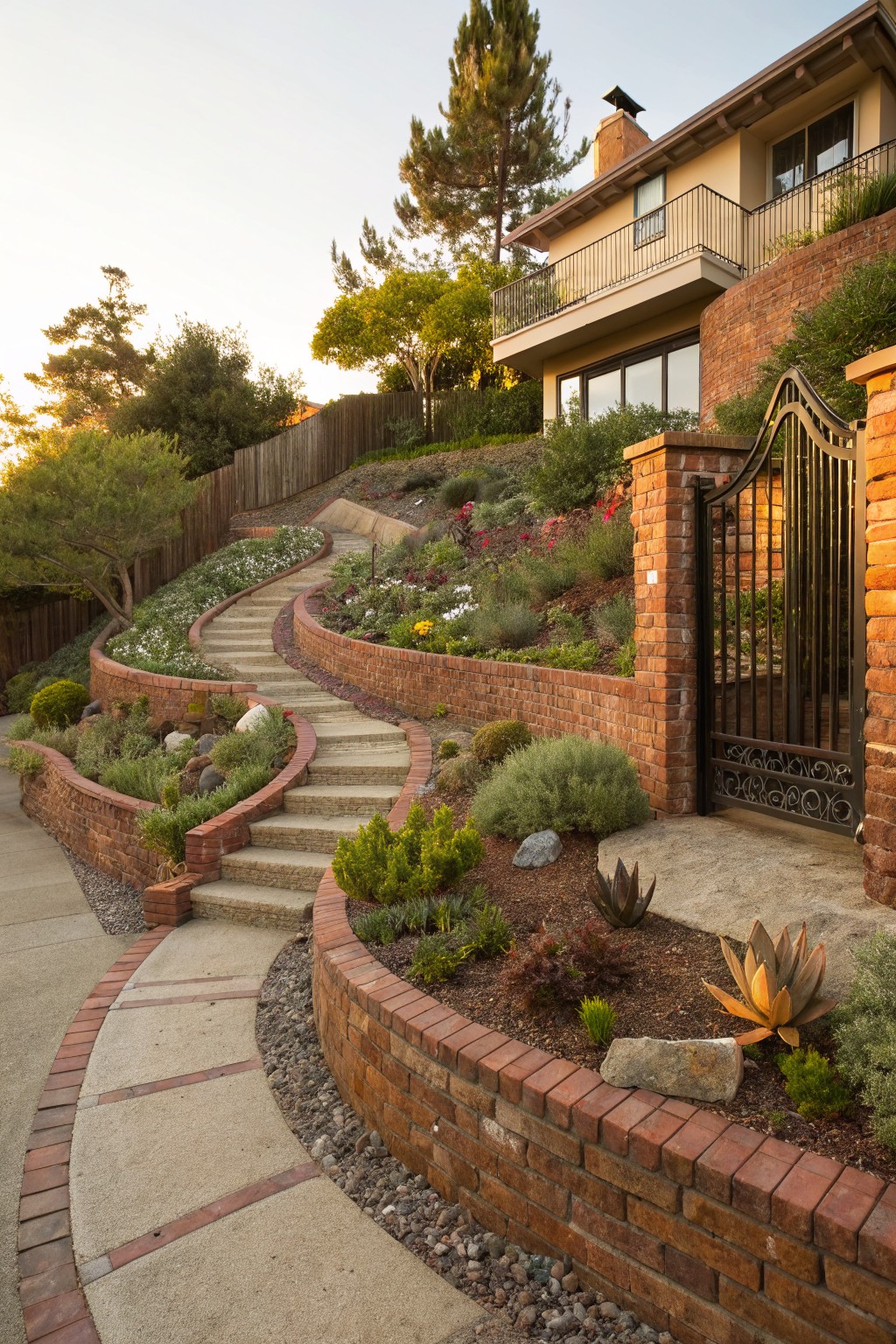
Slopes can be tough for planting but brick retaining walls make them workable. Here short walls create flat terraces packed with succulents like agave and sedum, plus rocks for drainage. The result holds soil in place and gives plants room to spread without much fuss. It lasts because brick weathers well and succulents thrive in that setup.
Use this on any hillside yard near a house entry. Stack bricks two or three courses high, backfill with gravelly soil, then tuck in the plants. Keep it to drought-tough varieties so you water less. Watch the wall height though. Too tall without engineering and it might shift over time.
Compass Rose Rock Garden Focal Point
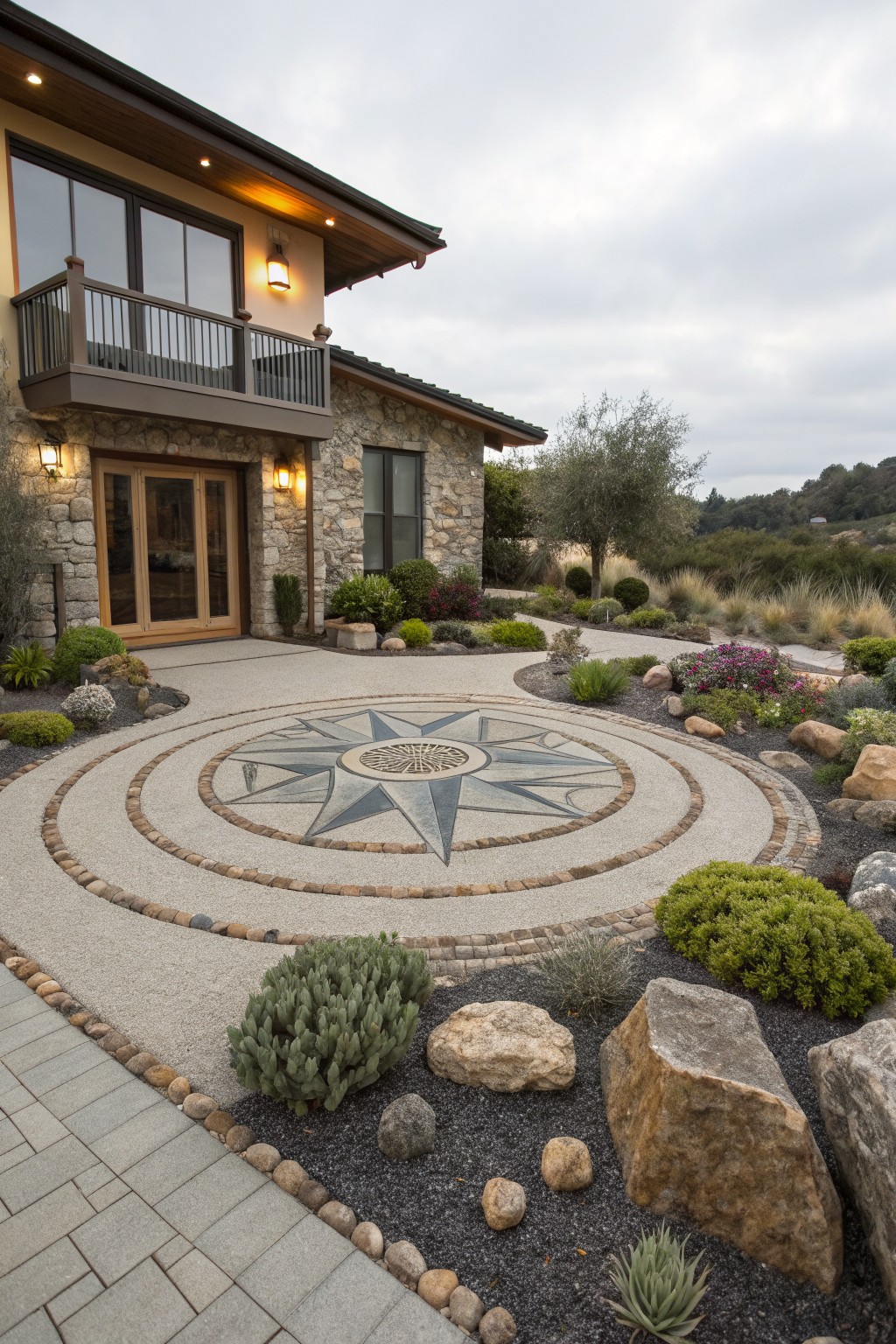
A compass rose set into gravel makes a smart focal point for a succulent rock garden. Here it’s placed right at the entry, drawing the eye with its stone star design and blue center. The mix of low succulents, boulders, and dark gravel keeps everything simple and tough against weather.
You can add this to a front courtyard or path area where foot traffic is light. It suits dry climates or sloped yards best, since succulents and rocks need little water or care. Just edge it with bricks to hold the shape… and skip fussy flowers that fade fast.
Raised Succulent Beds with Gravel Edges
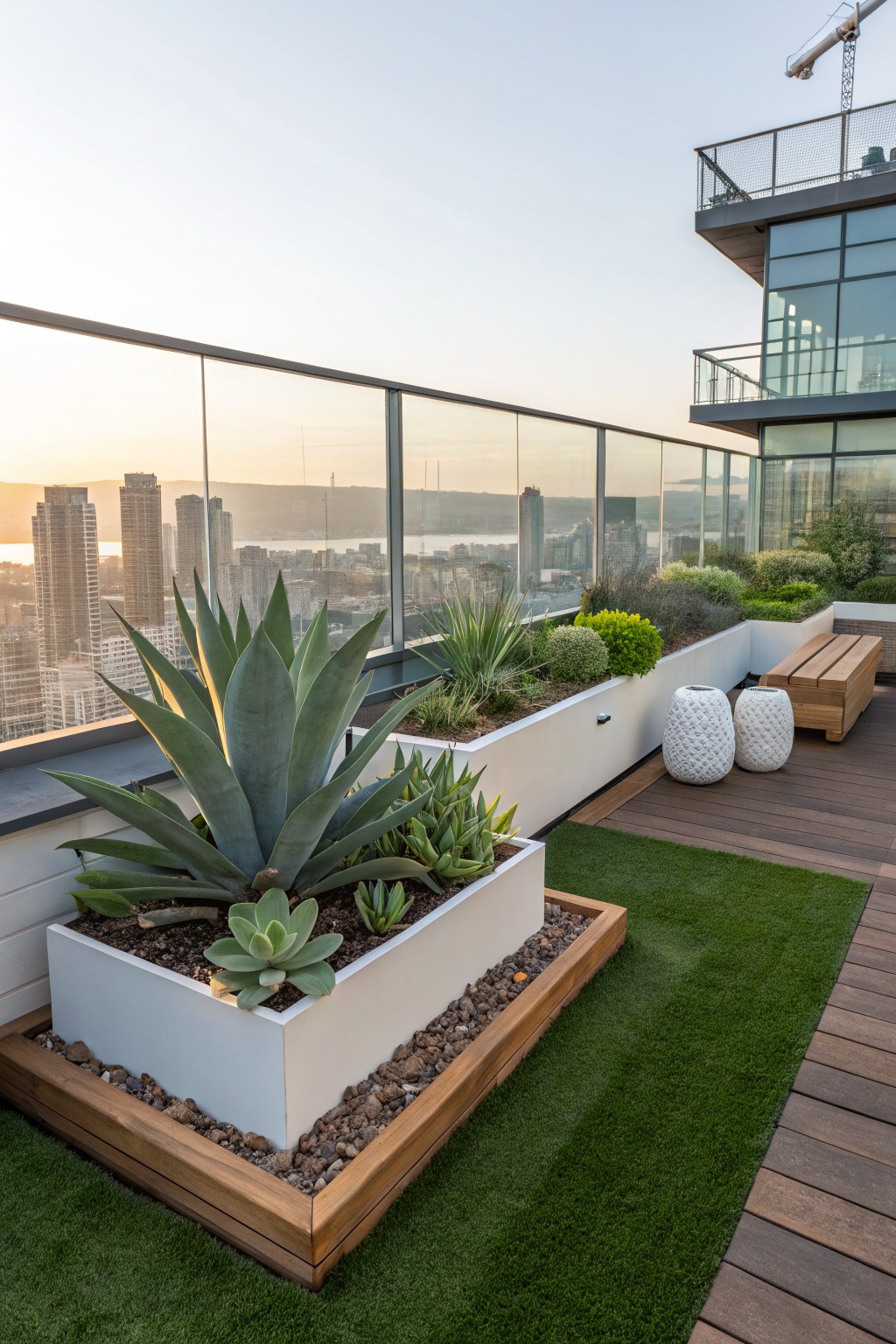
Large white raised planters like these make it easy to grow big agaves and smaller succulents right on a balcony deck. The gravel inside the wood borders adds good drainage and a neat finish that stops soil from spilling out. It’s a low-fuss way to get that lush rock garden feel without much ground space.
These beds suit rooftop terraces or narrow patios, especially in sunny spots with city views. Pick tough plants that handle dry conditions, fill with well-draining soil, and top with pebbles for lasting color. Skip it if your area gets heavy rain, though. The wood frames tie into decking nicely.
Balcony Succulent Rock Gardens
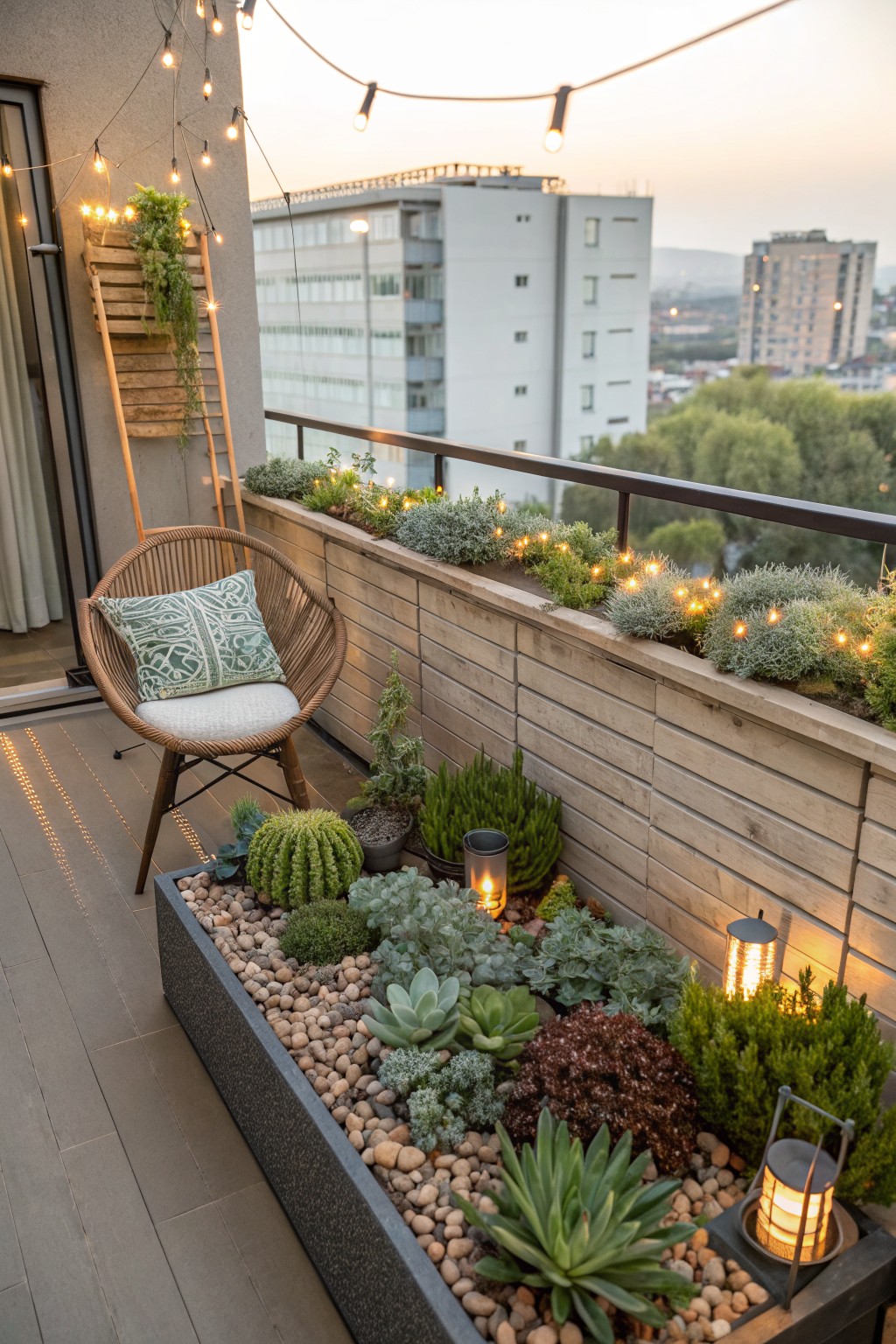
One easy way to add a bit of garden to a balcony is with a low rectangular planter packed with pebbles and succulents. These setups look full and green but need little water or fuss. The mix of spiky cactus, flat rosettes, and trailing bits gives texture without overwhelming a small space.
Try this on any apartment balcony or terrace. Line the bottom with gravel for drainage, then layer in the rocks and plants. It fits modern spots with wood decks or railings. Just pick sun-loving varieties so they thrive year after year.
Terraced Stone Walls for Succulent Slopes
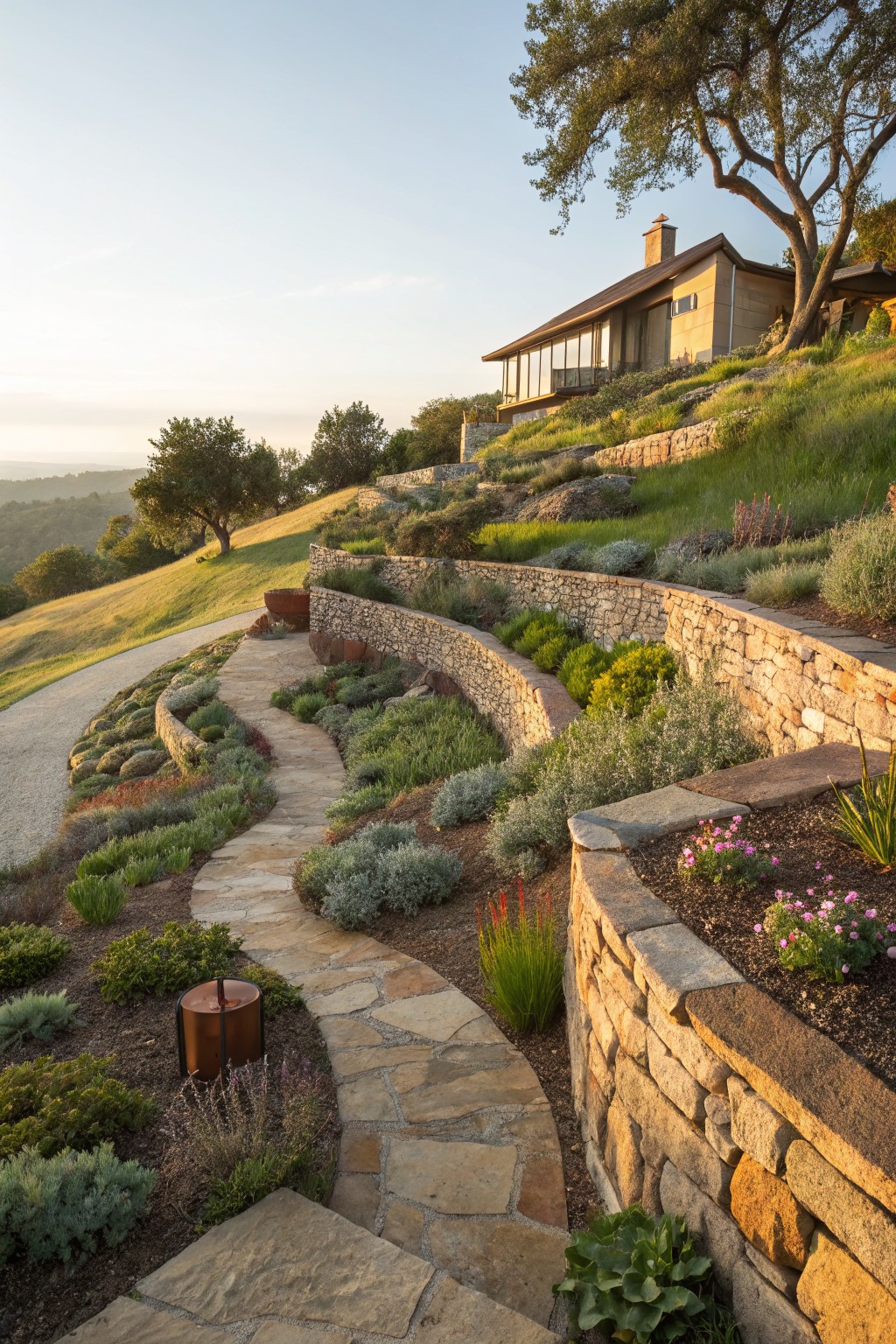
Slopes can be tough for planting. But terraced stone walls turn them into neat levels of garden beds. Here, dry-stacked walls hold back the hill while pockets of succulents, grasses, and low shrubs spill over the edges. A winding flagstone path connects it all, making the space feel easy to wander. It keeps soil in place and lets plants thrive with good drainage.
This setup works best on hillsides where flat ground is short. Pick local stone that blends with your house, like the tan rocks against this warm exterior. Go for drought-tolerant picks such as sedums or lavender that won’t need much water. Just make sure the walls are sturdy enough for your slope… and check local rules if it’s a big build. Suits casual homes in dry areas.
Raised Succulent Beds with Gravel Mulch
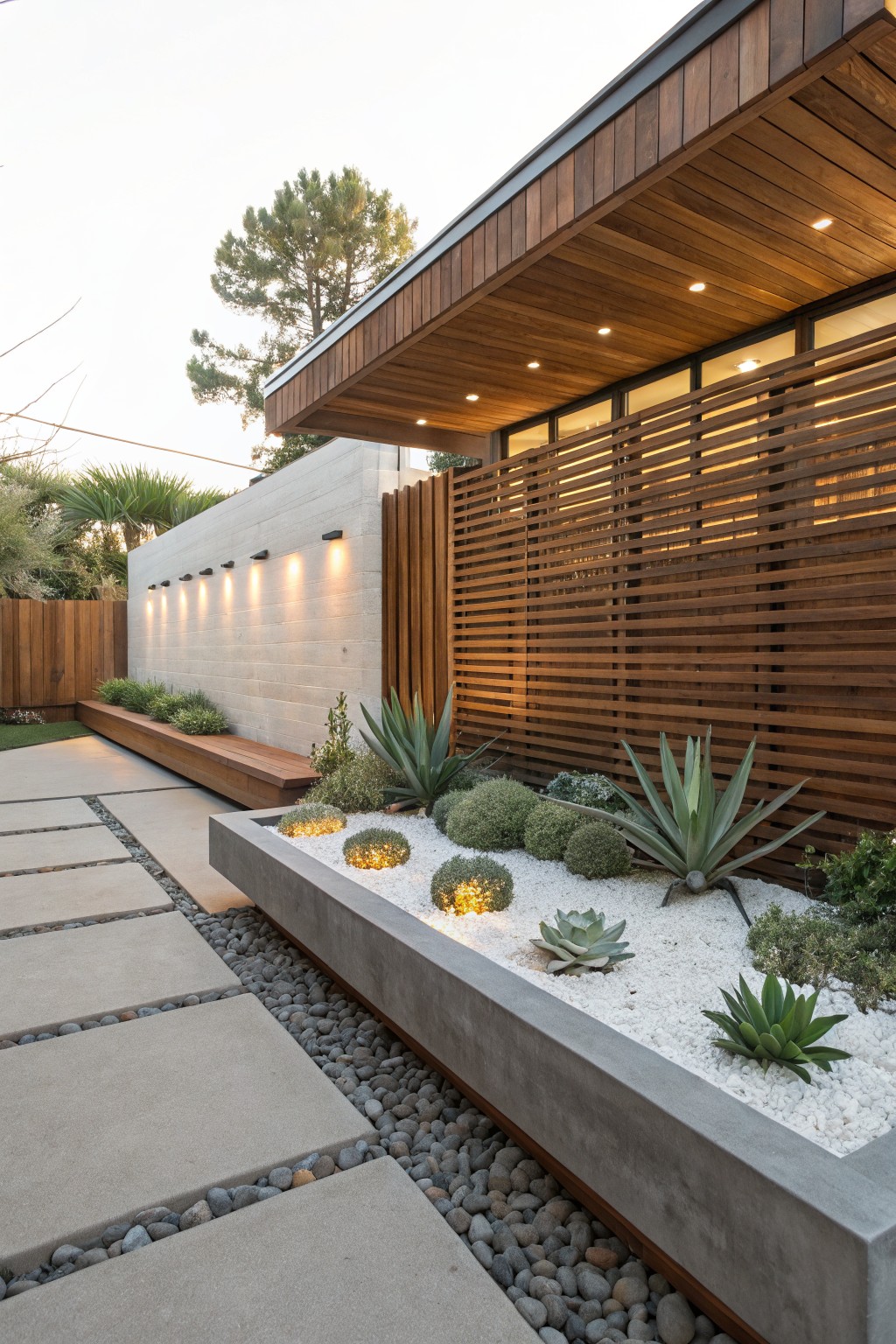
Raised concrete beds like this one make a simple way to add succulents right along a walkway. You pack in tough plants like agave and echeveria, then cover the soil with white pebbles and gravel. It keeps everything neat and low-water, plus the clean lines fit modern houses without much fuss.
Put these beds where you walk by them often, like next to side paths or entry areas. They suit sunny spots in dry yards best. Just make sure there’s good drainage at the base, or the roots might rot after rain.
Poolside Succulent Beds with Edge Lighting
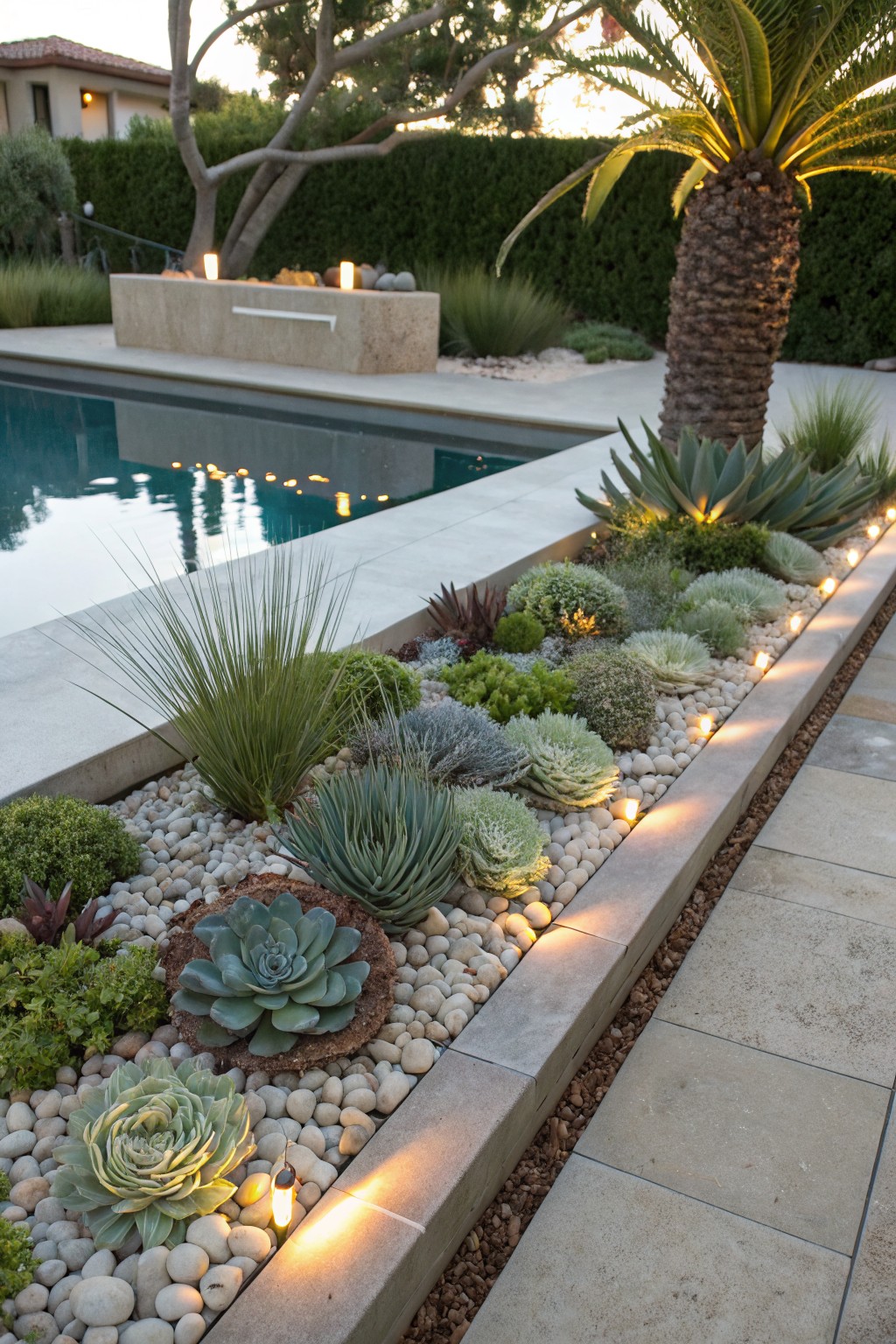
Raised stone beds packed with succulents make a clean border right along the pool. White pebbles fill in around plants like agave and echeveria, keeping weeds down and everything tidy. Those small LED lights tucked into the bed give a soft glow at night. It’s simple upkeep for a spot that gets hot sun and maybe some pool splash.
Try this where you want low-water landscaping that holds up year round. Stone edging keeps it neat against hard surfaces like concrete decks. Pick tough varieties that take full sun. The lights work best with low voltage for safety near water. Suits modern yards or anywhere pools meet patios.
Circular Stone Succulent Beds
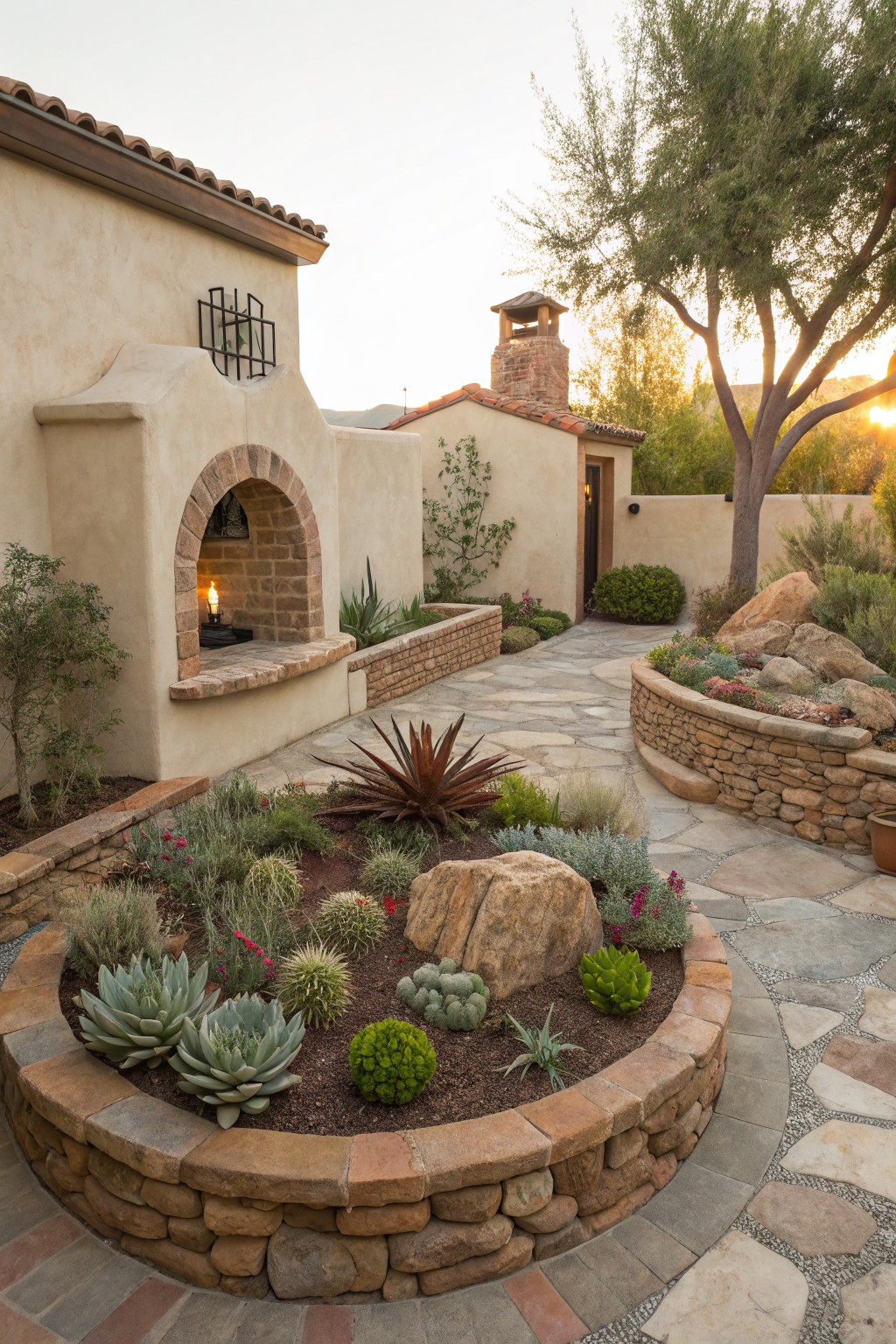
One easy way to build interest in a rock garden is with raised circular beds edged in stacked stone. You fill the center with chunky agaves, spiky cactus, and smooth river rocks for that natural layered look. It pulls the eye right in without much upkeep, since succulents thrive on neglect.
Put these beds where paths curve around them or close to the house wall. They suit sunny dry yards best, maybe in the Southwest style. Just use stones that match your area to keep it simple and lasting.
Succulent Rock Garden Along the Walkway
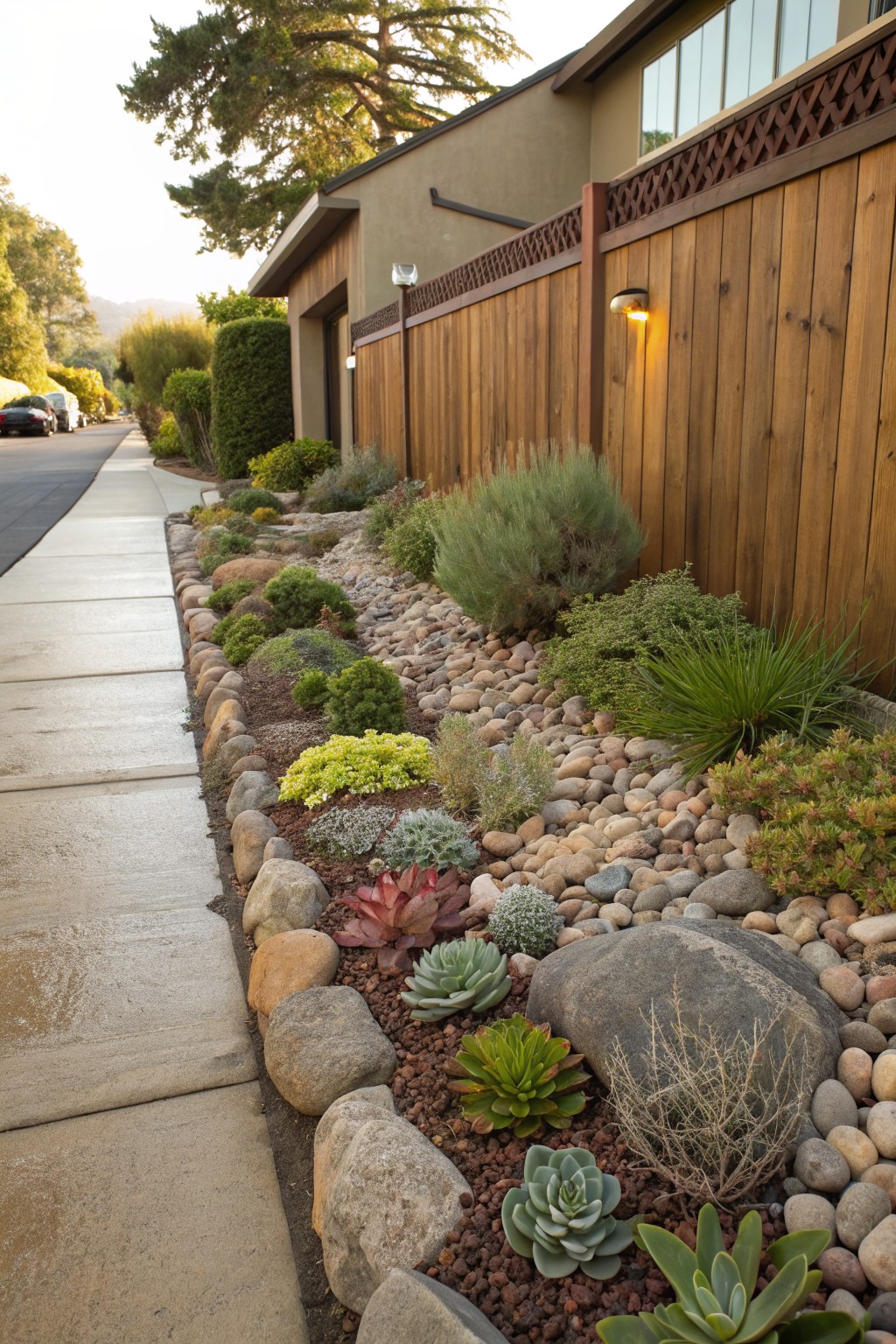
This setup uses a mix of succulents, river rocks, and big boulders to create a tidy flower bed right along the sidewalk. It gives that lush look without much watering or weeding. The different heights and textures from the plants keep it interesting, and the rocks help hold everything in place while letting water drain well.
You can pull this off in sunny front yards, especially where space is narrow by the street. It works great with simple house styles like stucco walls or wood fences. Just pick tough succulents like echeveria or aloe, layer in some gravel mulch, and add a few larger stones for weight. Watch the soil drainage though, or the plants might rot in wet spells.
Succulents in Long Metal Troughs
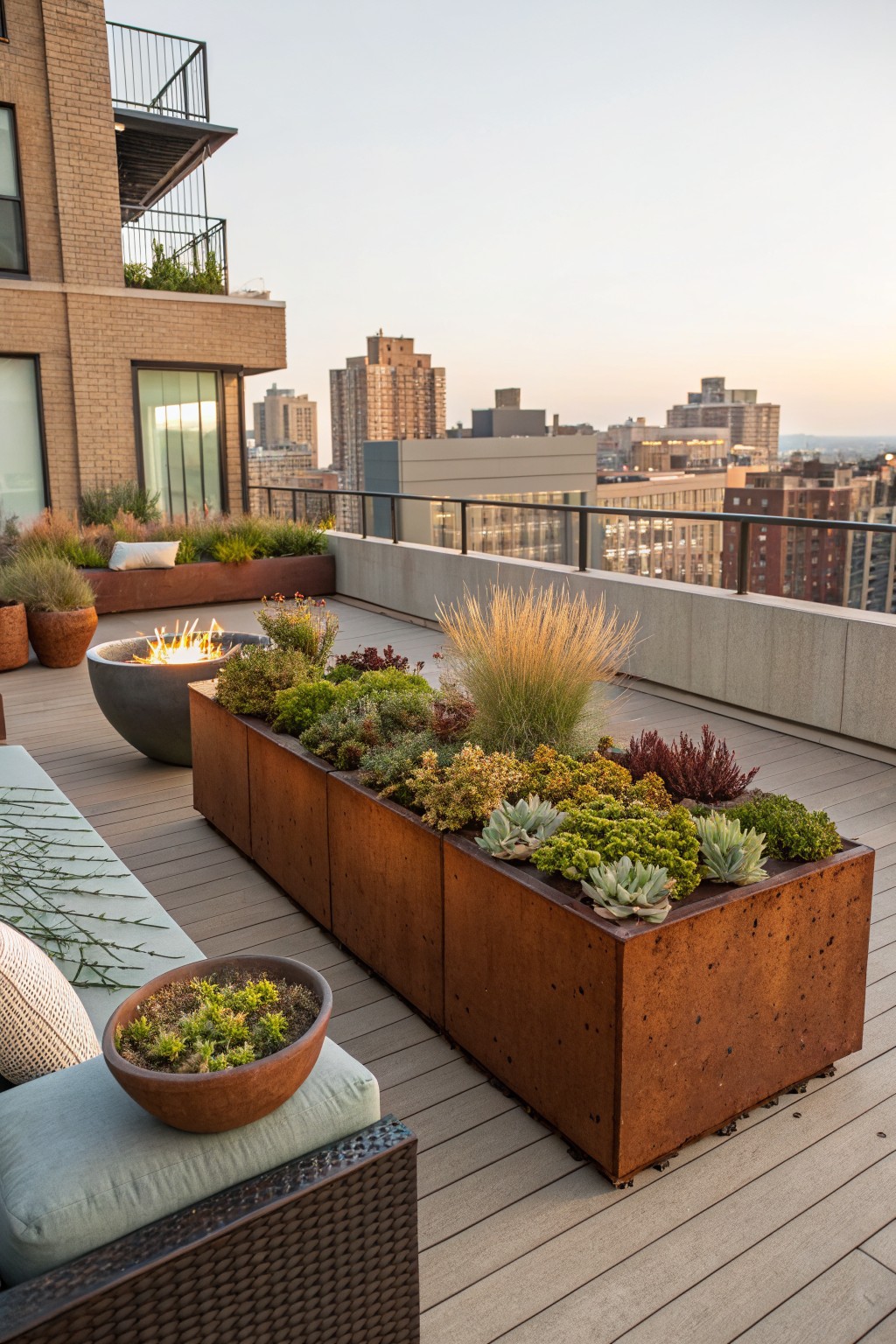
One simple way to green up a balcony or rooftop deck is to line it with long corten steel troughs packed full of succulents. These rusty metal planters hold a mix of textures like rosettes and trailing greens, giving that full, lush look without much upkeep. They fit right along the edges, framing the space nicely around a seating area and fire pit.
This setup works best on urban terraces where soil is limited and you want plants that last through dry spells. Go for tough varieties like echeveria and sedum, and place the troughs where they catch some sun but not too much wind. It’s practical for apartments or condos, and the metal weathers over time to blend with the view.
Meandering Stone Path in Succulent Beds
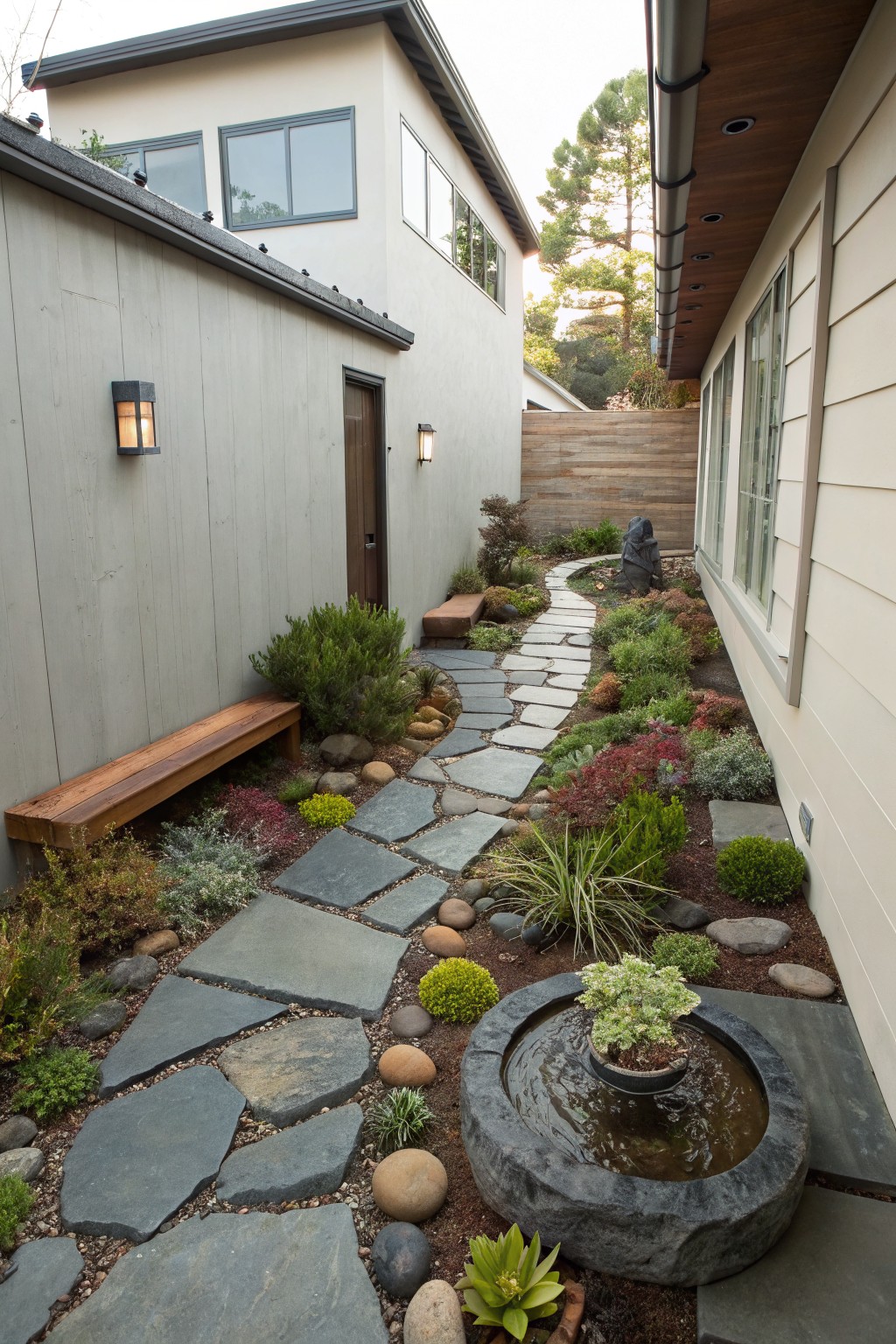
A simple way to make a narrow side yard feel special is with a winding path of irregular slate stones. They step through gravel and low succulents, past a stone fountain and bench. It keeps things low-water and lasting, without much upkeep.
This works best tucked between house walls or fences, where you want a quiet route to the back. Pick chunky stones for a natural look, plant sedums and agaves around them. Just leave room between steps… easy to walk.
Winding Stone Paths in Succulent Gardens
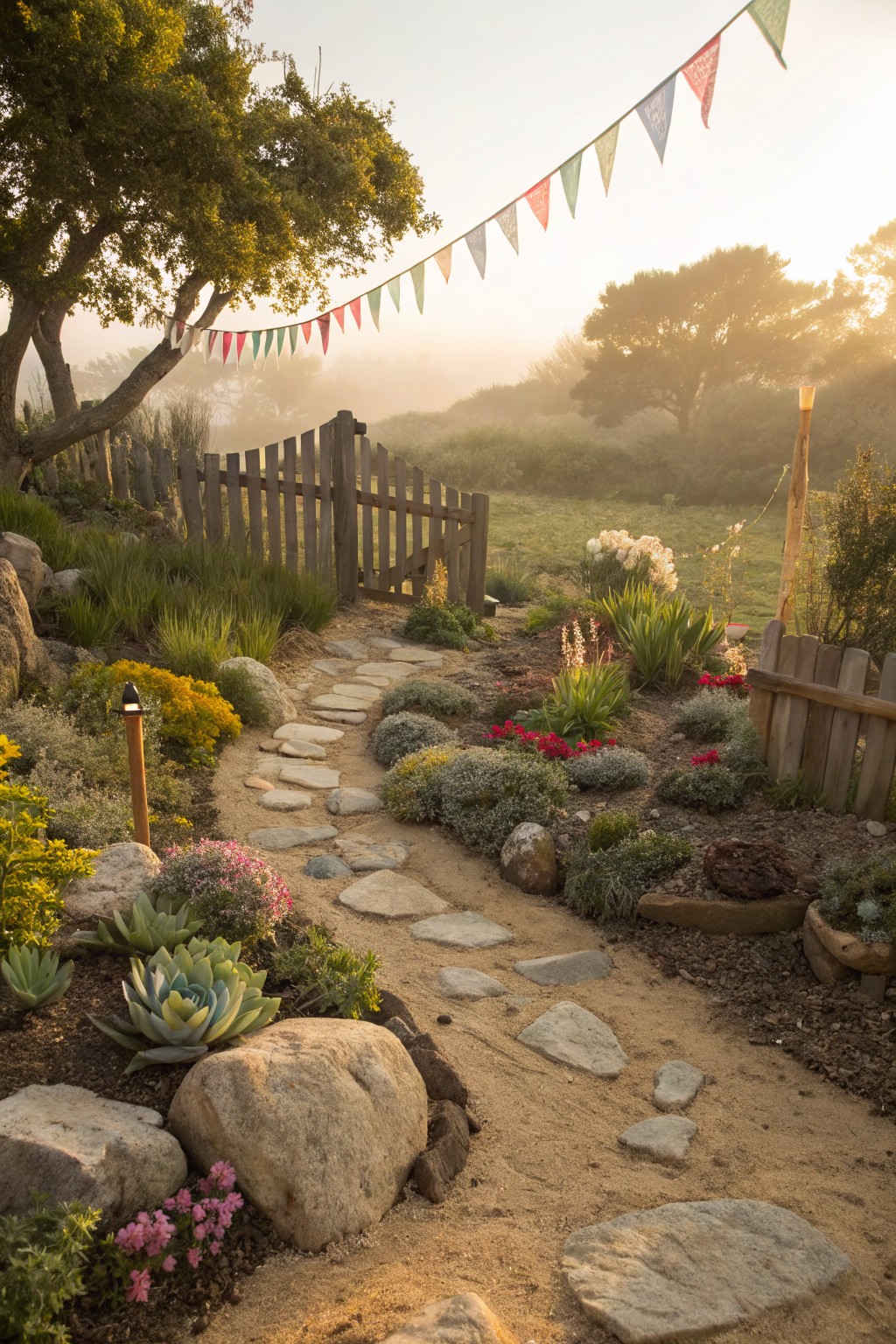
A good stone path like this one winds gently through the garden. Flat rocks set in sand or gravel make it easy to walk on without feeling too formal. Succulents and low flowers fill the beds around it. Boulders add weight and keep things from looking bare. The path pulls your eye forward and makes the space feel bigger.
Put this in a side yard or along a slope where grass won’t grow well. Pick tough plants like agaves and ice plants that handle dry soil. Add a wood fence nearby for a cozy edge. It stays neat with just occasional weeding. Works best in sunny spots.
Winding Stone Path in Succulent Rock Garden
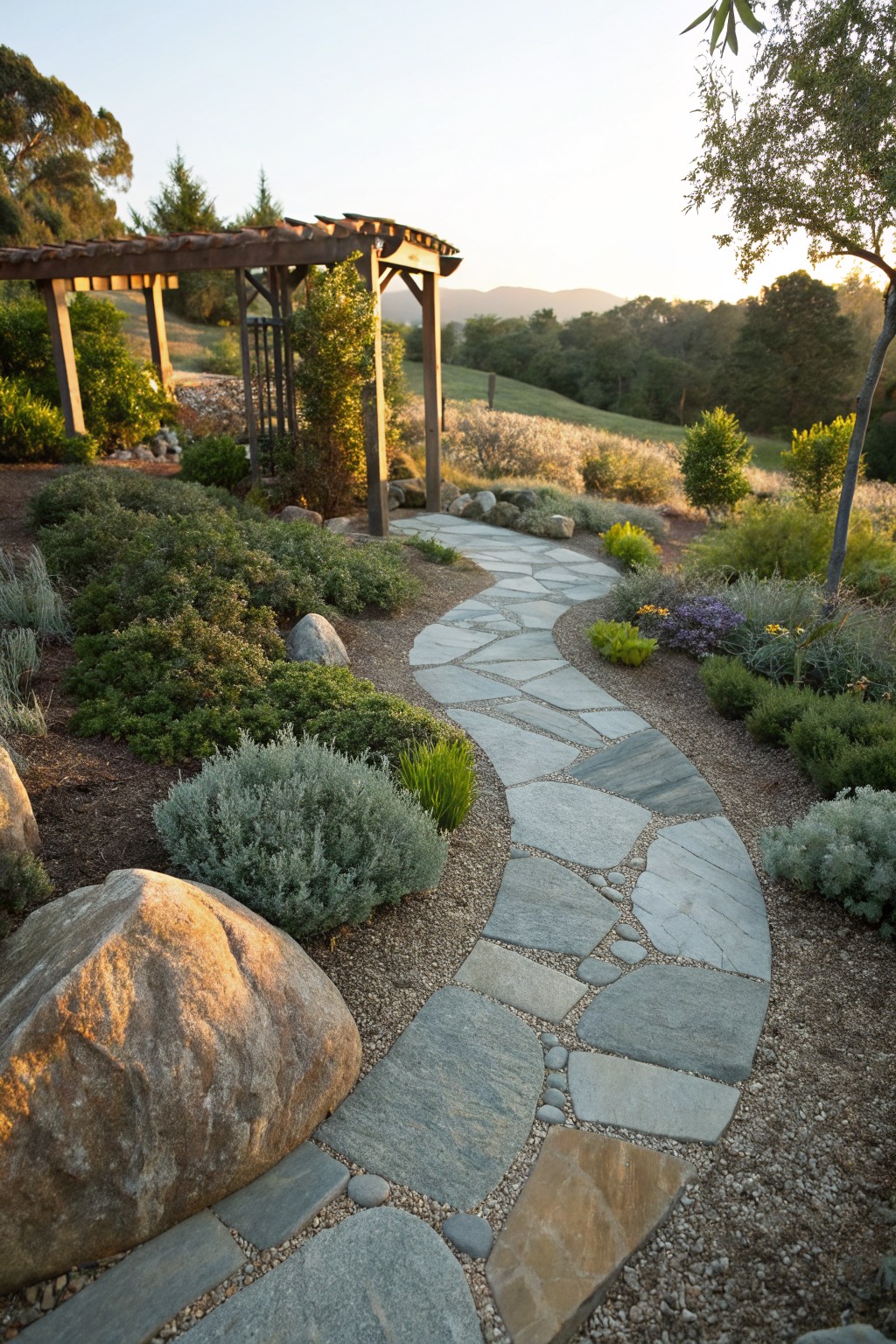
A winding path like this one makes a rock garden feel more welcoming and easy to explore. The irregular flagstones hug the curves of the beds, blending with big boulders and low silvery shrubs. It keeps the look natural instead of straight and formal, which fits right into a dry hillside or backyard slope.
You can add one in any sunny spot with poor soil, since succulents and gravel handle drought just fine. Lay the stones loose over gravel base for drainage, then tuck in plants like lavender or sedge around the edges. Works best for low-traffic walks that lead to a seating area… lasts years with little work.
Raised Stone Planters Filled with Succulents
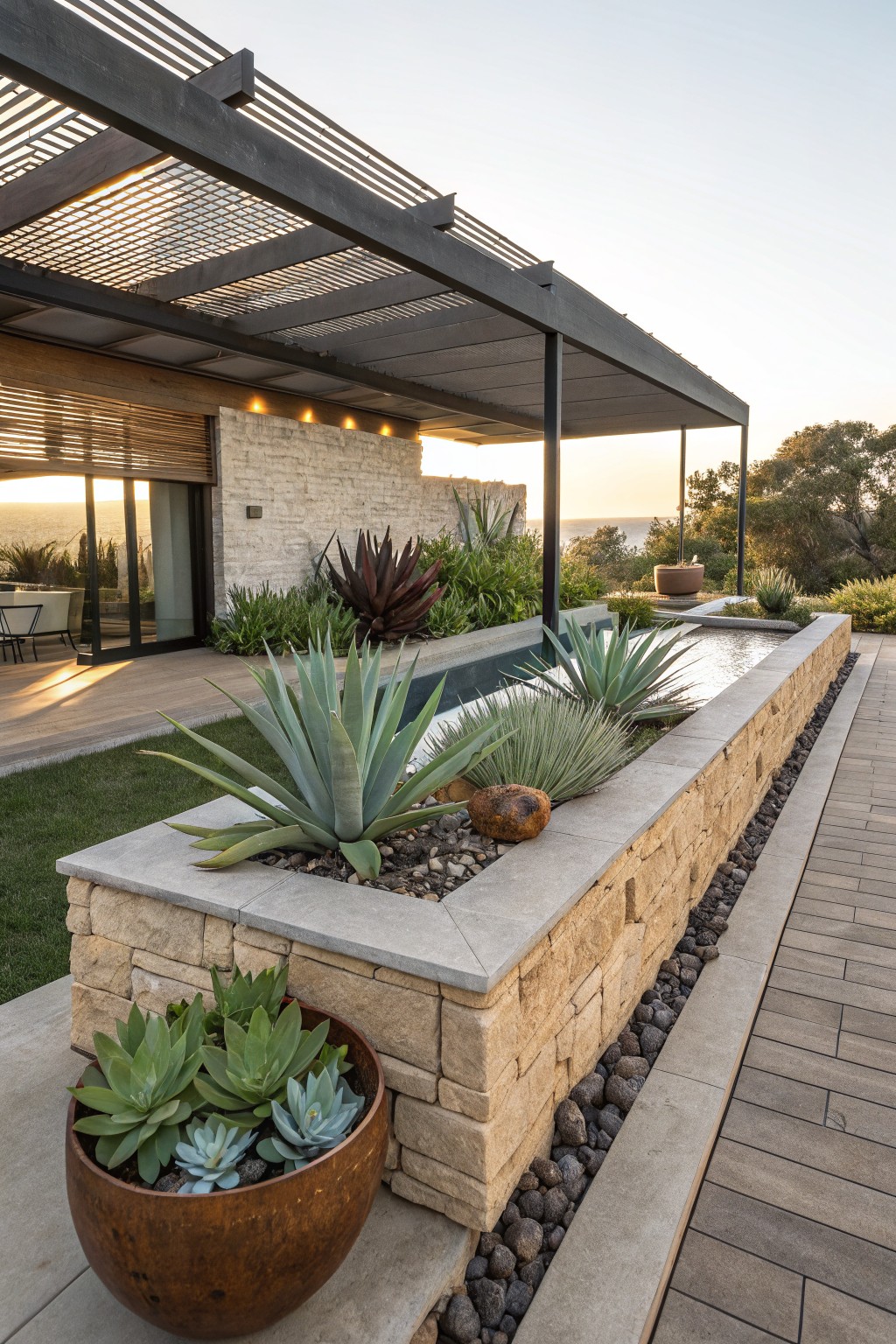
One straightforward way to build a lasting succulent garden is with raised stone planters like these. They hold back soil nicely and let you pack in tough plants such as agaves and echeverias without much fuss. The gravel mulch keeps weeds down and gives that clean rock garden look that holds up year after year. It ties right into the home’s hardscape too. No constant watering or trimming needed.
These work best along patios or paths where you want definition without taking up lawn space. Go for drought-tolerant spots in full sun. Pair them with pavers for a smooth walkway edge. Just make sure the stone matches your house a bit so it doesn’t stick out. Skip overly fancy shapes. Keep it simple and the garden stays put.
Succulent Beds with Boulder Layers
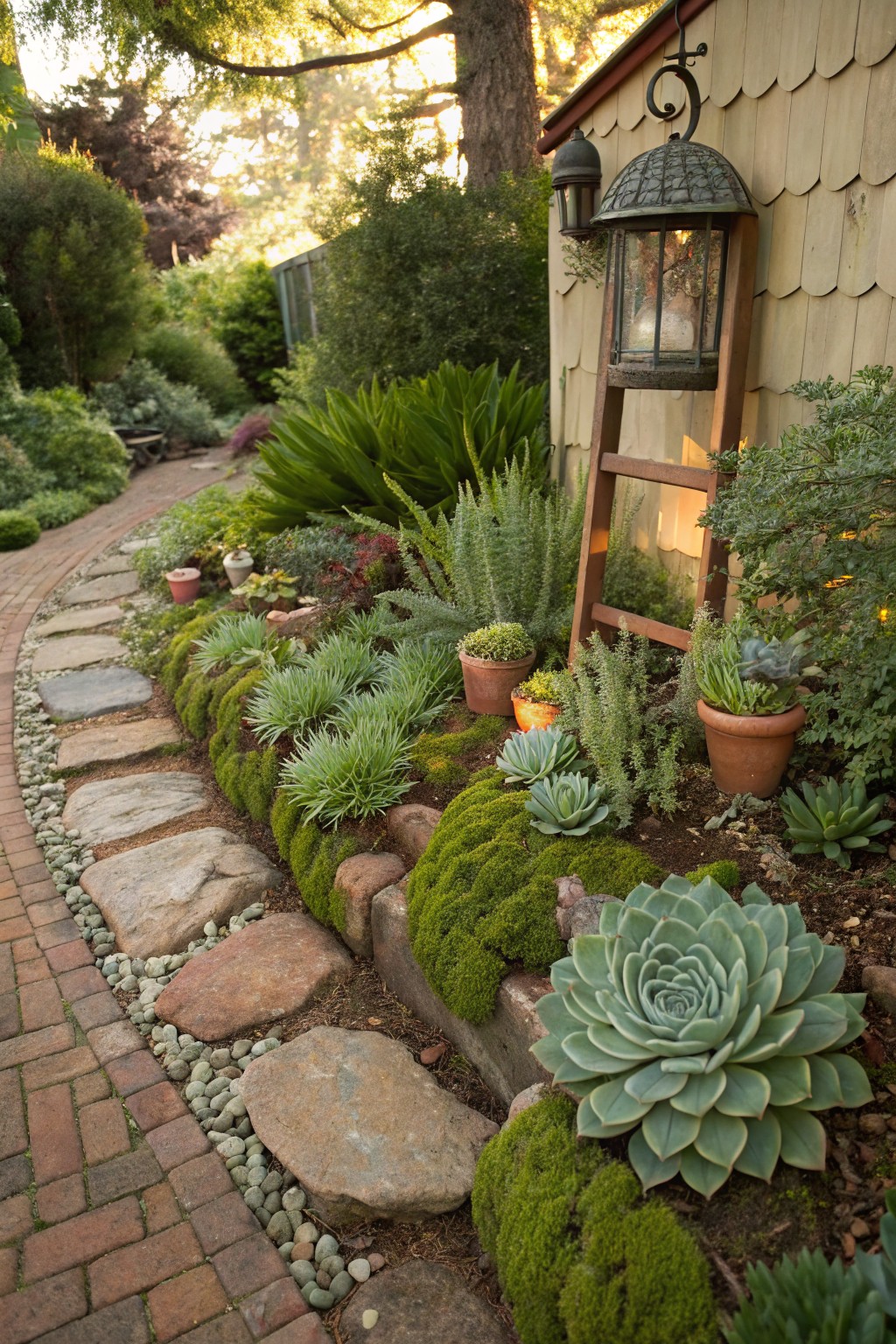
One simple way to build out a flower bed that holds up year after year is layering in boulders and flat stones among low-water succulents. You see it here with big chunky rocks tucked right into the soil, mixed with gravel and moss for that soft touch. It gives the bed some real height and shape without much upkeep, and those fat succulents like the big rosette ones fill in the gaps nicely. The look stays full even in dry spells.
Try this along a side path or near the back door where you want color but not constant watering. Start with larger stones at the base for stability, then add gravel mulch and plant succulents in clusters. It works best in sunny spots on a slope or flat ground. Just keep soil well-draining to avoid rot.
Succulent Rock Beds Line the Entry Walk
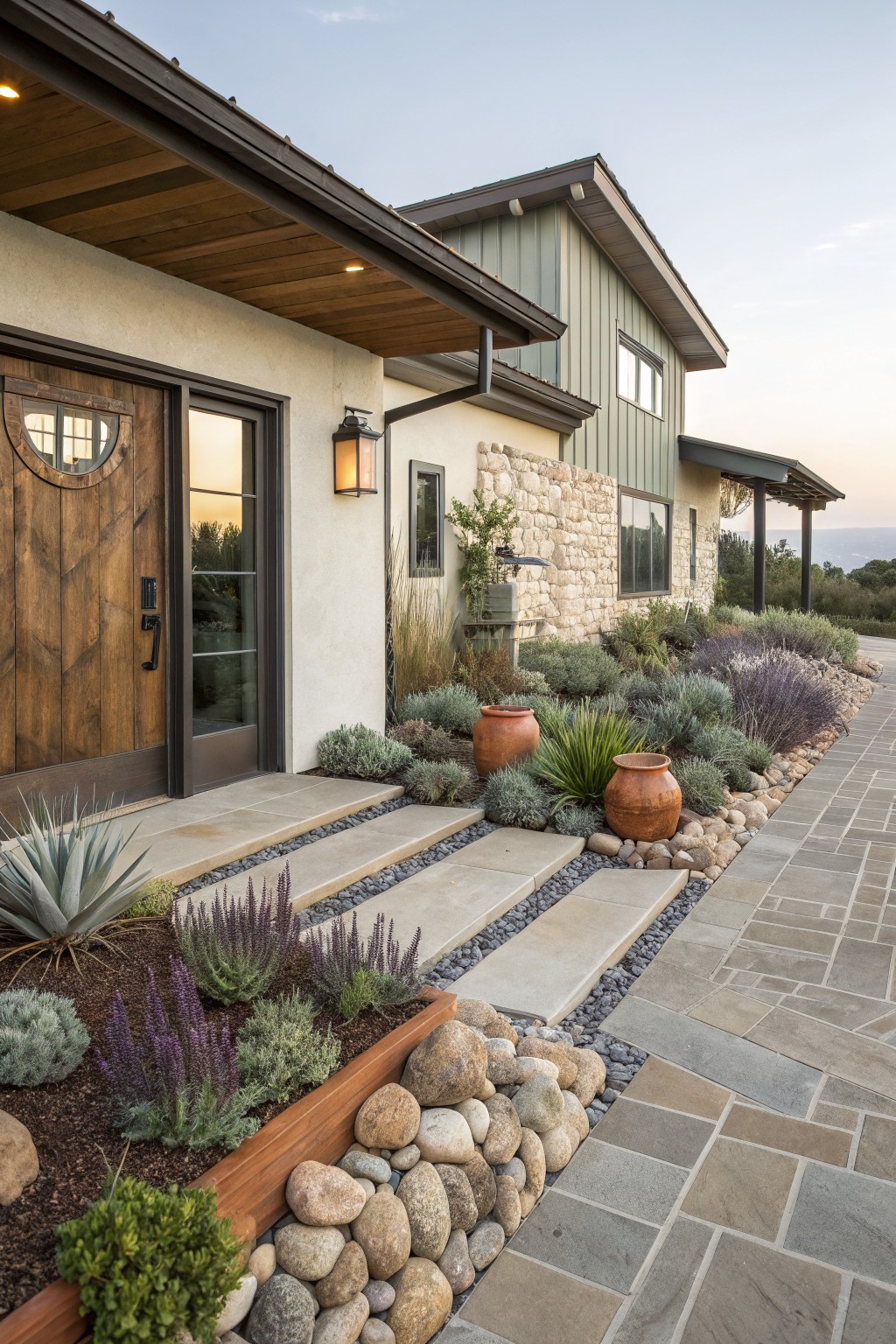
One simple way to boost curb appeal is planting succulents and drought-tolerant herbs like lavender in rock-filled beds right along your front path. Here, agave plants and wavy grasses mix with smooth river rocks in wood-edged beds that follow the stone steps up to the door. It keeps things tidy and adds texture without needing constant care or watering.
This works best for homes in sunny, dry spots where you want low-maintenance landscaping that looks full year-round. Frame the beds with simple wood or stone to hold everything in place, and toss in a few terracotta pots for pops of color. Skip it if your yard stays too wet, since the rocks drain fast.
Succulent Beds Mulched with Gravel and Pebbles
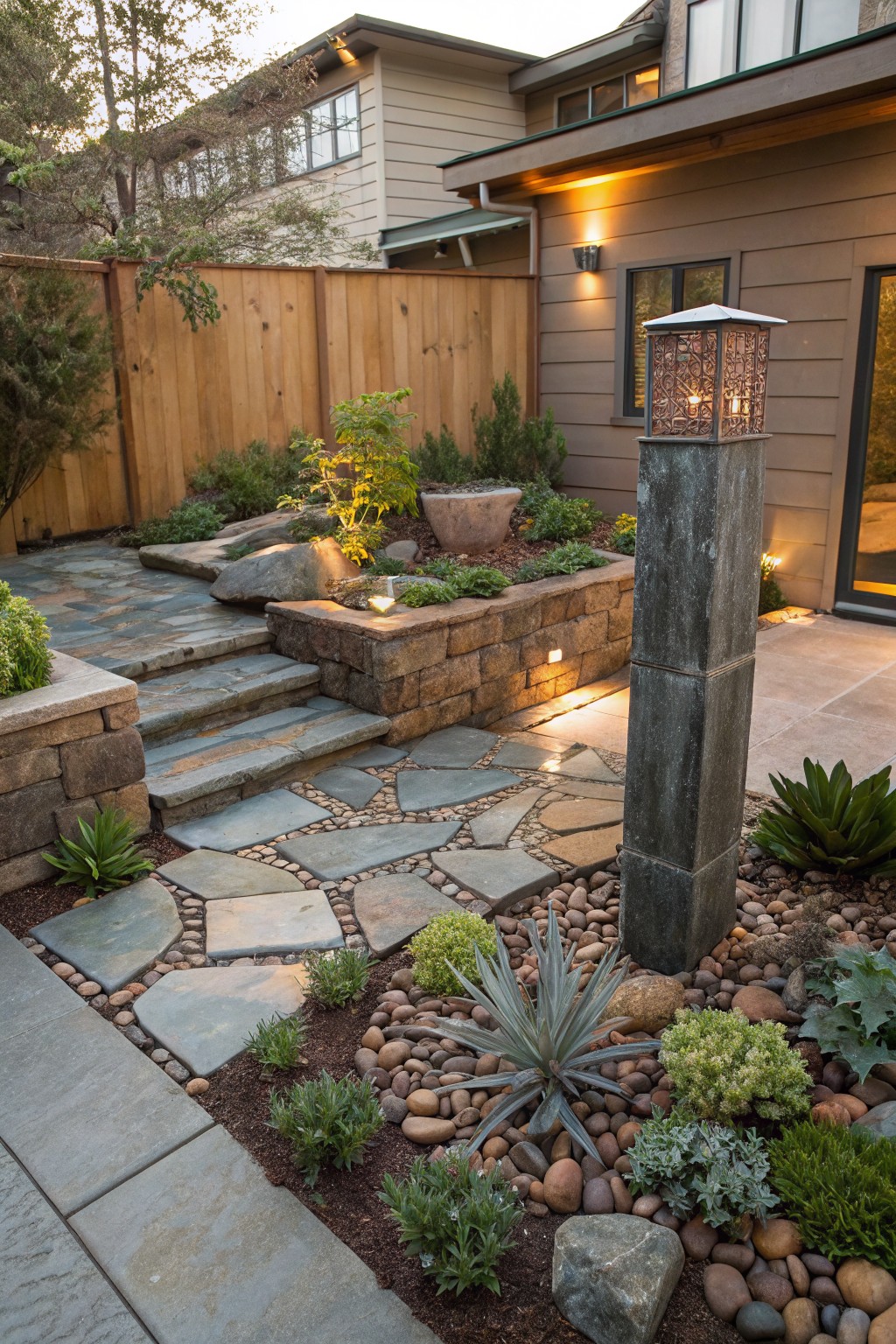
Gravel mulch keeps these succulent beds looking sharp year-round. You see agaves and other tough plants tucked into pebbles and larger rocks, right along flagstone paths and low walls. The setup feels rugged but tidy, and it cuts down on weeding since the stones block most weeds from popping up.
Try this in side yards or around patios where you want color without daily work. It fits sloped spots best, tying paths to the house without mud or bare dirt. Just pick drought-tough plants and keep the gravel layer thick.
Succulent Rock Garden Path to the Entry
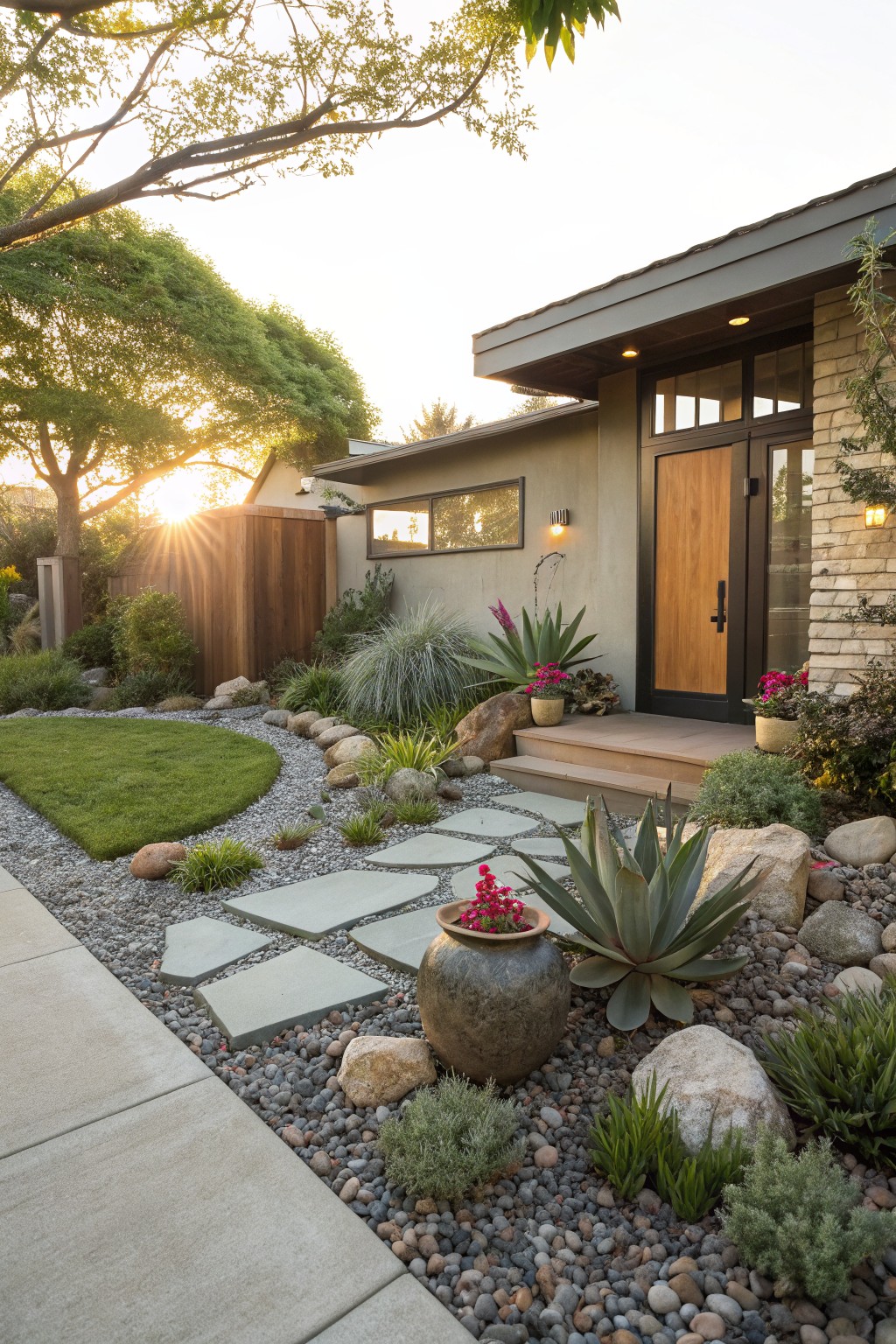
A simple curved path of flat stones winds through low beds packed with tough succulents and river rocks. Big agaves and boulders give it scale, while gravel fills in for easy care. This kind of front yard setup feels established right away and pulls the eye to the door without grass to mow.
It suits sunny, dry yards where you want color and texture that lasts. Start with larger plants near the house for height, then layer smaller ones out front. Add a pot or two for flowers if you like. Keeps things neat even in drought.
Frequently Asked Questions
Q: How often should I water a succulent rock garden to keep it looking lush?
A: Give it a good soak every 10 to 14 days during the growing season, then back off in winter. Check the top couple inches of soil; if it’s bone dry, go ahead and water deeply. They store water in their leaves, so less is way more here.
Q: Can these rock gardens handle some shade in my yard?
A: Pick shade-tolerant succulents like hens and chicks or sedums for spots with morning sun and afternoon shade. They’ll fill out nicely without stretching leggy. Full blasting sun works too for most, but shade prevents scorch in hot climates.
Q: What’s a simple soil mix that makes them last years?
A: Grab regular garden soil and stir in 50 percent gravel or coarse sand. Plant right into that gritty blend between your rocks. Roots stay happy and rot-free.
Q: How do I stop weeds without messing up the look?
A: Tuck in landscape fabric under the rocks before planting, then top with more gravel. Pull any stragglers by hand early on. And they stay tidy with almost no effort.
