


When I swapped out the thirsty lawn in my front yard for a xeriscape setup, the change felt subtle at first but grew into something that actually suited our dry spells.
Layouts with clustered native plants, winding gravel paths, and simple edging create that grounded structure you see from the curb, pulling everything together without constant upkeep.
I like how these designs let the space evolve naturally over a couple of seasons, filling in just right as drought-tolerant shrubs and succulents take hold.
Folks walking by tend to notice the clean lines and color pops first, especially against a plain house facade.
A few of these ideas are ones I’d adapt again for real water savings that last.
Curved Gravel Path with Brick Edging

A simple gravel path that curves gently toward the front door works great in dry yards. It uses bricks along the edges to keep things neat without much upkeep. Drought-tolerant grasses and rocks fill in around it, making the walk feel natural and easy on the eyes. Folks like how it pulls you right up to the house without looking too fussy.
This setup fits sloped lots or places with poor soil where grass won’t grow anyway. Lay down gravel for drainage, add those bricks for a clean line, then plant low-water stuff like feather grass nearby. Skip straight lines if you want a softer look. It saves water and gives good curb appeal on a budget.
Curved Gravel Path for Easy Front Yard Access
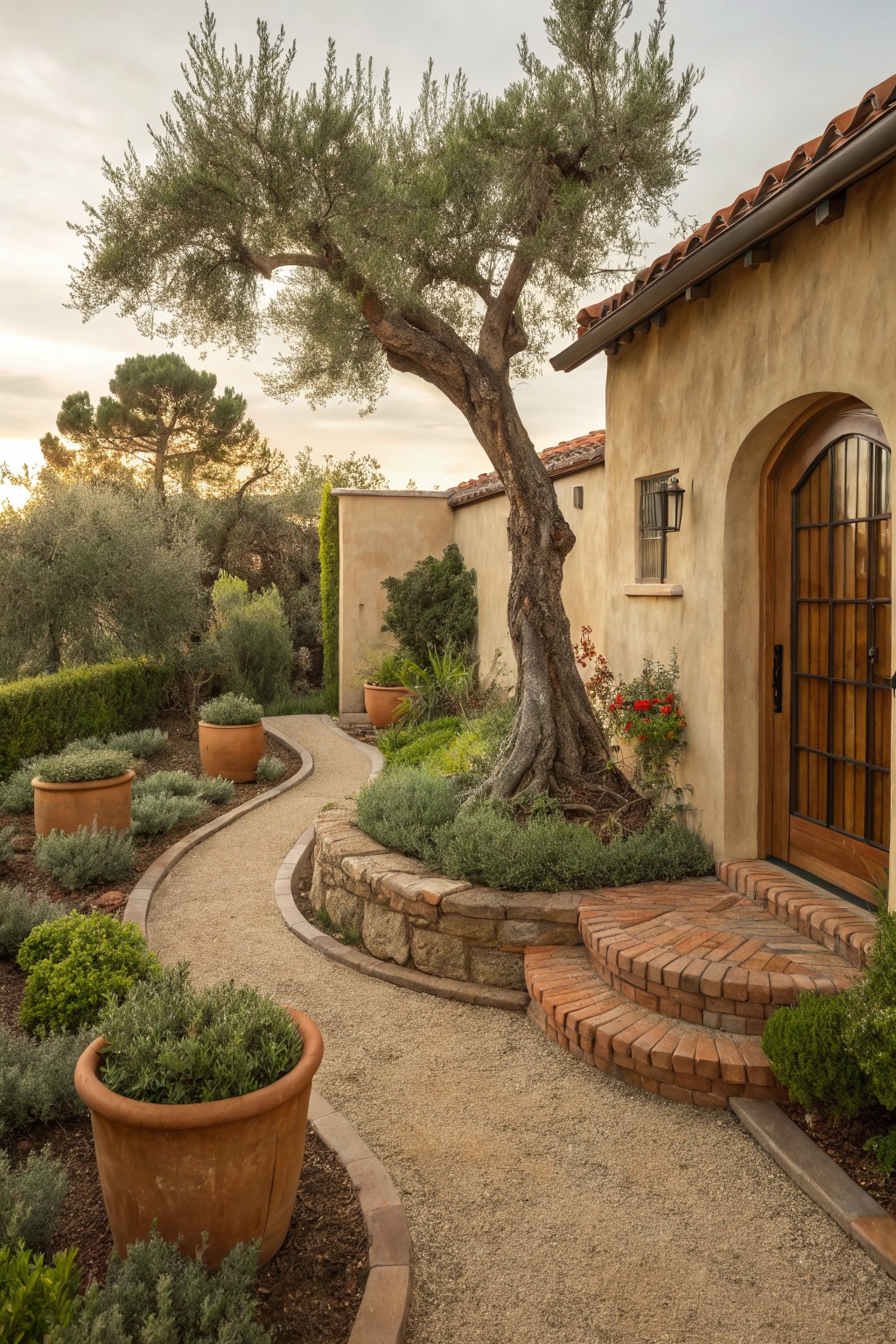
A simple curved gravel path like this one makes a front yard feel put together without a lot of upkeep. It winds gently from the street to the door, edged with low stone walls and big terracotta pots of drought-tolerant plants like lavender and succulents. That olive tree nearby adds some height, but the path itself does the guiding… keeps everything low-water and neat.
You can lay this out in most any yard, especially sloped ones where grass would struggle. Use decomposed granite or pea gravel for good drainage, then tuck in pots along the edges for instant color. Pairs well with adobe-style homes. Just watch the gravel doesn’t scatter too much, maybe add metal edging if needed.
Paver Walkway with Gravel Joints
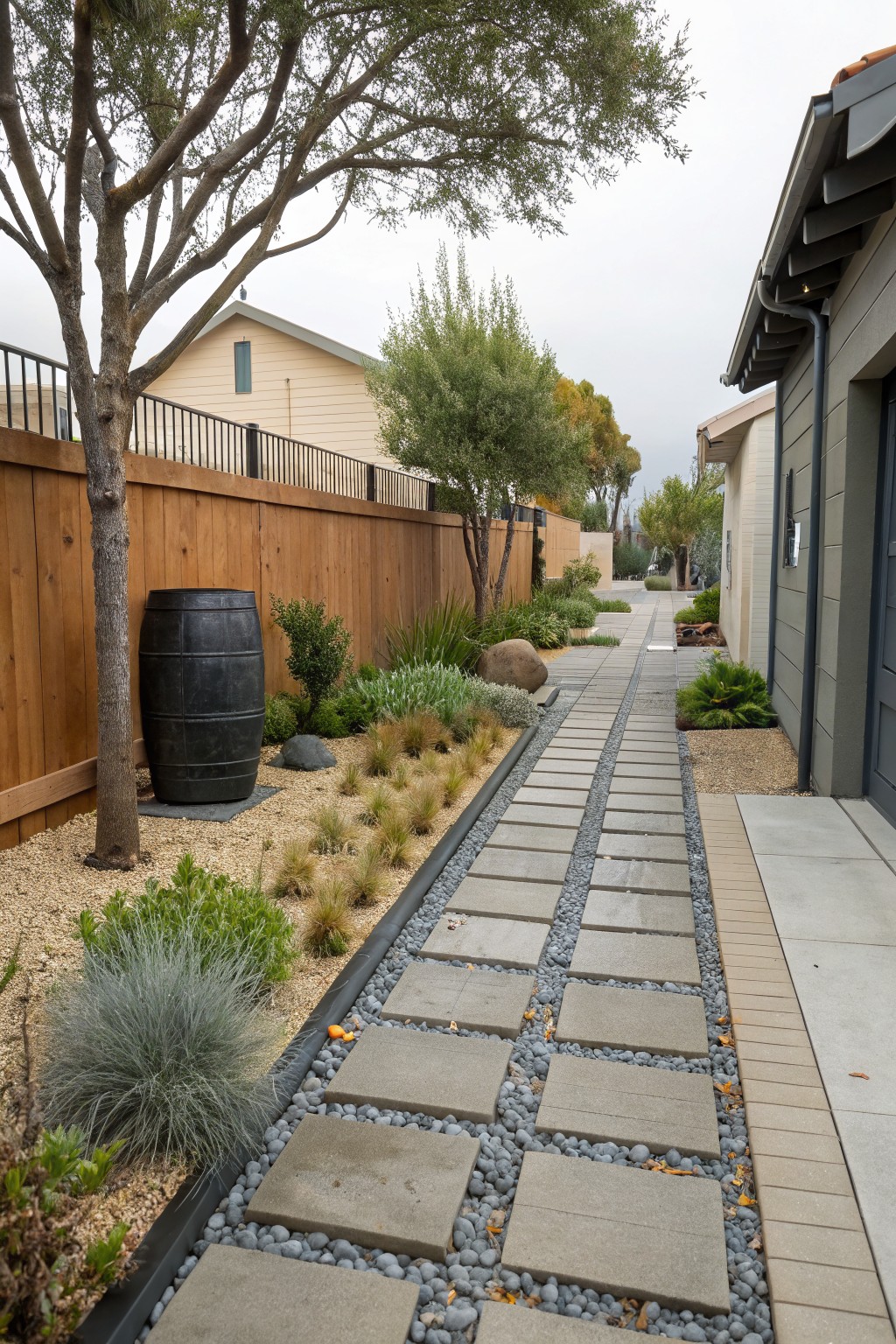
A straightforward path like this one uses large concrete pavers set apart with gravel filling the gaps. Water drains easily through the joints, cutting down on runoff and irrigation needs. Low grasses and shrubs along the borders add texture without demanding constant care, keeping the look clean and natural.
This setup fits side yards or narrow access paths best, like the one leading to a garage here. It suits any home style from midcentury to ranch, as long as the ground is fairly level. Go for permeable gravel to avoid weeds, and keep plantings drought-tolerant for real water savings.
Curved Brick Paths in Xeriscape Gardens
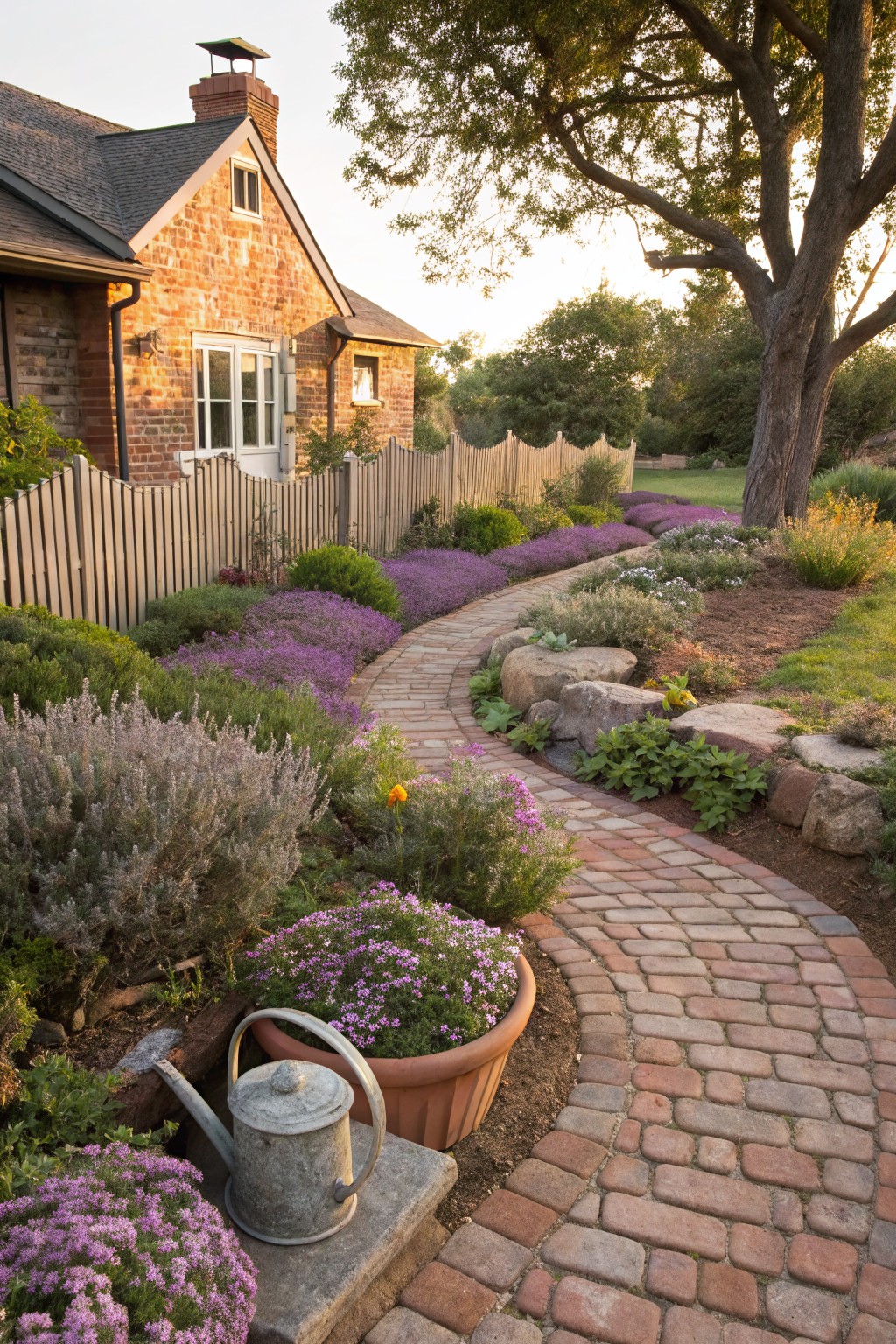
A simple curving brick path like this one makes a front yard feel welcoming without much upkeep. It winds gently through low-water plants such as lavender and thyme, plus some rocks for structure. The path pulls everything together and keeps foot traffic off the grass, which fits right into xeriscape planning.
You can add one in most any front yard, especially where water is tight. Lay the bricks over a gravel base for good drainage, then edge with those tough flowering plants. It works on sloped lots too… just watch the curves don’t get too tight near the house steps.
Curved Pathways in Xeriscape Yards
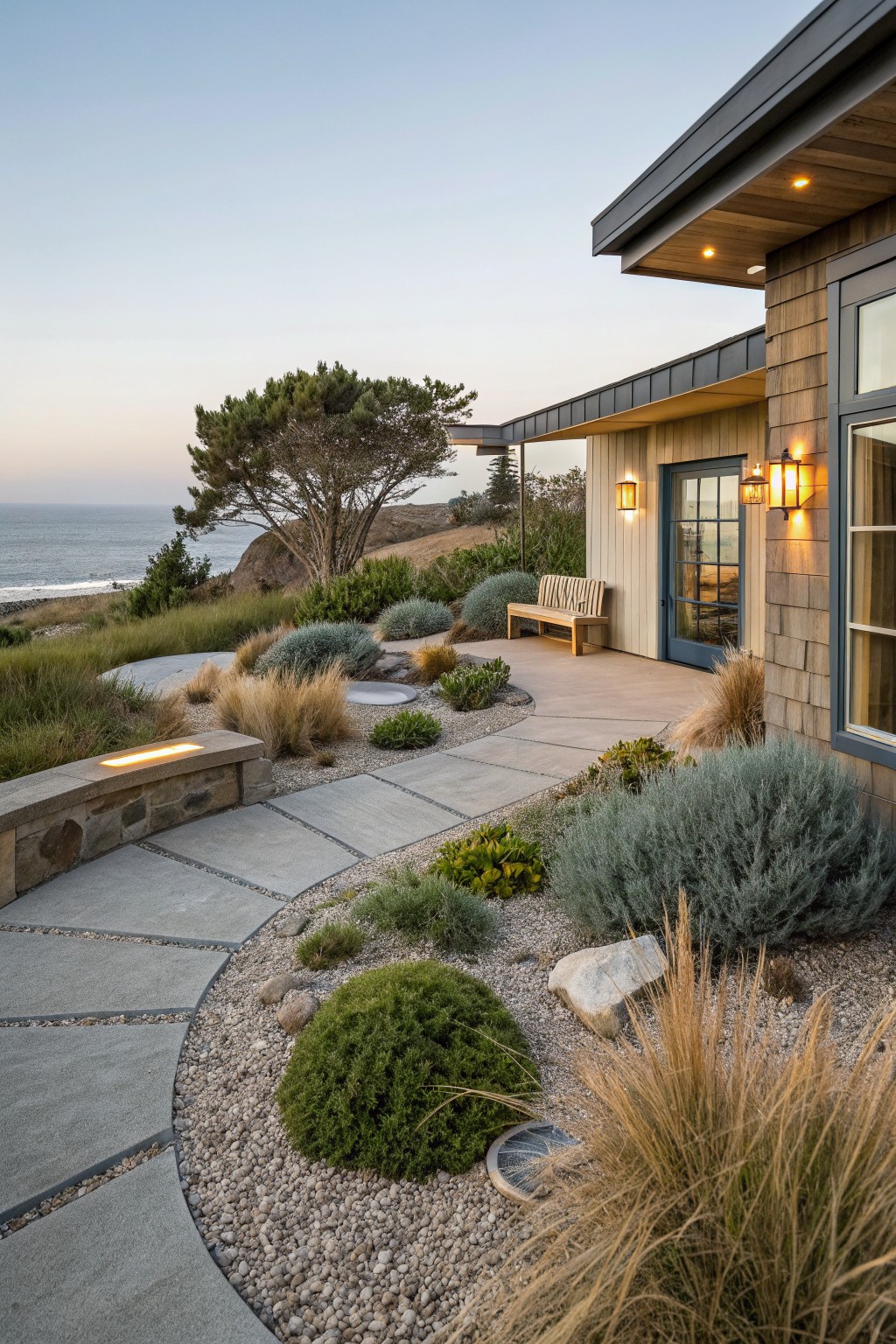
One straightforward way to handle a front yard path is to curve it gently through gravel beds and low-water plants. This setup guides you right to the entry without feeling rigid or forced. The concrete pavers here mix with grasses and small shrubs, keeping things open and easy to maintain. It fits right into sloped coastal spots like this one, where the plants hug the path and hold soil in place.
You can pull this off in any dry-climate yard by starting with wide sweeps of gravel for drainage, then edging in native grasses or succulents. Skip straight lines if your lot has some roll to it… curves soften that and slow people down a bit. Works best on bigger front areas, but scale it down for tighter spaces. Just watch the gravel doesn’t wander onto the path over time.
Winding Stepping Stone Path in Gravel
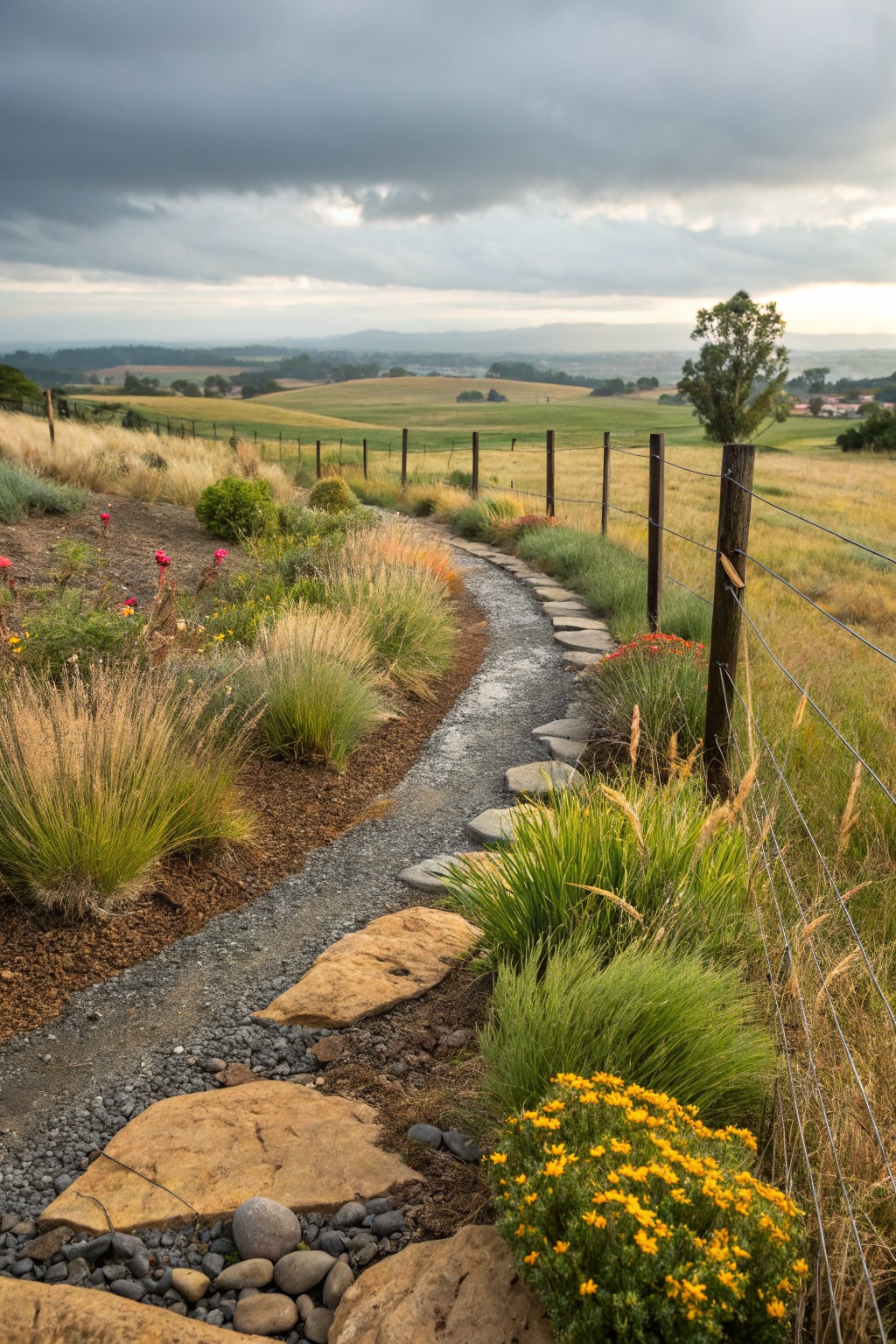
One simple way to handle front yard traffic without wasting water is a meandering path like this. Flat stones set into gravel make the walkway sturdy but permeable, so rain soaks right in instead of running off. Tall grasses and low flowers along the edges fill out the bed without needing much irrigation, and the curve keeps it from looking like a straight shot to the door.
This setup works great for sloped lots or open yards where you want to direct foot traffic naturally. Pick drought-tough plants like feather grass or those little yellow daisies, and keep the gravel simple. Just space the stones wide enough for steps, or folks will wander off path… and watch the edges don’t get overrun by weeds.
Terraced Retaining Walls for Sloped Yards
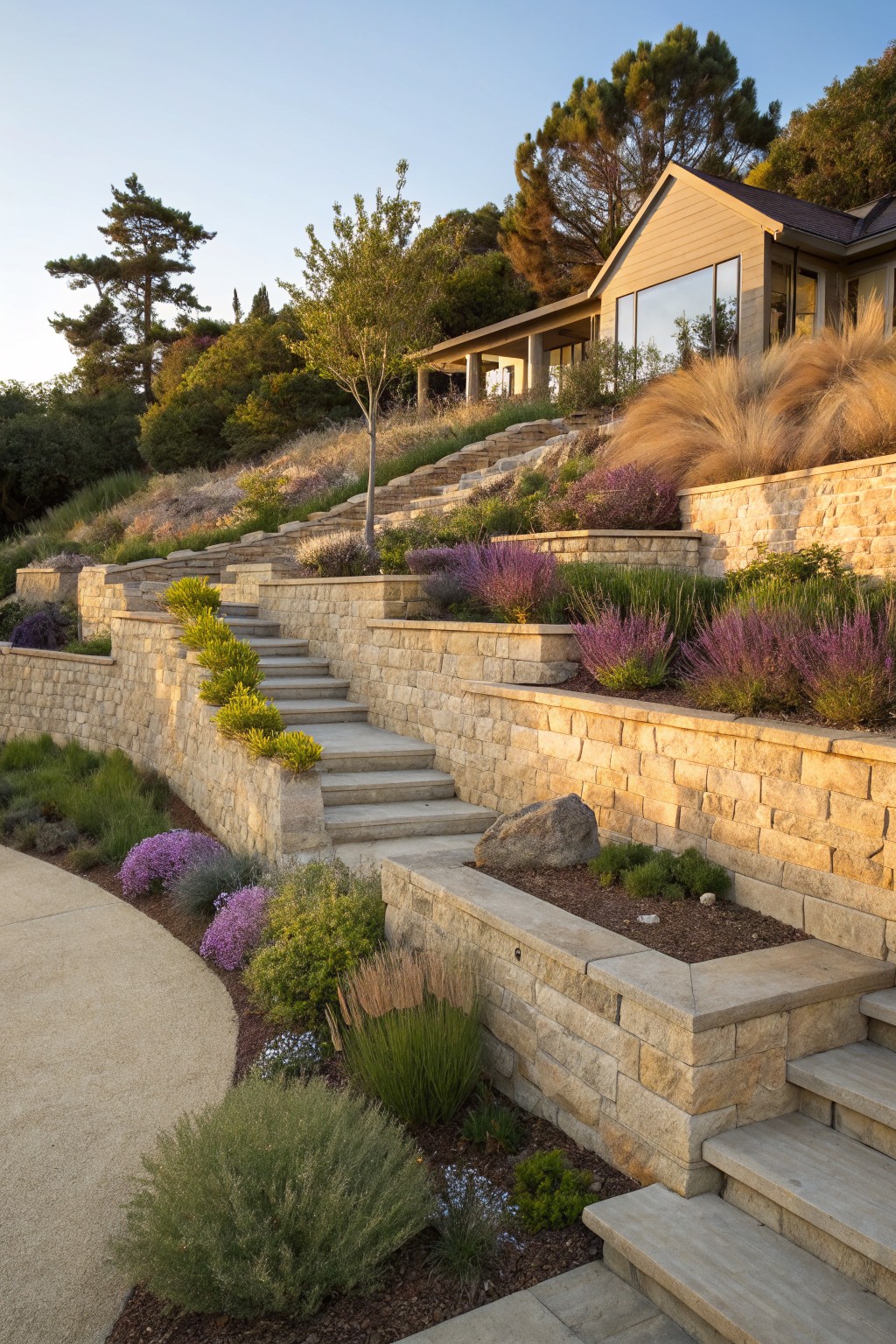
Sloped front yards can be tough to work with. Terraced retaining walls turn that challenge into neat planting zones. These golden stone walls step up the hill, filled with low-water plants like lavender bushes and feathery grasses. The result is a tidy look that holds soil in place and uses water smartly.
This idea fits homes on hills in dry areas. Stack sturdy stone or block walls, leave room for plants that thrive on little irrigation, and add wide steps for easy walking. Just make sure drainage is good to avoid washouts. It keeps the yard low-maintenance year round.
Gravel Entry Path for Xeriscape Yards

One straightforward way to handle a front yard xeriscape is with a gravel base and widely spaced pavers for the main path. It keeps things dry and simple. No thirsty lawn to mow. Just set large stone slabs into the gravel, like you see here with those dark squares leading right up to the steps. Add a few tough plants along the edges, and you get a clean route that fits a modern house without much water or work.
This setup works best on flat or gently sloped lots near the street. Use it where you want foot traffic to feel guided but not squeezed. Go for drought plants like agave or clipped boxwood spheres to fill in without crowding the path. Keep the gravel dark to hide dirt, and skip edging if you want that natural look. One thing, scale the pavers big enough so they don’t feel like a scramble.
Brick Steps Framed by Boulders and Grasses

Big boulders mixed with clumps of ornamental grasses make a solid frame around these brick steps. The rocks give weight and stay put without upkeep. The grasses sway a bit and fill space without drinking much water. Together they pull the eye right up to the door. It’s a clean way to handle a slope too.
Try this on entry paths where you want low fuss. Pick rocks in a couple sizes for interest and grasses that match your zone. It fits homes with stone or wood siding best. Just keep the beds mulched to cut weeds. Won’t work if you need super flat ground.
Stone Steps for Sloped Xeriscape Yards
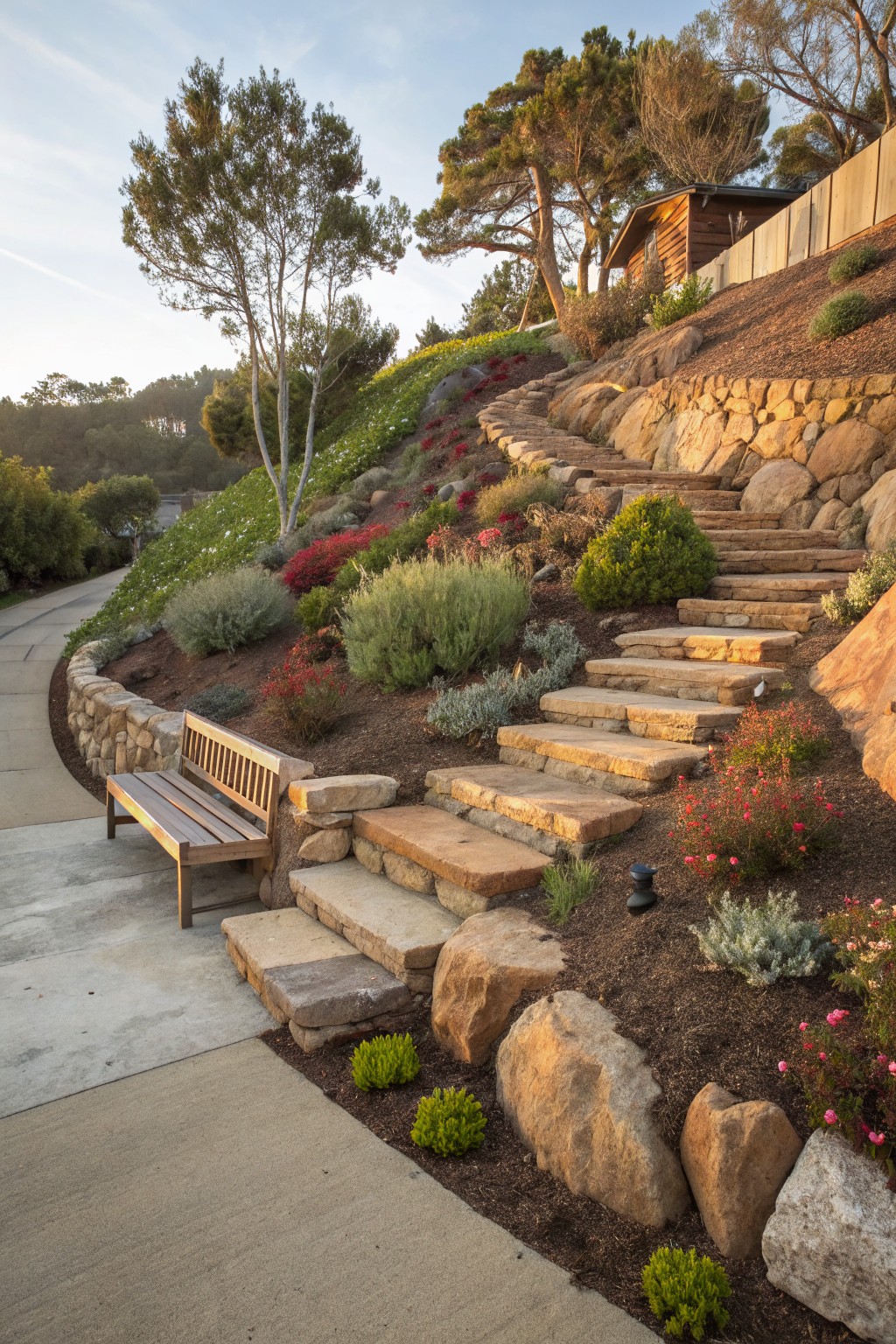
Wide stone steps make a sloped front yard usable and pretty without much water. Here, they’re set into the hill with boulders for support and low plants like shrubs tucked around the edges. It beats fighting erosion with turf, and the natural stone keeps things low-key.
This setup fits hilly lots in dry areas best. Go for thick, irregular slabs that step up gently, then add tough perennials or groundcovers that don’t need much care. Skip mulch if rocks do the job. It’s straightforward for anyone tired of mowing on a hill.
Vertical Succulent Walls Add Greenery Without the Water Bill

A vertical wall garden like this one packs in tons of plants without taking up yard space. Succulents and air plants cling to a framed section right on the stucco wall, pulling in that lush feel while sipping minimal water. It’s a smart xeriscape move for spots where flat ground is tight.
Put one in a side yard or entry path area, especially on modern homes with clean walls. Use a simple metal or wood frame filled with pockets for hens and chicks or sedums. Edge it with gravel and pavers like here to tie everything together. Just check your wall gets some sun, and skip daily watering.
Wide Paver Pathway for Easy Xeriscape Access

Big square pavers laid out in gravel make a straightforward path right up to the house. They fit nicely with the white walls and wood garage doors here, keeping the look clean without much grass to water. The spacing lets gravel fill in between, so rain drains fast and weeds stay low.
This works best in front yards where you want a modern feel that saves time mowing or irrigating. Lay the pavers wide enough for two people, about 5 feet across, and edge them with raised beds of lavender or succulents. Skip it if your slope is steep… gravel might shift.
Winding Stone Pathways Through Xeriscape Beds

A winding stone pathway like this one makes a xeriscape yard feel more like a garden stroll than a straight shot to the door. The large gray slabs laid in gravel give a sturdy walk that’s easy on the feet, while the curves follow the natural flow of the land. Flanking it all are low-water plants such as lavender bushes and waving grasses that fill out the edges without much fuss.
You can pull this off in most front yards, especially where the ground rolls a bit or you need to cover some distance to the entry. Pick slabs that match your stonework on the house for a tied-together look, then layer in drought-tolerant perennials that come back year after year. Keep the gravel clean… it stays low-maintenance that way.
Curved Pathway in Xeriscape Yard
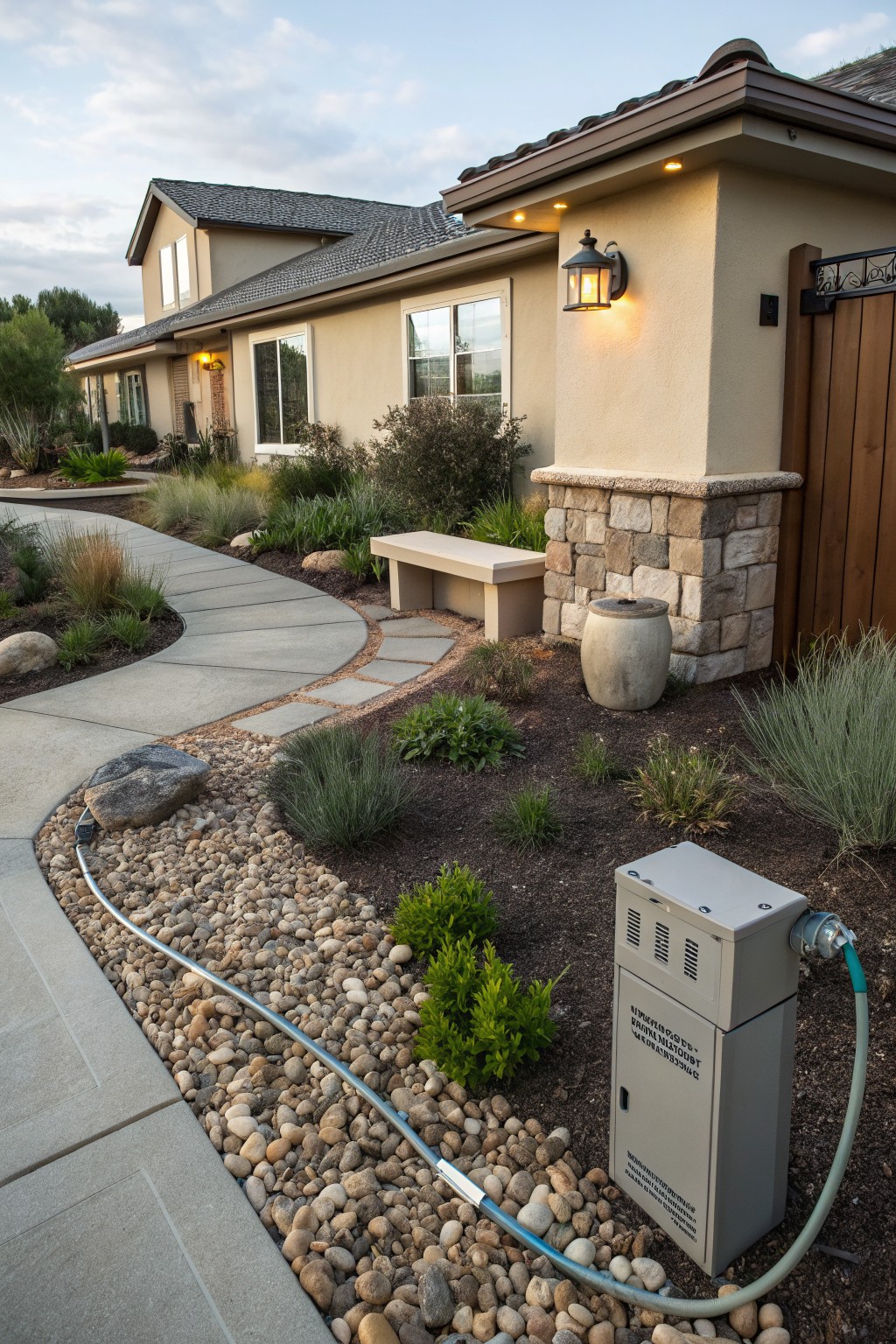
A curved concrete path like this one makes a front yard feel welcoming without much upkeep. It winds gently from the street to the house, edged by gravel mulch and tough plants that handle dry spells fine. That setup saves water since there’s no lawn to keep green, and the path itself stands out clean against the loose rocks and low shrubs.
You can pull this off in sunny spots where water is tight. Keep the curve natural, not too tight, and mix in a few boulders or a bench along the way for interest. It works best on moderate slopes or flat yards, tying right into the house entry without looking forced.
Winding Stone Path with Low Lights
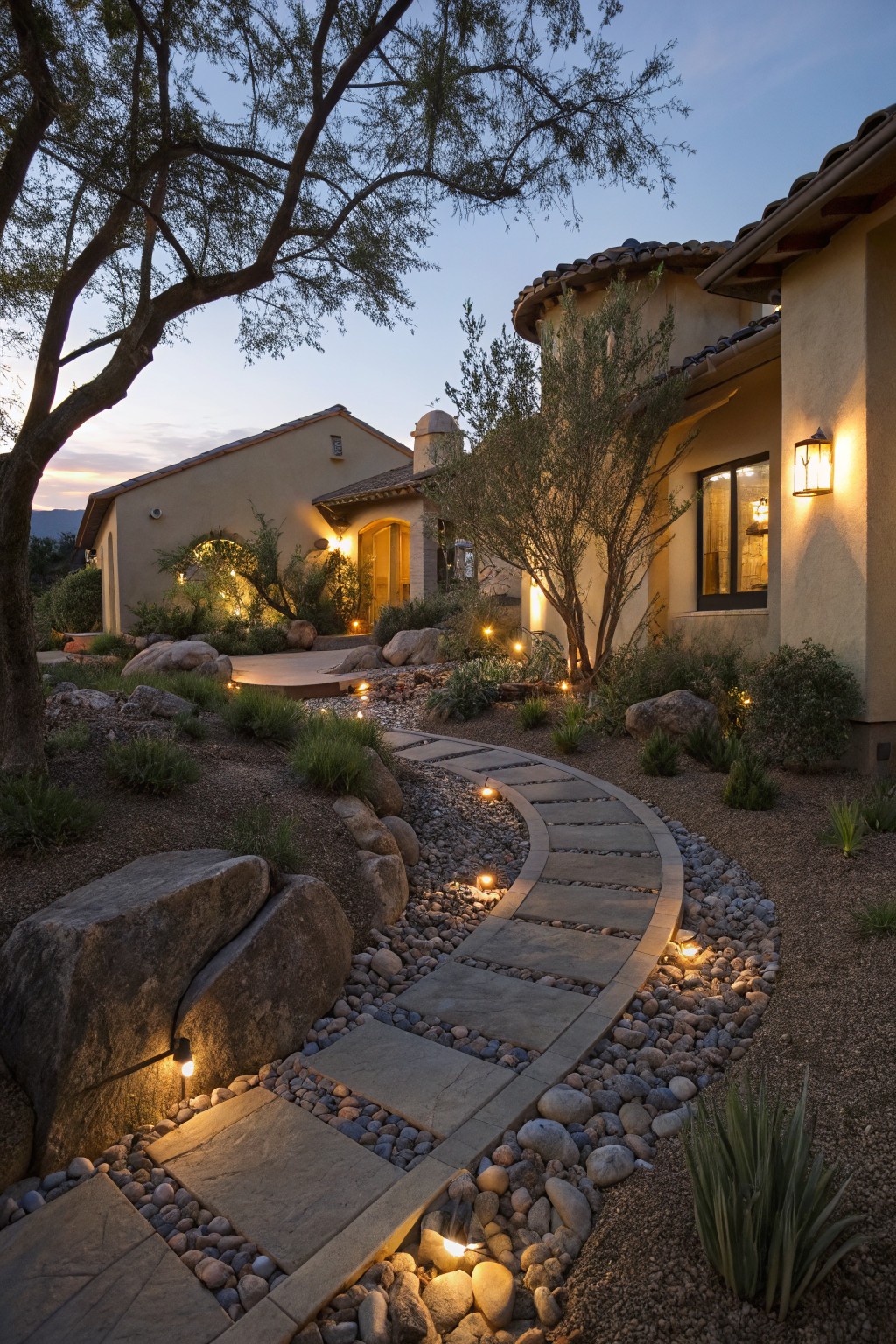
A simple flagstone path curves gently through big boulders and gravel beds, picking up low-voltage lights that glow at dusk. It pulls your eye right to the entry door without any fussy grass or thirsty plants around it. Those soft path lights make the walk safe and welcoming after dark, and the whole setup stays low-maintenance in dry spots.
This works best in front yards where water saving matters. Lay the stones wide enough for two people, tuck lights under edges so bugs stay low, and add a few tough plants like agave nearby. Skip straight lines. The curve feels natural with the rocks.
Frequently Asked Questions
Q: My yard has some grass left. How do I switch it over without a big mess?
A: Cut out the grass in small patches over a few weekends. Cover the bare spots with cardboard, then top with mulch and pop in your new plants. They’ll take over fast and crowd out the rest.
Q: What plants thrive if my front yard gets afternoon shade?
A: Go for natives like currant or manzanita that handle low light without fuss. They stay green and add berries for birds. Mix in ferns for texture.
Q: How do I keep weeds from taking over my new xeriscape?
A: Lay down landscape fabric before gravel or mulch, but cut holes for plants. Pull any sprouts weekly at first, roots and all. Thick mulch smothers most anyway.
Q: Does xeriscape mean no color in my yard?
A: Nope, grab salvia or penstemon for pops of red and purple all season. And pair with silver-leafed shrubs for contrast. It beats faded lawn any day.
