

An empty grass yard tends to look unfinished no matter how often it gets mowed because there is no clear way to use it.
I have found that starting with basic layout ideas like where to place seating or how to shape the lawn edges makes a bigger difference than adding lots of new plants right away.
Those first decisions usually guide everything else that follows.
Over the years I have learned to focus on structure before decoration since the usable parts end up mattering more in daily life.
It feels good when the yard stops feeling like leftover space and starts working as part of the home.
Turn An Empty Grass Yard Into A Paved Patio
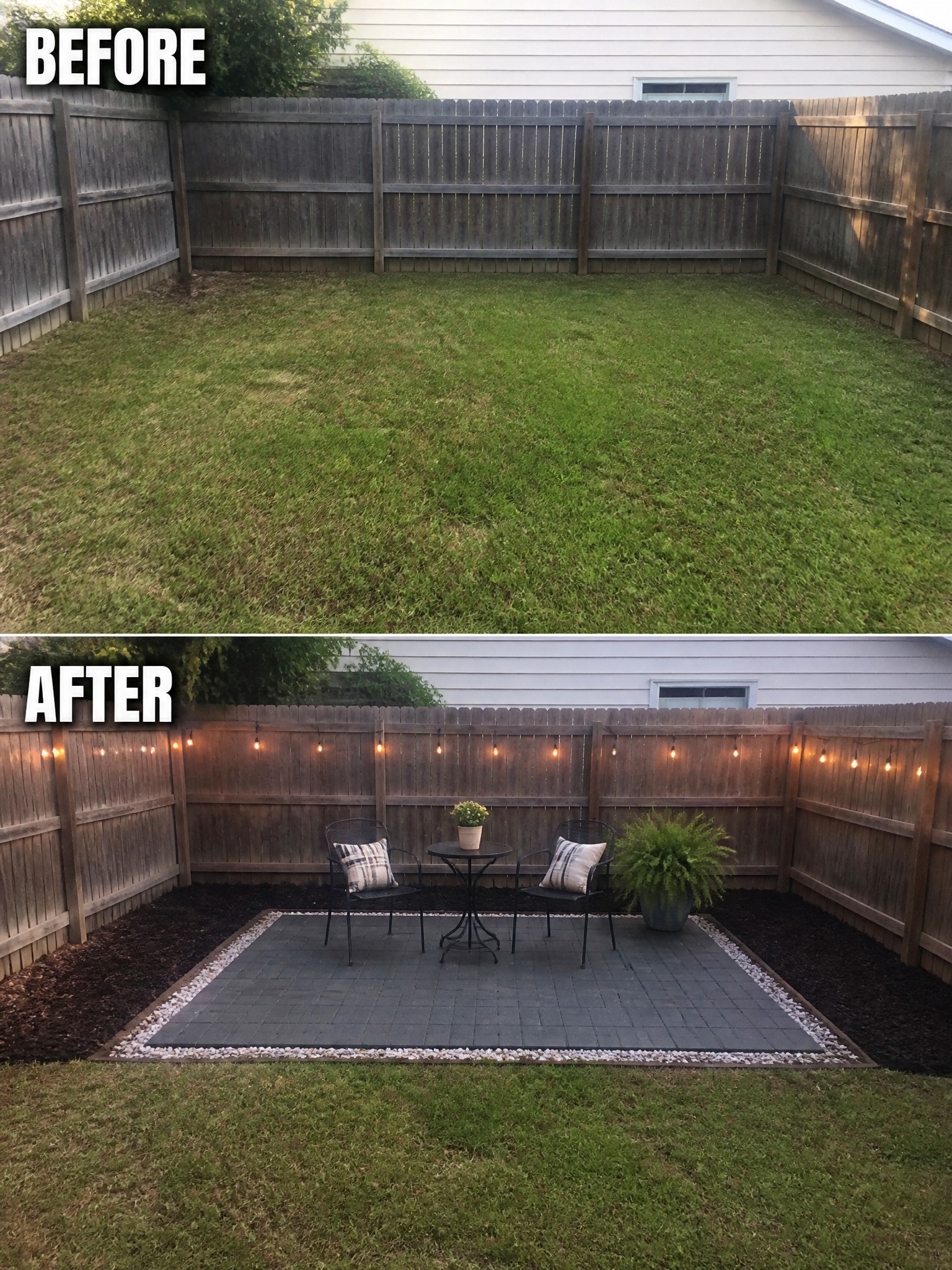
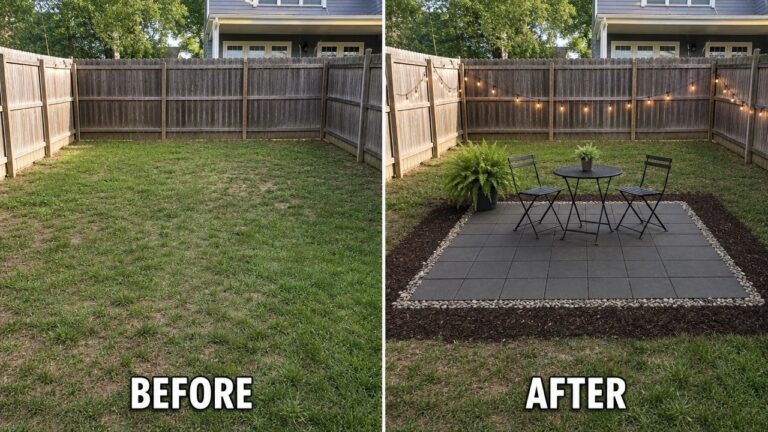
An empty backyard often feels like wasted space because there is no clear spot to sit or gather. Adding a simple paver patio creates a defined area that turns the yard into a place people actually use. In this case the grass was replaced with a square of pavers bordered by gravel and mulch, and string lights were added along the fence to make the space feel finished.
This approach works well in small to medium yards where you want one main seating zone without covering the whole lawn. Start with the hard surface first so furniture has a stable spot, then add just enough lighting and a couple of chairs to encourage use. Keep the rest of the yard simple so the patio stays the focal point.
Add Raised Garden Beds To Turn An Empty Yard Into A Garden
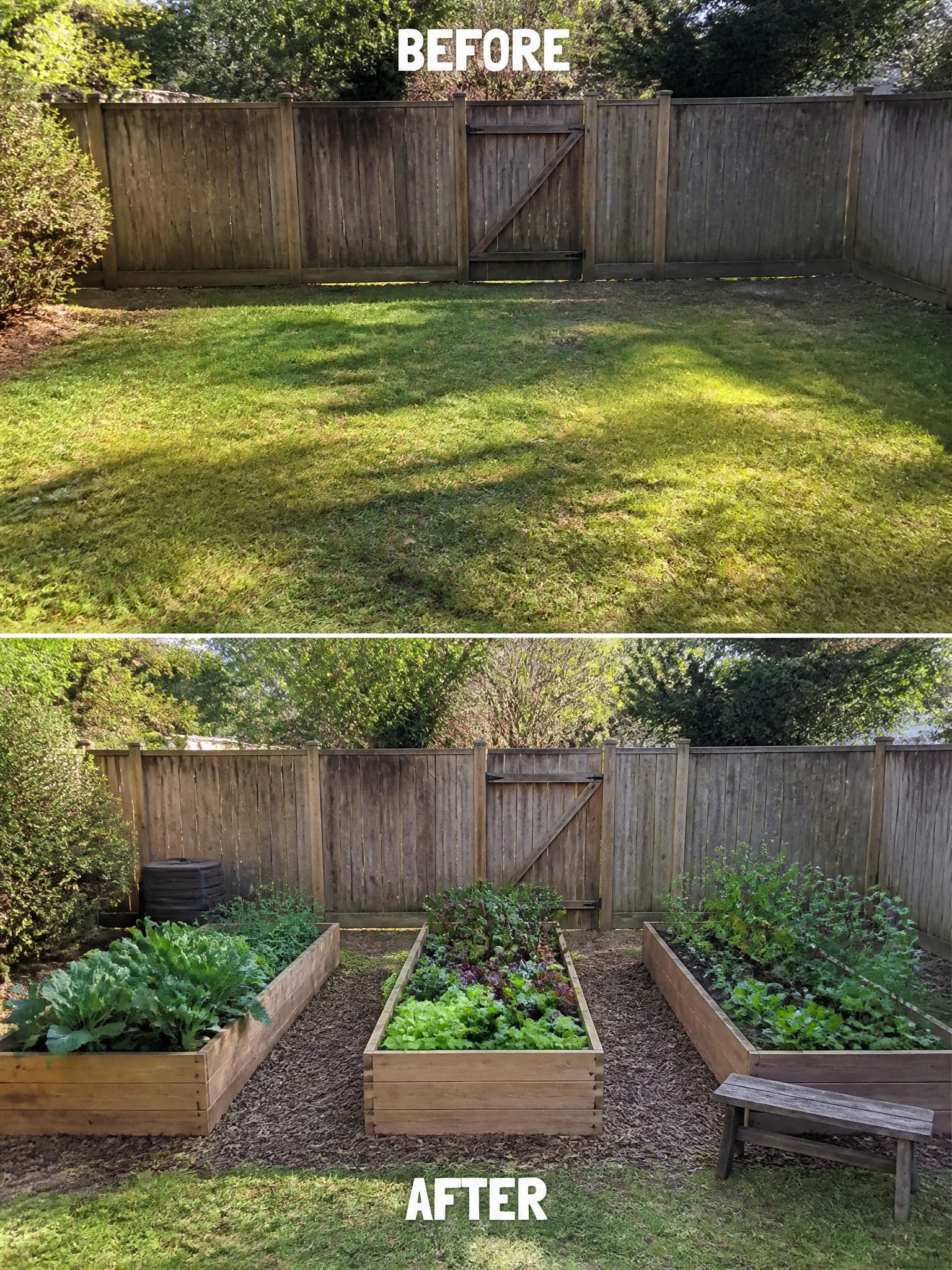
An empty lawn often feels like wasted space once you start thinking about growing food or flowers. The change here came from adding three simple raised beds filled with vegetables and herbs, plus a layer of mulch to keep the ground clean and paths clear. That single move gave the yard a clear purpose without needing major construction.
This idea works well in smaller backyards where you want to garden without giving up the whole lawn. Start with beds that are easy to reach from both sides, and keep the surrounding grass or gravel simple so the plants stay the focus. It also leaves room to add a bench or compost bin later if you want more function.
Turn An Empty Backyard Into A Fire Pit Seating Area
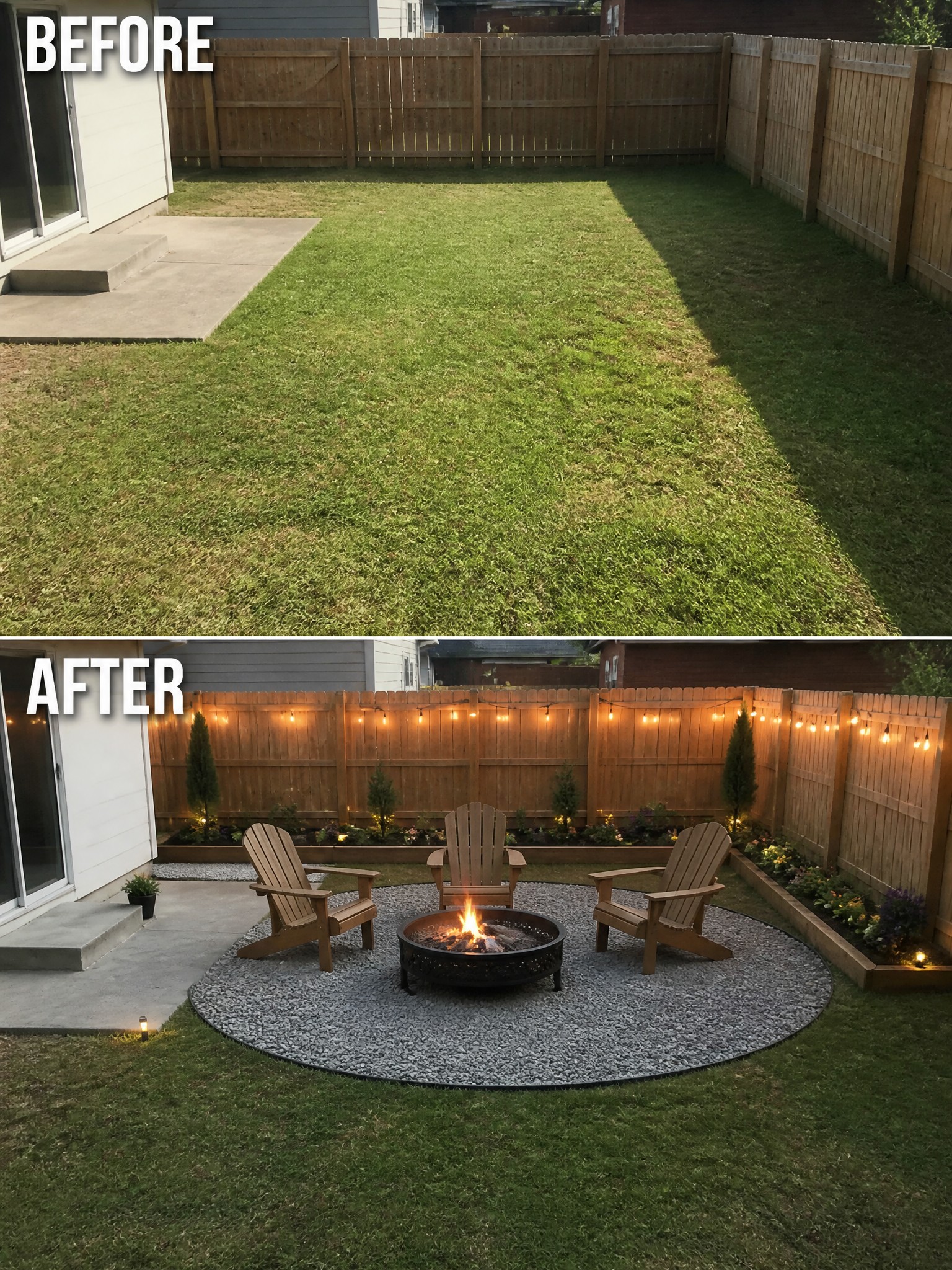
An empty grass yard often feels like it has no real purpose until you add one clear spot for sitting. Here the owners created a simple circle of gravel, placed a fire pit in the center, and added three wooden chairs. That single change turned the open lawn into a usable gathering place.
This approach works best when you keep the rest of the yard open and focus on one defined zone. A gravel base keeps the area dry and low-maintenance, while string lights along the fence add light without much effort. Start with the seating area first, then add planting beds later if you want more structure.
Define An Empty Grass Yard With A Path And Garden Borders
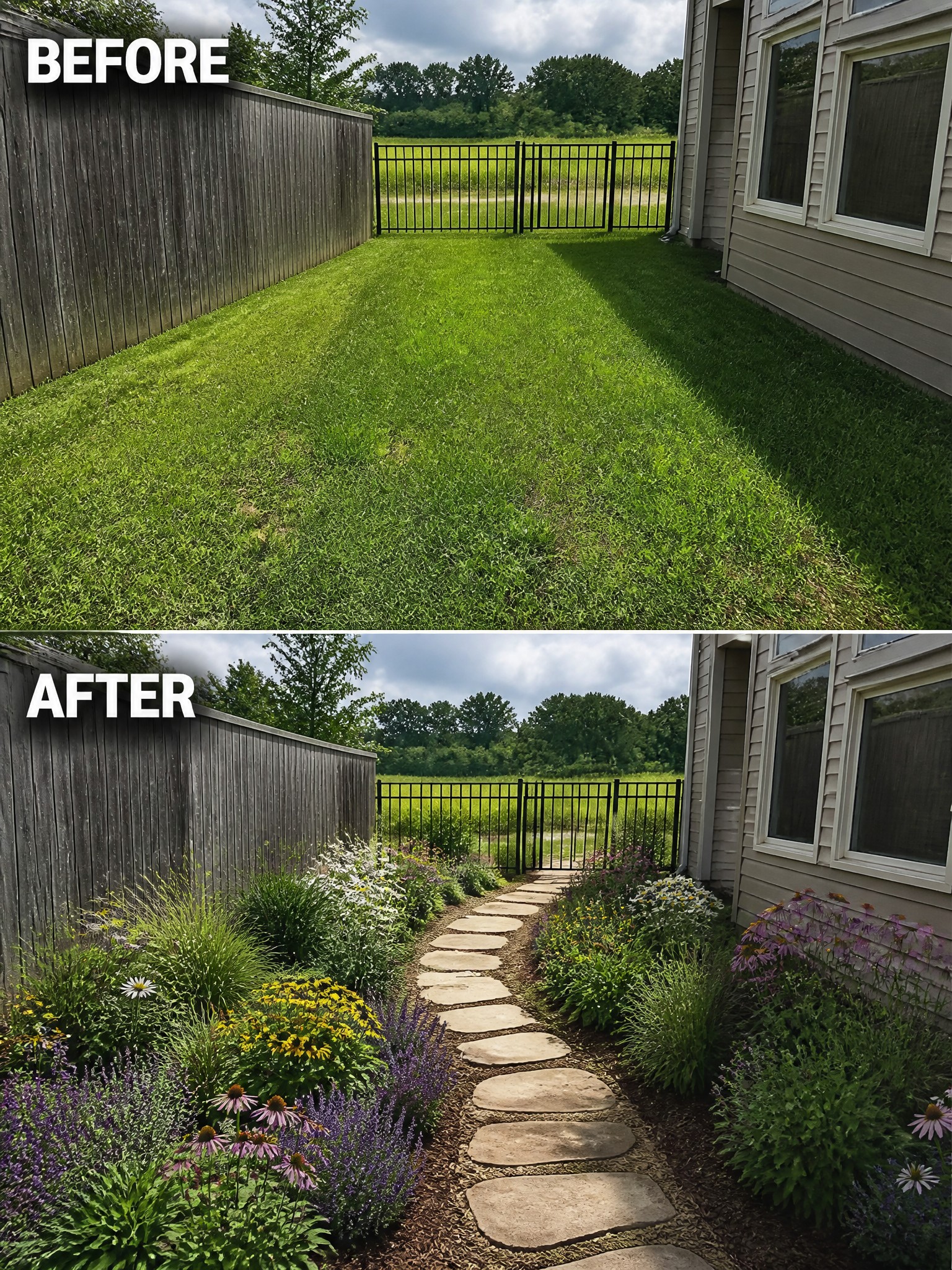
A flat stretch of grass between the house and fence can feel unfinished even when it is tidy. Adding a simple stone path down the center with planted borders on both sides gives the space shape and makes it feel more like a real part of the yard instead of leftover lawn.
This works best in long, narrow side yards or back areas that get regular foot traffic. Lay the path first so it stays practical, then mulch the edges and fill them with a few repeating plants rather than trying to cover every inch. The result stays easy to mow around and still leaves room to walk comfortably.
Build A Deck To Turn Empty Grass Into Seating Space
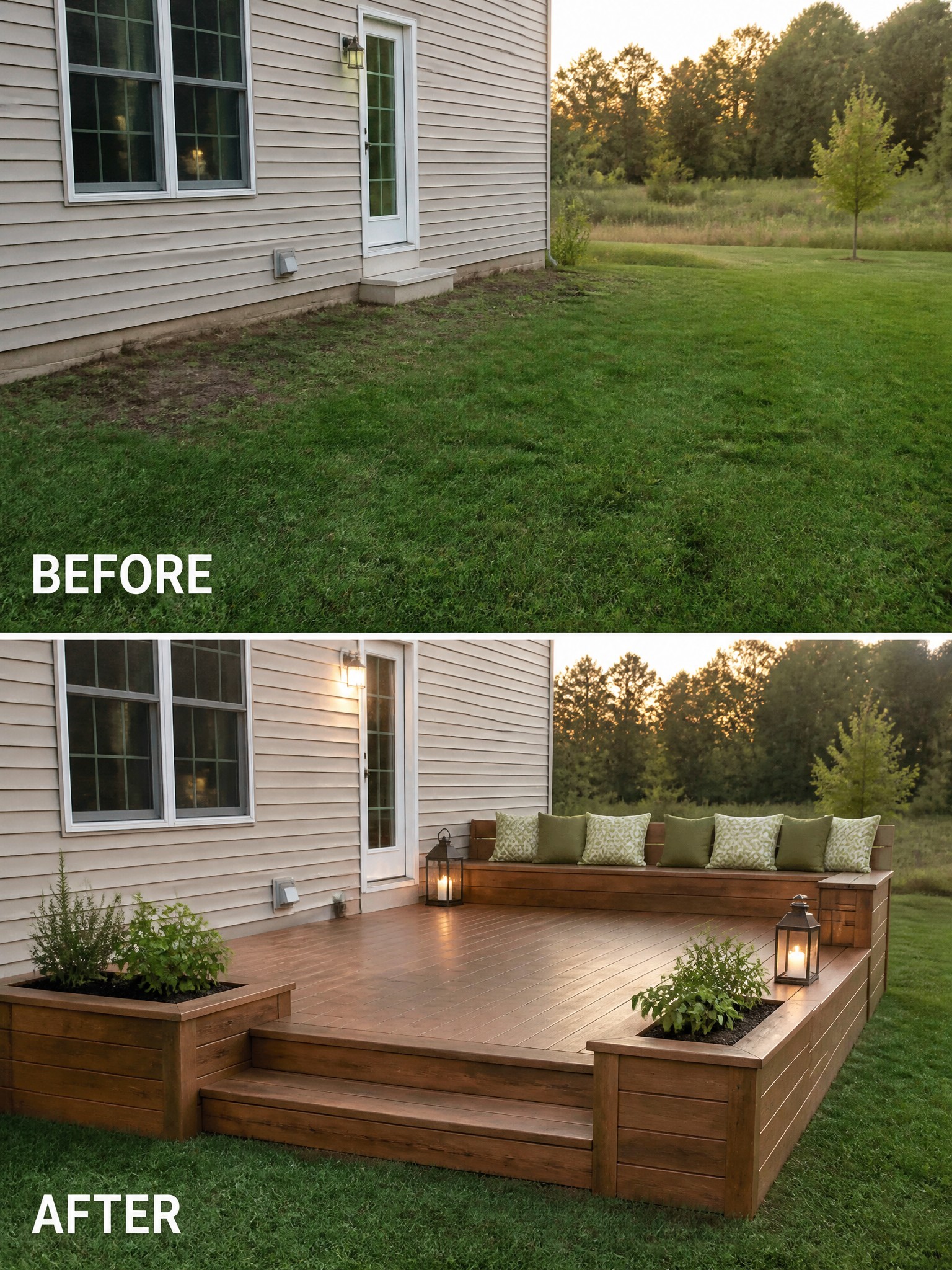
An empty stretch of grass next to the house rarely gets used for anything more than mowing. Adding a raised wooden deck with built-in benches and a couple of planters turned the same spot into a place where people can actually sit and stay awhile.
This idea works best in backyards that feel wide open and flat. Keep the deck simple, use the built-in seating to save space, and add a few planters so the area feels anchored without needing a lot of extra furniture.
Turn An Empty Backyard Into An Outdoor Dining Area
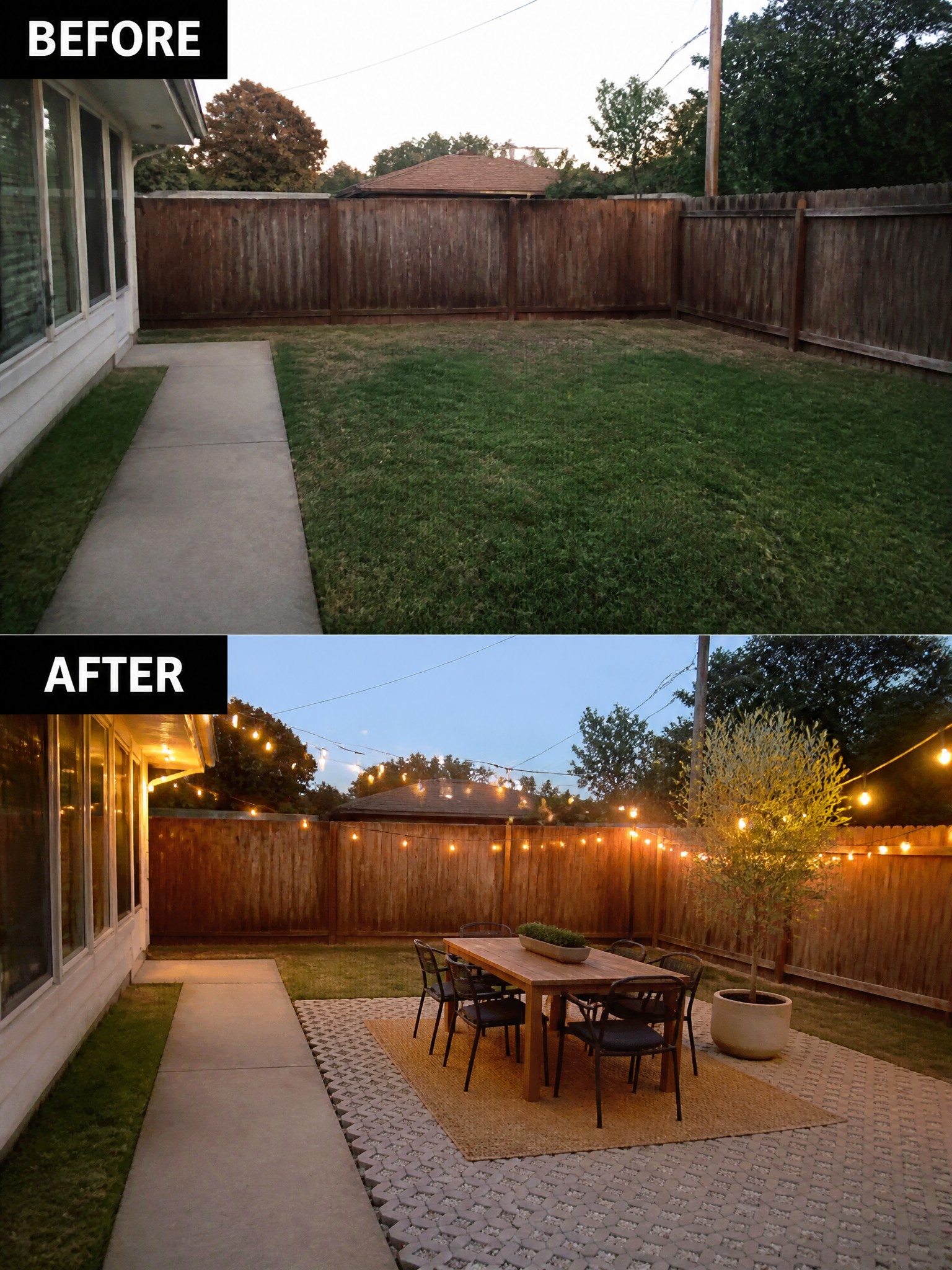
An empty grass yard often feels like wasted space until you give it a clear purpose. Adding a small paved section, a large rug, and a simple dining table instantly creates a spot where people actually want to sit and eat. The string lights overhead make the area feel finished and usable even after dark.
This approach works best in modest yards where you want one defined zone rather than trying to fill the whole lawn. Start with the surface and lighting first, then add furniture that can stay outside. Keep the rest of the grass open so the space still feels roomy.
Add A Privacy Fence With Layered Planting

A chain link fence leaves the side yard feeling open and exposed. Switching to a solid wood fence with horizontal boards instantly creates privacy while the new garden bed along the base adds depth and softness that the plain grass never had.
This approach works well along property lines where you want screening without losing too much yard space. Start with the fence for structure, then fill the bed with a mix of evergreens, flowering shrubs, and a few vertical planters so the planting feels full but not crowded. Keep the bed width narrow enough that mowing stays simple.
Give An Empty Backyard Structure With Gravel And Stones
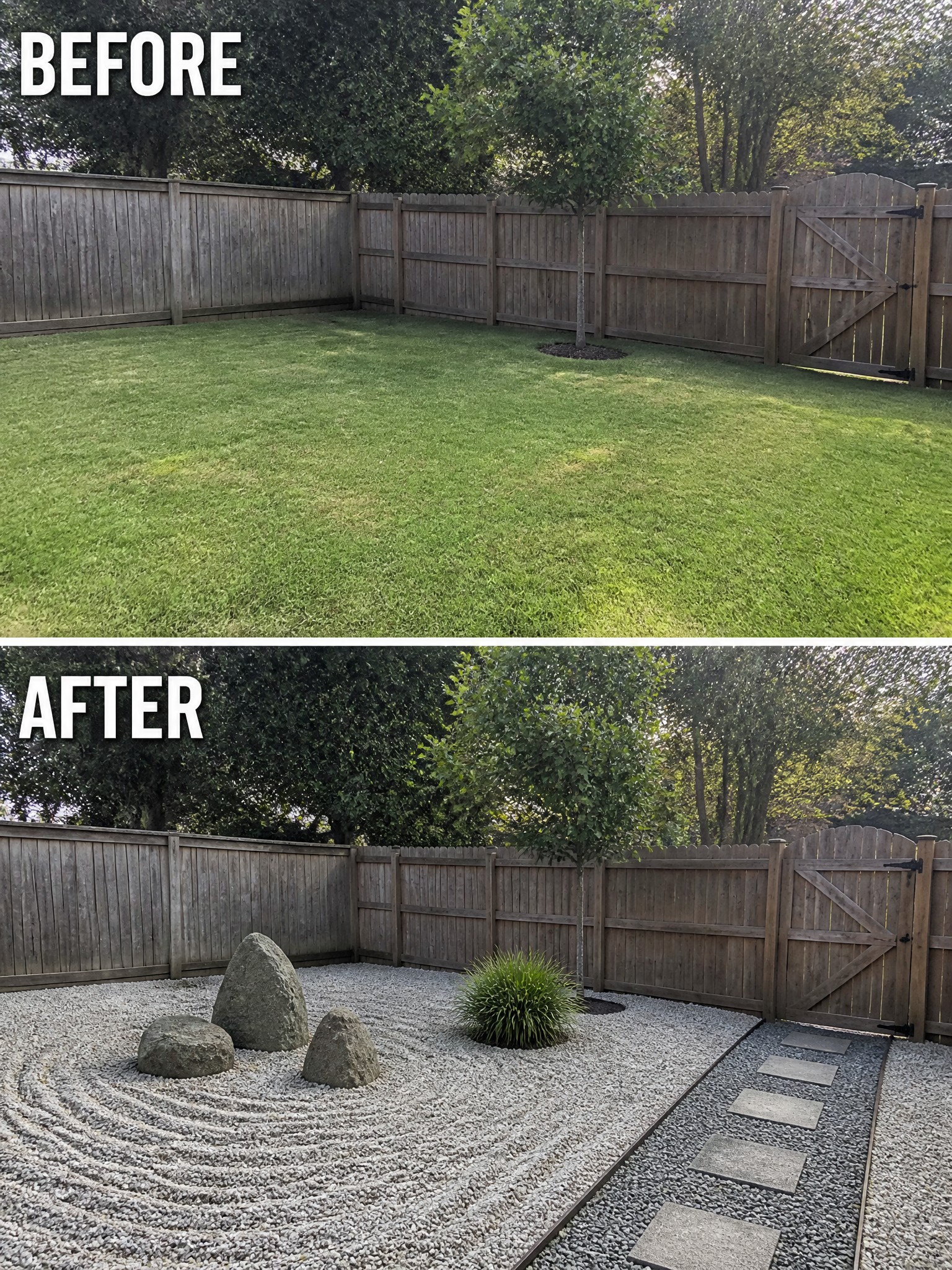
An empty grass yard can feel unfinished and hard to use. Replacing large sections of lawn with gravel creates clear boundaries and turns the space into something more intentional. The rocks clustered in one area give it a focal point without needing lots of plants or furniture.
This approach works well in small or medium backyards where you want low maintenance. Start with a simple gravel base, then add a few larger stones or a single plant grouping to keep the layout from feeling scattered. It leaves room to walk through the space while still making it feel planned rather than bare.
Turn An Empty Backyard Into A Covered Seating Area
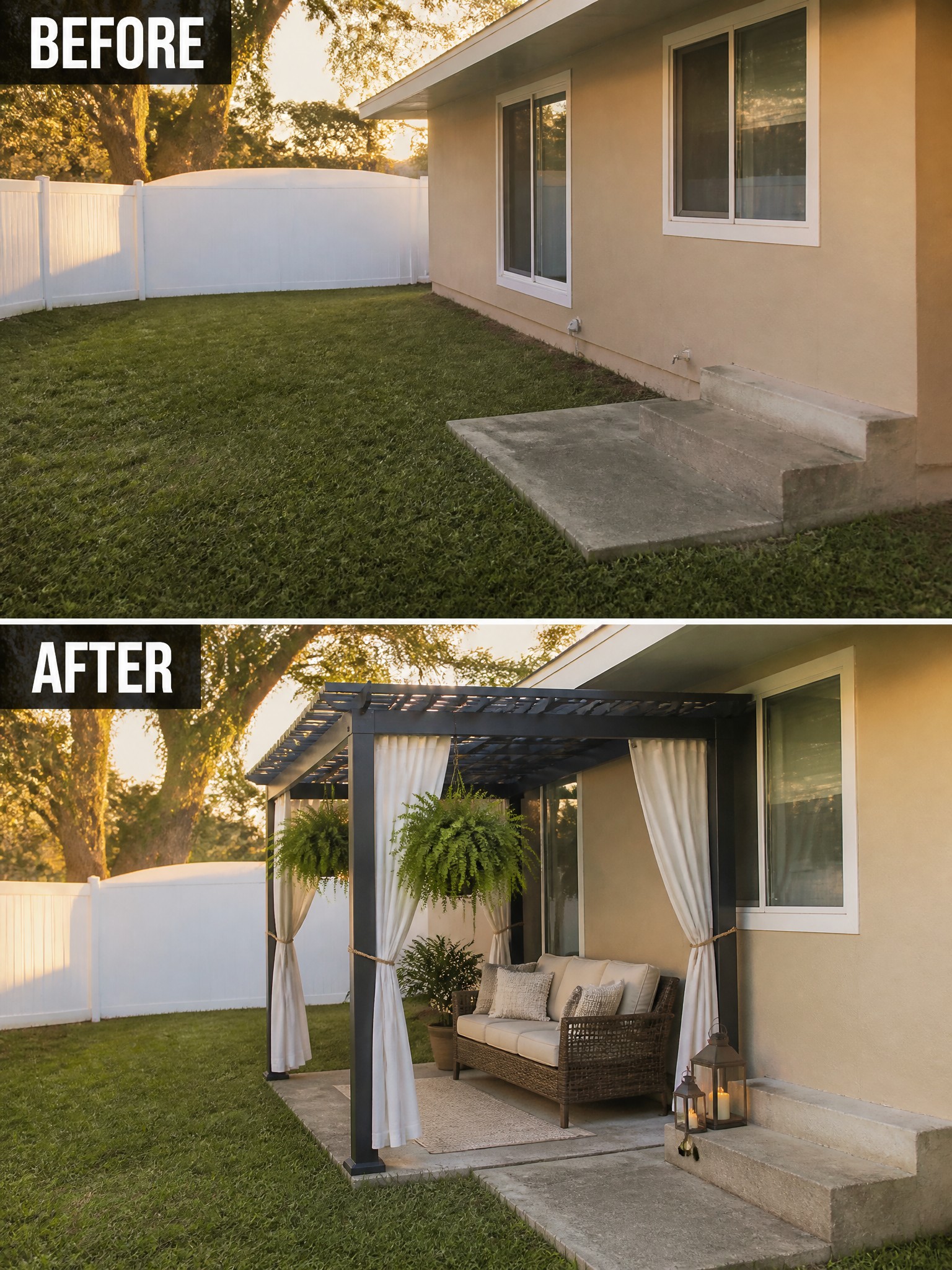
An empty grass yard next to the house often stays unused because there is no clear spot to sit. Adding a pergola over a small concrete section creates a defined outdoor room that feels intentional and usable.
This idea works best when you already have some hard surface near the house. Keep the furniture scale modest, add curtains for light shade, and use a rug to mark the seating zone. Leave the rest of the lawn open so the space stays practical for everyday use.
Turn An Empty Grass Yard Into An Outdoor Kitchen
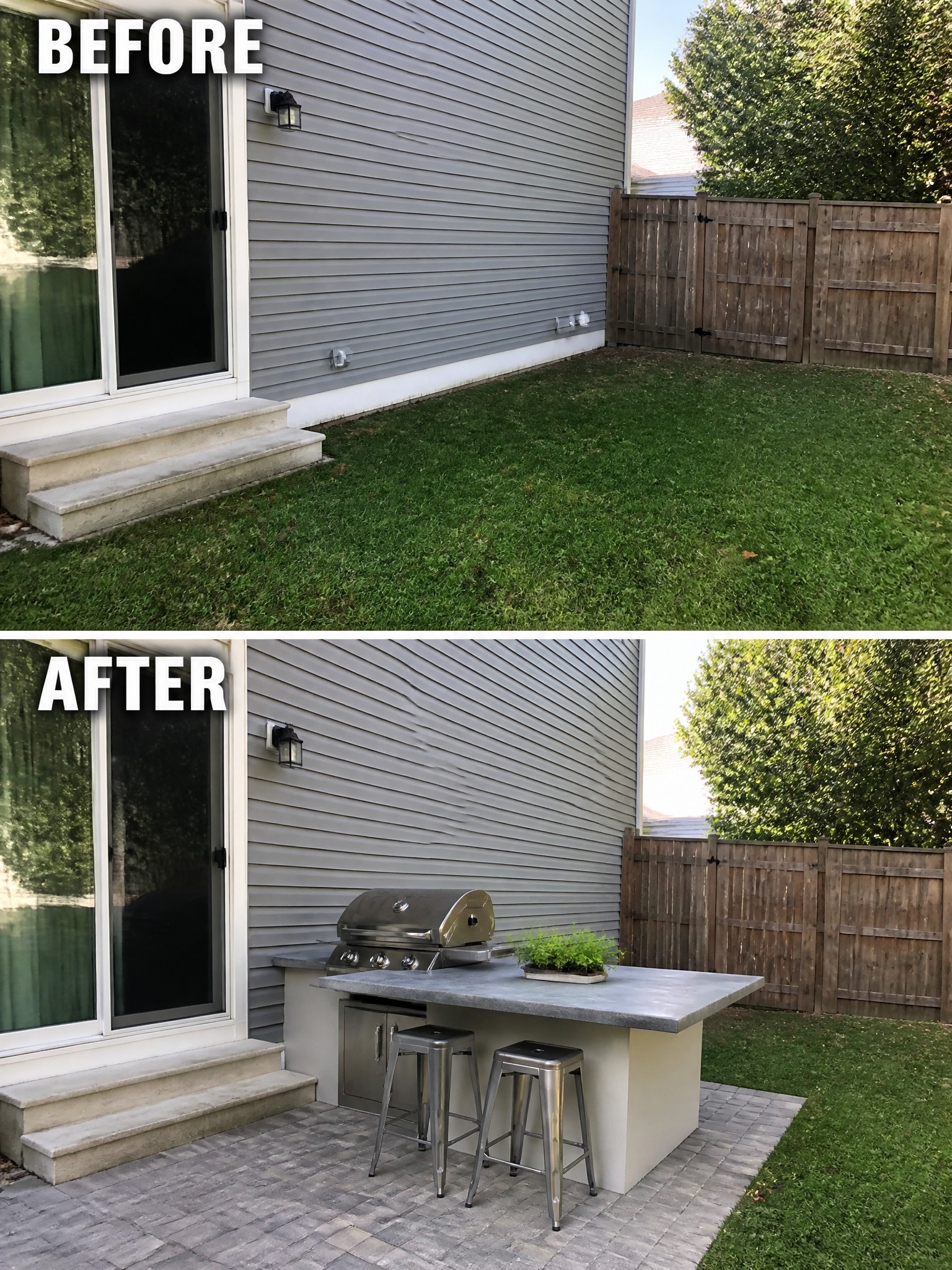
An empty stretch of grass next to the house rarely gets used for anything. Adding a paved pad and a simple island with a grill gives the space a clear purpose and makes it easy to cook and eat outside without tracking everything back indoors.
Keep the island close to the house so it feels connected to the kitchen, and choose a size that still leaves plenty of open lawn. Two stools are often enough to start, since most people stand or move around when the grill is on anyway.
Add Defined Borders To Shape An Empty Backyard
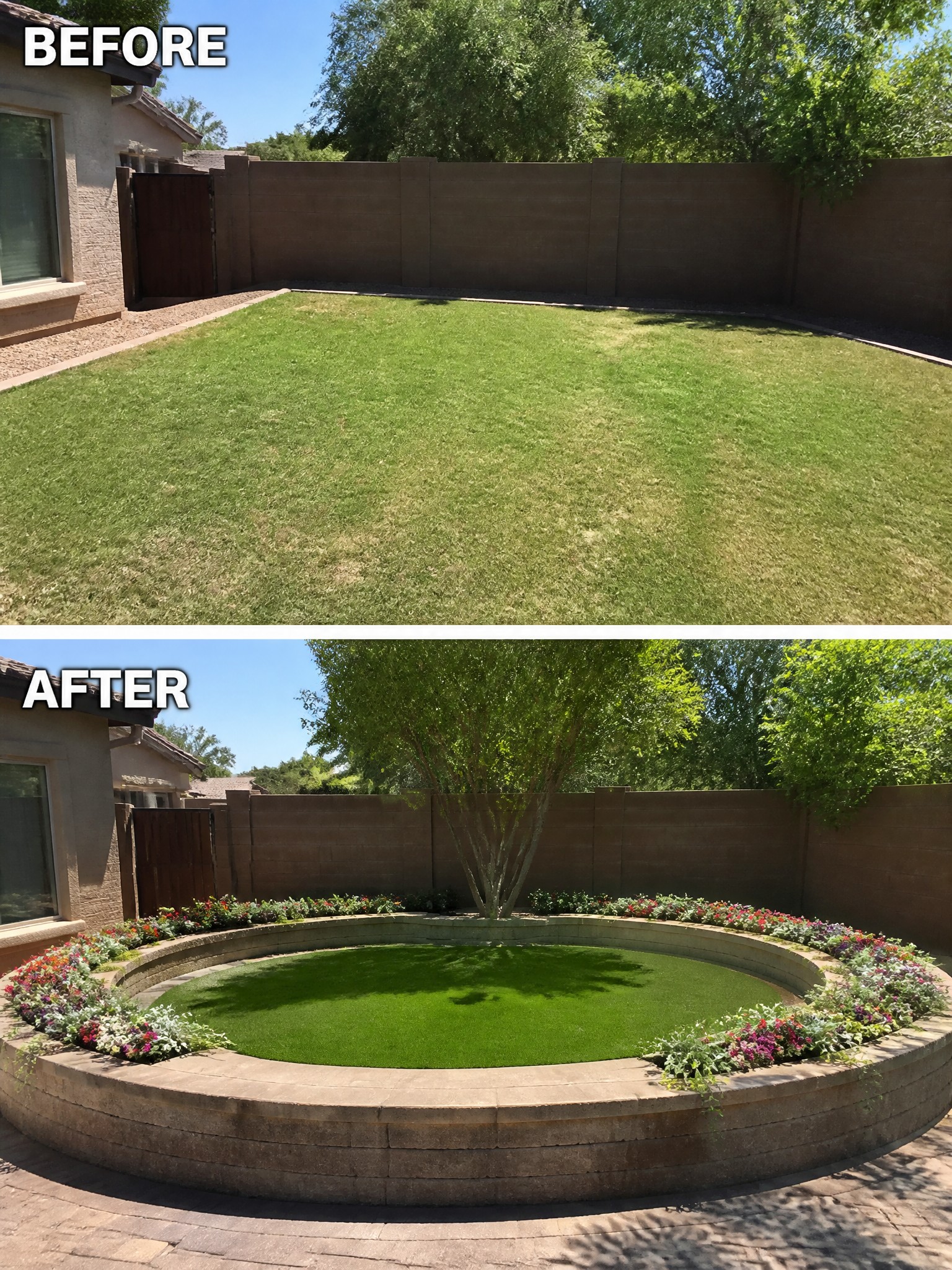
An empty lawn often looks unfinished when the grass simply runs into the fence with no clear edge. Adding a low stone border creates a raised frame that turns the open grass into a defined circle and leaves room for a planted strip around the outside. The change makes the space feel more intentional while keeping the lawn as the main feature.
This idea works best in larger yards that have plenty of open grass but lack structure. Build the border first so the shape is set, then fill the planting area with flowers or shrubs that can handle sun. It keeps the project manageable and gives you a clean look that still leaves room to walk and play.
Add A Deck To Turn Empty Grass Into An Outdoor Room
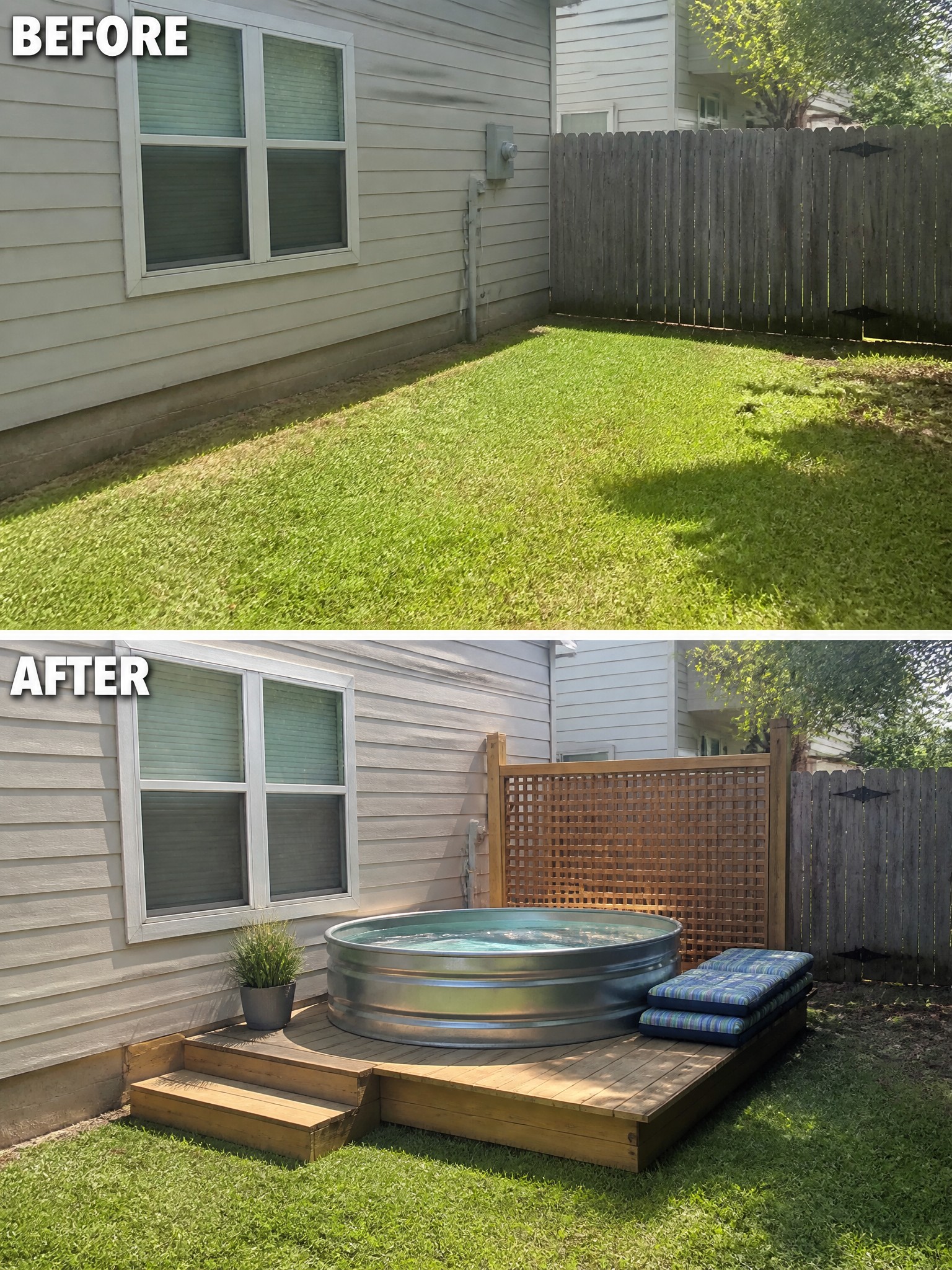
Adding a simple deck gives an empty backyard a clear spot for sitting or relaxing instead of leaving everything as open lawn. The before shows just grass running up to the house wall, while the after creates a raised platform that holds a small pool and a couple of cushions without taking over the whole yard.
This idea works best in modest backyards where you still want some grass left but need one defined area that feels finished. Keep the deck size reasonable for your space, use weather-ready materials, and add only what you will actually use so the area stays practical rather than crowded.
Create A Simple Play Area In An Empty Backyard
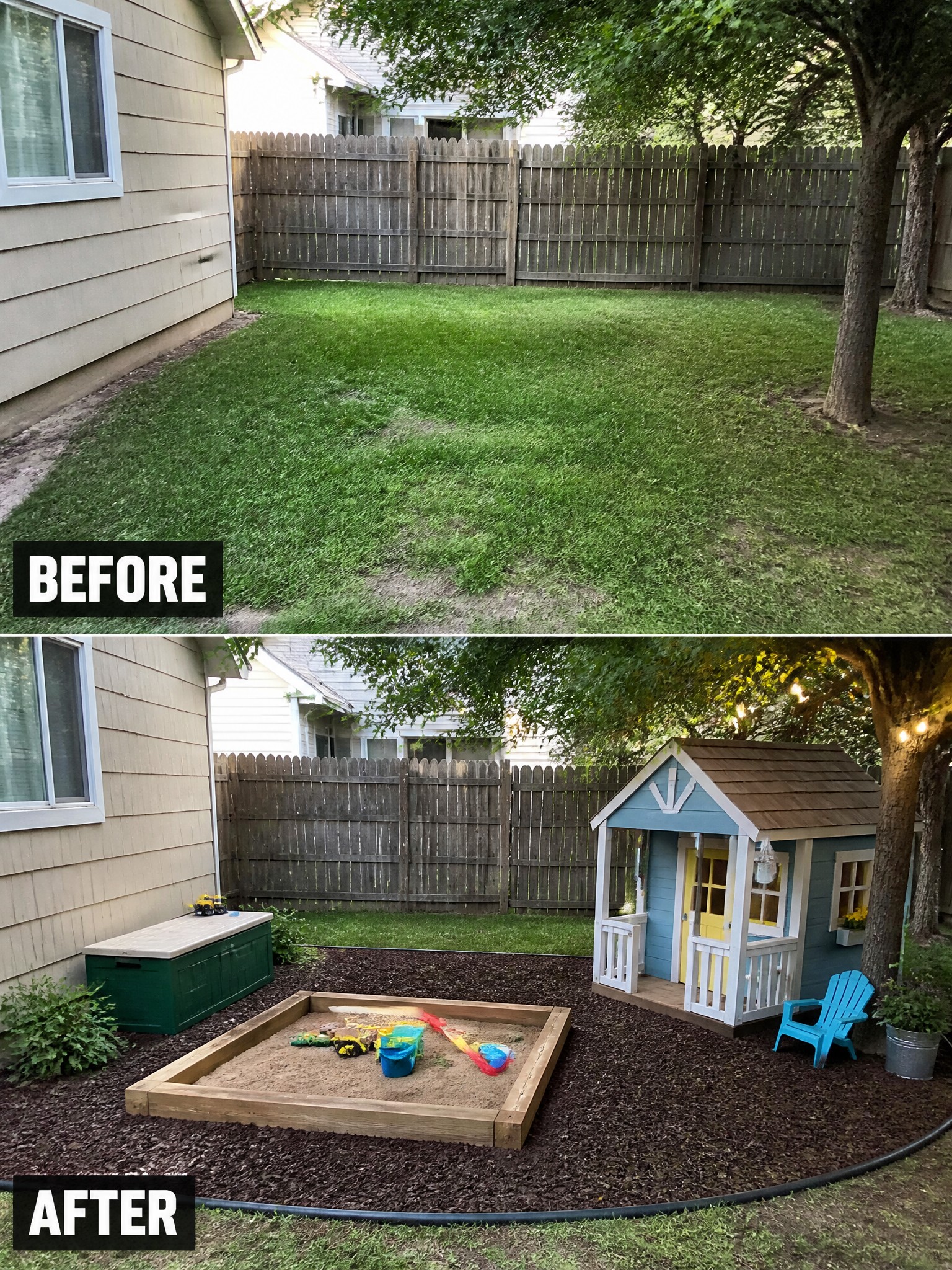
An empty stretch of grass can feel like wasted space when you have kids who need somewhere to play. Adding a sandbox set into mulch gives the yard a clear purpose without requiring a full redesign. The playhouse and storage bench sit right beside it, so everything stays in one spot and the rest of the lawn stays open for running around.
This setup works best in smaller or medium yards where you want one main activity zone rather than scattering toys everywhere. Keep the mulch area contained so it stays neat, and choose a sandbox size that leaves room to walk around it. A bench for toys and a small chair or two keep the space usable without crowding it.
Add A Wildflower Patch And Seating To A Plain Lawn
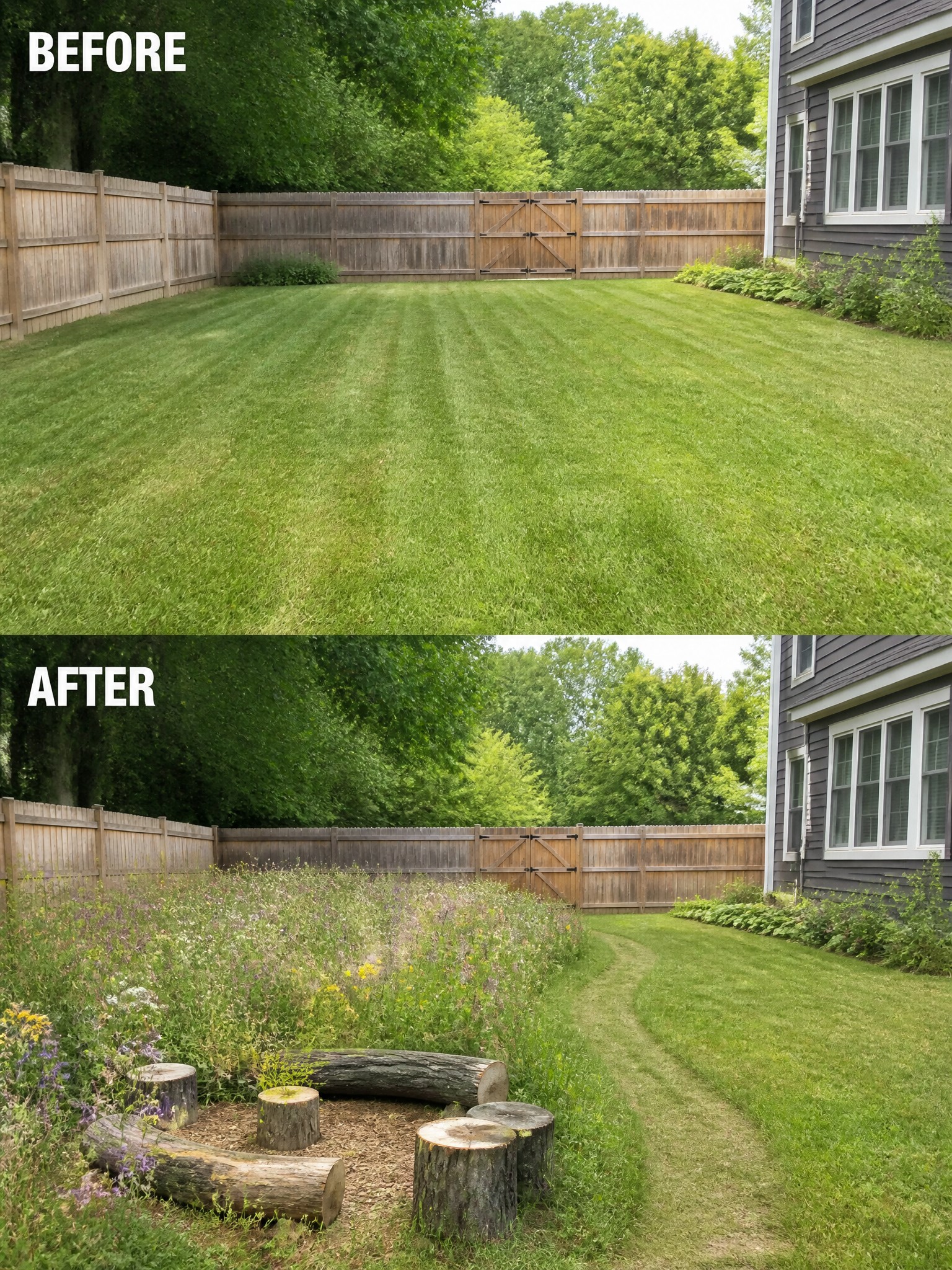
A large empty lawn can feel unfinished even when the grass is healthy. Here the change came from carving out one section for wildflowers and setting a few logs in a loose circle to create a simple seating spot. The rest of the yard stayed open, which kept the space from feeling crowded.
This idea works best in bigger yards where you want some interest without a full redesign. Start by marking the area you want to plant, use a mix of easy perennials, and add seating that can handle weather. It gives people a reason to spend time outside while the lawn around it stays easy to mow.
Add Structure To A Sloped Backyard
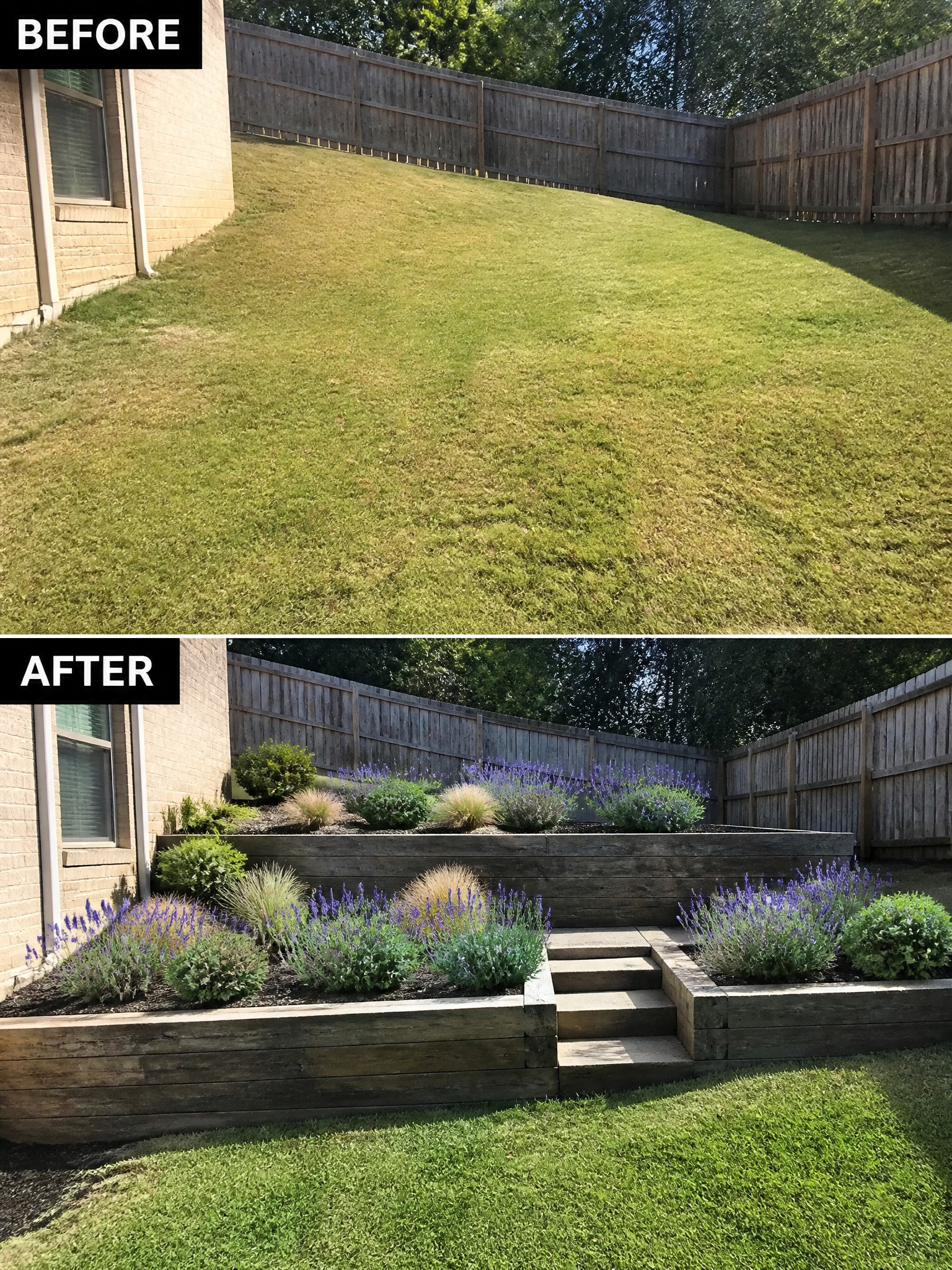
A plain grass slope often feels unfinished because there is no clear way to use the space. Building simple retaining walls creates flat garden beds that turn the slope into something more practical and easier to maintain. The wooden tiers also add shape that the open lawn was missing.
This approach works best on yards with a noticeable drop where mowing is awkward. Focus first on the walls and a basic path or steps, then add plants that fill in over time. Keep the beds mulched so the area stays neat without constant weeding.
Use String Lights To Create An Outdoor Living Area

An empty backyard often feels like unused space until you add overhead lighting and a simple seating setup. String lights stretched across the yard create a ceiling effect that makes the area feel defined, while a rug and low seating give people a reason to stay outside after dark.
This idea works best in smaller or medium yards where you want one main zone rather than trying to fill the whole lawn. Keep the furniture light and weather-friendly, and place the lights at a height that feels comfortable when seated. Focus on one clear activity, like movies or casual gatherings, so the space stays easy to use.
Add A Paver Path To Organize An Empty Backyard
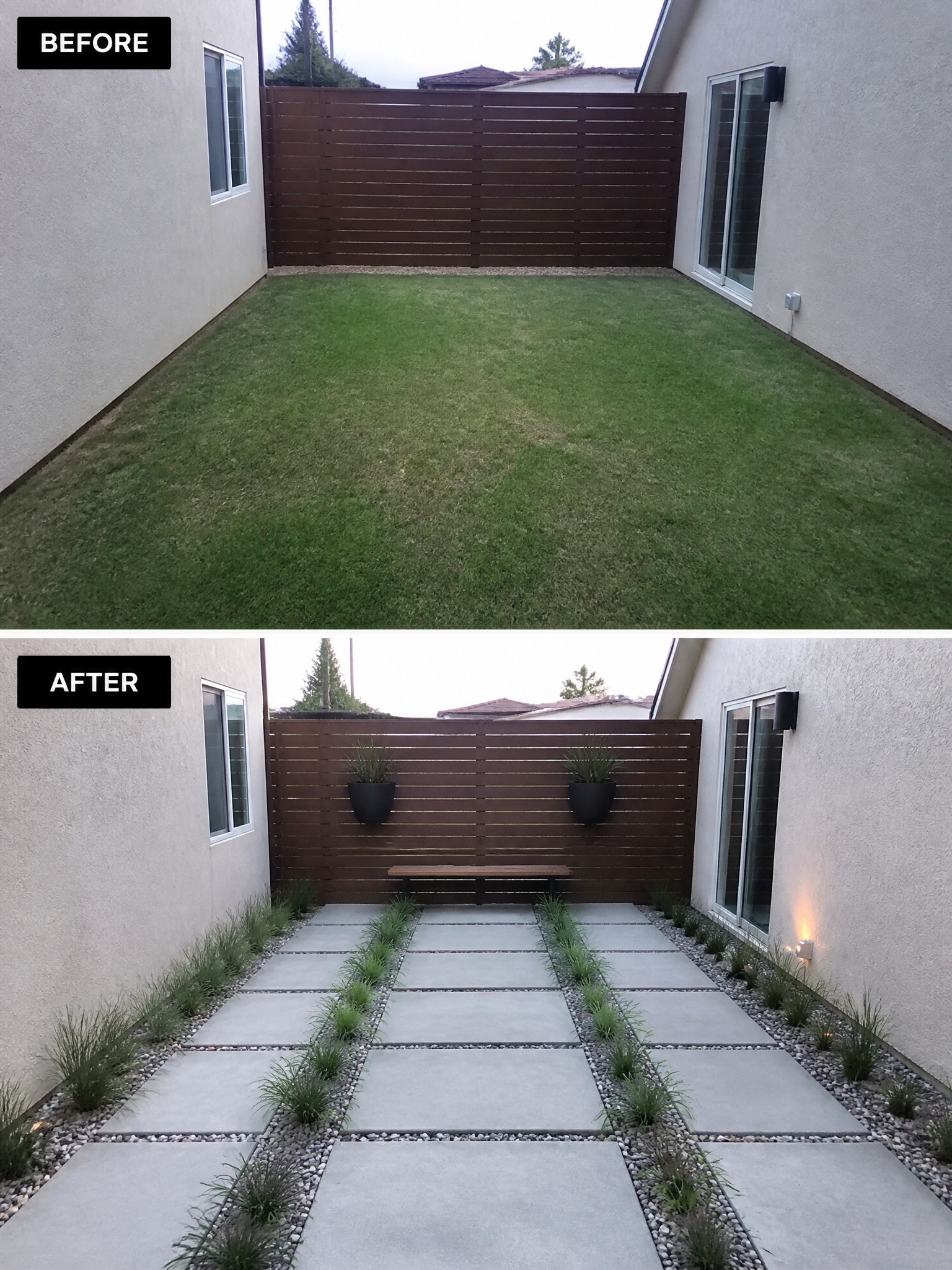
An empty grass yard often feels like wasted space because there is no clear way to use it. Adding a simple paver path with gravel edges gives the area structure right away. The before photo shows just lawn against a plain fence, while the after shows a straight walkway that leads the eye and creates usable zones on either side.
This approach works best in small to medium backyards where you want to keep things low maintenance. Start with the path layout first, then add narrow planting strips and a few wall planters if you have a fence. It keeps the space open for walking while still making the yard feel planned instead of blank.
Add A Shade Sail Between Trees For Easy Outdoor Shade
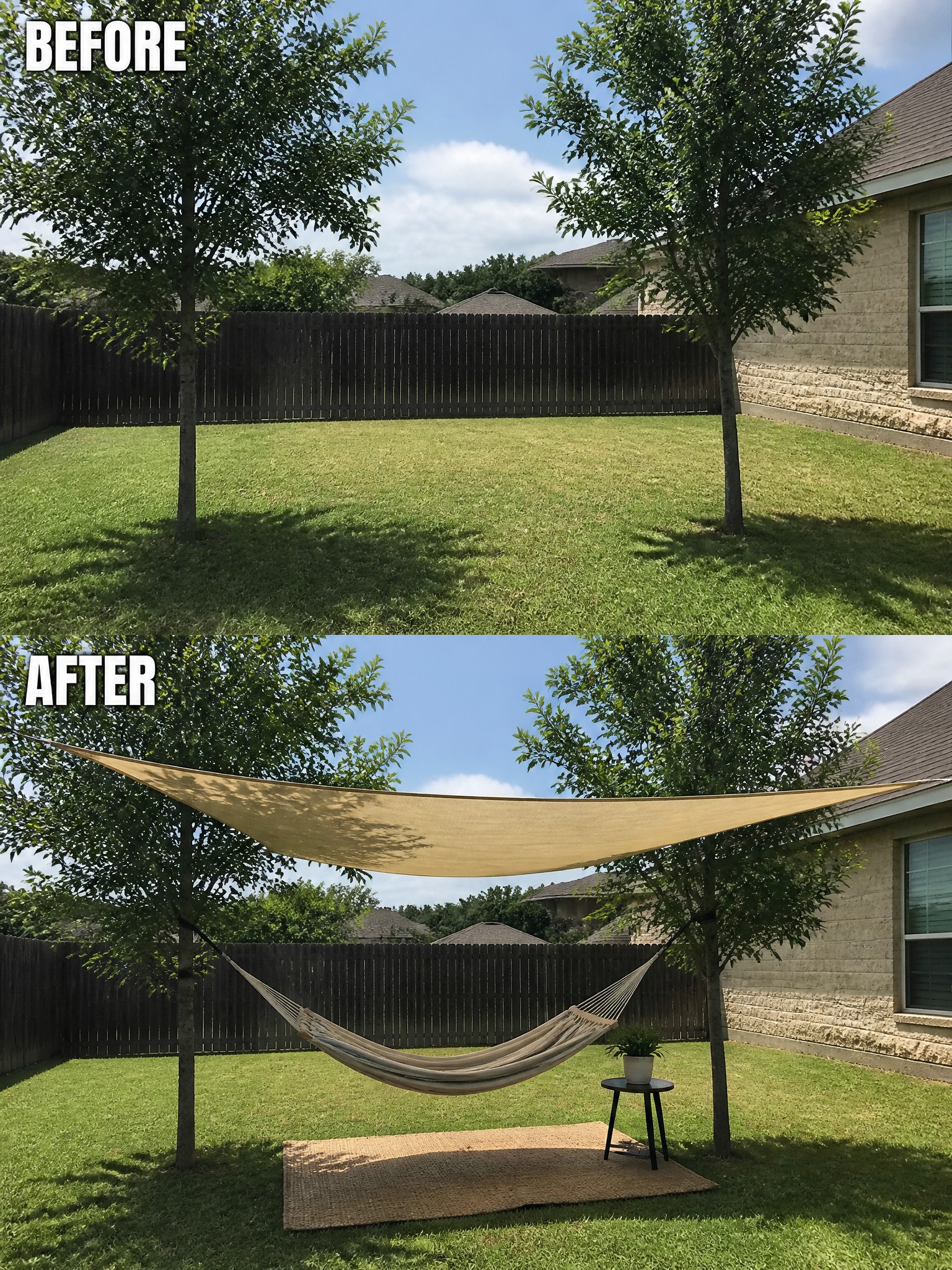
An empty backyard often stays unused because there is no shade or clear spot to sit. Running a simple shade sail between two existing trees and hanging a hammock below it turns that open grass into a place where you can actually spend time during the day.
This idea works best in yards that already have decent sized trees spaced far enough apart. Keep the rest of the setup light with just a small rug and one side table so the lawn stays open and the area does not feel crowded.
Create Defined Garden Beds Along A Fence Line
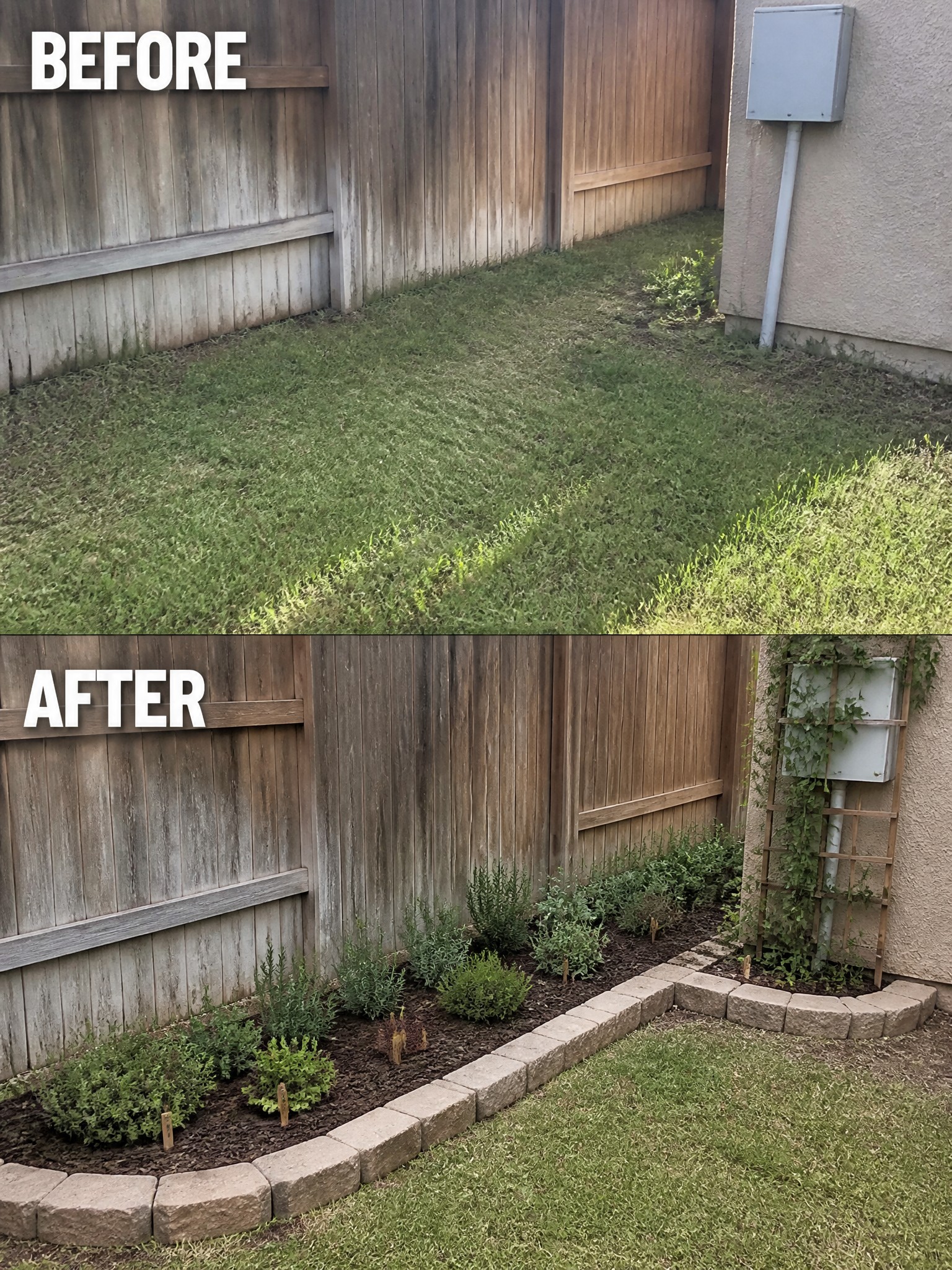
An empty stretch of grass often feels unfinished, especially along a fence or side yard. Adding a simple border of stone edging and a few planted beds gives the space clear shape without needing a full redesign. The change from open lawn to mulched beds with low shrubs turns a blank area into something that looks intentional.
This approach works well in narrow side yards or along property lines where you want some greenery but still need room to mow. Start with the edging to set the shape, then fill the beds with mulch and a handful of easy shrubs or ground cover. Keep the plants low so the fence stays visible and the yard does not feel crowded.
Add A Potting Station To An Empty Backyard

An empty grass yard can feel like wasted space once you start growing plants. This backyard gained a simple wooden structure with shelves, a work surface, and a roof, which turned the open lawn into a place where plants, tools, and soil actually have a home. The gravel base underneath keeps the area clean and prevents mud from spreading onto the grass.
A covered potting station works well in smaller yards because it concentrates the mess in one spot. Place it along a fence or side wall so it does not block the center of the lawn. Use weatherproof materials and keep the design open on the sides if you want to avoid a fully enclosed shed.
Add Outdoor Lighting To Define An Empty Yard
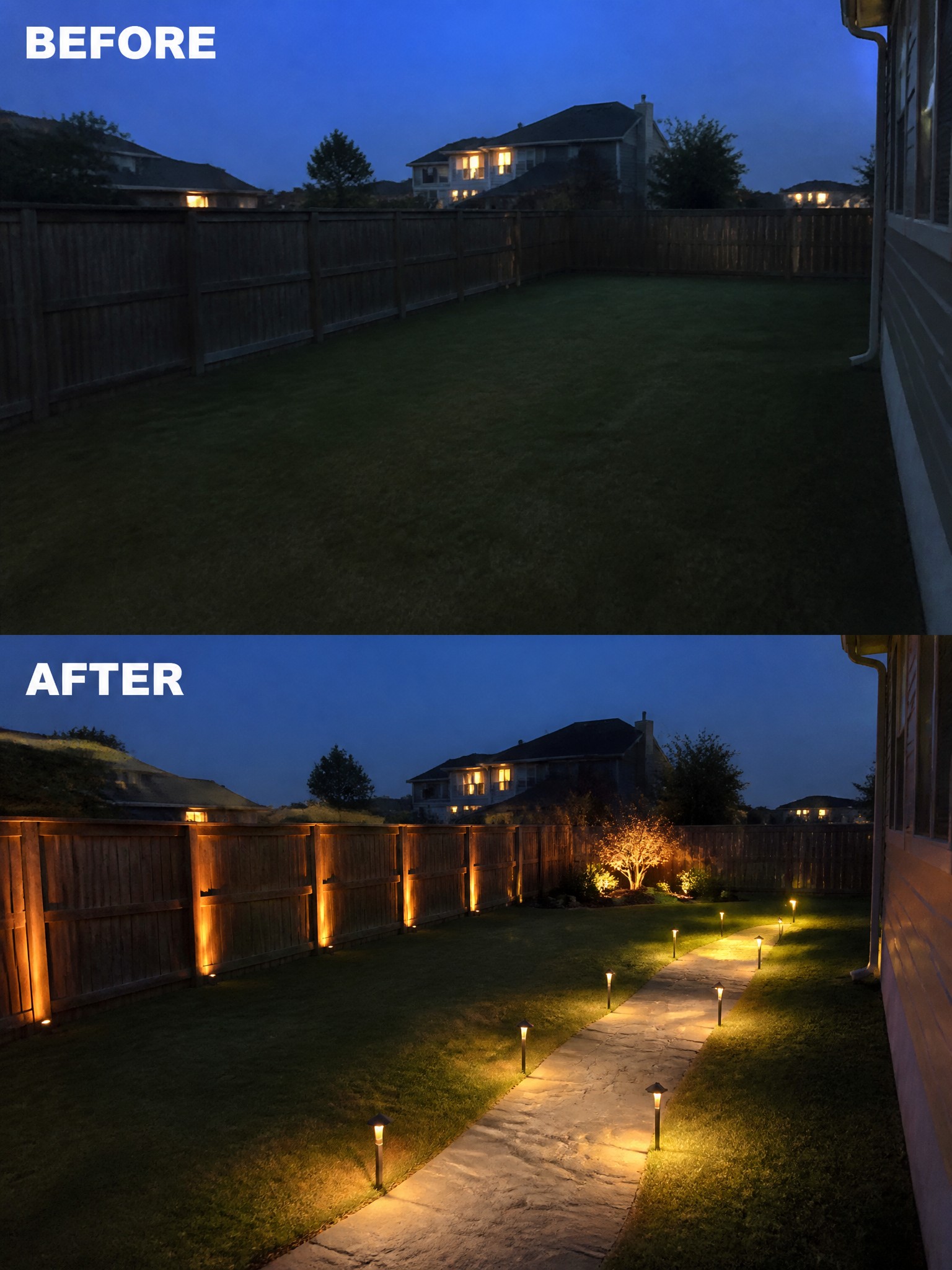
An empty grass yard often feels flat and unused once the sun goes down. Adding a simple path with low lights and a few uplights on the fence gives the space clear shape and makes it feel like a real extension of the house rather than just leftover lawn.
This approach works best in backyards that already have decent grass but lack any nighttime purpose. Start with the path since that is what people will actually walk on, then add a few lights along the fence line. Keep the fixtures modest so the yard still feels open instead of cluttered with hardware.
Turn An Empty Backyard Corner Into Seating
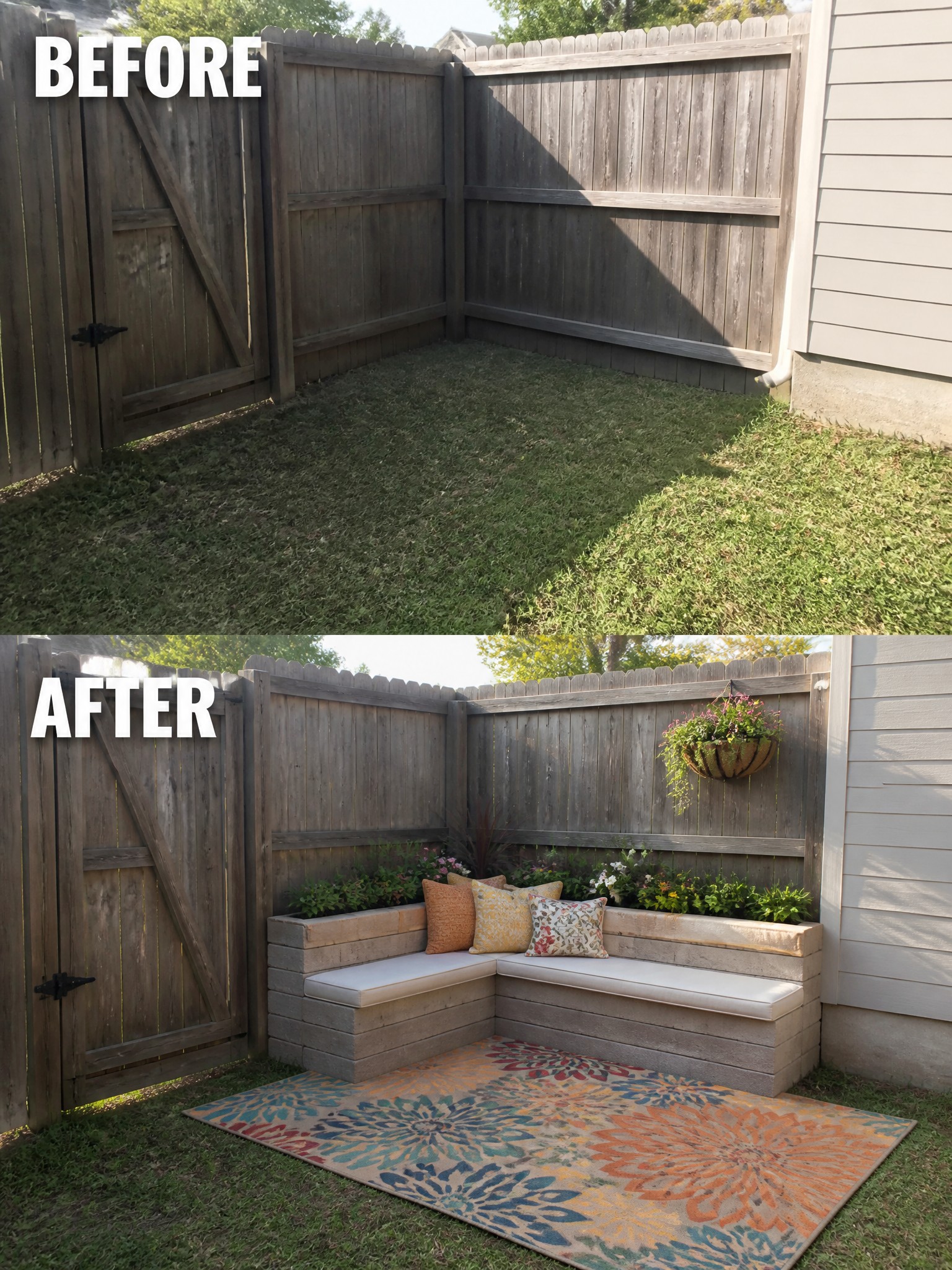
An empty grass patch next to a fence often stays unused because there is no clear place to sit. Adding a simple corner bench changes that quickly. The built-in seat creates a defined spot, and the rug underneath makes the area feel like a real room instead of just open lawn.
This idea works best in small yards where you want one usable zone without major construction. Start with the bench and rug, then add a few plants along the back if you want more color later. Keep the rest of the grass open so the space does not feel crowded.
Frequently Asked Questions
Q: Where should I begin if my yard has nothing but grass right now?
A: Pick one small corner and try a simple seating area first. You get a place to enjoy the space without tackling the whole yard at once. This helps you see what works before adding more.
Q: How can I make sure the changes do not take over my whole weekend?
A: Break the project into steps you can do in a few hours each day. Focus on one idea like laying pavers instead of trying several at the same time.
Q: What works best if I have pets that run around out there?
A: Choose durable options like gravel paths or raised beds that hold up to paws. Keep the main grass area open so they still have room to play freely.
