

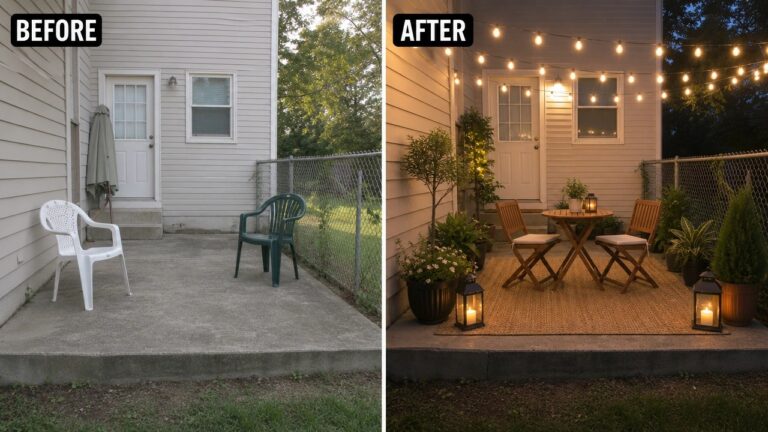
I have always noticed how a backyard often sits empty once the sun goes down because there is no clear way to use the space after dark.
Adding the right lighting can make those unused corners feel like an extension of the house without requiring major construction or new furniture.
One change I would test first is a simple string of lights over a seating area.
The setups that tend to last are the ones that work with how people already move through the yard rather than trying to create an entirely new layout.
It is satisfying to see how a few well placed fixtures can make the whole area feel less forgotten and more ready for regular use.
Use String Lights To Turn A Bare Patio Into A Cozy Spot
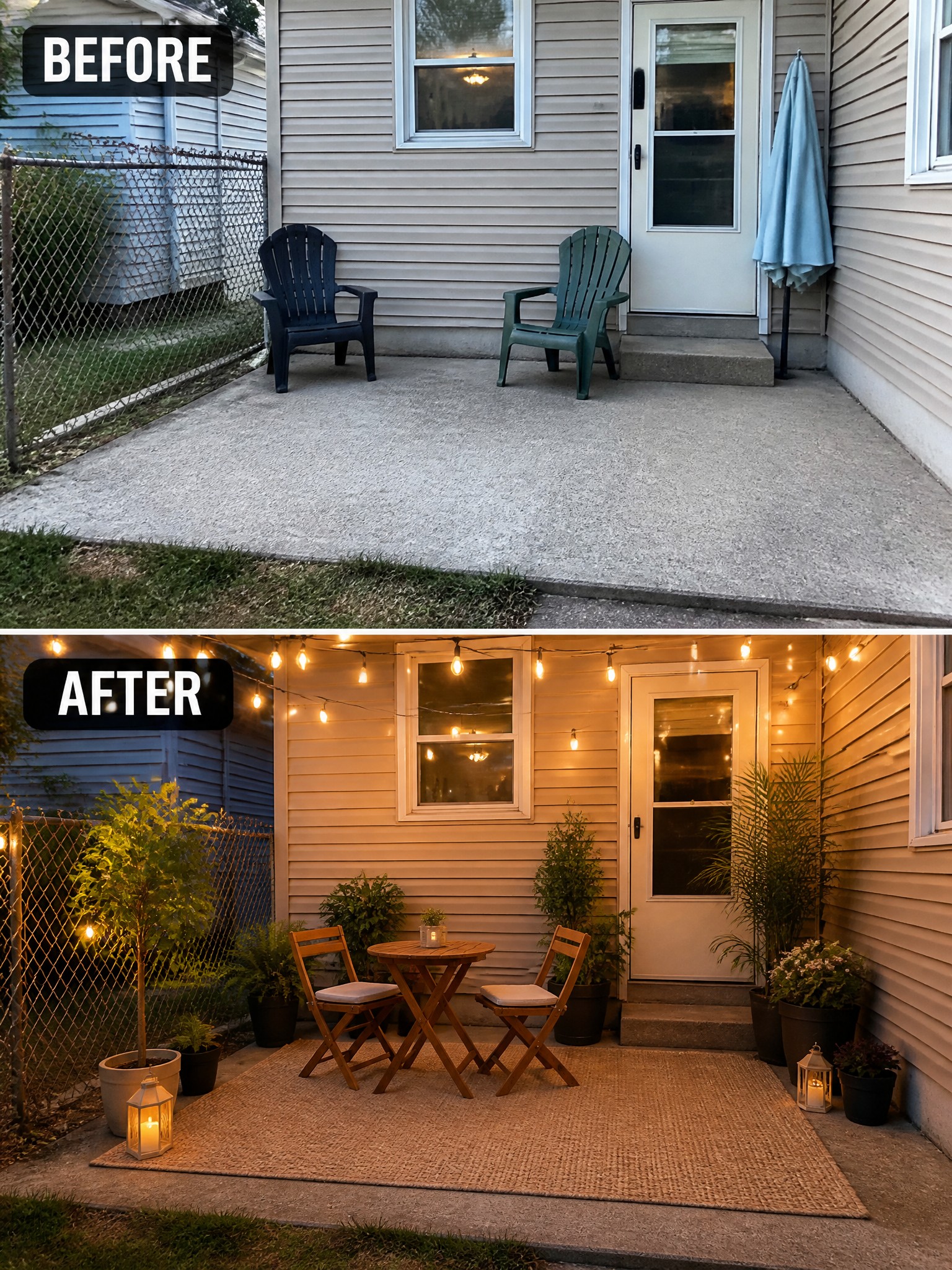
A plain concrete slab with just two chairs feels empty and unused. Adding string lights overhead, a simple rug, and a small table with chairs gives the space a clear purpose and makes it feel ready for evening use.
This approach works well on small patios or side yards where you want to create a seating area without major construction. Start with the lights and rug to define the zone, then add weatherproof furniture and a few plants. Keep the scale modest so the space stays open and easy to walk through.
Add Lighting Along A Garden Path

A neglected backyard path often stays unused once the sun goes down. In this case the stepping stones sat in weeds and bare dirt. Adding low path lights and a few uplights on the trees turned the walkway into something people actually want to use after dark. The lights also make the lawn and borders look more intentional instead of just leftover space.
This idea works well in any yard that already has a basic path or walkway. Start with simple solar or low-voltage lights along the edges, then add one or two tree lights if you have them. Keep the spacing even so the path feels safe to walk at night, and avoid overcrowding the beds with too many fixtures.
Add Outdoor Lighting To Make A Pool Area Usable After Dark
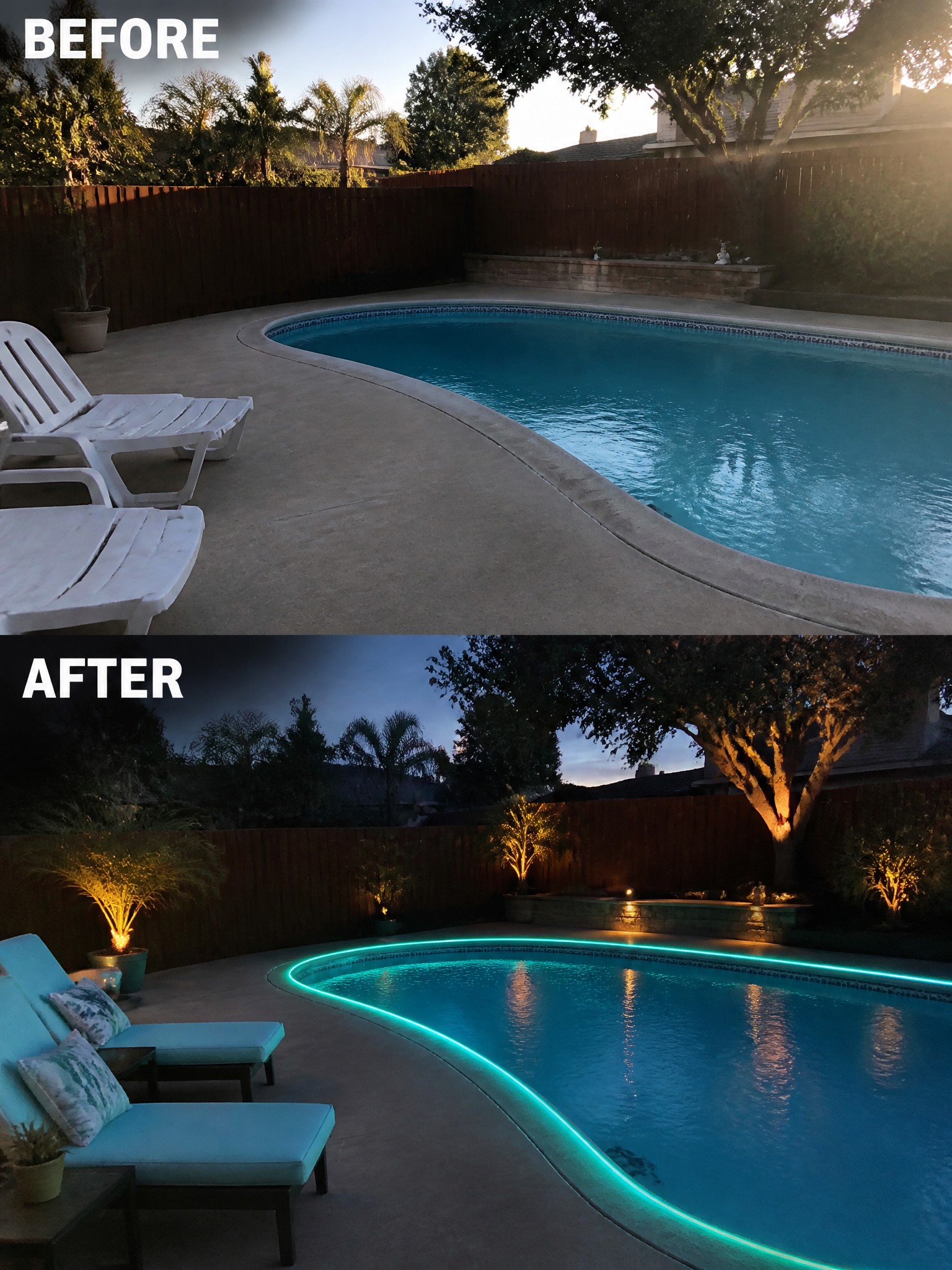
The pool deck felt flat once the sun dropped. A simple row of lights along the water’s edge plus a few uplights on the trees and shrubs gave the whole space a clear purpose for evening use.
This idea works best on larger concrete pads where the pool already exists but the surrounding area stays empty at night. Focus first on the pool perimeter, then add one or two lights on nearby plants. Keep the fixtures low-key so the water remains the main feature.
Use Outdoor Lighting To Make A Fire Pit Area Feel Usable
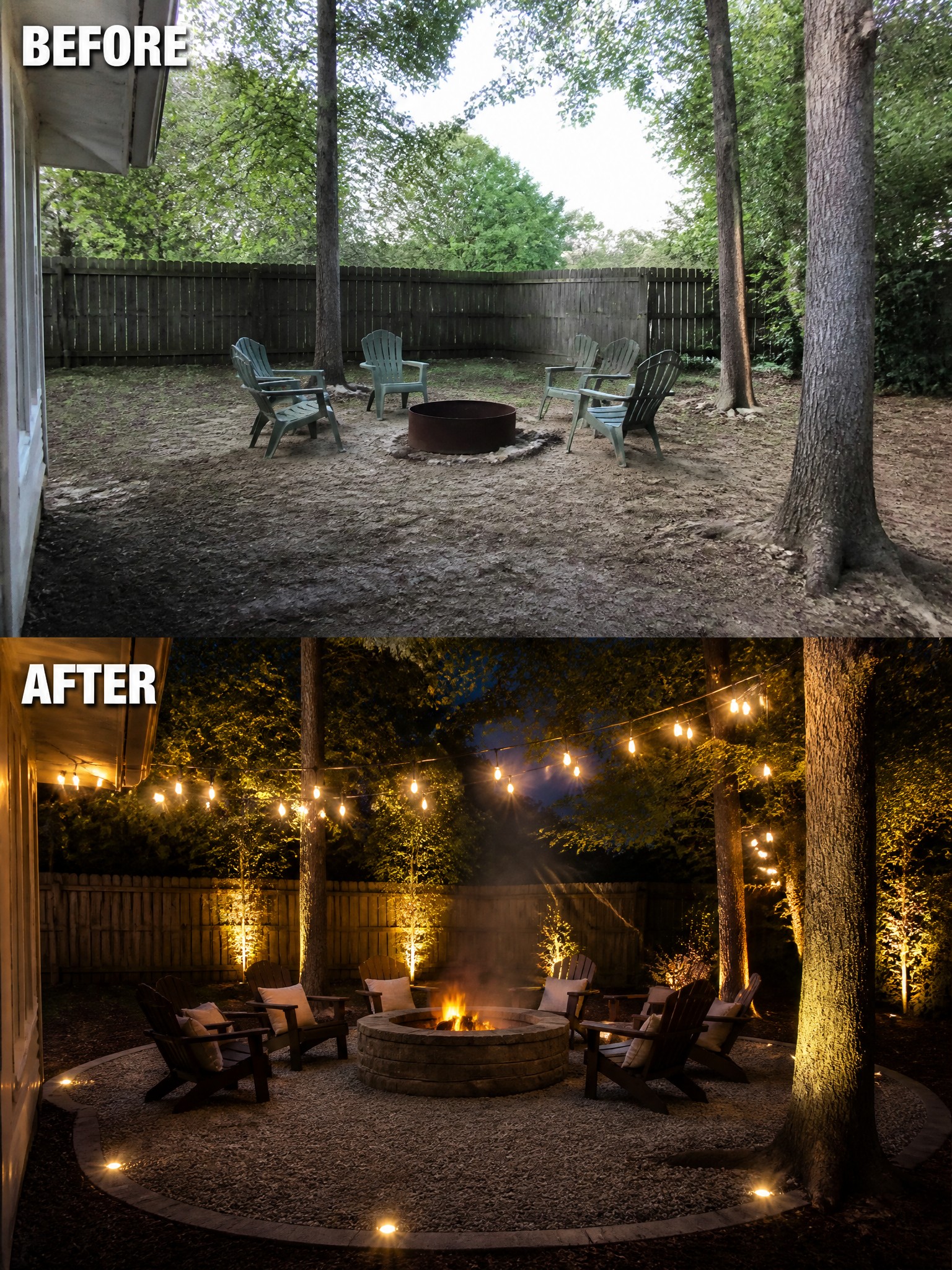
A plain dirt patch with a few chairs can sit empty most evenings because it feels unfinished. Adding simple lighting changes that fast. String lights overhead and low lights around the trees and seating give the space a clear boundary and make it comfortable after dark without needing a big remodel.
This approach works best in backyards that already have a fire pit or basic seating zone. Start with one or two strings of lights and a few ground spots aimed at trees or posts. Keep the number of lights modest so the area stays relaxed instead of overly bright, and choose fixtures rated for outdoor use so they hold up through the seasons.
Add Outdoor Lighting To Make A Backyard Usable At Night

An empty backyard often sits unused once the sun goes down. Adding layers of lighting changes that by turning the space into a place where people actually want to gather after dark. The simple addition of lanterns, path lights, and string lights on a tree creates a clear zone for seating and activities without needing a full redesign.
This approach works well in any yard that has a flat area but lacks definition at night. Start with a few solar or plug-in lights around the edges and one or two brighter spots near seating. Keep the light soft and focused on the main area so the rest of the yard stays calm.
Add Lighting To Turn A Basic Patio Into An Outdoor Kitchen
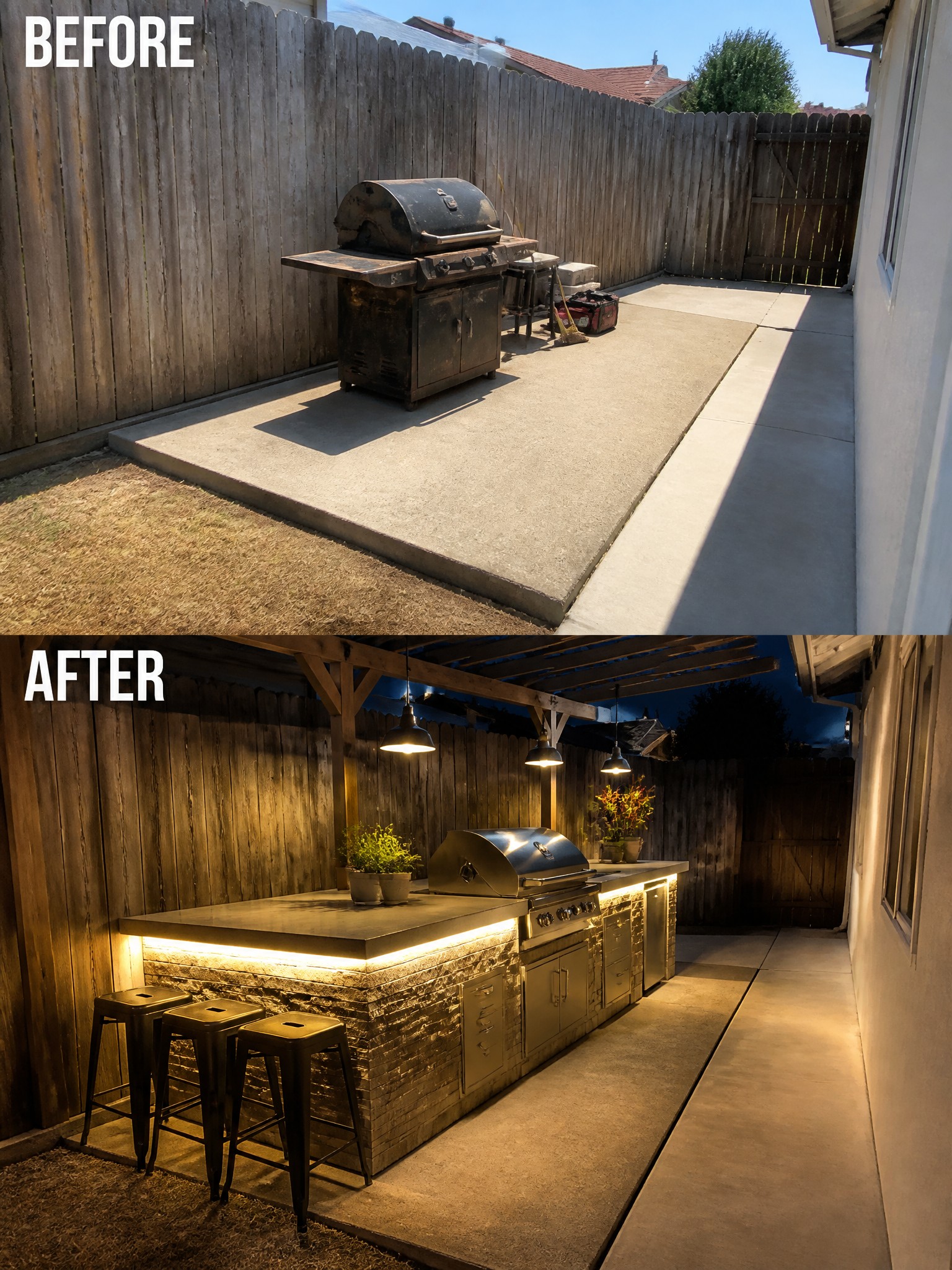
A plain concrete slab with just a standalone grill often sits unused once the sun goes down. Adding a simple cover along with focused lighting above the counter and under the island edges made the space feel like a real room instead of leftover concrete.
This idea suits backyards that already have a solid surface but need evening function. Place the main lights where people will actually stand or sit, keep the fixtures simple and weatherproof, and avoid spreading light too wide so the area stays cozy rather than brightly lit overall.
Add Structure To An Overgrown Backyard

An overgrown strip along a fence often stays unused because there is no clear shape or purpose. Clearing the weeds and putting in raised beds with simple trellises creates straight lines and growing space that is easy to manage. Adding string lights along the top and a few low path lights turns the same area into something usable after dark.
This idea works best in long, narrow yards where you want vegetables or flowers without a full landscape overhaul. Start with the beds and basic cleanup first, then add lighting once the structure is in place. Keep the beds at a comfortable width so you can reach everything without stepping on the soil.
Add Lighting To A Backyard Fence
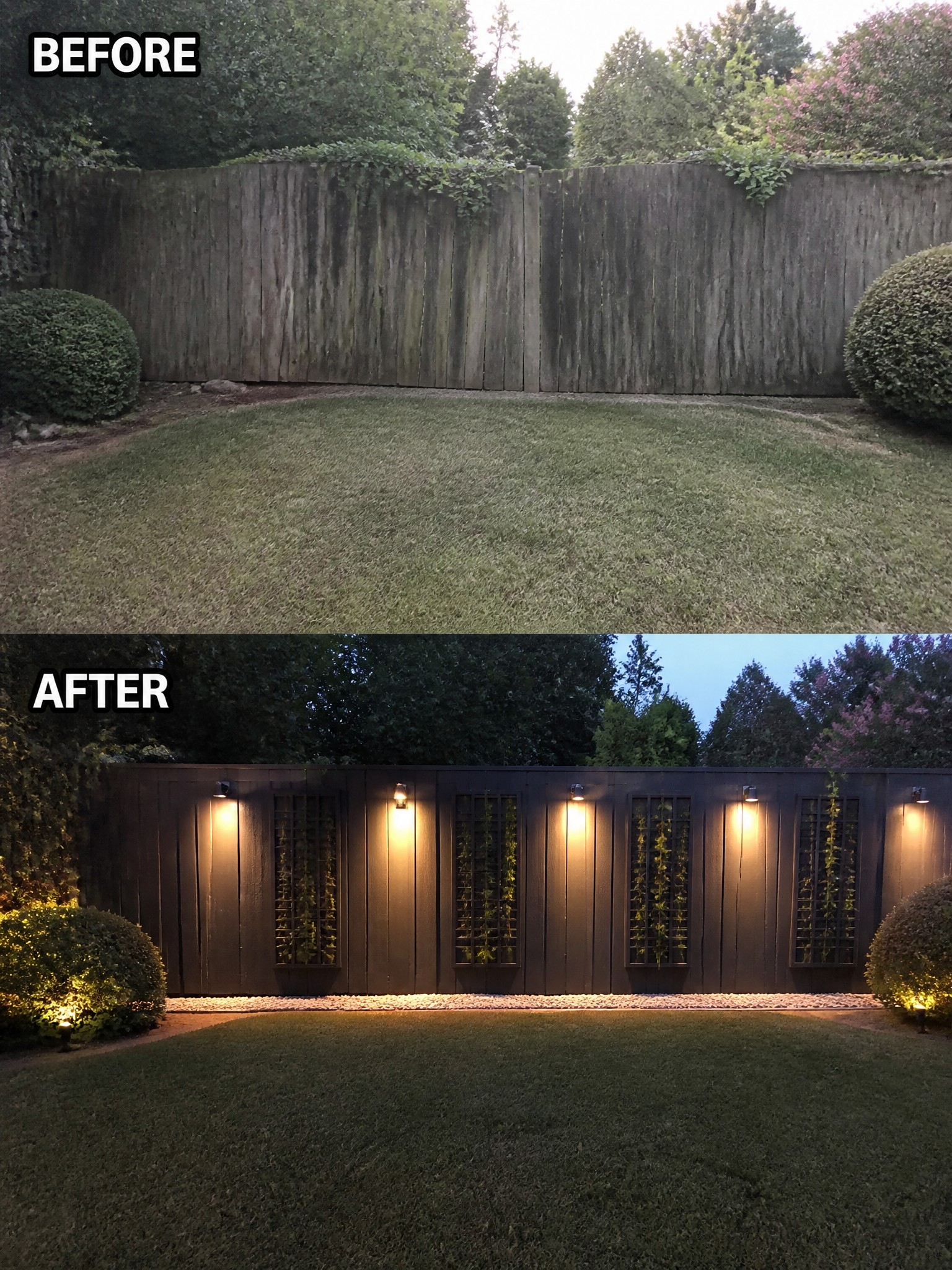
A plain fence and open lawn can feel unfinished once the sun goes down. In this case the fence was stained dark and fitted with simple wall lights spaced evenly along its length, plus a few low lights at the base. The result is a clear boundary that feels intentional and draws people outside after dark without any major construction.
This approach works well on straight fence lines that already exist. Place lights at a consistent height and keep the spacing even so the glow feels balanced. It suits backyards that need a focal point at night but do not have room for large structures or seating areas.
Define A Sloped Yard With Steps And Outdoor Lighting
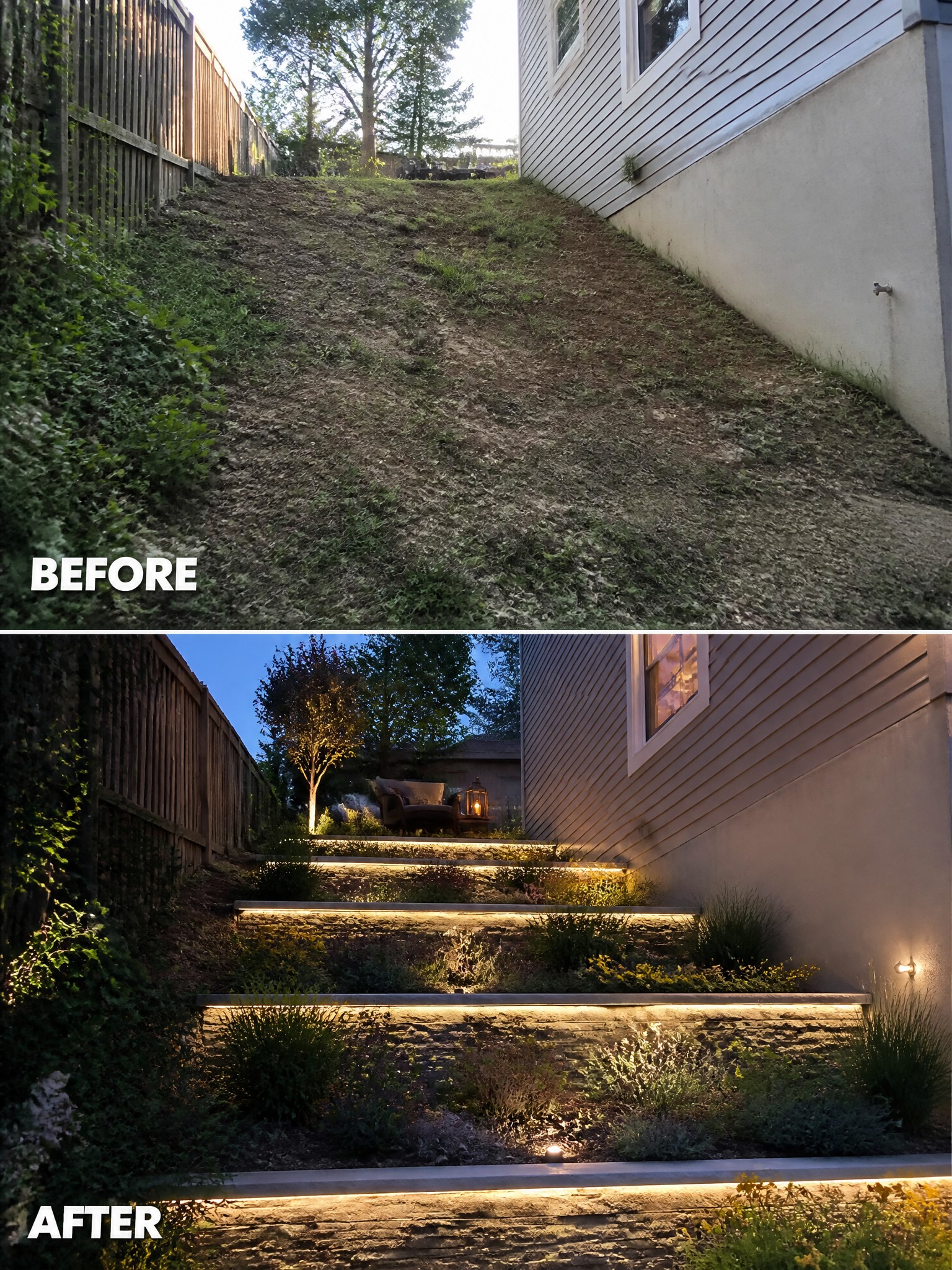
A bare, overgrown slope is hard to use and often gets ignored. Adding a set of stone steps with lights built into the risers turns the same space into a clear path that works at night and looks intentional during the day. The lights make the steps safe without needing tall fixtures that would clutter the view.
This approach works best on moderate slopes where you need access between levels. Start with the steps and basic planting, then add the lighting so the path feels finished rather than just functional. Keep the fixtures low and warm so they highlight the steps without shining into windows or neighboring yards.
Use Outdoor Lighting To Make A Pergola Feel Cozy
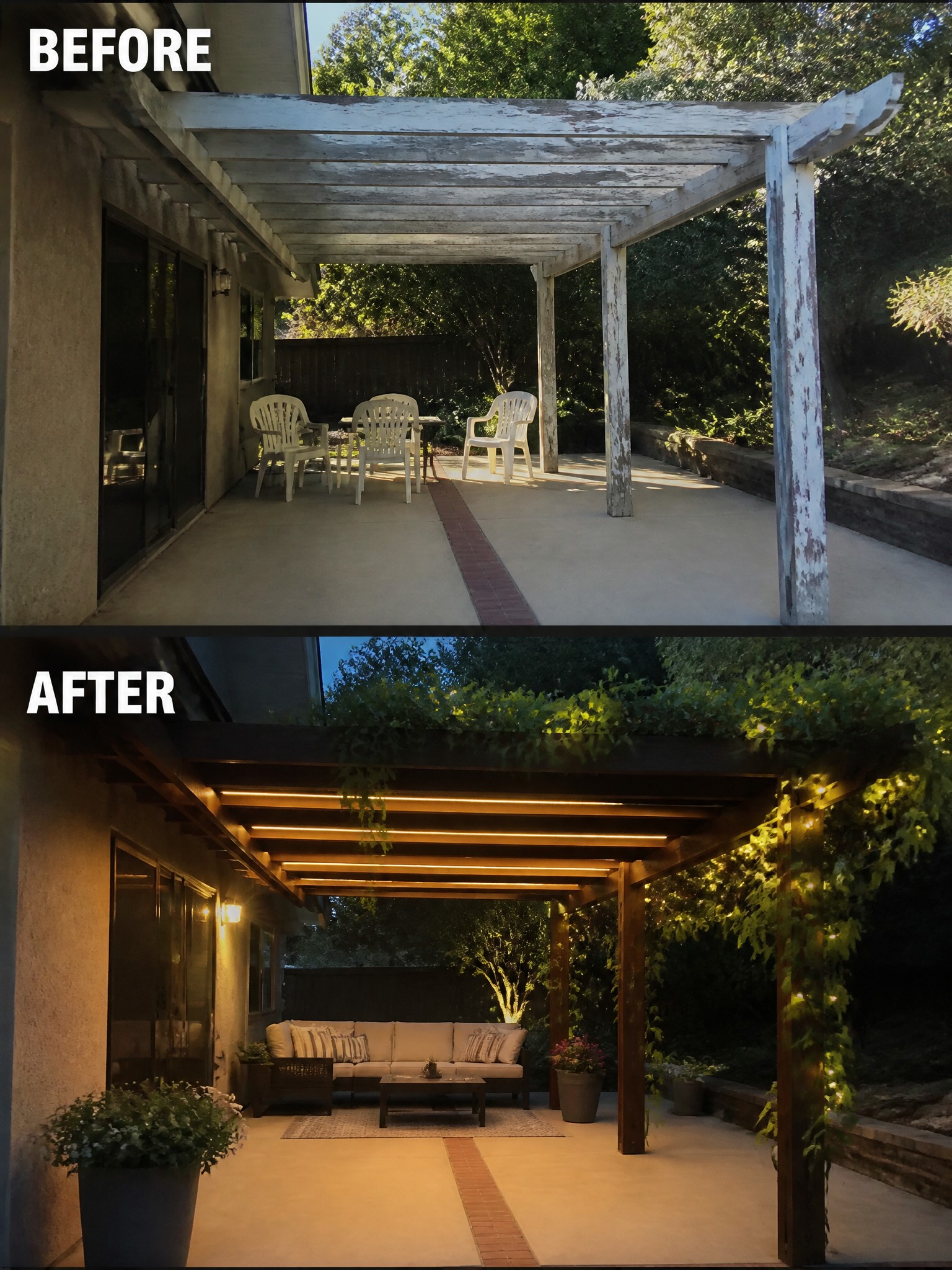
The before photo shows a basic pergola with faded paint and a few plastic chairs sitting on plain concrete. In the after photo the same structure has been stained dark and fitted with warm linear lights under the beams plus string lights along the posts. That simple change turns the space into a place people actually want to sit after dark.
This idea works best on a covered patio or deck where you already have a solid roof structure. Start by adding one layer of overhead lighting so the seating area feels defined at night. Keep the furniture scale comfortable but not oversized, and add just enough plants around the edges to soften the look without crowding the walkway.
Add Outdoor Lighting To Define A Side Yard Path
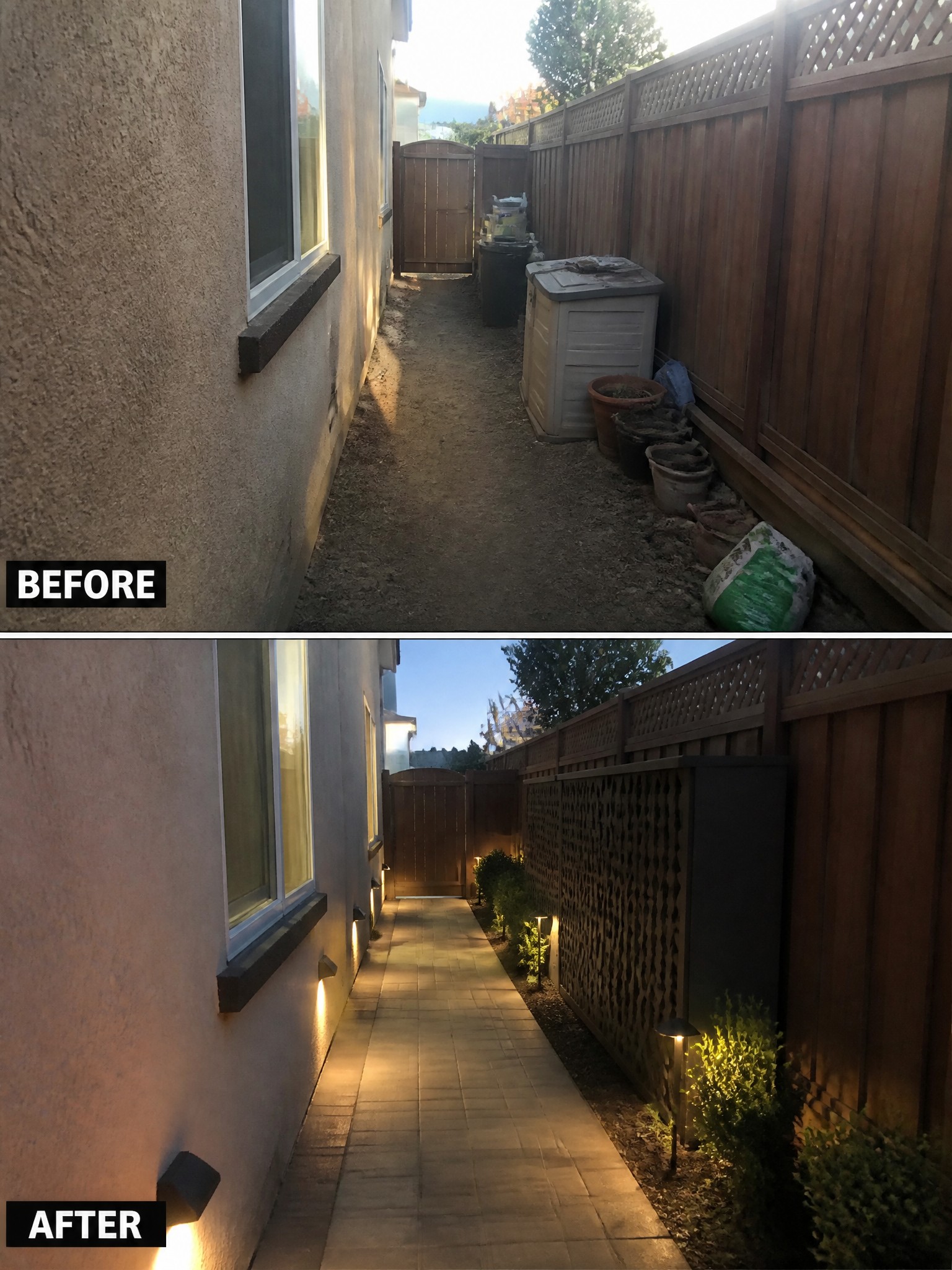
A narrow dirt path next to the house often gets ignored because it feels dark and unfinished. Adding a paved surface and a few well-placed lights turns the same space into a clear walkway that can be used after dark without tripping over pots or bins.
Place low path lights along the fence side and small wall lights on the house to mark the route. This approach works best in side yards or narrow back passages where you need simple access rather than a full seating area. Keep the fixtures modest so the lights guide movement without overpowering the space.
Add Outdoor Lighting To Make A Patio Feel Cozy
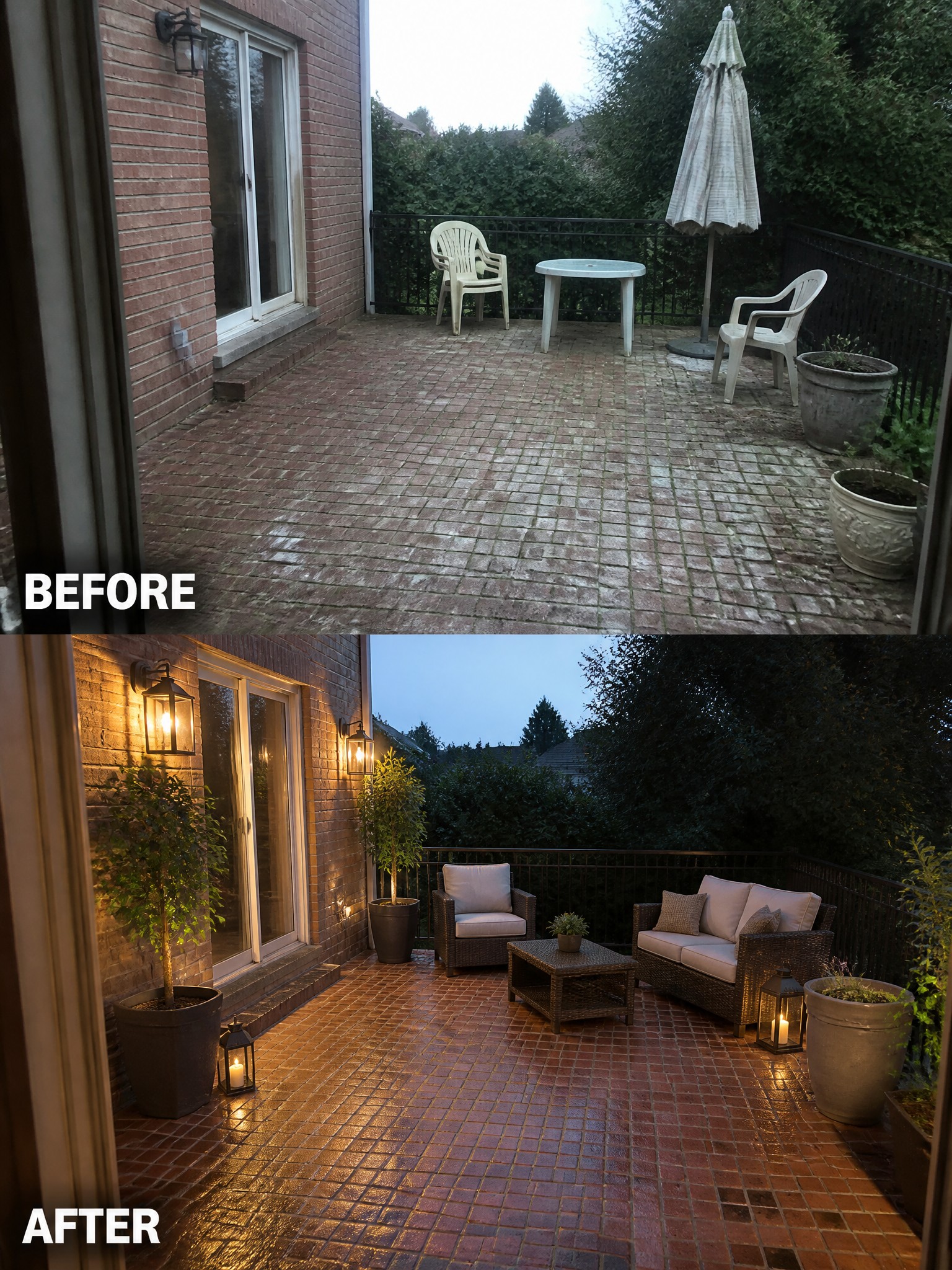
A bare patio often sits unused once the sun drops. The before photo shows a flat brick space with only a few plastic chairs. Adding wall sconces and a couple of lanterns turns the same area into a spot that feels inviting in the evening. The light brings out the furniture and plants without needing a full redesign.
This works best on patios that already have seating but lack any glow after dark. Place one or two lights on the house wall and set a lantern near the main chairs. Battery versions keep things simple if you do not want to run new wiring. Focus the light low so it feels calm instead of harsh.
Add Landscape Lighting To Define A Backyard Play Area
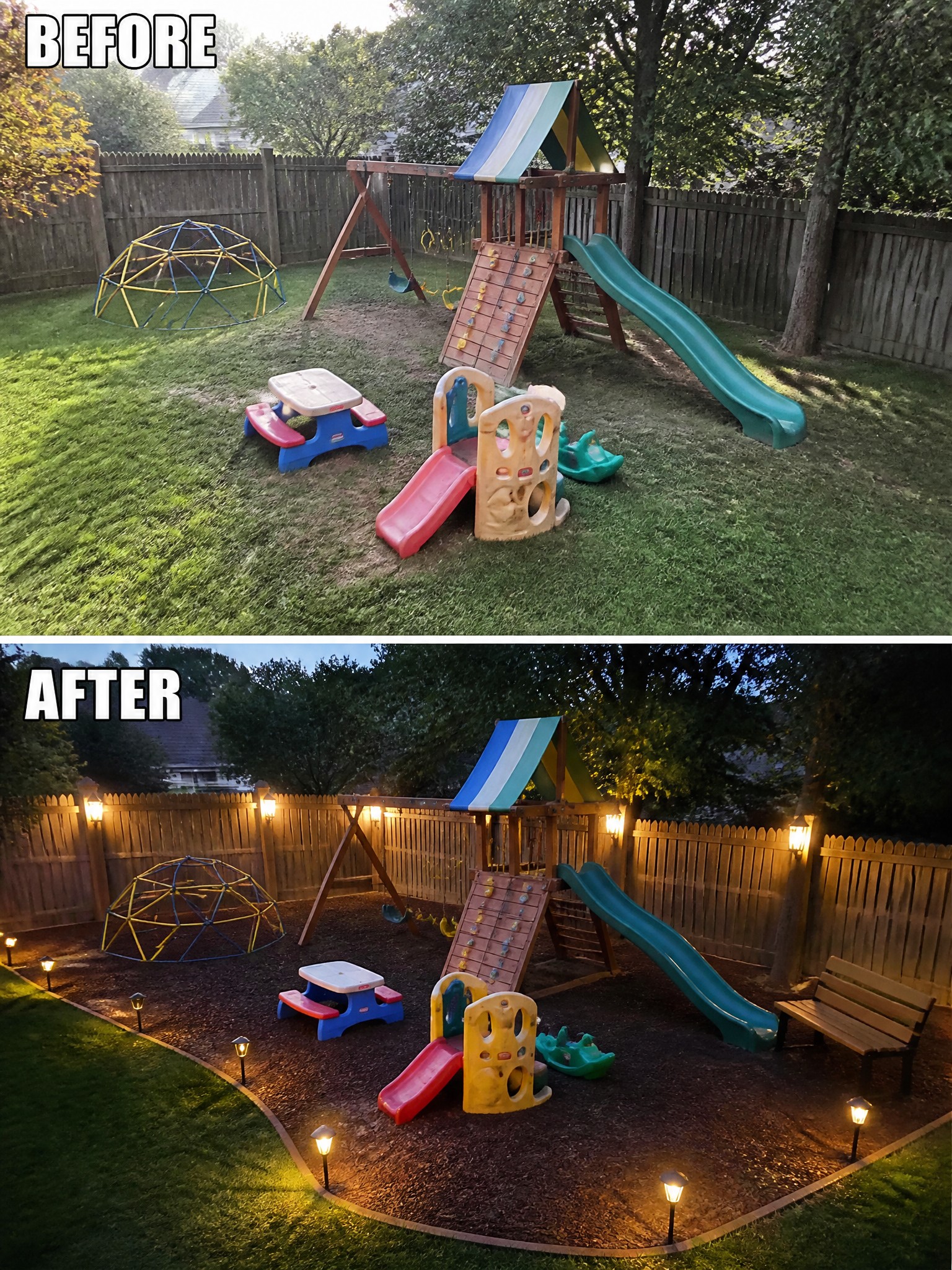
Many backyards with kids’ equipment end up looking messy and underused once the sun goes down. In this case the space shifted from an open lawn with scattered toys to a clear mulched zone ringed with low path lights. The lighting gives the area a boundary, makes it safer to walk through after dark, and turns the play set into something the family can actually enjoy in the evening.
This approach works well in any yard that already has swings or a slide but lacks structure. Start by laying down mulch or gravel to cut down on mud, then add simple solar or low-voltage lights along the edges and around key pieces of equipment. Keep the fixtures modest so the focus stays on the play area rather than the lights themselves.
Use Lighting To Make A Gazebo Feel Cozy
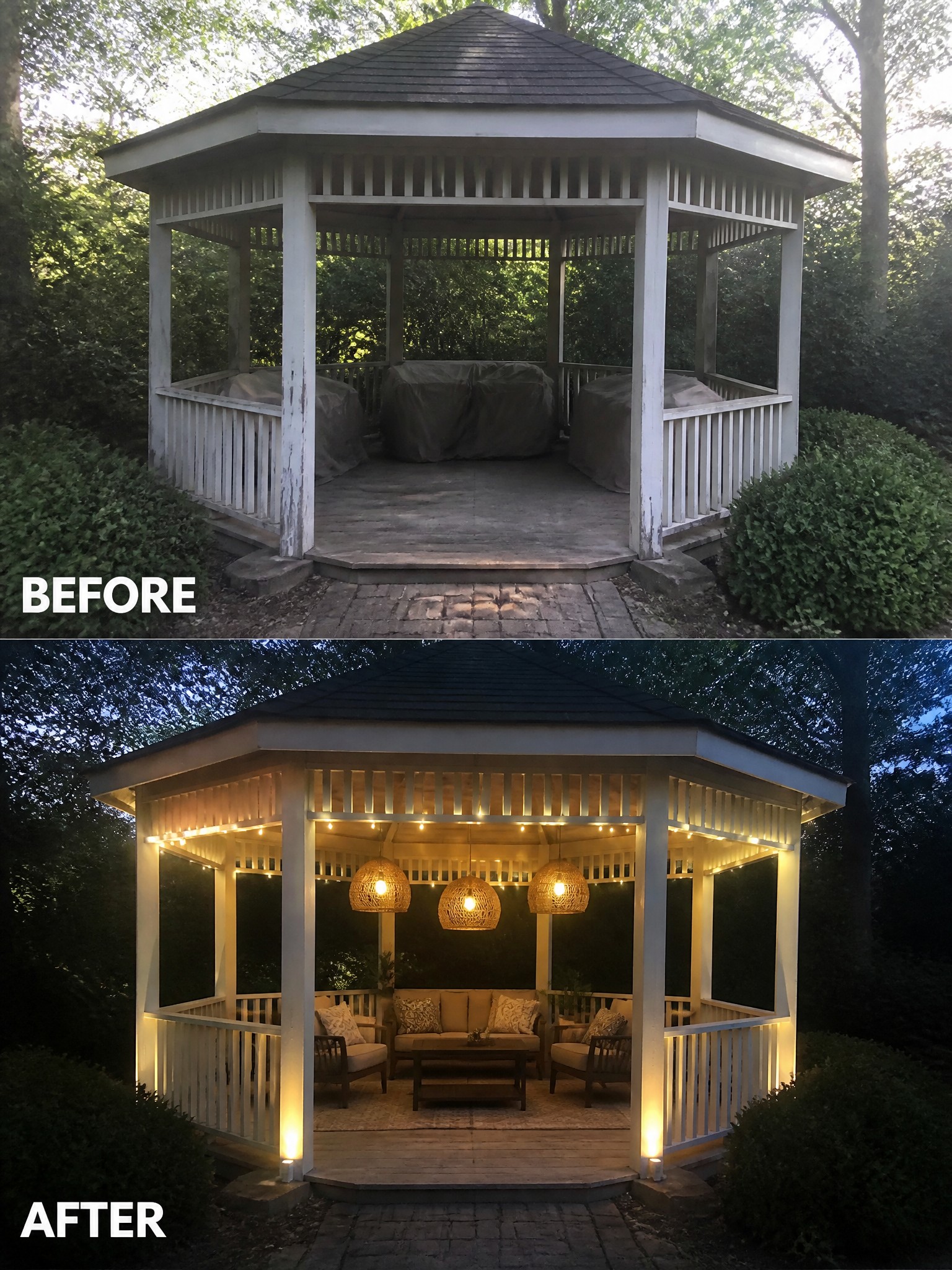
A plain gazebo often sits unused once the sun goes down. Adding string lights along the rafters and a few hanging fixtures over the seating area turns the same structure into a space people actually want to sit in after dark. The before photo shows an empty shell with furniture still covered. The after shows how simple lighting makes the whole area feel finished and welcoming.
This idea works well in any backyard that already has a covered spot like a gazebo, pergola, or large deck. Start with one or two strands of string lights to outline the roofline, then add a couple of weatherproof pendants above the main seating zone. Keep the furniture simple and the floor clear so the lights stay the main focus.
Use Outdoor Lighting To Make Your Backyard Feel Cozy
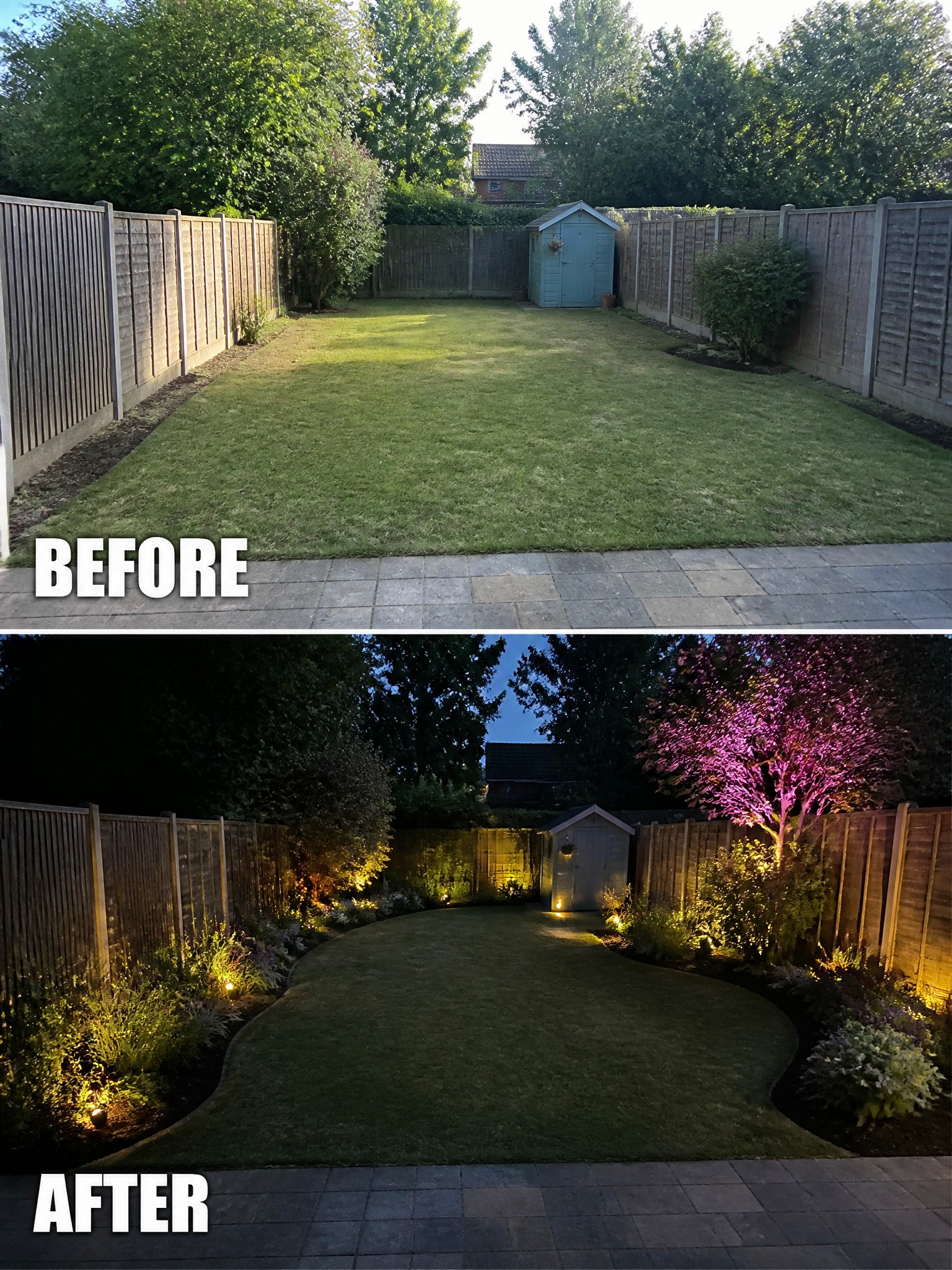
A flat lawn with plain fencing often feels unfinished once the sun sets. Adding low lights along the garden borders and a few uplights on trees turns the same space into one that can be enjoyed in the evening without any extra seating or structures.
This approach works best once you have basic planting in place. Place a handful of lights along the edges of your beds and aim one or two at a tree or larger shrub. It suits most average backyards where you want the garden to feel used rather than just looked at from the house.
Add Outdoor Lighting To Make A Patio Feel Cozy

A bare paved courtyard can feel like wasted space once the sun goes down. Adding string lights overhead and a soft glow under the seating turns the same area into a spot where people actually want to sit after dark. The lights define the space without needing walls or a roof.
This approach works well on any hardscaped backyard that already has decent paving. Start with one main seating piece and two simple light sources, then add plants only if there is still room to move around. Keep the lights on dimmers so the area stays usable on cooler nights without feeling too bright.
Use String Lights Along A Fence To Warm Up A Backyard

Adding string lights along the top of a fence turns a plain backyard border into something that feels finished and welcoming after dark. The before photo shows an empty stretch of grass with a few scattered pots and no real definition. In the after photo, the lights run the full length of the fence and create a soft line that draws the eye and makes the space feel enclosed without any heavy construction.
This idea works well on any property that already has a fence in decent shape. Start by running the lights along the posts first, then add a few low planters at the base if you want more structure. It suits smaller yards especially, since the lights do most of the work without taking up floor space. Just make sure the cord is rated for outdoor use and that you have an easy way to turn it off when the area is not in use.
Add Path Lights To Brighten A Backyard Walkway
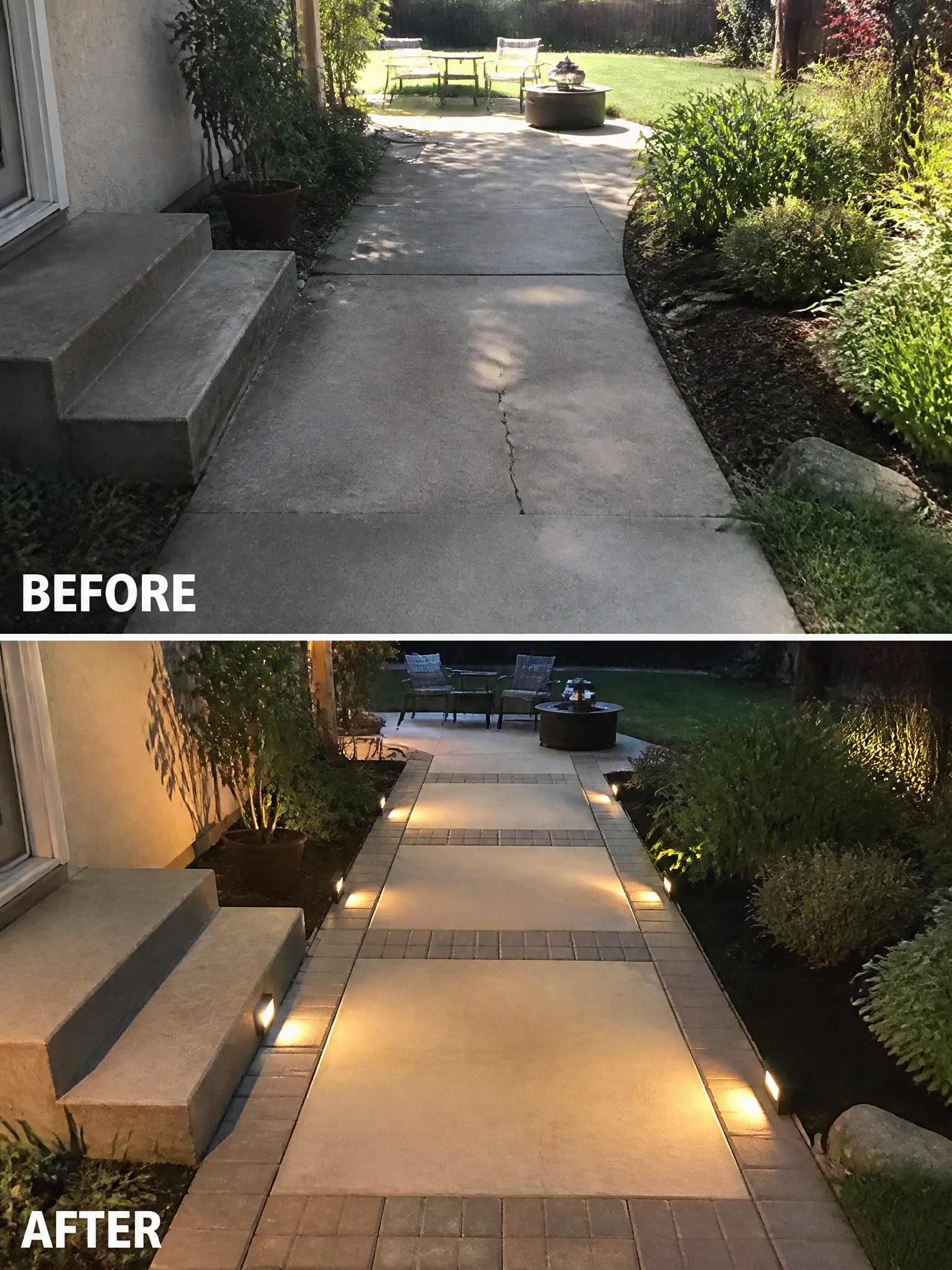
A plain concrete path can feel dark and unfinished once the sun goes down. Adding low path lights along the edges gives the walkway a clear purpose and makes it much easier to use after dark. The simple addition of lighting turns a basic route into something that feels intentional and welcoming.
This idea works well on any straight or gently curving path that connects the house to a seating area or lawn. Start with cleanup and basic edging so the lights have a clean line to follow. Keep the fixtures low and evenly spaced so they guide people without creating glare.
Use Lighting To Make A Backyard Seating Area Feel Cozy
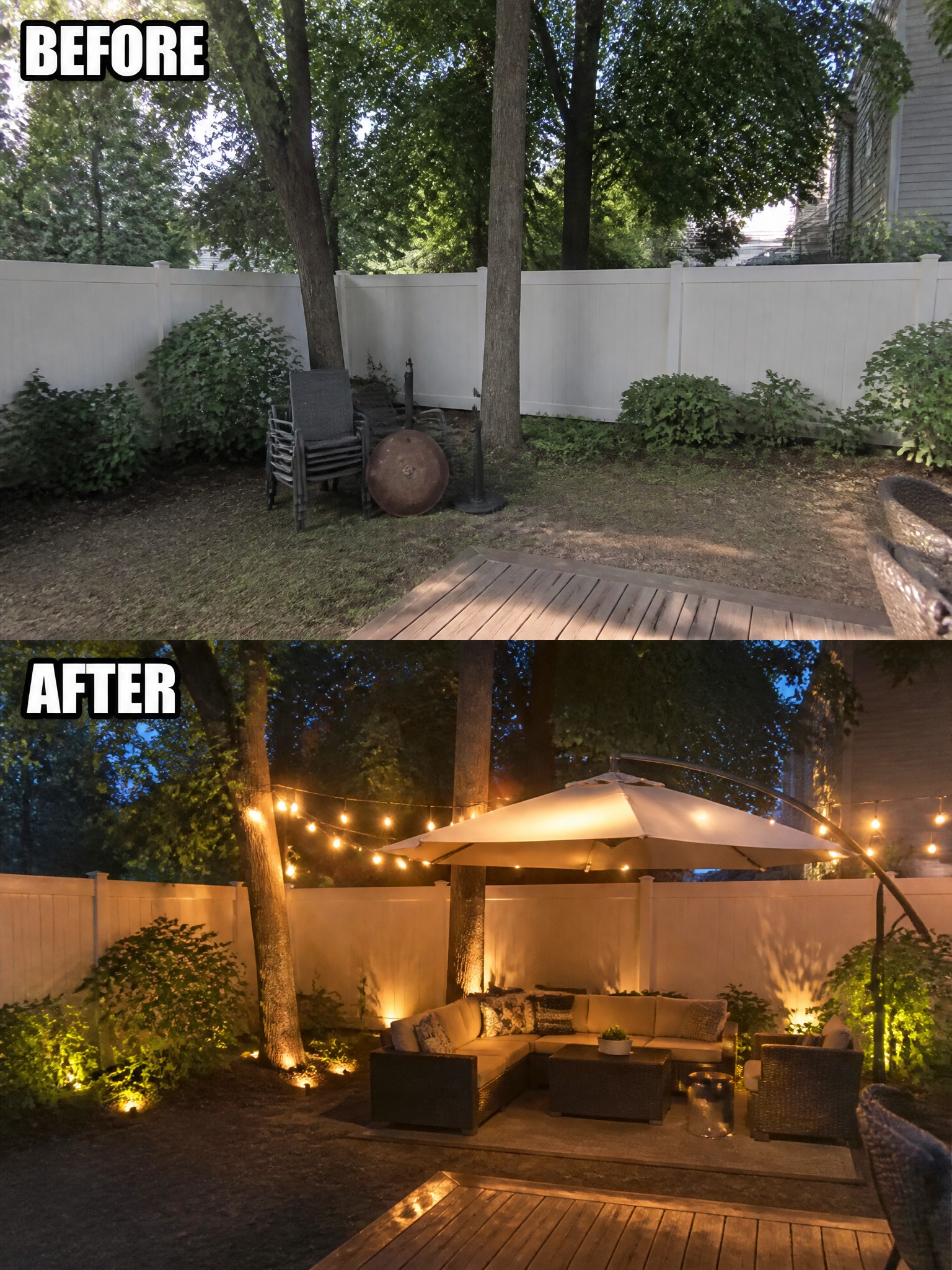
A bare backyard with just a few stacked chairs and open grass can feel unfinished and unused after dark. Adding string lights overhead along with low uplights on the trees and shrubs turns the same space into a comfortable spot for sitting at night. The lights create a clear boundary and make the seating area feel intentional instead of leftover.
This approach works well in yards that already have trees or a fence line to hang lights from. Start with one string of lights above the main seating zone and a few ground lights aimed at plants or trunks. Keep the furniture simple so the lighting stays the main feature.
Use Rocks And Lighting To Give A Mulch Bed Structure
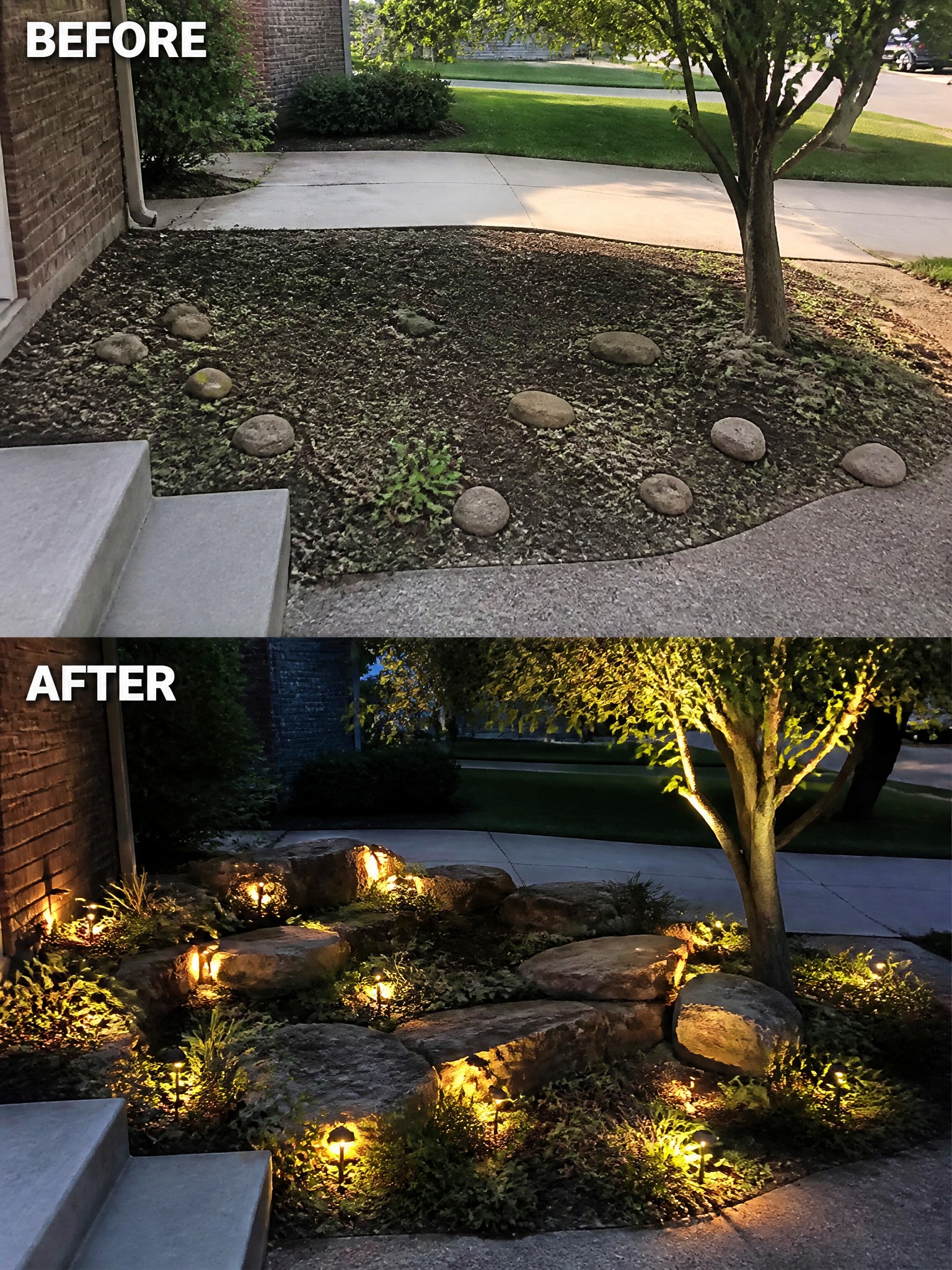
A plain mulch bed often looks unfinished even after the initial cleanup. Replacing scattered small stones with a few larger boulders creates clear shape and height. Adding low path lights around the base then makes the same area useful after dark instead of disappearing at sunset.
This approach works well along a walkway or near an entry where people pass at night. Place the biggest rocks first to set the layout, then tuck lights along the front edge so they point upward without glare. Keep the planting simple so the rocks and lights stay the main feature.
Use Outdoor Lighting To Highlight A Garden Pond
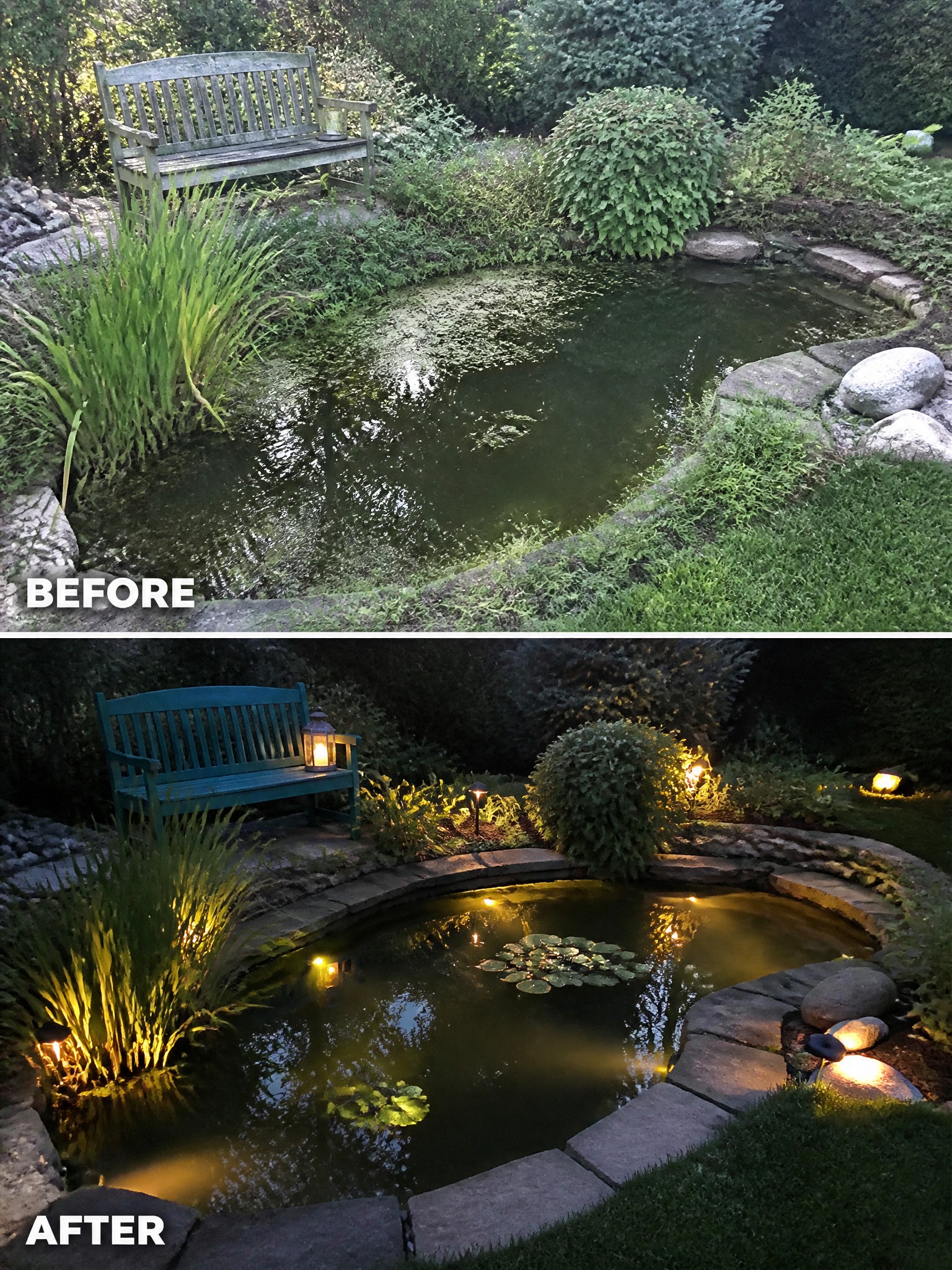
A backyard pond often looks pleasant in daylight but turns into a dark patch once evening arrives. Adding simple outdoor lights around the water and near the seating changes that by making the area feel intentional and usable after dark.
Place low path lights along the edges and a few brighter spots near the bench so the glow reflects on the water. This approach works best in smaller yards where the pond can serve as the main focal point without needing much extra furniture or structures.
Turn An Empty Patio Into A Usable Outdoor Dining Area
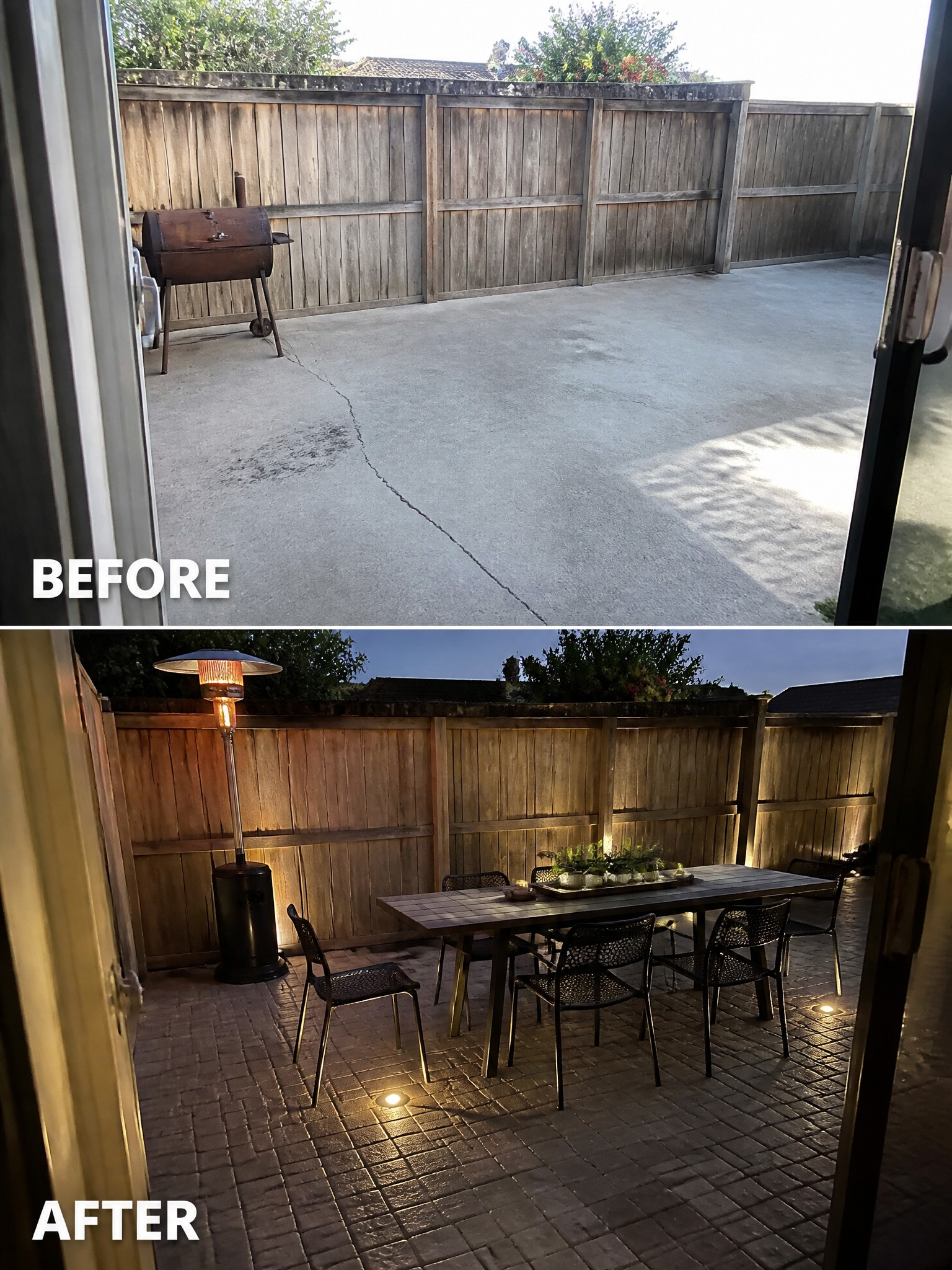
A bare concrete slab with nothing but a grill feels like wasted space. Adding a table and chairs along with simple lighting on the fence and ground turns the same area into a place where people actually want to sit after dark. The lights create a clear zone without needing walls or a roof.
This approach works best on patios that already have decent fencing or screening. Start with one solid seating piece and a couple of low lights near the edges so the space feels intentional rather than crowded. Keep the furniture weatherproof and leave enough room to walk around the table comfortably.
Use Outdoor Lighting To Highlight A Stone Wall
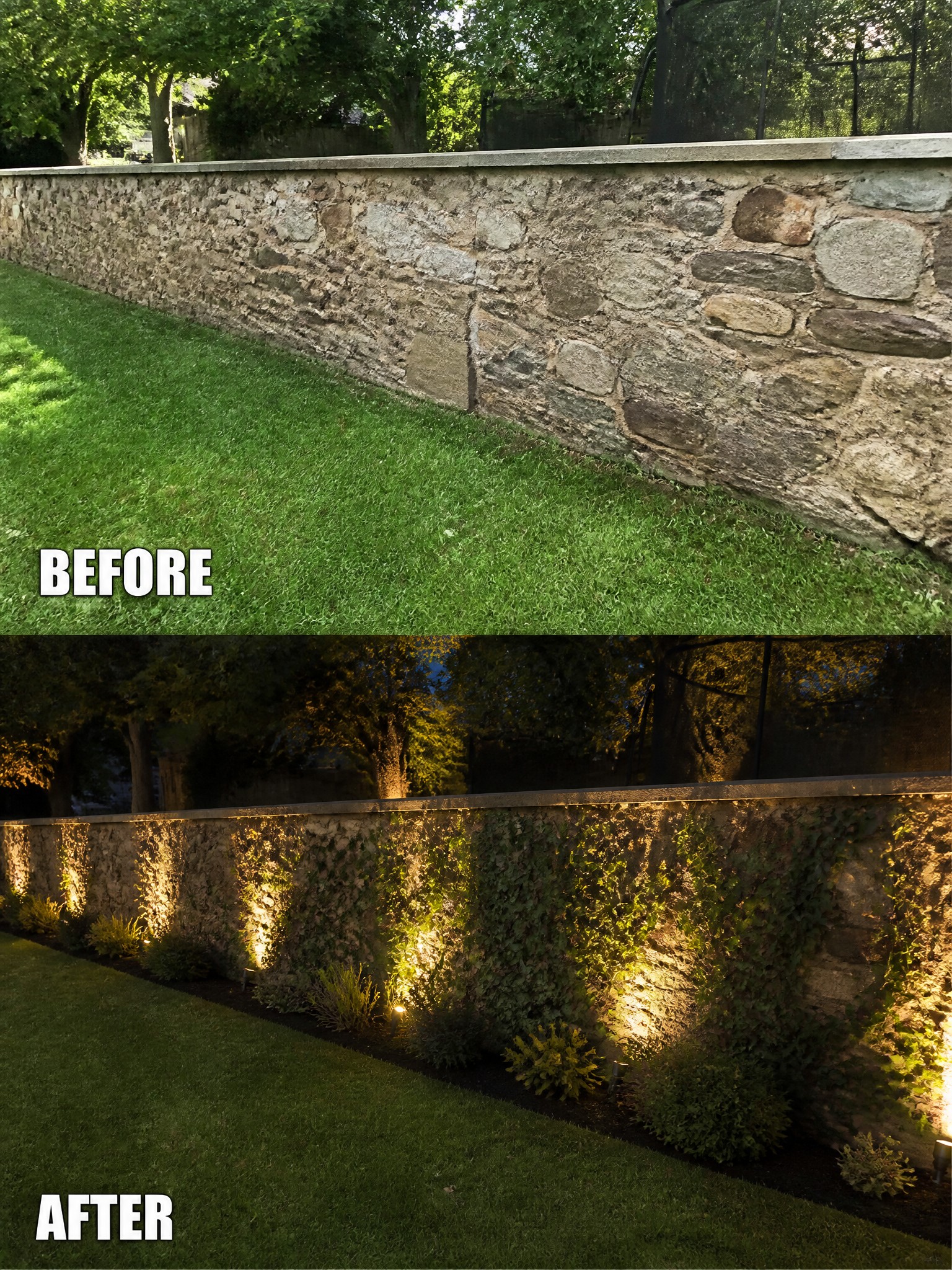
A long stone wall often looks flat once the sun drops. Placing small uplights along the base brings out the texture of the stones and any vines growing on them, turning a plain barrier into the main feature after dark.
This idea works best in yards that already have a solid wall or fence line. Space the lights evenly, keep the fixtures low so they stay hidden during the day, and use warm bulbs to avoid a harsh look against the stone.
Use Lighting To Make A Patio Feel Cozy
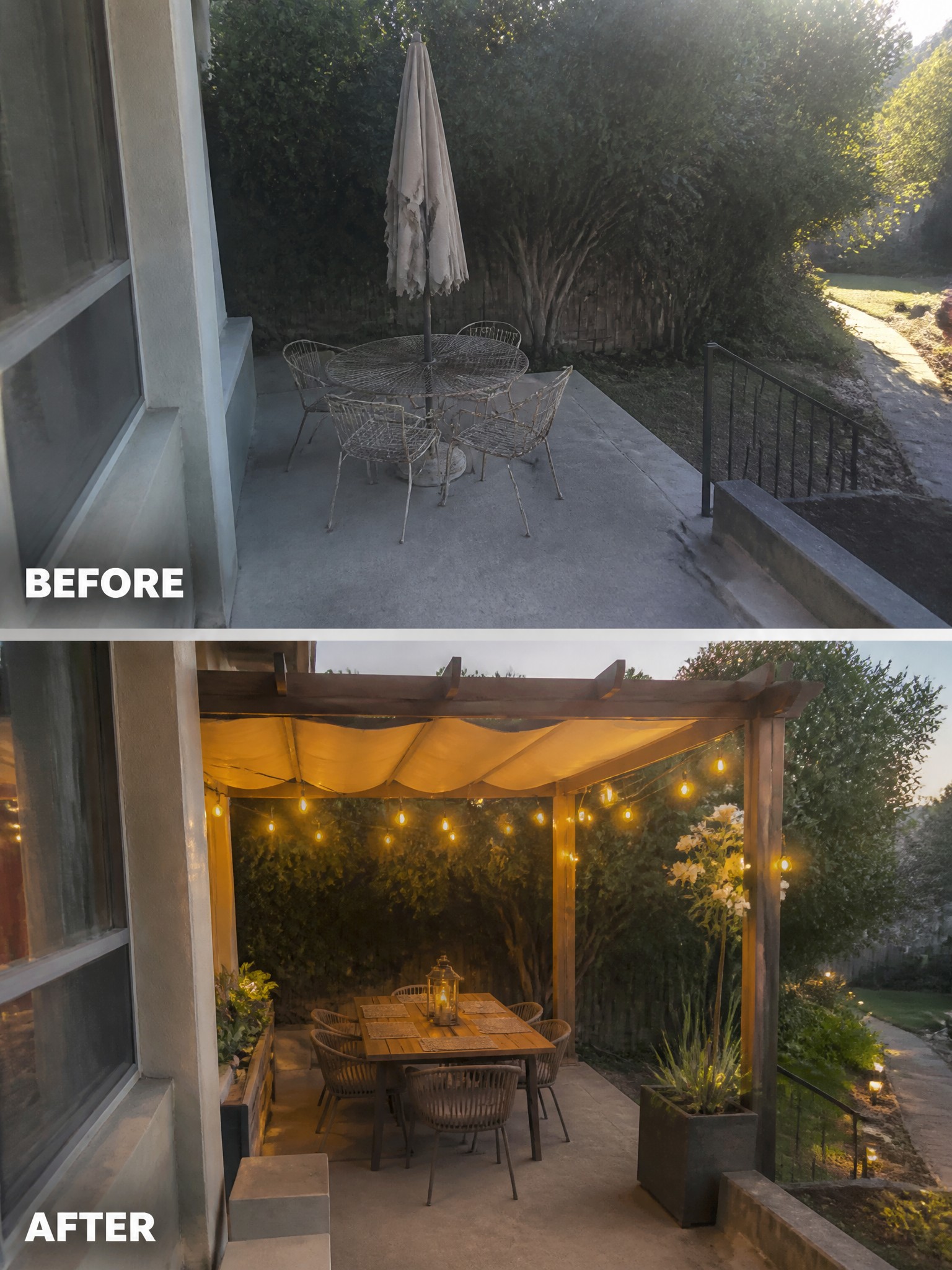
A plain concrete slab with just a table and chairs can feel unfinished and uninviting once the sun goes down. Adding a pergola with string lights gives the space a clear ceiling and a soft glow that makes it comfortable to sit outside after dark.
This approach works well on patios that already have a table and seating but lack any sense of enclosure. Keep the lights simple and warm, run them along the beams, and let the rest of the space stay open so people can still move around easily.
Frequently Asked Questions
Q: What kind of lights hold up best when my yard gets heavy rain and snow?
A: Go for fixtures labeled for wet locations. They seal out moisture far better than standard ones. Solar models cut down on exposed cords that can fail over time.
Q: How do I stop the lights from making my whole backyard feel like a stadium at night?
A: Aim most fixtures downward or tuck them behind plants and structures. This keeps the glow focused on paths and seating areas without flooding everything else. Start with a few and add more only if the space still feels dim.
Q: Can I run power to new lights without tearing up my lawn and garden beds?
A: Use solar or battery-powered options wherever you can. They skip trenching entirely and still give solid brightness for most backyard spots. If you need hardwired lights, run cords along fences or under deck boards to hide them.
