

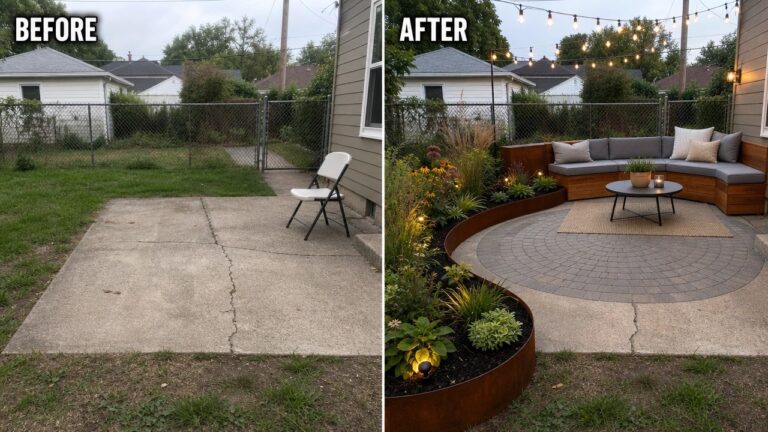
Backyards tend to stay empty when the seating feels scattered and the garden edges bleed into the lawn without any clear stop.
I usually start by figuring out where people will actually sit before worrying about the plants or borders around them.
Defining those garden lines with simple materials keeps everything looking settled instead of half finished.
Once the patio area has a few solid spots to rest and the beds stay contained the space starts getting used on regular days rather than just on weekends.
A few of the setups here show how those basic changes add up without needing a full overhaul.
Turn An Empty Patio Into A Seating Area

A plain concrete slab often sits unused because it has no clear purpose or comfortable spot to sit. Adding a built-in bench along the edges and placing a rug in the center gives the space a simple structure that invites people to stay.
This approach works best on homes where the patio already exists but feels bare. Keep the seating low and follow the shape of the concrete so movement stays easy, then add a planted border along one side to soften the look without crowding the area.
Turn A Plain Patio Into A Defined Seating Area
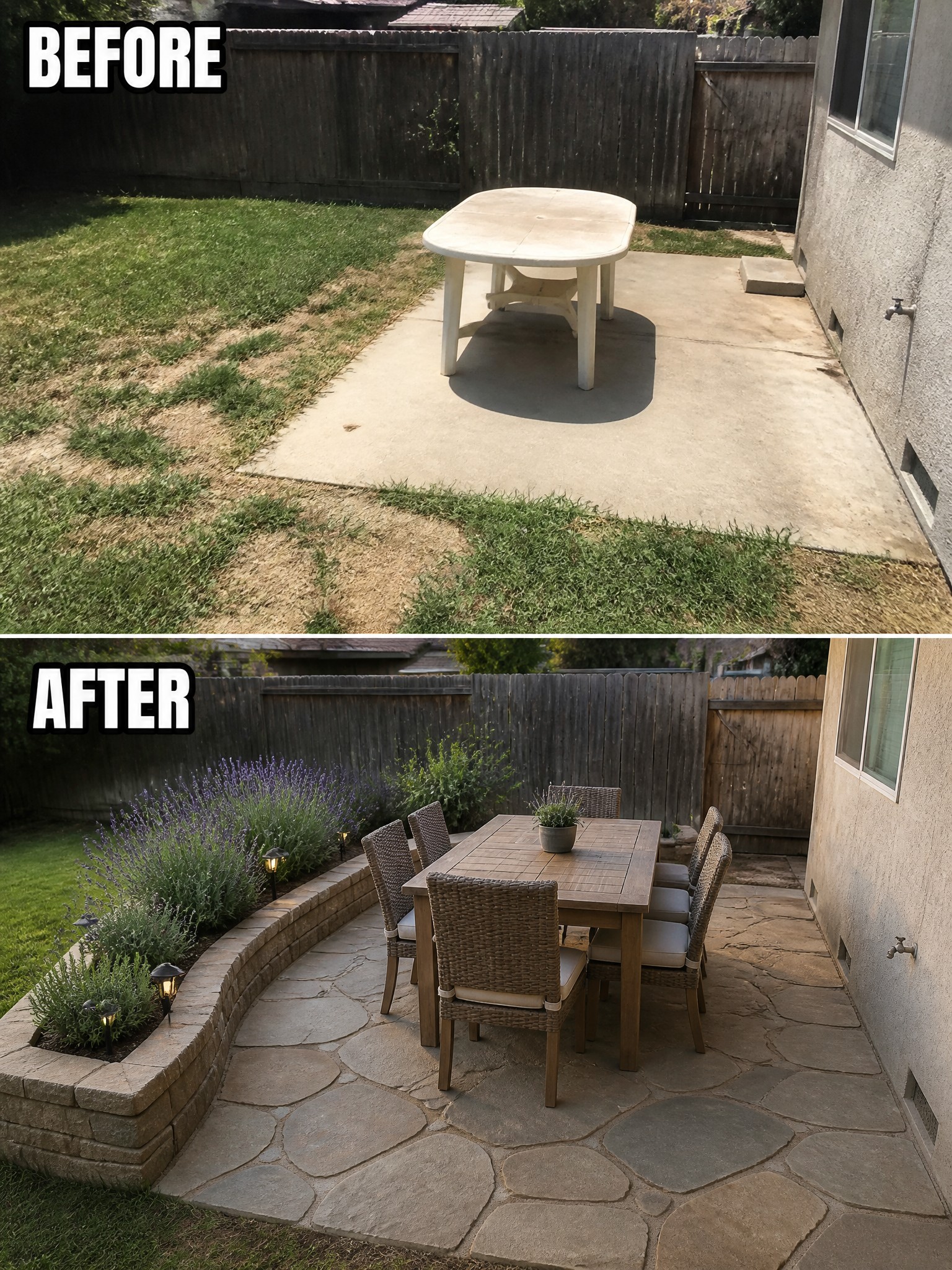
A bare concrete slab often leaves a backyard feeling unfinished. Laying pavers creates a solid surface for furniture while a curved raised border with plants gives the space clear edges and makes it feel like an actual room.
This idea works best in smaller yards where the patio sits close to the house. Keep the furniture scale realistic so there is still room to walk around the table and chairs, and choose pieces that can stay outside year-round.
Turn A Bare Backyard Into A Pergola Seating Area
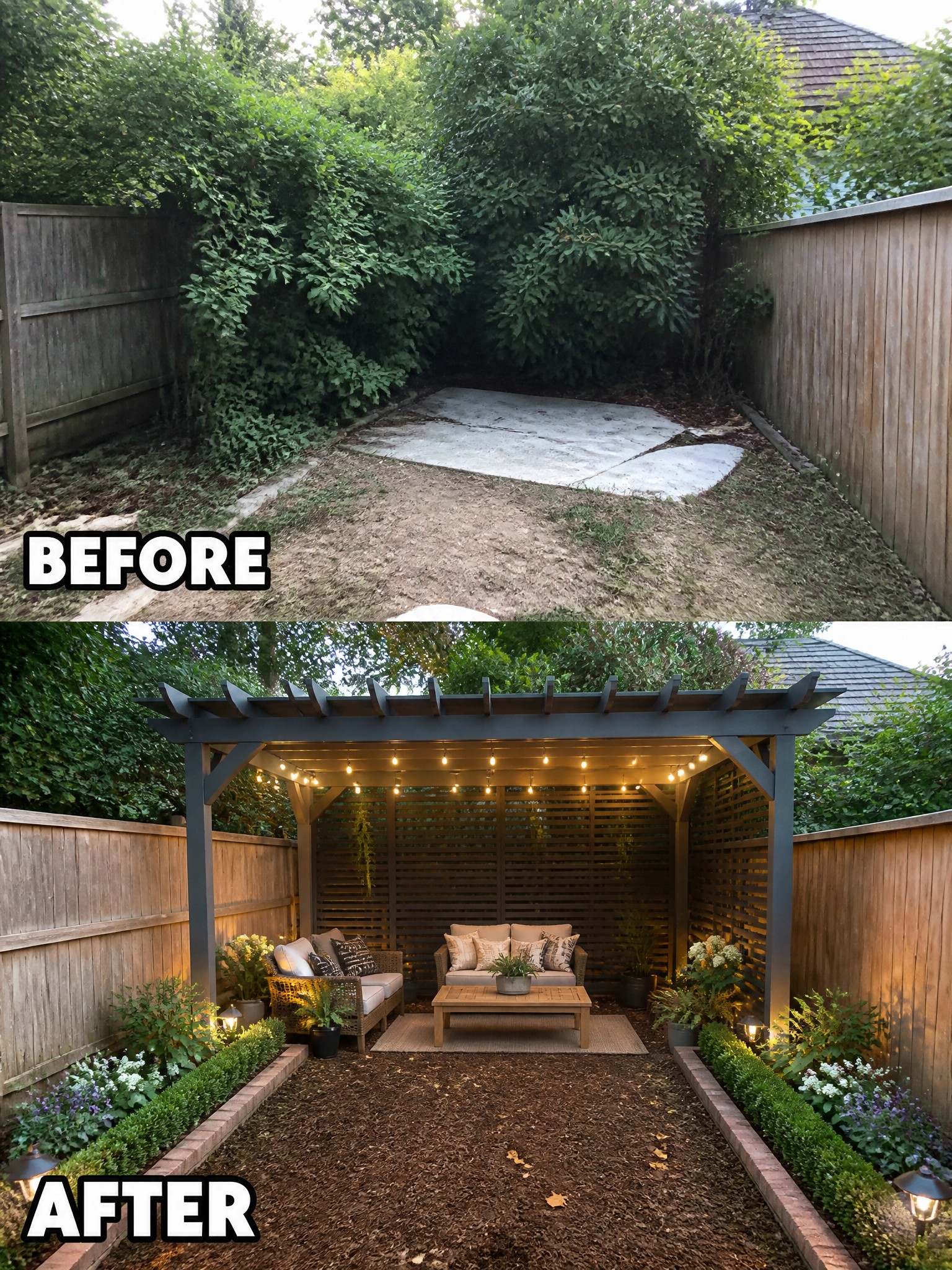
A pergola can quickly turn an empty patch of dirt and concrete into a space that actually gets used. In this case, the open slab was replaced with a simple structure, a few chairs, and a coffee table underneath, which gave the area a clear purpose instead of leaving it as leftover ground.
This idea works best in smaller yards where you need to create shade and define the sitting zone at the same time. Keep the furniture scale modest so there is still room to walk around, and add string lights if you want the space to feel comfortable after dark.
Use Pavers And Garden Borders To Shape A Backyard Path
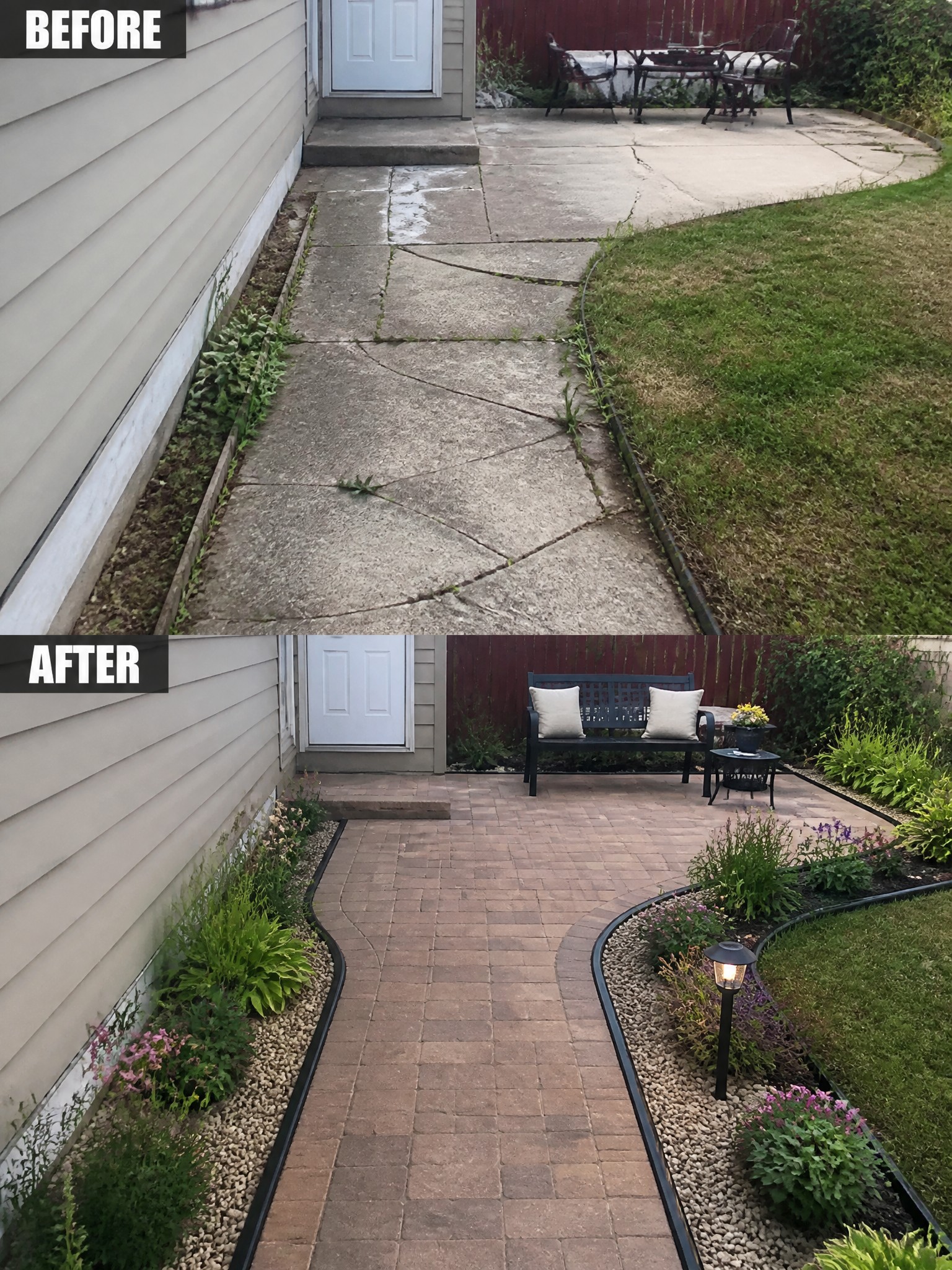
A cracked concrete walkway often makes a backyard feel unfinished and hard to use. Switching to pavers creates a cleaner line from the house to the seating area while the added garden borders keep the edges tidy and give the space a more settled look.
This approach works well on narrow side yards or straight paths where you need clear walking space but still want planting room. Start with the edging and pavers first, then fill the beds with low plants that can handle foot traffic nearby. Keep the path width comfortable so furniture and people can move through without crowding the beds.
Turn A Bare Backyard Into A Patio Seating Area
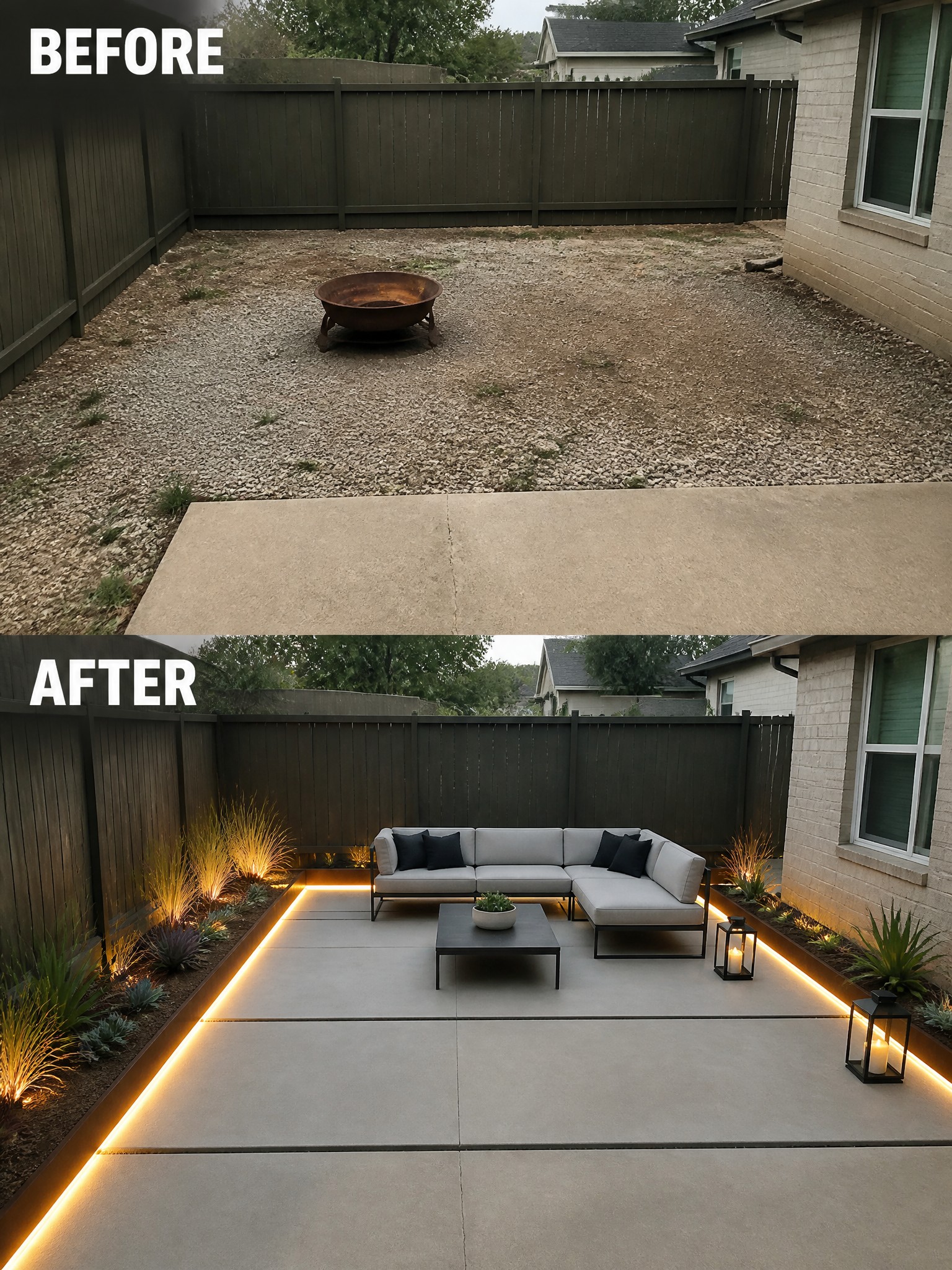
Many backyards begin as flat gravel with no real place to sit. Replacing the loose surface with a concrete patio and adding a sectional gives the space a clear purpose and makes it usable year round.
This approach works best in smaller yards where you want one main gathering spot rather than lots of separate features. Keep the seating simple, run low plantings along the edges, and add lighting at the border so the area feels finished without crowding the open center.
Turn An Empty Patio Into A Seating Area
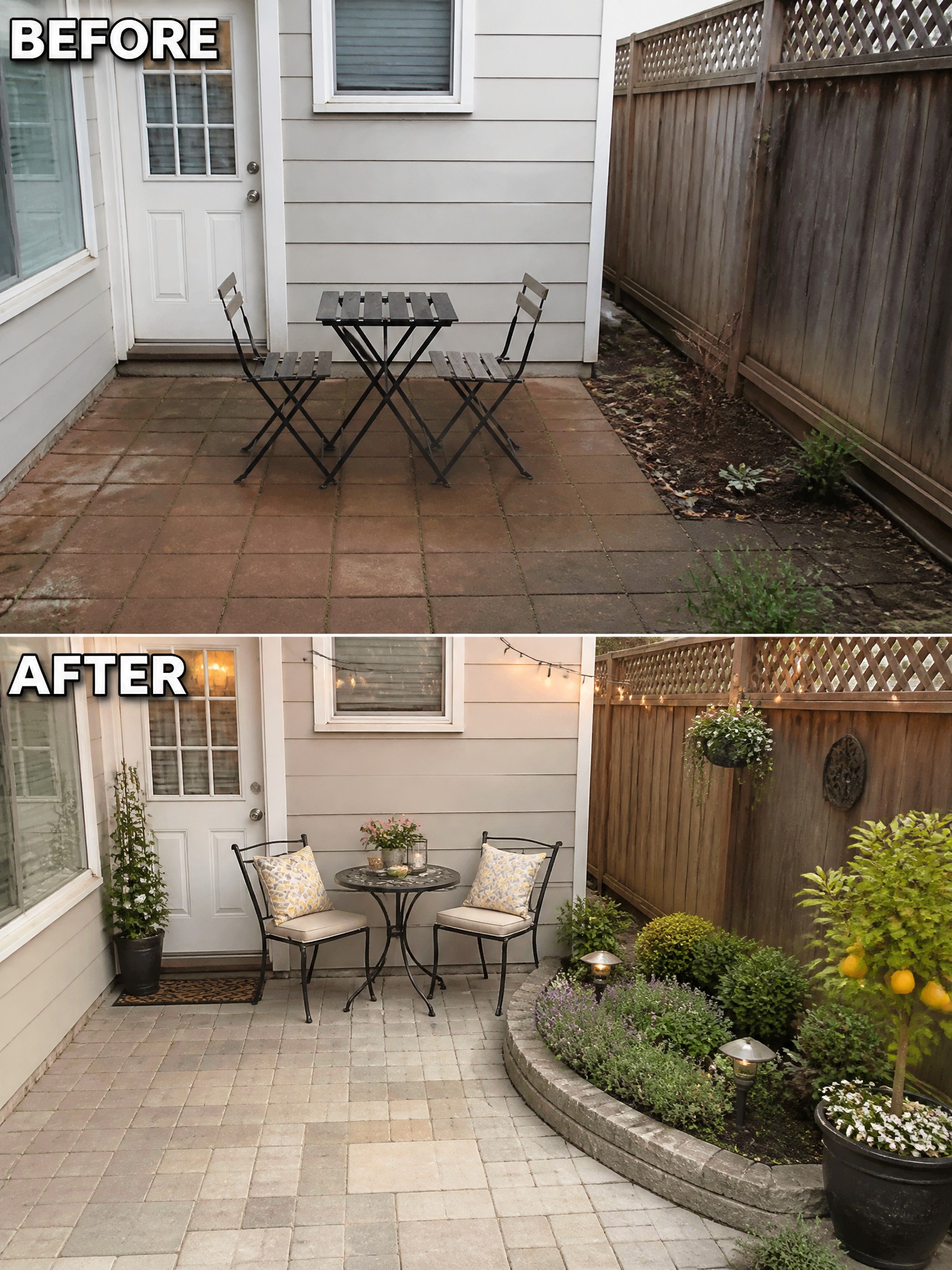
A plain patio with just a small table and two chairs can feel like wasted space. Adding cushioned seating, a slightly larger table, and string lights turns the same area into a spot that actually gets used. The simple addition of a garden border also helps separate the seating from the rest of the yard so it feels more like a room.
This approach works well on small or narrow patios where you do not want to add a full deck or cover. Keep the furniture compact, choose pieces that can stay outside, and use lights only where people will sit so the space feels inviting without becoming cluttered.
Turn A Bare Patio Into A Seating Area
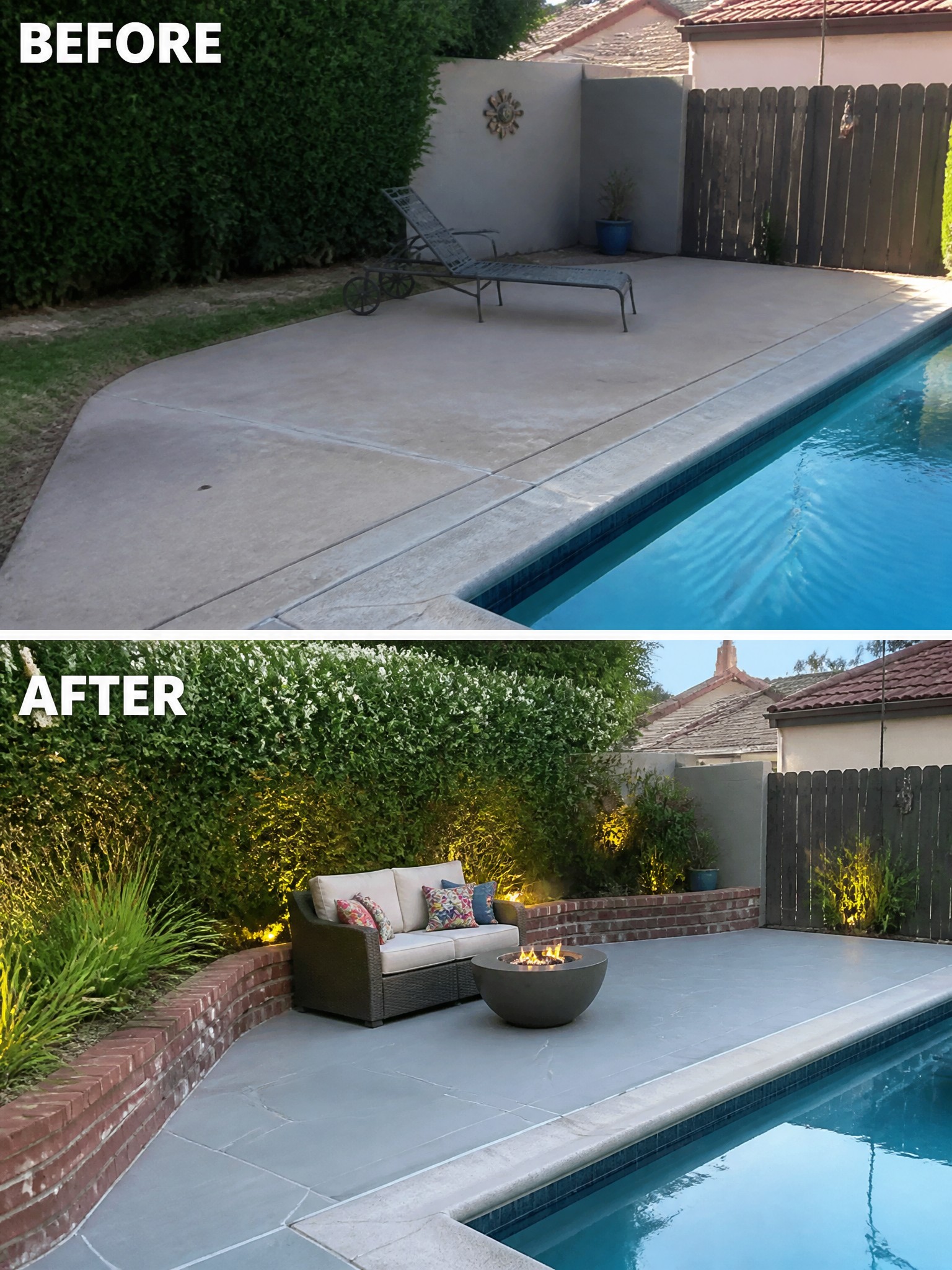
A large empty concrete slab next to a pool rarely gets used. Adding a simple seating group with a fire pit and a low brick border instantly gives the space a purpose and makes it feel like an outdoor room instead of leftover deck space.
This approach works well on any flat patio or pool deck that lacks definition. Start with one main seating zone sized for how you actually sit outside, then add the border planting to keep the rest of the yard from looking unfinished. Keep the furniture scale modest so the area still feels open rather than crowded.
Add Raised Beds To Bring Structure To A Backyard Border
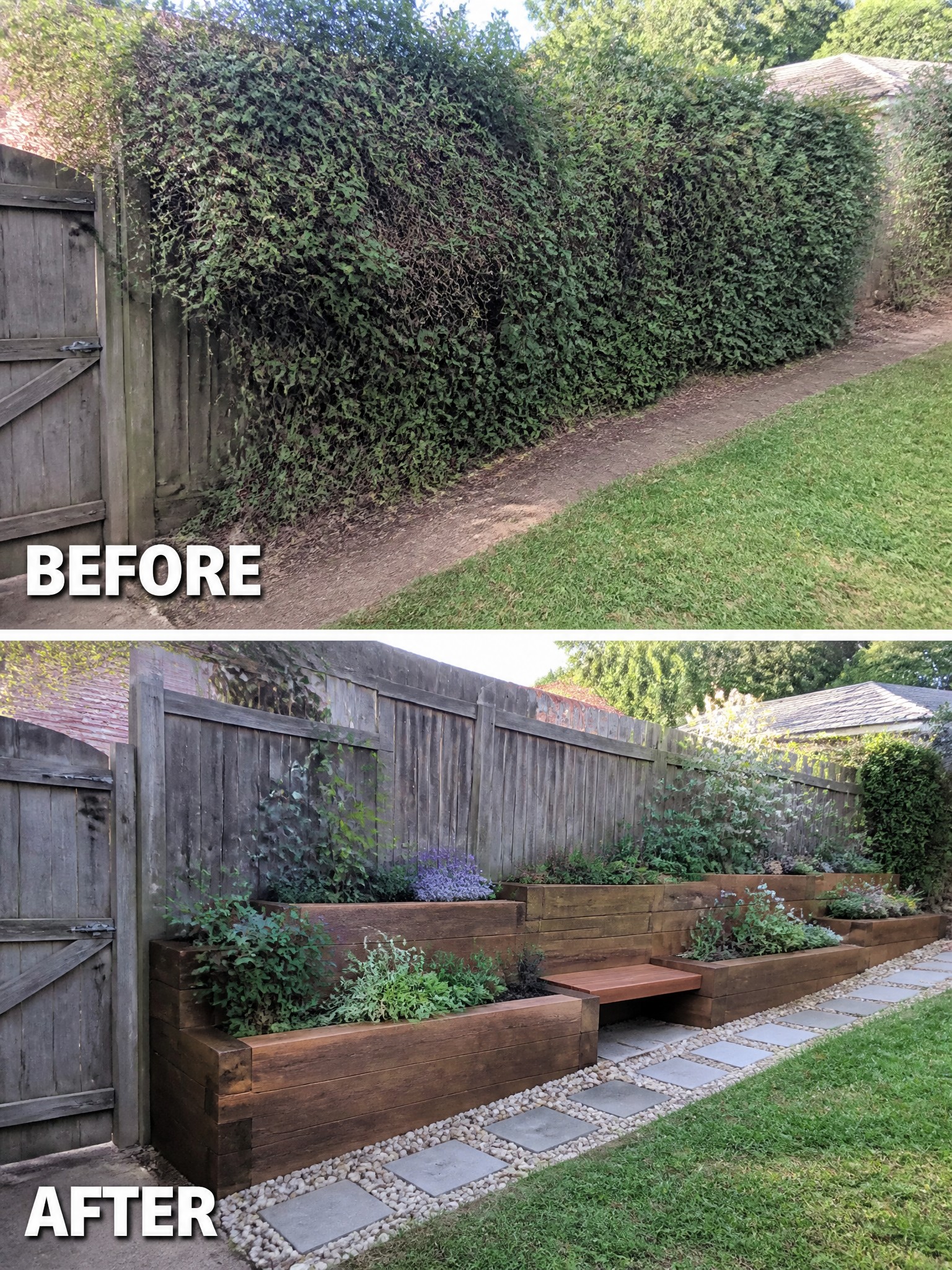
A long fence line with nothing but ivy and a dirt path often feels unfinished. Raised wooden planters fix that by creating clear levels for planting while also giving you places to sit. The change turns an open strip of ground into something that feels more like a garden room.
This approach works best along side yards or back fences where space is narrow. Keep the beds simple and line them up so the path stays open for walking. Use the same wood tone for any benches so the whole border feels connected without looking crowded.
Add A Fire Pit To Make A Basic Patio More Usable
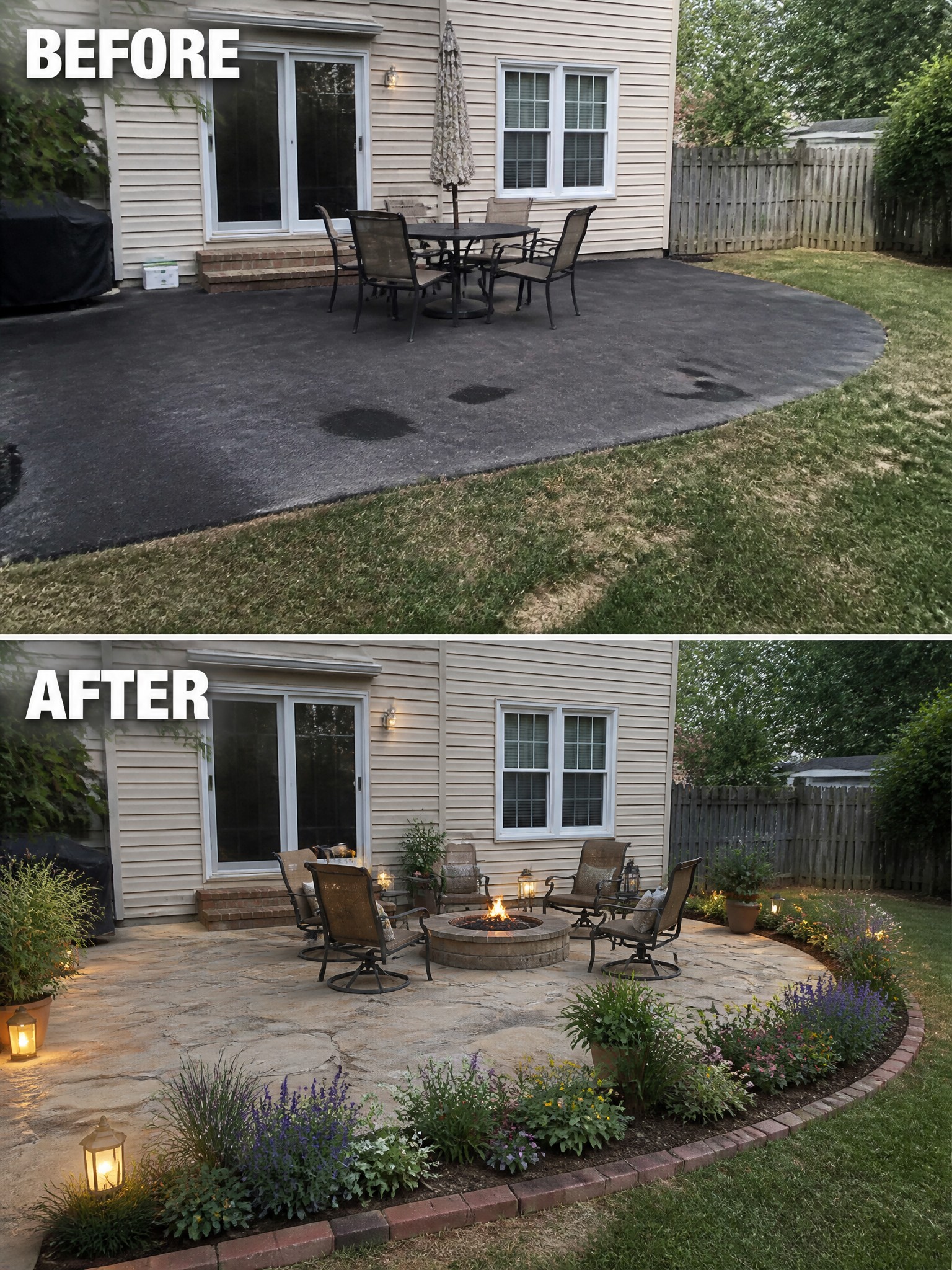
A flat slab of asphalt rarely gets much use on its own. Placing a fire pit in the center and arranging chairs around it gives the space a clear purpose and a natural spot to gather after dark.
This approach works best in backyards that already have a solid patio surface. Keep the furniture scale modest so people can still walk around the circle, and add simple garden borders along the edge to separate the seating area from the lawn. Outdoor lighting near the chairs helps the space feel finished without much extra effort.
Turn A Sloped Backyard Into A Level Patio Area
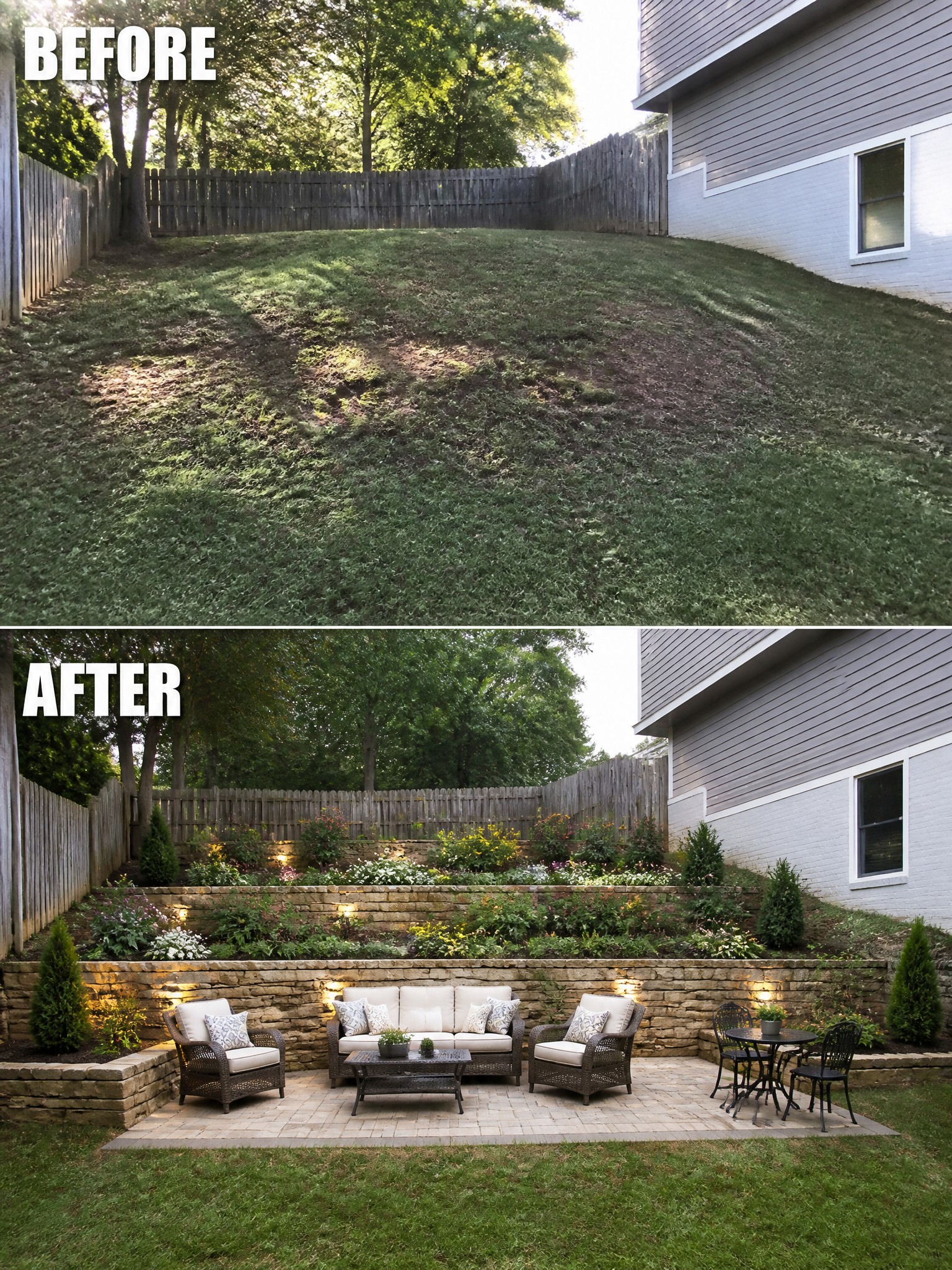
A steep, grassy slope often leaves the backyard feeling unusable because there is nowhere flat to sit or gather. Adding stone retaining walls creates flat terraces that hold soil and plants while also forming a stable base for a paved seating area at the bottom. The simple addition of a patio surface and a few weatherproof seats turns the space into a place people can actually use.
This approach works best on moderate slopes where full regrading would be too costly. Start by deciding how much level space you need for seating, then work backward with walls that match the natural drop of the yard. Keep the planting simple on the upper tiers so the focus stays on the patio itself rather than competing garden beds.
Turn A Narrow Walkway Into A Seating Area
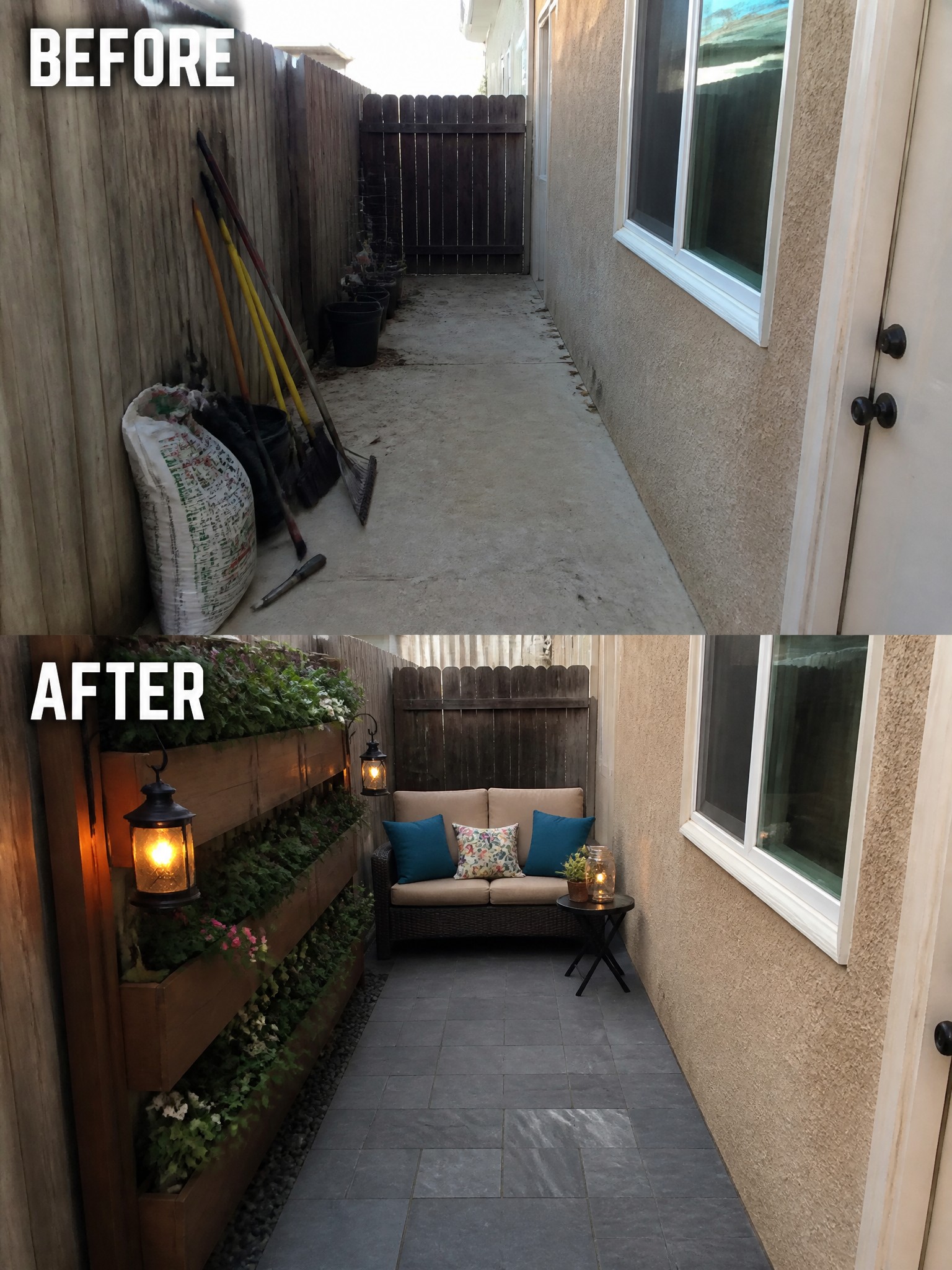
A long, narrow side yard often ends up as storage for tools and bags because it feels too tight for anything else. Once the clutter is cleared and the ground is covered with pavers, the same space can hold a small sofa and a couple of lights without feeling cramped.
This idea works best when you keep the furniture low and add planting on the walls instead of the floor. A simple bench or loveseat plus a few lanterns gives the area a clear purpose while still leaving room to walk through if needed.
Turn A Bare Patio Into An Outdoor Dining Area
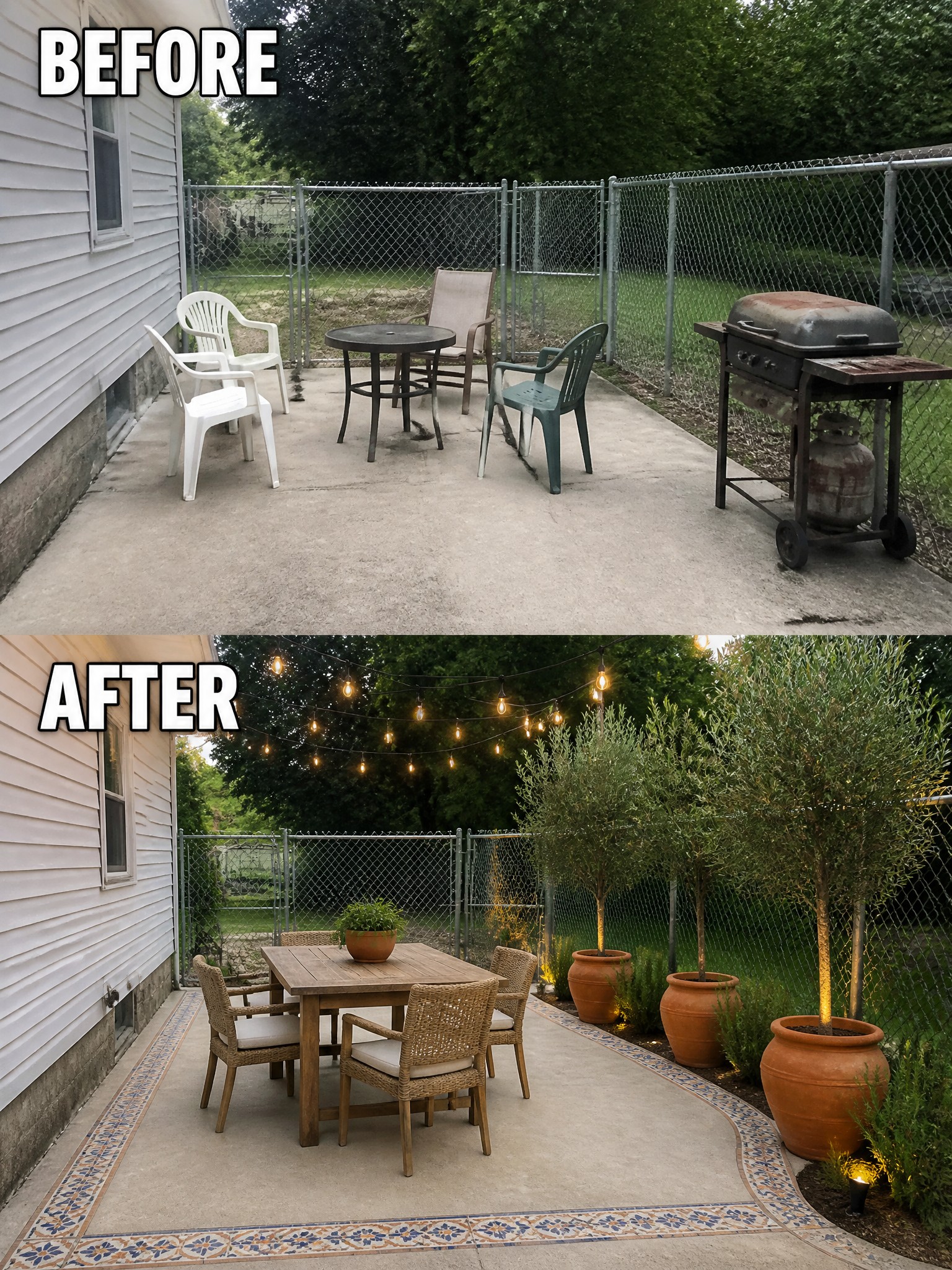
A plain concrete slab can feel like wasted space until you give it a clear purpose. In this case the fix was simple furniture that actually fits the area, string lights overhead for evening use, and a few large pots to soften the edges and create a loose border. Those changes turned an empty slab into a spot where people actually want to sit and eat.
This idea works best on small to medium patios where you can keep the layout open but still defined. Start with a table and chairs that match the scale of the space, add one string of lights, and use a handful of pots to mark the edges instead of trying to fill every corner. Leave enough room to walk around the furniture so the area stays practical rather than crowded.
Turn A Cluttered Corner Into A Seating Area
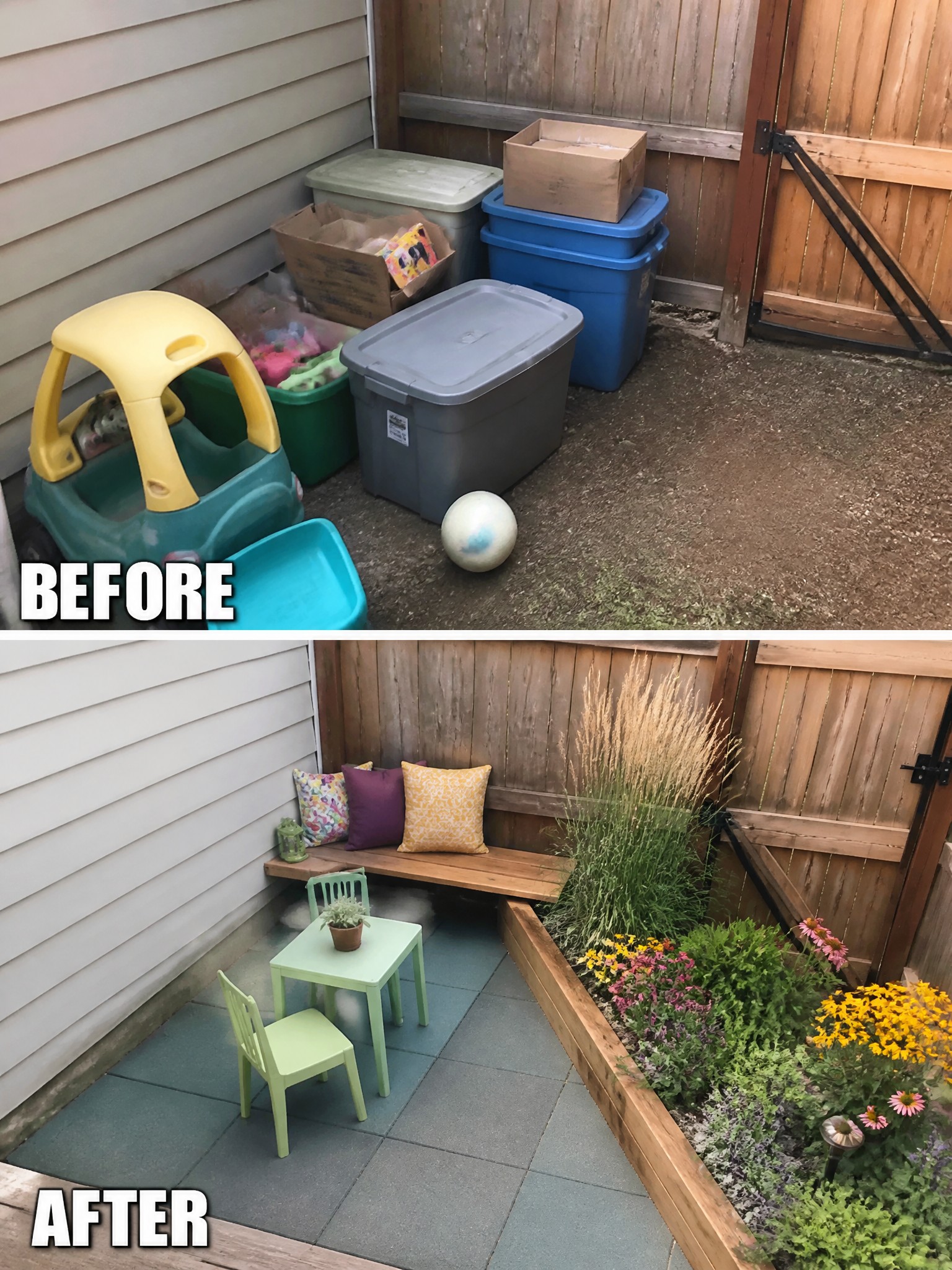
Clearing out the random bins and toys first made the biggest difference here. Once the space was empty, a simple wooden bench against the fence turned the spot into a place to sit instead of just a storage area.
This idea works best in small side yards or tight corners where you need both seating and some planting. Keep the bench low and add a raised border along one edge so the garden stays contained and the seating area stays open.
Turn A Bare Backyard Corner Into A Defined Patio Seating Area
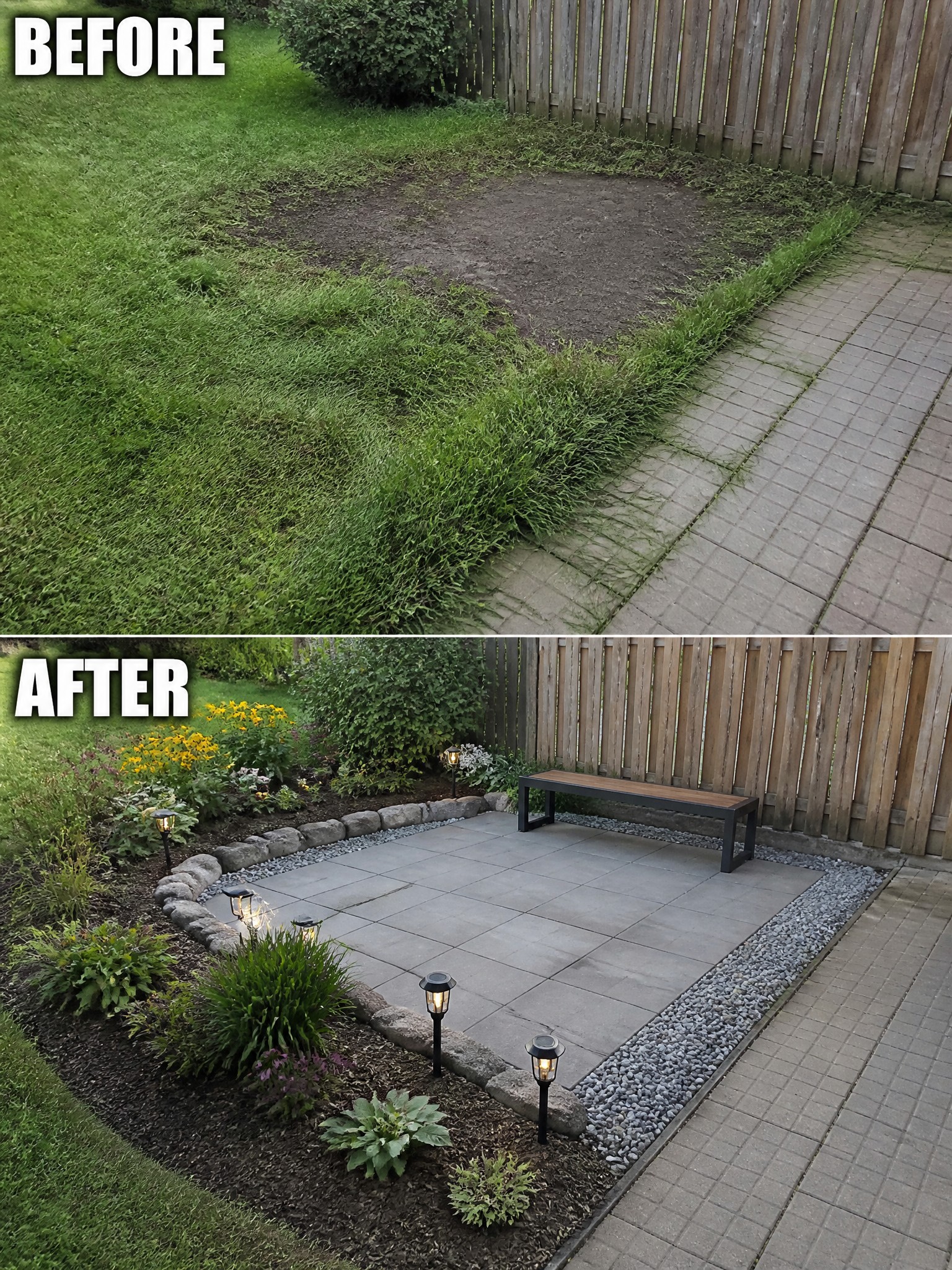
A simple paved surface with a bench can turn an open, undefined patch of grass into a spot that actually feels like an outdoor room. The stone borders and gravel edge keep the seating area separate from the planting beds and give the whole space a finished look without needing a big budget.
This approach works best in smaller yards where you want one clear place to sit rather than spreading furniture across the lawn. Mark out the size first so there is still room to walk around the edges, then choose pavers that match nearby paths. A single bench and a few lights along the border are usually enough to make the area usable in the evenings.
Turn A Bare Patio Into A Seating Area

Adding a planted border along the edge of a patio gives the whole space a finished frame. The before photo shows a flat stretch of concrete with just a few plastic chairs and one lonely pot. Once the border is in place, the seating area feels like a real room instead of leftover space.
This idea works on any basic concrete patio that needs a clear boundary. Put the garden edge in first, then bring in furniture that matches the new scale. Keep the path width comfortable so people can move around the seating without crowding.
Turn An Empty Patio Into A Seating Area
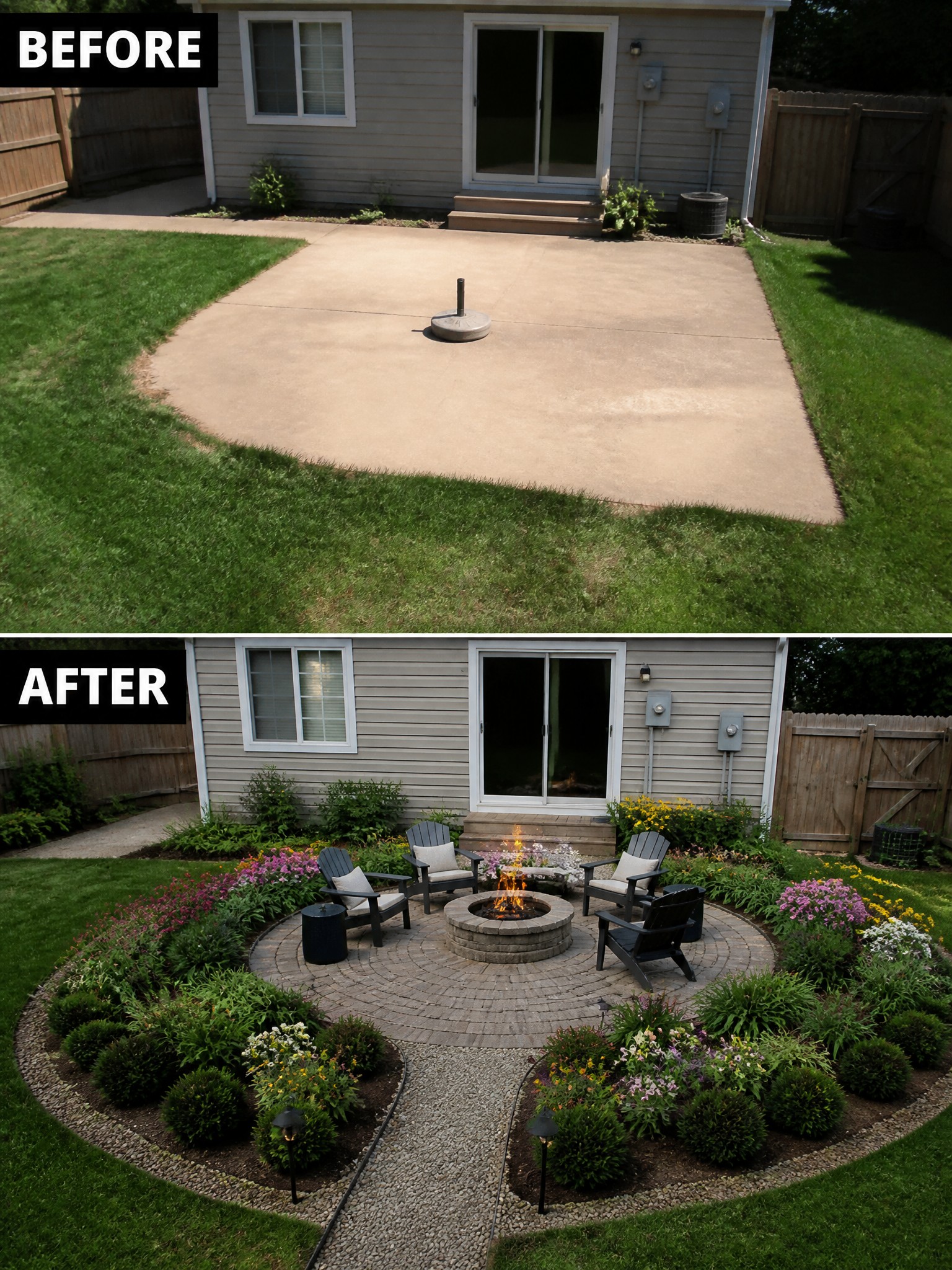
A plain concrete pad often sits unused because it has no clear purpose. Adding a fire pit in the center and placing chairs around it turns the space into a spot where people actually want to spend time. The surrounding garden beds also help by giving the area a defined edge instead of letting the grass run right up to the concrete.
This idea works well in backyards that already have a hard surface but feel empty. Keep the furniture simple and weatherproof, and use planting to frame the seating rather than fill every open spot. Leave enough room to walk around the chairs so the layout stays practical for daily use.
Turn An Empty Patio Into A Seating Area
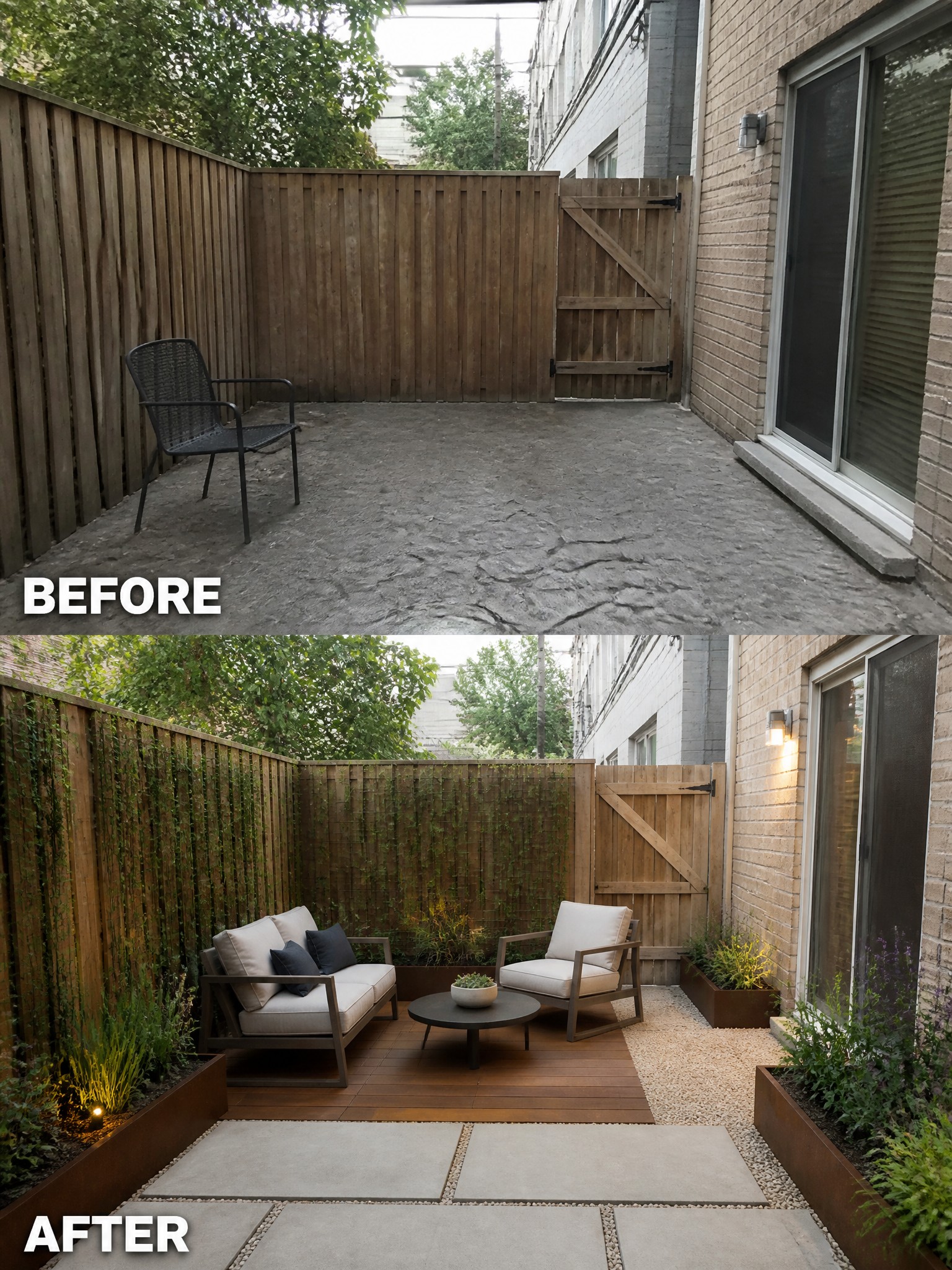
A bare concrete slab can feel like wasted space, especially when it is cracked and open with nothing to define it. Adding a wood deck creates a clear floor for seating, and placing a sofa, chairs, and a small table in the center turns the area into a spot people actually want to use.
This idea works best in small or narrow backyards where the goal is to create one main zone rather than fill the whole yard. Keep the deck size realistic so there is still room to walk around the furniture, and use simple planted borders to soften the edges without crowding the space.
Turn A Bare Patio Into A Cozy Seating Area
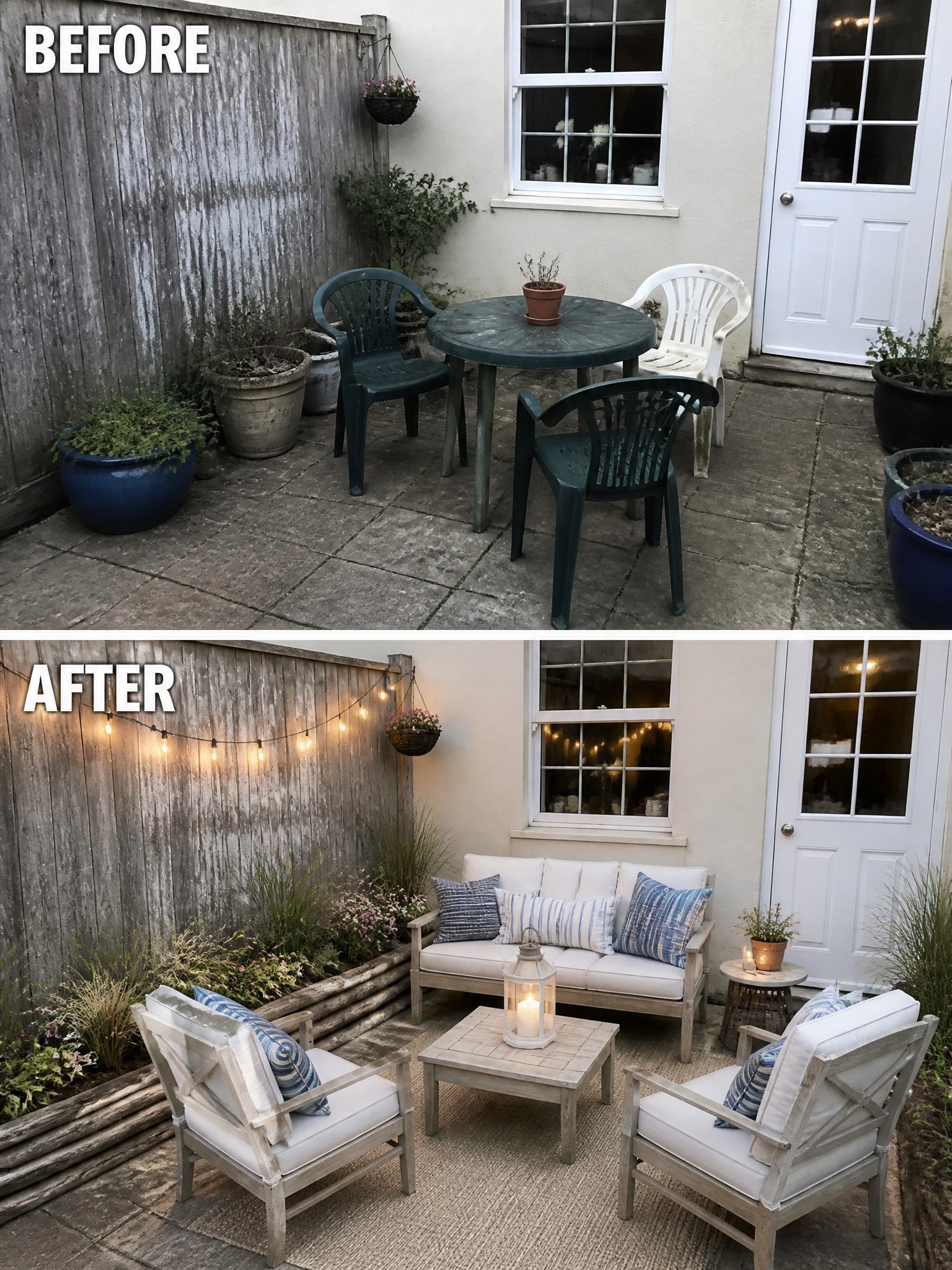
One useful change is adding real seating and string lights to a plain concrete patio. The before photo shows a few mismatched plastic chairs around a table with no clear purpose. The after version brings in a sofa, armchairs, a rug, and lights so the space feels like an outdoor room instead of leftover pavement.
This idea works well on small backyards where you want a spot to sit without a big renovation. Keep the furniture simple and weatherproof, and use lights only where people will actually gather at night. Leave enough open space so the seating does not block movement across the patio.
Frequently Asked Questions
Q: How can I fit seating and borders in a tiny yard?
A: Start with a compact bench tucked near the house. Then run a narrow border along the fence to frame everything.
Q: What if my soil stays wet most of the year?
A: Choose border plants that like moisture like hostas or ferns. They will fill in without extra work.
Q: Do I need special tools for this project?
A: Basic shovel and rake handle most of the border work. A level helps keep the patio even.
Q: Should the seating face the garden borders?
A: Yes turn the chairs toward the plants. You get a nice view while you relax.
