

I often notice how a backyard can sit unused even when the space itself is perfectly fine.
A few targeted changes usually make it feel like a spot worth stepping into on a regular basis.
I would try adjusting the seating layout first because comfort tends to matter more than adding extra features.
Small shifts like clearing a path or adding simple shade can stop the area from feeling overlooked after a while.
That kind of adjustment often leads to using the yard more without needing a big plan.
Add Mulch Borders To Refresh A Patchy Backyard
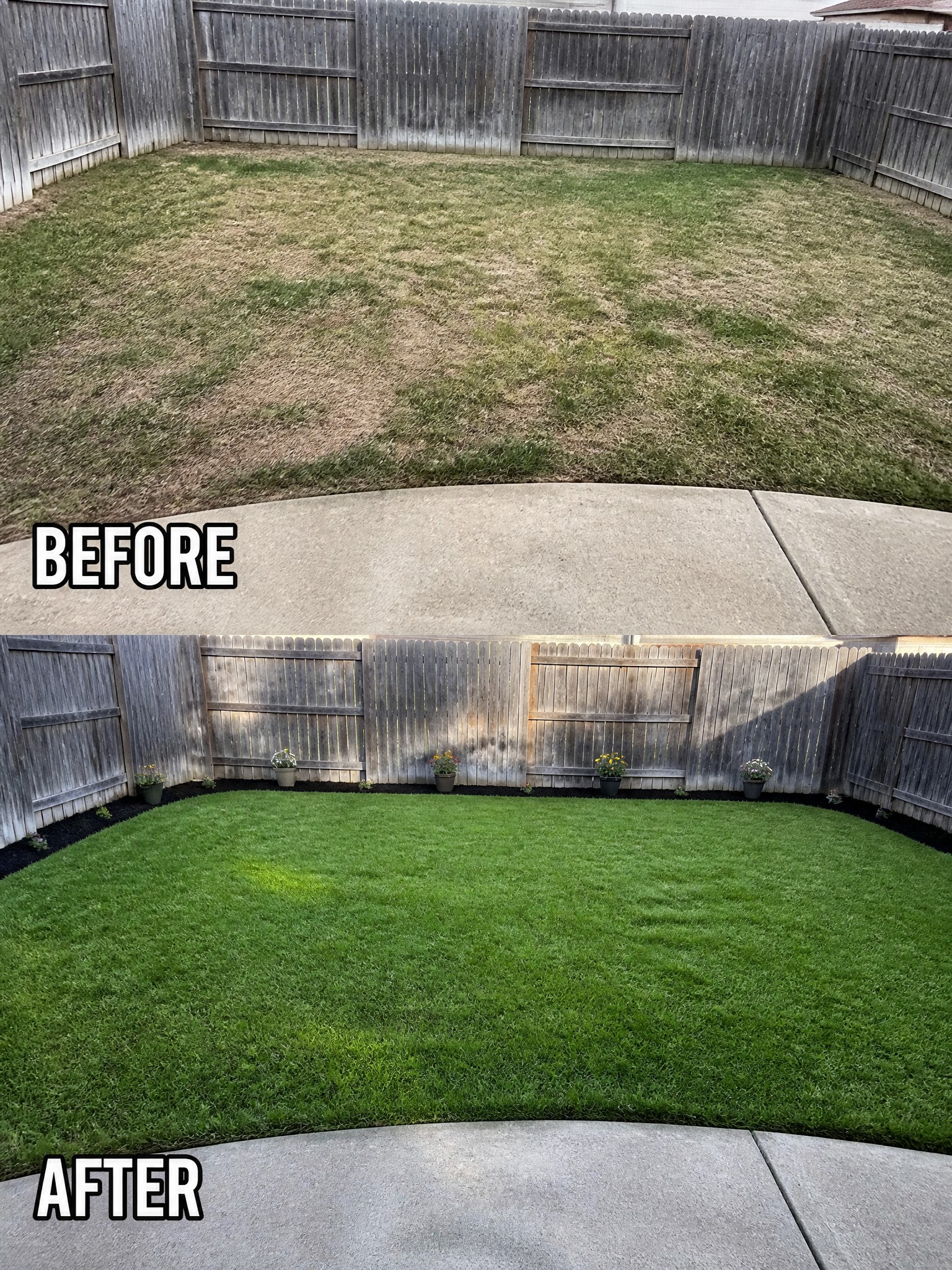
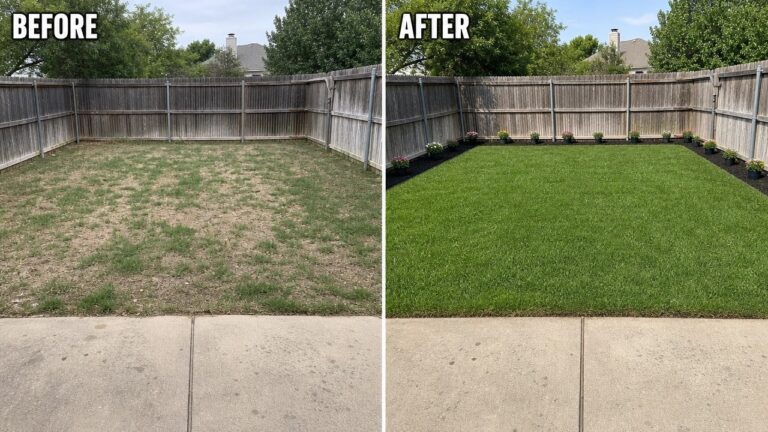
A patchy lawn often looks worse than it needs to because there is no clear edge between the grass and the fence line. In this case the simple addition of a black mulch border along the fence gave the whole yard a finished shape and made the new grass stand out.
This approach works best in small to medium backyards where you want the lawn to feel intentional without adding much furniture or hardscaping. Start by cleaning up the grass and laying down a consistent mulch strip, then add a few potted plants if you want a bit of color. Keep the border width modest so you do not lose too much lawn space.
Turn A Bare Patio Into A Seating Area
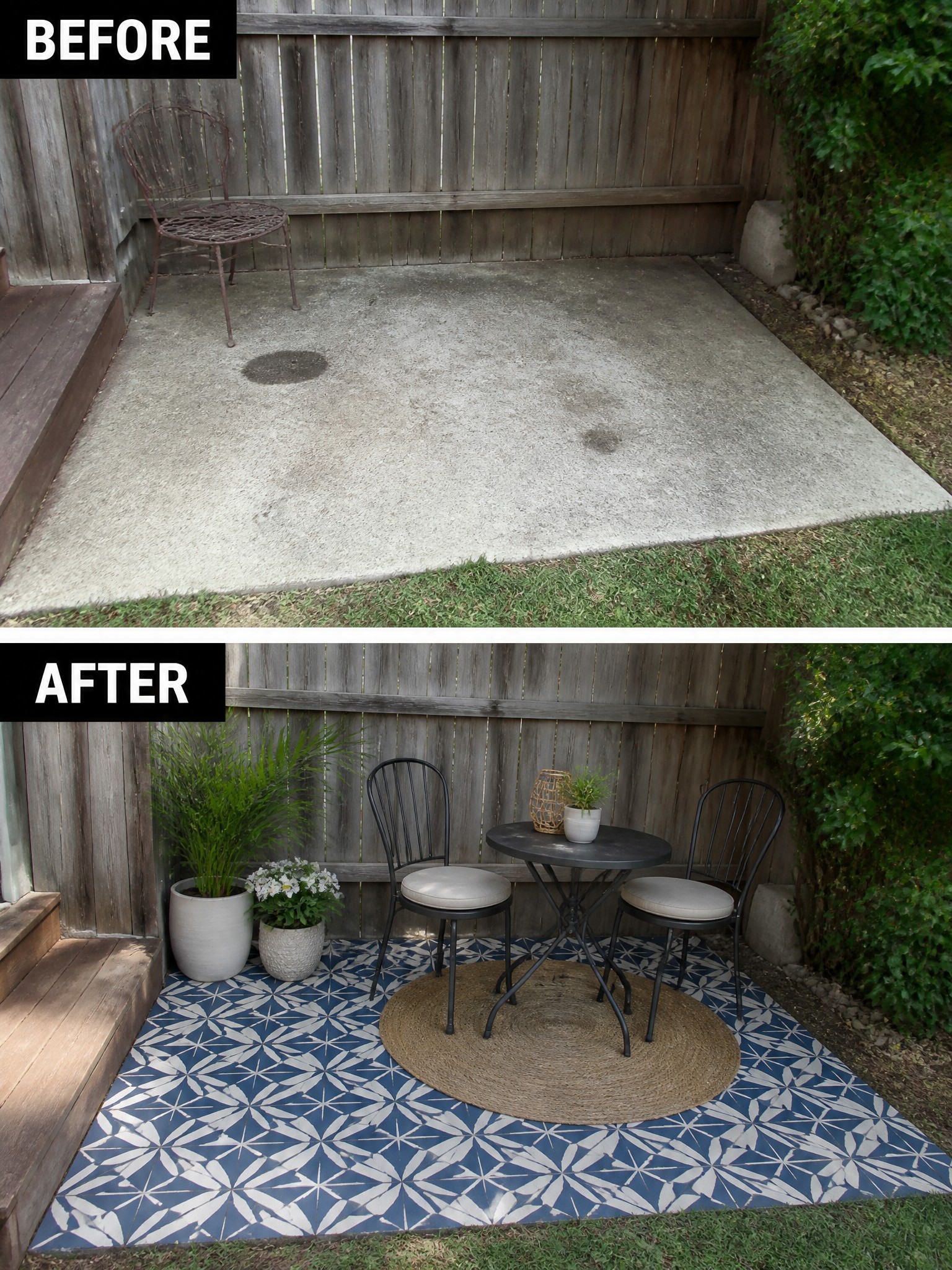
A plain concrete slab often sits unused because it feels unfinished and uninviting. Laying down a large outdoor rug defines the space right away and gives the area a clear floor, while a small table and a few chairs make it functional for sitting.
This approach works well on any flat concrete or deck surface that already has decent access from the house. Keep the furniture simple and weatherproof, and choose a rug that can handle rain and sun. It suits small yards where you want a quick change without building anything new.
Create An Outdoor Seating Area With A Fire Pit
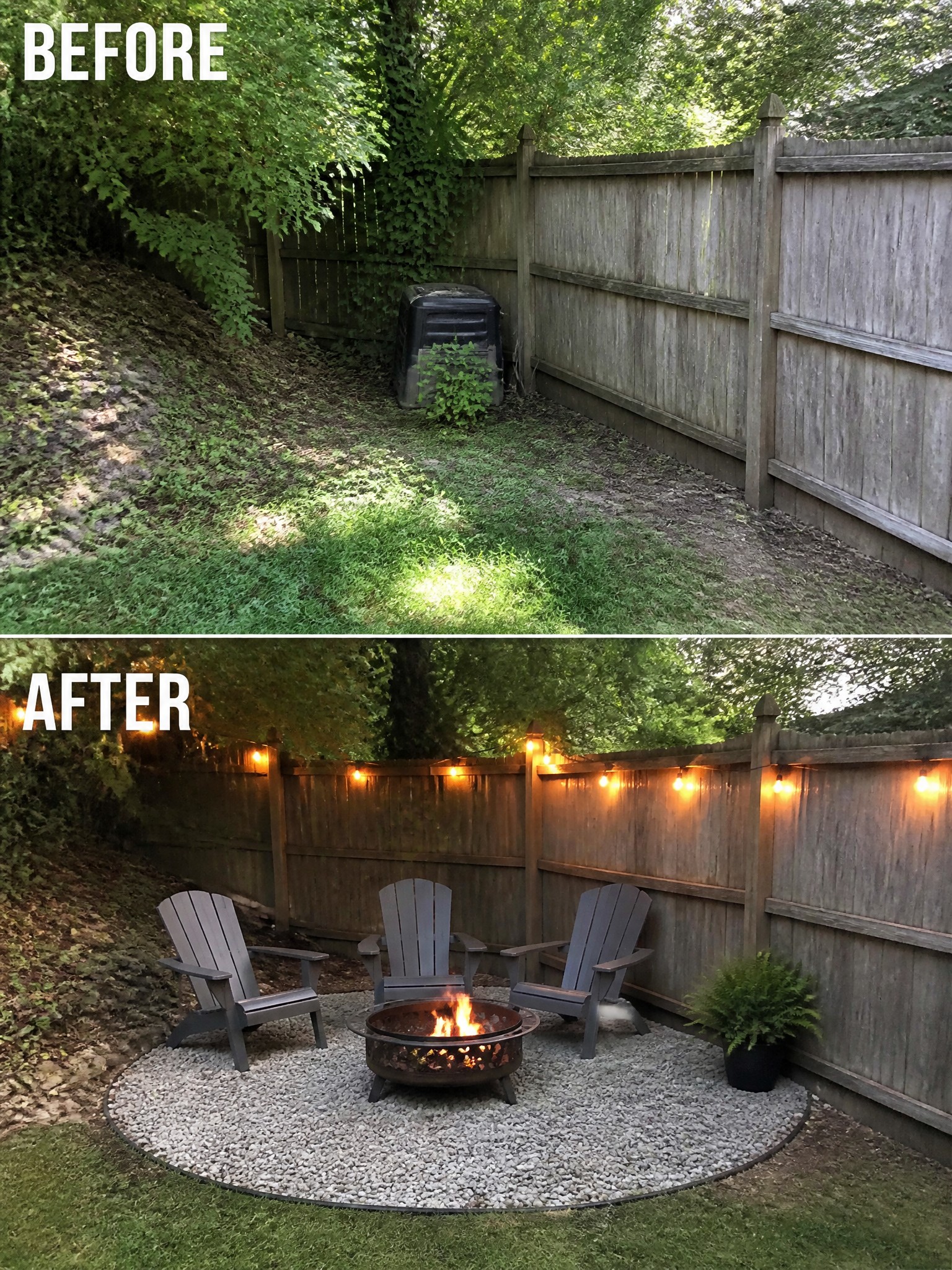
A bare patch of grass next to a fence can feel like wasted space until you give it a clear purpose. Adding a circle of gravel, a fire pit, and a few chairs turns the spot into a place where people actually want to sit. String lights strung along the fence add warmth at night without much effort.
This idea works best in smaller yards where you want one defined zone rather than trying to furnish the whole lawn. Keep the furniture simple and weatherproof, and make sure the gravel pad is large enough for chairs to sit comfortably around the fire. Start with the seating area first, then add plants or lighting only if there is still room to move around.
Add Structure To An Overgrown Backyard
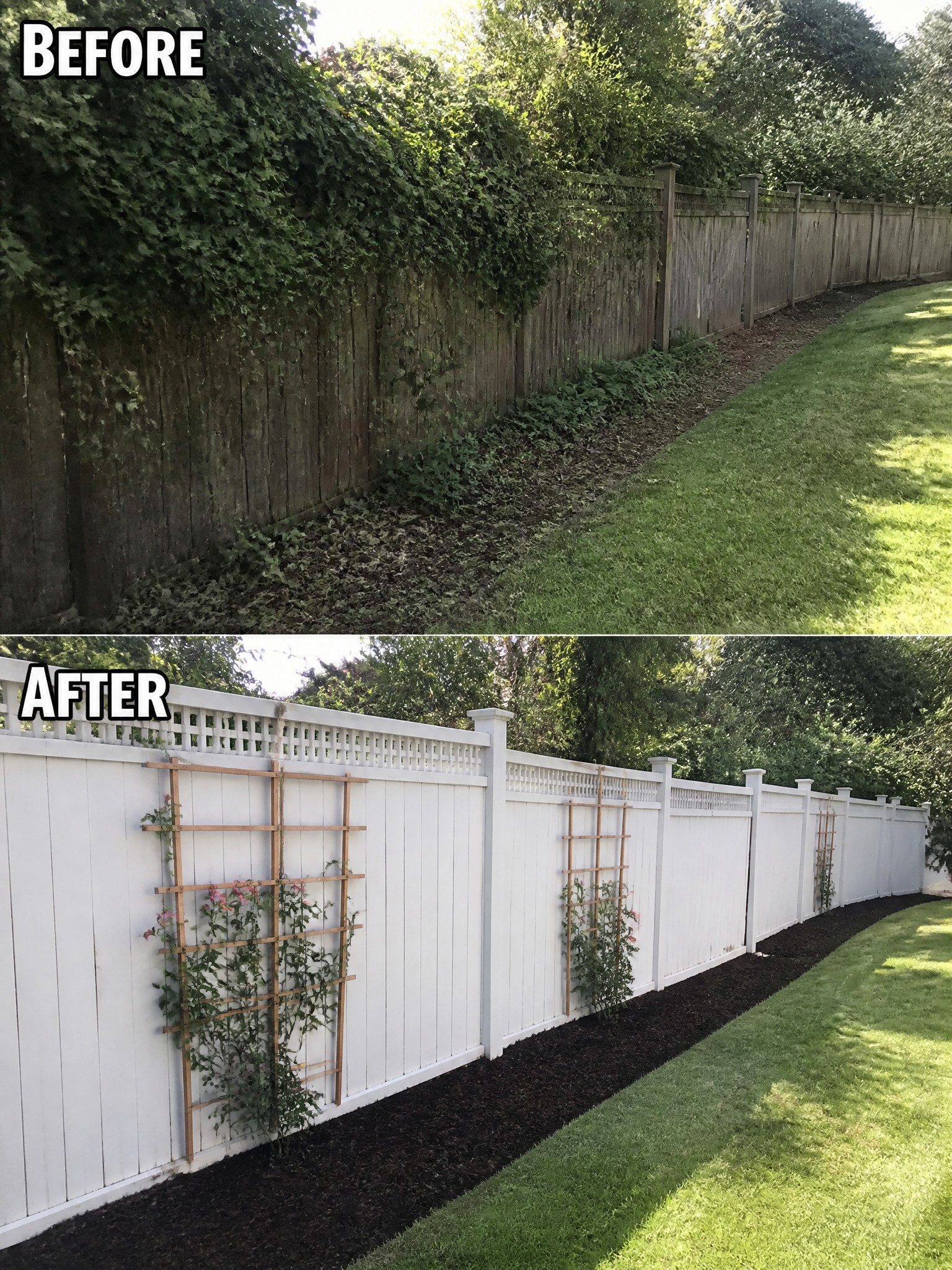
An old fence line buried in ivy and scattered leaves can make the whole yard feel neglected. Replacing the fence with a clean white design and laying down fresh mulch creates a clear edge that instantly organizes the space. The addition of simple trellises with a few climbing plants keeps the look light while giving the border some height and interest.
This idea works best in yards where the fence runs along one side and needs to feel intentional rather than forgotten. Focus on the fence and beds first before adding anything else. Keep the planted strip narrow so the lawn stays open, and choose low-maintenance climbers that can handle your climate. The result feels finished without requiring a full garden overhaul.
Turn A Bare Deck Into A Seating Area
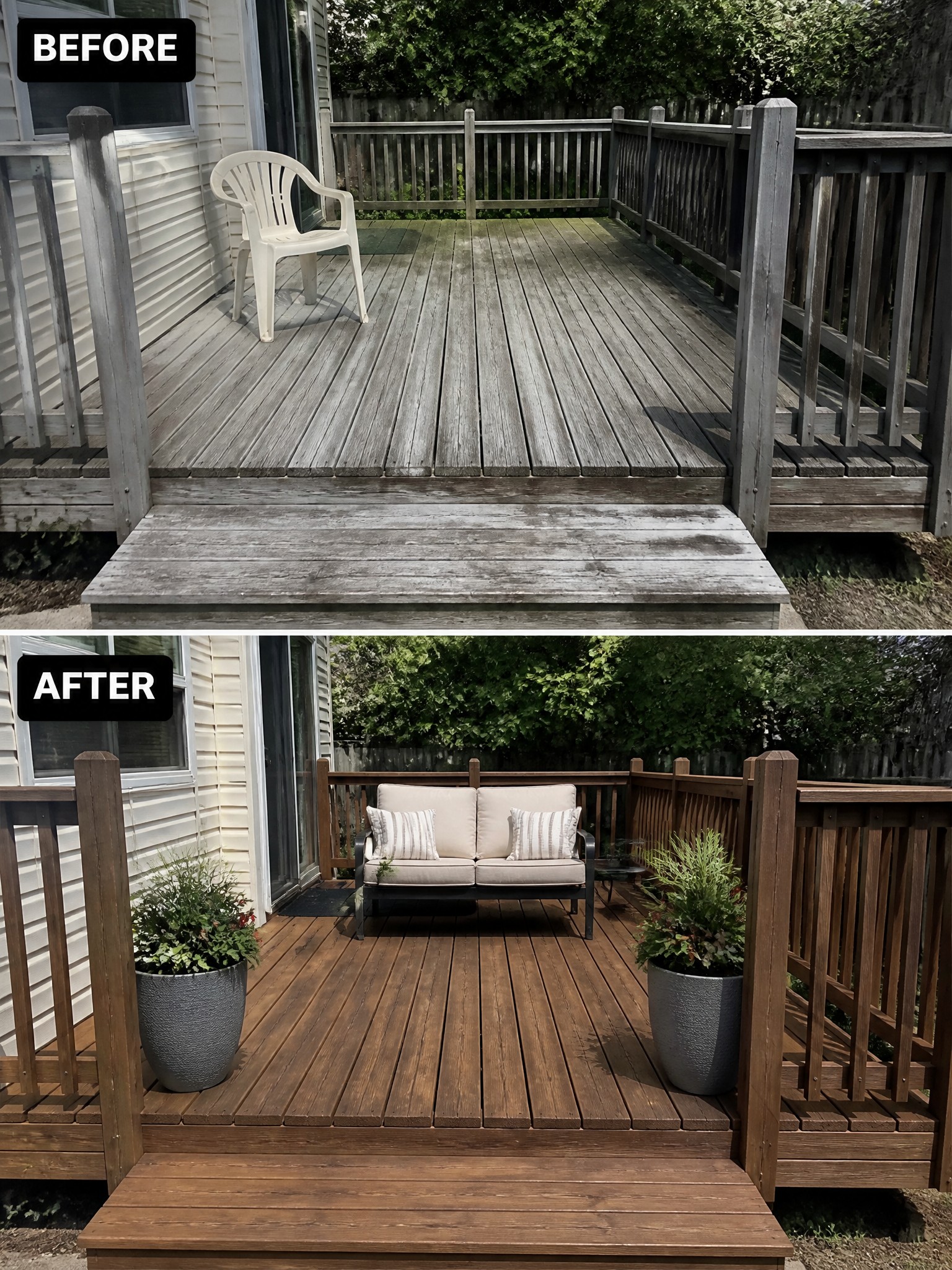
A weathered deck with nothing but a plastic chair feels more like a leftover space than a place to spend time. Once the wood is cleaned and stained a deeper brown, and a simple sofa with a couple of pillows is added, the same deck becomes somewhere people actually want to sit. The change is mostly about giving the surface a purpose instead of leaving it empty.
This idea works well on any deck or patio that already has decent structure but lacks furniture. Start with the surface, whether that means staining, cleaning, or minor repairs, then bring in seating that fits the size of the space. One solid sofa and a pair of planters are often enough to make the area feel finished without crowding it.
Use String Lights To Make A Backyard Usable At Night
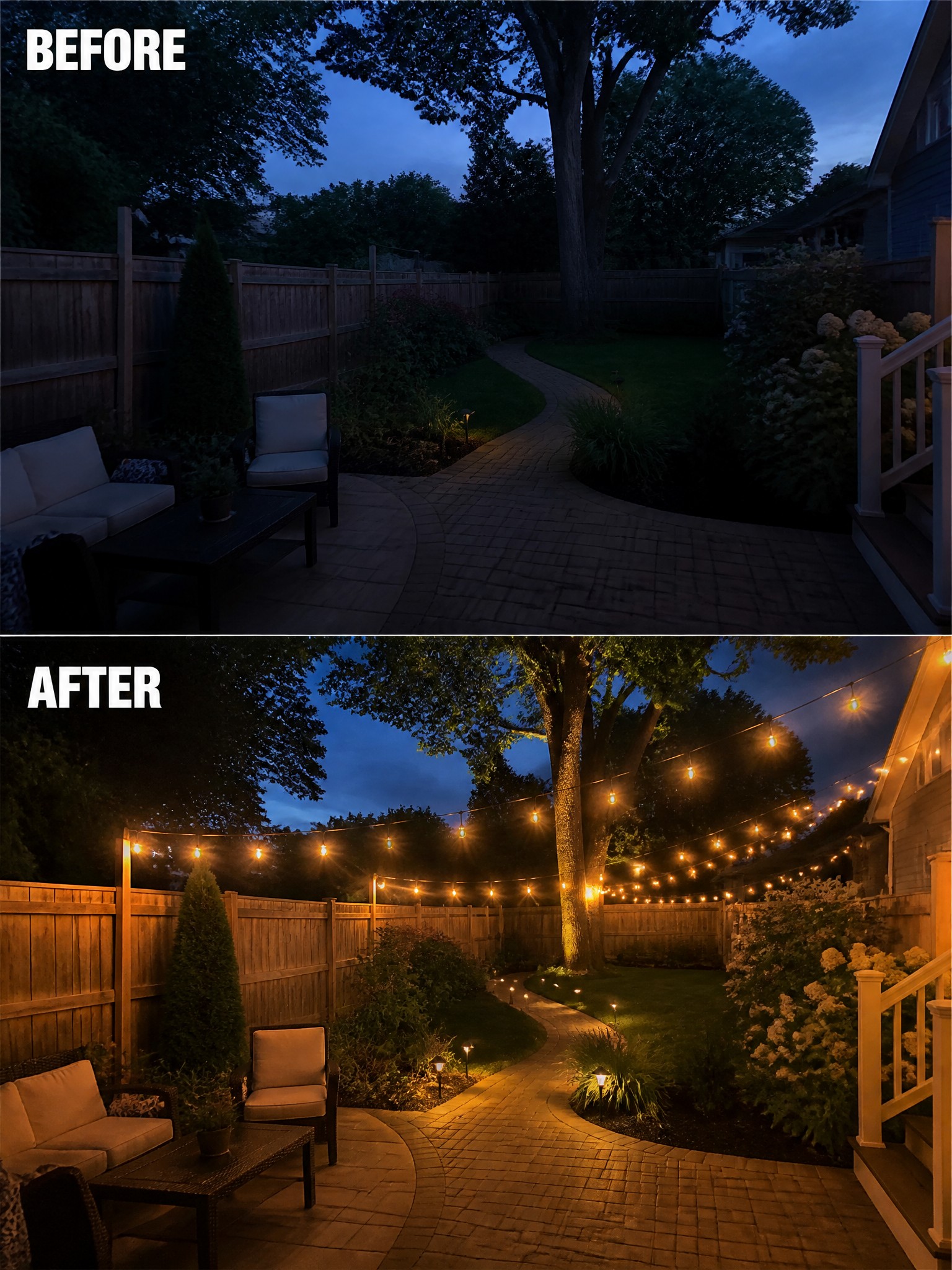
String lights can quickly change how a backyard feels once the sun goes down. In the before photo the seating area sits in near darkness, which makes it hard to use after evening. The after version adds a simple layer of overhead string lights plus a few low path lights, and the same space suddenly feels inviting and functional.
This idea works best in yards that already have a basic patio or seating zone. Run the lights along the fence line or between trees so they cast a soft glow over the main sitting area. Keep the fixtures simple and weatherproof, and test the layout before hanging everything permanently so the wires do not block walkways.
Define A Narrow Side Yard With Stepping Stones
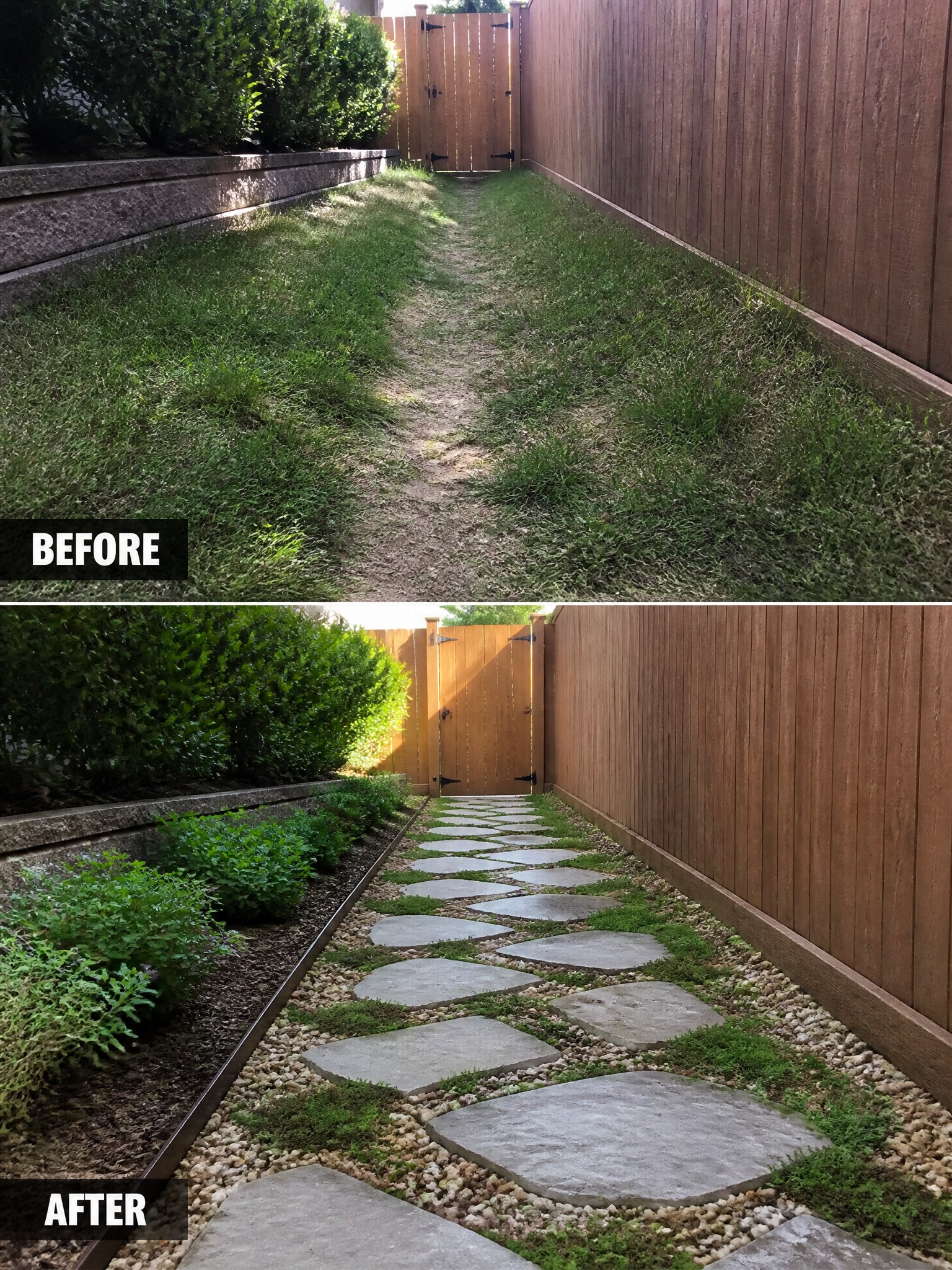
A narrow strip of grass between a fence and a wall often gets worn into a dirt path with no real structure. Placing large stepping stones down the center and adding gravel along the edges turns the space into a usable walkway instead of an afterthought.
This works best in tight side yards where you need regular access to a gate or back area. Clear the grass first, then set the stones so they sit level and leave enough room on both sides for a clean gravel border. The result feels planned without taking up much space or requiring constant upkeep.
Add Vertical Gardens To A Bare Fence
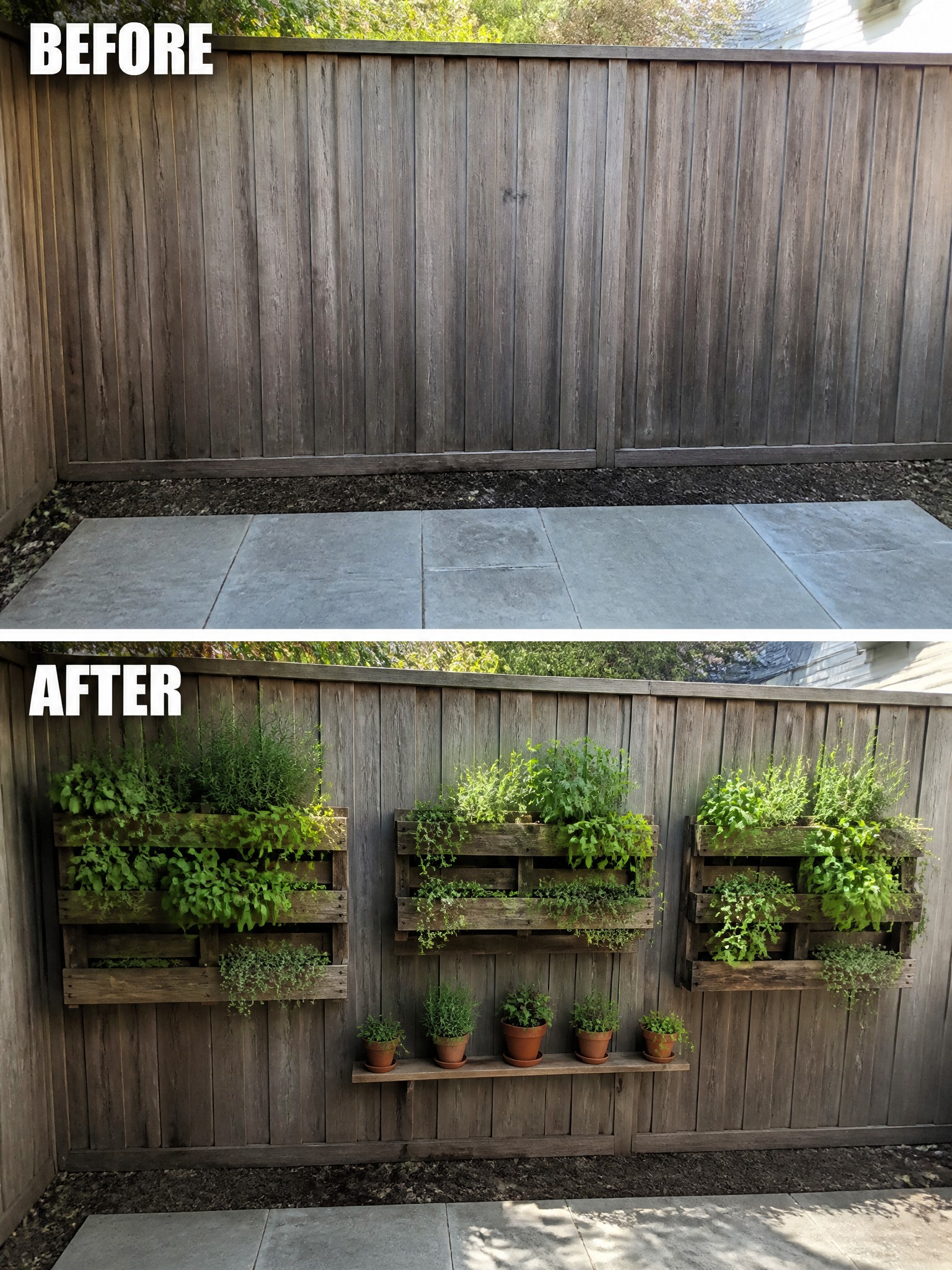
A long blank fence often leaves a backyard feeling empty even when the ground is tidy. Mounting a few wooden pallet planters filled with herbs and trailing greens gives the wall purpose and adds height without crowding the patio space below.
This idea works best in smaller yards where ground beds are limited or where you want a low-maintenance green screen. Secure the planters firmly, use soil mixes that drain well, and pick plants suited to the amount of sun the fence receives.
Turn An Empty Patio Into A Seating Area
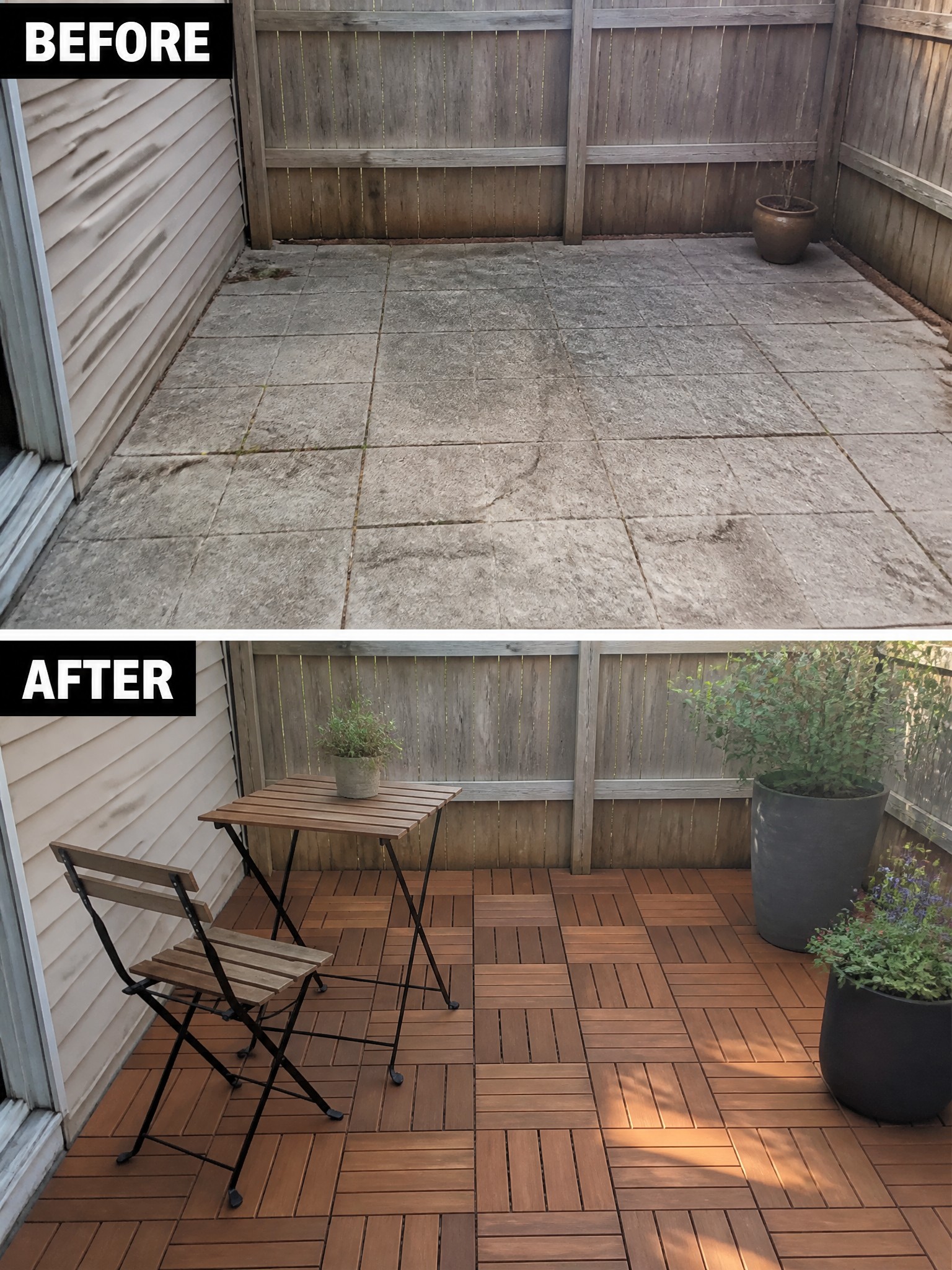
The concrete slab sat bare and unused for years. Adding deck tiles over the top and bringing in a small table with chairs gave the space a clear purpose and made it feel like an actual room outside.
This idea works on any flat hard surface that gets decent sun. Lay the flooring first so the area has defined edges, then choose two or three pieces of furniture that leave room to move around. A few large pots keep it simple without adding too much to maintain.
Refresh An Old Shed With Paint And Simple Details
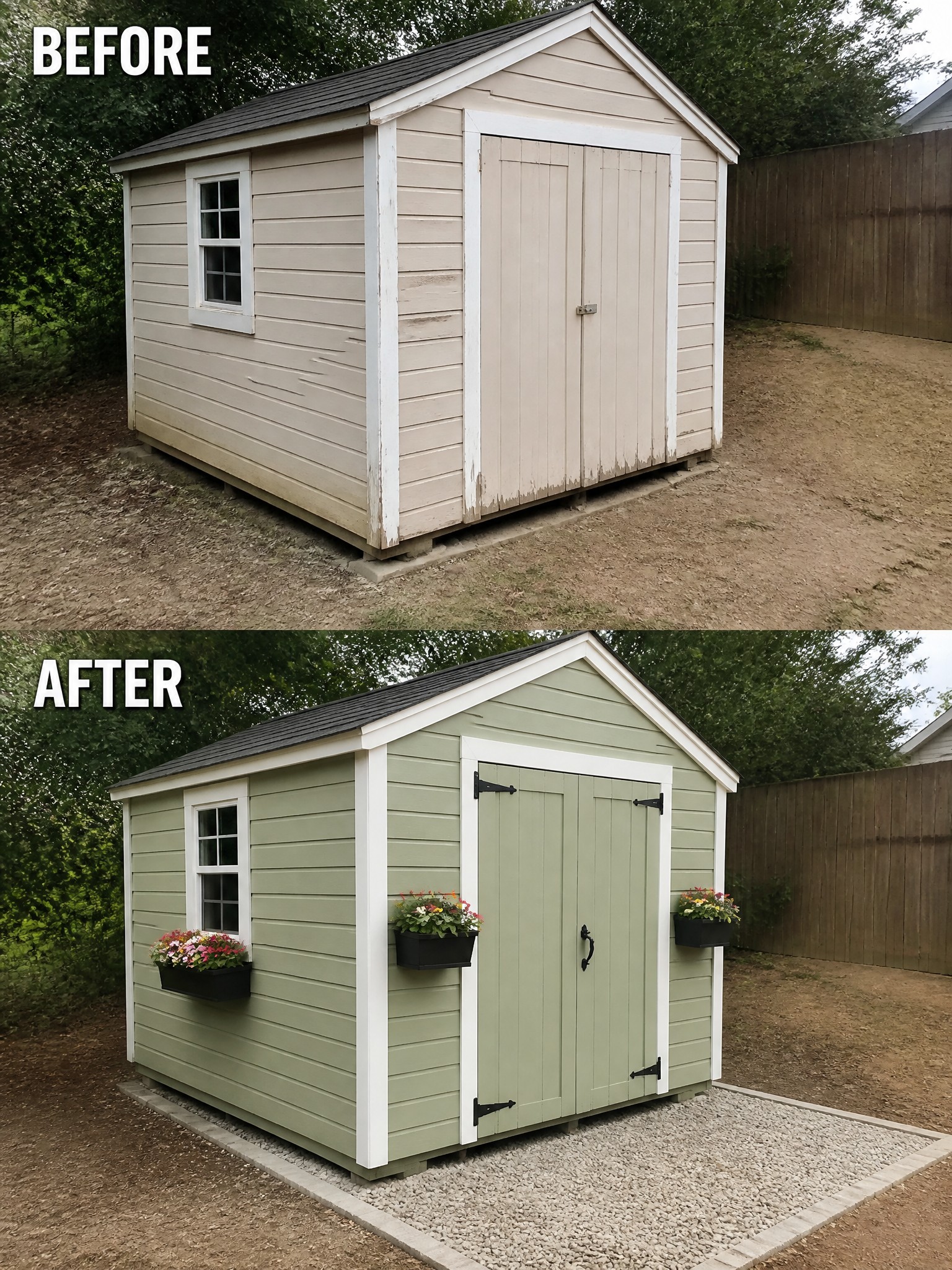
A tired backyard shed often drags down the whole space, especially when the paint is faded and the hardware looks dated. A single coat of a softer color, plus new hinges and a couple of window boxes, instantly makes the structure feel like it belongs instead of just sitting there.
This approach works well on any small outbuilding that still has good bones. Start with a thorough cleaning and a color that echoes nearby plants or fencing, then add just enough hardware and planting to give it purpose. Keep the surrounding ground simple so the shed becomes a quiet background feature instead of a project on its own.
Turn A Bare Backyard Corner Into A Play Area
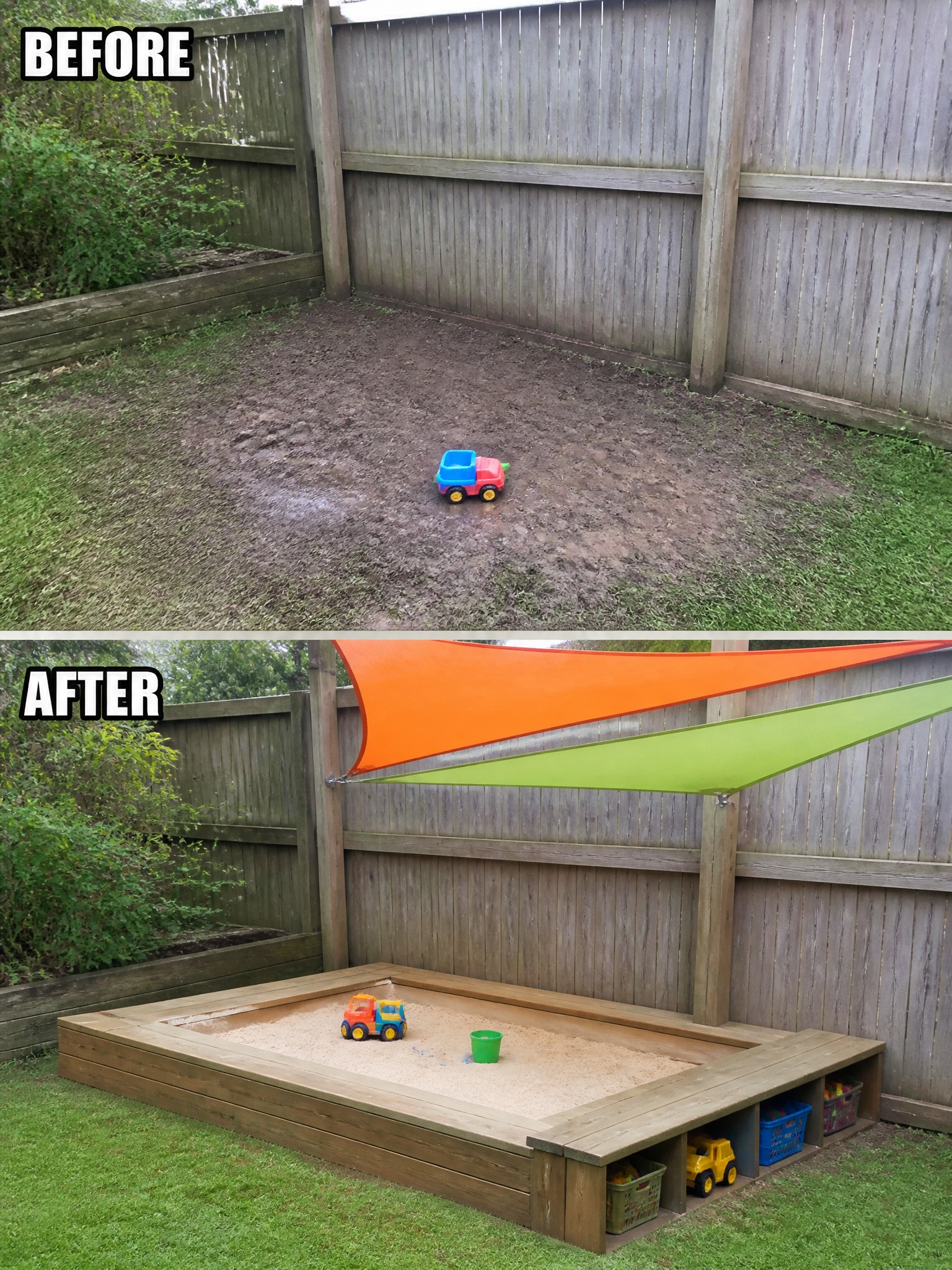
A bare dirt patch can become a useful play spot with one main addition. The empty backyard corner gains a raised wooden sandbox with sand inside and shade sails stretched overhead to block the sun.
This idea suits homes with kids who need a defined place to play without spreading toys across the whole yard. Build or buy a simple frame that includes side storage so buckets and trucks stay in one spot, and add shade above if the area gets strong afternoon light.
Use Gravel To Define An Outdoor Seating Area
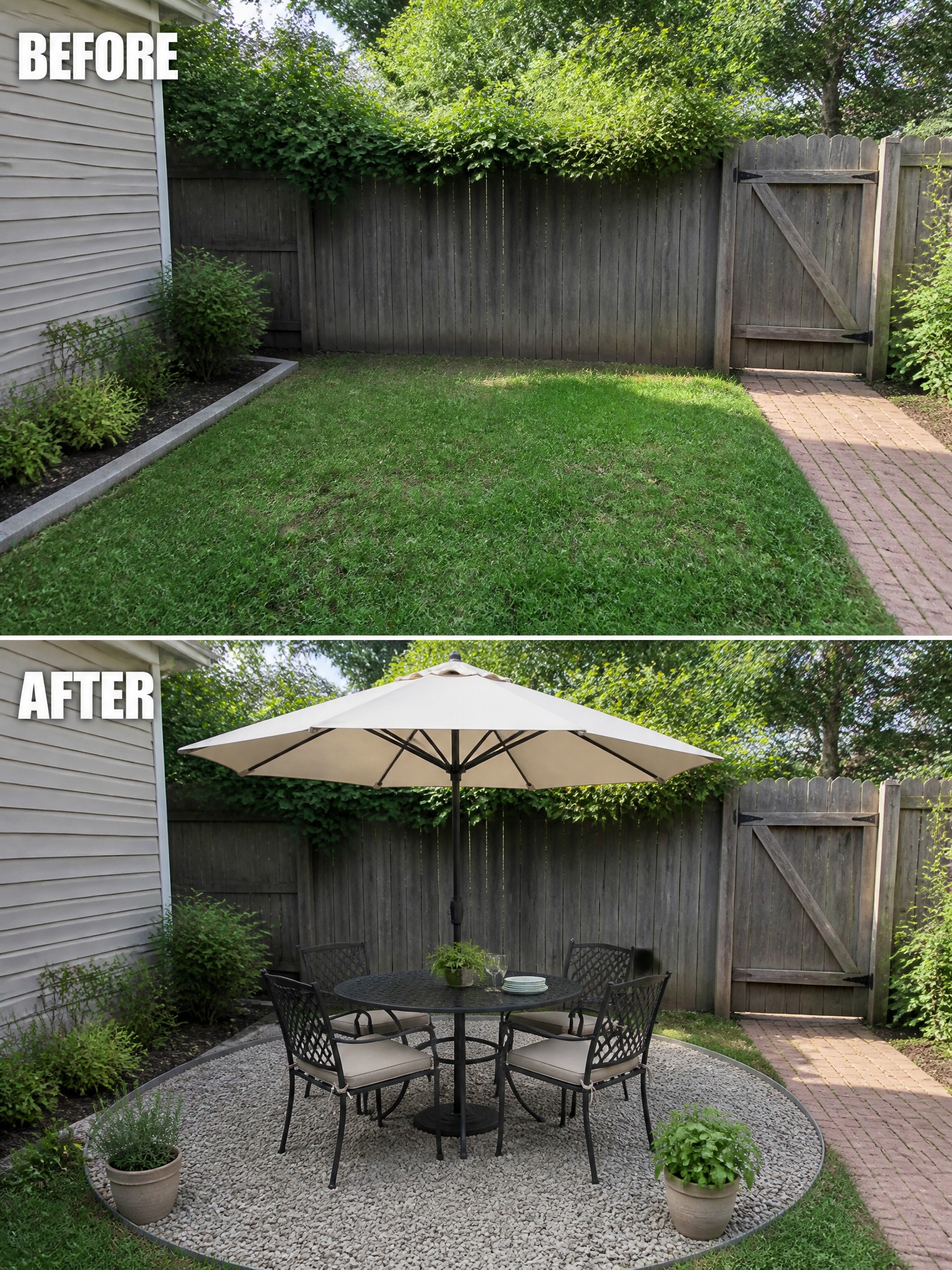
A flat lawn can feel like wasted space when there is no clear place to sit. In this backyard, adding a simple gravel circle gave the area a purpose and turned it into a spot for meals or relaxing. The round shape keeps the layout compact and stops the furniture from sinking into the grass.
This idea works well in smaller yards where you want one main seating zone without building a full deck. Start with a weed barrier and a low edging ring, then fill it with gravel. Keep the furniture scale modest so the space still feels open and easy to move around.
Add Privacy With A Fence Screen And Planters
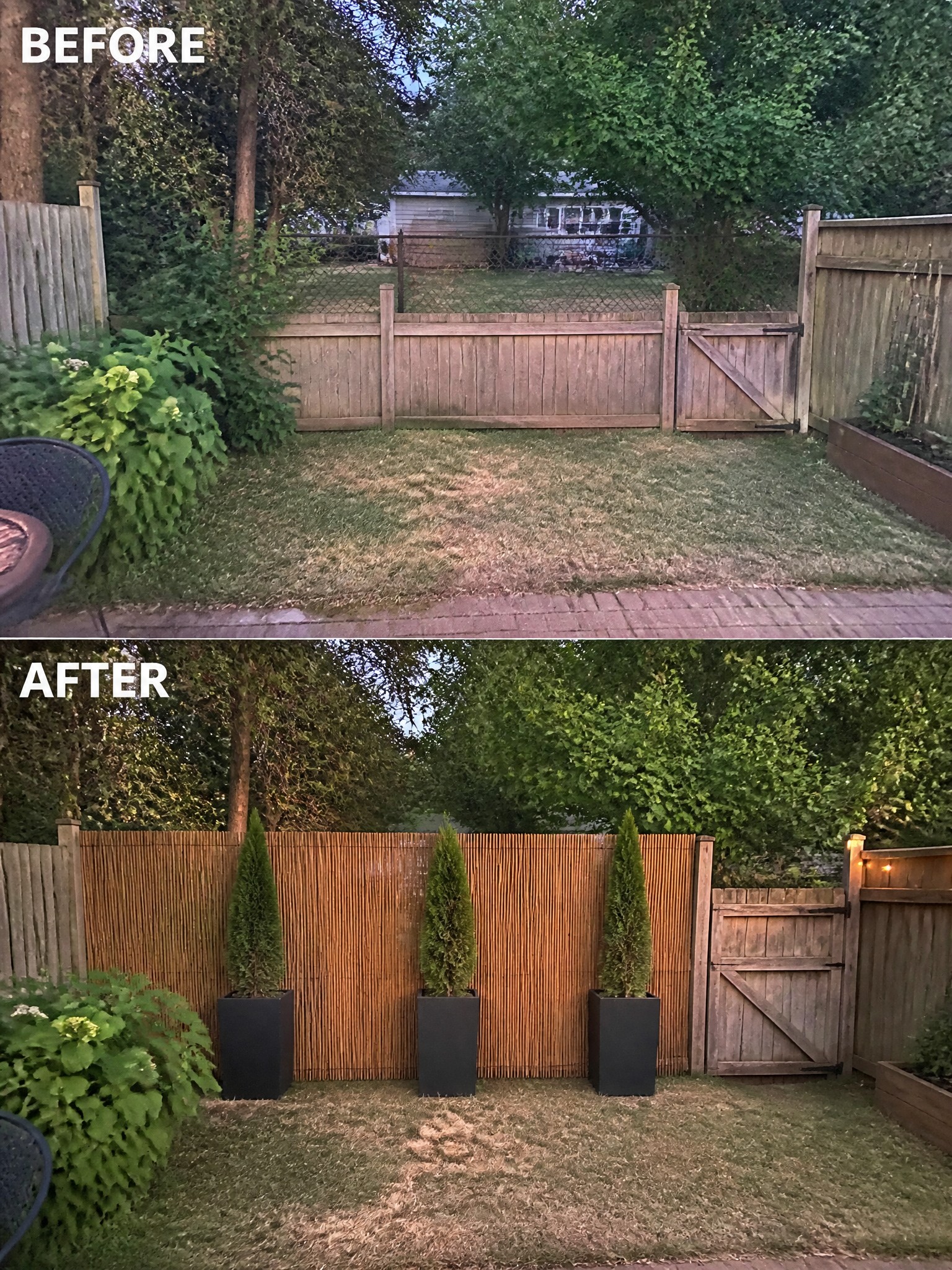
A plain fence often leaves a backyard feeling exposed. Adding a simple reed screen across part of the fence creates an instant backdrop, while three tall evergreens in matching black planters give the space a planted border without needing new garden beds.
This approach works well on smaller lots or where digging is limited. Place the planters at even spacing, match the screen height to the fence, and keep the rest of the lawn open so the area still feels usable rather than crowded.
Add Defined Garden Beds Along A Fence
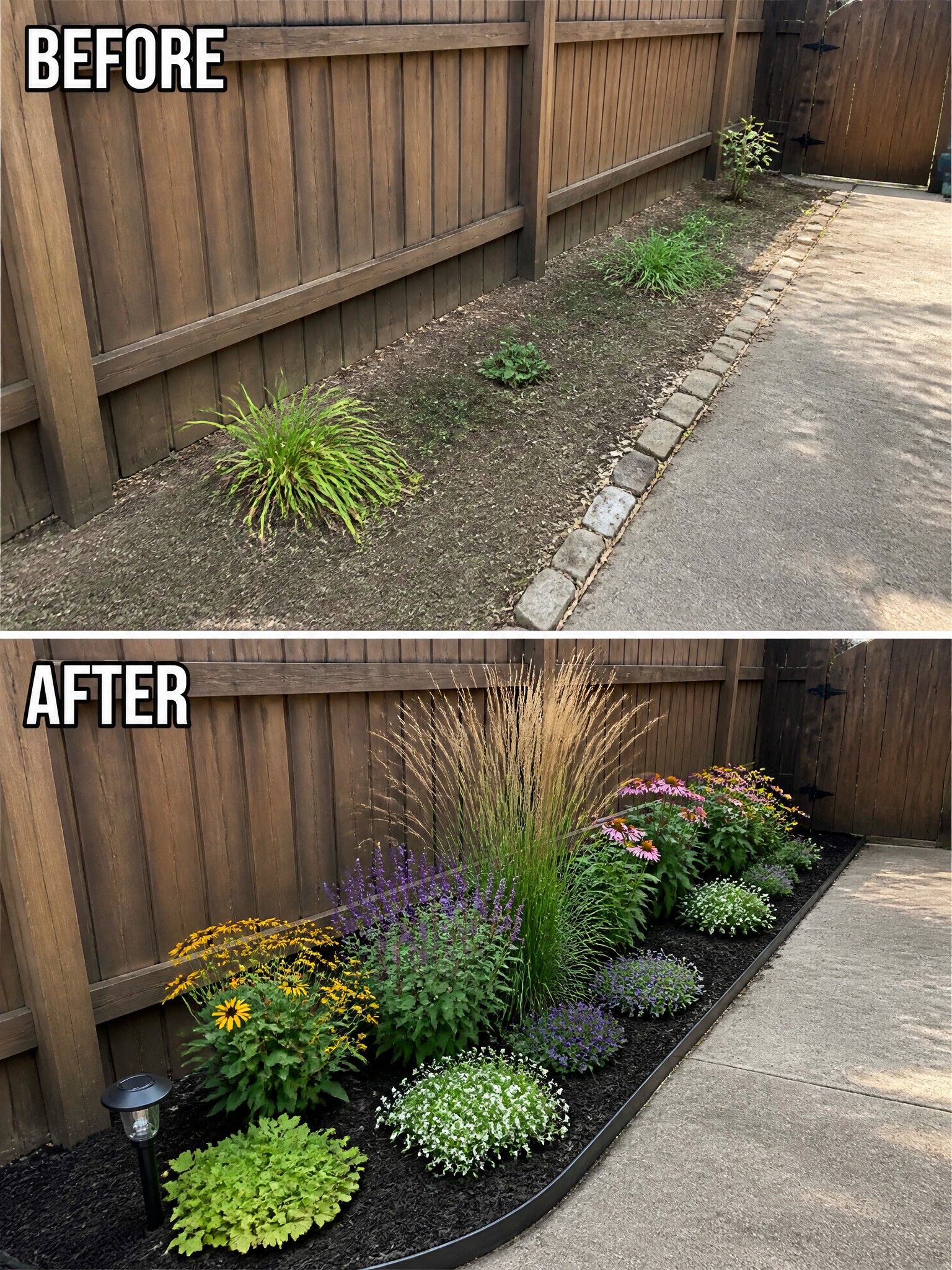
A narrow strip next to a fence often gets ignored until it turns into a weedy mess. Adding a clear edge and a fresh layer of mulch turns that same space into a proper garden bed that looks intentional and stays easier to maintain.
This idea works best in tight side yards or along paths where you need structure without taking up much room. Keep the planting simple with a few repeating shapes and heights so the bed fills in without blocking the walkway or looking crowded.
Organize Cluttered Garden Tools With A Storage Bench
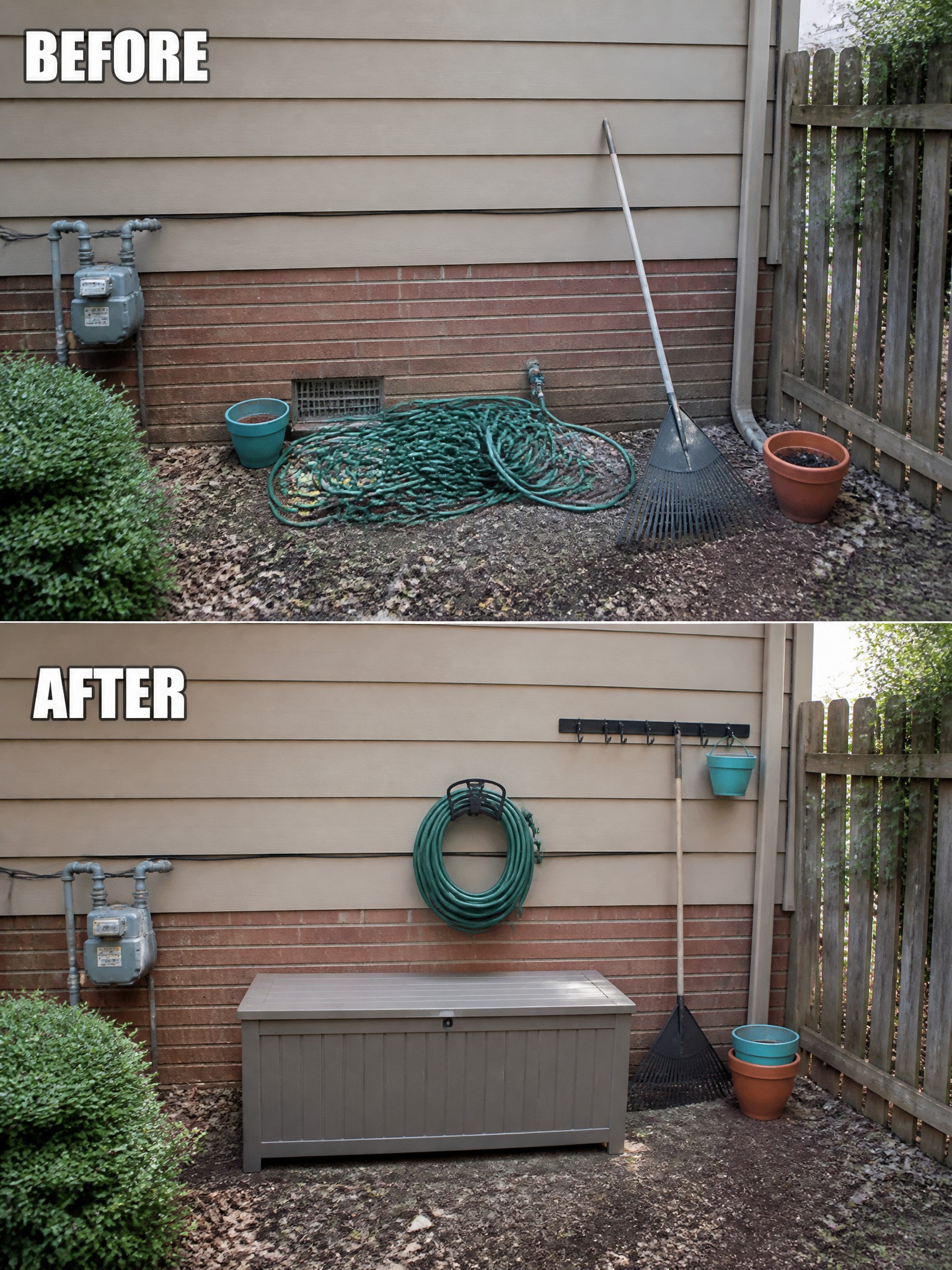
A messy pile of hoses and tools left on the ground makes any backyard corner feel neglected. Adding a storage bench gives you a place to tuck things away while wall hooks keep the rake and hose off the dirt. The change turns a scattered utility spot into something that feels intentional and much easier to walk past.
This idea works well along the side of a house or near a fence where tools tend to collect. Start with one bench sized for your space and a simple hook rack that can handle the weight of your equipment. Focus on weatherproof pieces so the setup lasts without constant maintenance.
Turn Bare Concrete Into A Usable Outdoor Seating Area
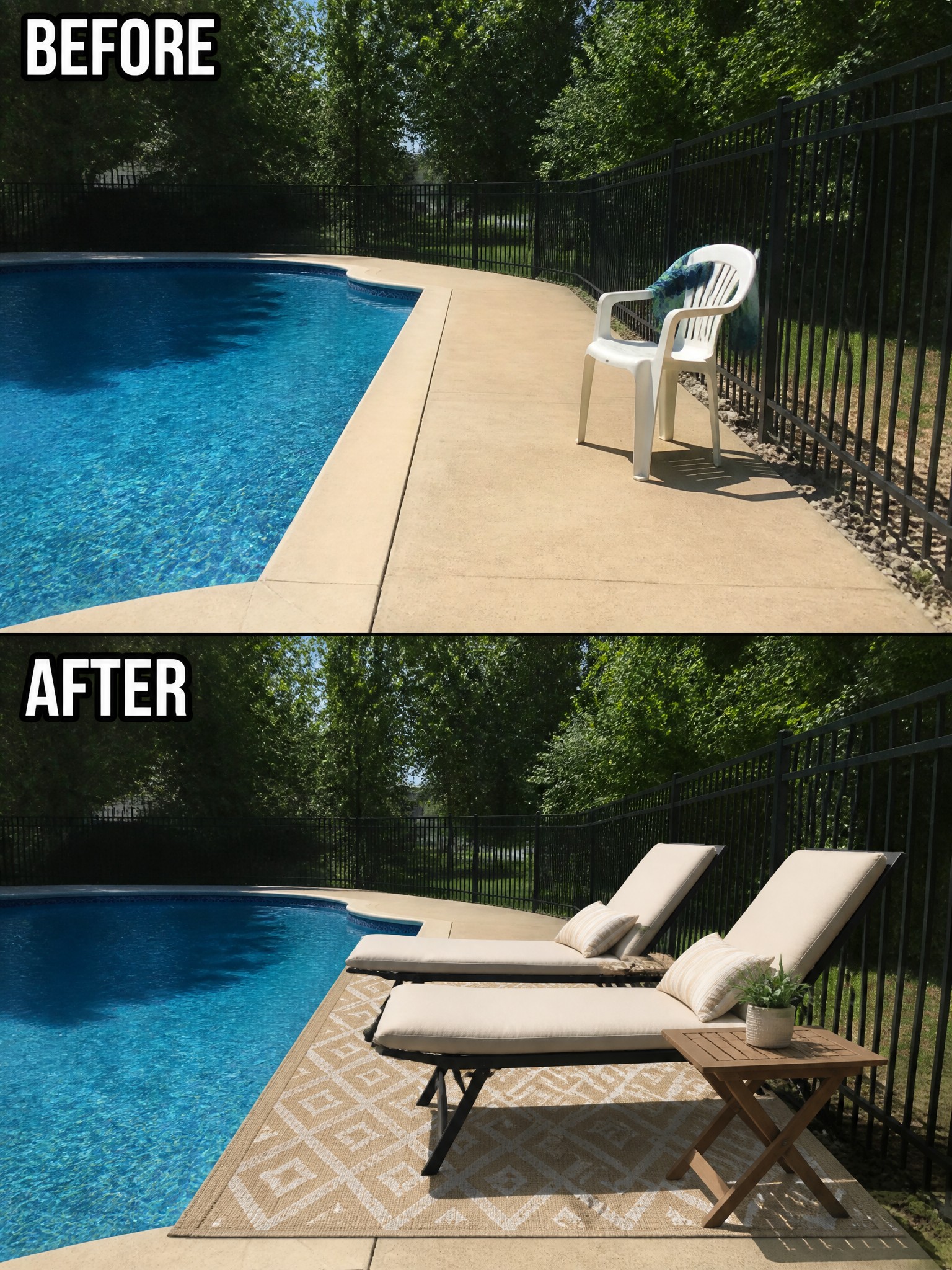
The pool deck changed from a plain stretch of concrete with one plastic chair to a clear seating spot with two lounge chairs, a rug, and a small table. That shift turns an empty walkway into a place where people actually want to sit.
This idea works on any pool deck or patio that feels too open. Lay down a rug first to mark the zone, then add seating that fits the space without crowding the edge of the pool. It keeps the area practical while making it feel finished.
Add Structure To An Overgrown Backyard
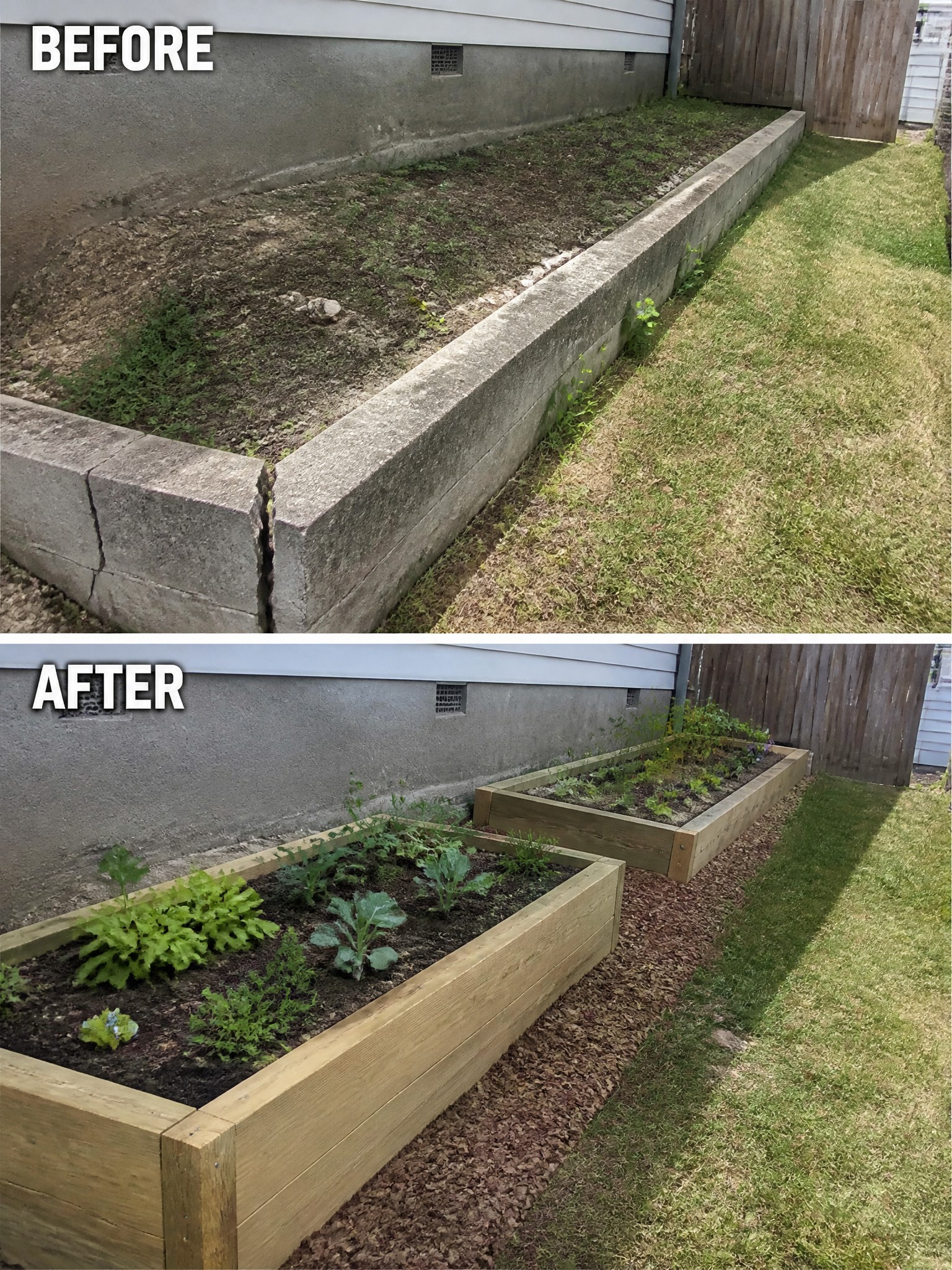
A weedy strip of dirt next to the house can make the whole yard feel unfinished. Wooden raised beds fix that by creating clear planting zones and turning the same narrow space into something usable.
This approach works best in small yards where you want to garden without dealing with poor soil or constant weeding. Start with a few simple beds, fill them with good soil, and keep the surrounding area mulched so the layout stays neat.
Add Hanging Lights And Plants To A Deck Railing
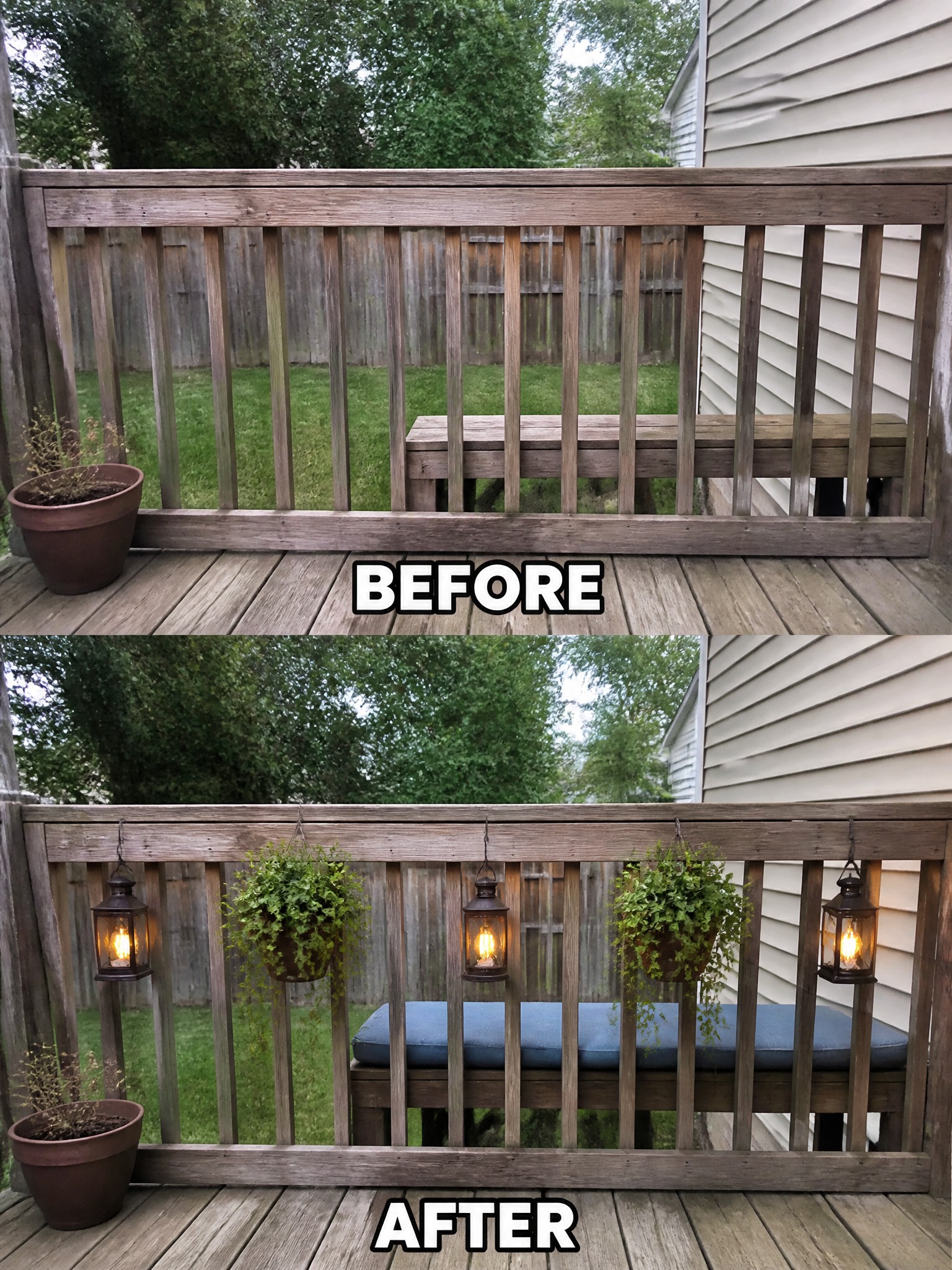
A plain deck railing often leaves the space feeling unfinished. Hanging a few lanterns and planters along the top rail adds light and greenery at eye level. The change turns the railing into a simple focal point without crowding the deck floor.
This idea works on most wooden decks or porches that already have a sturdy rail. Use battery lanterns so there is no wiring to run. Pick plants that tolerate wind and partial shade, and space everything evenly so the view beyond the rail stays open.
Make A Plain Entry More Welcoming
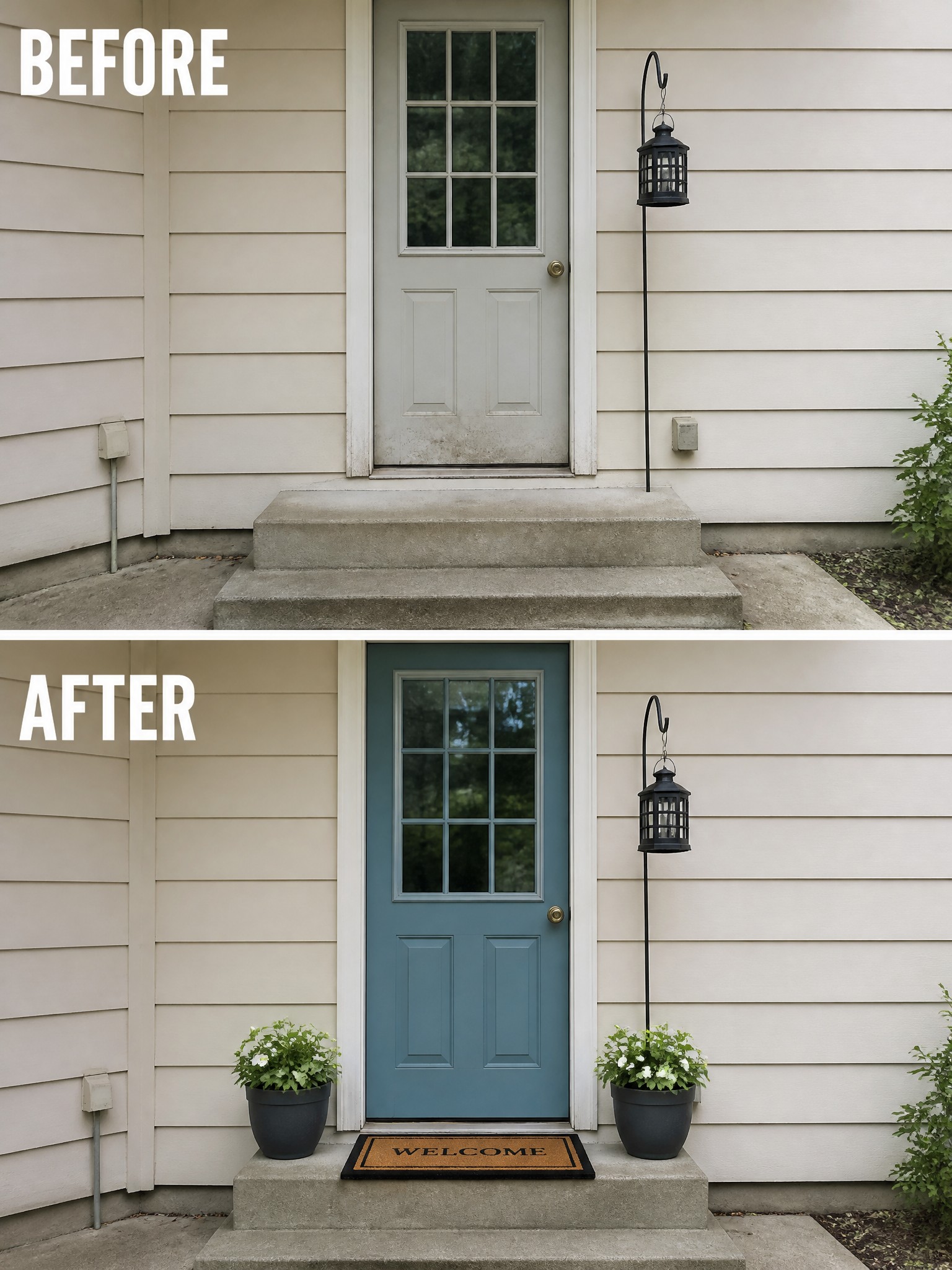
A fresh coat of paint on the front door can shift the whole feel of an entry. In this case the door went from a tired off-white to a deeper blue-green, and two matching planters were added on the steps. Those two moves alone make the space feel finished and much easier to approach.
This idea works well on houses with simple siding and concrete steps where you want quick improvement without major construction. Keep the planters the same size and color so they frame the door evenly, and choose a door color that contrasts with the house but still feels calm. It suits most suburban homes and can be done in a weekend.
Define An Outdoor Bench Area With A Rug And Planters

A bare bench sitting on gravel can feel unfinished even when the bench itself looks fine. Adding a rug underneath and placing a few painted planters with flowers around the sides gives the spot clear boundaries and makes it feel like an actual place to sit rather than just a bench against a fence.
This approach works well in small side yards or corner patios where you already have seating but need something to pull the space together. Start with the rug to mark the area, then add planters in two or three colors that match your cushions. Keep the number of pieces modest so the gravel still shows around the edges and the space does not feel crowded.
Use Lattice To Hide An Overgrown Backyard Spot
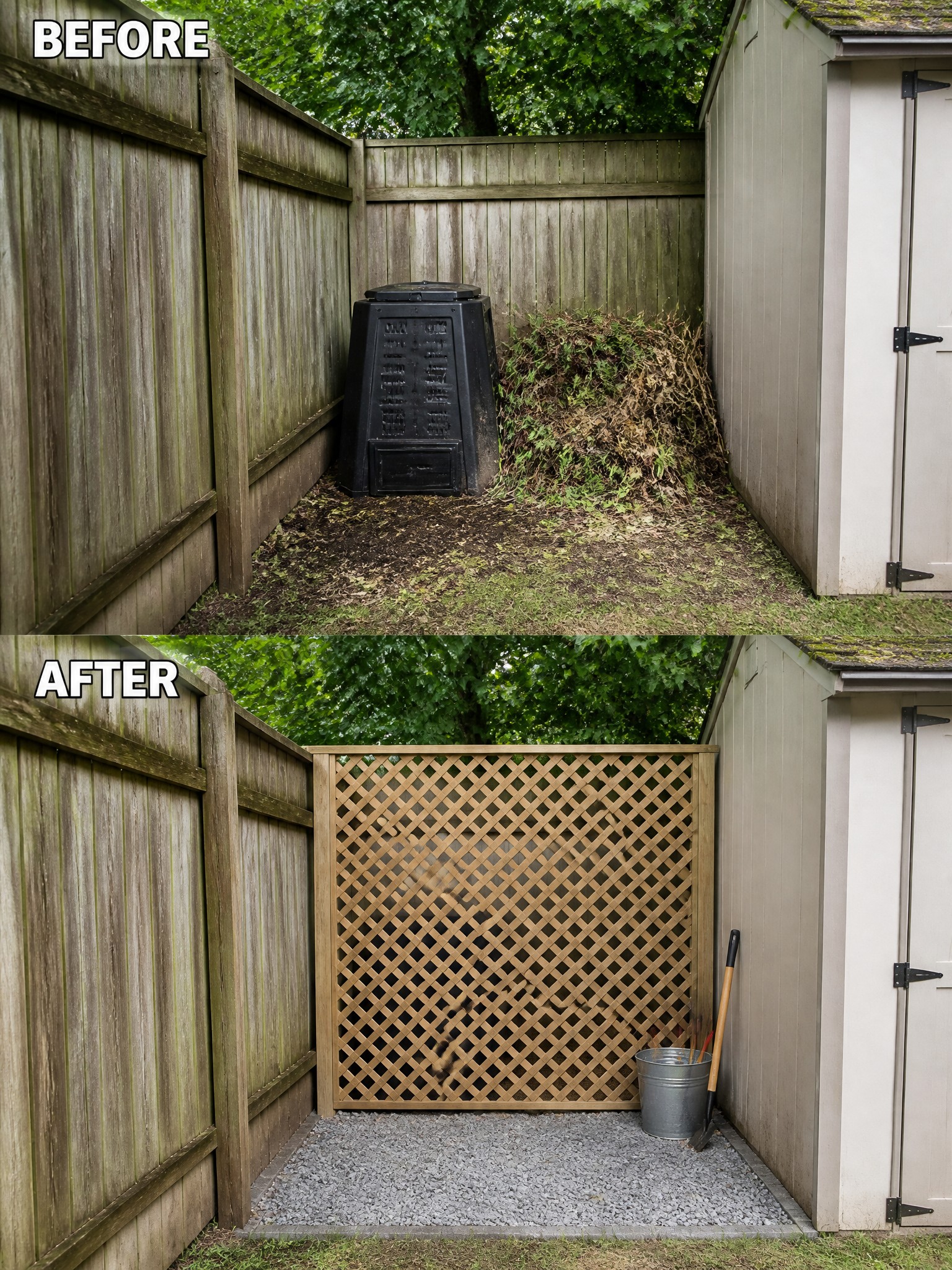
A small corner next to the shed had turned into a dumping ground for leaves and debris. Adding a simple lattice screen across the front and laying down gravel gave the space a clear boundary and made the whole area feel intentional instead of neglected.
This approach works well in tight side yards or behind sheds where you need quick order without a full rebuild. Start with a solid cleanup, then add the screen first so the eye stops at the lattice instead of the mess behind it. Gravel keeps the ground from turning muddy and gives you a place to store tools without it looking scattered.
Frequently Asked Questions
Q: What if I only have one day instead of the whole weekend?
A: Pick just two quick ideas like hanging lights and setting out cushions. Focus on spots that need little prep so you finish before dark.
Q: How do I make sure the new look lasts through the season?
A: Choose sturdy materials for builds and water plants regularly at first. A quick weekly check keeps everything looking fresh without much work.
Q: Can I combine a few ideas without it feeling cluttered?
A: Start with one focal point like a small table setup. Then add one or two accents that match colors you already have around.
