

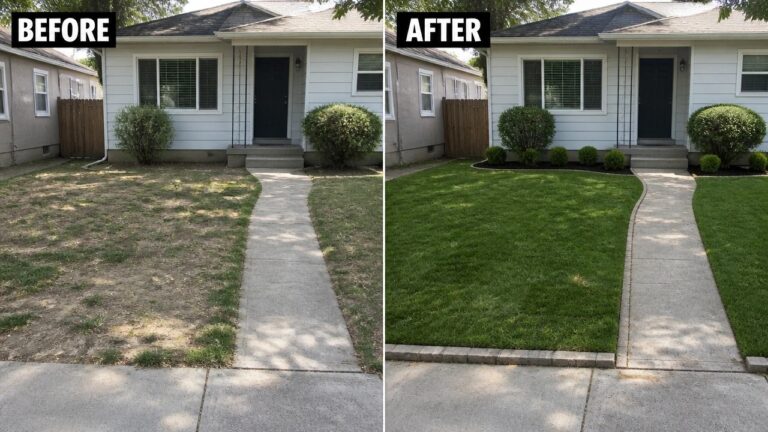
Many front yards end up looking a bit neglected once the lawn loses its shape and the planting beds fill with whatever grew last season.
Adding clear borders and a few structured plants can bring back a sense of order that makes the whole property feel more settled.
I usually find that focusing on the walkway first changes how approachable the house seems from the street.
The satisfaction comes from seeing those steady improvements rather than waiting for one big project.
Some of the classic approaches still hold up because they work with the existing layout instead of fighting it.
Add Defined Beds To Shape Up A Front Yard
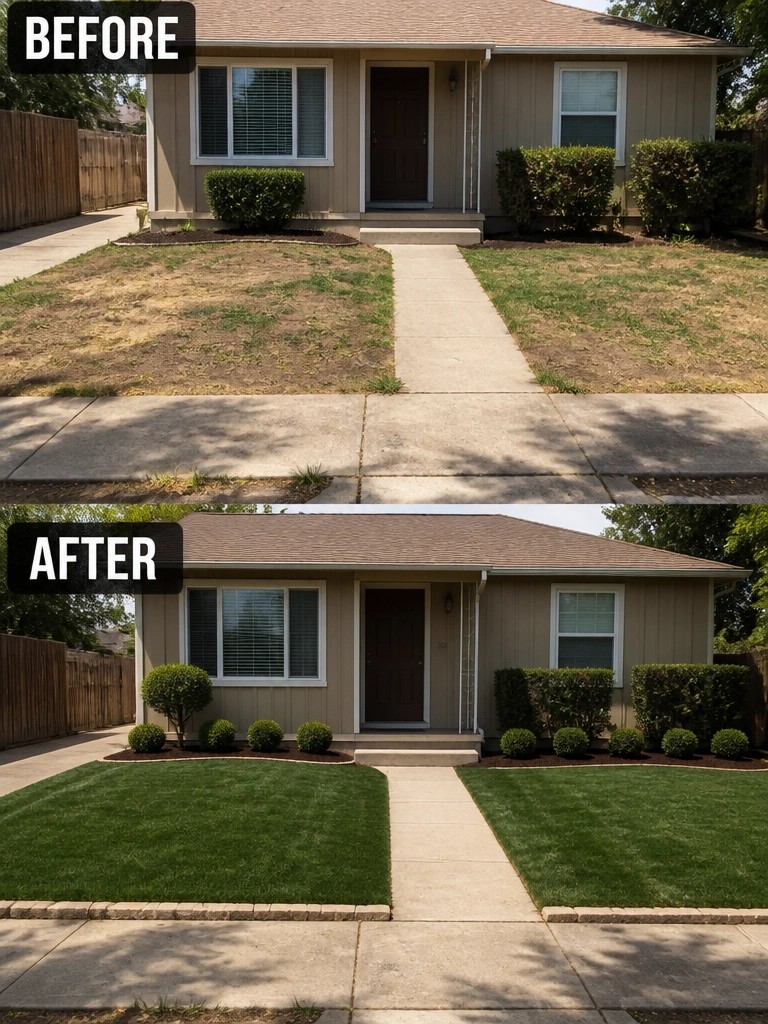
A patchy lawn and scattered bushes make a front yard look neglected even when the house itself is fine. In this case the fix was straightforward. The grass was replaced with fresh sod and the shrubs were swapped for smaller, rounded plants set in mulched beds that run along the house. The result feels planned instead of random.
This approach works best on small to medium lots where you want curb appeal without a big budget. Start by clearing the old lawn and marking simple bed lines before you plant. Keep the shapes straight or gently curved so mowing stays easy, and stick to one or two plant types so the beds stay neat over time.
Add Structure To An Overgrown Front Yard
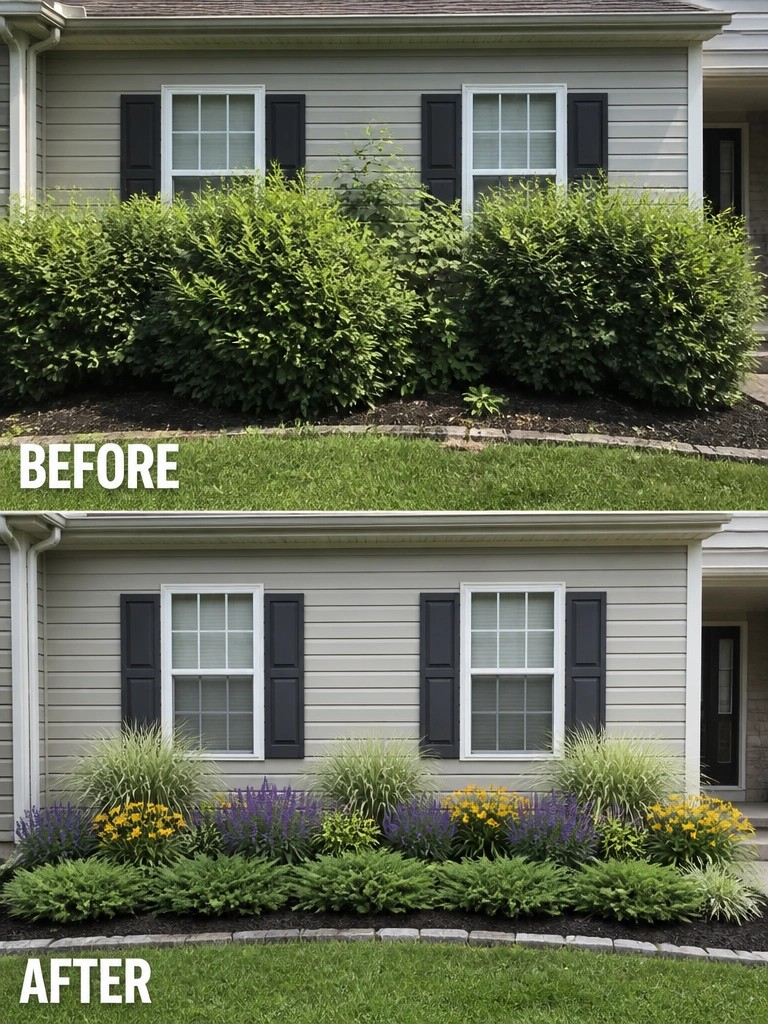
The before photo shows tall, wild shrubs sitting right under the windows with no real shape or edge. In the after, those shrubs are gone and replaced with low, layered beds that use different plant heights and a clear mulch border. The change makes the whole front of the house look intentional instead of neglected.
This idea works best on houses where the planting has gotten out of hand but the structure of the home is still fine. Start by cutting back or removing the largest overgrown plants first. Then lay out simple beds with a mix of low ground cover, mid-height flowers, and a few taller grasses so the beds feel full without blocking windows or walkways.
Replace A Cracked Walkway With Pavers
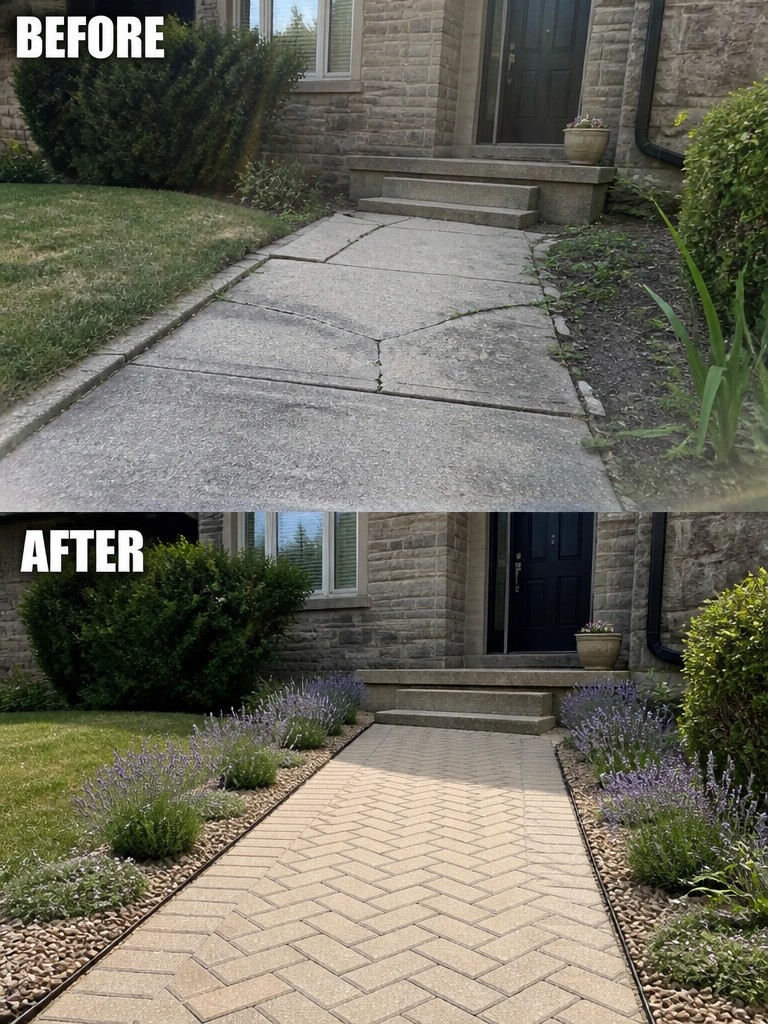
A cracked concrete path makes the front of a house look neglected even when the rest of the yard is fine. Switching to pavers gives the walkway a clean shape and stops the cracks from spreading. Adding gravel beds and simple plants along both sides keeps the new path from feeling like it is just sitting on bare grass.
This approach works well on older homes where the original concrete has aged poorly. Start with the path itself before adding more plants or lights. Keep the beds narrow so the walkway still feels open and easy to walk along.
Add Edging To Define Your Garden Beds
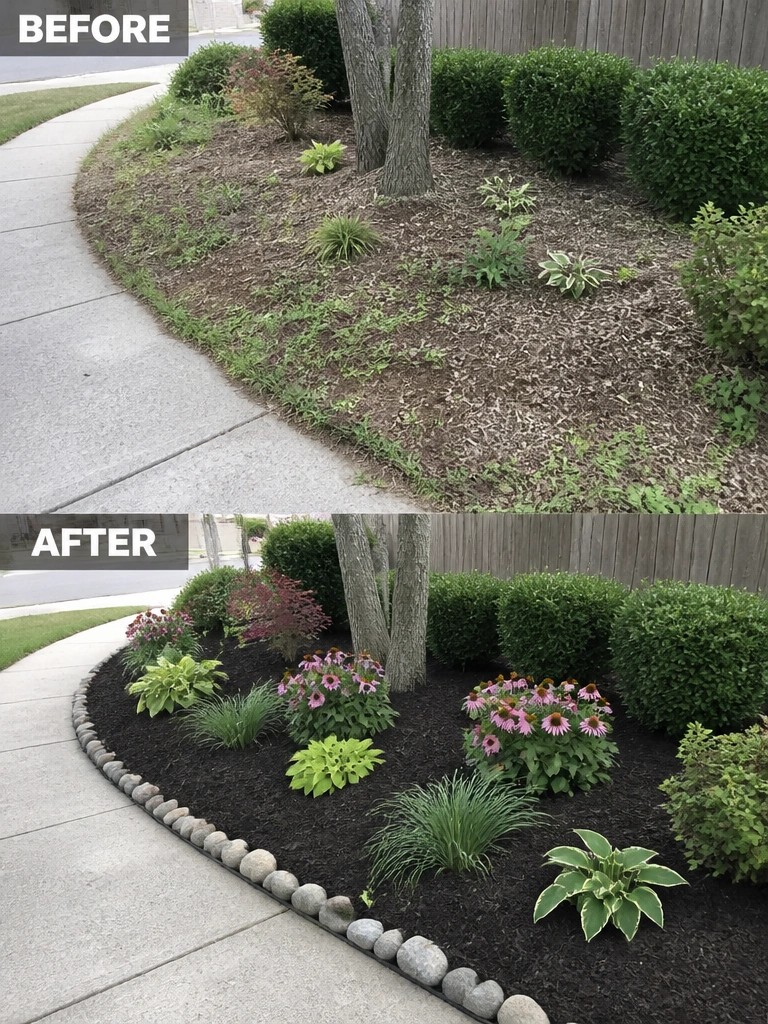
A simple border can turn a messy planting area into something that looks intentional. The change here came from adding a low stone edge along the sidewalk and switching to dark mulch that sets the plants apart from the surrounding grass.
This idea works best in small front beds where the goal is a cleaner look without a full redesign. Keep the edging low so it does not block the mower, and choose mulch that contrasts with the lawn so the shape stays visible over time.
Define A Front Path With Stepping Stones
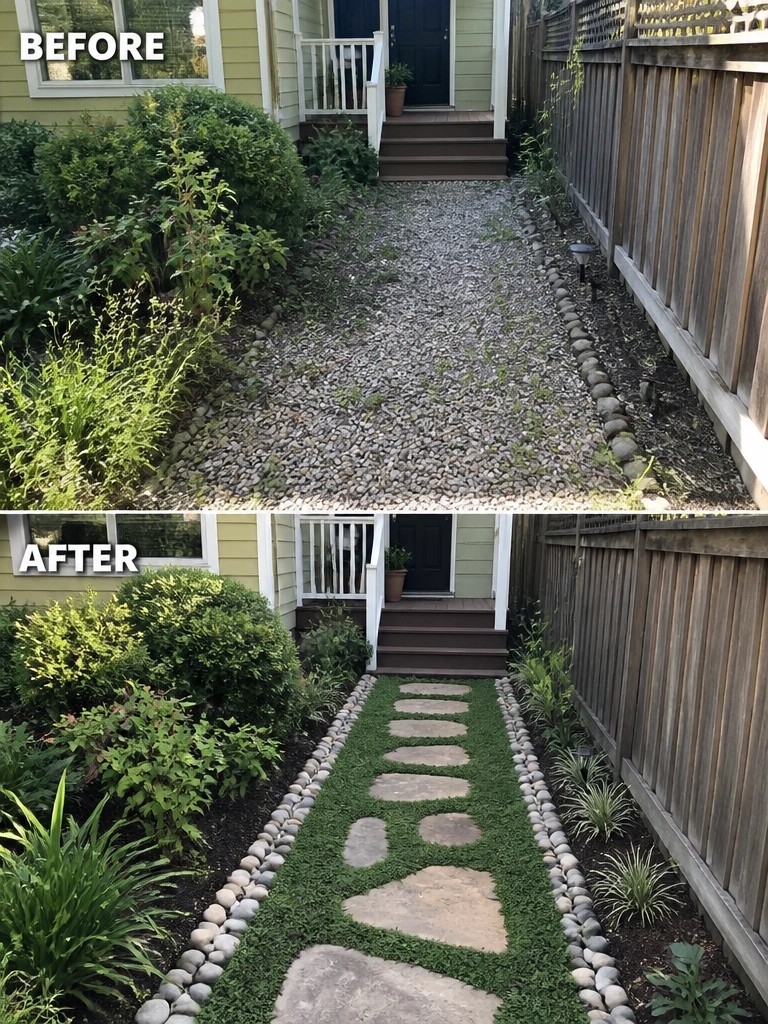
A loose gravel path often ends up looking messy once weeds start growing through it. Replacing the gravel with a strip of turf and a row of stepping stones gives the walkway a clear shape while still letting it feel natural. The rock border on both sides keeps everything in line and stops the grass from creeping into the beds.
This idea works well on narrow side yards or front entries where you want a simple route without pouring concrete. Start by clearing the old surface completely, then lay the stones with enough space for easy walking. Keep the planting along the edges low so the path stays the main feature.
Add Structure To A Sloped Front Yard
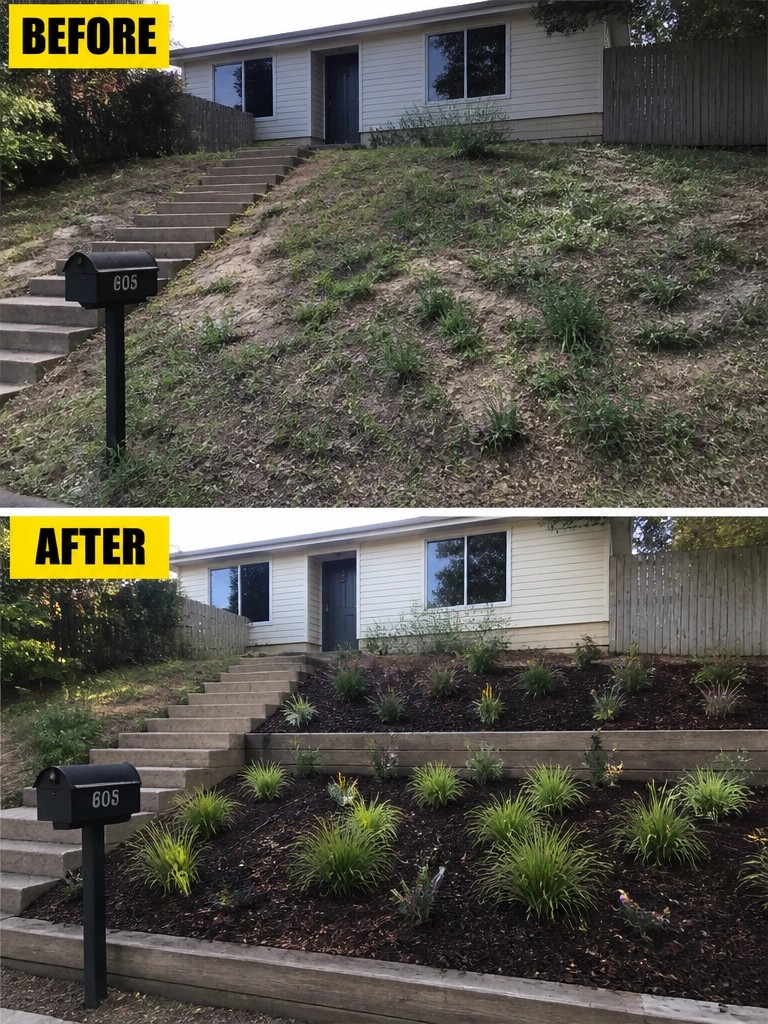
A bare slope covered in weeds and patchy grass usually looks neglected because nothing holds the surface in place. Low retaining walls and fresh mulch turned the hill into a series of clear beds that follow the grade and keep the soil from washing down.
This idea suits any home where the front yard drops away from the street. Put the hard edges in first, then choose plants that match the amount of sun the slope gets. The beds stay neat with far less mowing and weeding once the borders are set.
Define The Mailbox Area With Simple Edging
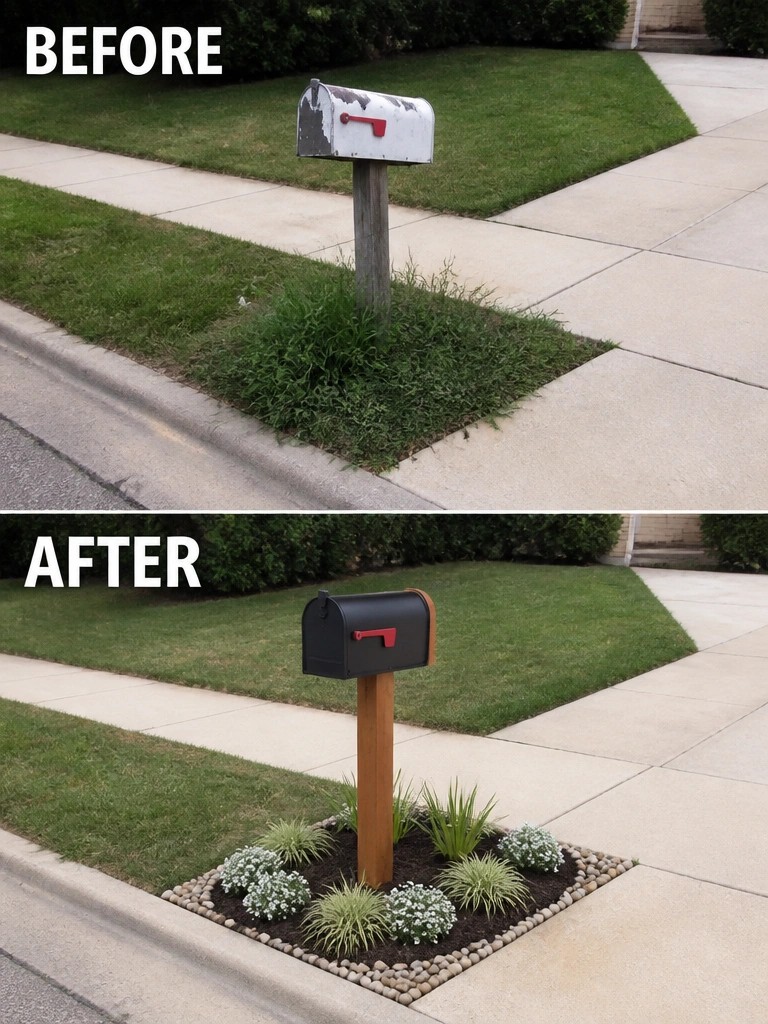
The mailbox often ends up in a neglected patch where grass grows wild around the post. Adding a rock border, fresh mulch, and a few low plants turns that messy spot into something that looks deliberate and easy to maintain.
This idea works in most front yards where the mailbox sits right by the curb. Clear the overgrowth first, then keep the bed small and use plants that stay low so they do not block the box or get in the way of mowing. The result feels finished without needing much ongoing work.
Add Planters And A Runner To Warm Up A Plain Entry
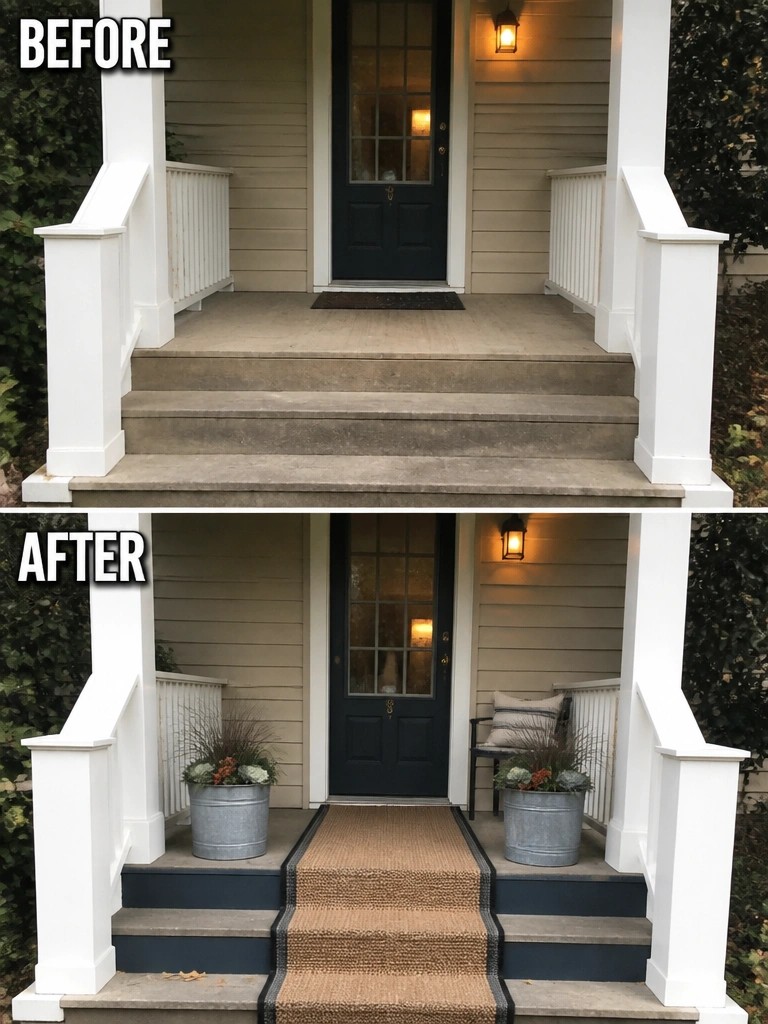
A bare set of concrete steps and an empty porch can make the front of a house feel unfinished. In this case the simple addition of two large planters on the lower steps and a long woven runner changed the whole feel. The dark paint on the risers also helped tie everything together without any major construction.
This approach works well on older homes where the entry is functional but lacks any real presence. Start with one or two good sized containers placed where people naturally pause, then add a durable runner to guide the eye and soften the concrete. Keep the rest of the porch clear so the space still feels open and easy to walk through.
Create Defined Garden Beds Along The Fence
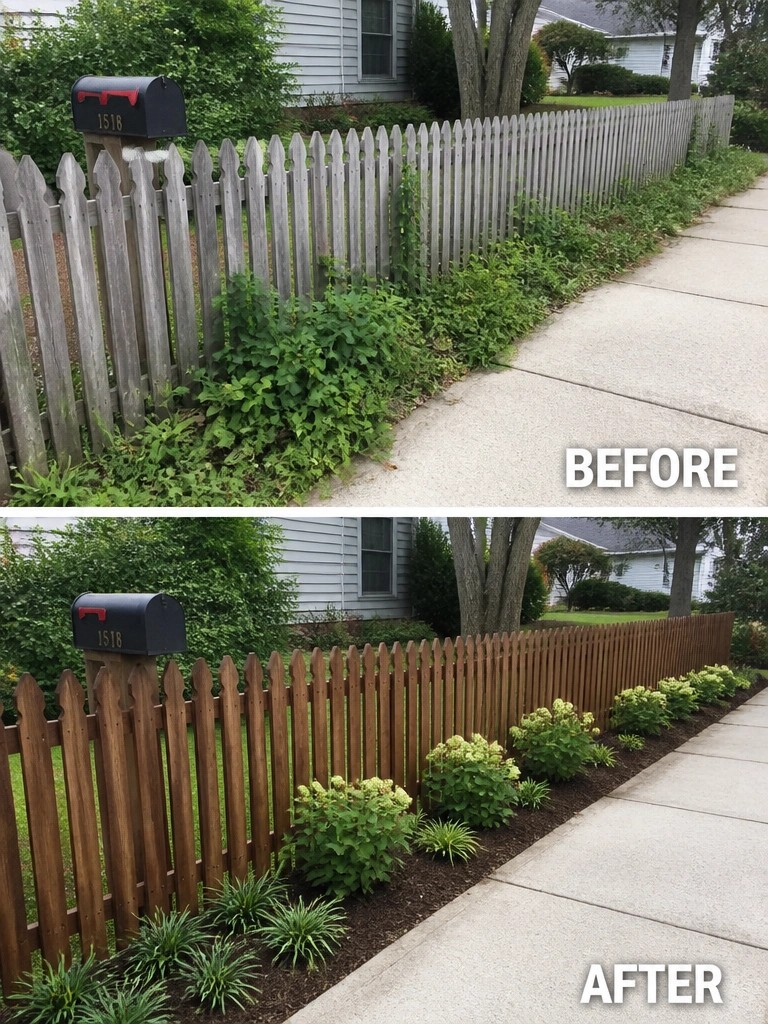
Overgrown weeds and vines along a fence or sidewalk edge make the whole front look neglected. In this case the fix was straightforward. The messy growth was cleared out, then simple beds were cut in with mulch and a few repeating plants placed in a row.
This approach works best on narrow strips where you want order without crowding the walkway. Start by removing everything that spills over, then add a clean mulch layer and stick to two or three plant types that stay roughly the same height. The result keeps the area looking intentional and makes routine weeding much easier.
Add Structure To An Overgrown Front Yard

Many front yards lose their shape when weeds and scattered rocks take over. Clearing the surface first and adding a simple border turns the space into something that feels planned instead of neglected. The mulch and defined edges make the plants and larger stones sit in clear groups instead of looking random.
This idea works best on small to medium yards where the main goal is curb appeal without a full redesign. Keep the beds narrow enough to reach from the sidewalk or driveway, and use the same edging material all the way around so the layout stays easy to maintain.
Define The Curb Strip With Simple Planting Beds
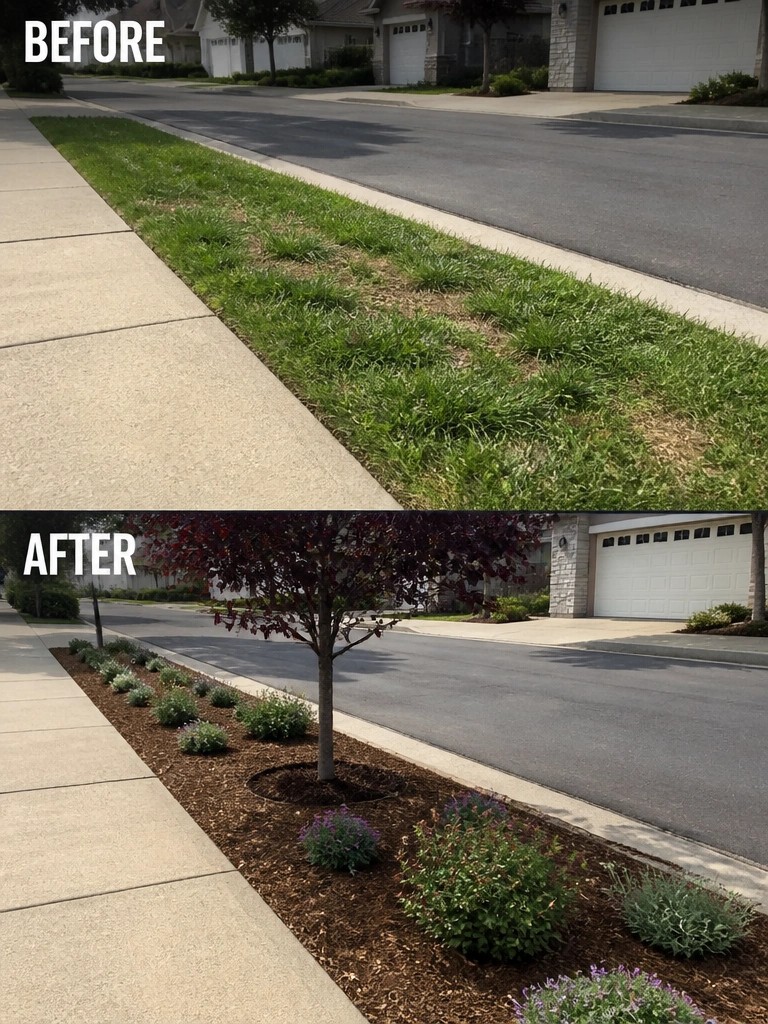
Replacing a weedy grass strip with mulched beds and a few structured plants makes the whole front edge look intentional. The change turns an area that was hard to mow and always looked half-neglected into something that feels finished and low-maintenance.
This approach works best on narrow strips between sidewalk and street where grass struggles. Focus on clean edging first, then use mulch to keep weeds down and add a small tree plus low shrubs so the bed stays full without blocking the view or the walkway.
Add Outdoor Lighting To Improve Curb Appeal

Adding a few well-placed lights can turn a dark front yard into something that feels open and easy to approach. In the before photo the house and path disappear into the evening, while the after version uses low path lights and a few soft uplights on the house to guide the eye and make the entry clear.
This idea works best on homes where the structure is already sound but the yard feels flat after dark. Start with simple solar or low-voltage lights along the walkway, then add one or two fixtures that highlight the front door or porch columns. Keep the number of lights modest so the result stays calm rather than busy.
Give Your Front Porch A Defined Purpose
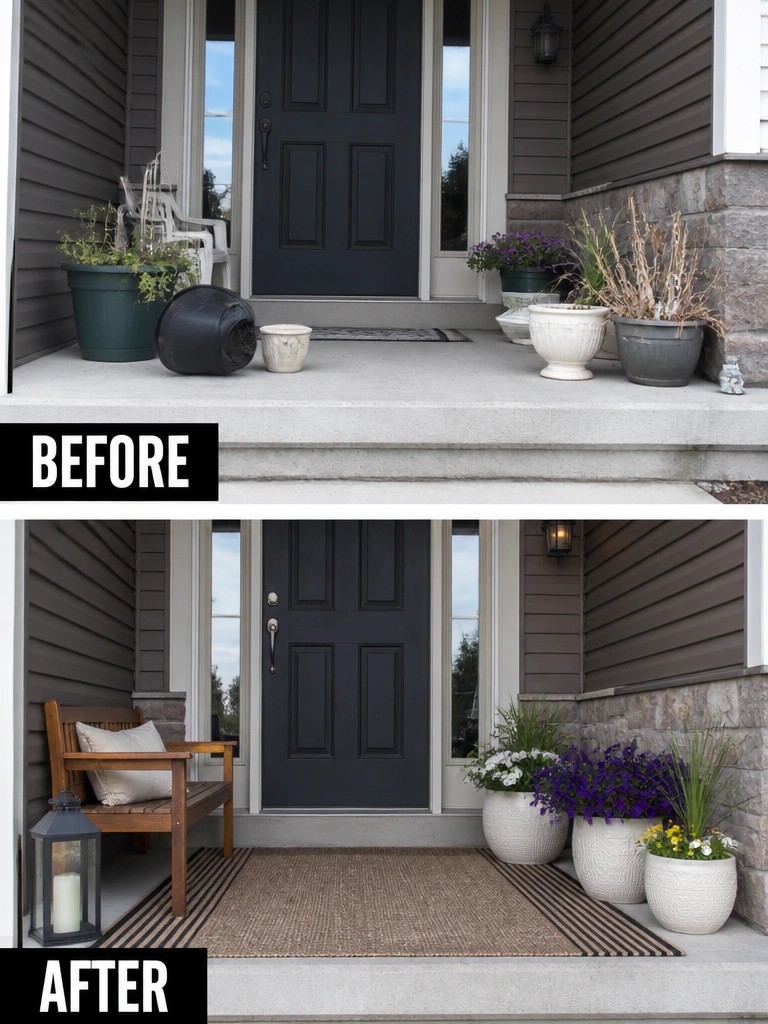
A cluttered porch often feels more like storage than an entry. In this case the before photo shows scattered pots and random items sitting with no real arrangement. The after version adds a bench, a rug, and a few matching planters to give the space a clear job as a small seating spot right by the door.
This approach works well on houses with a modest porch size because it keeps the layout simple and leaves room to walk through. Start with one piece of seating and a rug to mark the area, then add planters that match in scale. It helps if you pick weather-safe pieces and keep the total number of items low so the porch does not start to feel crowded again.
Trim Overgrown Hedges Before Adding Flower Beds
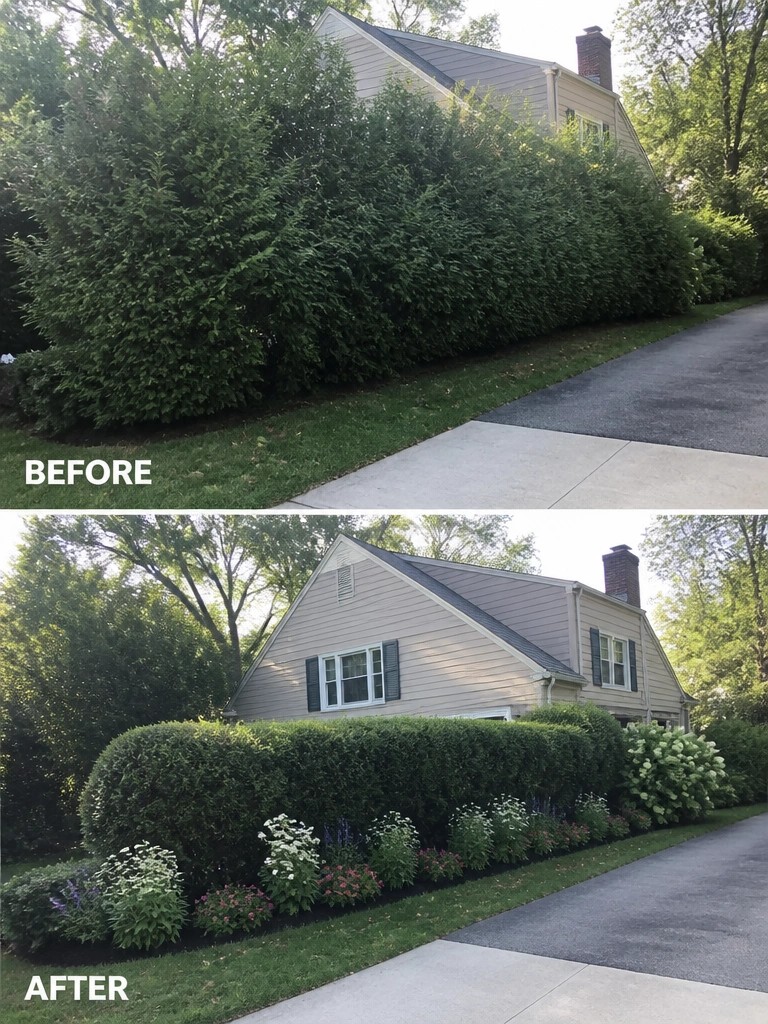
An overgrown hedge can quickly take over the front of a house and block any chance of a clean look. In this case the tall shrubs were cut back to a manageable height and width, which immediately made space for a new row of garden beds along the front. The added plants give the edge a finished appearance without needing to remove the hedge entirely.
This approach works well on homes where the existing shrubs are still healthy but have simply gotten too large. Start by shaping the hedge first, then lay out beds in front using mulch and a mix of low and mid-height plants. Keep the new planting simple so it does not compete with the hedge behind it.
Add Defined Garden Beds To Structure A Plain Front Yard
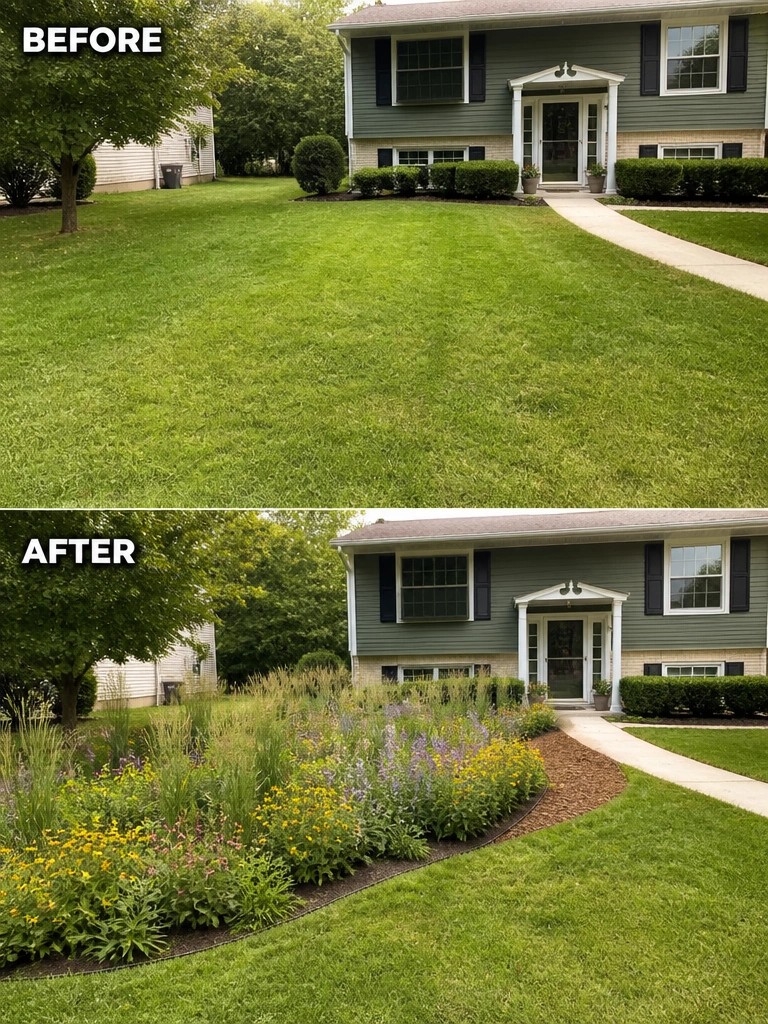
A wide, empty lawn often makes the front of a house feel unfinished. In this case the simple addition of a curved garden bed filled with layered plants gave the yard a clear shape and drew attention to the entry without any major construction.
This idea works best on homes with a decent stretch of lawn in front. Start by marking a gentle curve that follows the walkway, then plant in groups rather than single rows. Keep the bed depth modest so the lawn still feels open and mowing stays simple.
Add Edging To Define Small Planting Areas
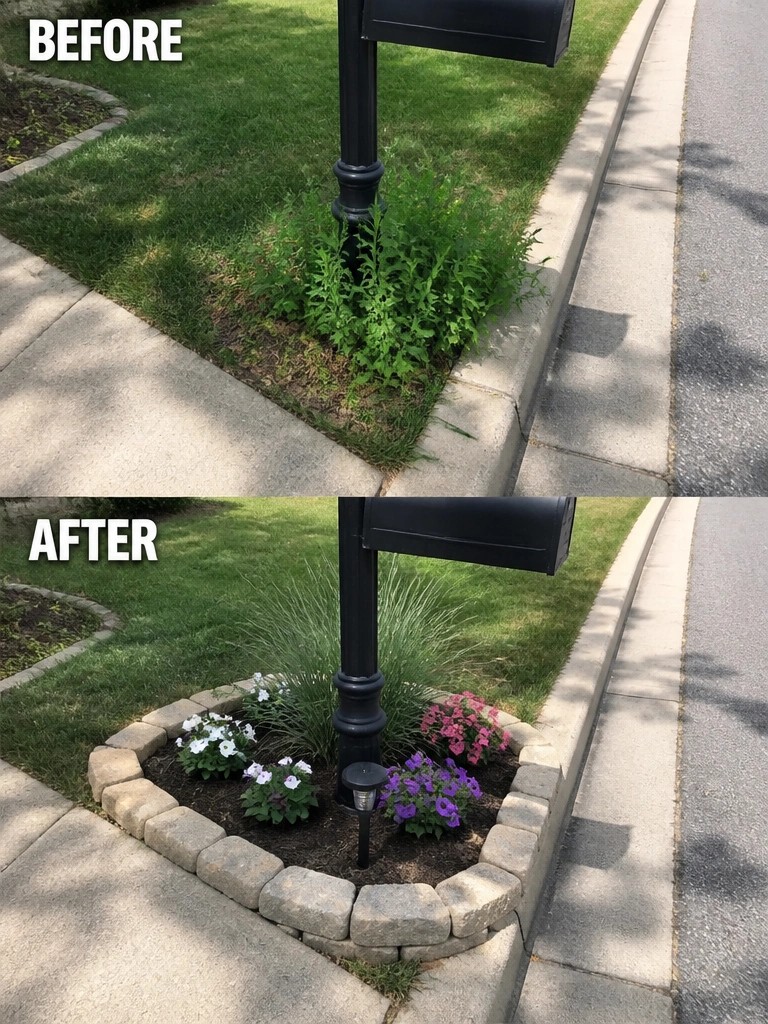
The spot around a mailbox often turns into a weedy patch because it sits right at the edge of the lawn and gets ignored. Adding a low stone border creates a clear bed that keeps the area from looking messy and gives it a finished look without much work.
This idea works best in front yards where the mailbox sits close to the sidewalk. Clear out the weeds first, set the edging in place, and plant a few flowers or grasses inside. The border also makes it easier to mow around the post and stops grass from spreading into the bed.
Add Edging To Shape Up Your Garden Beds
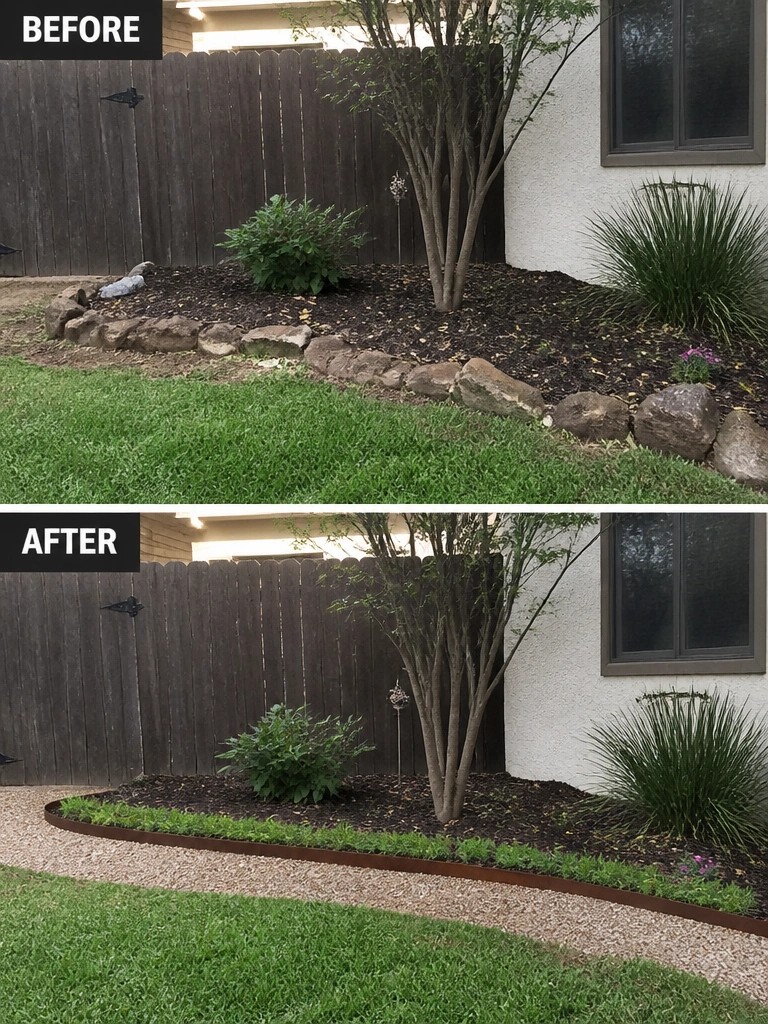
A simple way to improve a front yard is by giving the garden beds a clear edge. The loose rocks in the before image made the bed look scattered, while the after shows a metal border that follows a smooth curve and separates the mulch from the lawn and gravel.
This approach works well on small front yards where you want structure without adding many new plants. Clean up the bed first, then choose edging that can handle weather and hold its shape over time.
Hide Utility Equipment With A Lattice Screen

Many homes have the same problem along the foundation where meters, pipes, and hoses sit out in the open. A basic lattice screen placed in front of the area gives the siding a finished look without blocking access when needed.
This idea works on any house where utilities sit low and visible. Match the screen color to your trim, keep the planting in front low and simple, and mount a hose reel on the side so everything stays tidy but usable.
Refresh A Plain Front Entry With Color And Shutters
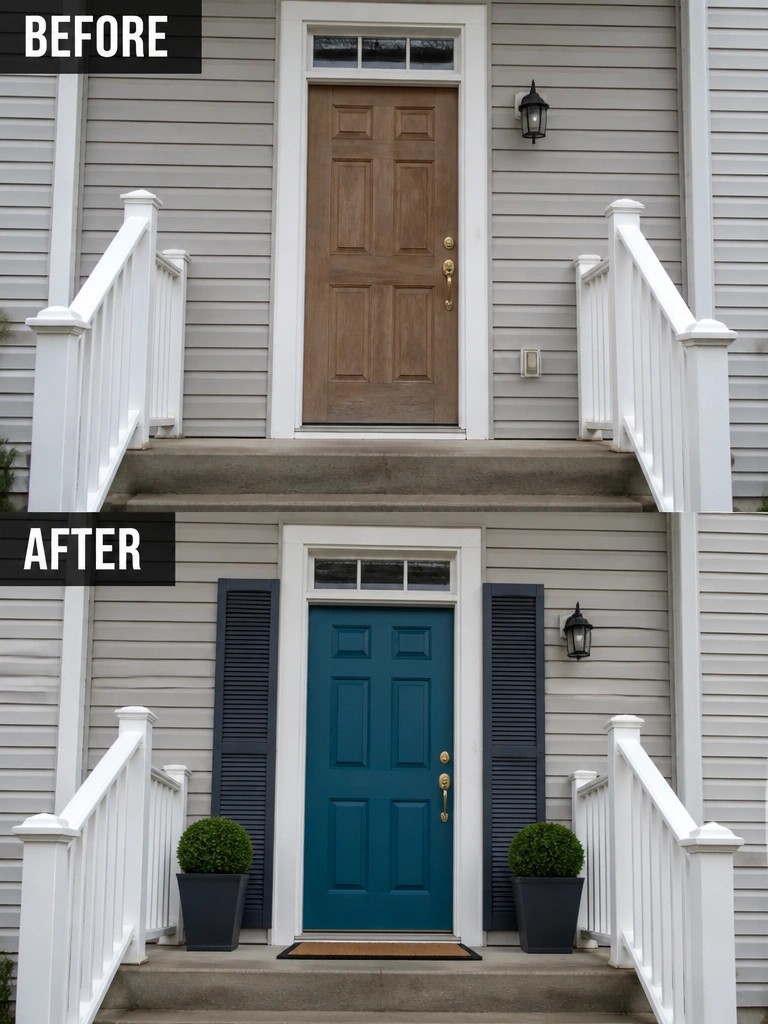
A brown door on a gray house can disappear against the siding. Painting the door a deeper teal and adding matching shutters on both sides gives the entry a clear center point without any major construction.
This approach works well on simple facades where the door sits in a fairly flat wall. Choose a door color that contrasts with the siding, match the shutters to it, and keep the planters low so they do not block the steps. The rest of the house can stay the same.
Turn A Narrow Side Yard Into A Usable Path

A narrow side yard often ends up as a forgotten strip of dirt and weeds. In this case the space was cleared first, then given a simple gravel base with concrete pavers down the middle. The fence now holds a row of vertical planters instead of leaning pots on the ground, which keeps the walkway open and easy to maintain.
This approach works well on any tight passage between a house and a fence. Start with a solid base of gravel so water drains and weeds stay down, then add stepping stones for a firm walking surface. Vertical planters on the fence add greenery without eating up floor space, and one or two low storage pieces can sit along the house wall without blocking the route.
Hide Trash Cans With A Storage Bench
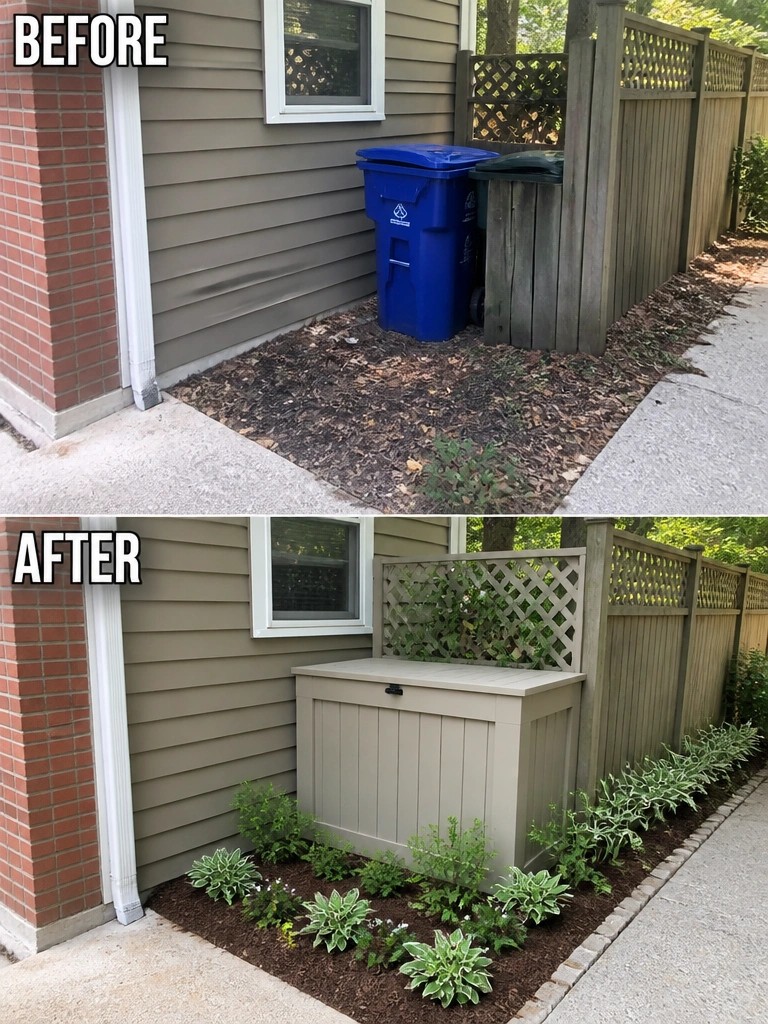
Leaving bins sitting out next to the house makes the side yard feel cluttered and unfinished. A simple storage bench covers them completely while adding a clean surface that blends with the siding and fence.
This works best on narrow side yards where you need both storage and a neater look. Match the bench color to your house or fence, keep the planting low and simple, and make sure the lid stays easy to open on collection days.
Define Planting Areas With Mulch Beds
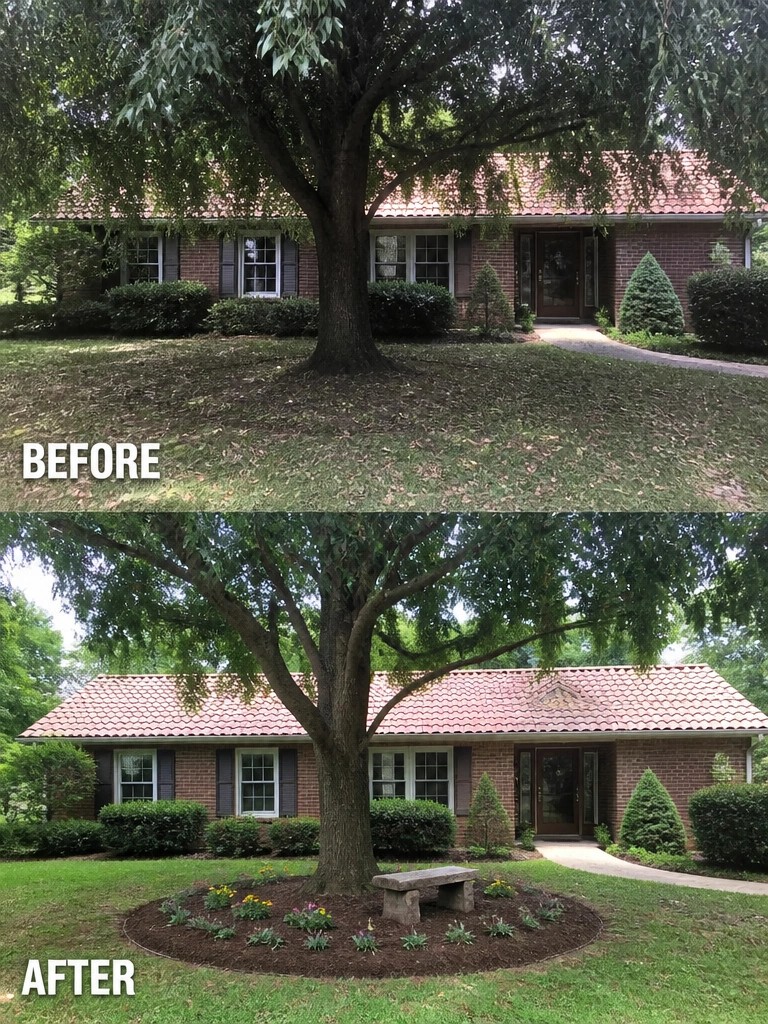
The front yard looked scattered before, with leaves everywhere and no clear shape around the big tree. Adding a simple mulched circle with low flowers and a bench pulled the space together and made the lawn feel much more intentional.
This approach works well on homes with mature trees that leave bare or messy ground underneath. Start by clearing the area, lay down a clean edge, and keep the planting low so the bed stays easy to maintain. It gives the yard order without needing a full redesign.
Add A Defined Path To A Bare Front Slope
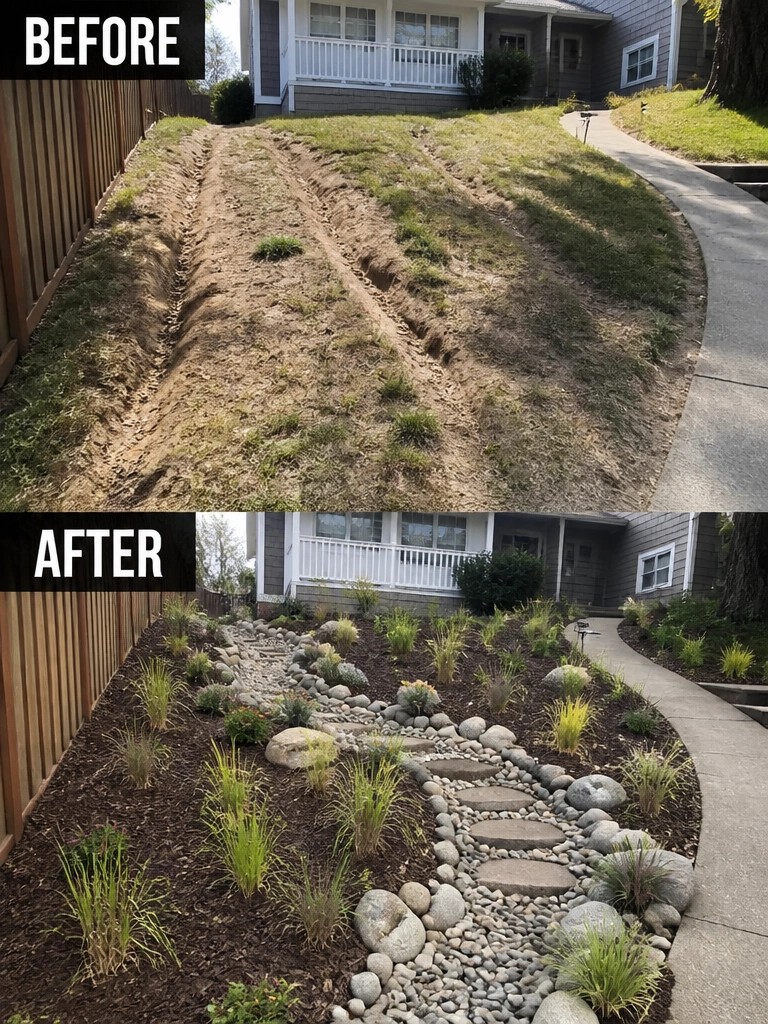
A bare slope with tire ruts and patchy grass often looks unfinished because nothing guides movement or marks the edges. Laying a simple stepping stone path down the middle gives the area structure right away and turns the slope into something that feels intentional.
This idea works best on homes where the front yard has a noticeable grade but no clear route from the street or sidewalk. Focus on the path first, then add mulch and plants along both sides so the beds stay contained. It keeps the space practical and avoids the scattered look that comes from planting without any framework.
Frequently Asked Questions
Q: Can I tackle a front yard refresh on my own without much experience?
A: Start with simple swaps like adding mulch and edging the beds. These changes make a big difference right away. Then build from there as you get comfortable.
Q: What should I do first if the grass looks patchy and tired?
A: Reseed the bare spots and water them well for a few weeks. This step often brings the whole yard together before you add anything else.
Q: How often do I need to maintain the new plantings to keep them looking good?
A: Water new plants regularly during their first season. After that a quick monthly check usually catches any issues early.
Q: Is it worth adding a path if my yard does not have one already?
A: A simple gravel or stepping stone path guides visitors nicely. It also protects the grass from wear over time.
