

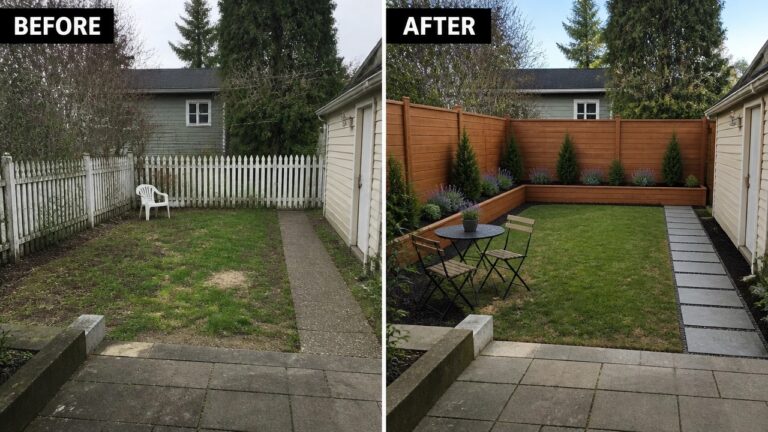
Backyards often feel too open when the edges are bare and there is no real structure to block sight lines from the neighbors.
I usually start by checking the perimeter first because that is where small layout changes make the biggest difference in how private the space feels.
Adding a mix of shrubs and taller plants in stages lets the screening build up gradually instead of all at once.
The results tend to last longer when the plants are chosen to match the yard’s existing conditions.
A few of the methods described here look straightforward enough that I plan to test one or two along my own back fence this spring.
Add Privacy With A Fence And Border Planting
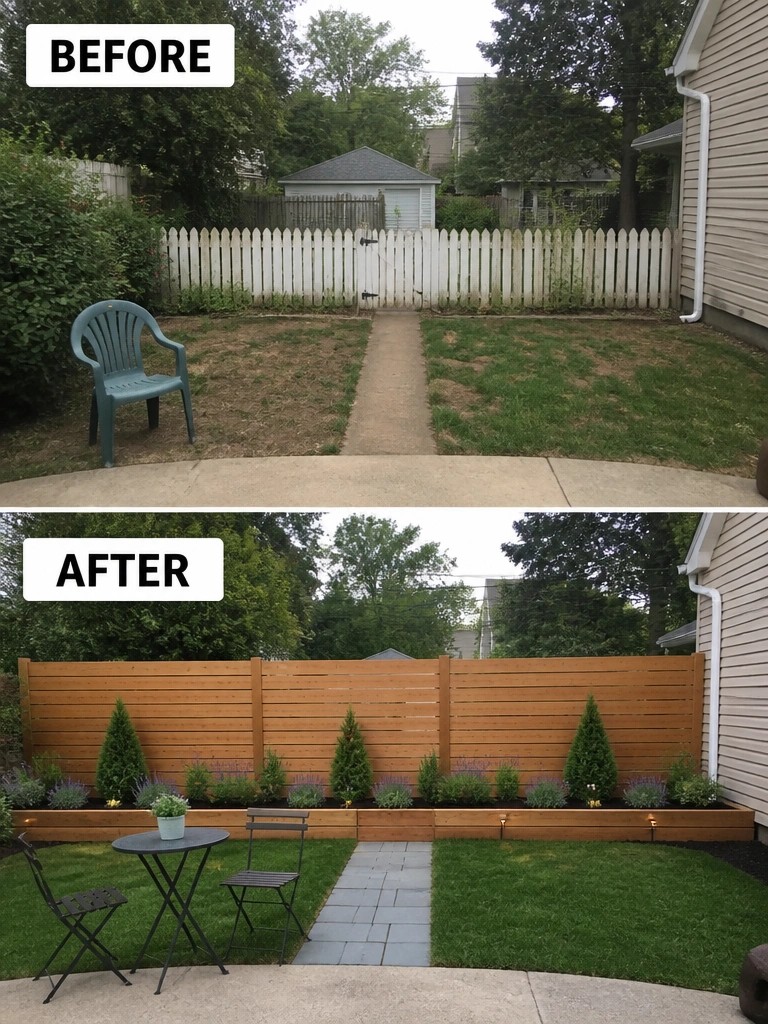
An open backyard often feels too exposed when the only divider is a low fence. Putting up a taller solid fence and adding raised beds along the base creates an immediate sense of enclosure without needing a full redesign.
This idea works best in suburban lots where you want separation from neighbors but still need to keep the lawn usable. Install the fence first for the main privacy screen, then fill the beds with a mix of evergreens and lower shrubs so the planting softens the wood over time. Keep the beds at a manageable depth so mowing stays simple.
Add Tall Planting For Backyard Privacy
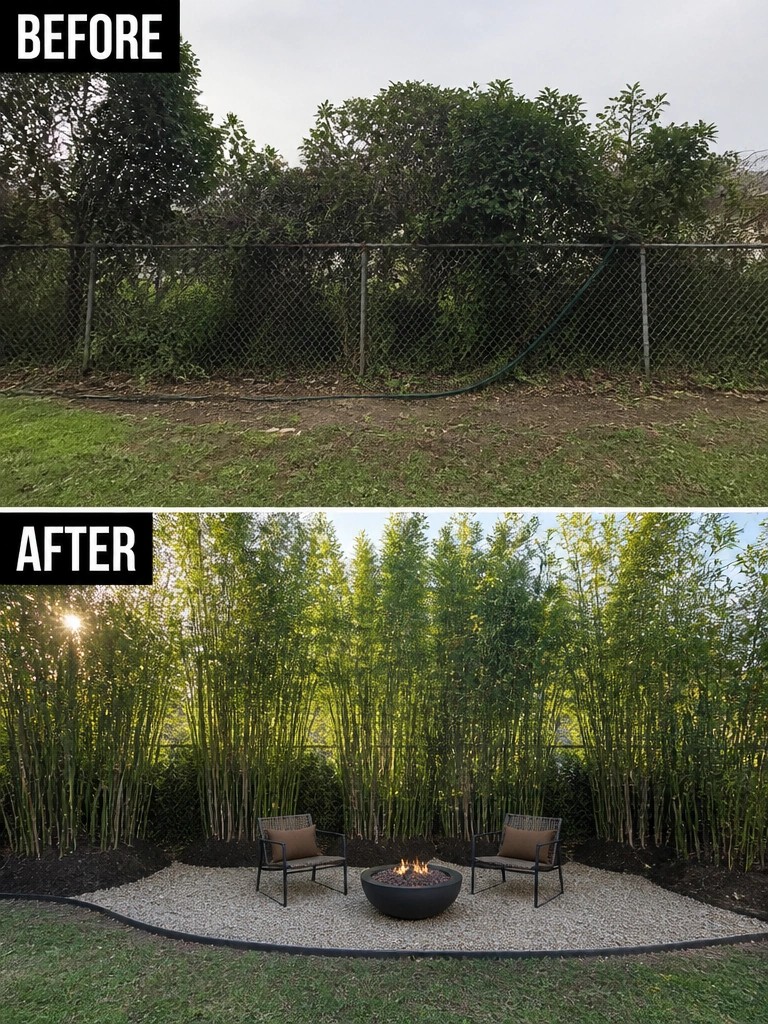
A chain link fence with messy growth behind it leaves a yard feeling exposed. Replacing that with a dense row of tall bamboo creates a living screen that blocks the view while still letting light through. The simple gravel base and a couple of chairs keep the focus on the planting instead of adding clutter.
This approach works well along property lines where you need quick coverage without building a solid wall. Choose a clumping bamboo or similar tall grass that stays contained, and give it enough room to fill in over a season or two. It suits smaller yards that need both privacy and an open feel once the plants mature.
Create Privacy With A Vertical Garden On A Blank Wall
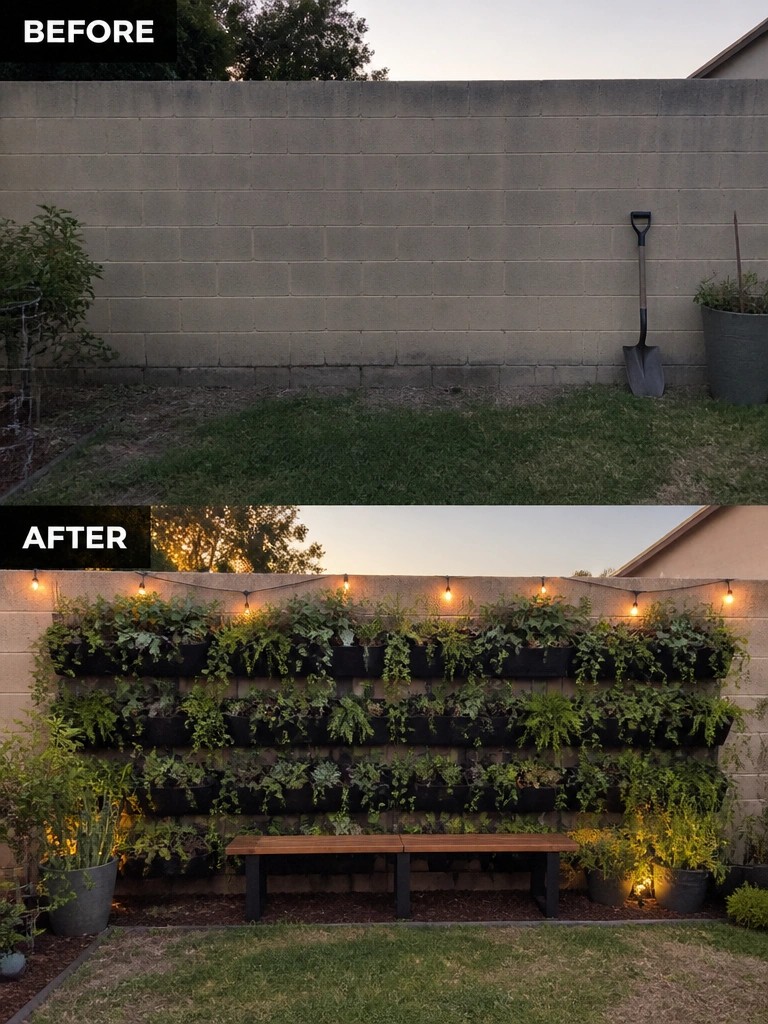
A plain concrete wall often leaves a backyard feeling open and exposed. Filling it with rows of planters turns the surface into a living screen that adds greenery and blocks the view from outside.
This idea works best in smaller yards where there is little room for trees or shrubs. Mount the planters securely, water them regularly, and mix upright and trailing plants so the wall fills in faster.
Use Curtains To Add Privacy To A Patio
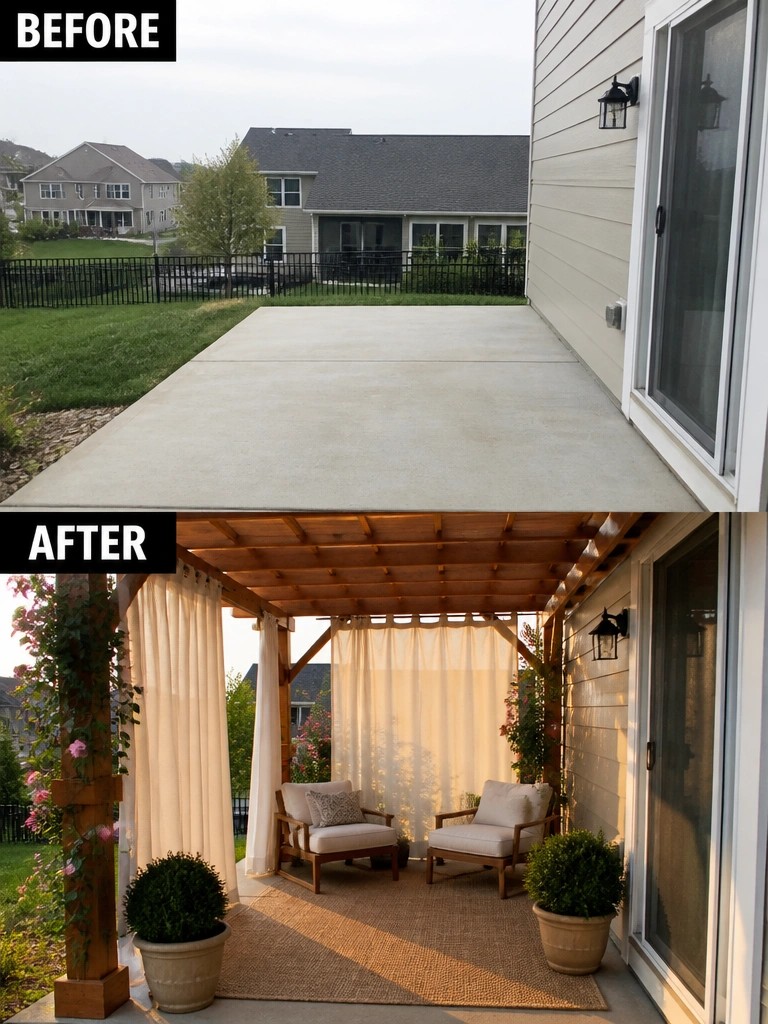
A bare concrete slab offers little comfort or seclusion. Adding a simple pergola with hanging curtains turns the space into a defined room where people can sit without feeling exposed to the rest of the yard.
This approach works best on patios that sit close to neighboring homes or fences. Keep the frame straightforward, choose weather-resistant fabric, and place seating so it faces inward. The curtains can stay open on mild days and close when more privacy is needed.
Add Structure To An Overgrown Fence Line
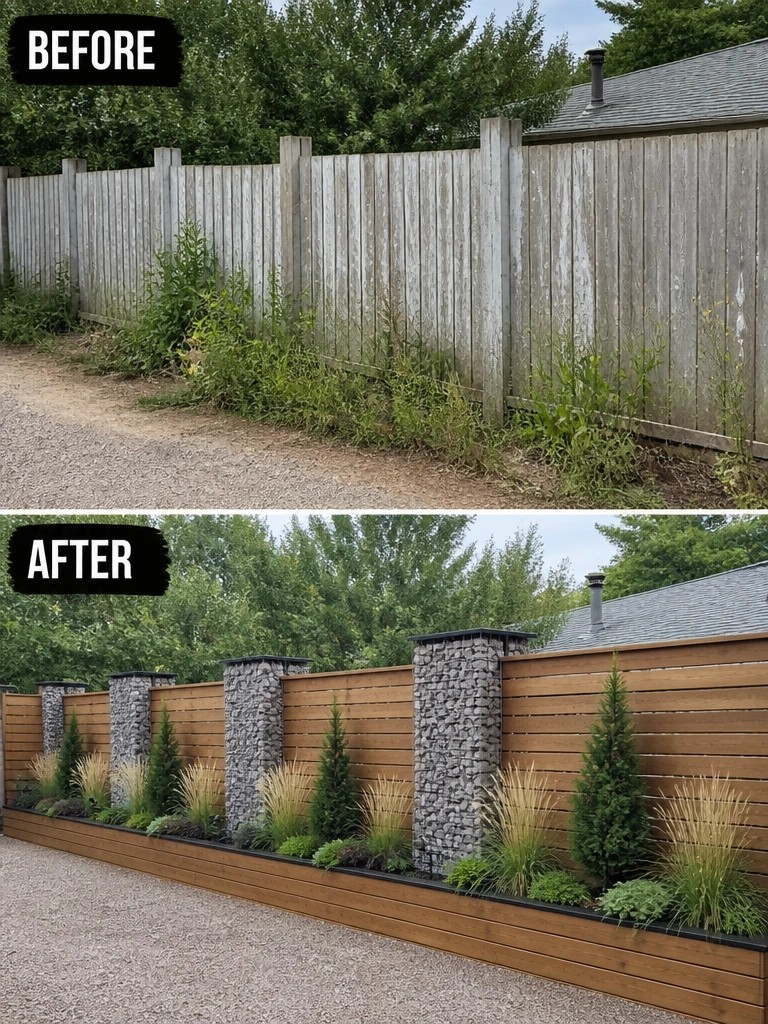
An old fence with weeds growing right up against it leaves the yard feeling messy and exposed. Replacing the fence with a cleaner design and adding a raised planting bed along the base gives the boundary a clear purpose. The bed holds a mix of taller grasses and small evergreens that fill in the space and block the view from outside.
This approach works well on any backyard where the fence sits directly on open ground. Start by clearing the weeds and setting a simple border so the plants have room to grow without spilling onto the lawn. Choose a few repeating plant types rather than a scattered mix, and keep the bed narrow enough to leave walking space on the inside.
Create Privacy With Layered Planting
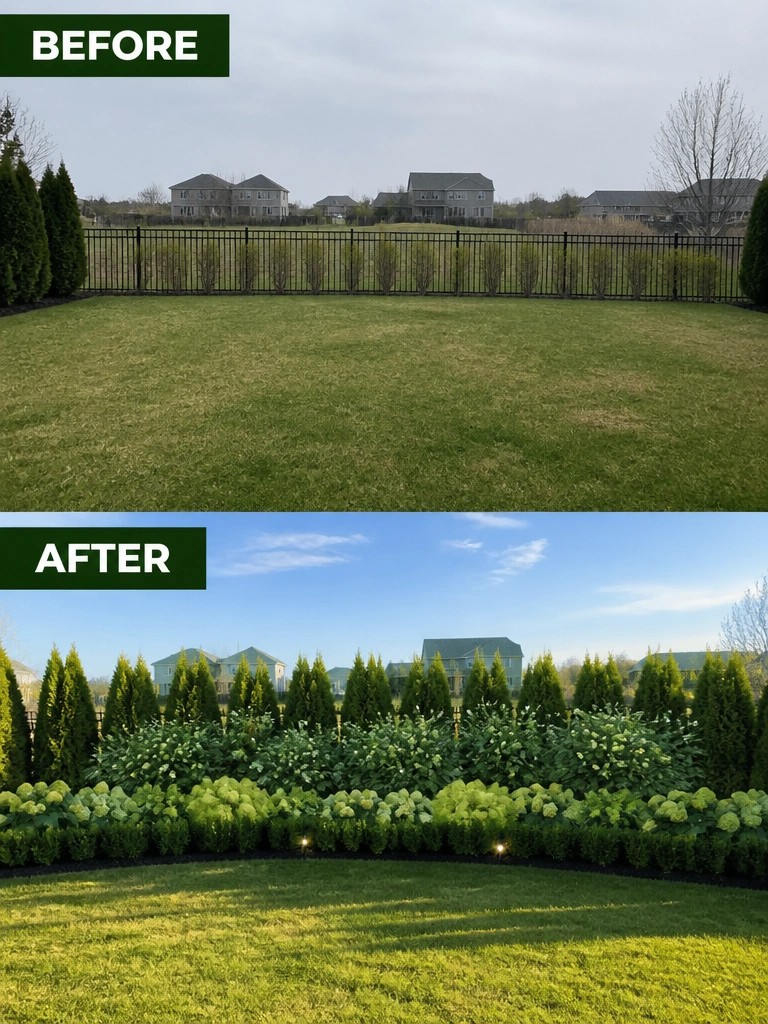
A bare fence line leaves the whole backyard feeling open and exposed. In this case the fix was simple. A row of tall evergreens went in first, then mid-height flowering shrubs filled the middle, and low ground cover finished the front edge. The result gives solid screening without looking heavy.
This approach works best along a straight property line where you need height but still want some color and texture. Start with the tallest plants at the back, keep the layers under three feet deep, and leave a little space between the bed and the lawn so mowing stays easy. The same layering idea can soften a chain-link fence or hide a neighbor’s shed just as well.
Create Privacy With A Slatted Screen And Planters
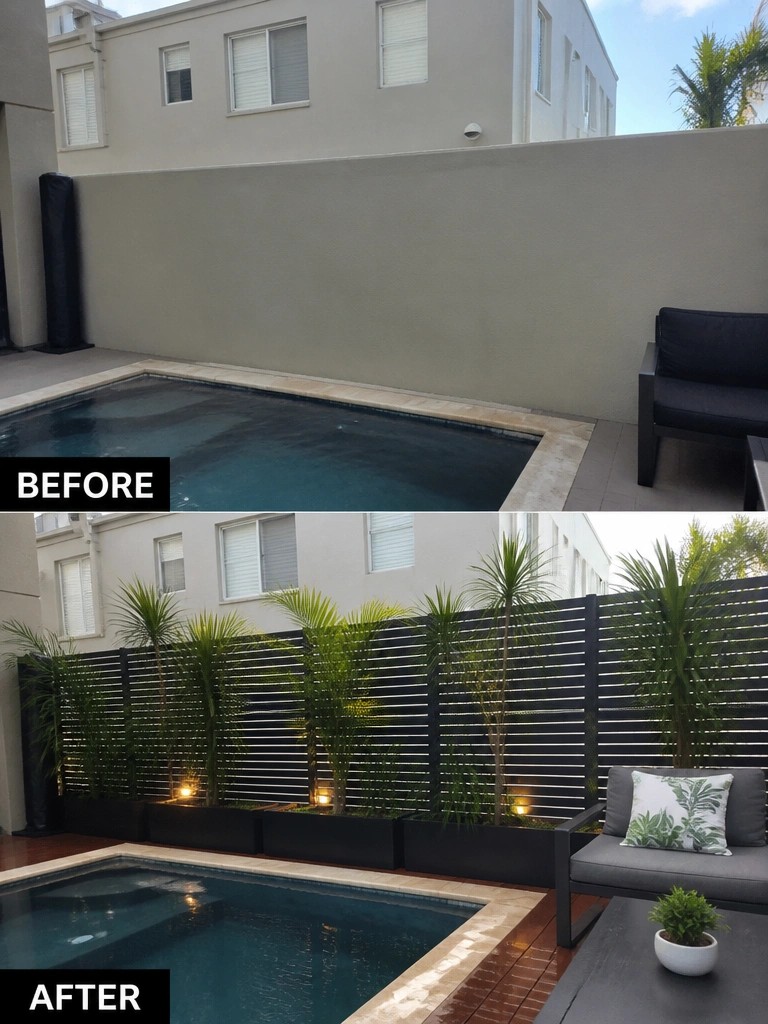
A bare wall next to a pool leaves the space feeling exposed. Adding a horizontal slatted screen backed by a row of long planters filled with tall plants gives enough height and coverage to block views while still letting light through.
This works best on side or back walls where you need separation without building a solid fence. Keep the planters in a straight line so the plants form a clean green layer in front of the screen, and choose a dark finish for both the screen and planters so they blend together.
Add Privacy With A Trellis And Climbing Plants
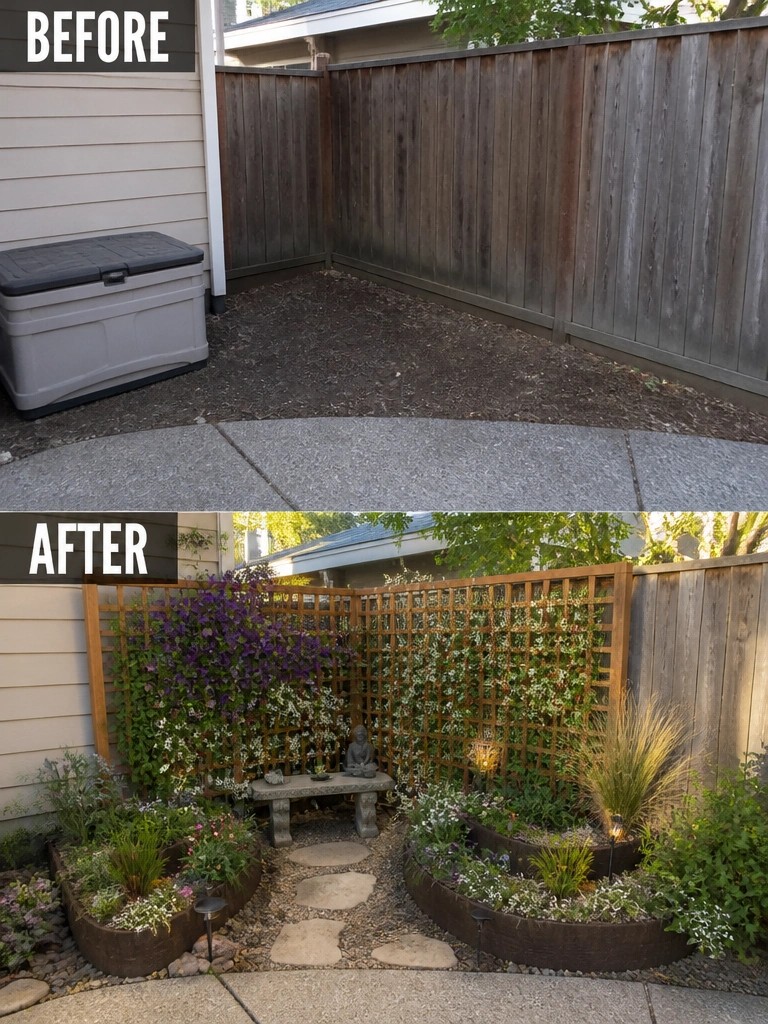
A bare fence line often leaves a backyard feeling exposed. Adding a wooden lattice panel and letting vines climb over it turns that open side into a living screen that blocks the view while still feeling light and natural.
This works best in corner spots or along shared fences where you need height without a solid wall. Put the trellis up first, plant vigorous climbers at the base, and keep the foreground simple with low beds so the space stays usable instead of crowded.
Add Tall Grasses Along The Fence For Privacy
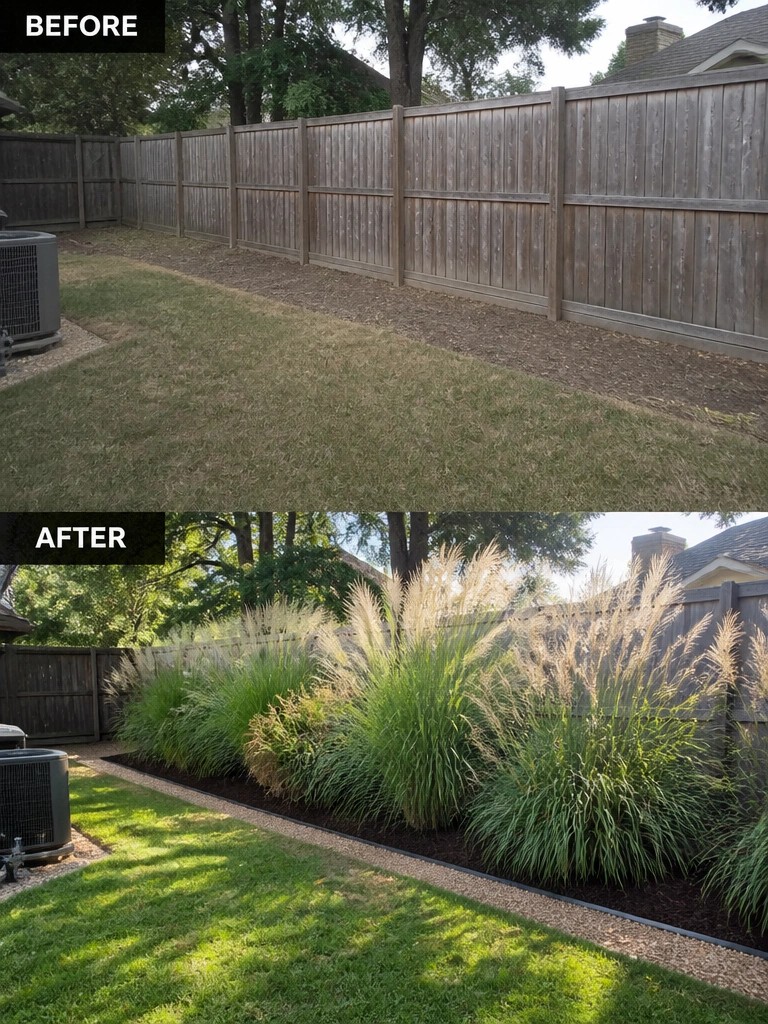
A simple row of tall ornamental grasses can turn a wide open fence line into a natural screen. In the before photo the yard felt exposed right up to the fence. After planting, the grasses fill that space and block the view without making the yard feel closed in.
This approach works well in most suburban backyards where you want privacy but do not want a solid wall of shrubs. Start with a narrow bed of mulch or gravel along the fence, then choose grasses that reach at least five feet tall. Space them evenly so they grow into each other over a season or two. The result gives you coverage while still letting some light and air through.
Add Privacy Screens And Planters To An Open Deck
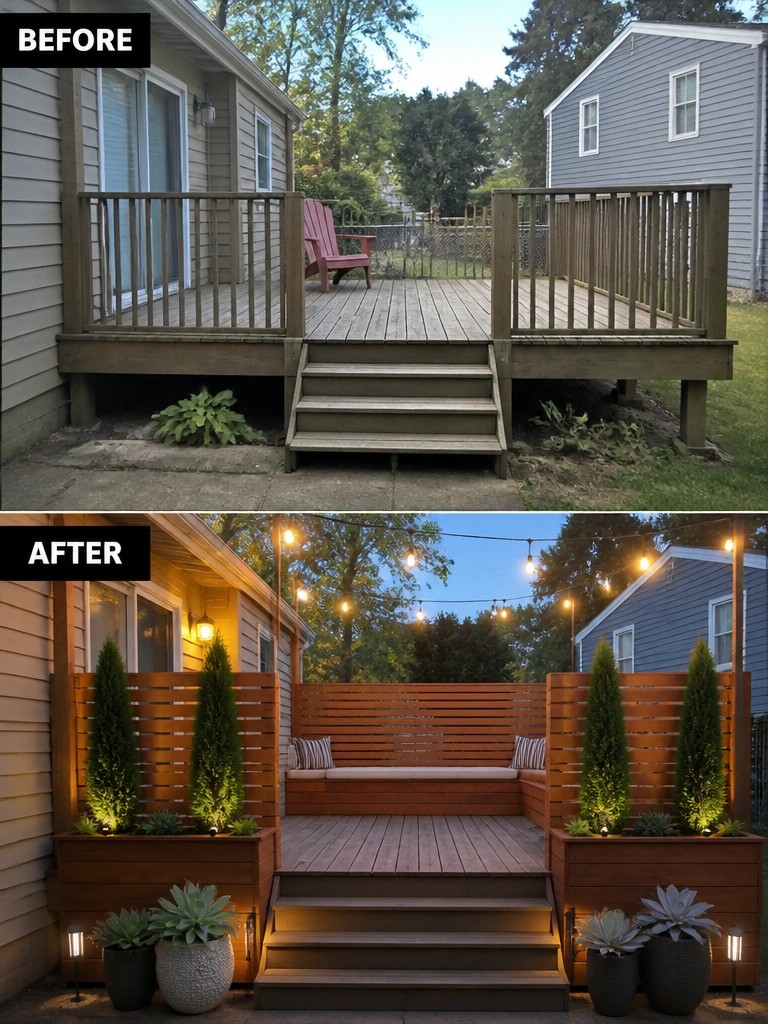
An open deck with basic railings often leaves the space feeling exposed. In this case, horizontal slat screens replaced the open railings and created solid side walls. Tall evergreens planted in built-in boxes added another layer of privacy while keeping the look simple and structured.
This approach works well on decks that sit close to neighboring yards or feel too visible from the street. Start with the screens first, then add the planters so the plants can fill in the gaps over time. Keep the bench seating low and the lighting soft so the space stays usable without feeling closed in.
Create Privacy With Climbing Plants Along The Fence
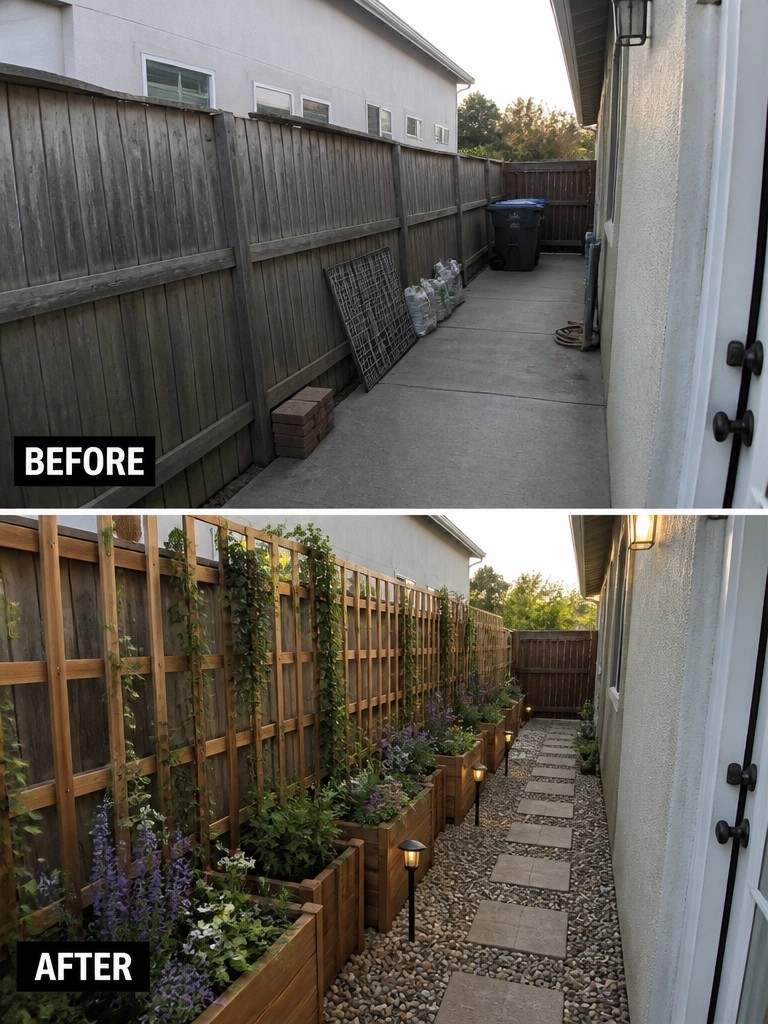
A narrow side yard with a plain fence often feels exposed because there is nothing to break the line of sight. Adding raised planters along the base and letting vines climb the fence gives height and coverage without needing a lot of width. The change from an open fence to a planted screen makes the space feel more enclosed and intentional.
This idea works best in tight passages between houses or along property lines where full landscaping would crowd the walkway. Use sturdy raised beds to hold the soil and pick climbers that grow quickly on a grid or wires. Keep the path clear with gravel and simple stepping stones so the area stays usable while the plants fill in.
Create Privacy With Tall Container Plants
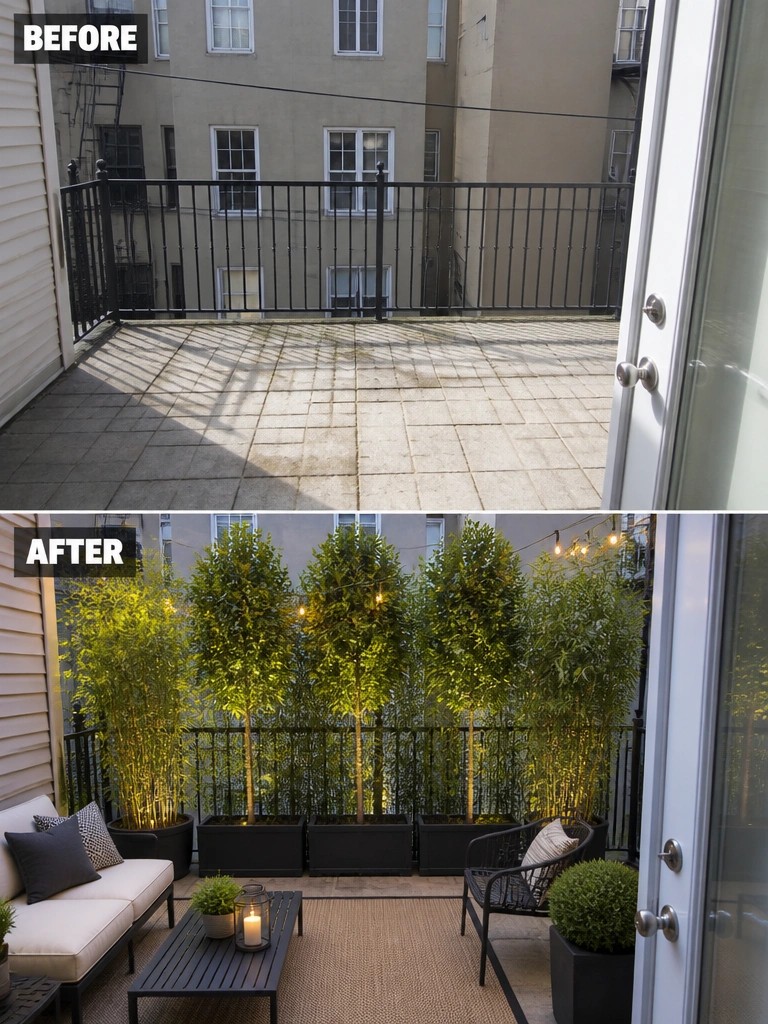
An empty balcony or patio often feels exposed because there is nothing to block the view from neighbors or nearby buildings. Adding a row of tall trees in matching pots along the railing turns the space into a more private outdoor room without any permanent construction. The plants form a living screen that softens the hard edges and makes the area feel enclosed.
This approach works especially well on balconies, rooftop terraces, or small side yards where digging is not possible. Choose evergreens that stay full year-round, keep the pots in a similar color and size, and leave enough space between them for air flow. Start with just enough plants to cover the main sight lines, then add seating and simple lighting once the screen is in place.
Add Tiered Retaining Walls To Shape A Private Backyard
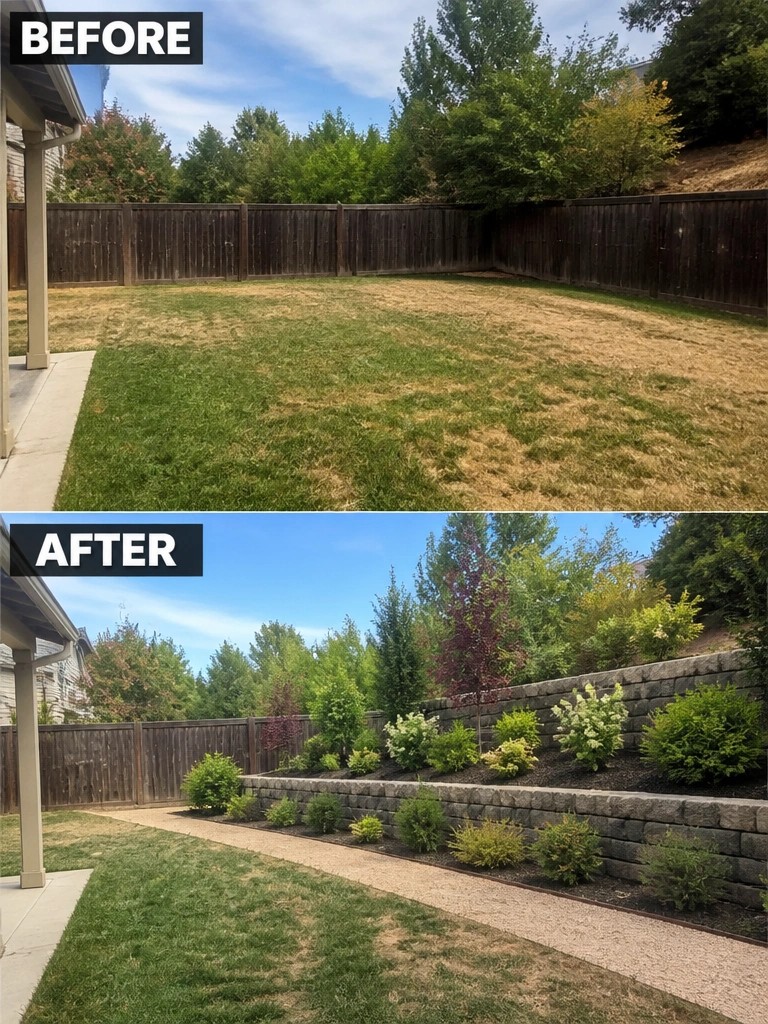
A sloped or flat backyard often feels open and unfinished when it is just lawn and fence. Adding tiered retaining walls creates clear planting zones that break up the space and let you build layers of shrubs and small trees right along the boundary. The change from a simple open lawn to defined beds gives the yard more depth and blocks some of the view beyond the fence without needing a taller structure.
This approach works well on lots that drop away from the house or sit close to neighbors. Start with the walls and basic soil work first, then fill the beds with a mix of evergreen and flowering plants that reach different heights. Keep the path or lawn edge simple so the beds stay the main feature and the whole yard still feels open enough to use.
Add A Privacy Screen To Define The Backyard
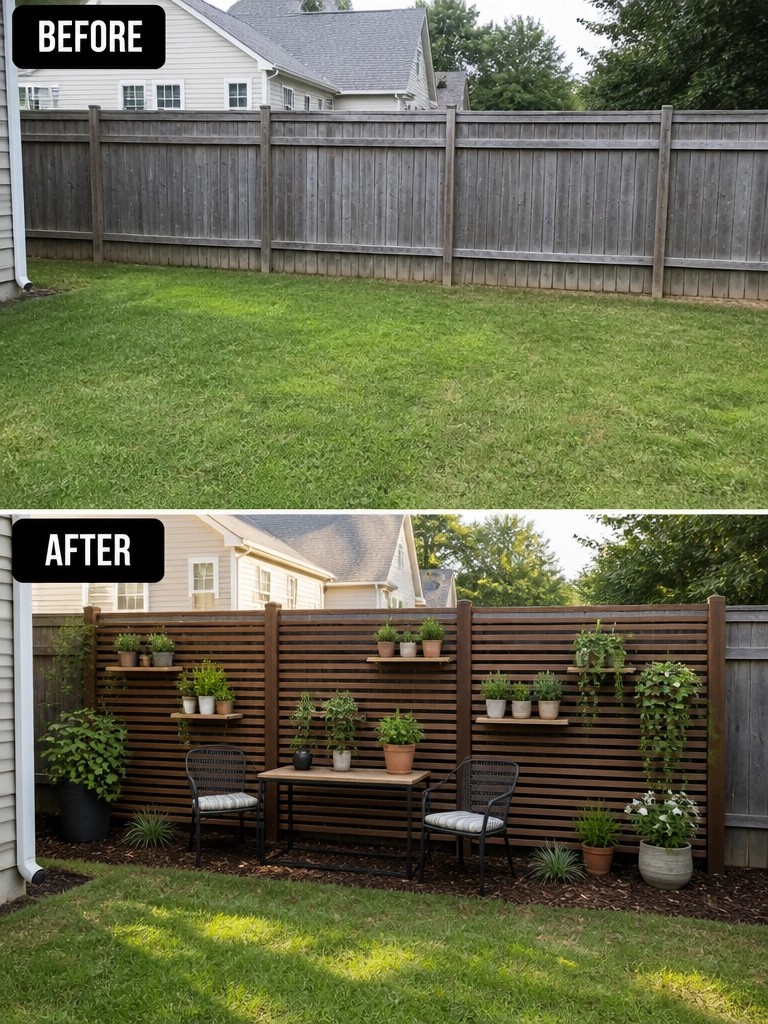
An open lawn next to a plain fence often feels exposed. A horizontal slatted screen creates a clear boundary and gives the space structure without blocking all light. Shelves built into the screen hold plants that add softness and keep the look simple.
This idea works best in average-sized yards where you want a usable zone without losing the whole lawn. Place the screen along one side, add a few pots and a small table, and leave the rest open. It keeps the project manageable and gives you a spot that feels set apart.
Train Plants Along A Fence For Privacy
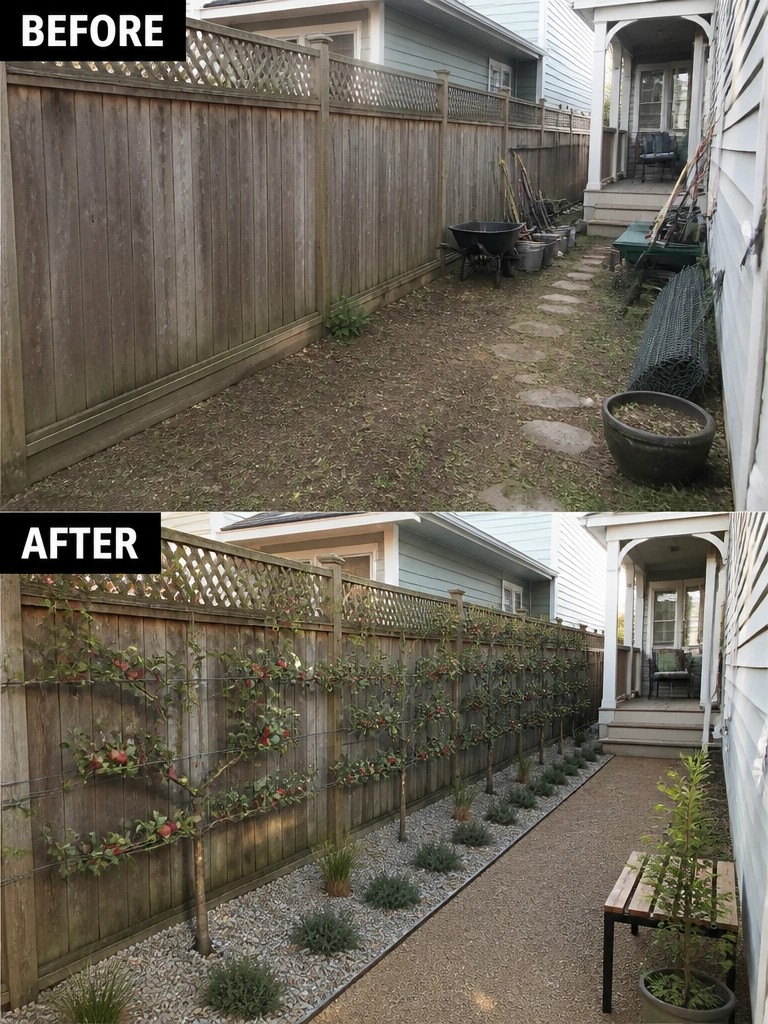
A long bare fence next to a narrow yard often leaves the space feeling exposed. Adding horizontal wires and training small trees or shrubs along them turns the fence into a living screen. The plants fill in over time and create a softer boundary without taking up much ground space.
This approach works well in tight side yards or along property lines where you need coverage but want to keep the area open. Start with sturdy wire supports spaced evenly, then choose plants that can be pruned flat against the fence. Gravel or mulch along the base helps keep the bed neat and makes weeding easier over the years.
Use Tiered Retaining Walls For Slope Privacy
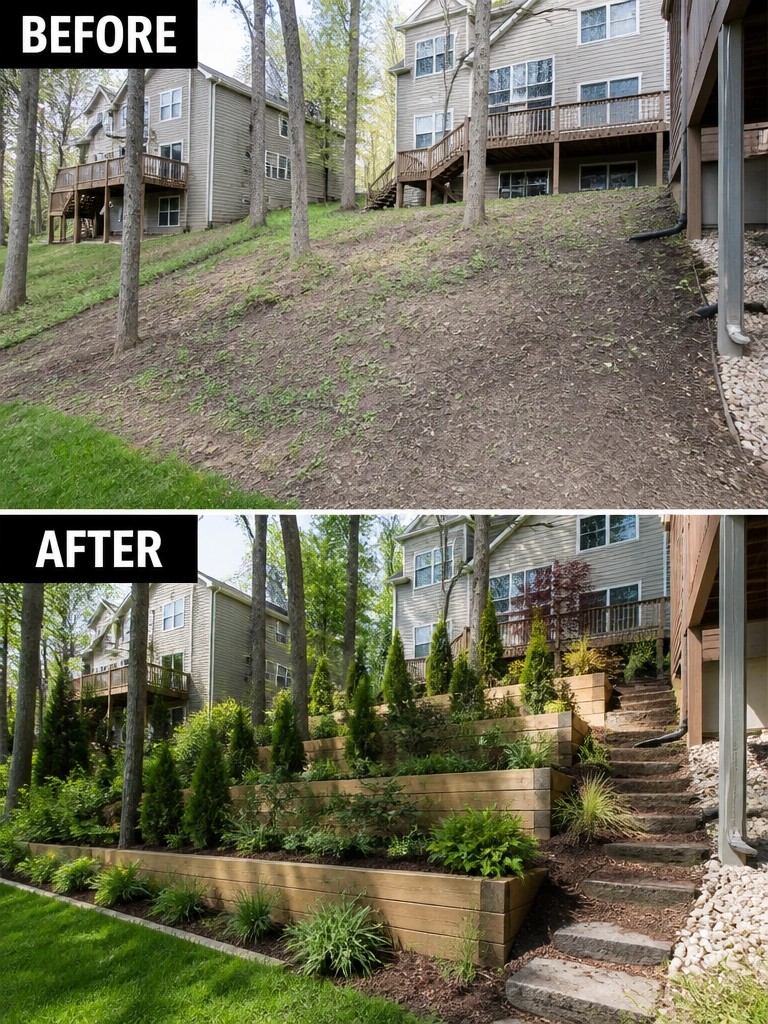
A sloped backyard often leaves you with little usable space and almost no privacy. Adding a few levels of retaining walls turns the bare dirt into flat planting beds that can hold taller shrubs and trees. The change from open ground to stepped beds makes the whole yard feel more enclosed without needing a tall fence.
This approach works best on hills where flat ground is limited. Build the walls first to hold the soil, then plant in layers so evergreens and dense shrubs block sight lines from above or below. Keep the beds a manageable width so you can reach everything for watering and trimming.
Add Privacy With Vertical Gardens Along Your Fence
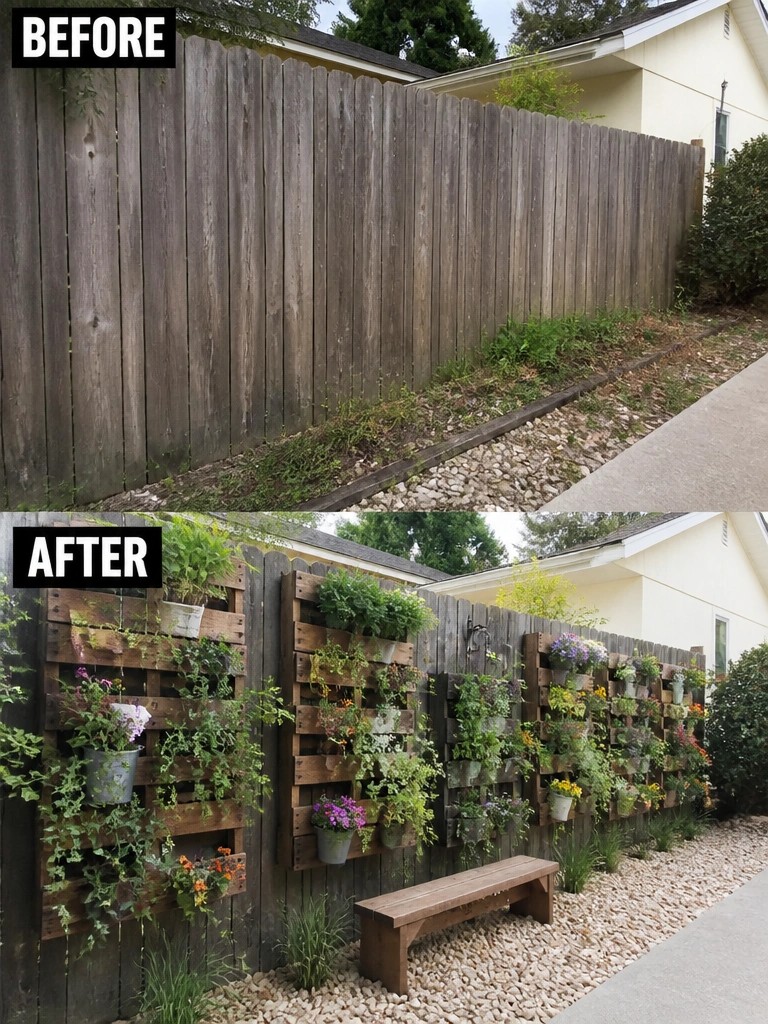
A plain fence often leaves a backyard feeling exposed. Mounting simple pallet planters along the fence line adds layers of greenery without taking up ground space. The shift from bare boards and weeds to rows of potted plants softens the view and gives more seclusion right away.
This approach works well on any long fence that faces a neighbor or street. Start with a few sturdy pallets screwed to the fence, then add pots that can handle outdoor weather. Keep the number of plants modest at first so the structure stays easy to maintain and water.
Create Privacy With A Solid Fence And Layered Planting
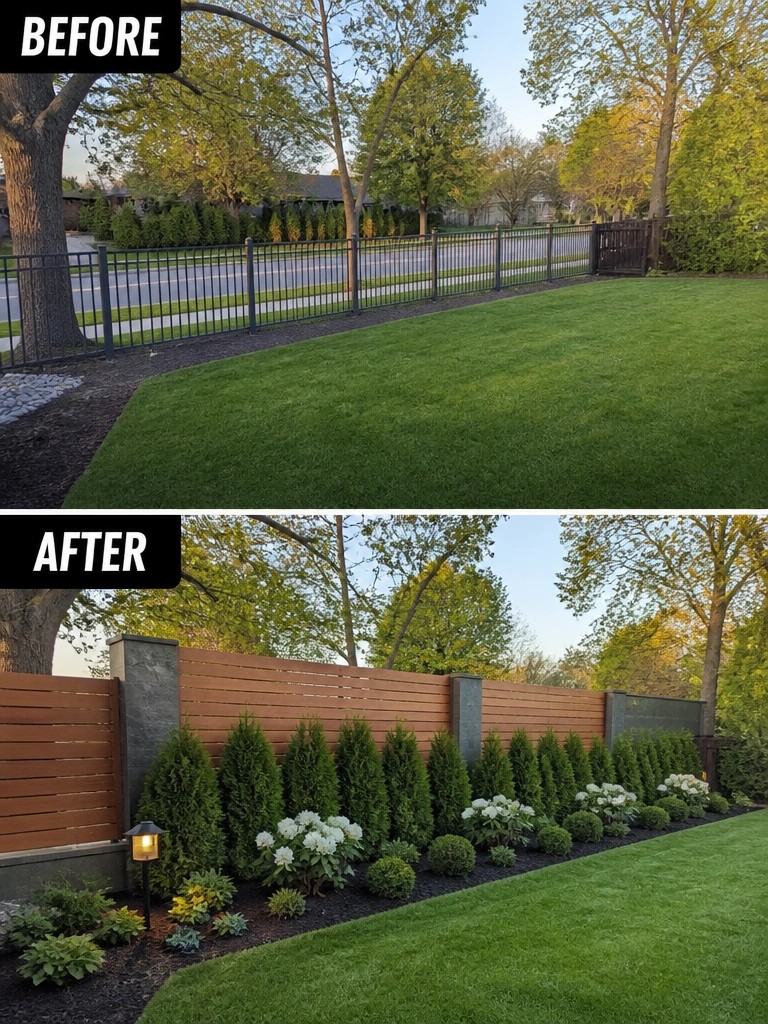
An open fence leaves the whole backyard exposed. Replacing it with a solid horizontal fence and adding a row of evergreens, shrubs, and flowers right in front gives the space real privacy while still keeping it green and inviting.
This approach works best along a back or side property line where you need screening from the street or neighbors. Start with the fence for the main barrier, then plant in layers so the lower plants soften the base and taller ones fill in the height over time. Keep the bed narrow enough that it does not eat into the lawn space.
Add Privacy Screens To Enclose An Open Patio
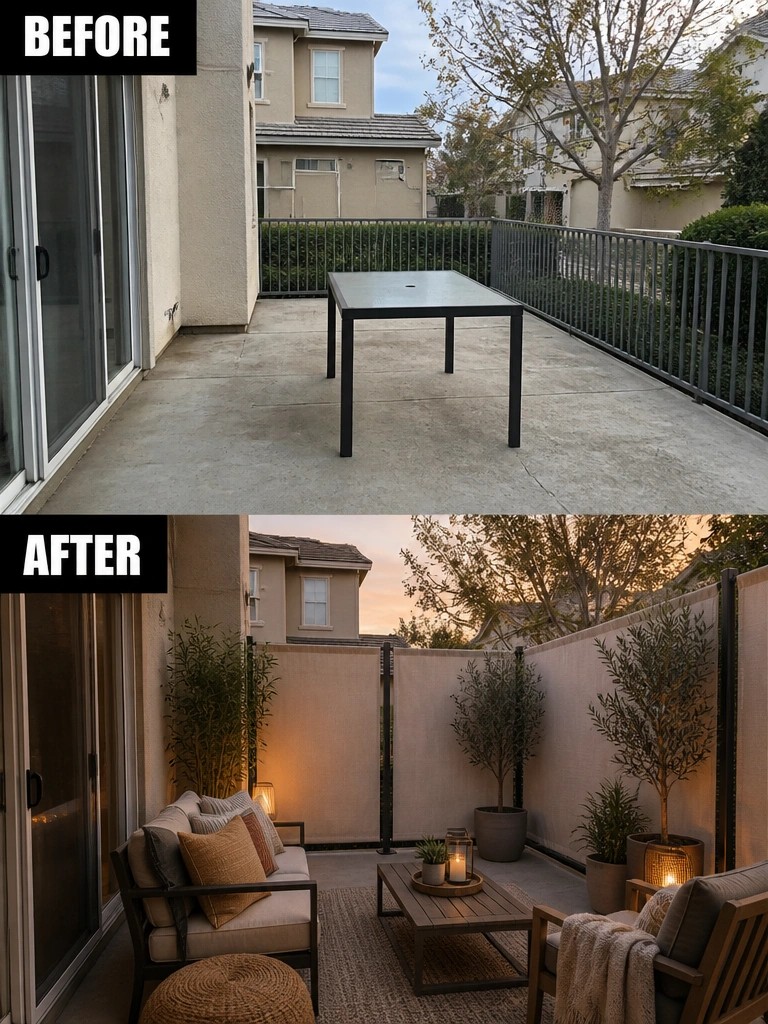
An open concrete patio often feels exposed when it sits right next to neighboring homes or shared fencing. Simple fabric privacy screens mounted along the perimeter change that quickly by blocking the direct line of sight while still letting in light and air.
This idea works best on small backyards or side patios where permanent fencing is not an option. Start with a few tall planters in the corners to soften the edges, then add the screens on sturdy posts so they can be adjusted or removed later if needed.
Add Privacy With A Solid Fence And Border Plants
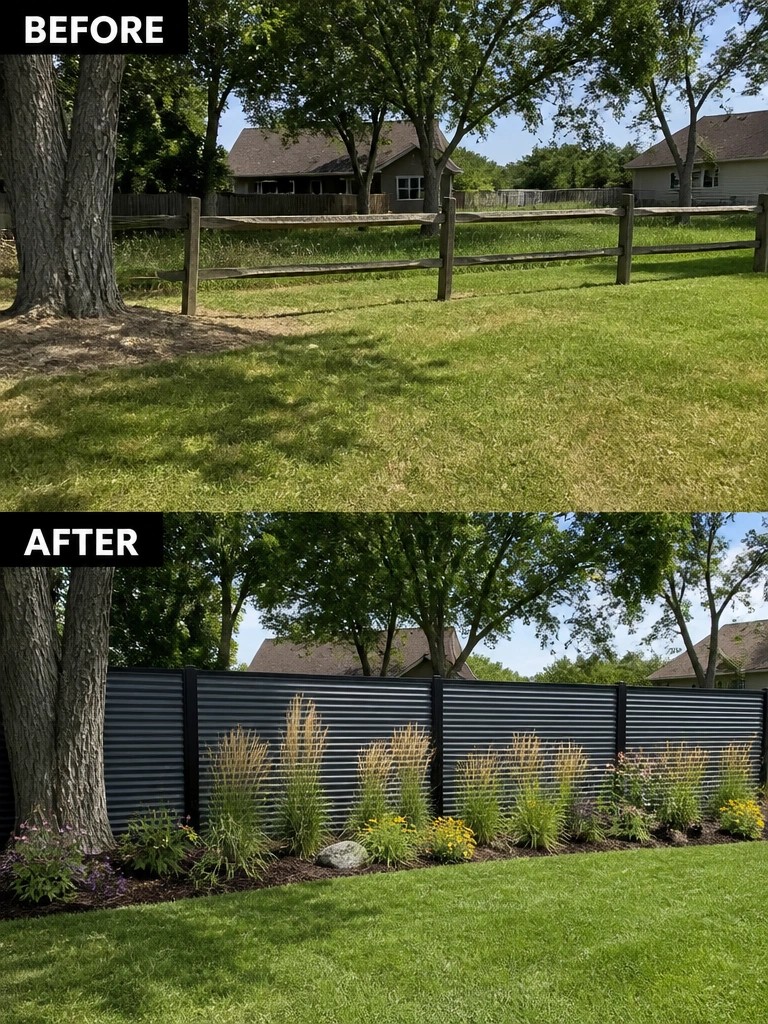
An open rail fence leaves the whole backyard exposed to the street or neighbors. Switching to a solid fence and planting a simple row of tall grasses and flowers in front blocks the view right away while still letting the yard feel like part of the landscape.
This idea works best along back or side property lines where you need quick screening. Put the fence in first for the main barrier, then add plants that reach at least waist or chest height so the fence does not look so stark from the lawn side. Keep the bed narrow enough that it does not eat into usable grass space.
Use Tall Evergreens To Create Backyard Privacy
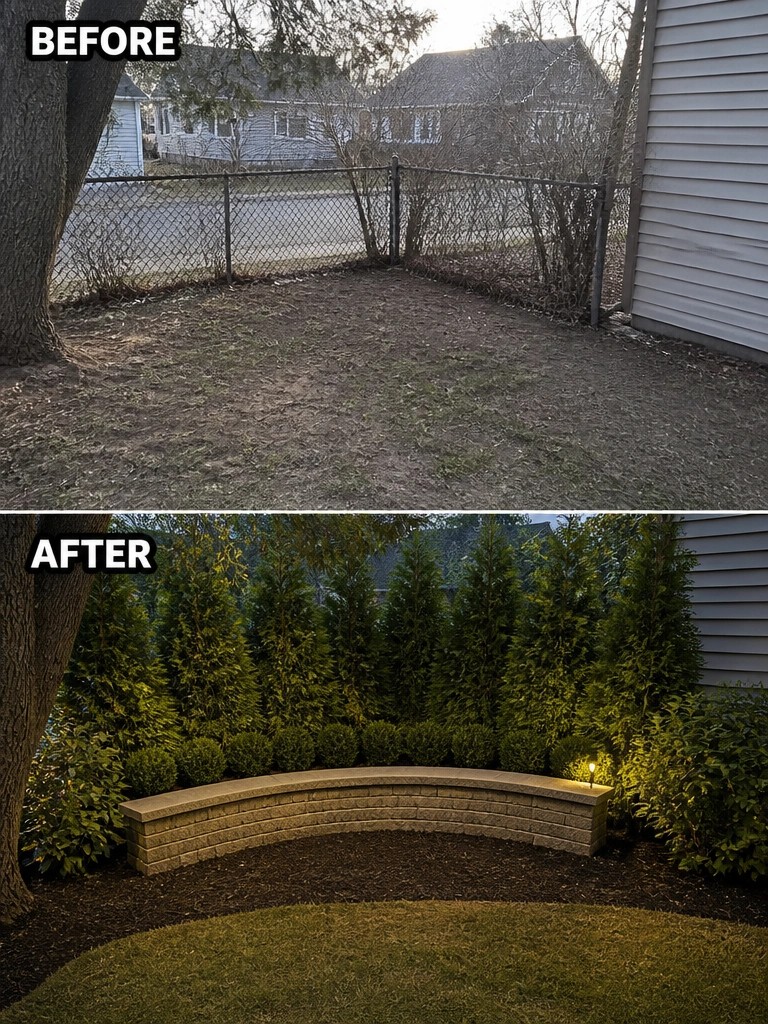
A bare backyard with just a chain link fence often leaves the space feeling exposed. Adding a row of tall evergreens along the back edge changes that fast. The trees block the view from behind the fence and give the yard a clear border without needing a solid fence replacement.
This approach works best in smaller yards where you want privacy but still need to keep the space open for grass or seating. Start with fast-growing evergreens suited to your climate, space them evenly, and let them fill in over a couple of seasons. The curved wall in the after photo shows how you can add seating once the planting is in place, but the trees do most of the real work.
Plant Rows Of Trees For Backyard Privacy
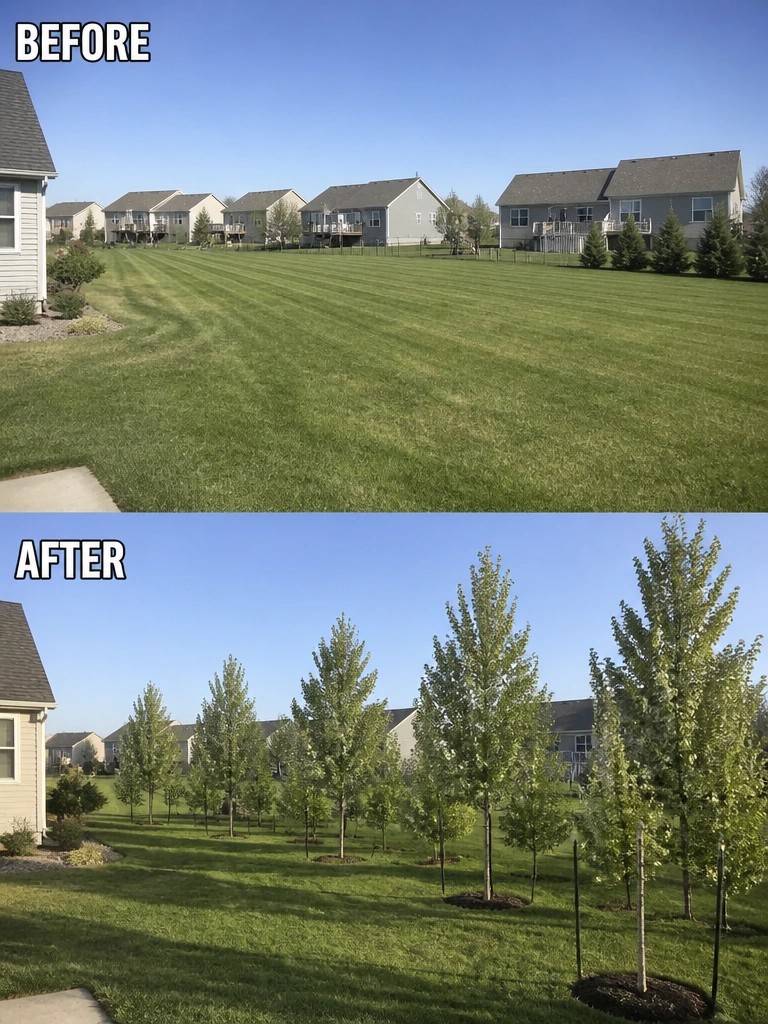
An open lawn can leave the whole yard feeling exposed when neighboring houses sit right at the edges. Adding rows of young trees creates a living screen that softens the view and gives the space more structure without needing a tall fence.
This approach works best in larger backyards where you have room to space the trees properly. Start with smaller, fast-growing varieties, keep the lawn clear between rows, and mulch the planting circles so the trees establish without competing with grass.
Use Raised Planters With Trellises To Add Privacy
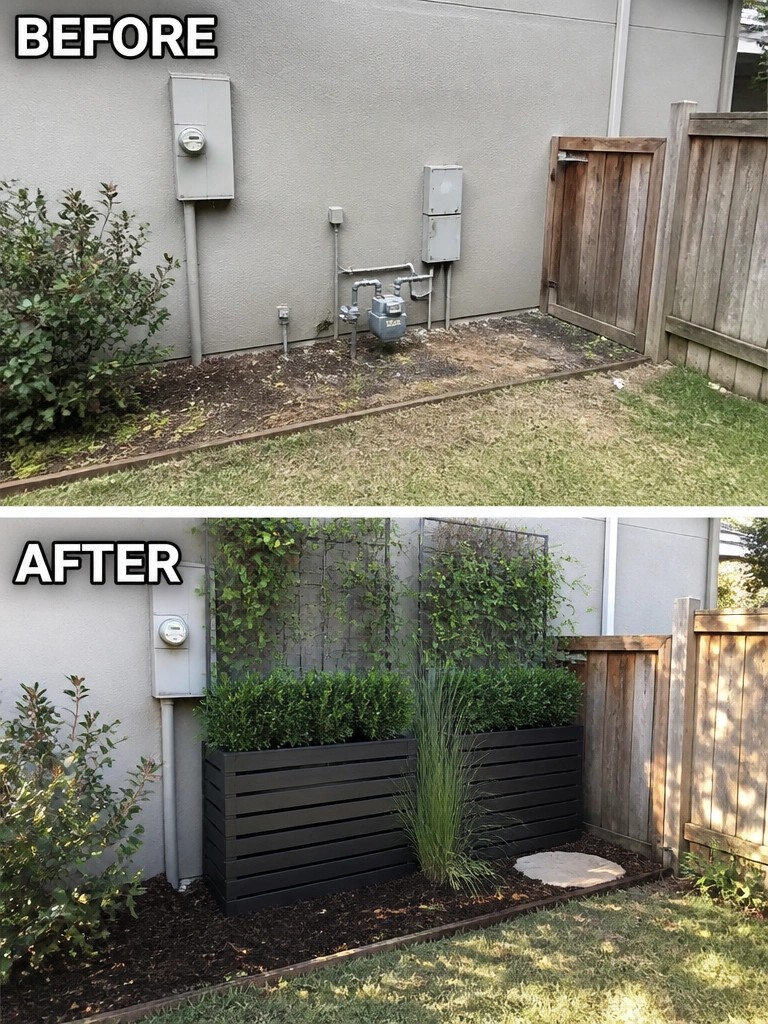
Raised planters paired with simple trellises can quickly hide utility boxes and turn an open strip of yard into a more private space. In the before photo the wall and meters sat fully exposed. The after shows how dark planters filled with shrubs and vines on grids soften the view and block sightlines without needing a full fence.
This approach works well along side yards or near property lines where space is tight. Start with sturdy planters that can handle soil weight, then add climbing plants that grow fast. Keep the layout simple so the beds do not crowd walkways or block access to the utilities.
Frequently Asked Questions
Q: How do I get good privacy on a tight budget? A: Start with fast growing shrubs from a local nursery. They cost less than mature plants and fill in quickly. Add a few trellises with climbing vines for extra height without big spending.
Q: Will the landscaping block noise from the street too? A: Dense hedges absorb some sound when planted in layers. Place them along the edge closest to the noise source. This helps more than a single row of plants.
Q: What if I rent and cannot plant anything permanent? A: Use large pots with tall grasses or bamboo. Move them around to create screens wherever you need. They give privacy now and you can take them when you leave.
