

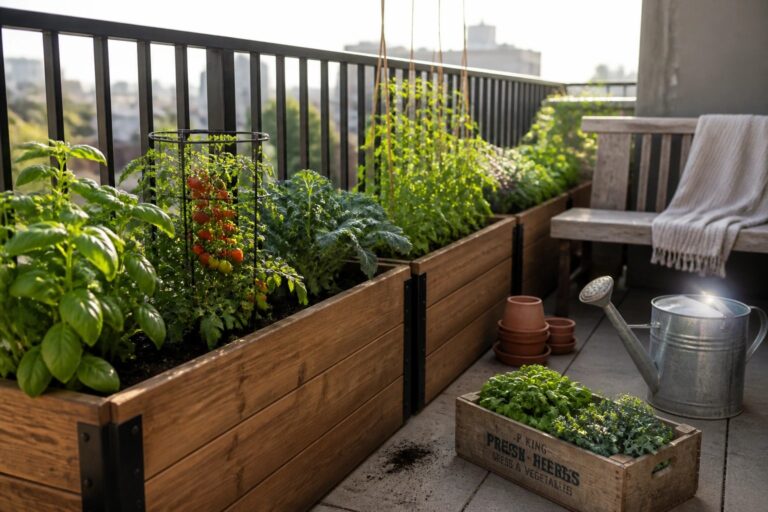
I have noticed that patios tend to work best when the growing setup leaves room for actual use instead of crowding every corner with pots.
Raised planters help here because they keep things organized and make watering or harvesting feel less like a chore on a small surface.
I usually map out the seating area first before deciding where any planters can go so the space does not lose its main purpose.
Small harvests work better than big ambitions on a patio like mine.
Trying a layout with just a few planters shows quickly whether the ideas will hold up once the season gets going.
Raised Planters Along The Patio Edge
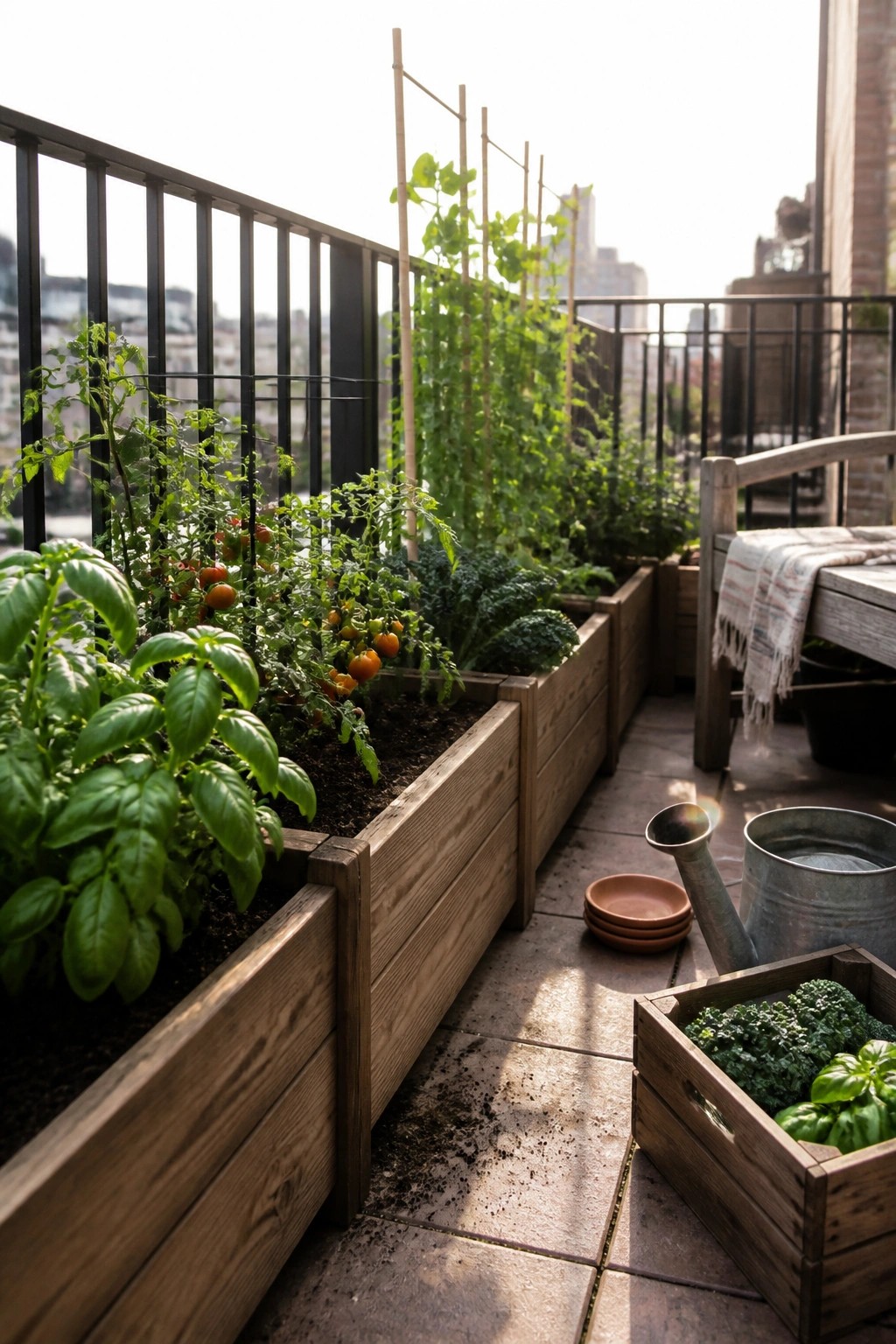
Raised planters give you a simple way to grow vegetables on a patio or balcony without needing ground space. They keep the soil neat, help with drainage, and make it easier to reach the plants for watering and picking.
This approach works best in small urban outdoor areas where space is tight. Line them along the edge to leave the middle open for movement, and choose a sunny spot so the vegetables get enough light.
Raised Stone Planters For Patio Vegetables
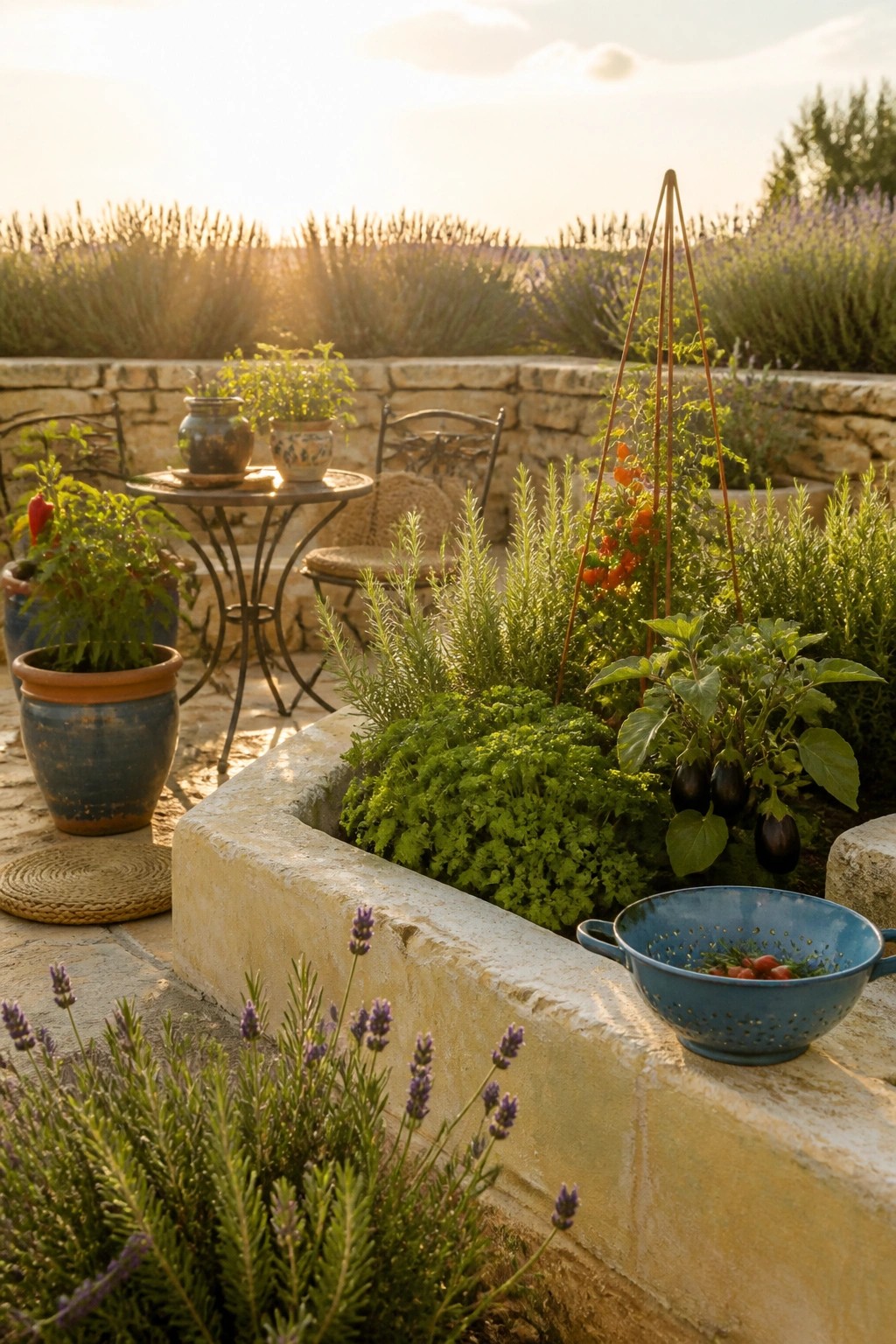
A raised stone planter set right into the patio surface makes it easy to grow vegetables without needing a separate garden plot. The solid edges keep the soil contained and at a comfortable height for tending, while the stone itself blends into the existing hardscape. Many people like this setup because it turns an ordinary patio into a productive space without much extra work.
This approach works well on smaller patios or in homes where space is limited. Place the planter where it gets good sun, and keep the surrounding area clear for access. One thing to watch is drainage, since stone holds moisture differently than lighter materials.
Trellises Help Maximize Space in Raised Beds
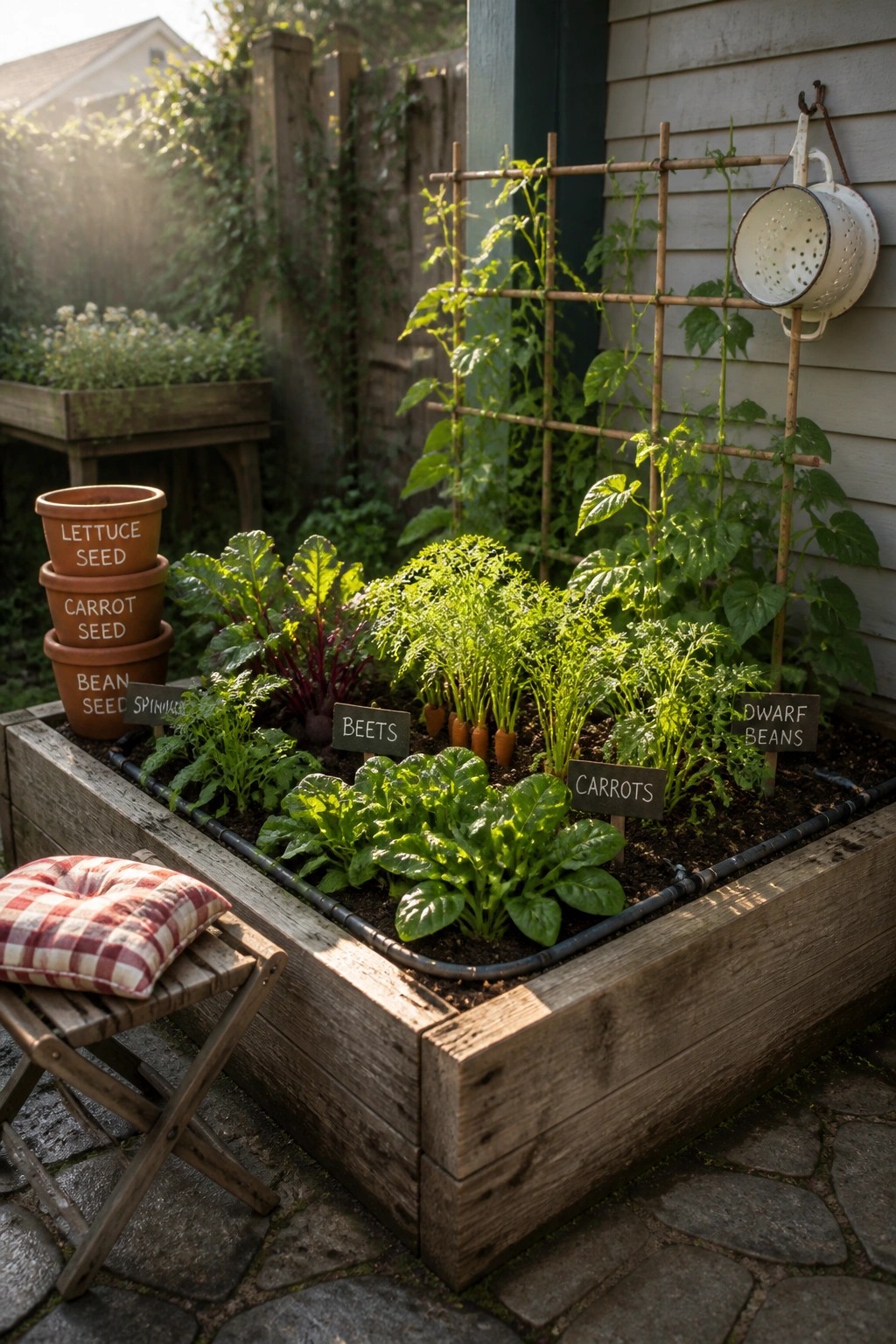
A simple trellis inside a raised bed lets climbing vegetables grow upward instead of sprawling across the soil. This keeps the bed organized and productive when space is limited, and it works well for beans, peas, or similar crops that need support.
It suits small patios or urban yards where beds sit close together. Use basic wood or bamboo stakes and set the trellis along the back edge so the plants still get plenty of light without crowding the rest of the bed.
Raised Metal Planters For Small Vegetable Harvests
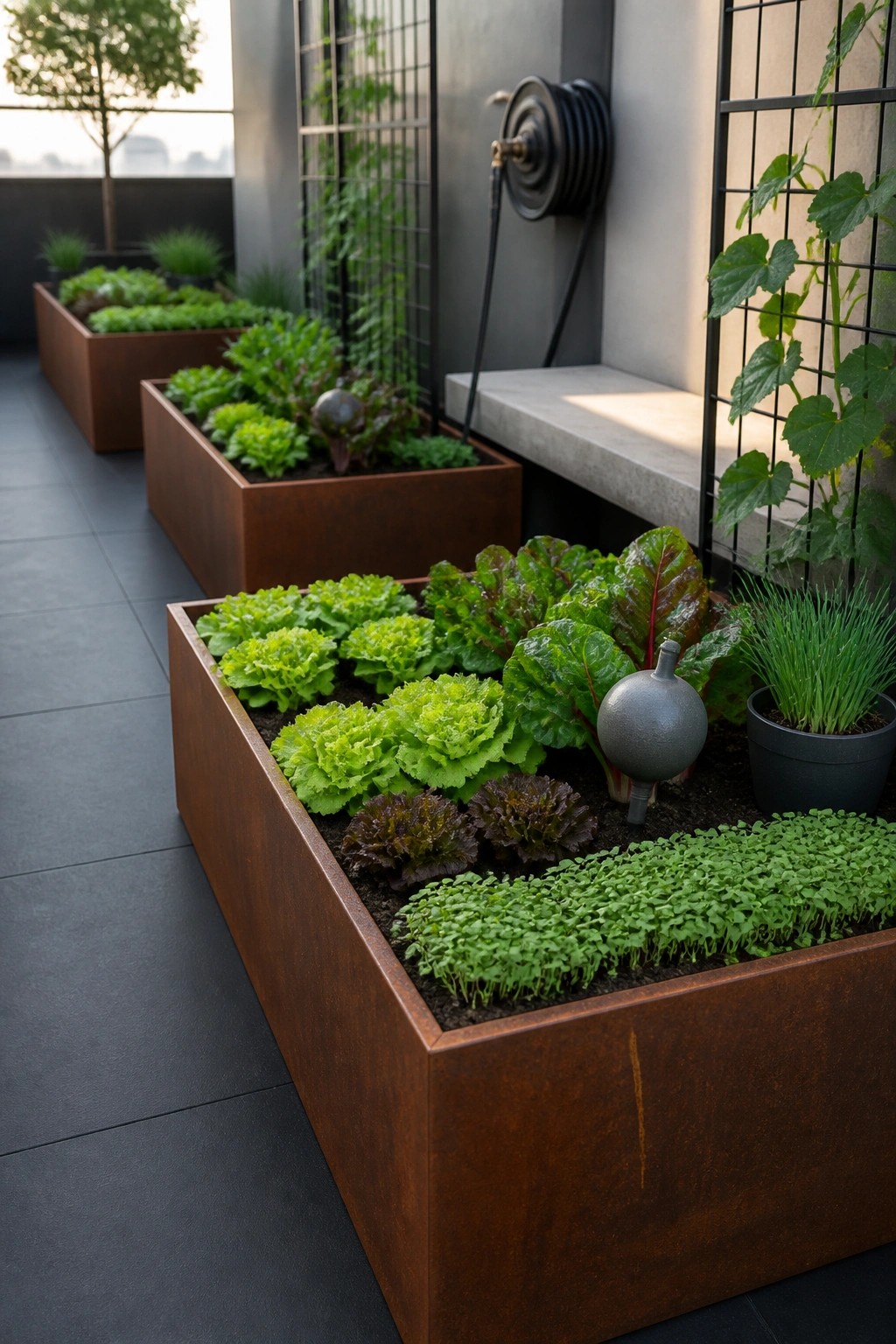
Raised metal planters give you a simple way to grow vegetables on a patio without digging into the ground. The boxes keep the soil contained and warm, which helps greens like lettuce and chard get started faster, and they work well in spaces where a full garden bed would not fit.
Place a few boxes of different lengths along a wall or railing so you can reach everything easily. This setup suits townhomes and apartments with limited outdoor room, though the metal will need occasional sealing if you want it to last many seasons.
Woven Baskets Keep Small Patio Gardens Simple
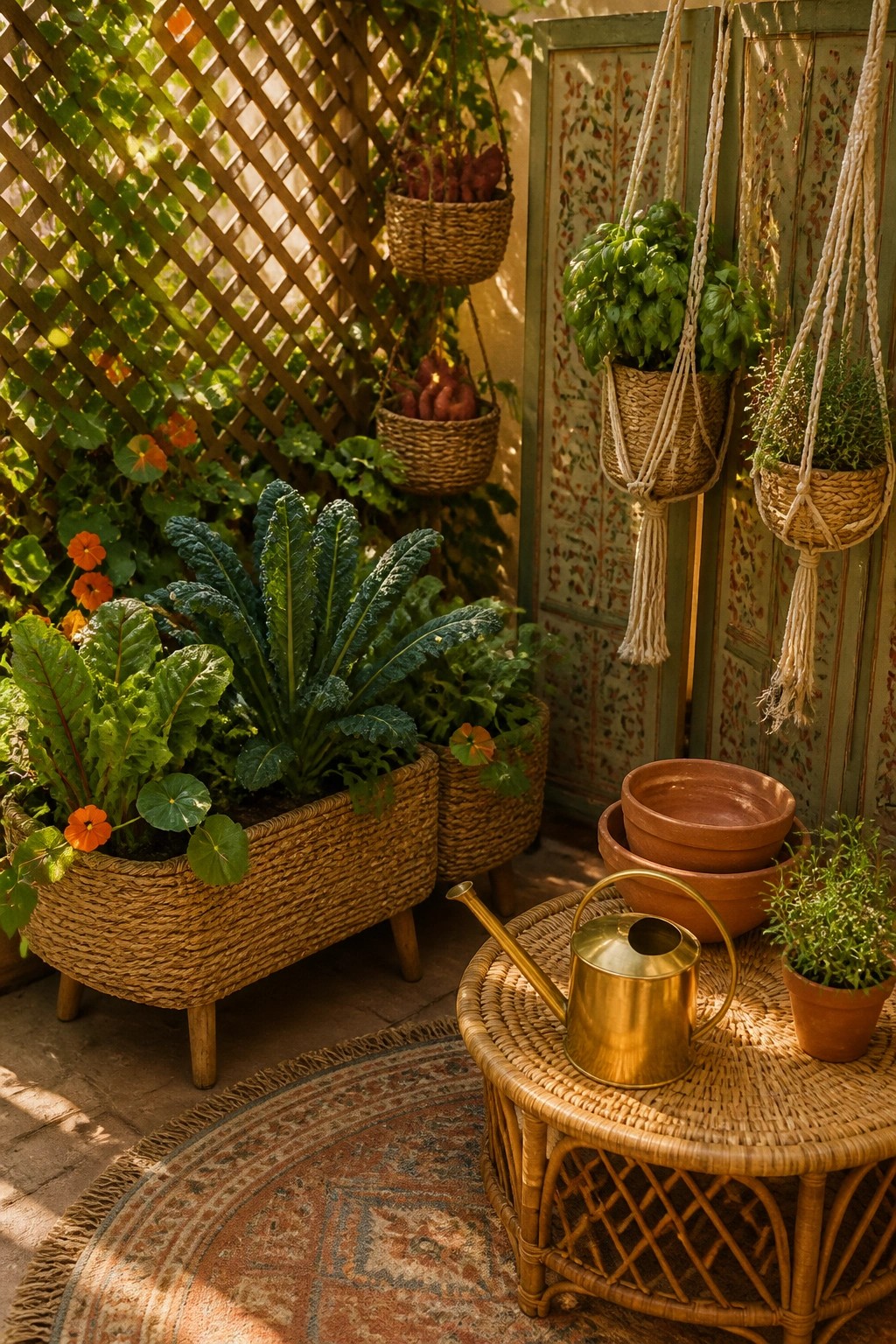
Woven baskets give you a quick way to grow vegetables on a patio without building permanent beds. They sit right on the floor or hang from hooks, which makes it easy to move them around for sun or to rearrange the space when you want more room to sit.
These containers work best on small patios or balconies where space is tight. Use them for herbs, leafy greens, or compact crops that do not need deep soil. Just watch that the baskets stay watered, since woven material dries out faster than plastic or ceramic.
Divided Raised Beds For Multiple Crops
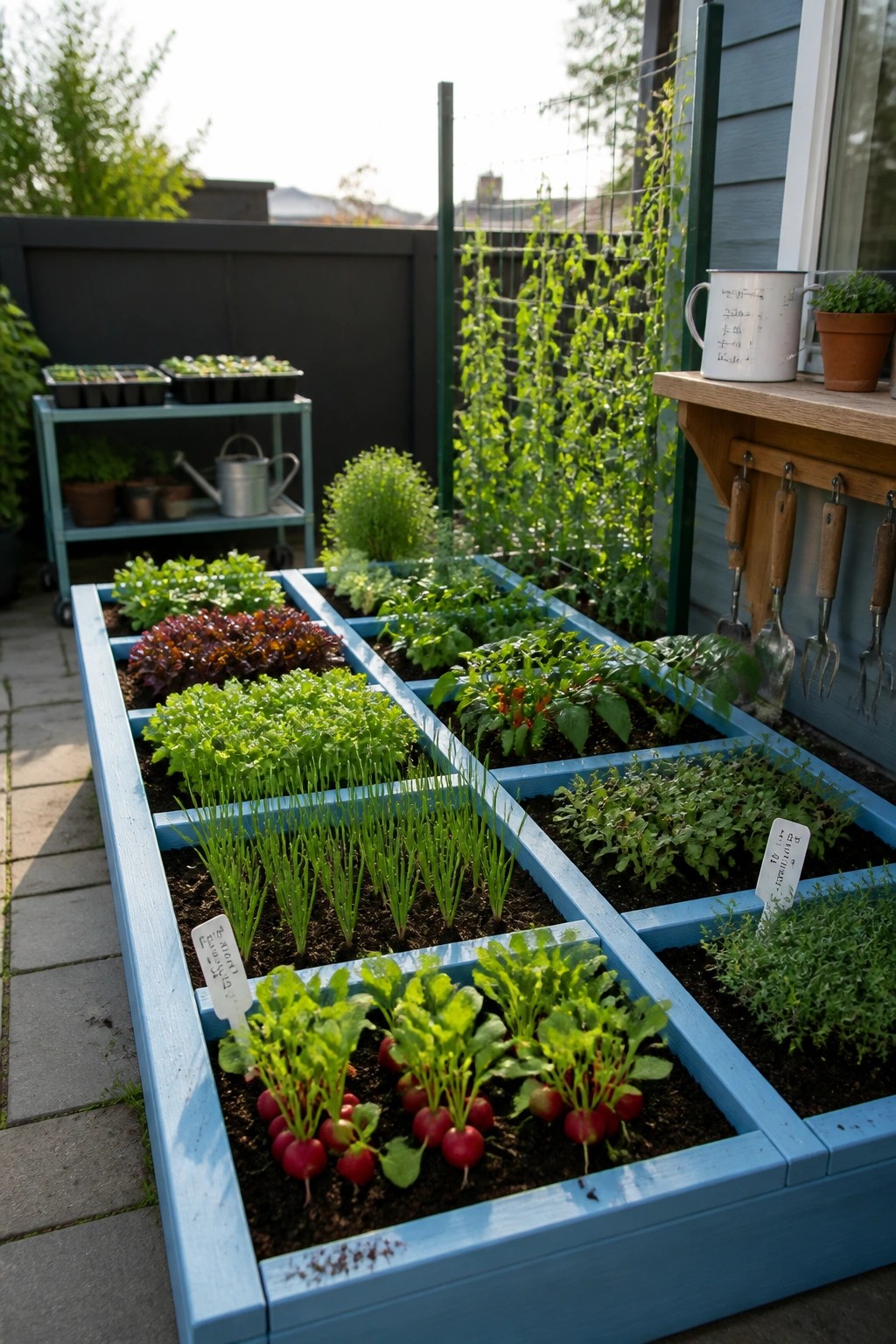
Raised beds divided into separate sections make it easy to grow several different vegetables side by side without crowding. The layout keeps each crop contained, which helps with watering, weeding, and harvesting on a small patio. Many people like this setup because it turns a narrow space into a productive spot without needing a full garden.
This works well on patios or decks where space is limited. Build or buy long beds with simple dividers, then rotate what you plant each season. Keep an eye on soil depth so roots have room, and choose vegetables that stay compact.
Stepped Raised Planters For Small Harvests
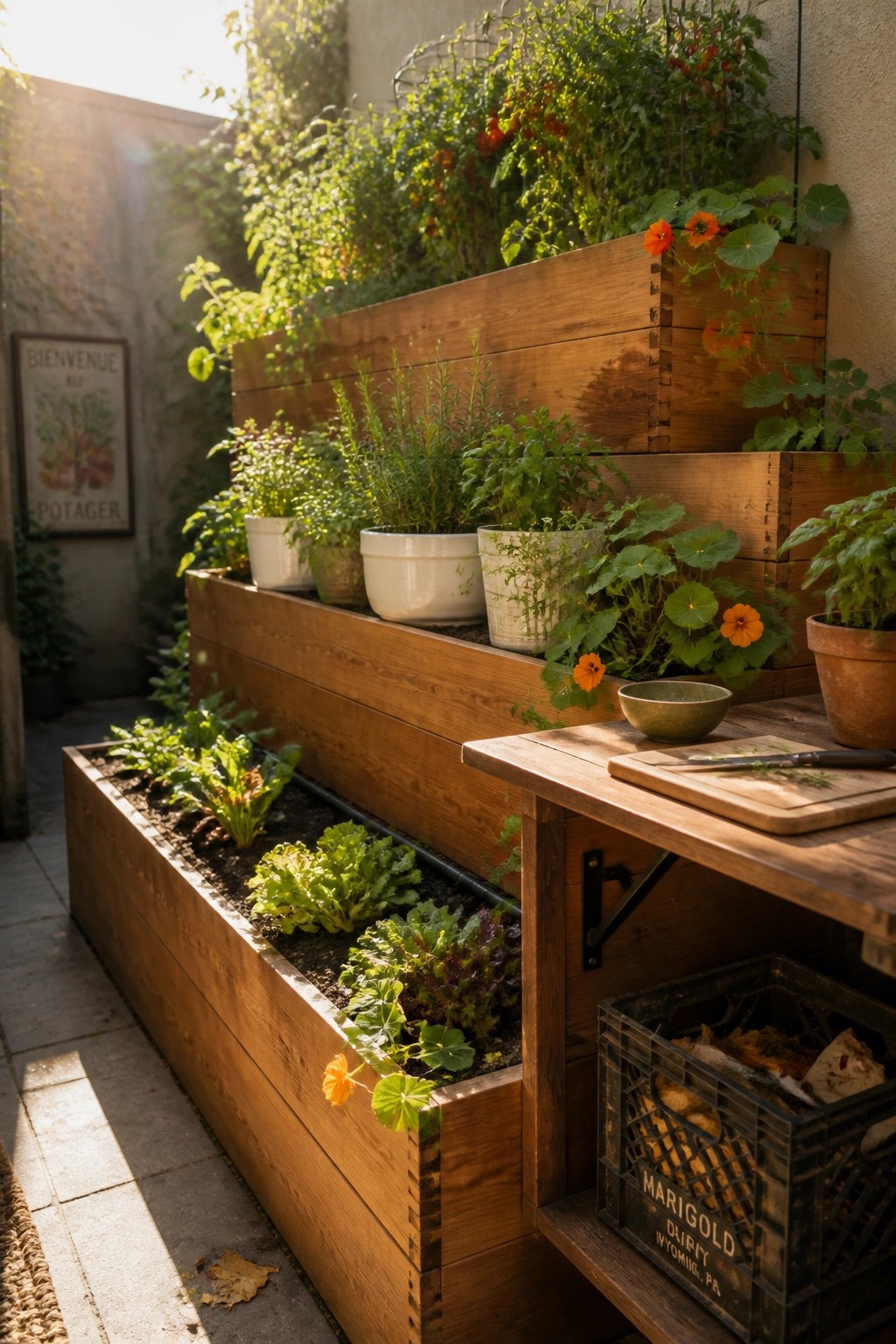
Tiered wooden planters let you grow more in a tight patio space without spreading out across the ground. The stacked levels create room for different crops at once, and the wood frames keep everything neat while allowing good drainage and easy access.
This setup works best on a paved patio or balcony where ground beds are not an option. Keep the tiers under about three levels so plants on the lower shelves still get enough light, and mix in a few flowers to help with pests.
Tiered Raised Planters Increase Growing Space On Patios
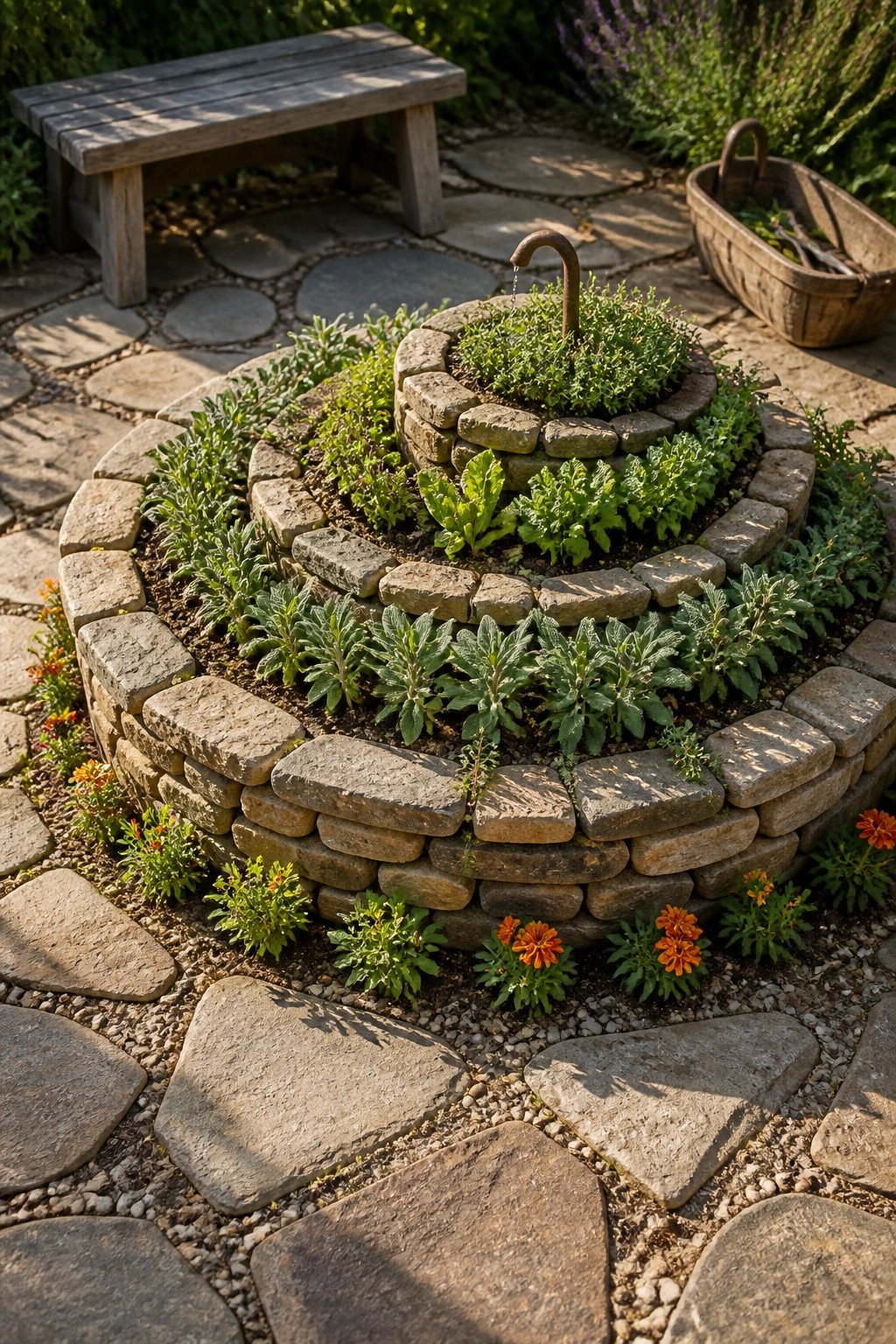
Tiered raised planters let you fit more vegetables and herbs into a small area without spreading out across the whole patio. The stacked levels create extra planting room while keeping everything easy to reach and maintain.
This approach works best on paved surfaces where in-ground beds are not possible. Stone holds up well over time and the circular layout helps the garden feel like part of the overall space rather than an afterthought.
Vertical Pallet Planters For Compact Vegetable Gardens
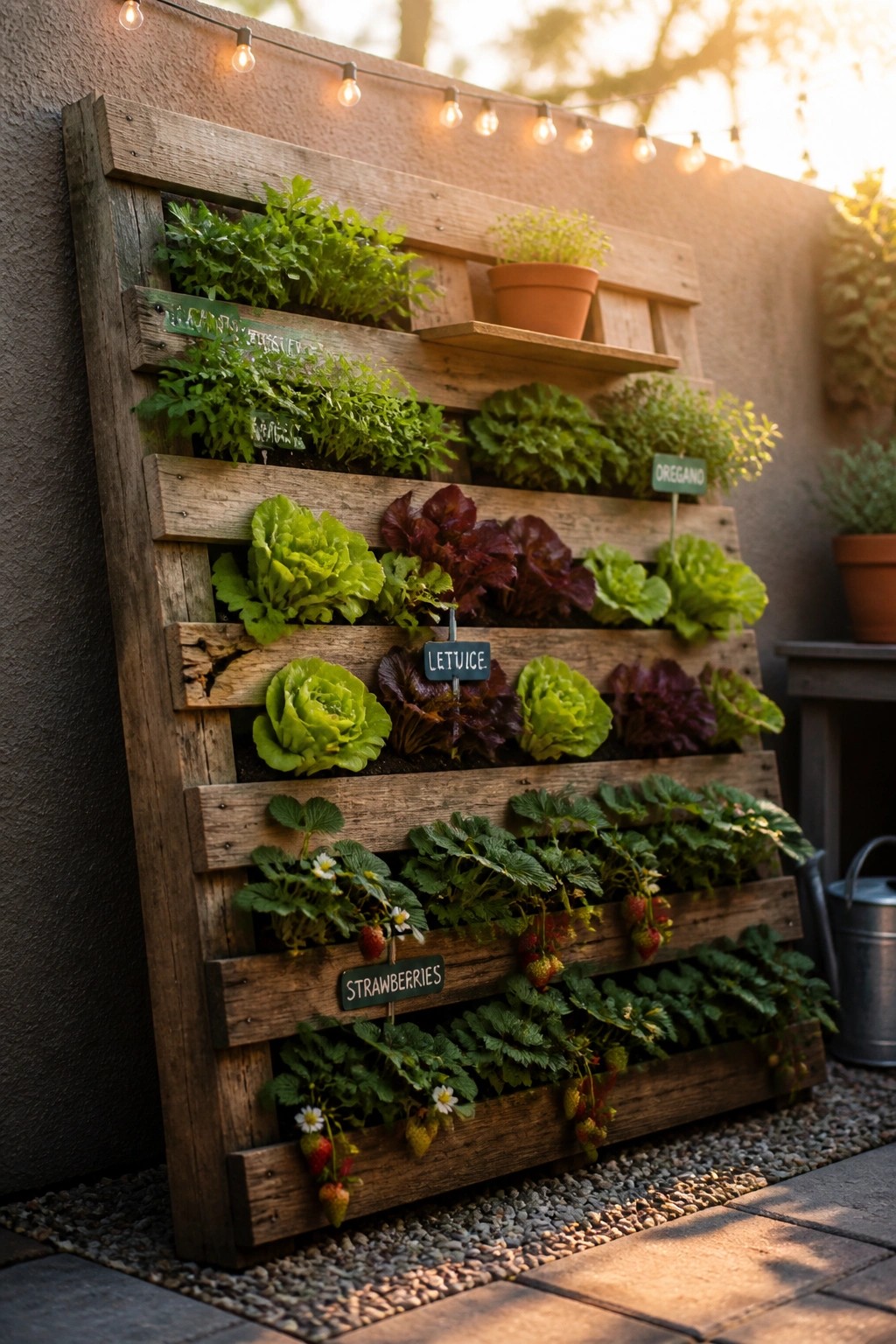
A pallet planter mounted on a wall gives you a simple way to grow several vegetables in one spot without taking up floor space. The stacked boards hold soil in separate rows, so you can plant different crops like strawberries on the lower levels and leafy greens higher up.
This setup works best on a sunny patio wall or fence where the plants get good light. It suits small yards or rental spaces since the whole thing stays off the ground and can be moved if needed. Just make sure the wood is untreated and add a liner so the soil stays in place.
Mobile Raised Beds for Small Patios
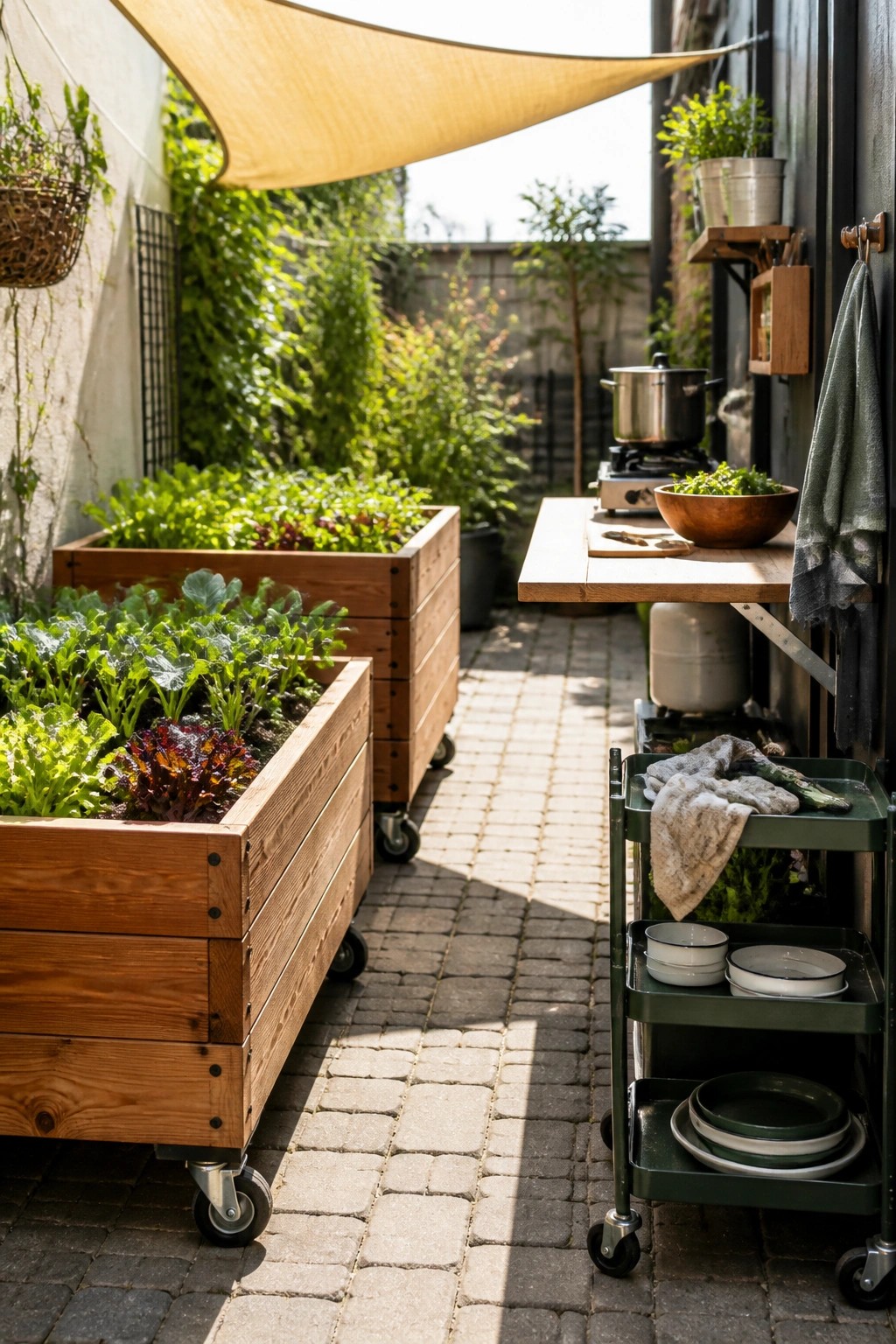
Raised planters on wheels let you rearrange your garden whenever you need to. You can roll them into better sun, shift them aside for seating, or bring a bed closer to the kitchen when harvest time comes. The setup keeps things practical on a paved surface where permanent beds would not work.
This approach suits small patios and renters who want fresh vegetables without committing to fixed structures. Sturdy casters and deep boxes are the main things to get right so the beds stay easy to move even when full of soil.
Raised Planters Along Narrow Patios
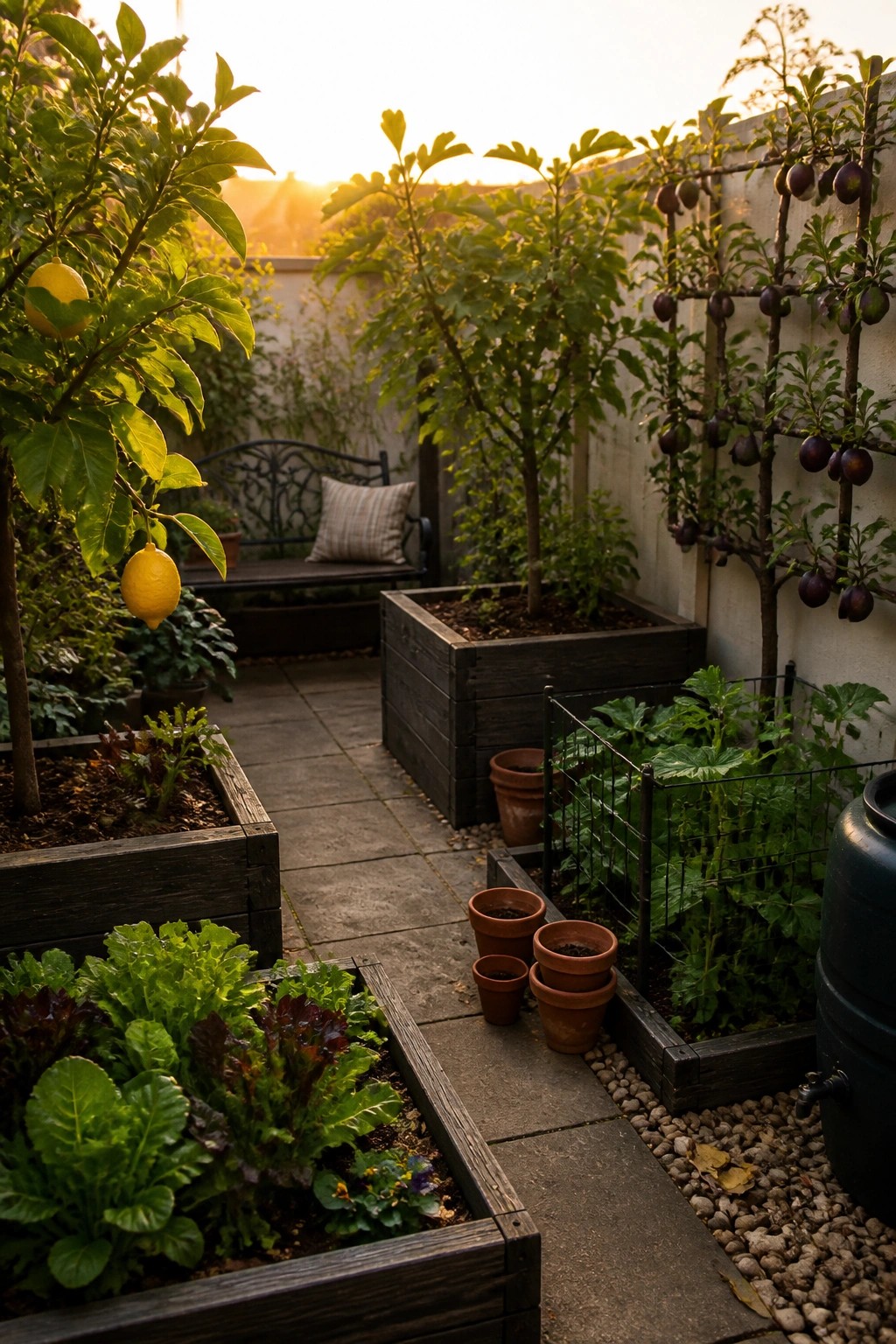
Raised planters let you grow vegetables on a patio that would otherwise stay bare. They keep everything contained, make watering simple, and turn a slim walkway into a useful growing space without needing to dig into the ground.
Place the boxes along the edges so the center path stays clear. This setup works best on small urban patios or townhouse yards where space is tight and the ground is already paved. Stick to a few crops that do well in containers and you can still get a steady small harvest.
Line Raised Planters Along a Path
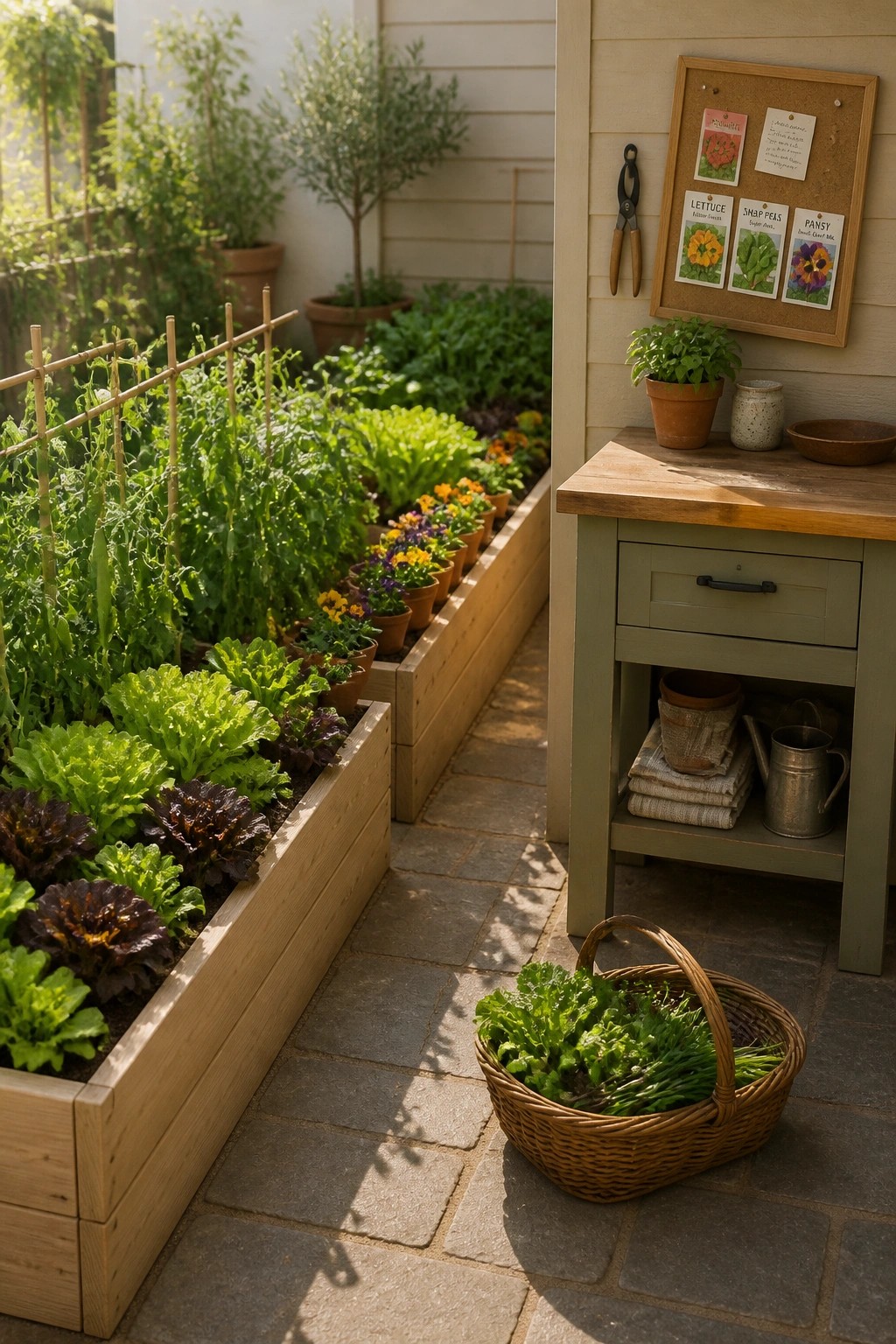
Raised planters work especially well when they follow the natural flow of a walkway. This setup keeps everything within reach and turns a slim side area into a working garden without crowding the space. The straight rows also make watering and picking much simpler day to day.
This layout suits small patios or townhouse yards where room is tight. Keep the beds narrow enough for easy access from one side and leave a clear path beside them so you can move a basket or tools without stepping on plants.
Raised Planters Built into a Balcony Bench
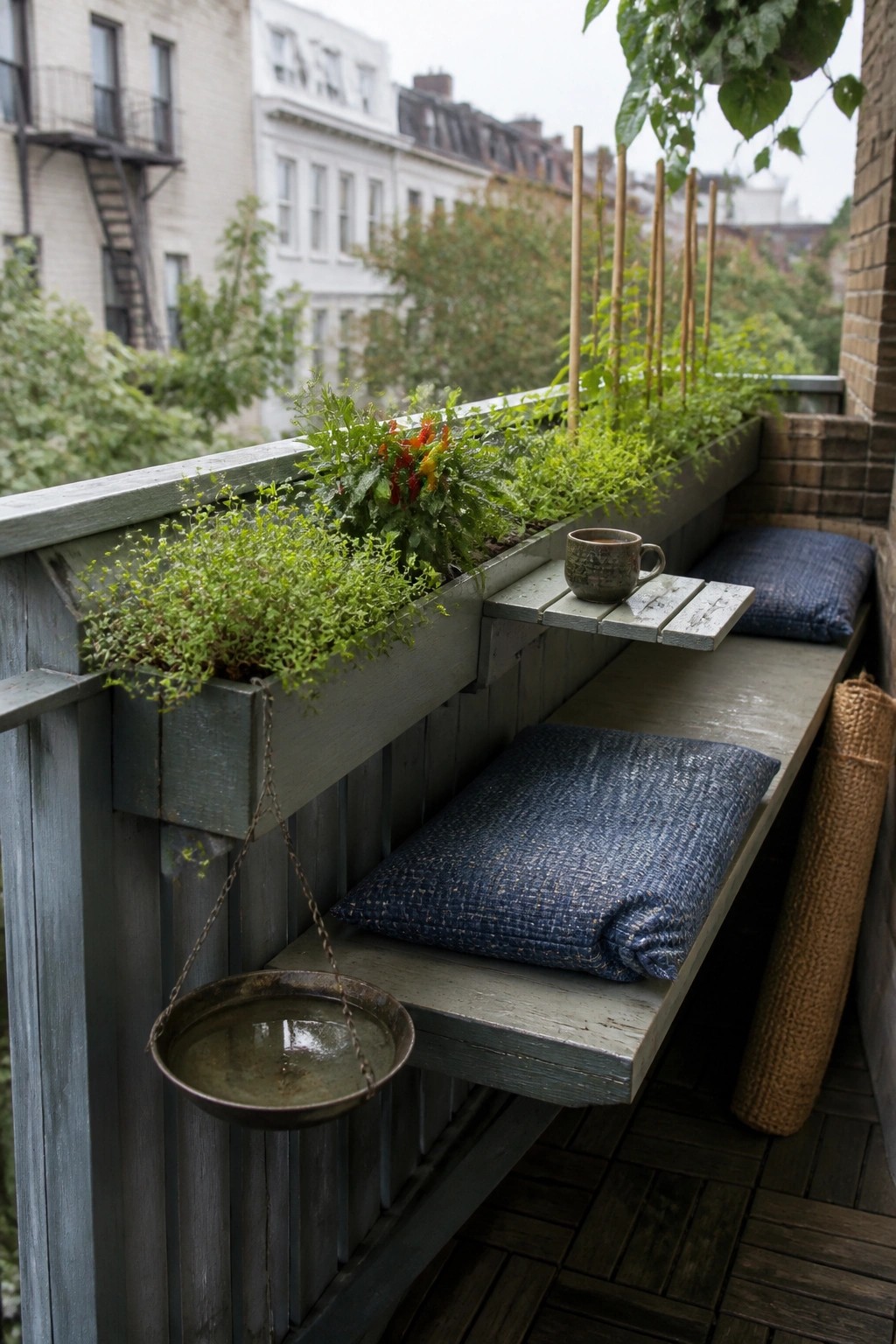
A long planter box mounted right above a bench gives you growing space without taking over the floor. It keeps herbs and small vegetables within reach while the bench below stays usable for sitting. Many people like this setup on balconies because it turns the railing line into productive garden space instead of just a barrier.
This works best on narrow urban balconies where floor room is limited. Use a sturdy box that drains well and pick compact plants like peppers or leafy greens that do not need deep soil. Check the weight load before filling it completely, especially on older buildings.
Cold Frame Lids On Raised Planters
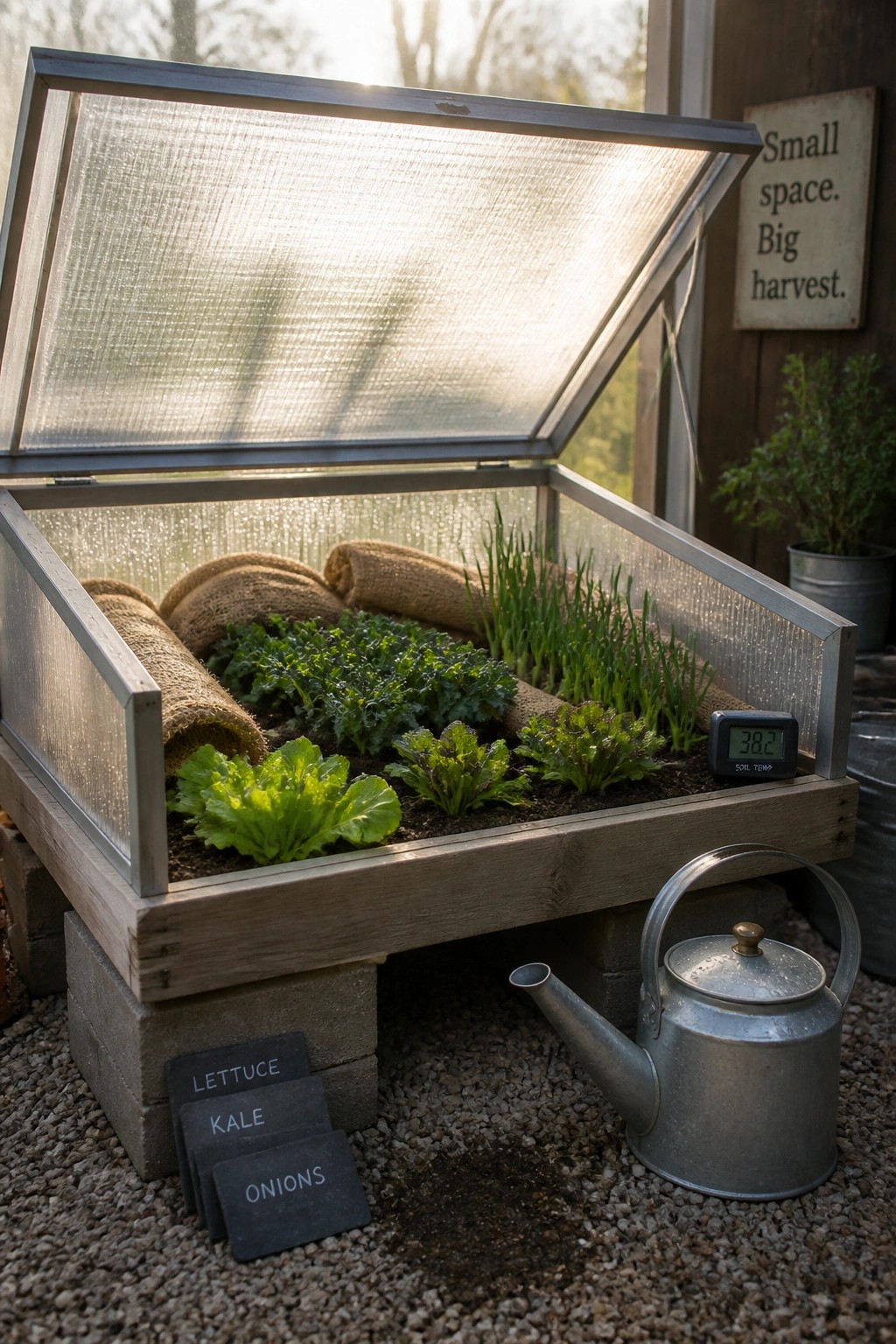
A hinged lid over a raised bed gives you extra control without needing a full greenhouse. It keeps soil warmer, protects greens from sudden cold, and still lets you open it up for air and sun when the weather allows.
This works best on patios or small yards where room is limited. Place it where you can reach it easily, and use the lid mainly in early spring or fall when nights stay cool.
Raised Planters With Built In Irrigation
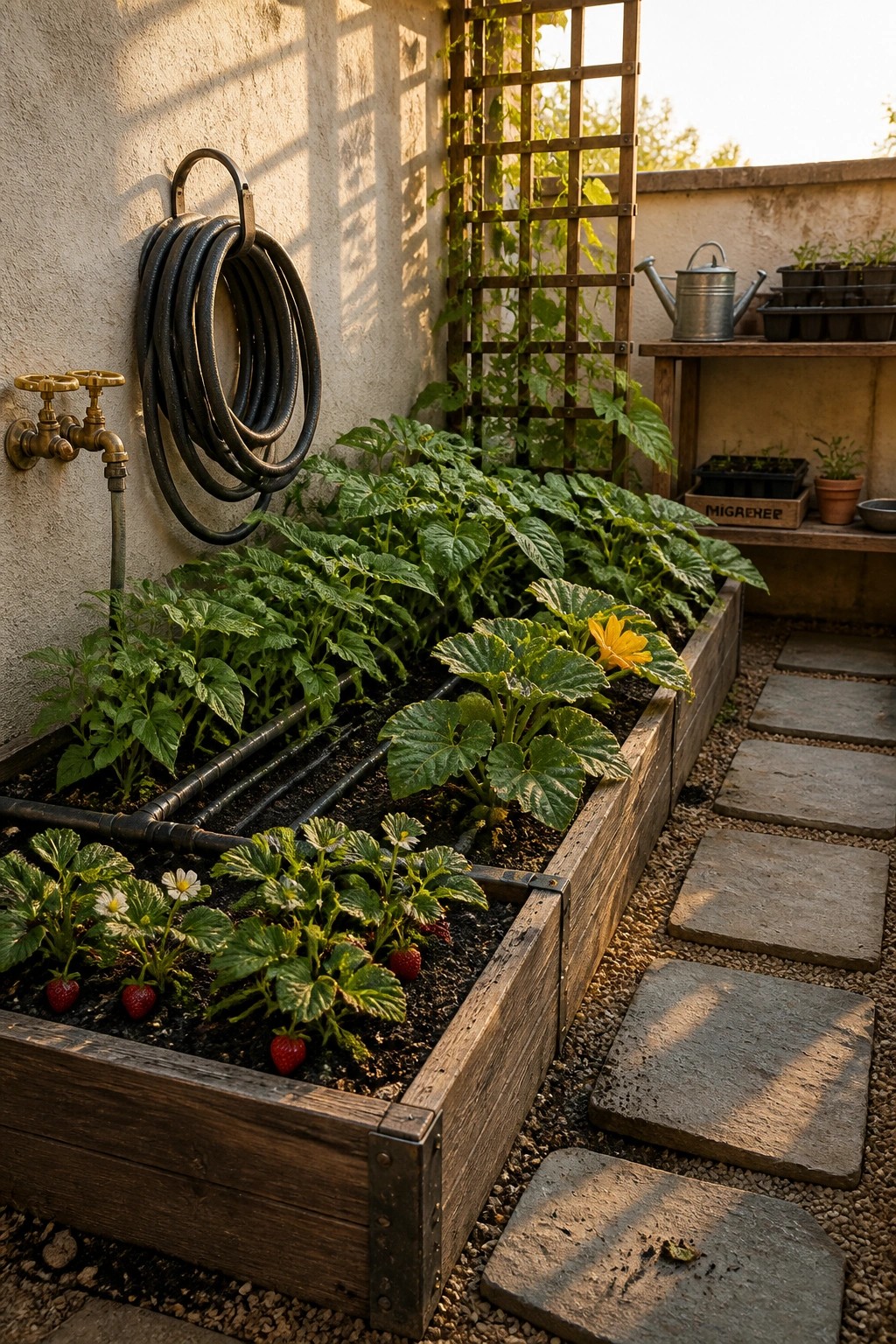
Raised planters make it simple to grow vegetables on a patio because they keep everything contained and easy to reach. Adding irrigation lines inside the beds cuts down on daily watering and helps the plants stay consistent even when the weather changes.
This approach works best in smaller outdoor spaces where you want a steady supply of produce without turning the whole area into a full garden. It fits well on patios or side yards that get decent sun and can be adjusted to whatever length or width you have room for.
Use a Repurposed Bathtub as a Raised Planter
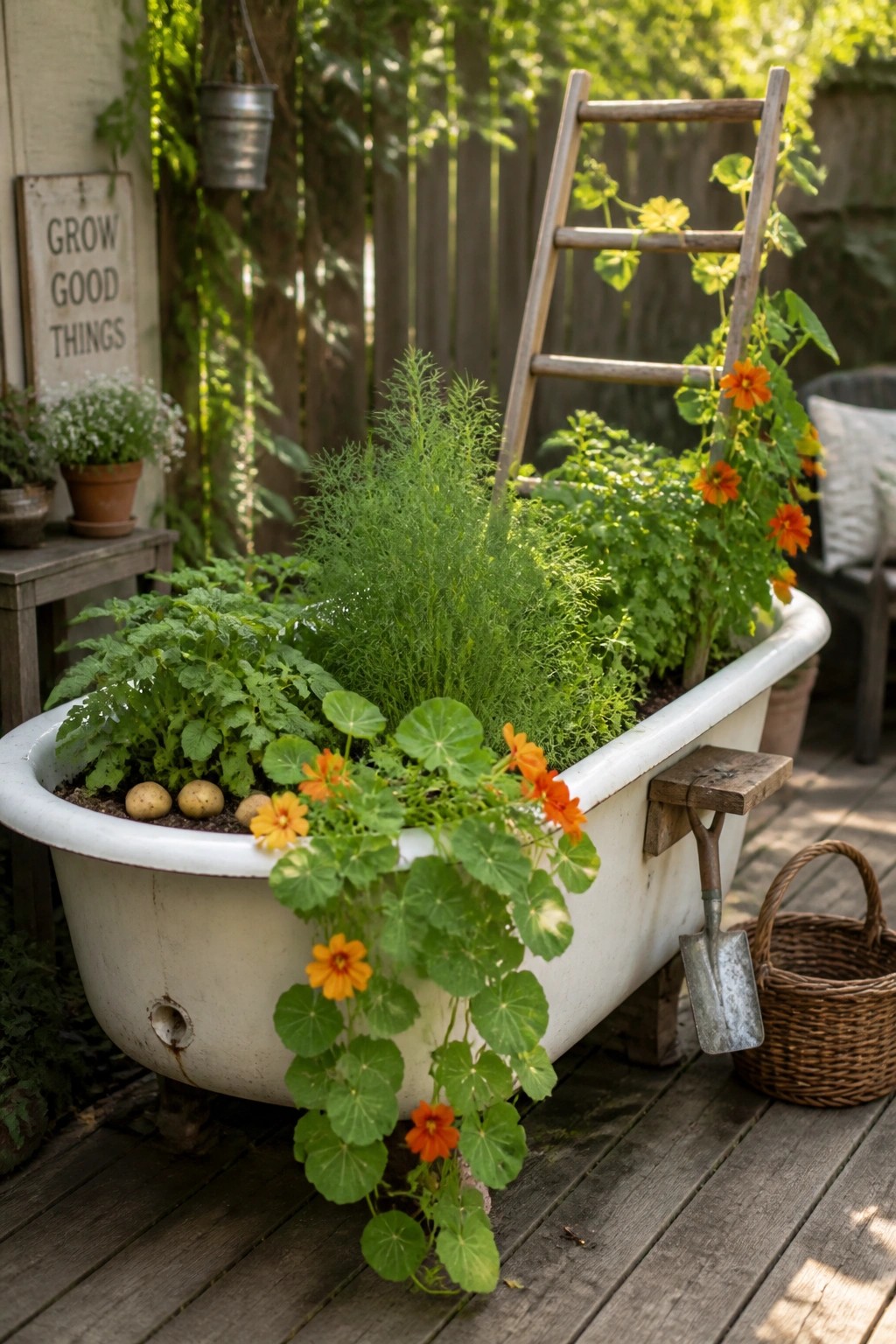
An old bathtub gives you a ready-made raised bed with good depth and solid sides. It works especially well for vegetables that need a bit more root room, and it sits nicely on a deck or patio without any extra framing.
Place it in a sunny spot and add drainage holes if they are not already there. This setup suits smaller yards or urban patios where a standard raised bed might feel too bulky or permanent.
Linear Raised Planters Along Gravel Paths
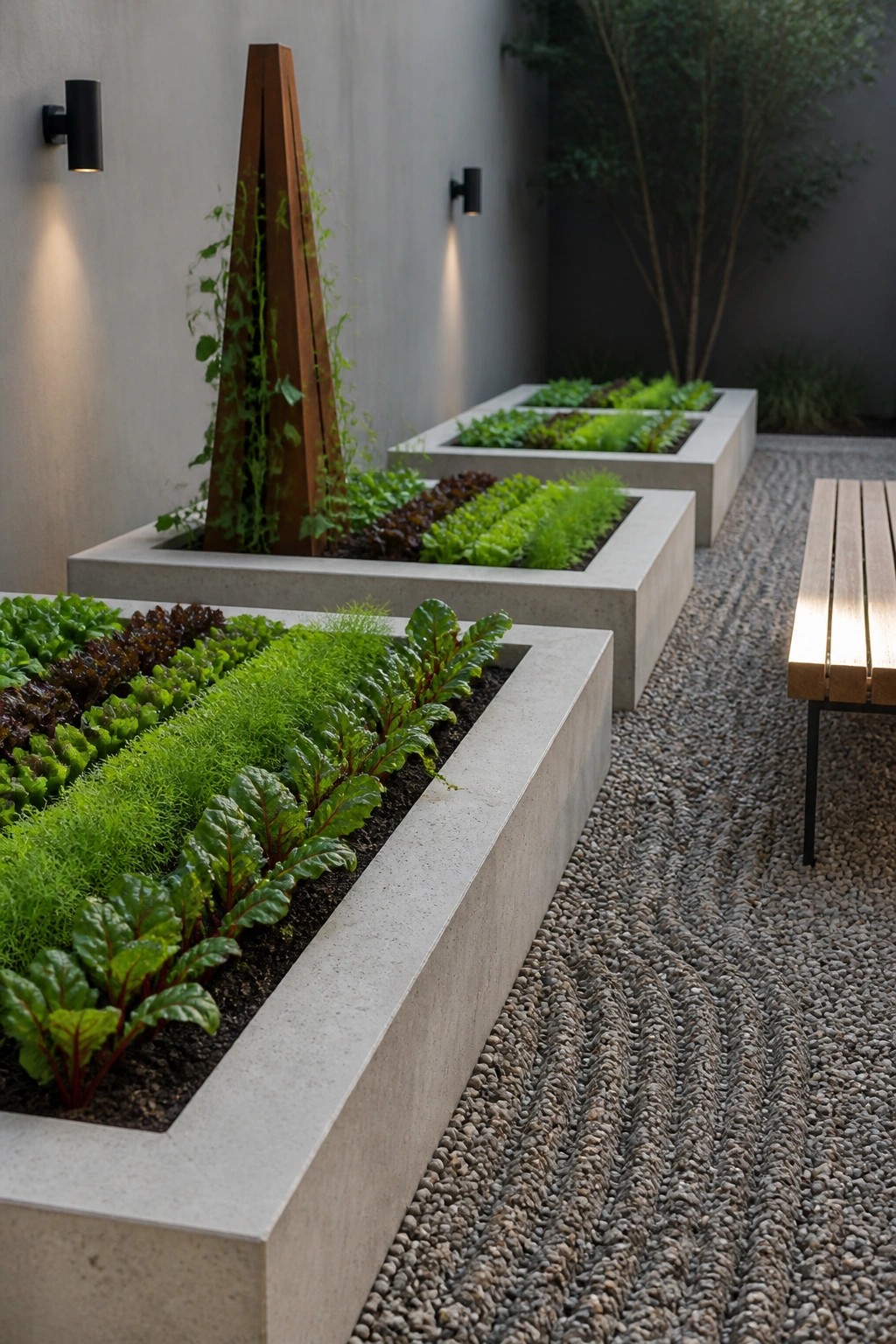
Long raised planters made of concrete work well for vegetables because they keep the soil contained and make it easy to reach everything without stepping on the beds. The straight layout also helps with watering and weeding since you can walk right up to each side.
This setup fits best in narrow side yards or along a patio edge where space is limited. Use gravel between the beds so water drains away and the path stays firm underfoot. Keep the planters at a comfortable height so you do not have to bend too far when harvesting.
Raised Planters Beside the Patio Table
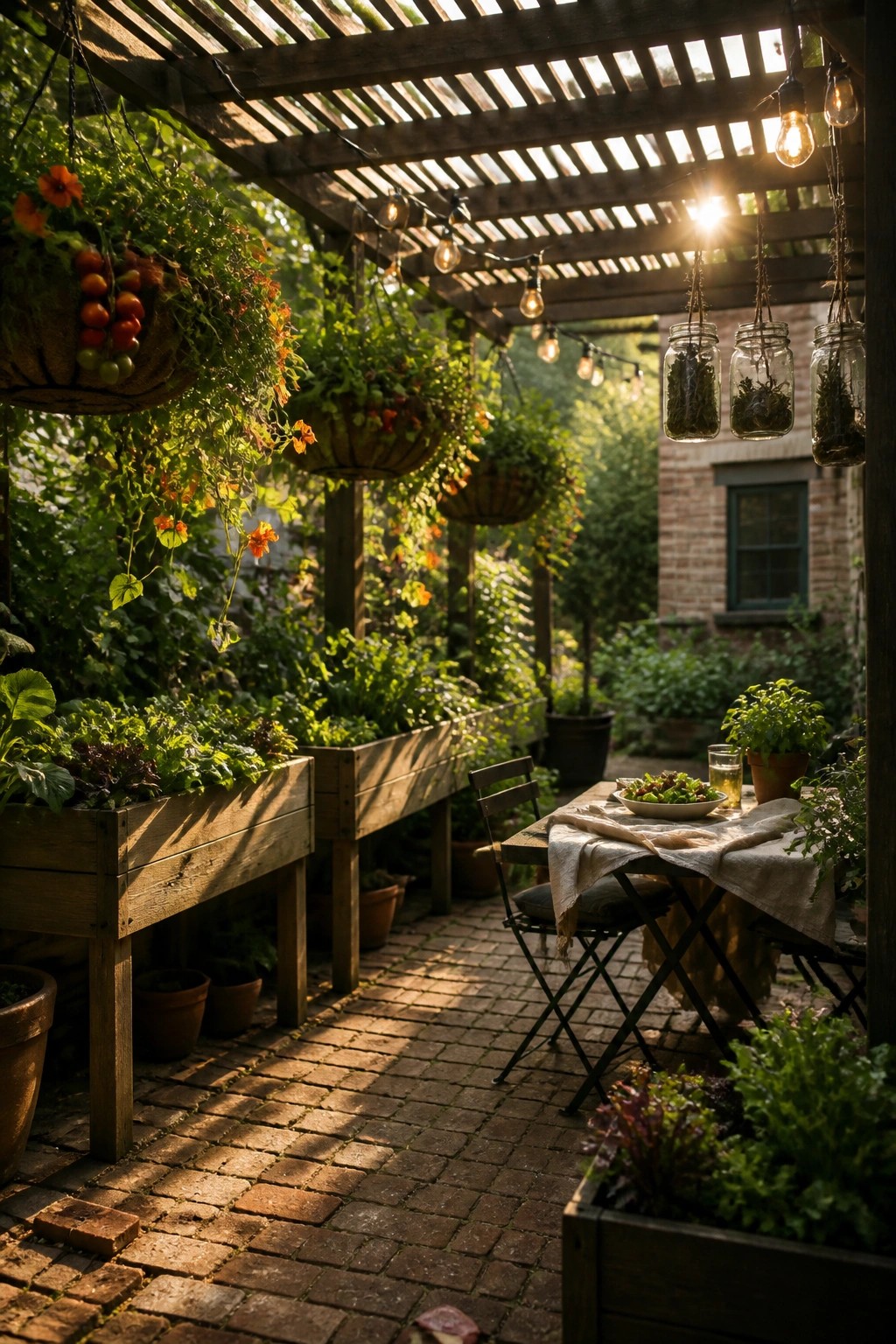
One simple way to grow vegetables on a small scale is to place raised wooden planters right next to an outdoor dining spot. This keeps the plants within easy reach for watering and harvesting while letting the garden become part of the seating area.
It works best on brick or stone patios where the beds can run along one side without blocking movement. Use narrow planters so the table and chairs still have plenty of space around them.
Raised Planters Along The Patio
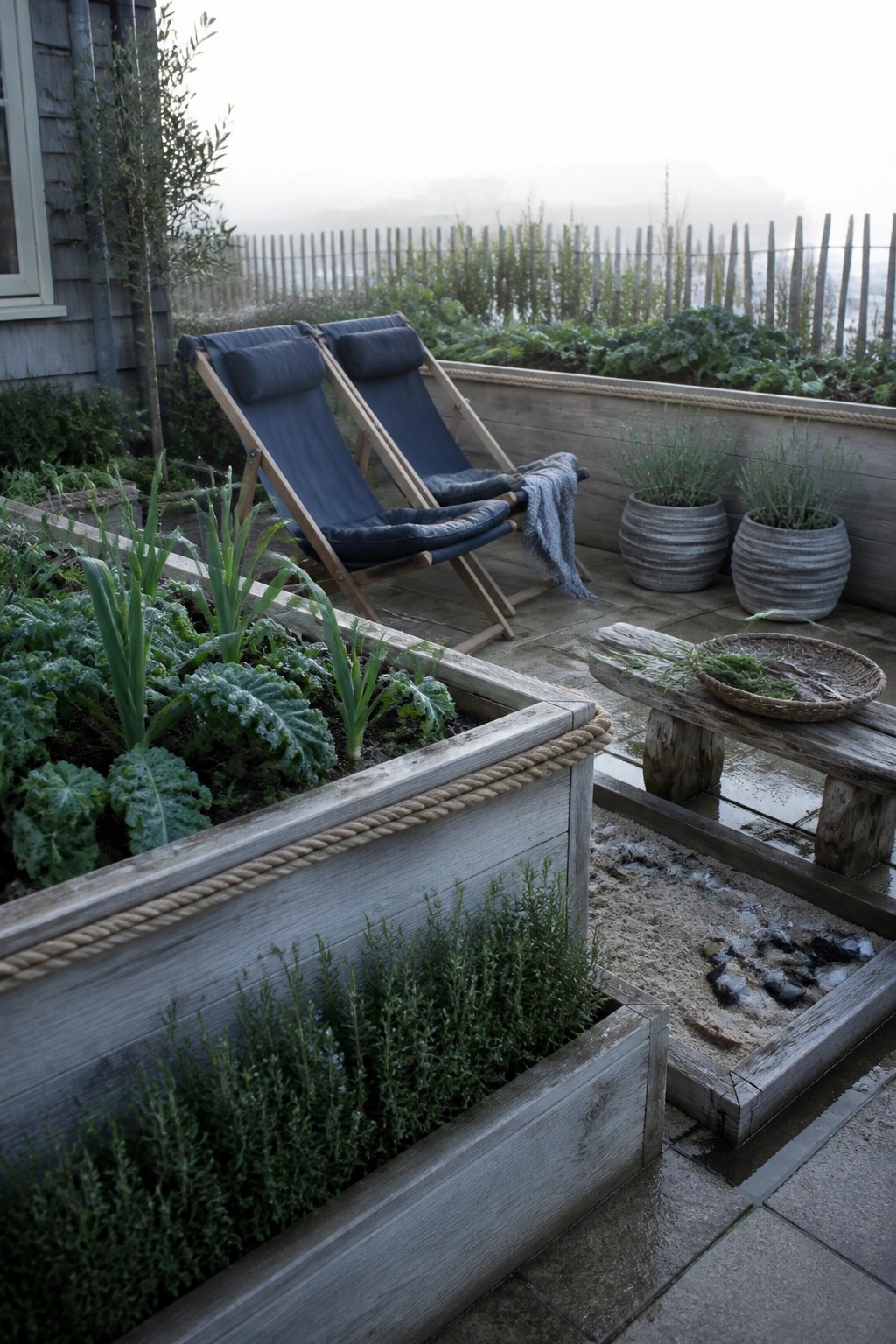
Raised planters let you grow vegetables right on the patio without giving up space for seating. The beds sit at a comfortable height and keep the soil contained so the rest of the surface stays usable for chairs and walking around. This setup works especially well when the garden needs to share the same level as the outdoor living area.
Place the planters along the edge or in a corner where they catch sun but leave room for a table and chairs. Choose sturdy wood that matches the decking and keep the beds narrow enough to reach across easily. Compact crops like leafy greens and herbs do best in this kind of small, contained space.
Raised Beds Along a Patio Path
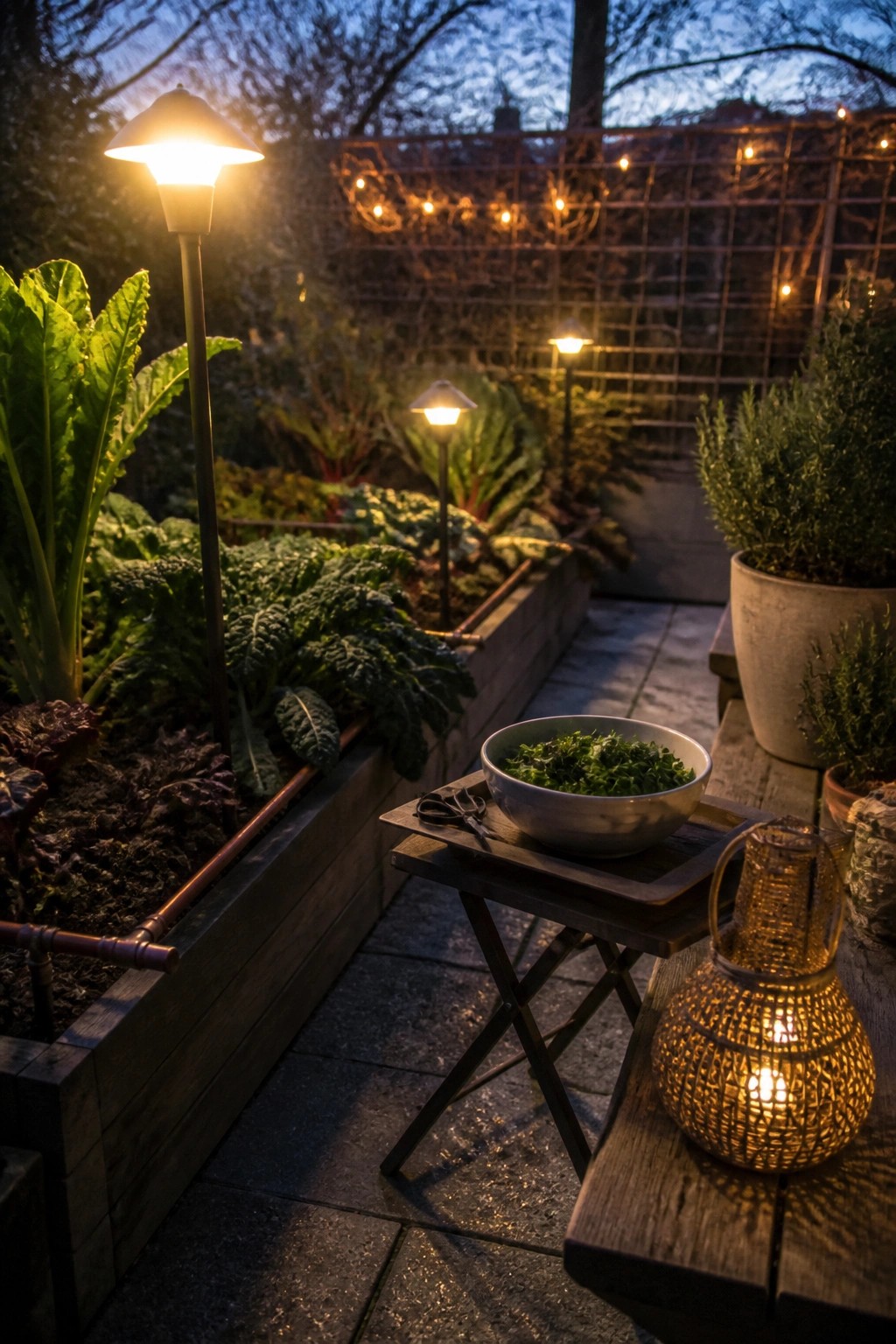
Raised beds work well when they run right beside a patio walkway. This layout keeps the plants close enough to check daily and harvest without stepping into the beds. It also turns a narrow side area into useful growing space that still leaves room to walk through.
This setup suits small patios or side yards where full garden rows would not fit. Keep the beds narrow so you can reach across easily, and leave the path clear for foot traffic. A few lights nearby make evening harvests simpler too.
Frequently Asked Questions
Q: What size planters work best for starting out on a patio? A: Pick boxes that hold at least 5 gallons for most vegetables. This gives roots enough space without taking over your whole deck.
Q: How often should I water raised beds in the summer? A: Check the soil every day and give them a good soak when the top feels dry. Morning watering helps prevent mildew on leaves.
Q: Which vegetables give the biggest return in small spaces? A: Go with leafy greens and radishes for fast harvests. They mature in weeks and you can replant for more.
