

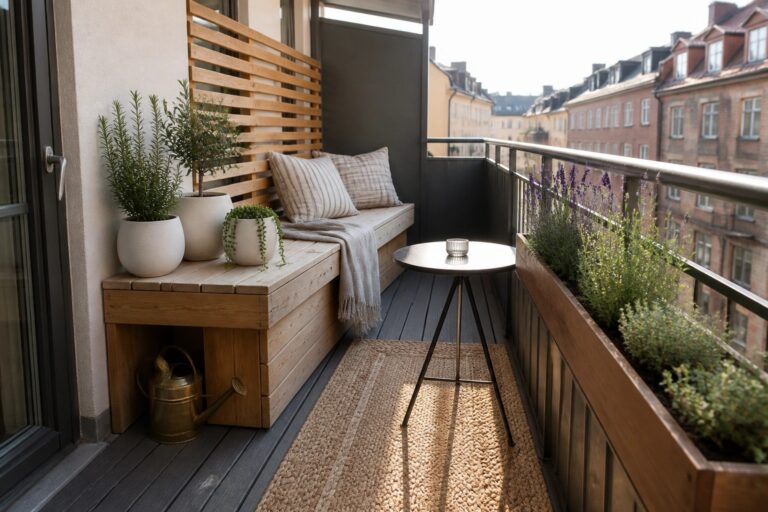
Balconies often end up as the space where good intentions meet limited square footage, so the setup needs to adapt without constant rearranging.
I have noticed that rigid planter placements tend to block the few spots where a chair actually fits comfortably for more than a few minutes.
Flexibility helps here.
When pots and boxes can shift with the light or with how often you use the balcony for meals, the whole area stays practical instead of turning into storage.
Small choices like grouping containers by weight or choosing movable boxes make it easier to test what actually works over a full season.
Built-In Bench Seating With Storage
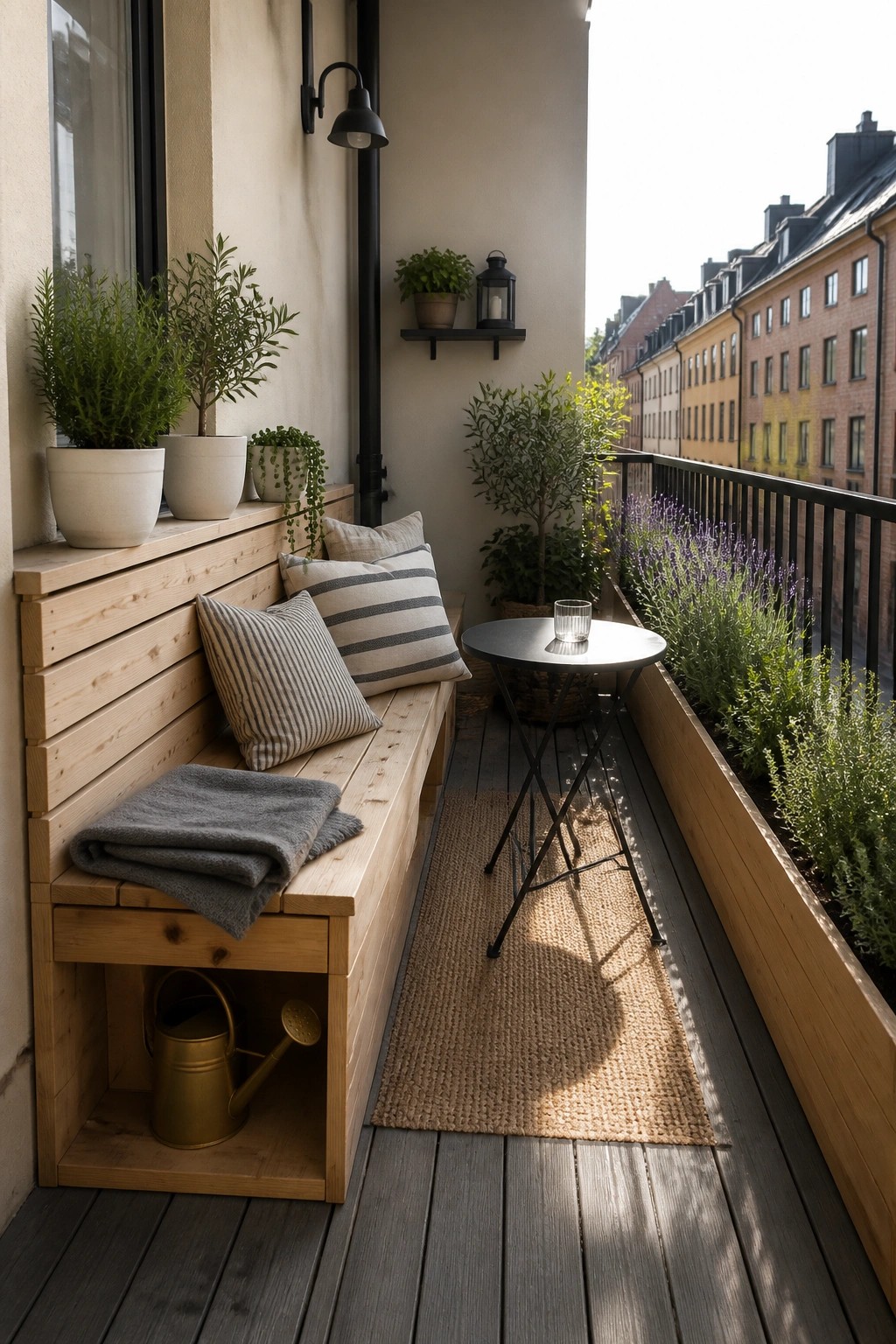
A built-in bench gives you seating and storage in one piece, which helps keep a small balcony from feeling crowded. The bench can hold cushions and a blanket on top while leaving the space underneath open for tools or extra items.
This setup works best on narrow balconies where floor space is limited. It pairs well with a long planter box along the railing so you can add plants without losing room to sit or move around.
Group Plants in a Wooden Planter Box
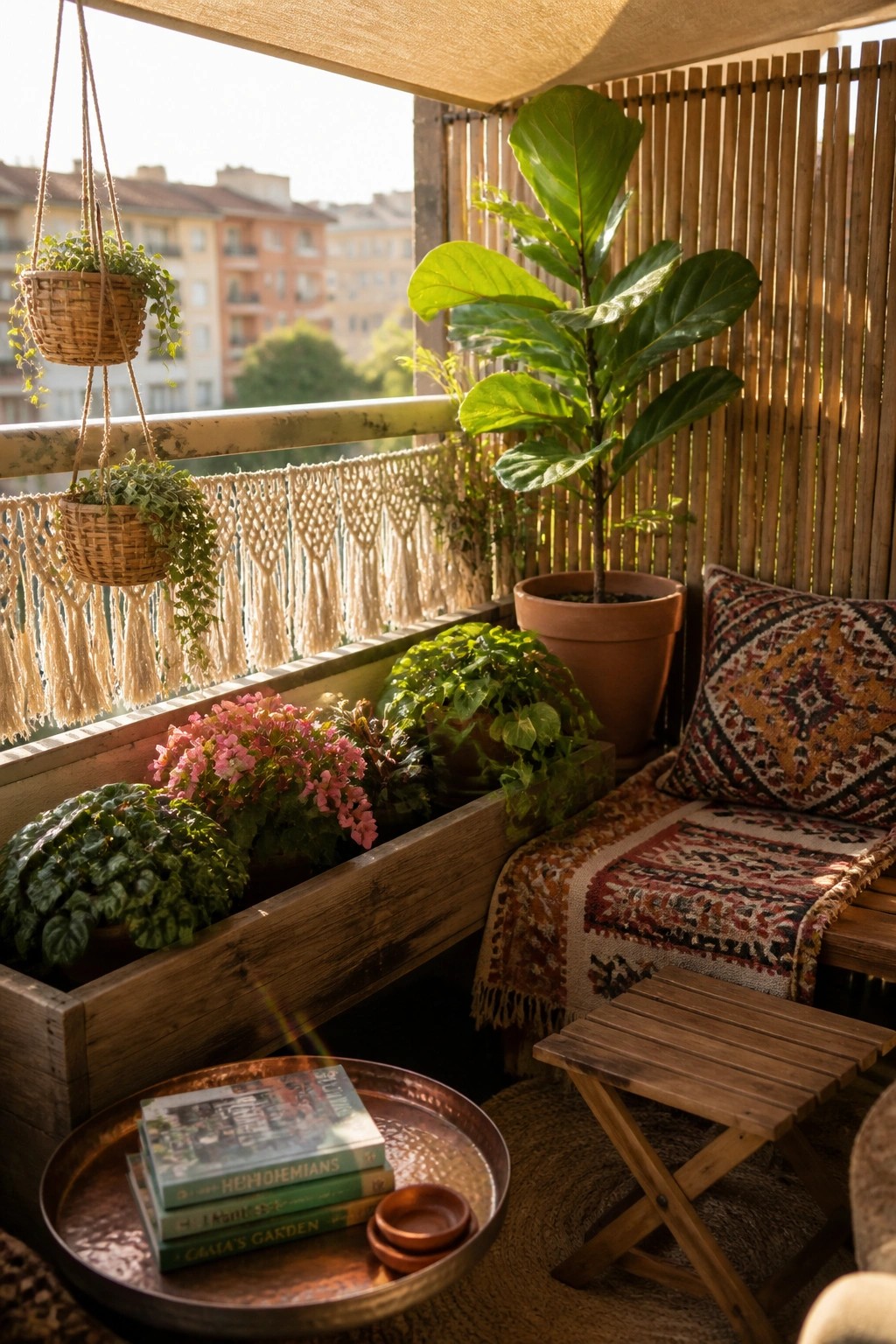
A wooden planter box along the edge gives a balcony garden a steady base without making everything feel fixed in place. You can set several smaller pots inside it or shift them around the sides when you want a different look or need room for something else.
This works especially well on narrow balconies where you still want plenty of greenery. Keep the box simple and let the plants and a few movable pots do the rest so the space stays easy to rearrange over time.
Cluster Large Pots Along the Railing
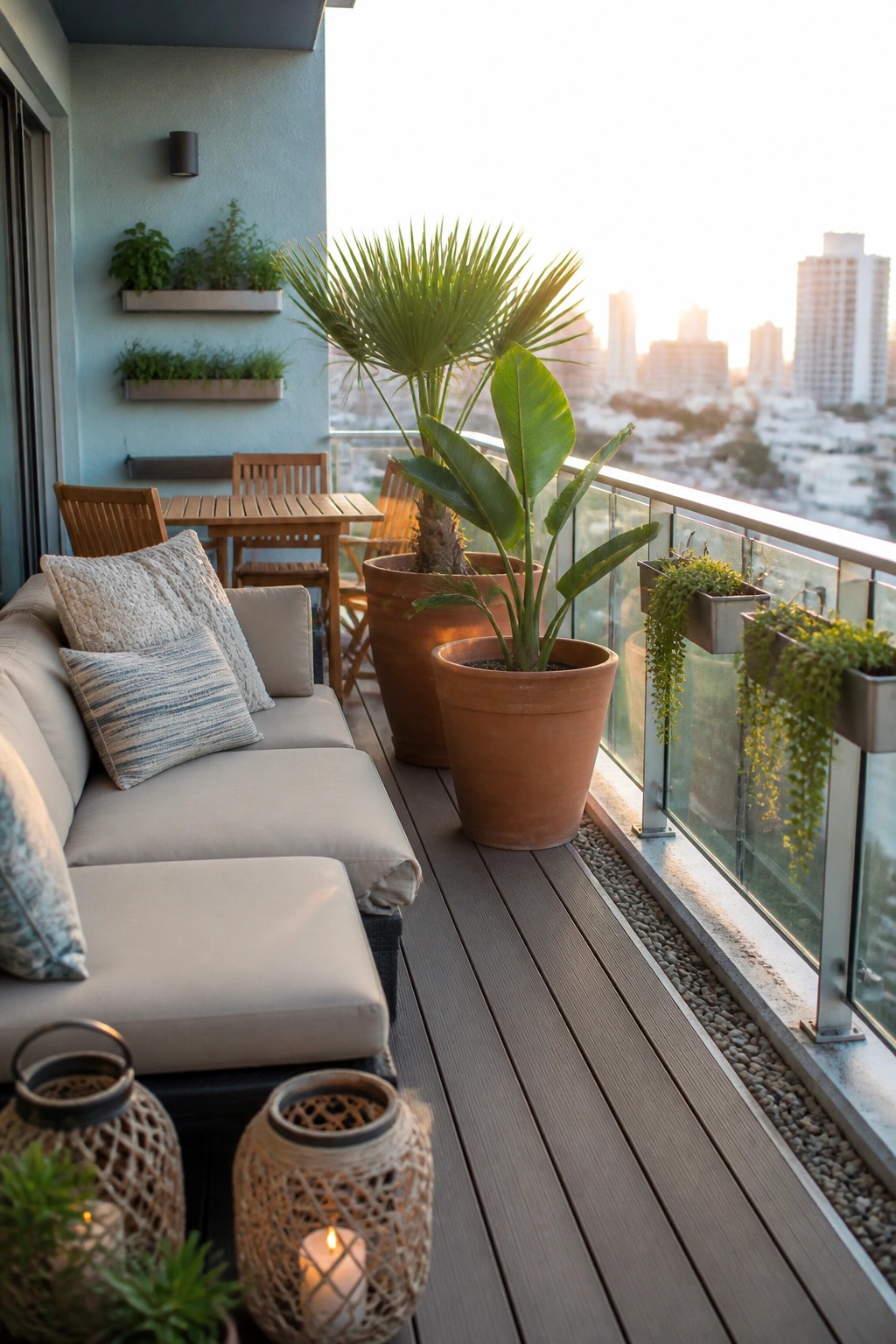
Large pots give you a fast way to add height and greenery without building anything permanent. They can be shifted around when you want a different layout or need to move things for cleaning or weather.
This works especially well on balconies where space is tight and rules may limit fixed planters. Stick with two or three big pots in similar tones so the area feels full but not crowded, and keep a couple of smaller wall boxes for trailing plants if you want more layers.
Layer Pots Around A Bench For Flexibility
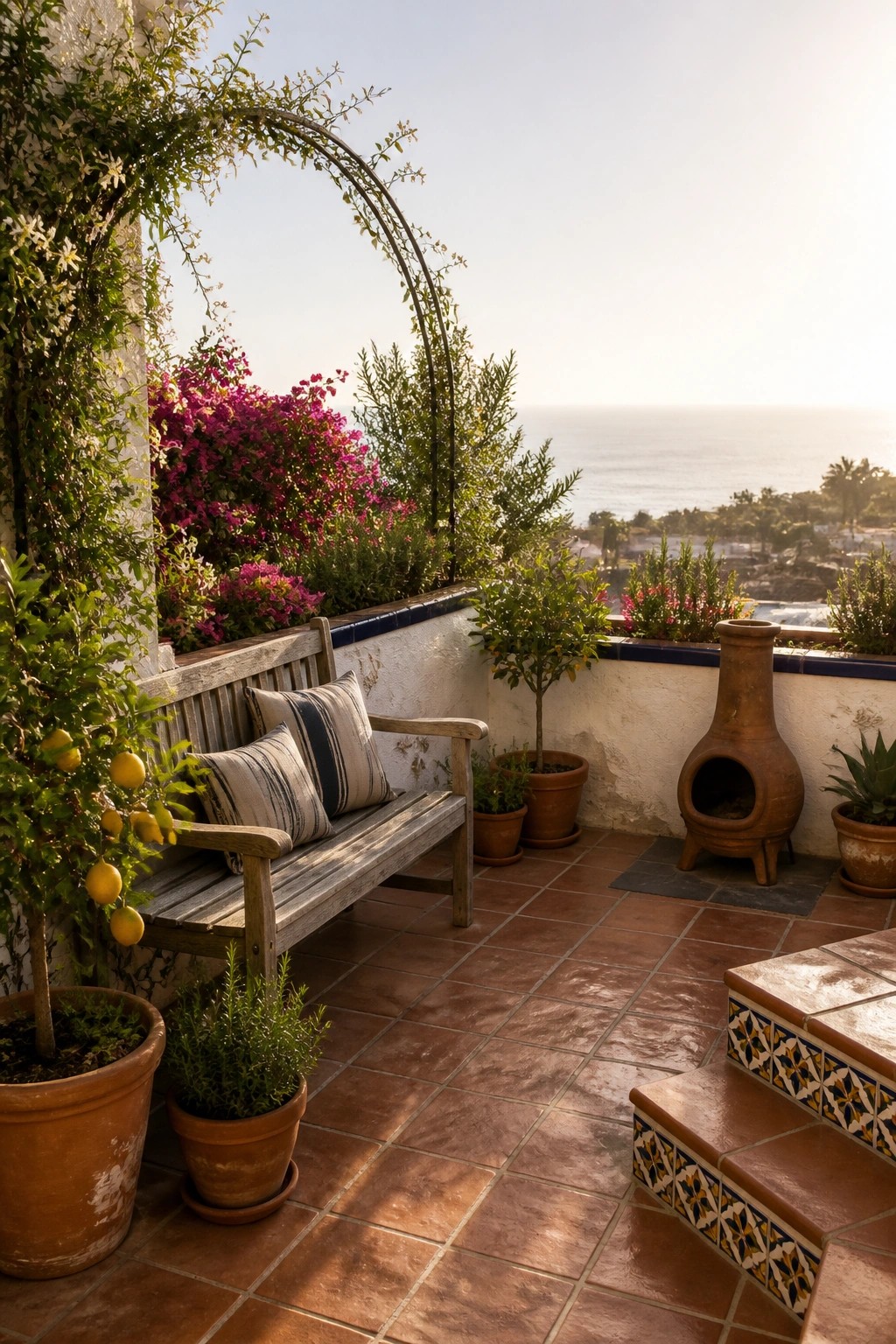
Placing pots of different sizes and heights around a simple bench turns a balcony into a garden without locking anything in place. You can shift the containers as seasons change or when you want a new look, and the seating stays useful instead of getting buried.
This works especially well on terraces or balconies where permanent beds are not an option. Stick with sturdy terracotta or similar pots, group taller ones toward the back, and leave a clear path to the bench so the space stays easy to use every day.
Long Planter Boxes Along the Edge
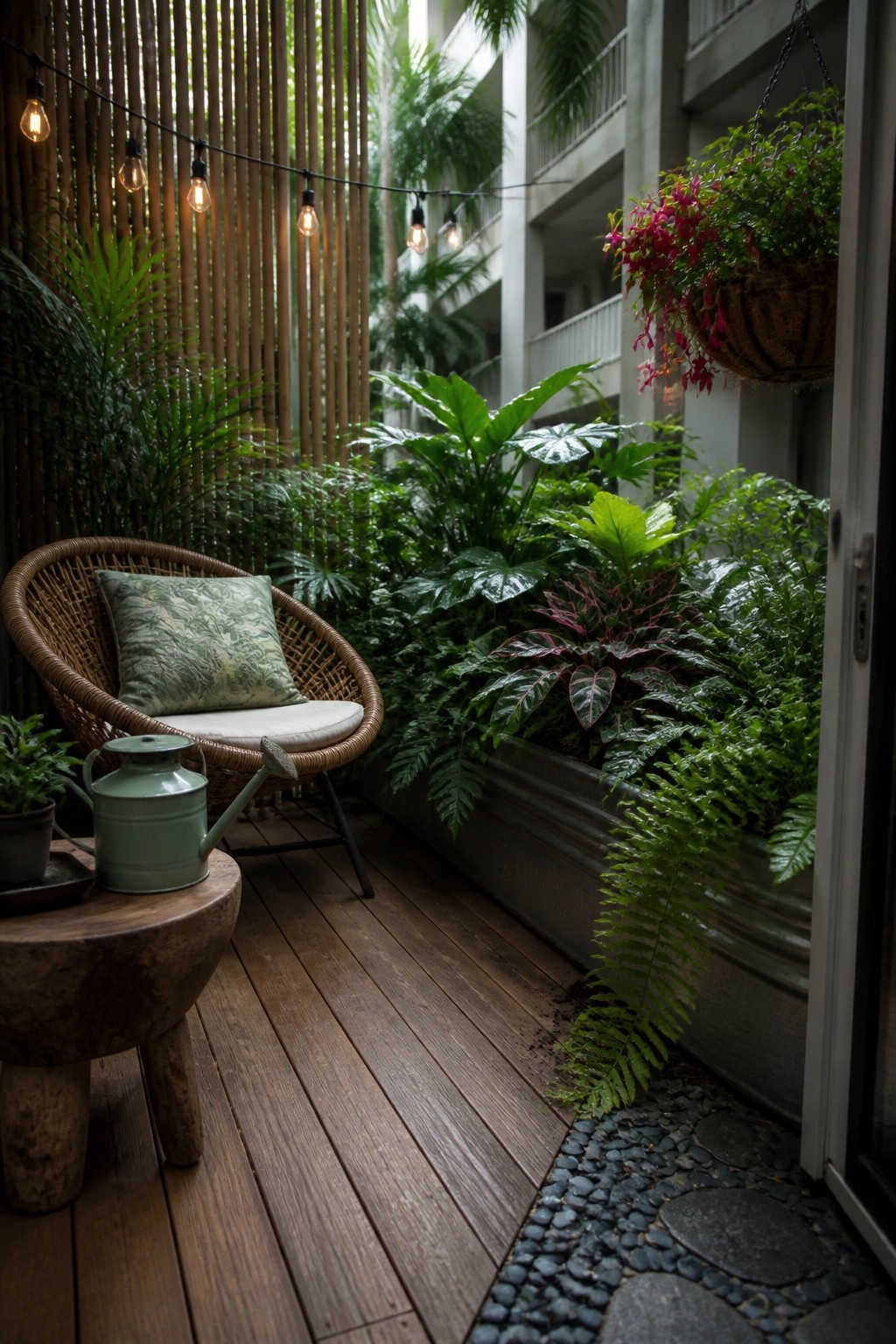
A long planter box gives you room for plenty of plants while keeping the rest of the balcony floor clear. It works especially well when space is tight because everything stays in one contained spot instead of scattered pots taking over the deck.
This setup suits balconies that need to stay flexible for seating or movement. Just keep the box narrow enough that it does not block walking paths, and choose a mix of plants that can handle the light you actually get.
Line the Railing with Long Planter Boxes
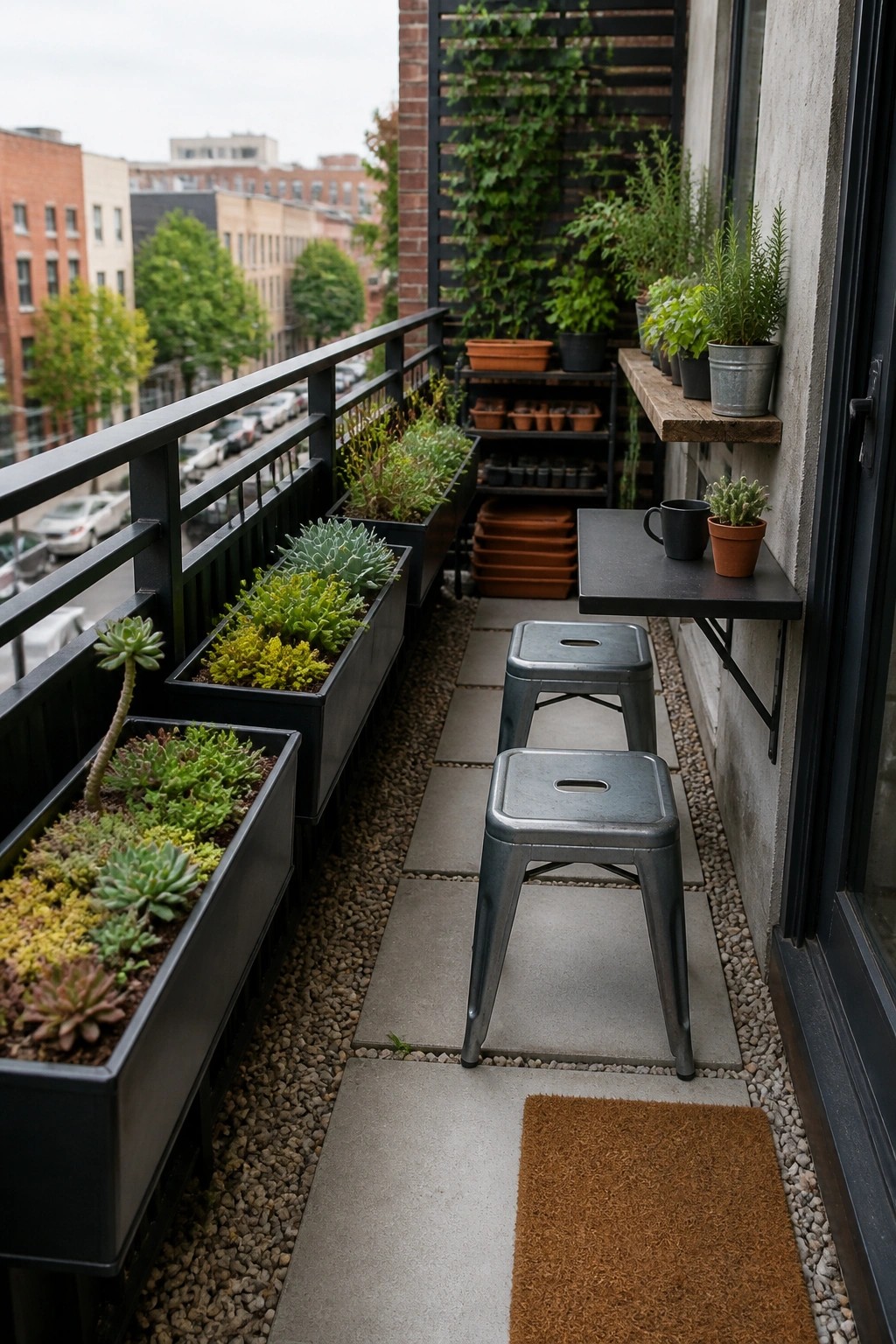
Narrow balconies often lose space fast once you add seating and pots. Running a row of long, narrow planter boxes along the railing keeps the walking path clear while still giving you room for plenty of plants.
This approach works well on urban balconies where width is limited. Stick with lightweight boxes you can shift for cleaning, then pair them with simple metal stools and a fold-down table so the space stays easy to rearrange.
Mix Window Boxes With Freestanding Pots
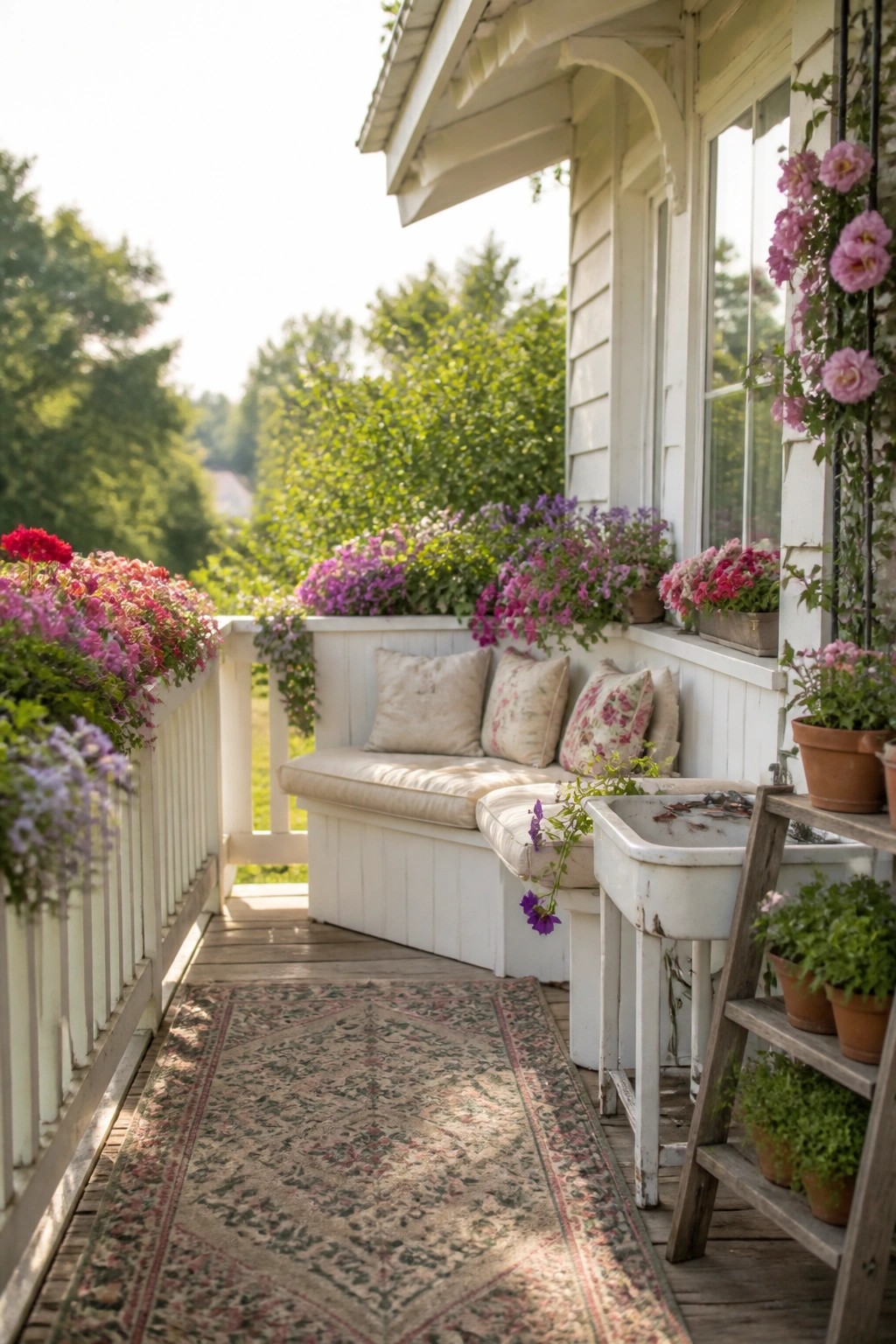
One simple way to get a full garden look on a balcony or porch is to fix a few window boxes along the railing and then add pots in other spots as needed. This keeps the main structure in place while letting you move things around when plants finish blooming or when you want a different color mix.
The approach works best on older homes where the porch already has a solid railing and some built-in seating. You can start with two or three boxes for the main line of color and fill in with pots on a small shelf or step stool. Just watch the weight on the railing and make sure everything is secured if the spot gets much wind.
Wall-Mounted Herb Pots Free Up Balcony Space
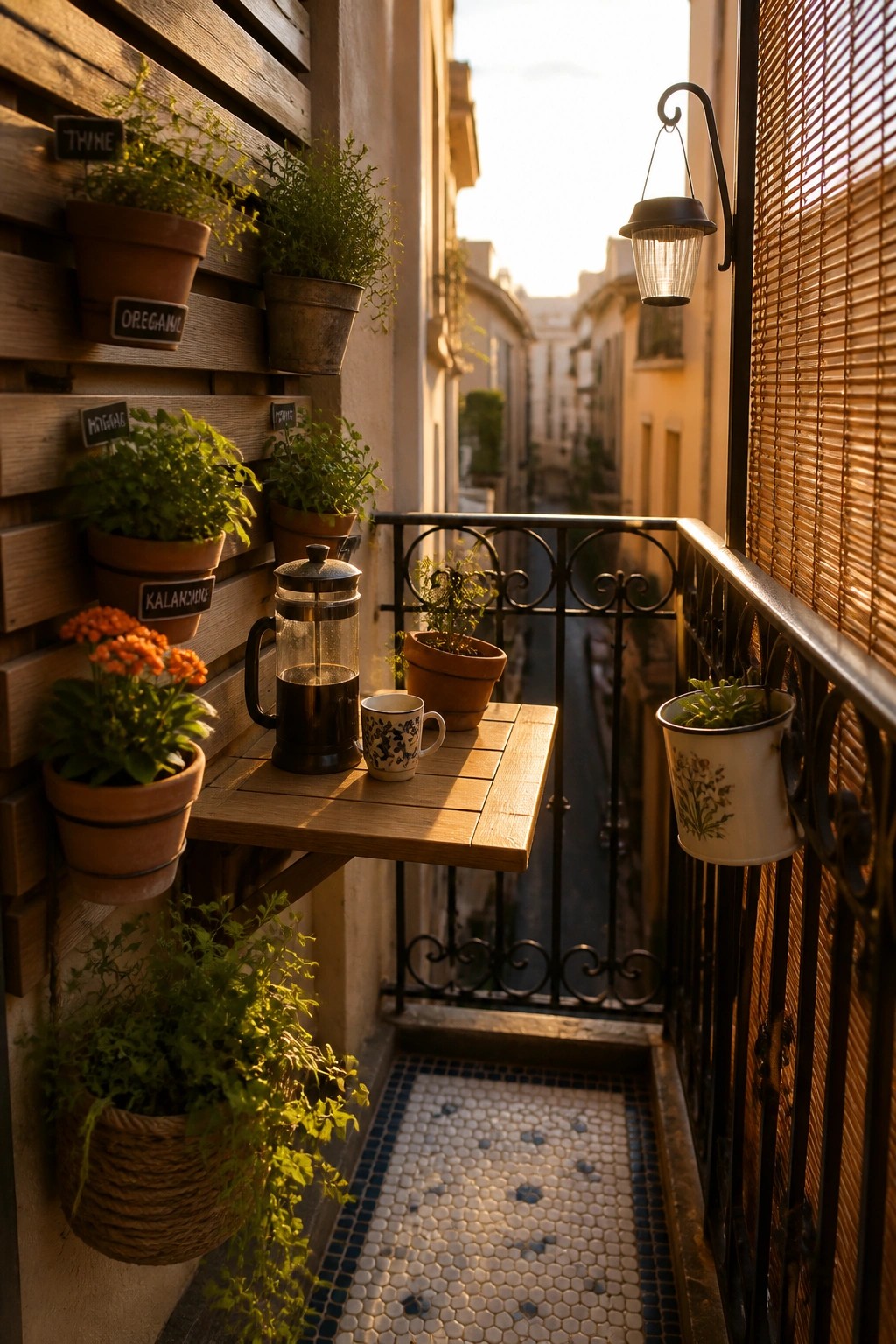
Mounting small pots on a vertical wood panel lets you grow herbs without crowding the floor or railings. This setup keeps the main walking area open and makes it easy to reach what you need while keeping the balcony feeling less cluttered.
It suits narrow urban balconies where every inch counts. Swap plants with the seasons or move them around as needed, and the simple labels help you find things quickly without extra fuss.
Large Planters That Shape Outdoor Rooms
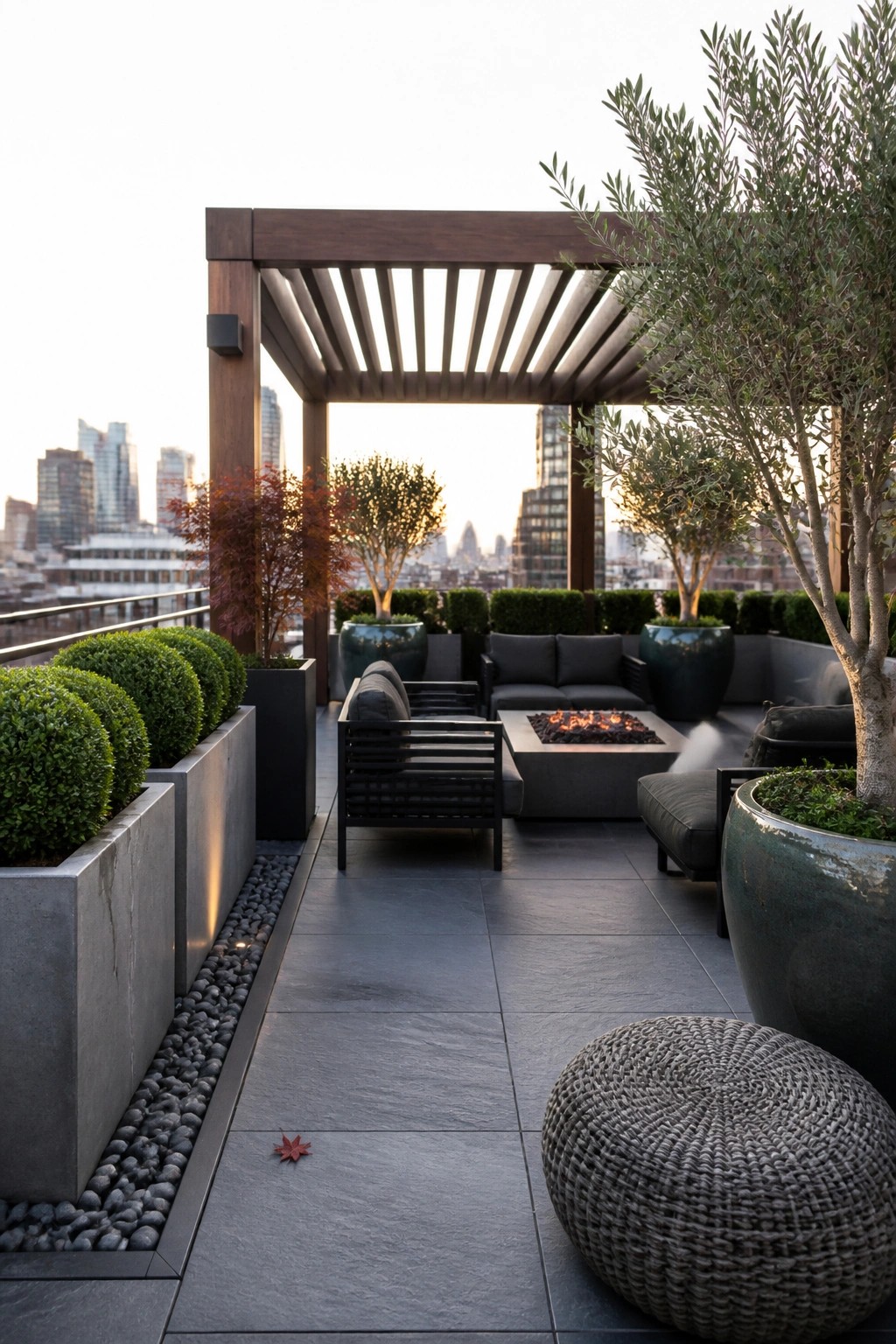
Large planters work well when you want to set up clear zones on a terrace without adding permanent walls. They give the space a settled feel while still letting you rearrange things later if the layout needs to change.
Try grouping a few tall containers along the sides of a seating area to create a soft border. This approach suits rooftops and balconies where you need flexible greenery that can move with the seasons or with new furniture choices.
Mount Planter Boxes Along the Railing
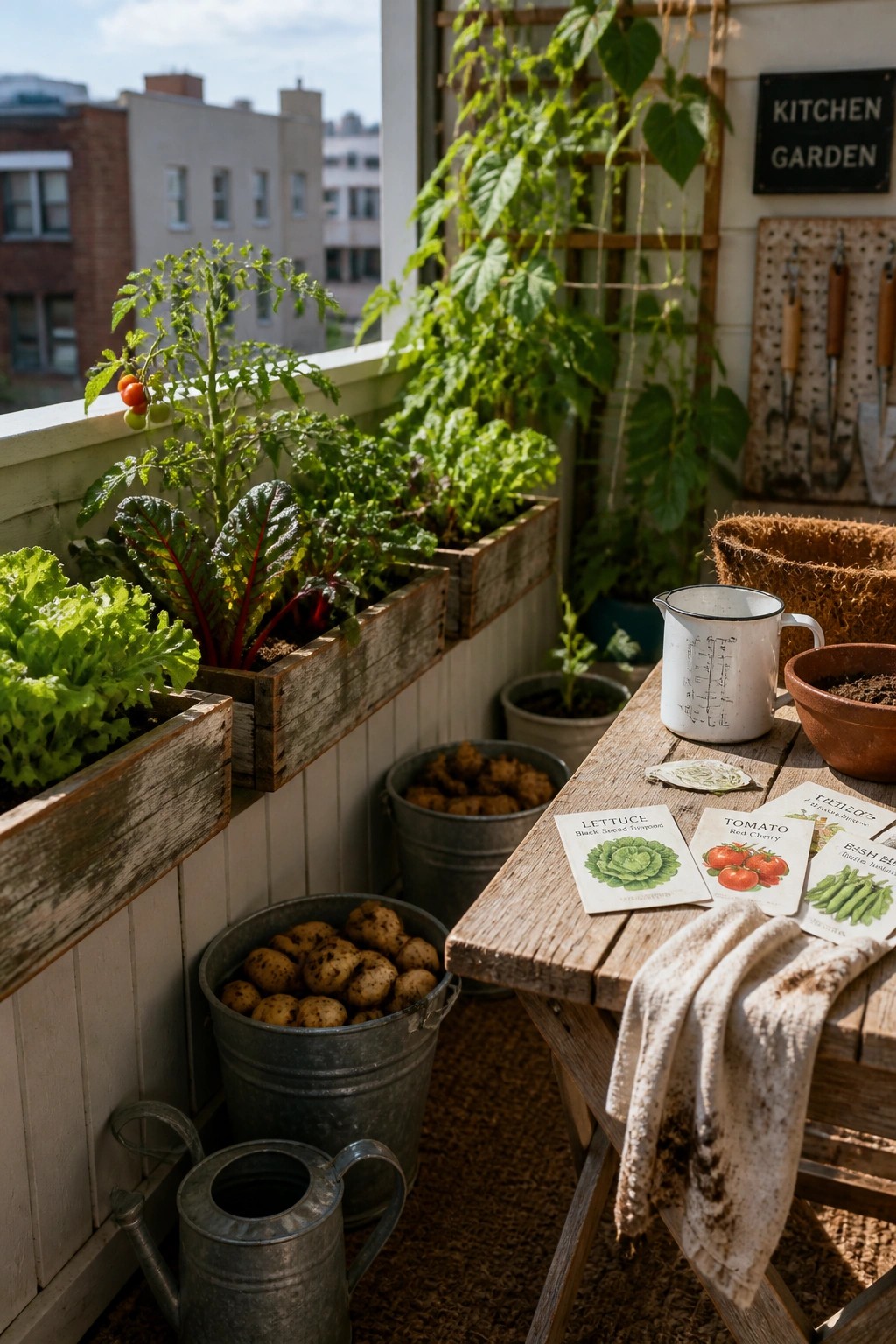
Wooden planter boxes attached right to the balcony edge give you growing room without eating up floor space. This keeps the middle of the balcony open for walking or adding a few loose pots wherever you need them.
The setup works best on smaller balconies that still get sun. Use deep boxes for tomatoes or greens, then move smaller containers around as the season changes. Just make sure the railing can handle the weight before you hang anything heavy.
Let One Potted Tree Set The Tone
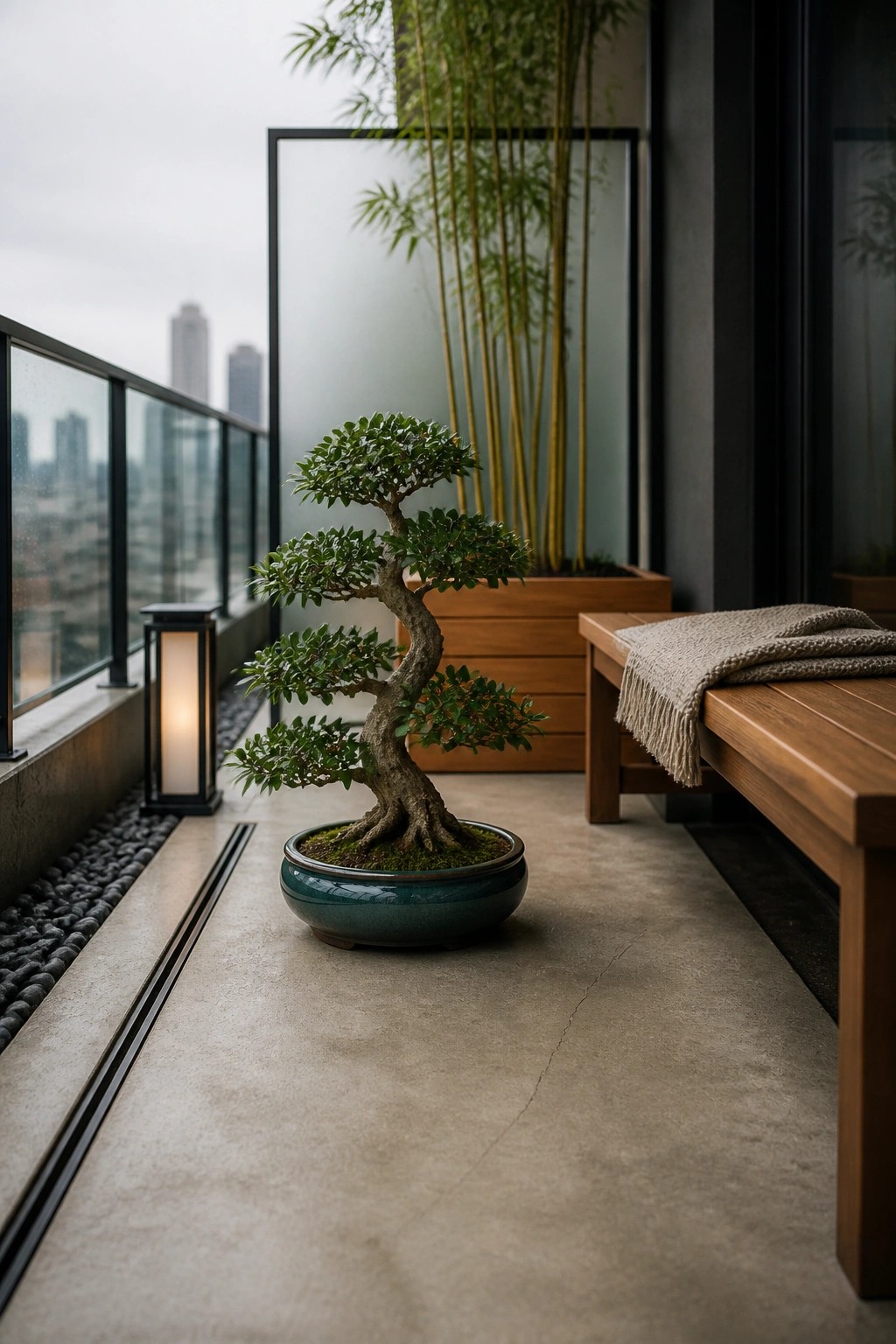
A single large potted tree can give a balcony enough presence without needing built-ins or heavy furniture. The bonsai here shows how one well-shaped specimen can hold the space together even when everything else stays light.
This works best on smaller balconies where you want room to rearrange things later. Keep the pot movable, add a simple bench if you need seating, and layer in a few taller plants behind it when the mood changes.
Layer Plants In Pots Of Different Sizes
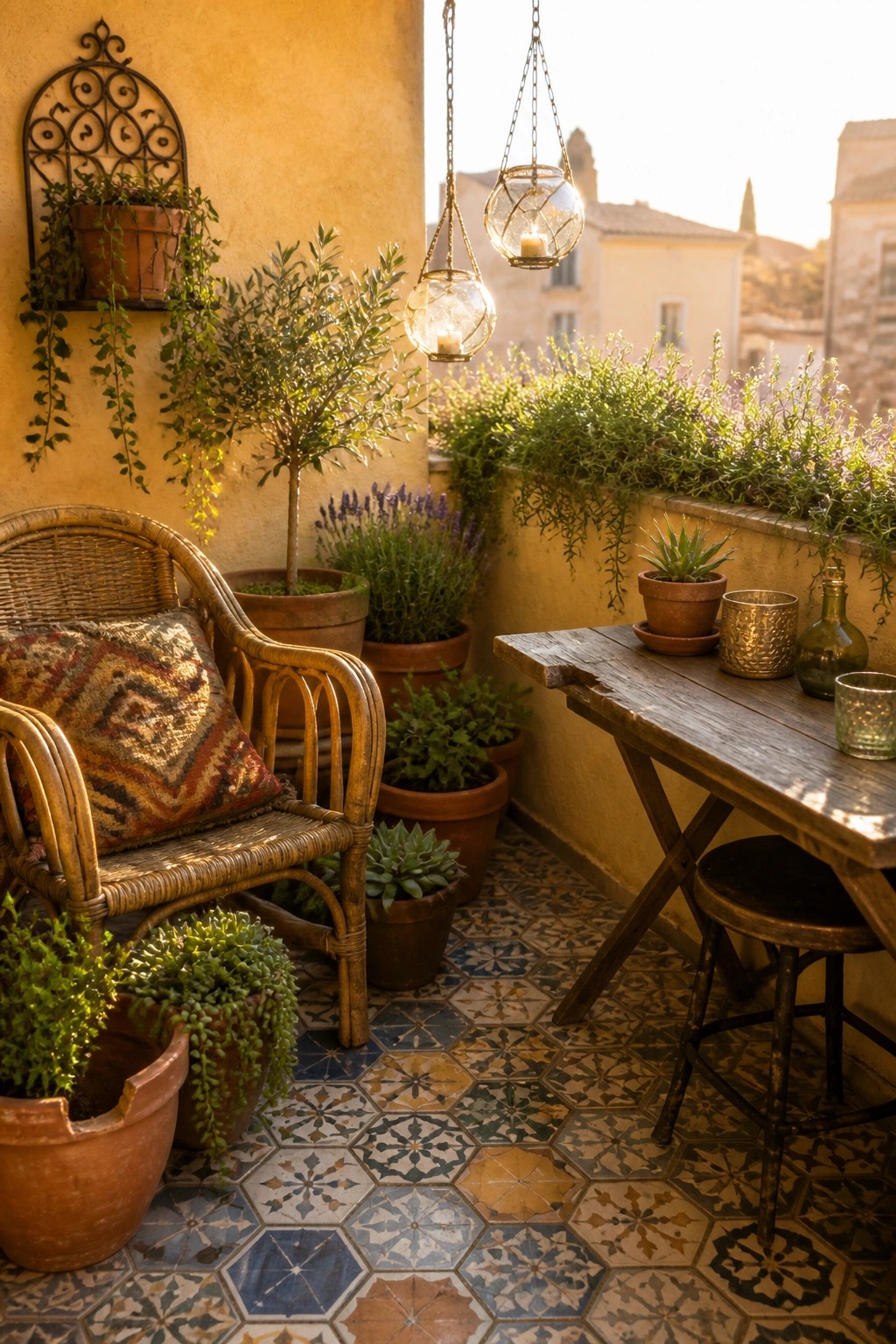
Many people like to group pots in a few sizes so the plants feel full without looking crowded. This approach works well on balconies because you can shift things as the seasons change or when you want a new look.
It suits small outdoor spaces where you do not want built in beds. Try placing taller pots toward the back and smaller ones up front near seating so everything stays easy to reach.
Vertical Pocket Planters for Balconies
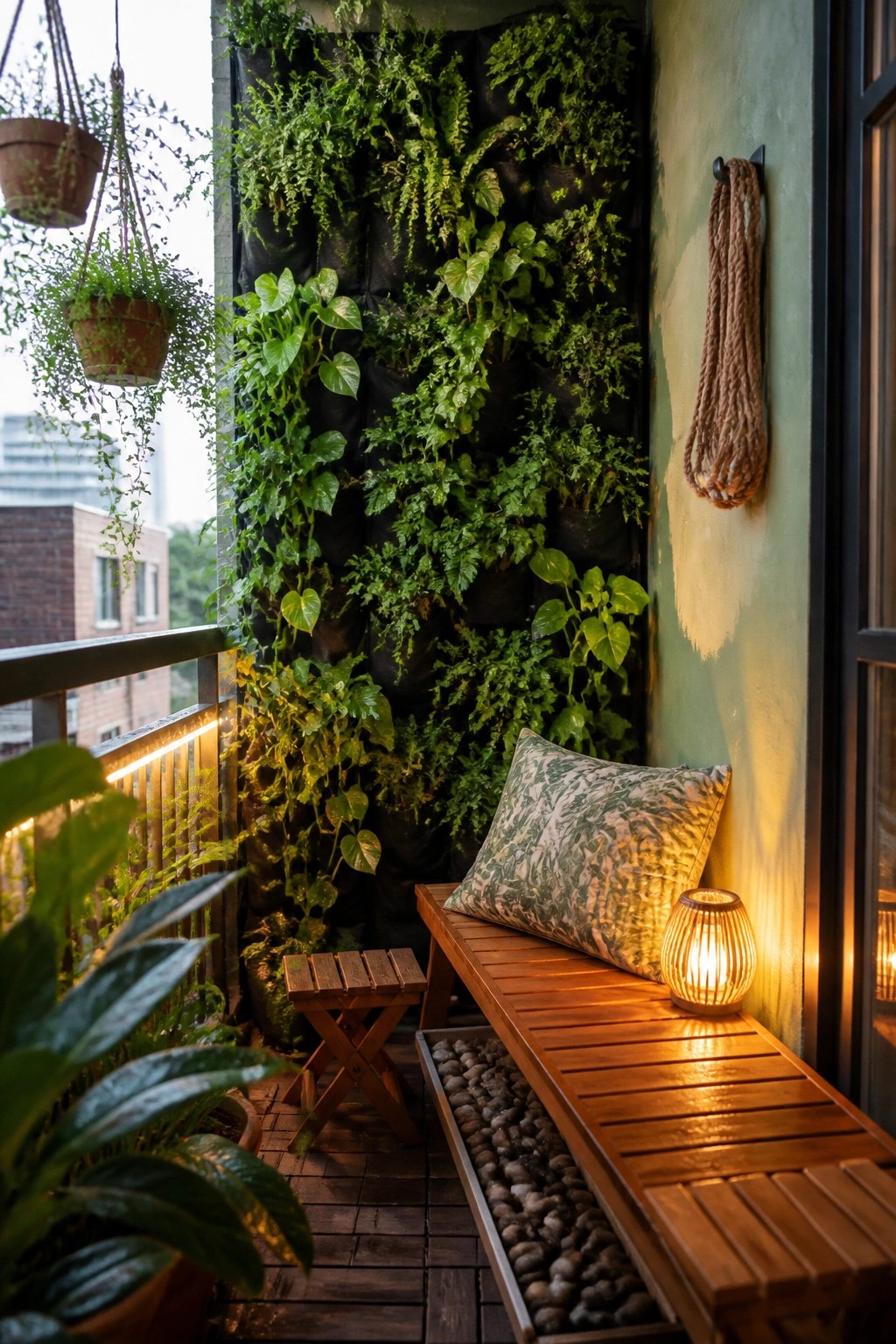
A wall of fabric pockets gives you room for plenty of plants without crowding the floor. This setup keeps the space open while still delivering a full green look, which works especially well when the balcony is small or shared with seating.
You can swap plants in and out as needed, move them for better light, or replace any that fade. It suits apartments and rental spaces where permanent changes are limited and you want flexibility with the layout.
Mix Container Types Around Seating
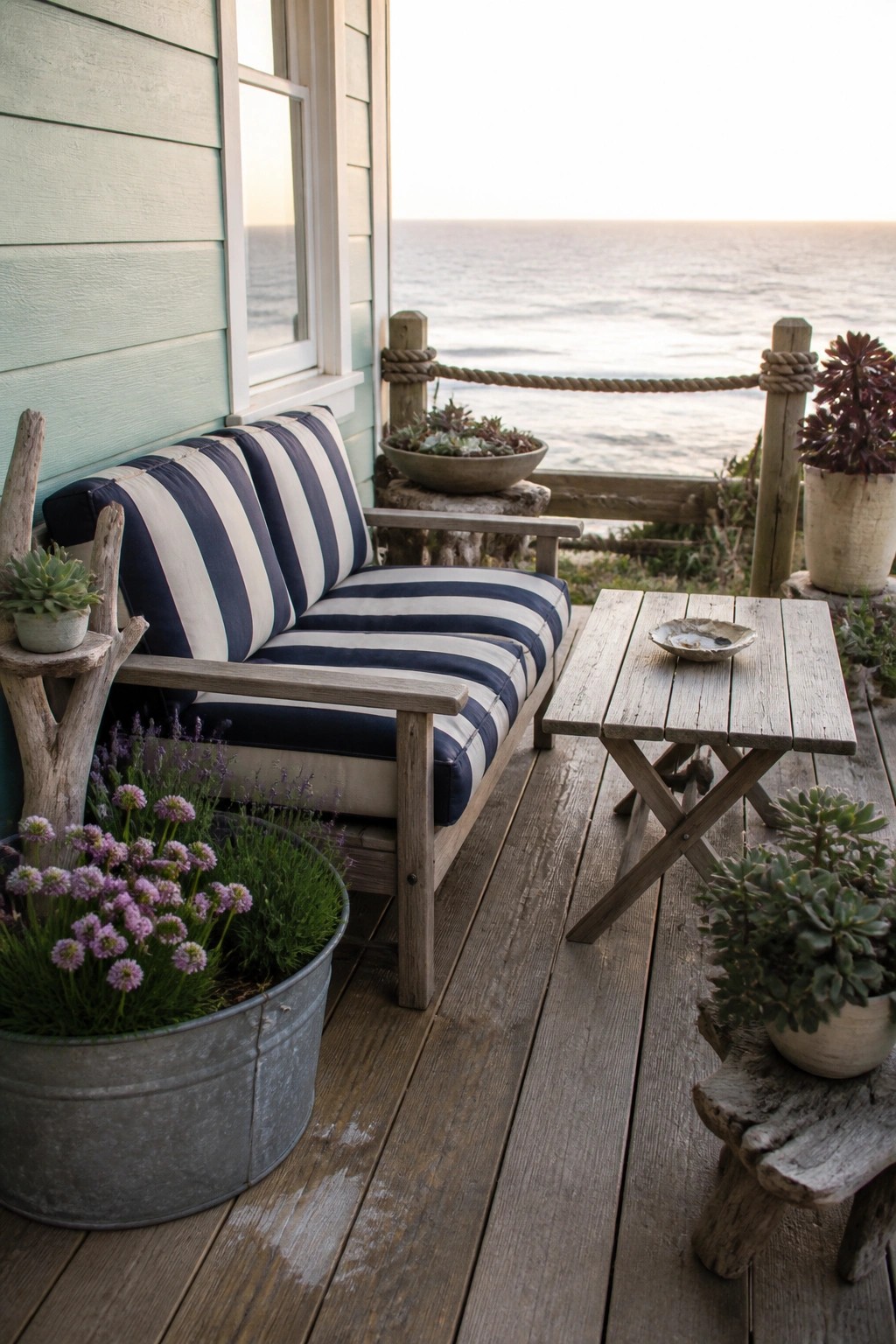
Using a few different pot styles in one area makes it simple to swap things out when the seasons change or when plants need moving. A metal tub next to smaller ceramic pots and a few weathered stands keeps the look relaxed without locking everything into one fixed arrangement.
This approach works especially well on decks and porches where you want the garden to stay movable. Place the largest containers near the edges of the seating zone and tuck smaller ones in between so nothing feels crowded but the space still feels planted.
Layer Plants on a Console Table
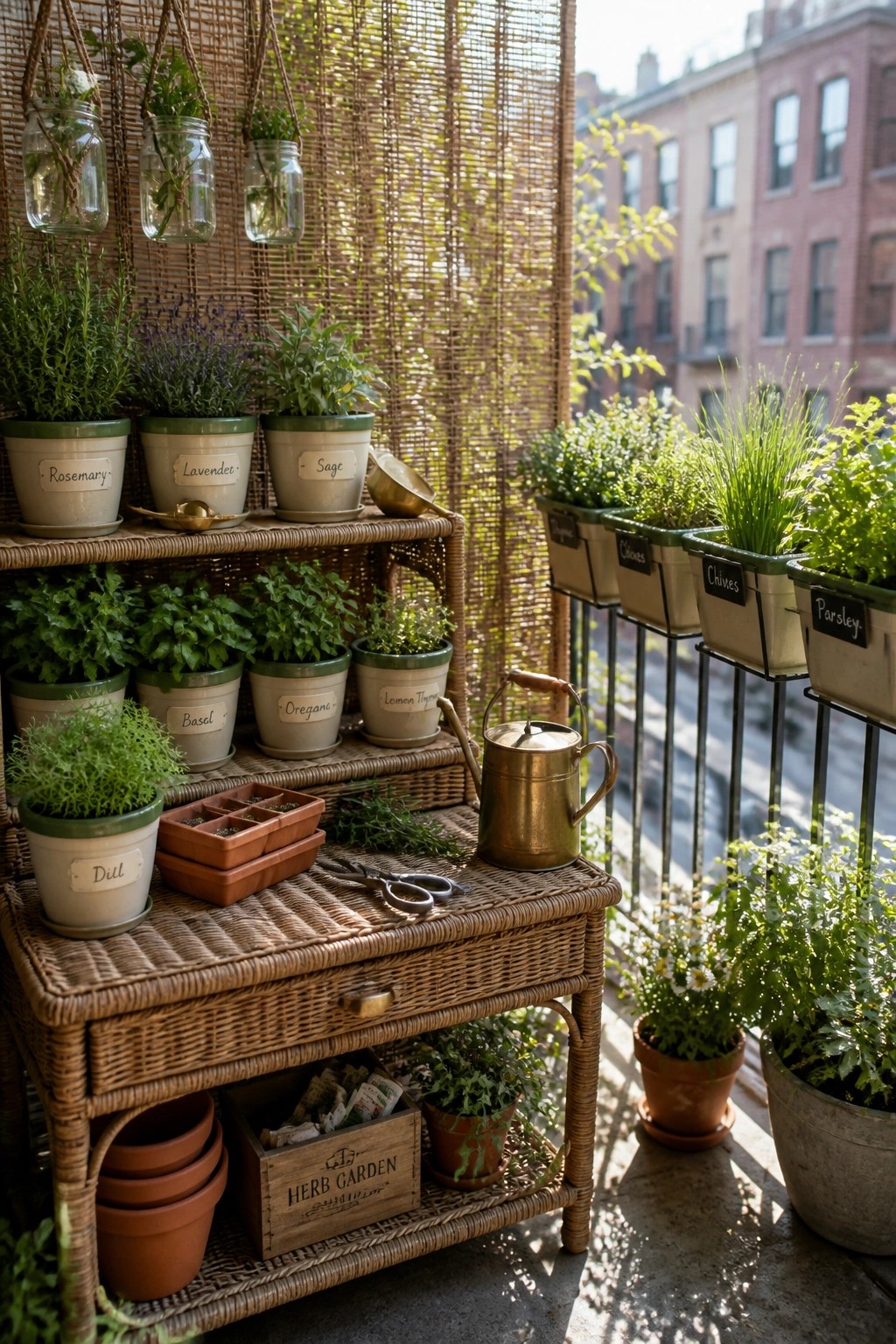
A console table gives you extra surfaces for pots without taking up much floor space on a balcony. It lets you group different sizes together and change the layout whenever you want, which works well if you like switching plants with the seasons.
Place the table against a wall or railing and set taller pots on top with smaller ones underneath. This setup suits apartments or small outdoor spots where you need to keep everything movable and easy to rearrange.
Line the Balcony Wall with Long Planter Boxes
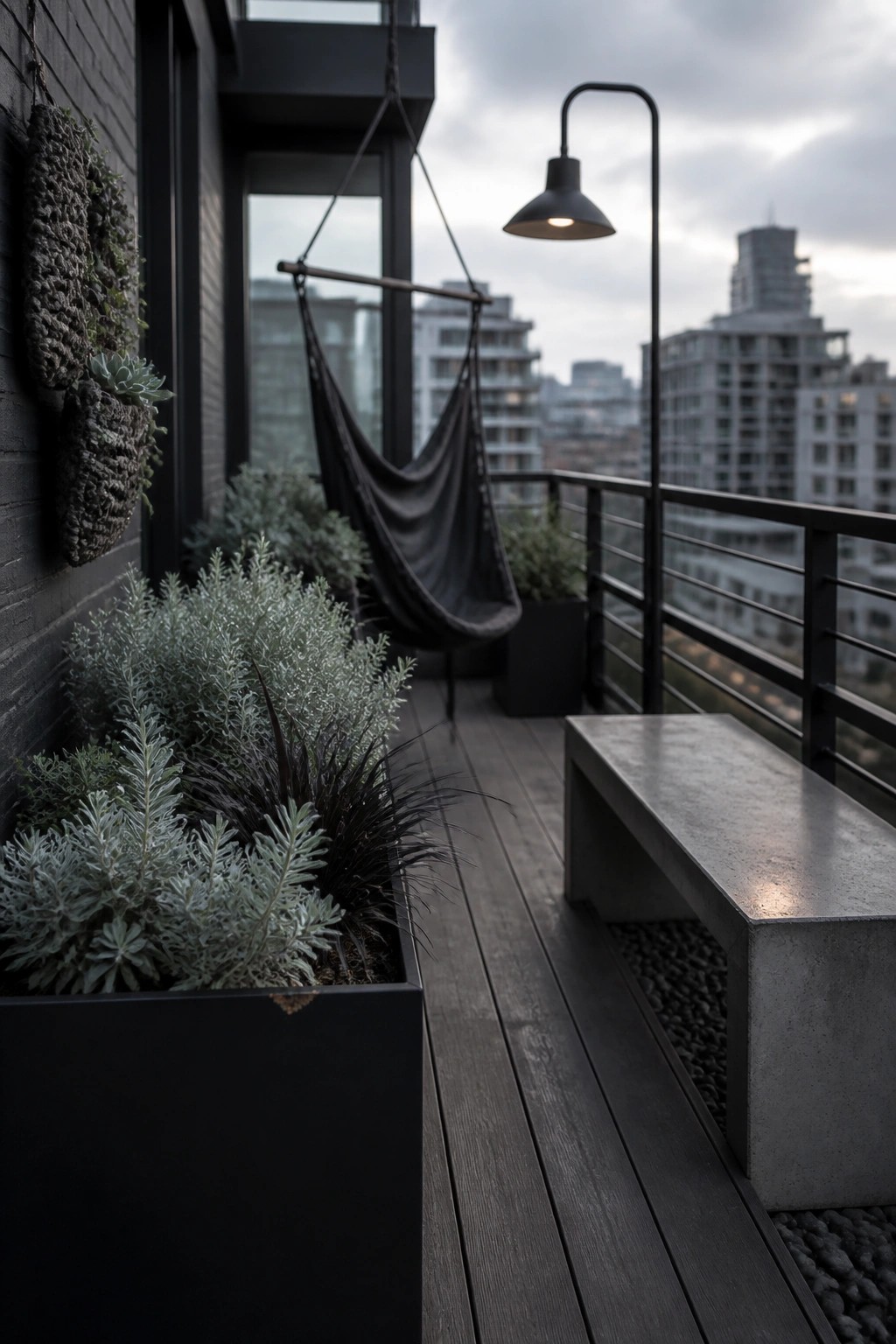
Long rectangular boxes work well on balconies because they hold a good amount of soil and let you group different plants together without crowding the floor. They also stay put in wind and give the space a settled garden look even when the rest of the setup stays simple.
Place them along the outer wall or railing so the rest of the floor stays open for a bench or chair. This layout suits small city balconies where you want greenery but still need room to move around. Dark boxes blend in easily with modern railings and keep the focus on the plants.
Built-In Planter Boxes Along Balcony Walls
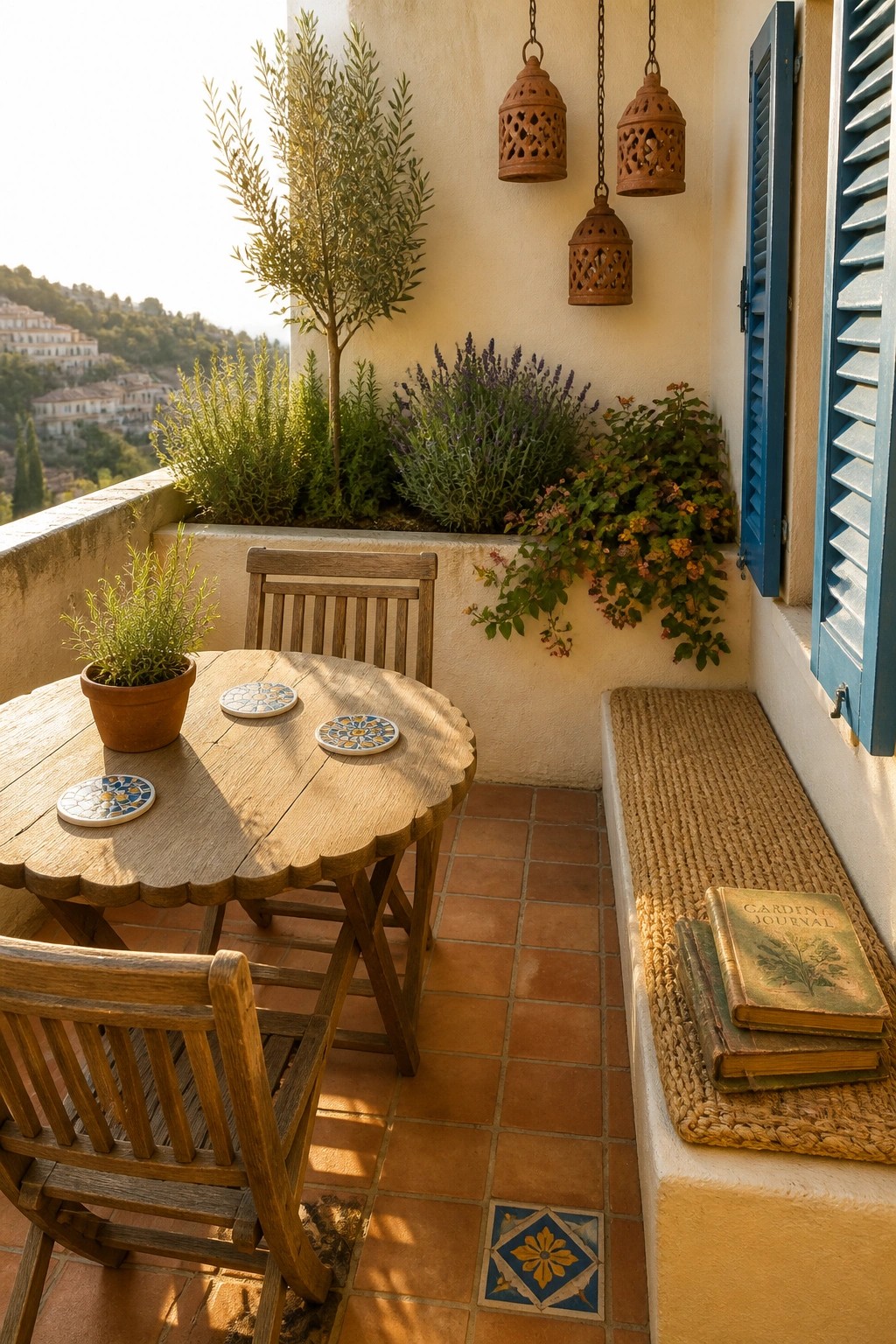
A built-in planter gives you room to grow without crowding the floor with pots. On smaller balconies it keeps the main area open for a table and chairs while still giving you plenty of planting space right where you need it.
This setup works especially well on spaces with solid walls or railings that can hold soil. You can mix shrubs, herbs, and trailing plants in one long box and still move a few smaller pots around when you want to change things up.
Large Pots of Bamboo for Quick Height
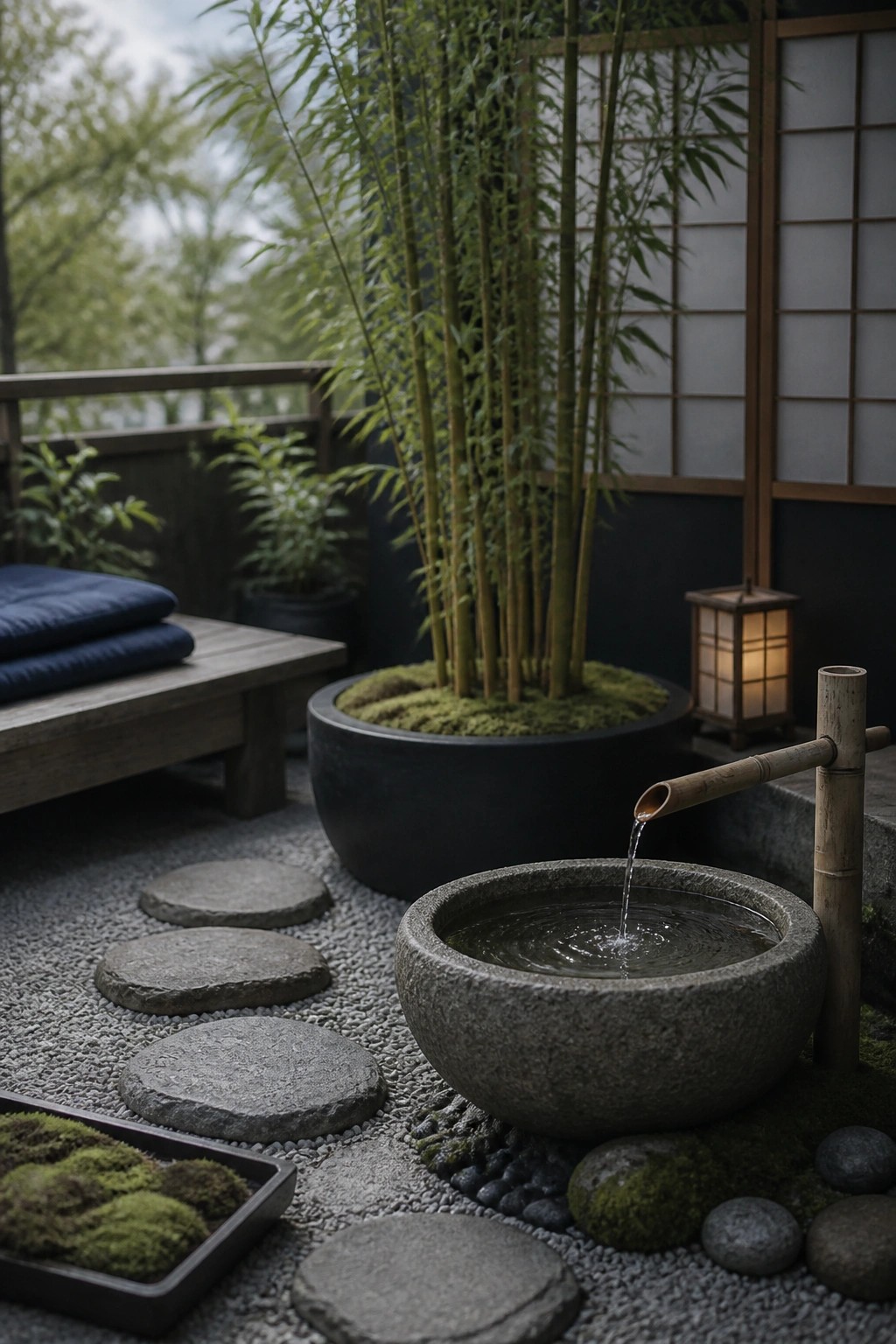
One oversized pot filled with tall bamboo gives a balcony garden instant structure. The plant adds vertical lines and soft movement while staying completely movable, which fits spaces where you cannot or do not want to build permanent beds.
This approach works best on small balconies or terraces that need flexible seasonal changes. Place the pot where it can catch light, then shift it later if you add more planters or seating. Keep the container simple so the bamboo stays the main feature.
Mount a Wall Counter for Flexible Use
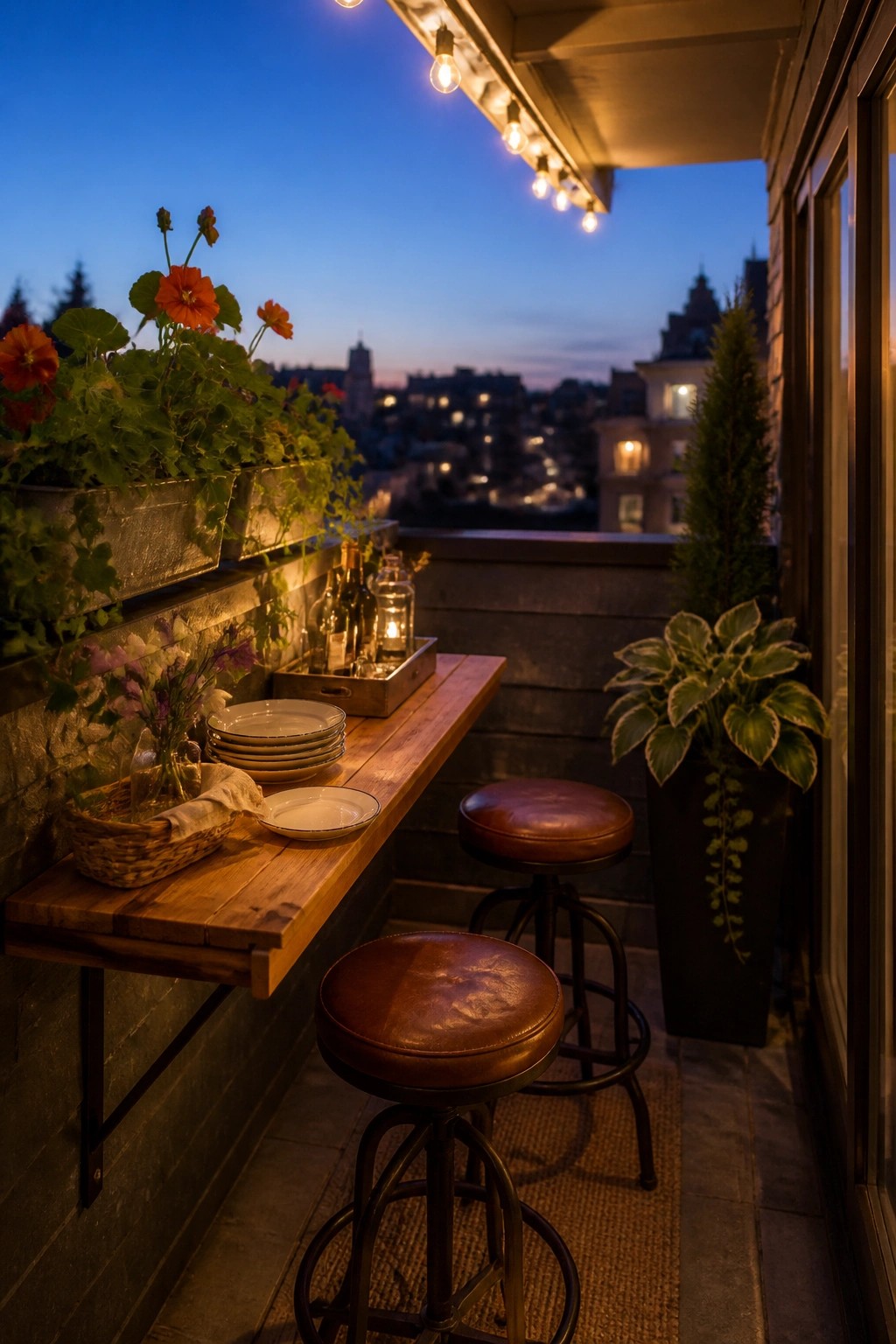
A wall-mounted counter gives you a solid surface on a balcony without taking up floor space. It works well for setting out drinks or plates while leaving room for stools to tuck underneath when not in use. The setup keeps the area open and makes it easier to rearrange planters around the edges as seasons change.
This works best on narrow balconies where a full table would crowd the walkway. Keep the counter depth shallow so it does not block movement, and choose a material that holds up to weather. You can add or remove stools and shift the planters without major changes to the overall layout.
Mix Pot Sizes To Keep Things Flexible
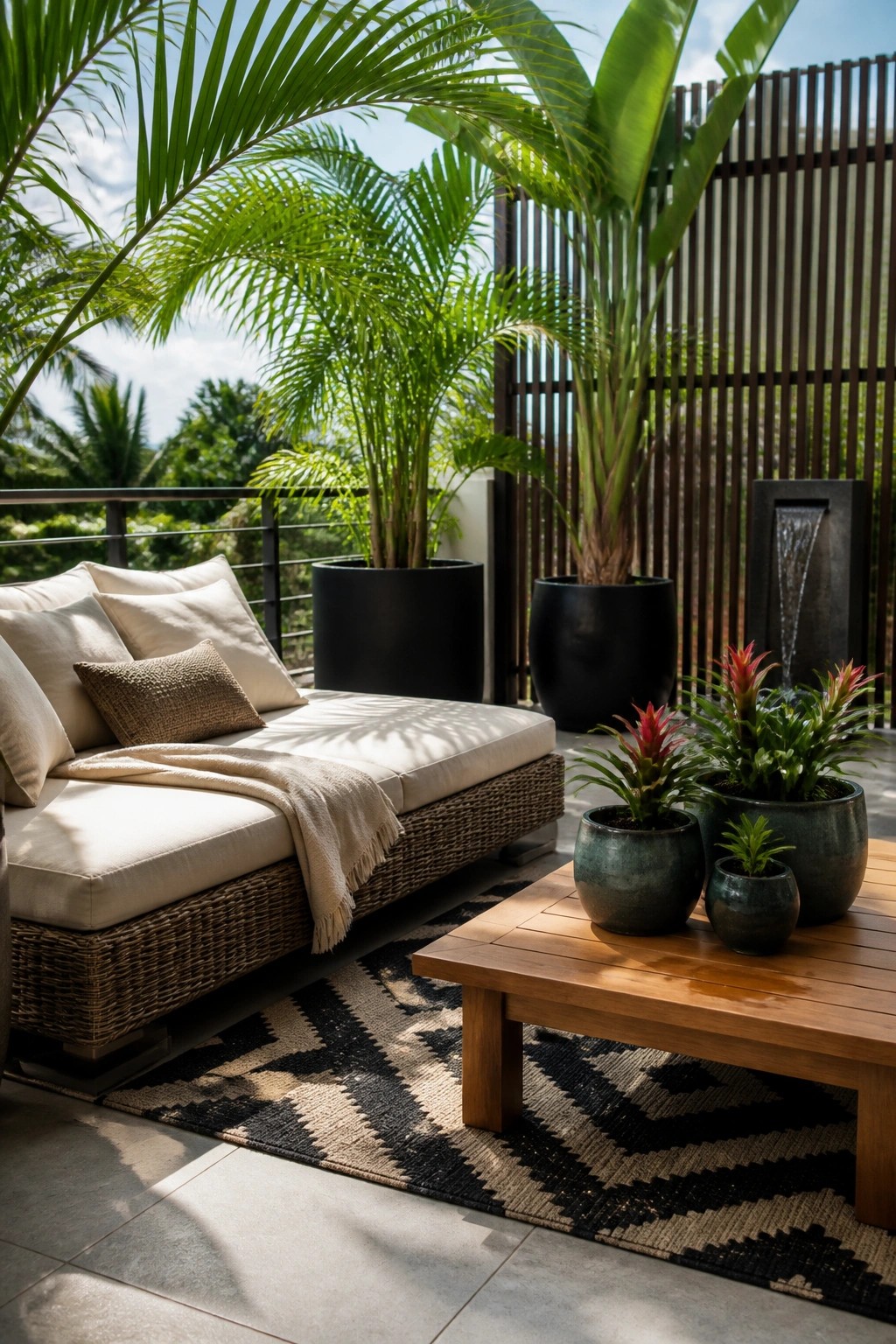
Many people find that using pots in a range of sizes makes balcony gardening easier to manage. You can shift things around as the light changes or when you want a fresh arrangement without any permanent changes.
Larger planters work well in corners or along the edge while smaller ones can sit on tables or low surfaces. This approach suits most balconies since it needs no built in beds and lets you adjust the layout whenever you like.
Cluster Pots on a Small Table
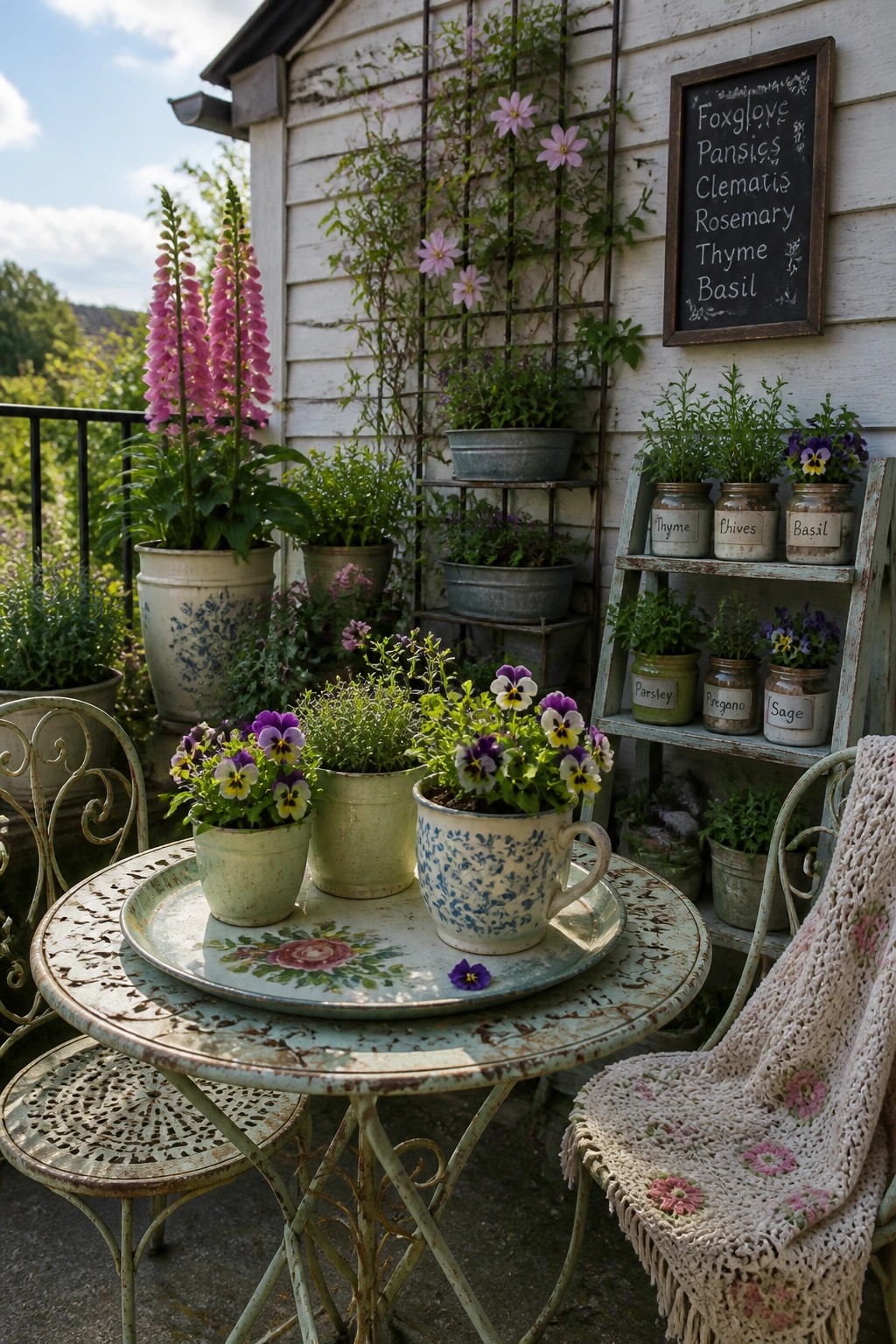
Many balcony gardens feel more welcoming when a few pots sit right on the table where you actually spend time. It brings the plants close without taking up much floor space, and it works especially well when the pots are small enough to shift around as needed.
A tray underneath makes the whole group easy to lift and move if you want to change the layout or bring plants inside for the winter. This approach suits small balconies best, since it keeps the floor clear while still giving you plenty of growing room.
Frequently Asked Questions
Q: How do I pick pots that let me swap plants around easily later? A: Choose a few medium sizes with drainage holes at the bottom. You can lift smaller plants in and out as they grow or change with the seasons. This keeps the same containers useful without extra purchases.
Q: What plants hold up when I move them often for better light? A: Compact options like petunias or basil adjust fast to new spots. They stay healthy as long as you check soil moisture after each shift. Skip anything with long roots that resents disturbance.
Q: How can I handle strong wind on the balcony without heavy fixes? A: Set pots in corners or against the rail to steady them. Add a few stones at the base of lighter planters for weight. Check the grouping every week or so and adjust as needed.
