

I have always paid attention to how the edges around garden beds shape the way plants spread and how paths feel underfoot over the years.
When I placed a few logs along a sloping section of my own yard the soil stayed put through the first winter rains in a way that surprised me.
Stone takes more planning at the start.
Logs settle into the ground faster and let me adjust the line if something does not look quite right after a season of growth.
These choices end up guiding how the whole yard reads once the perennials fill in and the grass grows up against them.
Natural Stone Borders Along Walkways

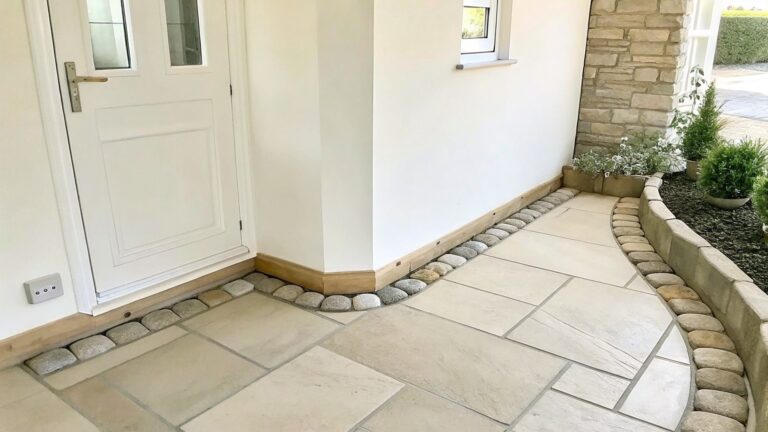
A line of smooth river rocks makes a simple path feel more defined and finished. It keeps the concrete from looking too plain while still letting the walkway stay the main feature.
This kind of edging works best in side yards or front gardens where you want something low-maintenance that still separates the path from planting beds. It suits homes with straight or gently curving walkways and pairs easily with grasses or low shrubs right beside it.
Stepping Stones in Gravel for Garden Paths
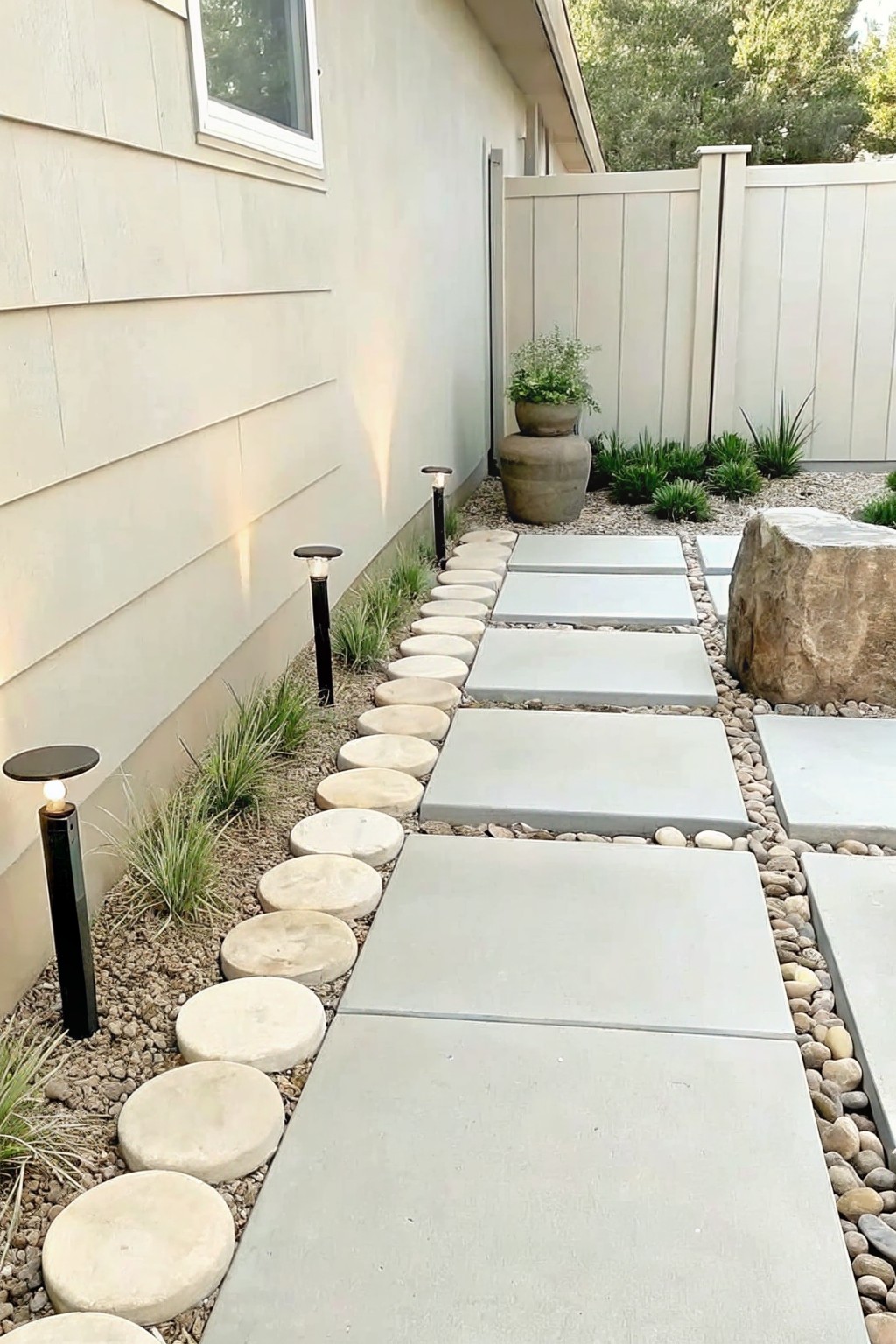
Mixing round and rectangular stepping stones in a gravel bed gives a path that feels relaxed but stays easy to walk on. The gravel fills the gaps, drains well, and keeps the edges from looking too rigid, which works especially well in narrow side yards or along a house wall.
This setup suits homes that want a simple, low-maintenance walkway without pouring a solid slab. Place the stones close enough for comfortable steps, let the gravel run right up to the planting beds, and add a few low lights if the path gets used at night.
Gravel Edging Along Stone Paths

A narrow strip of small pebbles next to large paving slabs gives the path a finished edge without adding much work. It keeps the stones from looking like they run straight into the house wall and helps with drainage along the foundation.
This approach suits side entrances or smaller yards where you want something low maintenance. Use it where the path runs close to the building, and make sure the pebbles sit in a shallow trench so they stay put over time.
Raised Beds With Log Borders

Raised beds built from logs give a garden a straightforward rustic border that keeps everything tidy and contained. The wood adds texture and a natural edge that feels at home next to stone paving without looking overly finished.
This setup works well in narrow side yards or along a house wall where space is limited. Use it on homes with simple landscaping where you want clear planting areas that still look casual and low key.
Timber Edging Holds A Pebble Border In Place
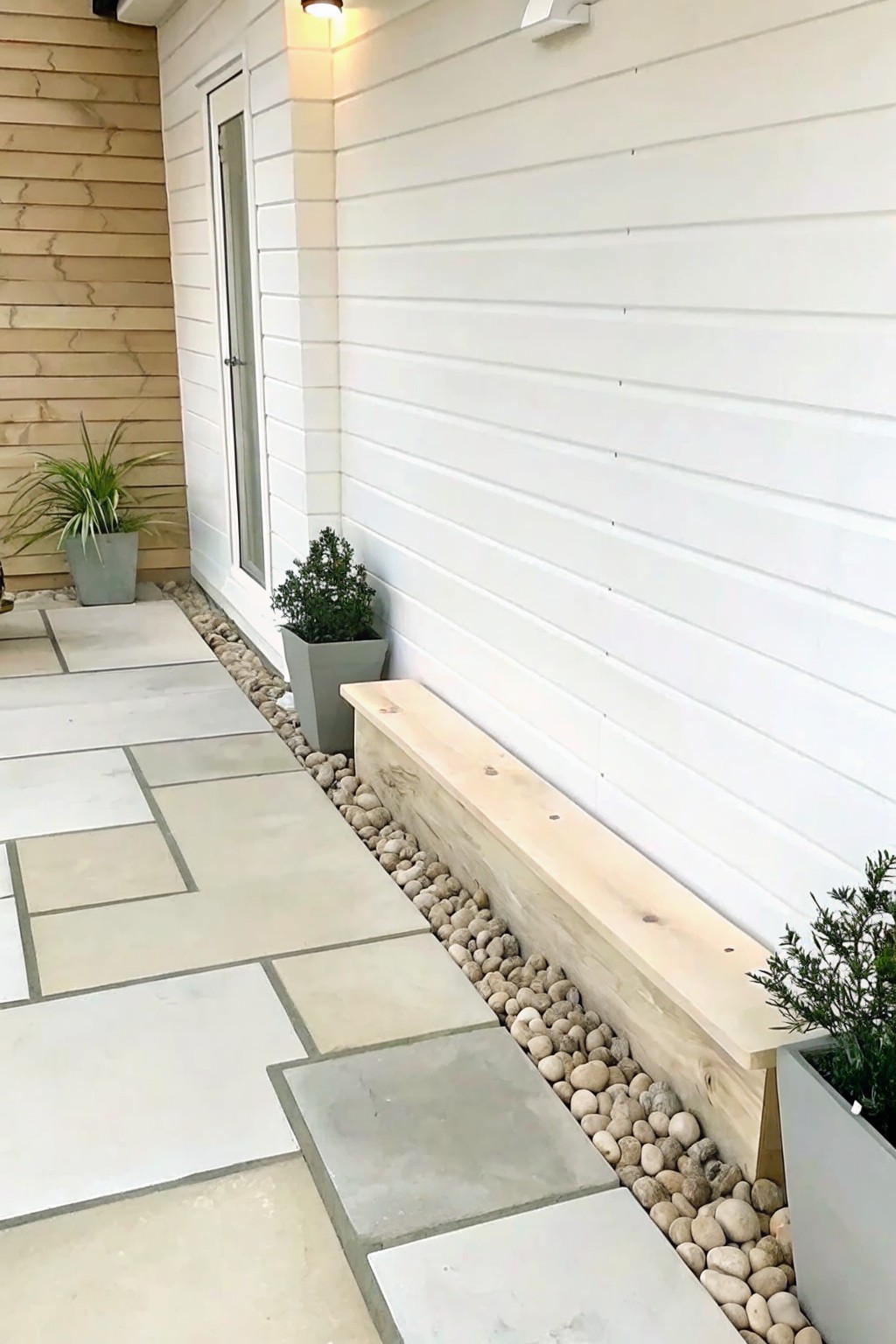
A straight wooden beam makes a simple and solid edge along the house. It keeps the pebbles from spilling onto the path and adds a warm, natural line that works with the stone pavers without looking fussy.
This kind of border suits homes with a long, flat foundation where you want low upkeep. Set the timber right on the ground, backfill with river rock, and the edge stays neat for years with very little work.
Edge Steps With River Rock

A border of smooth round stones along concrete steps creates a simple transition between hardscape and garden. It adds texture without much cost or effort and helps the steps feel more connected to the surrounding landscape.
This approach suits entryways on homes with stone or wood details. Use stones of similar size and keep the line straight so the border stays neat over time.
A Log Beam Bench on Stone
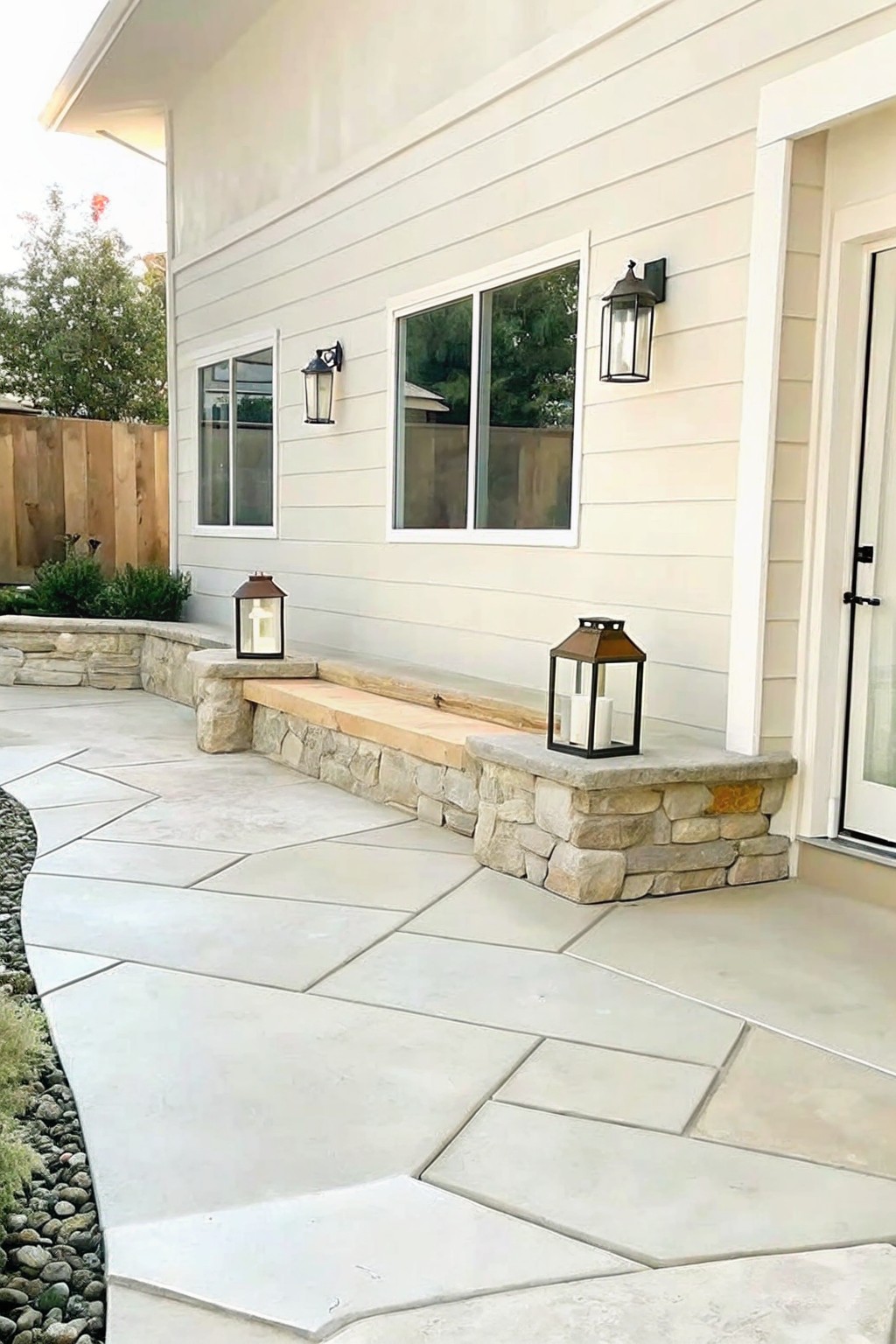
A thick wooden beam set on low stone walls makes a simple bench that also serves as edging along a patio or house foundation. The mix of rough stone and solid timber gives a sturdy, grounded look that fits right in with rustic garden styles without needing much extra decoration.
This setup works best on homes where the patio meets the siding directly. Keep the stone height low so the bench stays comfortable for sitting, and choose a beam thick enough to feel substantial. It helps define the edge of the space while adding a place to rest without taking up floor room.
Natural Stone Edging Along Paved Areas
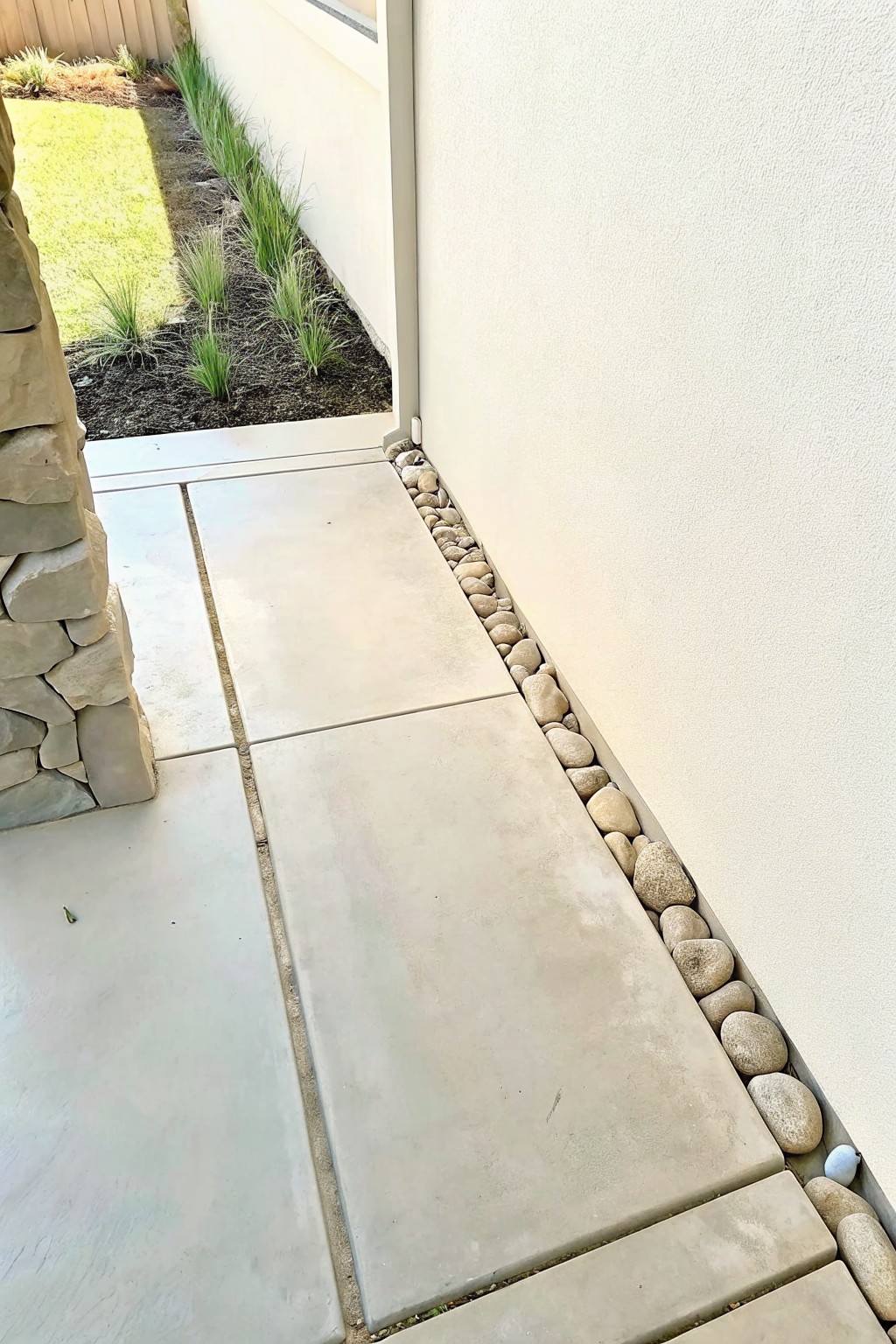
A simple line of smooth stones makes a clean separation between the patio and the house wall. It keeps the paved surface looking neat without needing much upkeep, and the natural texture adds a bit of contrast that feels right at home in a rustic setting.
This works well on homes with concrete or stone pavers where you want a low border that drains easily. Place the stones in a single layer right against the wall or along the edge of the path, and choose sizes that stay in place without shifting over time. It suits most yards that already use natural materials elsewhere.
Stone Borders Around Small Water Features

A simple ring of larger stones mixed with fine white pebbles gives a small water feature a clean, finished edge. This kind of border keeps the water contained while adding texture that feels natural rather than built-in.
It suits modern rooms or entry areas where you want a touch of garden character without loose soil or heavy planting. Stick with stones that stay in proportion to the water so the border stays subtle and easy to maintain.
Use Pallets and Blocks for a Plant Border

A low border made from a wooden pallet and concrete blocks gives houseplants a clean edge without taking up much space. It keeps the pots in a straight line along the wall and adds a bit of rustic texture that feels at home in a simple entry or hallway.
This setup works best in narrow indoor spots where you want plants but need to keep the floor clear. Try it with whatever wood and blocks you have on hand, and adjust the length to fit the wall. Just make sure the blocks sit flat so the whole thing stays steady.
Curved Borders Along Entry Paths
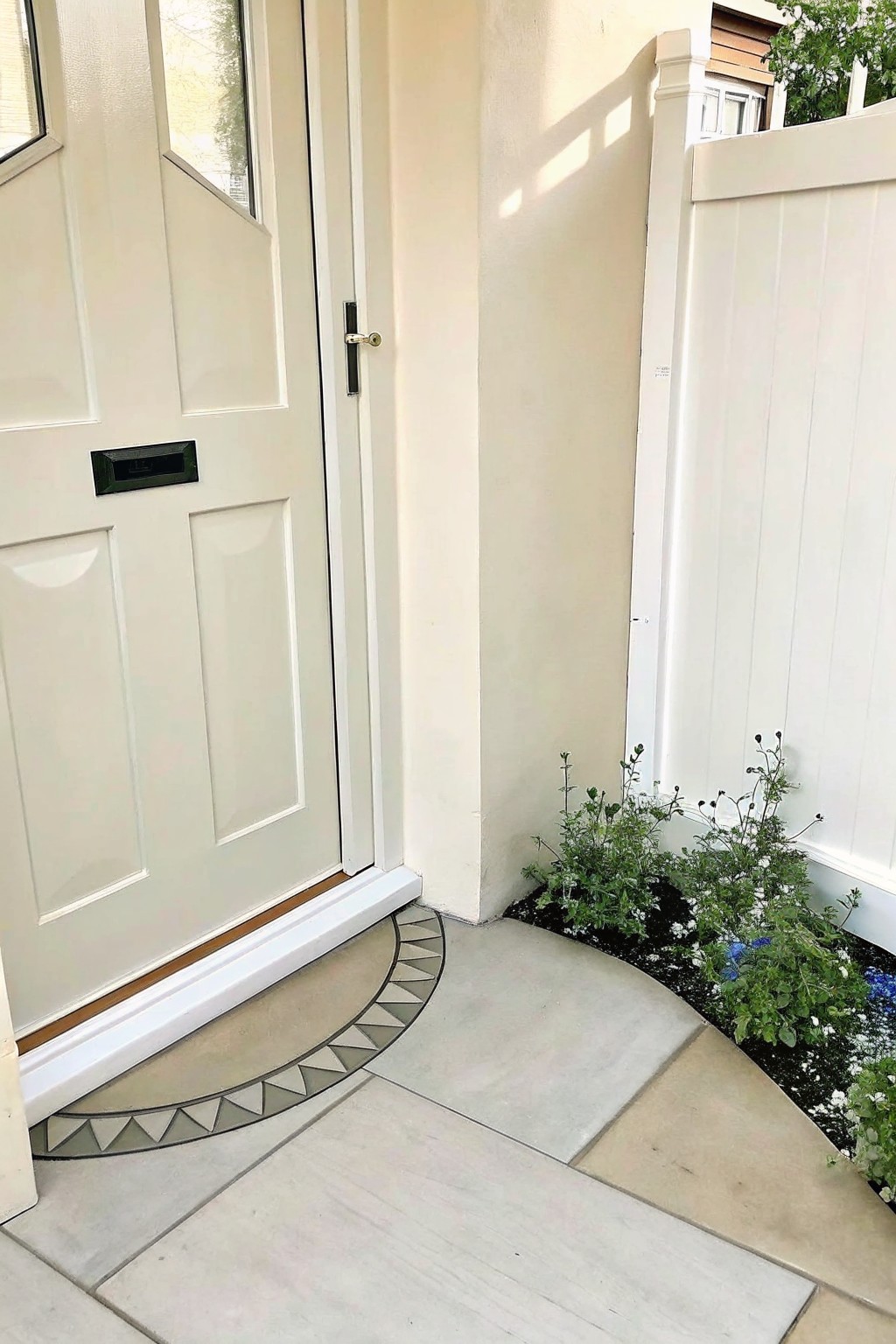
A gentle curve in a planting bed can make a narrow side path feel more welcoming. It softens the straight lines of paving and walls without taking up extra space. The small bed here follows the walkway in a simple arc that guides the eye toward the door.
This shape works well on compact lots where straight beds can feel boxy. Keep the curve shallow so it stays easy to mow or edge around. It suits homes with clean architecture where you want a bit of softness but still need a clear walking route.
Natural Stone Paths
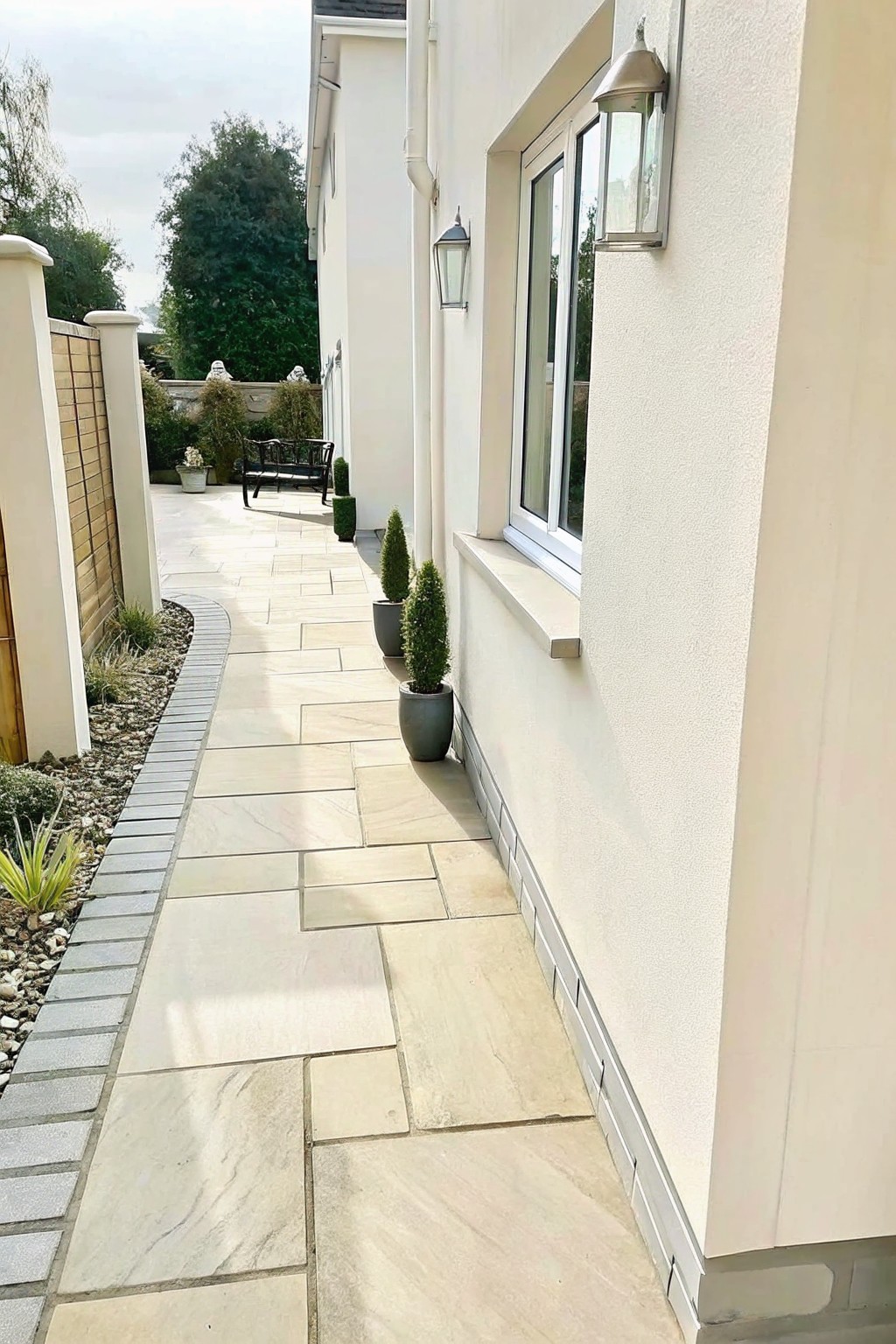
Natural stone paths give a garden a solid feel without looking overly planned. The irregular shapes help the walkway blend into the surrounding space while still keeping foot traffic easy and dry.
This approach works well along the side of a house or in narrow yards where you need a clear route. Keep the stones fairly level and add a simple gravel edge if drainage or weed control is a concern.
Natural Stone Slabs For Simple Garden Paths

Large irregular stone slabs work well for paths because they feel sturdy underfoot and settle into the landscape without much fuss. The uneven shapes keep the look casual while still giving a clear route through the yard.
This approach suits homes with side yards or back gardens that need a practical walkway. Use gravel along the edges to help with drainage and to stop the slabs from shifting over time.
Natural Stone Pavers For Gravel Borders

Large pavers set into gravel give garden beds a clear edge without extra materials. The stones sit level with the path, so the whole area feels connected while the gravel keeps weeds down and drainage simple. This approach works especially well when you want something durable that still looks natural.
It suits side yards or small patios where you need a low border that does not compete with the plants. Keep the pavers a similar tone to the gravel so the line stays quiet, and make sure the beds are wide enough for the roots to spread.
Stone Paths For Narrow Side Yards
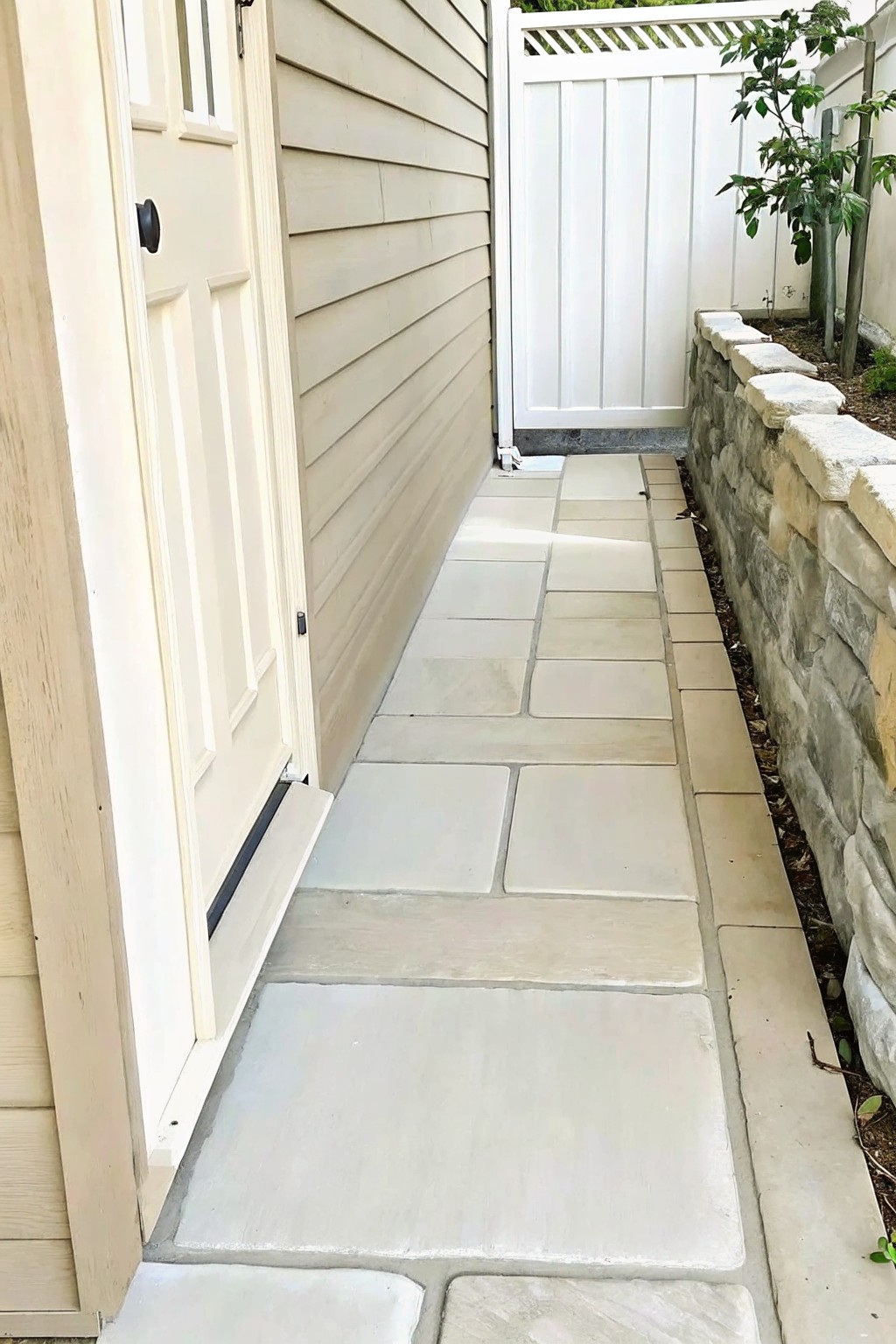
A simple stone path works well in tight spaces next to the house because it gives you a clean walking surface without crowding the area. The flat pavers sit low and let water drain easily while keeping mud from splashing onto the siding.
This approach suits homes where the side yard is mostly functional rather than a seating spot. Match the paver color to any existing stone walls so the path blends in instead of standing out as a separate feature.
Natural Stone Borders for Tiered Planting Areas
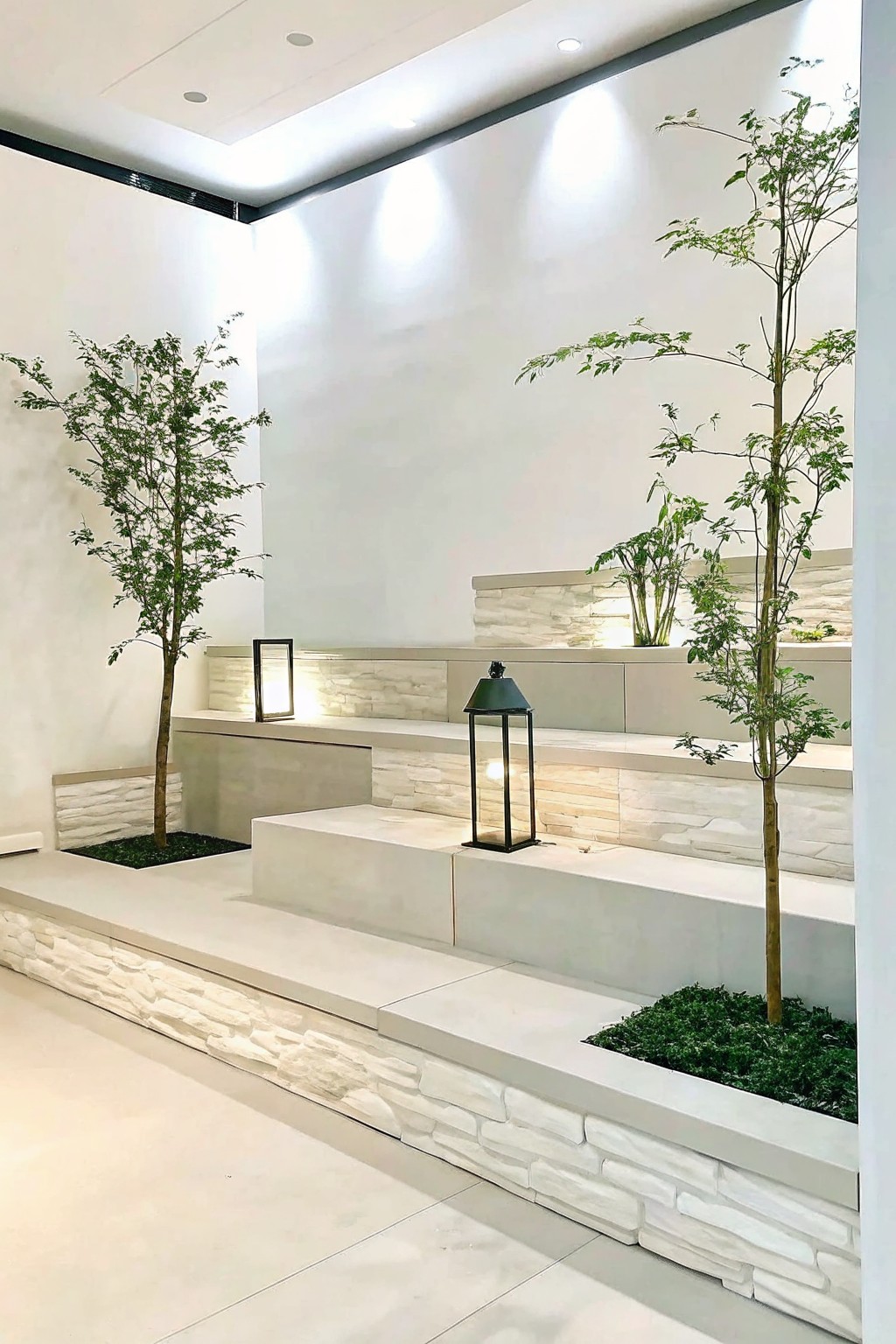
Stacked stone works well when you want to hold planting beds at different heights without the edges looking messy. The material gives a solid base that keeps soil in place and lets the greenery sit neatly above the walking surface.
This approach fits best in spaces where you already have changes in level, like entryways or side yards. Keep the stone tones light if the rest of the area is pale, and make sure the beds are deep enough for the roots of whatever you plan to grow.
Raised Planters For Clean Garden Borders
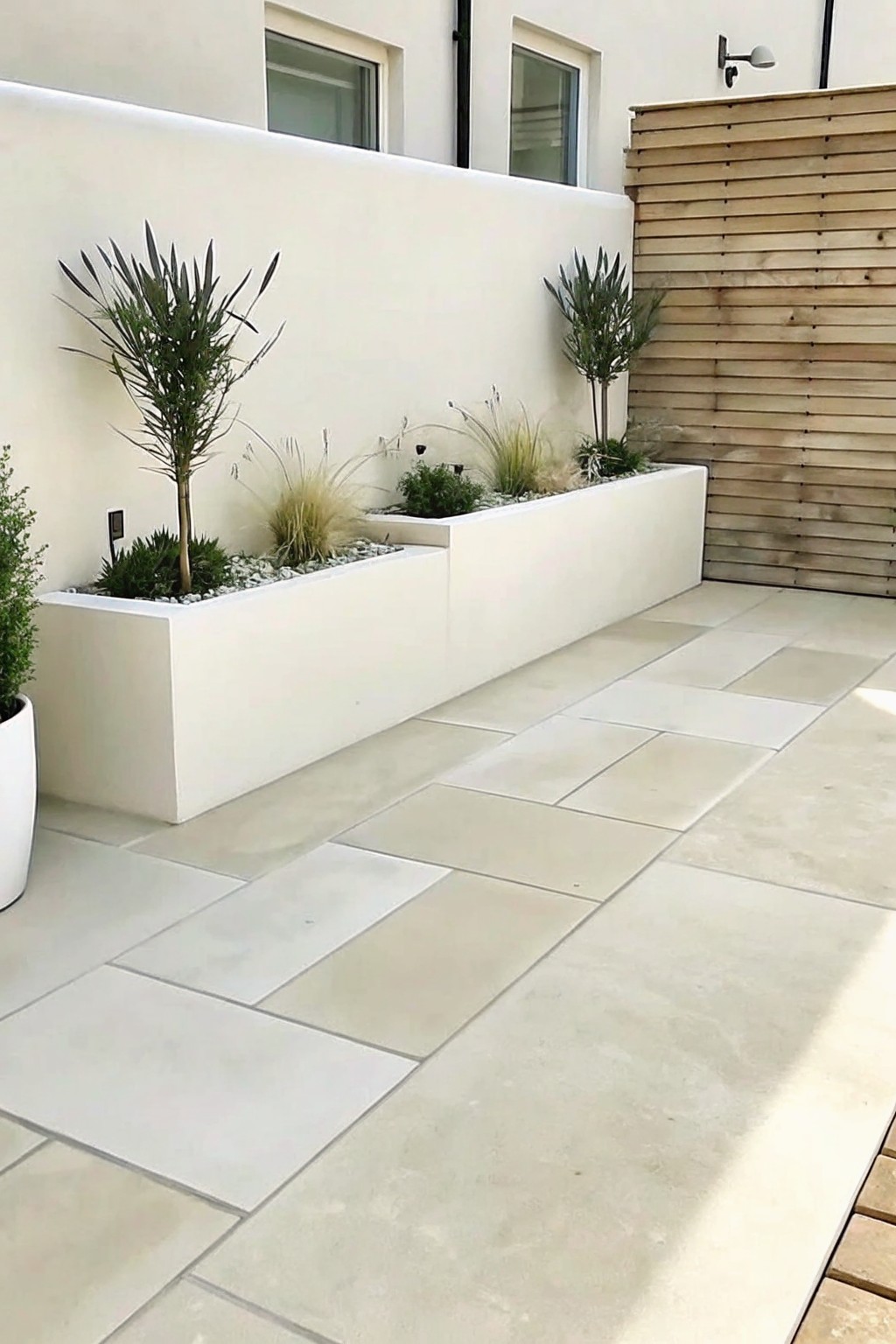
Raised planters give you a simple way to mark off planted areas without relying on loose logs or extra edging pieces. They create a firm line between the paving and the garden, which keeps everything looking neat even when the plants grow out a bit.
This setup works best on paved patios where you want some height and structure without crowding the walking space. It suits homes that already have clean lines in the hardscape and helps control soil and mulch so they stay off the stone.
Log Edging For Pebble Beds

Logs make a simple border that holds pebbles in place without looking too finished. They add a natural edge right along the house and work well with stone pavers that lead to the door. This setup keeps the bed neat while letting the rocks show off their texture.
It suits homes that already use wood or stone details outside. Place the logs where the foundation meets the ground and keep the bed narrow so it does not crowd the walkway. Check that the logs sit level so water drains away from the house.
Stone Bases For Built-In Patio Seating

Natural stone makes a strong base for built-in seating on a patio. It gives the bench a solid edge that feels permanent and ties the seating area into the rest of the outdoor space without extra structures.
This works best on homes with a rustic or simple garden style. Keep the stone low and match it to any nearby paths or walls so the whole area reads as one clean zone rather than separate pieces.
Raised Beds With Timber Edging

A raised bed edged in timber creates a simple border that keeps soil contained and gives the garden a finished look next to paving. The wood frame adds a rustic note without much cost, and the narrow gravel strip along the base helps separate the bed from the stone tiles so water drains away cleanly.
This setup works best along the side or back of a house where the patio meets a planting area. It suits smaller yards that need some greenery but not a full redesign, and the height makes it easier to tend plants without bending too far.
Frequently Asked Questions
Q: Will the logs hold up if my yard gets heavy rain every spring?
A: Lay the logs on a bed of gravel so water drains away from the wood. Check them each fall and replace any that get soft. This keeps the border looking rustic without turning into mush.
Q: How deep should I set the stones so they do not tip over?
A: Dig a trench about half the height of your stones. Pack the soil tight around each one after you place it. That simple step stops most tipping even in soft ground.
Q: Can I mix logs and stones in the same border without it looking messy?
A: Place logs at the back edge and set stones in front of them. The mix adds texture without extra effort.
