

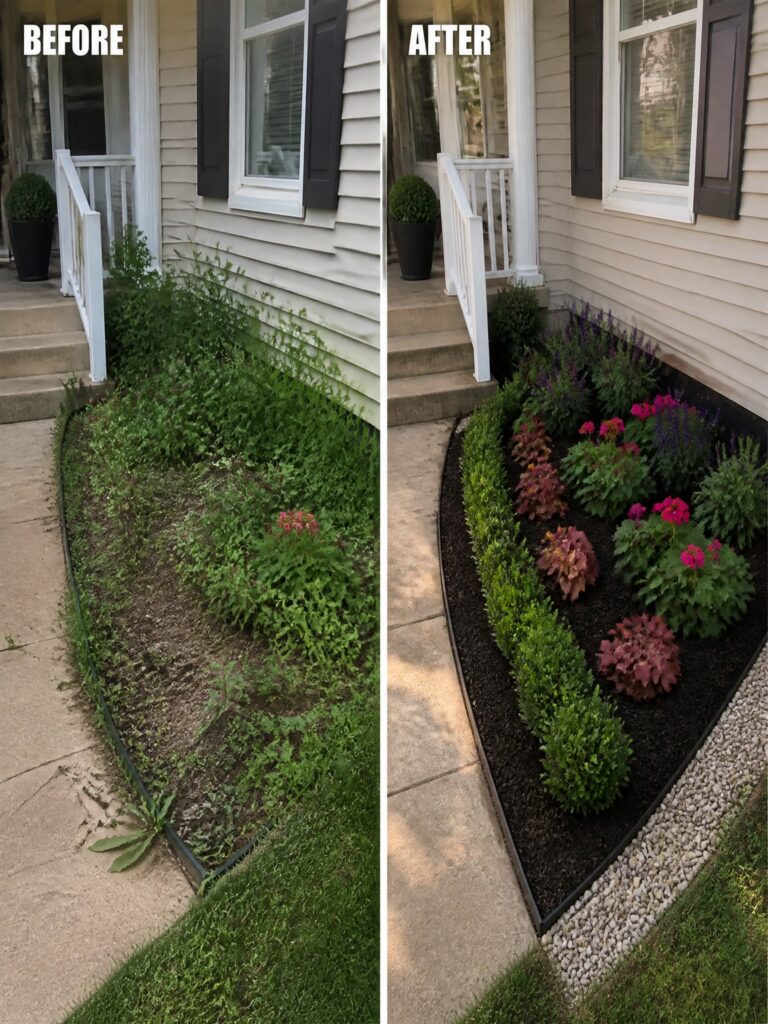
When flower beds grow without any real boundaries they tend to spill over and make the yard look less organized than it could be.
Clearing out the old growth and adding simple edging brings a sense of order that spreads to the rest of the lawn.
I always start with the edges.
Once the beds have shape it becomes easier to choose plants that actually fit the space instead of just filling gaps.
Those kinds of adjustments often give the yard a cleaner feel without requiring a complete overhaul.
Define Flower Beds With Simple Edging
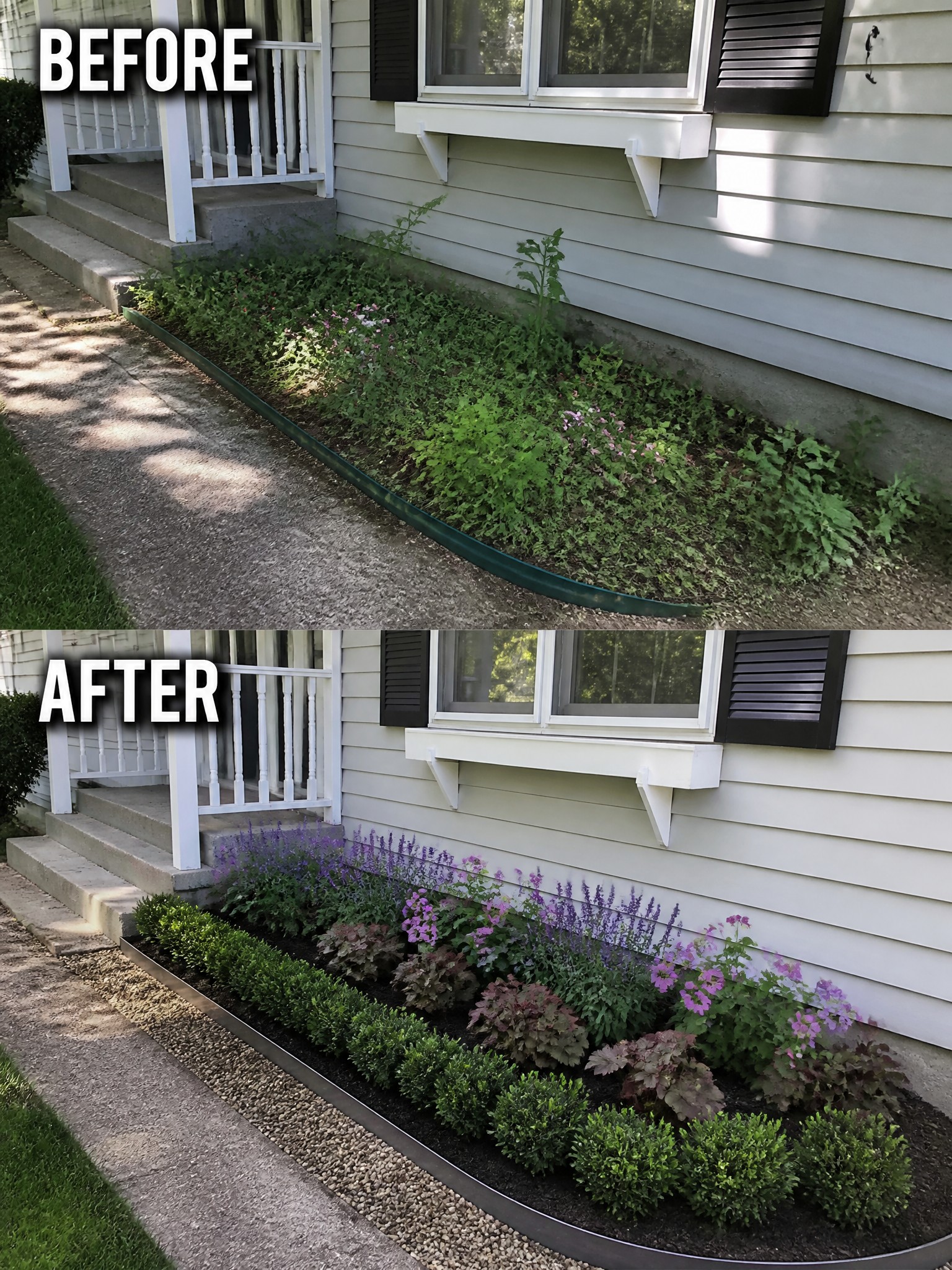
Adding edging and arranging plants in clear rows turns a messy foundation bed into something much easier to keep up. The before photo shows plants spilling everywhere with no real shape, while the after version keeps everything contained and looking intentional along the house.
This approach works best on homes where the planting strip has grown out of control. Install a simple metal edge first to mark the boundary, then fill it with a mix of low shrubs in front and taller flowers behind. It gives the yard structure without requiring a complete overhaul.
Define A Narrow Border With Gravel And Edging
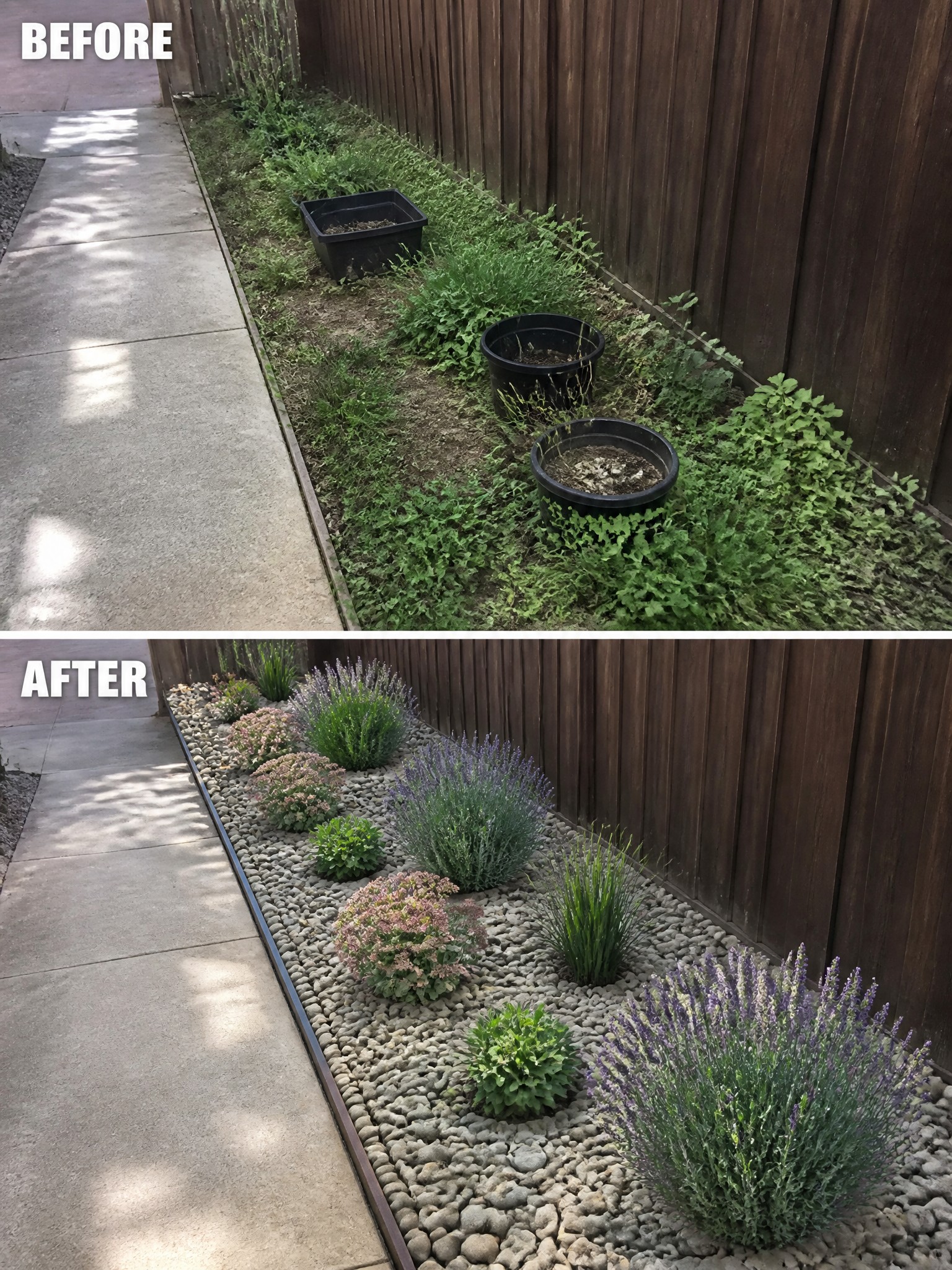
An overgrown strip next to a path often looks worse than it needs to because there is no clear edge or ground cover. Laying down simple metal edging and covering the soil with gravel instantly separates the planting area from the walkway and gives the whole side yard a finished look. The plants then stand out instead of getting lost in weeds.
This approach works well along concrete paths or fence lines where space is tight. Clear the weeds first, install the edging, then add gravel before planting. It keeps the bed looking tidy with less ongoing maintenance and works in both small side yards and longer backyard borders.
Define Garden Beds To Clean Up Foundation Plantings
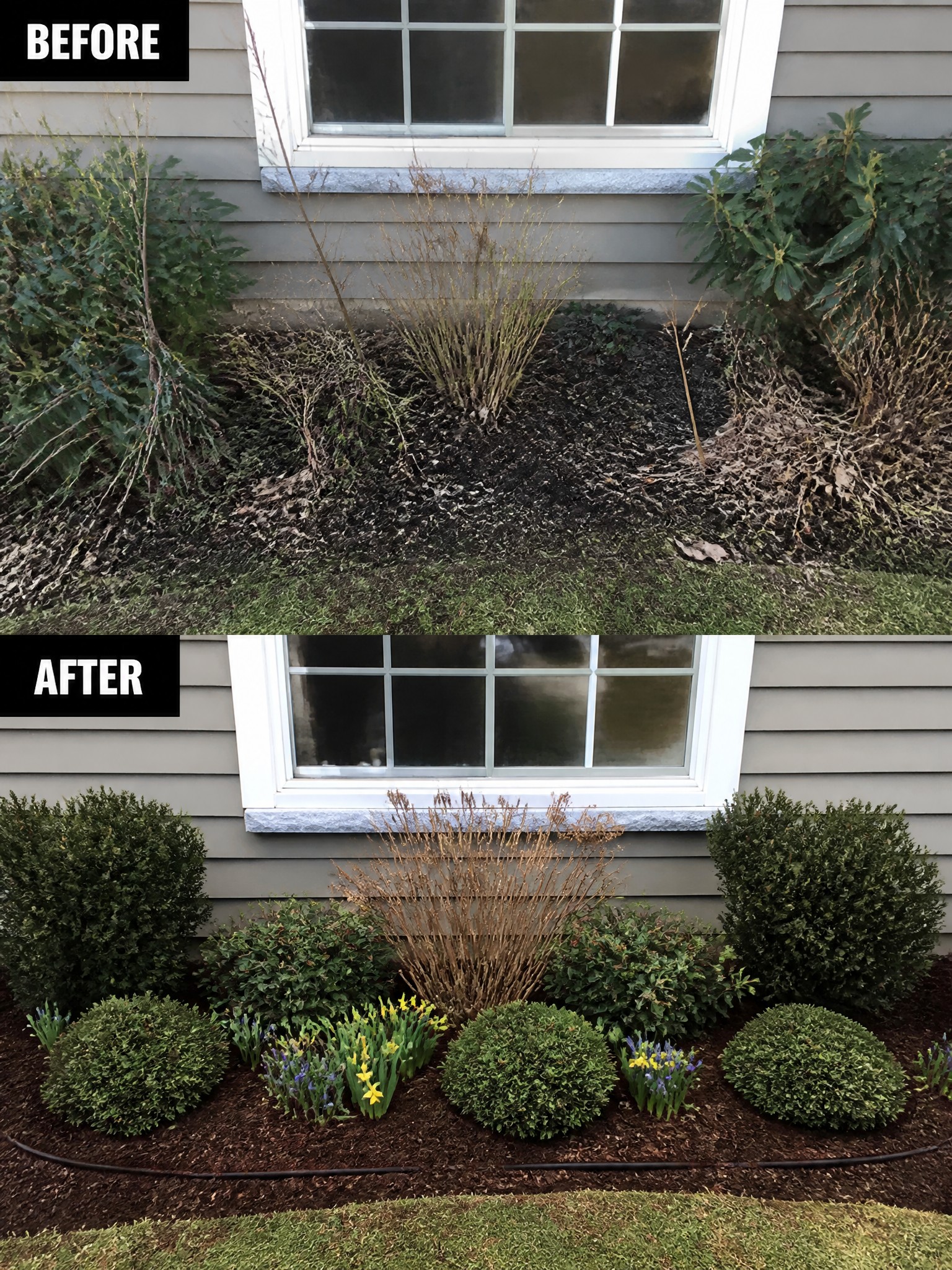
Overgrown shrubs and messy growth right against the house can make the whole front look neglected. Defining the beds with a clear edge and keeping the shrubs trimmed into simple shapes brings order back without needing a full replant. The flowers added in between give color while staying low and contained.
This idea works best on smaller foundation areas where you want a tidy look with less upkeep. Start by cutting back what is there, then shape the main plants and fill gaps with easy bulbs or perennials that return each year. Even mulch helps hold the beds together and keeps weeds down.
Add Mulch And Layered Plants To Define A Flower Bed

A bare or weedy flower bed often looks unfinished even when the edging is already in place. The simple fix shown here is to clear the weeds first, spread a thick layer of dark mulch, and then fill the space with plants of different heights. The mulch instantly makes the bed look intentional and keeps the soil from looking patchy.
This approach works well along a walkway or foundation where you want a tidy edge without a full redesign. Start with the cleanup and mulch, then add a few taller plants toward the back and shorter ones in front so the bed feels full without crowding the path. The result stays low-maintenance and looks planned rather than scattered.
Fill A Small Bed With Layered Planting
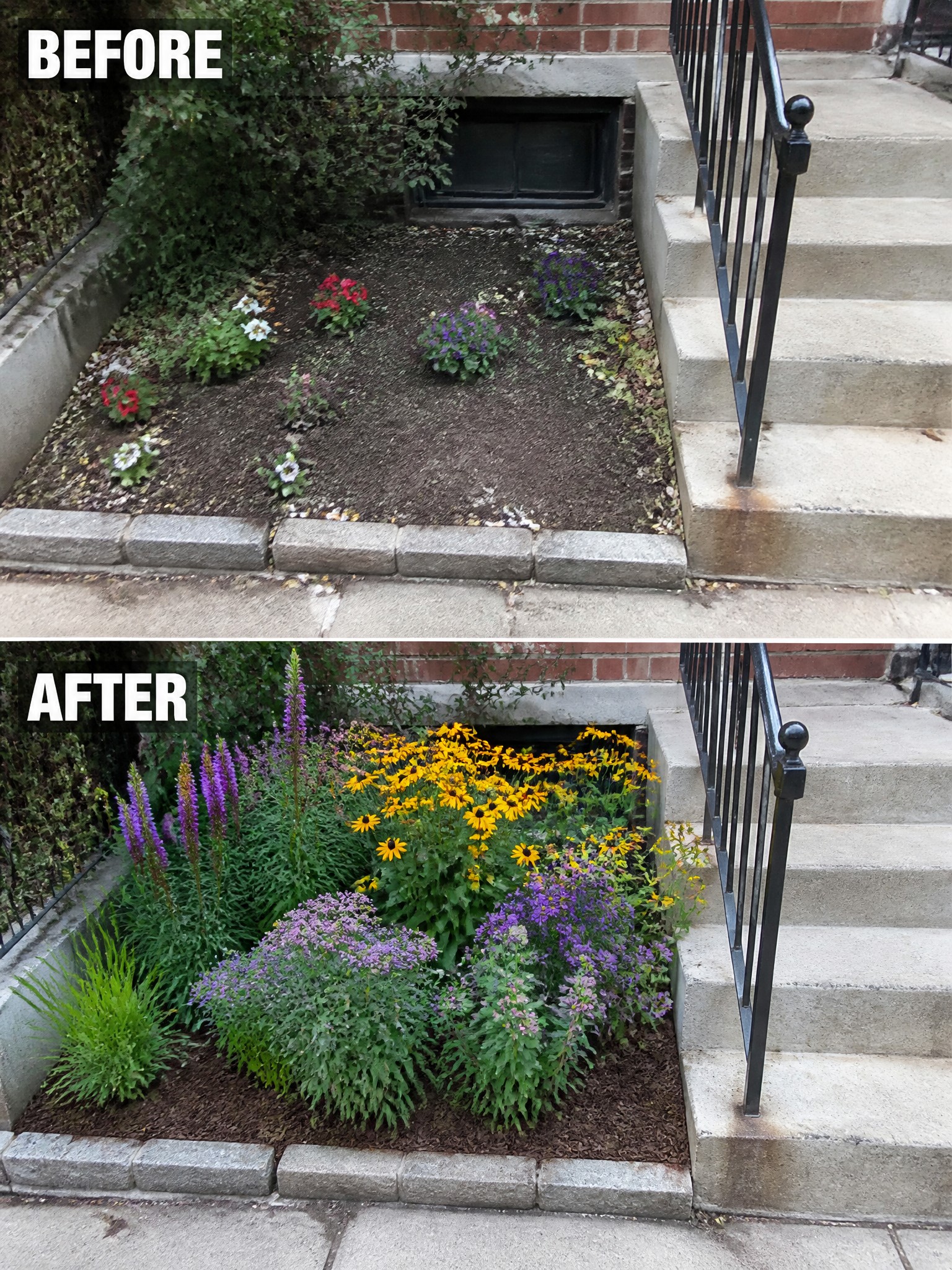
A narrow strip of dirt next to the stairs looked thin and unfinished with just a few scattered flowers. The fix was simple: pack the bed with plants in different heights and repeat colors so the whole area feels full instead of spotty. Mulch at the end ties it together and keeps the look neat.
This approach works best in tight spaces where you need impact without crowding the walkway. Start by clearing weeds and old soil, then choose one tall plant, a mid-height filler, and a low spreader that can handle the light. Mulch last so the bed stays clean and the plants stand out.
Add Defined Raised Beds To Clean Up An Overgrown Yard
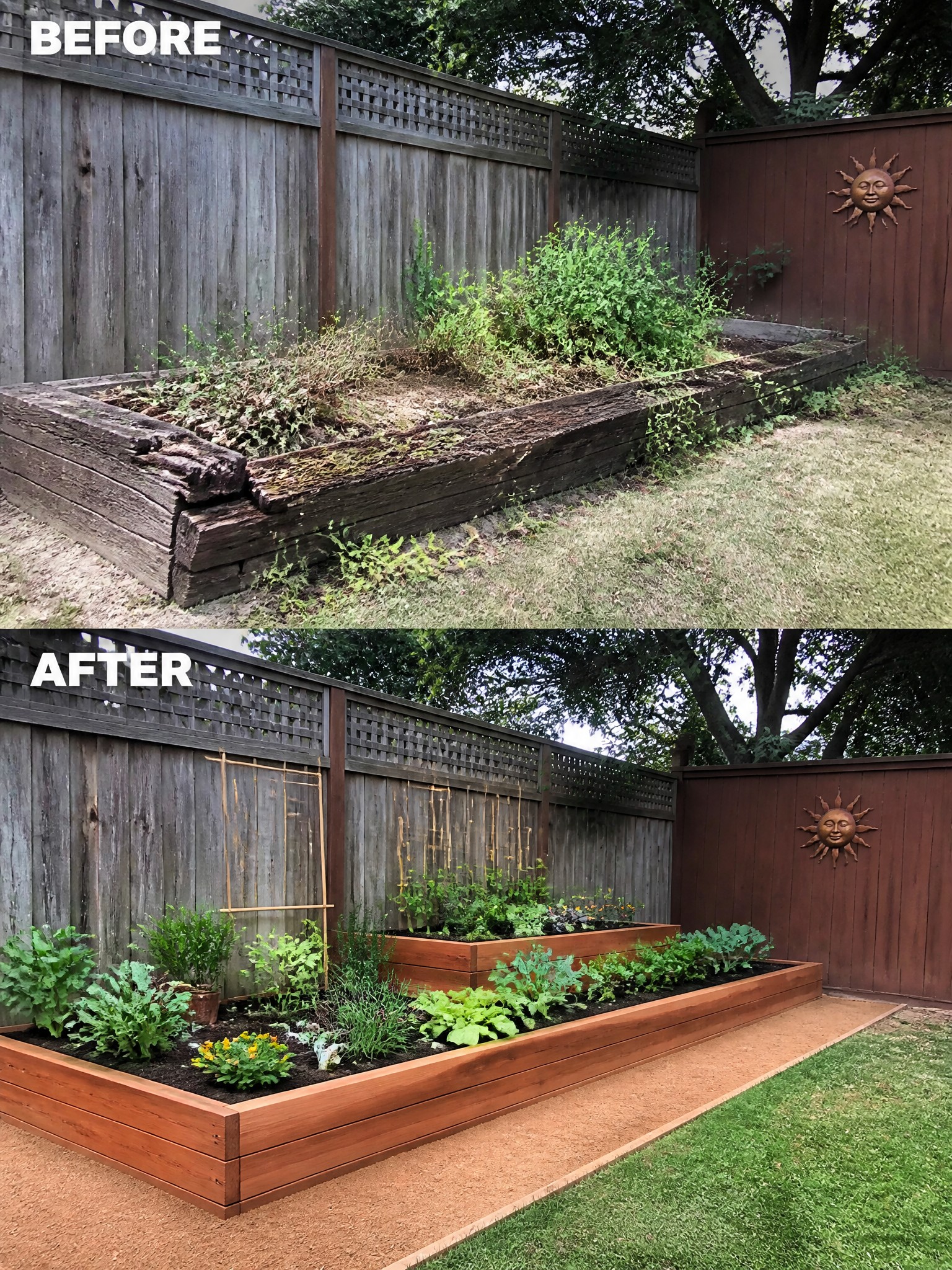
Old raised beds often rot and collapse over time, leaving behind a mix of weeds and broken wood that makes the whole yard feel neglected. Replacing them with new, solid beds brings order back to the space and gives plants room to grow without fighting through the mess.
This approach works well in smaller backyards where you want a clear growing area without losing too much lawn. Start by removing the old wood and leveling the ground, then choose straight lumber that can handle weather. Keep the beds a manageable size so you can reach every plant easily and still have room to walk around them.
Add Defined Edges To Overgrown Flower Beds

One simple way to improve a messy garden border is to add clear edging and repeat a few structured plants. The before photo shows plants spilling out onto the path with no real shape, while the after uses a low stone border, mulch, and rounded shrubs to keep everything contained and easy to maintain.
This idea works best along sidewalks or house foundations where the bed needs to look intentional. Start by clearing out the excess growth first, then install edging and choose a handful of plants that can be repeated for a cleaner result.
Create Terraced Beds On A Steep Slope
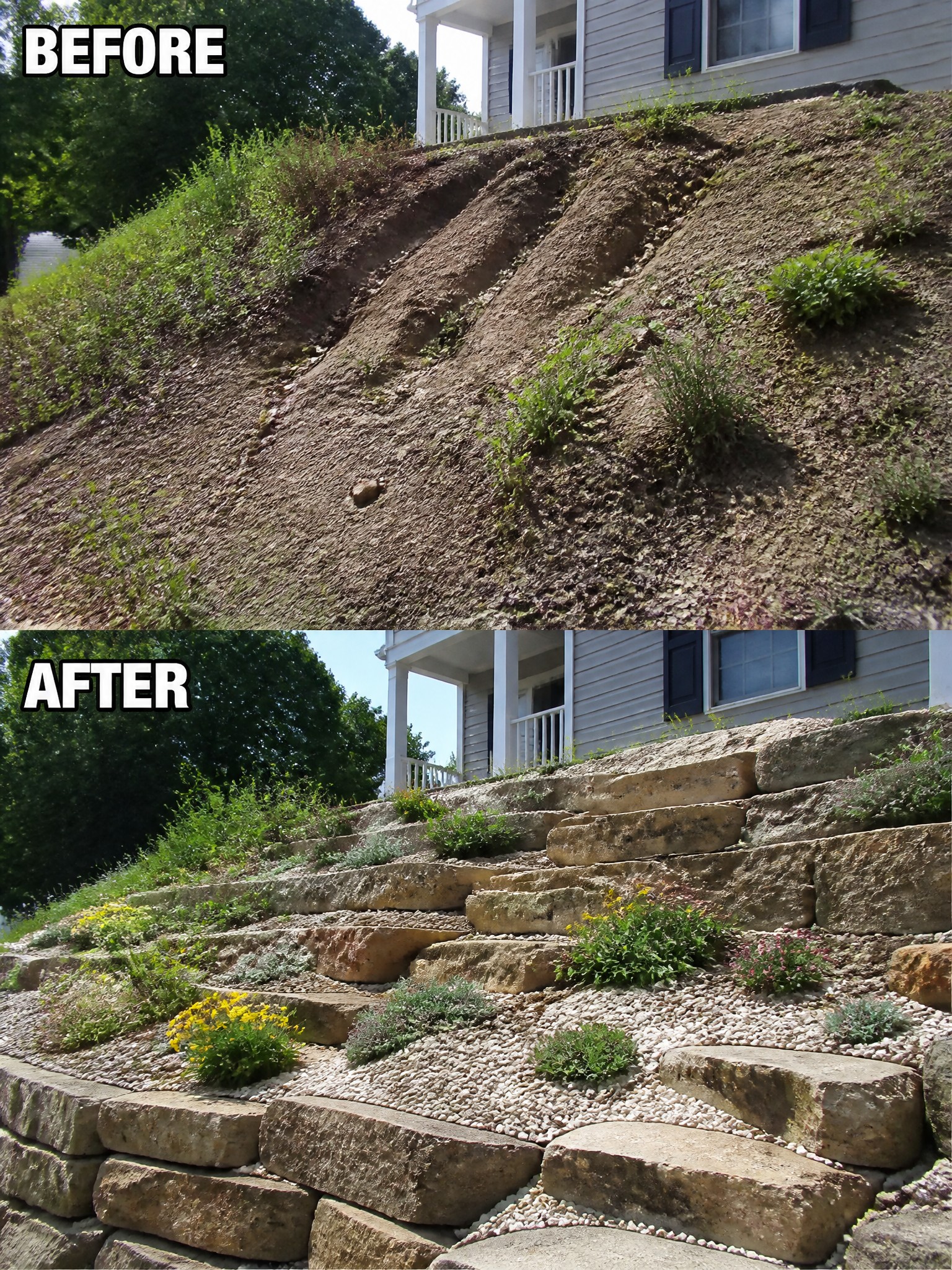
A steep, bare slope often leads to erosion and patchy growth because nothing holds the soil in place. Stone retaining walls change that by breaking the hill into flat sections that keep the ground stable and give plants a better chance to settle.
This idea works best on yards that drop sharply near the house or along a driveway. Plan the wall heights first so each level stays manageable, then add gravel or mulch between the stones to cut down on weeds. Once the structure is set, simple plantings can fill in without constant trimming or watering.
Define Flower Beds With Clean Edging
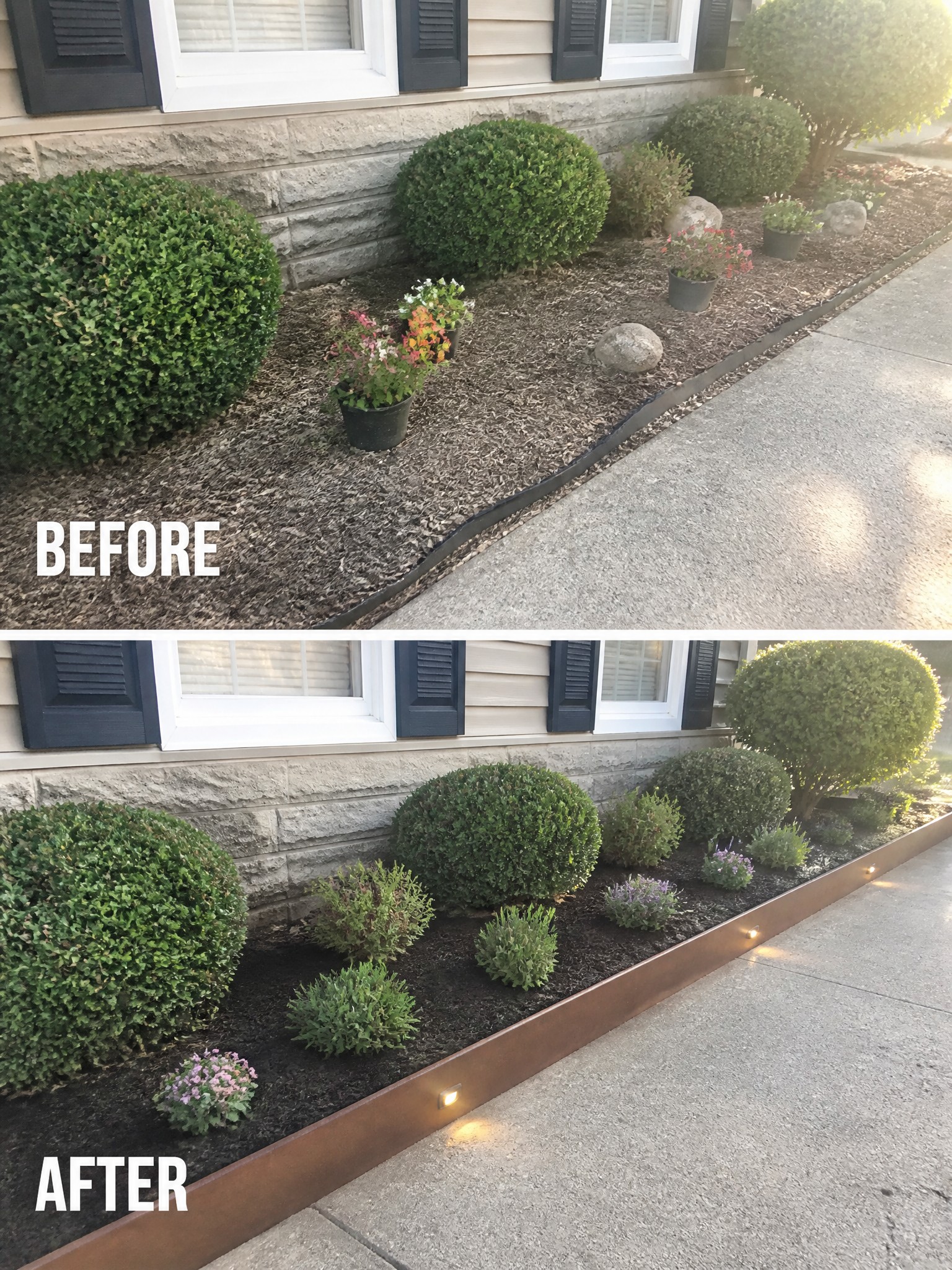
A simple metal border can turn a messy strip of mulch into a clear, finished flower bed. In this case the old edge looked loose and scattered, while the new one runs straight and low, holding everything in place and making the plants look more intentional.
This approach works well along a house foundation or walkway where you want structure without a lot of fuss. Start by cleaning out the old mulch and weeds, then install the edging before you add new plants or fresh mulch. The low lights along the edge are optional but help at night and keep the bed from disappearing into the lawn.
Add Raised Planters To Clean Up The Front Yard
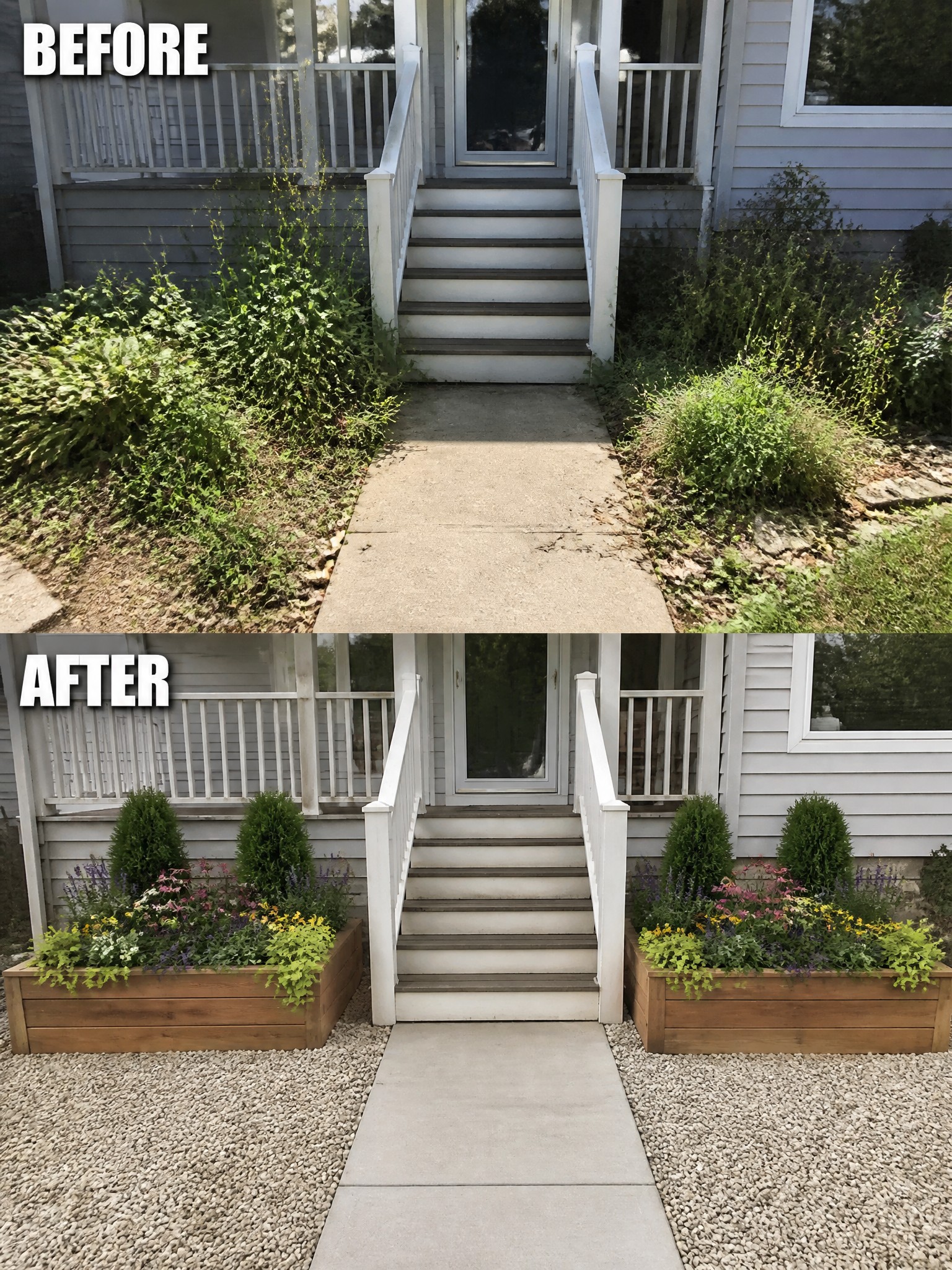
Replacing wild overgrowth with raised planters gives the entry a clear shape without much extra work. The before view shows plants spilling onto the path and stairs, which makes the whole front feel untended. Two simple wooden boxes on either side of the steps keep the planting tidy and add height where it matters most.
This approach suits homes with narrow front areas or concrete paths that need softening. Start by clearing the ground first, then set the beds on gravel so water drains and weeds stay down. Choose a few shrubs for structure and fill in with seasonal flowers so the look stays neat year-round.
Clear Overgrown Beds Before Adding Gravel
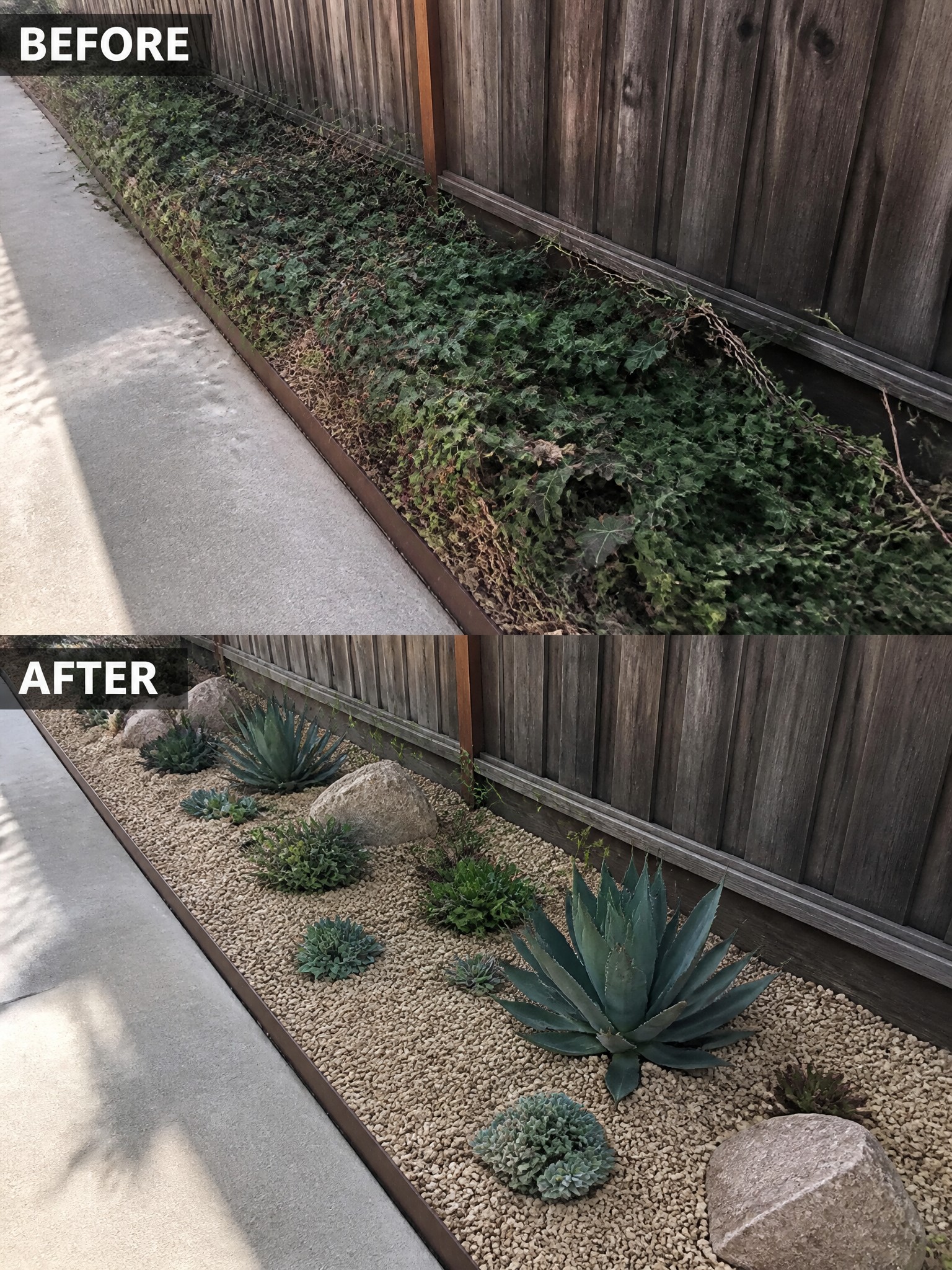
The biggest change here comes from removing the thick, messy vines that had taken over the narrow strip along the fence. Once that overgrowth was pulled out, a layer of gravel gave the space a flat, finished surface and made it much easier to keep tidy along the sidewalk edge.
This approach works well on thin borders next to paths or fences where vines can quickly look neglected. Start by clearing everything down to bare soil, add a simple edging if needed, then spread gravel and place just a few larger plants or rocks so the bed stays open and low maintenance.
Add Large Matching Planters To Frame The Entry
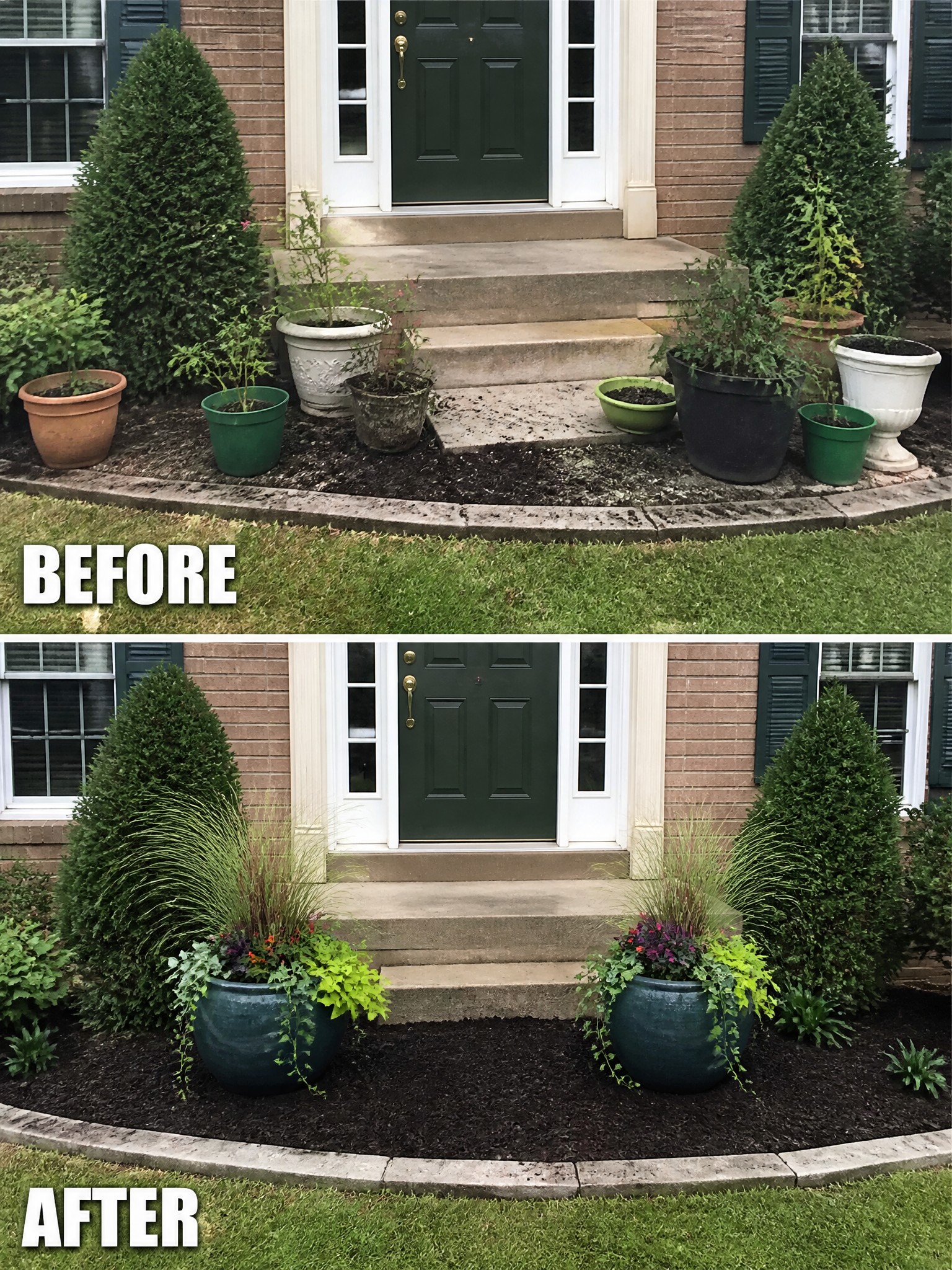
Many front beds end up looking scattered when they hold a mix of small pots in different sizes and colors. Switching to two large matching planters placed on either side of the steps pulls the whole area together and gives it a clear shape.
This approach works best on simple entry beds where you want order without adding too many plants. Choose pots in a color that picks up the door or trim, then fill them with a mix of taller grasses and trailing plants so the arrangement feels full from the start. Keep the surrounding mulch clean and the bed edges tidy so the planters stay the main focus.
Create Defined Beds With Layered Planting
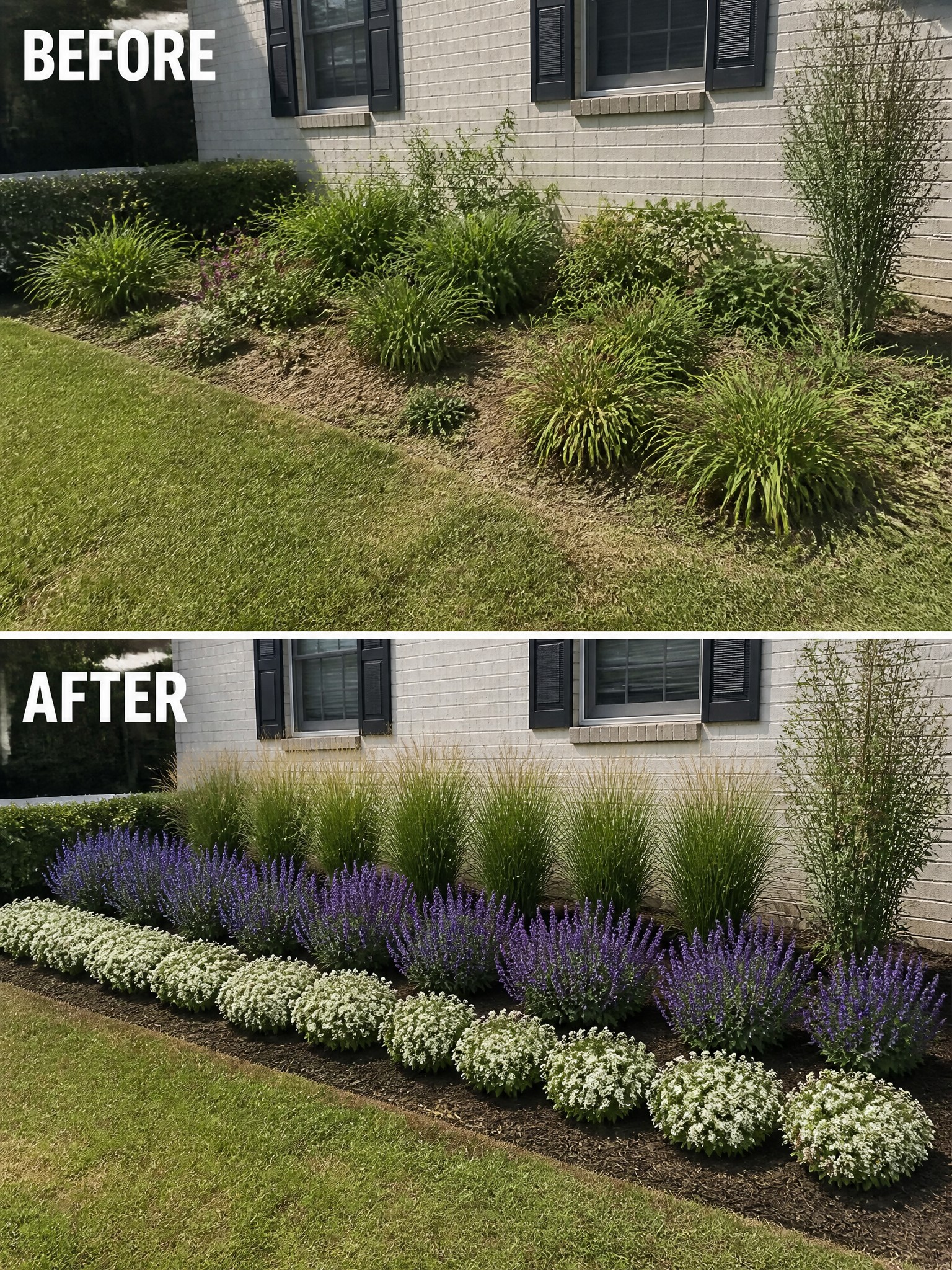
An overgrown strip along the house can make the whole yard feel messy. The before photo shows scattered plants and uneven ground right up against the foundation. In the after, the same area has clear rows of low white flowers in front, purple blooms in the middle, and taller grasses behind, all set in fresh mulch with a clean edge.
This approach works best when you start by clearing the old growth completely. It gives the planting a purpose and keeps the bed from looking random. Try it along any long foundation or fence line where the plants have started to sprawl. Keep the front layer low, the middle layer mid-height, and the back layer taller so everything stays visible from the lawn.
Define The Foundation Line With Simple Garden Beds
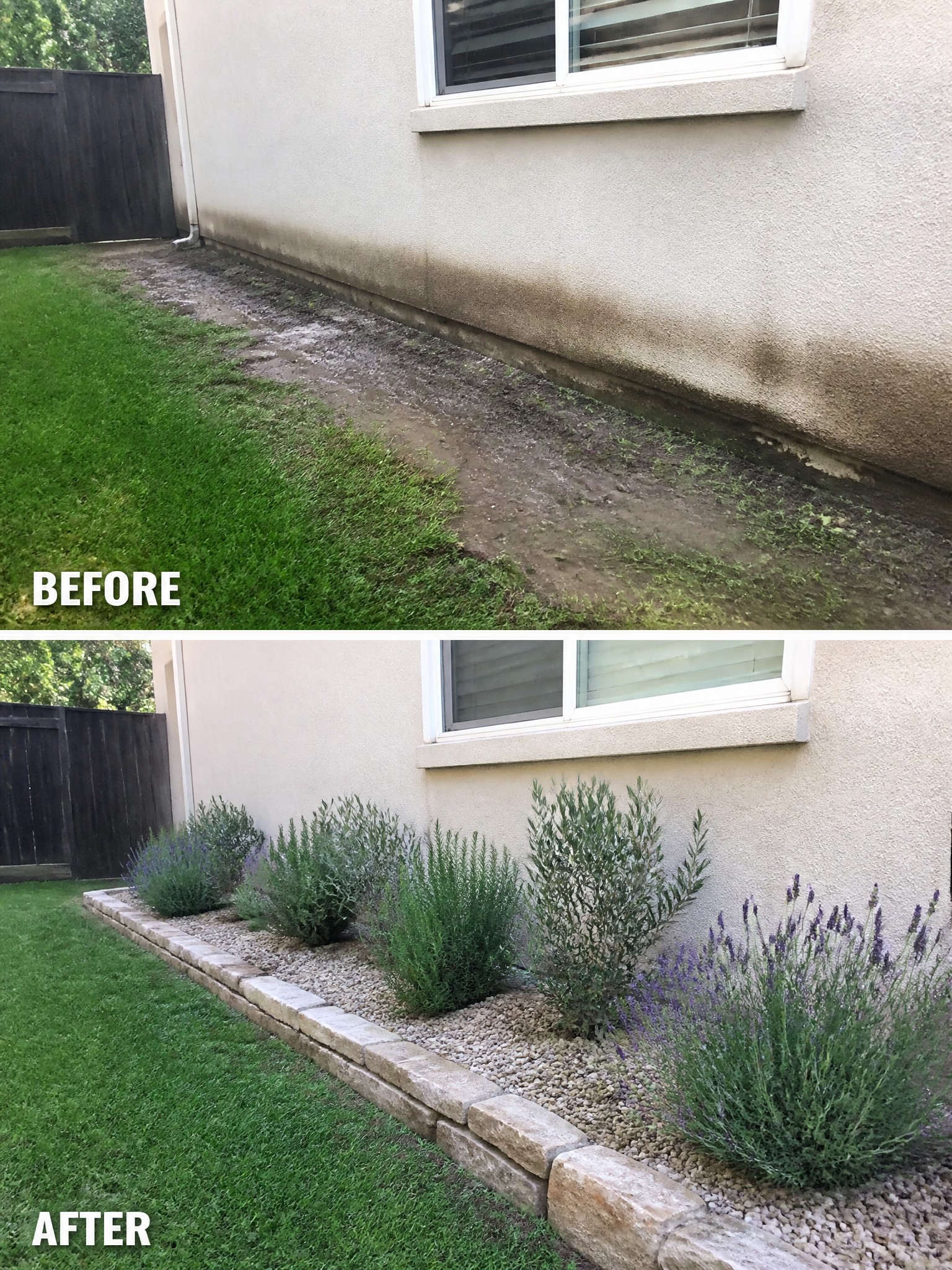
A muddy, worn strip along the house can make the whole side of the yard look neglected. Adding a low stone border, a layer of gravel, and a few shrubs turns that same space into a clear, finished bed that keeps the lawn edge neat and stops soil from splashing onto the siding.
This approach works well on any home where the foundation meets grass. Start by setting the border straight, then fill with gravel before planting. It keeps the bed low-maintenance and gives the yard a tidier outline without needing a full redesign.
Add Defined Edges To Flower Beds
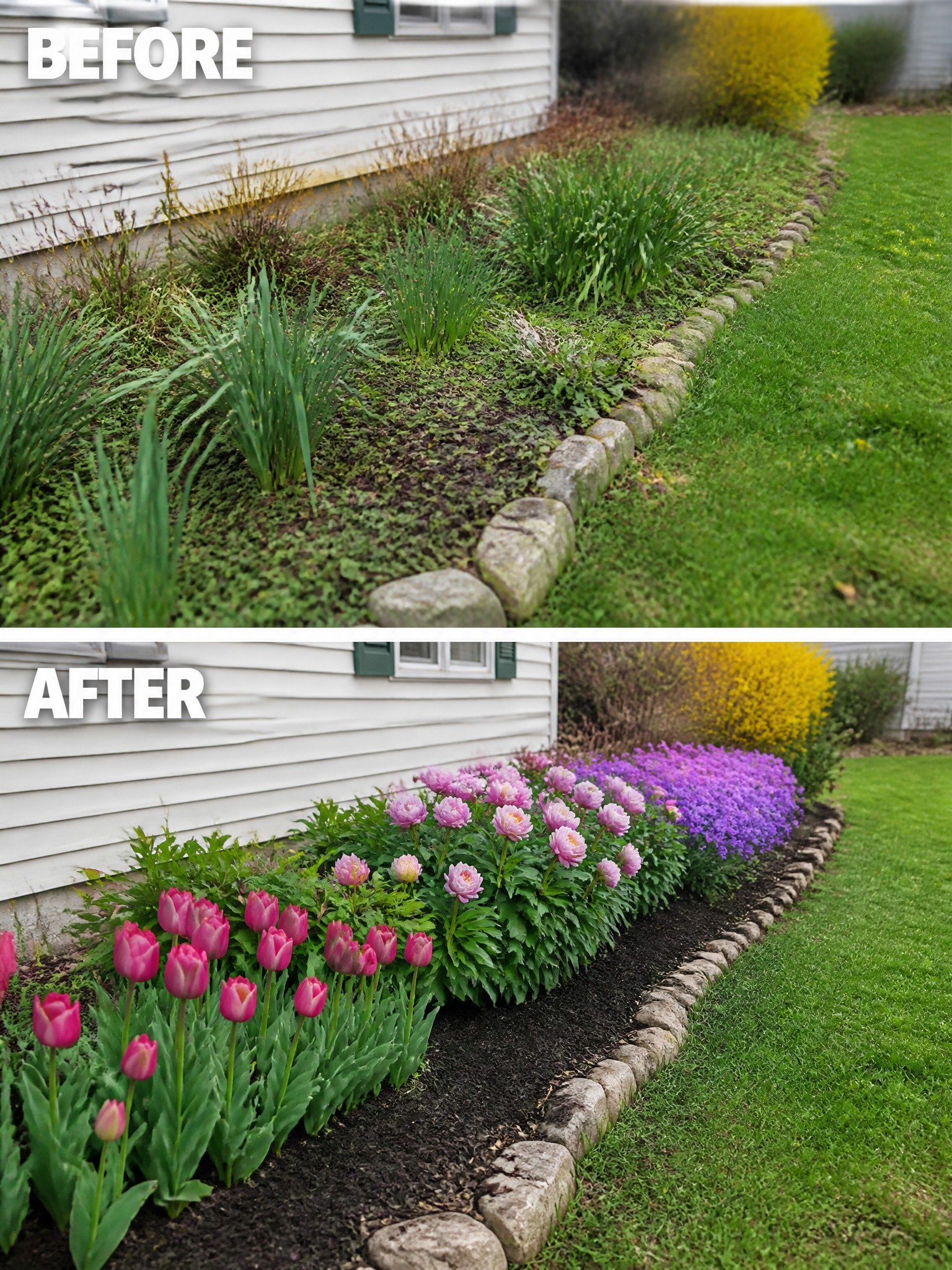
The before photo shows a messy strip of mixed plants and weeds running along the house with no clear shape. In the after, a low stone border and fresh mulch create clean lines that make the whole bed look planned and easy to maintain.
This approach works well along foundations or lawn edges where plants tend to sprawl. Clear the area first, set a simple border that matches your style, then add mulch before planting in groups. The result keeps weeds down and gives the yard a finished look without needing a full redesign.
Add Structure To An Overgrown Fence Line

Overgrown vines and weeds quickly hide a fence and make the whole edge of a yard look neglected. Clearing that growth first opens up the space so simple plantings can take over. The result is a row of low shrubs, ground cover, and a few flowering vines that stay contained instead of running wild.
This idea suits long fence lines or property edges where you want a clean look without constant trimming. Cut everything back hard, add a clear bed edge, and mulch to keep weeds down. Stick with compact plants that fill in without spreading too far.
Add Structure To A Narrow Side Yard
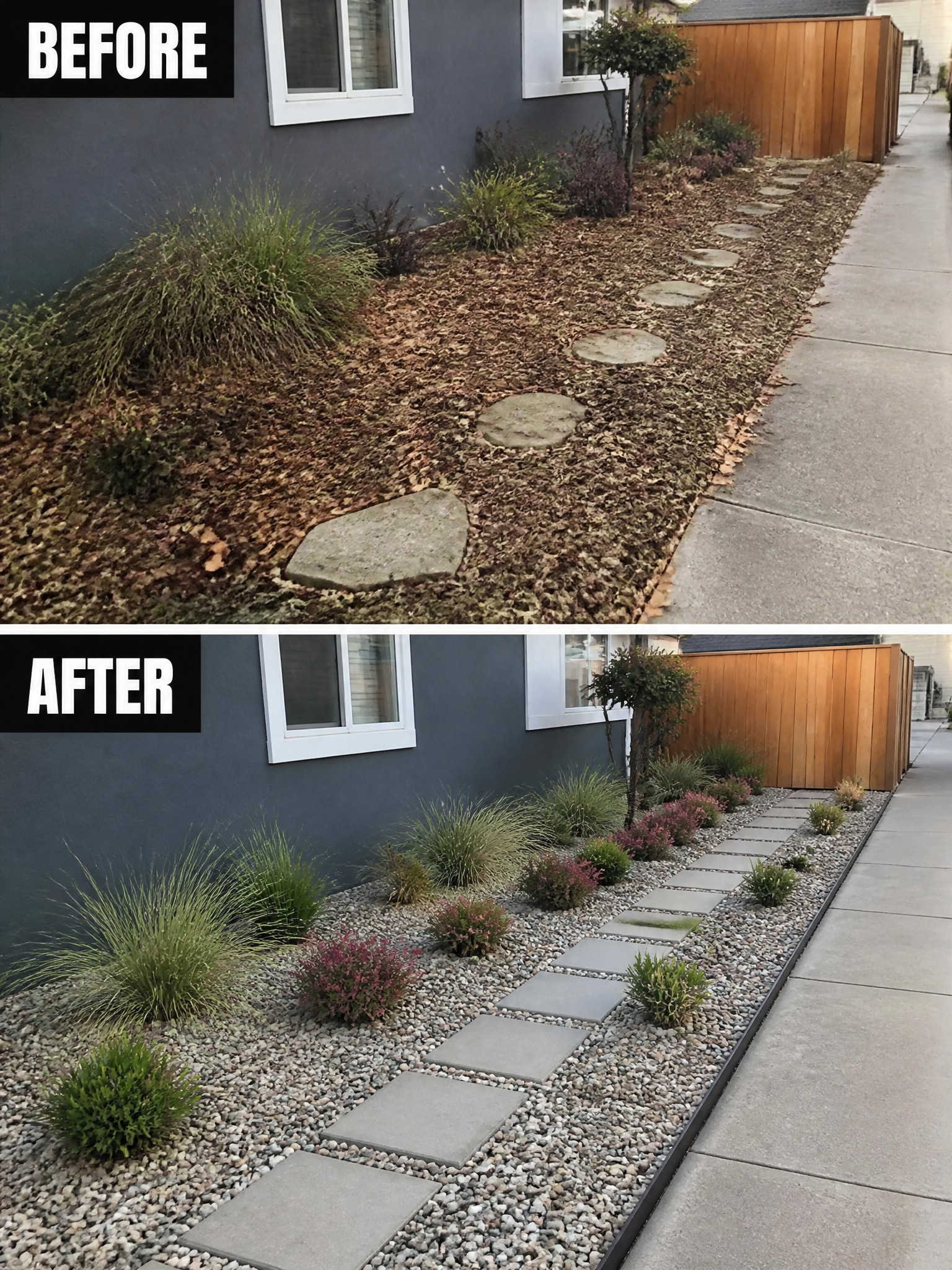
A messy strip of ground along the house often ends up full of weeds and leaves because it has no clear edge or purpose. Laying down gravel with a straight line of pavers gives the space a defined path and keeps plants in their place, turning the area into something that looks intentional instead of neglected.
This approach works well on narrow side yards where you want low maintenance and easy access. Start with a solid edge and base layer so the gravel stays put, then add simple plants that stay small. It keeps the walkway clear while still giving the house a finished border.
Create Defined Beds In A Tight Side Yard
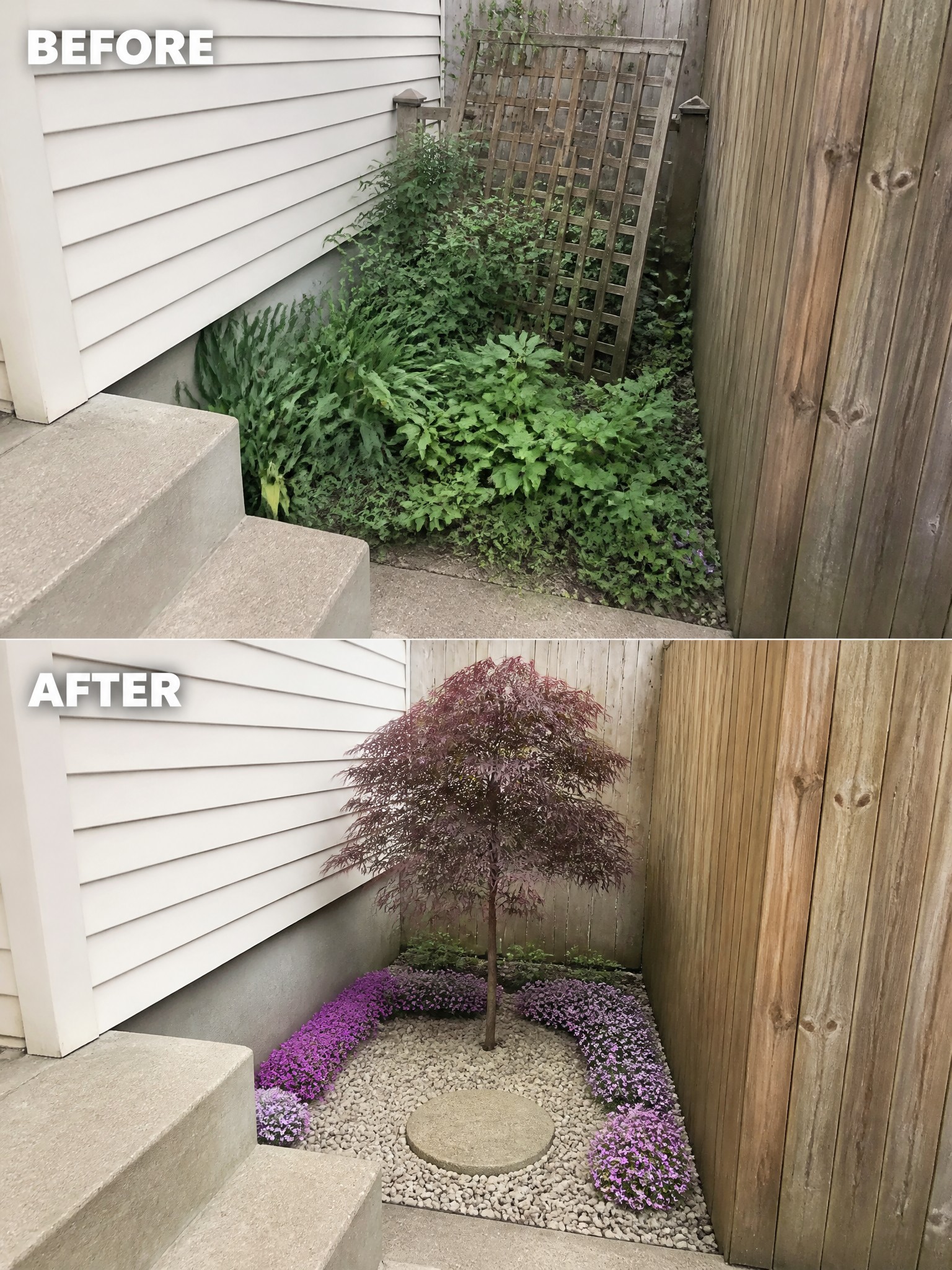
Clearing out the overgrowth first made the biggest difference here. The space went from a jumble of weeds and random plants to a simple gravel bed edged with low purple ground cover and one small tree at the center. The curved shape keeps the bed from feeling cramped even though the area is narrow.
This approach works well in side yards or corners where you need order without crowding. Start by removing everything that does not belong, then lay gravel to control weeds and give the space a finished look. A few repeating plants along the edge are usually enough to make the bed feel intentional.
Define Your Foundation Beds With Simple Edging
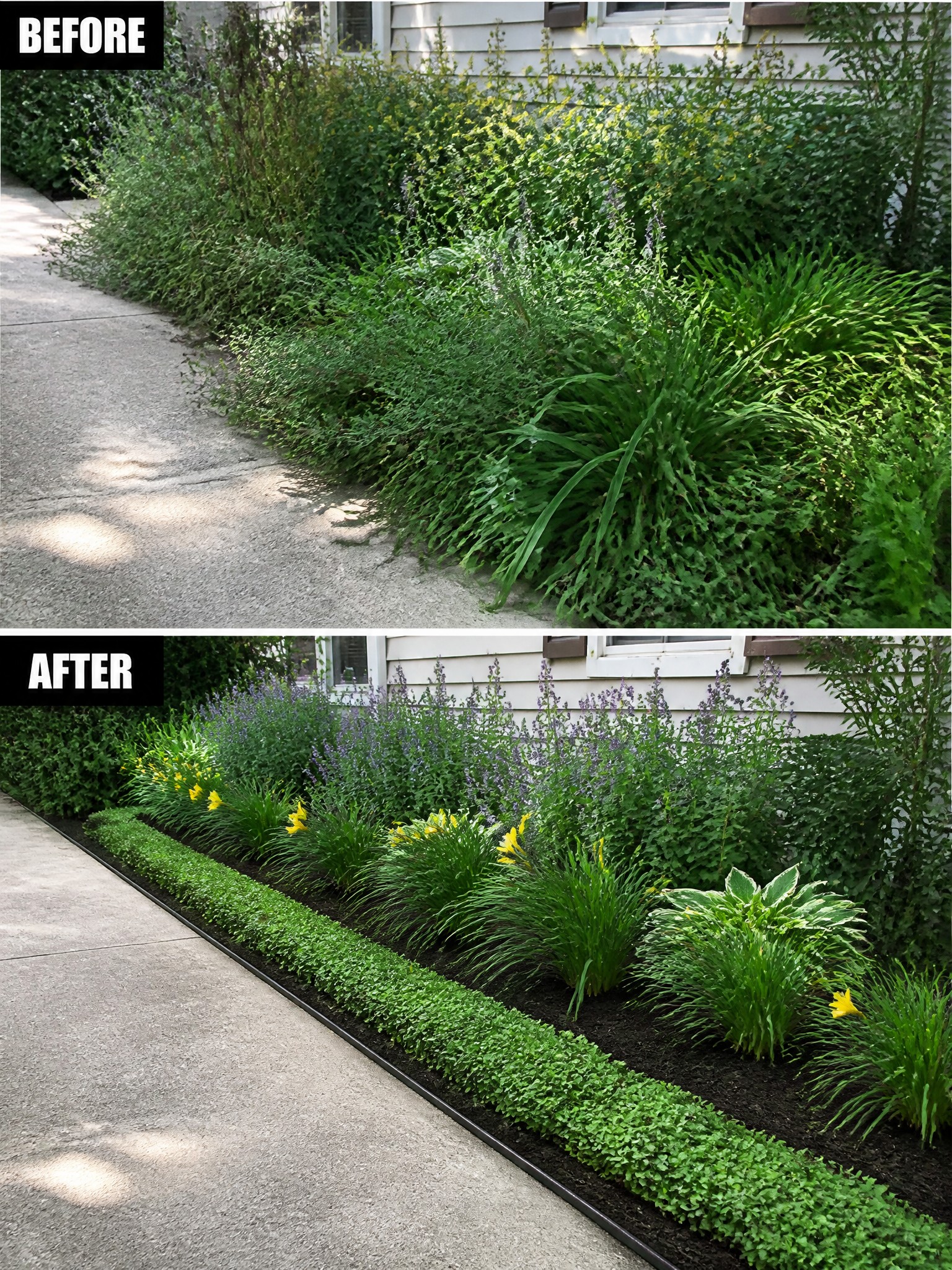
Overgrown shrubs that spill onto the walkway make the whole side of a house look neglected. Adding a clean edge and reorganizing the planting turns the same strip into something orderly without needing a full redesign. The black edging keeps mulch and soil in place while the lower groundcover and taller clumps stay within bounds.
This approach works well along any long foundation where plants have gotten away from you. Start by cutting back the worst of the overgrowth, then install edging that follows the house line. Layer plants by height so nothing flops onto the path, and the bed will stay looking intentional with basic maintenance.
Define Tree Beds With Simple Edging
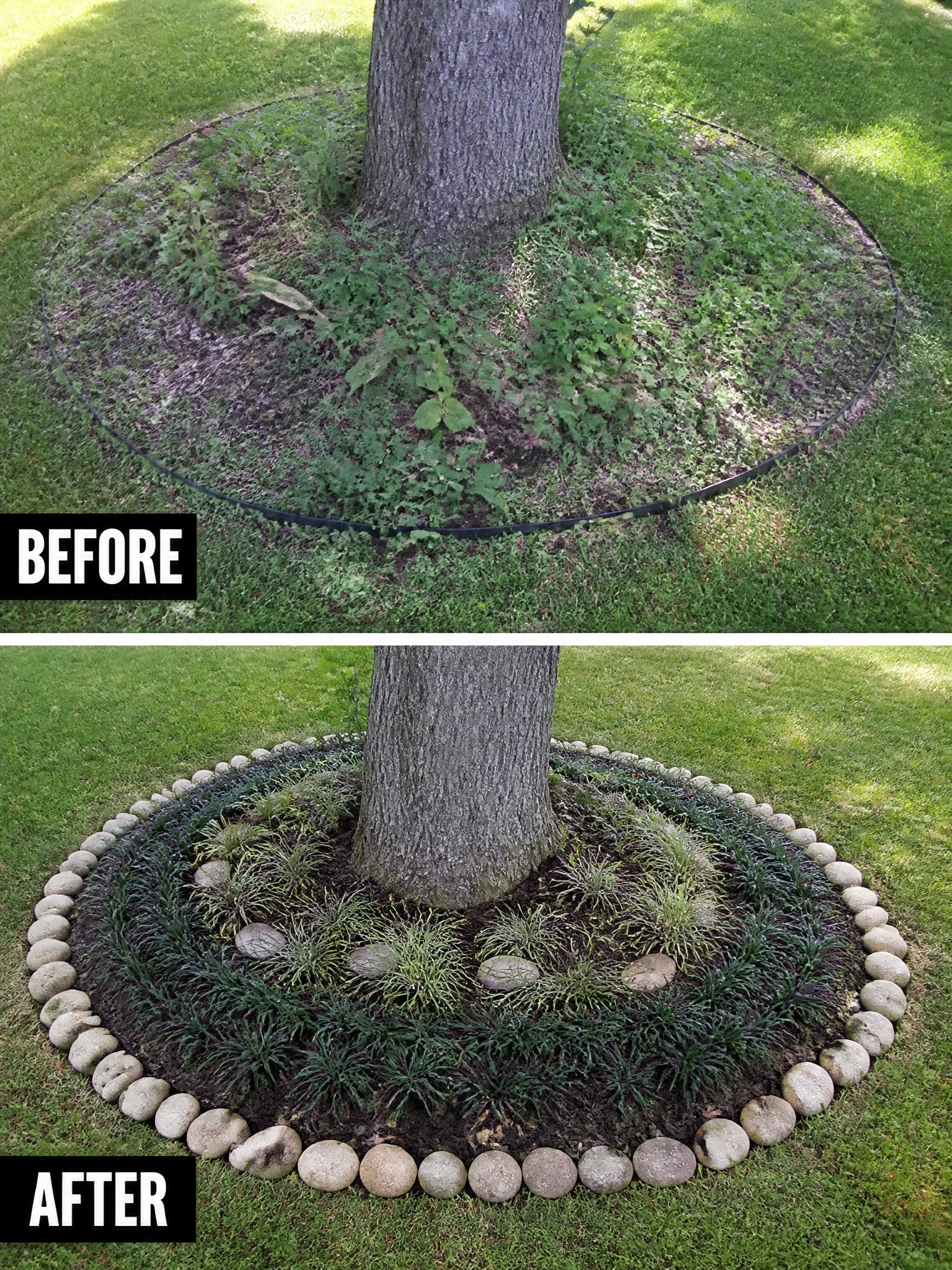
One easy way to improve the look around a tree is to give the base a clear edge and replace weedy growth with mulch and low plants. The black border in the first photo kept things roughly contained, but the area still looked messy. Adding a ring of stones and filling the bed with mulch and grasses makes the whole spot feel intentional and much easier to maintain.
This approach works well in any yard where trees sit in the lawn. Start by deciding the size of the bed, then use stones or another edging material to hold the shape. Mulch keeps weeds down and gives the planting room to stand out without a lot of extra work.
Use Repeated Planters Along The Front
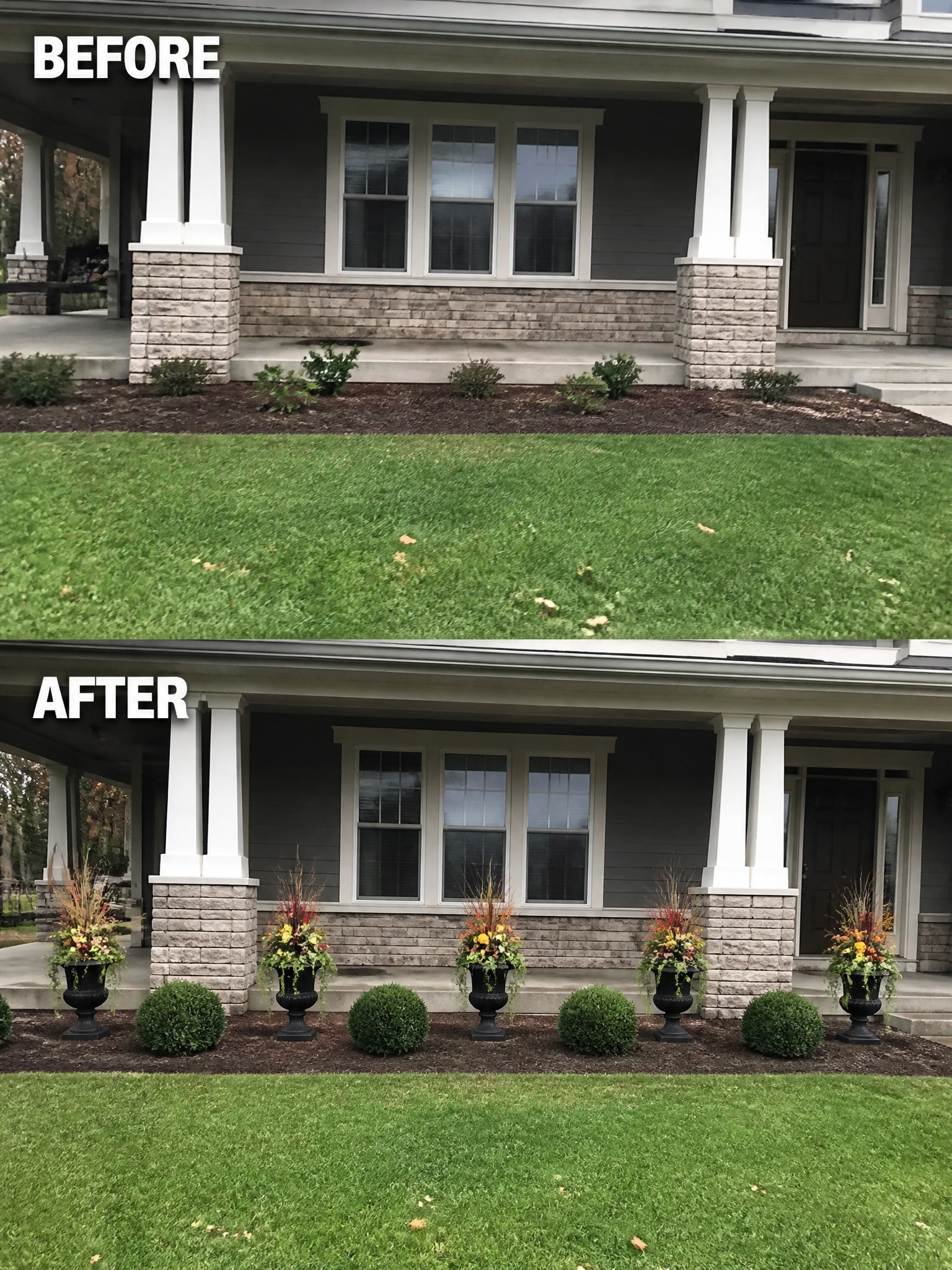
The before shows a plain mulch strip with only a few small shrubs. The after adds a clear row of matching black urn planters filled with seasonal color, spaced evenly between round shrubs. This one change gives the foundation a finished look and draws the eye along the length of the porch.
This idea works on many homes with a long front bed or porch. Pick planters in the same size and finish, then repeat the same basic planting mix in each one. Keep the spacing steady so the arrangement feels balanced instead of crowded.
Simplify An Overgrown Flower Bed
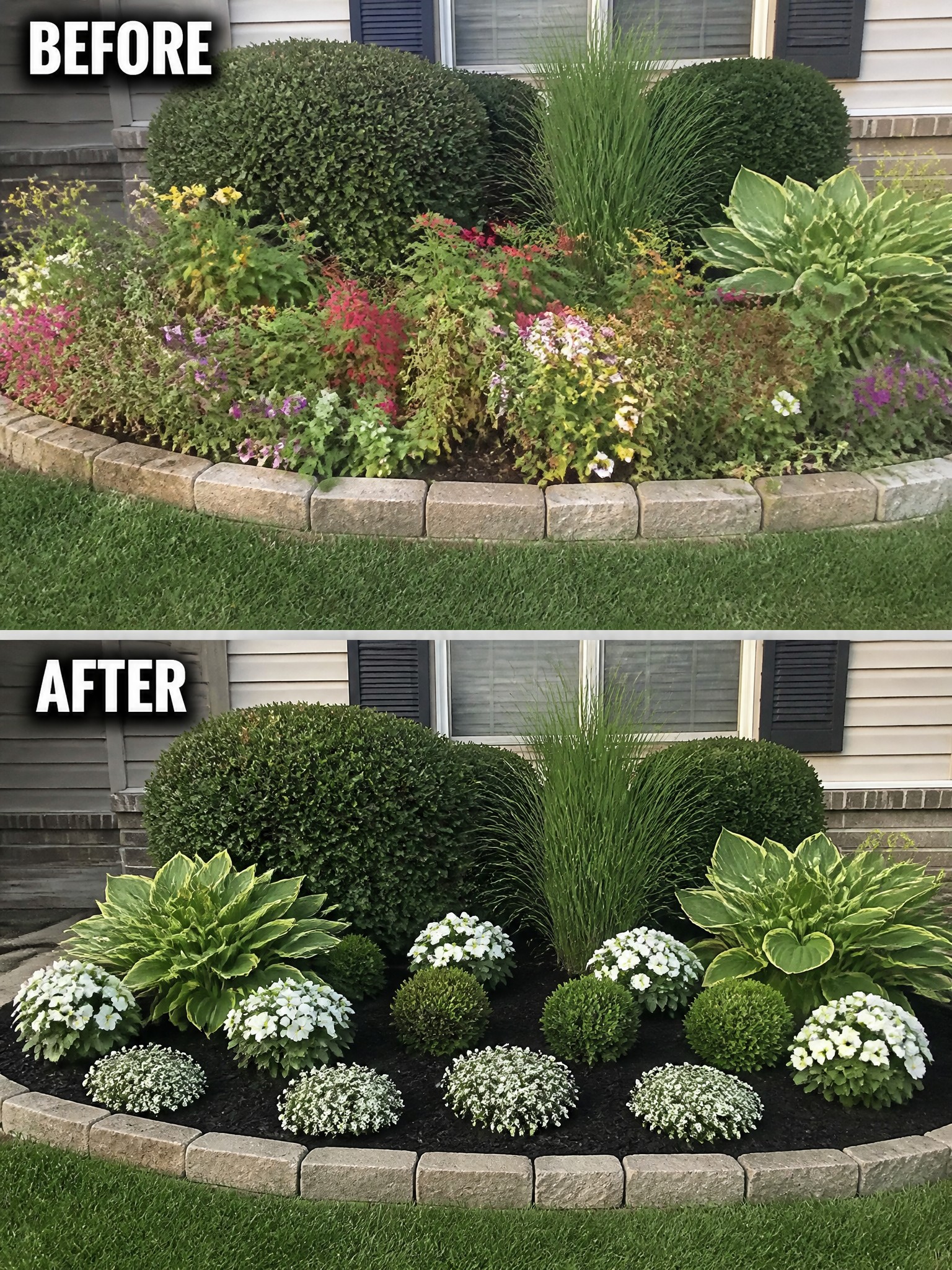
Many flower beds lose their shape when too many different plants grow together without any plan. Clearing the clutter and repeating just a few plants makes the whole area feel calmer and easier to maintain. The before photo shows a jumbled mix, while the after version uses neat groups of white flowers and hostas with fresh mulch between them.
This idea works well in any front bed that has gotten out of hand. Remove the extras first, then plant in small clusters of the same variety and finish with mulch to keep weeds down and give the bed a clean edge. It keeps the planting simple and lets each plant stand out.
Add Defined Beds To A Sloped Yard
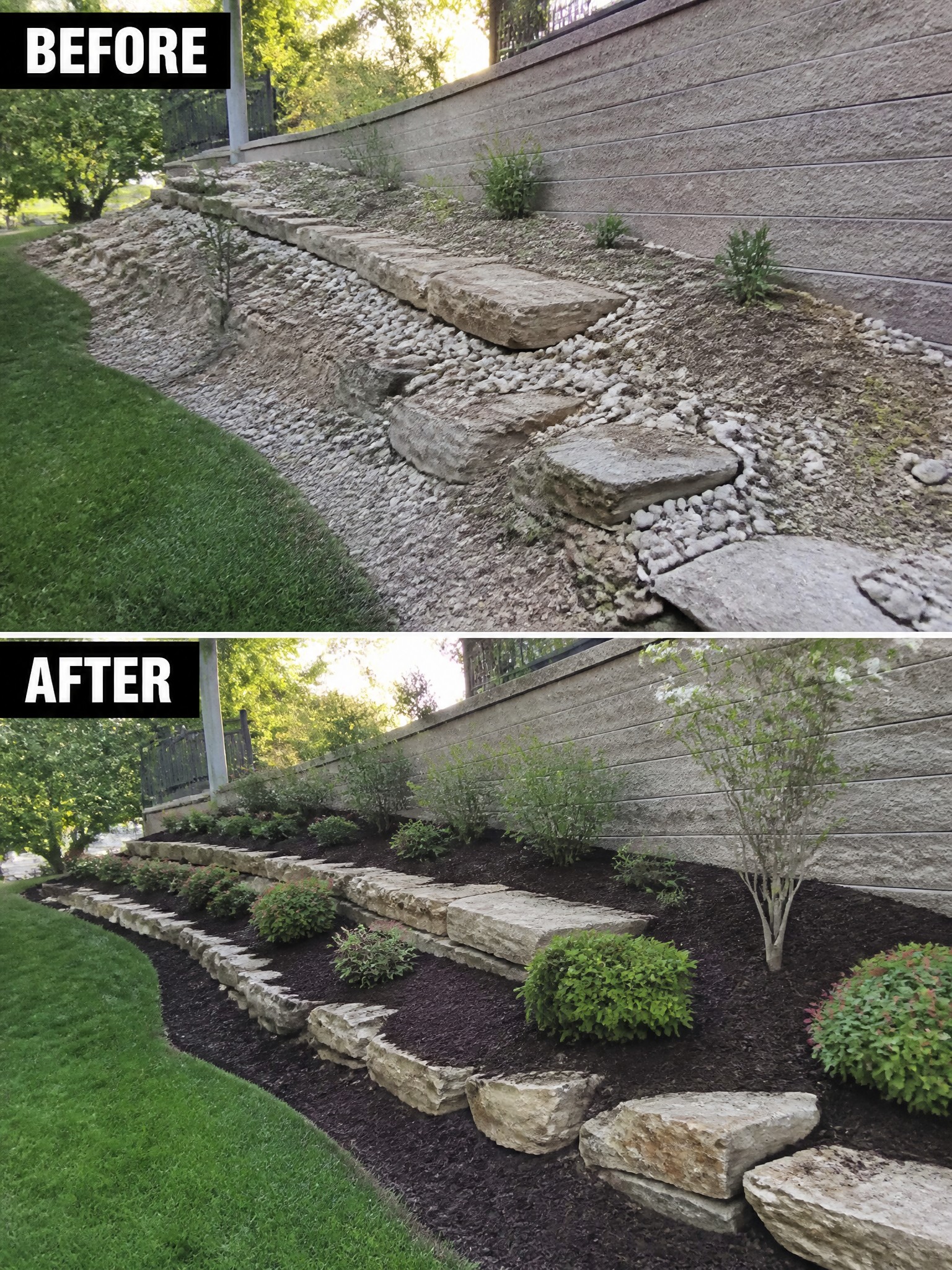
A slope next to a retaining wall can quickly turn into a messy mix of sliding gravel and scattered plants. Building low stone tiers holds the soil in place and creates flat areas that are much easier to plant and maintain.
This idea works best on homes with similar drops in the yard or along foundation walls. Set the stones first to form the levels, add a thick layer of mulch, and fill in with shrubs that suit the light and soil conditions.
Define Overgrown Front Beds With Mulch And Planting
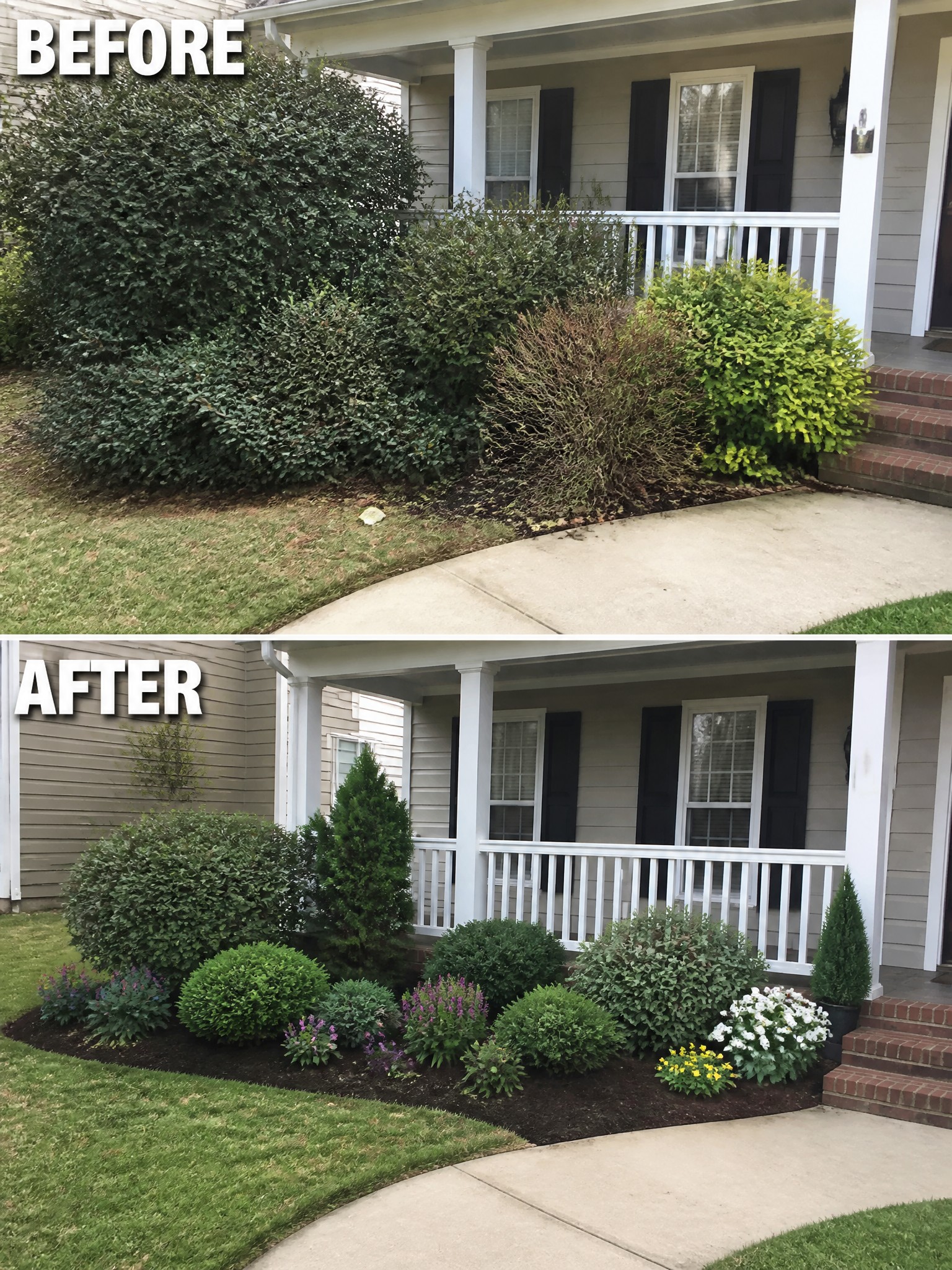
Overgrown foundation shrubs often make the front of a house look neglected even when the lawn is mowed. Clearing the largest bushes and replacing them with smaller, grouped plants set in fresh mulch creates a much neater line along the house. The change is mostly in the planting structure and the dark mulch edge that now separates the beds from the grass.
This approach works well on any home where the old shrubs have grown into a solid wall. Remove the worst offenders first, then lay out beds with a gentle curve and fill them with a mix of low, medium, and tall plants. Mulch keeps weeds down and gives the area a finished look right away.
Frequently Asked Questions
Q: How do I keep grass from sneaking back into my flower beds after a makeover?
A: Lay down a solid edge like bricks or metal strips right at the start. Check the borders every few weeks and pull any runners before they settle in. This keeps the beds looking sharp with less effort over time.
Q: What works best if I want low-water flowers that still look full?
A: Go for native perennials that match your area and group them by similar needs. Water deeply once a week at first so roots go deeper. Skip the daily sprinkle and you will see fewer weeds pop up too.
Q: Should I add anything extra after planting to hold the soil in place?
A: Spread a layer of mulch two inches thick around the plants. It locks in moisture and stops dirt from washing onto the lawn during rain. Replenish it once a year when it starts to thin out.
