

Front yards often end up looking a little unfinished when the edges stay straight and the beds lack any real shape to hold them together.
I usually notice that a few curved borders can pull the whole layout into something that feels more thought out without requiring new plants everywhere at once.
Curves help more than I expected.
They soften how the lawn meets the planting areas and give a clearer path for the eye to follow across the space.
Some of the setups here look like they could be adapted piece by piece depending on the size of the yard and how much time I have to test them.
Shape The Front Yard With Curved Garden Borders

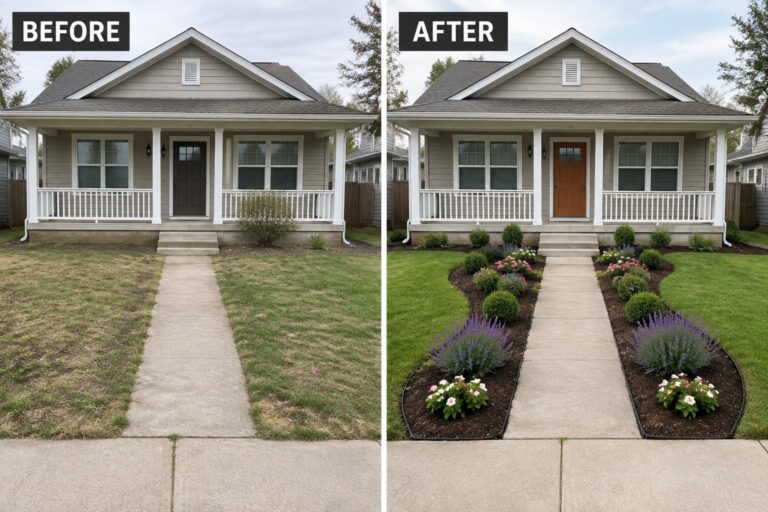
A plain stretch of lawn makes the front path feel like it is just cutting through open grass. Adding curved borders on both sides gives the walkway a clear frame and turns the lawn into a series of planted beds. The change is simple but noticeable. Mulch and low shrubs now follow the curve instead of leaving straight edges that run parallel to the path.
This idea works well on any front yard where the lawn runs right up to the walkway. Start by marking a gentle curve with a hose or rope, then cut the edge and add a border material you can maintain. Keep the plantings low near the path so the walkway stays open and welcoming. The curve softens the approach without taking up much extra space.
Define An Overgrown Front Yard With Curved Borders

The main improvement here comes from adding a clear, curved edge to the planting area. Where the before photo shows plants spilling out in every direction, the after version uses a simple stone border to create a defined shape that keeps the beds looking neat and purposeful.
This approach works well on narrow front yards where the space between the sidewalk and house can easily look messy. Clean up the overgrowth first, then lay out a gentle curve before planting in clusters rather than scattering everything. The border does most of the work to make the yard feel planned.
Define Front Beds With Curved Borders

A curved border is one of the simplest ways to turn a plain gravel strip into an actual garden bed. The before photo shows the area as open gravel with nothing to separate it from the walkway, while the after version uses a low curved edge to create a clear planting zone that feels finished and intentional.
This idea works especially well on narrow front yards where you want planting without crowding the path. Lay out the curve first with a hose so you can stand back and check the shape, then fill the bed with a mix of taller grasses and lower ground cover that will stay in scale with the house.
Add Curved Stone Borders To Shape A Sloped Yard

A bare, steep front slope usually ends up looking patchy and hard to mow. Curved stone retaining walls fix that by turning the hill into a few level planting beds that follow the grade instead of fighting it. The borders keep soil in place and give the whole front a cleaner, more finished look without needing a full regrade.
This idea suits houses where the front yard drops toward the street but still needs to feel open. Build the walls first so you have flat beds to work with, then keep the curves wide and simple. Leave a strip of grass at the top and bottom so the beds do not take over the whole space.
Shape Your Front Path With Curved Garden Borders
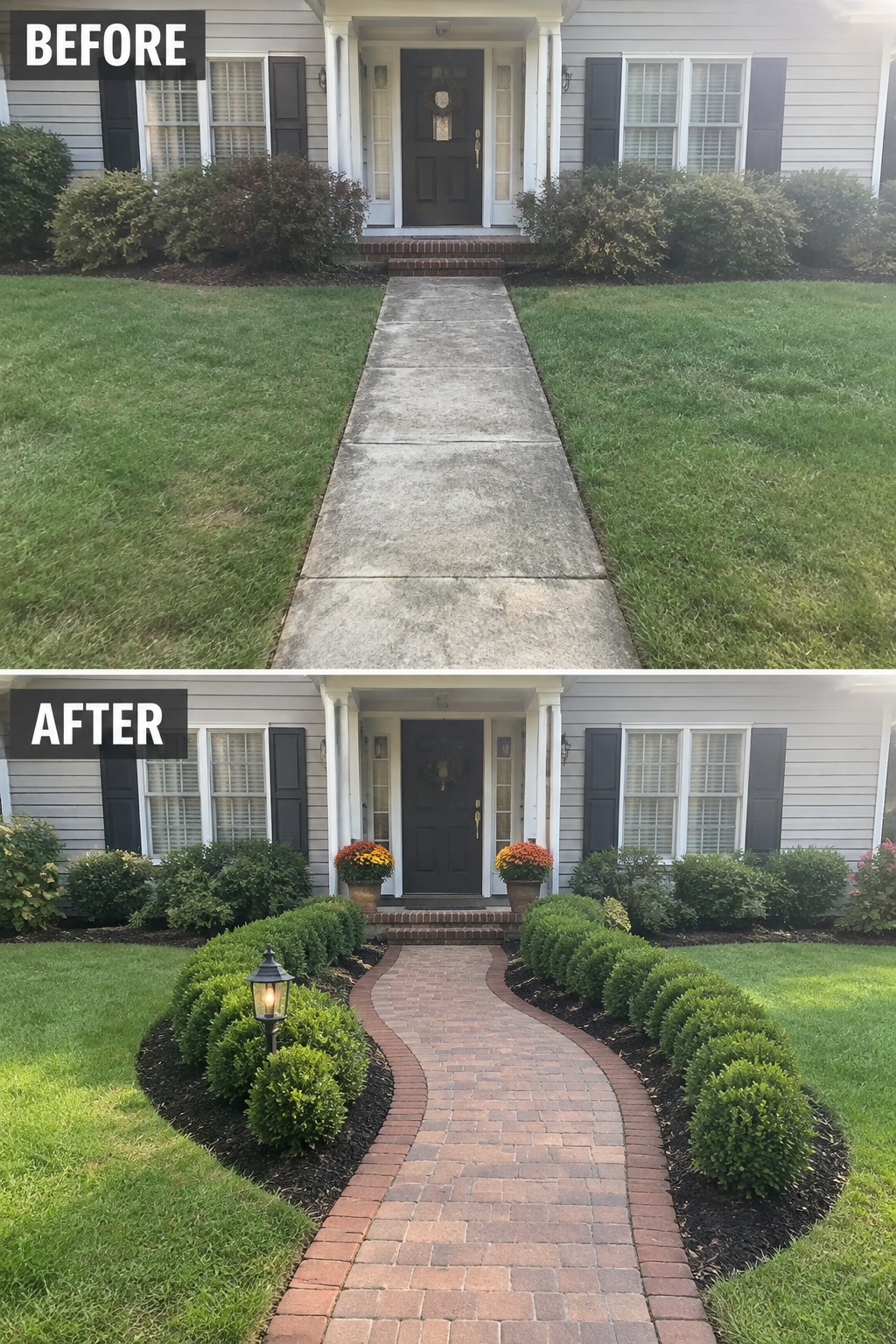
A straight concrete path with uneven shrubs on either side often feels flat and unfinished. Switching to a gently curved brick path and adding rounded garden beds on both sides gives the front yard a clearer structure and makes the walk feel more inviting. The borders now guide the eye instead of sitting in a straight line beside the old walkway.
This idea works best on smaller or mid-sized front yards where the path runs straight from the street. Lay out the curve first with a hose, then build the beds outside the path and fill them with mulch and rounded shrubs. Keep the plantings simple so the curve stays the main feature. It suits homes with basic siding and a central door where you want more interest without adding a lot of hardscaping.
Define Front Yard Beds With A Curved Border

A bare patch of dirt next to the house can look unfinished even when the rest of the yard is decent. Adding a curved metal border gives the space a clear shape and turns scattered plants into a real bed. The gravel fill and larger rocks keep everything from looking messy while still letting the succulents stand out.
This approach works well on narrow side yards or front foundation areas where you want something low and neat. Start by cleaning out the old growth and setting the border first, then fill in with gravel and a few larger plants. It keeps the look simple and makes future weeding easier too.
Shape A Front Yard Strip With A Curved Border

A curved border gives a plain strip of grass a clear purpose without making the yard feel crowded. The before photo shows how the lawn just faded into the sidewalk with no real edge, while the after shows how a low wooden border turns the same space into a planted bed that looks intentional and easier to maintain.
This idea works best along sidewalks or narrow front lawns where you want flowers and grasses but still need room to walk. Keep the curve gentle, use a simple material like wood or stone, and add mulch inside the border so the plants stay neat and the edge stays visible year after year.
Add Structure With A Curved Front Garden Border

A plain strip of mulch along the house can look unfinished when the lawn simply curves up to meet it. Adding a clear curved bed and filling it with layered plants gives the front a much more intentional look. The low lights along the edge also make the planting visible and welcoming once the sun goes down.
This approach suits homes with a wide foundation planting area and a natural curve already suggested by the walkway. Mark the border first so it flows smoothly rather than fighting the existing shape, then mix heights so nothing looks too flat. Keep the bed a consistent width so the curve stays easy to mow around.
Shape Front Beds With Curved Garden Borders

A flat lawn that runs right up to the house often looks unfinished. The change here came from cutting curved edges into the grass and filling those beds with mulch and layered plants. The curves follow the shape of the porch and walkway, which gives the whole front a more settled look without adding any hardscaping.
This idea suits houses where the lawn meets the foundation in a straight line. Mark the curve first with a hose so you can adjust it before cutting. Keep the beds a consistent width and choose plants that stay in scale with the space so the entry stays open and easy to reach.
Shape The Front Lawn With A Curved Garden Border

A common problem with many front yards is the way the lawn just runs into the driveway with no clear stop. The grass gets long and messy along the edge, and the whole area starts to look unplanned. Adding a curved garden bed with mulch and a simple stone border gives the lawn a clean line and makes the space feel more finished.
This idea works well on any home where the lawn meets a long stretch of concrete. Mark a gentle curve first, lay down edging, and keep the planting simple with a mix of low flowers and greenery. The border stops the grass from creeping onto the driveway and gives you an easy place to add color each season.
Define Your Front Yard With Curved Garden Borders
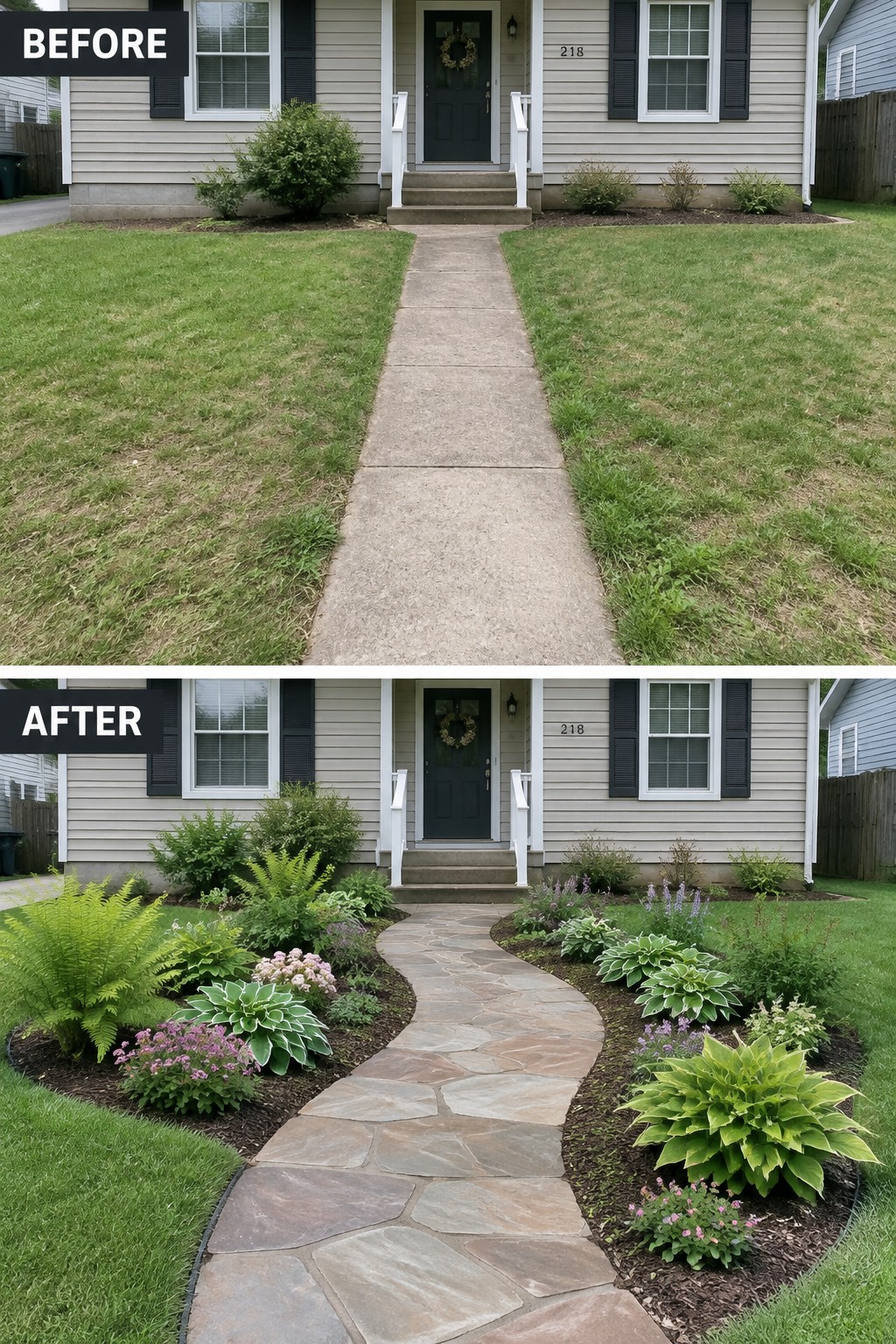
A straight concrete path through a plain lawn often leaves the front yard feeling flat and unfinished. Swapping it for a gently curving stone walkway and adding planted beds on both sides gives the space clear shape and makes the entrance feel more welcoming without any major construction.
This idea suits most modest front yards where the path is the main feature. Lay out the curve first so it still leads straight to the door, then keep the beds a consistent width and use mulch to hold the lines clean. The planting can stay simple as long as it follows the new edge.
Frame Front Steps With A Curved Garden Border
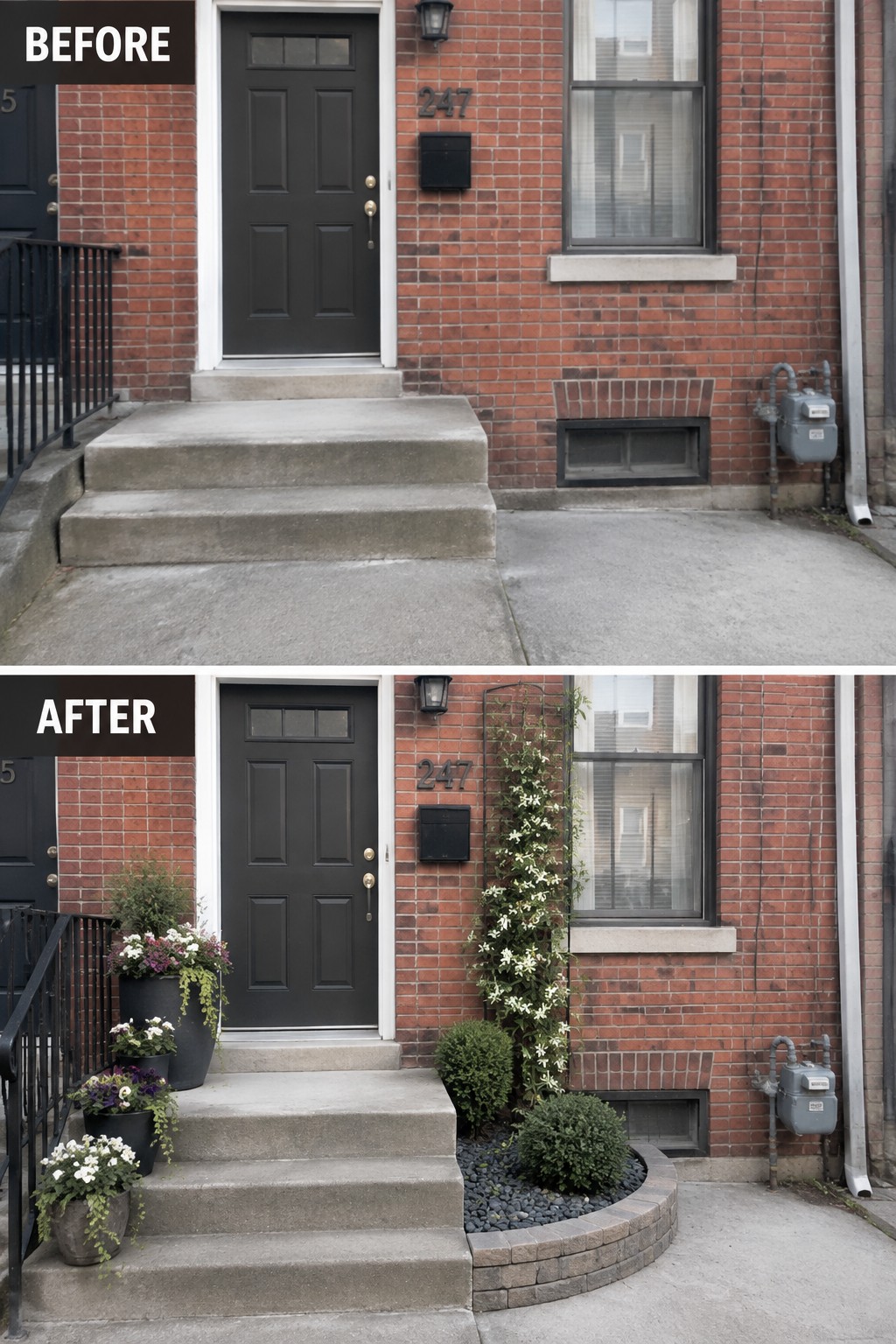
The steps here went from sitting on a flat slab of concrete to feeling like they belong to a small planted garden. A low curved brick border now wraps around the base and holds a few shrubs plus a climbing vine that softens the wall without crowding the walkway.
This idea works on any house where the front steps meet a wide concrete area. Mark the curve first with a hose so you can adjust it until it feels right, then keep the planting low and simple. The curve does most of the work to make the entry look planned rather than leftover.
Replace Lawn With Curved Planting Beds

A dry, patchy lawn can make the whole front of a house feel neglected. Switching it out for a curved planting bed gives the yard clear shape and cuts down on the area that needs regular watering and mowing. The curved edge softens the line between the driveway and the house while the mulch and larger plants fill the space without looking busy.
This approach works well on small to medium front yards where you want less grass but still need something that looks intentional from the street. Start by marking a gentle curve with a hose or rope, then edge it properly before adding mulch and a few sizes of plants. Keep the bed a reasonable depth so it does not crowd the walkway or block the view from the windows.
Reshape An Overgrown Front Yard With Curved Garden Beds
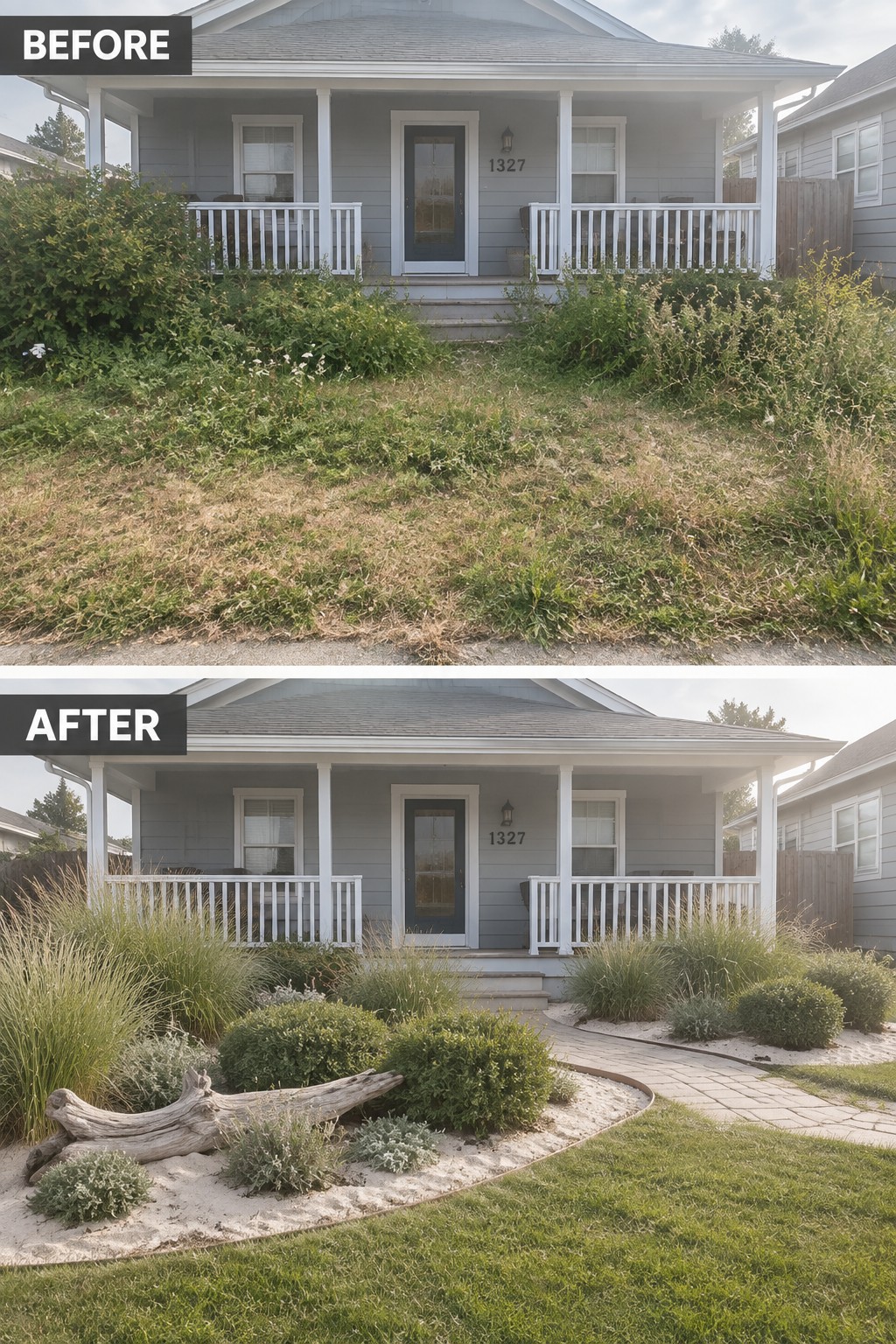
An overgrown front yard with no clear edges makes the whole house feel a bit neglected. Adding curved garden borders gives the slope structure while keeping the planting areas soft and natural. The biggest shift here came from clearing the wild grass first, then shaping the beds around a gentle path instead of leaving everything open and messy.
This idea works especially well on small or sloped front yards where straight lines can feel stiff. Start by cutting back the overgrowth completely, then use a hose to test the curves before you edge. Keep the plantings simple and repeat a few textures so the beds stay easy to maintain over time.
Add Curved Borders To Define The Front Strip

The main change here is turning a plain strip of grass along the street into a planted bed with a gentle curve. The curved edge and low flowers create a clear boundary that makes the whole front look more intentional and cared for.
This idea works best on homes where the lawn runs straight to the curb with no separation. Mark a soft curve first, install simple metal edging to hold the shape, then add mulch and easy flowers that can handle the roadside conditions. It gives you color and structure without losing much lawn space.
Add Curved Garden Borders To Define Your Front Beds

Overgrown shrubs tend to blur together and make a front yard feel messy. Replacing them with low hedges planted in soft curves creates clear beds, gives the space shape, and keeps the view open to the house.
This idea works best on fairly flat front yards where you want structure without a formal look. Start by clearing the old growth, then lay out the curves with a hose before you plant. Simple evergreens and gravel inside the borders keep the shapes easy to maintain.
Add Curved Borders To Shape A Bare Side Yard

A flat stretch of dirt next to the house often ends up ignored because it has no clear purpose. Adding a low curved border turns that leftover space into a defined planting bed that follows the wall and fence instead of cutting across them. The curve makes the area feel larger and more intentional without taking up extra room.
This works well in narrow front or side yards where straight edges can feel stiff. Set the border first, then fill the inside with mulch and simple plants. Keep the curve gentle so the bed stays easy to reach and water.
Add Curved Edging To Give A Front Garden Bed Clear Shape

Replacing a broken plastic border with a solid brick curve turns a weedy, scattered bed into something that looks planned. The new edging holds the soil in place and creates a clean line that lets the plants show up instead of blending into the lawn.
This approach suits small front yards where you want structure without a big overhaul. Lay out the curve first with a hose, set the edging, then fill in with plants in a few heights and colors. Keep the bed a manageable size so mowing stays simple and the border stays visible.
Create A Mulched Front Garden With Curved Edges

The main improvement here is replacing a loose, spreading ground cover with a mulched bed that has a clear curved edge. That single change makes the planting look planned instead of like it just grew out from the house.
This idea works best on homes where the lawn runs straight across the front. Mark the curve with a hose first, then cut a clean edge and add a layer of mulch before planting. Mix taller grasses toward the back with lower flowers and shrubs in front so the bed has some height without blocking windows.
Shape A Bare Slope With Curved Garden Borders
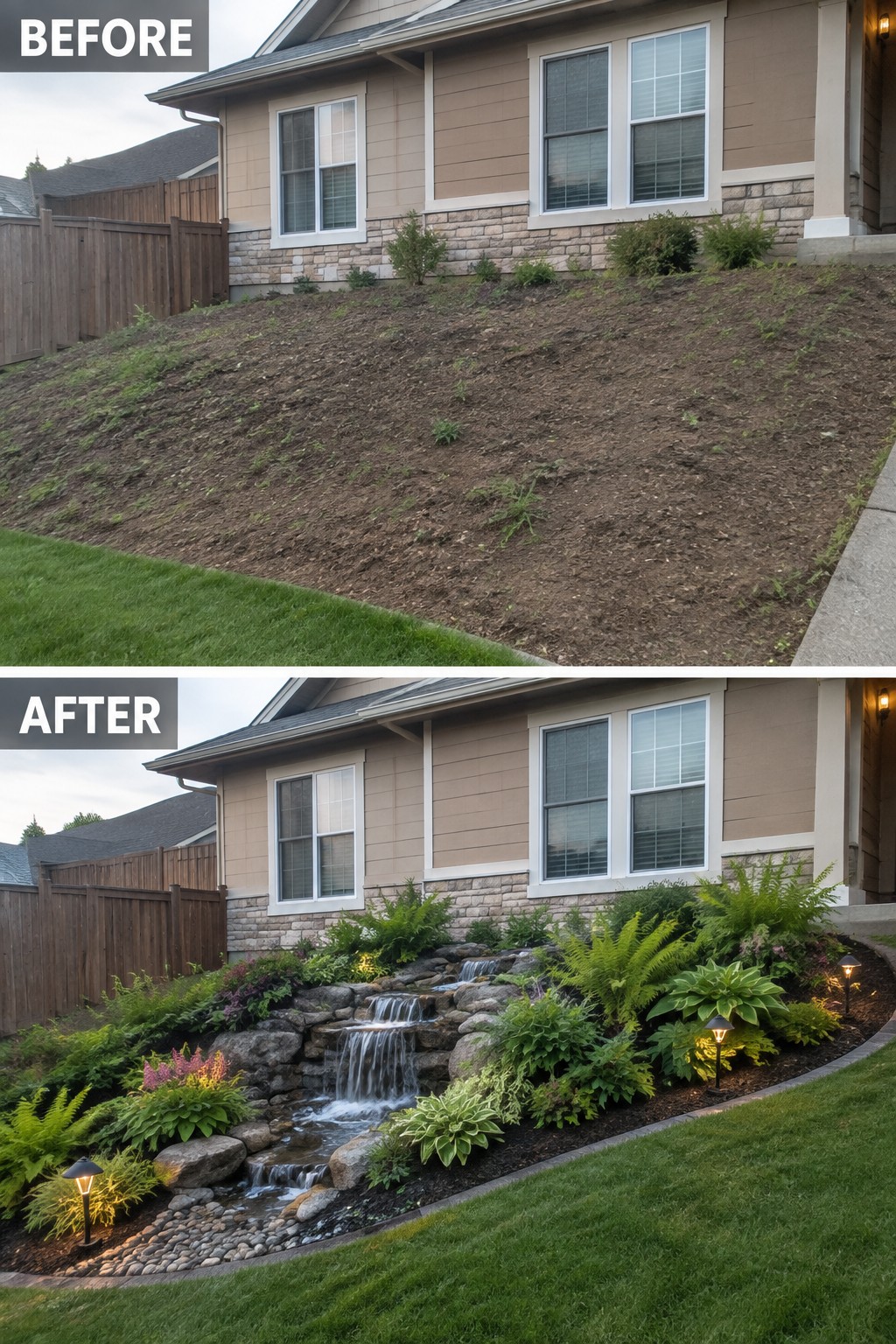
A bare dirt slope next to a house often looks unfinished and hard to maintain. Adding a curved garden border gives the area clear shape and turns the slope into a planted space instead of just open ground. The addition of a small waterfall and layered plants helps the bed feel settled and connected to the rest of the yard.
This idea works best on homes where the ground drops away from the foundation. Mark a gentle curve first, then build the bed with rocks or edging before planting. Keep the plants in groups of different heights so the slope stays interesting without looking crowded. The curve softens the straight lines of the house and makes the front feel more complete from the street.
Frequently Asked Questions
Q: How do I keep my curved borders from getting all wobbly over time?
A: Start by digging a shallow trench along the curve and packing the soil tight on both sides. Check the edges every few months and nudge them back into place with a trowel. Mulch helps hold everything steady too.
Q: What edging material should I pick for a front yard with lots of foot traffic?
A: Flexible plastic or metal strips bend easily to follow your curves. They stay hidden under the soil line so nothing sticks out. Just make sure to anchor them well at the start and end.
Q: Will curves work if my yard slopes a bit?
A: Yes they will. Follow the natural slope when you lay out the border and the eye will still see smooth lines.
Q: How much space do I need between the border and my house for plants?
A: Leave at least two feet so the plants have room to grow without crowding the walkway. This gives you space to mow or weed easily too.
