

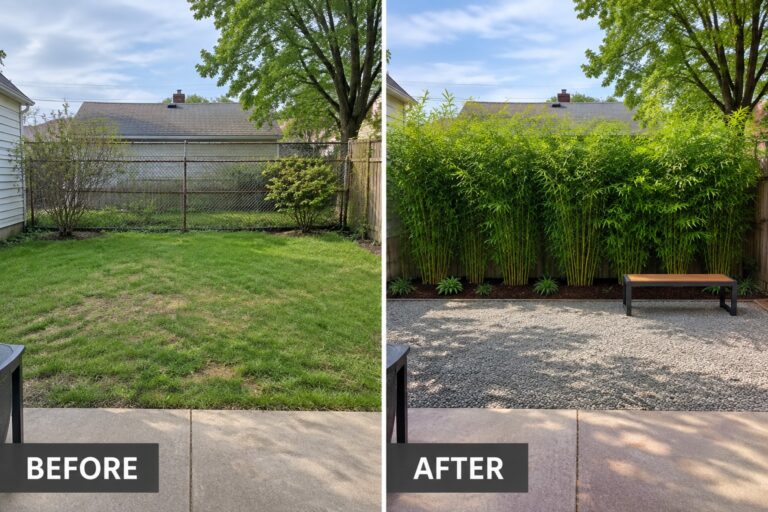
My backyard always felt a bit exposed until I added some height along the property line with shrubs and a few trees.
Privacy comes from thinking in layers rather than one quick fix.
I have noticed that grouping evergreens or placing a simple screen near the seating area makes the whole space feel more settled without needing a full overhaul.
Some of these ideas seem worth testing because they work with the existing layout and grow better over time.
It is satisfying to watch the yard start to feel like a place where I actually want to linger.
Plant Tall Screening Plants For Backyard Privacy
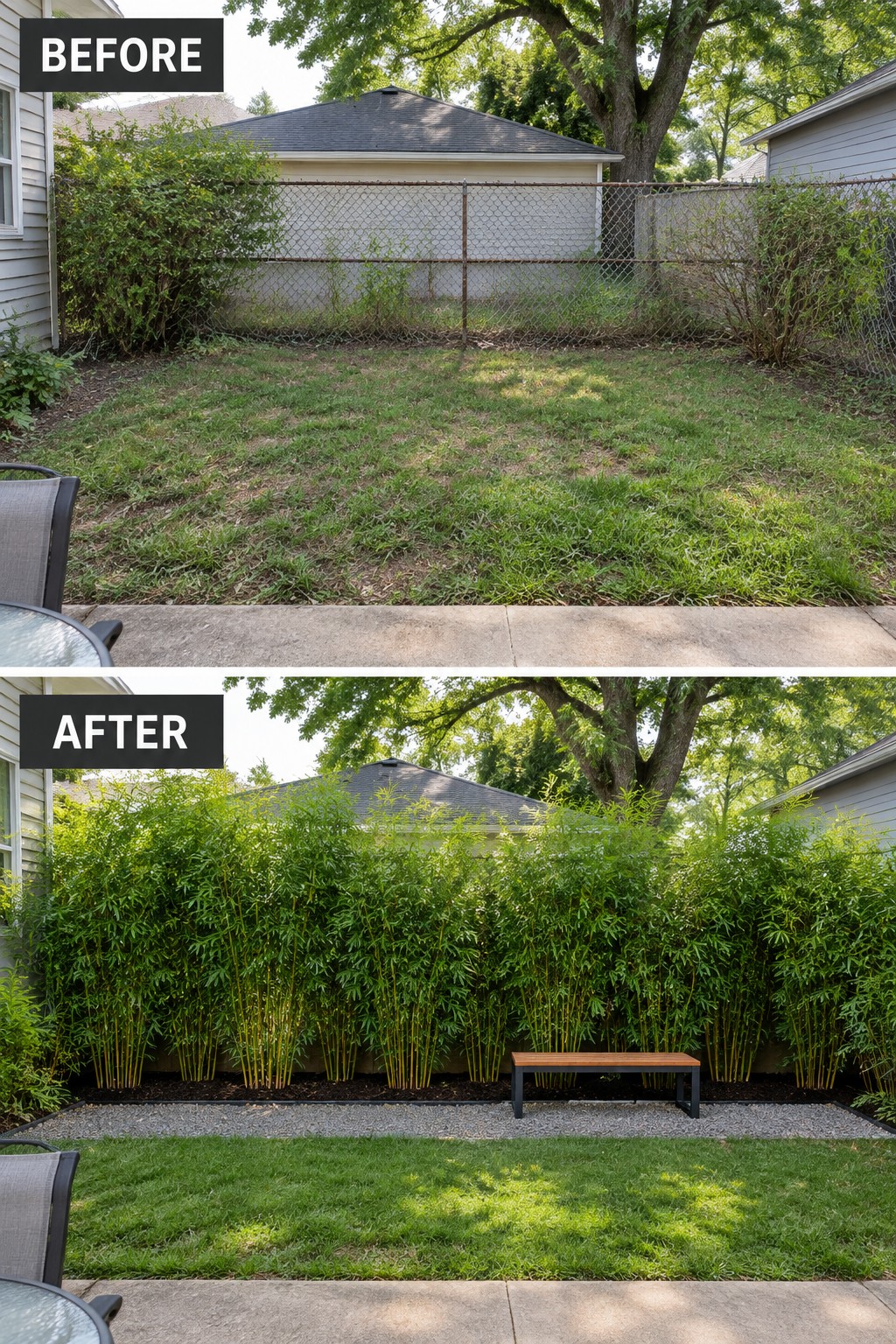
A chain link fence often leaves a yard feeling open and unfinished. Here the fix was straightforward. A single row of tall bamboo was planted along the fence to form a living screen that hides the view and softens the whole space.
This idea works best on lots that back up to neighbors or alleys. Pick clumping bamboo or another fast screening plant that reaches six to eight feet, plant them close together, and keep the bed mulched so the row stays neat. Once the plants fill in, the yard feels more private without needing a solid fence or tall wall.
Add A Privacy Fence To Create A Backyard Seating Area
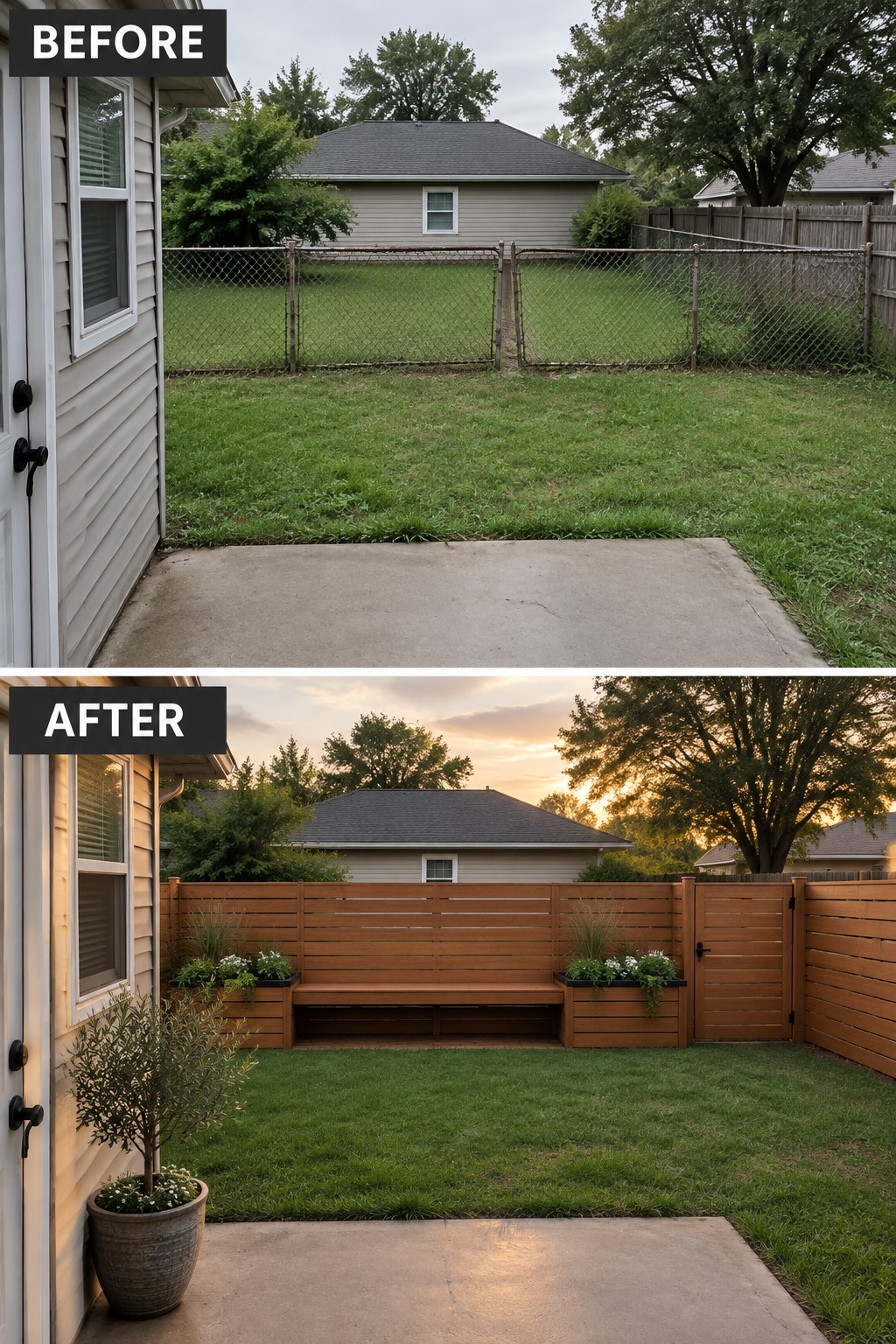
An open chain link fence leaves the whole yard exposed and makes the concrete slab feel like leftover space. Switching to a solid wood fence with a built-in bench and planters instantly gives the area a clear purpose and blocks the view from neighboring yards.
This approach works best on smaller lots where you need both privacy and a place to sit without crowding the lawn. Keep the fence height consistent with local rules, use the bench to hide storage, and stick with one or two plant types in the built-in boxes so the space stays easy to maintain.
Create Privacy With A Vertical Garden Wall

A plain concrete patio next to a tall block wall often feels open and unwelcoming. Covering that wall with a vertical garden instantly adds privacy while turning the space into a place where people actually want to sit.
This approach works best on small or narrow yards where a full hedge would take up too much room. Use a simple modular planting system on the wall, keep the floor mostly clear, and add just enough seating and a few large pots to define the area without crowding it.
Create Privacy With A Gabion Wall And Border Planting
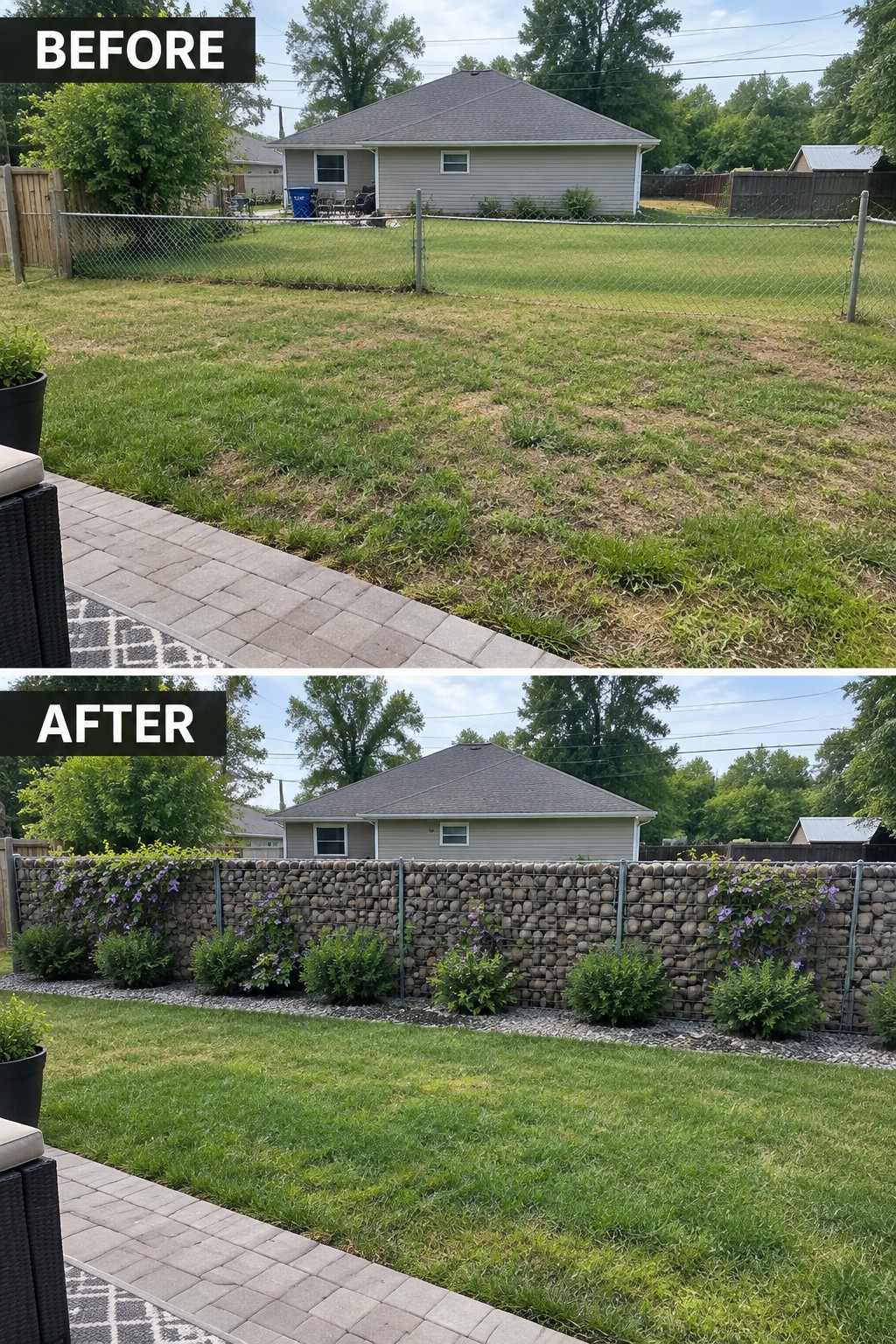
An open chain link fence leaves the whole backyard exposed. Replacing it with a gabion wall and a row of shrubs and vines gives the space clear boundaries and real privacy without making it feel closed in. The plants soften the stone and the low border planting keeps the lawn looking neat.
This approach works well in flat backyards where you want separation from neighbors but still need the area to feel open. Start with the wall or fence first, then add a simple planting strip in front. Choose shrubs that stay in scale with the space and vines that can climb the wall over time.
Add Curtains To Create Privacy On An Open Deck
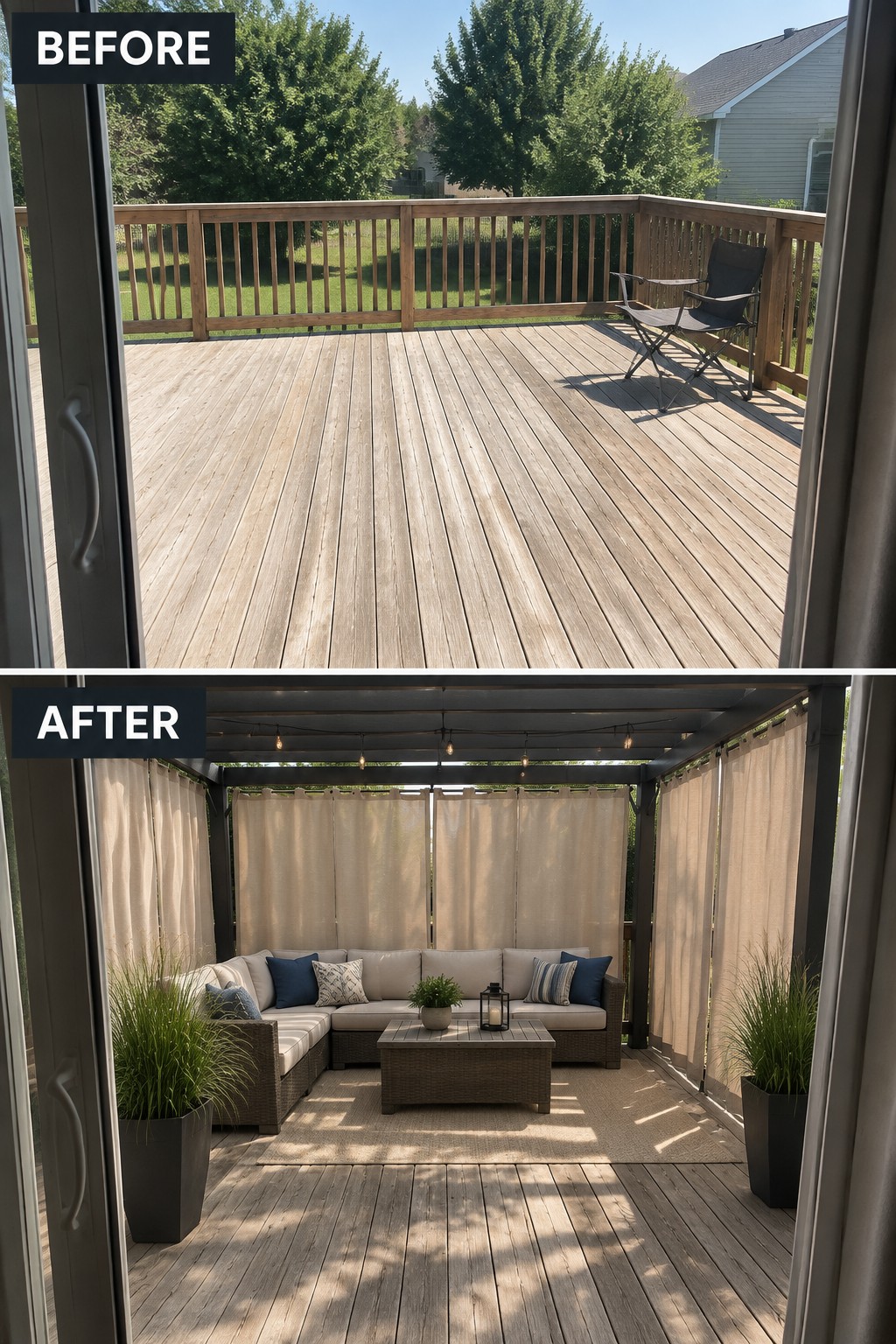
An open deck often feels too exposed, especially when neighbors or the yard are right there. In this case the before photo shows a plain wooden deck with nothing but one folding chair. The after shows how adding a simple overhead structure and drop-down curtains on the sides turns the same space into a defined room that feels sheltered and private.
This approach works well on decks that sit close to other homes or get too much direct view from the yard. Start with a basic frame or pergola kit, then add outdoor curtains that can be pulled closed when needed. Keep the furniture scale modest so the space still feels open inside, and choose fabric that handles weather without looking heavy.
Create Privacy With Tiered Planting Beds

A bare slope like the one in the before photo leaves the whole backyard exposed. Adding a few levels of retaining beds filled with dense shrubs and grasses turns the hill into a layered screen that blocks the view from above.
This idea works best on yards with a noticeable drop where flat planting would not hold. Build the beds first to keep the soil in place, then use a mix of taller evergreens in the back and lower shrubs in front so the coverage feels full without looking crowded.
Grow Climbing Vines On A Lattice For Privacy
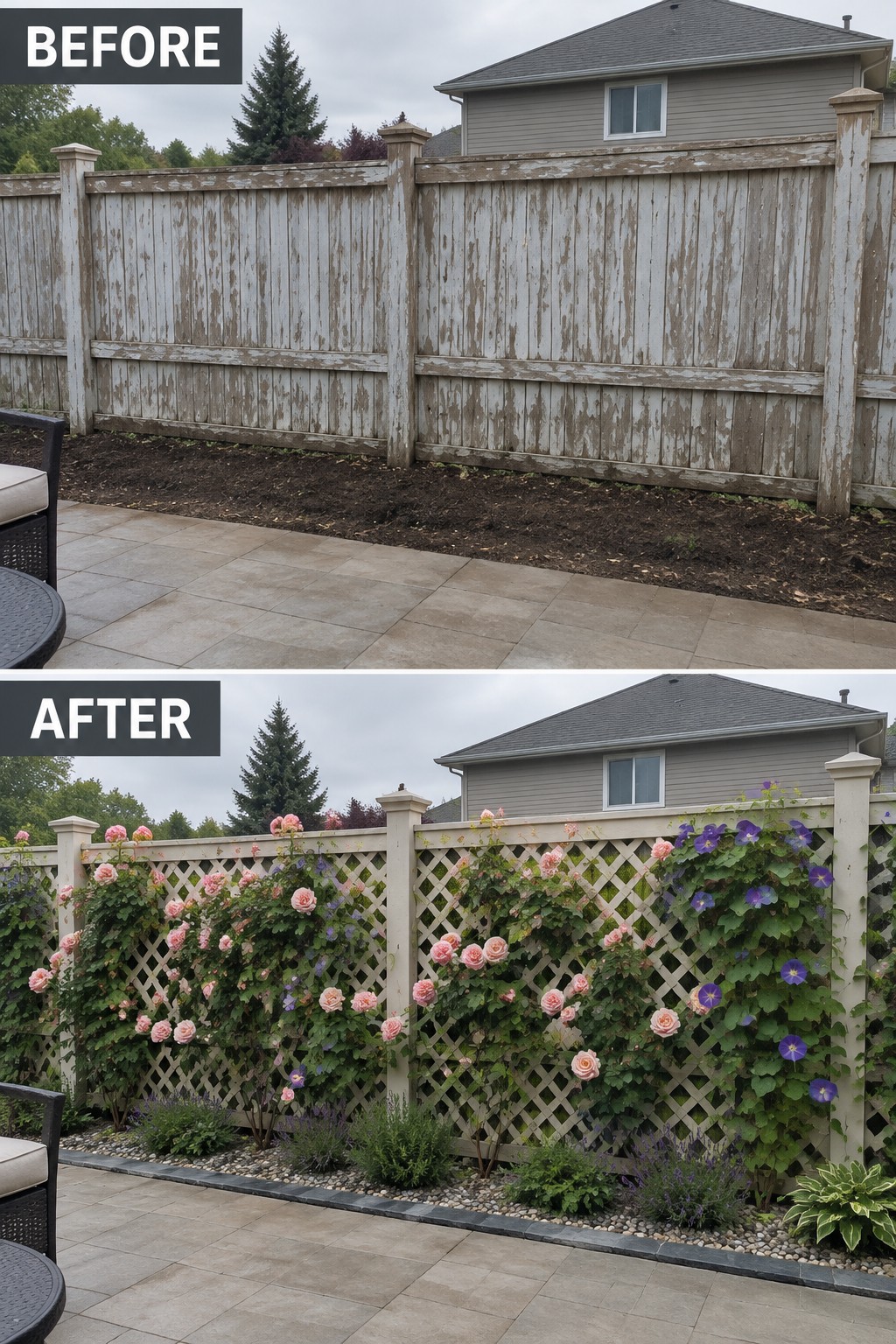
A plain fence often leaves a backyard feeling exposed. In this case the weathered wood sat above bare dirt with no real separation from the neighboring yard. Adding lattice panels and letting roses and morning glories climb changed the whole edge of the space. The vines fill in quickly, soften the fence line, and block the view without making the area feel closed in.
This approach works well along a patio or property line where you need height but do not want a solid wall. Start with a simple lattice attached to the existing fence, plant a few vigorous climbers in a prepared bed, and let them grow for a season or two. Keep the ground planting low and simple so the vines stay the main feature.
Plant A Mixed Border For Natural Privacy

A bare backyard often feels exposed, especially when the fence is the only thing separating your space from the neighbors. Adding a row of shrubs and tall grasses along the fence creates a living screen that blocks the view without making the yard feel closed in. The plants soften the line of the fence while giving the lawn a finished edge.
This idea works best in average-sized yards where you want privacy but still need the space to feel open. Choose a mix of evergreen shrubs for year-round coverage and ornamental grasses for height and movement. Plant them in a staggered row so they fill in densely over a season or two, and keep the lawn clear in front so the border stays the main feature.
Add Privacy Screens With Vines To Create An Outdoor Room
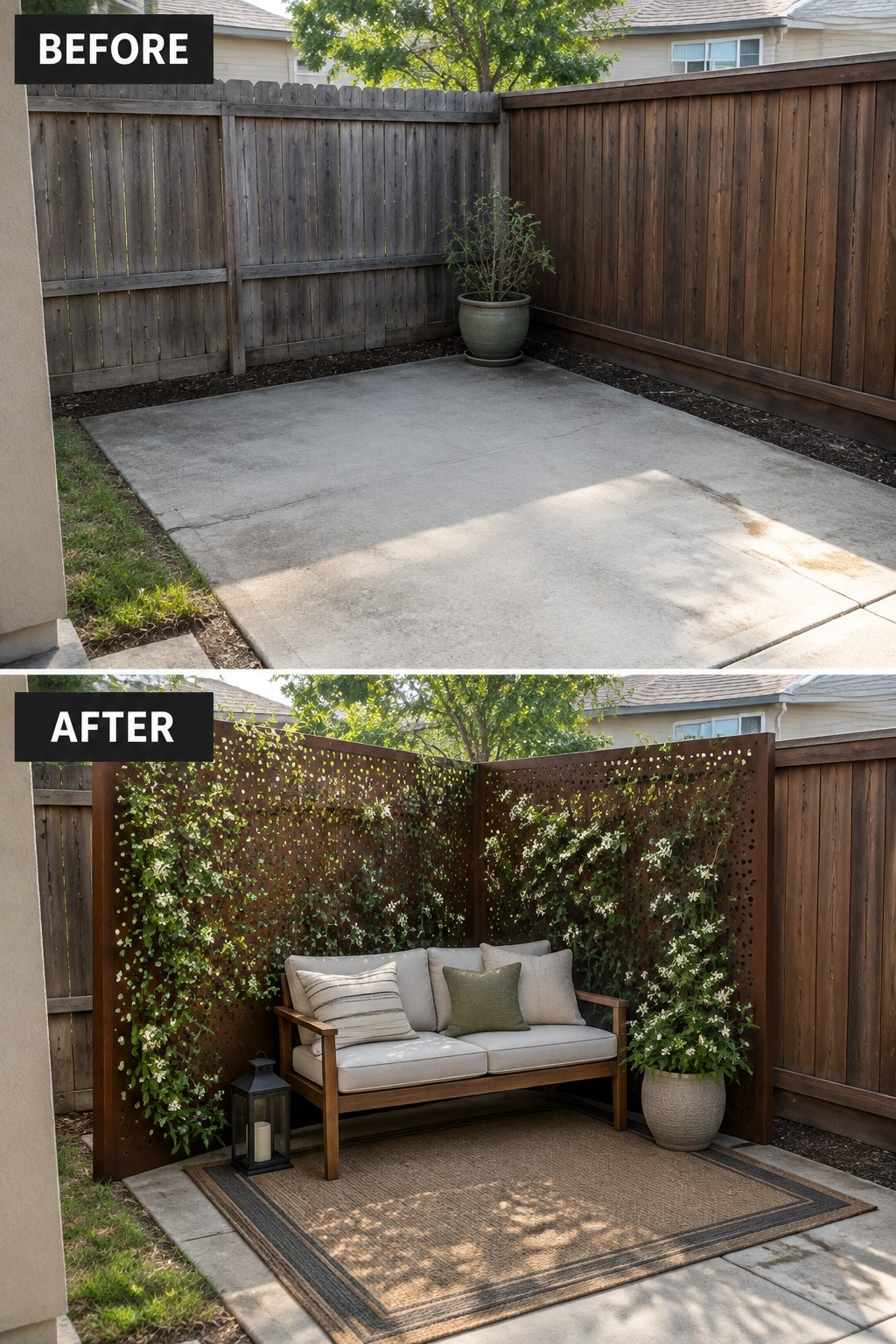
A plain concrete patio often sits unused because it feels wide open. Tall screens covered in climbing vines change that fast by blocking views from neighbors and giving the space clear edges so it starts to feel like a real room.
This idea works well in smaller backyards where standard fences are not enough. Put the screens along the sides that need the most cover, choose vines that grow quickly in your area, and keep the seating simple so the space does not feel crowded. A rug helps mark the sitting area while still leaving room to walk around.
Add Privacy With A Trellis And Climbing Vines
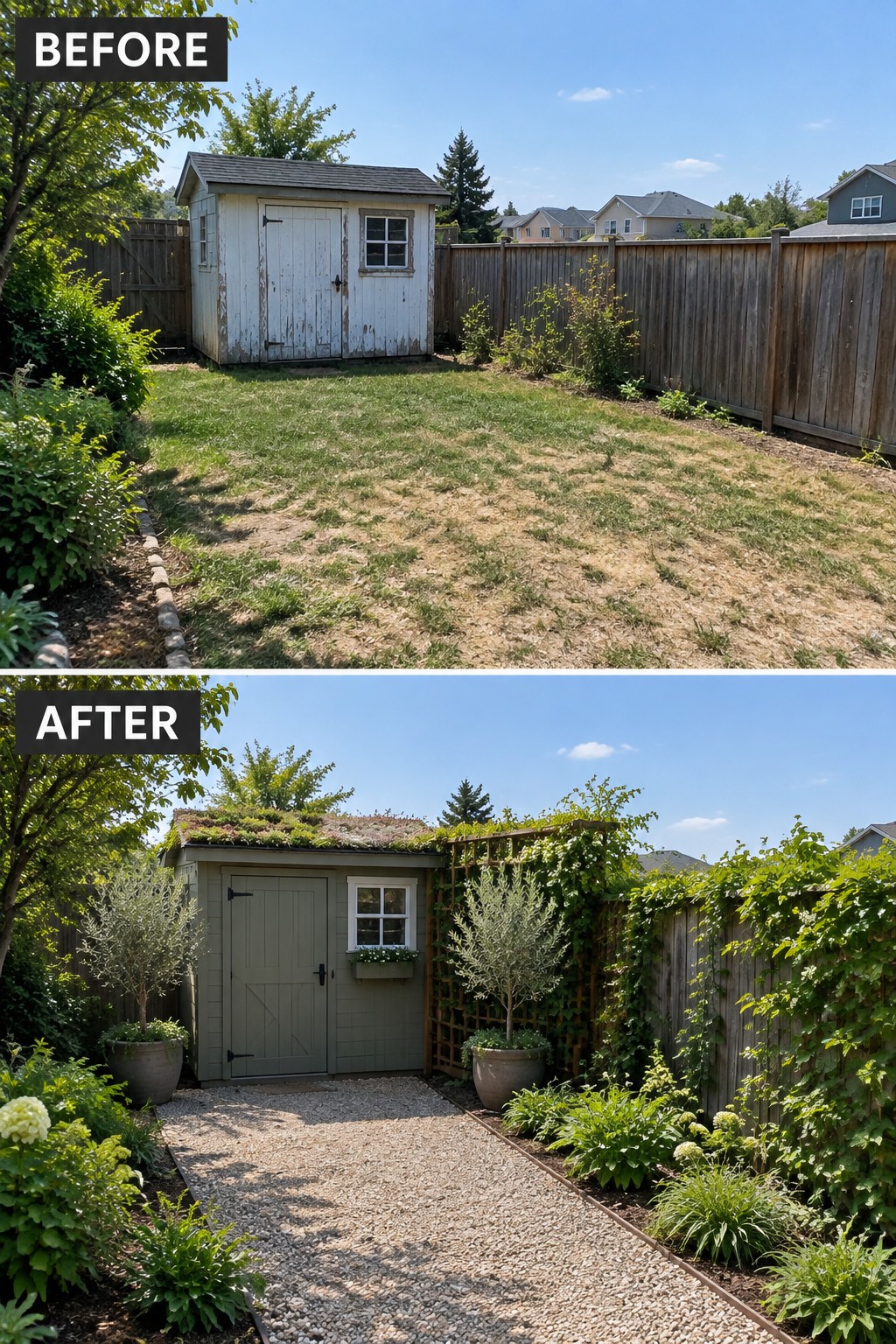
A bare fence and open yard leave little separation from neighbors or the rest of the block. Adding a simple wood trellis along the fence line and letting vines cover it creates a living screen that softens the view while still letting in light. The gravel path and planted borders help too, but the vertical planting does the main work of making the space feel more private without closing it in completely.
This approach works well in narrow or average-sized yards where a full hedge would take too much ground space. Start with a sturdy trellis attached to the fence, choose a fast-growing vine suited to your climate, and keep the beds along the base narrow so the path stays clear. It gives privacy without a heavy construction project.
Use Retaining Walls To Add Privacy On A Slope

A bare, sliding hillside is hard to use and offers no privacy. The fix here was to cut the slope into steps with stone retaining walls, then fill each level with shrubs and tall grasses. The walls stop the erosion, and the plants quickly fill in to block the view from above.
This approach works best on yards that drop away from the house. Start with the walls so you have flat beds to plant in, then choose a mix of evergreen shrubs at the front and taller grasses or reeds along the top fence line. It takes more work upfront than just adding plants, but once the beds are in place the slope becomes useful space instead of a problem area.
Create Privacy With A Covered Seating Structure

An open concrete slab next to the house often stays unused because it feels exposed. Adding a simple wood structure with slatted walls turns the same space into a defined room that blocks views from the yard and neighboring houses while still letting in light and air. The built-in benches and overhead cover make the area feel intentional instead of leftover.
This approach works well on side or back patios where full enclosure is not needed but some separation from the rest of the yard helps. Keep the structure low enough to maintain an open feel above the slats, and choose weather-resistant wood or a similar material so it ages with the house instead of looking like an add-on.
Plant Tall Evergreens For Backyard Privacy

A wide open backyard with just grass and a fence leaves you feeling exposed to the neighbors. Adding a straight row of tall evergreen trees along the back fence changes that quickly. The trees form a living wall that blocks the view while still leaving the lawn open and usable.
This idea works best in suburban yards where you want privacy without building a solid fence or losing sunlight. Space the trees evenly, mulch the bed underneath, and keep the front area simple so the screen stays the main feature. Choose varieties that grow tall and stay green year-round in your area.
Use Tall Planters And Screens For Outdoor Privacy

Adding tall planters with dense greenery and horizontal privacy screens turns an open balcony into a more sheltered spot. The before photo shows a plain concrete space with just a couple of chairs and full exposure on all sides. The after version uses the planters and screens to block views while still keeping the area bright and usable.
This idea works best on rooftops, upper-level decks, or small urban patios where you want privacy without losing light or airflow. Place the planters along the edges first to set the boundary, then add screens that match the scale of your space. Choose weatherproof planters and sturdy screening so the setup holds up over time and does not feel temporary.
Add Vertical Planters To Your Fence For Privacy

A plain fence with nothing but dirt along the base leaves the yard feeling exposed. Mounting wooden pallet planters directly on the fence adds height and greenery fast, turning that empty line into a living screen that blocks views from behind while still letting light through.
This idea works best on properties that already have a solid fence but need more coverage without adding a second structure. Use treated pallets, line the insides, and stick to plants that handle the sun and wind in your spot. It keeps the ground clear for seating or walking and gives you room to grow herbs or flowers at the same time.
Add Privacy With A Living Berry Screen

The chain link fence left the side yard feeling exposed and messy, with weeds taking over the whole strip. Replacing it with a woven wood screen and filling the bed with tall raspberry canes and flowering plants created a solid, productive barrier that actually feels private. The mulch and defined edge keep everything looking intentional instead of neglected.
This approach works well along narrow side yards or property lines where you need height without building a tall solid fence. Start by clearing the overgrowth first, then choose dense, fruiting shrubs that will fill in quickly. Make sure you leave enough room for the plants to spread so the screen stays full year after year.
Add Privacy Screens With Planters Around A Pool
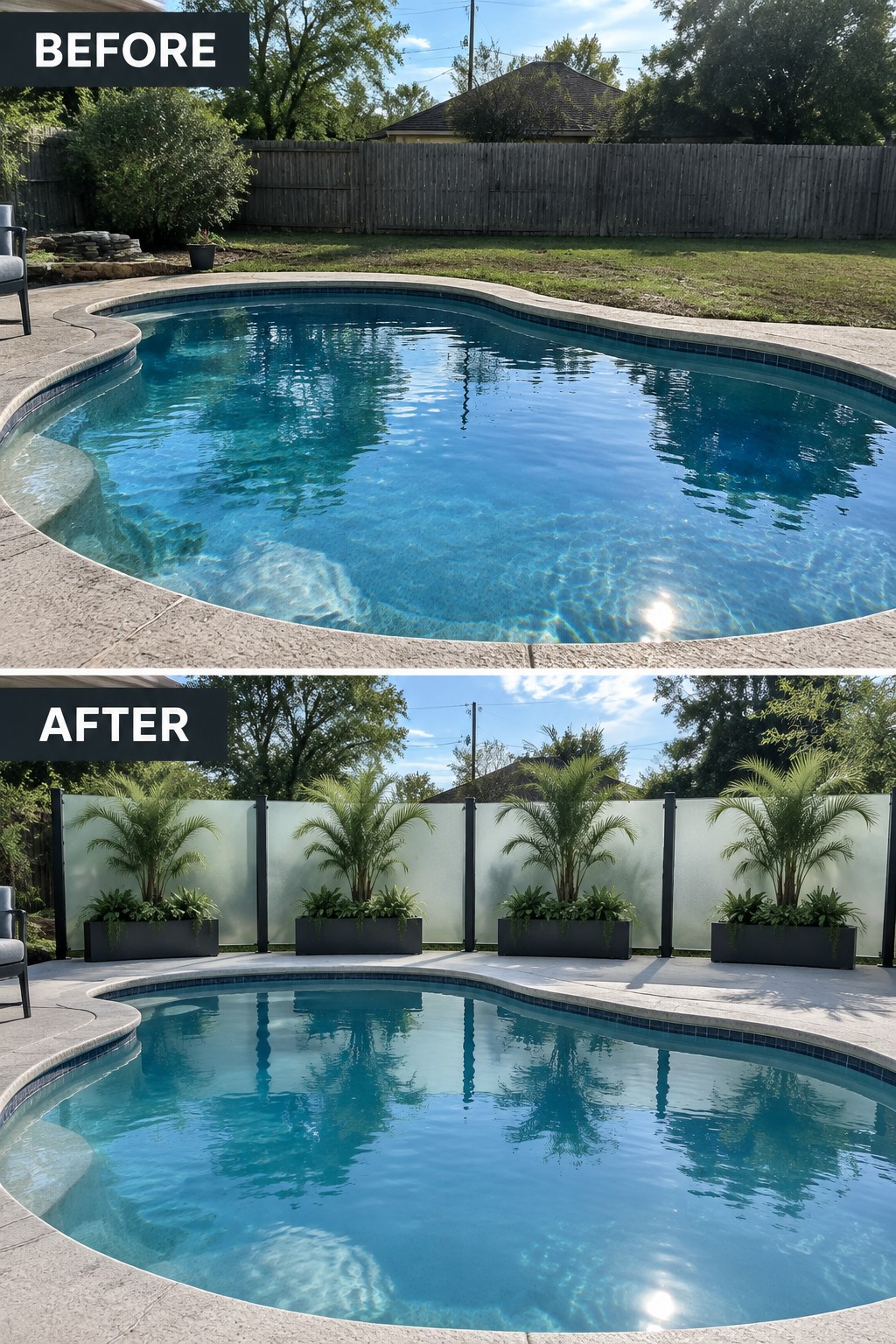
The pool sat right out in the open before, with only a basic fence behind it. Adding a frosted screen wall and a row of matching planters filled with palms and low greenery gave the space a clear boundary without blocking all the light.
This approach works best in neighborhoods where houses sit close together. Keep the screen height consistent, repeat the same planter style, and choose plants that can handle full sun so the privacy lasts through the seasons.
Create Privacy With Tall Planters Along A Fence
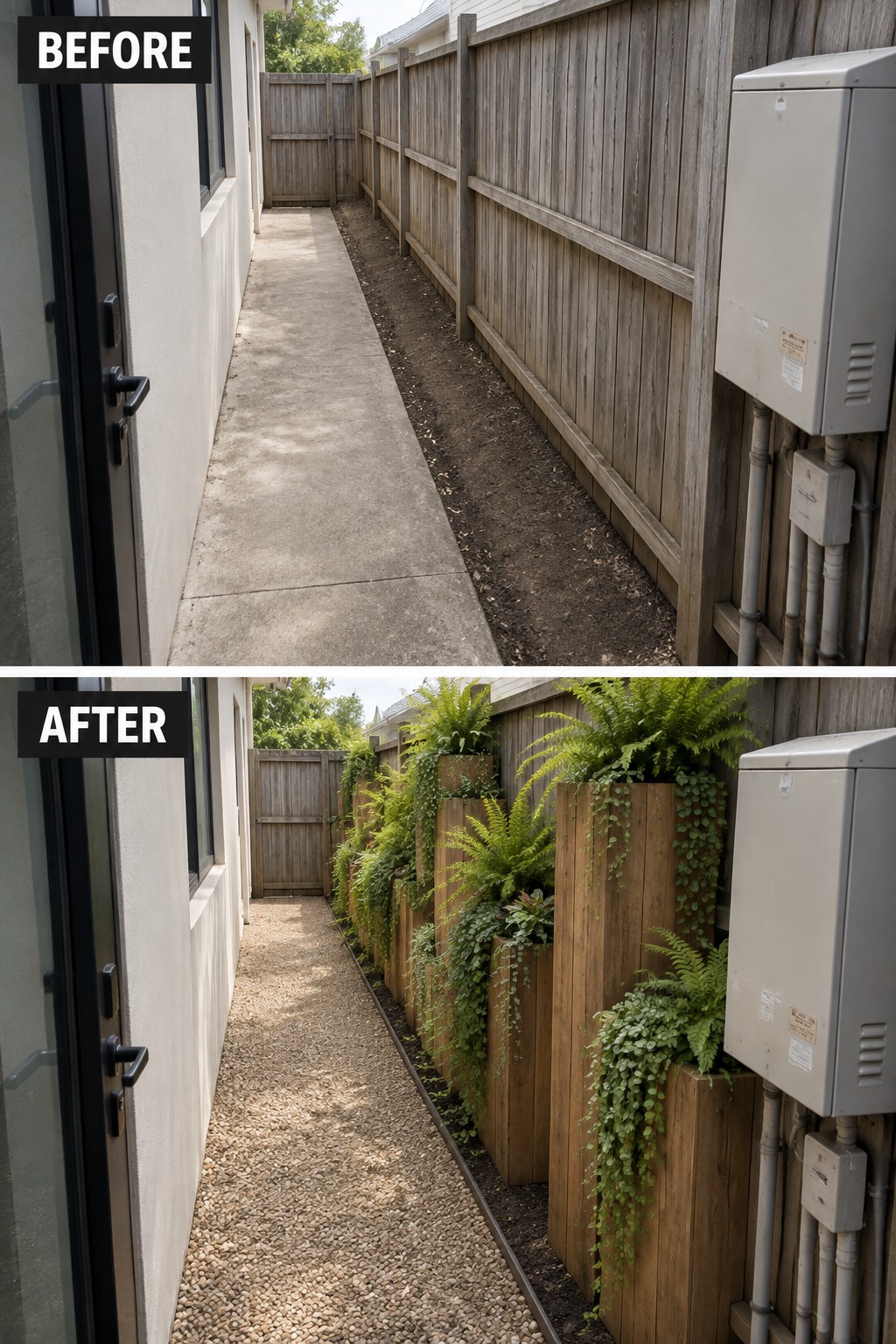
The narrow strip next to the house was just bare dirt before. Adding a row of tall wooden planters filled with ferns turned the space into a living screen that blocks the view from the fence while keeping the path open.
This approach works best in tight side yards where you cannot dig a full bed. Use sturdy planters that can handle weather, pick plants suited to the light conditions, and leave enough room on the path so the area stays easy to walk through.
Train Fruit Trees Along A Fence For Natural Privacy

A plain fence with nothing but grass in front of it can feel exposed. Training fruit trees flat against the fence changes that by creating a living screen that grows in over time. The horizontal wires give the branches something to follow, so the trees stay neat and contained instead of spreading out into the yard.
This works best in smaller backyards where you want privacy without losing all the sunlight. Plant young trees a few feet apart, tie the main branches to the wires each season, and prune lightly to keep the flat shape. Over a few years the fence disappears behind the leaves and fruit, and you still have room to walk or sit in front of it.
Add Layered Planting For Backyard Privacy
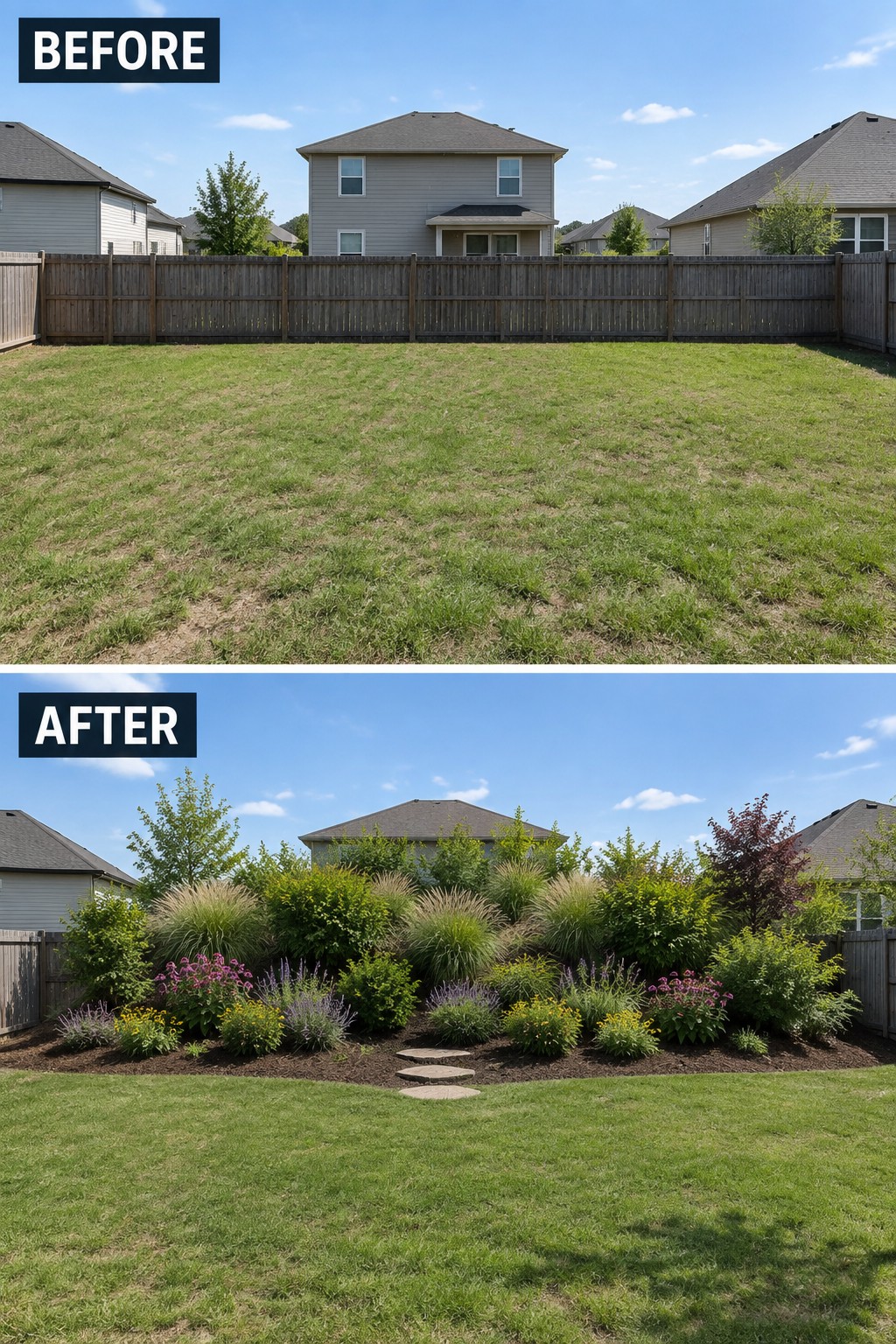
A long fence with nothing but grass in front often leaves the yard feeling open and exposed. Adding a wide planted border filled with shrubs, tall grasses, and flowering perennials creates a living screen that blocks sightlines from neighboring homes while still leaving the lawn usable.
This works best on lots that already have a fence in place. Mix plants of different heights so the border feels full at eye level without becoming a solid wall. Stepping stones through the bed make it easier to reach the fence for repairs later on.
Add A Pergola And Planters For Patio Privacy
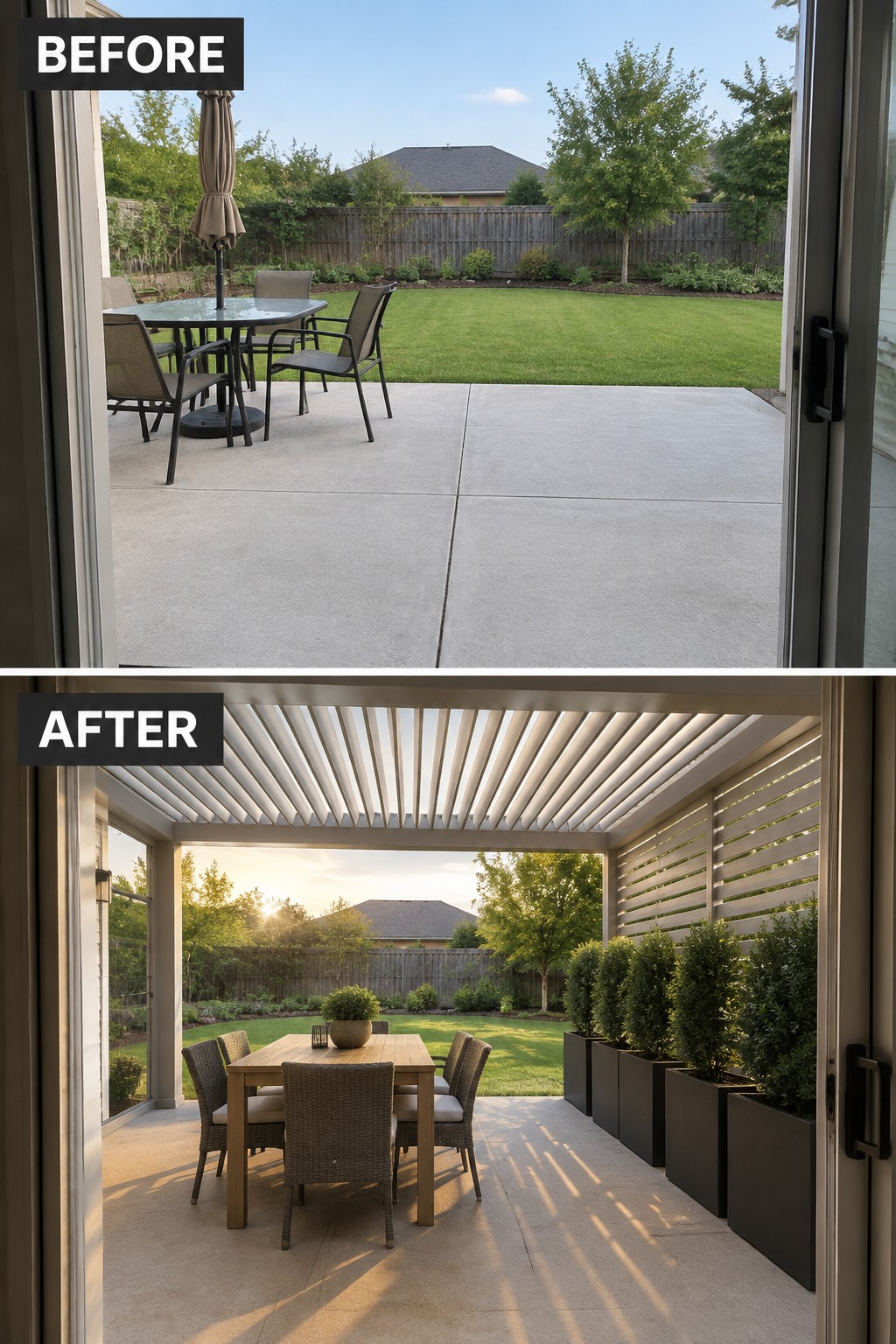
An open patio often feels too exposed when you want to sit outside without the whole yard watching. Adding a pergola for overhead cover and a row of tall planters along the side gives the space clear boundaries and cuts down on sightlines from the lawn.
This setup works best on a plain concrete pad where you need quick structure without tearing anything out. Keep the planters in one consistent color and size so they read as a single screen rather than scattered pots. The result is a spot that feels separate from the rest of the yard while still staying open to the grass and trees beyond.
Create Privacy With A Low Wall And Planting

An open backyard with nothing but a fence and a standalone grill feels exposed. Adding a low stone wall with an integrated grill gives the space clear boundaries and turns the area into a defined outdoor room. The plants spilling over the top of the wall soften the structure while blocking views from neighboring houses.
This approach works well in suburban yards where fences alone do not feel private enough. Start with the wall to set the layout, then add a few larger potted trees and trailing plants rather than trying to fill every inch at once. Keep the rest of the yard simple so the new seating and cooking area stays the main focus.
Add Tall Grasses For Side Yard Privacy

A narrow side path often feels like wasted space when it is just a strip of concrete next to the house. Replacing the hard surface with gravel and lining both sides with tall ornamental grasses softens the area and creates a sense of enclosure. The plants block the view from neighboring windows while still leaving room to walk.
This works best in homes where the side yard is tight but still needs to feel usable. Pick grasses that grow tall and narrow rather than spreading wide, and keep the beds only a foot or two deep. The result gives privacy without crowding the walkway or requiring constant upkeep.
Add Privacy With Tall Plants And A Water Feature
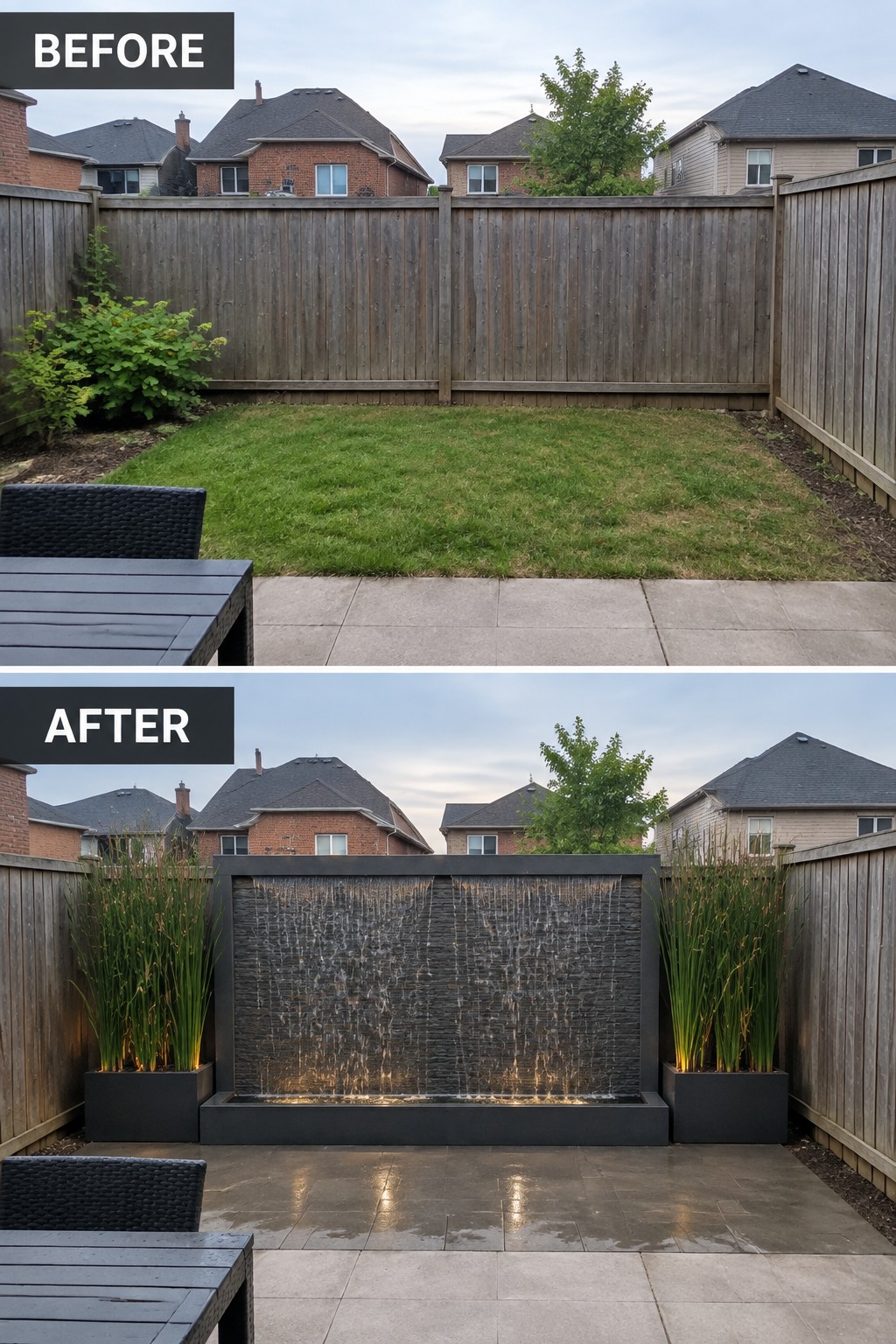
A plain backyard fence can leave the whole space feeling exposed. Adding a water wall as a central feature and flanking it with tall plants in matching planters creates an instant screen that blocks views from neighboring yards while turning the area into a more private retreat. The change from open lawn to a defined focal point makes the space feel enclosed without needing a full fence upgrade.
This approach works well in smaller yards where you want structure without crowding the patio. Start with one strong vertical element like the water wall, then repeat the same tall plants on each side so the eye stays on the center rather than the boundaries. Keep the planters simple and dark so they blend with the fence and let the greenery do the screening work.
Use Lighting And Shrubs To Build Privacy Along The Fence
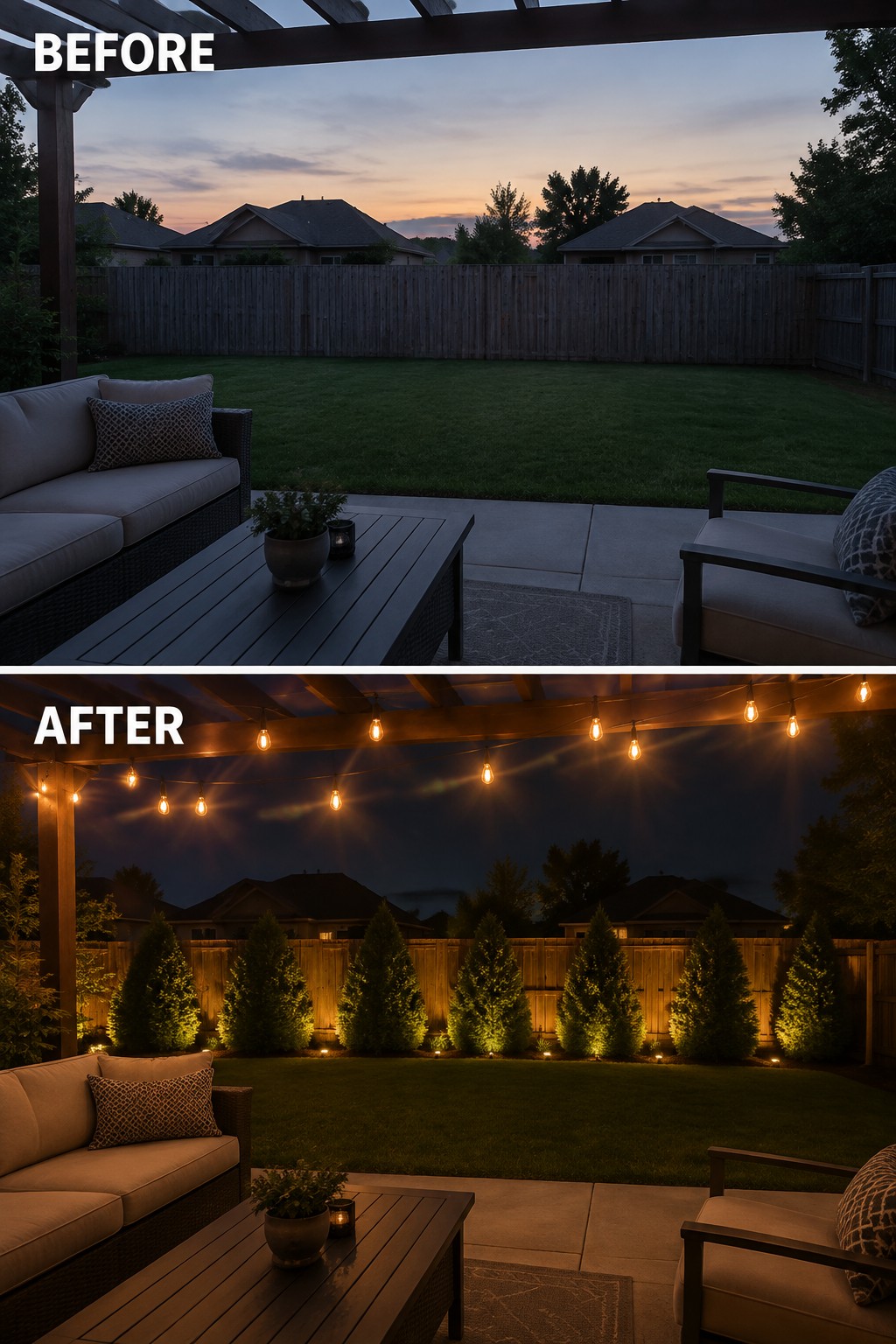
The before photo shows a basic patio that felt open and exposed once the sun went down. In the after, a simple row of shrubs along the fence was added and lit from below, while string lights were hung under the pergola. That one change turned the space into something that feels enclosed and private at night without any major construction.
This approach works best on yards where the fence is already in place but the view beyond still feels too close. Start with the shrubs first so they have time to fill in, then add the lighting once the plants are settled. Keep the fixtures low and aimed upward so the light stays on the greenery rather than shining into neighboring yards.
Frequently Asked Questions
Q: My soil is mostly clay. Will any of these privacy plants survive?
A: Mix in plenty of compost before planting to loosen things up. Choose tough choices like arborvitae that handle wet roots better than most. They will still need good drainage holes if you use containers.
Q: Can I add privacy to a patio that already has a deck?
A: Train climbing vines up the railing posts. They fill in quickly and add green without taking up floor space. Water them regularly during the first summer so they establish strong roots.
Q: How tall do the plants need to be right away for real privacy?
A: Start with five or six foot starters if you can find them. They give instant screening while smaller ones fill out below. Buy from a local nursery so the varieties match your area.
