


Sloped yards often end up underused because the ground feels uneven and hard to walk across without a clear route.
Steps can give the space a basic structure that makes daily movement easier while letting other elements like plants or edging fall into place over time.
I usually map out the main foot traffic paths first before deciding on materials or heights.
Once those routes feel solid the whole area starts to look more intentional instead of just left as is.
Many of the approaches here work well for testing on a small section to see what holds up with your soil and weather.
Build Wooden Steps Down A Steep Slope

A worn dirt path on a slope is tough to walk and looks unfinished. Adding a set of timber steps with gravel treads gives the yard a clear route and turns the slope into usable space instead of a slide. The lights along the sides also make the steps safe after dark without needing a big lighting plan.
This idea works well on any backyard slope where people need to get from one level to another. Start with the steps first, then add a few plants along the edges so the whole thing feels settled. Keep the wood simple and untreated so it weathers naturally with the rest of the yard.
Add Stone Steps To A Sloped Yard

A sloped yard often stays empty because the angle makes it hard to walk across comfortably. Building a set of wide stone steps with low retaining walls on both sides gives the slope a clear route and stops the soil from shifting. The change turns a patchy hill into a usable path without covering the whole lawn.
This idea works best on moderate slopes where you need regular access to the upper part of the yard. Mark the path first, then set the walls to hold the ground before placing the steps. It suits homes with backyards that drop away from the house and keeps the lawn usable on either side.
Turn A Sloped Yard Into Terraced Garden Steps

A steep, overgrown slope is hard to manage and even harder to enjoy. Adding simple wooden steps with built-in planting beds gives the hill structure, stops erosion, and creates usable garden space at the same time. The before photo shows the slope as a tangle of weeds with only a basic border. The after shows how timber tiers turn the same area into walkable, planted levels.
This idea works best on moderate slopes where full retaining walls feel like overkill. Use pressure-treated lumber or reclaimed timber for the steps, backfill each tier with good soil, and choose plants that can handle the sun and drainage on your hill. Leave enough room between tiers for easy weeding and watering.
Add Defined Steps To A Sloped Yard
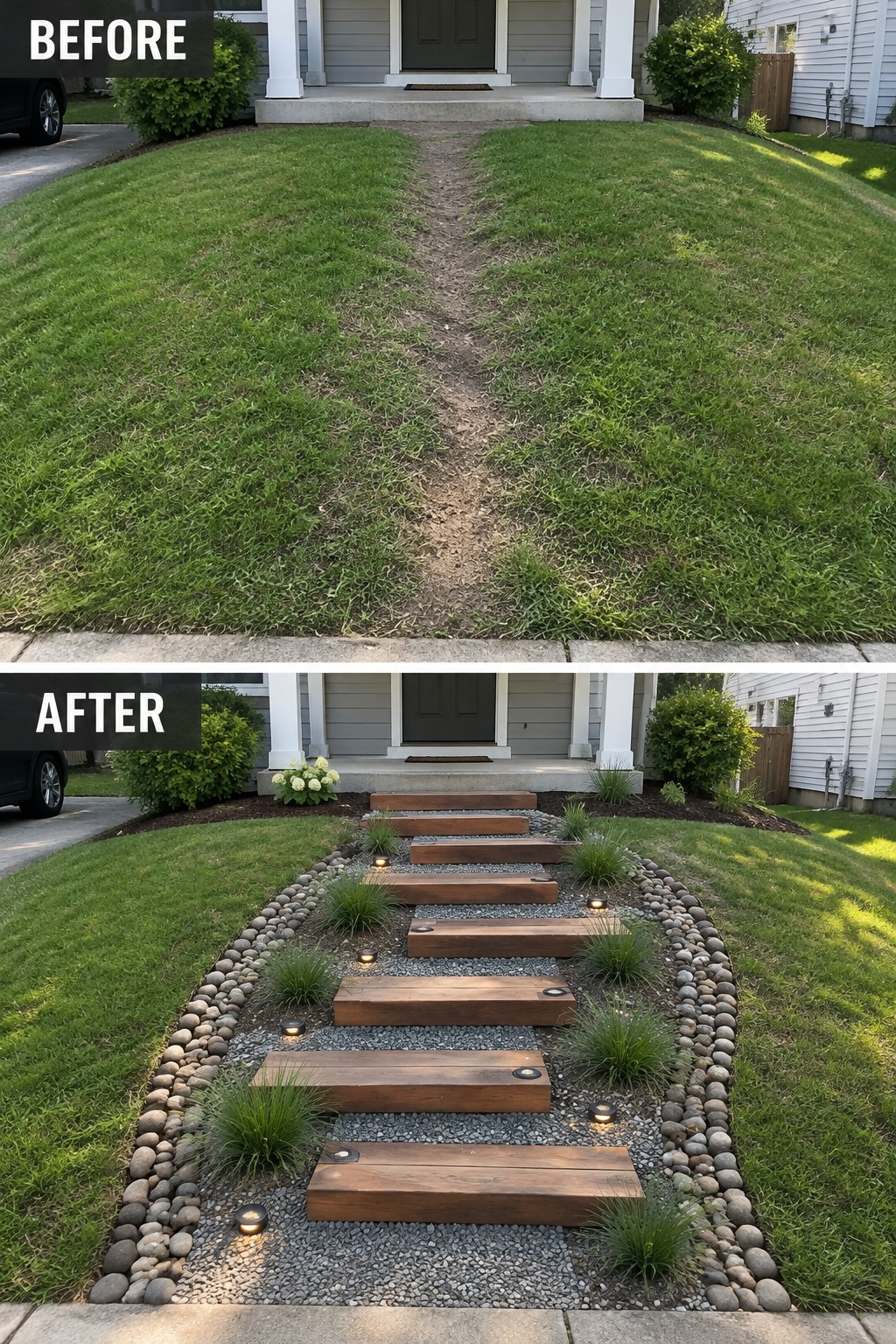
A worn dirt path up a steep lawn makes the front yard feel unfinished and hard to use. Adding a series of wooden steps set into gravel gives the slope a clear route while keeping the surrounding grass intact. The simple borders of river rock help hold everything in place and stop the gravel from spreading.
This approach works well on modest slopes where a full staircase would feel too heavy. Start by marking the path width and digging out shallow beds for the treads so they sit level. Keep the planting light along the edges so the steps stay the main feature rather than competing with shrubs.
Add Structure To An Overgrown Slope
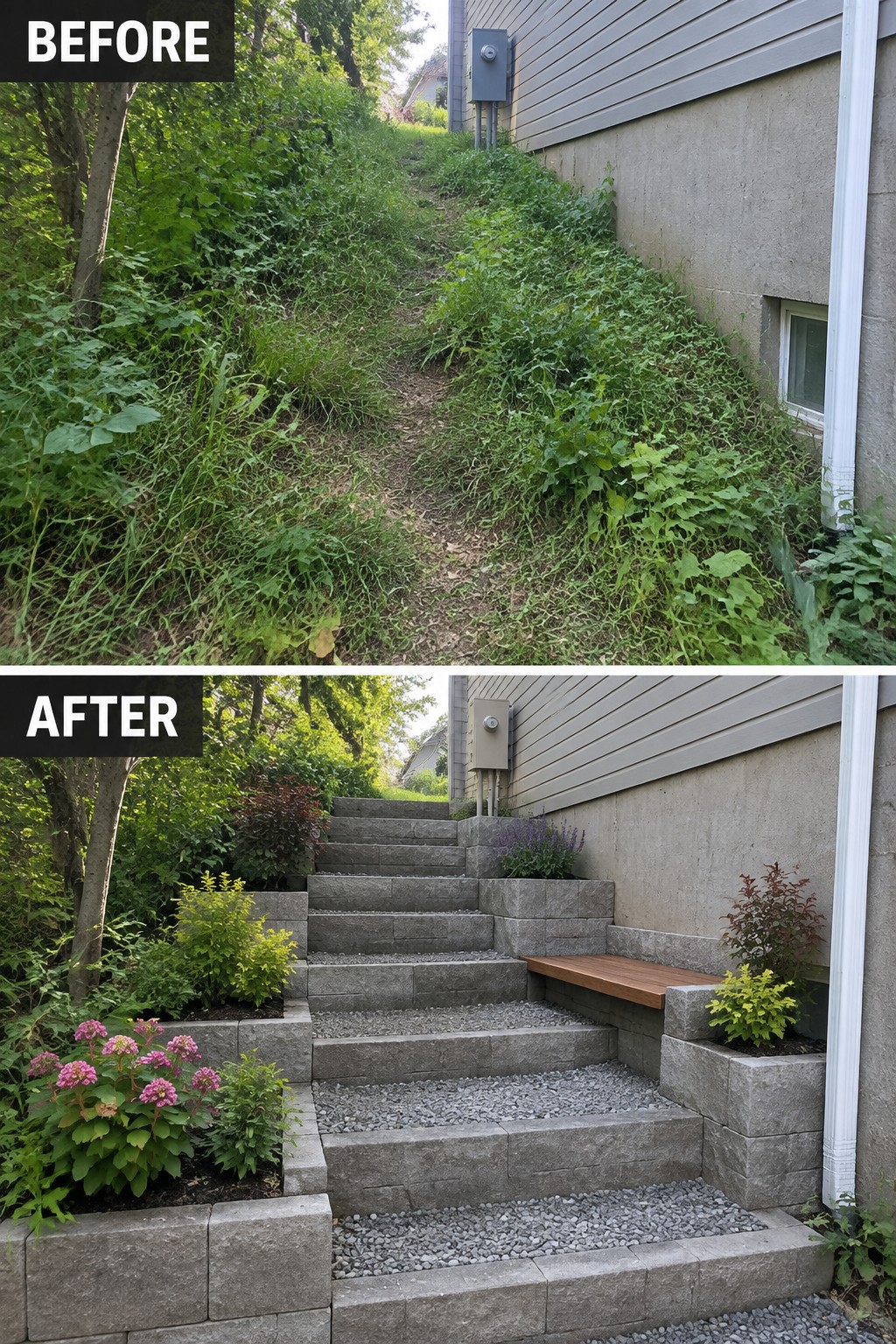
A steep, messy hillside turns into something you can actually walk on once you add retaining walls and steps. The before photo shows thick weeds and a narrow dirt trail that was hard to use. In the after, stacked blocks create clean tiers, gravel fills the treads, and a few planted beds soften the edges without taking over.
This approach works well on any home with a noticeable drop from the house to the yard. Start by clearing the overgrowth so you can see the slope, then build the walls in short runs rather than one tall wall. Keep the plantings simple and repeat the same block style so the steps feel like part of the landscape instead of an add-on.
Add Steps And Planting Beds To A Sloped Yard

A sloped lawn that is mostly grass often ends up patchy and hard to walk on. Adding a set of wide concrete steps with a paved landing at the top gives the slope a clear route and turns the entry into something usable instead of just a hill. The narrow planted borders on each side keep the steps from looking like they were dropped in from nowhere.
This approach works best on front or side yards where people need regular access to the house. Start with the steps and path first, then add the planting beds so the new hardscaping feels settled rather than stuck on top of the grass. Keep the borders fairly narrow so the lawn on either side still has room to breathe.
Add Stone Steps To Make A Sloped Yard Usable
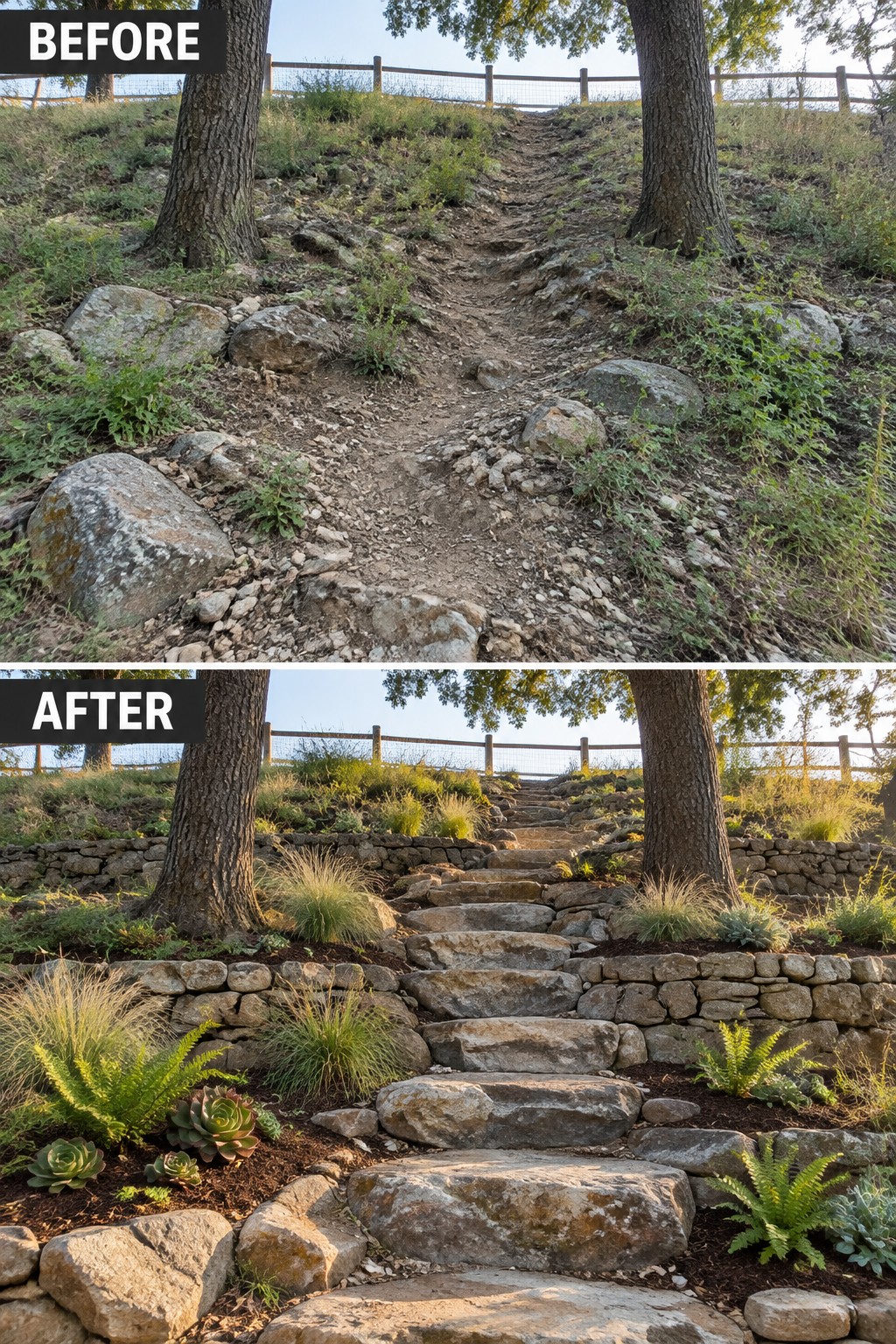
A steep dirt path with loose rocks and scattered plants is hard to walk and looks unfinished. Replacing it with wide stone steps and low retaining walls turns the slope into a clear, stable route that actually gets used. The walls hold the soil in place while the steps create even footing from top to bottom.
This idea works best on moderate slopes where you need regular access between levels. Build the walls first to terrace the hill, then set the steps on a compacted base so they stay put. Keep the planting simple along the edges so the focus stays on the path itself and the whole area feels intentional rather than overgrown.
Define Concrete Steps With Brick Edging On A Slope
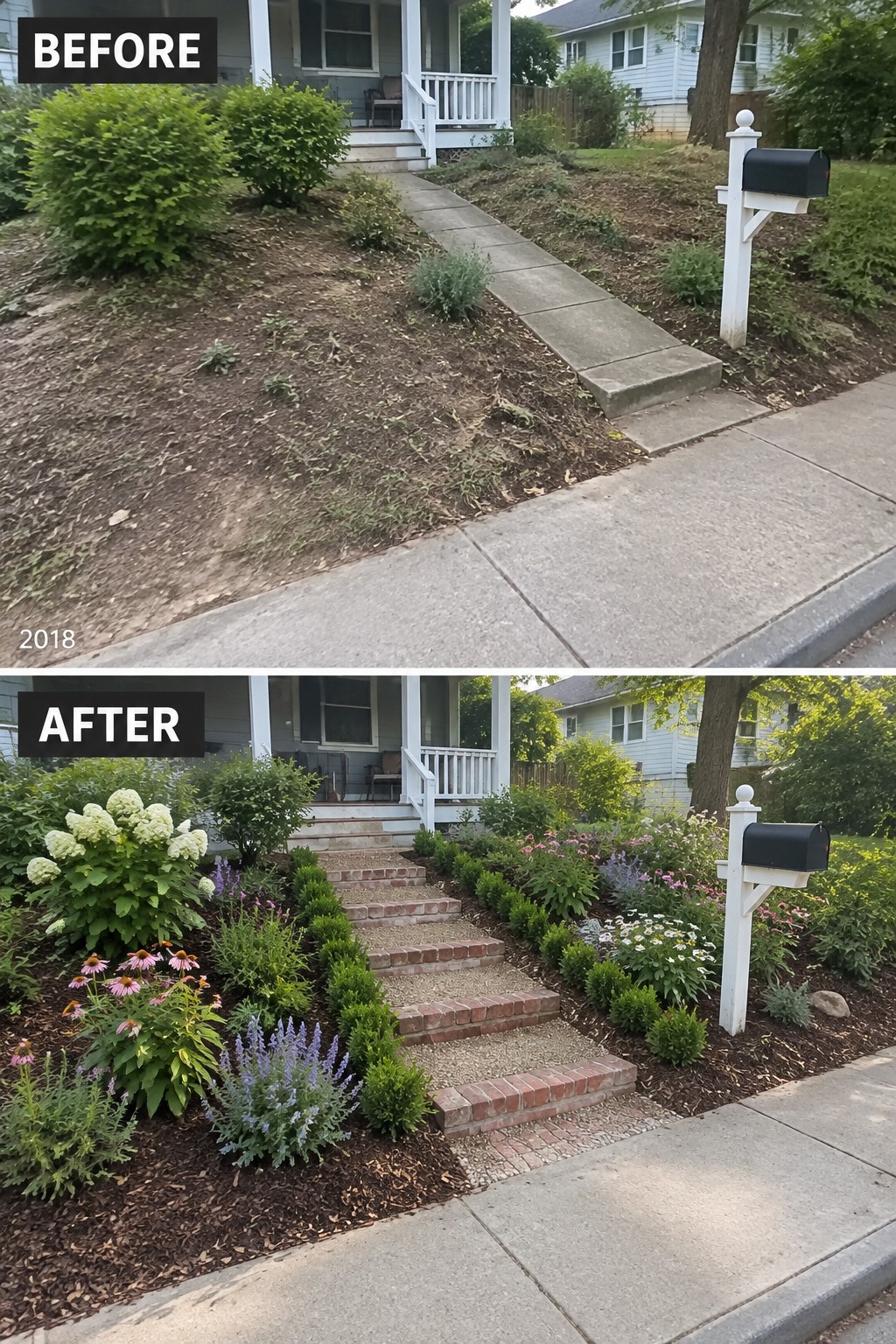
The original concrete steps blended into the bare slope and looked unfinished. Brick borders along the edges plus gravel on the treads gave the steps clear lines and helped them connect better with the new garden beds.
This idea works well on sloped front yards where you want the path to feel planned without replacing the whole structure. Clean up the surrounding area first, then add edging that matches your house. Keep the beds simple so the steps remain the main feature.
Build Stone Steps With A Retaining Wall On A Slope
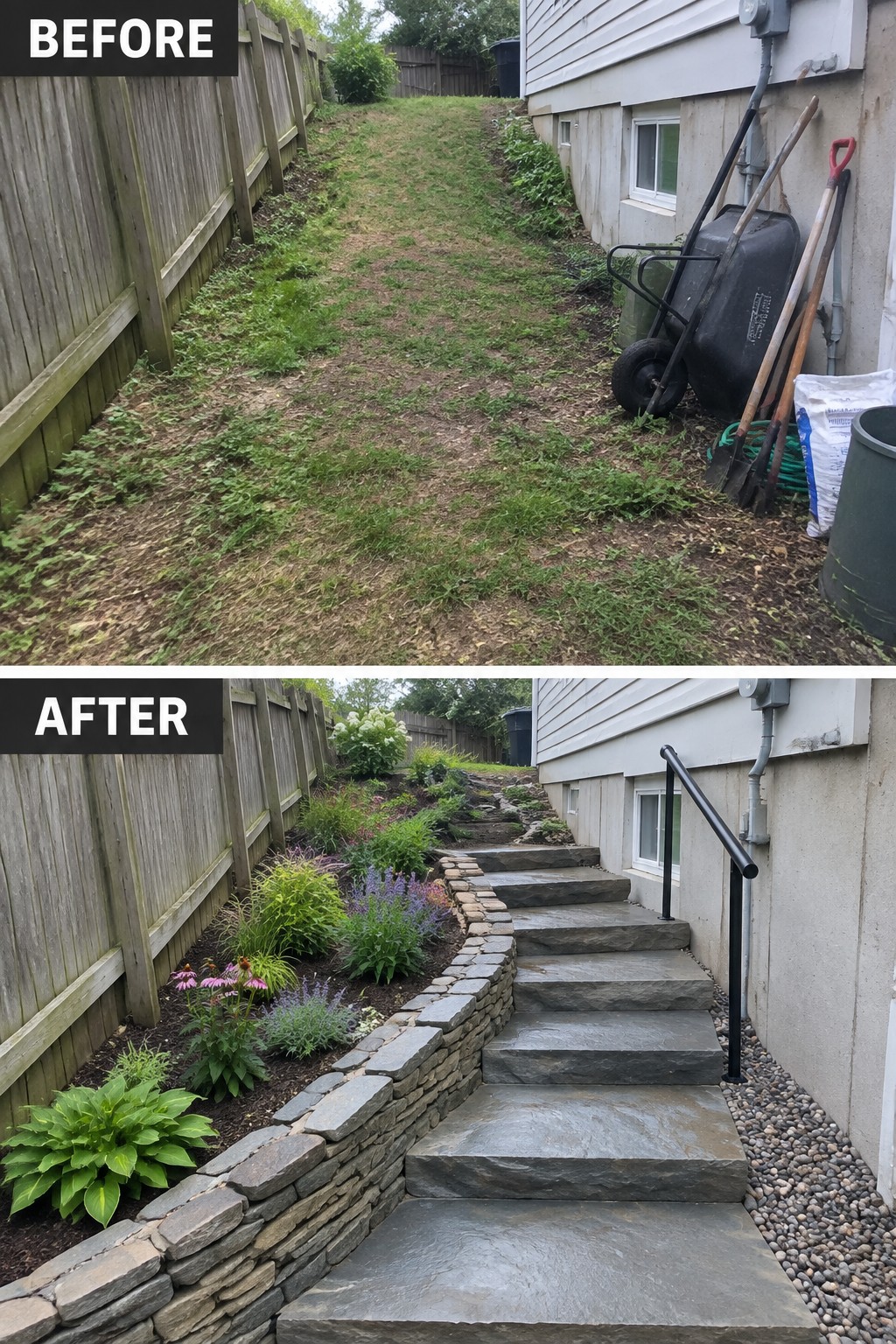
A steep, muddy side yard becomes much more usable once you add stone steps and a low retaining wall. The steps create a clear route down the slope while the wall holds the soil in place and gives you room to add plants along the edge.
This idea works best on properties where the grade makes walking difficult or mowing unsafe. Keep the steps wide enough for comfortable footing and choose a material that matches the house exterior. Plant the beds in front of the wall with sturdy perennials so the new structure blends into the landscape instead of standing out.
Add A Path To Manage A Sloped Yard
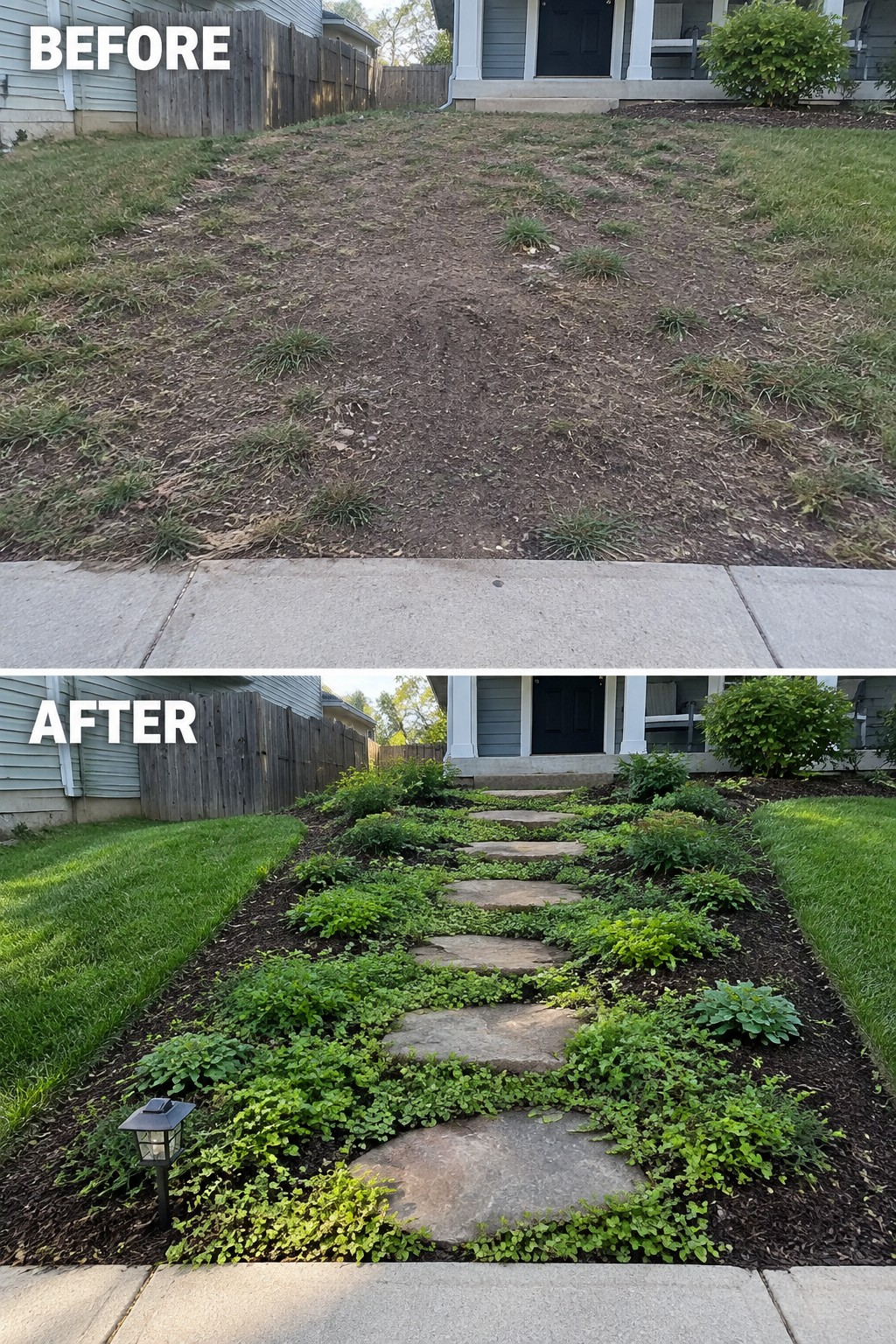
A bare, worn slope makes the front of a house feel unfinished and hard to walk. Adding a stepping stone path with low ground cover on both sides gives the slope a clear route and stops the soil from washing away. The change turns an empty dirt hill into something you can actually use.
This idea works well on moderate slopes where you need access from the sidewalk to the house. Start with the path first so the route stays practical, then fill in around the stones with plants that spread and hold the soil. It keeps the yard looking neat without needing constant mowing on the incline.
Turn A Steep Slope Into Terraced Garden Steps
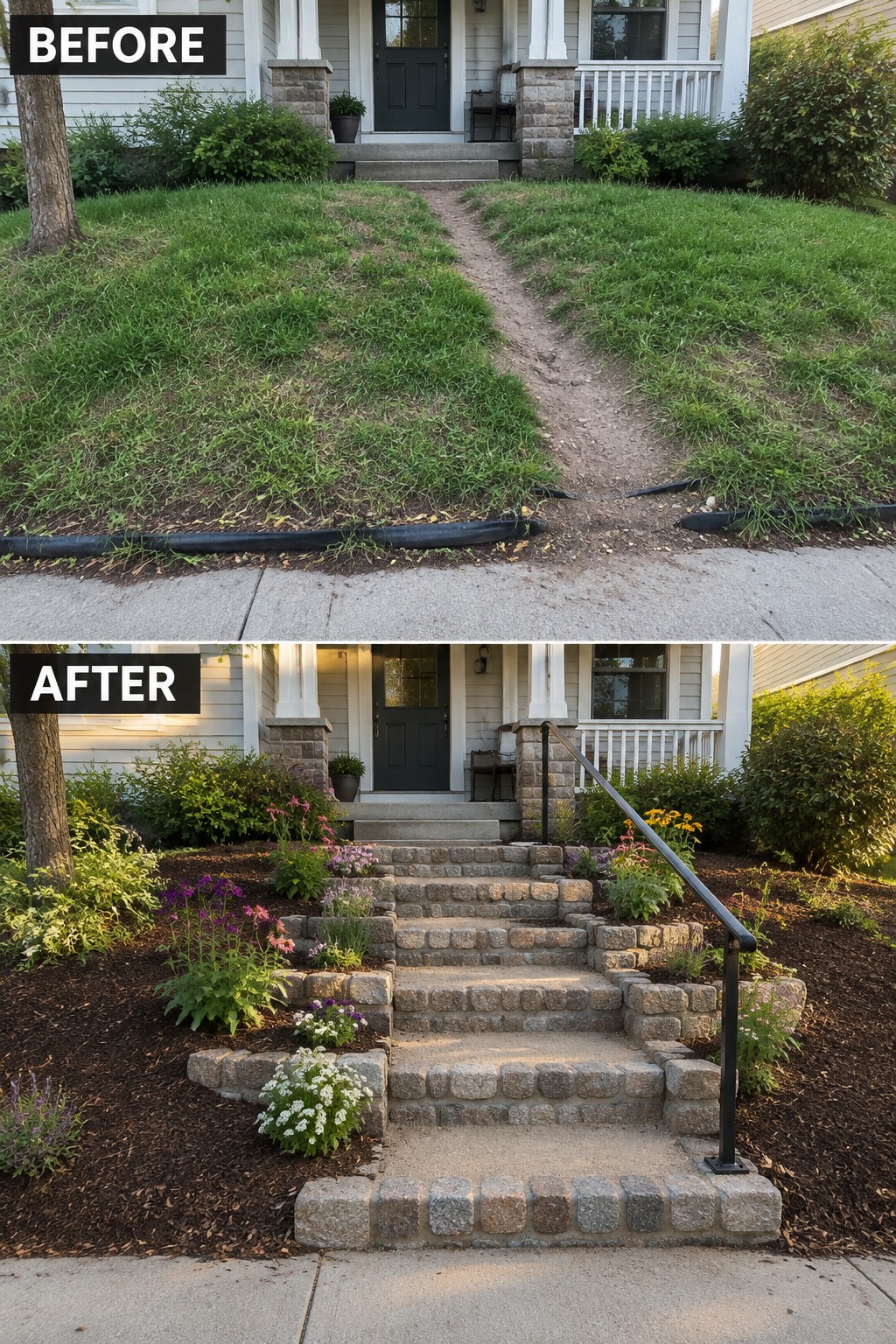
A worn dirt path up a grassy slope makes the front yard feel unfinished and hard to use. Adding stone steps with low retaining walls breaks the slope into manageable levels, adds planting space on either side, and gives the entry a clear path that stays usable in any weather.
This approach works well on modest front slopes where you want better access without a big retaining wall. Start by marking the step layout and digging out the first level, then build each wall before moving up. Keep the beds fairly narrow so the steps remain the main feature, and choose plants that can handle the sun and drainage on a slope.
Add Steps With Built-In Lighting To A Sloped Entry

A dirt path on a slope turns into a real problem once it rains or gets dark. Building proper steps with lights tucked under the edges fixes the safety issue and gives the entrance a finished look without needing a big construction project.
This approach works well on side yards or back entries where the ground drops away from the house. Start with the steps themselves, then add gravel along the sides and a few low shrubs to keep the slope from washing out. The lighting makes the path usable at night and keeps the whole area from feeling neglected.
Turn A Bare Slope Into Terraced Steps

A steep, eroded bank like the one in the before photo often stays unused because there is no easy way to walk it or plant it. Adding gabion retaining walls with built-in steps creates flat planting areas and a clear path at the same time, which makes the whole slope feel intentional instead of neglected.
This approach works best on yards that drop away from the house or along a fence line where you still need access. Use the walls to hold back soil first, then set the steps into the same structure so everything stays stable. Keep the planting simple at first so the steps remain the main feature.
Build Tiered Steps Into A Sloped Yard
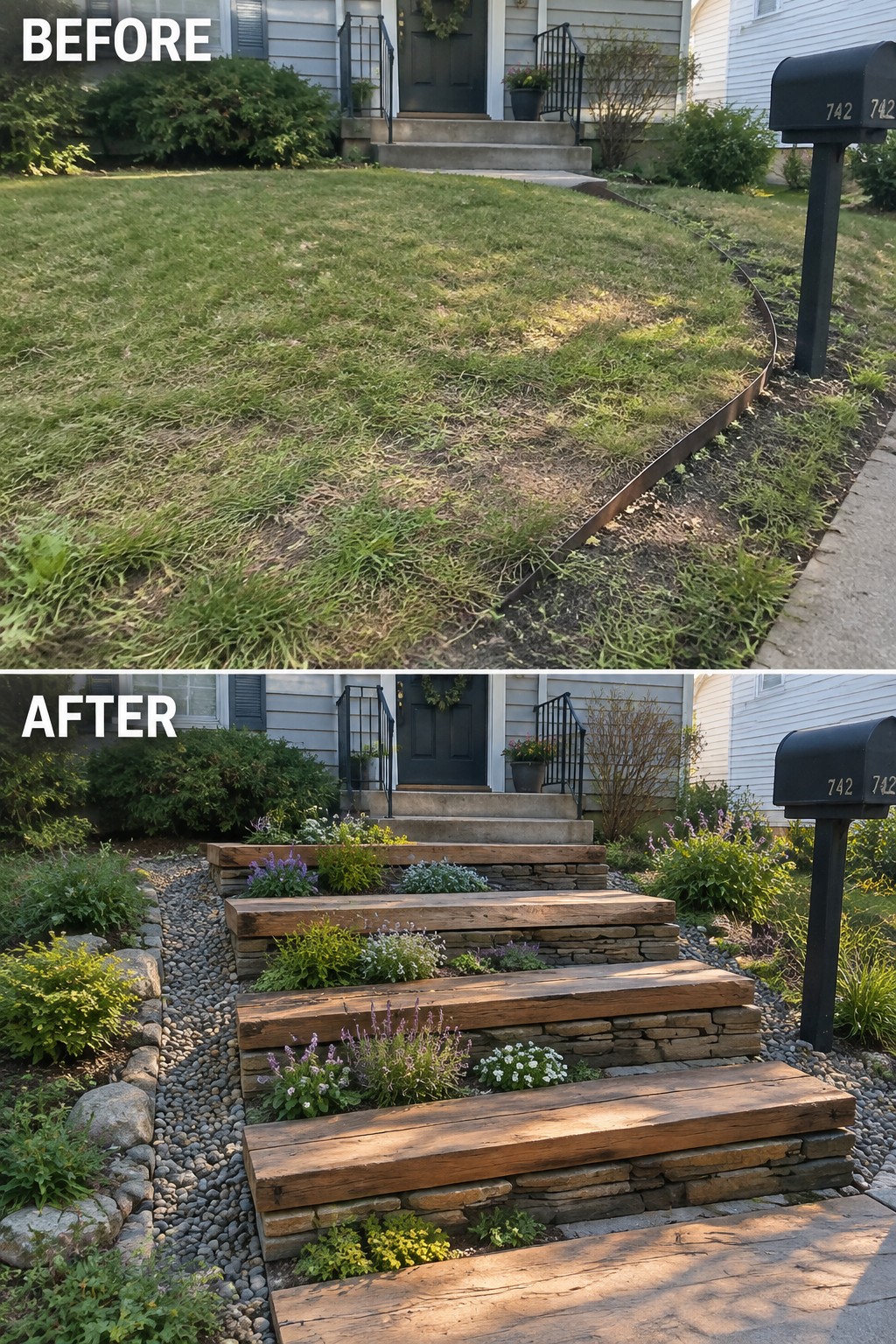
A bare slope with just a worn path and a metal border makes the front yard feel unfinished and hard to walk. Adding wide timber steps with stone risers turns the hill into a clear, usable route that also creates space for planting along the edges.
This idea suits homes where the front yard drops away from the street and you need both access and structure. Keep the steps wide enough for easy footing, use gravel between the beds to control runoff, and choose low plants that will not block the path. The result feels planned without needing a full redesign of the whole yard.
Add Steps To A Sloped Yard For Better Access
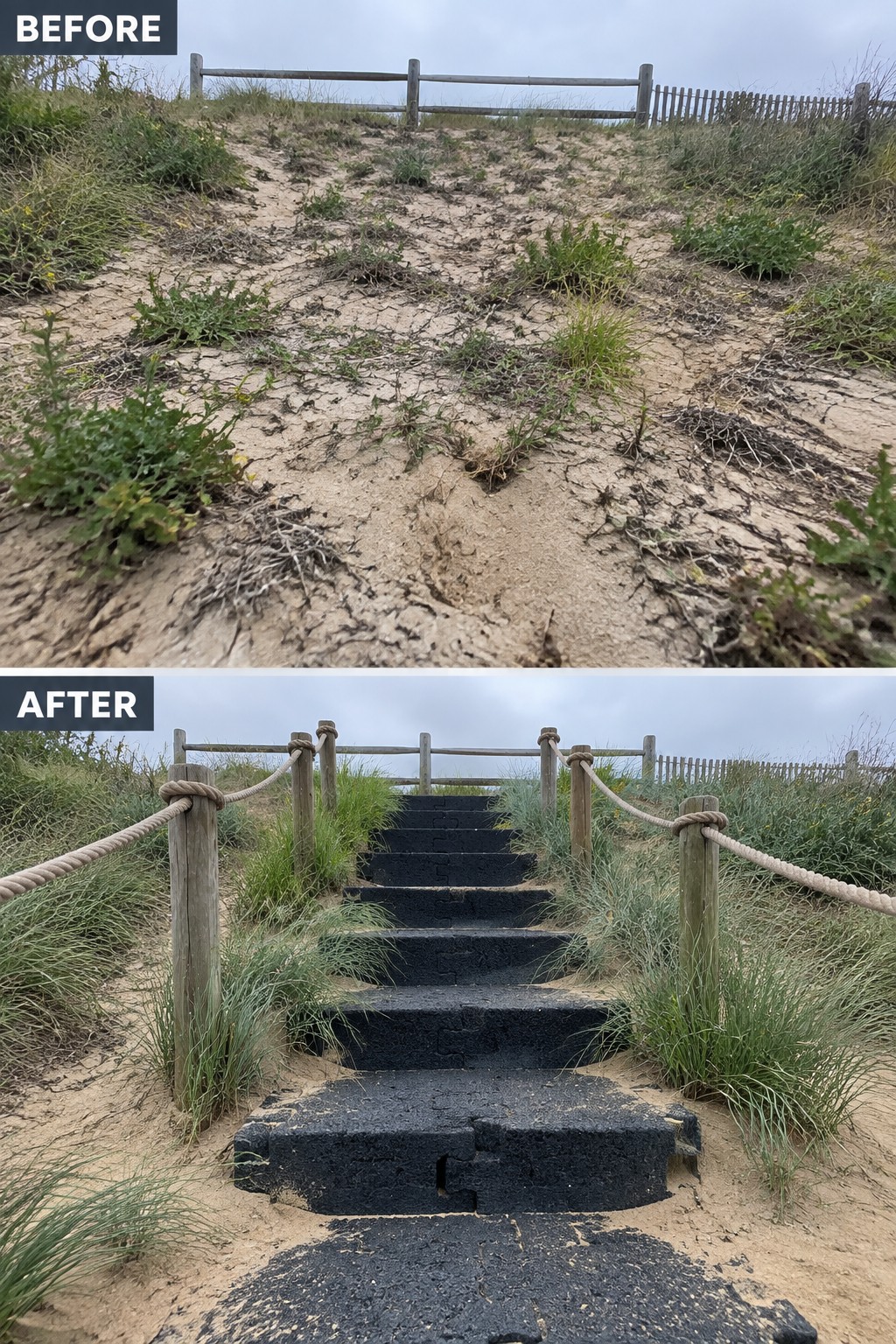
A sandy slope without any real path quickly turns into a slippery mess after rain or regular foot traffic. Adding solid steps gives people a safe route up and down while keeping the surrounding ground from washing out further.
This idea works best on properties where the soil is loose or the hill is steep enough to feel unstable. Start with posts and rope for basic railings, then use interlocking pavers that sit firmly without needing heavy concrete work.
Define Sloped Steps With Garden Borders
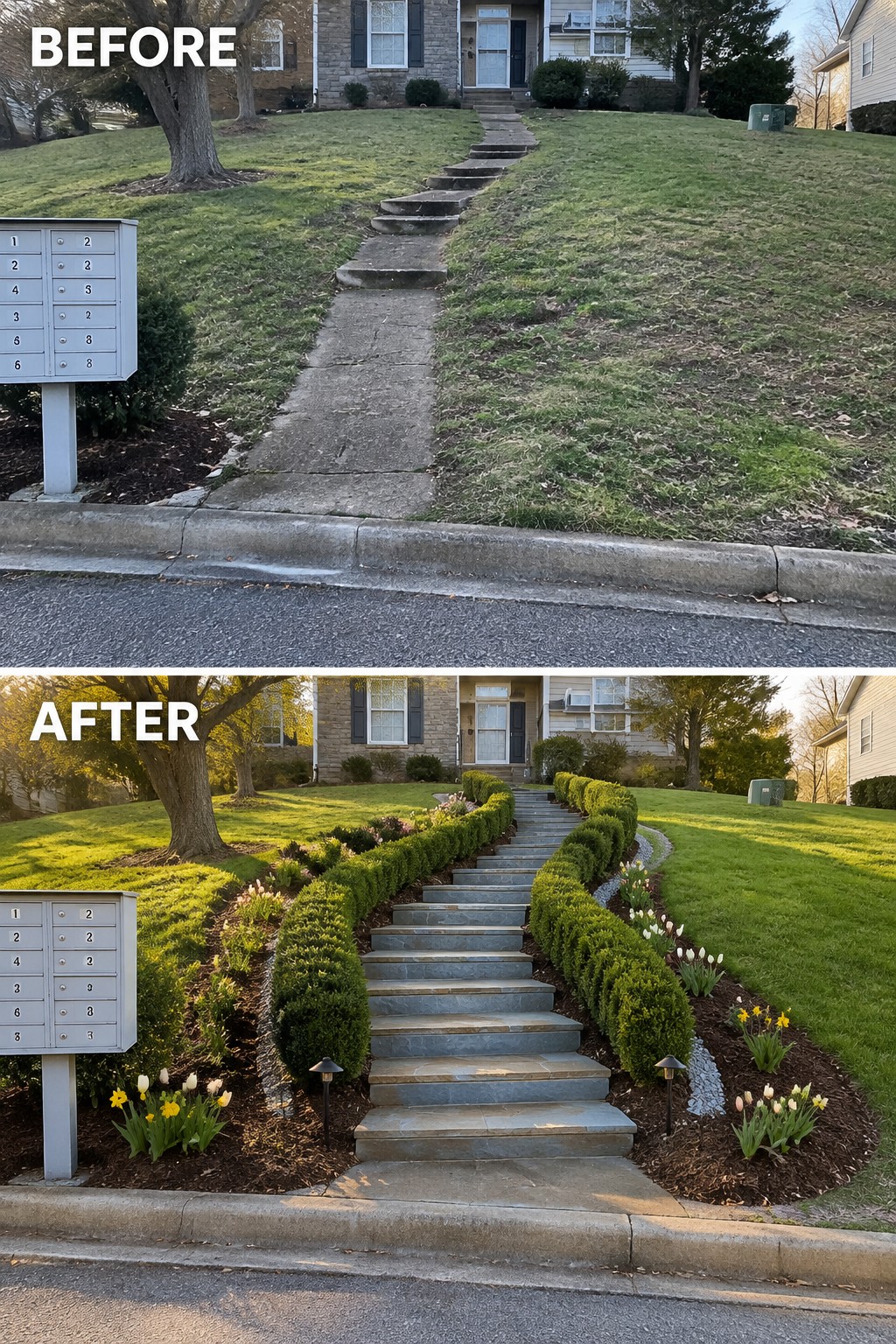
The bare concrete steps on this slope sat right in the middle of the grass with nothing to guide the eye or mark the path. Adding planted borders on both sides turns the steps into a clear walkway and gives the whole slope a more finished look.
This idea works on any yard where steps cut through a hill and need more presence. Lay out the beds first with a simple edge, then use a mix of shrubs and flowers that can handle the slope. Mulch and a bit of gravel along the sides keep the beds looking neat without much extra work.
Add Terraced Steps To A Sloped Backyard
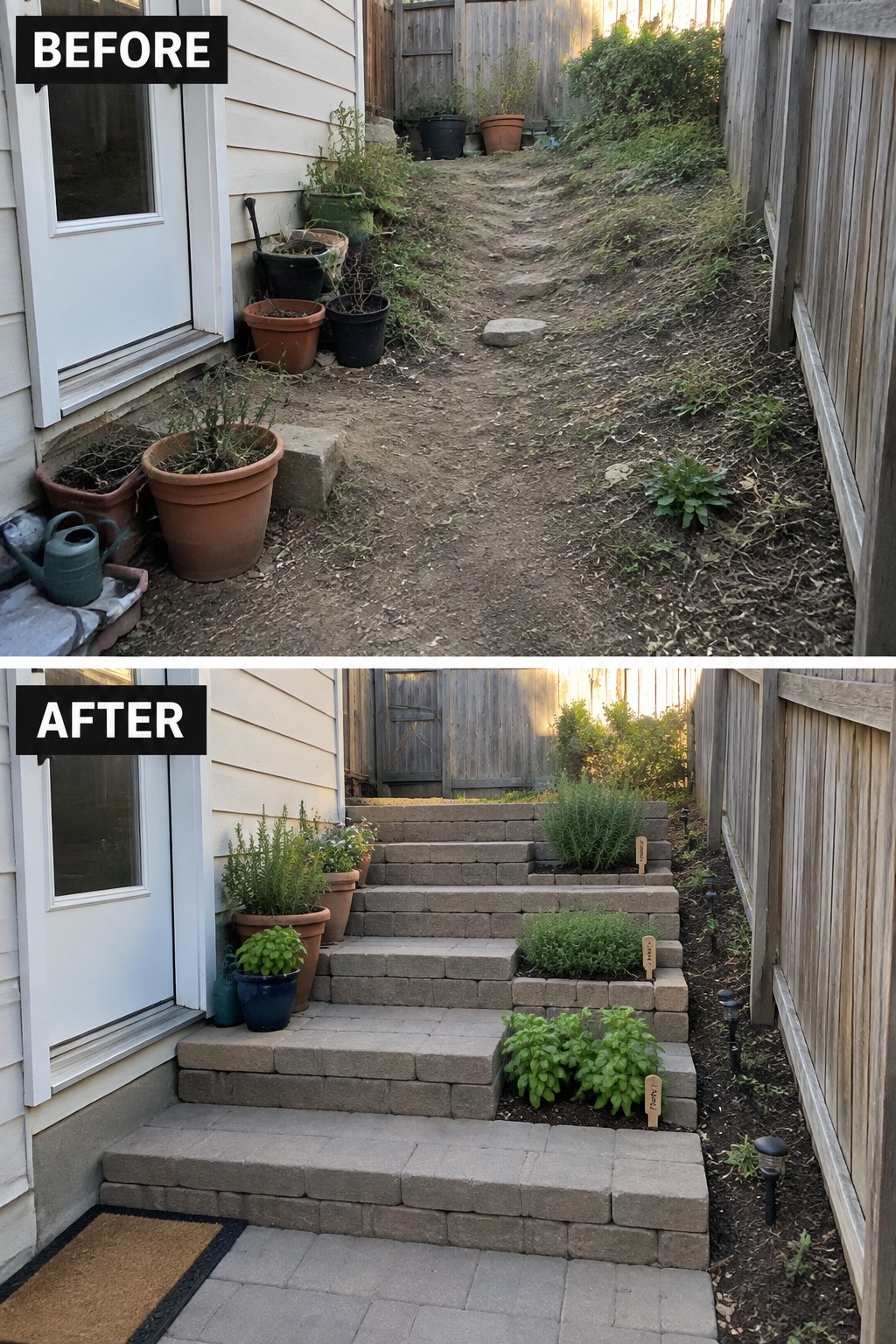
A steep dirt path with scattered pots makes a backyard hard to use. Building simple terraced steps from retaining blocks turns the slope into a clear, walkable route while creating spots for plants along the way. The change makes the whole area feel more planned and easier to maintain.
This idea works well on properties with a noticeable drop from the house to the yard. Start with the steps themselves before adding too many plants, and keep the beds narrow so the path stays open. It suits homes where you need better access but do not want a big retaining wall project.
Add Stone Steps To Define A Steep Slope
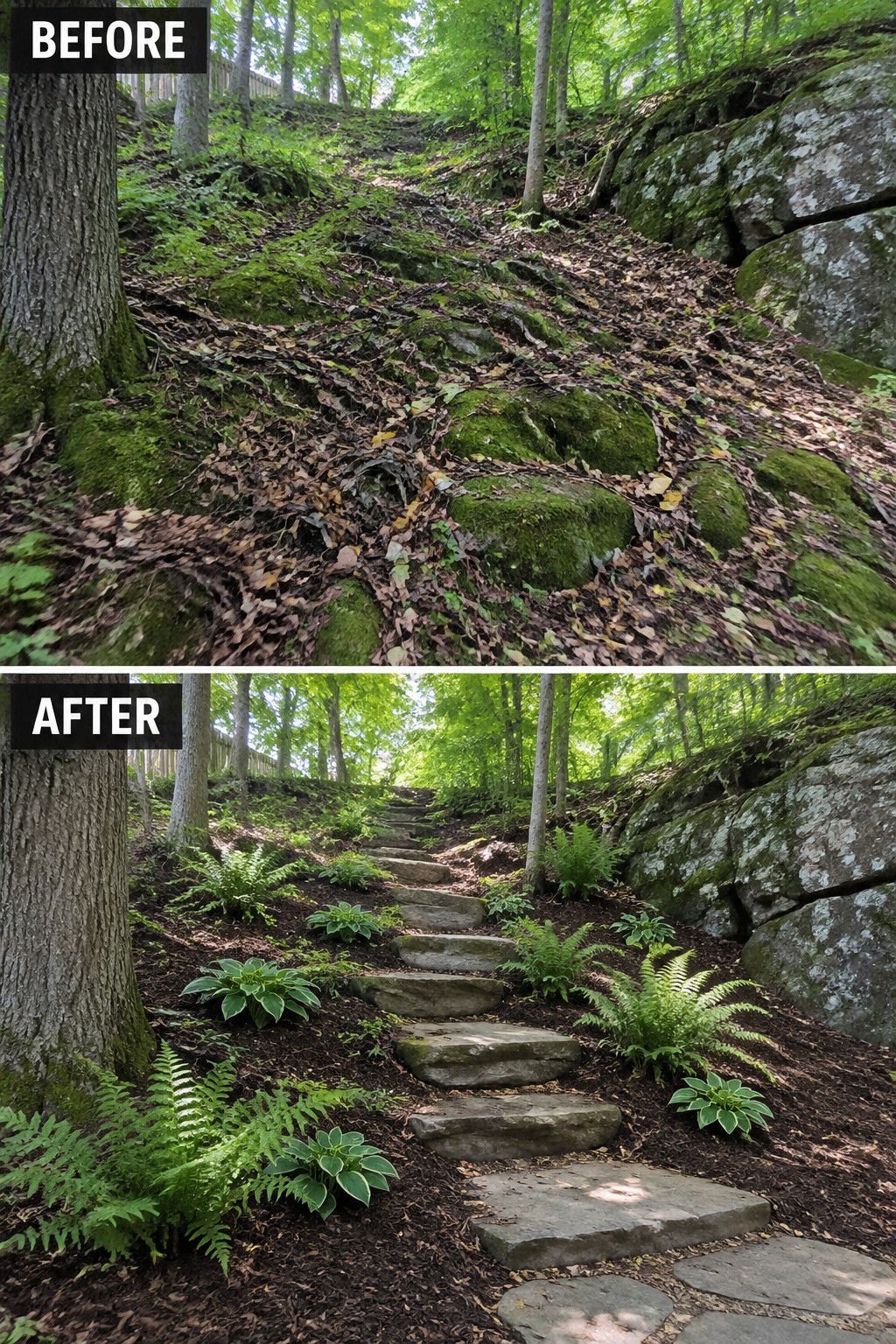
A steep, leaf-covered slope becomes much easier to use once you add a clear set of stone steps. The before photo shows how quickly an incline turns into a slippery mess of moss and debris, while the after shows how a simple run of treads creates a real path and stops the erosion at the same time.
This idea works best on wooded lots or backyard hills where you need reliable access but do not want to bring in heavy equipment. Clean the slope first, lay the steps on a solid base, then add a few shade plants along the sides so the planting feels natural rather than forced.
Frequently Asked Questions
Q: How do I stop the steps from sliding downhill over time? A: Dig a solid base and tamp the soil hard before you lay anything down. Add gravel under each tread so water drains away instead of pooling and loosening the ground.
Q: What works best if my slope runs steeper than the examples in the article? A: Break the rise into shorter runs with small landings between them. This keeps each step comfortable to climb and cuts down on the chance of a slip.
Q: Can I skip buying new lumber and still get something sturdy? A: Reclaimed railroad ties or concrete blocks often do the job fine. Just make sure whatever you use sits level and gets anchored well at the start.
