


Narrow side yards tend to get overlooked because their shape makes regular mowing and weeding feel awkward from the start.
Once the basic lines are set with edging and a straight path, the space stops looking like leftover ground between the house and fence.
Adding plants in stages, starting with a few evergreens for structure, helps fill the area without blocking light to the windows.
I like to begin with whatever fixes the most visible mess first.
Small steps like these often make the side yard feel like it belongs with the rest of the garden.
Give A Narrow Side Yard A Defined Path

A narrow side yard tends to collect weeds and look unfinished when it lacks any clear structure. Setting a straight line of pavers into gravel creates a simple walkway that keeps the space usable and easy to maintain. The overgrown weeds and broken slabs in the before photo show how quickly the area can feel neglected, while the after version uses edging and mulch to hold everything in place.
This idea works best on long, tight passages where you need a clear route without crowding the space. Clear the overgrowth first, then add a gravel base before laying the pavers so water drains properly. Use one or two repeating plants along the edge rather than a mix of styles, and leave enough room on either side for walking. It suits homes where the side yard serves as the main access to the backyard.
Add Stepping Stones To Shape A Narrow Side Yard
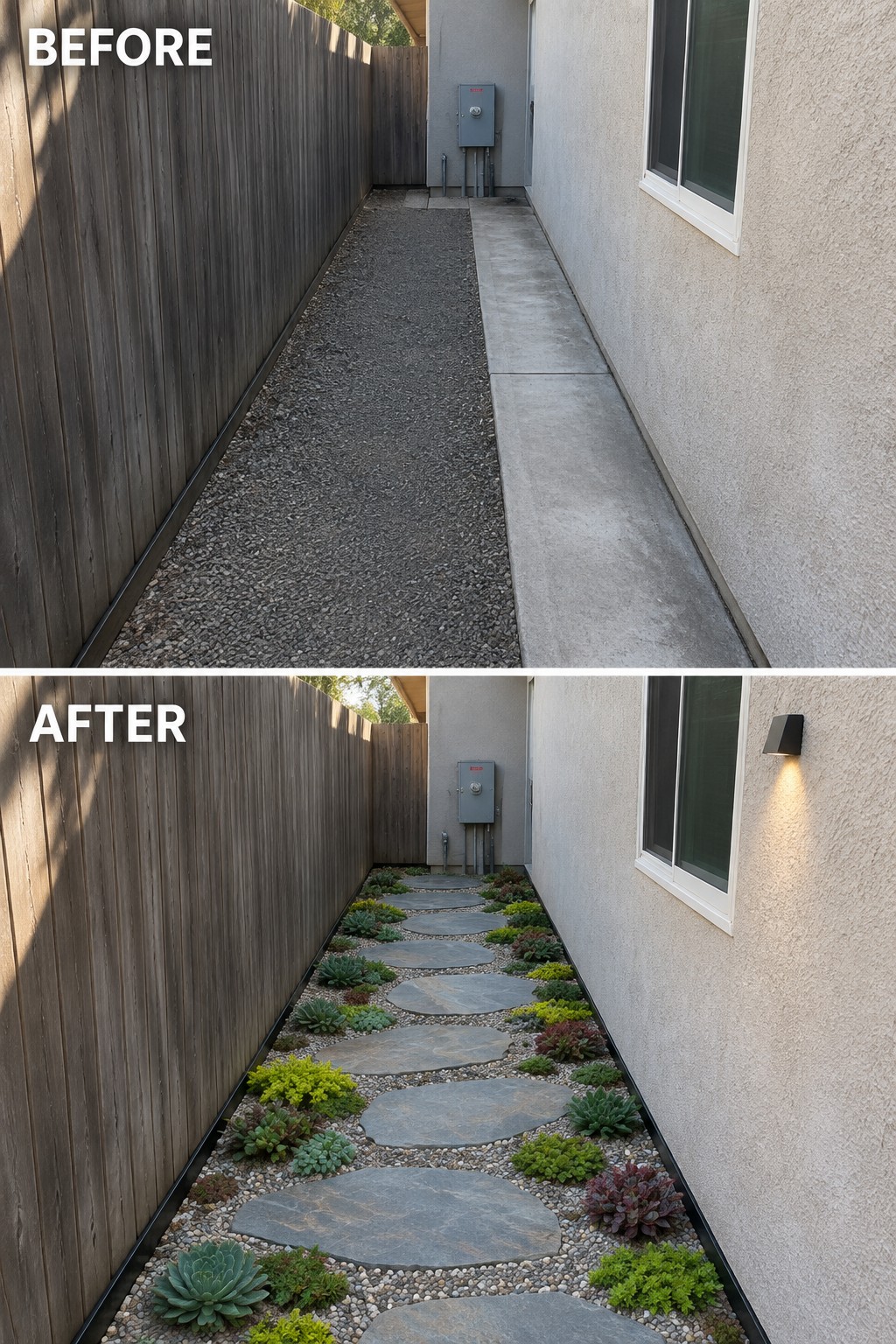
A narrow side yard often gets left as a plain gravel strip because there is not much room to work with. Laying stepping stones gives the space a clear path while still leaving planting room along the edges.
The stones sit in gravel with low succulents filling the gaps on both sides. This approach works best when you keep the planting simple and stick to tough, low-growing plants that will not crowd the walkway. It turns a forgotten strip into something that feels planned without needing a lot of width.
Add Raised Beds To Make A Narrow Side Yard Usable
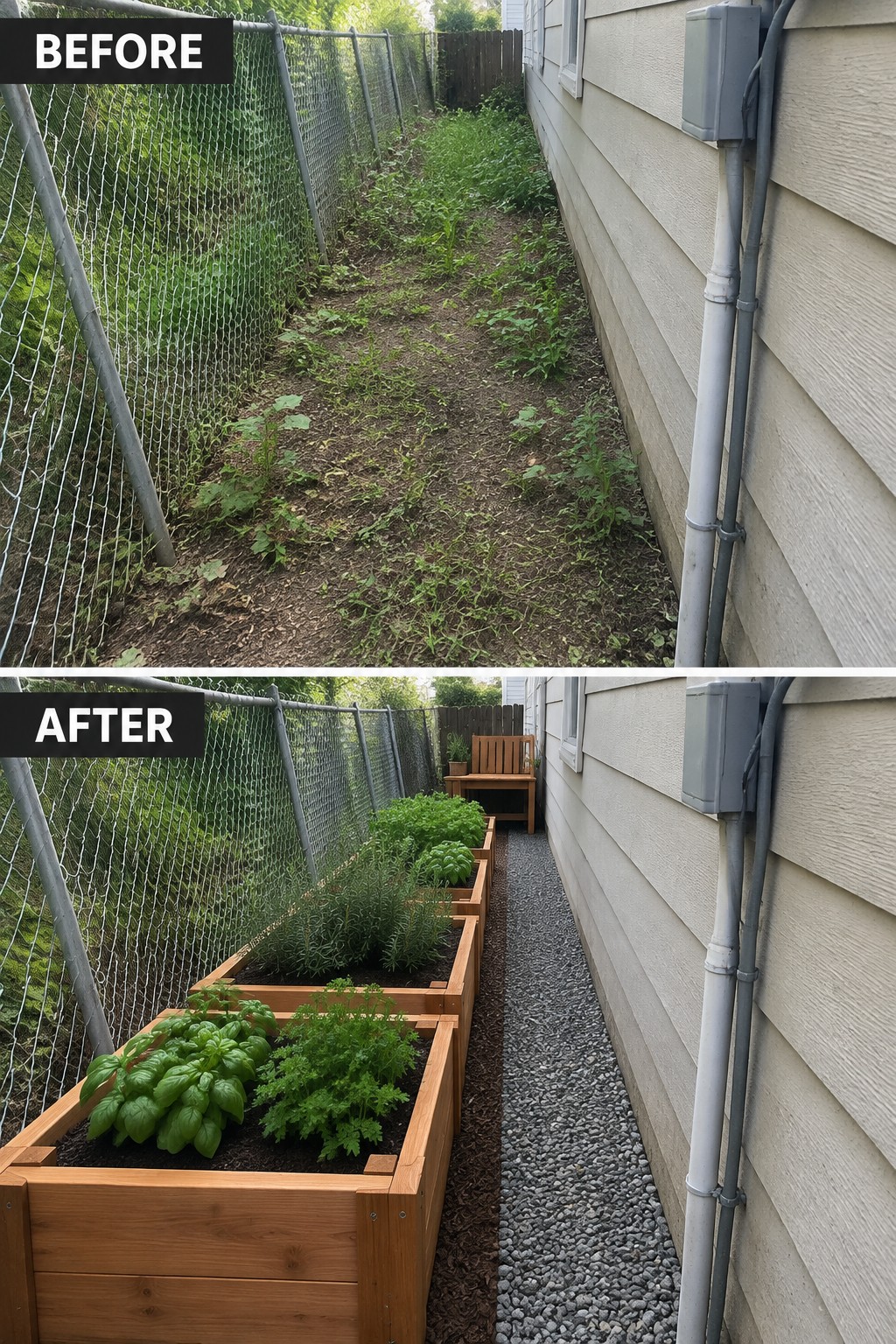
A narrow side yard often becomes an afterthought because the space feels cramped and hard to maintain. Adding raised beds gives the area a clear purpose, keeps plants contained, and turns weedy dirt into something productive without needing a full redesign.
This works best when you keep the path clear and choose beds that fit the width without crowding the walkway. Gravel or mulch along the side helps with drainage and makes the space feel more intentional. Start small with two or three beds if the yard is very tight, and pick plants that do well in partial shade since side yards often get limited sun.
Add A Defined Path To A Narrow Side Yard
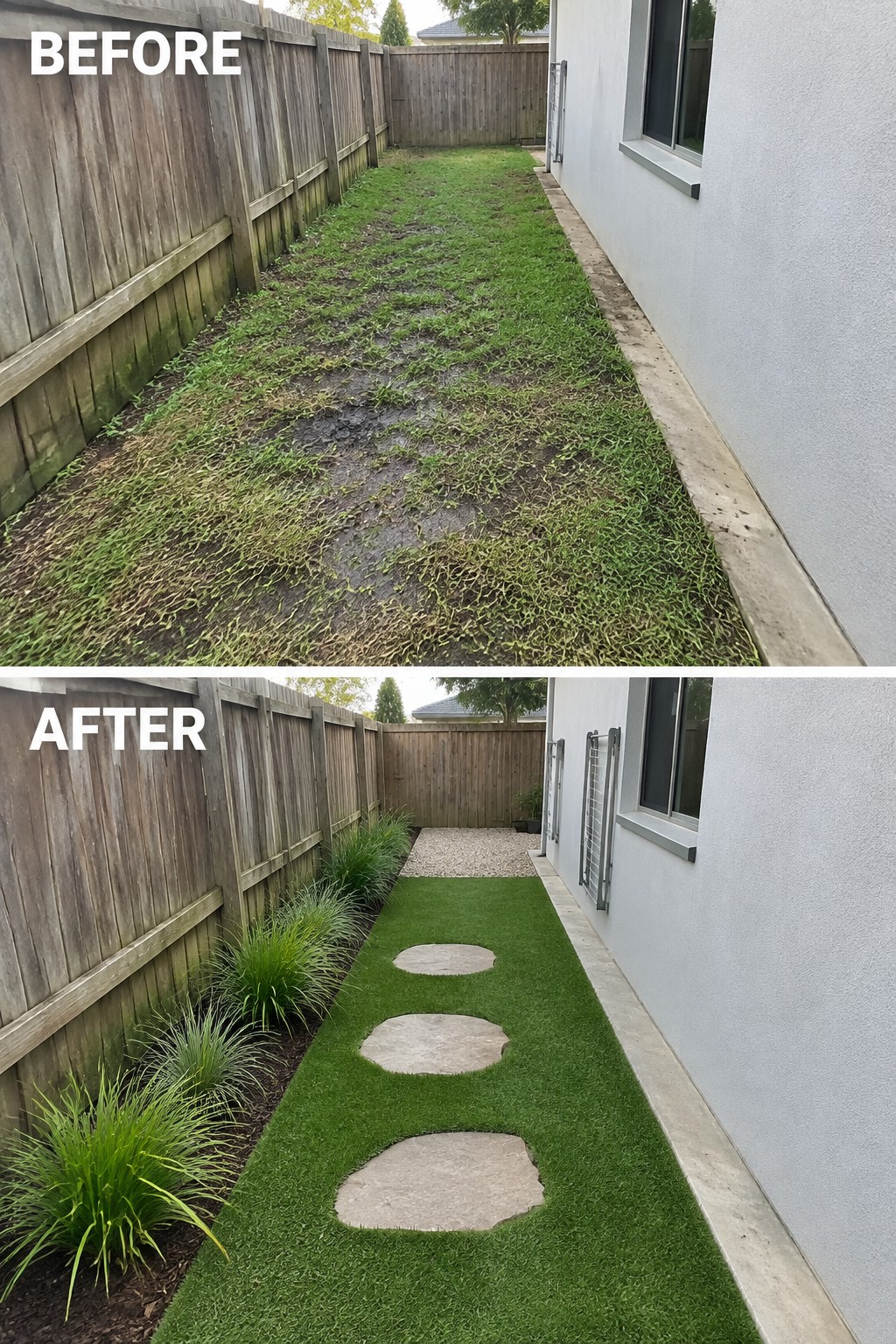
A narrow side yard often turns into an overgrown mess because the space is too tight for regular mowing and the ground stays damp. Replacing the patchy grass with artificial turf and laying a few stepping stones gives the area a clear walking surface and stops the mud from spreading.
This approach works best in homes where the side yard is mainly used for access rather than lounging. Clear the overgrowth first, then keep the planting simple along the fence so the path stays the main feature and does not feel crowded.
Add String Lights And Wall Planters To Narrow Side Yards
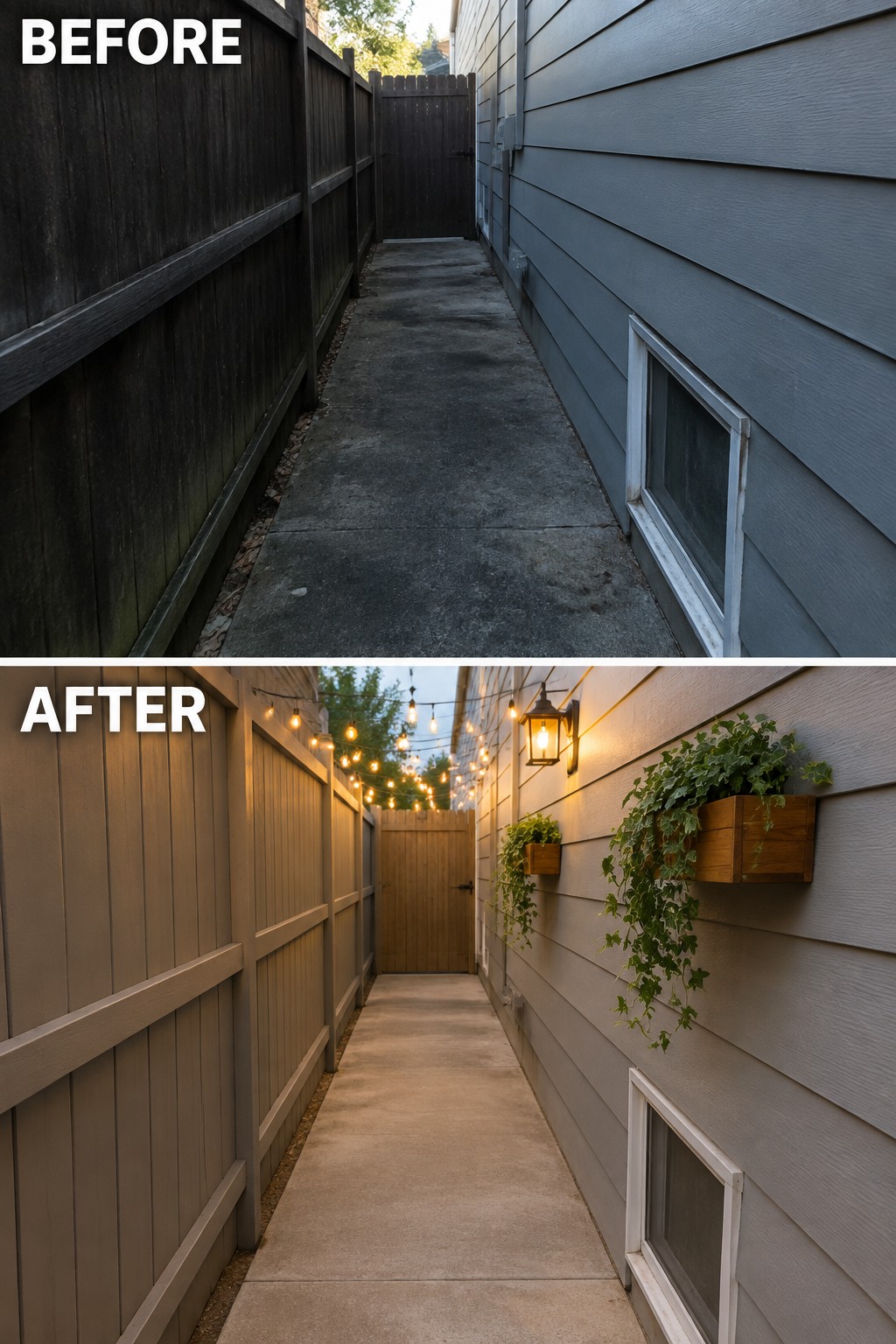
A narrow side yard can feel like leftover space when it is just a bare concrete path between a fence and the house. String lights overhead and a few wall-mounted planters change the feel without taking up any floor room. The lights make the path safer and more inviting after dark while the plants add life to the blank siding.
This idea suits homes where the side yard is mainly a walkway. Use weatherproof string lights and simple wooden boxes that can handle rain and sun. Keep the planting light so the path stays easy to walk through and does not feel crowded.
Add An Overhead Structure To Define A Narrow Side Yard

A narrow side yard often ends up as a storage corridor full of tools and bins. Adding a simple overhead frame gives the space a roof line and turns it into something that feels intentional rather than leftover. In this case the addition of the pergola creates a clear path, supports climbing plants, and makes room for a small shed at the end.
This approach works best on long, tight passages between the house and fence. Start with a basic wood frame sized to the width you have, then let vines cover it over a season or two. Keep the ground surface simple with gravel so the area stays easy to walk through and maintain.
Give A Narrow Side Yard A Defined Path
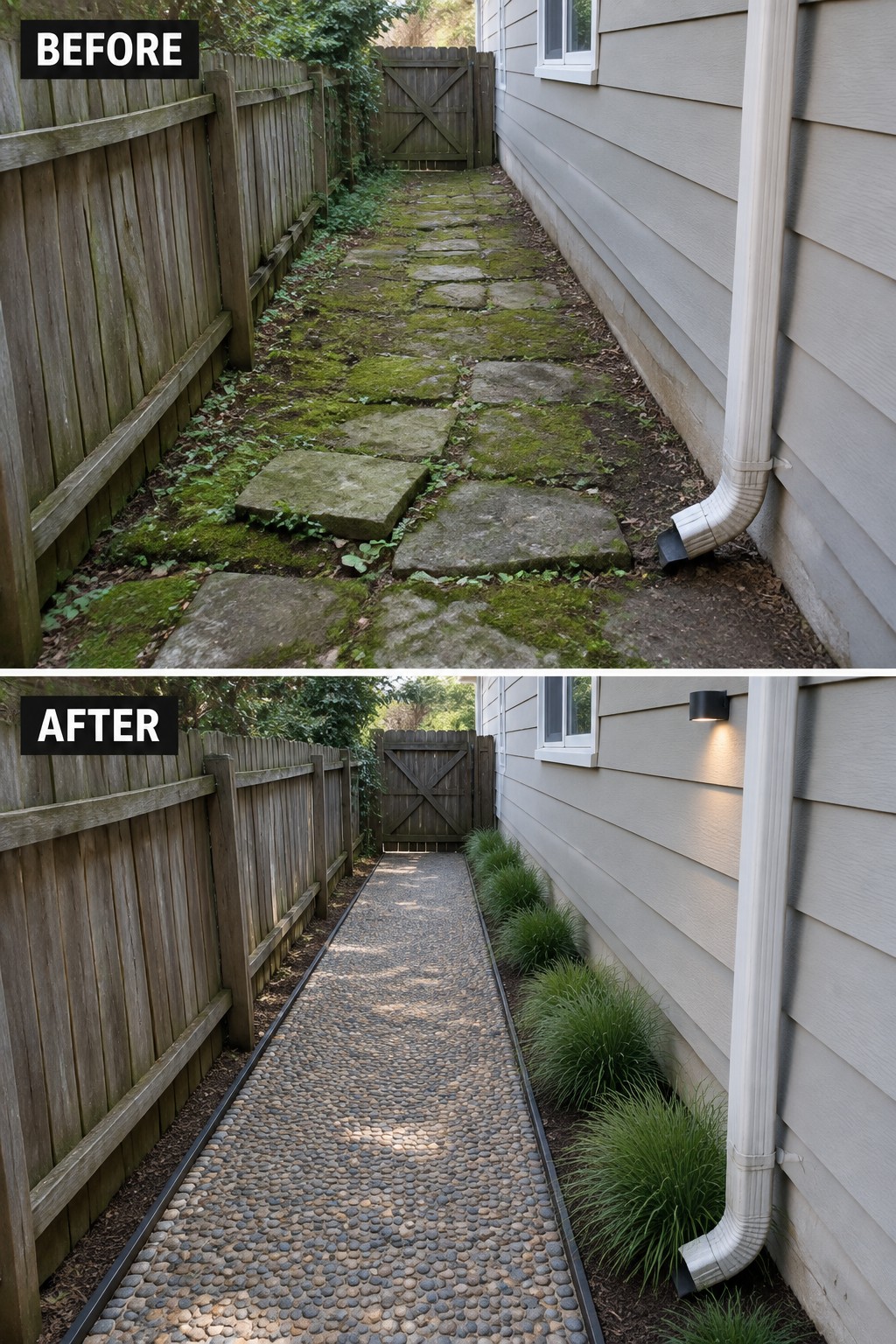
A messy side yard often feels like wasted space because the ground cover is uneven and nothing lines up. Replacing scattered stepping stones with a clean gravel path and adding a simple border turns the area into something you can actually walk through without getting your feet wet or muddy. The edging keeps the gravel in place while the low grasses soften the house wall and break up the long narrow stretch.
This approach works well on lots where the side yard is only a few feet wide. Start by clearing the overgrowth, then lay down a solid base and choose edging that matches your fence or house trim. Stick with one or two plant types so the space stays open and does not feel crowded.
Add A Living Wall To A Narrow Side Yard
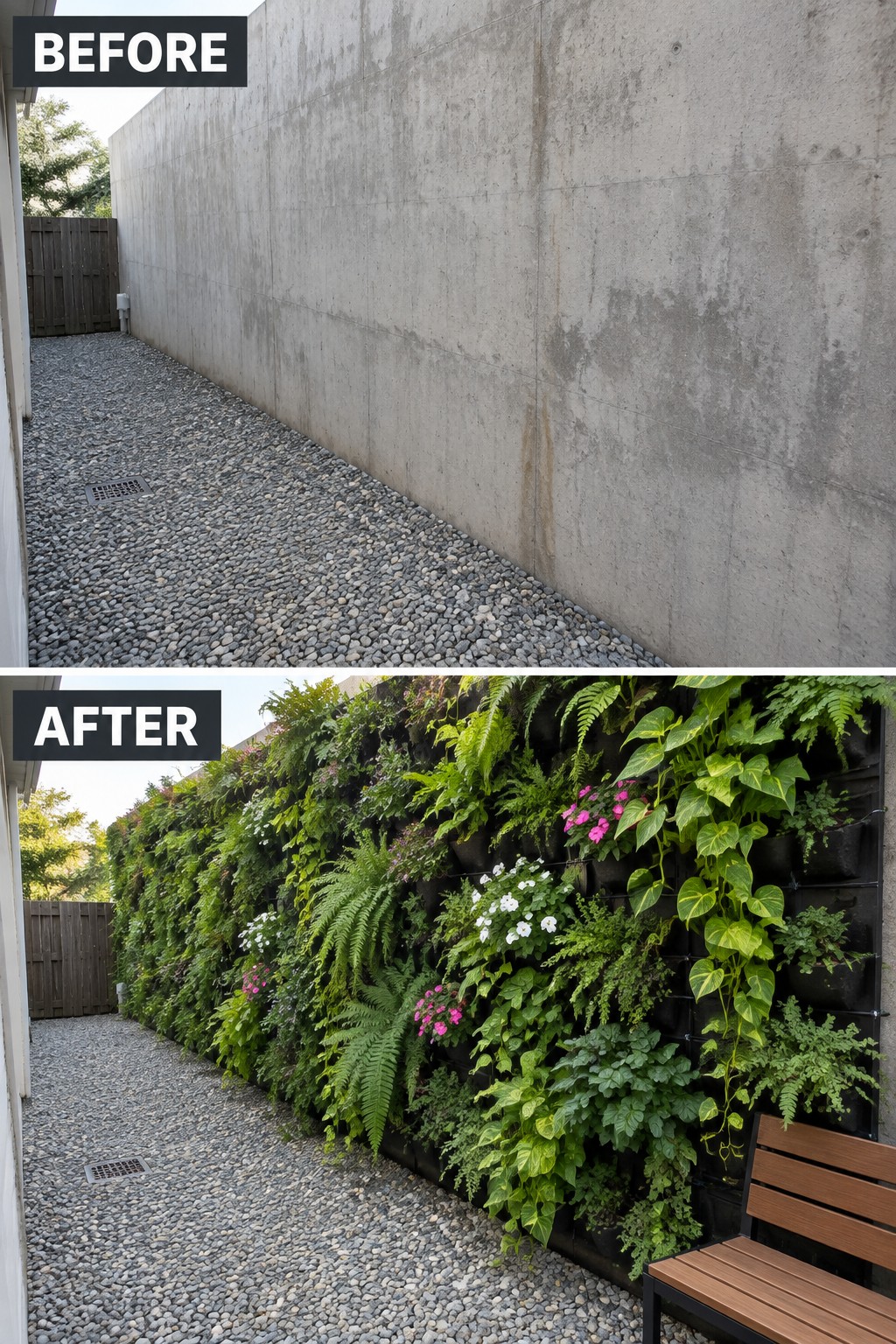
A blank concrete wall along a gravel path often makes a narrow side yard feel even more closed in. Adding a living wall changes that by bringing in layers of ferns, vines, and flowering plants that soften the surface and add color without taking up ground space.
This approach works best in tight side yards where traditional garden beds would crowd the walkway. Use a modular panel system that attaches directly to the wall, pick plants suited to the light conditions, and leave enough room along the path for easy movement.
Add Structure To An Overgrown Side Yard
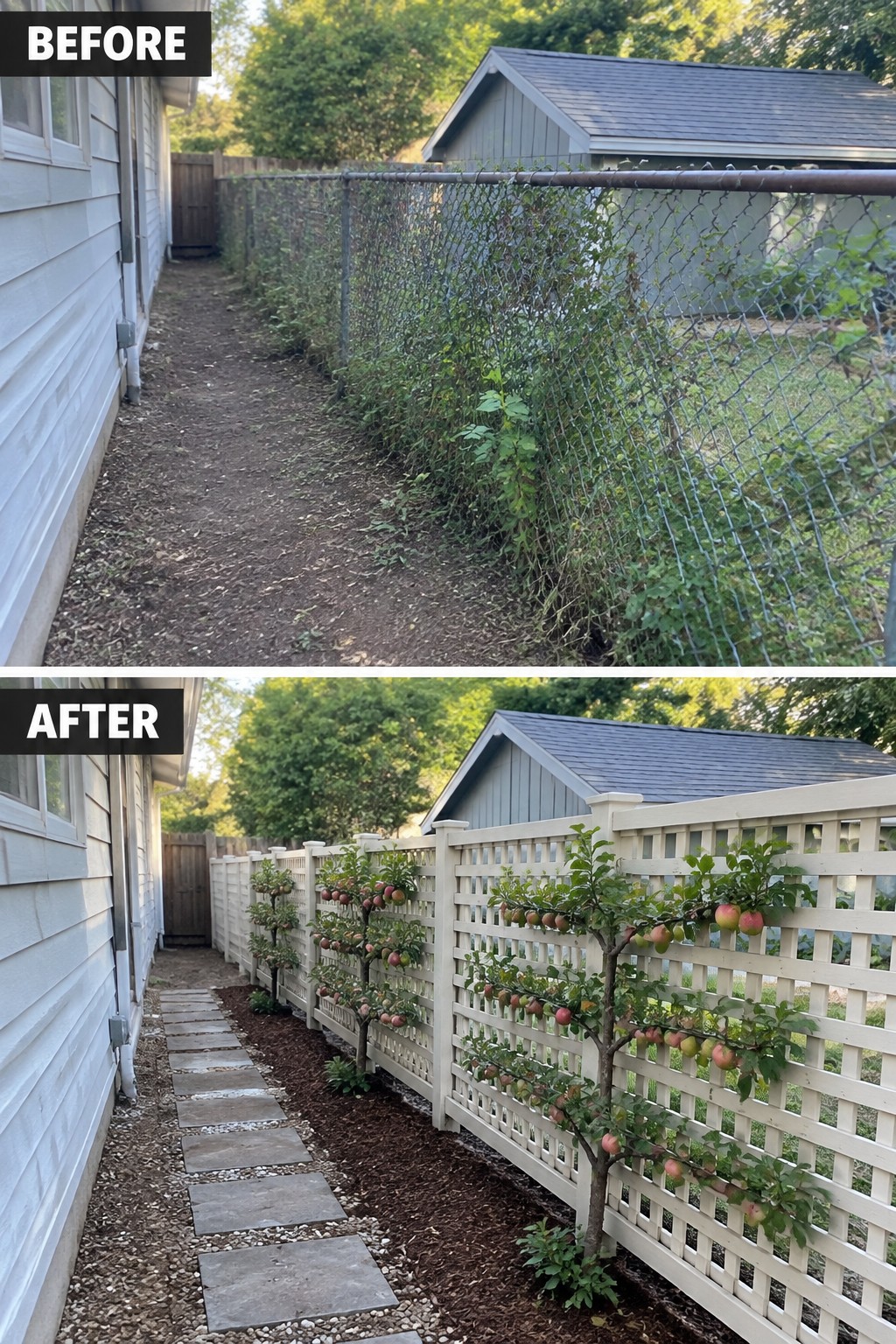
A narrow side yard often ends up as wasted space because it feels too tight and messy to bother with. Clearing the overgrowth and adding a straight path with mulch beds gives the area a clear purpose and makes it much easier to walk through. The new lattice fence and flat-trained trees along it turn the old chain link into something that actually adds privacy and interest without crowding the space.
This idea works best in long, skinny yards between a house and a fence or shed. Start with cleanup and a simple path first, then add vertical planting like espalier trees so you gain height without losing width. Keep the materials light in color if the space gets little sun, and make sure the path stays wide enough for a wheelbarrow or mower.
Add Planters And Screening To A Narrow Side Yard
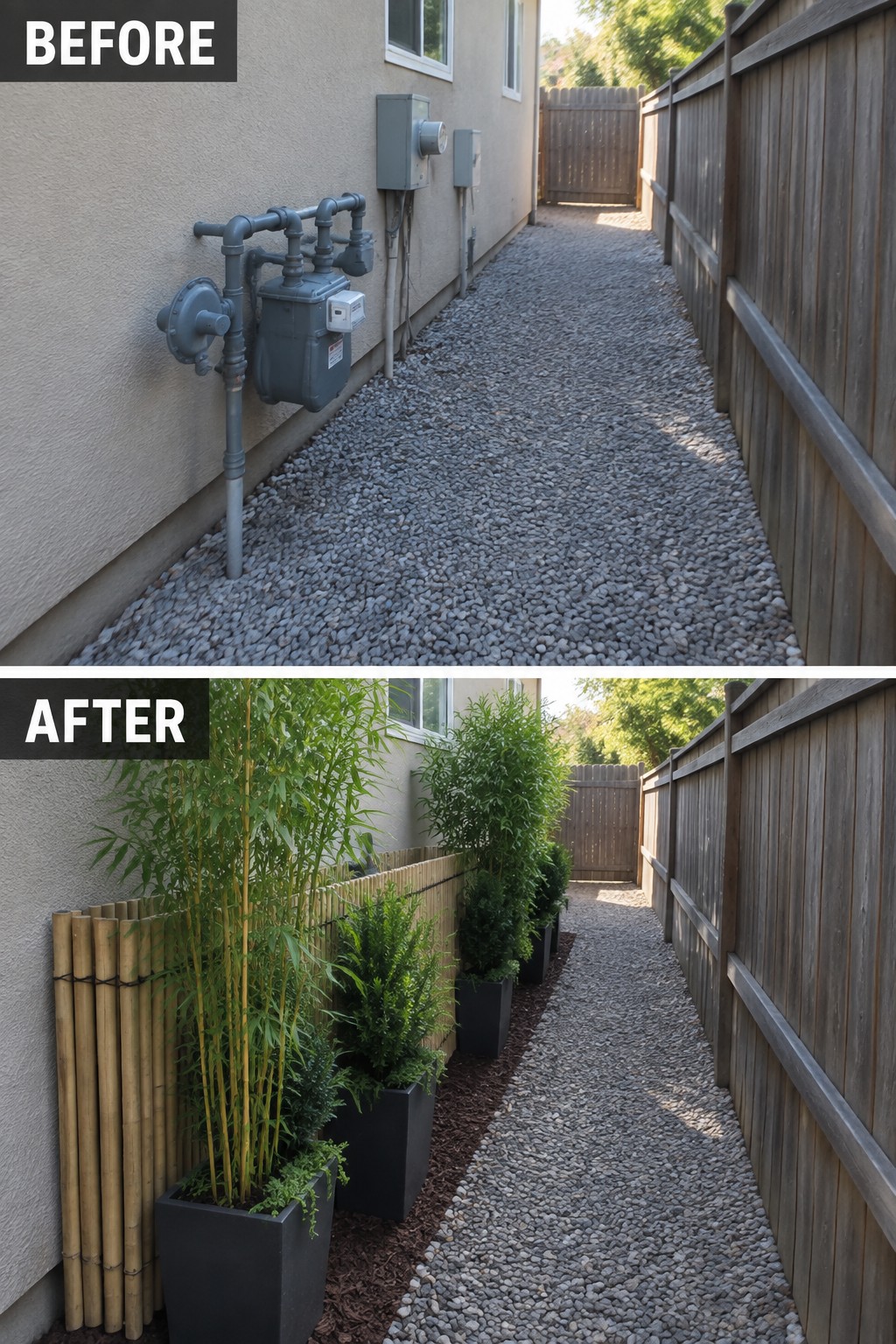
A narrow side yard often gets ignored because it is mostly a gravel path next to utility meters and pipes. Placing a simple bamboo screen against the wall and lining up a row of matching pots in front of it gives the space a clear edge and softens the view without taking up much room.
This idea works best in tight passages where digging beds is not practical. Keep the planters in a straight line so the walkway stays open, and pick plants that stay fairly narrow. The screen hides the equipment while the pots add height and greenery that can be swapped out if needed.
Add A Built-In Bench To A Narrow Side Yard
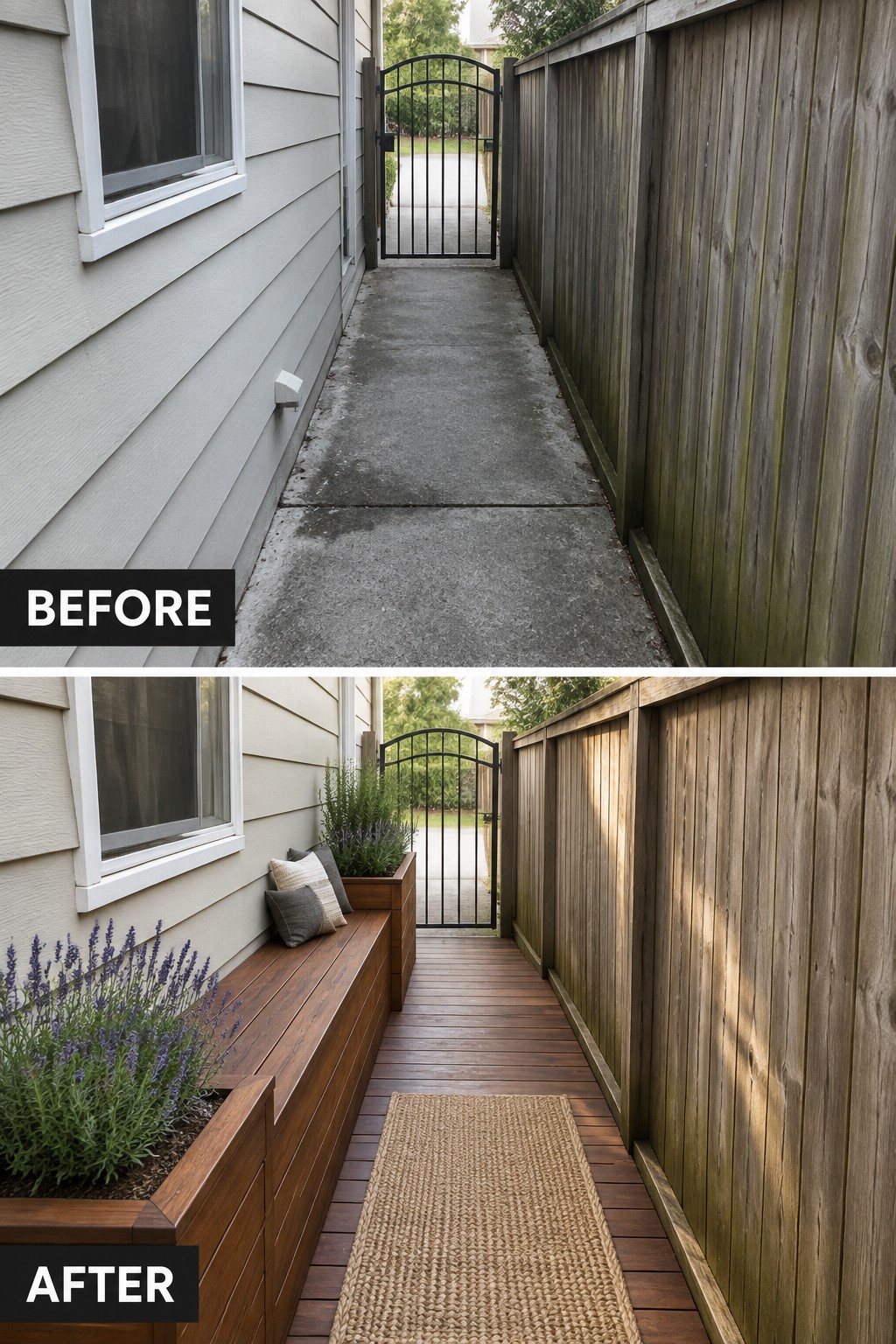
A narrow side yard often ends up as nothing more than a bare walkway between the house and the fence. Adding a long built-in bench with integrated planters gives the space a purpose and makes it feel wider and more intentional. The switch from plain concrete to a wood surface also softens the look and creates a place to sit or set things down.
This idea works best in side yards that are at least four feet wide and get decent light. Keep the bench narrow so it does not block the path, and choose simple evergreen plants that can handle the conditions. Start with the bench and a few planters before adding anything else.
Add A Path And Shade Plants To A Narrow Side Yard

A narrow side yard often ends up as wasted space because it feels too tight and shaded to use. Clearing out the moss and debris first, then laying a simple stone path, gives the area a clear purpose and makes it feel intentional instead of neglected. The ferns and hostas add height and texture without crowding the walkway.
This idea works best on homes where the side yard needs to stay functional for access while still looking cared for. Keep the planting low and layered so it does not block movement, and use stepping stones that sit level with the mulch to avoid tripping hazards.
Add Terraced Beds To A Steep Side Yard
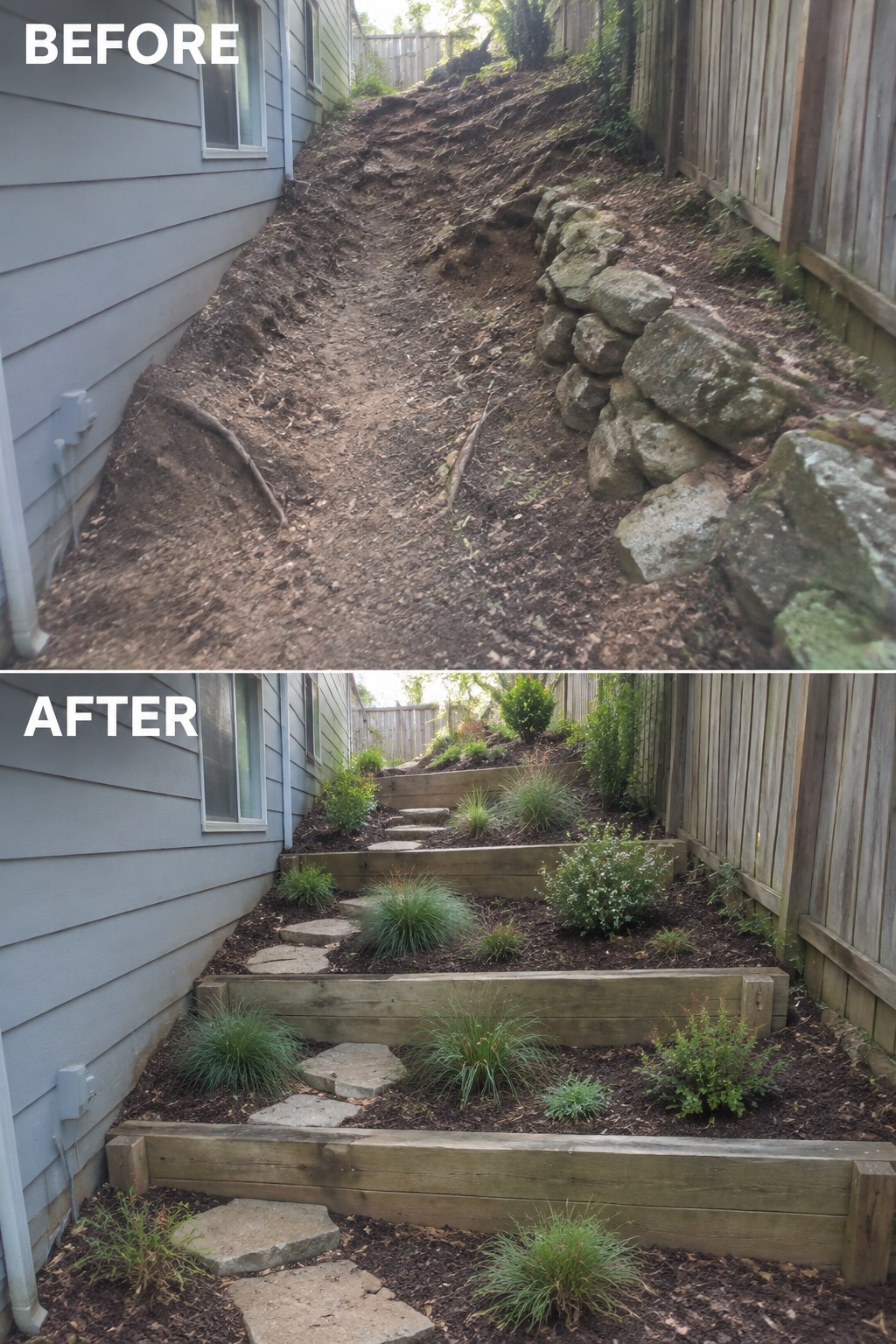
A steep, bare slope between the house and fence is hard to use and easy to ignore. Adding wooden retaining walls to create level beds turns the same space into something you can actually walk through and plant. The stone steps give a clear path while the tiers hold soil and keep everything from washing away.
This approach works best in narrow side yards where the drop is too sharp for regular planting. Start with the lowest wall first, then build up from there. Keep the beds fairly shallow so the plants stay visible from the house and the path does not feel crowded.
Pave A Narrow Side Yard To Handle Water And Create A Clear Path
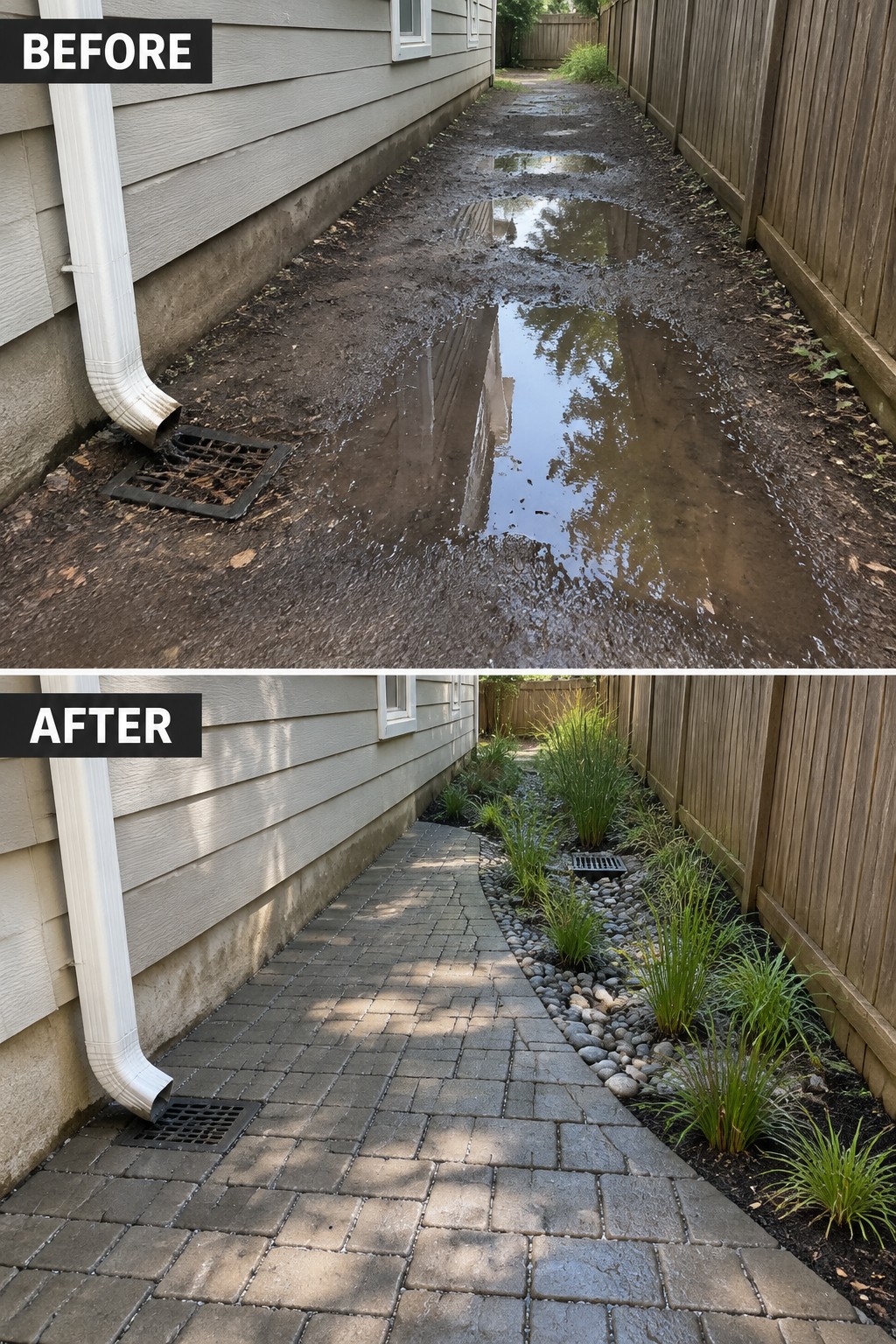
A muddy side yard with standing water makes the space feel neglected and hard to walk through. Adding a brick path and a narrow planted strip with river rock keeps water moving toward the drain and turns the area into something you can actually use.
This approach works best in tight spaces between the house and fence where grass struggles. Lay the pavers on a proper base so the path stays level and dry, then keep the planting bed simple with tough grasses and mulch or rock to reduce mud splash.
Add Lighting To Brighten A Narrow Side Yard

A narrow side yard often feels like wasted space because it stays dark and featureless once the sun goes down. Simple path lights placed along the edge and a strand of overhead lights turn the same concrete walkway into something you can actually use after dark. The lights define the length of the yard and make the fence line feel less blank without taking up any room.
This idea suits homes where the side yard is mostly a pass-through rather than a seating area. Use low-voltage or solar path lights spaced a few feet apart and keep the string lights modest so they do not create glare. Focus on lighting the ground and the base of any planting first, then add one overhead line if there is a structure to hang it from.
Add Edging To Define A Narrow Side Yard
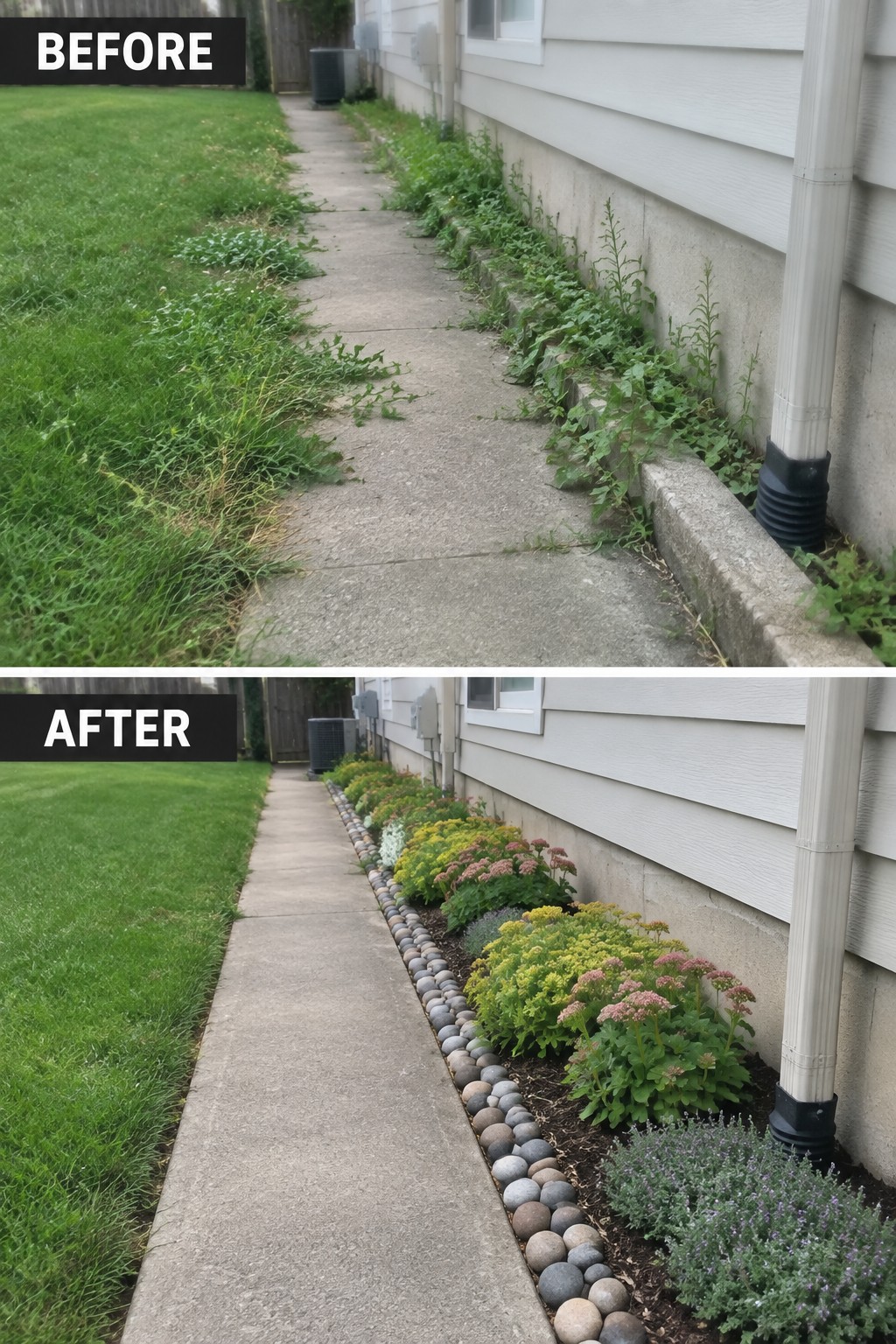
A narrow strip of ground next to the house often turns into a weedy mess because it has no clear edge. Adding a simple border of river rocks, then filling the bed with mulch and a few repeating plants, turns that same space into something that looks intentional instead of neglected. The path stays clear and the foundation planting no longer creeps onto the concrete.
This approach works especially well on tight side yards where you cannot add much width. Start with the edging first so the bed has a firm boundary, then choose low plants that stay under windows. Keep the plant list short and repeat the same ones so the narrow space does not feel crowded.
Add A Storage Bench To Organize A Narrow Side Yard
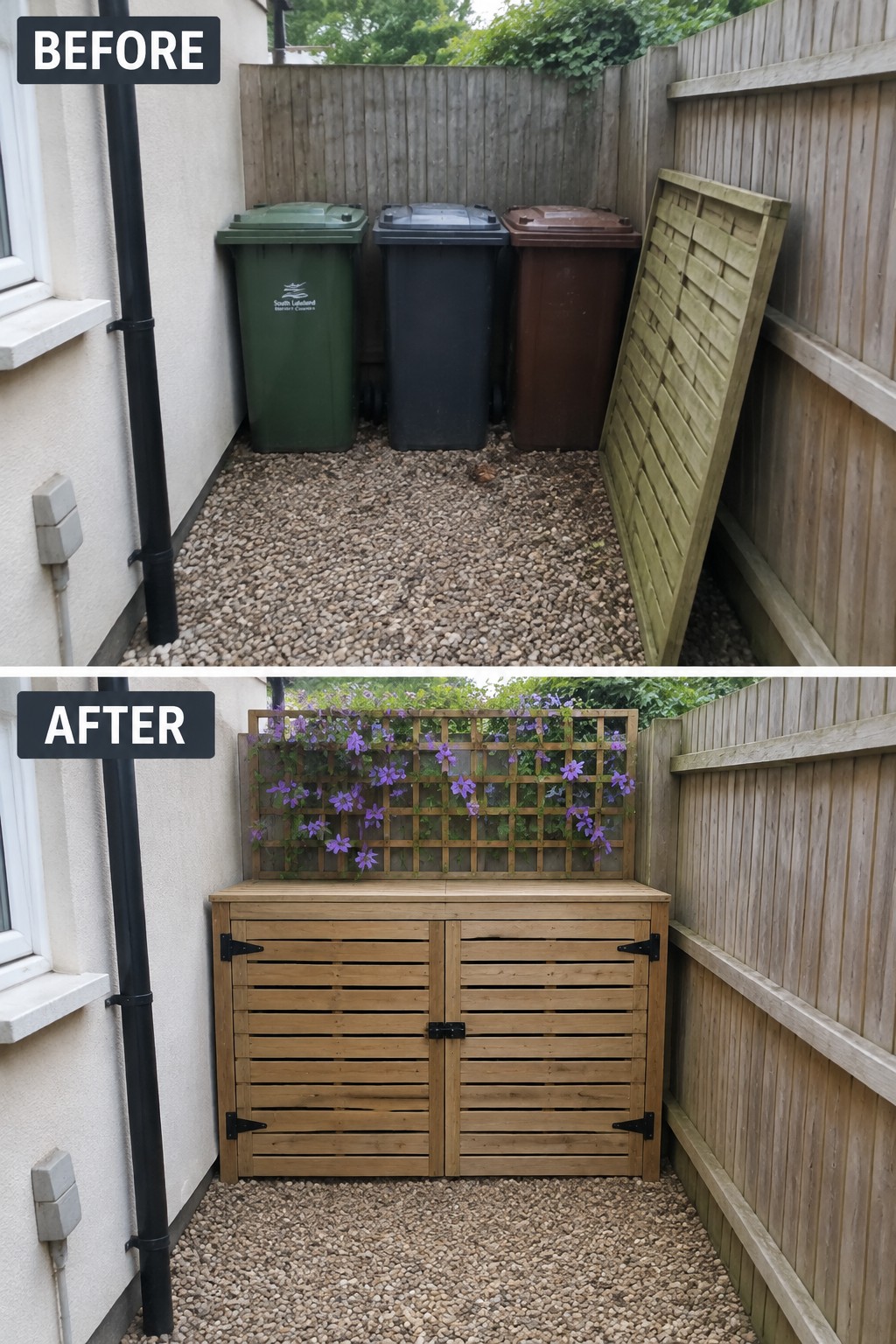
A narrow side yard often ends up as a dumping ground for bins and random panels because there is no clear plan for the space. Building a simple storage bench with a trellis on top gives the bins a permanent home while adding height and planting without crowding the path. The gravel stays practical underfoot, and the wood screen keeps everything looking intentional instead of messy.
This approach works well in tight passages where you need storage but still want the area to feel tidy. Keep the bench low enough that it does not block windows or doors, and choose a trellis that lets vines grow without taking over the fence behind it. Focus on weatherproof wood and sturdy hinges so the doors stay useful for years.
Add Potted Plants To A Narrow Side Yard Path
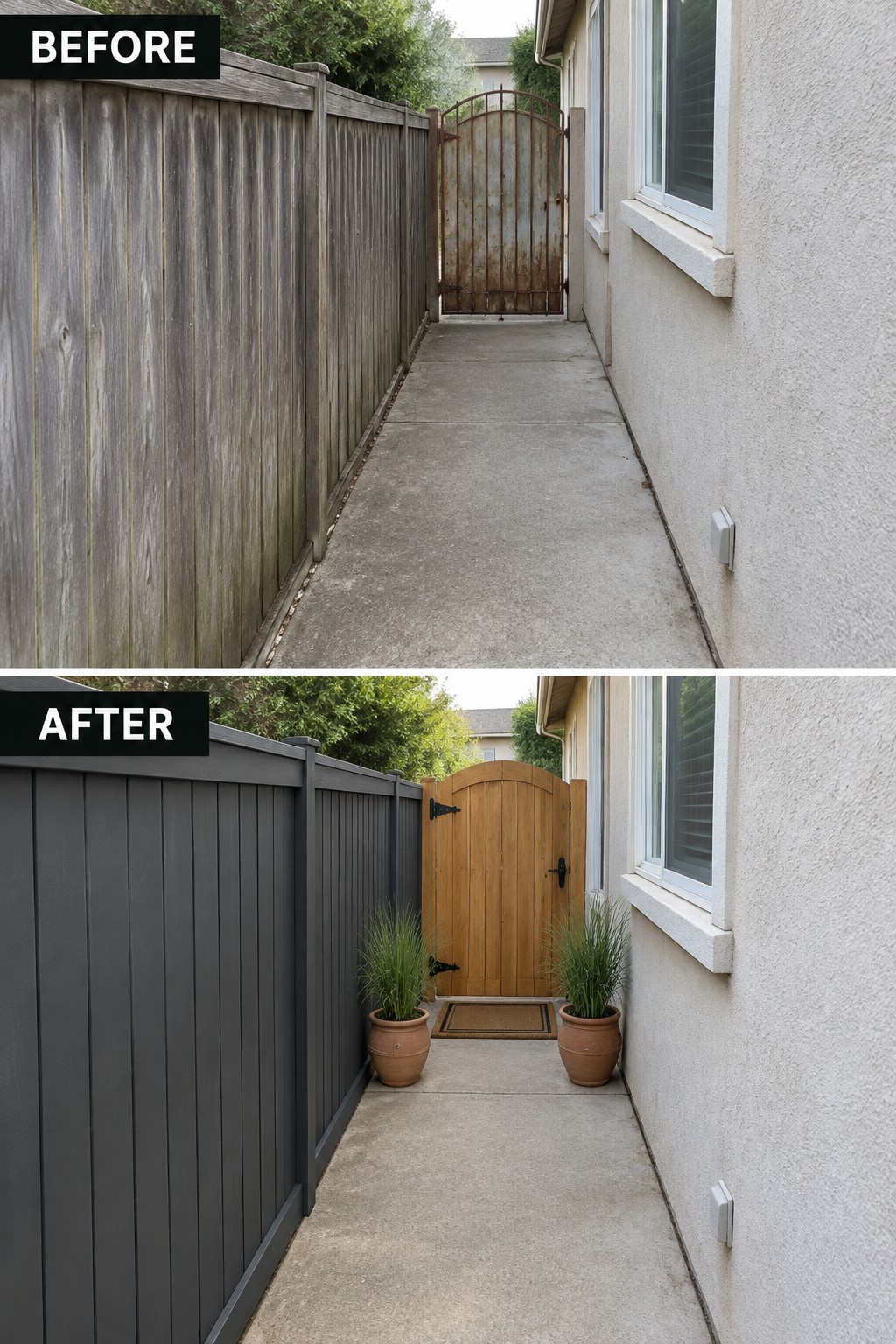
A narrow side yard tends to feel like leftover space, mostly a concrete path next to a plain fence. Here, painting the fence a dark color and setting two large pots with tall grasses next to the gate gave the walkway a simple structure and a bit of life without crowding the area.
This idea works best on tight passages where digging beds is not practical. Use weatherproof pots and plants that stay upright so the path remains clear for walking. Limit the number of containers to two or three so the space still feels open.
Add Defined Garden Beds To Narrow Side Yards

A narrow side yard often ends up as an afterthought, with grass or weeds growing right up to the house. Adding a simple garden bed with edging changes that by giving the space a clear boundary and turning it into something more intentional. The main shift here is replacing the messy strip with a contained planting area that stays neat and easier to maintain.
This approach works especially well on tight lots where every foot counts. Keep the bed narrow enough for access, use a durable edge to hold the mulch in place, and choose plants that fill in without constant trimming. It keeps the lawn open for walking while still adding color and structure along the fence line.
Add Raised Beds To A Narrow Side Yard
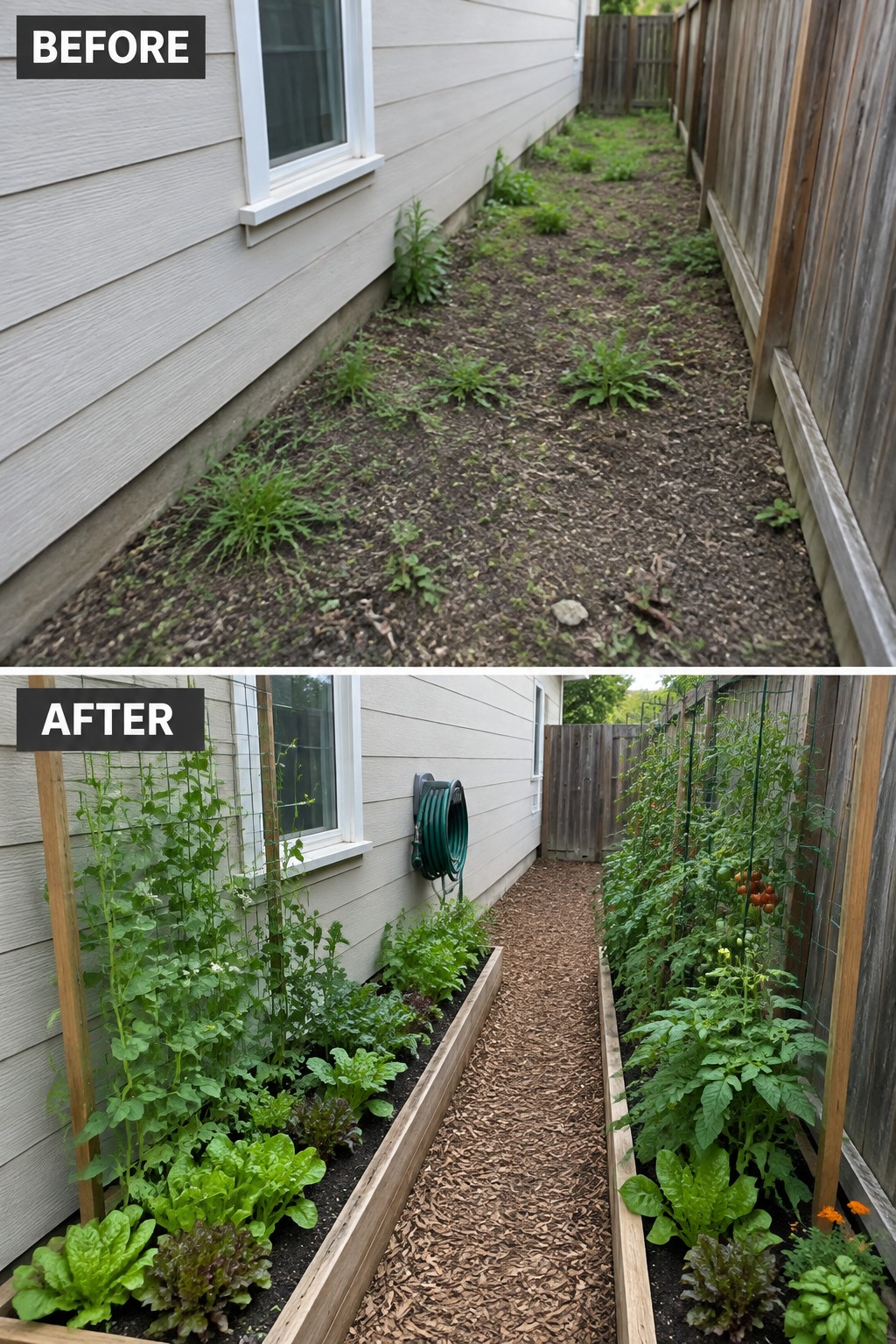
A narrow side yard often gets ignored because the space feels too tight and the ground is usually poor. This example shows how two simple raised beds turned a weedy strip into a working garden with room to walk and grow food along the house.
Raised beds help because they keep the planting area contained, improve drainage, and make it easier to reach plants without stepping on the beds. They also add height so the garden feels more intentional. If your side yard is similar, measure the width first and keep the beds no more than two feet deep so you still have a clear path between them.
Frequently Asked Questions
Q: What if my side yard stays shady most of the day from the house walls? A: Go with ferns and hostas that handle low light without much fuss. They spread out enough to cover bare soil but stay contained in a narrow strip. Water them well the first season so roots take hold.
Q: Can I squeeze in a small spot to sit without losing walkway space? A: Tuck a slim bench against the fence on one side. Set a couple of pots nearby with easy flowers like impatiens. This keeps the path clear while giving you a place to pause.
Q: How do I stop weeds from taking over after I plant? A: Lay down a layer of mulch right after planting to block light. Pull any sprouts by hand every couple of weeks at first. Once plants fill in they crowd out most weeds on their own.
Q: Will these changes hold up if kids or pets use the side yard as a shortcut? A: Choose tough ground covers like creeping thyme that bounce back from foot traffic. Skip anything with thorns or delicate stems along the edges.
