


Backyards often end up looking scattered when there is no real layout to guide how the space gets used from day to day.
I find that focusing on basic structure like pathways and edging brings a sense of order that lets everything else fall into place more easily.
Cleanup comes first for me.
Once the ground feels settled, adding plants in stages keeps costs down while the yard gains privacy and shape over a season or two.
A few of these low-cost ideas stand out as ones I would test in my own yard to see which ones actually hold up with regular use.
Create A Defined Fire Pit Area With Gravel And Blocks

An overgrown backyard often feels unusable until you give it a clear center. Laying down a gravel circle and placing simple concrete block benches around a fire pit turns scattered grass and weeds into a spot meant for sitting. The change works because the gravel keeps the area dry and contained while the low blocks give just enough height without needing custom furniture.
This idea suits any yard that already has a fire pit or room for one. Start by clearing the grass in a circle, add landscape fabric, then spread gravel. Concrete blocks from a hardware store cost little and stack easily into stable seats. Keep the circle modest so the rest of the yard still feels open.
Add Structure To An Overgrown Backyard

A patchy lawn and scattered stepping stones can make a backyard feel unfinished and hard to use. The simplest fix is to add clear borders and a few planted boxes so the space starts to look intentional instead of neglected. Gravel along the path edges and a pair of raised planters give the eye something to follow and keep the grass from creeping everywhere.
This approach works best in smaller yards where you want to create usable zones without spending much. Start by raking the lawn smooth and laying down a simple gravel strip before you add anything else. The planters can be basic wood boxes or even old pallets, and solar lights along the path keep the layout easy to see at night.
Turn A Bare Patio Into A Usable Outdoor Room

A flat concrete slab usually stays empty because nothing defines the space or makes it feel comfortable. Laying down a couple of rugs, adding a small seating spot, and hanging string lights gives the area a clear purpose and turns it into a place people actually want to use.
This idea works best on any simple hard surface near the house that gets some shade or evening use. Start with one or two rugs to mark the seating zone, then keep the furniture light so the area does not feel crowded. Focus on pieces that can stay outside and choose lights that are easy to hang and take down with the seasons.
Add Structure To An Overgrown Backyard
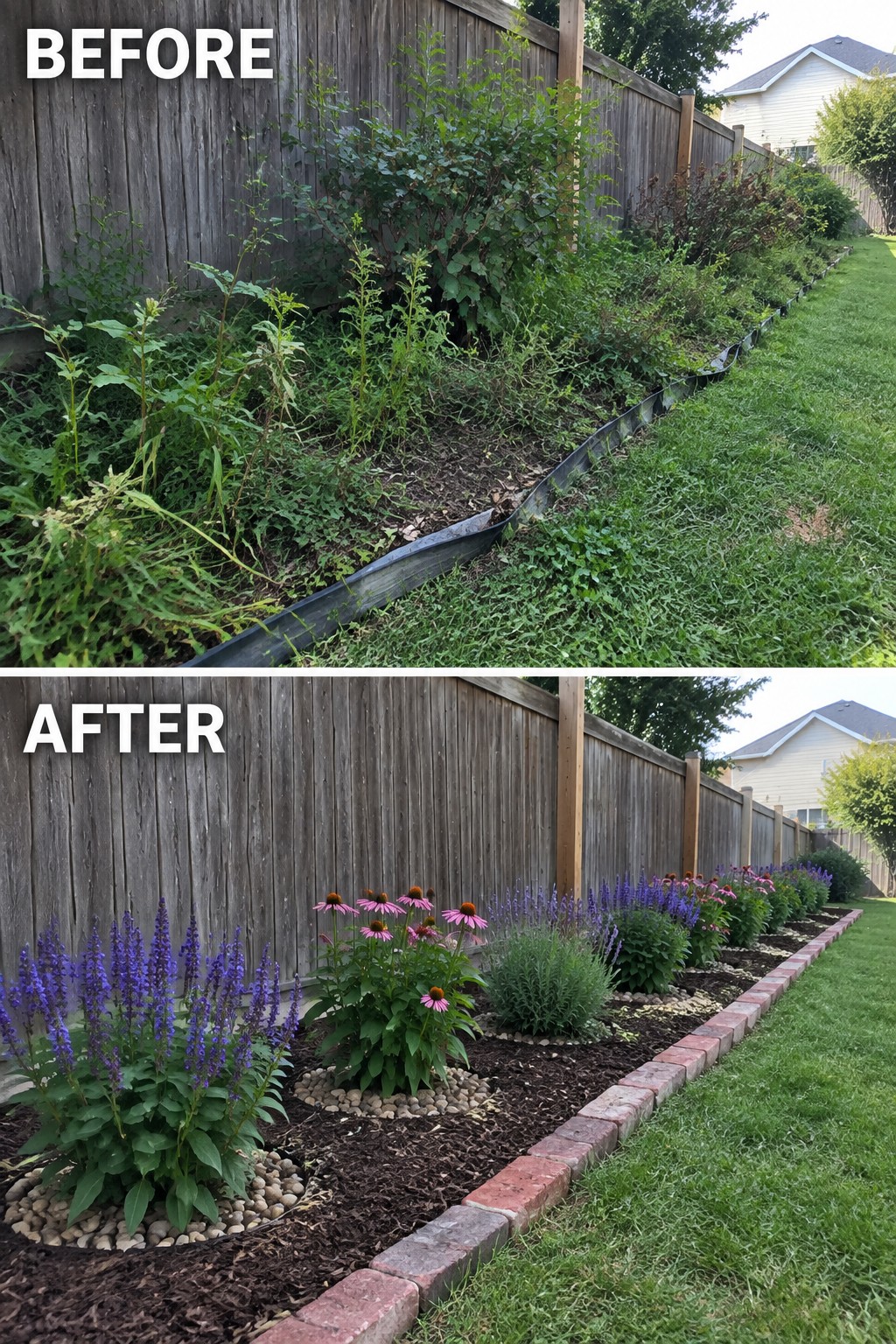
Clearing out the tangled growth first made the biggest difference here. Once the weeds and old plastic edging were removed, simple brick borders and mulch gave the beds a clean shape that actually holds the plants in place instead of letting them sprawl.
This idea works best along fences or side yards where things get messy fast. Focus on one solid edging material, plant in repeating groups rather than scattering everything, and use mulch to keep the soil covered. It keeps the space looking tidy without constant weeding.
Turn A Sloped Yard Into Garden Space With Raised Beds

A bare slope often stays unused because the ground shifts and water runs off too fast. Raised beds solve this by creating flat, contained planting areas that hold soil and make the space practical again. The after photo shows how a few simple wooden planters turned the hill into rows of vegetables and herbs with a clear path running through.
This idea works best on moderate slopes where a full retaining wall would be too much work. Build or place the beds along the contour of the hill, add steps or gravel for access, and keep the rest of the slope mulched or planted with ground cover. It keeps the project low cost while giving you actual growing space instead of just a view of dirt.
Add Trellises To A Fence For Vertical Interest
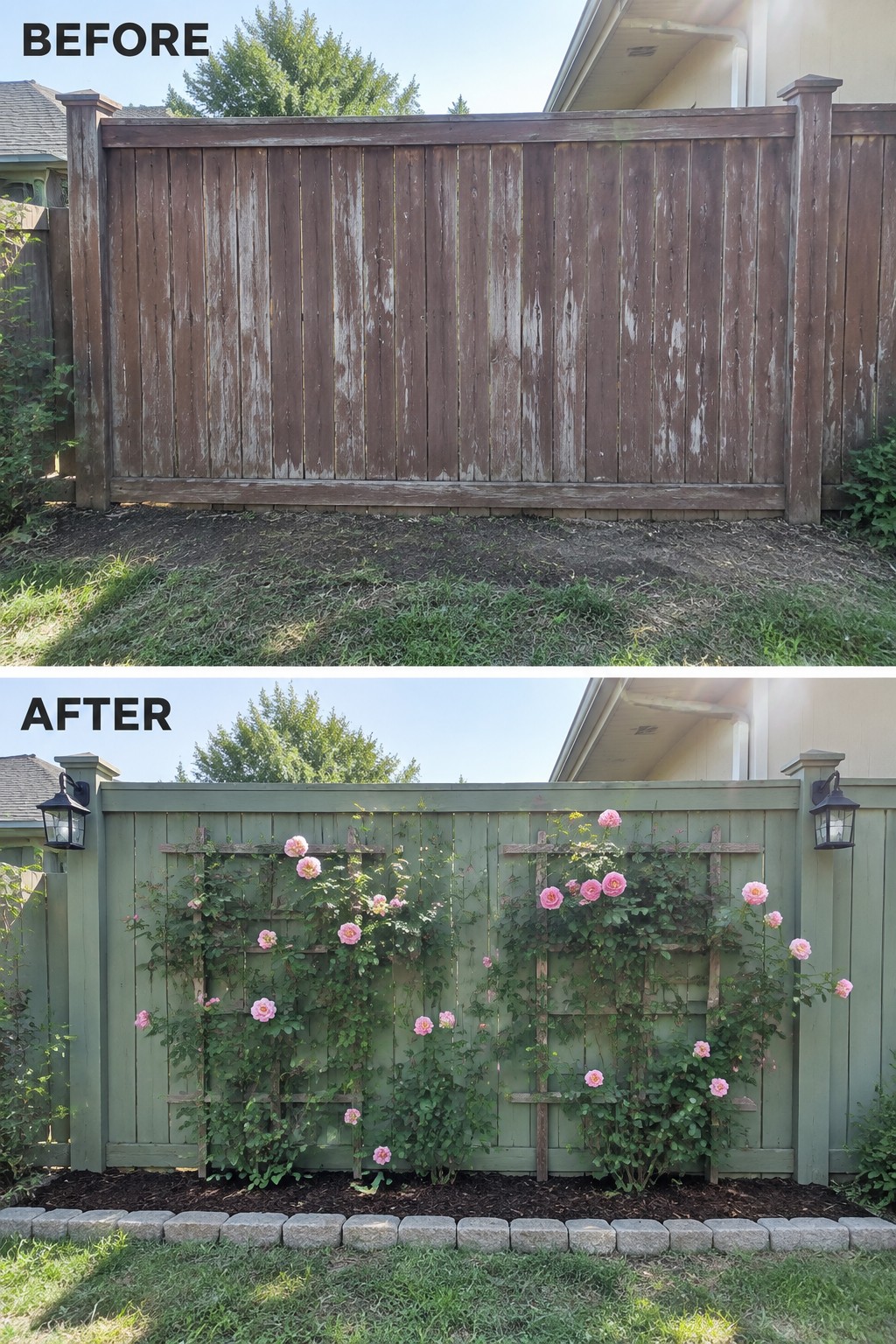
A plain fence often sits there doing nothing but marking the edge of the yard. Adding a few trellises and letting roses climb them gives the fence height and turns it into part of the garden instead of just a backdrop. Painting the fence a softer color helps the plants stand out without much extra work.
This approach works best along a long fence where you want structure but do not have room for trees or large shrubs. Space the trellises evenly, pick a climber suited to your area, and keep a simple mulched bed in front so the whole strip stays tidy. It is an easy way to add interest without filling the yard with more stuff.
Add Structure To An Overgrown Backyard

Many backyards start with patchy grass and no clear lines, which makes the whole space feel neglected. Adding a brick edge and a simple row of plants along the fence gives the lawn a defined shape and turns the area into something that feels planned and usable.
This idea works best in smaller yards where you want to keep most of the space open for the lawn. Put the edging in first to set the boundaries, then fill the beds with low plants that suit your climate. It keeps the focus on the grass without adding extra features that can crowd the space.
Turn A Plain Entry Corner Into A Vertical Herb Garden

A bare concrete spot next to the door does not offer much until you give it a clear purpose. Mounting a painted wooden pallet on the wall and filling it with potted herbs turns empty wall space into a working garden without crowding the floor. The small gravel patch at the base keeps things tidy and helps with drainage.
This idea works well on small porches, side entries, or any tight outdoor corner where floor space is limited. Start with a clean or painted pallet, use lightweight pots, and choose herbs you actually cook with so the garden stays useful year after year. Keep the layout simple and leave enough room to reach the plants for watering.
Add Solar Lights To Define A Backyard Patio

The main change here is simple. The before photo shows a paver patio taken over by weeds, while the after shows the same area cleared and bordered with solar lights. That one addition turns the space from something you walk past into something that feels like an actual outdoor room at night.
This idea works best on small to medium patios where the surface is already in decent shape. Start with a thorough weed removal and a quick sweep, then place a few solar lights around the edges rather than filling the whole area. It keeps the project low cost and lets you test how the space gets used before adding furniture or more planting.
Turn A Bare Patio Into A Defined Outdoor Room

The biggest shift here comes from adding a pergola frame over the plain concrete. That single structure creates shade and boundaries, while the curtains and string lights soften the edges and make the space feel enclosed without closing it off completely.
This idea works best on small or simple patios where you want a clear spot to sit without spending much. Start with the overhead frame if your budget allows, then add one or two weather-friendly pieces like a bench and a rug to mark the seating zone. Keep everything else light so the area stays open and usable year-round.
Add Structure To An Overgrown Side Yard

A narrow side yard often turns into a weedy strip because it feels too tight to use. Laying down gravel with a few stepping stones gives the space a clear path and stops the weeds from taking over. Large containers placed along the fence add height and greenery without needing to dig into the ground.
This approach works well on houses where the side yard is mostly a utility route. Start by clearing the overgrowth completely, then add a simple gravel base before bringing in pots. Stick to one or two types of plants so the area stays easy to maintain.
Turn An Empty Patio Slab Into A Seating Area
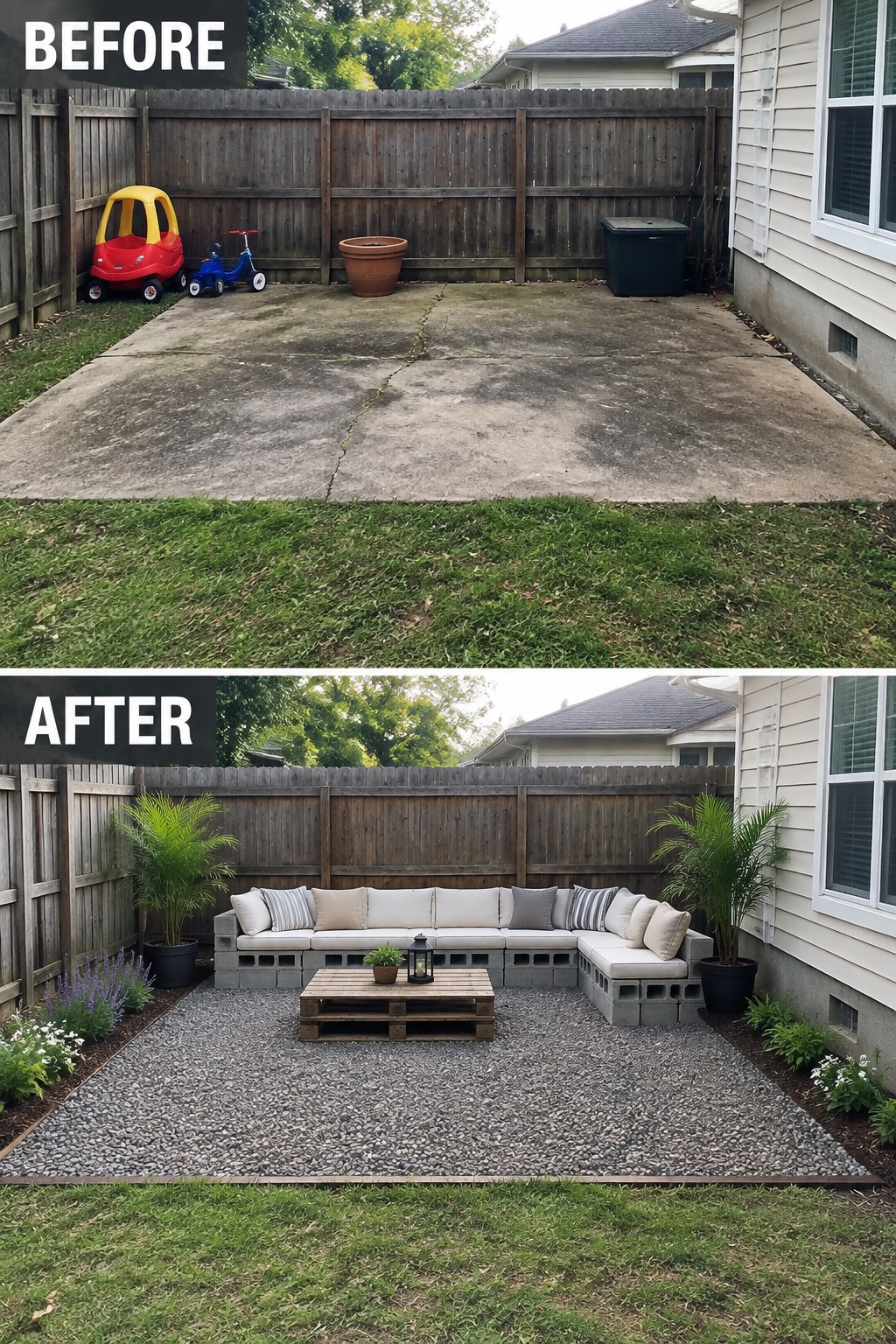
A flat concrete area often sits unused because it feels unfinished and hard underfoot. Covering it with gravel and building a simple bench from cinder blocks gives the space a clear purpose and a softer surface to walk on. The change turns the same slab from a blank spot into a place where people actually want to sit.
This idea works best in small backyards that already have a solid base. Lay down landscape fabric first so the gravel stays put, then stack the blocks in a U-shape and add cushions on top. Keep the middle open for a low table and a couple of potted plants. The setup stays practical as long as you choose cushions rated for outdoor use and leave enough room to walk around the edges.
Add A Dry Creek Bed To Shape A Plain Backyard
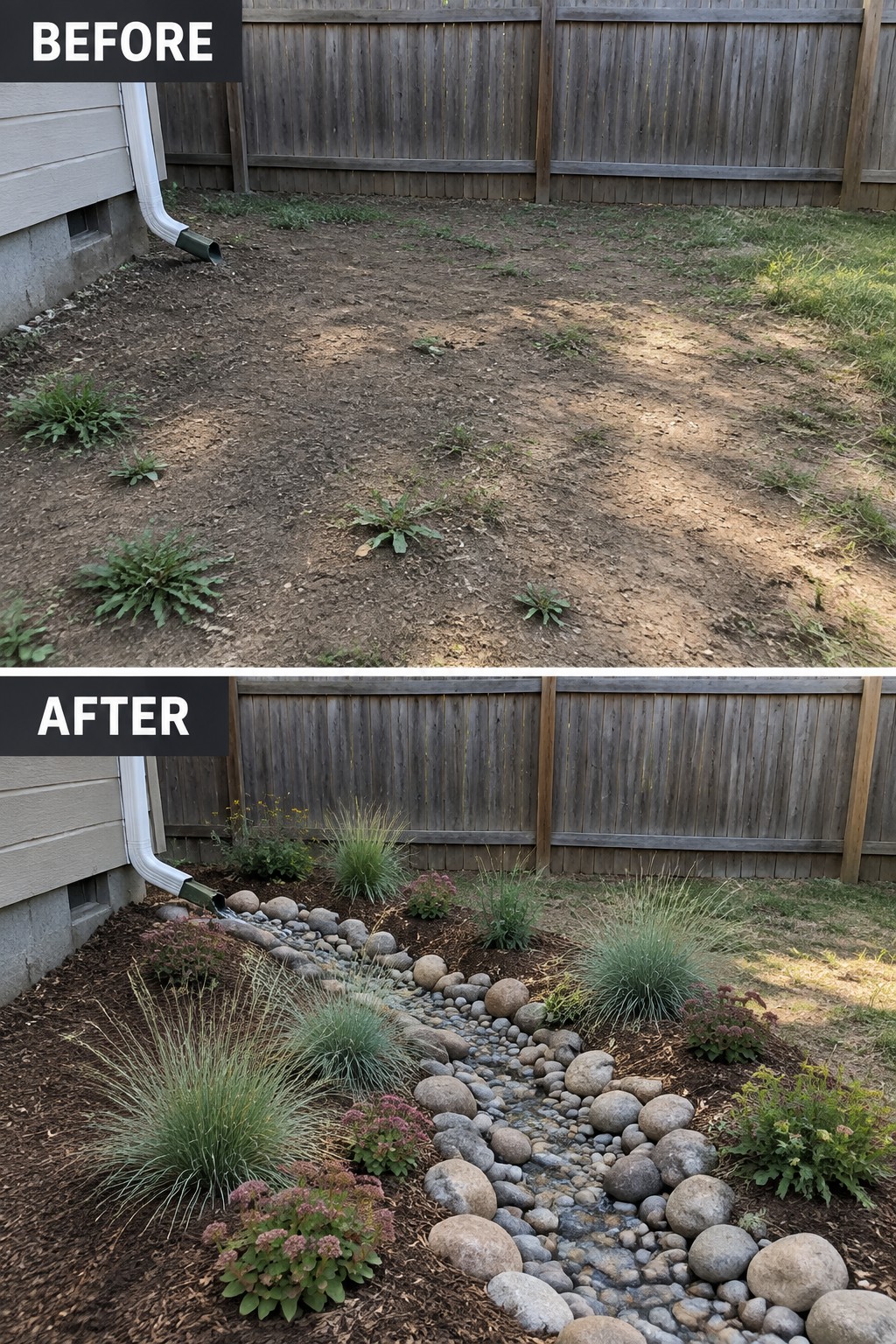
A bare backyard with nothing but dirt and scattered weeds can feel unfinished and hard to use. Adding a dry creek bed made from river rock gives the space clear direction. The rocks guide water away from the house while creating a natural-looking path that breaks up the flat ground. Mulched beds on either side turn the remaining area into simple planting zones instead of leftover space.
This idea works well in small to medium yards where you want structure without spending much on hardscaping. Start by mapping where water actually flows during rain, then lay the rocks along that line. Keep the planting simple at first with a few grasses and low shrubs so the rock feature stays the main focus.
Add Simple Edging To Define Your Garden Beds
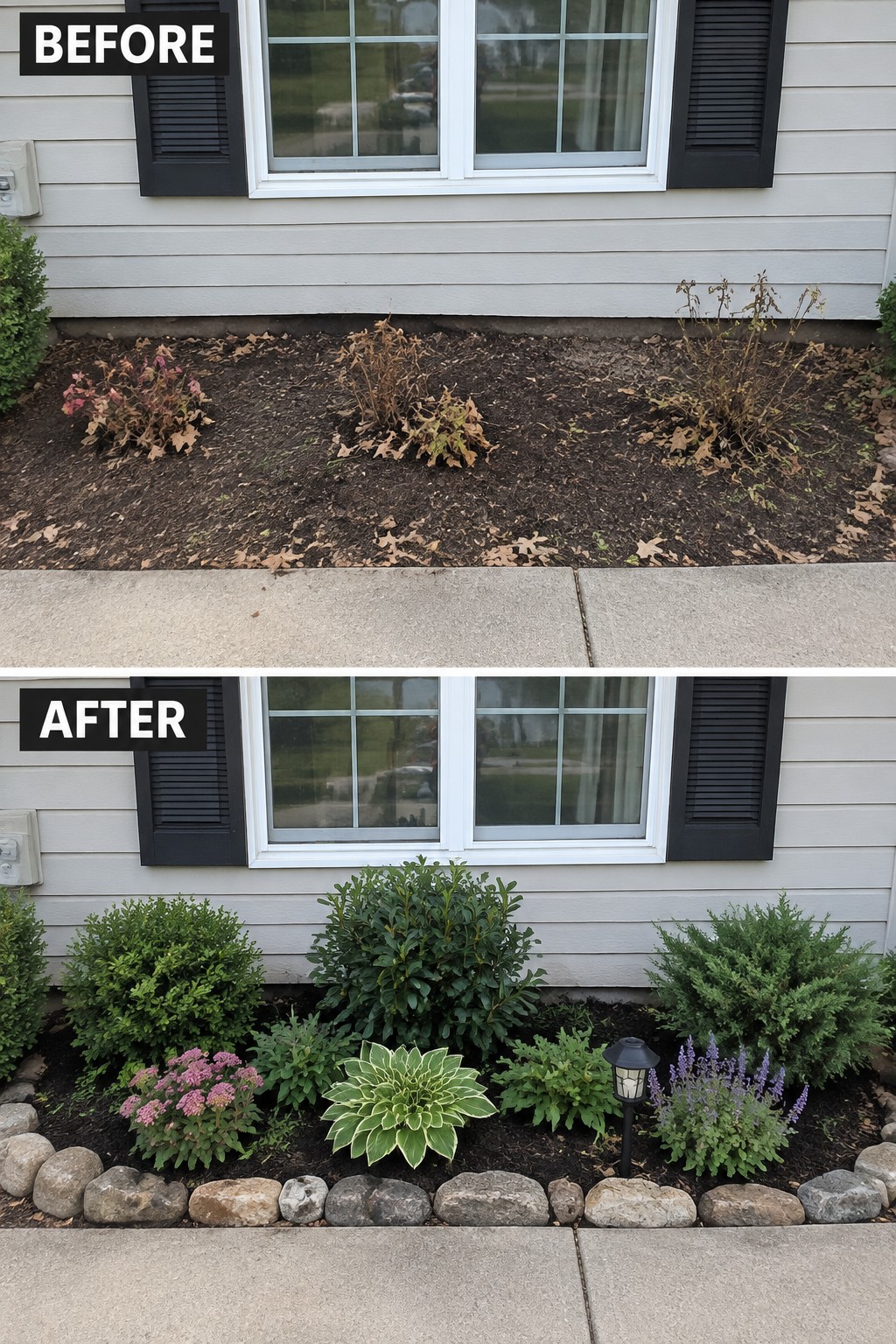
A messy strip of dead plants and scattered mulch can make the front of a house look neglected. Adding a clear rock edge and filling the bed with layered shrubs and perennials turns the same narrow space into something orderly and cared for. The rocks keep the soil in place and give the planting a finished border that separates it from the walkway.
This approach works well along any foundation where you want low maintenance and a tidy look. Start by clearing out the old growth, then lay the edging before you plant so the shape stays consistent. Choose plants that stay in scale with the house and repeat a few types rather than mixing too many varieties.
Turn A Soggy Spot Into A Defined Garden Bed
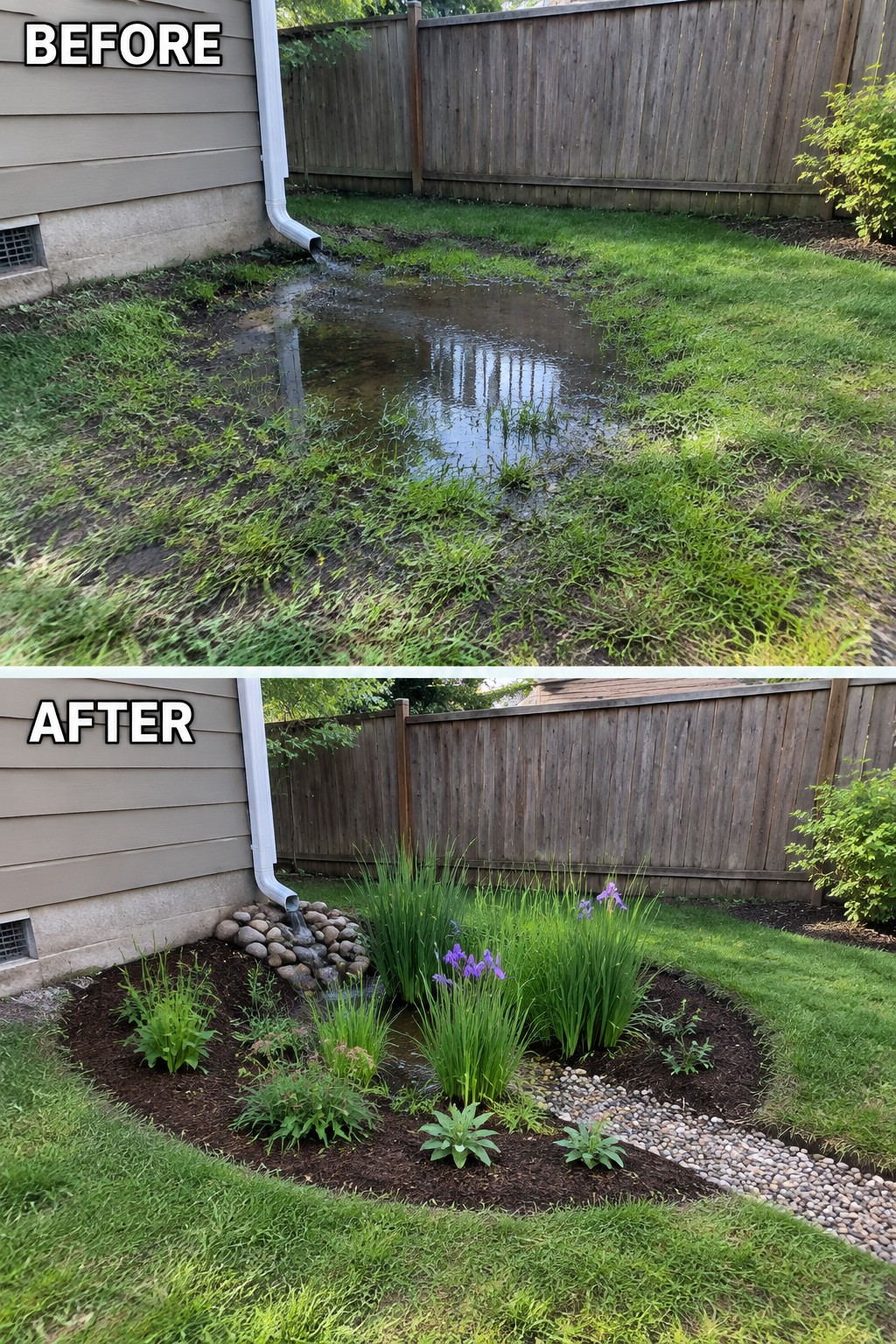
A downspout that dumps water straight onto the lawn often creates a muddy patch that never quite dries out. In this case the fix was simple. Rocks were placed right where the water lands to break the flow, and a mulched bed was shaped around the area so the ground could absorb moisture without turning into a mess.
This approach works well on any side of the house where a downspout meets flat lawn. Keep the bed modest in size, use a layer of mulch to hold the soil in place, and choose plants that tolerate occasional wet feet. The result is a tidy edge that stops the water from spreading while giving you a spot to add a few plants without fighting constant mud.
Add Planter Boxes Along A Fence For Quick Color

One simple way to improve a bare fence line is to add a row of planter boxes. The dirt strip and scattered debris turned into a clean edge once the wooden boxes with flowers and fresh mulch went in.
This idea works best along side or back fences where you want color and definition without digging up the whole yard. Use boxes that match the fence wood, pick flowers suited to your sun exposure, and keep the bed mulched so it stays neat with less weeding.
Build A Simple Compost Station From Cinder Blocks
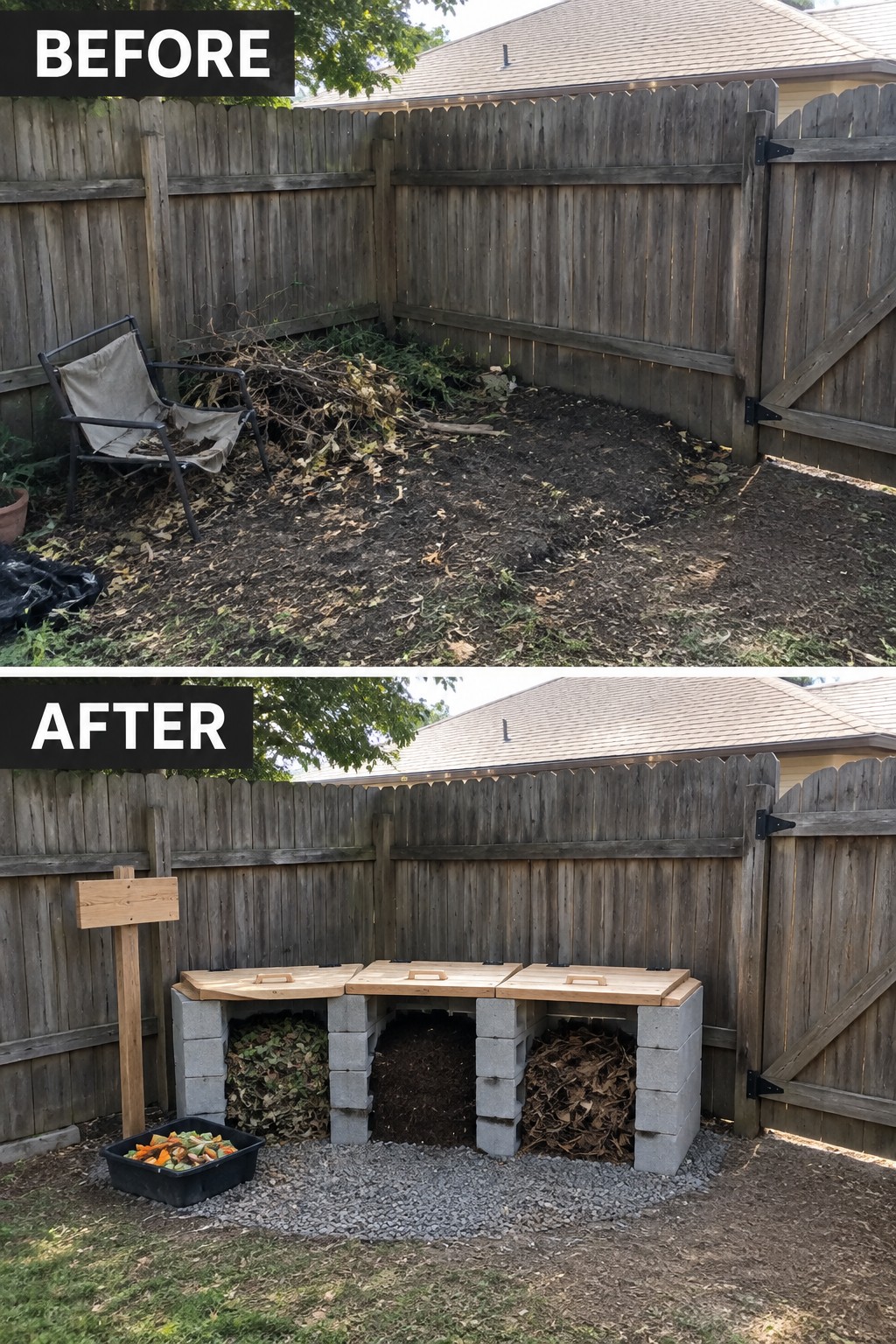
A messy backyard corner full of leaves and branches can quickly turn into a practical composting area when you give it some structure. Using cinder blocks to create separate bins keeps materials organized, lets air flow through the piles, and makes turning the compost much easier than working with one big heap on the ground.
This approach works well in small yards or along fence lines where space is tight. Start with a gravel base for drainage, stack the blocks to form three sections, and add simple wooden lids if you want to control moisture and keep animals out. It stays useful even if you only fill one bin at a time.
Add Structure To An Overgrown Backyard Pond

The before photo shows a pond that had filled with algae and dead growth, with no clear shape around the edges. The after version keeps the water feature but gives it a clean frame of mulch, river rock, and low plants that make the whole area look intentional instead of neglected.
This idea works best when the main issue is overgrowth rather than the pond itself. Remove the debris first, then use mulch to create a defined border before adding plants. It suits small yards where you want the water element to stay visible without it looking messy or hard to maintain.
Add Structure To An Overgrown Backyard
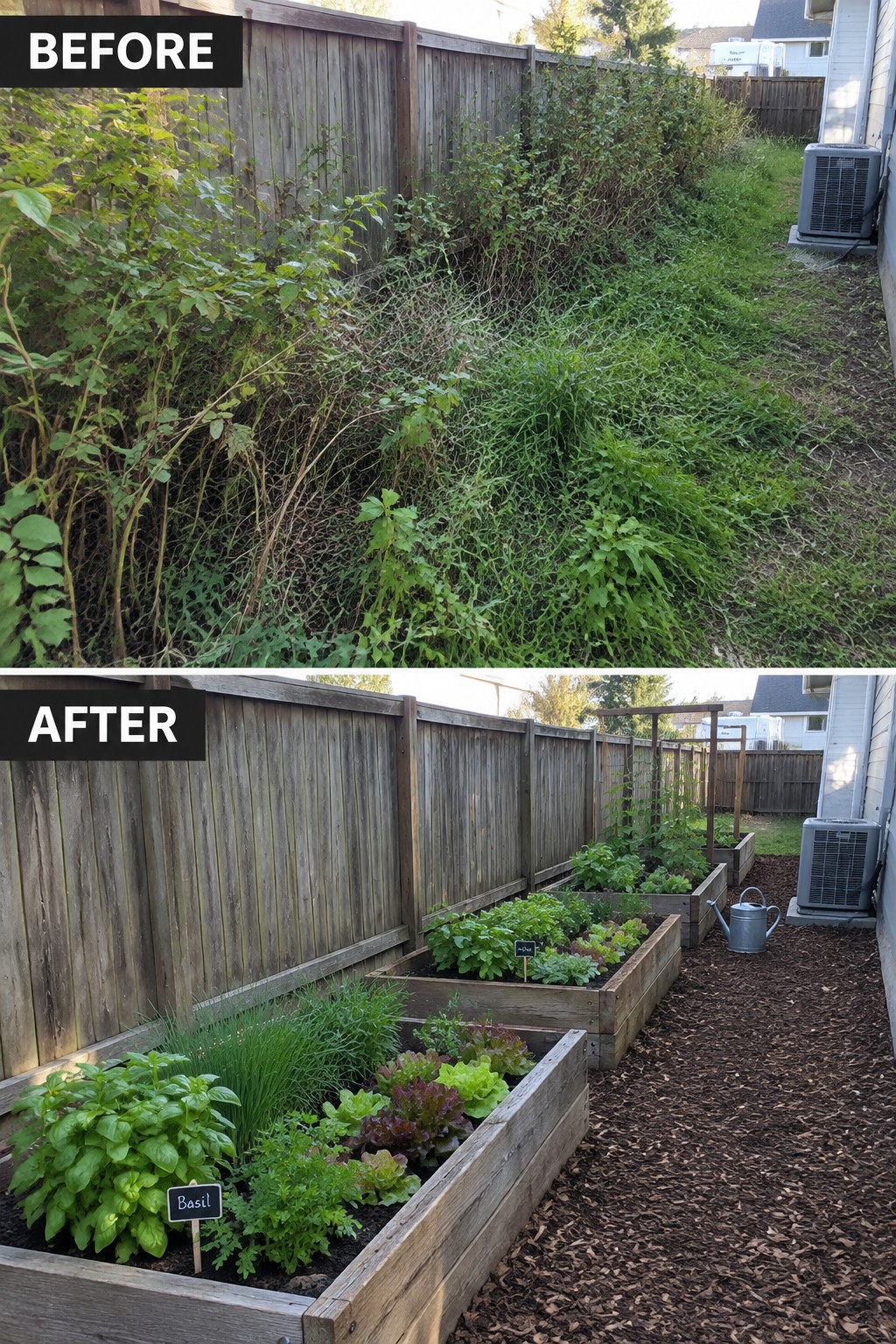
An overgrown strip along a fence often makes the whole yard feel neglected. Clearing the weeds and vines first, then installing a few raised beds with mulch in between, turns the space into something you can actually use. The beds give the planting a clear shape while the mulch creates a simple path and cuts down on new weeds.
This idea works best in narrow side yards or along property lines where grass is hard to maintain. Start with the cleanup, keep the beds modest in size, and leave enough room to walk between them. It suits homeowners who want vegetables or herbs without committing to a full garden redesign.
Add Structure To An Overgrown Border
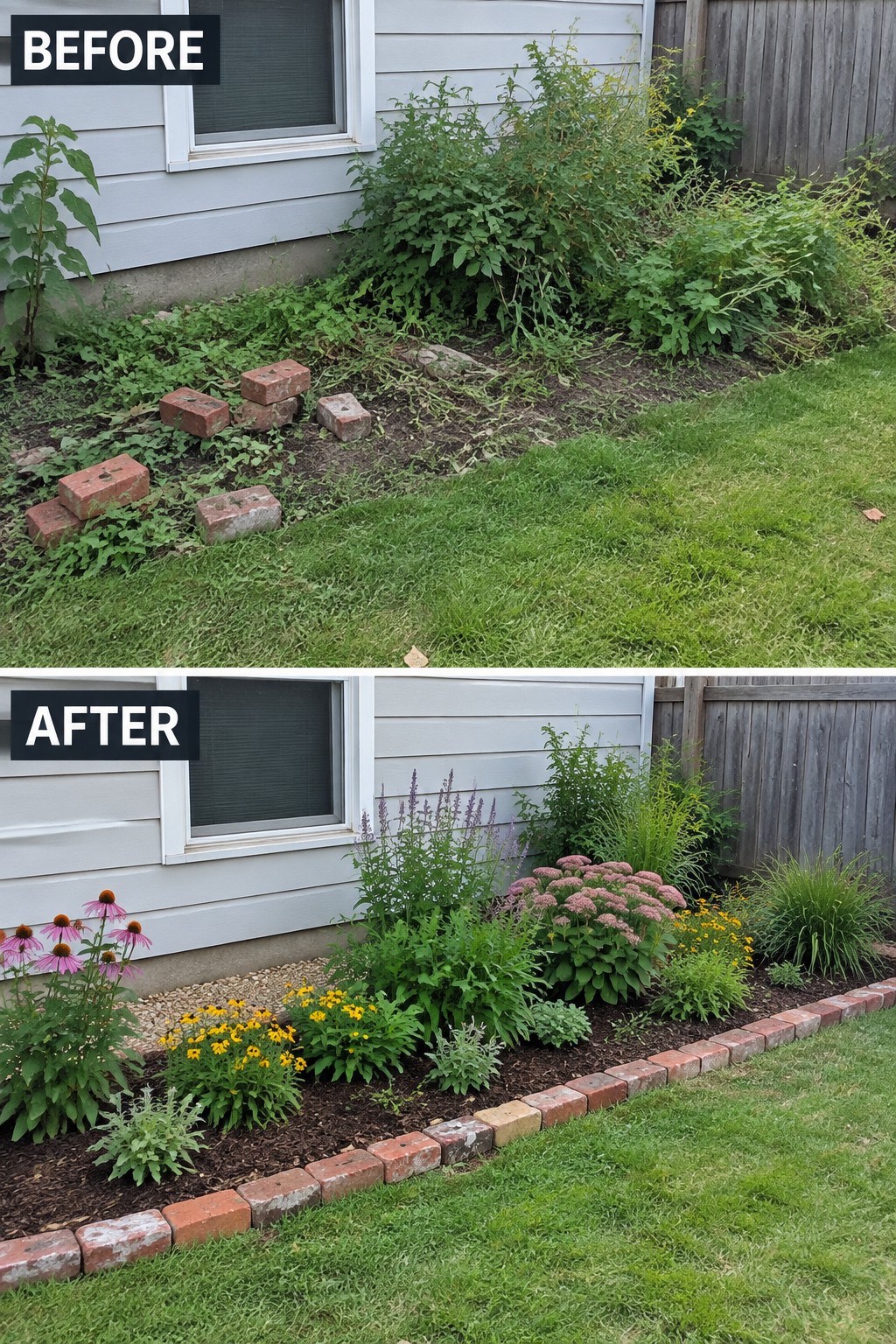
A long strip along the house often turns into a weedy mess when there is no clear edge between the planting area and the lawn. Removing the random growth and loose bricks, then adding a simple brick border with mulch, turns the same space into something that looks planned instead of neglected.
This approach works well on narrow side yards or foundation beds where the main goal is to stop the spread of weeds and give new plants a fighting chance. Lay the edging first so you know exactly where to mulch and plant, and keep the plant choices modest so the border stays easy to maintain.
Add A Defined Planting Bed Next To Your Patio
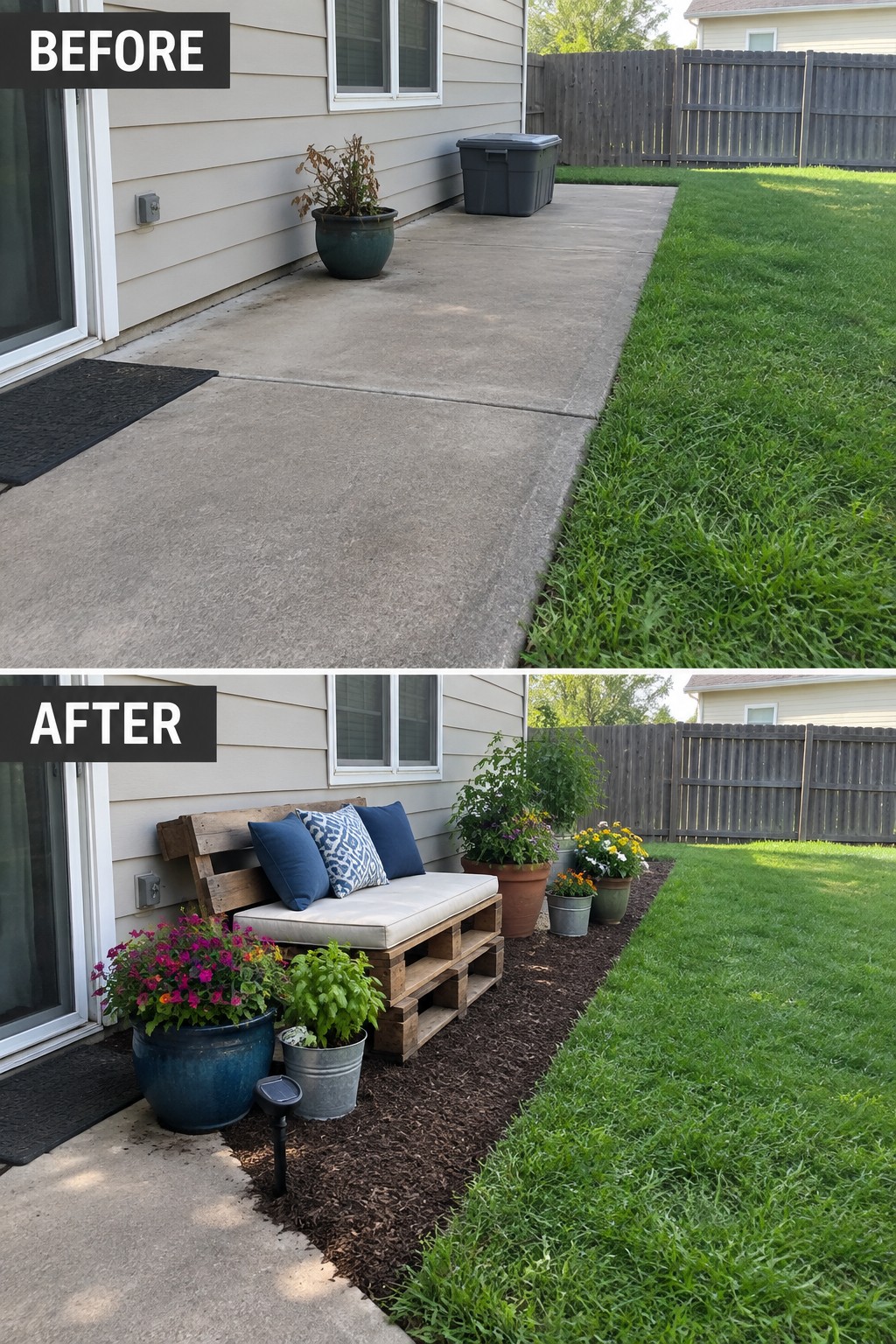
A bare strip of concrete next to the lawn often feels unfinished. Adding a simple mulched border with a few plants and a low bench turns that edge into a clear garden area without major construction.
This idea works best on homes where the patio runs straight into the grass. Lay down edging and mulch first to keep the bed tidy, then add a mix of easy plants in pots or in the ground. Leave enough open space so the seating stays practical and the path along the house remains clear.
Frequently Asked Questions
Q: Will these ideas work if I rent and can’t dig up the yard? A: Stick to movable pieces like potted plants or pallet furniture that you can take with you. Lay down gravel or stepping stones right on top of the grass without any digging. That keeps things simple and reversible.
Q: How often do I need to redo the cheap mulch paths? A: Refresh them once a year if they start looking thin. Rake it level after heavy rain to avoid puddles. A thicker layer at the start lasts longer anyway.
Q: What plants stay low cost but actually grow well here? A: Grab seeds or cuttings from friends with extra. Native varieties need less water and care once they settle in. Start small and add more each season as they spread.
