


I have noticed that yards tend to feel unfinished when plants sit at the same height or get tucked in without much regard for how they will fill out together.
Building a few layers of different heights and textures often gives the space more shape even before everything matures.
Structure comes first.
In my yard I would focus on sorting edges and sight lines before adding any new color because those adjustments usually make the rest fall into place more easily.
The ideas here around layered beds offer some clear ways to try that step by step without needing a complete overhaul.
Turn A Neglected Curb Strip Into A Layered Garden Bed
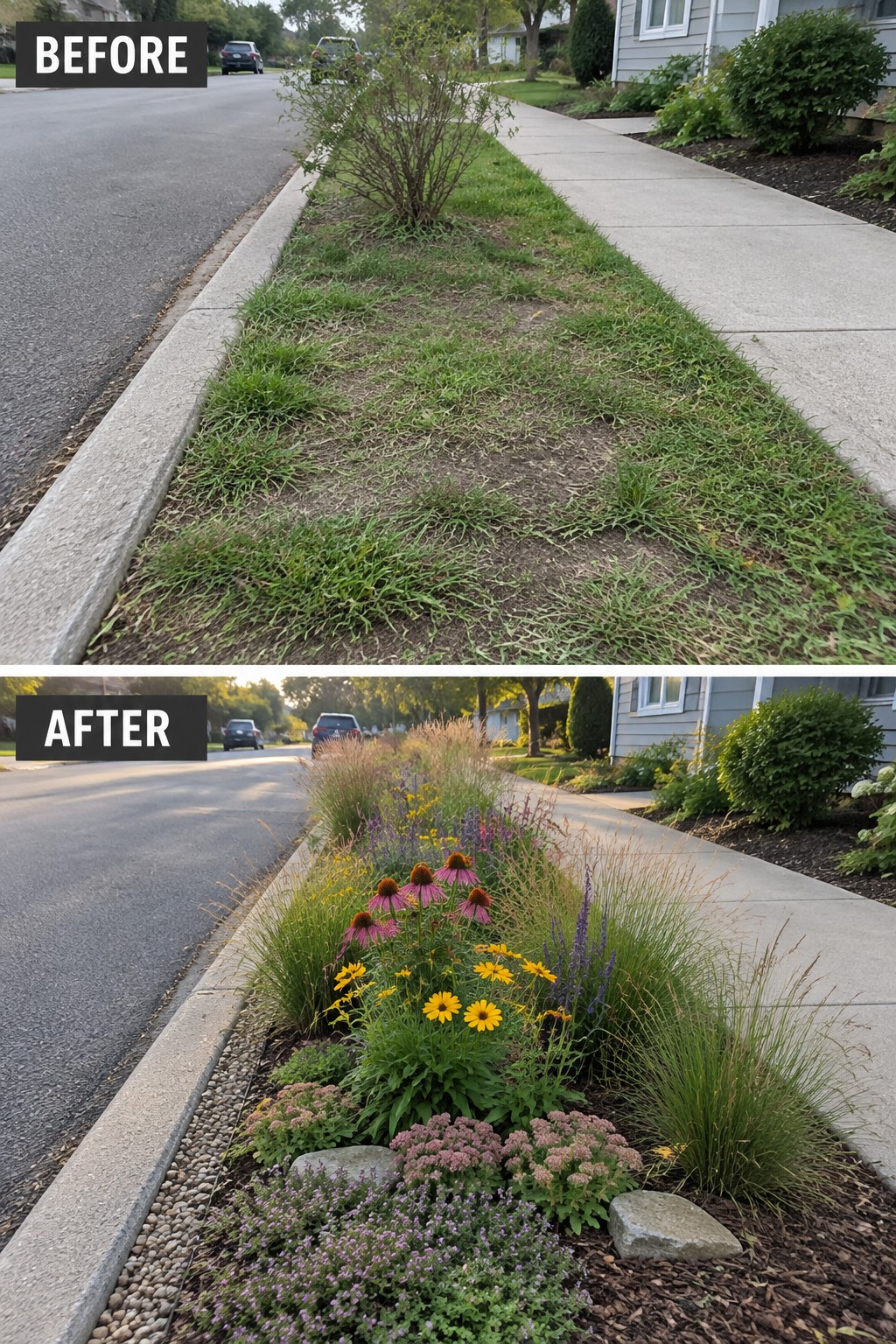
A weedy strip of grass between the curb and sidewalk often gets ignored because it feels too narrow or too exposed. In this case the fix was straightforward. The patchy grass and bare soil were replaced with a mulched bed that uses layers of low plants, taller grasses, and a few flowering perennials. The result looks intentional instead of leftover.
This approach works best on straight, narrow strips where you want something more than lawn but less than a full border. Start by clearing the existing growth and adding a clean edge. Then choose plants in three heights so nothing looks flat, and finish with mulch to keep weeds down. It is a simple way to give the front of the yard structure without needing much width or a big budget.
Define A Plain Backyard With Layered Planting Beds

A bare strip of dirt along a fence can feel unfinished and hard to maintain. Adding a clear bed shape with stone edging and mulch creates a boundary that makes the space look intentional. Layering taller shrubs behind mid-height flowers and lower ground covers gives the bed depth without crowding the lawn.
This idea works best in narrow side yards or back fence lines where you want some privacy and color but still need room to walk or mow. Start with the edging and soil prep first, then choose plants in three different heights so the bed looks full through the seasons. Keep the front of the bed lower so the layers stay visible from the house.
Turn A Bare Slope Into Terraced Garden Beds
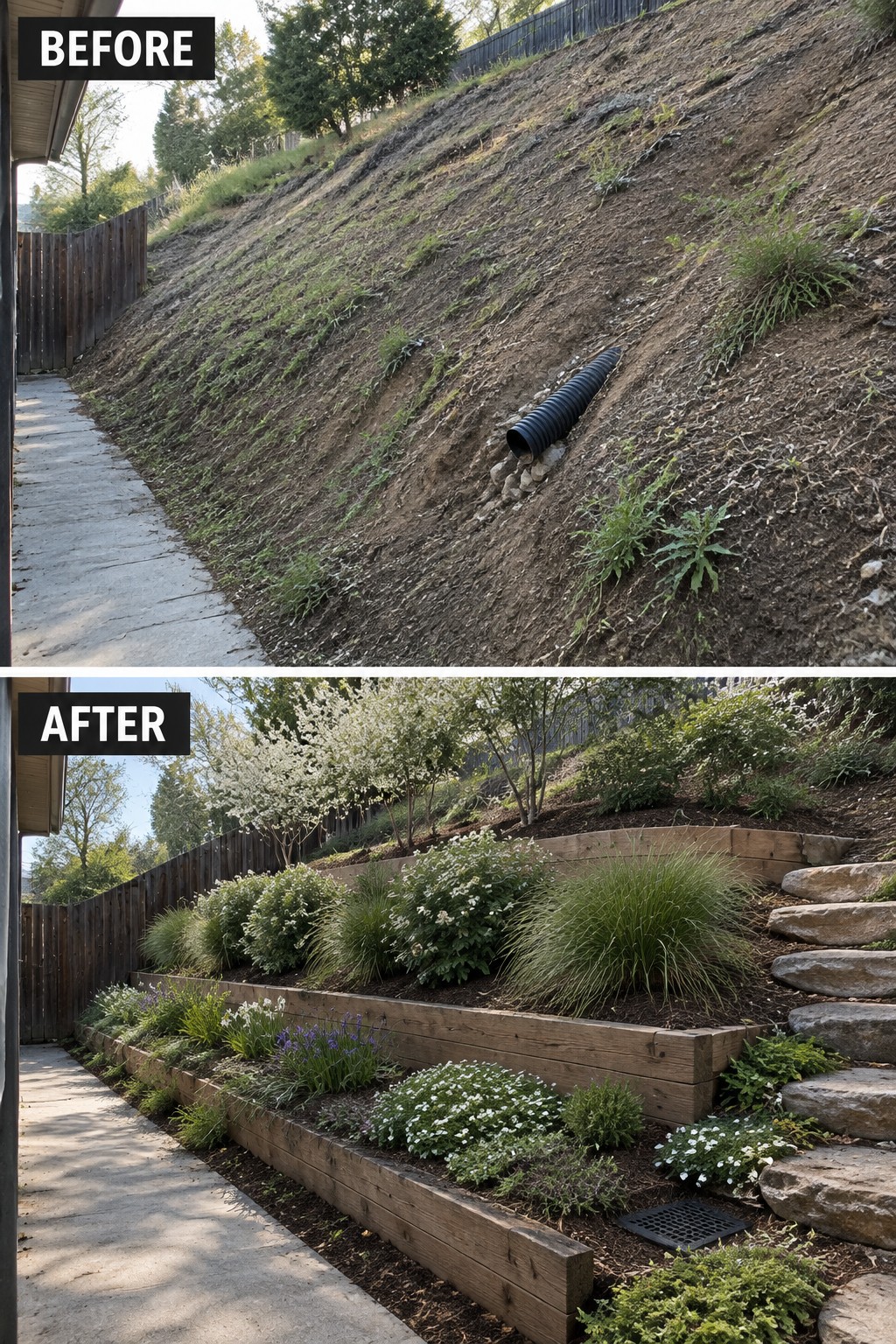
A steep, bare hillside is hard to plant and easy to lose to runoff. Adding wooden retaining walls creates flat tiers that hold soil in place and turn the slope into usable garden space. The black pipe and scattered weeds disappear once the beds are built and planted in layers.
This approach works well on any yard with a noticeable drop. Build the lowest wall first, then step up as needed, and keep paths or steps wide enough for easy access. It keeps the planting naturalistic while giving the slope real structure.
Add Layered Planting Beds Along The Front Walk

The main change here is replacing one large overgrown shrub and a few scattered plants with matching beds on both sides of the walkway. The new beds use several heights of plants, from low groundcover up to mid-size shrubs and flowers, which gives the entry a much more finished look without any major hardscaping changes.
This approach works well in front yards that already have a clear path to the door. Start by clearing out whatever is overgrown or uneven, then build two matching beds with a simple edge and dark mulch. Choose a mix of heights and bloom times so the beds stay interesting through the seasons. It is an easy way to add structure when the house itself is fairly plain.
Add Defined Planting Beds Along A Walkway

Scattered pots along a house wall often end up looking temporary and cluttered. Replacing them with long, low raised beds gives the space a clear structure that stays neat year after year. The gravel edge between the beds and the concrete keeps the planting from spilling onto the walkway and makes mowing or sweeping simple.
This idea works best on narrow side yards or foundation strips where you want planting without losing walking room. Build the beds just deep enough for decent soil volume, then layer taller plants at the back and lower ones toward the path. The beds can follow the house for as long or short as needed, and the same approach scales down to smaller homes or townhouses with limited space.
Add Defined Beds To An Overgrown Yard

One of the most effective ways to fix a neglected backyard is to clear the overgrowth first and then add clear planting beds. The messy patch of weeds and an old plastic pool gave way to layered beds with a mix of tall flowers, grasses, and lower ground covers, all edged with mulch and linked by stepping stones.
This idea suits yards that feel wild and unplanned. Start by removing what is there, then shape beds that follow the natural flow of the space. Keep the planting in layers so taller plants sit behind shorter ones, and repeat a few colors or textures to hold the look together without making it feel crowded.
Build Layered Planting Beds To Shape A Bare Yard
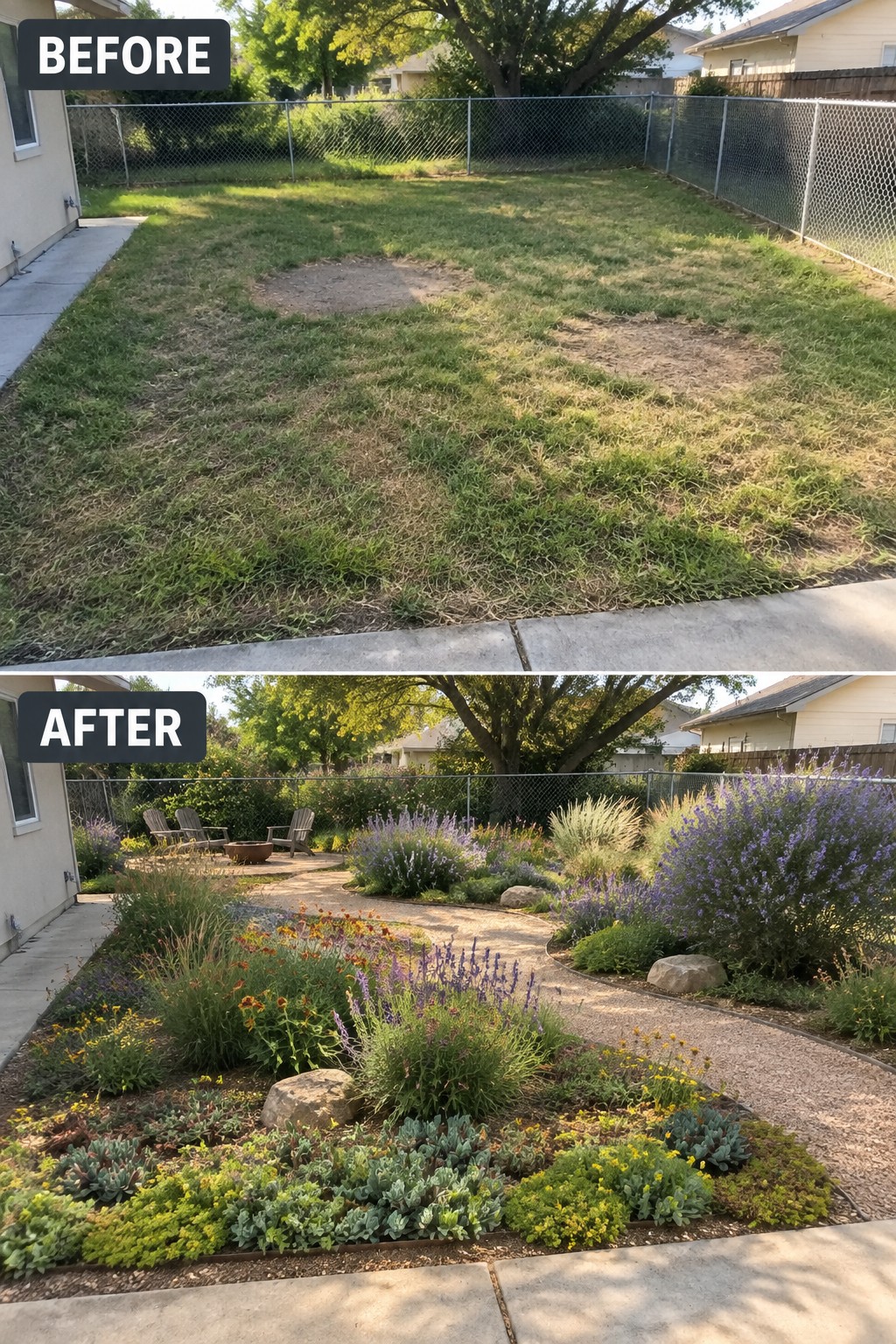
A flat lawn with no clear planting zones often feels unfinished and hard to use. Adding curved gravel paths and raised beds filled with plants of different heights turned the space into a garden that feels planned without looking stiff.
Mark out your paths and bed shapes first, then layer taller grasses and shrubs toward the back, mid-size flowers through the middle, and low ground covers along the front edges. This approach works well in small to medium yards where you want structure but still need room to walk and sit.
Create Layered Planting Beds Along Driveways

A bare gravel strip next to the house does little to connect the driveway with the rest of the yard. Adding a defined bed with layered plants fills that gap and gives the front a more settled appearance. The change from open gravel to a planted border makes the whole side of the house feel more intentional.
This idea works on any home where the driveway sits close to the foundation. Keep the bed narrow so it does not interfere with walking or parking, and choose plants in three heights: taller evergreens in back, mid-size flowering shrubs in the middle, and low ground covers along the front edge. Mulch helps keep the look clean, and a simple metal or stone border stops the bed from spreading onto the concrete.
Add Layered Planting Beds To A Plain Courtyard

A bare concrete courtyard often feels flat and unused until you add raised beds that bring in different plant heights. Here the space went from empty paving with one lone pot to a long bed that holds small trees, tall evergreens, and lower perennials that spill over the edges.
This works best in narrow side yards or small paved areas where you still need walking room. Keep the bed depth under two feet so it does not crowd the center, and repeat one or two plant shapes along the length so the planting feels calm instead of busy.
Add Layered Planting Beds To A Plain Front Yard
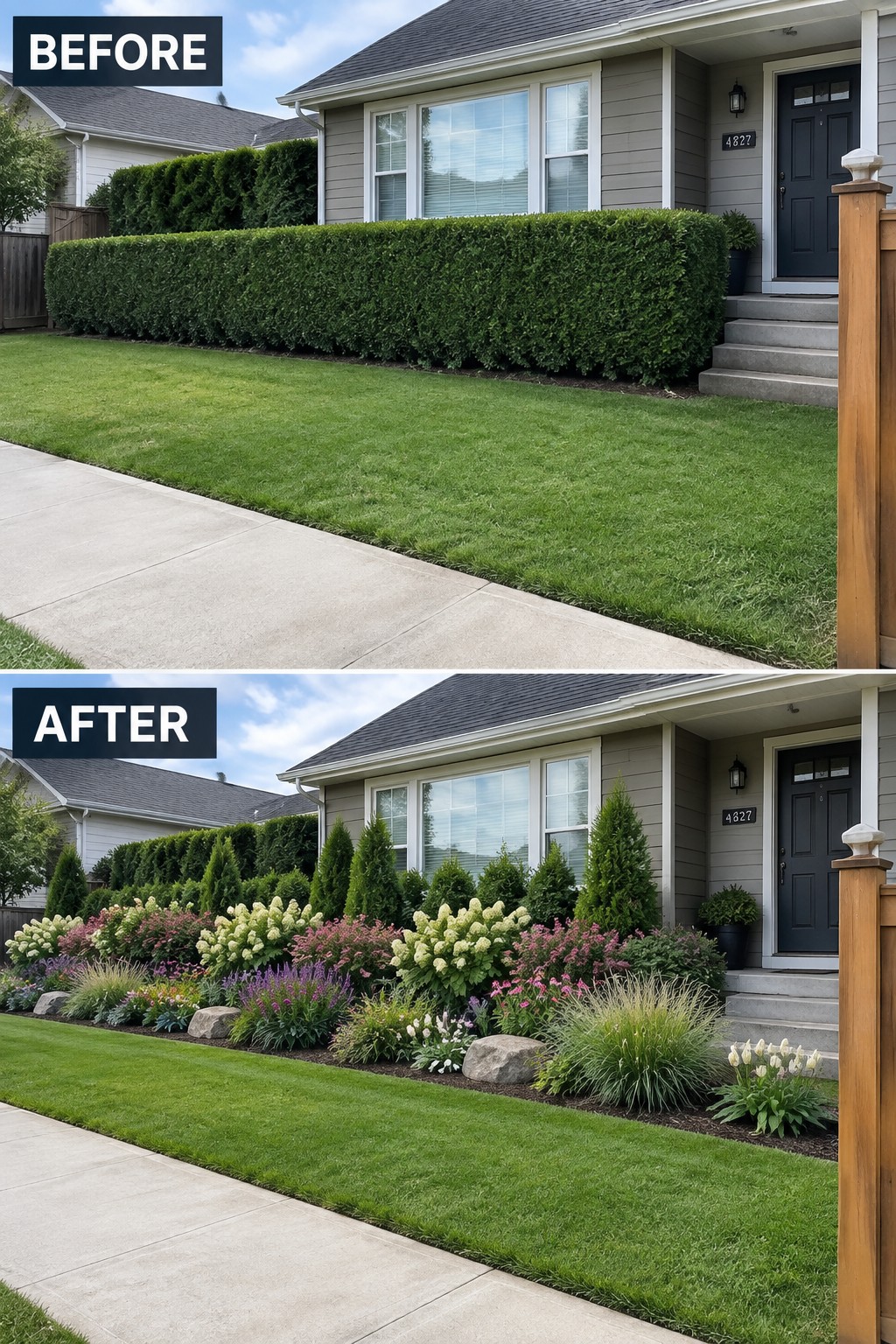
A simple front lawn often looks unfinished when it runs straight up to the house or a hedge. Adding a defined planting bed with layered shrubs, flowers, and grasses creates clear structure and gives the yard a more settled look without taking over the whole space.
This idea suits homes that already have a decent lawn but need more interest near the foundation. Keep the bed a consistent depth, mix plant heights so the layers show, and repeat a few plant types so the bed feels cohesive rather than scattered.
Add Structure To An Overgrown Hillside

Clearing the ivy first made the biggest difference here. The slope had been lost under a single thick layer that hid the shape of the land. Once that was removed, the new planting could be arranged in layers with different heights, textures, and colors so the hill feels intentional instead of neglected.
This idea works best on slopes where you want something low-maintenance but still full. Use a few taller shrubs toward the back, mid-size plants in the middle, and lower ground covers along the curb. A light layer of mulch and a few rocks keep the beds readable without adding terraces or walls.
Add Layered Planting Beds Along A Pool Edge
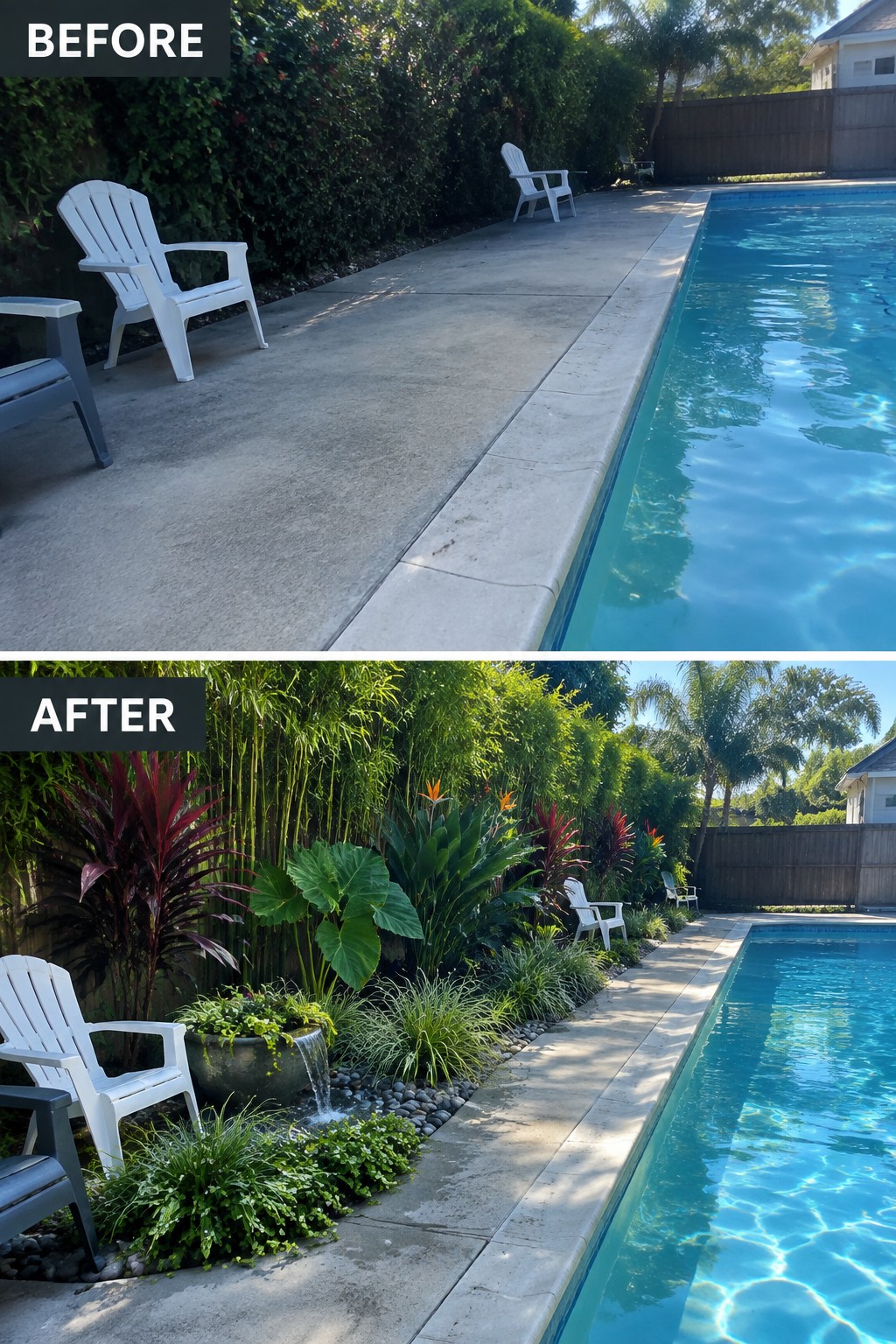
A plain concrete pool deck can feel stark and unfinished when it meets the water with nothing but a straight edge. In this case the fix was straightforward. A narrow strip of soil was added right against the concrete, then filled with tall grasses, broad-leaf plants, and lower ground covers that step down in height. The result breaks up the hard line and makes the whole area feel more settled.
This approach works well on any pool or patio where the hardscape dominates. Start by carving out a planting bed at least two feet wide, improve the soil, and choose plants that can handle sun and occasional splash. Keep the tallest pieces toward the back and let smaller plants spill forward so the bed looks full without crowding the walkway.
Use Raised Beds To Add Structure To A Bare Yard

A long strip of bare dirt next to the house does not offer much until you give it clear edges. Raised beds turn that empty space into a working garden by creating defined planting zones that keep soil contained and paths walkable.
This idea suits narrow side yards or back corners where you want vegetables, herbs, and flowers without letting everything sprawl. Build the beds first, then fill and mulch around them so the area reads as intentional rather than leftover ground.
Layer Plants In A Narrow Foundation Bed
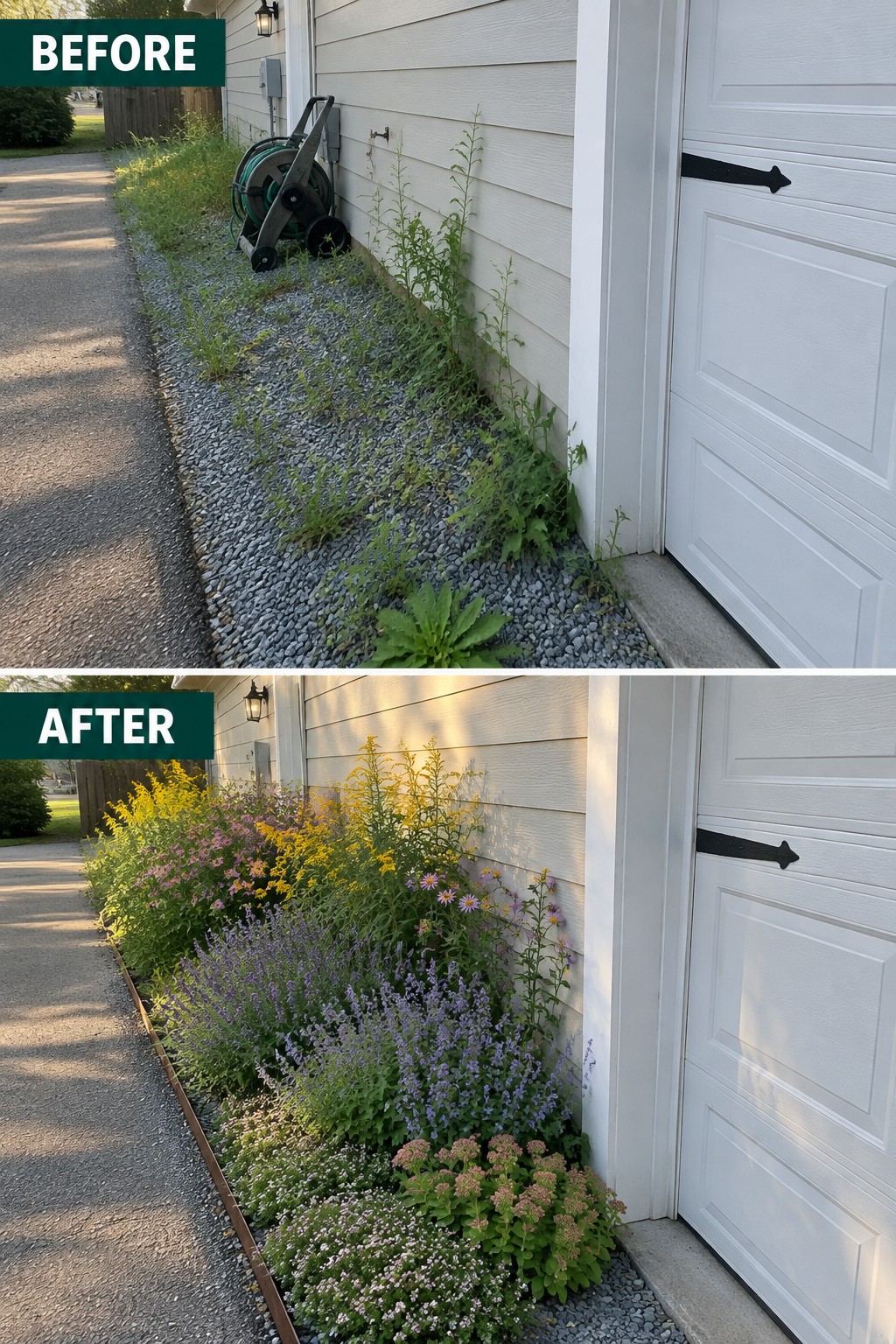
The before photo shows a strip of weeds and loose gravel running along the side of the house. After the change, the same narrow space holds a planted bed with low ground covers at the front, midsize flowers through the middle, and taller stems toward the back. The simple addition of structure and different plant heights turns an overlooked area into something that looks planned.
This approach suits homes with long, tight spaces next to driveways or foundations where a full garden would not fit. Clean out the weeds first, add a clean edge, then group plants by height instead of spacing them out evenly. It keeps the bed looking full without crowding the walkway or the house wall.
Add Structure To An Overgrown Backyard
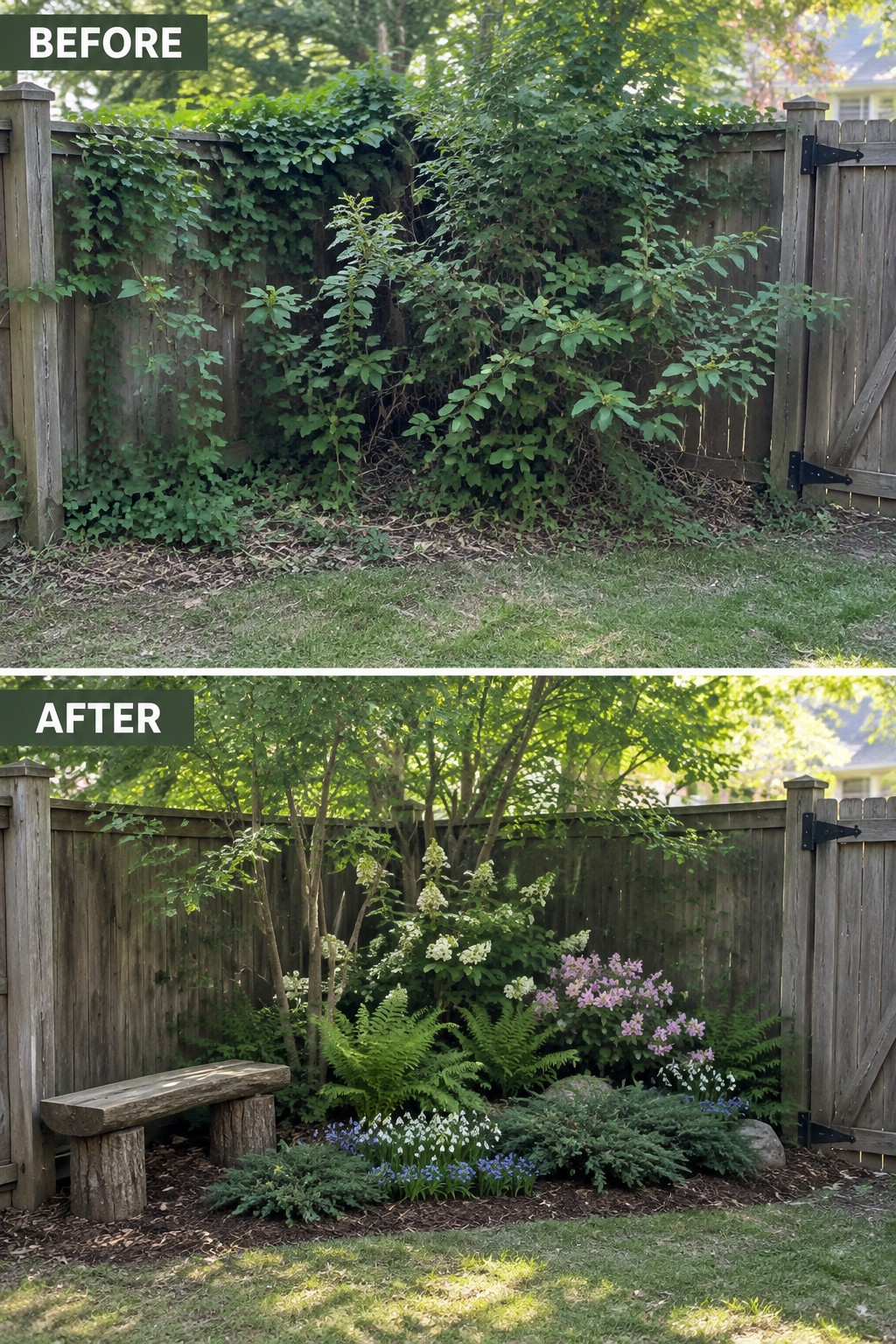
Clearing out the tangled growth first makes the biggest difference. Once the fence line was cleaned up, the space could be planted in layers with taller shrubs at the back, ferns and mid-size plants in the middle, and low groundcovers along the front edge. Mulch keeps everything looking tidy and helps the beds feel intentional rather than wild.
This approach works best along property lines or fences where you need privacy without a solid wall of plants. Start with a thorough cleanup, then build the beds in stages so you can see how the heights work together. It suits most suburban yards and keeps the planting naturalistic without looking messy.
Add Layered Planting Beds To A Plain Terrace
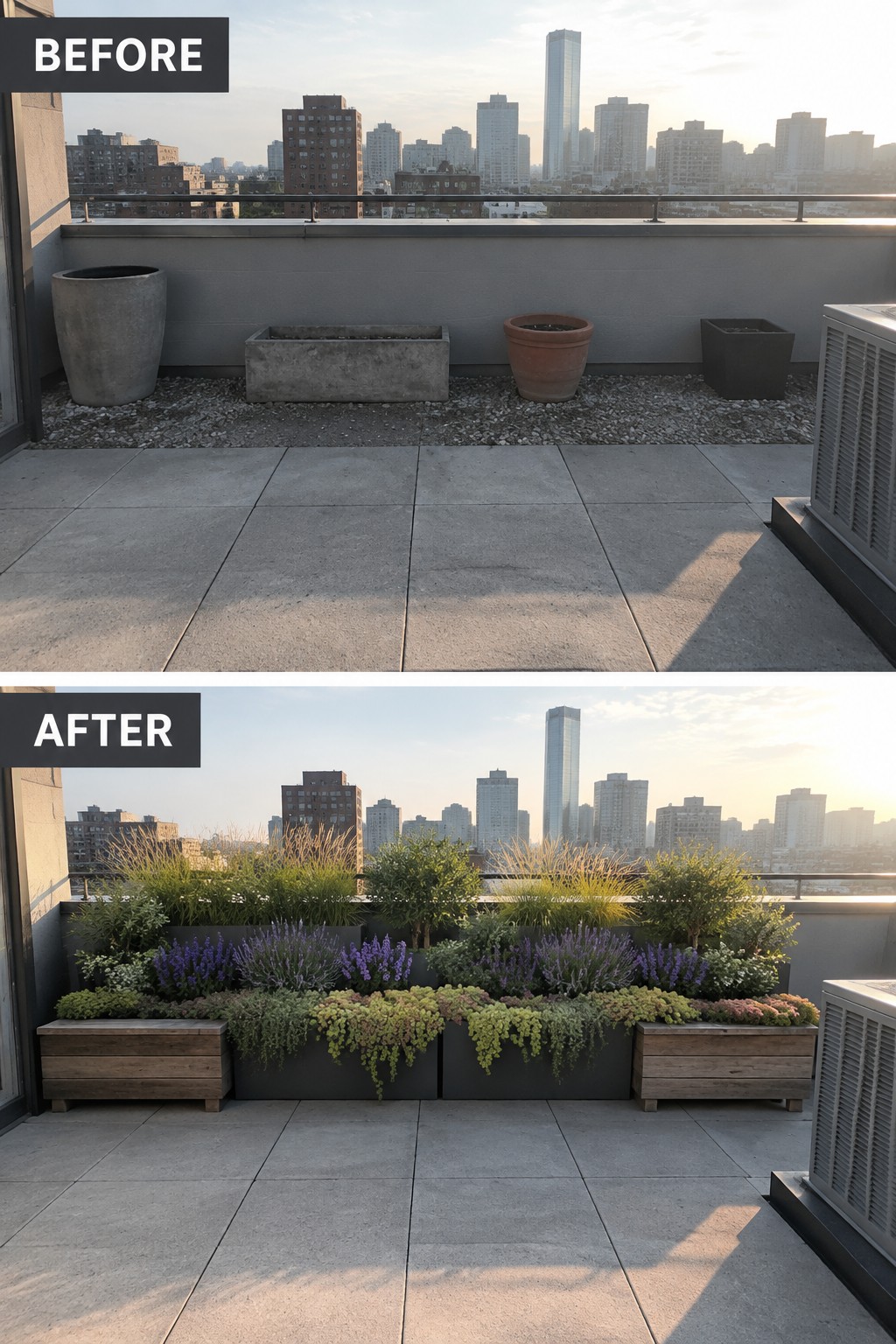
A bare rooftop or balcony often feels empty even when it has a great view. The simple fix here was swapping a few scattered pots for one long row of connected planters filled with layered plants. Grasses and taller shrubs sit at the back, mid-height flowers fill the middle, and trailing greens spill over the front edge. That single change turns the space into something that feels more like a garden than leftover concrete.
This approach works best on flat outdoor areas where you want softness without blocking the view. Start with sturdy planters that can handle weather, then repeat a few plant heights and textures rather than buying one of everything. Leave enough room in front for walking or seating so the beds define the space without crowding it.
Add Defined Garden Beds To A Bare Yard

A bare gravel yard often feels unfinished because nothing separates one area from another. Adding rock-edged beds gives the space clear zones for planting, which turns scattered weeds into intentional layers of shrubs, flowers, and ground cover.
This idea suits homes with large gravel or dirt backyards that need more structure before adding furniture or paths. Mark out a few beds with rocks or local stone first, then plant in groups of different heights so the beds look full without crowding the open areas that remain.
Frame A Walkway With Layered Planting Beds

The main change here is how the straight concrete path went from sitting between plain grass strips to running through proper garden beds on both sides. The beds give the walkway a clear purpose and turn what felt like a bare approach into something that feels more like part of the yard.
This idea works best on homes with simple front walks where you want more planting without losing easy access to the door. Edge the beds first with something low like stone, then build layers from shorter plants near the path up to taller shrubs behind them. It keeps the space looking full while still leaving room to walk and mow.
Add Raised Beds For Layered Planting
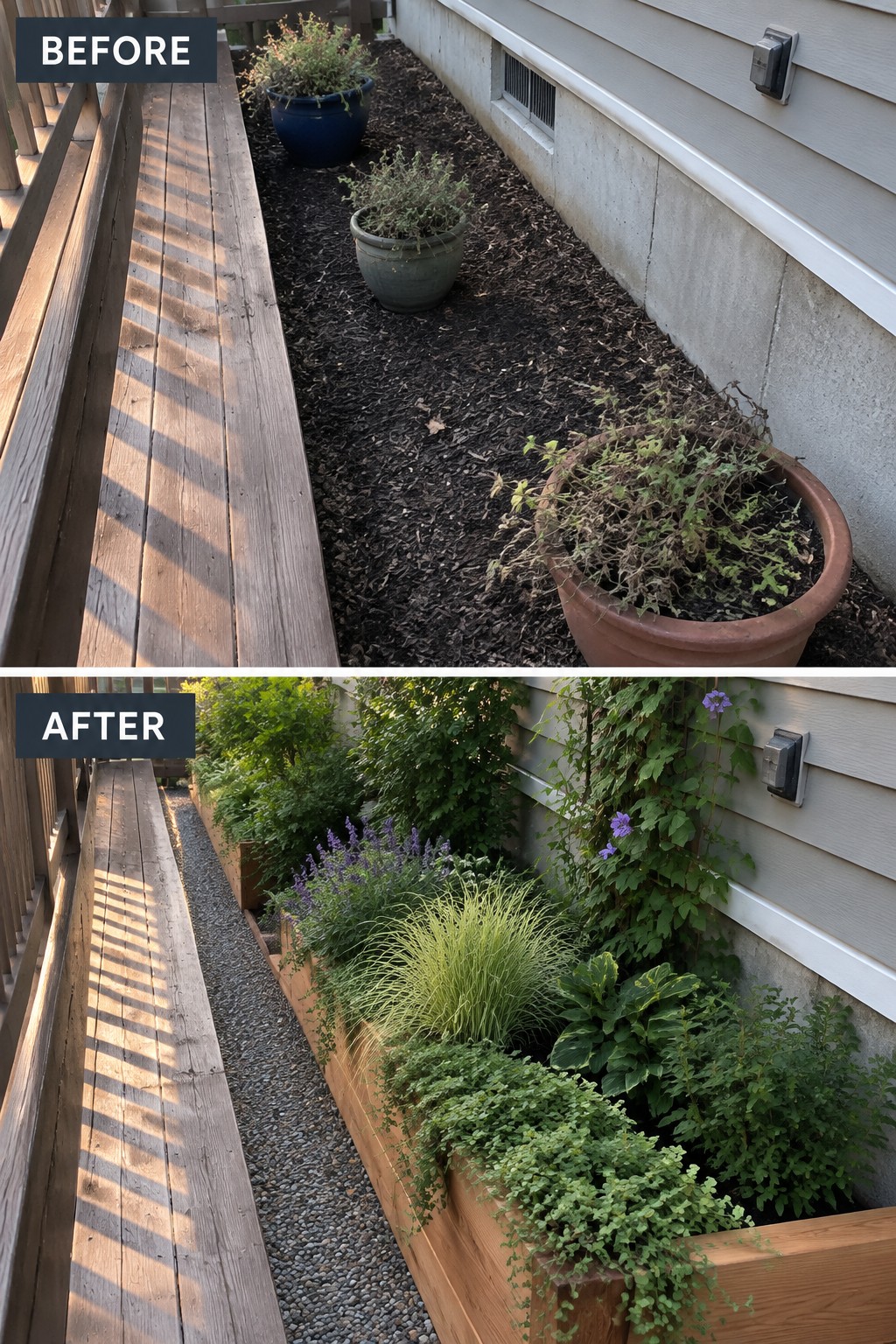
A bare strip of mulch with a few random pots does little to connect a deck to the house. Building simple raised beds gives the space clear edges and room for plants to grow in layers, from low ground covers in front to taller shrubs and vines toward the wall. The result feels intentional instead of leftover.
This approach suits narrow side yards or foundation strips where you need planting without crowding the walkway. Use straight lumber for clean lines, keep the beds only as wide as you can reach, and choose a mix of heights and textures so the beds look full even in a small area. The beds also make weeding and watering much simpler over time.
Layer Planting Beds Around A Fire Pit

A plain fire pit sitting in the middle of a patchy lawn can feel unfinished. Adding a ring of layered planting beds changes that by giving the fire pit a clear place in the yard and turning the surrounding grass into something more intentional. The beds use different heights of shrubs, grasses, and flowers to create depth without crowding the space.
This approach works well in medium to large backyards where you already have a central feature like a fire pit or seating area. Start by defining the edge with a low border, then fill in with plants that vary in texture and bloom time so the beds look good even when the fire is not lit. Keep the gravel or mulch ring wide enough for easy walking and maintenance.
Fill Narrow Spaces With Layered Planting Beds
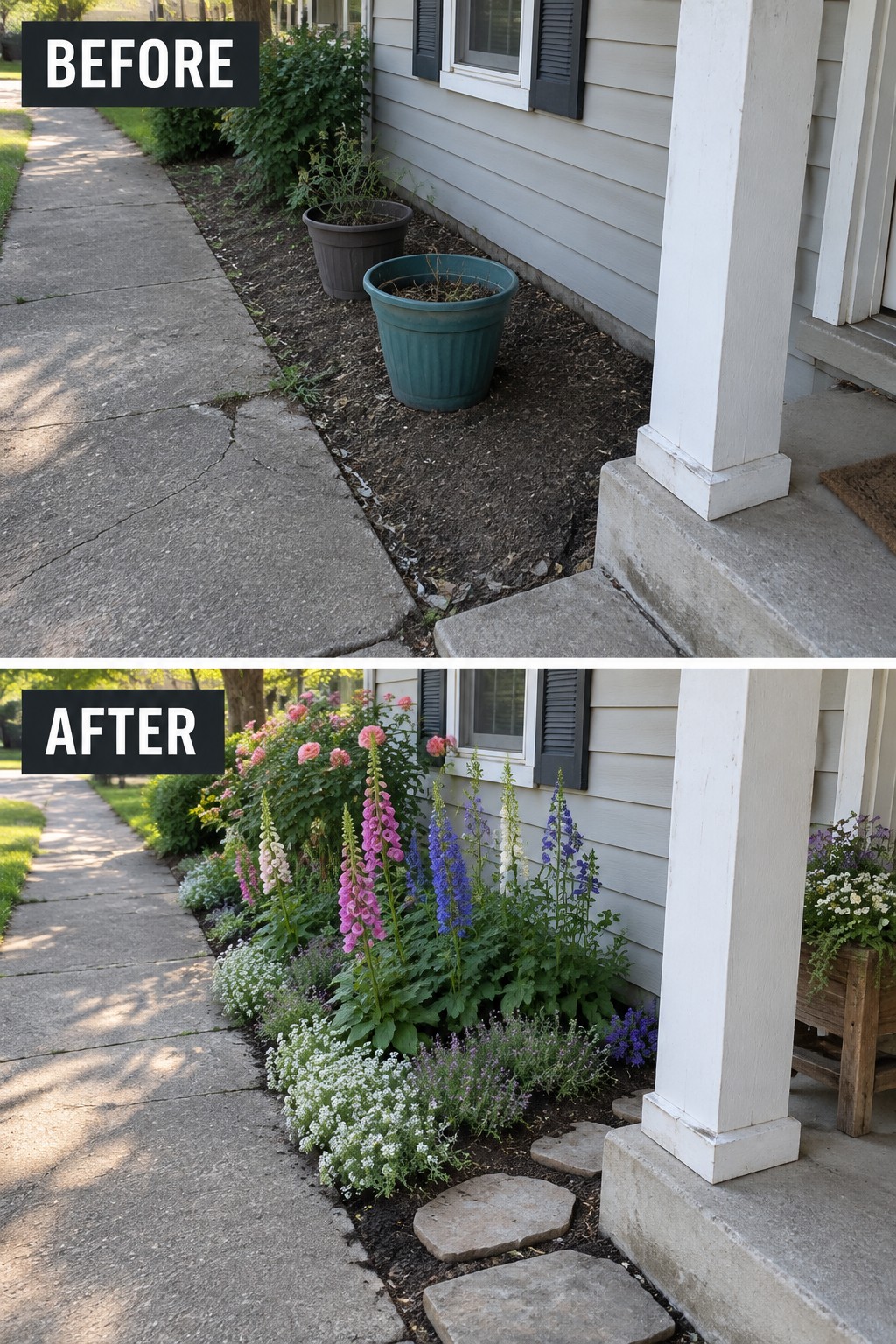
A narrow strip of dirt between the house and the sidewalk often gets ignored or left with just a few pots. In this case, the space went from bare soil and scattered containers to a full border of plants in different heights. The taller flowers sit toward the back, mid-size blooms fill the middle, and low ground cover runs along the front. Stepping stones make it easy to reach the plants without compacting the soil.
This approach works well on small lots or along foundation walls where you need structure without crowding the walkway. Start with a simple bed outline, then choose plants that naturally layer by height and bloom time. Keep the front edge low so the path stays clear, and repeat a few colors to tie everything together.
Define A Roadside Strip With Layered Planting Beds
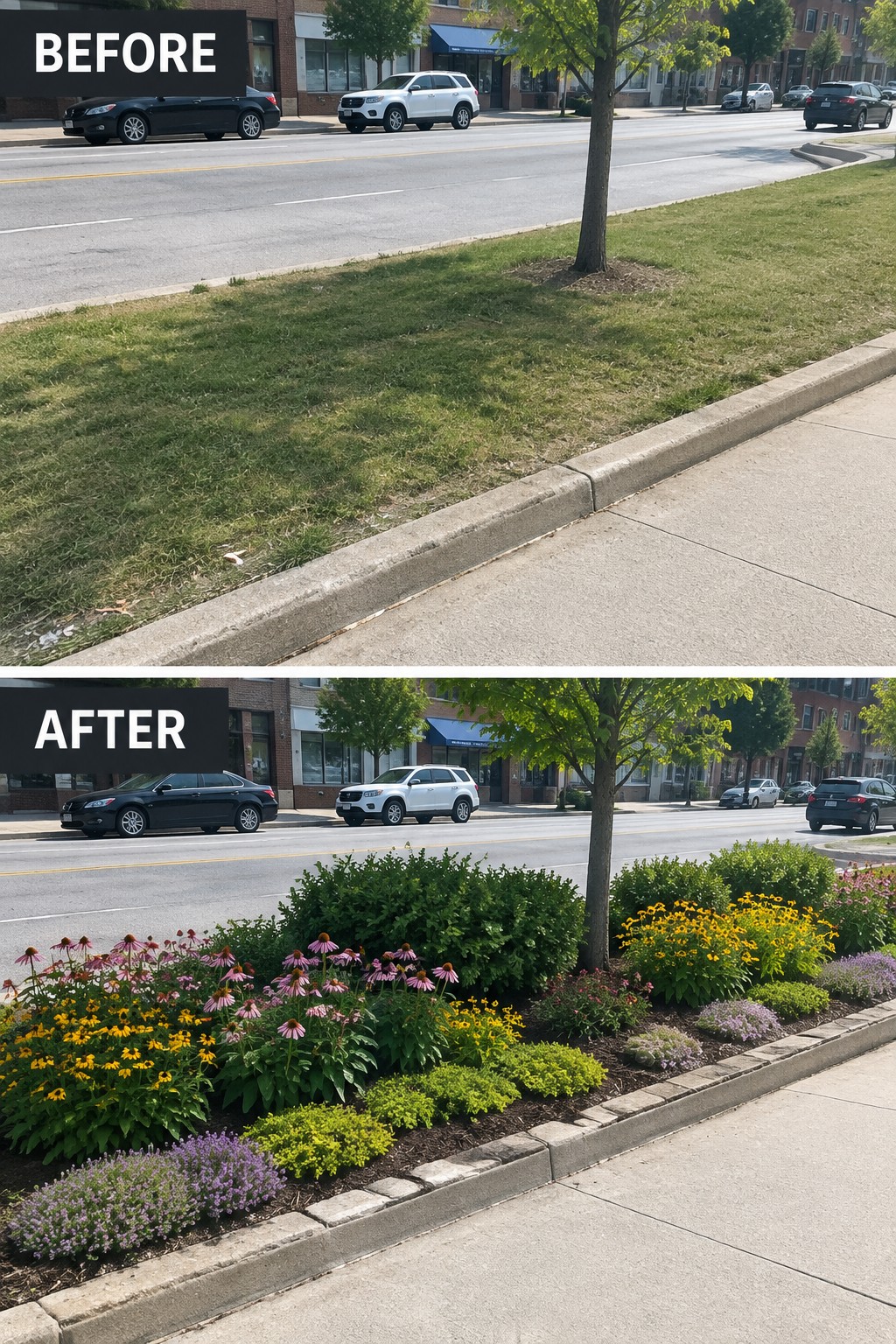
A plain grass strip next to the curb often feels unfinished. In this case the change came from adding a low brick edge and filling the bed with shrubs at the back and shorter flowers in front. The layers give the space shape and make the whole front look more intentional without adding much hardscaping.
This idea works best along streets where the lawn runs right up to the sidewalk. Keep the bed narrow enough for easy mowing on the other side and choose plants that stay under eye level so the view from the house stays open. Start with the edging and a simple mix of heights before adding more varieties later.
Add Structure With Layered Planting Beds

An open, weedy yard often feels unfinished because there is no clear shape or planting plan. In this case the fix was straightforward. The owners cleared the dry grass, added mulch, and built several planting beds with different heights and textures of plants. A simple wooden bench was placed to give the space a purpose without crowding it.
This approach works well on small to medium yards that sit next to the house or along a path. Start with the beds first, then add just one or two pieces of furniture once the plants are in. Keep the plant groups simple, repeat a few varieties, and make sure the beds leave enough open ground so the yard still feels usable rather than packed.
Add Raised Beds To Bring Structure To A Bare Yard

A bare concrete slab next to a plain fence rarely feels like a garden. Adding a few raised beds and filling them with layered plants turns the same space into something that actually reads as a yard. The beds give the area clear edges, while the mix of tall flowers, low ground cover, and mid-height foliage softens the fence line and makes the whole corner feel planned instead of leftover.
This approach works best in small or narrow yards where you need to create usable space without losing room to walk. Start with two or three beds placed along the longest fence, then fill them with plants that bloom at different heights and times. Keep the path between beds wide enough for a wheelbarrow, and use mulch on the remaining ground so the beds look intentional rather than scattered.
Frequently Asked Questions
Q: How do I figure out the right heights for layering plants so nothing gets hidden?
A: Measure the mature size of each plant before you buy. Place the tallest ones at the back or center first. Then work your way forward with mid-height perennials and ground covers last.
Q: Do layered beds take more time to weed than a regular lawn?
A: They actually cut down on weeds once the plants fill in. Pull any stray ones by hand early on while you walk the beds. Mulch helps a lot too.
Q: Can I add these beds if my yard gets mostly shade?
A: Pick shade loving ferns and hostas for the lower layers. Tall shrubs like hydrangeas work higher up. Your beds will still feel full and natural.
