

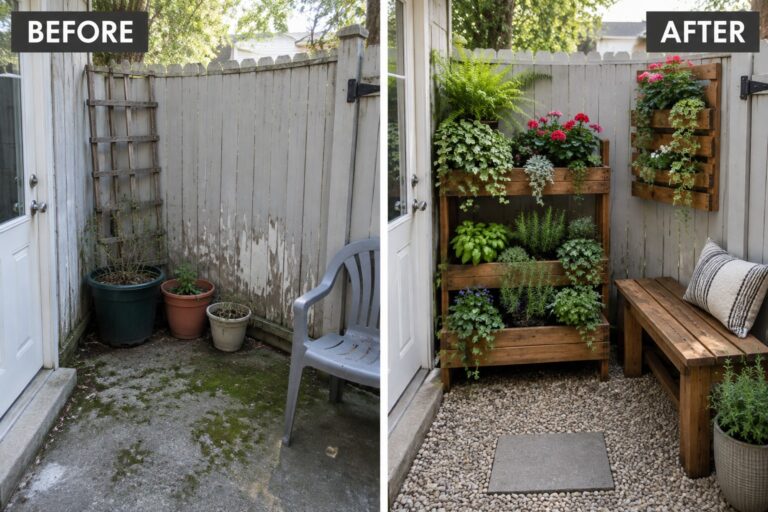
Tiny backyards often end up looking a bit bare because the space lacks any real planting structure or defined edges.
Adding layers of low shrubs and ground cover can pull things together in a way that feels settled rather than empty.
I tend to focus on the perimeter first since that single step usually makes the whole area seem more purposeful.
The suggestions here show how pathways and small trees can fit into limited spots while still leaving room to move around.
A few of them seem especially practical for anyone dealing with a cramped yard.
Use Tiered Planters To Add Structure To A Tiny Backyard
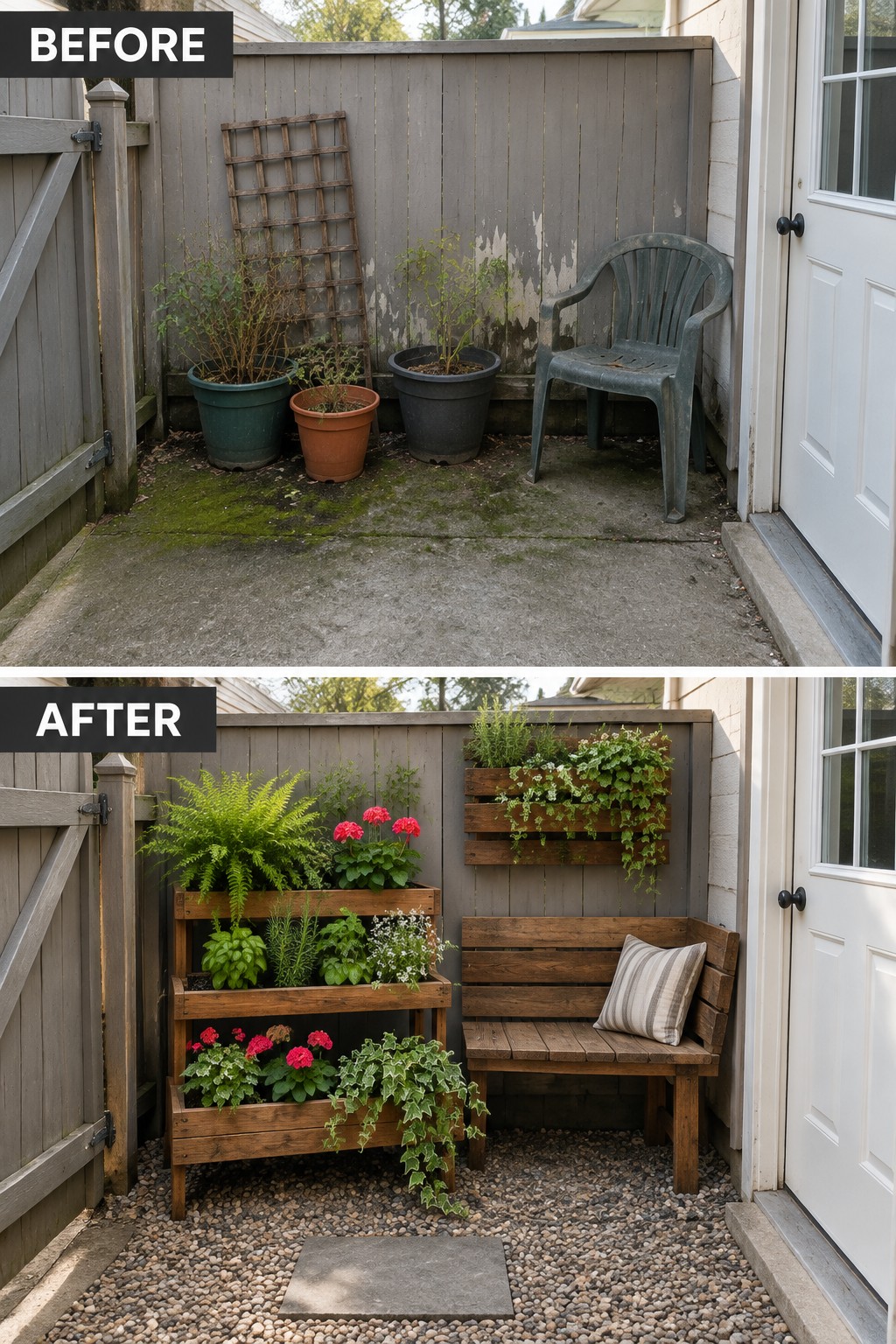
A small backyard often ends up with a few random pots scattered across bare concrete. Switching to tiered wooden planters gives the space clear layers and makes the plants feel like part of the layout instead of just sitting there.
This works best when you keep the footprint small and let the vertical shape do the work. Build or buy simple stepped boxes, set them against a fence or wall, and fill them with a mix of upright and trailing plants. The bench beside them turns the same corner into a place to sit without crowding the ground.
Turn An Overgrown Backyard Into A Paved Patio
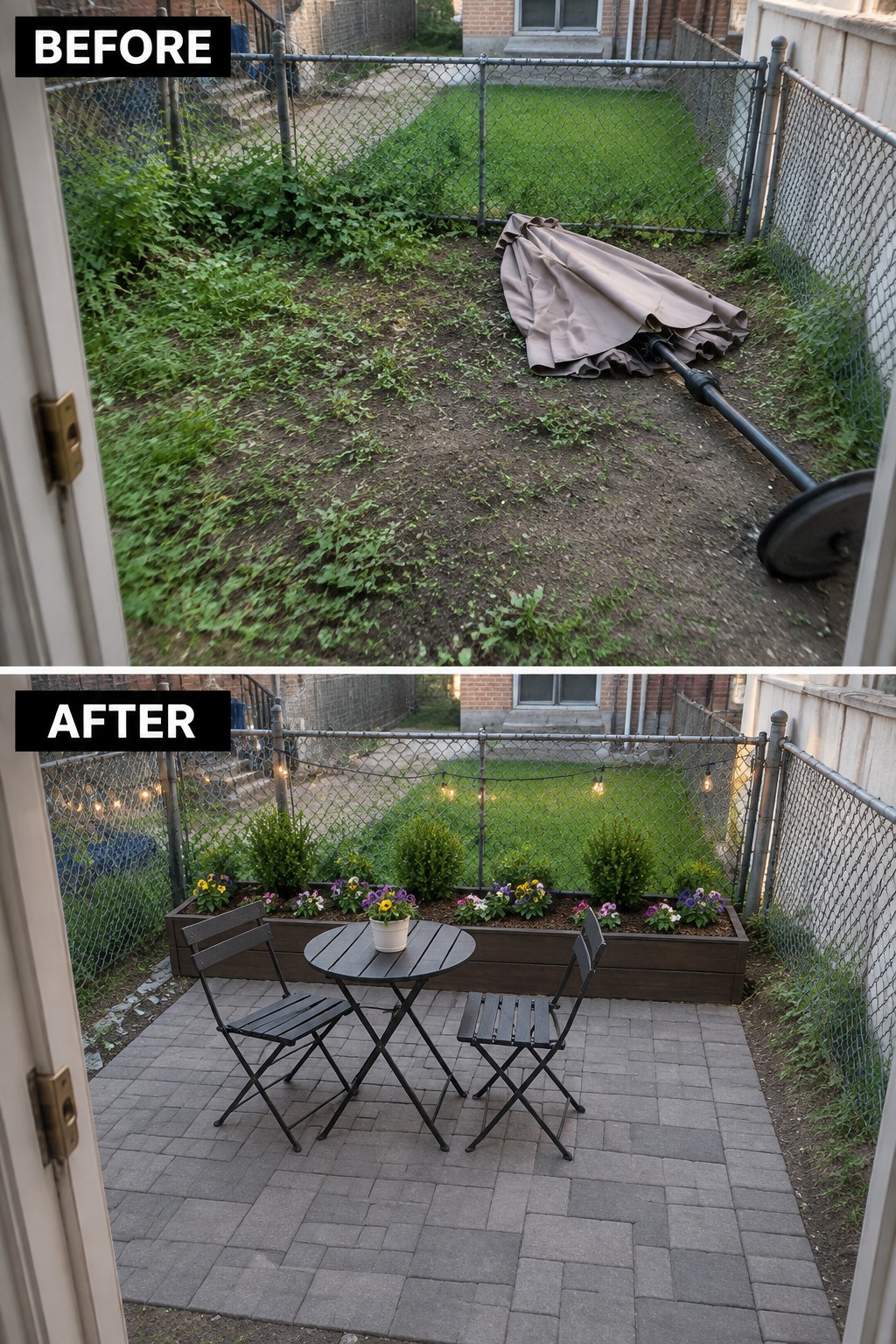
A small yard full of weeds and bare dirt can feel like wasted space. Laying down pavers creates a solid surface for a table and chairs, while raised beds along the fence give the area clear edges and room for flowers. The simple addition of string lights makes the space feel finished without crowding it.
This approach works well in narrow or shared yards where you need both seating and planting. Start with the hard surface first so you know how much room is left for beds, then keep the furniture small and the plants low so the whole area still feels open.
Add Structure To An Overgrown Backyard
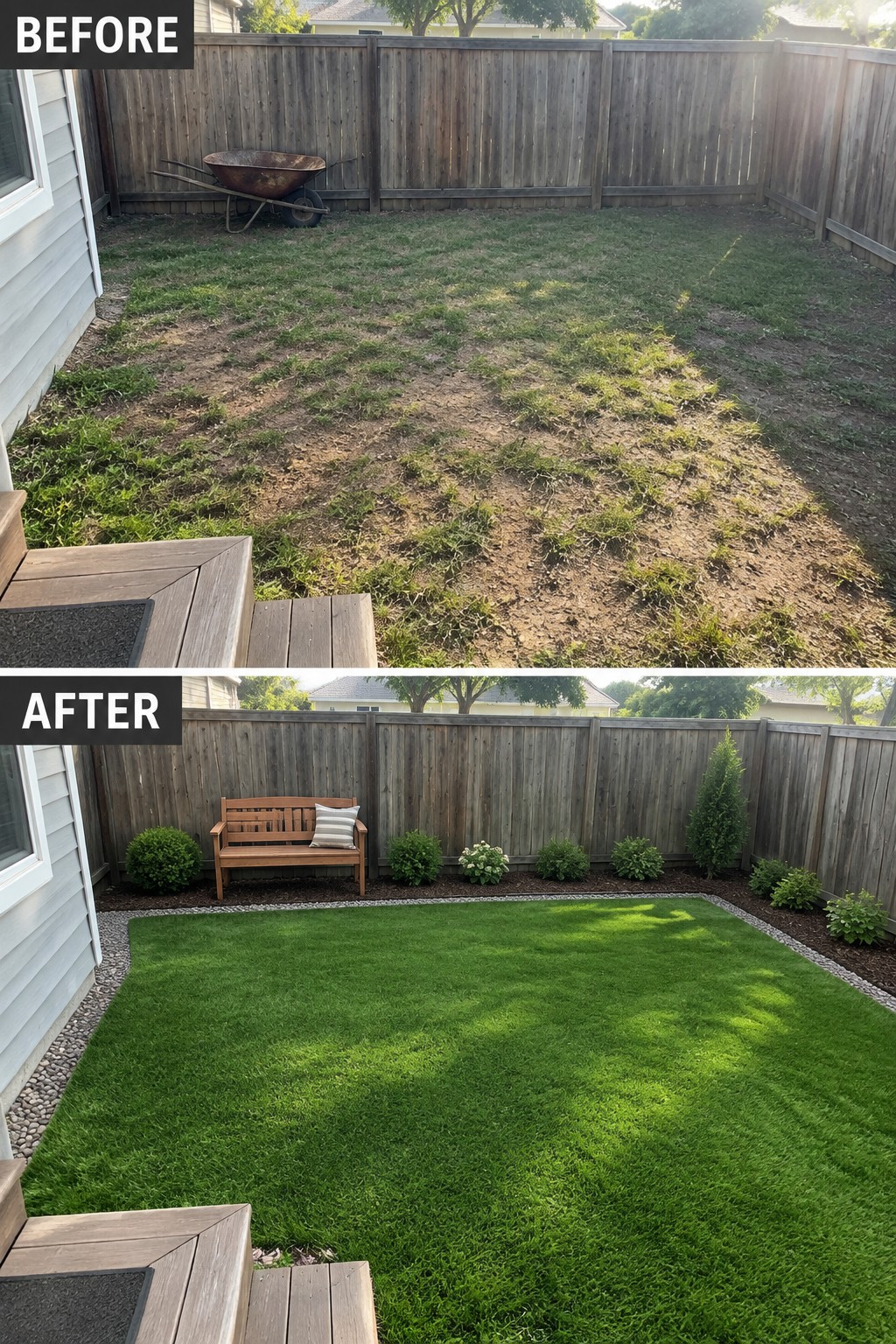
A patchy lawn with bare spots makes a small yard feel messy and unfinished. Adding a clean gravel edge along the fence and planting a simple row of shrubs creates clear borders that separate the lawn from the rest of the space. The result is a yard that looks cared for and actually usable.
This idea works best in tiny backyards where you want to keep the open grass area but still give the space some shape. Start by fixing the lawn itself, then add edging and a narrow planting bed before bringing in furniture or other features. It keeps the project manageable and prevents the yard from feeling crowded.
Turn A Bare Patio Into A Functional Herb Garden Spot

A small concrete patio often feels unfinished when it only has a few loose pots sitting on the ground. Adding a raised wooden planter box gives the space clear purpose and keeps the plants contained in one tidy area. The fold-down table mounted on the wall adds a usable surface without taking up floor space when it is not needed.
This idea works best on narrow patios or balconies where permanent furniture would crowd the area. Keep the planting simple with herbs or small greens so the box stays low and easy to maintain. Choose a table that folds flat and make sure the planter sits far enough from the door to leave a clear walking path.
Add Vertical Planting To A Bare Fence
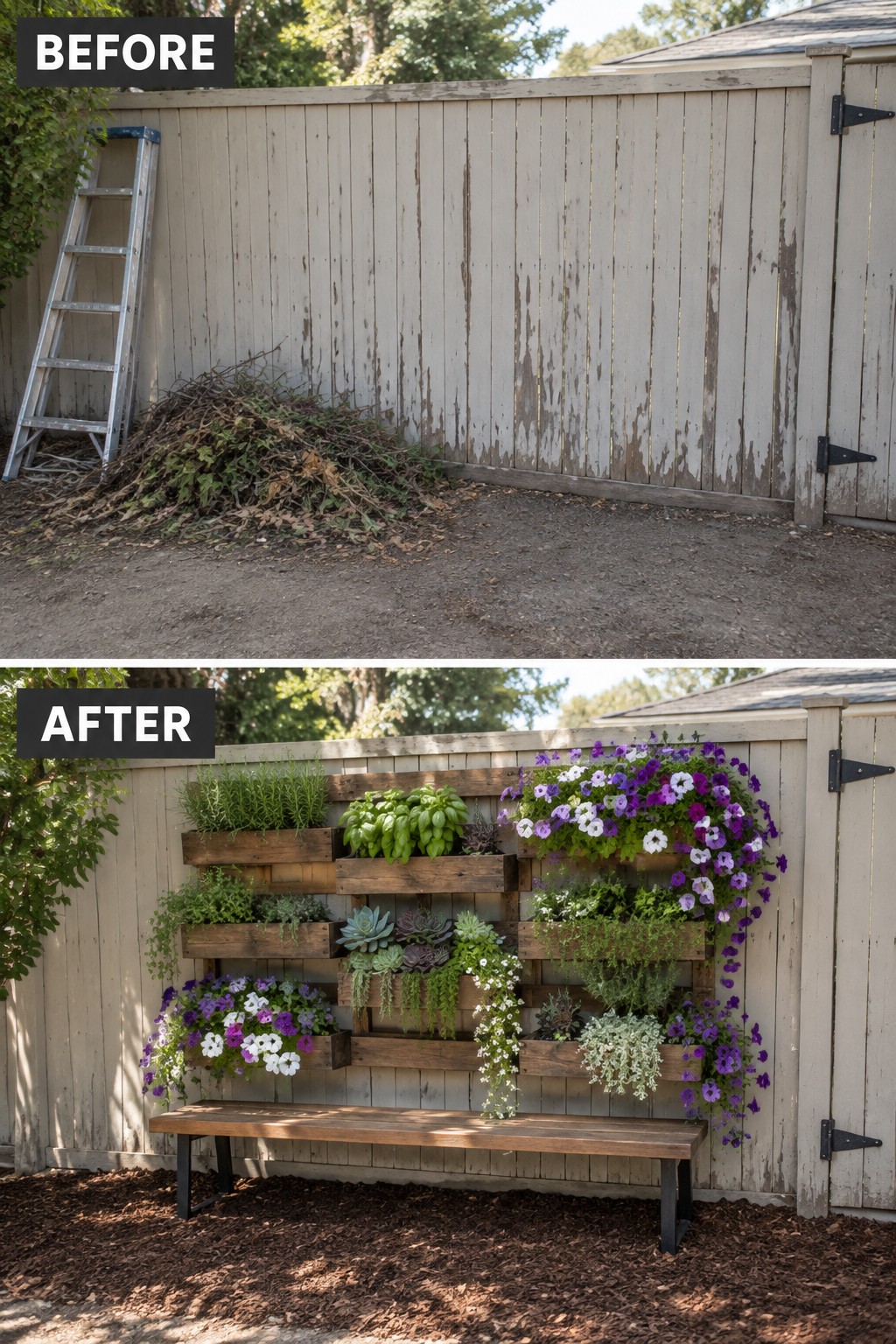
A blank fence with a pile of debris takes up space without giving anything back. Mounting a simple grid of wooden planters turns that same fence into the main garden feature and adds depth without crowding the ground.
This approach works well in tiny yards where horizontal room is limited. Secure the planters at different heights, mix in herbs, succulents, and a few trailing flowers, and add a bench below so the new planting actually gets used.
Turn An Empty Patio Into A Seating Area
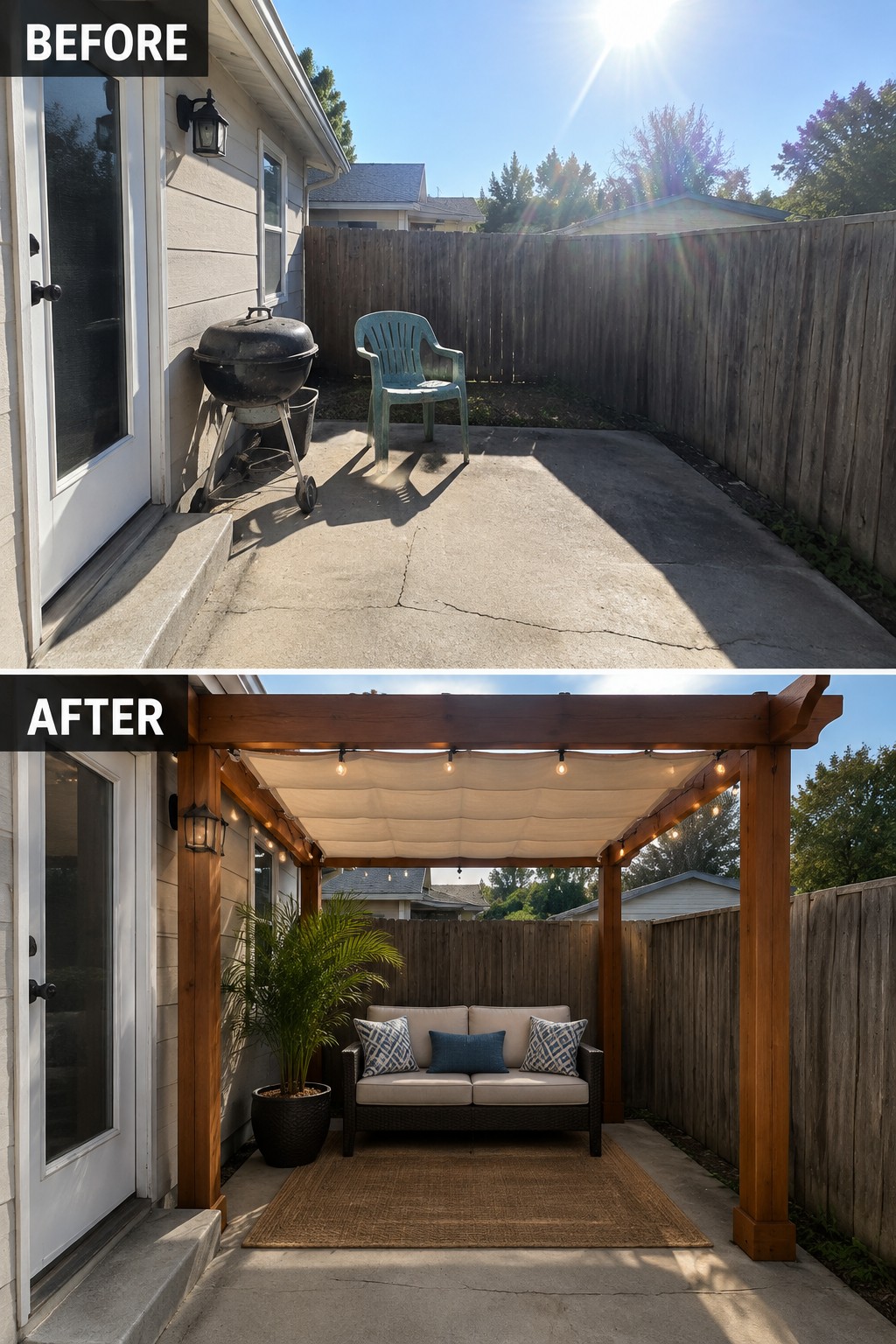
A bare concrete slab with nothing but a grill and one plastic chair feels like leftover space rather than a place to spend time. Adding a simple pergola with a shade cover and string lights gives the area clear boundaries and turns it into an outdoor room you actually want to use.
This idea works well on small backyards that already have a hard surface. Put up the main structure first for shade and definition, then add a sofa, rug, and a couple of plants so the seating zone feels purposeful. Keep the furniture scale modest so there is still room to walk around.
Turn A Bare Backyard Corner Into A Seating Area
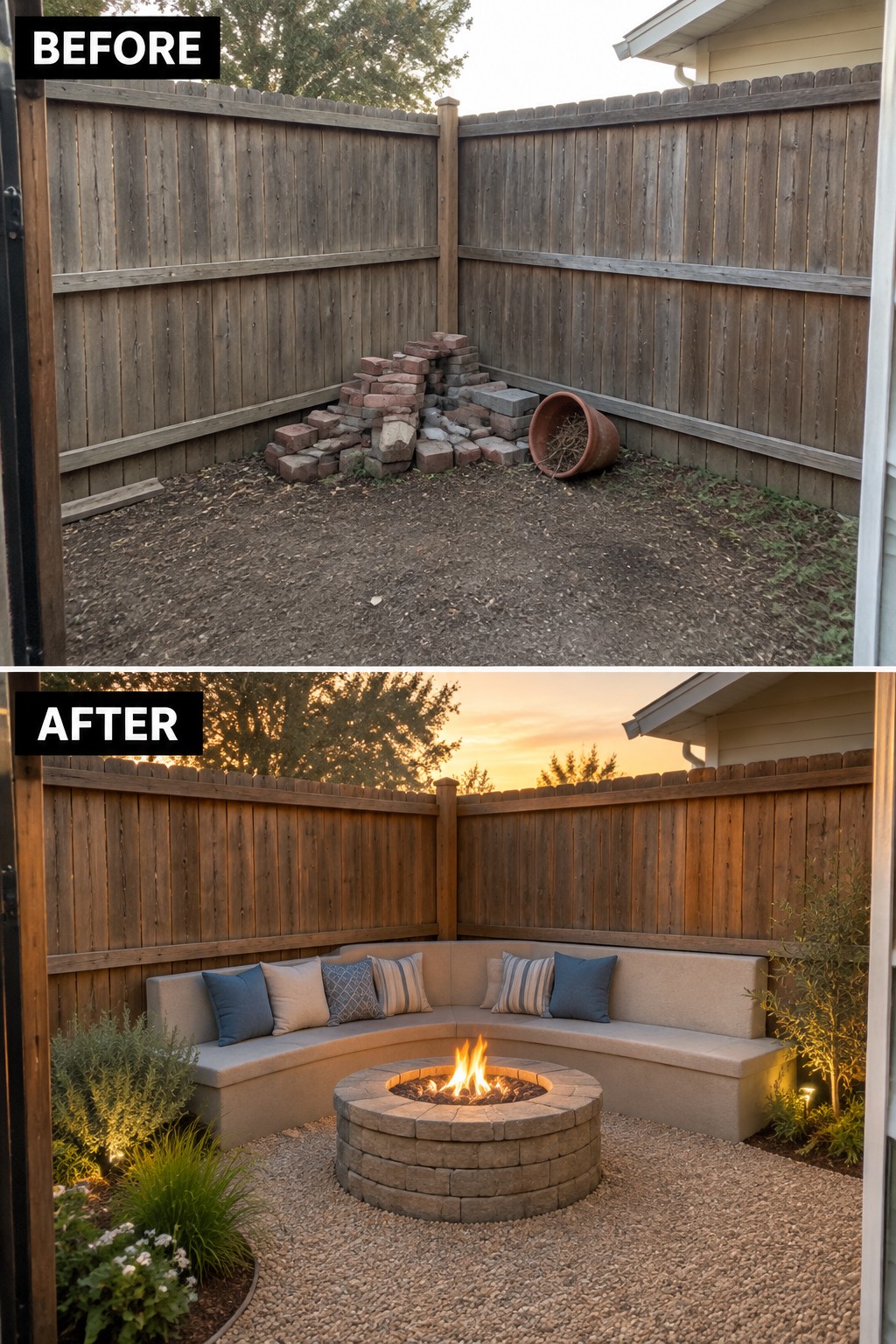
One easy way to make a small backyard usable is to give it one clear purpose instead of leaving it empty. Clearing the scattered bricks and debris, then adding a curved bench around a fire pit, turns wasted dirt into a spot that actually invites people to sit.
This works best in tiny yards where space is tight. Keep the bench low and the fire pit centered so the layout stays open, and add just a few plants along the edges to soften the fence without crowding the seating.
Add Structure To An Overgrown Backyard
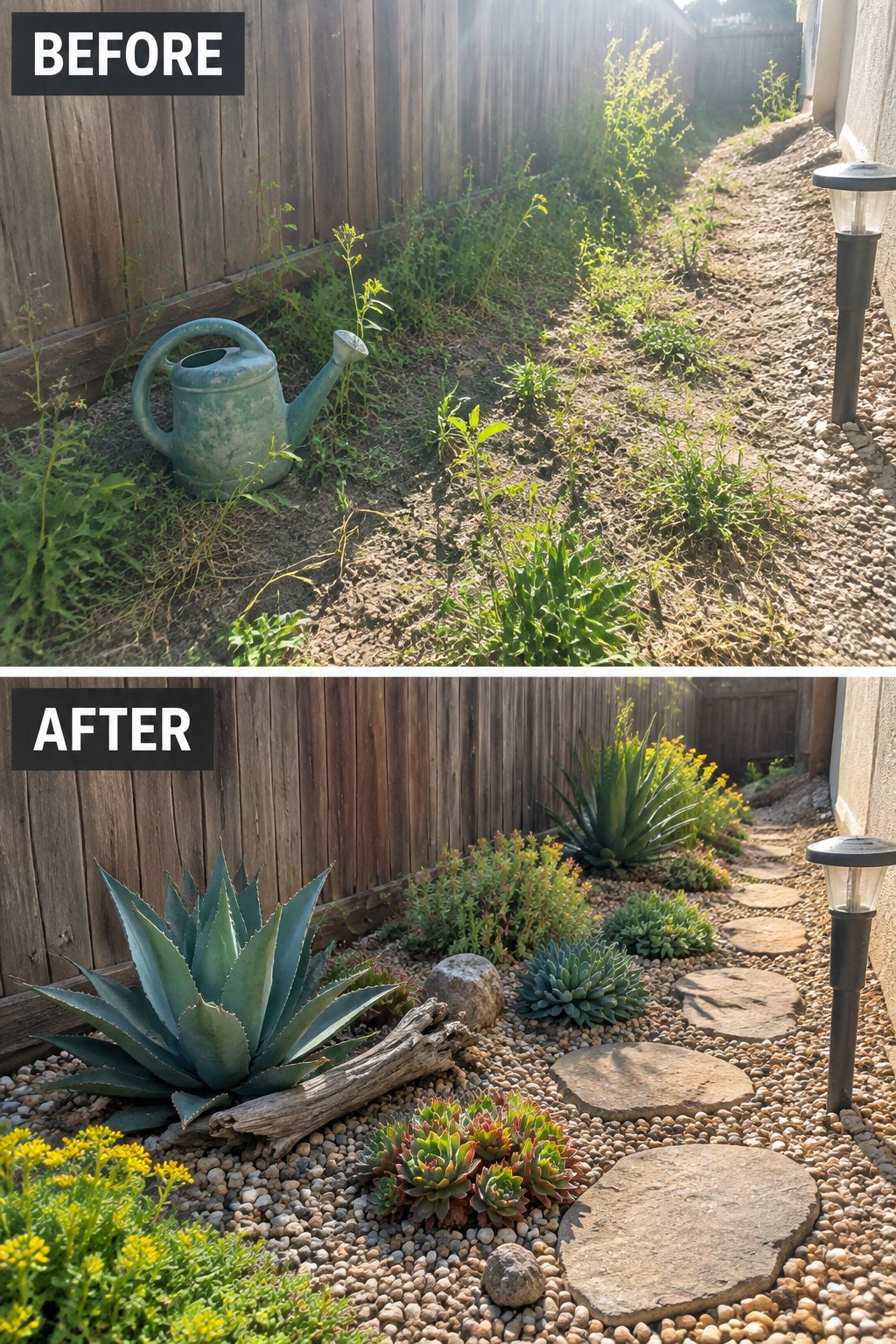
Clearing the weeds and laying gravel with a stepping stone path made the biggest difference. The space went from bare dirt and random growth to a clean layout that feels planned instead of neglected.
This idea suits narrow side yards or tiny back areas where you want to create order without adding much. Start by removing the overgrowth, then use gravel to cover the ground and place stones to mark a simple route through the beds.
Give A Small Patio Purpose With A Water Feature
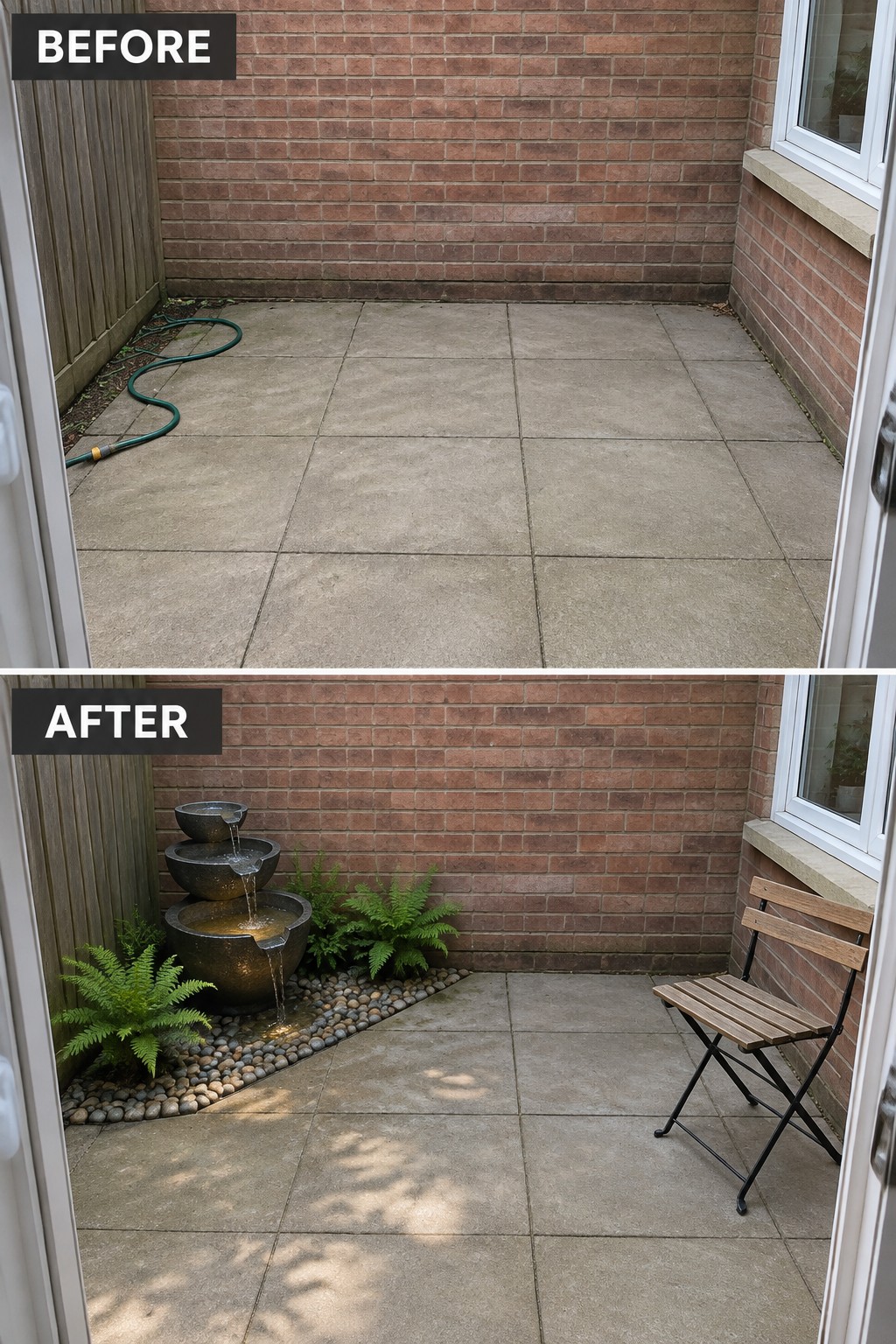
A bare concrete slab often feels like dead space until you give it one clear reason to spend time there. Adding a small tiered fountain in the corner with a few plants around the base turns the area from empty to usable without needing a full redesign. One simple chair is enough to suggest that this spot now has a job.
This idea suits tiny yards or narrow side returns where big furniture would feel cramped. Keep the rest of the paving open so the space still feels roomy, and choose a fountain that runs quietly if the patio sits near windows. The goal is one focal point rather than filling every corner.
Add A Bench With Storage To A Narrow Deck
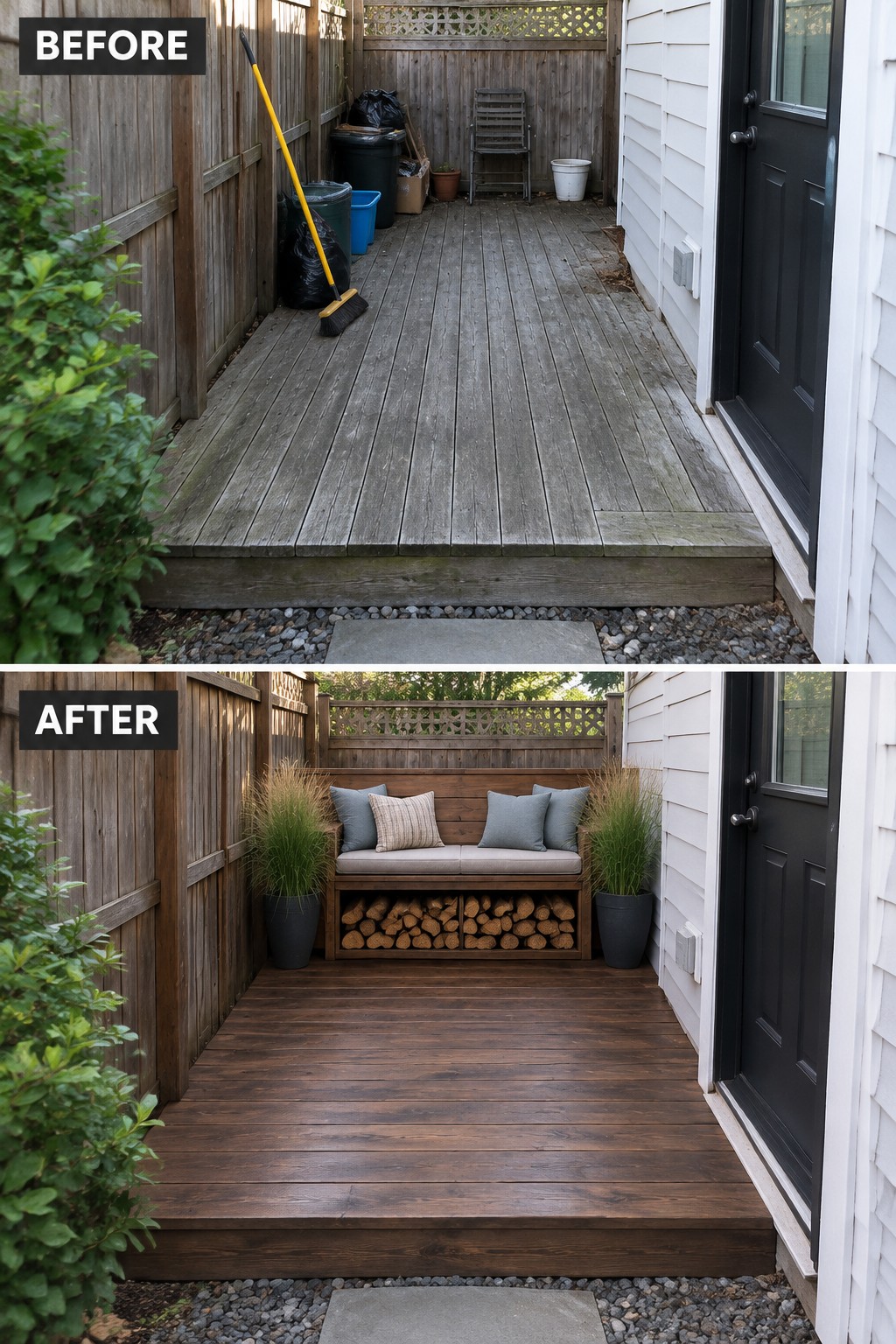
A narrow deck often gets ignored because there is no clear way to use it. Here the space went from an empty stretch of weathered wood littered with trash and tools to a simple seating spot anchored by one built-in bench. The bench adds a place to sit while its open lower shelf keeps firewood stacked and out of the way.
This approach suits tight side yards or back decks where full furniture sets would block movement. Keep the bench low and shallow so it does not shrink the walkway, then add a pair of tall planters at each end to soften the fence line. The result is a small outdoor room that feels intentional instead of leftover.
Add Structure To An Overgrown Backyard
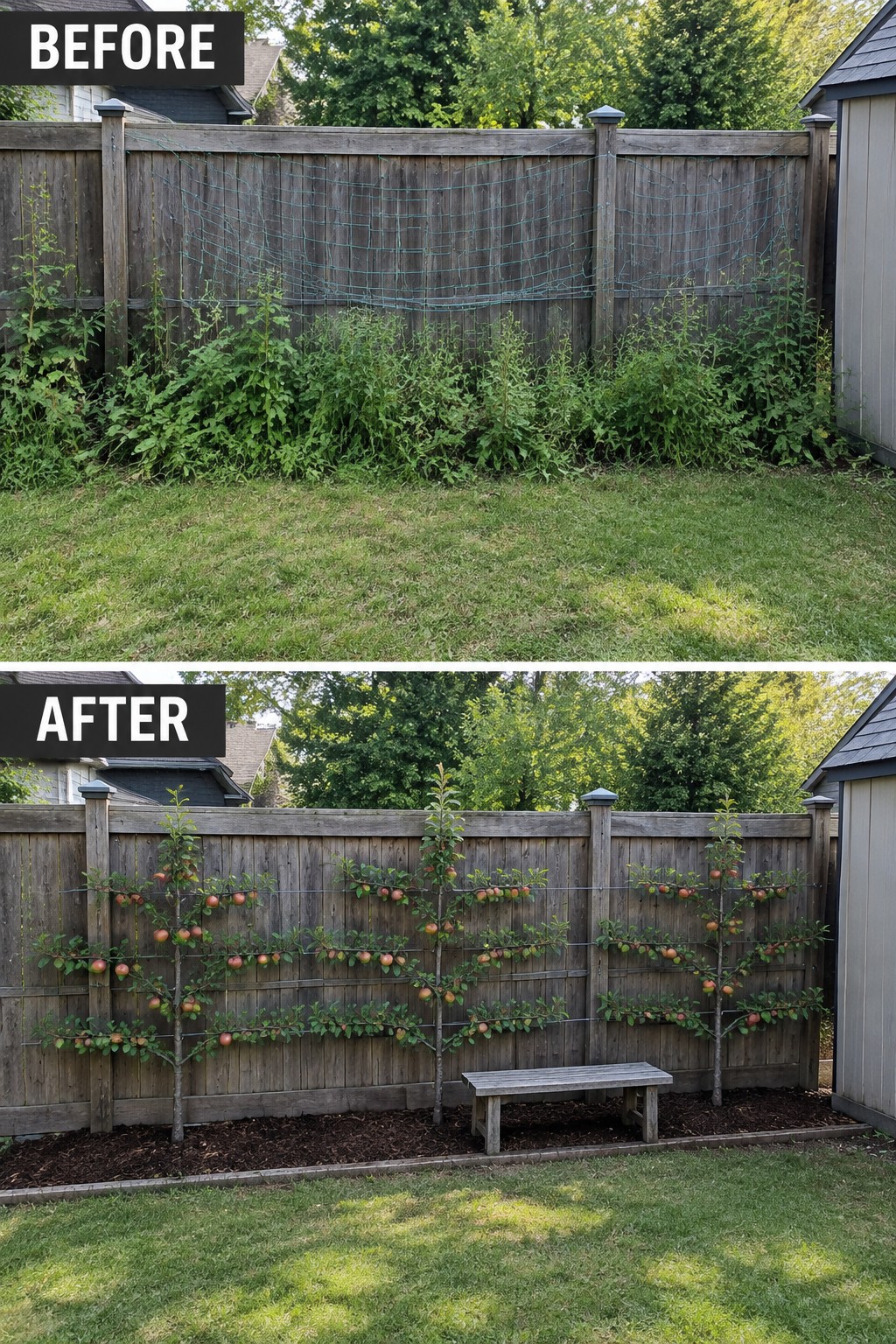
Overgrown weeds along a fence can make a small yard feel neglected and hard to use. Clearing the growth first opens up the space, then adding simple wires gives young trees a place to grow flat against the fence in an orderly row.
This approach works well in narrow yards where you want planting without losing lawn space. Mulch finishes the bed and keeps maintenance low, while the wires keep the trees from spreading outward.
Turn A Bare Patio Corner Into A Small Seating Spot
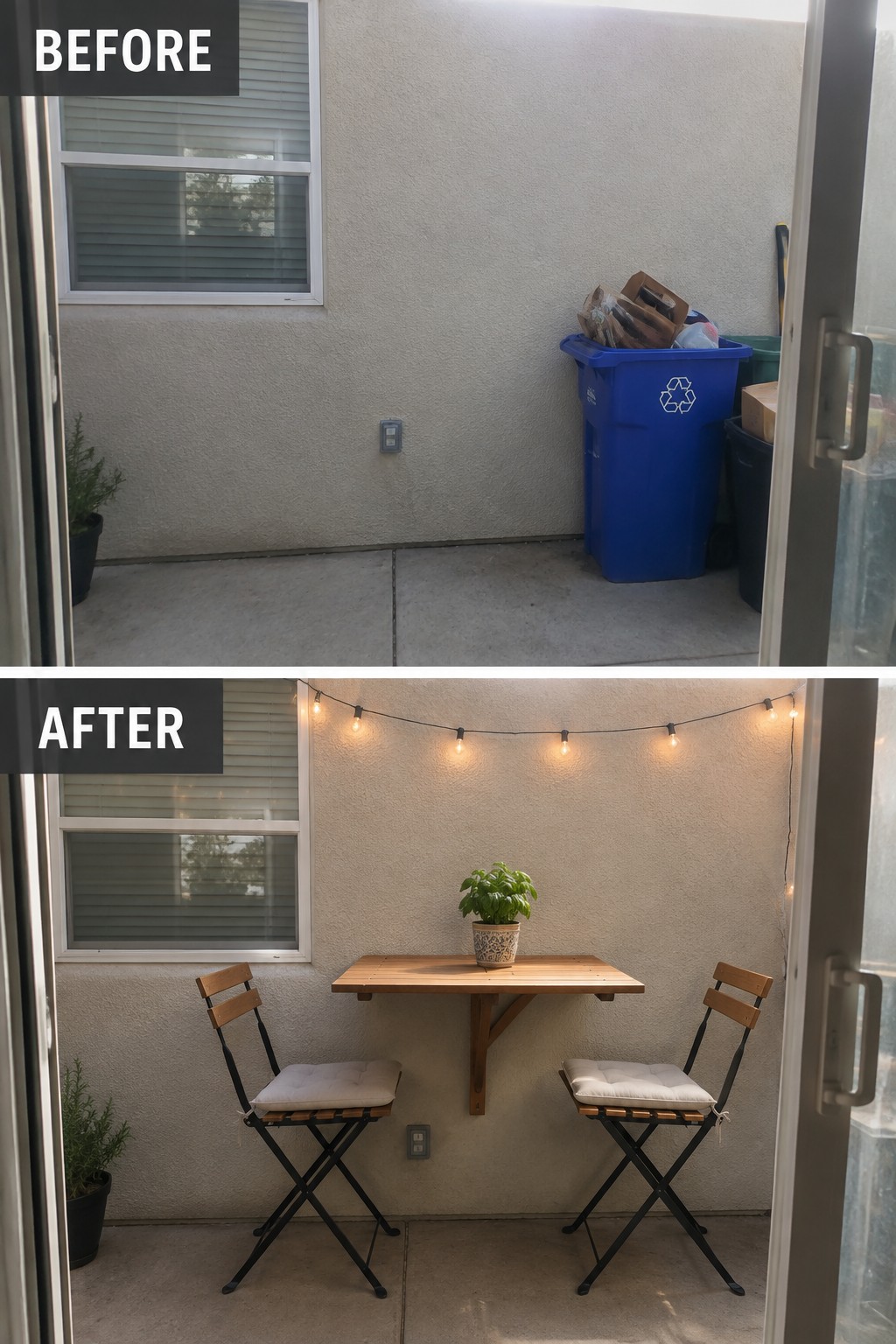
A cluttered corner with bins and boxes often gets ignored because it feels like wasted space. Adding a simple wall-mounted table with two folding chairs and a string of lights overhead makes the same spot feel like a place to sit instead of just pass through.
This idea works best on narrow patios or small concrete areas where a full table would crowd the walkway. Keep the table folded down when not in use and choose chairs that store easily. The key is starting with a clear surface before adding anything else.
Give A Small Backyard Structure With Gravel And Raised Beds
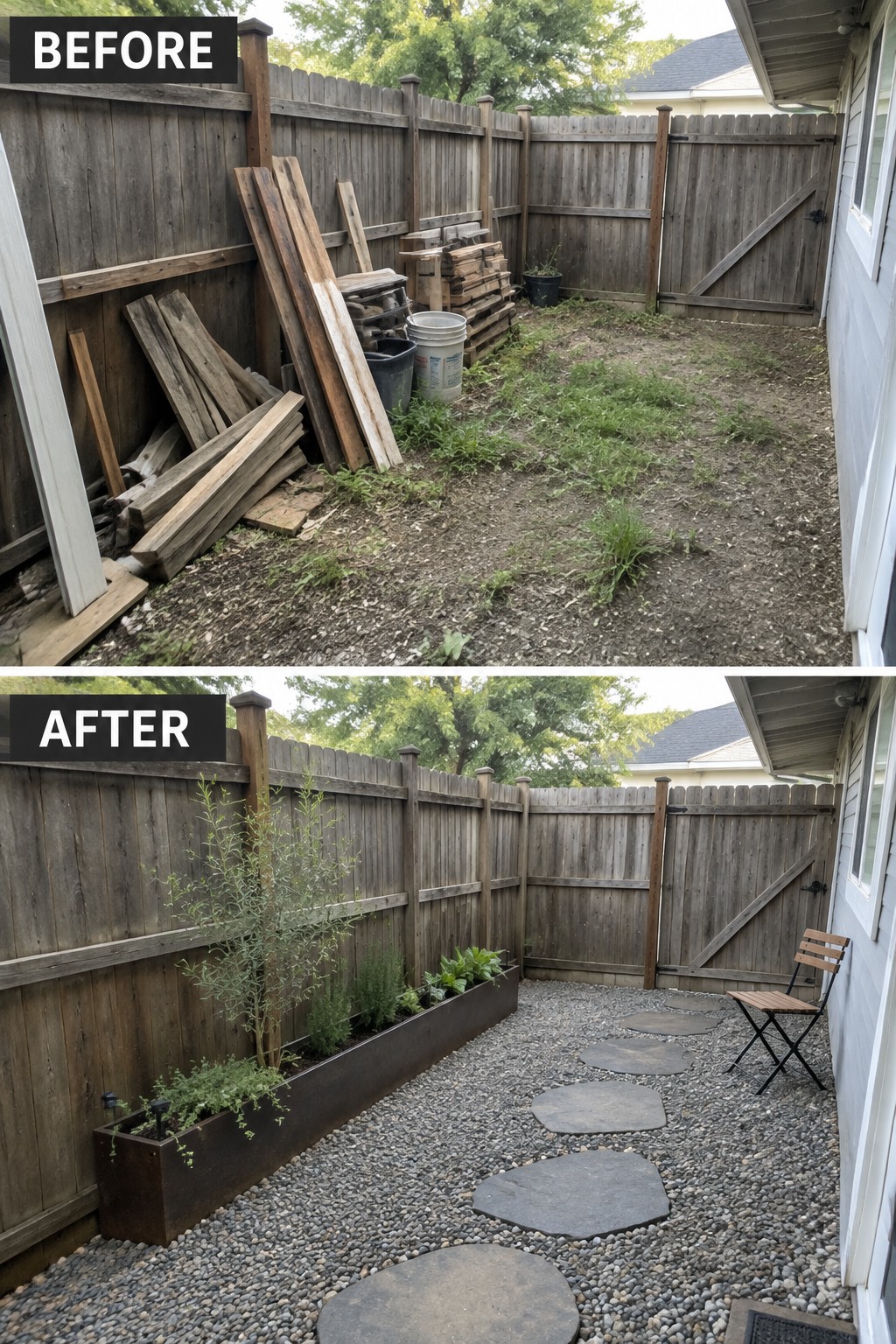
A cluttered dirt yard with random wood piles and weeds does not feel usable. Laying down gravel creates a clean base, while a few raised beds along the fence add planting space without taking over the whole area. The stepping stones give a simple path so the space feels organized instead of empty.
This approach works well in tiny yards because it keeps everything low and contained. Start with a solid cleanup, then add the gravel and beds before worrying about furniture or extras. The same idea fits any narrow side yard or corner that needs a purpose without looking crowded.
Add Structure To A Small Side Yard With Tiered Beds
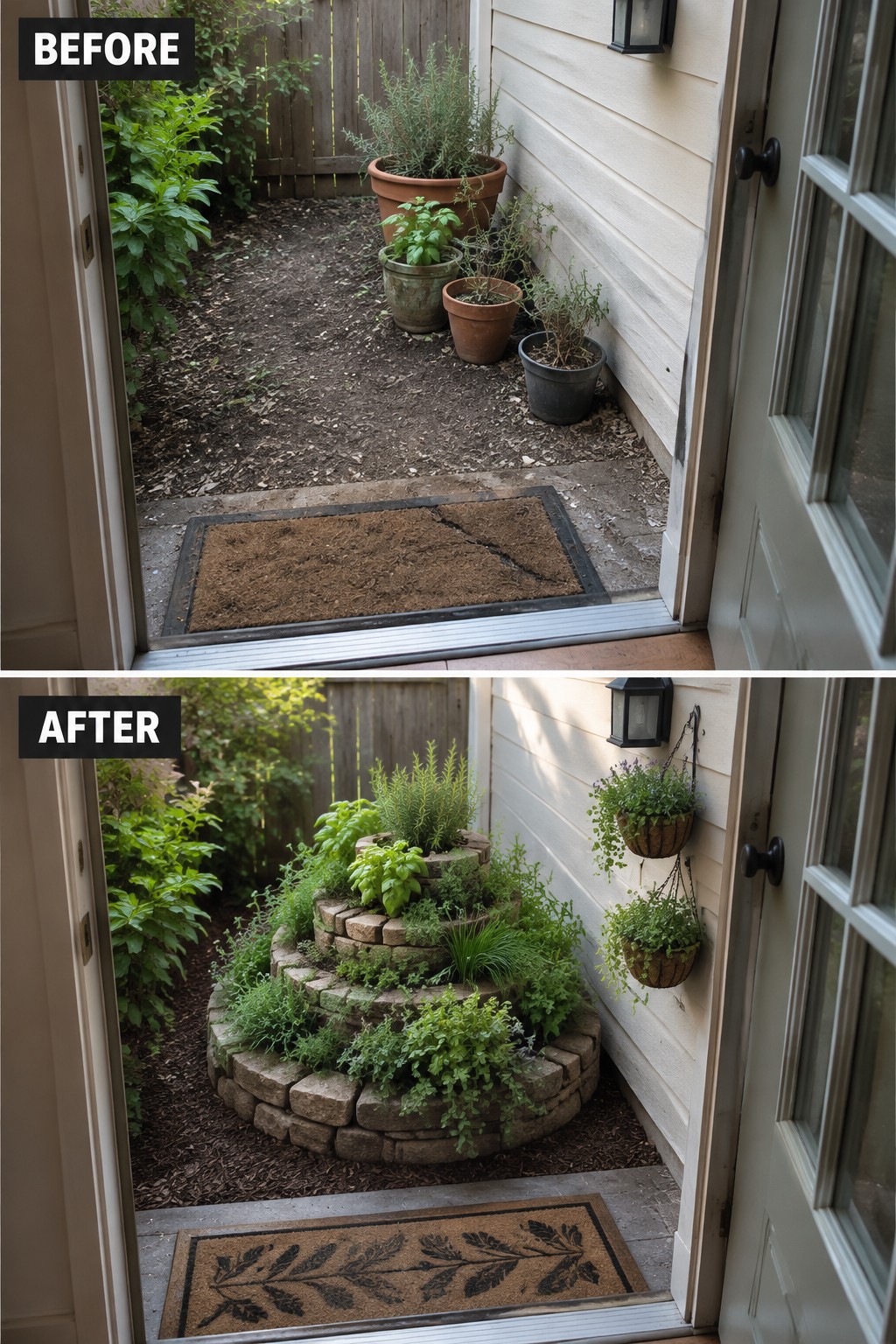
A bare patch of dirt right outside the door can feel unfinished, especially when pots are just scattered around. Stacking stone into a simple tiered bed pulls everything together and gives the space a clear center without taking up much room.
This works well in narrow side yards or tight entries where flat ground looks empty. Start with the stone base to set the shape, then fill in with plants that trail over the edges. Keep the surrounding area mulched so the whole spot stays neat instead of turning into a mud pit.
Build A Bench With Planters To Define A Tiny Yard
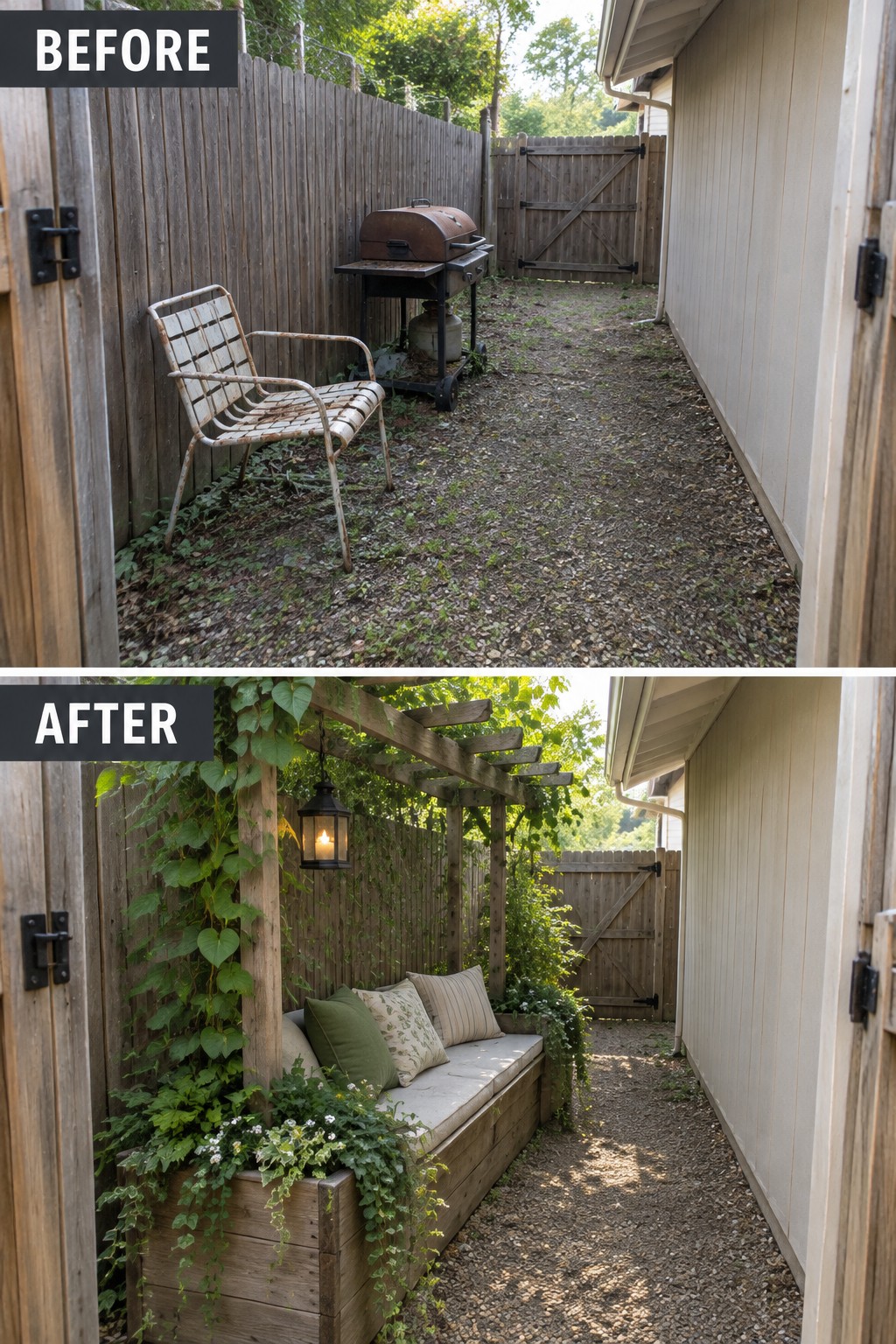
A bare strip of dirt between the house and fence rarely gets used. Adding a simple wooden bench with an attached planter box gives the space a clear purpose and a place to actually sit. The bench creates a focal point while the built-in planting softens the edges and keeps everything contained in a narrow area.
This approach works well in tight side yards or small backyards where there is not much room for separate furniture. Start with the bench as the main piece, then add a few climbing plants or a basic overhead structure if you want more shade. Keep the planting simple so the bench stays the main feature instead of getting lost in too many layers.
Turn A Bare Patio Into A Defined Seating Area
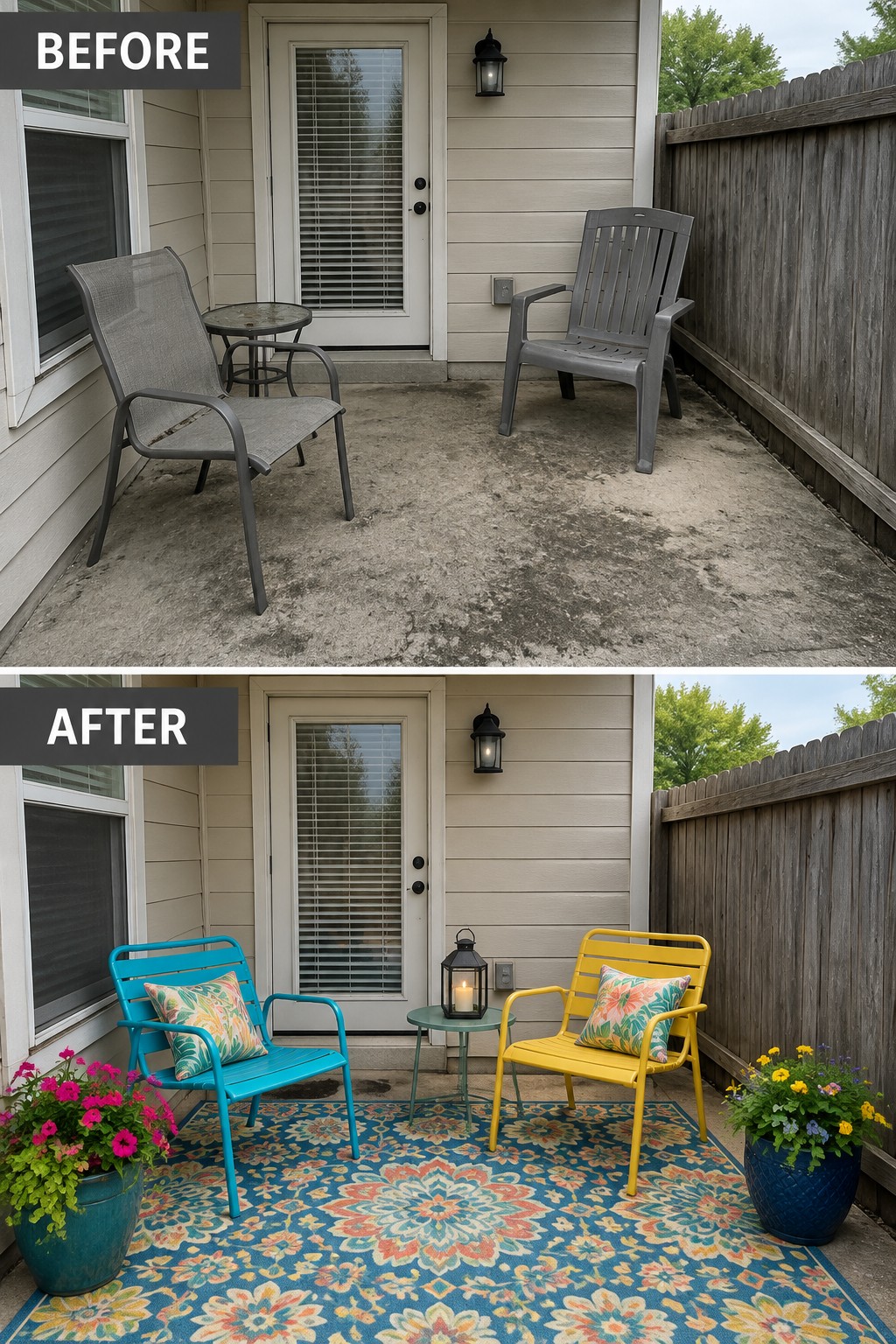
A plain concrete slab often looks like leftover space until you give it clear boundaries. Laying down a large outdoor rug and adding a pair of bright chairs with cushions turns the same area into a spot people actually want to use.
This approach works best on small side patios or back entries where you need seating without major construction. Keep the furniture scale modest, stick to one main rug pattern, and add a few potted plants so the zone feels finished but not crowded.
Add Defined Beds To A Narrow Side Yard
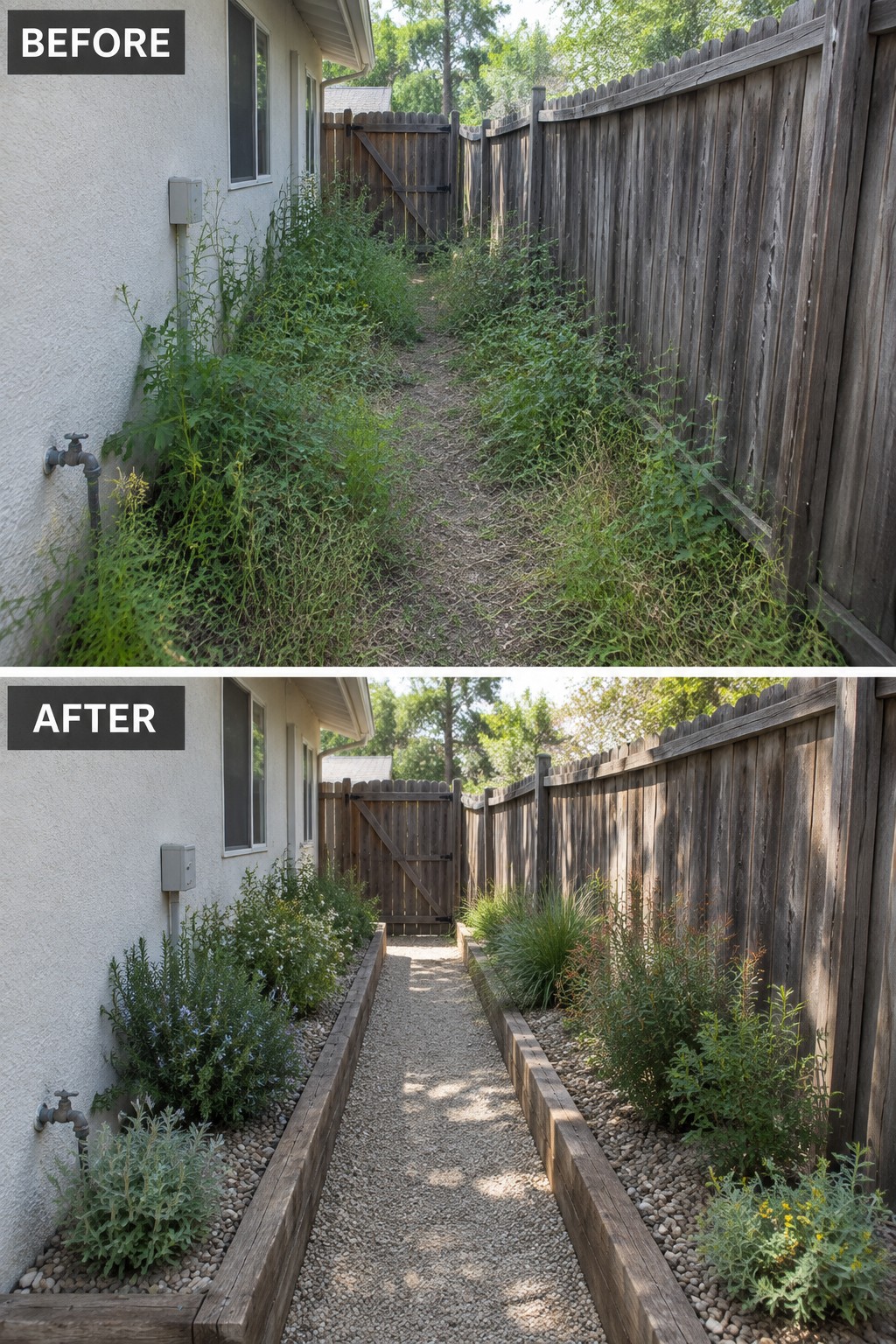
A narrow strip next to the house often ends up as a weedy mess because there is no clear edge to contain the growth. Adding simple raised beds with wooden borders gives the space structure right away. Once the beds are in place, the gravel path stays neat and the planting stays where it belongs instead of spilling onto the walkway.
This approach works best in tight side yards where you want low maintenance without giving up all planting. Keep the beds narrow enough to leave room to walk, and choose a few repeating shrubs that stay compact. The borders do most of the work by making the area look intentional even before the plants fill in.
Add A Path And Lights To Organize A Small Backyard
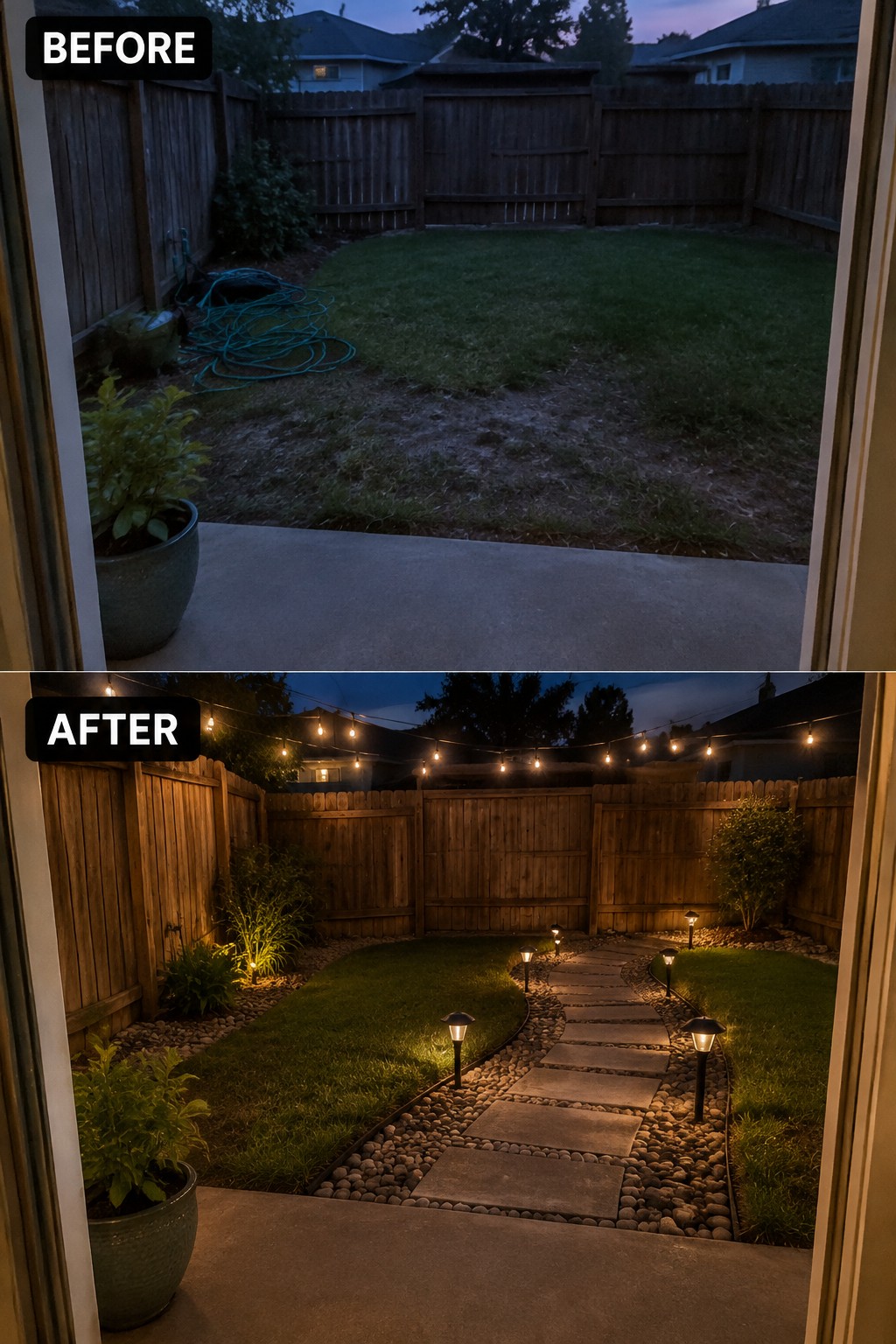
A bare backyard often feels unfinished because there is no clear way to move through it. Adding a simple stone path with pebble edging and a line of low lights gives the space direction and makes it feel like an actual room instead of leftover grass. The string lights overhead add another layer that makes the area usable after dark without needing much else.
This idea works well in tiny yards because the path takes up little space while still creating structure. Start by clearing clutter and laying out the route people will actually walk, then add lights only where they help navigation. Weatherproof solar lights keep costs and wiring low, and the same path can later connect to a small seating spot or garden bed if you want to build on it later.
Add A Vertical Garden To A Blank Fence
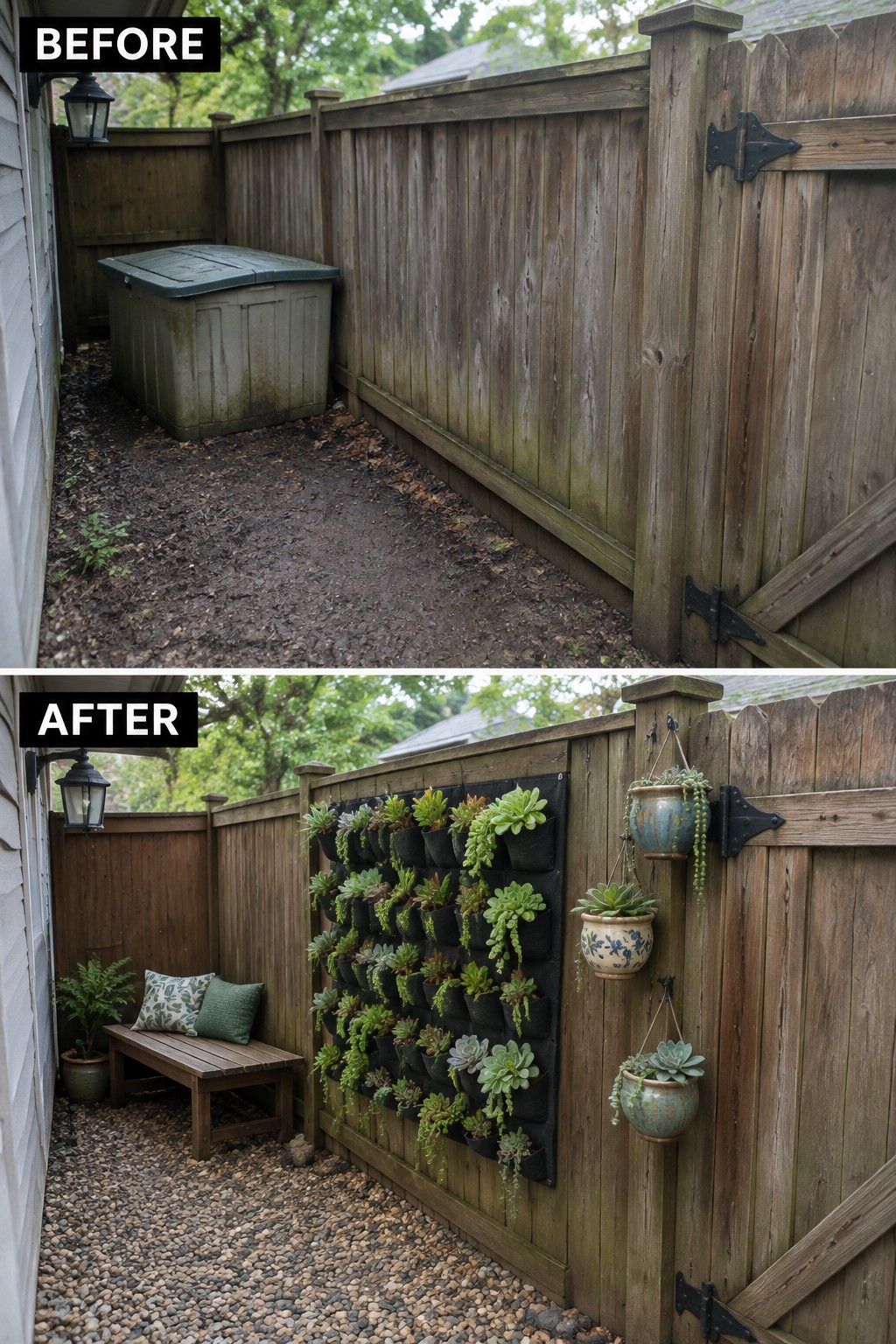
A blank fence next to bare dirt does not do much for a small backyard. Adding a vertical pocket planter turns the fence into the main planting area and frees up the ground for other uses. In this case the fence went from empty wood to a full wall of succulents while the dirt was replaced with gravel and a simple bench.
This approach works well in narrow side yards or tiny back corners where there is little room for beds. Hang the planter at a comfortable height, choose plants that need little water, and keep the ground cover simple so the space still feels open. The result is more green without crowding the floor.
Add Structure To An Overgrown Backyard

Clearing out the weeds and adding raised wooden beds turns a messy patch into something you can actually work with. The beds give the tomato plants a clear spot to grow, and the simple trellises keep everything upright instead of sprawling across the ground.
This approach suits tiny yards where random planting quickly looks chaotic. Build or buy a couple of basic beds, set them parallel with room to walk between, and keep the plant choices simple. It makes maintenance easier and stops the whole space from feeling neglected.
Add A Planted Screen To Define A Small Patio

A bare concrete slab next to the house often feels exposed and unfinished. Adding a simple wooden screen with a built-in planter and climbing vines gives the space clear boundaries, softens the view, and creates privacy without crowding the floor area. The change turns an open pass-through into a spot that actually feels like a separate outdoor room.
This approach works well on small side yards or back patios where you need height but have limited ground space. Use weather-treated wood, keep the planter depth around 12 inches so the plants stay healthy, and choose vines that grow quickly in your climate. Place the screen where you want to block a view or create a quiet seating zone, then add just one or two chairs so the area stays usable.
Add Gravel To Define A Small Backyard Corner

A messy corner full of scattered pots and bare dirt rarely gets used. Laying down a layer of gravel gives the space a clear edge and makes it feel intentional instead of leftover. The hammock then has a simple place to hang without looking like it was added as an afterthought.
This approach works well in narrow side yards or small back corners where you do not have room for a full patio. Start with a thorough cleanup, then use gravel or small stones to cover the ground before adding a couple of large planters on the sides. Keep the planting simple so the gravel stays the main organizing element.
Add Raised Beds To Give Structure To A Small Backyard
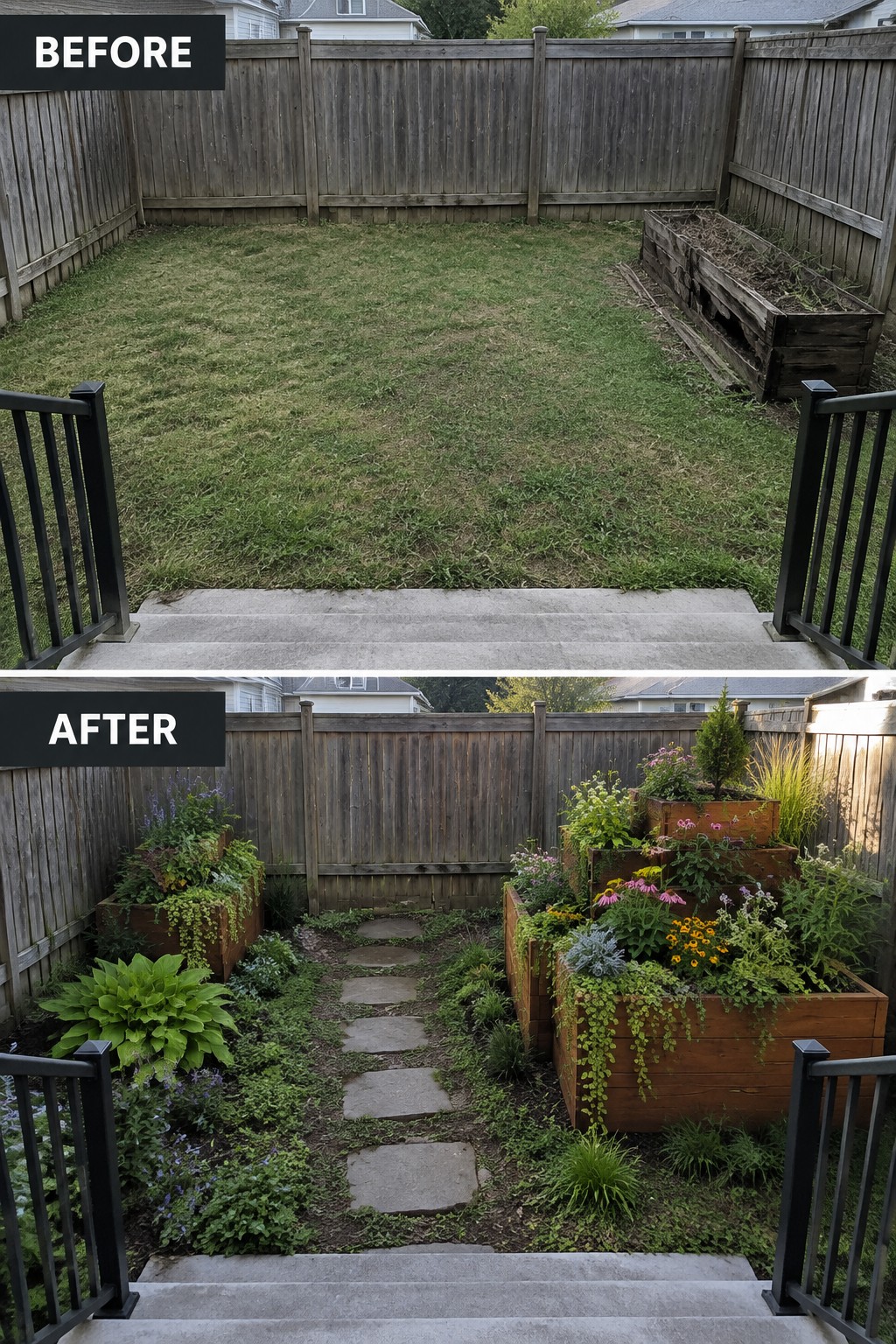
Many small backyards start as just a flat stretch of grass with no clear purpose. Adding a few raised beds and a simple stone path creates defined planting areas and makes the space feel more organized without crowding it.
This idea works especially well in narrow or modest yards because the beds act as built-in borders while leaving the middle open for movement. Place them along the fence lines first, keep the path simple, and fill the beds with a mix of heights and textures. It turns an empty lawn into a garden that feels intentional even on a small budget.
Frequently Asked Questions
Q: How do I pick which ideas to try first in my small space? A: Start with one or two that match what you already have like existing pots or a bit of shade. Test them out for a month before adding more. This way you see what actually fits your daily routine.
Q: What if I rent and can’t make big changes? A: Focus on movable items such as potted plants or lightweight furniture. You can rearrange everything easily when you move. Many of the ideas use containers that do not require digging.
Q: Will these ideas hold up in bad weather? A: Choose hardy plants that match your local climate. Add simple covers like tarps during storms if needed. But check the forecast regularly to protect your setup.
