

When I walk out to my yard after a long winter I notice how the edges along the fence always look a little ragged and the grass never quite fills in evenly.
Native plants tend to handle that better because they already know the soil and the rainfall patterns here so they settle without constant watering or feeding.
It adds up over time.
I usually start by clearing just one strip near the path and adding a few tough perennials there first since that small patch makes the whole side of the house feel less forgotten.
Over a couple seasons those choices also bring more birds and bees which gives the space a quieter kind of life without extra work on my end.
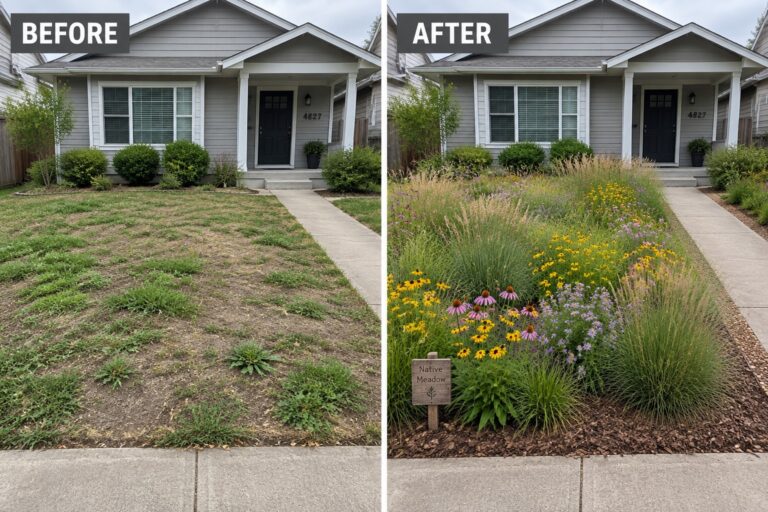
Replace A Patchy Lawn With Defined Native Beds
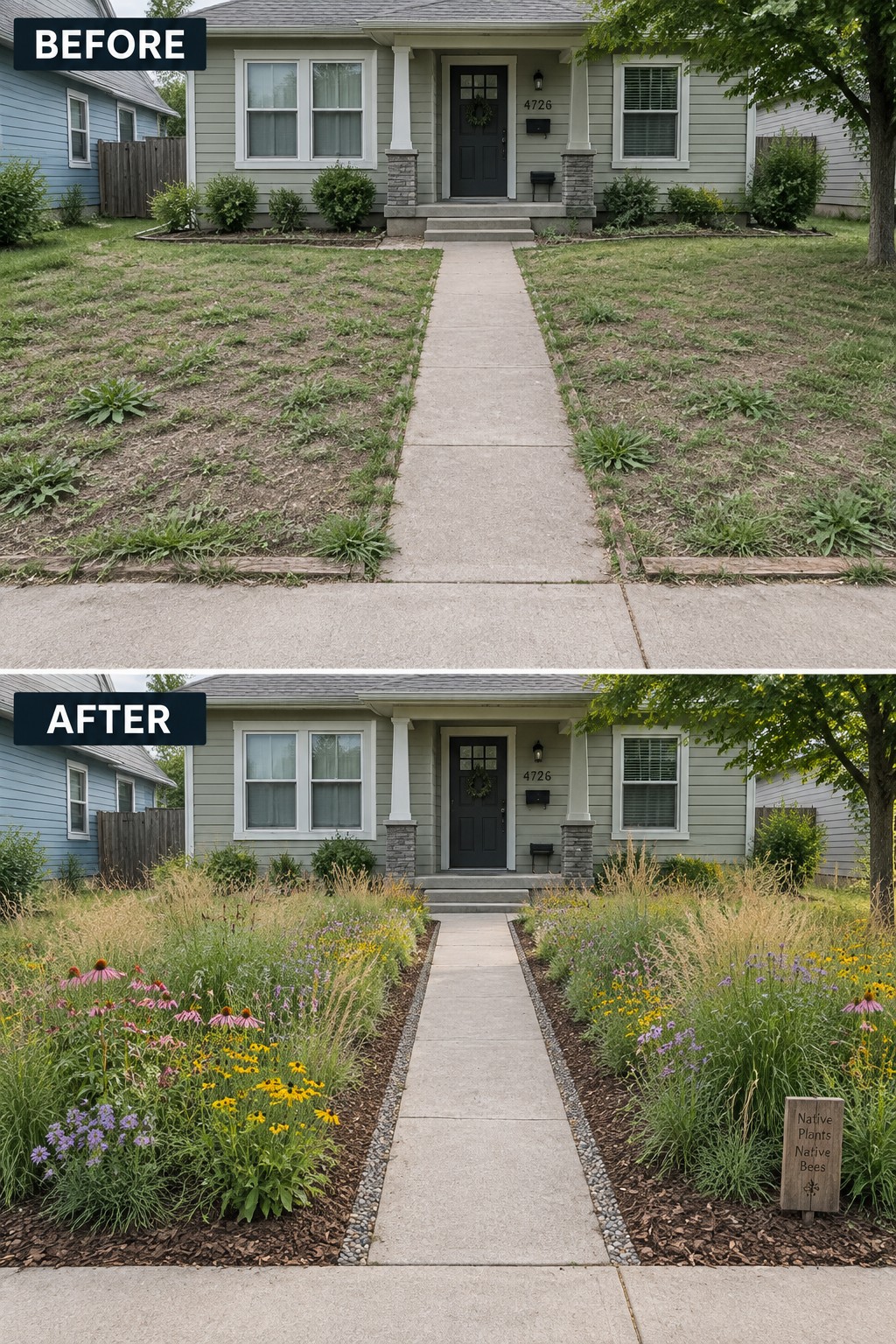
The front yard had a tired lawn full of weeds and bare patches that made the whole house feel a little neglected. By clearing the grass and putting in mulched beds along both sides of the walkway, the space gains clean lines and steady color that lasts through the seasons.
This idea works best on smaller front yards where the path already creates a natural divide. Mark the bed edges first, add a thick layer of mulch to keep weeds down, and fill them with native plants that need little water once established. It cuts mowing time and gives the entry a more finished look without a lot of ongoing work.
Clear An Overgrown Border Before Planting Native Flowers
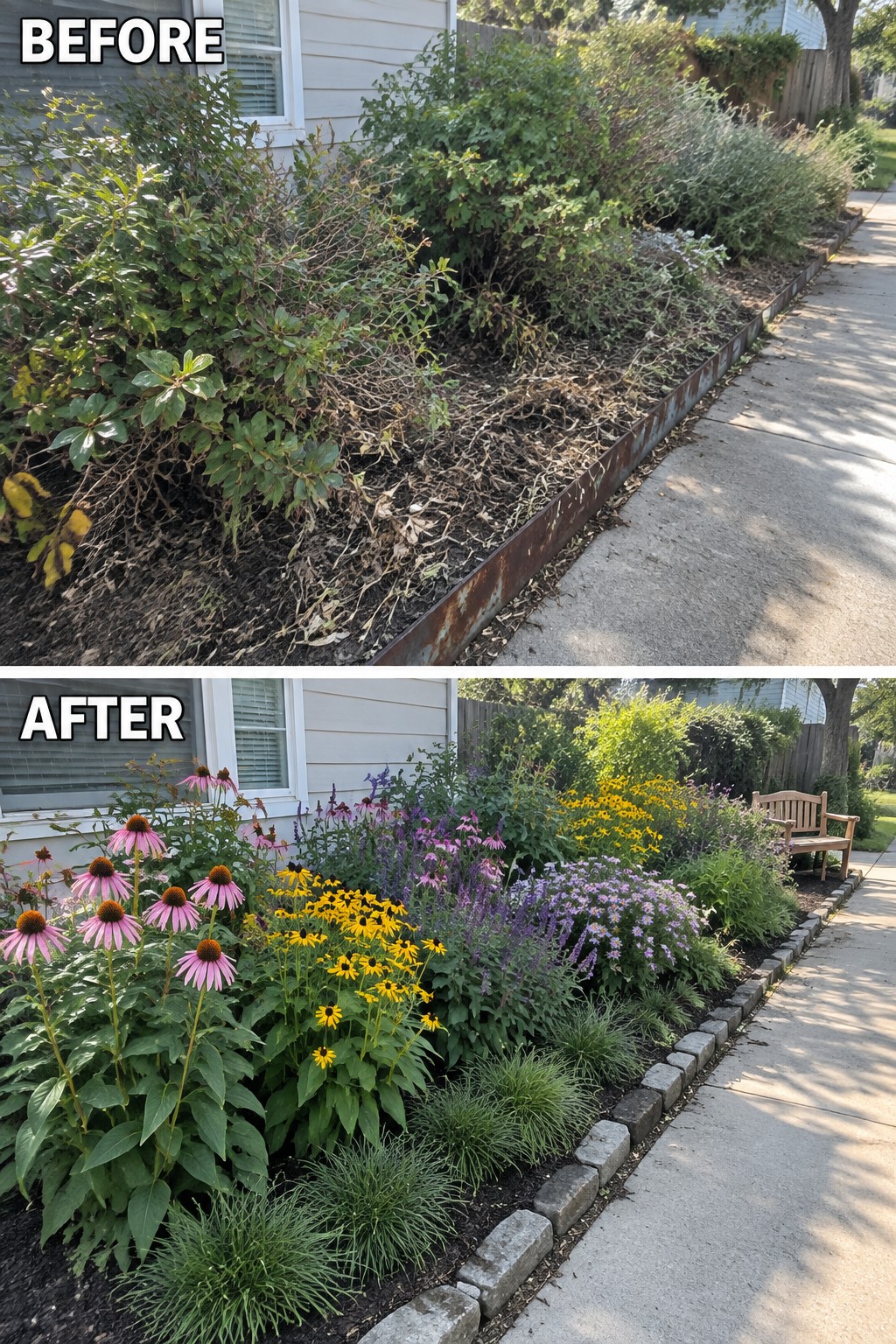
An overgrown strip next to the house often ends up full of weeds and dead stems. Clearing everything out first and replanting with a mix of native perennials gives the bed structure and color while cutting down on future maintenance.
This idea works best along sidewalks or foundation lines where space is narrow. Remove the old growth, add simple edging to keep the bed defined, and pick plants that spread on their own so the border fills in without constant work.
Add Structure To A Narrow Side Yard With A Stone Path
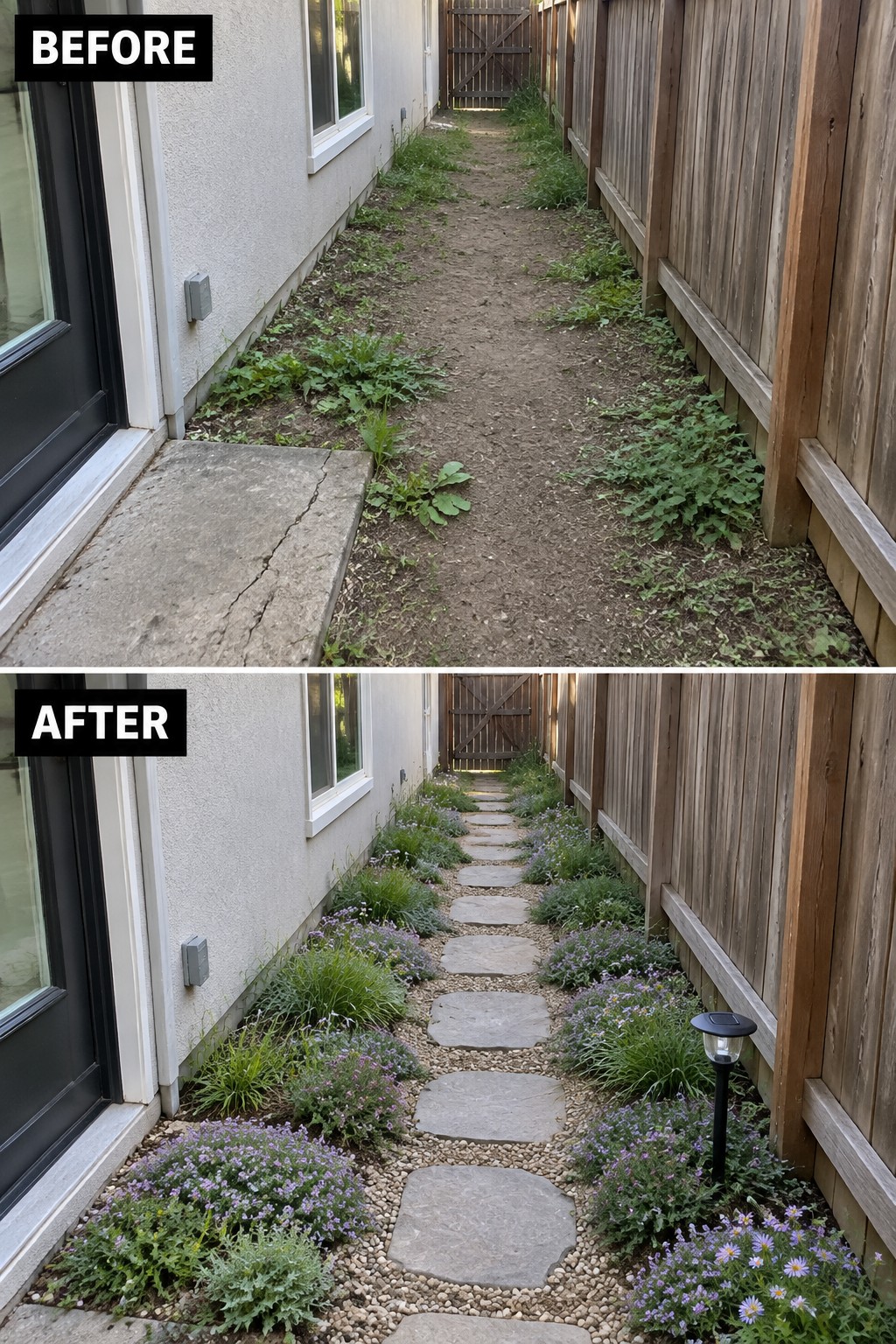
A weedy dirt strip next to the house can feel like wasted space until you give it a clear path. Laying stepping stones down the middle and adding gravel on either side immediately makes the area look intentional and easier to walk through. The low plantings along the edges keep everything contained without constant trimming.
This approach suits narrow side yards where you need regular access but do not want high-maintenance beds. Start with the path first so the planting areas stay defined, then fill them with tough native perennials that spread on their own. The result stays practical while still looking cared for.
Group Containers Of Different Sizes At The Front Steps
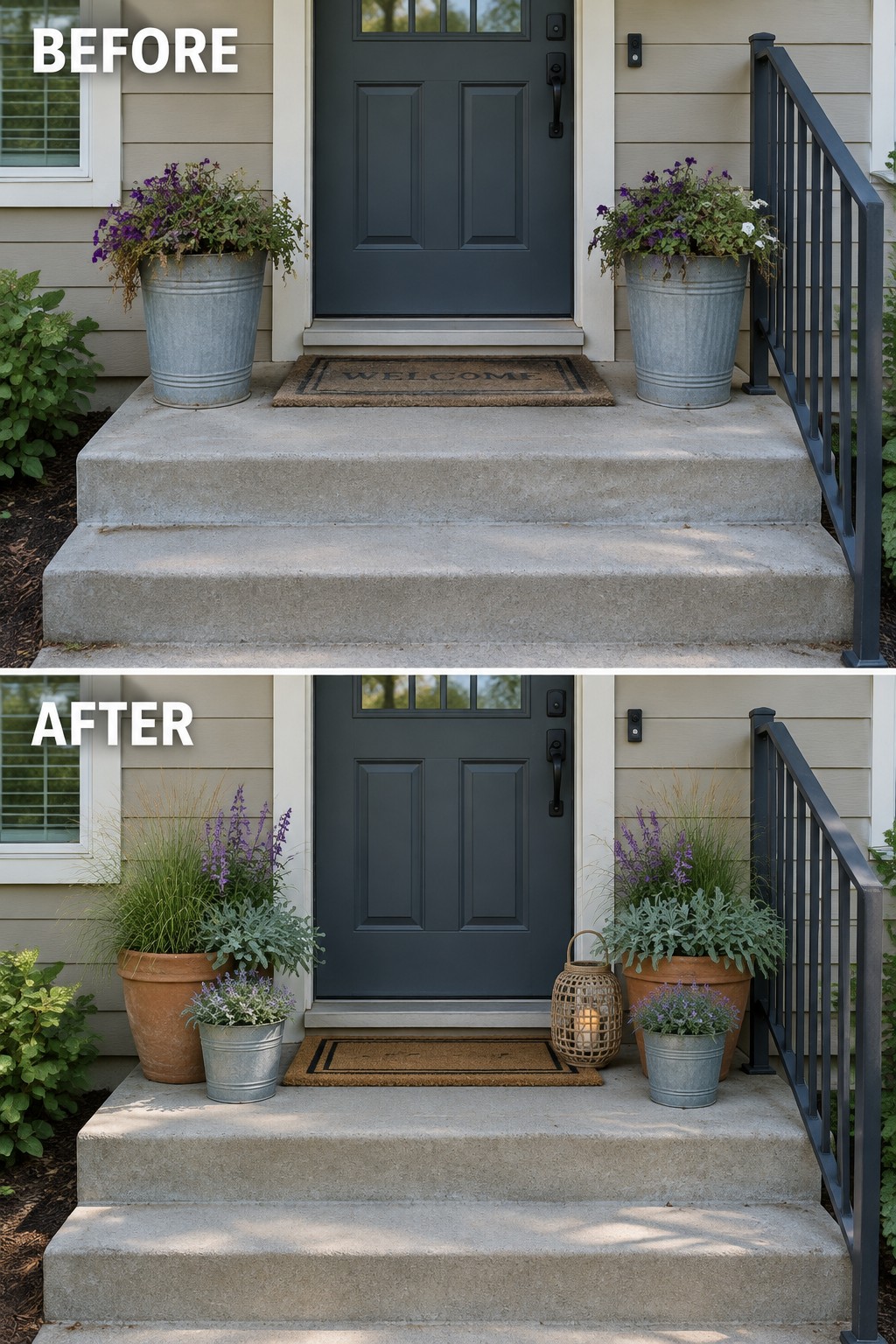
The before photo shows two large metal buckets sitting alone on the steps, which made the entry feel a bit flat. In the after photo, mixing terracotta pots with smaller metal ones and adding plants at different heights gives the entrance more shape and makes it feel more welcoming without adding clutter.
This approach works on most homes with concrete steps or a small porch. Start with one larger pot on each side, then tuck in a smaller one or two for layering. Choose plants that suit your area and skip anything that needs constant fussing.
Terrace A Steep Slope To Add Planting Structure
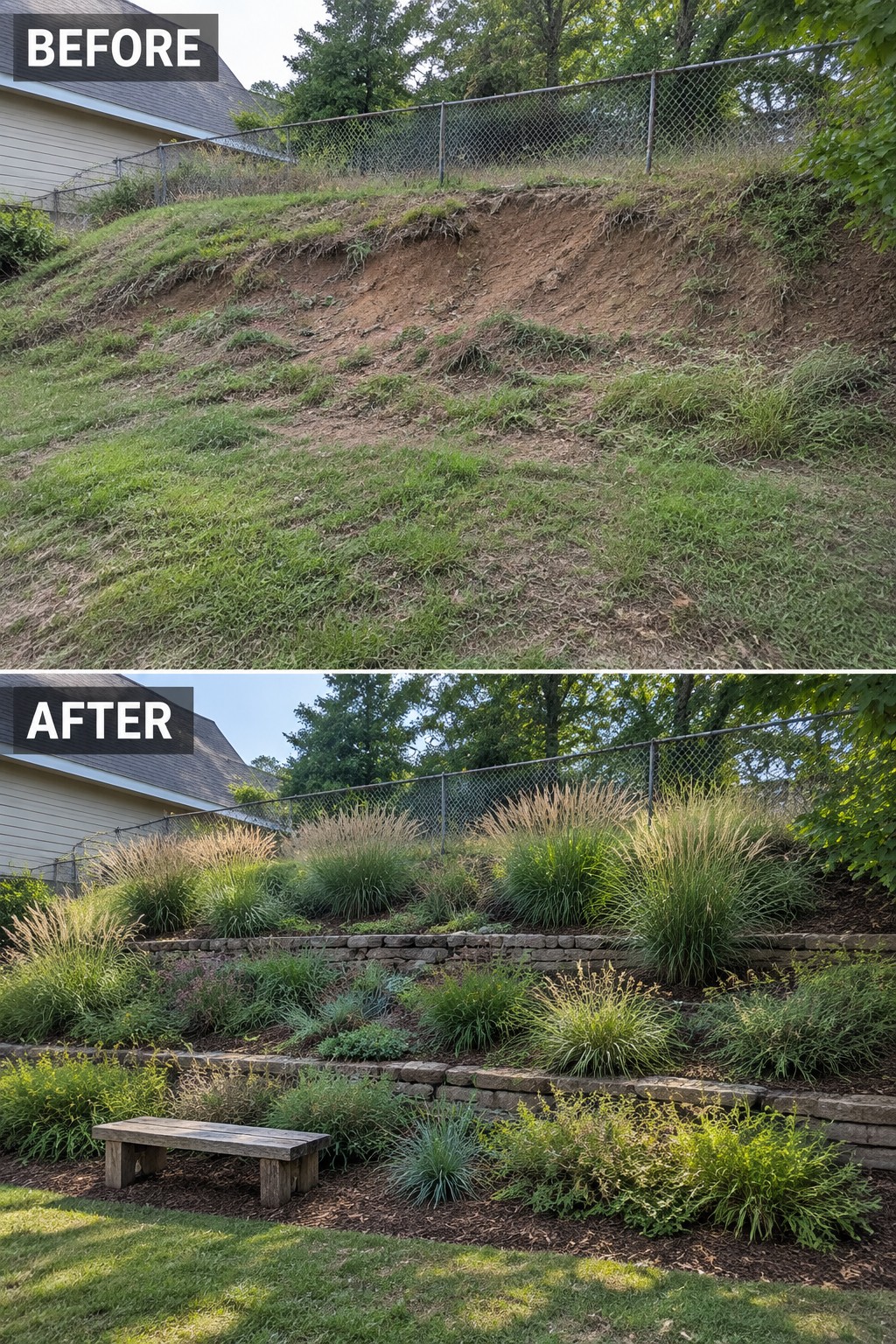
A bare, eroding slope is hard to mow and even harder to plant. Adding low stone retaining walls turns the hill into a series of flat beds that hold soil in place and give plants a better chance to root. The switch from patchy grass and exposed dirt to mulched beds filled with native grasses and perennials shows how much simpler the slope becomes once it has clear edges.
This approach works well on any yard where the ground drops away and regular mowing feels unsafe. Start with the walls to create level planting zones, then fill them with tough native plants that need little water once established. Keep the lowest level open enough for a small bench or path so the new beds stay accessible instead of turning into another neglected slope.
Add Structure To A Bare Backyard
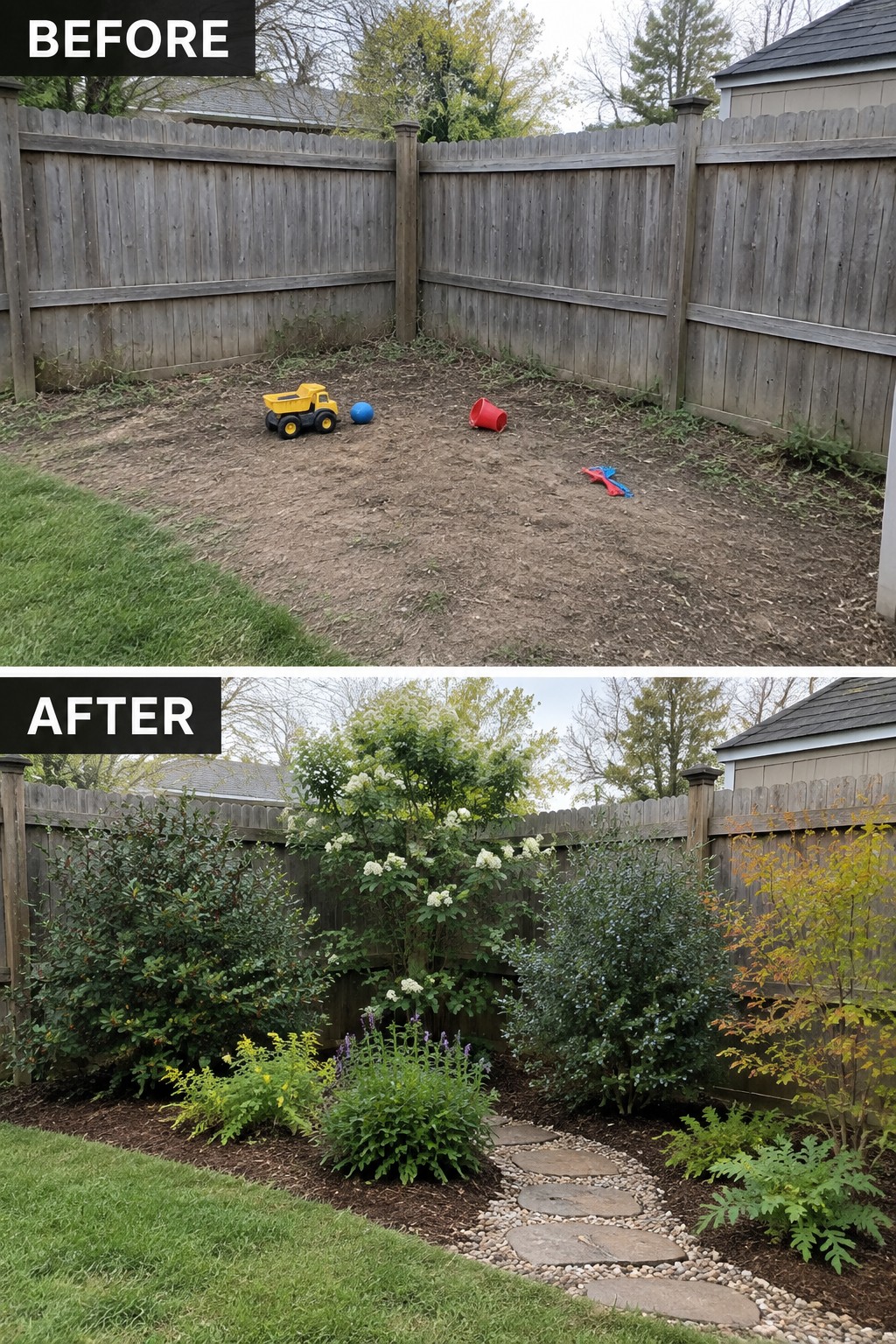
A bare dirt yard often feels unfinished because there is no clear edge or purpose. Adding planted beds along the fence line and a simple path through the middle gives the space shape right away. The plants fill in the blank areas while the path keeps the center open and easy to walk through.
This idea works best in smaller backyards where you want low maintenance over time. Start by clearing the ground, then use native shrubs and perennials suited to your area. Mulch helps keep weeds down, and keeping the beds narrow makes them simpler to care for later.
Create Defined Garden Beds With Native Plants
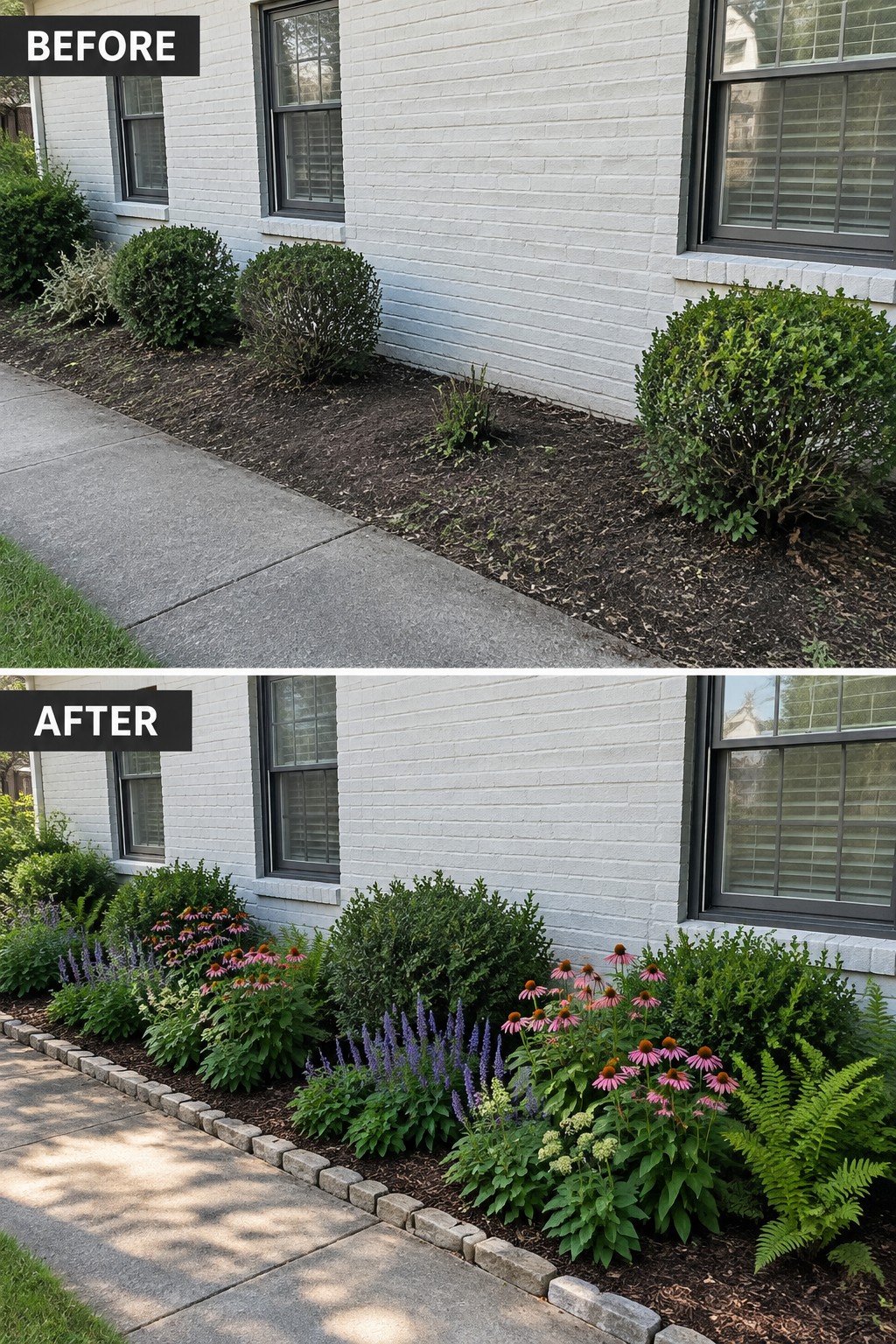
A bare strip of mulch along the house can look unfinished and weedy over time. Adding a simple stone edge and filling the bed with a mix of native flowers and ferns gives the area clear shape while keeping maintenance low. The plants fill in quickly and need little extra water once established.
This idea works best along foundations or walkways where you want a tidy look without constant trimming. Lay the edging first so the bed has a firm boundary, then group plants by height so taller ones sit toward the back. Stick with natives suited to your climate and you will have color through the seasons with far less work.
Define Garden Beds With Gravel And Pots
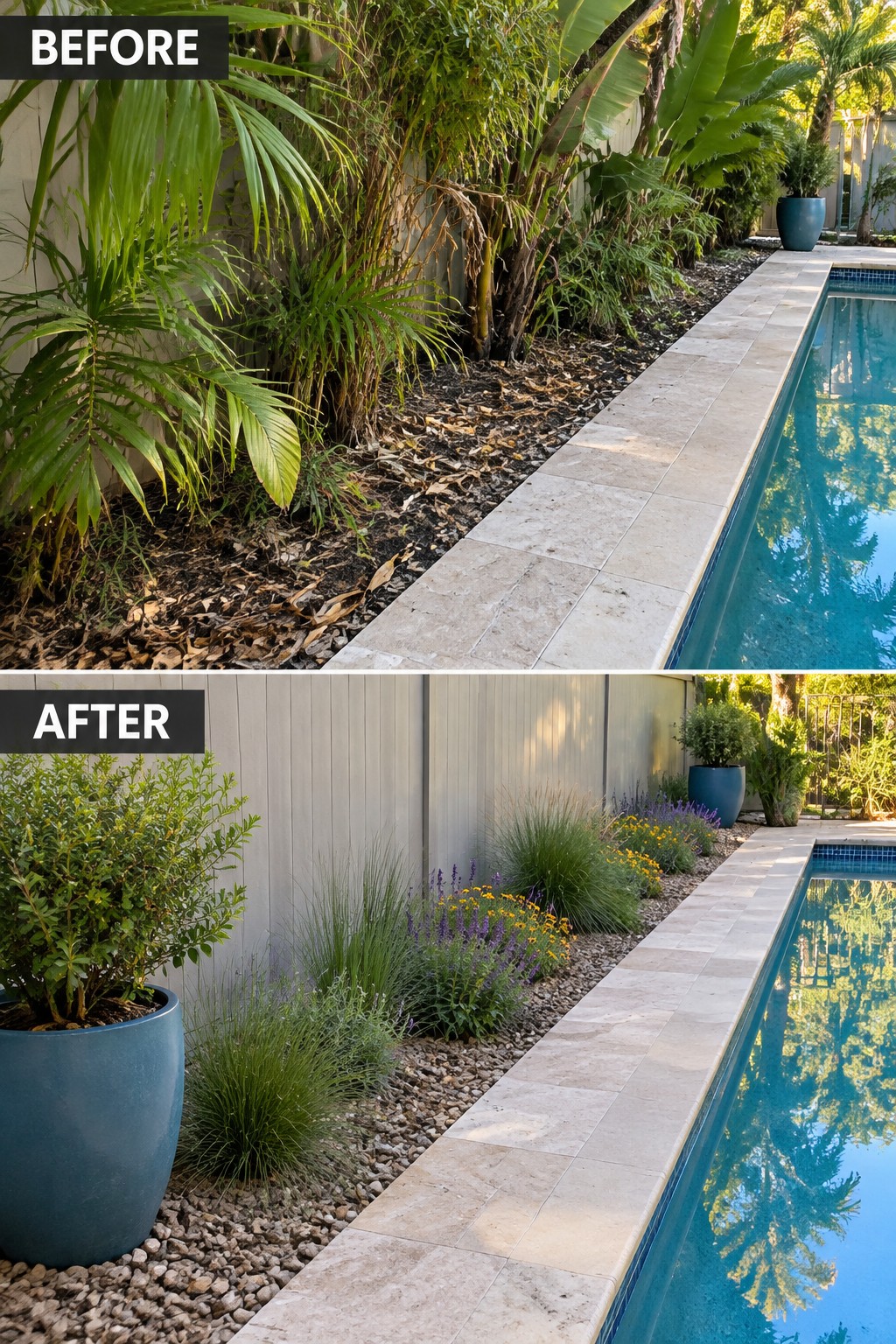
The biggest change here is how the messy strip along the pool went from a tangle of fallen leaves and wild growth to a clean, organized bed. Gravel replaced the loose debris, and a few large containers plus spaced-out grasses and flowers gave the area clear shape without crowding it.
This approach works well for anyone with a narrow side yard or pool edge that feels neglected. Start by removing the debris and old mulch, then lay gravel to keep weeds down and give the space a finished look. Add one or two big pots for height and repeat a few plant types so the bed stays simple to care for over time.
Add A Planted Border To Frame Your Patio
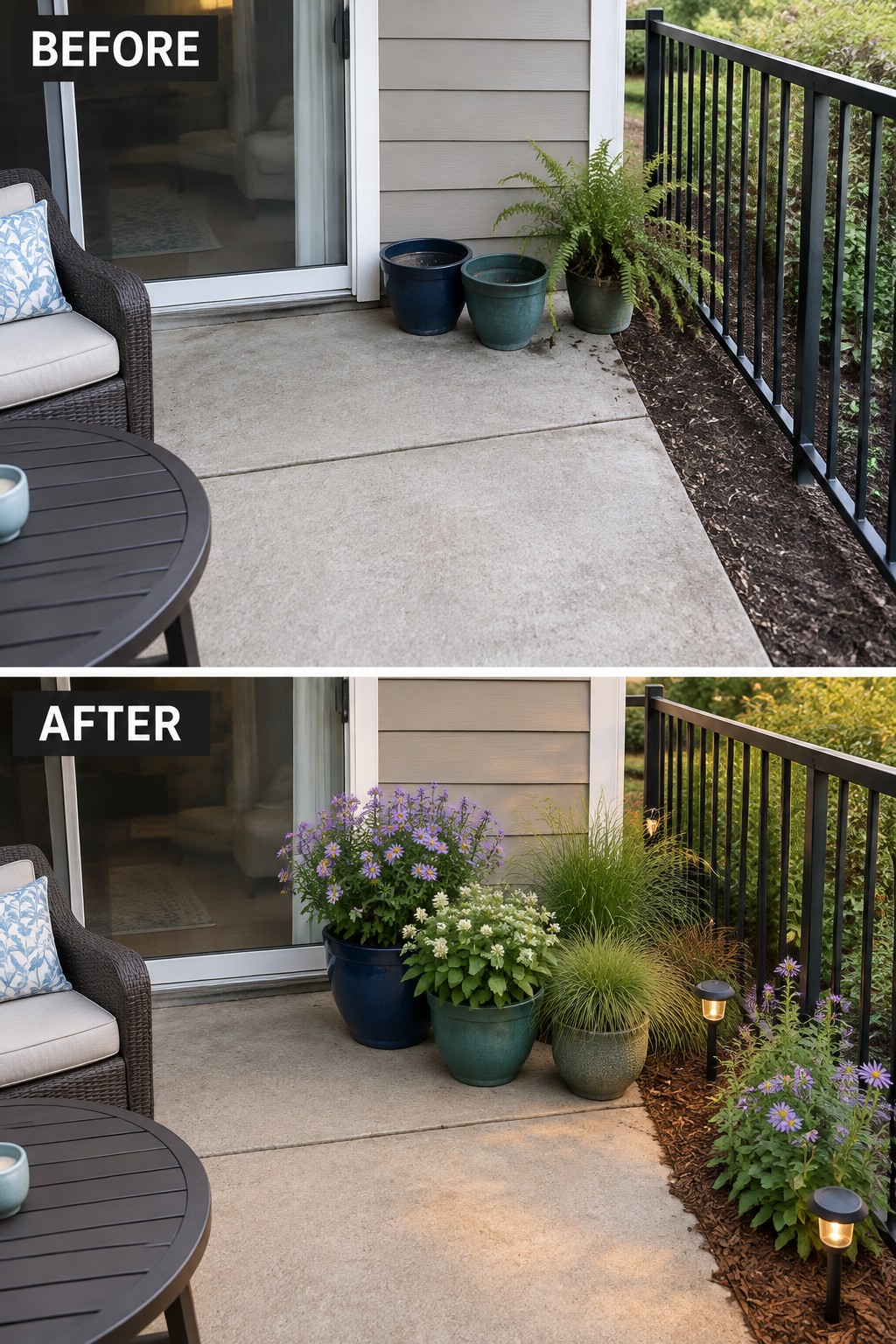
The before photo shows a plain concrete patio with a few pots just sitting along the house wall. In the after, a simple planted strip with flowers, grasses, and a couple of lights turns that same edge into a clear transition between the patio and the yard.
This idea works best on patios that feel exposed or unfinished where they meet the lawn or garden bed. Keep the planting low and layered, use mulch to hold the shape, and add a few lights only where people walk. Native perennials and grasses will stay manageable without much extra care.
Add Edging To Define A Roadside Planting Strip
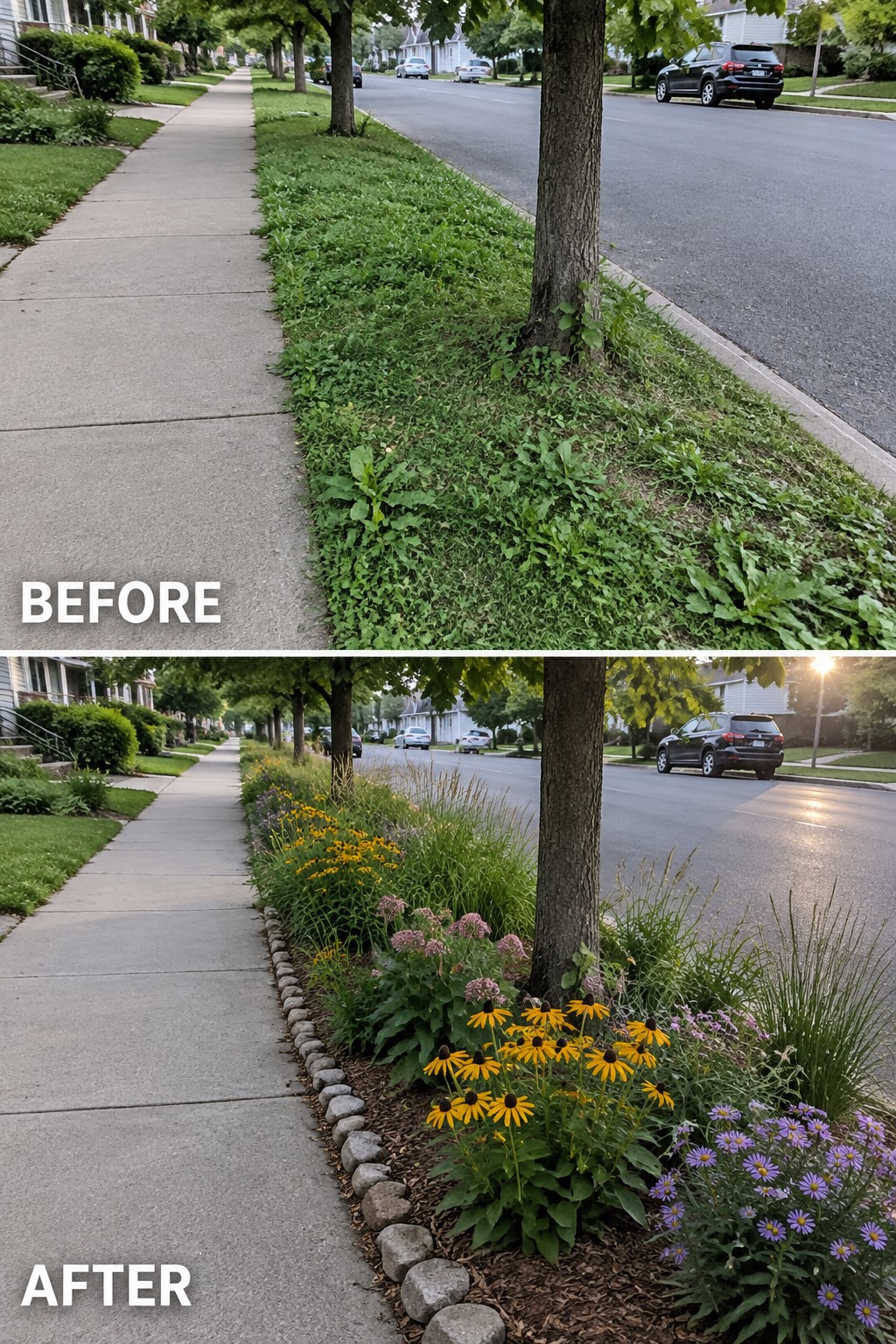
The main change here is the addition of a clear stone border and mulch that turns a messy strip of weeds into a contained planting bed. Once the edge is set, the plants stay where they belong and the whole area looks intentional instead of neglected.
This idea suits homes with a narrow verge between the sidewalk and street. Lay the edging first so the shape stays neat over time, then choose native perennials that need little watering once established. Keep the bed narrow enough that it does not interfere with foot traffic or snow removal.
Add Structure To An Overgrown Retaining Wall Bed

The main change here is clearing out the dried, weedy growth along the stone wall and filling the bed with native grasses and flowering plants instead. This gives the area a settled look without needing constant upkeep, and the plants stay green and blooming through more of the season.
This idea works well on sloped spots or along retaining walls where soil tends to wash out. Start by removing the old growth completely, then choose a few native varieties that match your light and soil. Keep the planting simple and repeat a couple of plants so the bed reads as one connected area rather than a scattered mix.
Turn A Soggy Spot Into A Garden Bed
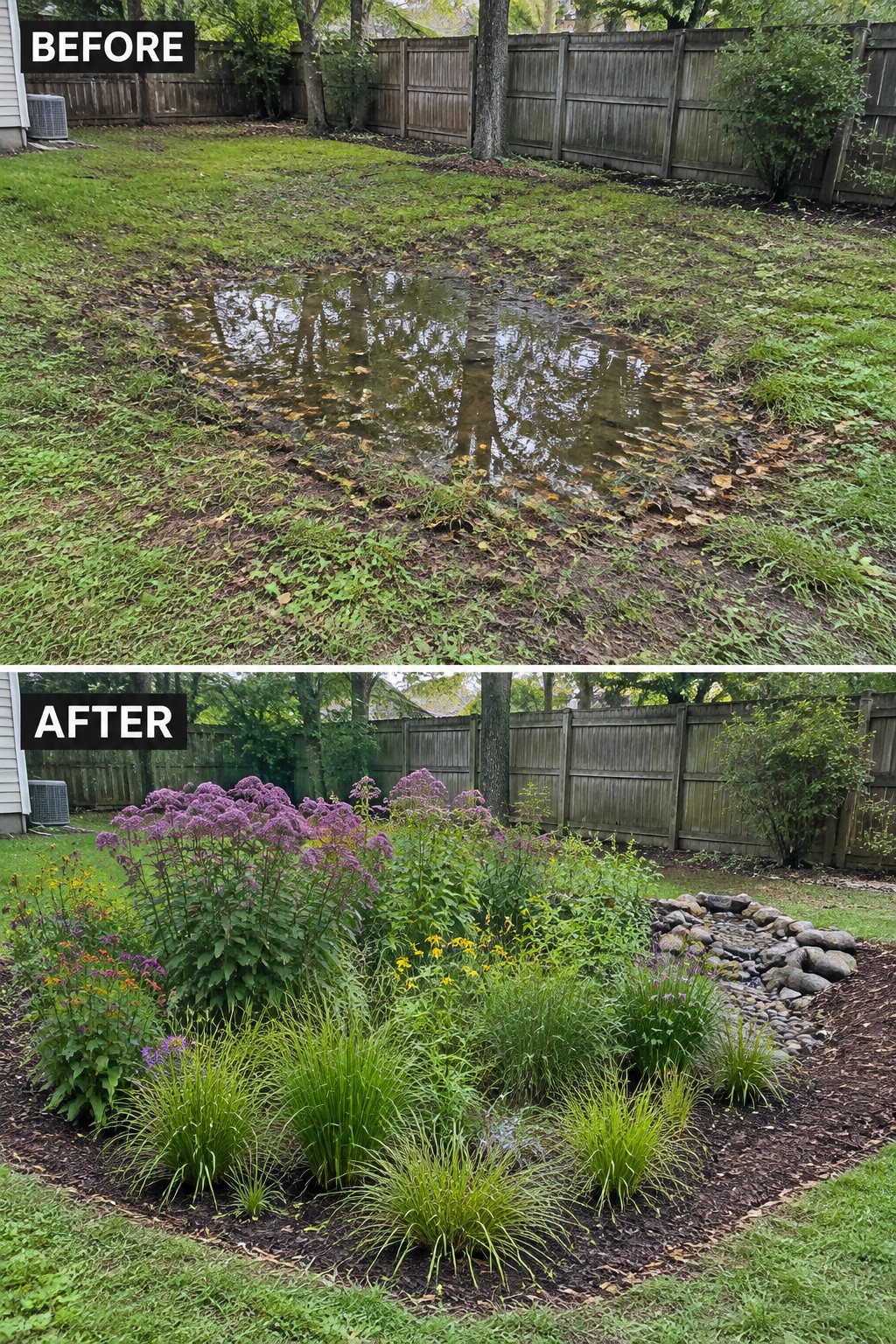
A low area that holds water after rain often stays bare and difficult to mow. Adding a defined bed with improved soil, mulch, and a rock feature for drainage turns the problem spot into a place where plants can actually grow.
Native perennials and grasses that tolerate wet conditions fill the space without constant upkeep. This idea works well in older yards where drainage is uneven, and it keeps the planting contained so the rest of the lawn stays easier to maintain.
Add Defined Garden Beds Along A Fence
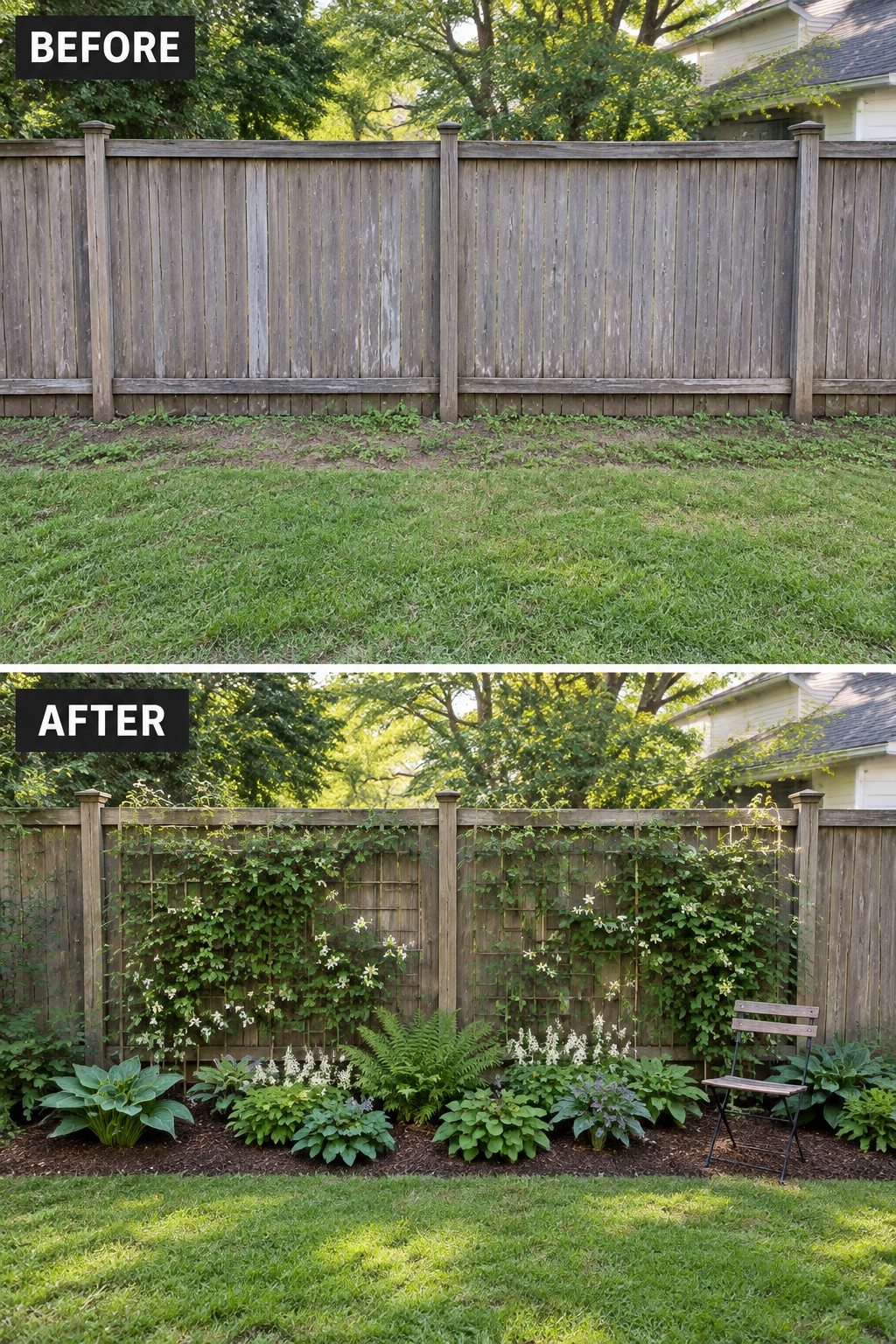
A plain stretch of grass meeting a tall fence often feels unfinished. Adding a simple mulched bed with a mix of low plants and a few vertical supports gives the area clear shape and makes the fence feel like part of the garden instead of just a barrier.
This approach works especially well in backyards where you want more planting without constant upkeep. Start by marking out a bed width that leaves plenty of lawn space, lay down mulch to keep weeds down, and choose a few climbing plants for the trellis sections. The rest can stay simple with shade-tolerant perennials that fill in over time.
Use Native Plants To Cover A Rocky Slope
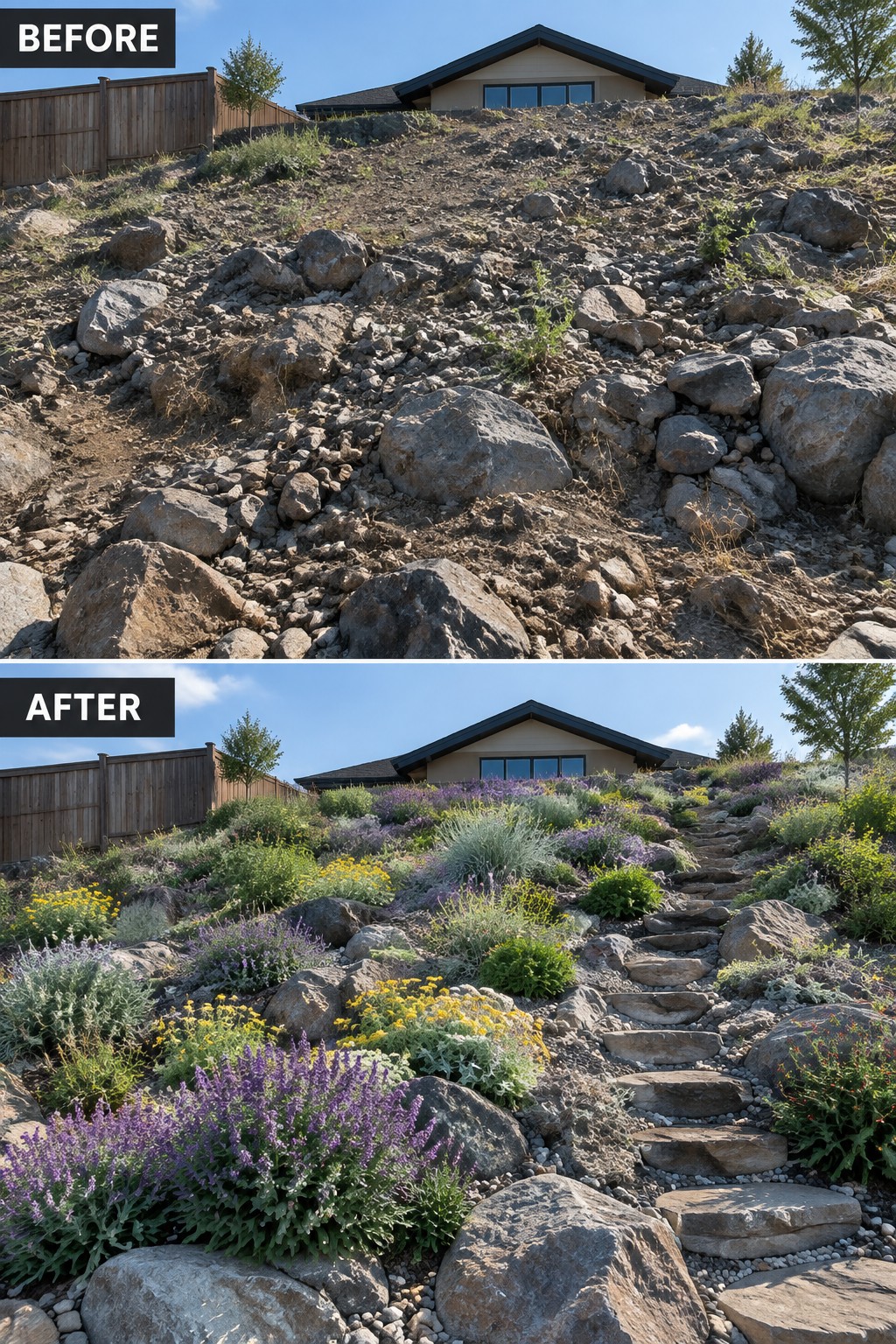
A bare rocky hillside like the one in the before photo usually means constant erosion and failed grass attempts. Planting native species that already handle dry, rocky ground changes the whole slope into something that stays put on its own. The addition of a stone staircase makes the area usable instead of just a steep patch of trouble.
This idea suits homes with slopes where a regular lawn never worked well. Choose plants suited to your region, plant them in loose groups, and let the natives fill in over a season or two. The path keeps foot traffic contained so the rest of the planting can do its job without extra fuss.
Add Planting Beds And A Path To Structure A Plain Yard
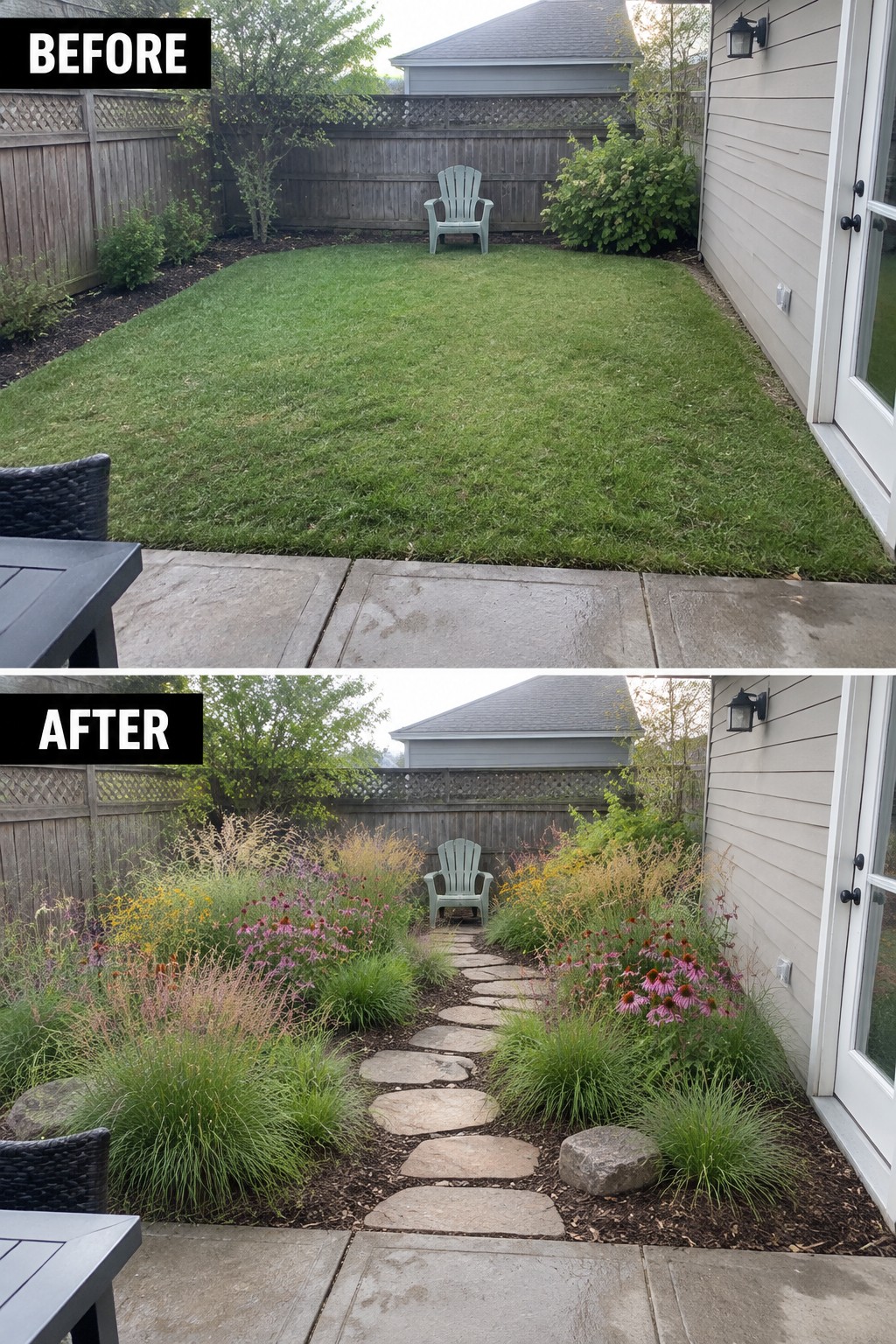
A simple lawn can feel flat and unfinished when it has no clear shape or purpose. Replacing sections of grass with defined beds of native plants and adding a stepping stone path gives the space direction and makes it feel more intentional. The change turns an open area into something you can walk through and enjoy without constant mowing or upkeep.
This idea works best in smaller backyards where a full redesign would feel like too much. Mark out bed shapes along the fence or around a seating spot first, then fill them with native grasses and flowers that handle your local conditions. Keep the path wide enough for easy movement and let the plants fill in over time.
Add Structure To Foundation Beds Using Native Plants
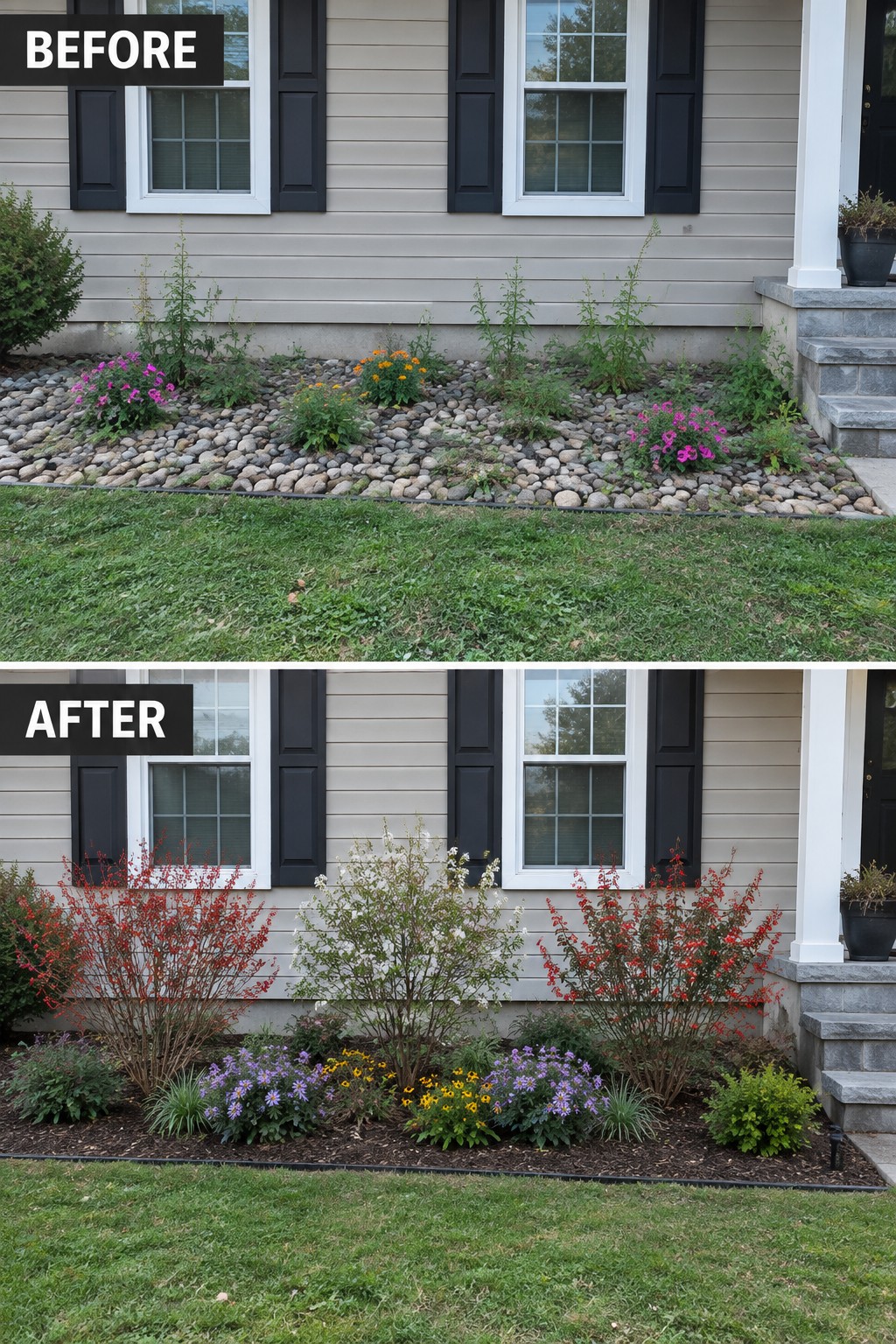
The front of this house went from a scattered mix of rocks and random weeds to clean, defined beds filled with layered native shrubs and perennials. Clearing the old ground cover and adding mulch made the whole area look intentional instead of neglected.
This approach works well along any house foundation where you want low maintenance. Start by removing weeds and old rocks, then plant a mix of taller shrubs in the back, mid-height flowers in the middle, and low ground covers in front. Native plants cut down on watering and weeding once they settle in.
Frame A Fire Pit With Native Plant Borders
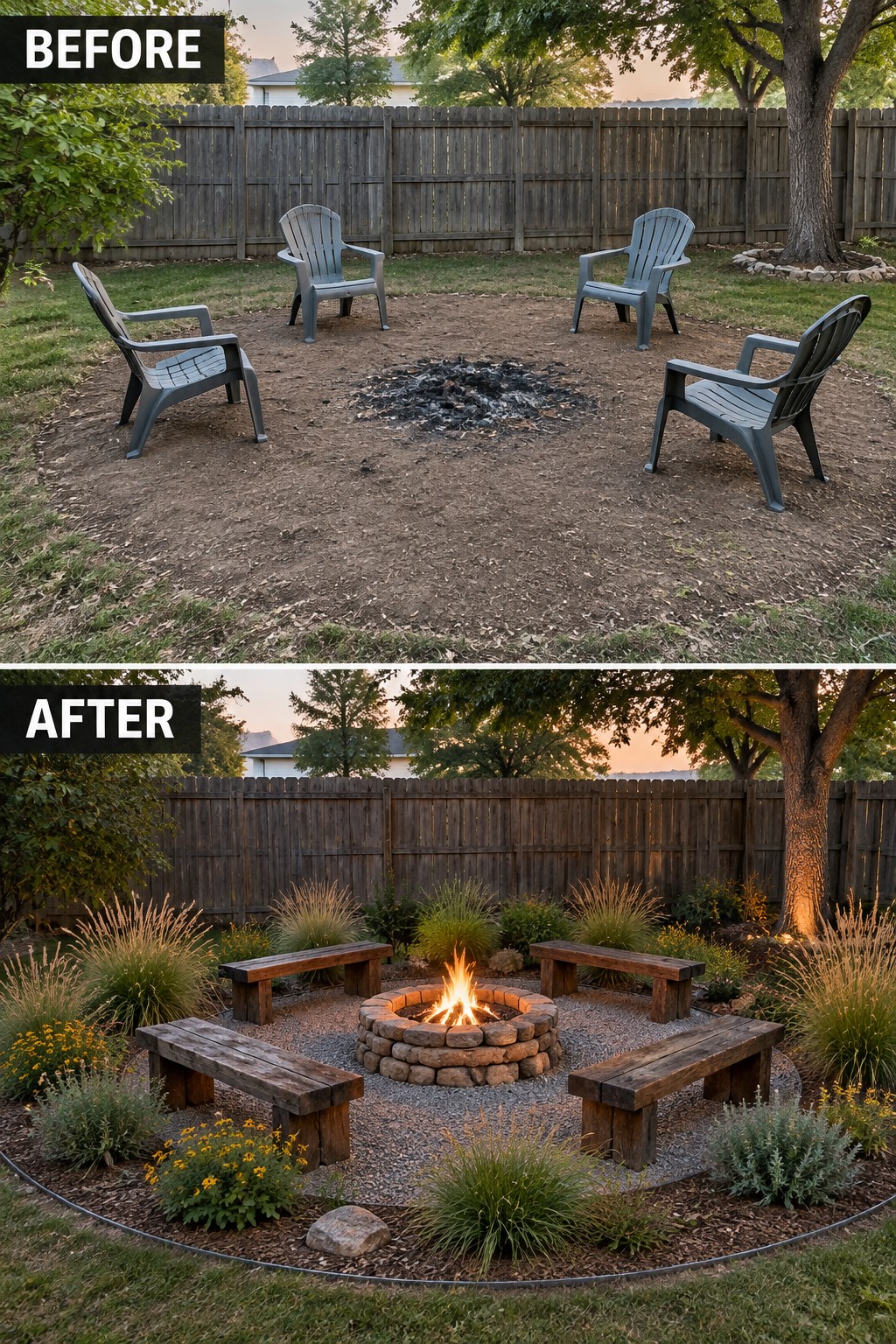
A bare patch of dirt with a few plastic chairs feels unfinished and hard to keep tidy. Adding a gravel circle, a stone fire pit ring, and a ring of native grasses and flowers gives the space clear edges and turns it into a spot people actually want to use. The plants soften the hardscape while keeping maintenance low once they are established.
This approach works best in backyards where the fire pit is already a focal point but the surrounding area lacks definition. Start with the hardscaping to set the shape, then fill the beds with native perennials and grasses that match your region. Leave enough open gravel for seating and foot traffic so the area stays practical rather than overcrowded.
Define The Walkway With Native Beds
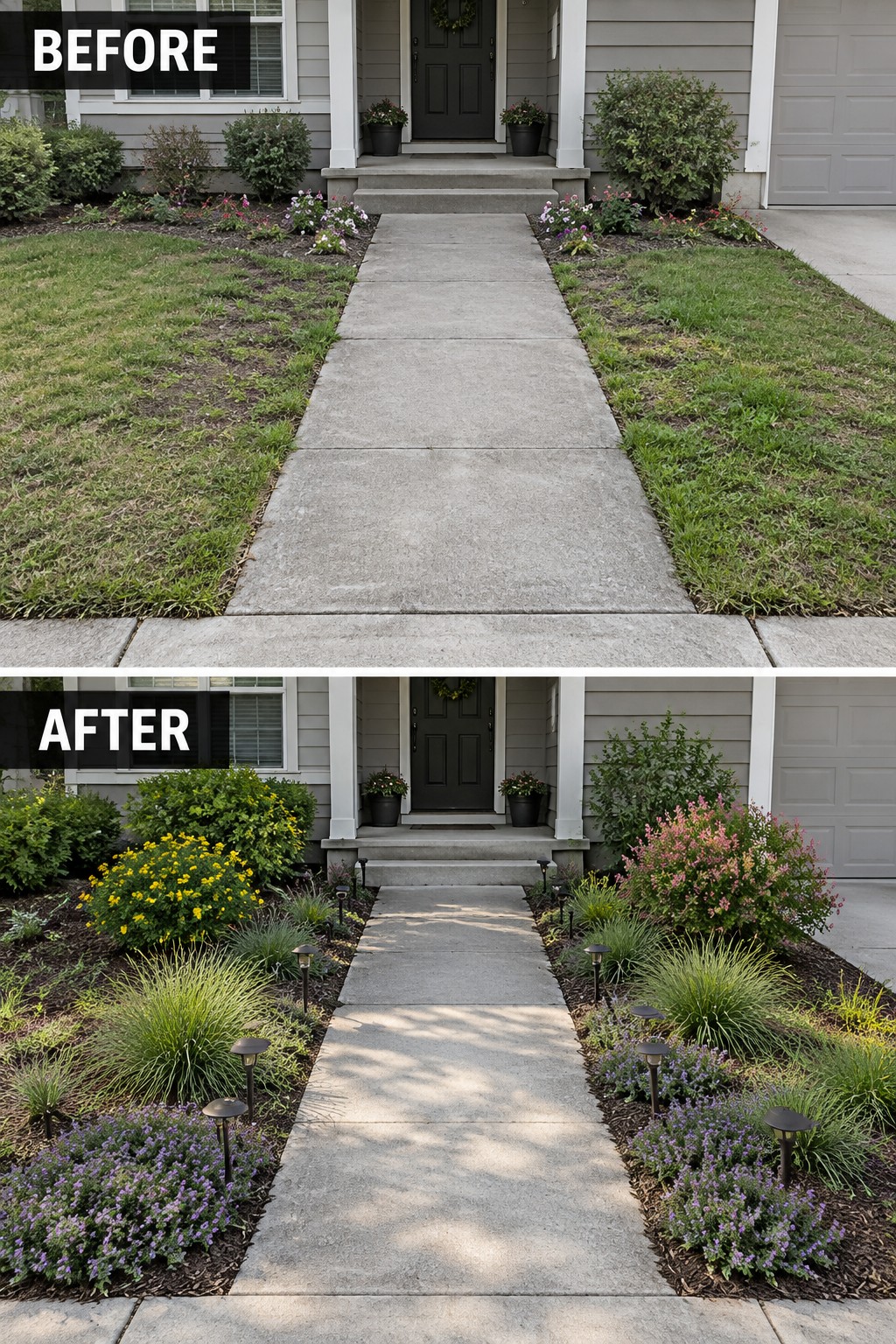
A straight concrete path often looks unfinished when the grass simply runs up to the edge. Adding mulched beds on both sides with native grasses, flowers, and a few low lights gives the walkway clear borders and turns an ordinary front approach into something that feels intentional.
This works best in front yards where you want low upkeep without losing color or texture. Keep the beds a consistent width, choose plants that suit your climate, and let the mulch handle most of the weed control so the beds stay neat with minimal effort.
Add A Defined Path To An Overgrown Side Yard
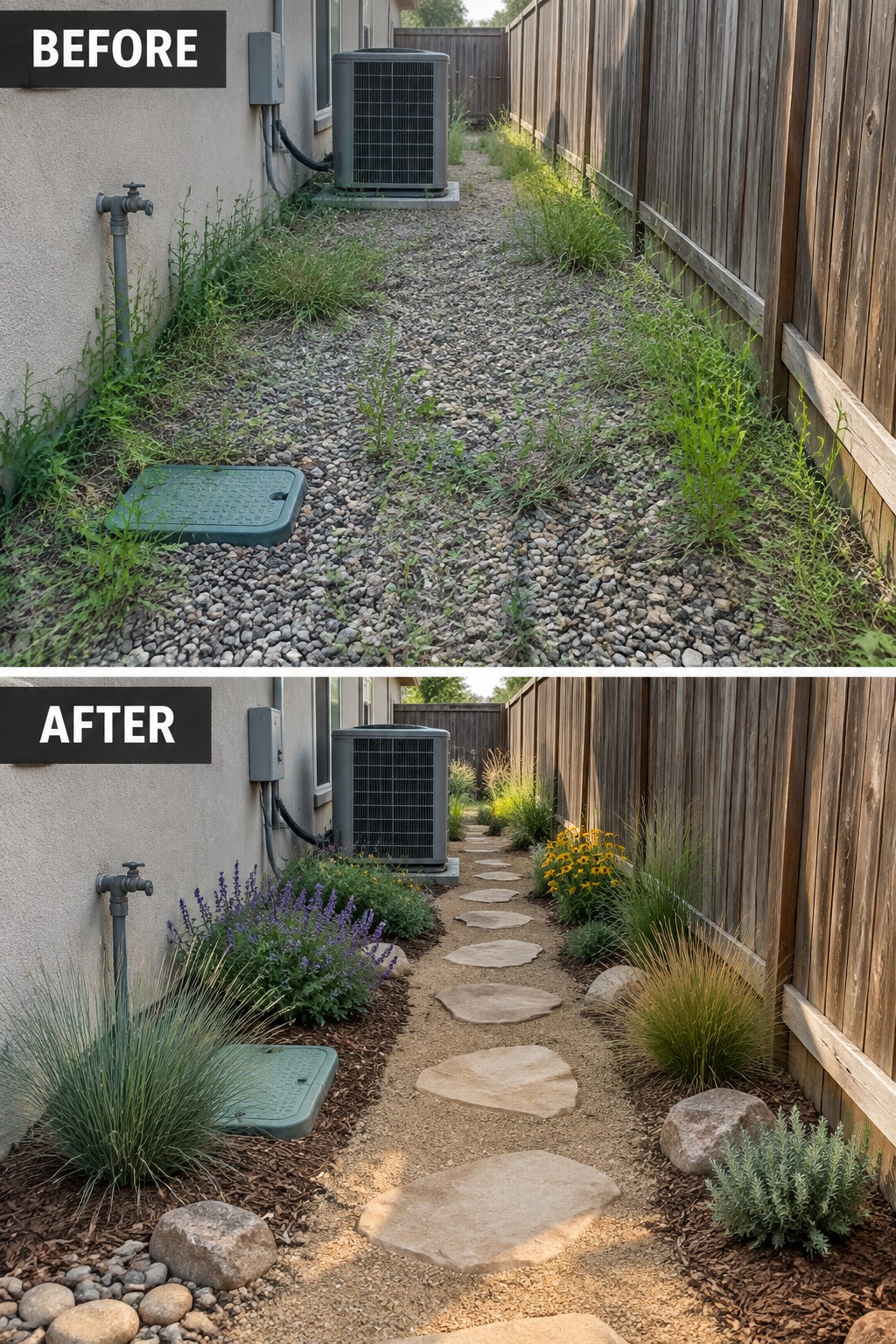
A narrow side yard often ends up as a forgotten strip of gravel and weeds because it feels too tight for real use. Laying a simple stepping stone path through the middle and adding mulched borders on both sides instantly gives the space structure. The plants stay low and mostly native, so the beds look intentional without needing constant trimming or watering.
This approach works especially well on homes with long, awkward side yards between the house and a fence. Clear the overgrowth first, then set the stones so the path feels natural underfoot and still leaves room to walk comfortably. Native grasses and flowering perennials fill the edges and soften the look while keeping maintenance low.
Add Defined Garden Beds To A Plain Lawn
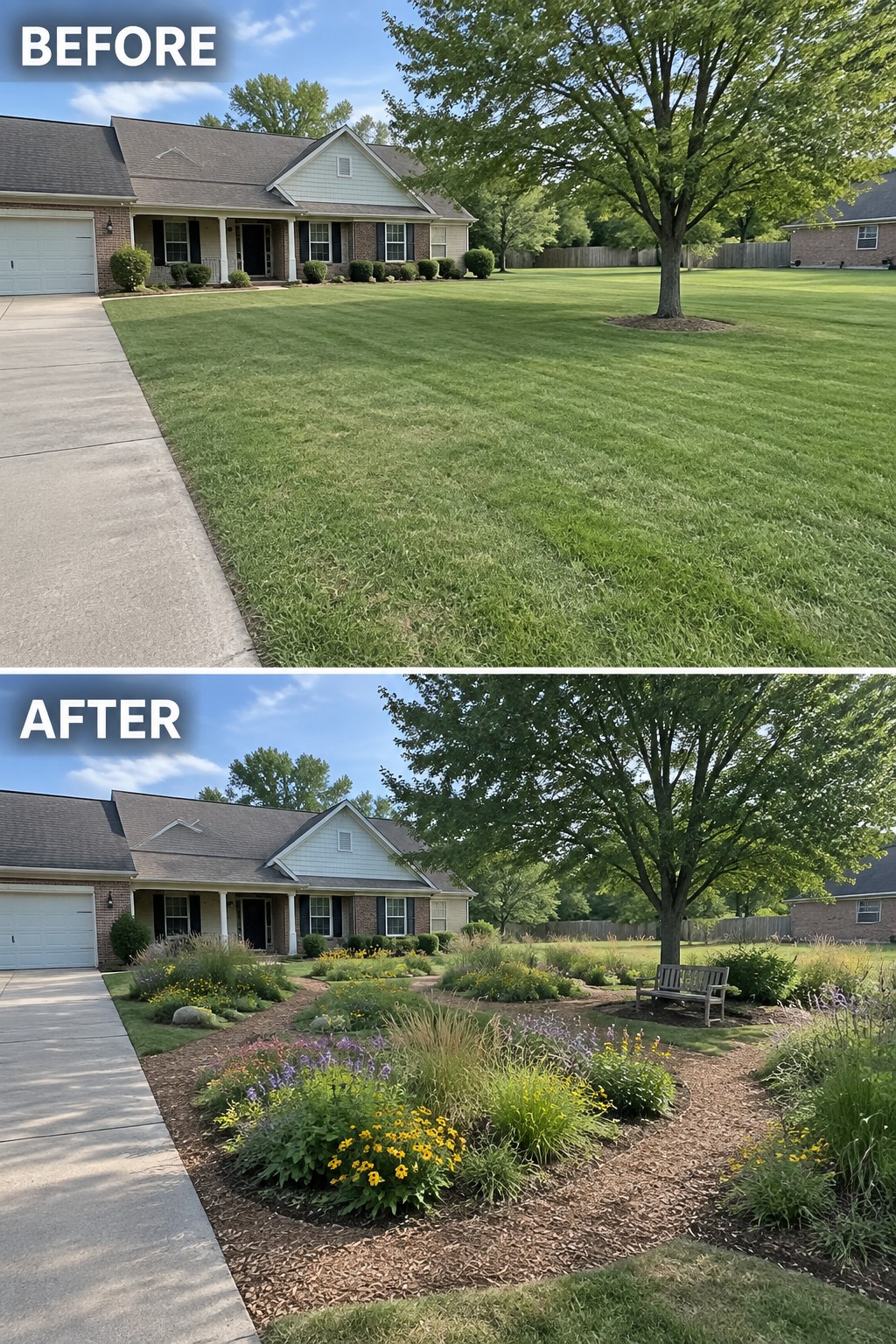
A large open lawn can feel unfinished when there is nothing to break up the grass. Adding garden beds gives the yard shape and purpose without needing a full redesign. Here the plain stretch of grass gained curved beds edged with mulch, filled with a mix of flowering plants and grasses, and a simple bench placed near the tree.
This idea suits homes with bigger yards that need more than just mowing. Mark out beds first around existing trees or along the house, then choose native plants that handle your climate with less watering and upkeep. Keep the beds a manageable size so the lawn still feels open but no longer empty.
Frequently Asked Questions
Q: How often do I need to water new native plants?
A: Give them a deep soak once a week during the first growing season. This helps roots reach down deep. Once established they take care of themselves in most cases.
Q: What if my soil is not great for growing much of anything?
A: Native plants are already adapted to local conditions including poor soil. You can add a bit of compost at planting time to give them a boost. No need for fancy amendments after that.
Q: Will I have to fight off deer or rabbits eating everything?
A: Some natives get nibbled but many have natural defenses like tough leaves. Pick plants known to be less tasty if animals are a big issue in your yard. A simple fence section can protect young starts.
Q: Do I mulch around them?
A: A light layer of mulch helps hold moisture at first. It also cuts down on weeds while the plants fill in.
