


Over the years I have seen how focusing on the shape of the lawn and the placement of beds can shift an outdoor area from feeling overlooked to something that draws you outside more often.
Paths and simple plant structure add layers that make the space work better day to day instead of just looking tended on occasion.
I start with edging.
Adding privacy elements comes next for me since it turns the yard into a place where I spend real time rather than passing through.
These changes often happen gradually but the difference shows in how the area holds together without constant upkeep.
Add Structure To An Overgrown Front Yard
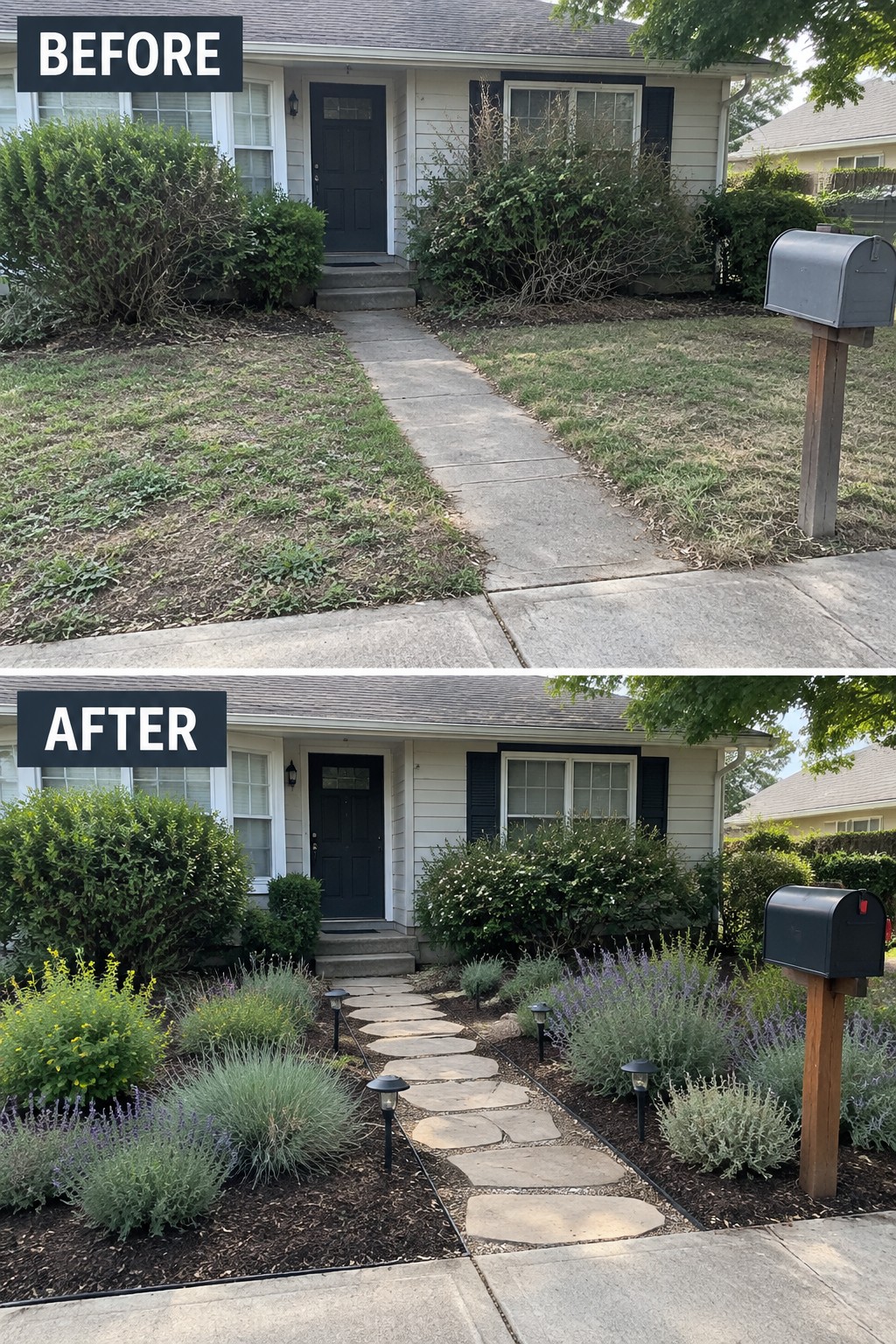
One of the simplest ways to improve a neglected front yard is to give the planting areas clear edges and a fresh layer of mulch. The before image shows bushes that had taken over the space with patchy grass and no real shape, while the after shows neat beds that keep everything in place and make the whole yard feel more intentional.
This idea works best on smaller yards where you want a tidy result without adding patios or big features. Start by removing the worst of the overgrowth, then mark out beds along the path and house, and finish with mulch to hold it all together. Choose a mix of shrubs and lower plants so the beds stay full through the seasons without constant work.
Add Defined Garden Beds To Shape An Overgrown Yard
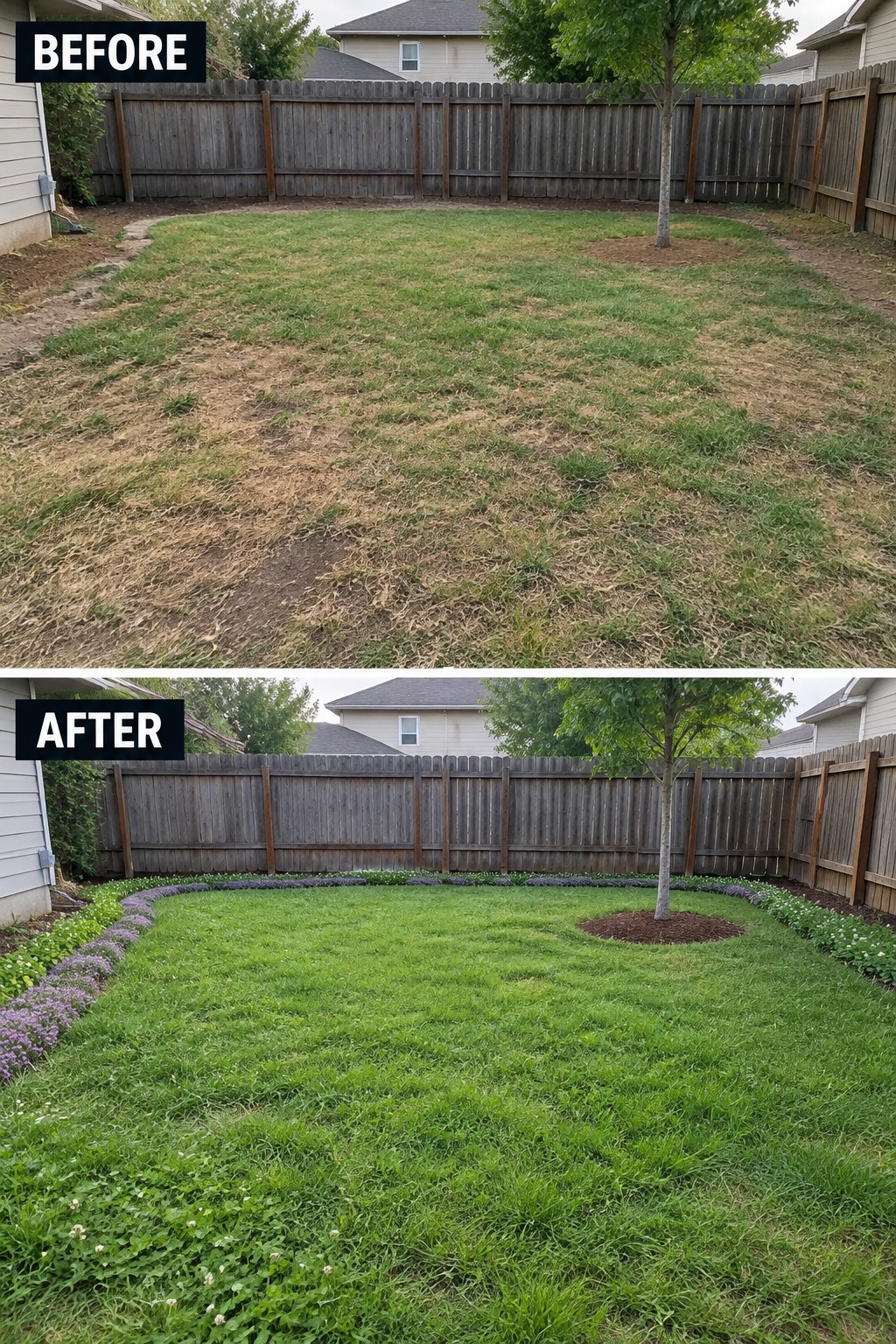
A patchy lawn often looks worse because it has no clear edges. Adding a simple curved bed along the fence and a mulched ring around the tree instantly gives the space structure and makes the grass look intentional instead of leftover.
This idea works best in small to medium yards where the lawn is the main feature. Mow and clear the weeds first, then mark gentle curves with a hose before you dig. Keep the beds narrow so the open grass still feels like the center of the yard rather than an afterthought.
Turn An Overgrown Side Path Into A Defined Walkway
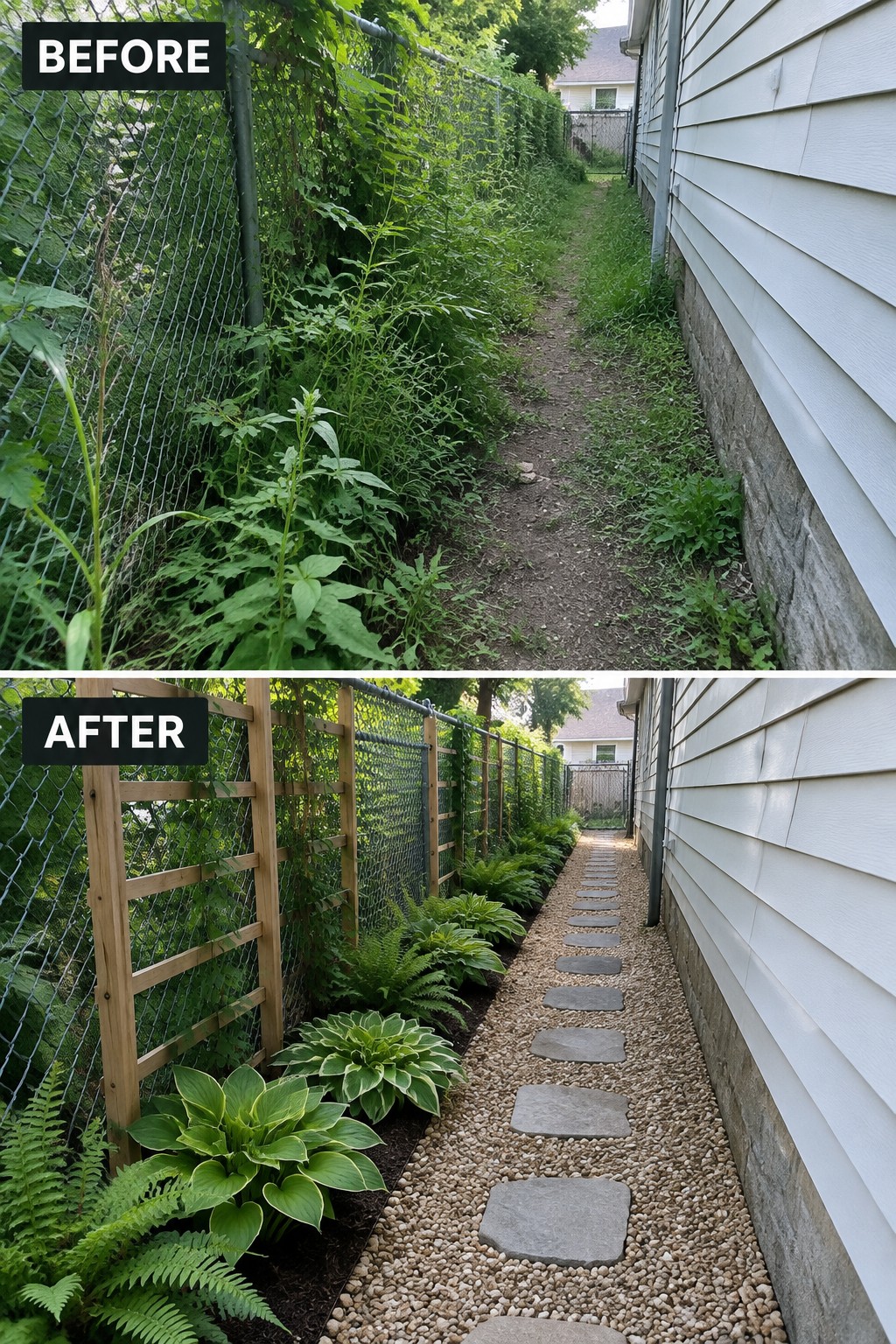
Clearing out thick weeds and adding gravel with stepping stones gives a narrow side yard real purpose. The before photo shows a messy dirt path swallowed by uncontrolled growth along the fence, while the after version uses a clean gravel base and simple plant borders to keep the space open and easy to walk through.
This approach works best on tight side lots where you want something low-maintenance that still feels intentional. Focus first on removing the heaviest overgrowth, then lay gravel to cover bare dirt and add stones for a clear walking line. It suits older homes with chain-link fences or narrow gaps between the house and property line.
Add Paver Edging To Frame A Walkway
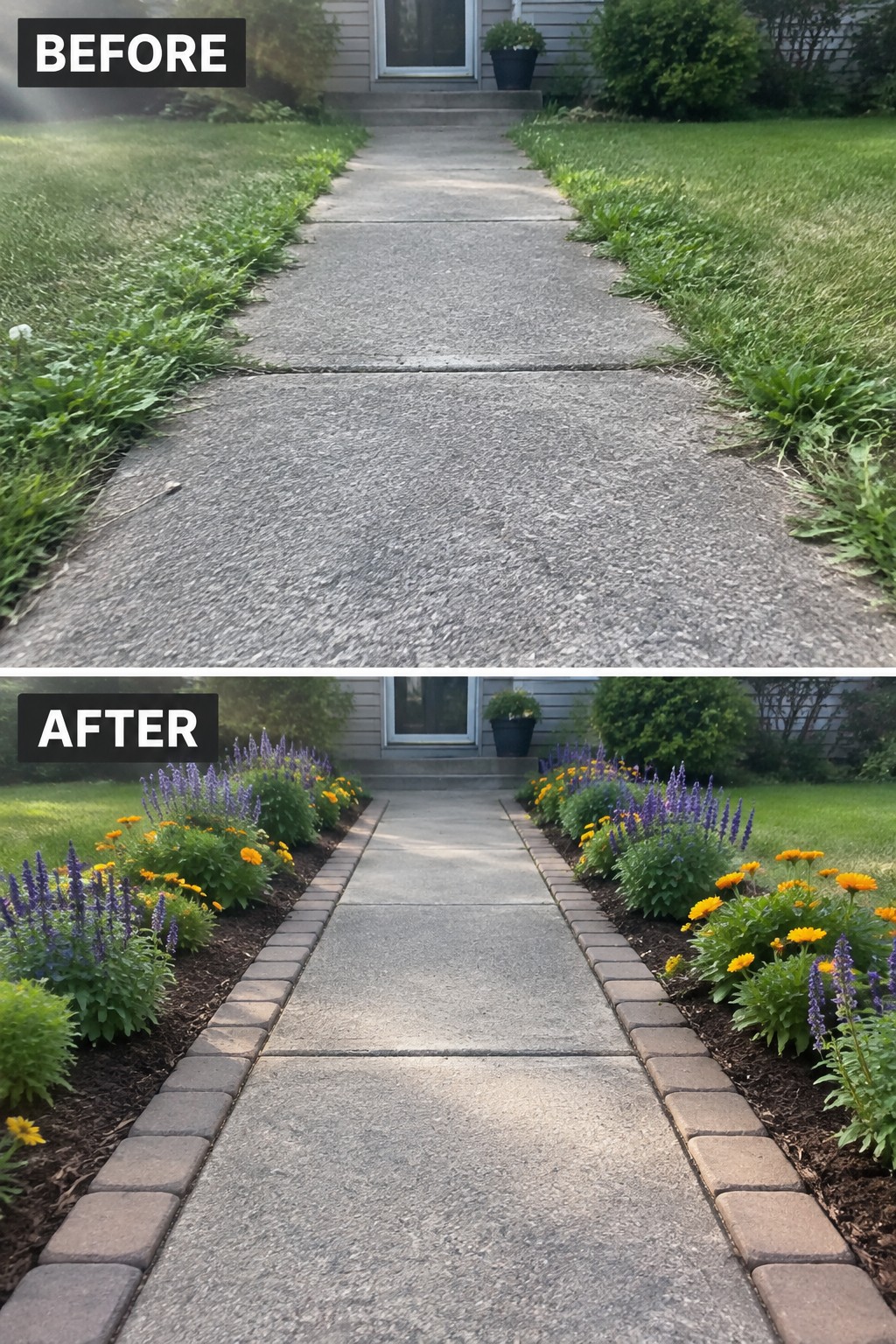
The before photo shows a plain concrete path with grass growing right up to the edges. The after adds a simple paver border on both sides and turns the strip into planted beds filled with mulch. That one change gives the whole front a much cleaner, more finished look without any major construction.
This idea works best on a straight front walkway where you want some planting but still need room to walk. Start by marking a straight line a foot or so from the concrete, set the pavers level with the lawn, and keep the beds narrow so they stay easy to maintain. It suits smaller yards where you need structure more than big garden projects.
Add Structure To An Overgrown Backyard

Clearing the weeds and adding raised beds gives an overgrown yard a clear purpose. The wooden frames keep the planting contained, while mulch covers the bare ground and makes the whole space feel finished instead of neglected.
This idea works best in small backyards where you want both growing space and room to sit. Build the beds first along the fence line, keep the plants simple and useful, and add mulch so the area stays tidy without constant weeding.
Define Garden Beds With Mulch And Edging
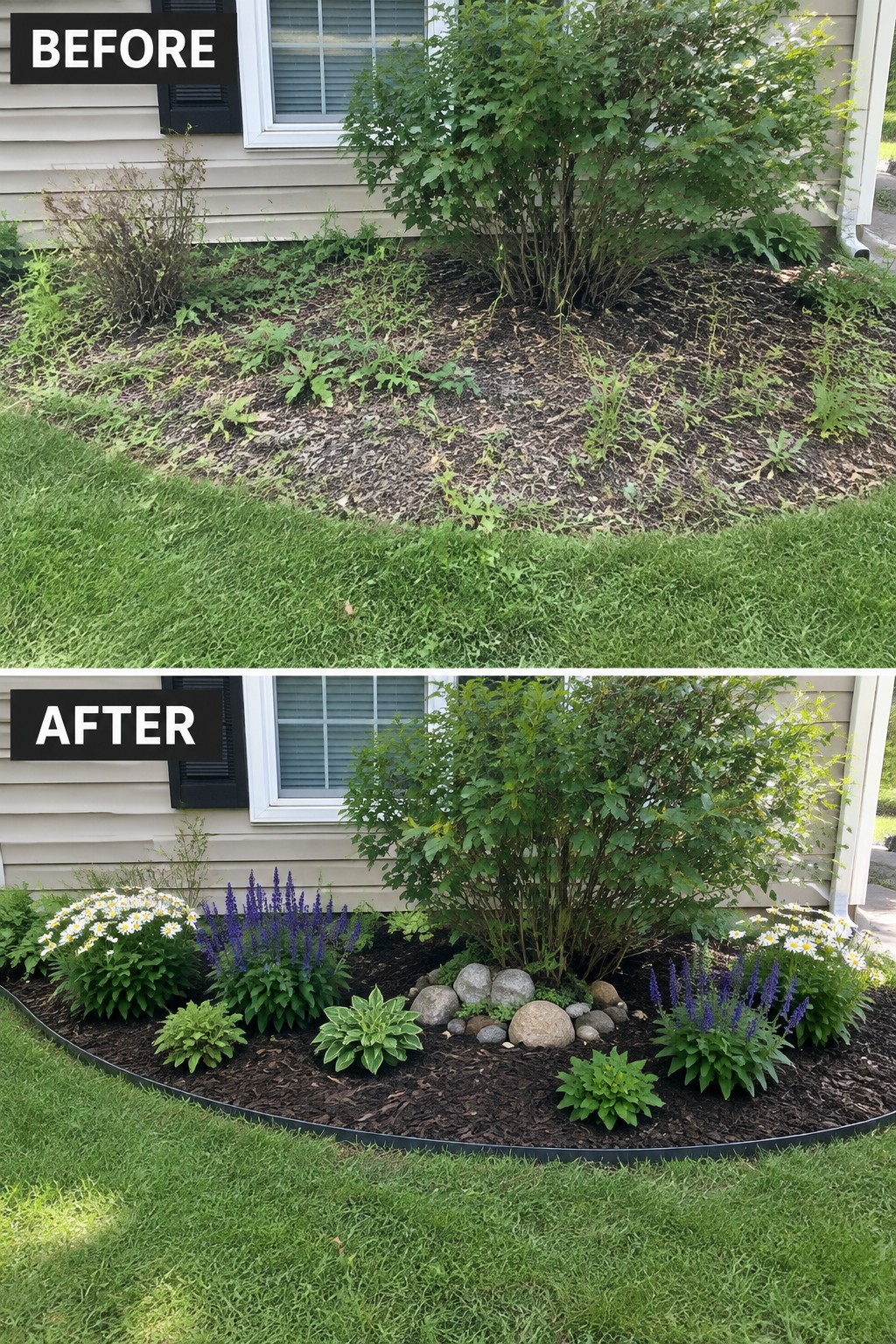
One simple way to fix a messy strip along the house is to pull the weeds first, then add a clear edge and fresh mulch. The before photo shows scattered growth and bare soil, while the after uses dark mulch, a low border, and grouped plants to give the whole area shape and order.
This approach works best on narrow beds where the goal is a tidy look without spending much. Start by removing what does not belong, lay down edging, spread mulch thickly, and repeat a few easy plants like hostas or salvia so the bed feels planned rather than random.
Add Gravel And Defined Beds To Structure A Front Yard

The sloping lawn looked patchy and hard to keep neat, especially along the edges near the walk. Switching to gravel with a few planted circles edged in rocks gave the whole space a clear layout and cut down on mowing. The paver path also made the route to the door feel more intentional.
This approach works well on small front yards that slope or get uneven grass. Lay down fabric first, spread the gravel, then add just a handful of planted areas with matching borders so nothing feels scattered. It suits homes where you want lower upkeep without losing all the greenery.
Terrace A Sloped Yard With Retaining Walls

A steep grassy slope often ends up as wasted space because it is hard to plant and mow. Low stone retaining walls fix that by turning the hill into a set of flat beds that hold soil and create room for shrubs and flowers. The change from an open, uneven lawn to stepped planting areas makes the whole yard feel more intentional and easier to care for.
This idea works best on yards with a moderate slope where full grading is not practical. Keep the walls low and staggered so each bed is wide enough to walk around and water. Use mulch between plants to cut down on weeds and help the new beds settle in quickly.
Use Pots And Lattice To Frame A Backyard Edge

A plain fence and wide concrete edge can leave a backyard feeling unfinished. Adding a simple lattice panel across the fence and placing a row of containers along the base creates a planted border that softens the hard lines and gives the space a clearer structure.
This idea suits small yards or homes where digging permanent beds is not practical. Choose pots in a limited color range, repeat a few plant shapes for cohesion, and leave room to walk behind them for watering and upkeep.
Define The Base Of A Tree With Mulch And Plants
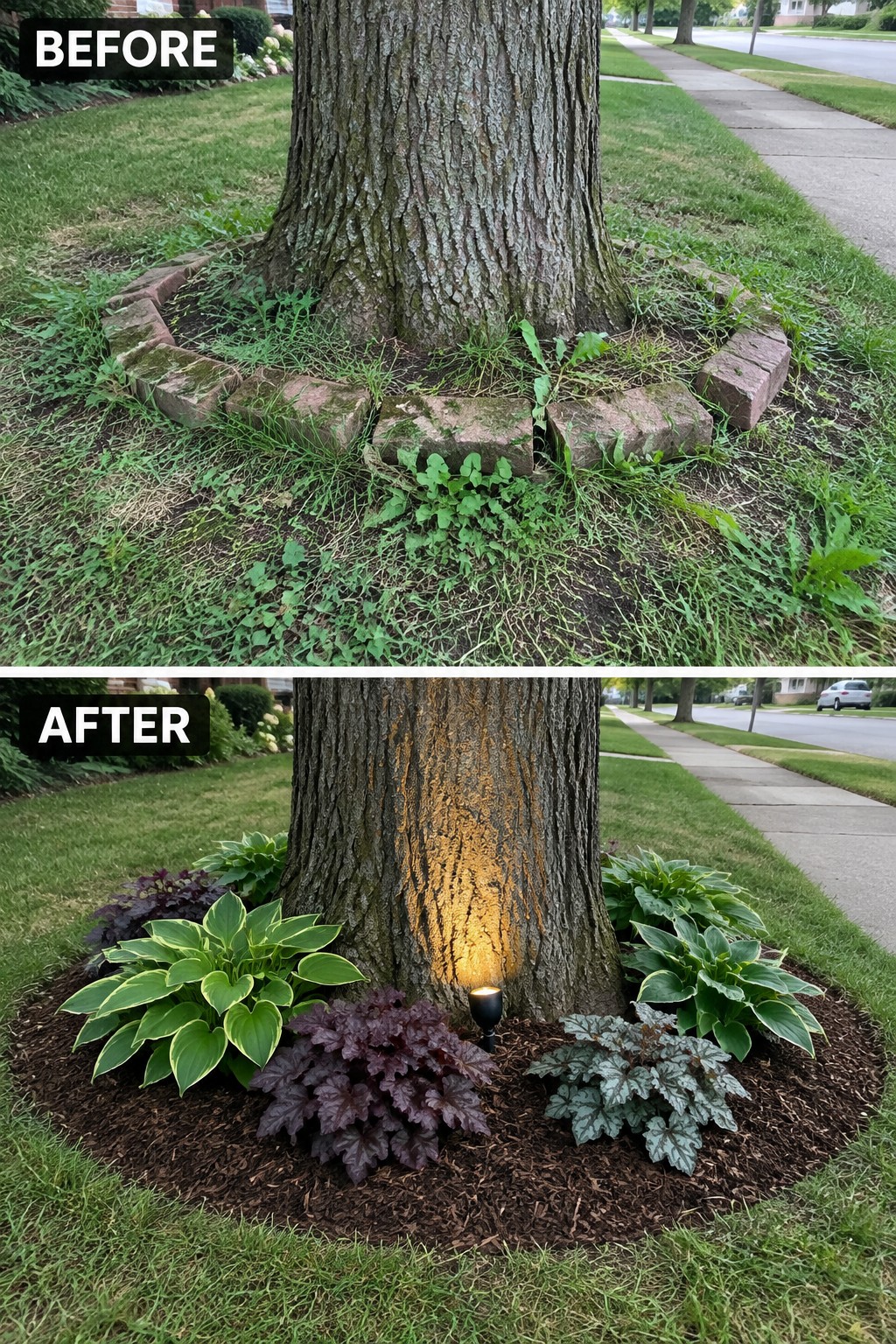
Many trees end up with a ring of weeds and uneven grass right at the trunk. Clearing that area and adding a mulched bed with a few plants gives the tree a much cleaner base and stops the weeds from spreading.
This idea works best in front yards or along sidewalks where the tree base shows. Clear the grass first, spread mulch thick enough to block new growth, and pick plants that tolerate shade and root competition. A single light aimed at the trunk adds a simple evening touch without much extra work.
Add A Planted Border Along Your Fence

A bare strip of dirt next to a fence often looks unfinished and lets weeds take over quickly. The simple fix shown here is to build one long garden bed with mulch and a mix of tall evergreens and flowering shrubs. The evergreens give height and privacy right away, while the lower plants add color and softness without crowding the space.
This idea works well on any home with a long fence line or a flat side yard. Start with the mulch and the tallest shrubs to set the structure, then fill in with lower blooming plants that match your climate. Keep the bed a consistent width so mowing stays easy and the whole border feels intentional rather than scattered.
Replace Gravel With A Flower Bed

A gravel bed keeps things simple and low maintenance, but it often ends up looking flat after a few seasons. Replacing the rocks with soil and a mix of flowering perennials changes the whole feel of the front border, turning a quiet strip into something that actually draws the eye.
This idea works best along the foundation of a house or in a narrow side bed where you want color without adding structures. Choose a few repeat plants that bloom at different times, keep the edging clean, and water deeply the first year while the roots settle. Once established, the bed mostly takes care of itself.
Add Defined Planting Beds Along The Driveway
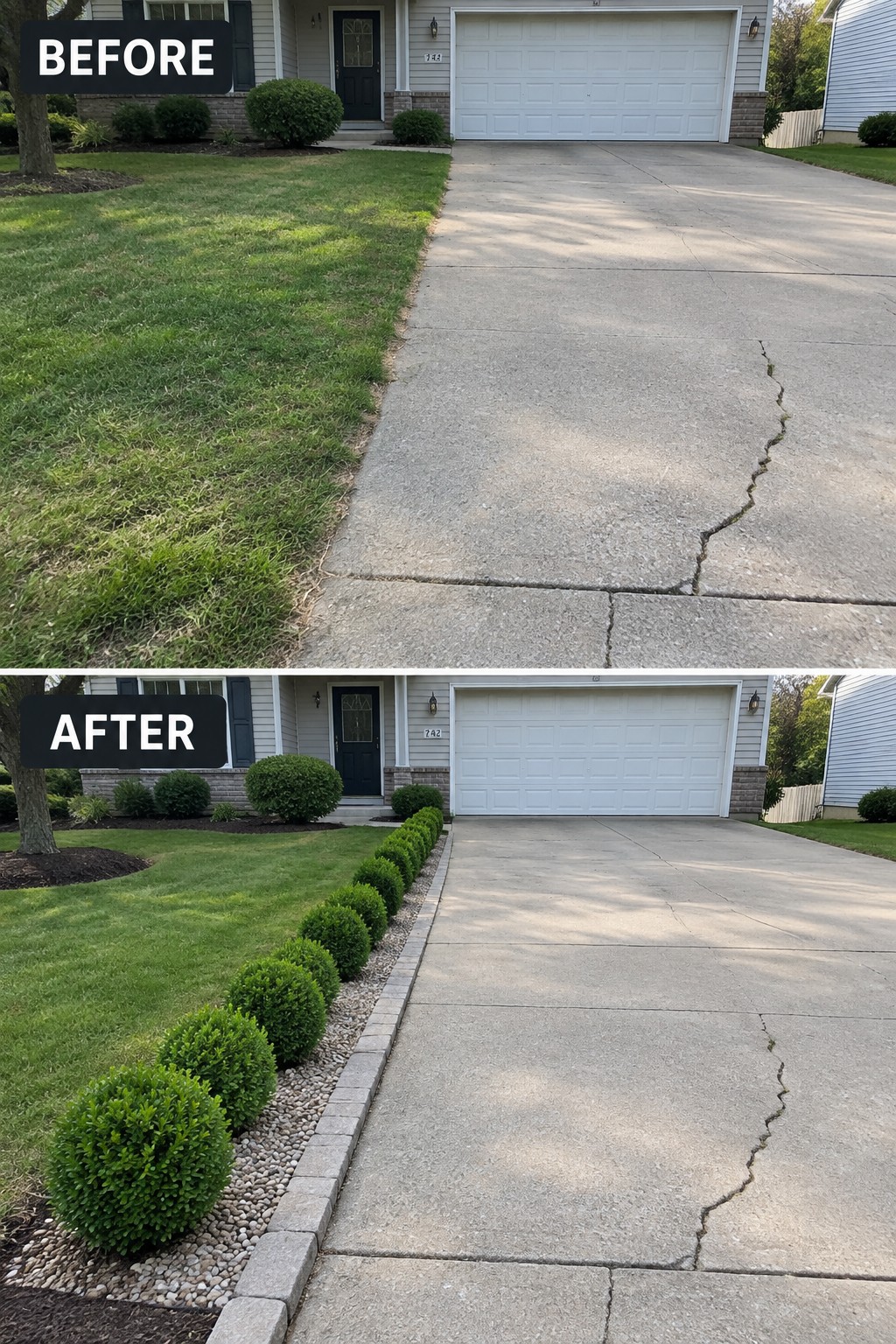
The main change here is how the lawn meets the concrete. In the before photo the grass runs straight to the driveway with no separation. In the after photo a narrow strip of gravel and a row of low shrubs create a clear edge that looks finished and keeps the grass from creeping onto the pavement.
This idea works well on long driveways or any place where the lawn and hard surfaces meet. Start by marking a straight or gently curved line, add a simple paver or brick border to hold the gravel, and plant something low and rounded that stays neat with minimal trimming. It gives the front yard structure without needing a full redesign.
Clean Up Overgrown Shrubs Around The Door

Wild shrubs that spill onto the walkway make any front entry feel neglected. Cutting them back hard and replacing the tangle with rounded bushes, a strip of mulch, and a pair of pots pulls the focus back to the door itself.
This approach works well on narrow lots where the path runs straight to the house. Begin with removal or heavy pruning, then keep the new planting low and simple so it frames the steps without crowding them.
Clear Overgrowth First Before Adding Any Seating

An overgrown backyard quickly becomes unusable when weeds take over every open patch of ground. In this case the fix started with a full cleanup, then the addition of a simple mulch circle that holds a fire pit and a few cut logs for seating. The result turns a space that felt wild into one that actually invites people to sit down.
This approach works best in smaller yards where you want one clear gathering spot without spending much. Cut everything back first, lay a basic border, and spread mulch to keep the area looking tidy and to stop new weeds from taking hold. Keep the seating low and simple so the fire pit stays the main focus.
Add Structure To An Overgrown Garden Edge

The before photo shows a messy strip where plants had spread out of control and started creeping onto the lawn. The after version uses a simple line of stones to hold everything in place, with a few clumps of tall grass and mulch filling the bed. That one change turns a neglected edge into something that looks intentional.
This idea works well along fences or house foundations where things tend to get wild. Clear the worst of the weeds first, then lay down an inexpensive stone or rock border to mark the line. Plant in small groups instead of letting everything fill in on its own. It keeps the lawn easy to mow and stops the bed from looking chaotic after just one weekend of work.
Refresh Your Front Entry With Colorful Planters

The biggest change here is swapping tired planters and sparse plants for full, blooming containers that actually frame the door. The new flower colors stand out against the house, and the updated shutter shade plus a pair of simple wall lights make the whole entry feel more finished without any major construction.
This idea works well on any house with a small stoop or porch because it adds life right where people walk in. Stick with two matching planters, pick flowers that spill over the edges, and choose a shutter or trim color that ties into the rest of your exterior. It stays affordable and can be swapped out each season.
Add Raised Beds To Give An Overgrown Yard Some Structure

Raised beds are one of the simplest ways to bring order to a messy backyard. Instead of fighting weeds across a large open area, the beds create clear planting zones while the surrounding mulch keeps the rest of the ground neat and easy to walk on. The change from tall grass and scattered clutter to defined beds makes the space feel smaller and more manageable.
This idea works especially well in corner yards or narrow side areas where you want to grow a few vegetables or herbs. Use basic lumber for the beds, fill them with good soil, and cover everything else with a thick layer of wood chips. It keeps maintenance low and gives you a place to plant without needing to redo the entire yard at once.
Add Pathway Lights To Brighten A Dark Entry

Adding a few simple lights along the front walk and around the planting beds turns a plain, shadowy entrance into something that feels much more welcoming at night. The before photo shows a dark path with no definition once the sun goes down. In the after photo, low lights line both sides of the walkway and highlight the shrubs, making the whole front look cared for without any big construction.
This idea works well on most front yards because it solves two problems at once. It improves safety on the walk and gives the landscaping a finished look after dark. Start with solar or low-voltage lights so you can move them around until the spacing feels right, and keep the number of lights modest so the path stays the main focus.
Clear Overgrowth Before Defining Garden Beds

The before photo shows a thick tangle of tall plants spilling onto the lawn with no clear edge. Once those were removed, the space opened up and allowed for a simple gravel bed edged in black plastic. The after version uses a few larger succulents, low ground cover, and a couple of rocks to give the area shape without crowding it.
This approach works well in any backyard where plants have gotten away from you. Start by cutting everything back to the fence line, then lay down gravel over landscape fabric so weeds stay down. Keep the plant count low and repeat the same types along the curve. The result feels planned instead of messy and stays easy to maintain on weekends.
Add Vertical Gardens To A Plain Fence

A plain fence often leaves a yard feeling unfinished, especially when the ground along it is just a narrow strip of dirt. Mounting vertical planters made from wood pallets turns that blank surface into a garden wall filled with flowers and trailing plants. The addition of string lights along the top edge brings a simple layer of interest once the sun goes down.
This approach works best on long fence runs where ground space is limited. Secure the planters firmly, choose plants suited to the sun exposure, and keep the bed below mulched for a clean edge. It adds height and color without crowding the lawn or requiring a full redesign.
Frequently Asked Questions
Q: How do I keep costs low when buying plants for these projects?
A: Shop at local nurseries during sales or ask neighbors for cuttings from their gardens. Start small and let things grow in over time. This way you avoid big upfront spends.
Q: My backyard gets full sun all day. Which ideas work best there?
A: Go for drought tolerant grasses and ground covers that handle heat. Add some pavers to create seating spots. Water deeply but less often to help roots settle.
Q: Can I tackle the rock garden idea in one day?
A: Prep the spot first. Then set the rocks and add plants the same day.
