


I often notice that front yards can feel a bit flat when the planting lacks any clear structure or repeated layers. Cottage style works because it builds soft edges and seasonal color around simple paths and beds that already exist. When I look at my own space I usually start by fixing the lawn shape and edging before I add more plants. Those small decisions give the area better flow and make the greenery feel like it belongs with the house. A couple of these layouts seem worth testing over the next year.
Define Your Front Yard With A Picket Fence And Flower Beds

A chain-link fence and flat lawn often leave the front of a house feeling unfinished. Swapping the fence for a simple white picket version and adding raised flower beds along the walk gives the yard clear shape and a cottage feel without any major construction.
This approach works best on smaller lots where the planting can be seen from the street. Keep the fence low and painted white, then fill the beds with a mix of tall spiky flowers and lower mounding plants so the color stays interesting through the season. Start with the fence and edging first, then add plants in groups rather than scattering them.
Add Defined Garden Beds Along The Front Path

A plain lawn with a cracked concrete path feels unfinished next to a house. Adding garden beds on both sides of a new brick walkway gives the entry real structure and turns the front yard into something that feels planned rather than leftover.
This idea suits any modest front yard where the path is the main feature. Lay out the beds first so they follow the walkway shape, then fill them with layers of taller plants behind shorter ones. Keep the beds roughly the same width on each side and leave enough lawn between them for easy mowing.
Add A Garden Arch To Frame The Entry Path

A garden arch gives a plain front path some needed height and focus. The before photo shows loose grass and weeds running right up to the walkway with no clear shape. Once the arch went in with climbing roses and planted beds on either side, the whole approach felt more intentional and welcoming.
This works best on straight, narrow paths where you want structure without filling the whole yard. Keep the arch simple in wood or metal, let one or two climbers cover it, and add a few layers of flowers at the base. Mulch the beds so the planting stays neat instead of spilling onto the concrete.
Layer Cottage-Style Planting In Front Beds
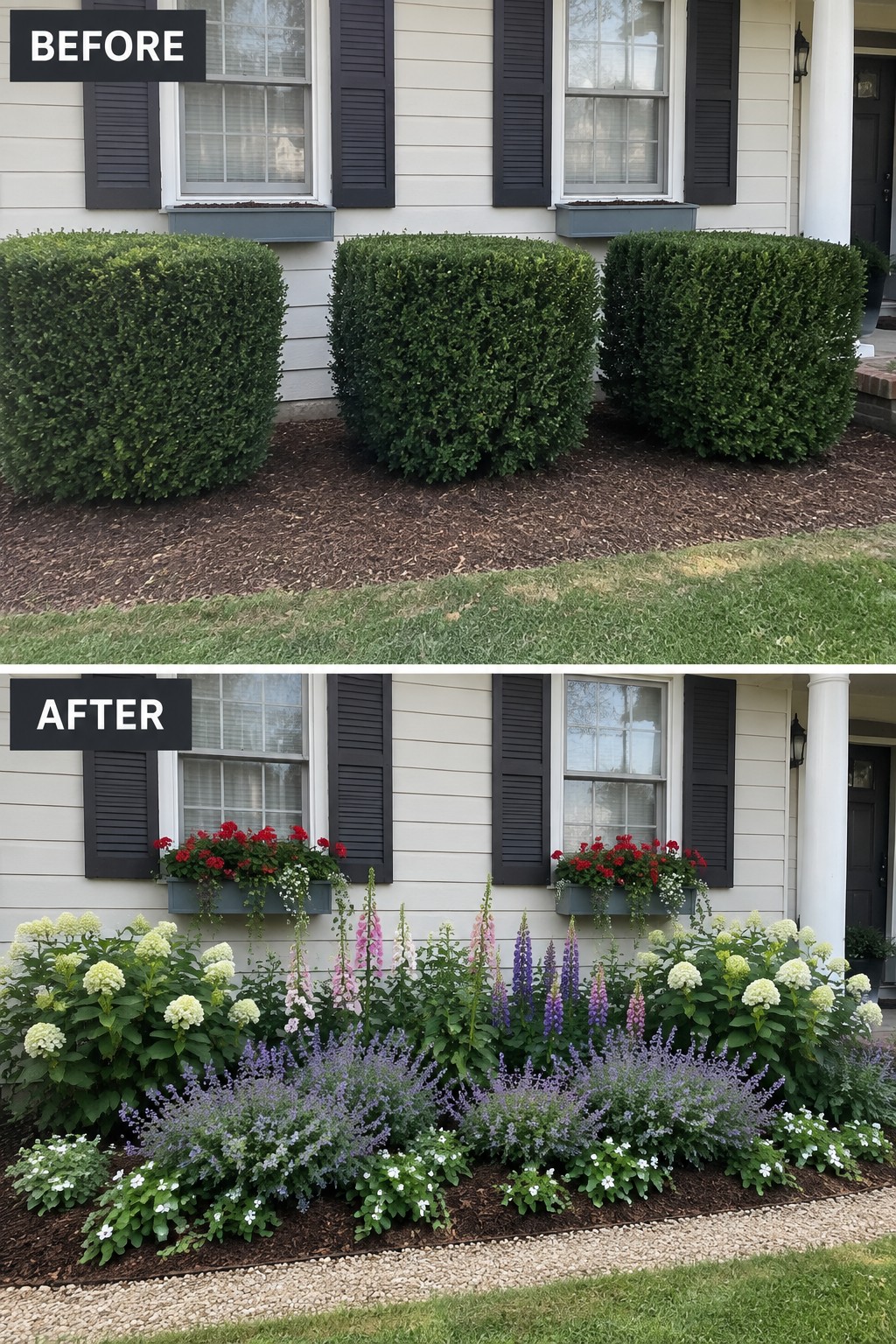
The before photo shows three large, rounded shrubs sitting in plain mulch along the foundation. The after photo replaces them with a layered mix of white hydrangeas, tall pink and purple perennials, and low ground cover that gives the whole front a softer, more planted look. This approach turns a flat, uniform border into something that feels fuller without needing a big redesign.
This idea works well on homes where the foundation planting has grown plain or boxy over time. Start by removing or thinning the largest shrubs, then build the bed in layers with a few taller plants at the back, midsize flowers in the middle, and low edging plants in front. It suits older houses with simple siding and works best when the new plants stay in scale with the windows.
Add Defined Flower Beds To A Plain Front Lawn

A large empty lawn often looks flat and unfinished. Breaking it into several planted beds with a simple path between them adds shape and color while keeping the yard easy to walk through.
This idea suits smaller front yards where you want cottage style without losing all the grass. Keep the beds wide enough for impact but leave enough open lawn so the space still feels open and the mower can move freely.
Add A Window Box And Curved Beds For Cottage Charm

A window box placed under a bay window gives the front of a house an immediate focal point. The before showed a flat strip of mulch with only a few scattered plants. Once the box went in with its mix of red and white flowers plus trailing greens, and the bed below was shaped into a gentle curve and filled with lavender and daisies, the whole area looked planned instead of leftover.
This approach suits houses with a clean brick or painted facade where the foundation needs a bit more presence. Paint the box a soft color that contrasts with the wall, use the same plants in both the box and the ground to connect them, and let the bed edge follow a relaxed curve rather than a straight line. The result feels cottage style without requiring a full garden overhaul.
Add Stone Edging To Create A Defined Garden Bed

The main shift here is the addition of a low stone wall that turns an open stretch of gravel into a contained planting area. Where the space once held only one potted shrub, the edging now gives the bed a clear shape and raises the soil so plants can be layered by height.
This approach works best along the front of a house where gravel or lawn meets the foundation. Put the edging in first to set the boundary, then choose a simple mix of taller shrubs at the back and lower flowers toward the front so the bed stays easy to maintain.
Define A Narrow Side Yard With A Simple Path
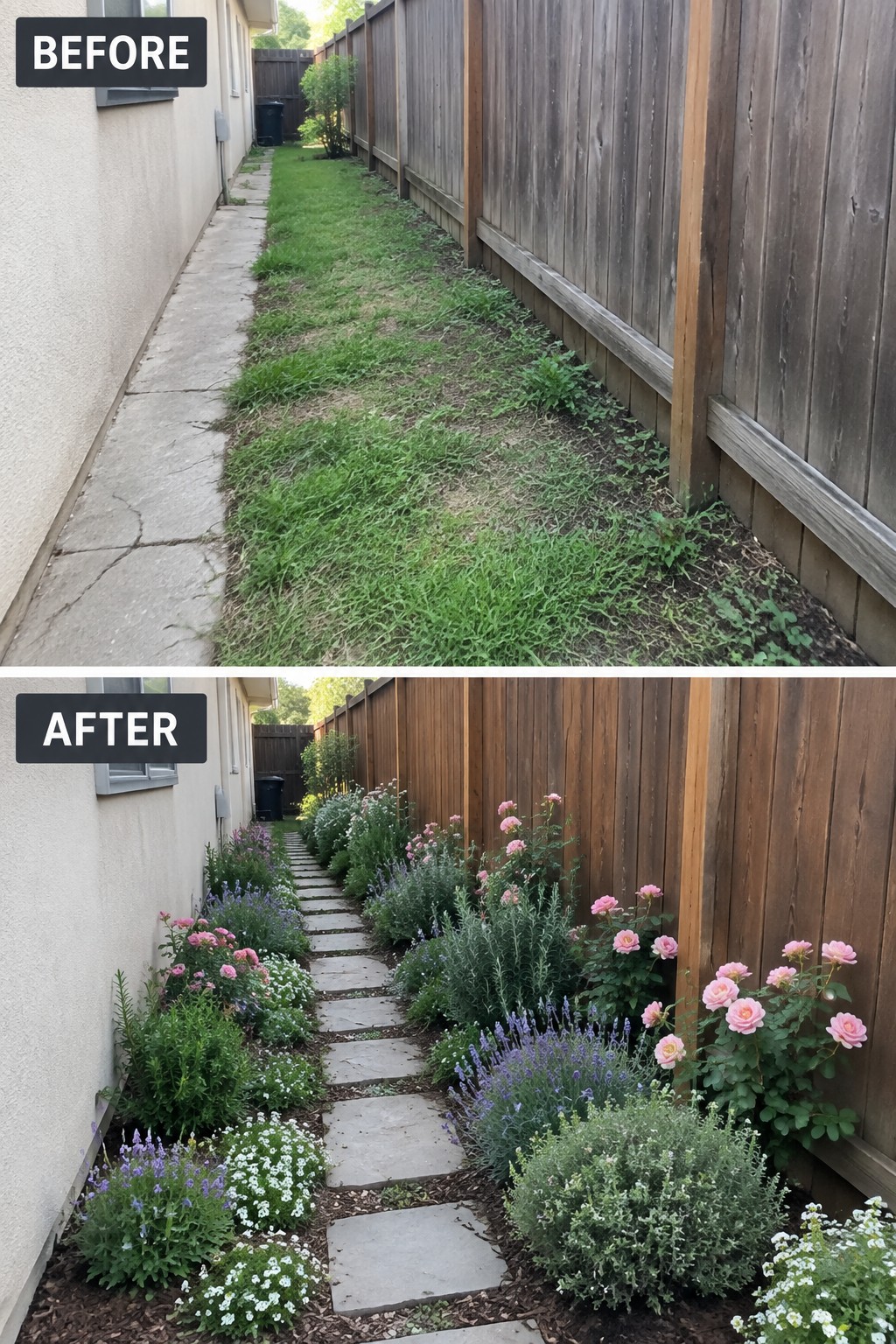
A narrow side yard often ends up as an afterthought, with grass struggling to grow and weeds taking over. Adding a clear stone path right down the middle turns the space into something purposeful. The path gives the eye a line to follow, while the beds on either side get a clean edge that makes planting feel intentional instead of scattered.
This approach works especially well on long, tight strips between a house and a fence. Start by laying out the path with stepping stones or pavers so you know exactly where the beds will sit, then mulch and plant densely with cottage-style perennials and shrubs. The result feels much more finished than just trying to tidy up the grass alone.
Define The Lawn Edge With A Low Stone Border

A flat stretch of grass next to a walkway often looks unfinished. Adding a low stone border creates a clear line that turns the space into a proper planting bed. The curved shape softens the straight path and gives the flowers room to spill forward without crowding the walkway.
This approach works well on small front yards where you want cottage-style planting without losing lawn space. Start with the edging first, then fill the bed with a mix of taller blooms and lower perennials. Keep the curve gentle so the bed still feels natural from the street.
Define A Bare Corner With A Path And Planting Beds

A bare patch of dirt next to the house does not offer much, but adding a simple stone path and a few planted beds changes how the space feels right away. The path creates a clear route and gives the area purpose, while the beds filled with lavender, roses, and other cottage plants bring softness and color without needing a big overhaul.
This idea works well on side yards or front corners where the ground feels empty and unused. Start with the path to set the shape, then add a trellis or bench as a focal point before filling in with easy perennials. Keep the plantings layered but not crowded so the space still feels open and easy to walk through.
Add Simple Edging To Shape A Front Yard Bed
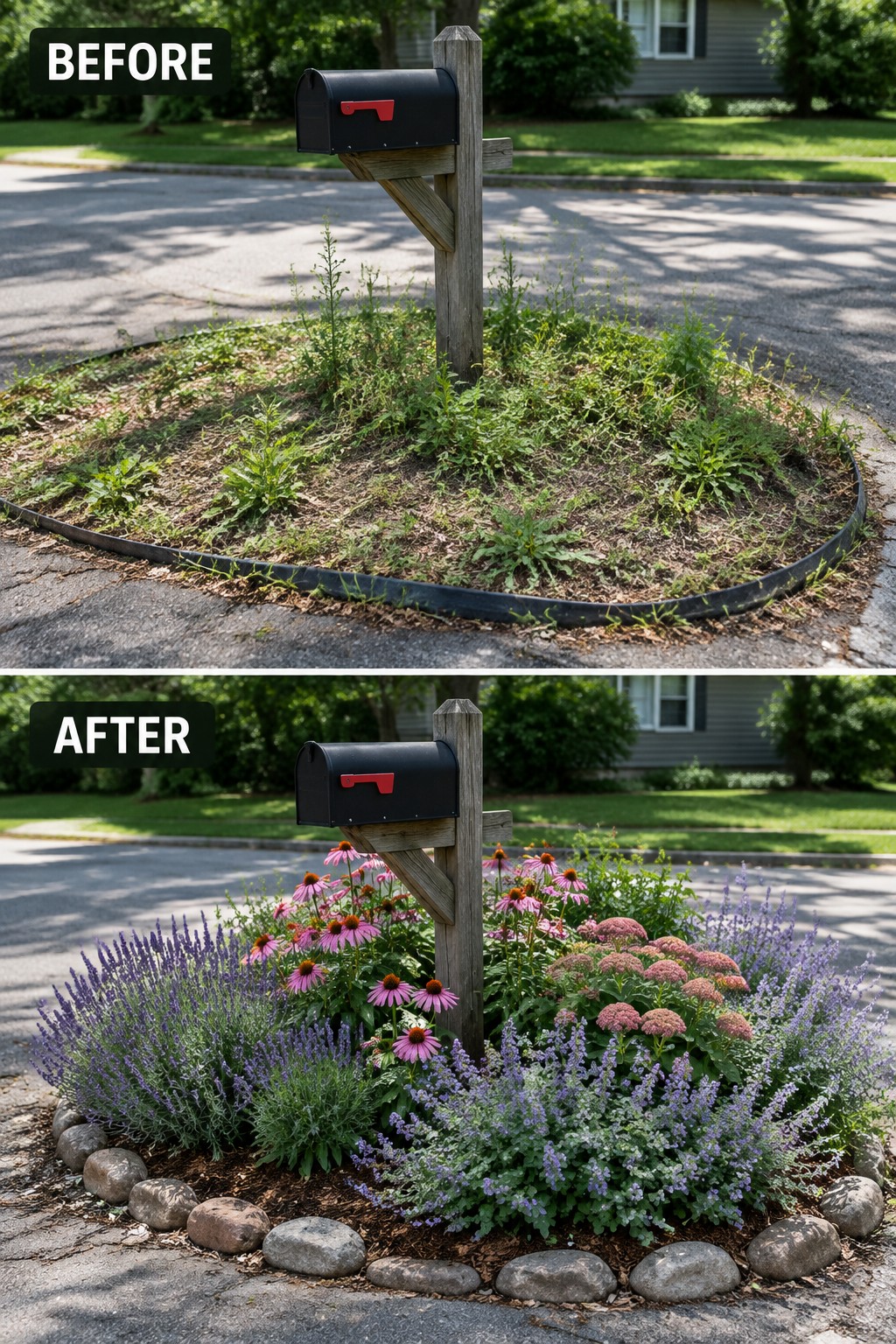
A messy patch of weeds and volunteer plants around a mailbox makes the whole front look neglected. Adding a clear edge, mulch, and a mix of perennials turns that same small circle into a tidy garden bed that feels intentional. The stone border and layered planting keep the flowers from spilling onto the driveway while still giving the area cottage-style fullness.
This approach works well on any small utility spot where you want planting without a big overhaul. Start by cleaning out the weeds, then lay a simple border before you add soil and plants. It keeps maintenance lower and helps the bed look finished even when the flowers are not at peak.
Create A Cottage-Style Border Along Your Driveway

A narrow strip of grass next to a driveway often ends up looking like leftover space. Turning that area into a mulched garden bed with layered planting gives the whole front edge a clearer purpose and makes the house feel more connected to the yard.
This idea works best on homes where the driveway runs close to the lawn. Keep the bed a consistent width, use a simple mix of perennials and one small tree, and let the plants grow together over time. It adds interest without crowding the path or requiring a full yard redesign.
Add Cottage Planting To A Bare Front Slope

A bare dirt slope often looks unfinished and washes out easily after rain. Filling it with layered cottage planting adds structure, color, and better soil stability without needing a full retaining wall.
This idea works best on front yards with a gentle slope where you want curb appeal but still need room to walk and mow. Clear the area first, spread mulch, and plant in drifts so the beds look full from the street without crowding the walkway.
Add An Arbor To Frame A Simple Front Entry

A plain path with overgrown shrubs on both sides can feel like it leads nowhere. Adding an arbor with a gate gives the entrance a clear starting point and turns the walk into something intentional. The climbing vines and layered flowers soften the structure without hiding it, which is what makes the whole front feel more welcoming.
This approach works well on modest lots where you want cottage character without a full redesign. Keep the arbor scaled to the house, use one or two repeating plants along the path, and make sure the gate stays simple so it does not compete with the planting. Start with the structure first, then fill in the beds around it.
Add Cottage-Style Planting Beds Along The Front

The biggest change here came from replacing a plain stretch of lawn with defined beds filled with layered cottage planting. Roses, lavender, and taller spires now sit close to the house, while lower mounds and path lights keep everything visible at night. The result feels much more intentional without looking crowded.
This approach works best on houses with a clear front walkway or porch edge. Start by clearing a simple border, then mix a few heights and bloom times so the beds stay interesting through the seasons. Keep the lawn edge clean so the planting reads as a deliberate frame rather than scattered flowers.
Add Raised Beds To Shape A Bare Front Entry
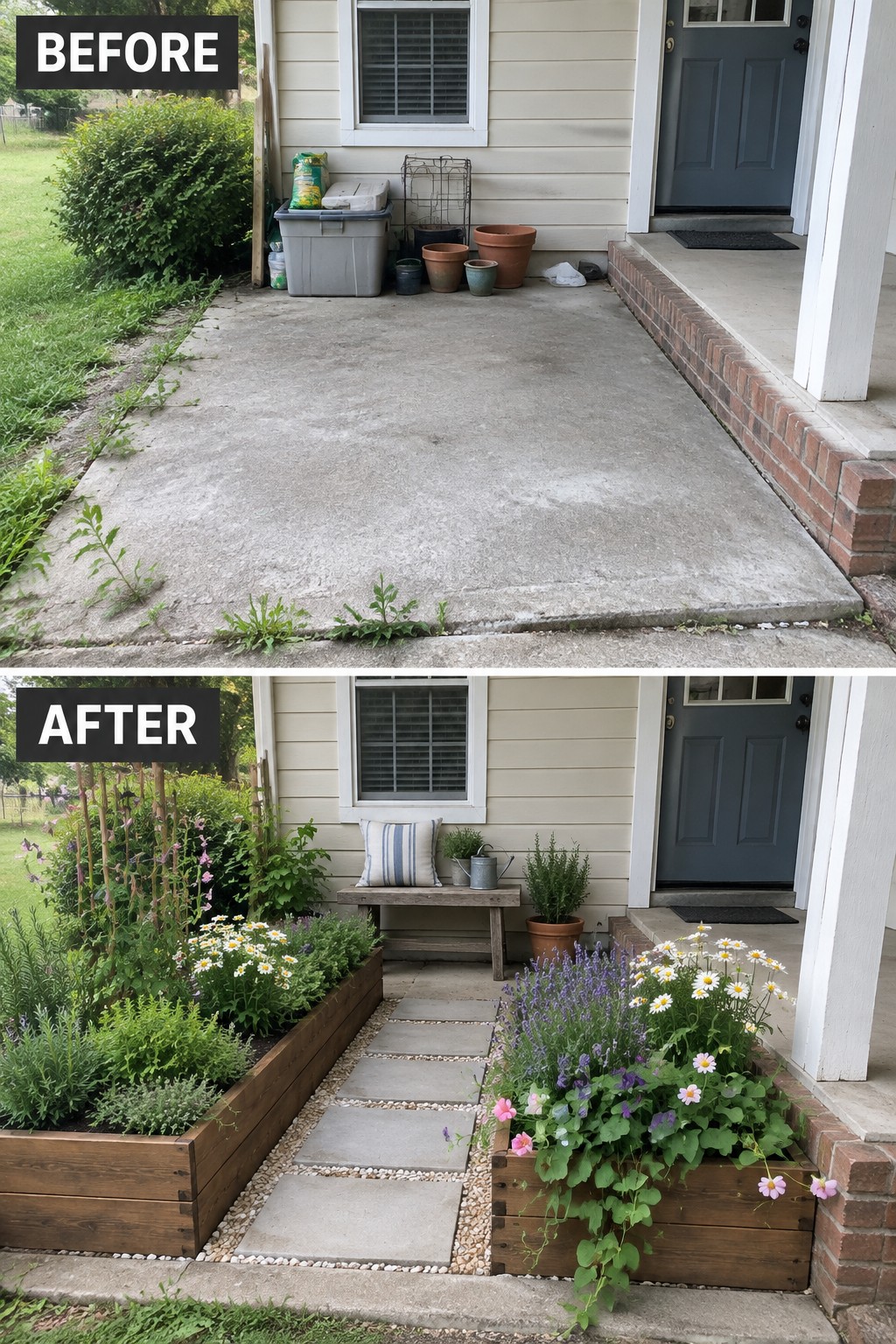
A flat concrete slab in front of the house often feels unfinished and hard to use. Adding raised wooden beds on either side creates clear boundaries, turns the empty space into a garden, and gives cottage-style planting a place to grow. The simple paver path between the beds makes the entry feel intentional instead of just leftover concrete.
This approach works well on small front yards where you want structure without a full redesign. Keep the beds low and rectangular, choose plants that spill over the edges, and leave enough room for the path so the space still feels open. Start with the beds and path first, then fill in the planting.
Add Cottage Planting In Pots To Frame The Entry
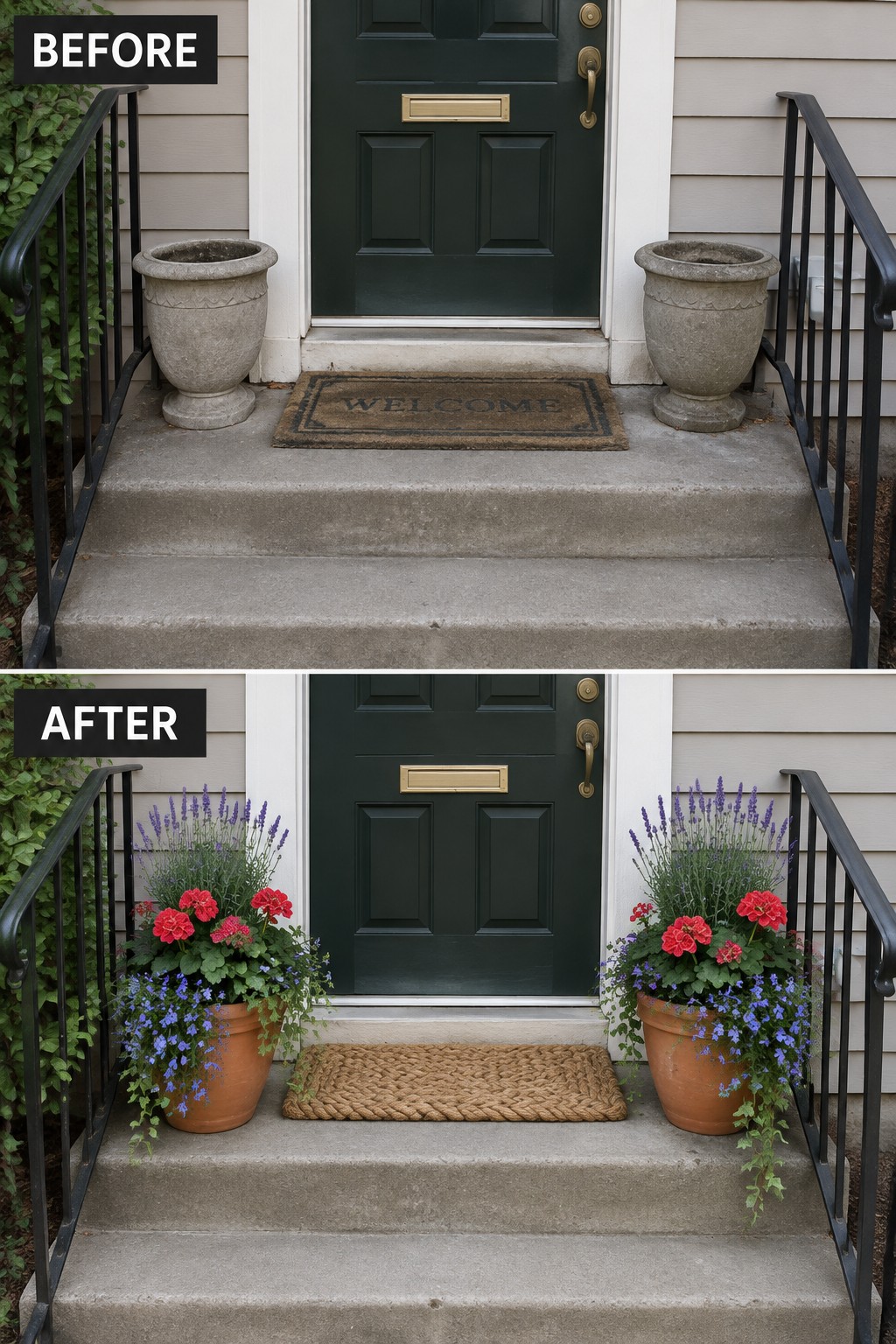
Filling a pair of matching pots with layered cottage flowers turns a plain concrete entry into something much more welcoming. The before photo shows two large empty planters sitting on either side of the steps with just a basic mat in the middle. Once planted with geraniums, trailing lobelia, and lavender, the same pots soften the hard lines and bring color right up to the door.
This idea works best on small entries where there is no space for full garden beds. Use two identical pots, repeat the same mix of flowers in each, and let a few plants spill over the edges. Keep the colors simple and the planting full so the steps feel finished without looking crowded.
Layer Plants To Fill Out Front Beds

The front yard went from a few large agaves sitting in loose gravel to a full cottage-style border with lavender, grasses, and shrubs layered together. That simple shift from sparse planting to dense, repeated layers makes the whole space feel softer and more welcoming without any big construction.
This approach works best on smaller front yards where you want color and texture up close to the house. Start by clearing the old gravel or rock, add a few inches of mulch, and plant in groups of three or more so nothing feels lonely. Keep the path clear and use the same plant mix on both sides for a tidy look that still feels full.
Use Retaining Walls To Create Garden Beds On A Slope

A steep dirt slope with nothing but a few loose boards for steps is hard to plant and even harder to maintain. Adding low stone retaining walls turns the same slope into level beds that hold soil and give plants room to grow. The new steps also make the entrance feel intentional instead of temporary.
This approach works well on any front yard that drops toward the street. Start with the walls and steps first, then fill the beds with a simple mix of perennials and ground cover. Keep the number of beds modest so mowing and weeding stay manageable.
Add Defined Planting Beds In Front Of A Hedge

A tall hedge can feel flat when it sits right above a strip of lawn. Adding a planting bed in front gives the hedge a purpose and brings color up to eye level. The change here turns a plain green wall into a layered border that softens the front of the house without blocking the walkway.
This idea works best on narrow front strips where the hedge already gives you a ready-made backdrop. Choose a few shrubs for height, then fill in with lower perennials that spread over time. Keep the bed depth modest so the lawn still feels open and easy to mow.
Add Cottage Planting To A Bare Front Porch

A plain porch often feels unfinished when it only has a couple of plastic chairs and an empty deck. The change here comes from adding simple cottage planting in the form of terracotta pots filled with lavender and red annuals, plus a trellis with purple climbers along the railing. That single layer of greenery softens the white trim and makes the entry feel intentional instead of empty.
This approach works well on small front porches where you want color and texture without building new beds. Start with a few large pots placed near the steps and seating, then add one vertical element like a climber on a simple trellis. Keep the plant choices repeat a color or two so the look stays calm rather than busy.
Add Simple Edging To Define A Roadside Strip

A weedy grass strip next to the curb often looks messy because it has no clear edge. Adding a narrow metal border and filling the space with mulch turns the same narrow area into a proper garden bed. The change is mostly about giving the space a boundary first, then planting in a way that stays contained and easy to maintain.
This works well on narrow verges where you want cottage-style flowers without letting them spill onto the sidewalk or road. Use a low, flexible edging that follows the curve of the curb, add a few inches of mulch, and choose plants that stay roughly the same height. The result looks intentional even when the bed is only a couple of feet wide.
Create A Cottage Garden Bed Along The House
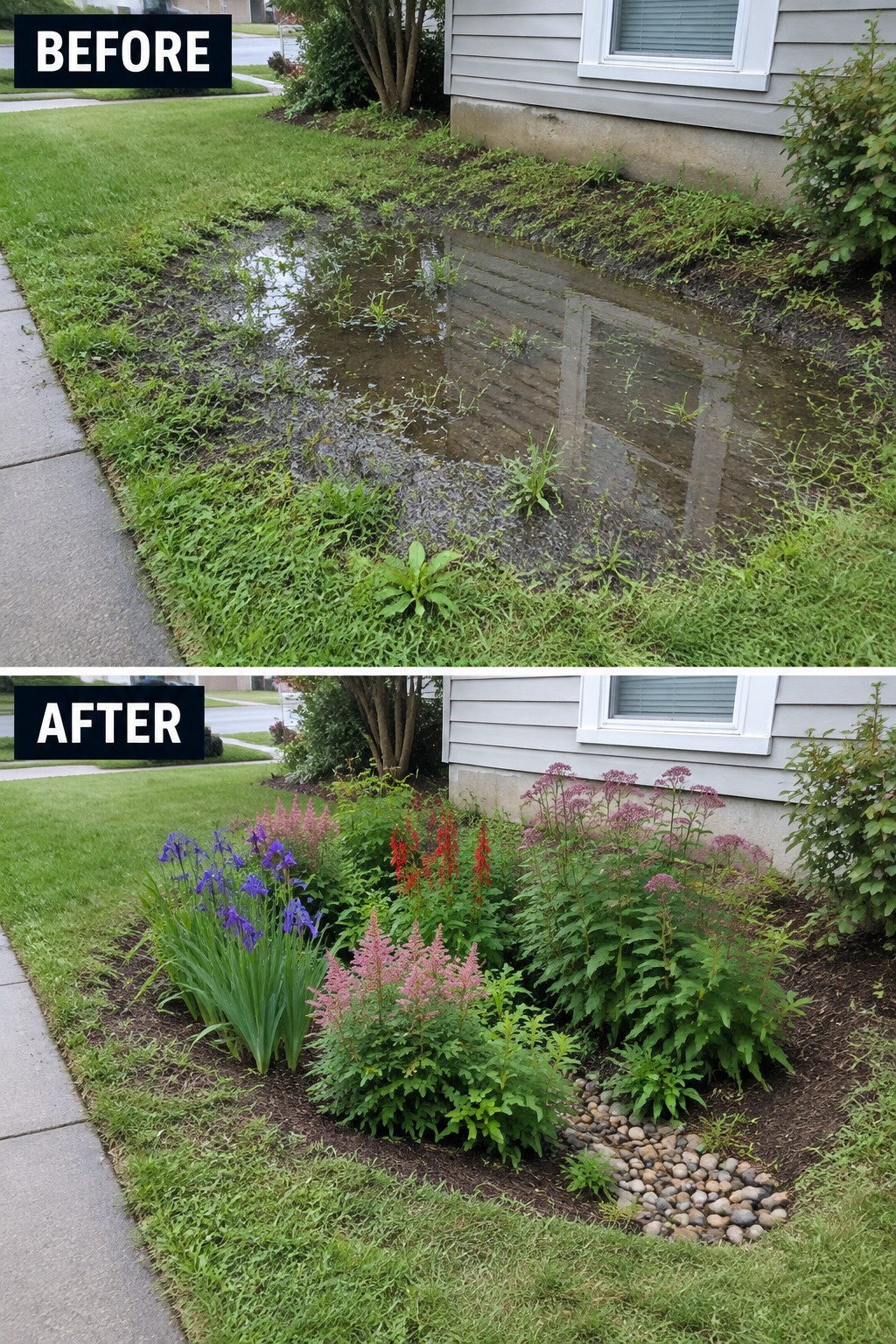
A wet, weedy strip right next to the foundation is a common problem that only gets worse if left alone. Clearing the standing water and overgrowth first, then adding a defined bed with mulch and cottage-style perennials, turns the same narrow space into something that looks intentional and actually drains better.
This idea works well on homes where the lawn meets the siding in a thin, awkward zone. Keep the bed modest in width so the lawn stays easy to mow, choose plants that tolerate occasional dampness, and add a small gravel pocket near the downspout if water collects there. It gives the front a finished look without requiring major grading or hardscaping.
Define Front Garden Beds With Simple Edging
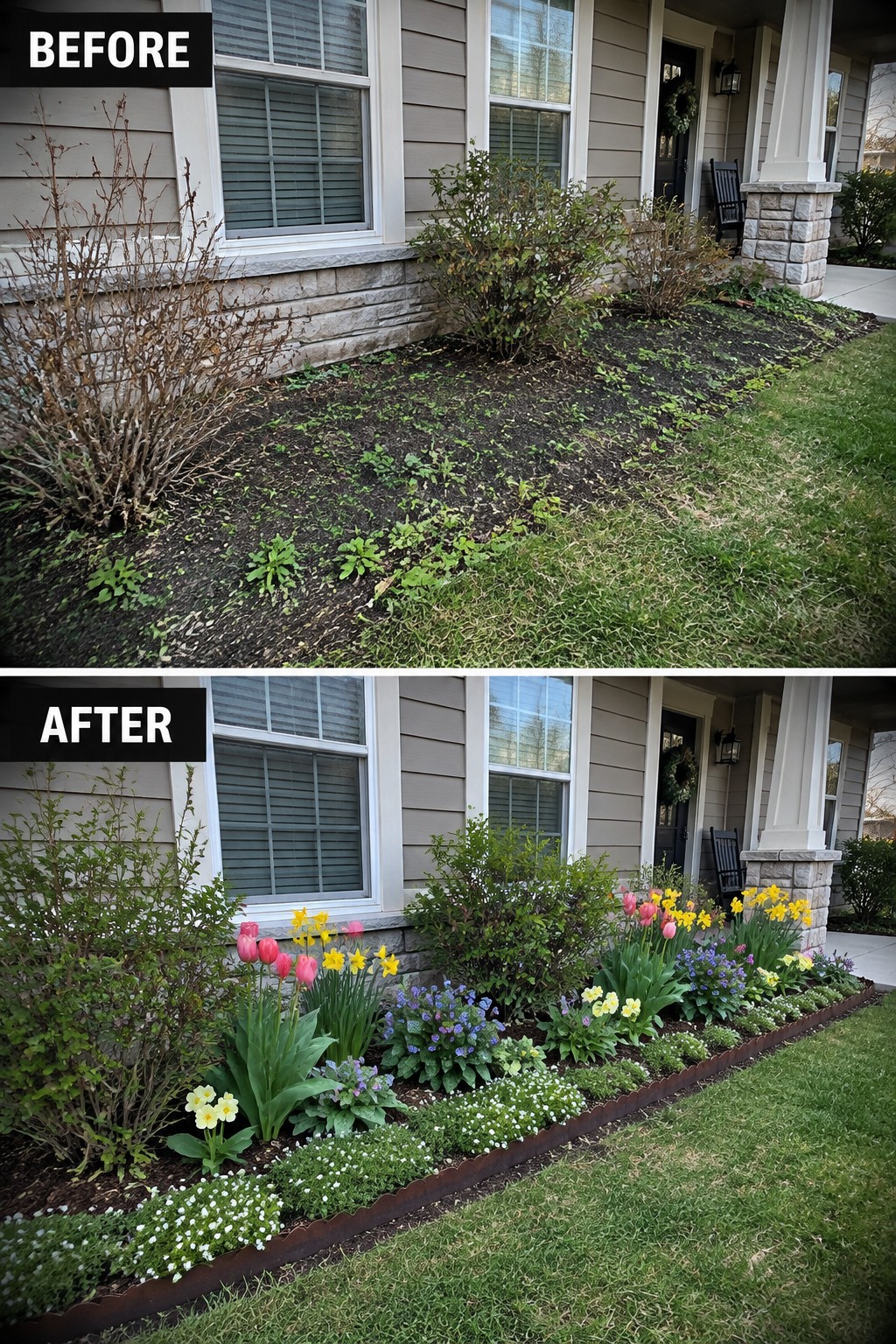
One of the simplest ways to fix a messy front bed is to give it a clear edge. The before photo shows soil and weeds running straight into the grass with no real shape. Adding a metal border instantly contains the area and makes the planting look deliberate rather than accidental.
This idea works best on older homes where beds have slowly lost their shape over time. Put the edging in first so you know exactly where the bed ends, then add plants in layers with taller shrubs toward the house and lower flowers along the front. It keeps the look neat and makes future weeding much easier.
Frequently Asked Questions
Q: Can I try these ideas even if I only have a tiny front yard? A: Start with one small bed near the door and build from there. Pick a few favorite flowers that match your light conditions. They will spread naturally over time.
Q: How do I keep the look from getting messy as the plants grow? A: Trim back any stems that lean into the path once a month during the season. Focus on plants that stay upright on their own. This keeps things charming without constant fuss.
Q: What if the cottage style feels too informal for my neighborhood? A: Blend in a few structured evergreens at the edges. They give a bit of shape while the flowers do the rest.
