


Small front yards tend to look flat when there is no clear layout to guide the eye from the street.
I often notice that starting with better edging and a few well placed shrubs does more than adding random flowers ever could.
Pathways help tie everything together in a tight space.
Over time the plants fill in and create a sense of depth that makes the entrance feel more intentional.
I would probably test the ideas with simple gravel borders first since those seem easiest to adjust later on.
Replace Patchy Grass With Gravel And Planting Beds
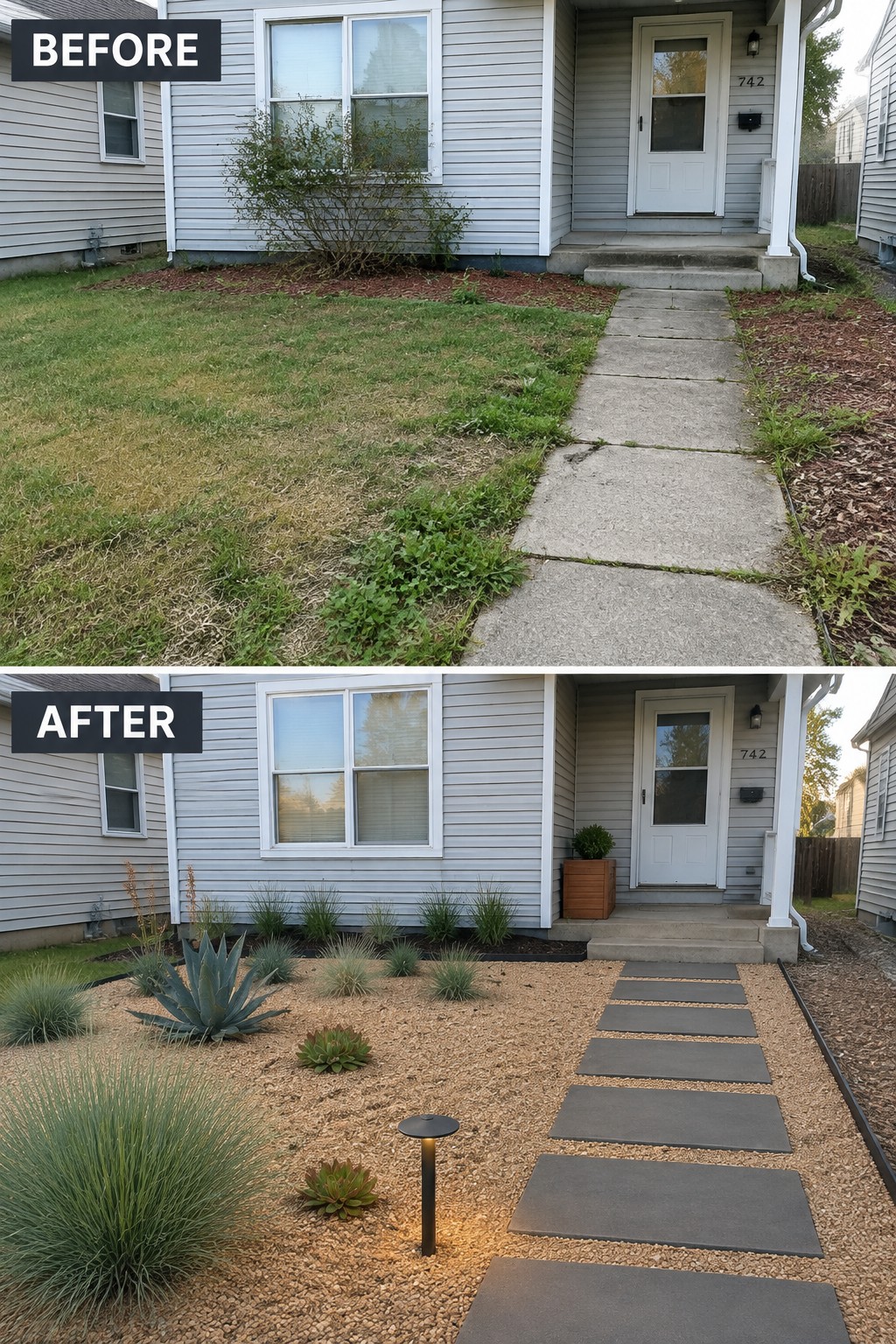
The front yard had an uneven lawn that was mostly weeds and bare spots, making the whole space feel neglected. Replacing it with gravel created a clean base that looks intentional and stays tidy without constant mowing or watering.
This works especially well on small lots where grass is hard to maintain. Clear the old lawn first, add landscape fabric, then spread gravel and set stepping stones for the walkway. Keep the planting simple with a few grasses and succulents so the yard feels open instead of crowded.
Add Defined Garden Beds To A Plain Front Lawn
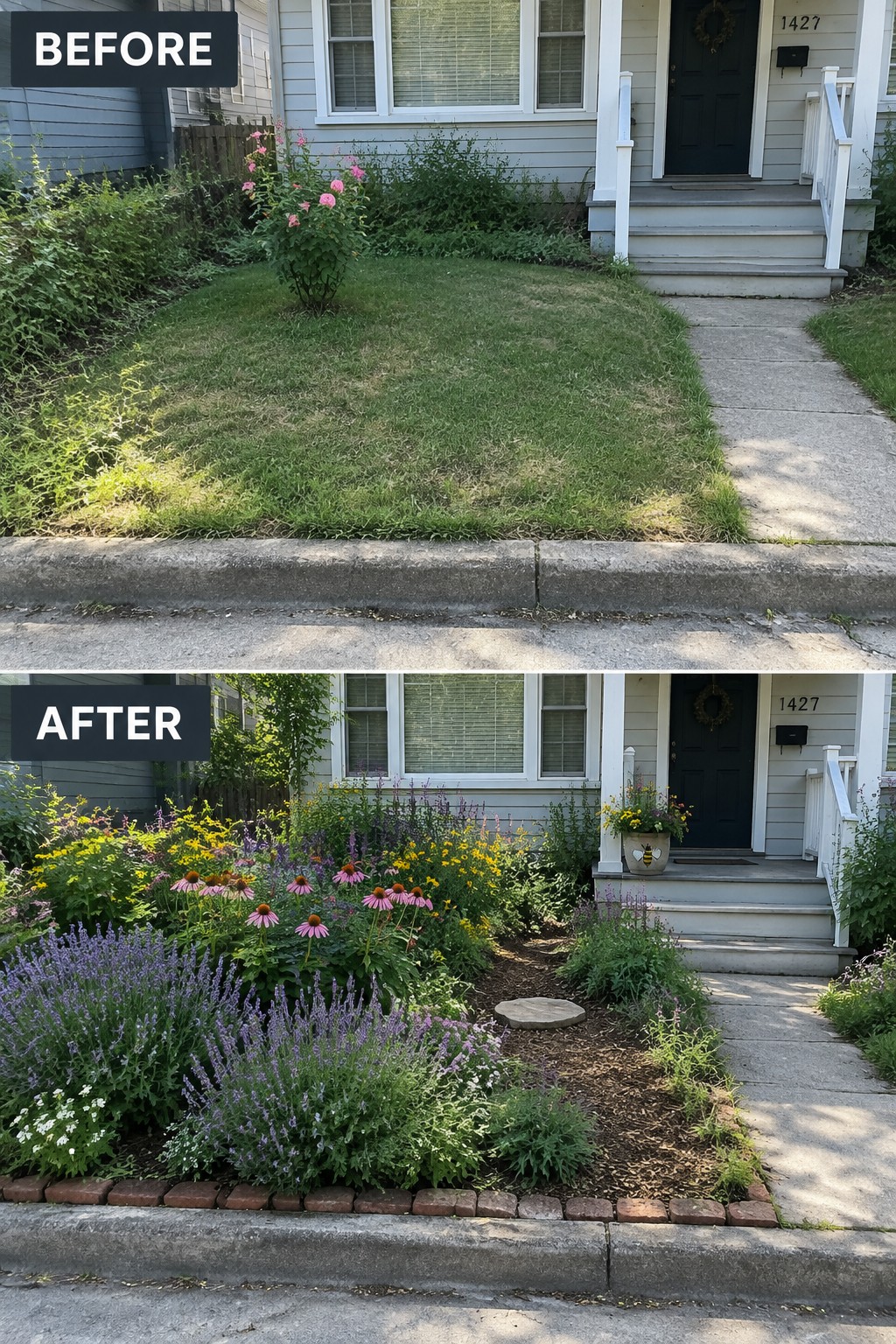
A simple lawn often looks unfinished next to a house. Adding clear garden beds with edging gives the space shape and makes the whole front yard feel more intentional. The change here shows how a basic grass strip became a planted border with a brick edge and layered flowers instead of just lawn running straight to the walk.
This approach works well in small front yards where you want more interest without crowding the space. Start by marking out beds along the walk or foundation, then add edging to keep the lines clean. Choose a mix of heights and bloom times so the beds stay full through the season, and leave enough room between plants for them to fill in without constant trimming.
Add Defined Beds To Shape A Front Slope

The main improvement comes from replacing a patchy lawn with clear garden beds that follow the slope. Gravel edges and a few groups of plants keep the ground from washing out and give the whole front a settled look instead of a worn path of grass and mud.
This idea suits small front yards that drop toward the street. Outline the beds first, then add a simple path so people have a dry route to the door. Stick with low plants that can handle the angle and repeat the same gravel or mulch so the space stays easy to maintain.
Add A Defined Path And Planters To Organize A Small Front Yard
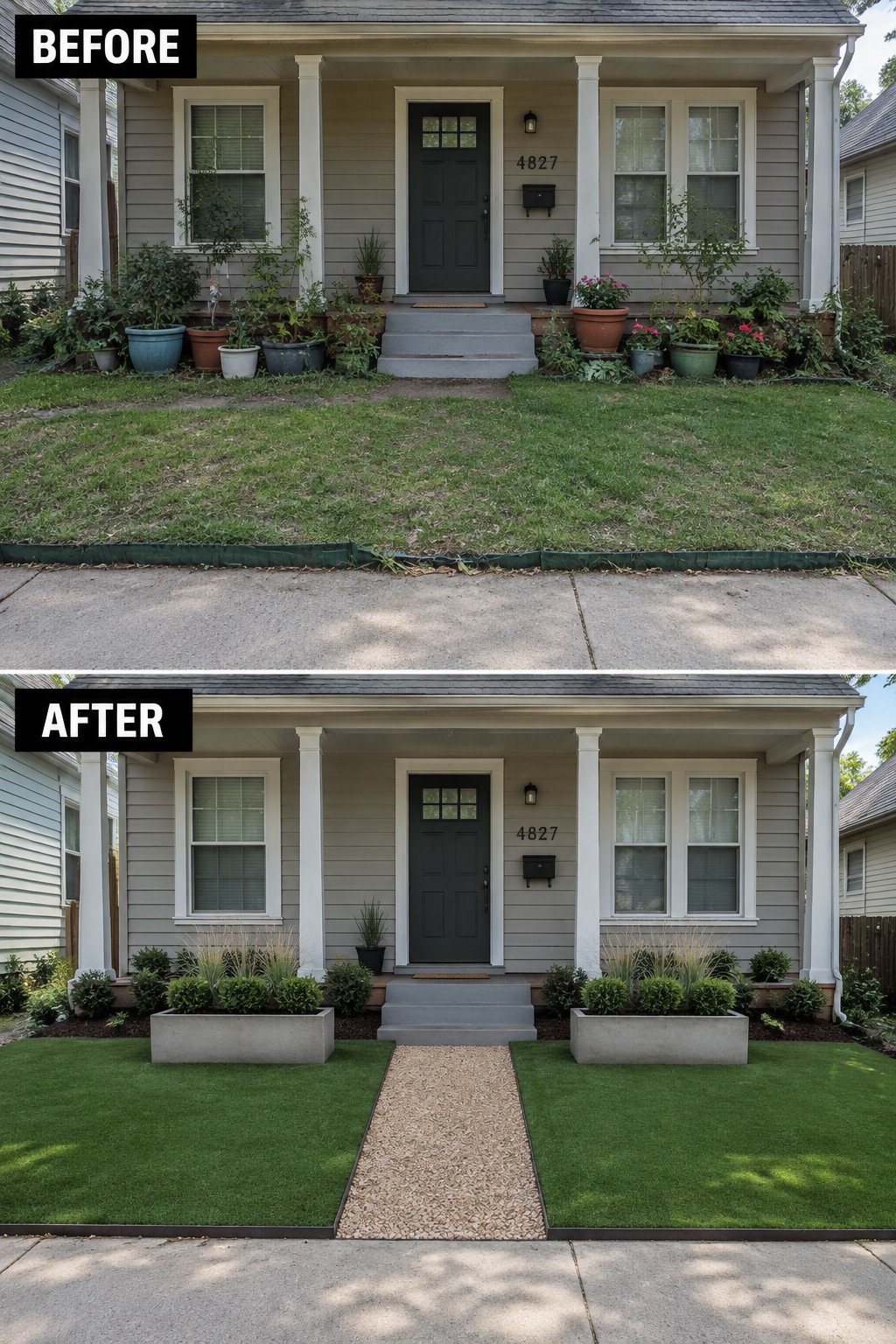
The main change here is the shift from scattered pots and uneven grass to a clear gravel path that leads straight to the door, with matching rectangular planters marking the edges. This simple layout makes the whole front yard feel intentional instead of crowded, and the neat borders keep everything looking tidy without much effort.
This idea works well on small lots where you want to avoid a jumbled look. Start by clearing out the old planting mess, then use one consistent material for the path and a few matching containers to hold the main plantings. It suits older homes with modest yards and helps visitors know exactly where to walk.
Use Pavers And Defined Beds To Structure A Small Front Yard
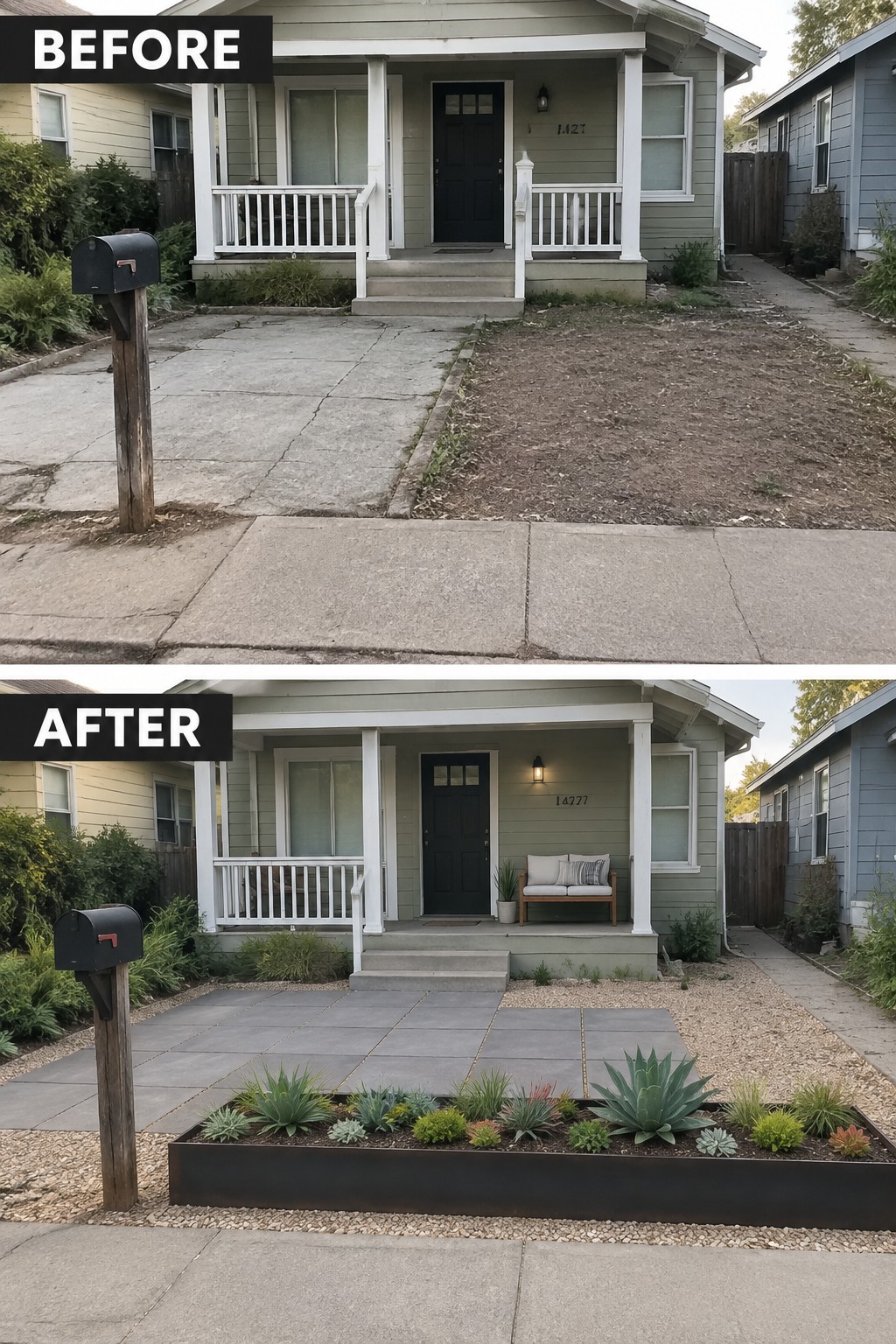
A small front yard often looks unfinished when it is just bare dirt next to an old driveway. Adding a simple grid of pavers and one long planted bed gives the space clear shape and makes it feel like it belongs with the house. The pavers create a solid walking area, while the raised bed holds the planting so it does not spill into the path.
This idea works best on narrow lots where you want to keep the yard open but still tidy. Lay the pavers first to set the main lines, then run one long bed along the front edge with low-water plants. Keep the rest of the area in gravel so the whole space stays easy to maintain and does not feel crowded.
Replace A Full Lawn With Gravel And Layered Planting Beds
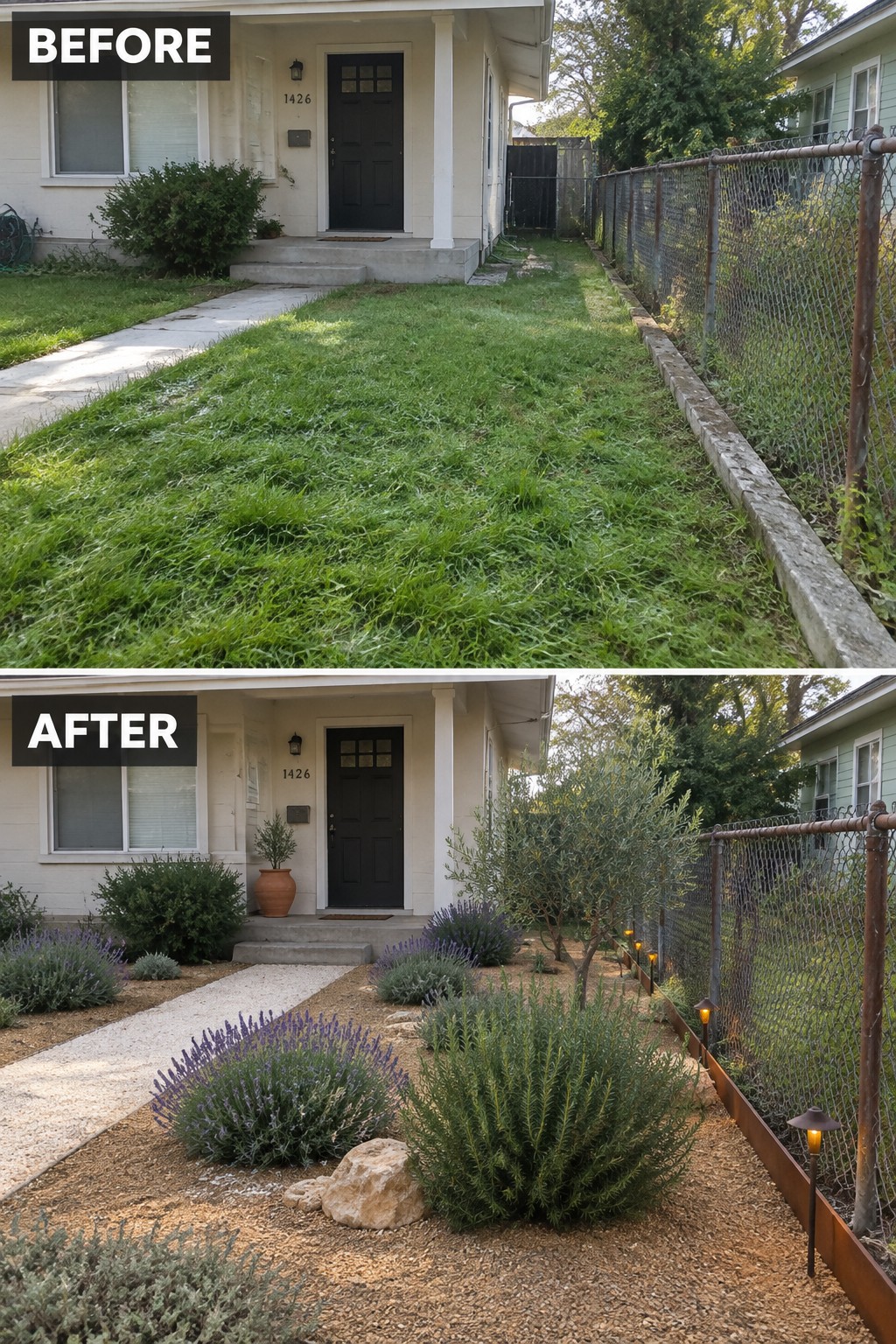
Replacing a full lawn with gravel and planted beds gives a narrow front yard clear shape without needing much space. The before photo shows grass running straight to the fence and house, while the after version uses low borders and a few larger shrubs to break up the area and make it feel more settled.
This works best on small lots where mowing feels like a hassle and you want something lower maintenance. Keep the beds narrow, repeat the same plants a few times, and leave enough gravel path so the space still feels open rather than crowded.
Use Raised Planters To Give Shape To A Small Front Yard
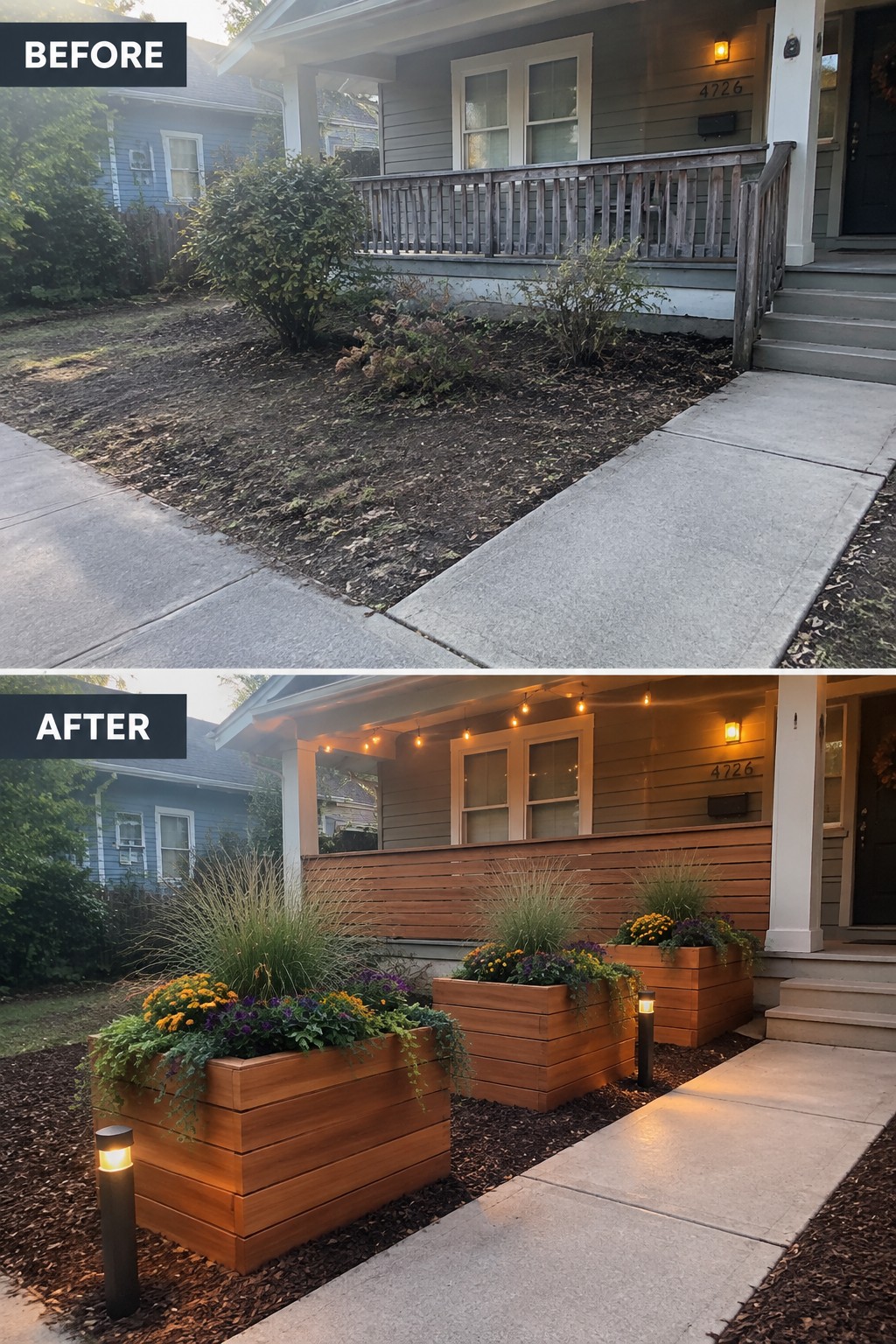
A bare strip of dirt along the front of a house often looks unfinished. Adding a few raised wooden planters fills that space with clear lines and gives you a place to put flowers and grasses that stay tidy. The change turns an empty patch into something that feels intentional instead of leftover.
This approach suits small front yards where you want structure without crowding the walkway. Start with a good cleanup and fresh mulch, then set the planters so they follow the edge of the porch or path. Stick to two or three plant types that repeat and keep the boxes the same size so the look stays simple.
Use Gravel And Stepping Stones To Give A Small Front Yard Structure
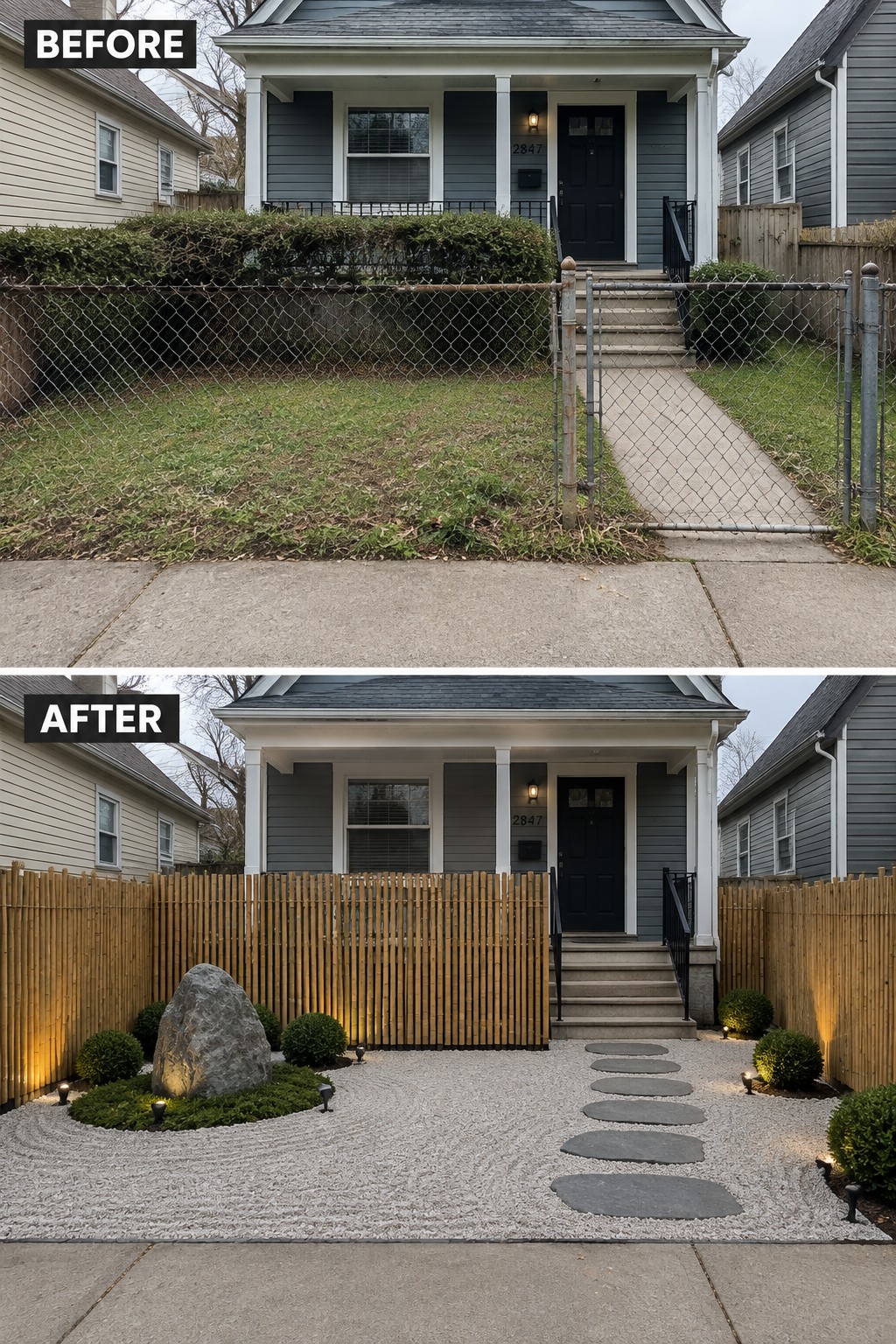
A chain link fence and patchy grass made this front yard feel unfinished and exposed. Switching to a bamboo fence and laying down gravel with stepping stones created a clean, defined space that feels much more intentional without needing constant upkeep.
This approach works especially well on small lots where lawn care is a hassle. Focus on one main material like gravel to keep the look simple, then add just a few plants and lights so the yard stays easy to maintain and still feels welcoming.
Frame The Front Door With Matching Planters
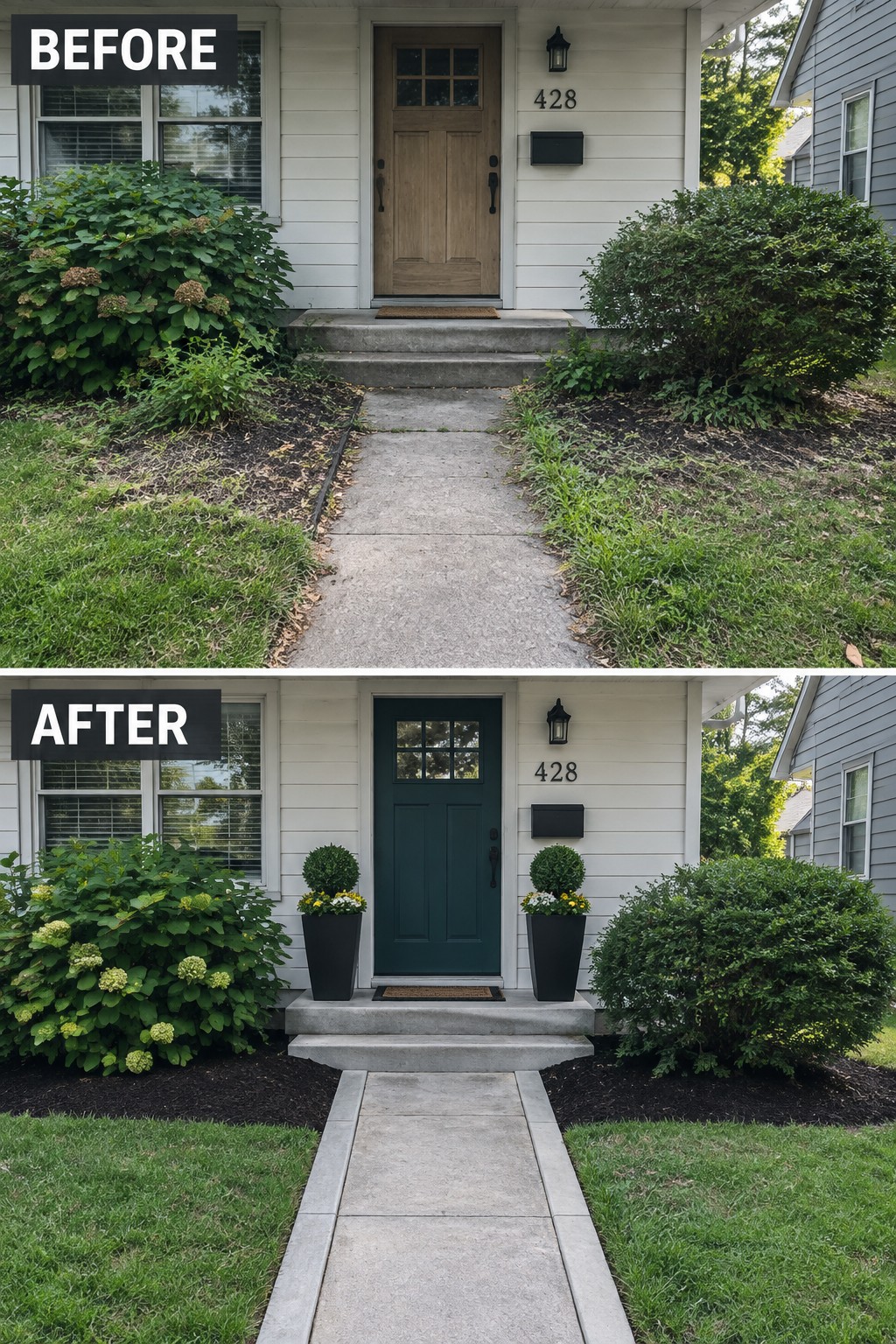
Small front yards often look unfinished when the walkway just runs through grass and shrubs with no clear stopping point. Here the owners straightened the path edges with stone, refreshed the mulch, and added two tall matching planters on the steps. Those planters create a simple frame that draws the eye straight to the door and makes the entrance feel much more deliberate.
This idea works best on modest lots where you cannot add large garden beds. Keep the planters identical and fairly tall so they balance the door without crowding the steps. Choose a dark finish that echoes the door color, and keep the planting inside them low and simple so the shape stays the main feature.
Add A Vertical Garden To A Narrow Side Walkway
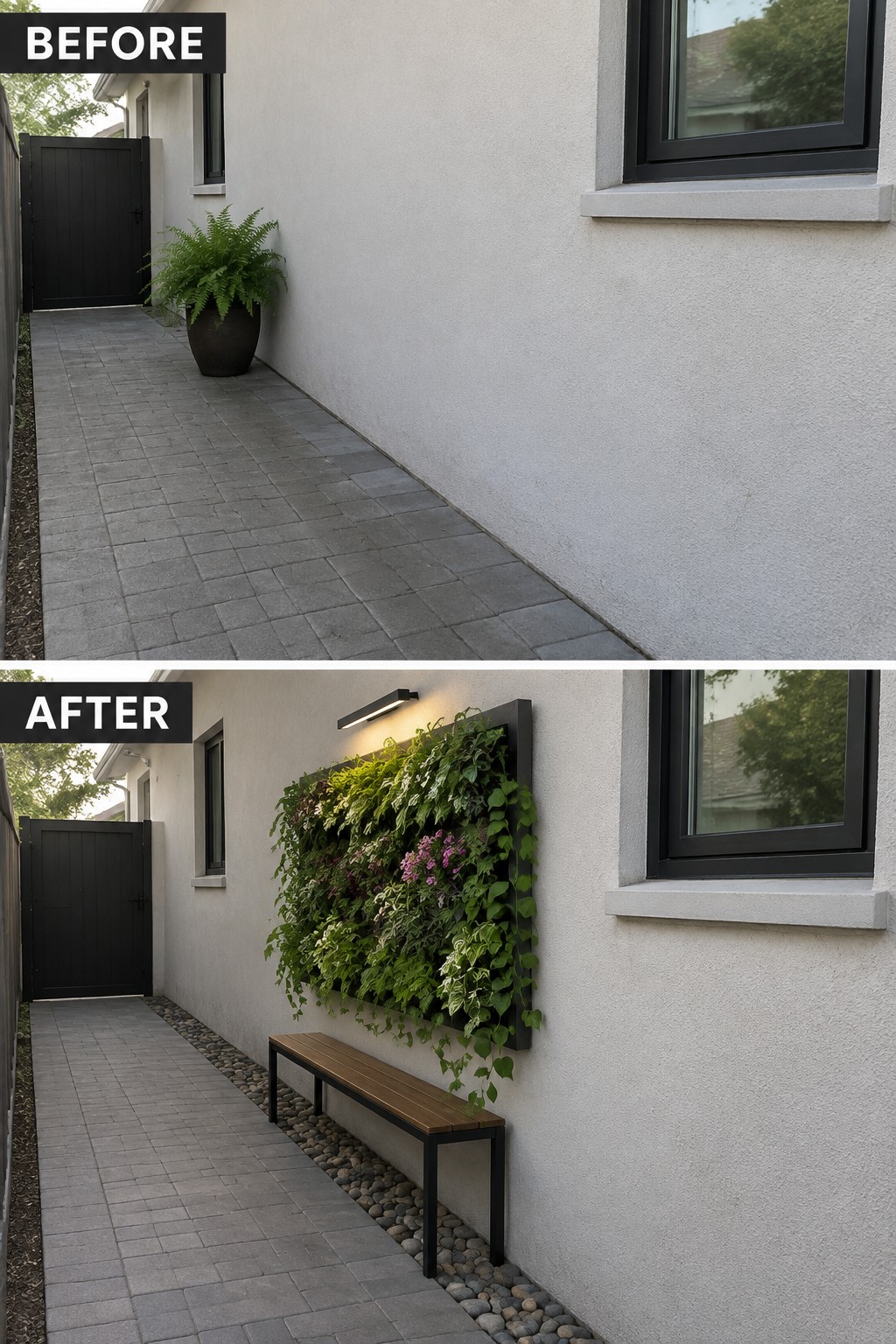
A narrow side path often ends up as just a strip of pavers with little purpose. Adding a vertical garden panel gives the space height and softness without eating into the walkway. The bench and pebble border then turn the leftover strip into a spot where someone might actually pause.
This approach suits homes with tight side yards or long access paths that feel bare. Keep the bench narrow and the planting contained so foot traffic still flows easily. Focus first on the vertical element, then add simple edging and seating to make the area feel finished.
Build Retaining Walls To Give A Sloped Yard Structure
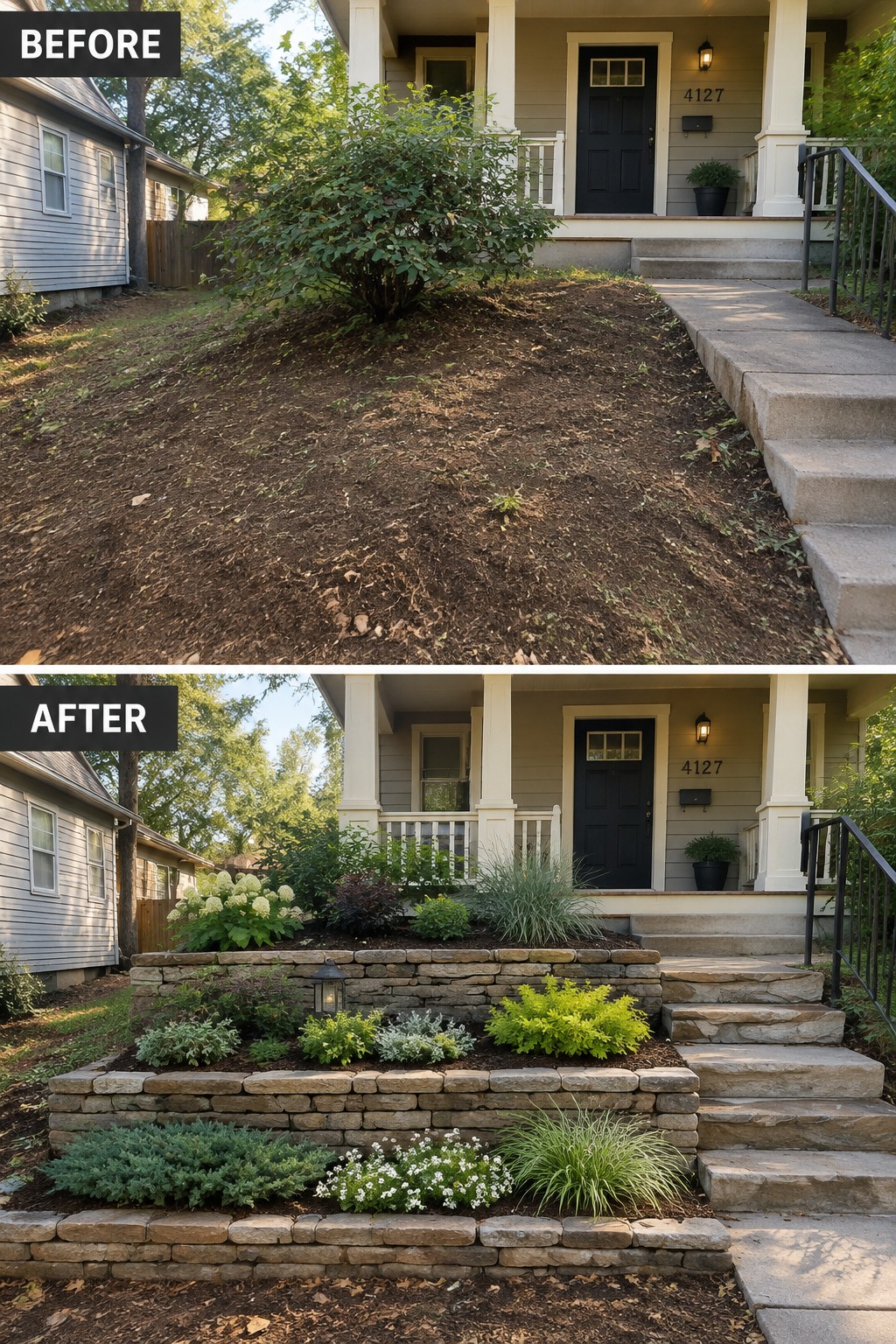
A bare dirt slope in front of a house often looks unfinished and hard to maintain. Low stone retaining walls turn the slope into a series of flat planting beds that hold soil in place and create room for layered plants instead of letting everything slide down.
This idea works especially well on small front yards where the ground drops away from the porch. Put the walls in first to set the shape, then add a simple mix of shrubs and ground covers on each level. The result feels deliberate, cuts down on erosion, and makes the whole entry look cared for without needing a full redesign.
Create Wide Flower Beds To Reduce Lawn Maintenance
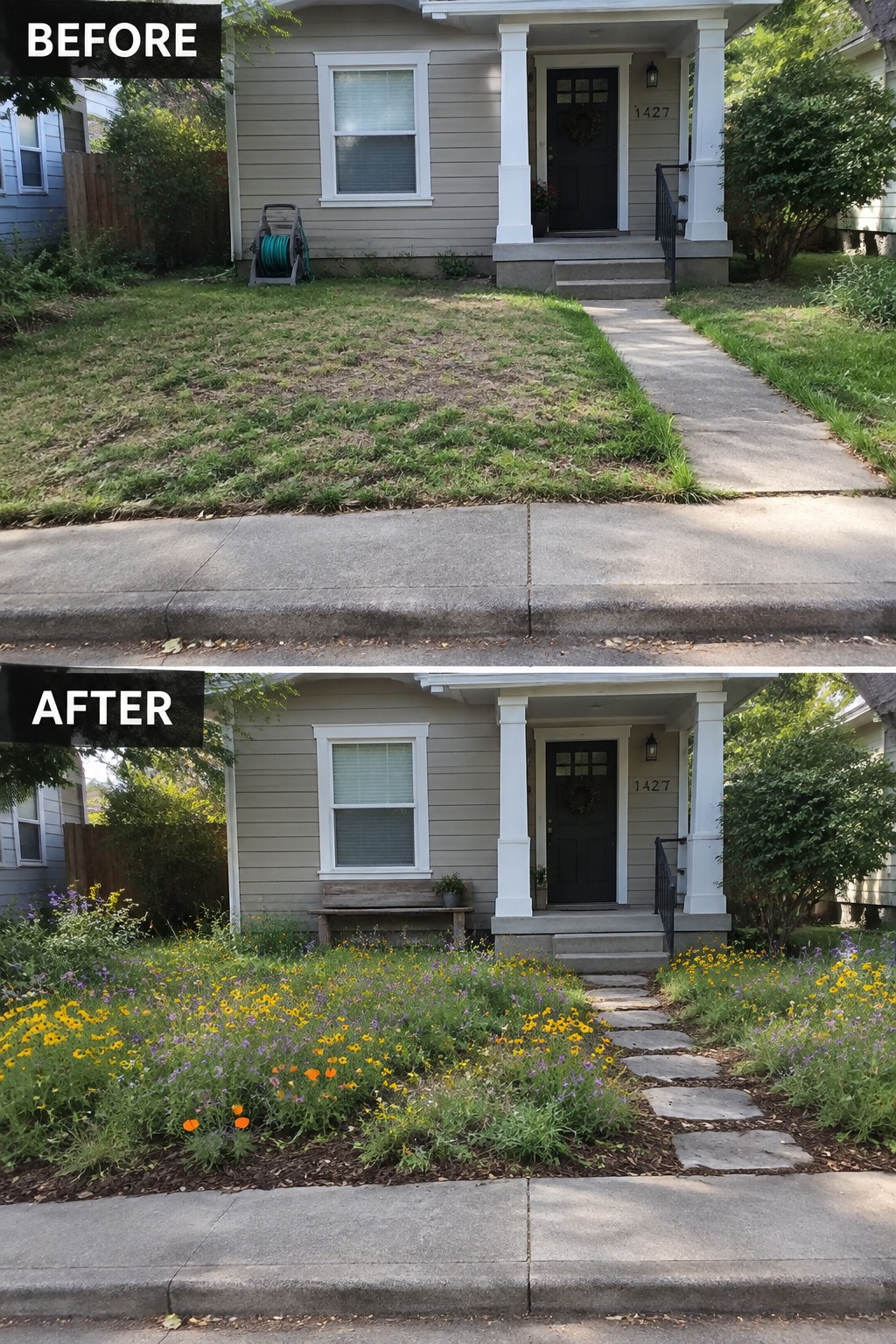
A patchy lawn often makes a small front yard feel unfinished and hard to maintain. Replacing most of the grass with wide planting beds filled with colorful flowers and edged in mulch gives the space clear shape while cutting down on mowing. Adding a simple stone path through the beds makes it easy to walk up to the house without trampling plants.
This approach works well on narrow lots where a full lawn takes up too much room. Start by clearing the old grass, then lay out beds that follow the natural slope of the yard. Choose a mix of low-growing flowers that bloom at different times so the beds stay interesting without constant work. Keep the path wide enough for comfortable footing and leave a small strip of grass near the sidewalk if you still want some green.
Define A Front Walkway With Stepping Stones

Replacing a solid concrete path with stepping stones set in gravel gives the front yard a clearer layout. The narrow borders of shrubs on both sides turn a plain strip of lawn into a walkway that feels more intentional and easier to follow.
This idea suits small front yards that need structure without adding a lot of hardscape. Lay the stones first to set the rhythm, then add gravel between them and keep the planting simple with one type of low shrub repeated along the edges. It leaves room for the lawn while making the path feel like part of the overall design.
Replace A Worn Fence To Refresh A Small Front Yard
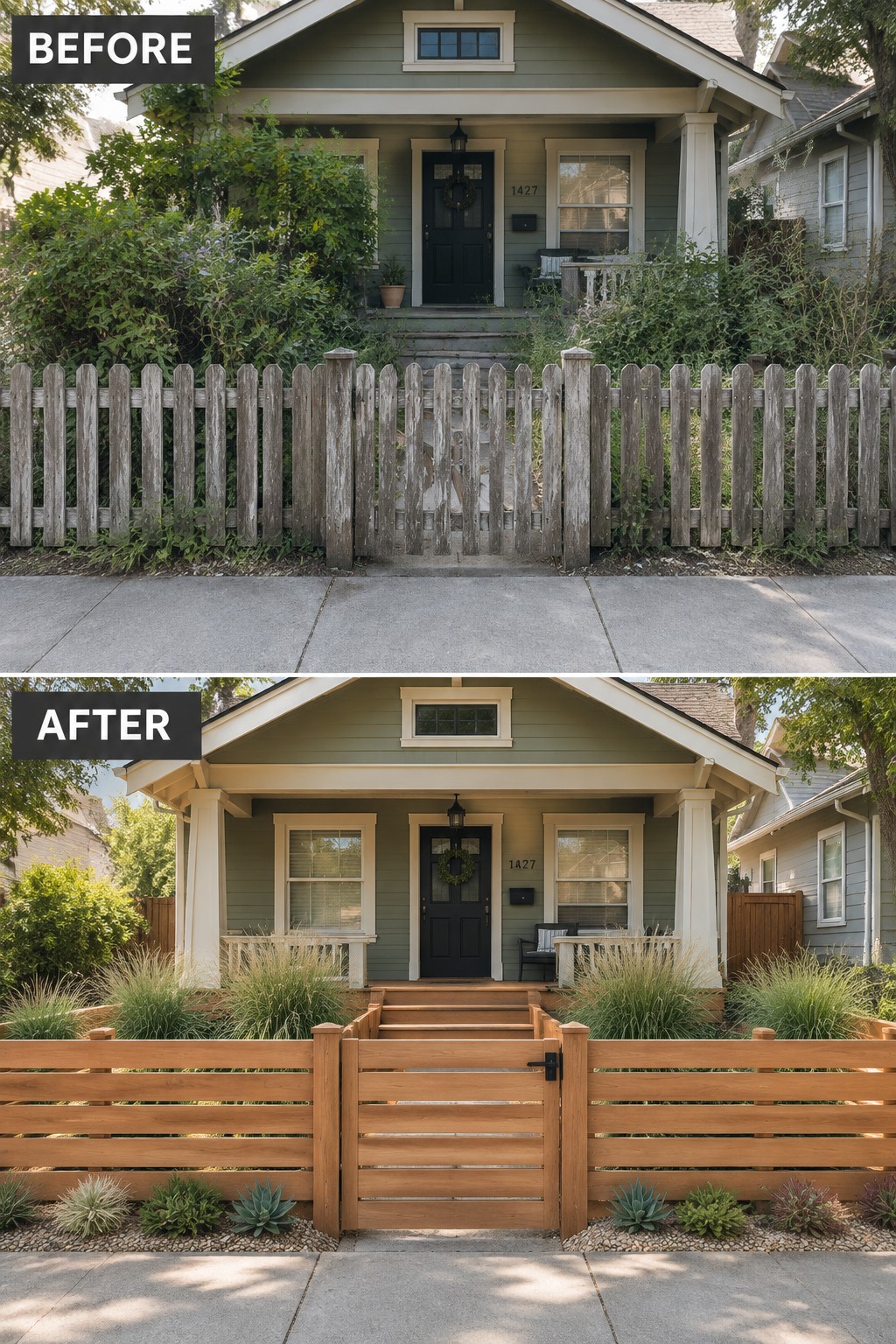
An old weathered fence and messy shrubs can make even a small front yard feel neglected. Swapping the fence for a lower horizontal style and clearing the overgrowth opens up the space and gives it a much cleaner line along the sidewalk.
This approach works well on narrow lots because the fence stays low enough not to close things in while the gravel beds and simple grasses keep maintenance low. Focus on one material change first, then add a few tough plants that stay neat without constant trimming.
Use Matching Planters And Boxwood Hedges To Frame The Entry

The before photo shows a typical small front yard that feels scattered. The shrubs on either side had grown uneven and messy, and the two potted plants did little to connect the porch to the rest of the yard. In the after photo, two tall evergreens in matching dark planters now sit on either side of the door, while low boxwood hedges run along the edges of the walk. That single change pulls the whole front together and makes the entry feel intentional.
This approach works well on small lots where you want order without crowding the space. Start by removing the oldest, most overgrown plants so you can see the actual shape of the porch and path. Then repeat the same planter style and plant height on both sides of the door. The low hedge keeps the lawn edge neat and stops the beds from looking like random patches of mulch. Keep the rest of the planting simple so the symmetry stays the main feature.
Add A Low Planter To Frame The Front Entry
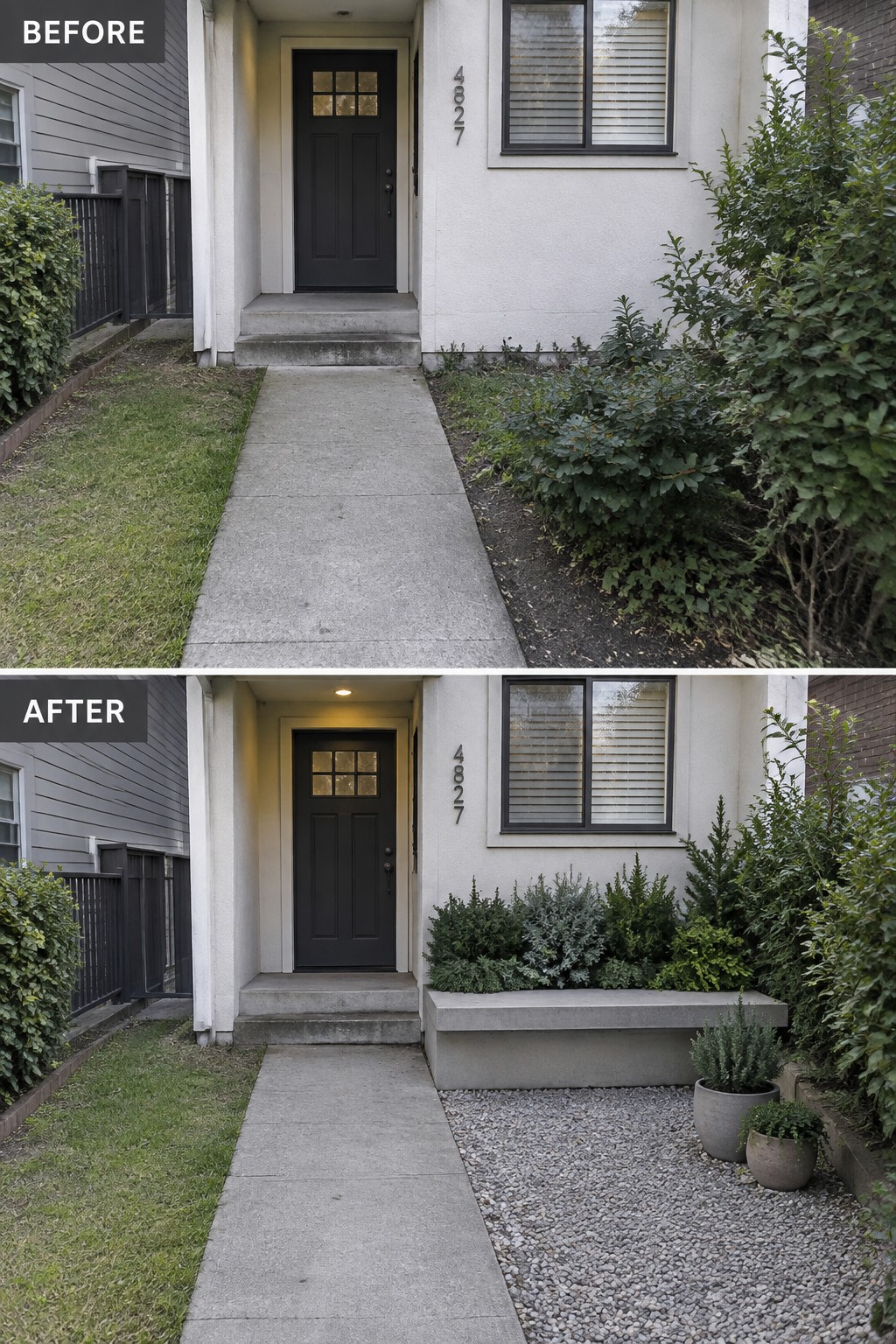
A low concrete planter gives a small front entry some much needed structure. The before photo shows a loose dirt edge with no clear boundary between the path and the planting area. Adding the raised ledge creates a clean line, holds a few shrubs in place, and keeps everything from feeling scattered.
This idea works best on narrow lots where you want planting without losing walkway space. Keep the plants low and simple so they do not block the door or make the entry feel crowded. Gravel in front of the planter helps with drainage and gives the whole area a finished look without extra work.
Create Narrow Gravel Borders With Repeating Grasses
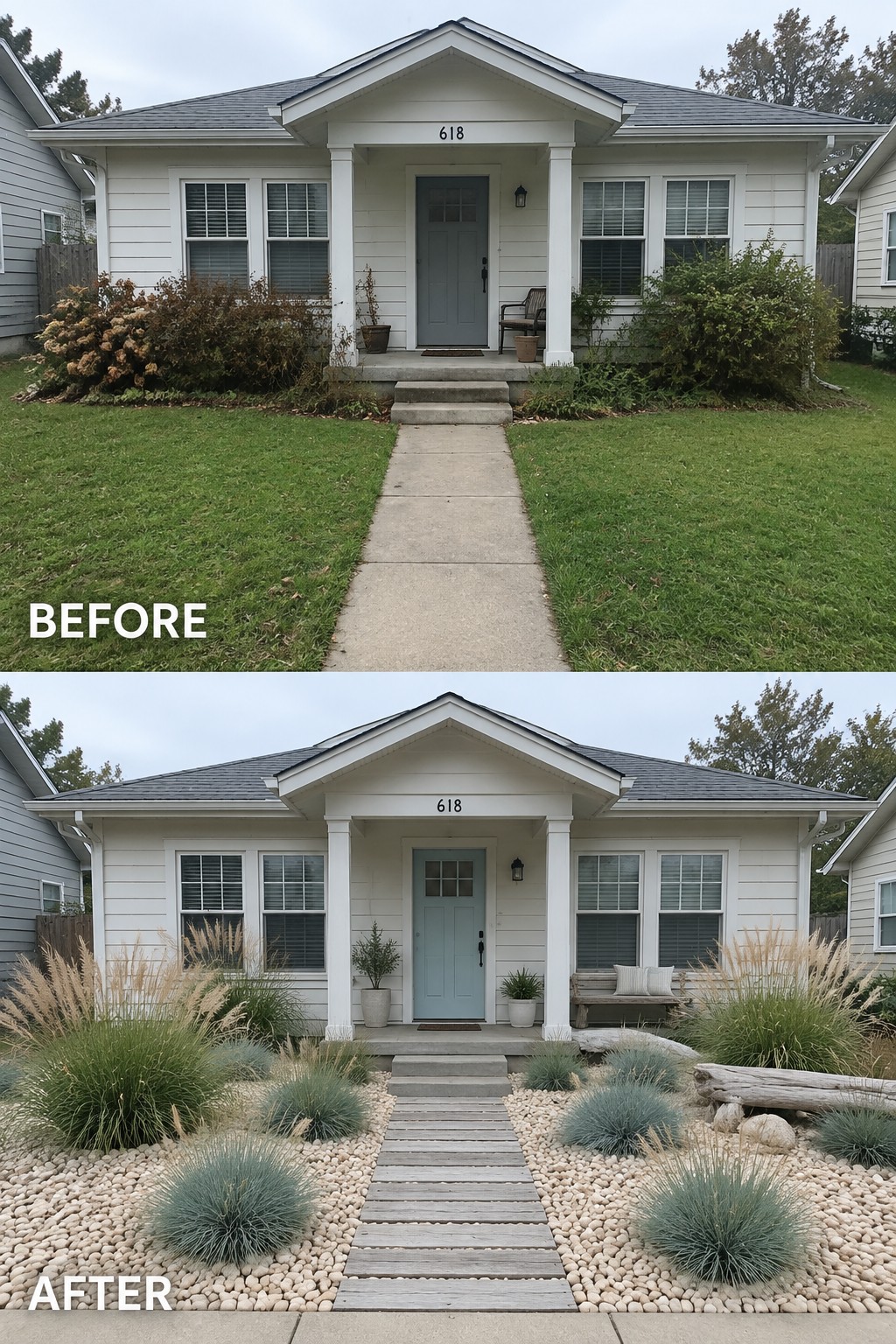
A small front yard often looks messy when the lawn runs right up to the house with no clear edges. Replacing that ragged border with gravel beds and a few repeating grasses gives the space shape without needing a lot of new plants or hardscaping.
This works best on modest lots where you want low maintenance and a tidy look from the street. Clear out the old shrubs first, lay down a simple gravel base, and group plants in clusters rather than spreading them thin. Keep the beds narrow near the walk so there is still room to move and mow what lawn remains.
Add Landscape Lighting To Define A Small Front Yard
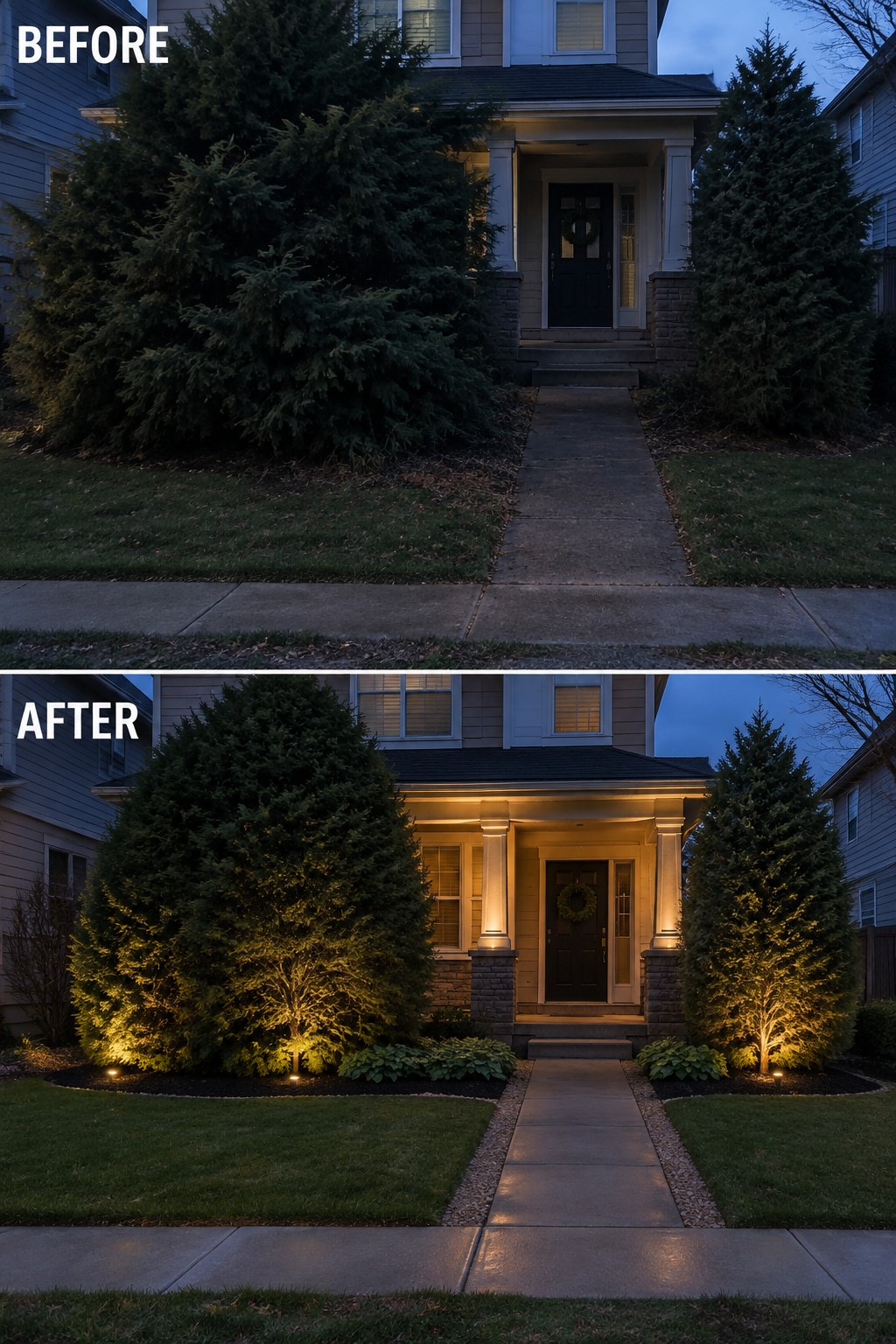
Many small front yards look fine by day but turn into dark, shapeless spaces once the sun goes down. A few simple lights aimed at the trees and placed along the walkway give the whole area structure and make the entry feel more intentional.
This approach works best when you keep the lighting understated. Pick two or three key plants to highlight, add low lights along the path edges, and let the light do the work of showing where the yard begins and ends. It is an easy change that improves how the house looks from the street without requiring a full redesign.
Add A Water Feature As A Front Yard Focal Point
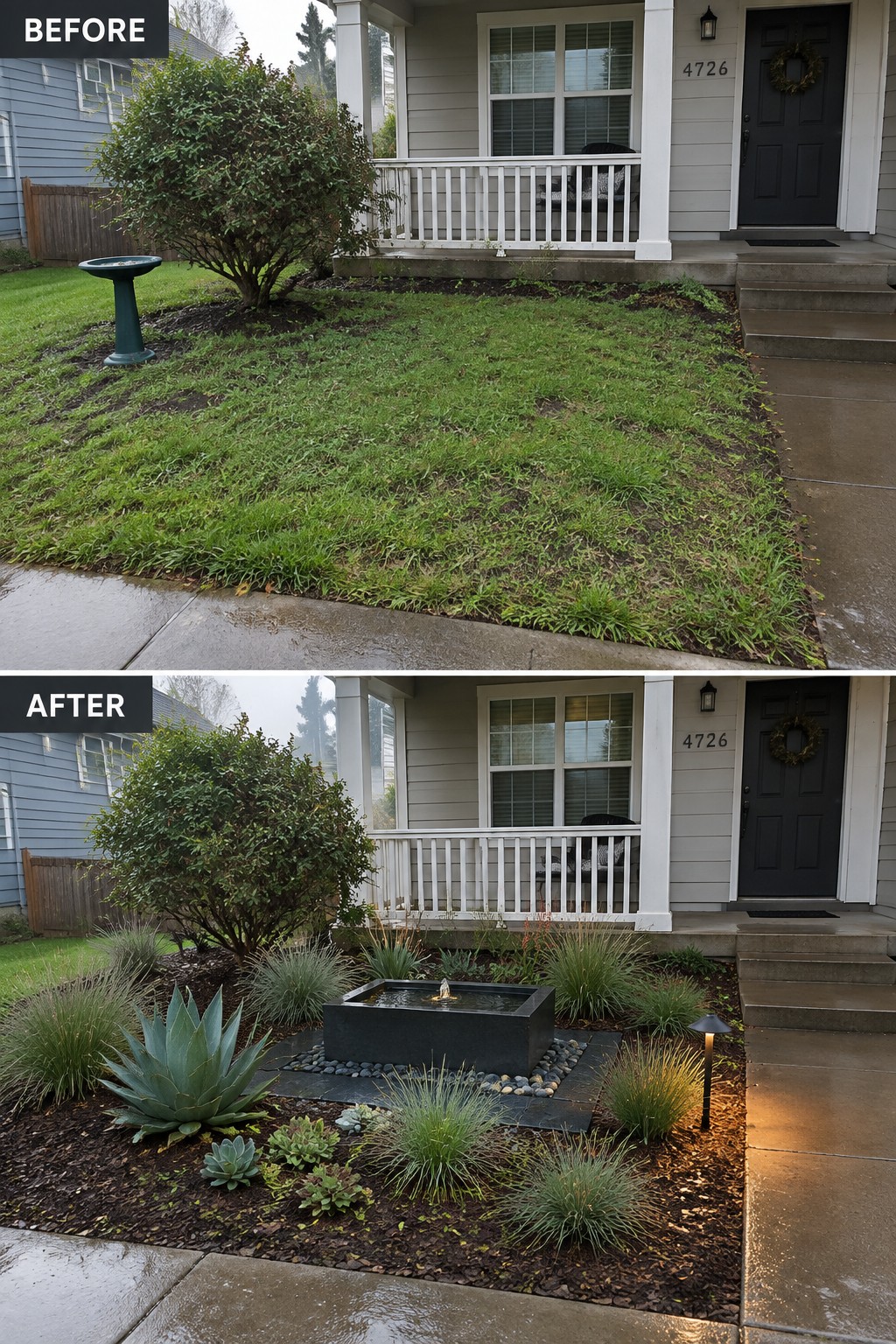
The before photo shows a plain strip of grass running right up to the house with no clear edges or plan. In the after photo, the same area has been turned into neat beds edged with dark mulch and centered around a small water feature. That single change gives the whole front yard a finished look without needing a big budget or lots of space.
This approach works well on narrow strips in front of porches or along walkways. Start by cleaning up the grass and laying out simple rectangular or square beds, then add one main focal point like a fountain or large plant. Keep the plant choices limited so the beds stay easy to maintain and do not crowd the walkway.
Add A Defined Bed Around Your Mailbox
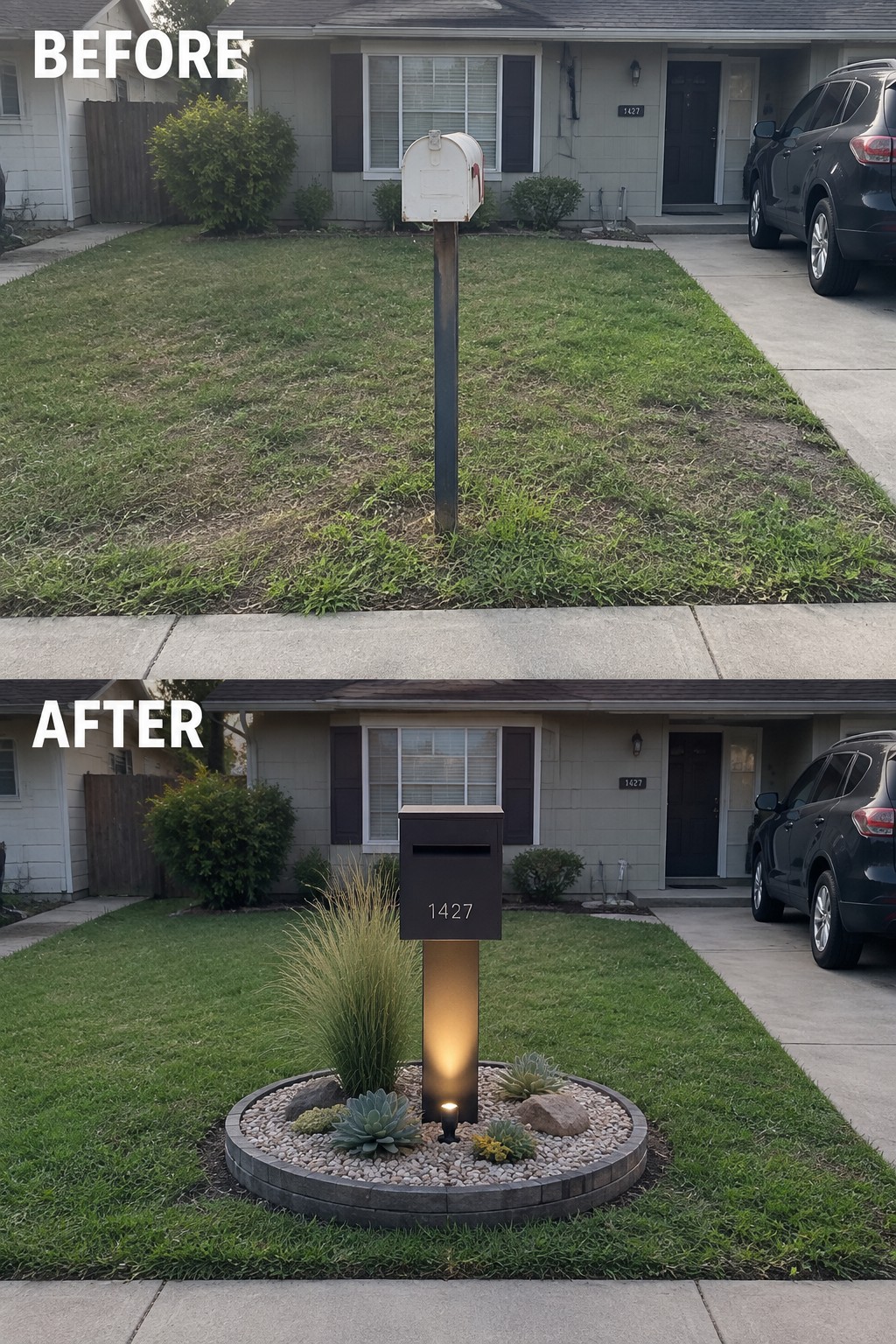
A mailbox sitting alone in the grass can make a front yard feel unfinished. Adding a simple circular bed with gravel, a few plants, and a low border gives the post a clear purpose and turns it into a small focal point without crowding the lawn.
This idea works well for small yards because it adds structure with very little space. Keep the bed low so it does not block the view from the street, choose tough plants that need little water, and use a light if you want the spot to show up after dark.
Add Stone Edging To Shape A Foundation Bed
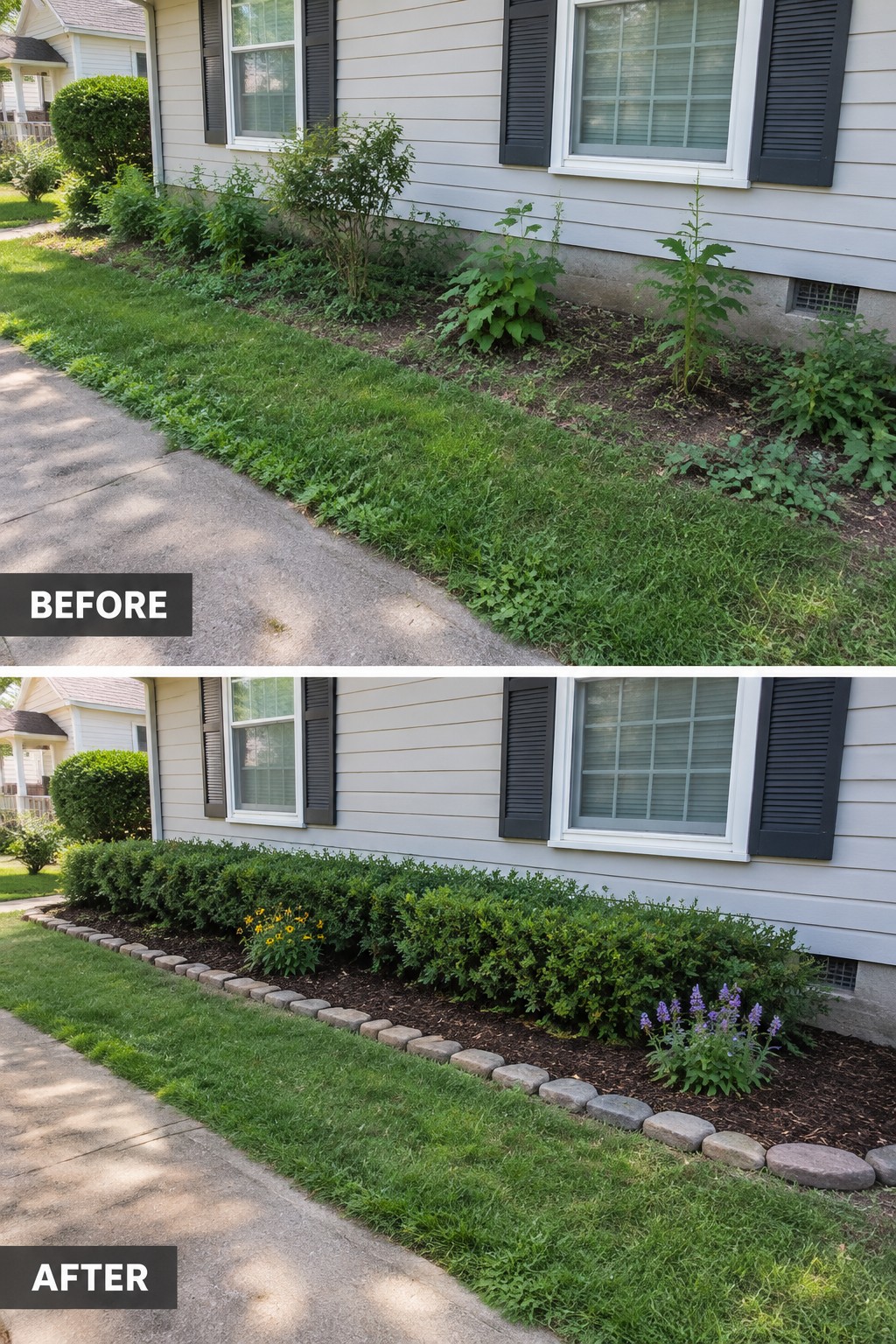
A narrow strip of grass and weeds right against the house often looks messy and unfinished. Laying a low stone border and adding mulch turns that same area into a clear garden bed that separates the lawn from the foundation. The change gives the front of the home a much tidier outline without any major construction.
This idea suits small front yards where space is tight. Keep the curve gentle so the bed does not crowd the walkway, and choose plants that stay low enough to leave the windows clear. The edging does most of the work by holding the mulch in place and stopping the grass from creeping back in.
Refresh Small Front Beds With Dark Mulch And Repeated Plants
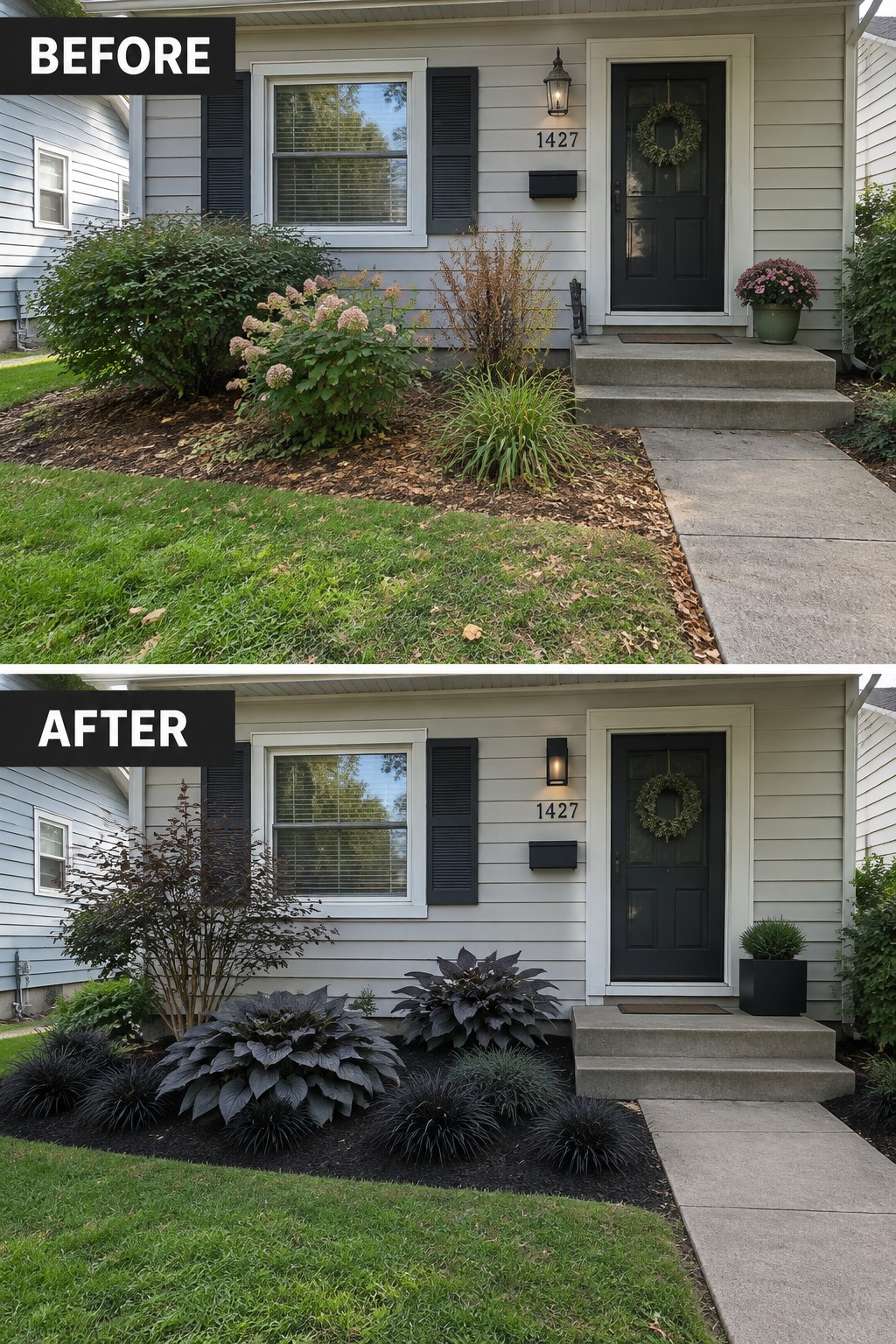
The main change here is how the front beds went from a jumble of mixed shrubs and patchy mulch to a clean layout with dark mulch and a few repeated plants. That simple structure makes the whole entry feel more intentional and easier to maintain, especially on a smaller lot where every plant shows.
This approach works well on modest front yards because it keeps the focus on the house without crowding the space. Start by clearing out whatever is overgrown, then lay down fresh mulch and pick two or three plant types that repeat across the bed. Dark foliage against black mulch gives a modern look that still feels low-key, and it leaves room for the lawn and walkway to stay open.
Frequently Asked Questions
Q: How do I choose plants that fit a modern style in a small space? A: Go for clean lines with grasses or boxwoods in simple pots. Group them in odd numbers for interest. Stick to two or three colors max so things do not feel cluttered.
Q: Can these makeovers handle pets or kids running around? A: Choose tough ground covers like clover instead of delicate flowers. Add stepping stones through the beds to protect plants. This way the yard stays usable without constant repairs.
Q: What if my budget is under a few hundred dollars? A: Start with mulch and a couple of new shrubs from the local nursery. Rearrange existing pots and add solar lights for instant updates. Save bigger changes like hardscaping for next year.
Q: How do I keep the front yard from looking flat after the update? A: Raise one or two beds with low retaining blocks to add height. Place a tall thin plant near the door as a focal point. Walk the space at different angles to check the layers before you finish.
