

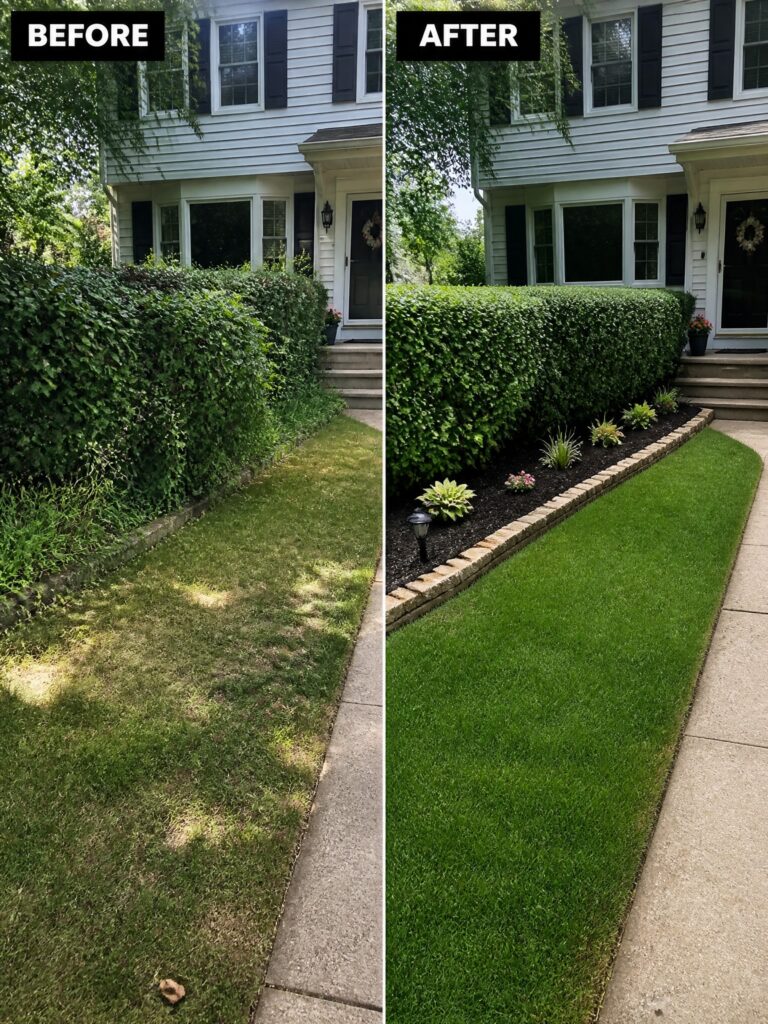
Yards often end up looking messy after a busy stretch of the year when mowing gets skipped and beds start to blend into the grass. I have found that paying attention to the edges first usually makes the rest of the cleanup feel more manageable. It is surprising how much difference a clear line can make. Once the boundaries are set, it is easier to decide which plants need trimming back and where a path could keep feet out of the mud. Those kinds of adjustments tend to make the whole yard feel more intentional as the seasons change.
Add Defined Edges To Clean Up Overgrown Beds
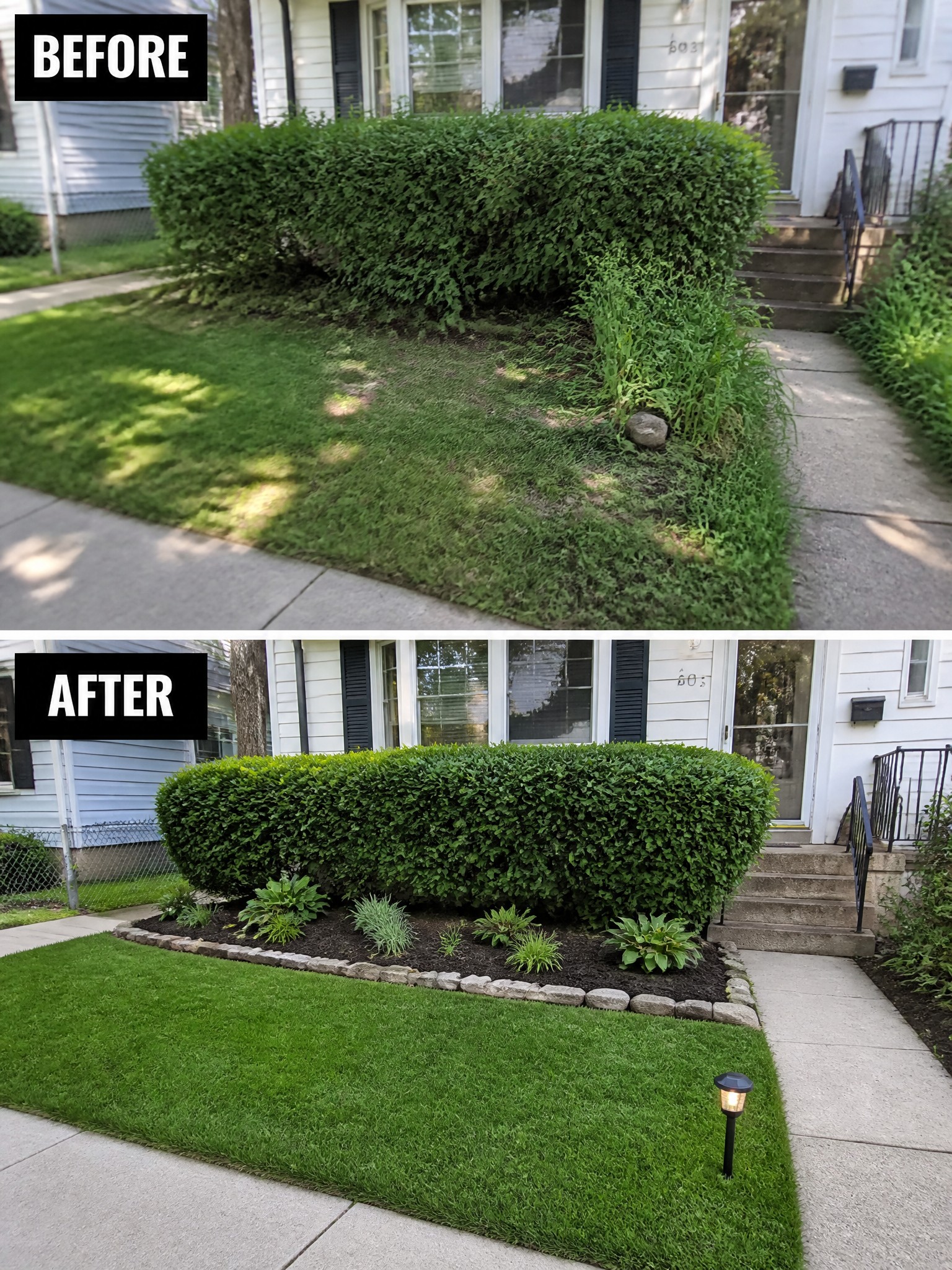
A simple border can make a big difference when the planting area has grown out of control. Here the stone edging and mulch created a clear line that kept the hedge contained and gave the whole front a much tidier look.
This approach works best on smaller yards where the beds sit right next to the lawn. Cut a clean edge first, add the border material, then mulch before planting. It stops the grass from creeping in and makes future maintenance easier.
Add Gravel And Pavers To Define A Narrow Side Yard
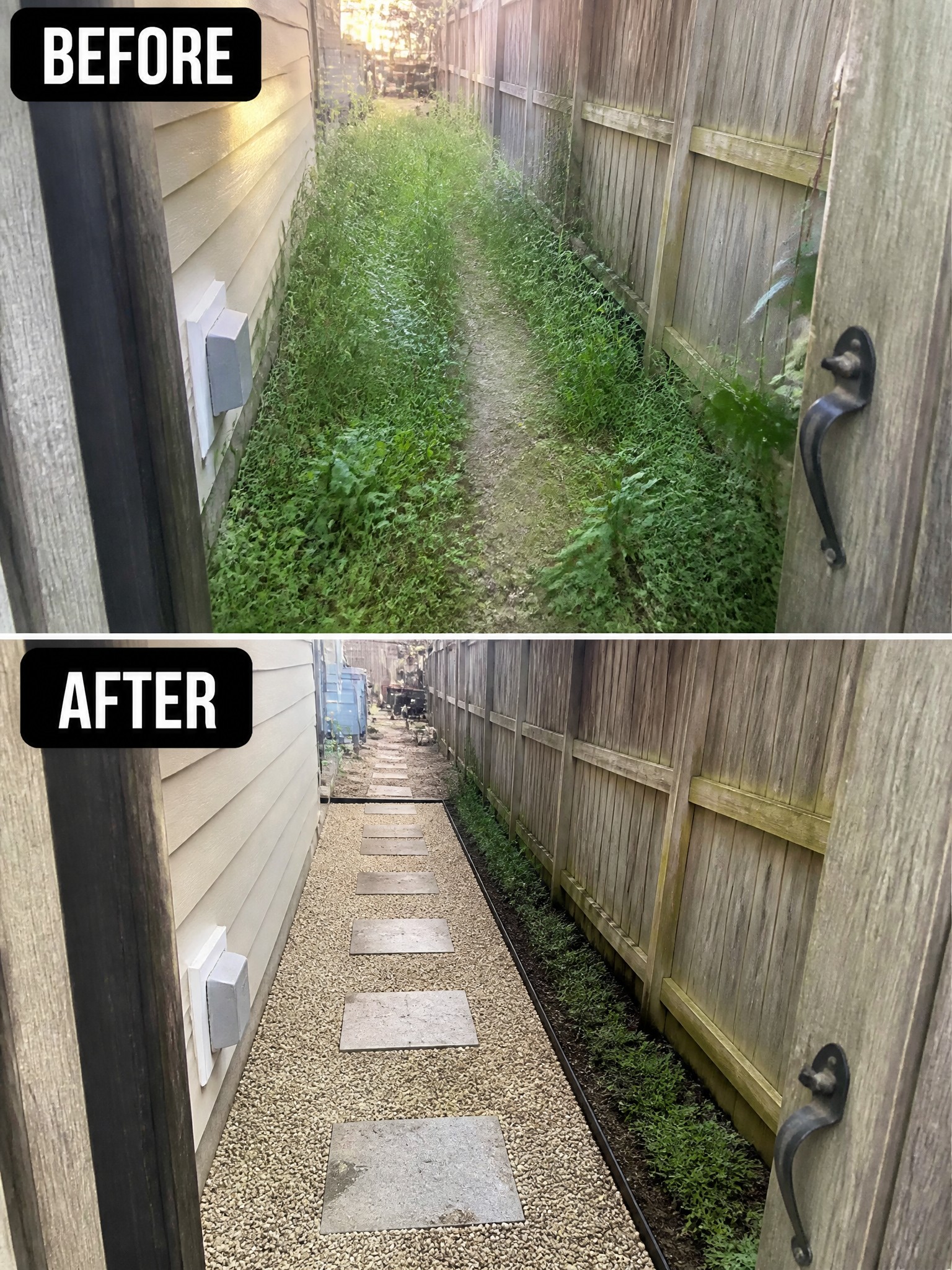
An overgrown side yard quickly turns into a weedy strip that feels neglected and hard to walk through. Clearing the tall grass and laying down gravel with a few stepping stones creates a simple, usable path while keeping the space open. The clean edges along the fence also make the whole area look intentional instead of forgotten.
This approach works well on any narrow side yard where you need access but do not have room for planting beds or furniture. Start by removing the overgrowth, then add a weed barrier before the gravel so maintenance stays low. Keep the path width consistent and leave a thin strip of low planting along the fence if you want a bit of green without crowding the walkway.
Add Defined Beds To Clean Up A Messy Yard Edge
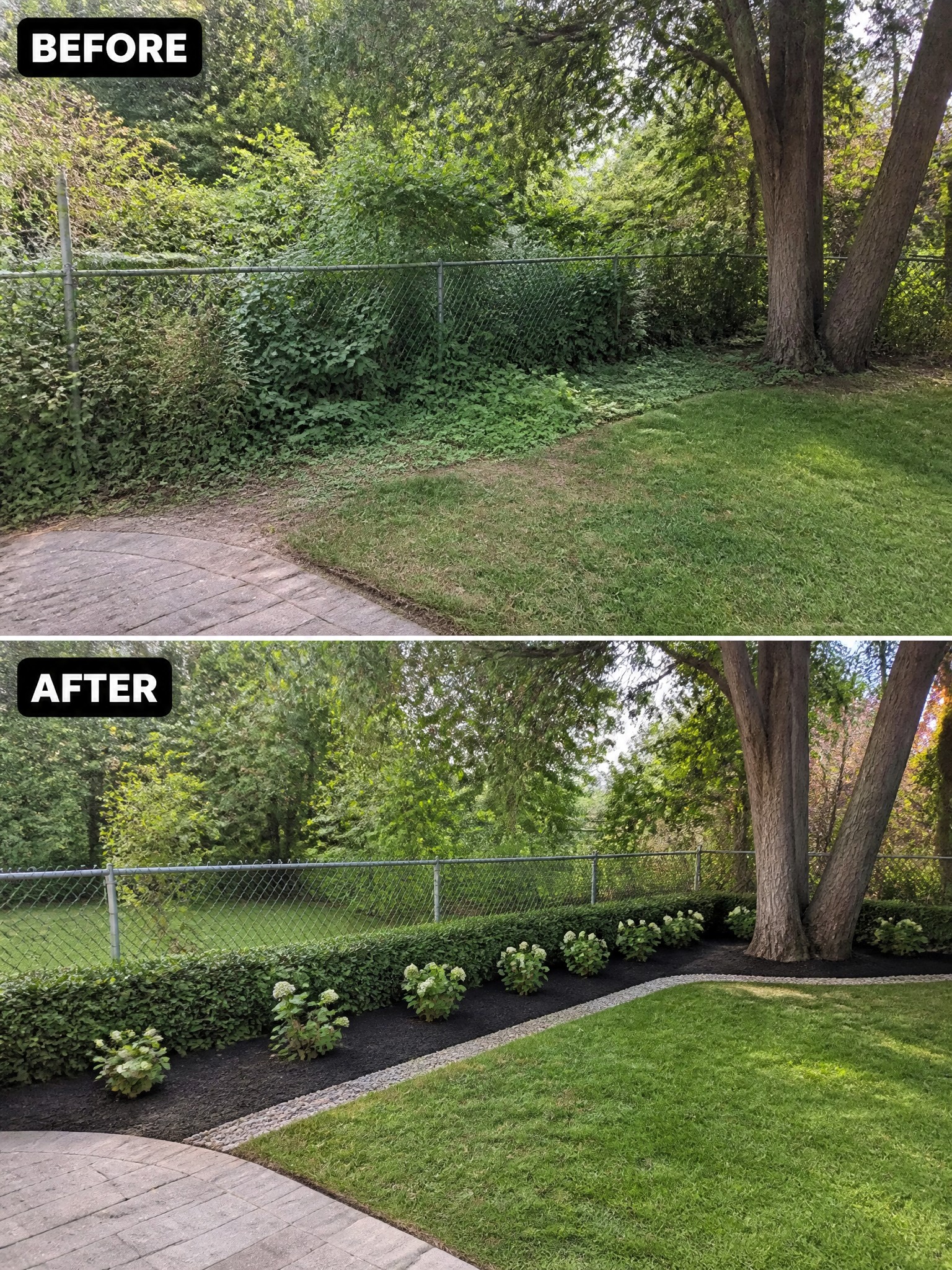
An overgrown fence line often makes the whole yard feel neglected. In this case, clearing the wild growth and installing a low hedge with a mulched bed and a few shrubs created a clear boundary that keeps the lawn tidy while still allowing the trees beyond to stay natural.
This approach works well on properties that back up to woods or open land. Start by cutting back the heaviest growth, then lay down a simple bed with mulch and repeat the same plant every few feet so the line stays easy to maintain. It keeps the space looking intentional without turning it into a formal garden.
Define An Overgrown Yard With Raised Garden Beds
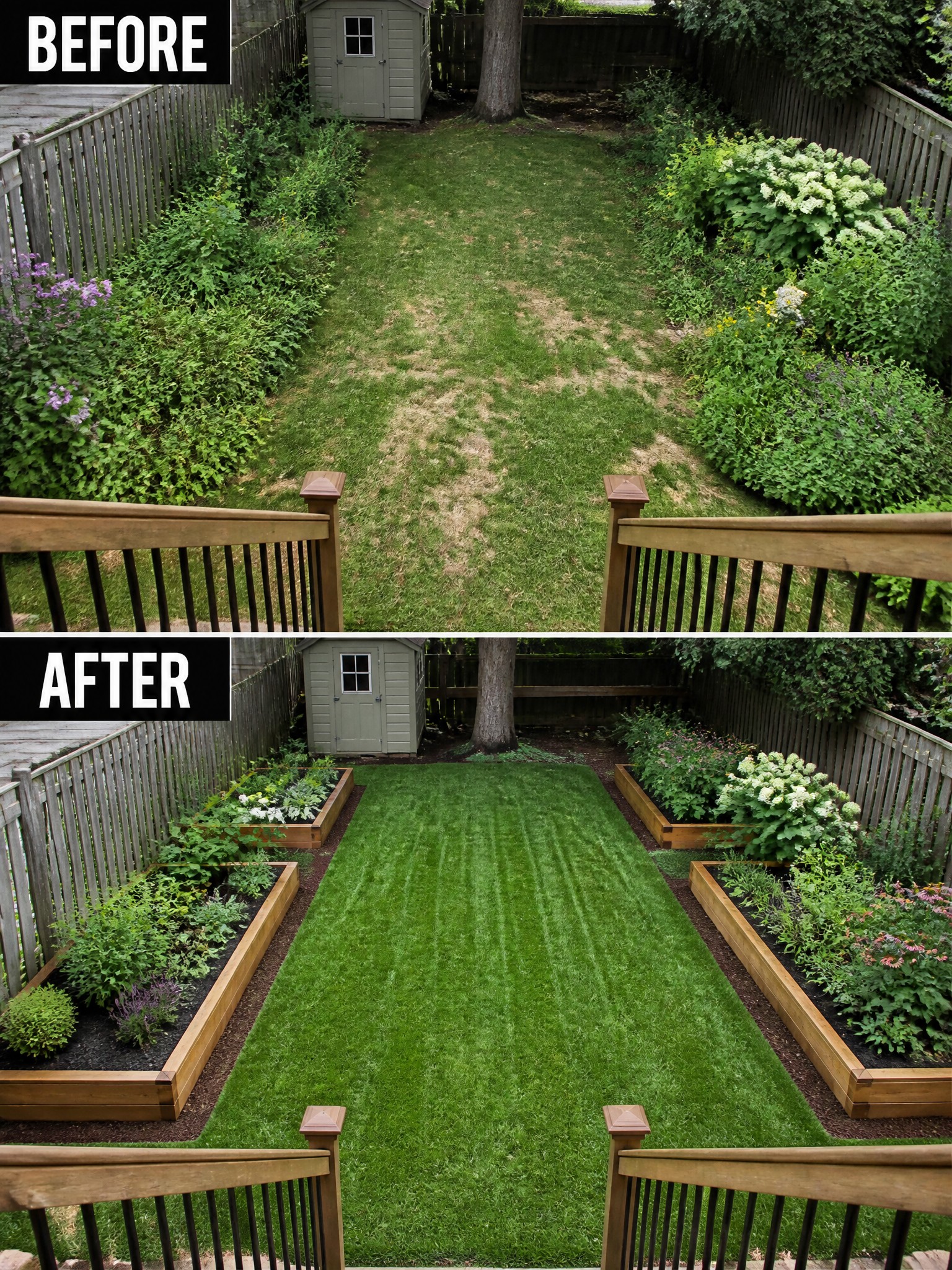
The main change here is the shift from a patchy lawn and scattered shrubs to a clean rectangle of grass framed by raised beds. Those beds pull the planting into neat lines and stop everything from creeping onto the lawn.
This idea suits small or narrow yards where the space can start to feel messy fast. Clear the worst growth first, then add simple beds along the edges to hold the plants. The beds keep maintenance easier and give the whole yard a finished look without needing new paving or big structures.
Add Clean Edges To Tame Overgrown Beds
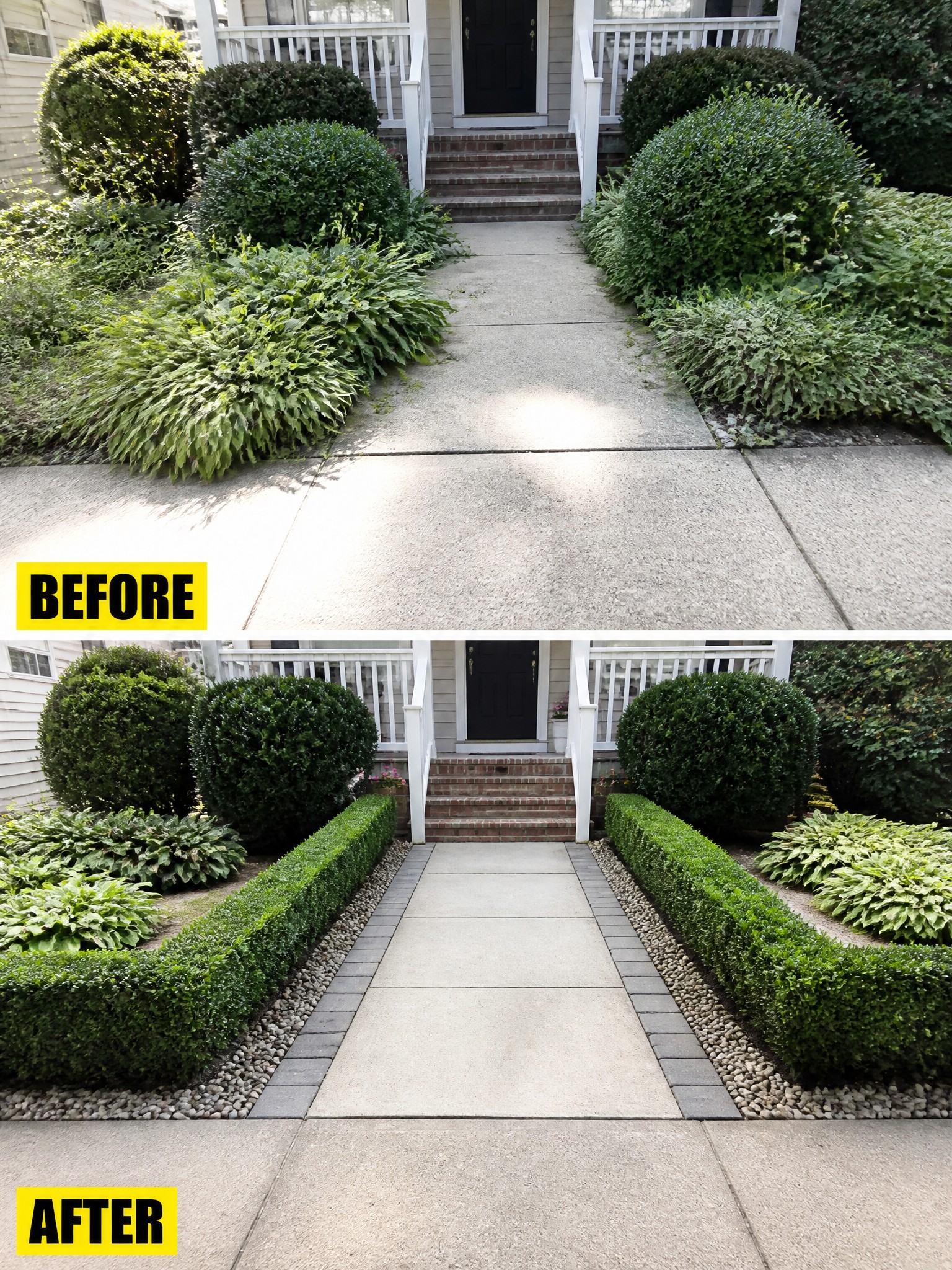
The main change here is simple. The plants were allowed to spill onto the walkway, which made the whole front look messy. Once low hedges were planted and gravel was added along the edges, the beds gained clear shape and the path stayed open.
This approach works well on any front yard where the planting has gotten away from you. Start by cutting everything back hard, then install a firm border with gravel or pavers so the beds stay contained. It keeps the space looking intentional without needing a full redesign.
Add Defined Edges To Shape An Overgrown Yard
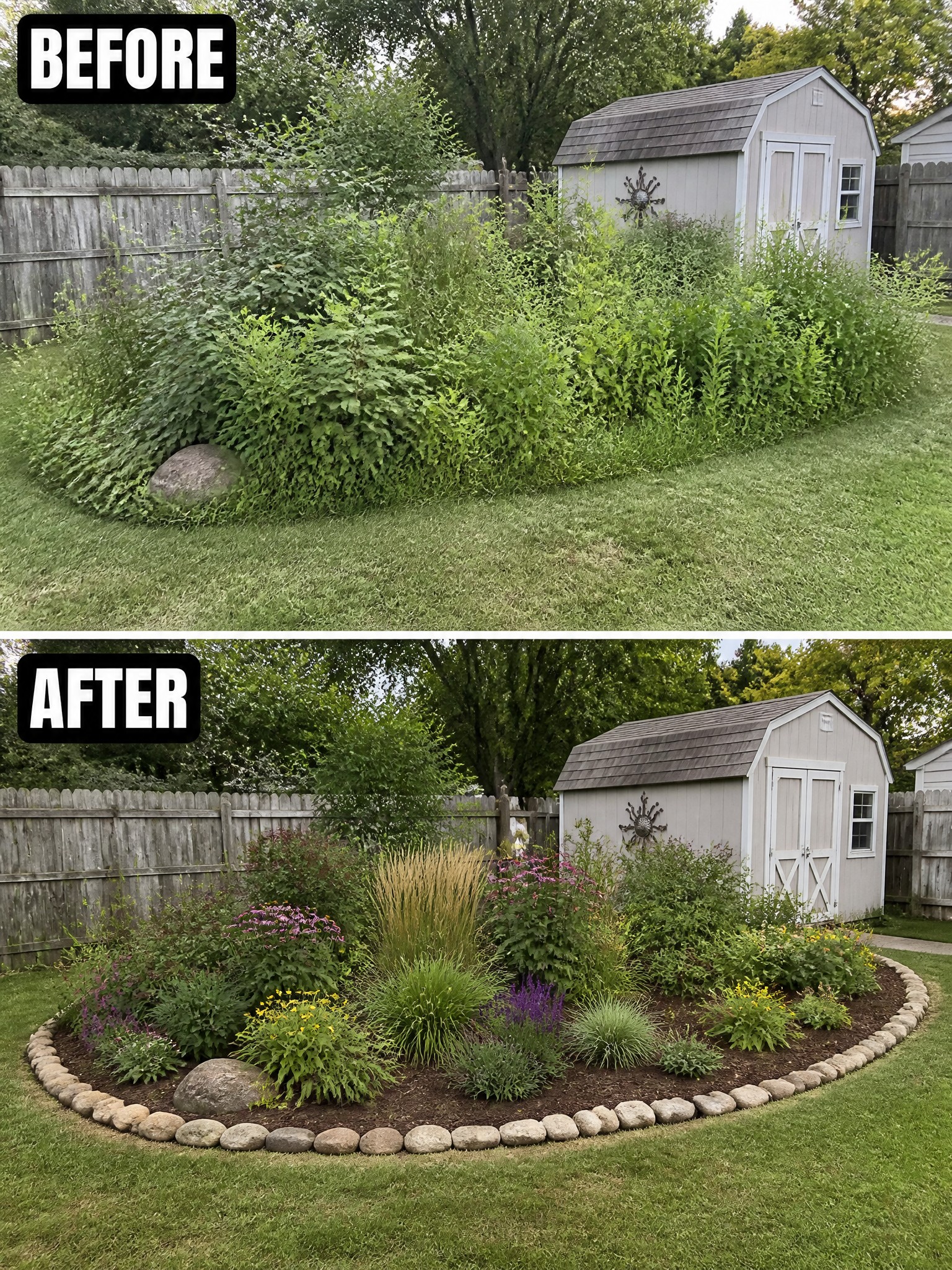
Clearing the overgrowth is only half the job. The real change here came from laying down a simple stone border and mulching inside it, which turned a shapeless patch of weeds into a contained garden bed.
This idea works best in smaller yards or areas beside sheds and fences where you need structure fast. Start by cutting everything back, then mark the shape you want with rocks or bricks before you plant.
Add Structure To An Overgrown Backyard
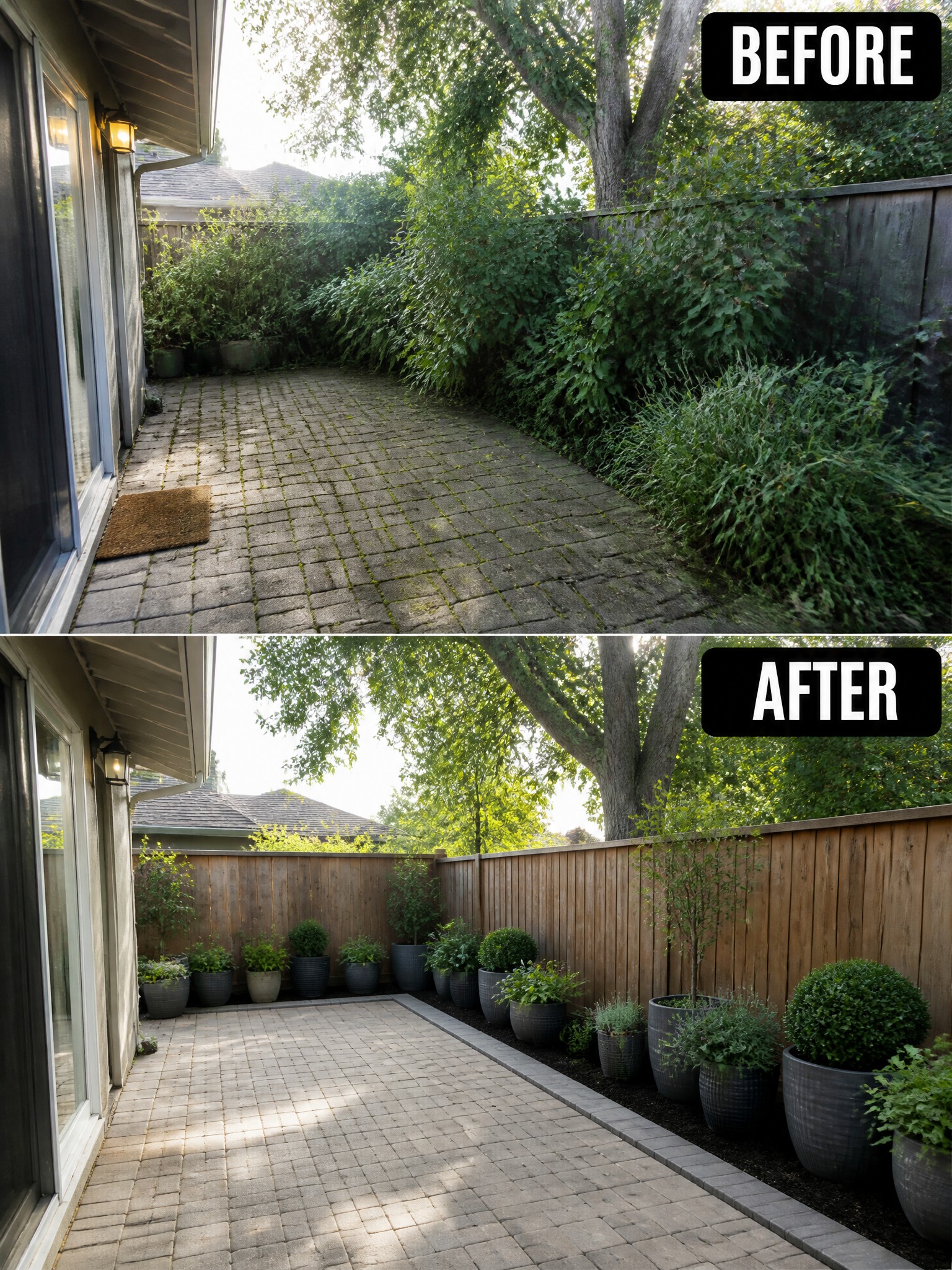
Clearing thick overgrowth along the fence line opens up the space and makes the yard feel much larger. In the after photo, a simple planted border with a row of matching pots replaces the wild growth and gives the whole area a planned look without needing a full garden redesign.
This approach works best in narrow side yards or back corners where plants have taken over. Start by removing the biggest overgrown sections, then lay down a clean edge and use containers to fill the bed. It keeps maintenance low while still adding greenery that stays neat year after year.
Add Structure To An Overgrown Slope
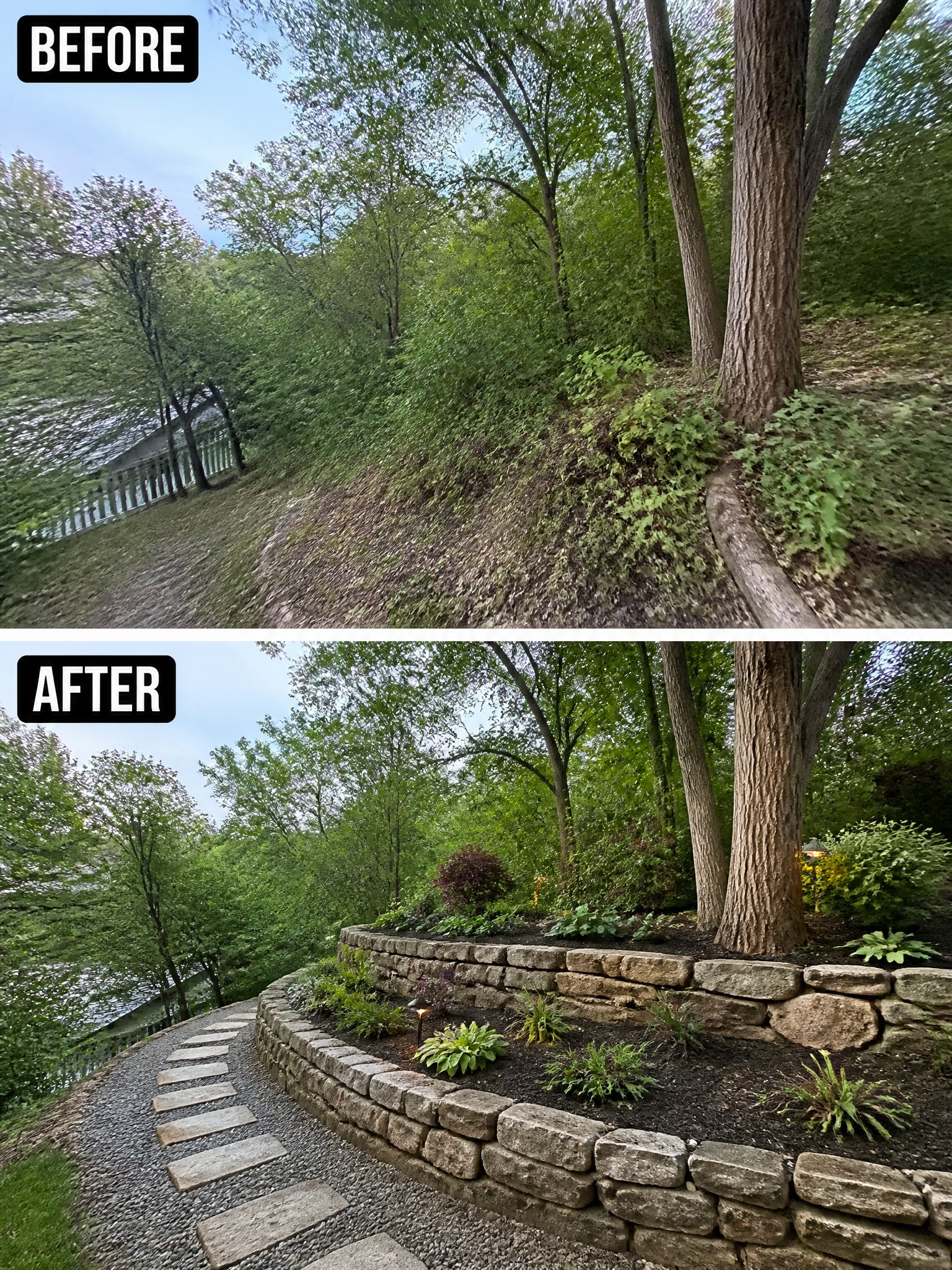
Building low stone retaining walls turns a steep, messy hillside into flat, manageable garden beds. The walls hold the soil in place so mulch and plants stay where they belong instead of sliding down the hill.
This idea works best on yards with noticeable slopes where grass or ground cover never looks tidy. Clear the overgrowth first, then add the walls to create simple terraces before planting. Keep the beds narrow enough that you can reach everything without extra paths.
Create A Clean Edge Along A Fence Line
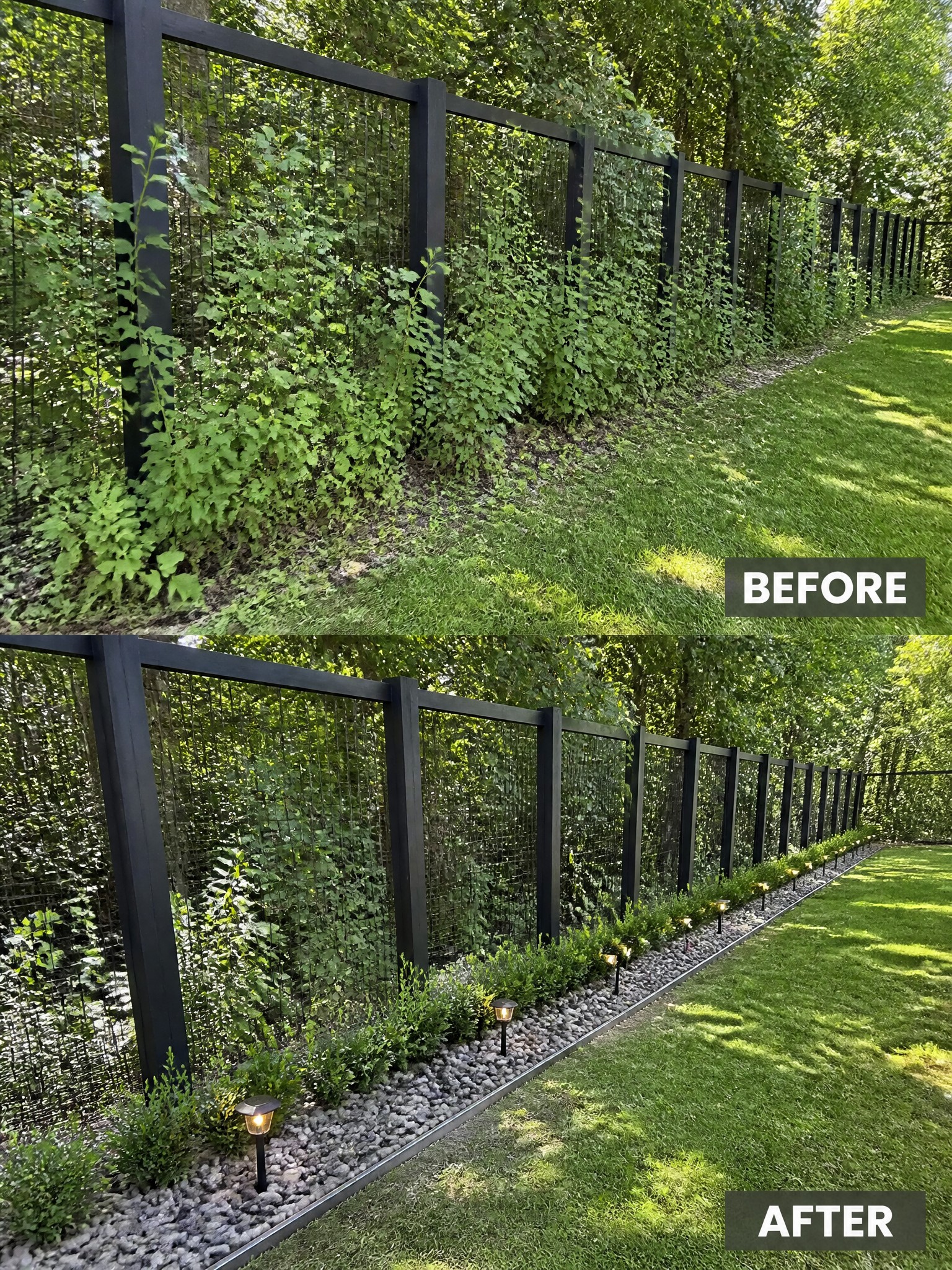
An overgrown fence quickly makes the whole yard feel neglected. Clearing the heavy vines at the base and adding a strip of gravel with low shrubs gives the fence a clear boundary. The lights along the edge are a small touch that makes the line stand out at night without much extra work.
This approach works well on long fence runs where the lawn meets the structure. Start by cutting back the growth right against the fence, then lay down a simple border material like gravel or mulch before adding a row of compact plants. It keeps the area tidy and stops the overgrowth from creeping back into the lawn each season.
Add Gravel Beds To Create Structure In An Overgrown Yard
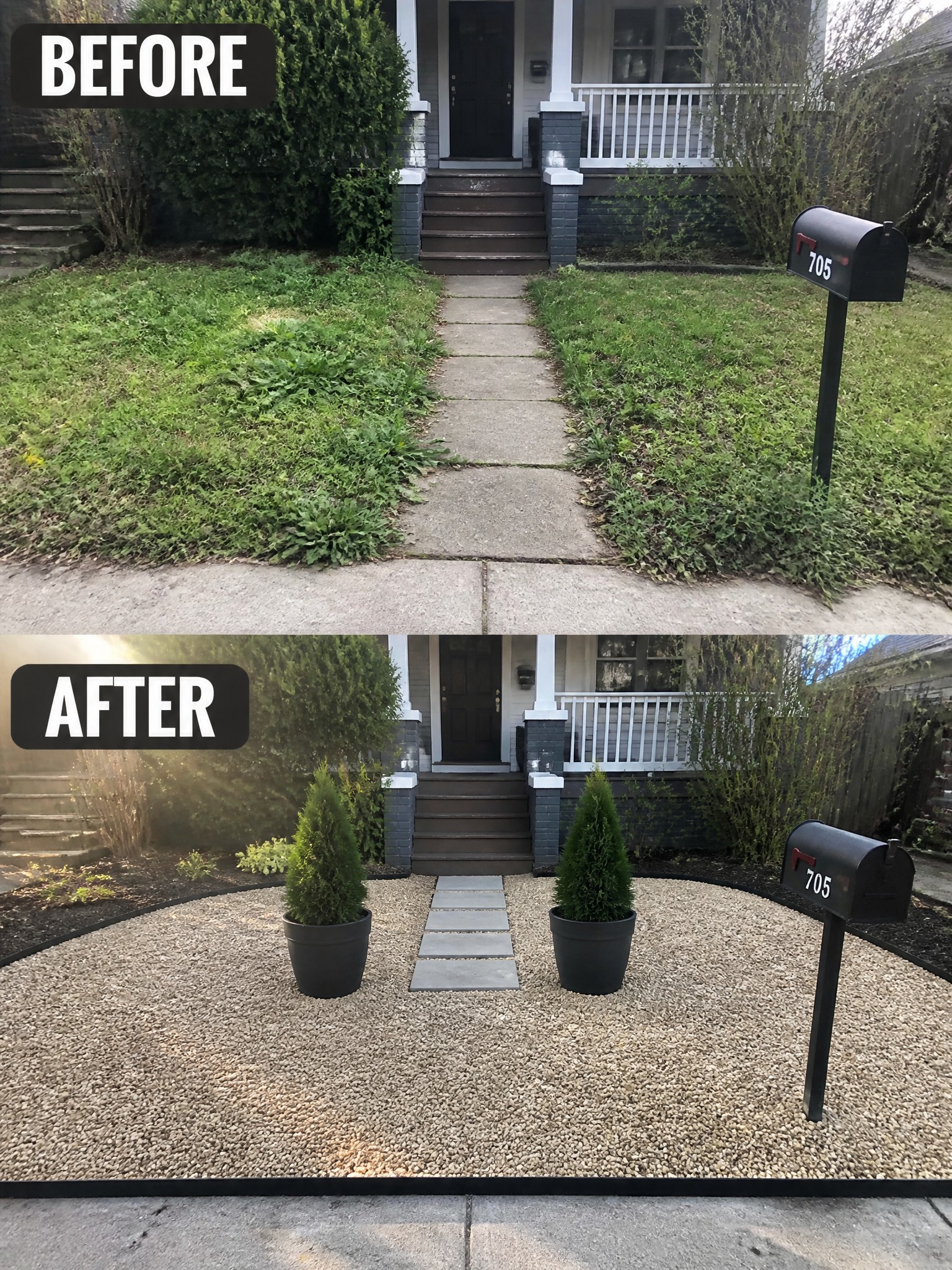
One of the easiest ways to fix an overgrown front yard is to replace the messy lawn with gravel and clean borders. The before photo shows grass and weeds growing right up to the walkway in uneven patches. The after version uses a simple gravel surface with a sharp black edge and a few potted evergreens to frame the path.
This idea works best on small front yards where grass is hard to maintain. Start by cutting back the overgrowth, lay down landscape fabric, then add gravel to hold the shape. Keep the planting minimal so the clean lines stay the focus.
Add A Fence To Define Pool Edges
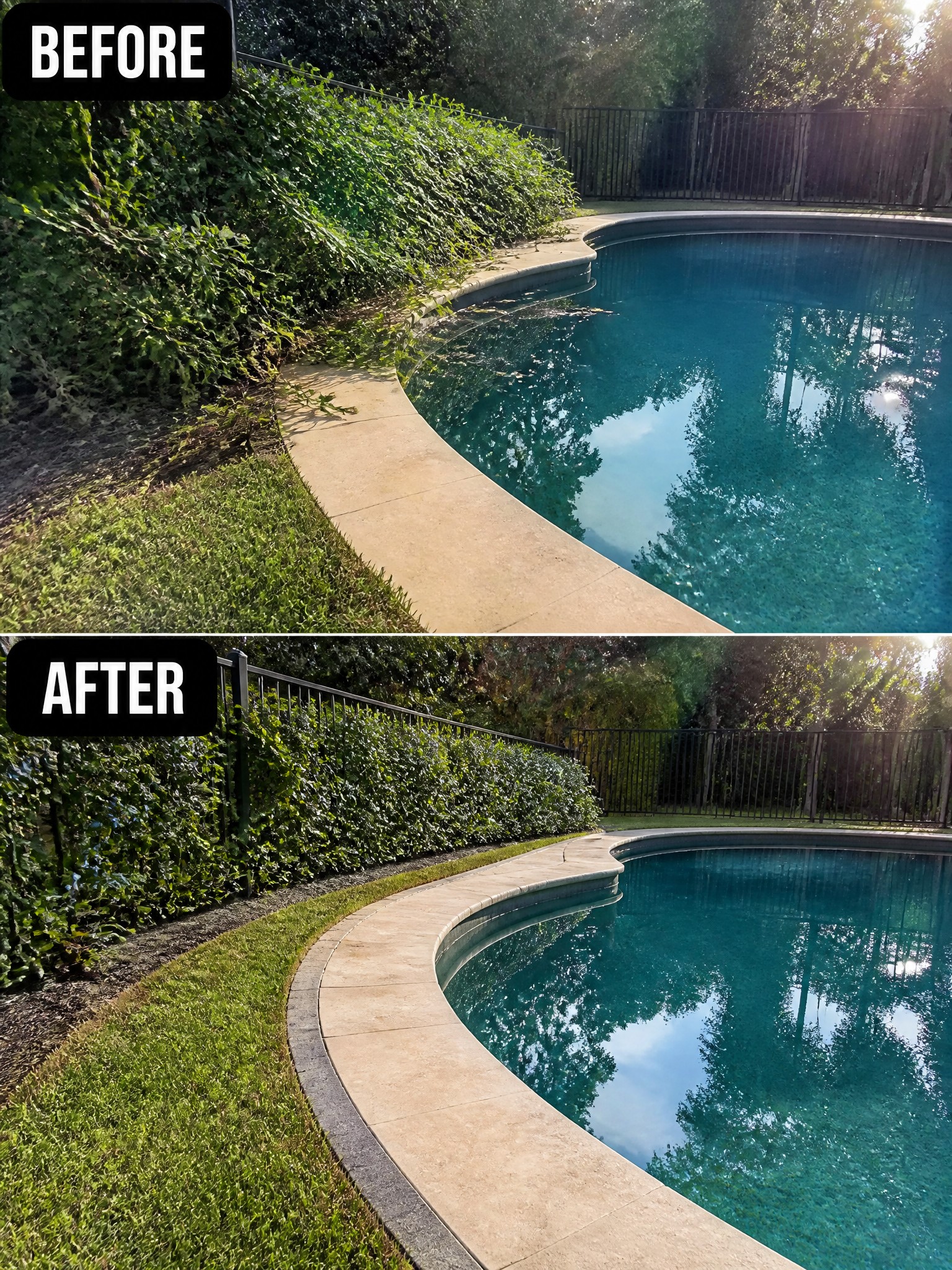
Adding a fence along the planting line gives the pool a clear boundary and stops the greenery from creeping onto the deck. In the before photo the ivy and grass grew right up to the concrete, which made the whole area feel messy. The after shows a simple black fence that holds everything back and creates a neat edge without much extra work.
This idea works well around pools or patios where plants tend to spread fast. Start by cutting back the overgrowth, then set the fence a few inches inside the planting bed so grass and mulch stay on one side. It keeps the space looking maintained and makes mowing or trimming much easier.
Create Organized Planting Zones In An Overgrown Backyard
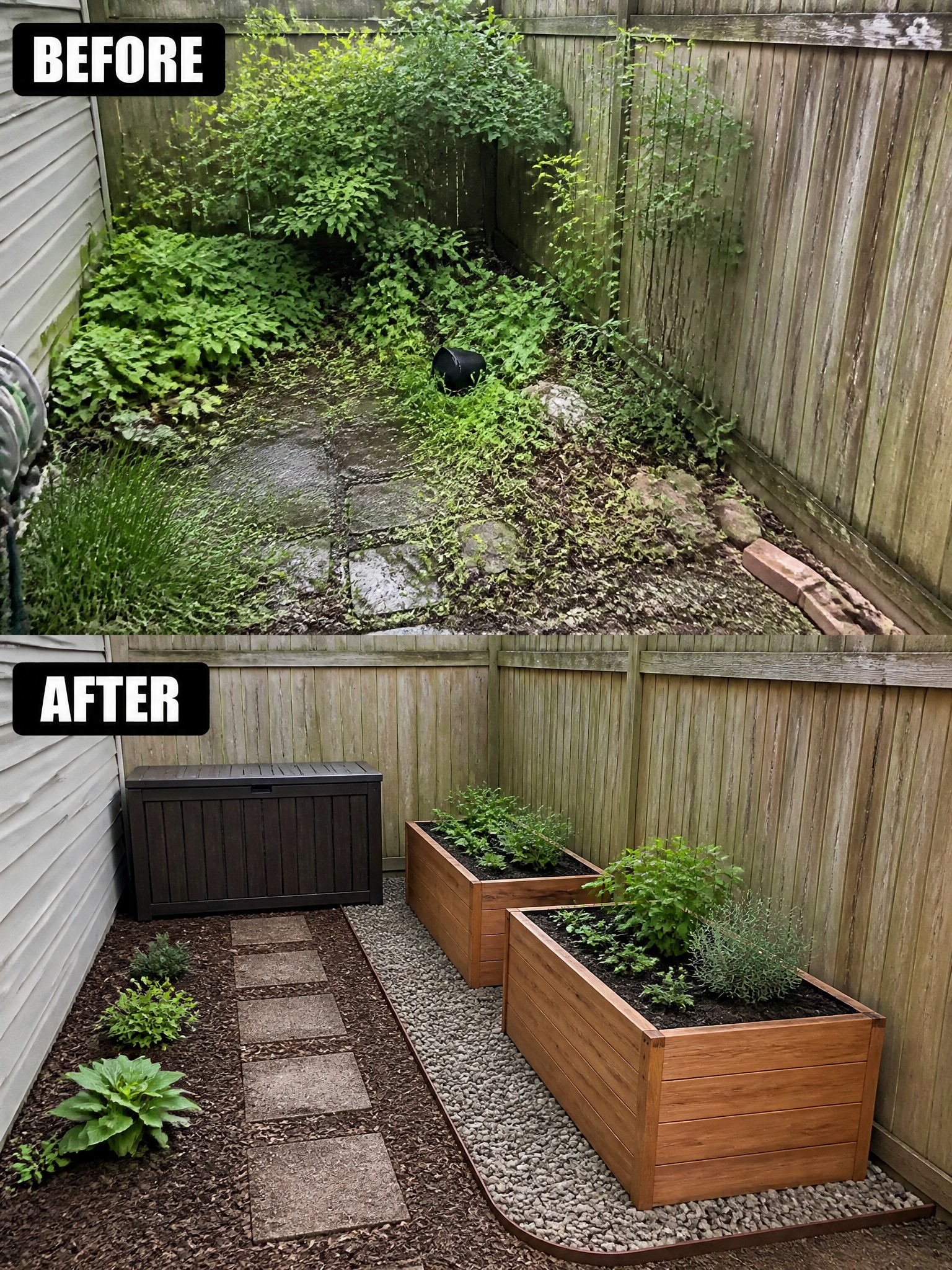
An overgrown yard quickly turns into a mess of weeds and hidden paths. Clearing the growth first and adding raised beds gives the space clear boundaries so plants stay where you want them and the area feels planned instead of neglected.
This idea suits small or narrow backyards where you need room to walk and garden at the same time. Gravel and mulch keep the paths dry and low-maintenance while the beds hold the soil in place.
Add Structure To An Overgrown Side Path
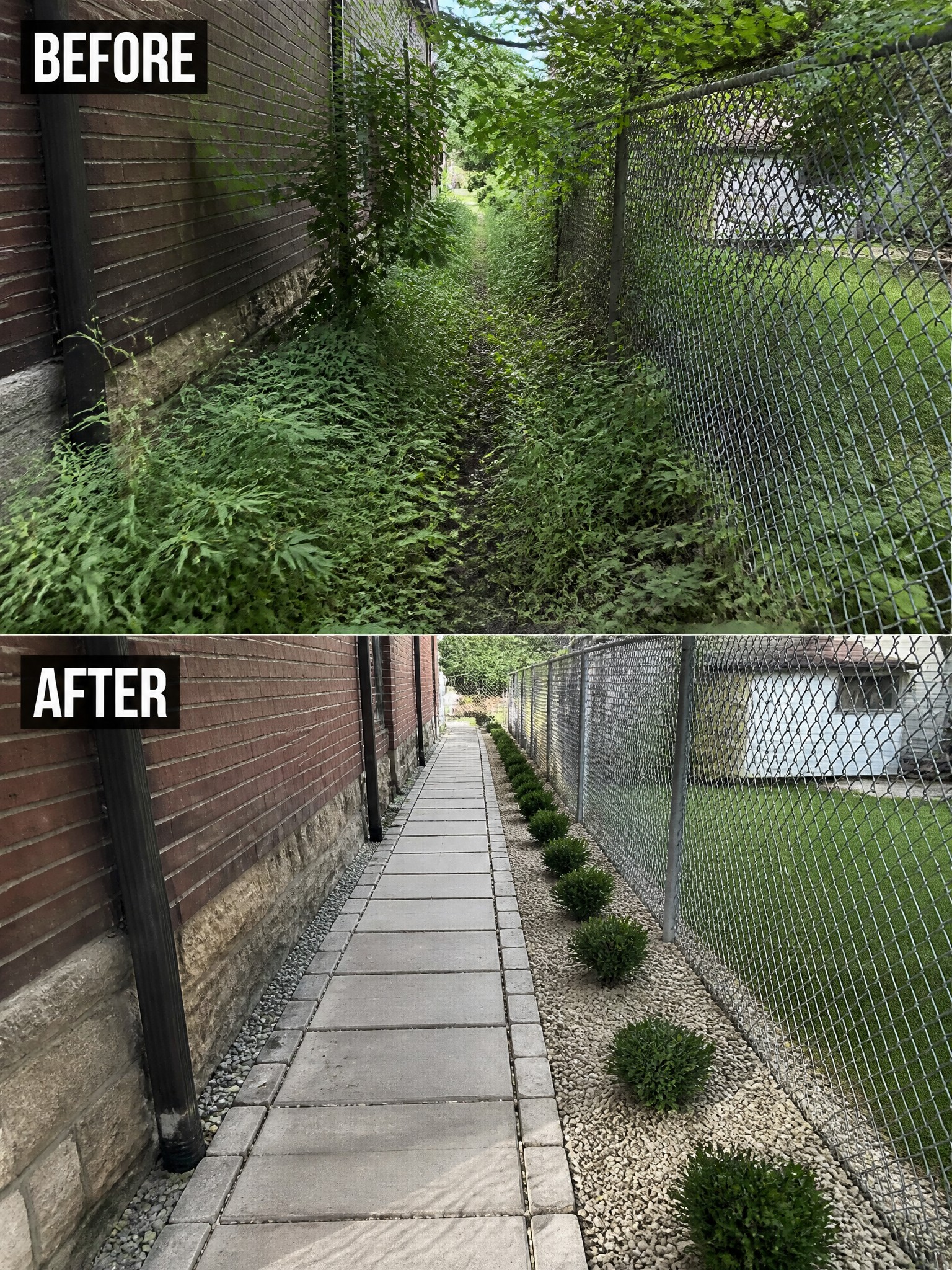
Clearing the thick weeds and brush first makes the narrow space between the wall and fence usable again. A straight concrete path with gravel on both sides then gives the area clean edges and keeps plants from creeping back in right away.
This approach suits tight side yards or passages where you need access more than a full garden. Stick with low shrubs spaced evenly along one side and keep the other edge simple so the path stays open and easy to maintain.
Clean Up Overgrown Edges With Simple Garden Beds
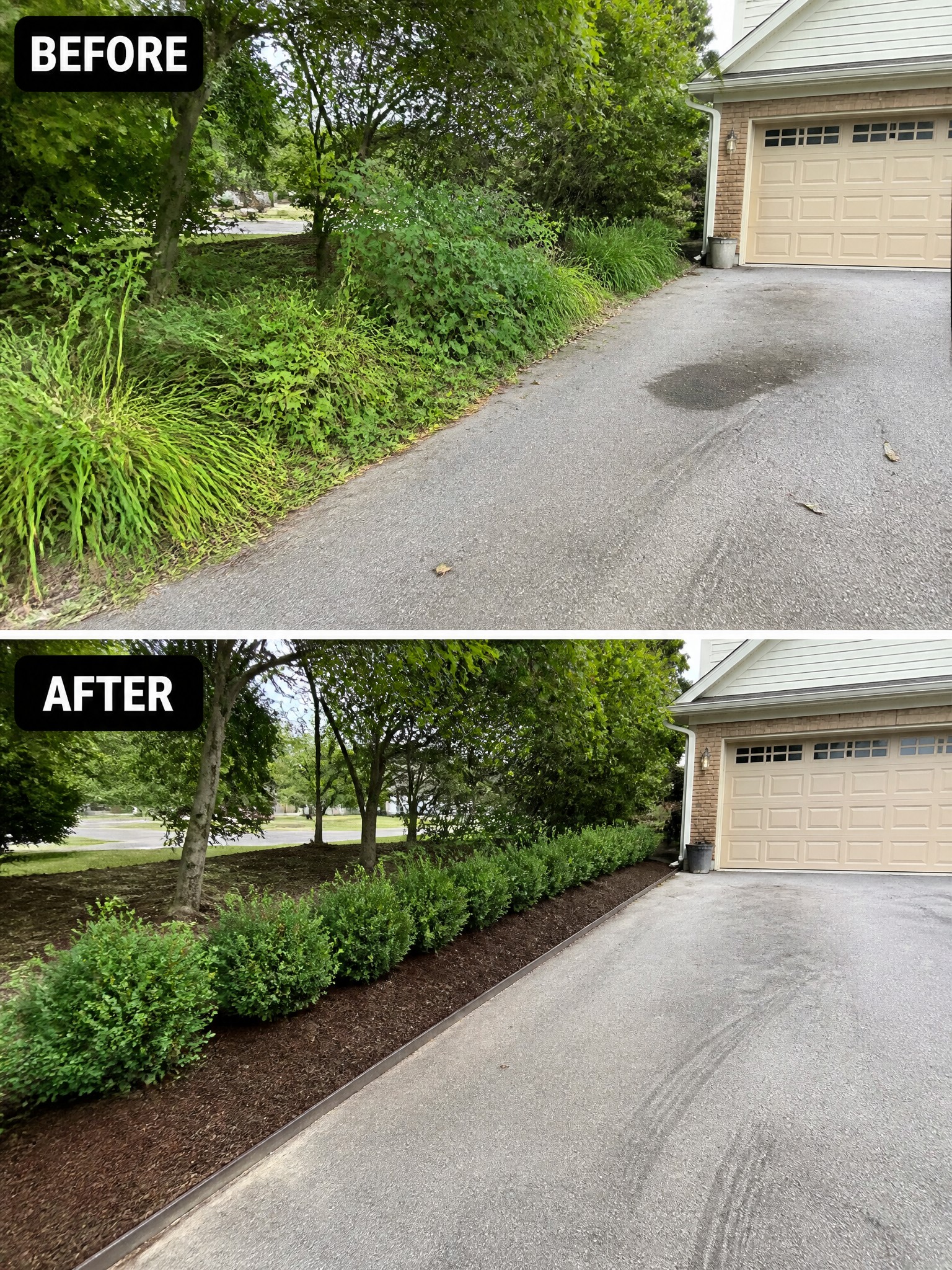
An overgrown strip along a driveway quickly starts to look messy and makes the whole front feel neglected. Cutting back the tall weeds and vines, then adding a clear border with mulch and low shrubs, turns that same space into something orderly without removing all the greenery.
This idea works best on driveways that run beside wooded lots or natural areas. Remove the tallest growth first, install a simple metal or plastic edging, and spread mulch to keep weeds down. Low shrubs that stay under two feet tall keep the beds looking full while leaving room to walk and drive.
Add Defined Beds To Tame An Overgrown Yard
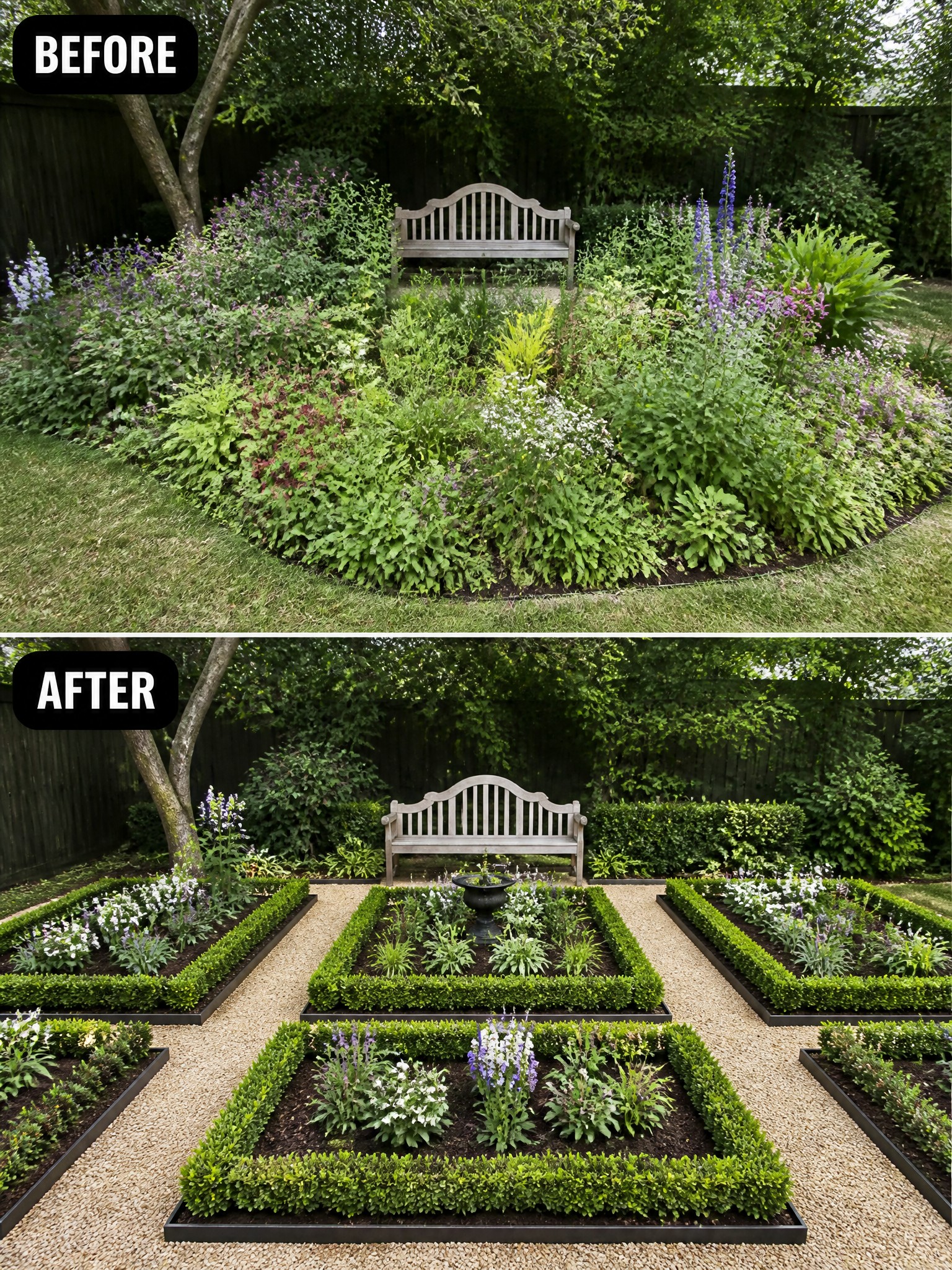
The before photo shows a garden that had grown into one big mass with no clear shape or separation. The after version uses raised beds edged in boxwood and gravel paths to break the space into smaller, manageable sections. This gives the planting room to breathe and makes the whole yard feel more intentional without removing every plant.
This idea works best in yards that still have decent soil and some existing trees or shrubs worth keeping. Start by marking out simple bed shapes and adding edging before you add new plants or hardscaping. It keeps maintenance lower and prevents the garden from looking wild again within a season or two.
Clear Overgrowth First To Shape The Yard
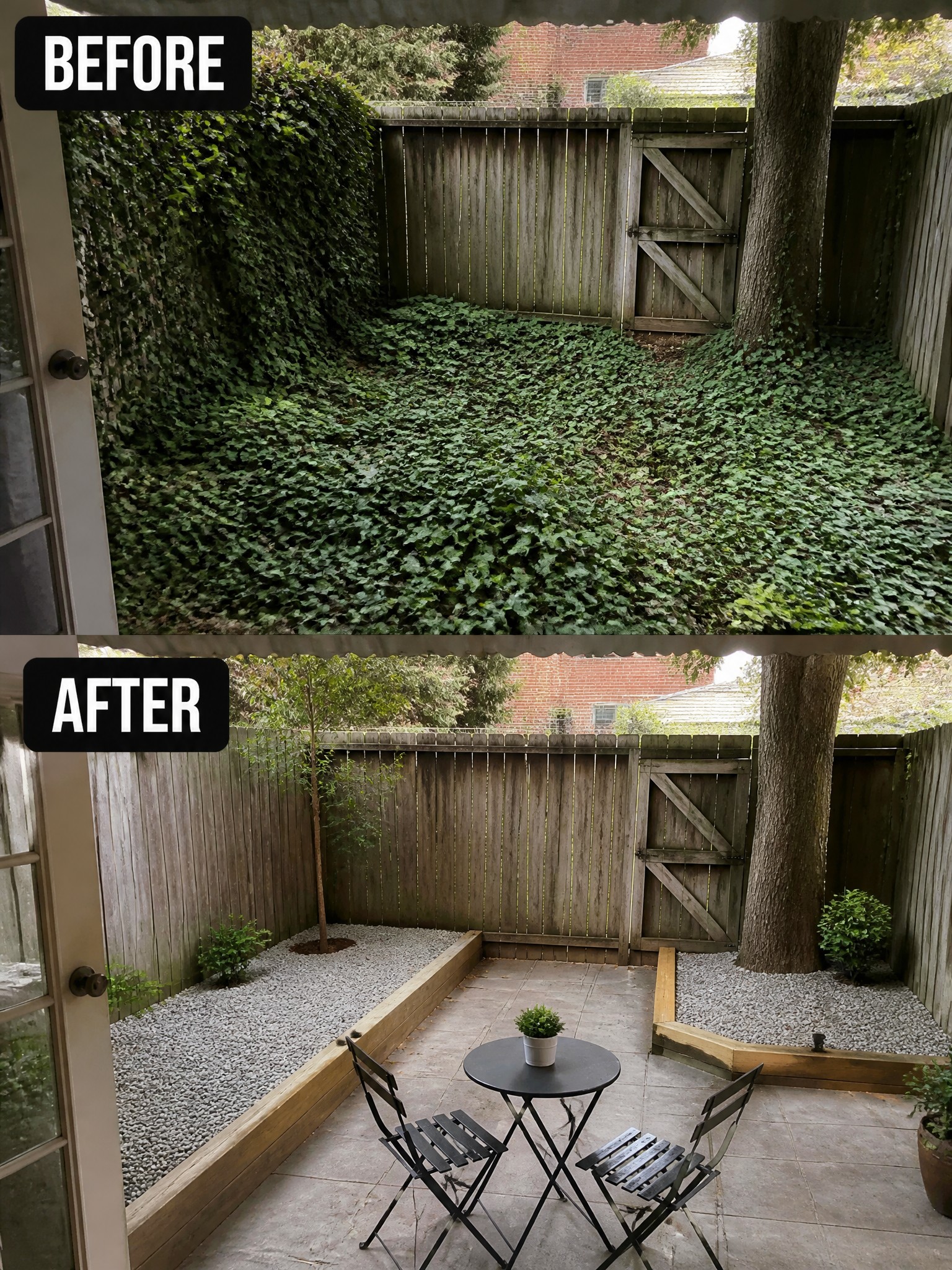
The biggest change here came from removing the thick ivy that covered the ground and walls. Once that was cleared, simple gravel beds with wooden borders gave the space clear shape and turned a messy area into something usable.
This approach works best in small backyards where you want a patio without losing planting space. Start by cutting back everything that is taking over, then use gravel or mulch to mark the edges before adding any furniture or extra plants. It keeps the layout practical and stops the yard from looking wild again within a season.
Add Structure To An Overgrown Backyard
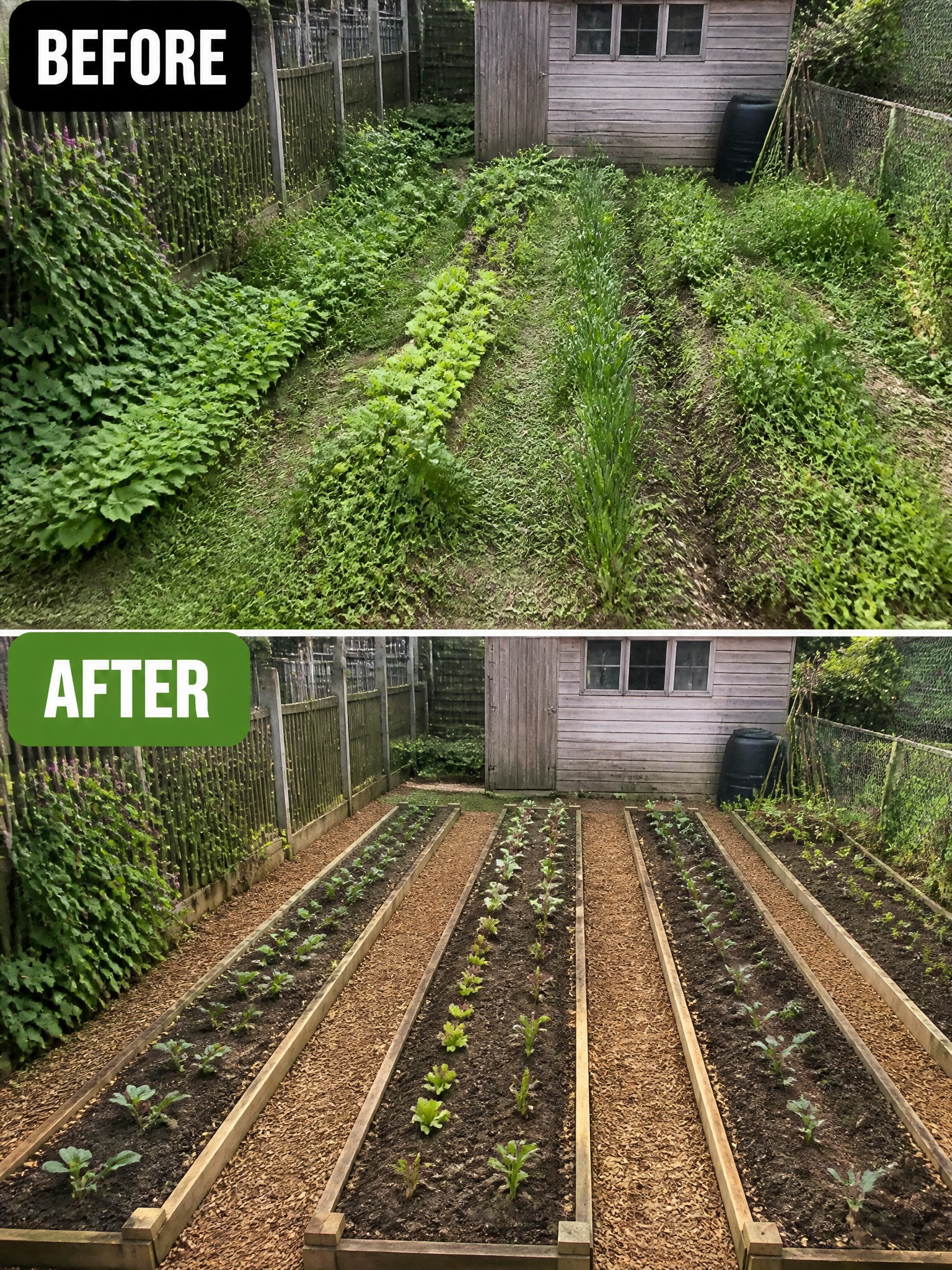
An overgrown yard quickly becomes hard to manage when plants spread without any clear lines. Clearing the wild growth and installing raised beds with wood frames and mulch paths creates order right away. The beds keep planting areas contained and make the space feel planned instead of neglected.
This idea suits small or narrow yards where you want to grow vegetables or flowers without a full redesign. Focus on simple frames and mulch first, then add plants. The structure makes maintenance easier and leaves room to walk between beds.
Add Defined Edges To An Overgrown Border
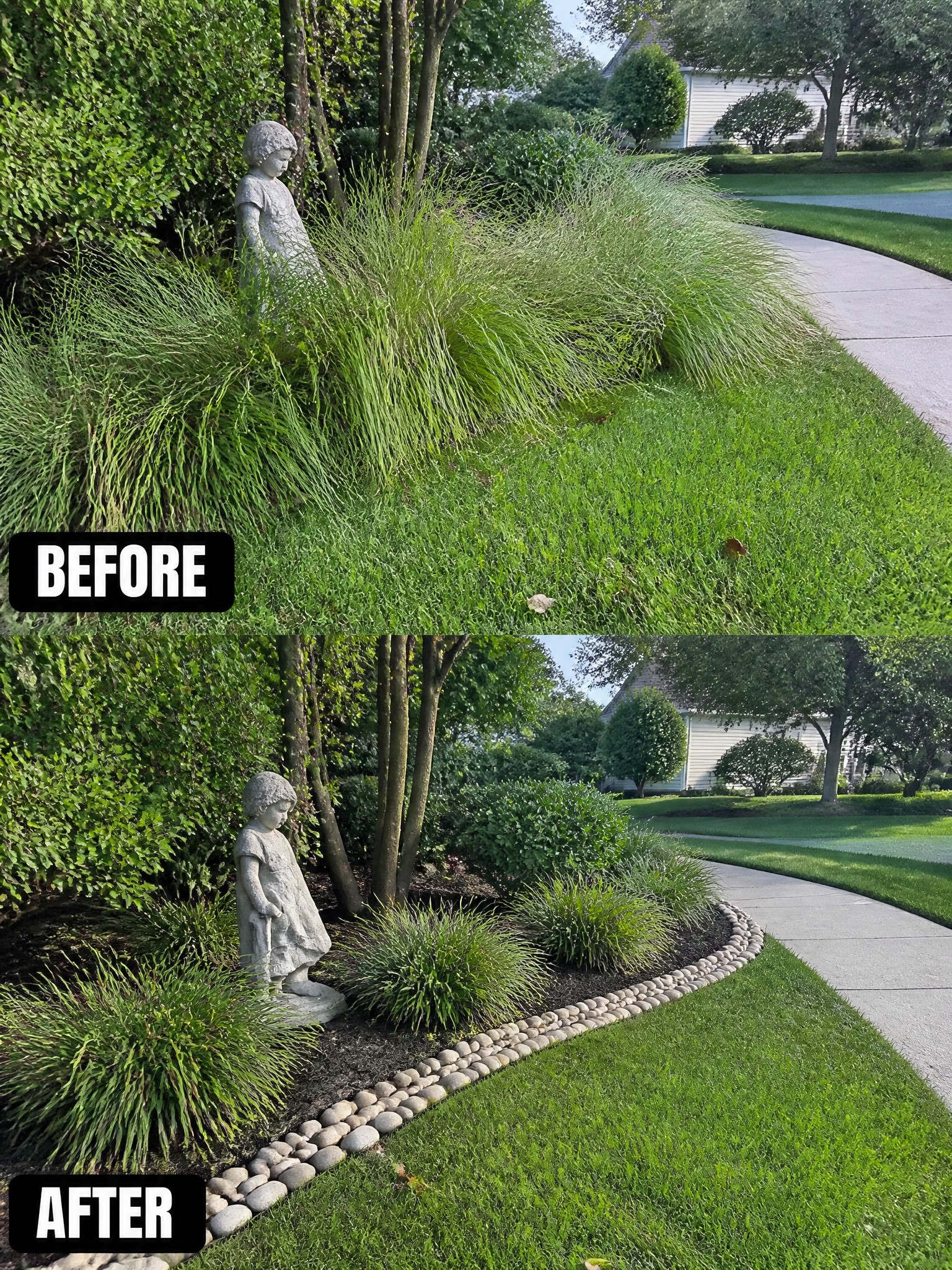
Clearing tall grass first and then adding a simple stone edge makes the whole area look intentional instead of neglected. The mulch inside the border keeps the beds neat and stops the lawn from creeping back in around the statue and trees.
This approach works best along a driveway or walkway where the lawn meets planting areas. Cut back the overgrowth, lay a low edging material that follows the curve, and mulch the beds so the shape stays visible. It keeps maintenance low and gives the yard a finished look without needing new plants right away.
Clear Overgrowth First To Add Structure
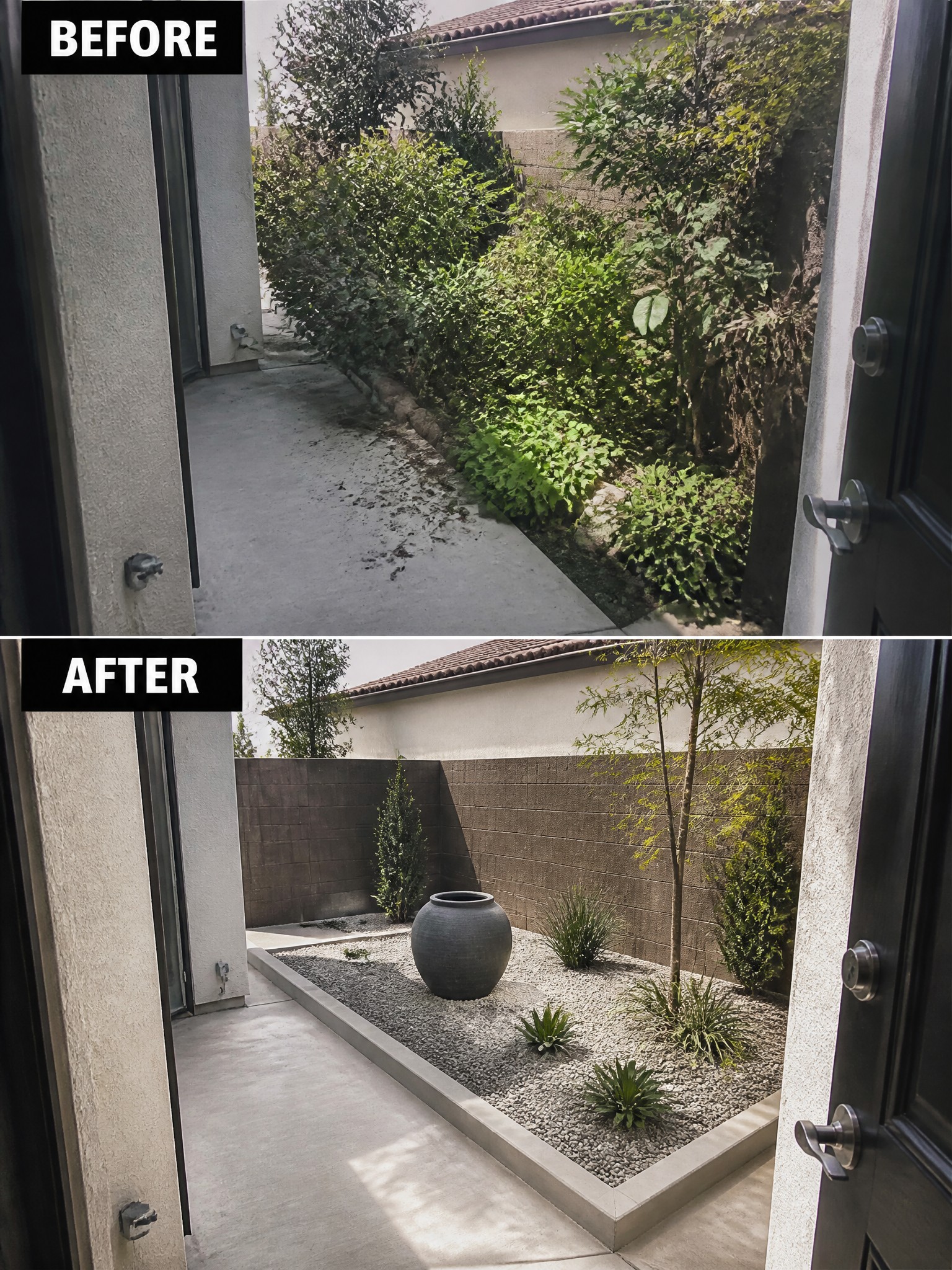
Many side yards end up ignored because the plants take over and the space feels too narrow to work with. Clearing everything out first makes it possible to set clean edges and lay down a simple gravel bed that actually fits the space. The big pot then becomes the one main focal point instead of fighting with a tangle of bushes.
This approach works best on homes where the side yard is mostly concrete and a bit of dirt. Keep the planting very minimal so the bed stays open and easy to walk past. A few upright shrubs and low accents are usually enough to give the area shape without crowding it.
Add Clean Gravel Edges To Sloped Garden Areas
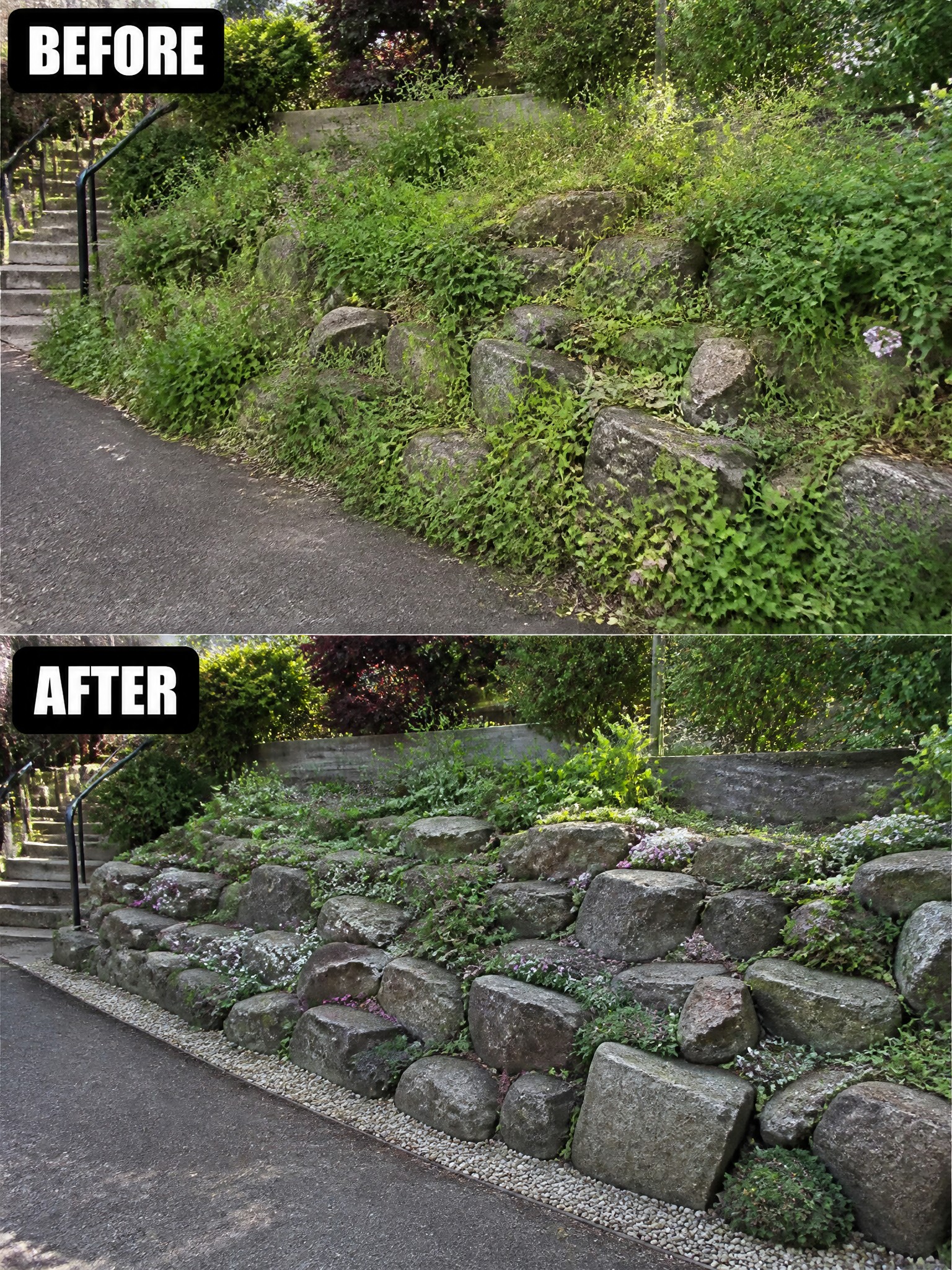
Clearing the heavy overgrowth first made the stone wall visible again, and the narrow gravel strip along the base gave the whole slope a much sharper finish. The plants that stayed now look intentional instead of wild, and the edge stops grass and weeds from creeping back in quickly.
This approach works well on any sloped spot where a retaining wall already exists but has gotten lost under vines. Start by cutting everything back hard, then lay a simple gravel or pebble border before adding new plants in controlled spots. It keeps the area looking neat without needing constant trimming.
Add Structure To An Overgrown Front Entry
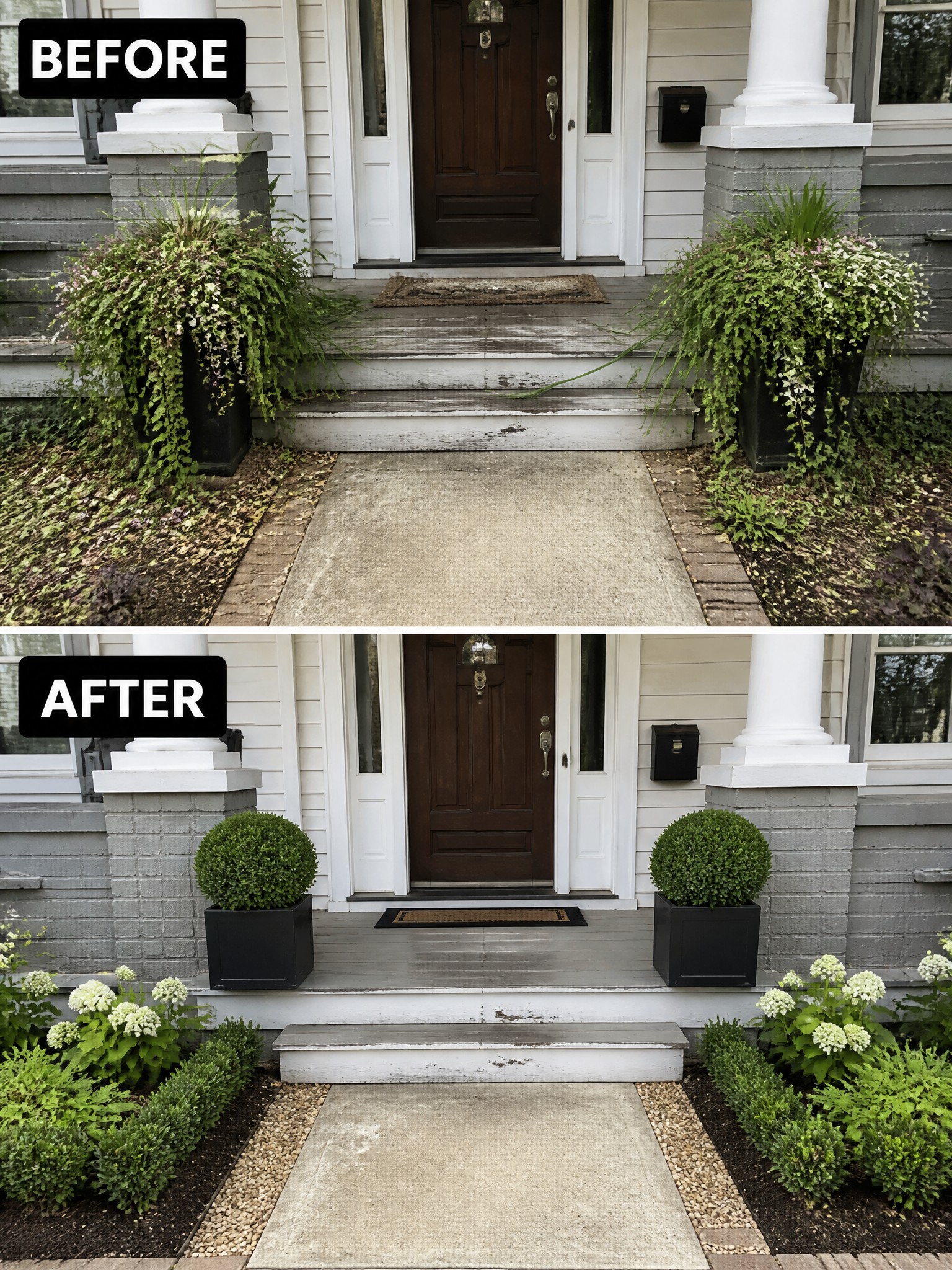
The before photo shows how trailing plants can quickly take over an entry and make the whole front look messy. In the after version, those same black planters hold tight round shrubs instead, and new low beds with mulch run along the sides. That simple swap gives the porch a much cleaner line without changing the planters or the house itself.
This approach works best on small front yards or entries where you want order but do not need a full redesign. Start by removing the most overgrown plants, then choose a few compact shrubs that stay neat on their own. Once the main shapes are in place, fill in the edges with mulch or gravel so the beds stay defined through the seasons.
Add A Border Bed To Clean Up An Overgrown Fence Line
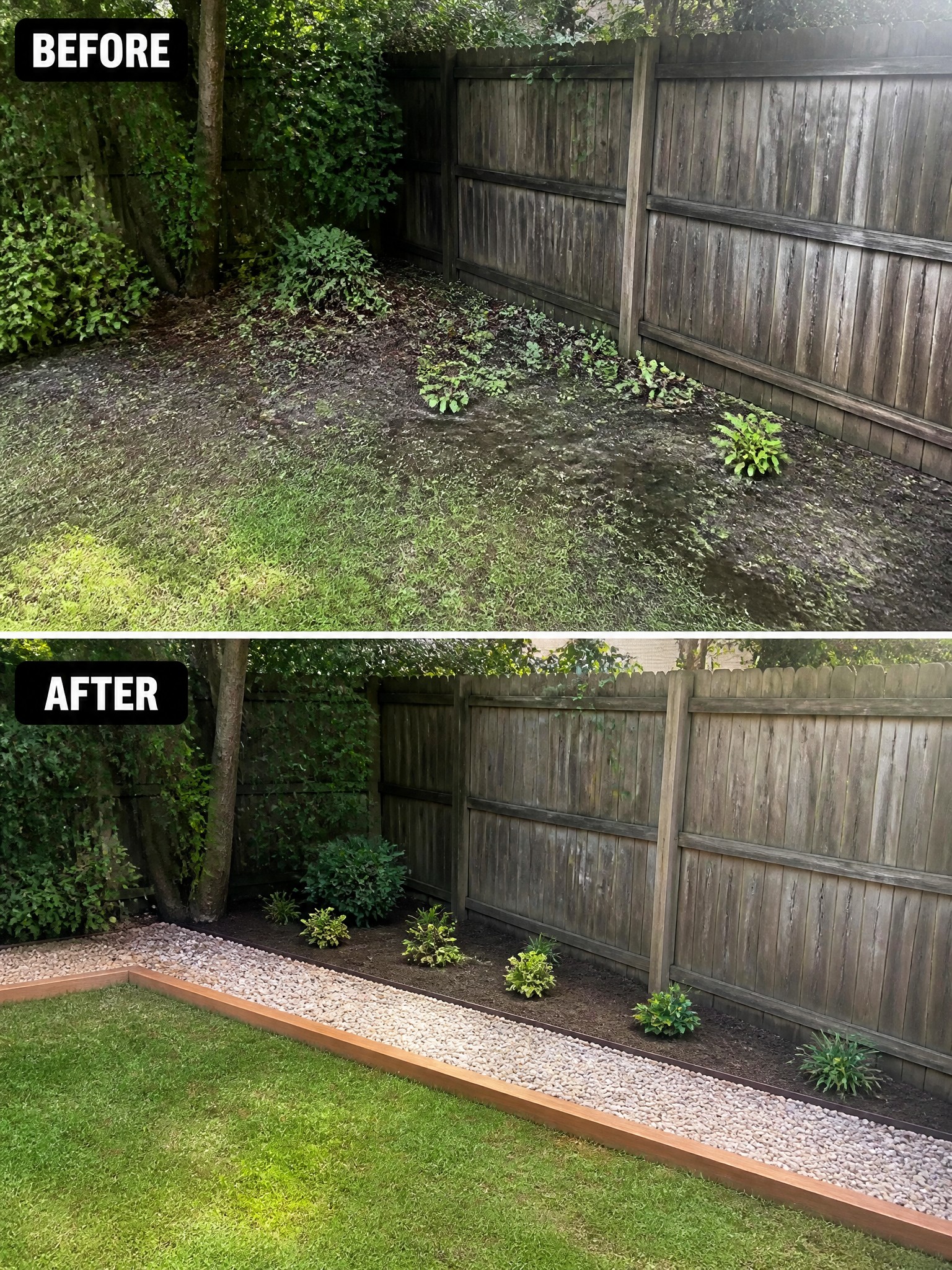
The main change here is clearing the weeds and adding a straight garden bed with simple edging and gravel. That one move turns a messy strip along the fence into something that looks intentional instead of neglected.
This idea works well in narrow side yards or back fence lines where grass has taken over. Start by removing the overgrowth, then install basic edging and a gravel strip before adding a few shrubs spaced evenly. It keeps the area easy to maintain and gives the rest of the yard a cleaner frame without filling every inch with plants.
Frequently Asked Questions
Q: How often do I need to redo the edging to keep it looking fresh?
A: Check the borders every couple of weeks during growing season. A quick pass with the edger usually does the trick. Skip it and the grass will start to blur those lines fast.
Q: What if the overgrown area has old roots that are hard to pull?
A: Loosen the soil with a garden fork before tugging. Work in small sections so you do not get overwhelmed.
Q: Can I add new plants right after cleaning up the edges?
A: Yes but water the new spots well for the first month. Mix in some compost to help them settle into the refreshed soil. This way they take hold before weeds return.
