

I have seen plenty of yards where the grass and weeds took over so completely that it was hard to tell what the original layout even was.
One thing I always notice is that starting with a good cleanup and some basic edging often makes the biggest difference before any new plants go in.
It feels good when the space starts to look intentional again.
I would probably test a few of these path and privacy ideas first if I were working on my own place instead of jumping straight to big plantings.
Small changes like that add up without requiring a complete overhaul right away.
Add Defined Edges To Shape An Overgrown Yard
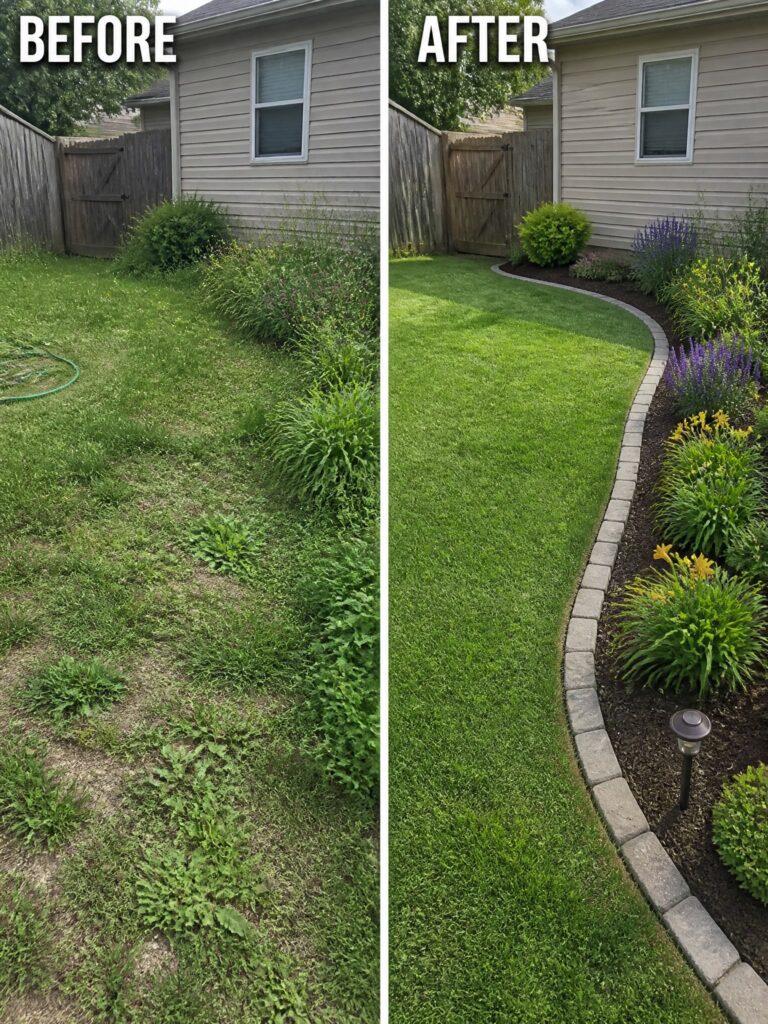
An overgrown yard usually feels messy because the lawn runs right into the house and fence with no real separation. Adding a simple curved paver border and mulching the beds gave the space clear shape and made the whole area look intentional instead of neglected.
This idea works well in smaller backyards where you want the lawn to feel larger without adding much. Start with the edging first, then fill the beds with a few repeating plants so the yard stays easy to maintain.
Clear Overgrown Shrubs Before Planting New Beds
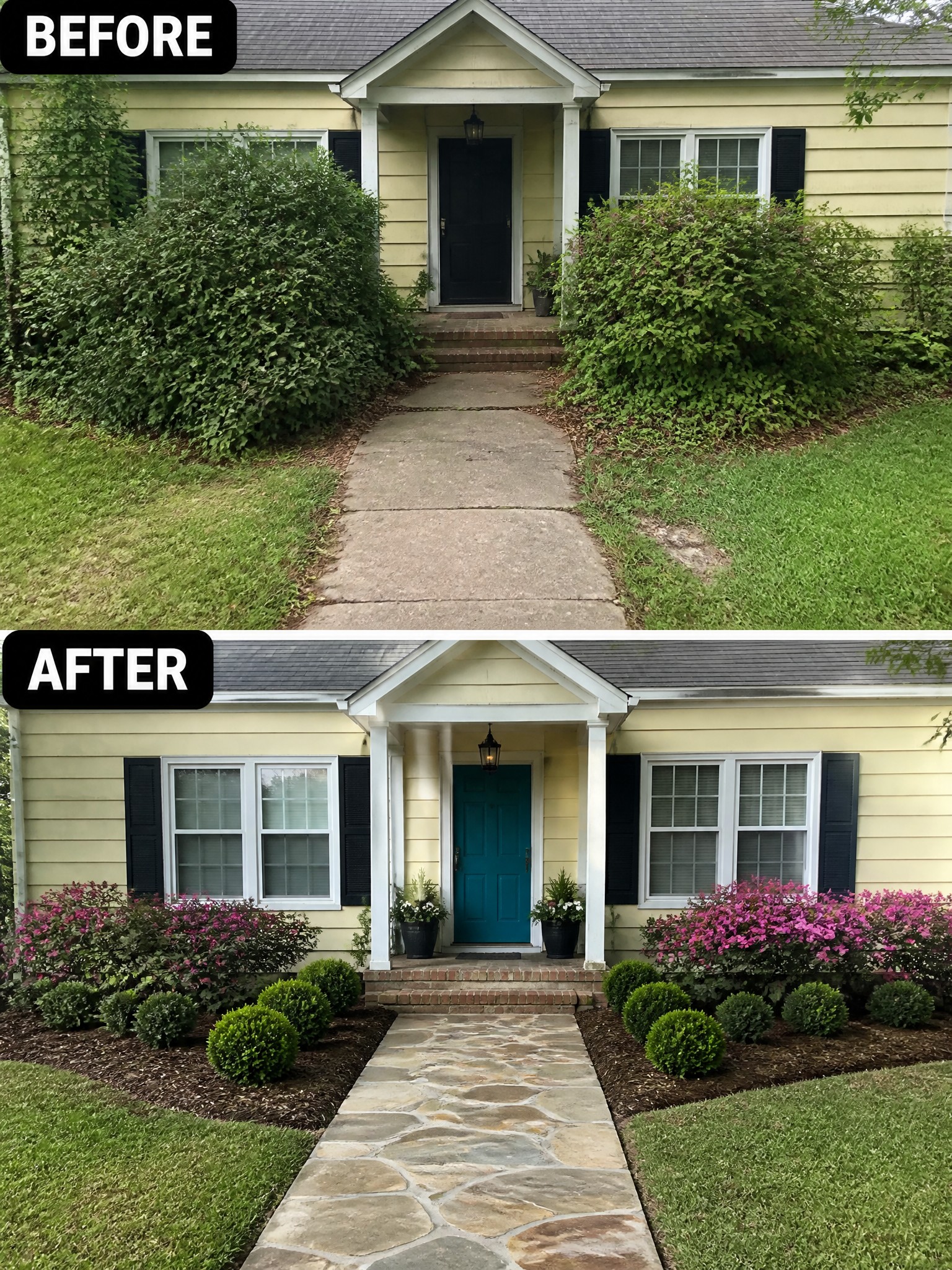
The big, wild bushes on either side of the walkway made the front of the house feel closed in and messy. Once they were removed, the space opened up enough to add low shrubs, a few flowering plants, and fresh mulch along the edges. The simple change gives the whole front a much neater look without needing a full redesign.
This approach works well on older homes where the original landscaping has grown too large. Start by cutting everything back to see the actual shape of the beds, then fill in with smaller plants that stay in scale. Keep the path clear and use the same mulch throughout so the beds look intentional rather than scattered.
Clear Overgrowth First To Create A Usable Path
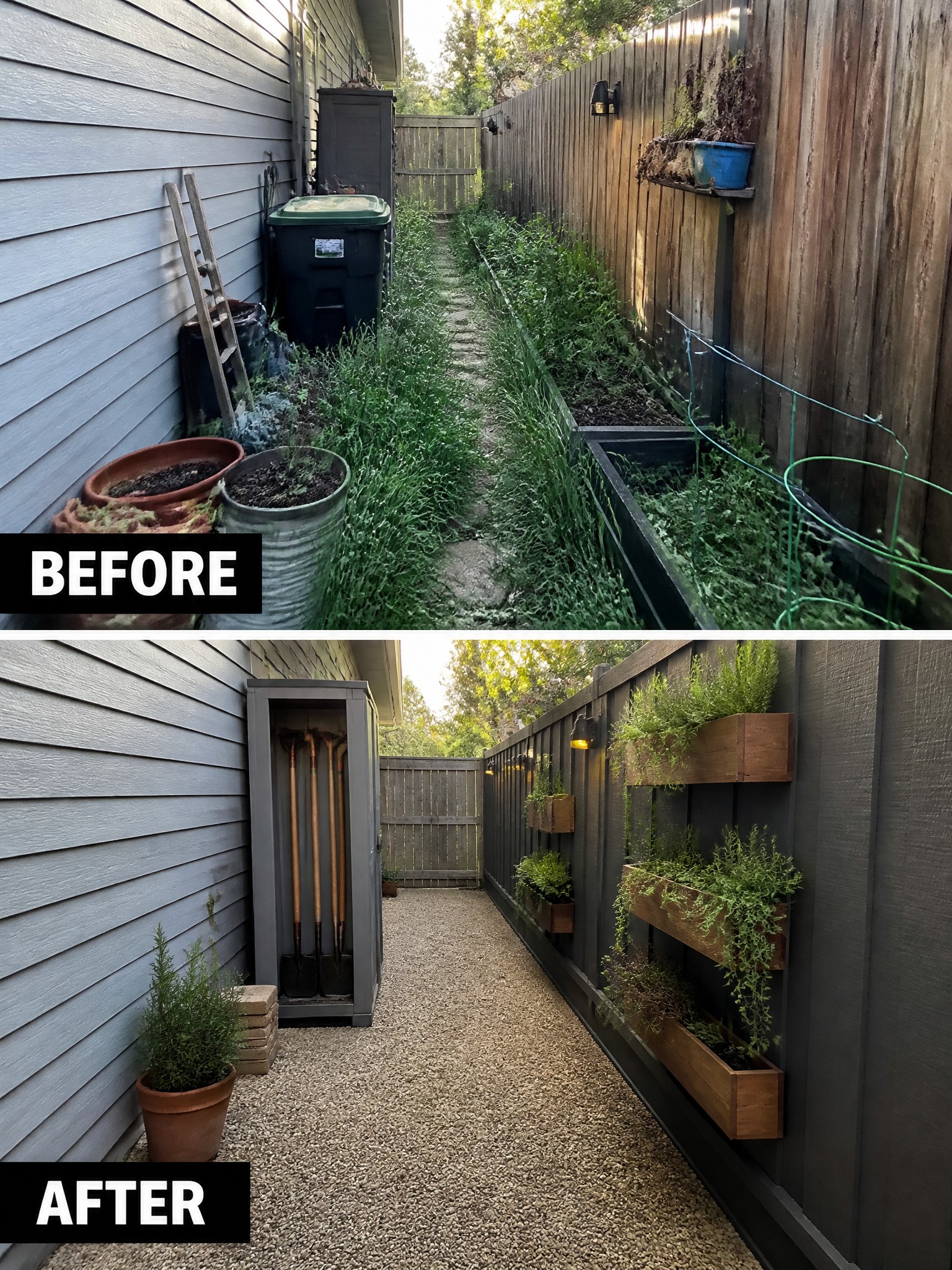
An overgrown side yard quickly turns into a wasted strip that is hard to walk through and even harder to maintain. Clearing the weeds and tall grass first makes the space feel wider and gives you a blank slate to work with. In this case the change came from removing the thick vegetation, laying down gravel for a solid path, and keeping only a few potted plants in better spots.
This approach works especially well in narrow areas between a house and a fence where every foot counts. Start by cutting everything back, then decide where the path should run and how wide it needs to be for easy movement. Gravel or mulch keeps the ground from turning muddy and gives the eye a clear line to follow without adding more plants than the space can handle.
Add Structure To An Overgrown Yard
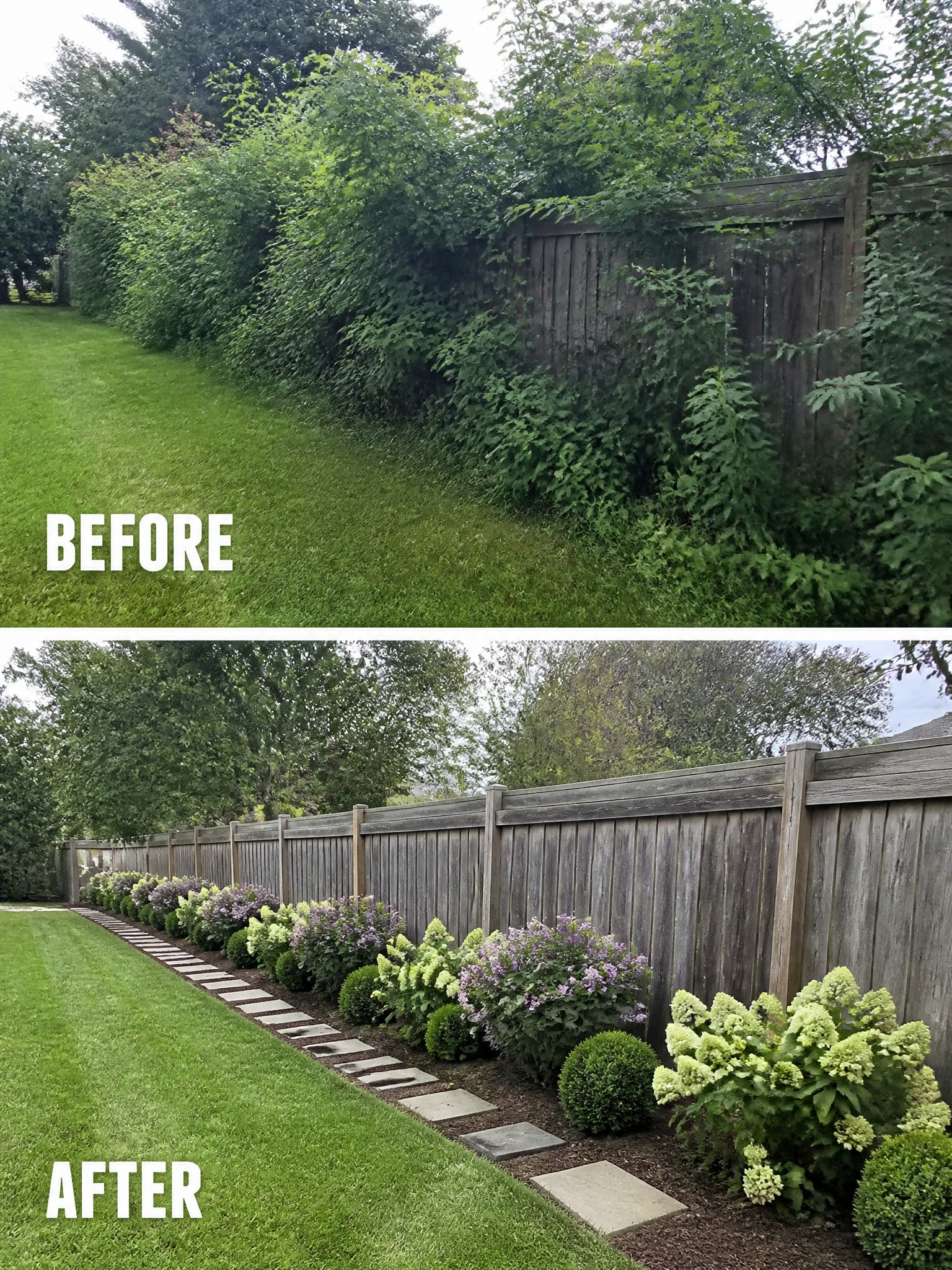
Clearing the wild growth first makes the rest of the work much easier. Once the fence line is cleaned up, adding a narrow bed with mulch and a simple stepping stone path turns a messy edge into something that feels planned and easy to walk along.
This idea works best on long side yards or back fences where plants tend to sprawl. Keep the bed width modest so mowing stays simple, and stick with a few repeating shrubs and flowers rather than filling every inch.
Clean Up An Overgrown Pond With Stone Edging
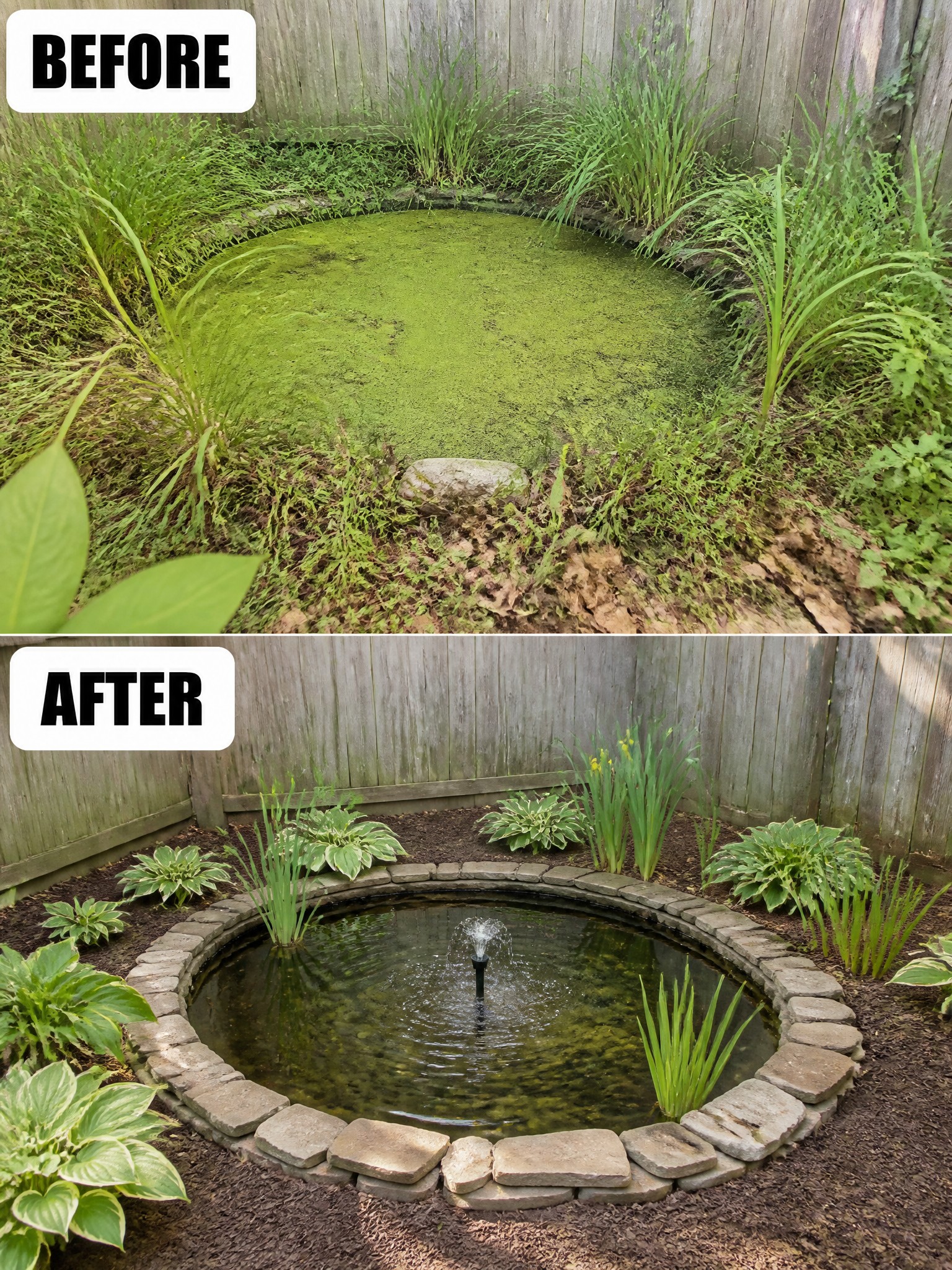
An algae-filled pond quickly turns into an eyesore when left alone. Clearing the water and adding a low stone border gives the feature a clear shape and stops the surrounding weeds from creeping back in.
This idea works best in smaller yards where the pond is already the main element. Focus on the edging first, then add a few clumps of hostas and grasses in mulched beds so the area stays neat without constant trimming.
Clear Overgrowth First Before Adding Lawn And Seating Areas
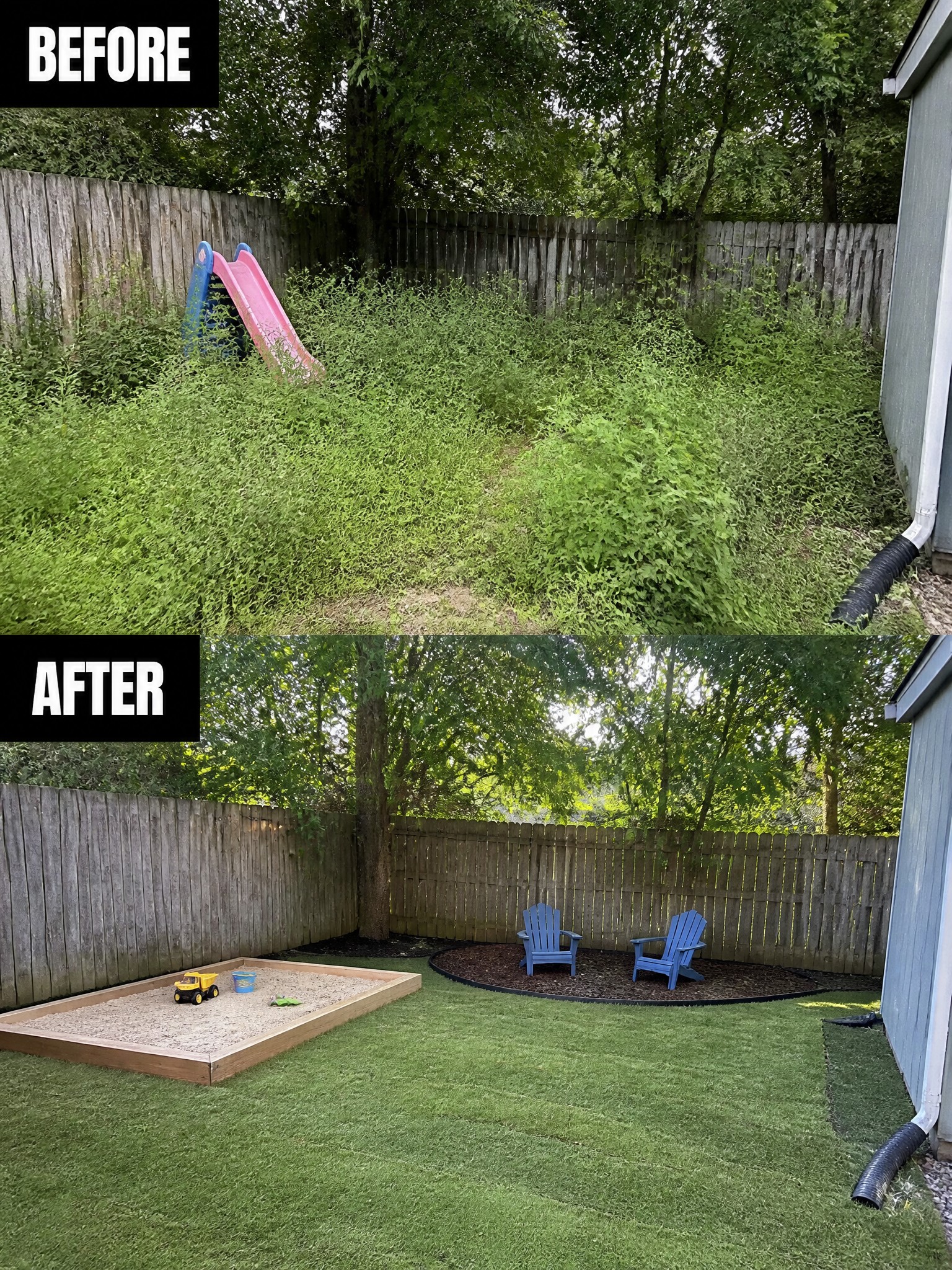
Thick weeds and brush can make a backyard feel unusable fast. Clearing everything out first opens up the space so you can see what you actually have to work with. Once the overgrowth is gone, a simple lawn plus a few defined spots like a sandbox and a mulch circle become much easier to place without looking crowded.
This idea works best in smaller yards where every foot of ground matters. Start with a full cleanup and basic edging before you add furniture or play equipment. That order keeps the layout practical and gives you room to walk around once the seating and other pieces are in place.
Create Raised Beds In An Overgrown Backyard
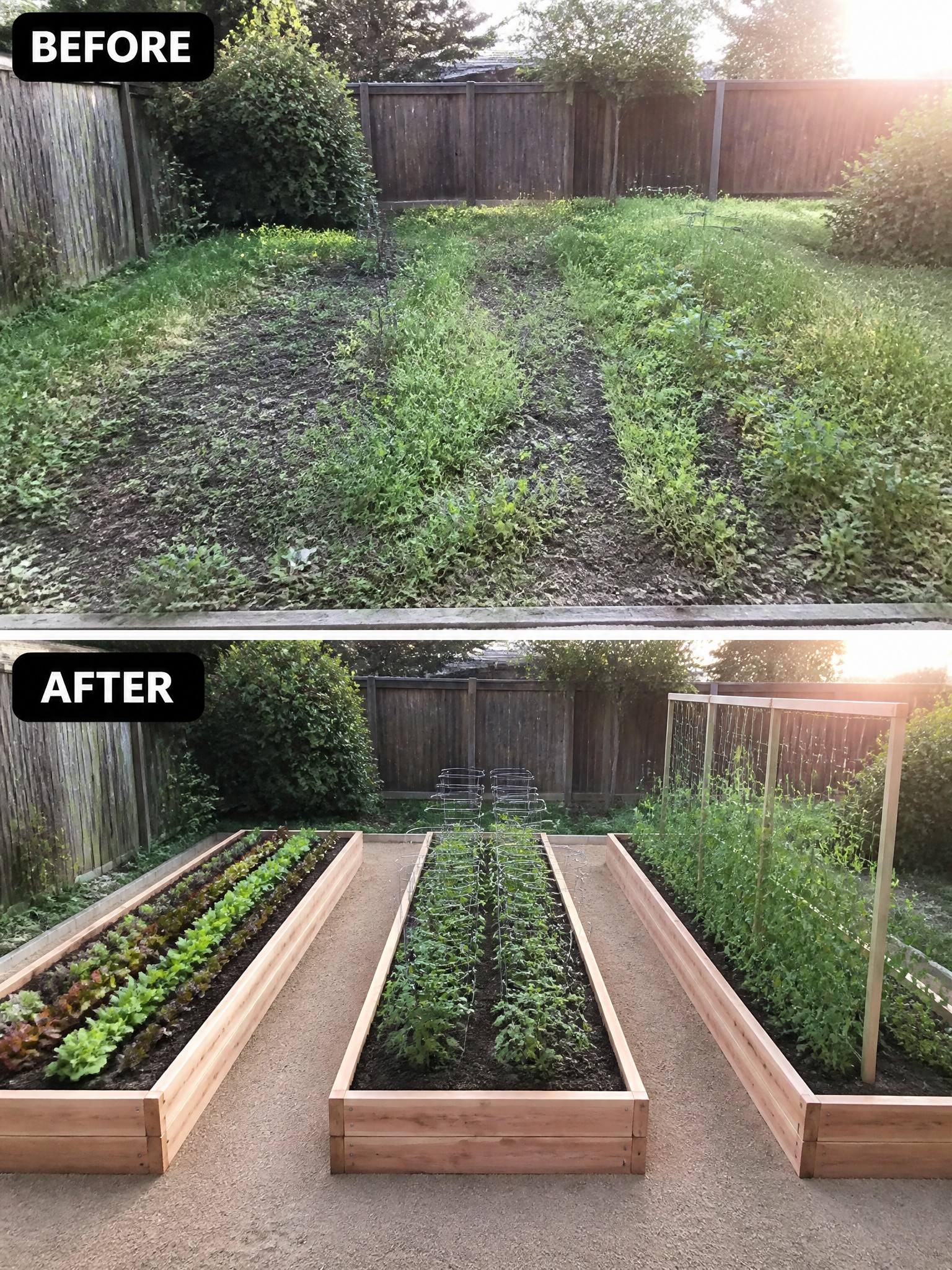
An overgrown yard usually stays that way because there is no clear layout to work with. Clearing the weeds first and then adding raised beds gives the space a purpose and makes it much easier to maintain.
Raised beds also keep plants off the ground and let you control the soil quality. They work especially well in smaller backyards where you need to fit several crops without the whole area looking scattered. Gravel between the beds keeps the paths dry and prevents mud from spreading into the planting areas.
Turn An Overgrown Patio Into A Seating Area
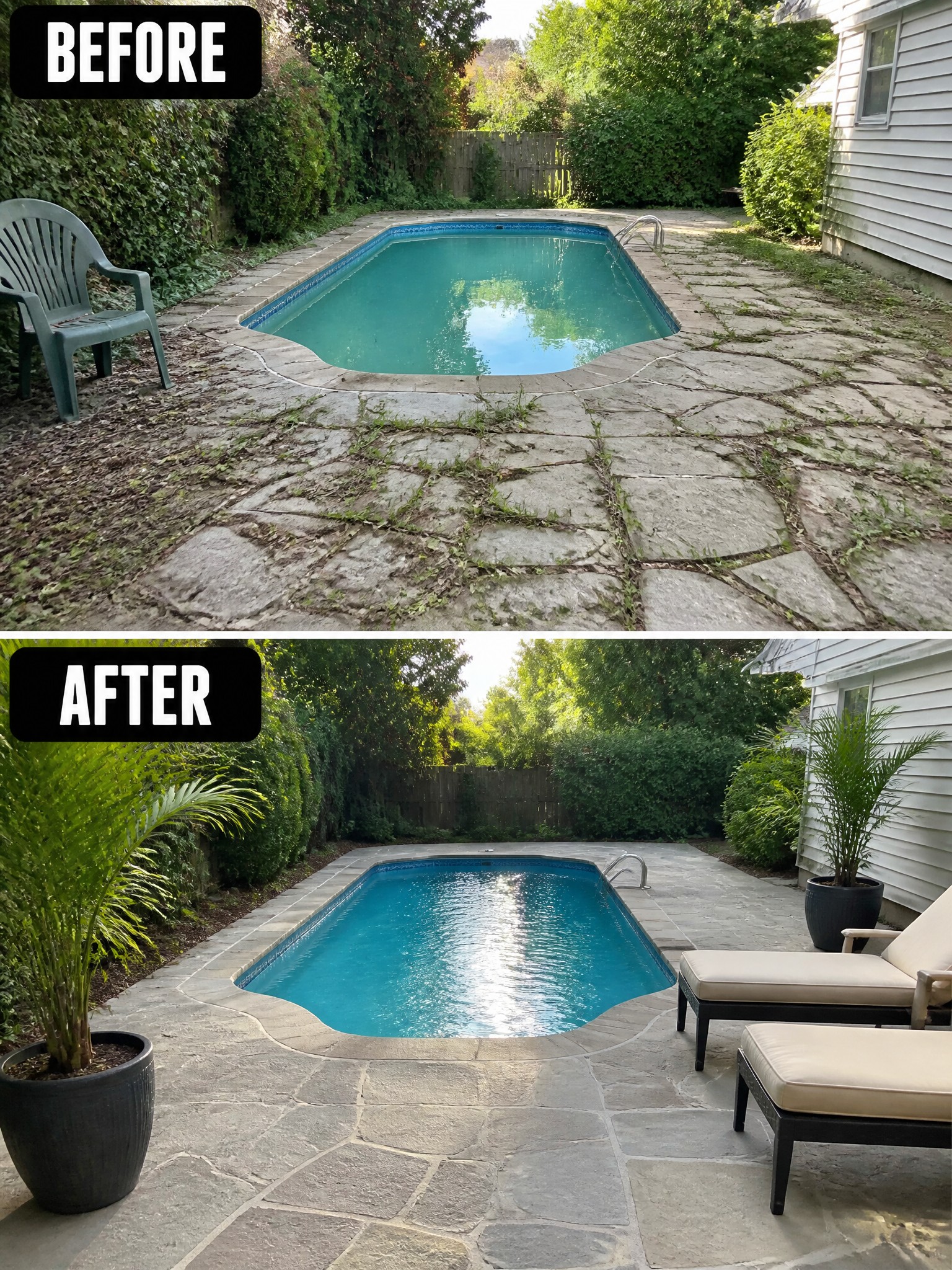
The main improvement came from clearing the weeds that had filled every gap in the stone patio. With the surface clean, it was simple to add lounge chairs and a few large planters that turned the area into a spot people would actually use.
This idea works best when you already have a hard surface like a pool deck or patio. Focus on removing the overgrowth first, then choose sturdy outdoor furniture that leaves enough open space for walking around. Keep the number of pieces small so the area stays practical rather than crowded.
Define The Front Path With Clean Borders
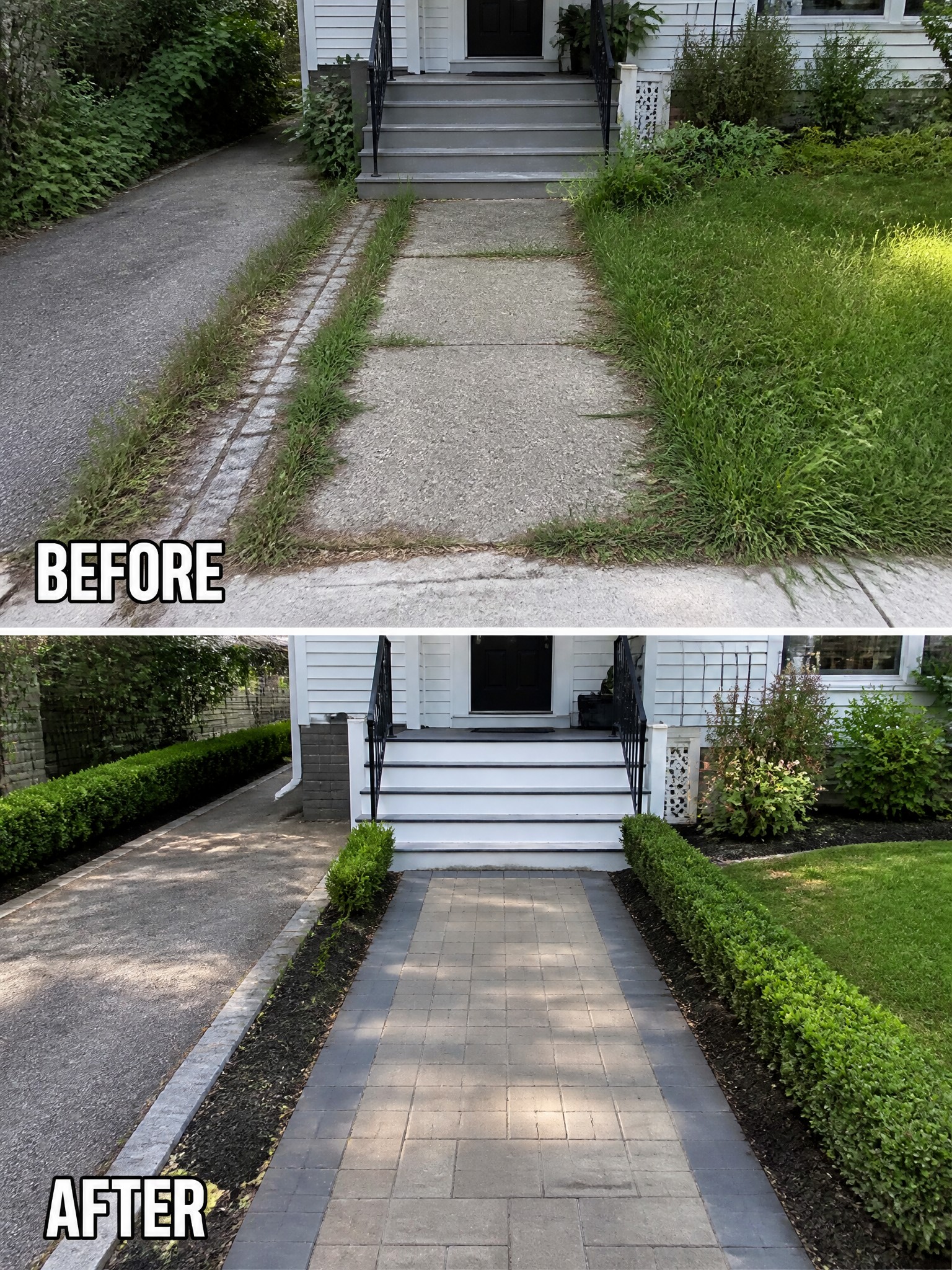
An overgrown walkway often loses its shape when grass and weeds creep in from both sides. Adding a paver path with solid edging on each side gives the entry a clear route and stops the lawn from taking over again. The simple borders also make mowing easier and keep the whole front area looking intentional instead of neglected.
This approach works well on any home where the front walk feels forgotten. Start by removing the worst overgrowth, then lay a solid base for pavers and install edging before adding mulch or low shrubs. The goal is structure first so later plantings have something to sit beside.
Turn An Overgrown Patio Into A Seating Area
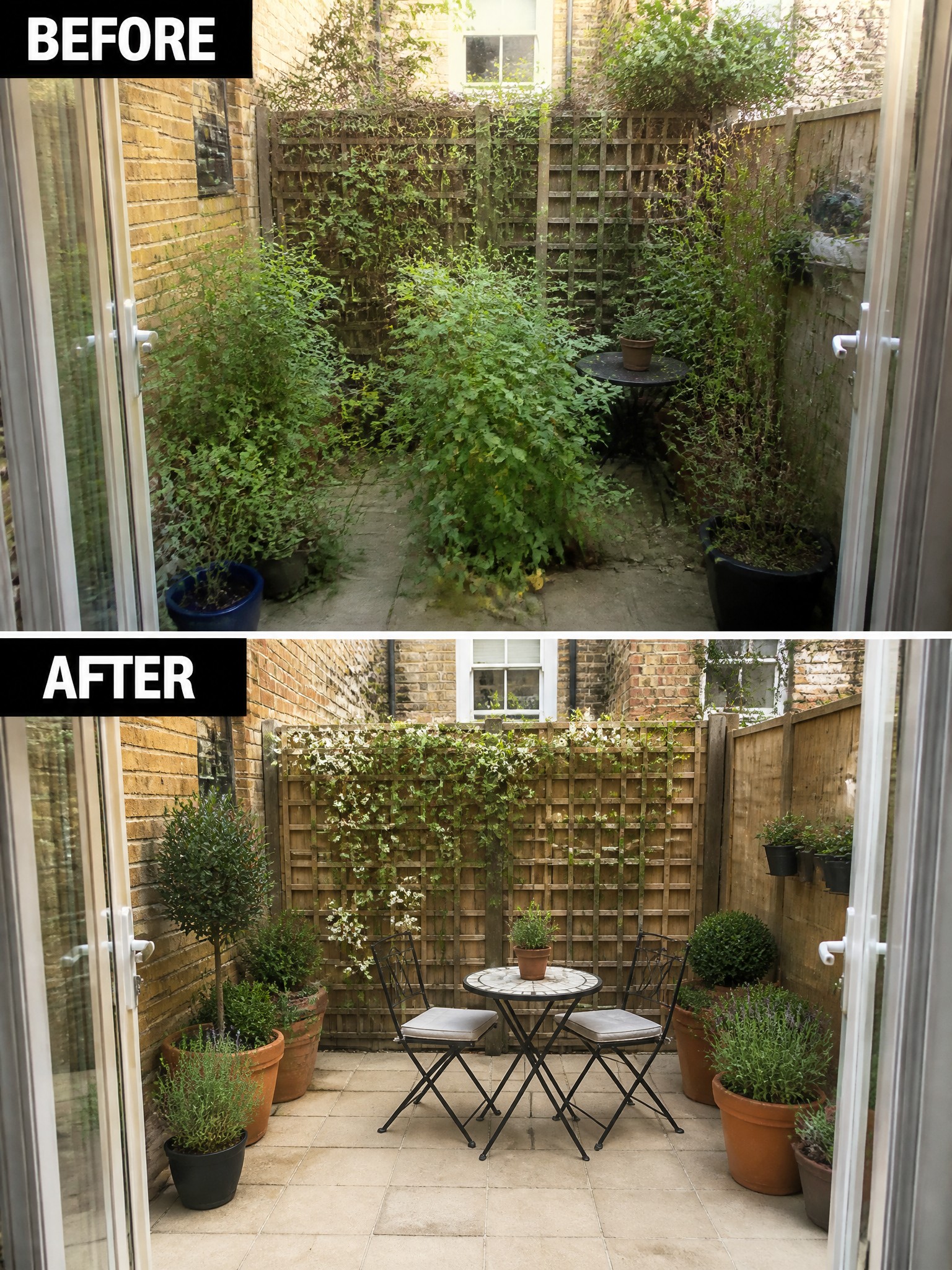
The main change here is clearing away the wild growth that had taken over the space. Once the excess plants were removed, a simple table and two chairs could sit in the middle without feeling lost or blocked.
This works well in small backyards where you want a usable spot without a big renovation. Start by cutting back the overgrowth so you can see the actual floor area, then add a few pieces of weatherproof furniture that fit the scale of the space. Keep the rest of the planting in pots so nothing takes over again.
Separate Wet Areas With Rock Borders In An Overgrown Backyard
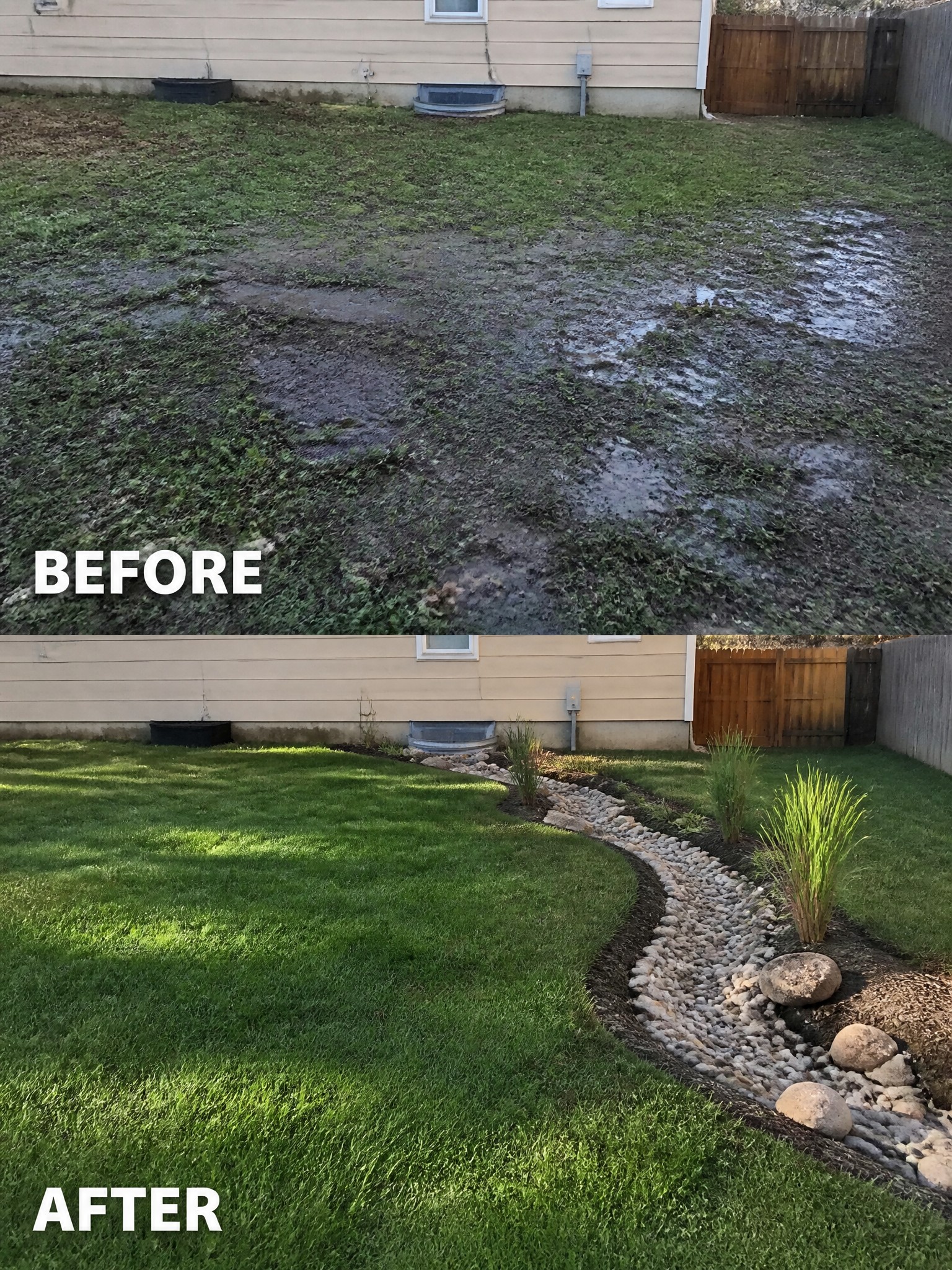
A messy lawn with standing water and no clear edges is hard to enjoy or maintain. Clearing the overgrowth first and adding a simple rock border creates a clean line that separates the lawn from the planting area and gives the whole space a more finished look.
This idea works best in smaller yards where you want to keep most of the grass but still add some planting without things looking scattered. Start with the edging along the house or fence, use hardy grasses that can handle wet spots, and keep the bed narrow enough to mow around easily.
Create Privacy With Tall Planters In An Overgrown Backyard
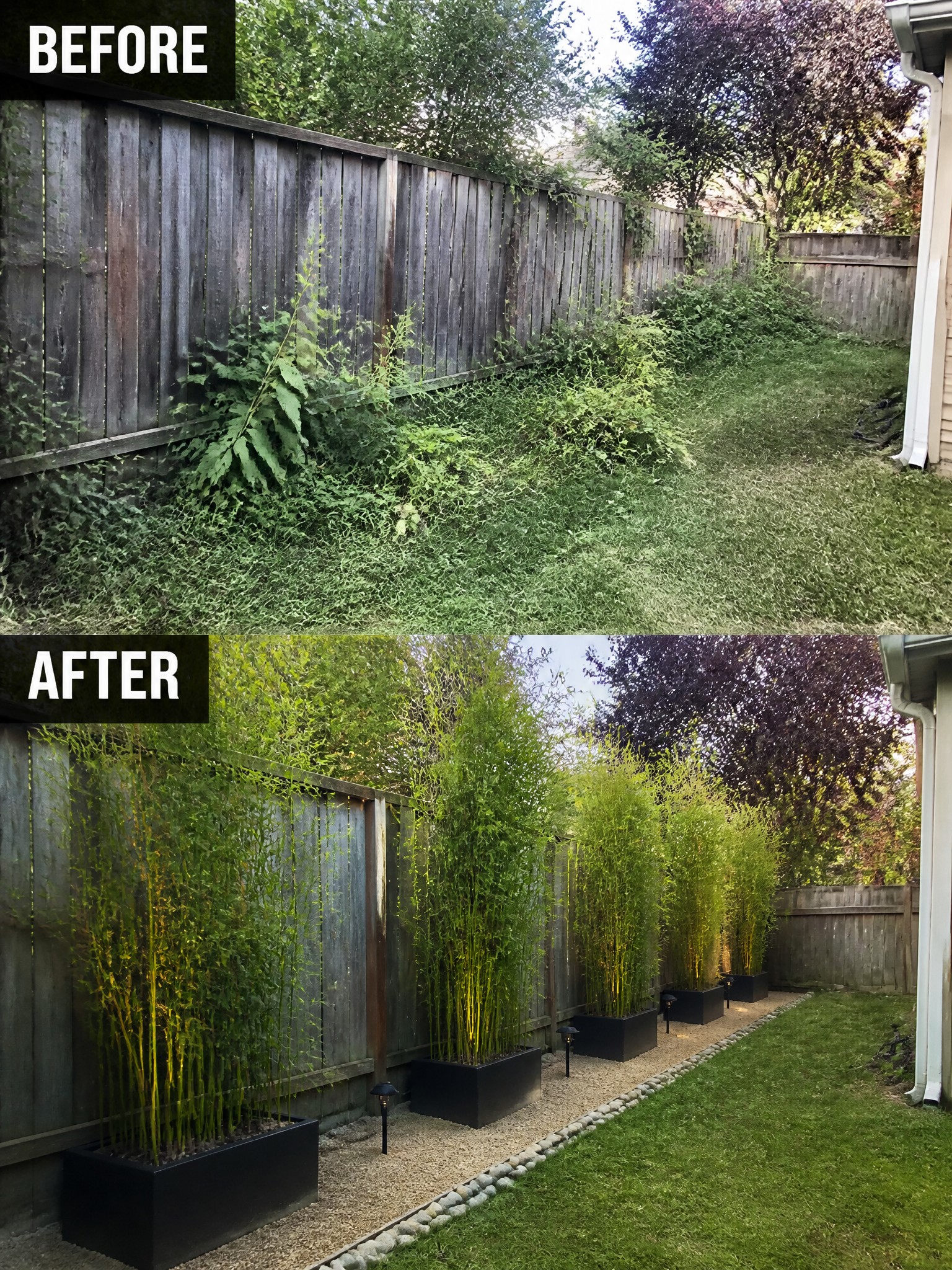
Clearing the weeds first makes the biggest difference. Once the fence line is visible again, a row of tall plants in matching black planters gives the space a clean edge and creates privacy without needing a full garden redesign.
This approach works best along side yards or back fences where space is limited. Stick with one type of tall grass or bamboo, repeat the same container style, and keep the ground cover simple with gravel so the plants stay the main focus.
Use Rock Borders To Organize An Overgrown Yard
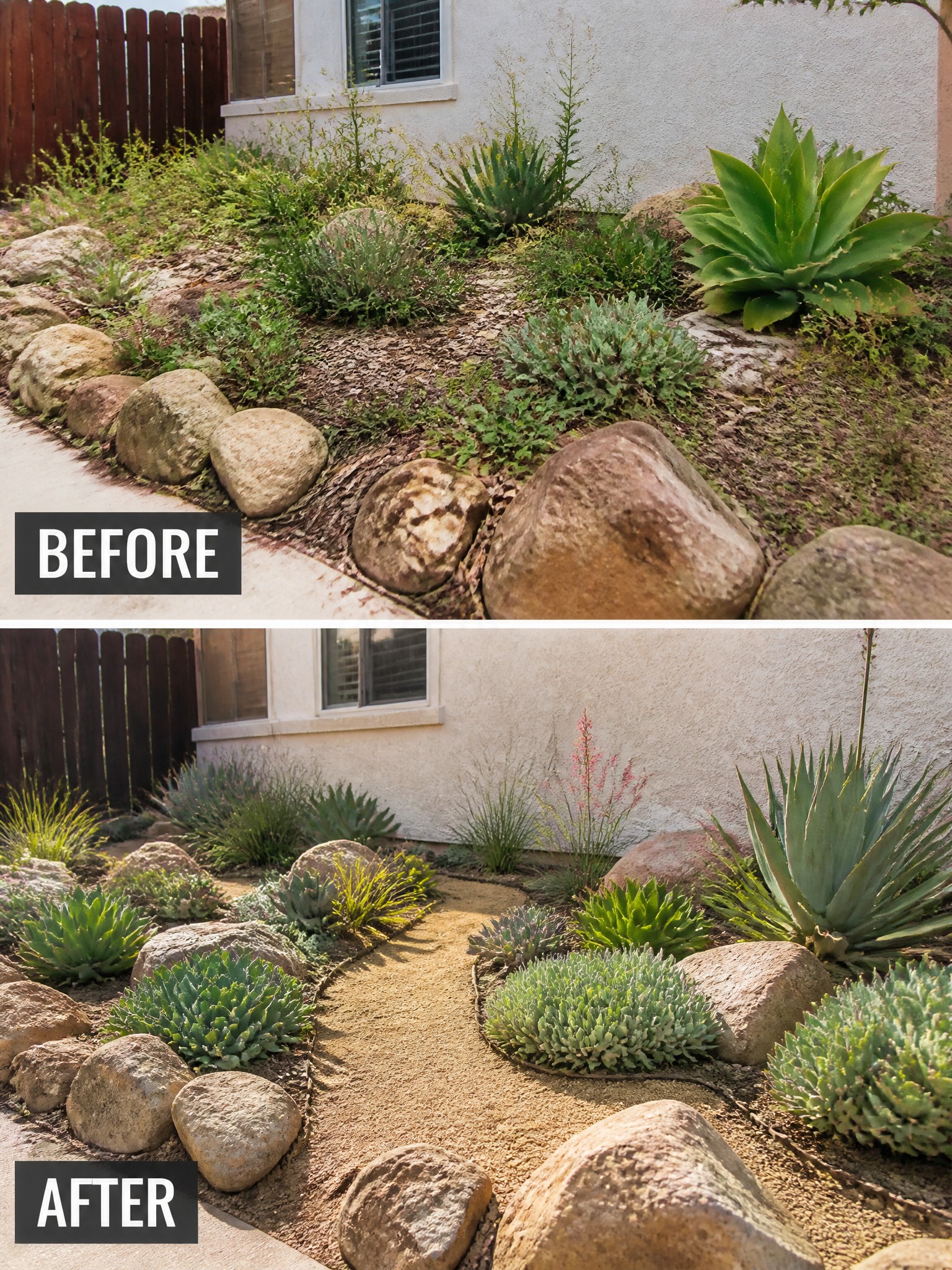
The yard had turned into a tangle of weeds and loose rocks with no clear shape. Clearing the overgrowth and setting the rocks into low borders created separate planting zones and a simple path that made the space feel planned instead of neglected.
This idea works best on sloped side yards or narrow strips beside the house where you need to control erosion and keep plants from spilling everywhere. Start with the cleanup and basic edging before choosing plants, and stick to a few repeating shapes so the beds stay easy to maintain.
Add Structure To An Overgrown Slope
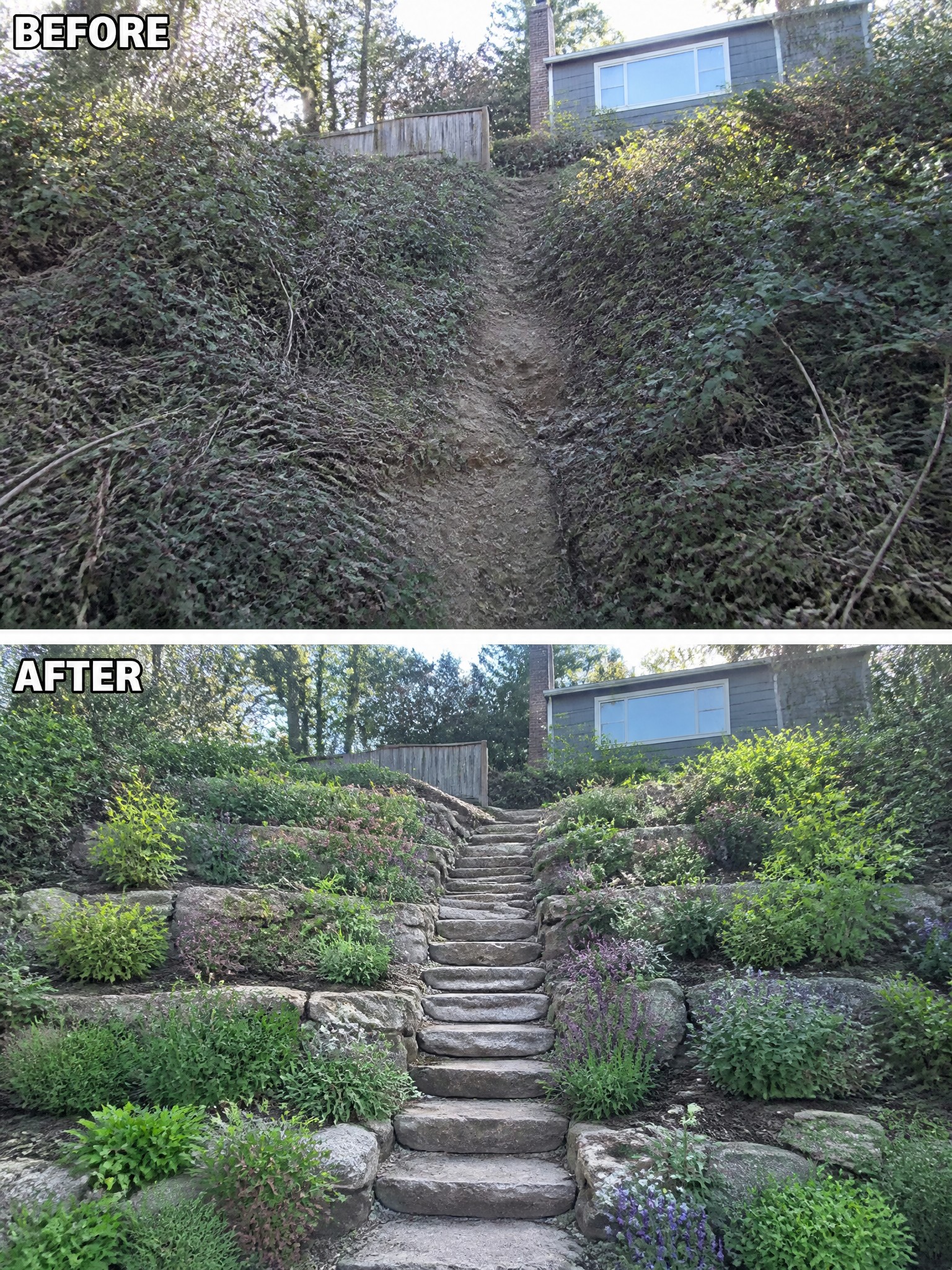
The main improvement came from replacing the steep, overgrown dirt path with stone terraces and steps. This turned a hard-to-reach hillside into a series of flat, planted beds that are much easier to walk and care for.
This idea works best on sloped yards that feel out of control. Clear the overgrowth first, then build simple stone walls to create usable levels. The terraces keep plants from spilling everywhere and give the slope a clear shape without needing a full redesign.
Clear Overgrowth Before Adding Garden Beds
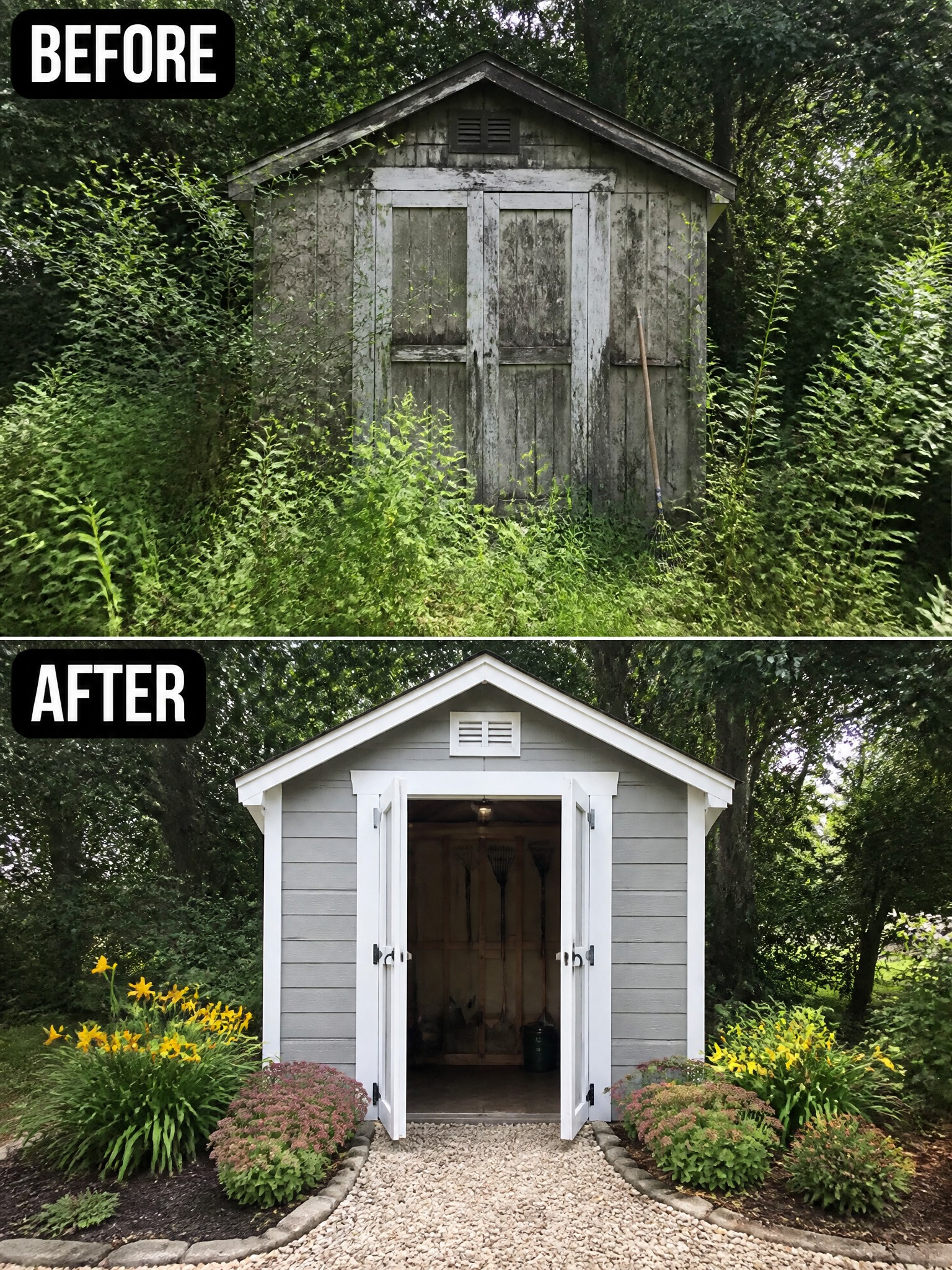
An old shed often gets lost when plants take over the space around it. Clearing the thick growth first makes the structure visible again and gives you room to shape the area with beds and a simple path. The after view shows how a gravel walkway and low borders pull everything together without crowding the building.
This approach works best on small properties where the shed sits near the main yard. Start with removal and leveling, then add edging and a few clusters of plants rather than filling every open spot. It keeps the focus on the shed itself while making the whole corner feel intentional instead of neglected.
Turn An Overgrown Lawn Into Planted Garden Beds
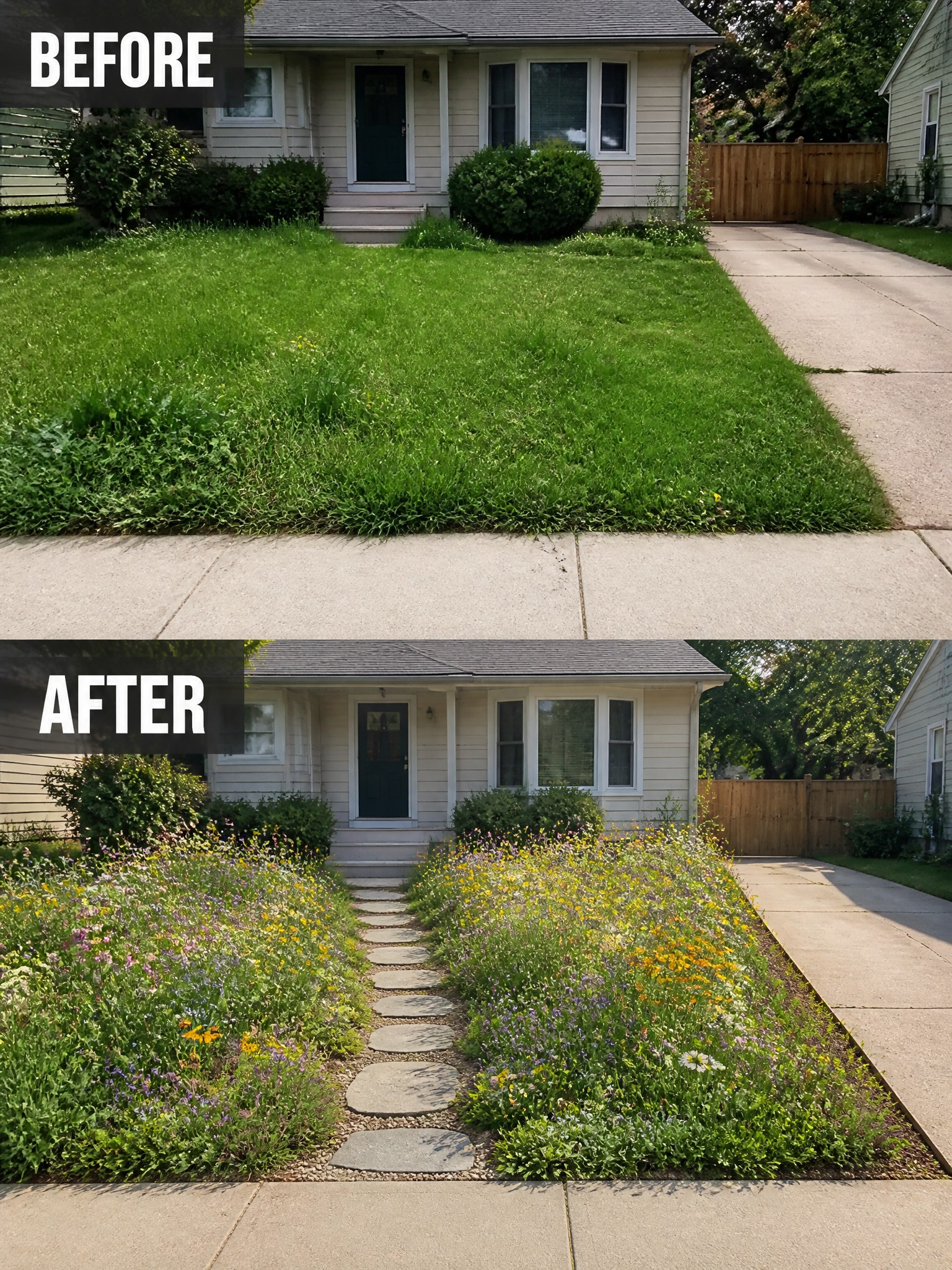
The front yard here went from a wide stretch of tall grass and weeds to a series of defined beds filled with low-growing flowers. Adding the stone path through the middle gives the space shape and makes it easy to walk up to the door without trampling plants. The result feels intentional instead of neglected.
This approach works well on smaller front lawns where a big open grass area is hard to maintain. Clear the old growth first, lay out beds with mulch or gravel edges, and choose spreading perennials that fill in on their own. Keep the path simple so it does not compete with the planting.
Frequently Asked Questions
Q: How do I start clearing an overgrown yard without feeling buried in work? A: Pick one small patch near the house and clear it completely before moving on. This builds quick wins and shows you what the space can look like. Focus on pulling dead growth first so you see the ground again.
Q: What should I do with all the branches and clippings once I cut them back? A: Pile them in one spot and chop them into smaller pieces for the compost bin or a local green waste drop-off. Breaking them down as you go keeps the yard from turning into a new mess. A simple tarp makes hauling easier.
Q: Will new plants take hold if the soil looks packed down from years of neglect? A: Loosen the top layer with a fork before adding any fresh plants. Mix in some basic compost to give roots room to spread. Water the area well the first few weeks so everything settles in.
Q: How often do I really need to check the yard after the makeover? A: Walk through once a week and pull anything that does not belong. That single habit stops most problems before they grow back.
