

I have walked through yards where tall grass swallowed the edges and shrubs crowded out any clear path or open spot.
Sorting through the overgrowth usually shows the original layout underneath, which gives a better sense of what can actually work there.
A few targeted cuts can open things up without starting from scratch.
In my own experience, setting simple boundaries and clearing sight lines first makes the space feel less forgotten and more like an area worth spending time in.
Those early steps often lead to practical changes that hold up over time rather than quick fixes that fade.
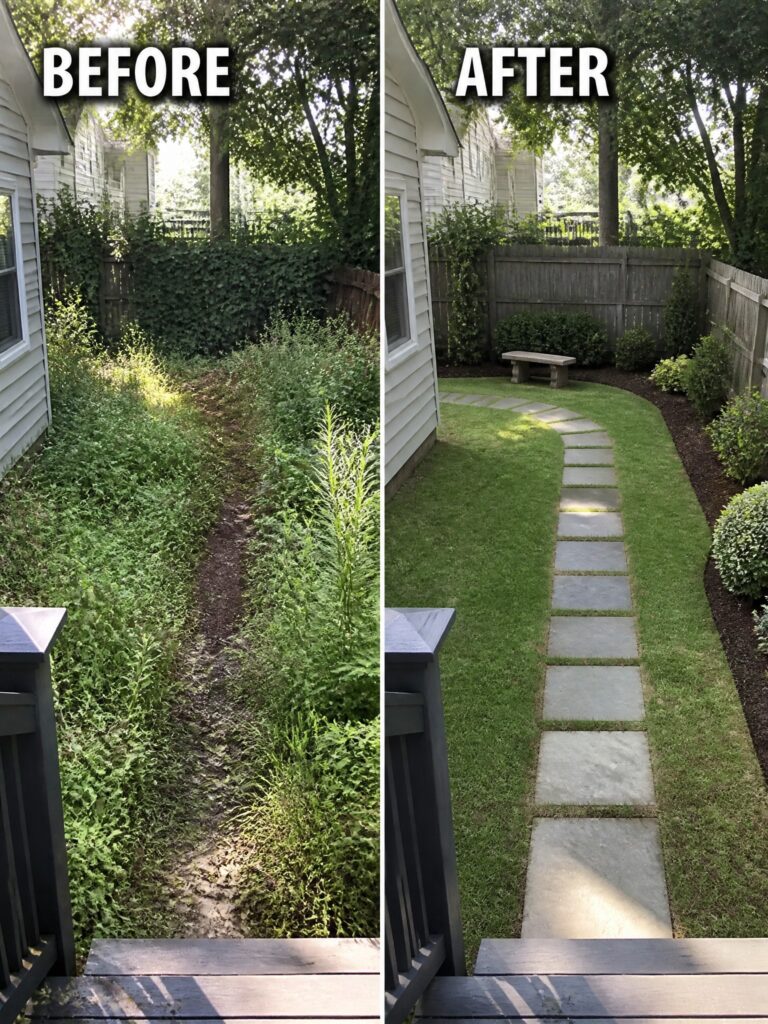
Clear Overgrowth Before Adding A Lawn And Path
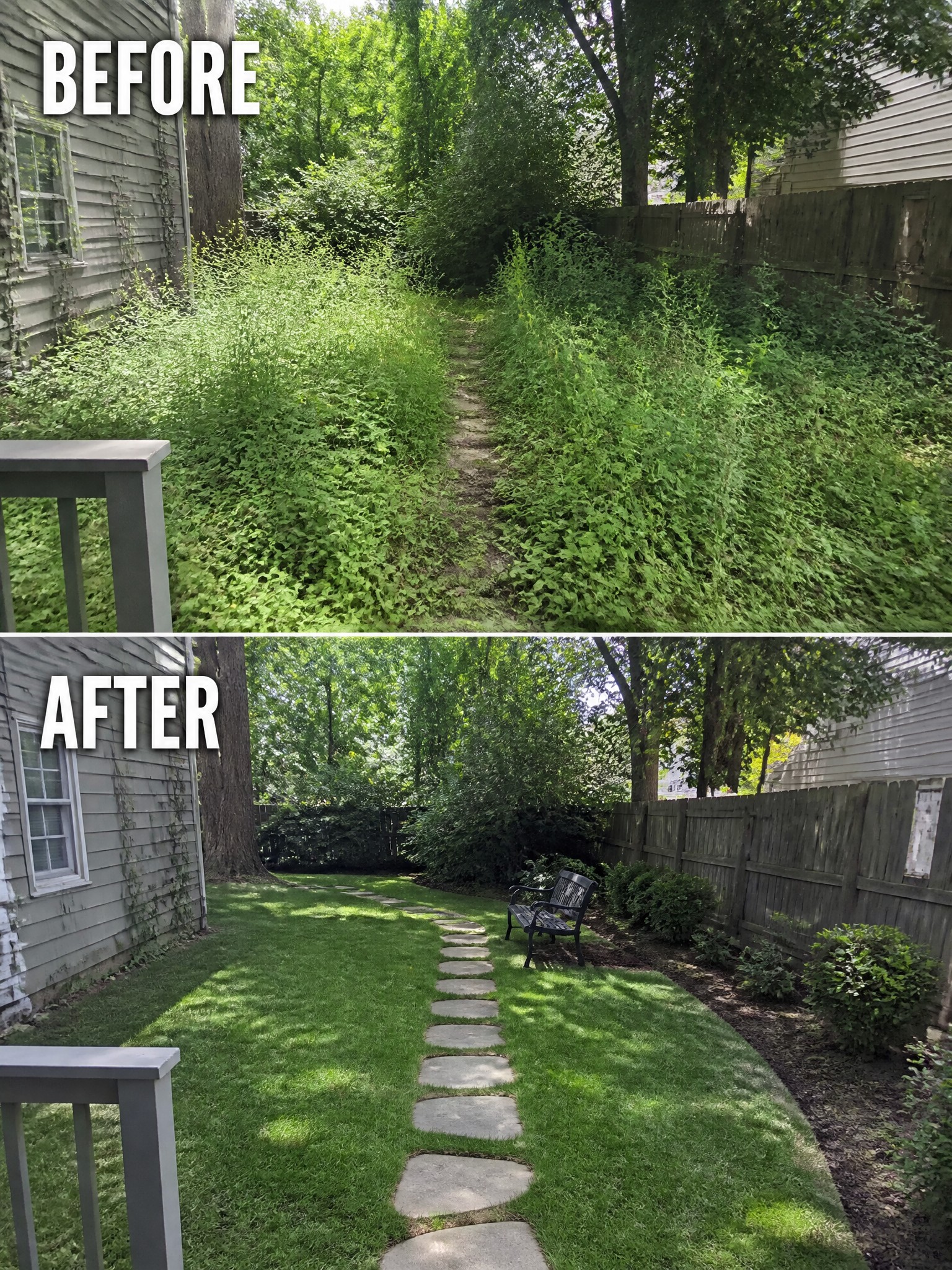
An overgrown yard often hides the real shape of the space. Once the thick weeds and tall growth are removed, a simple lawn and stone path can turn the area into something usable instead of just wild.
Start with a full cleanup rather than trying to plant around the mess. A basic path like the one shown here gives structure and keeps foot traffic off the new grass. This approach works well in older homes where the backyard has been left alone for years.
Clear Overgrowth Before Adding Structure To A Side Yard
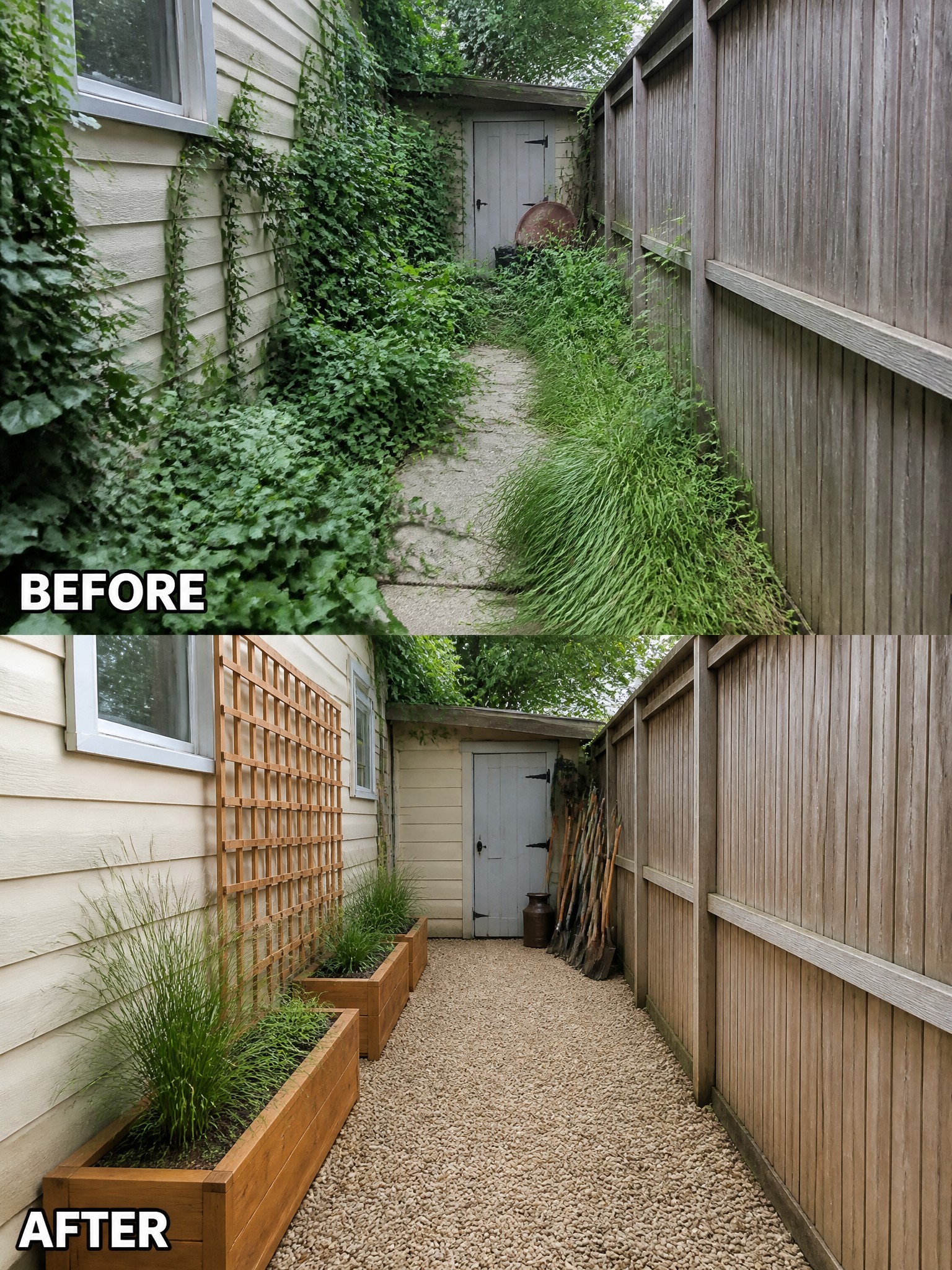
An overgrown side yard often feels unusable because plants take over the path and crowd the space. Clearing the vines, tall grass, and weeds first opens everything up, then simple additions like gravel and raised planters give the area a clear purpose and make it easy to walk through.
This approach works well on narrow lots where you need a functional path rather than a full garden. Start with the cleanup, lay down gravel for drainage and a finished look, and use a few matching planters along the house to keep planting contained and low maintenance.
Turn An Overgrown Corner Into An Outdoor Seating Area
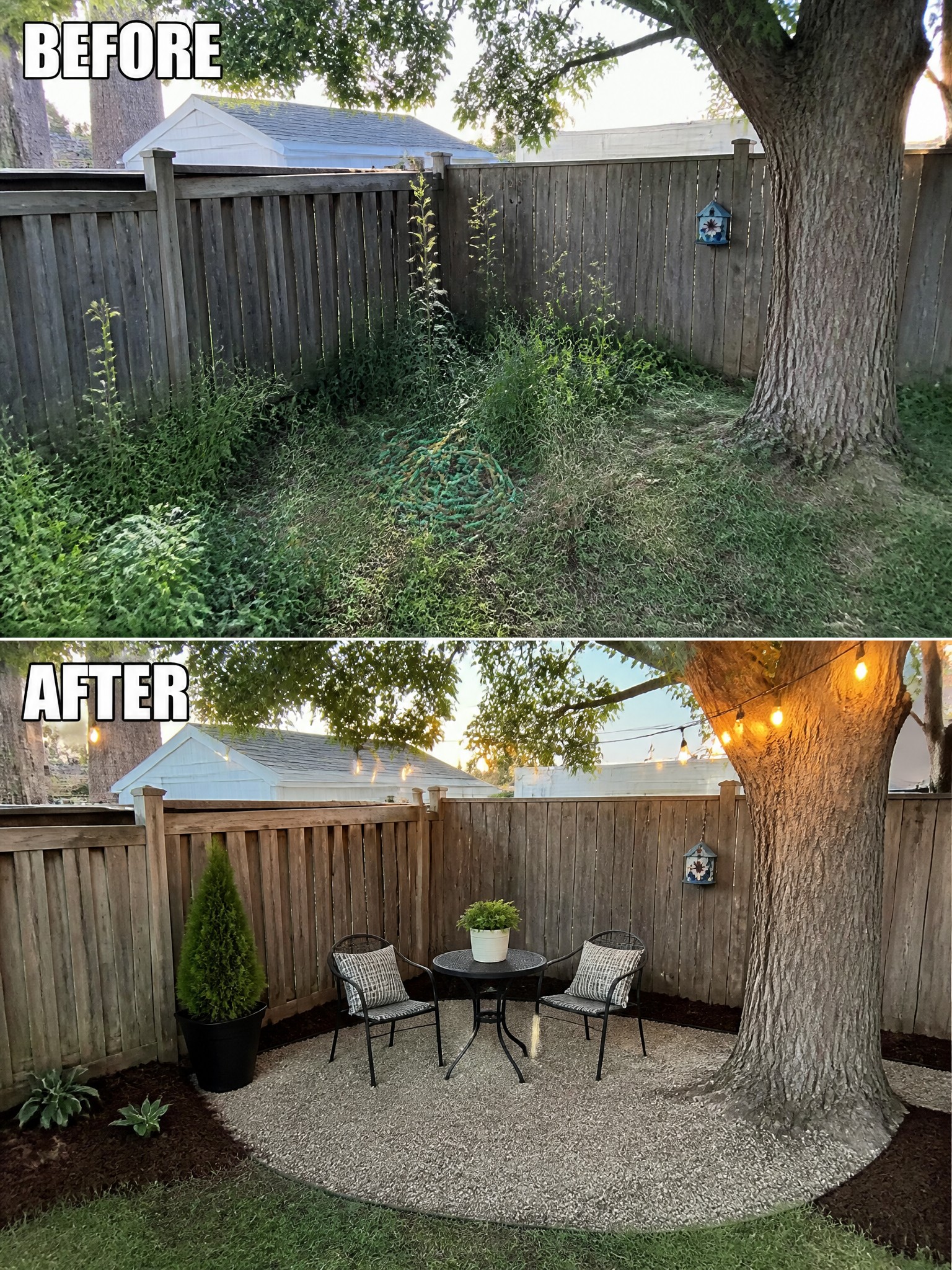
Clearing the weeds and laying a simple gravel base turned this messy patch into a usable spot. The round gravel area gives the furniture a firm place to sit without sinking into the grass or dealing with mud after rain.
This idea works best in smaller backyards where you only need one relaxed seating zone. Start with a full cleanup, add a basic hard surface like gravel or pavers, then choose a couple of chairs and a small table that fit the space without crowding it.
Add Terraced Beds To Organize A Sloped Yard
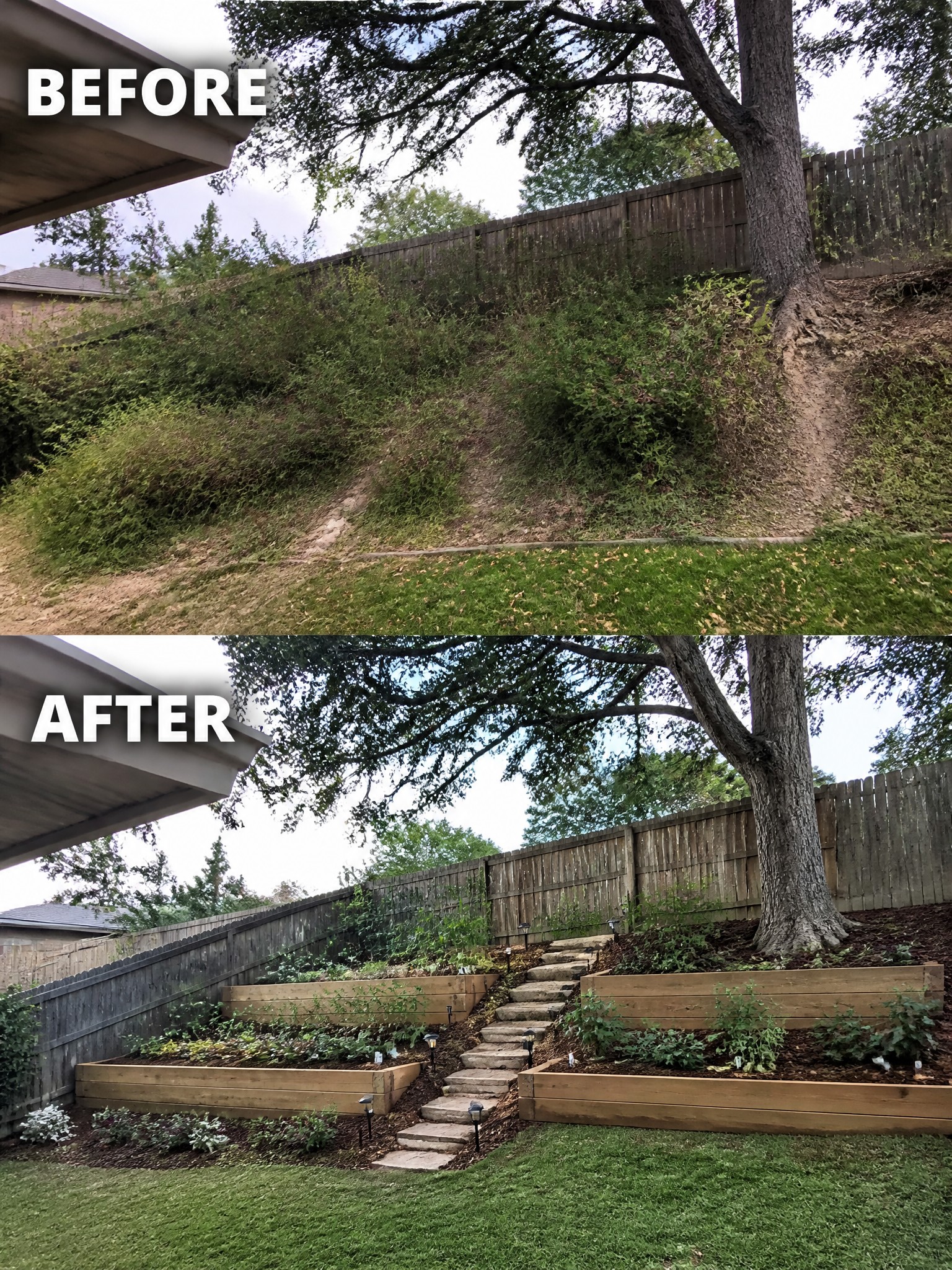
Building a few levels of wooden raised beds along the slope turns a hard-to-reach hillside into usable garden space. The wooden frames hold the soil in place, the added steps make it easy to walk through, and the mulch keeps weeds down between the beds.
This idea works best on yards where the ground drops away from the house and regular mowing or weeding is difficult. Clear the overgrowth first, then set the beds at different heights to follow the natural slope. Keep the beds narrow enough to reach across and use simple materials that can handle outdoor exposure.
Add Structure To An Overgrown Backyard
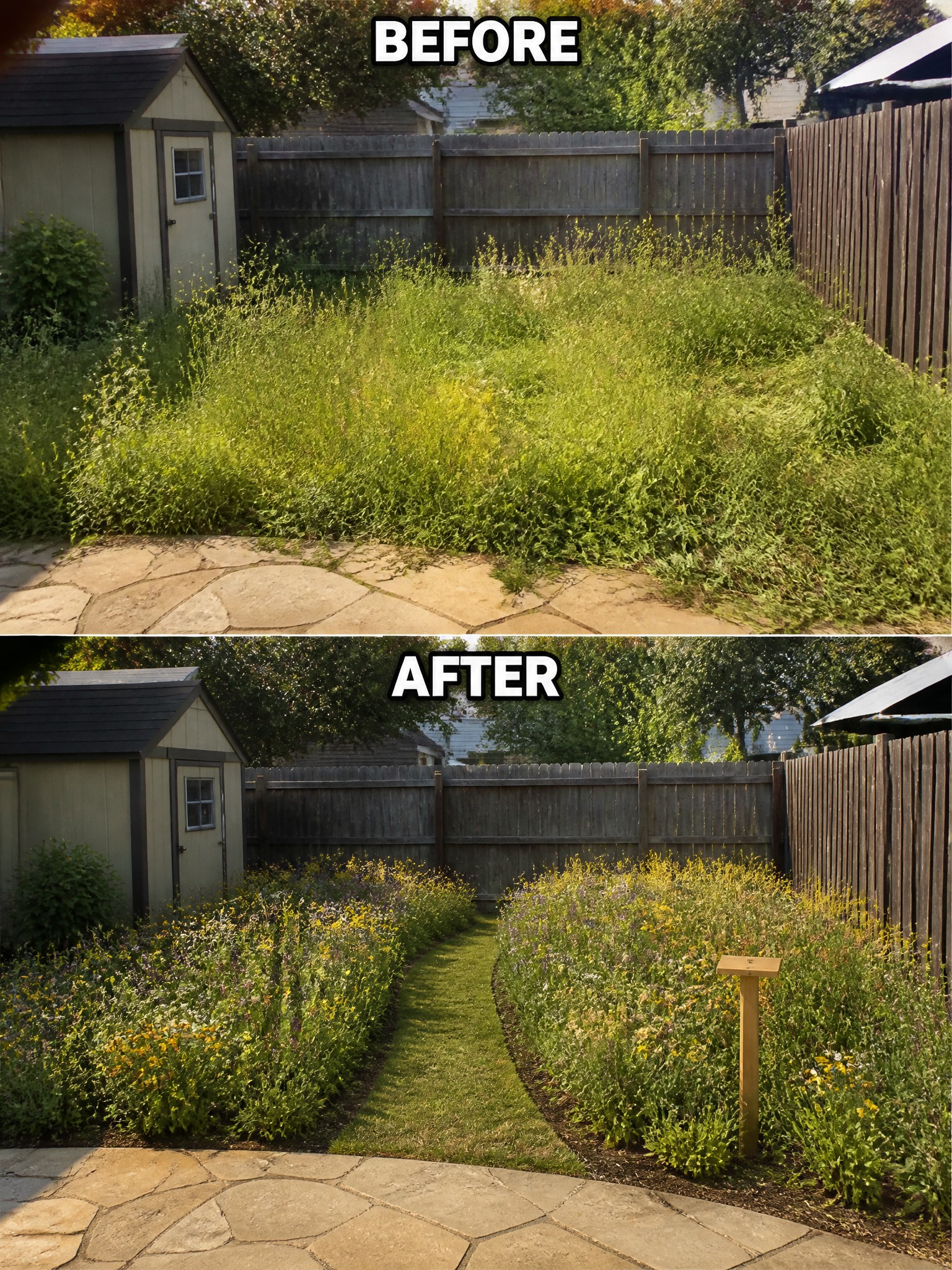
An overgrown yard often feels unusable because there is no clear layout. Clearing the weeds and tall grass first makes it possible to add simple garden beds and a central path. In this case the messy slope became two large planted borders with a mowed walkway running between them.
The same approach works in most small or medium backyards. Start by removing the worst overgrowth so you can see the ground, then mark out beds with gentle curves or straight edges that match how you want to walk through the space. Keep the plant choices simple and repeat a few varieties rather than trying to fill every inch at once.
Shape Overgrown Hedges Into A Clean Backdrop
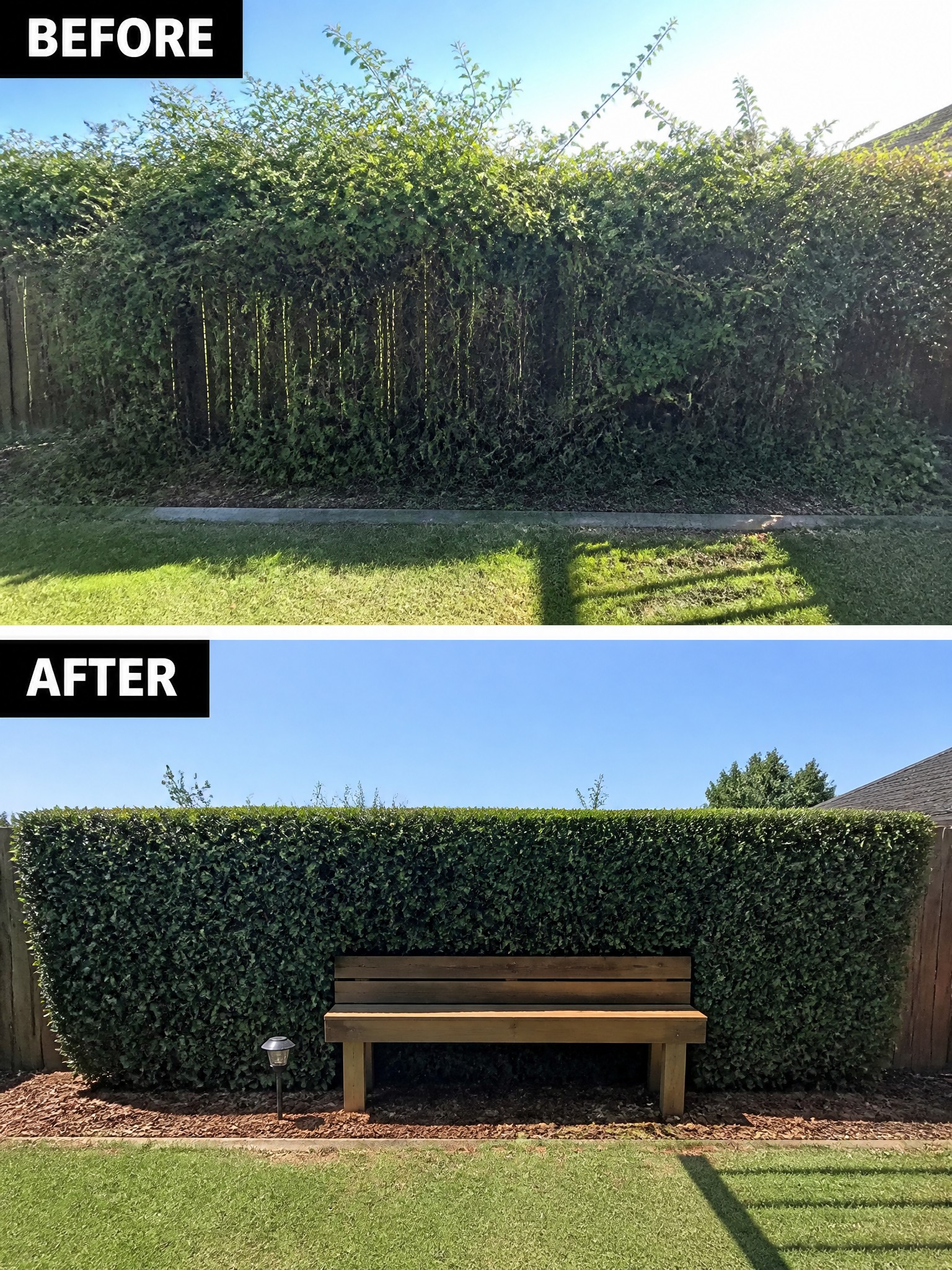
An overgrown hedge can eat up a yard and leave the space feeling wild instead of usable. In this case the fix started with a hard trim that removed the long hanging vines and uneven growth, turning the hedge into a solid green wall. Once the plants were shaped, a simple bench fit right in front without looking lost.
This approach works best in yards where the hedge already provides height and privacy. Cut it back hard in late winter or early spring, then keep it trimmed a few times a year so it stays dense. Add seating only after the hedge looks neat, and keep the ground under it mulched so the area stays low maintenance.
Build A Deck To Turn Overgrown Space Into An Outdoor Living Area
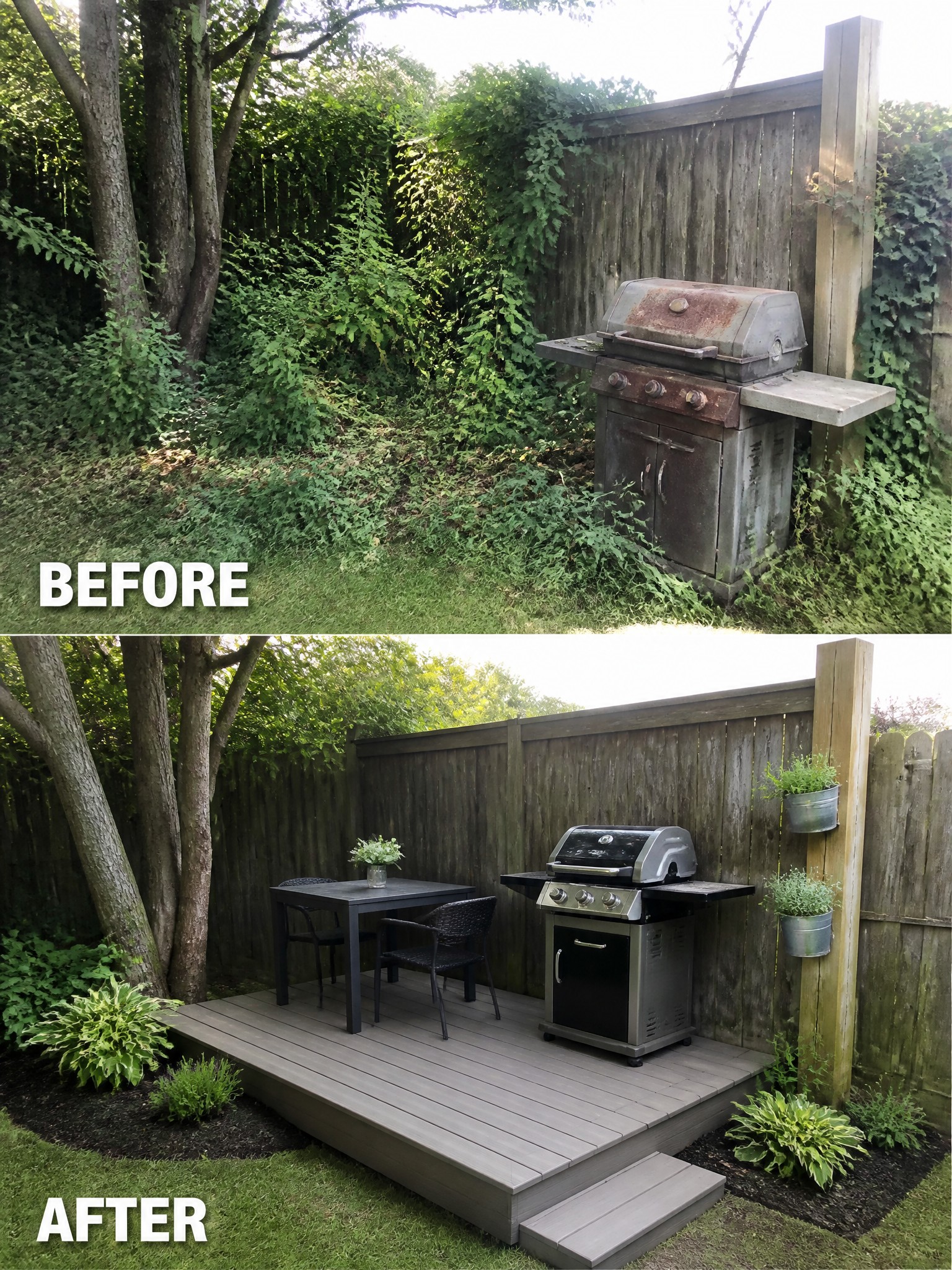
An overgrown backyard corner can feel useless until you add a deck. Clearing the thick growth and installing a raised platform gives you a flat, usable surface right where the grill already sits. The simple deck here makes room for a table and chairs without crowding the rest of the yard.
This idea works best in smaller backyards where you need one clear spot for seating and cooking. Start by cutting back the plants to open the area, then build a basic deck that stays low to the ground. Keep the furniture scale modest so there is still room to move around the grill and steps.
Clear Overgrown Shrubs Before Adding Garden Beds
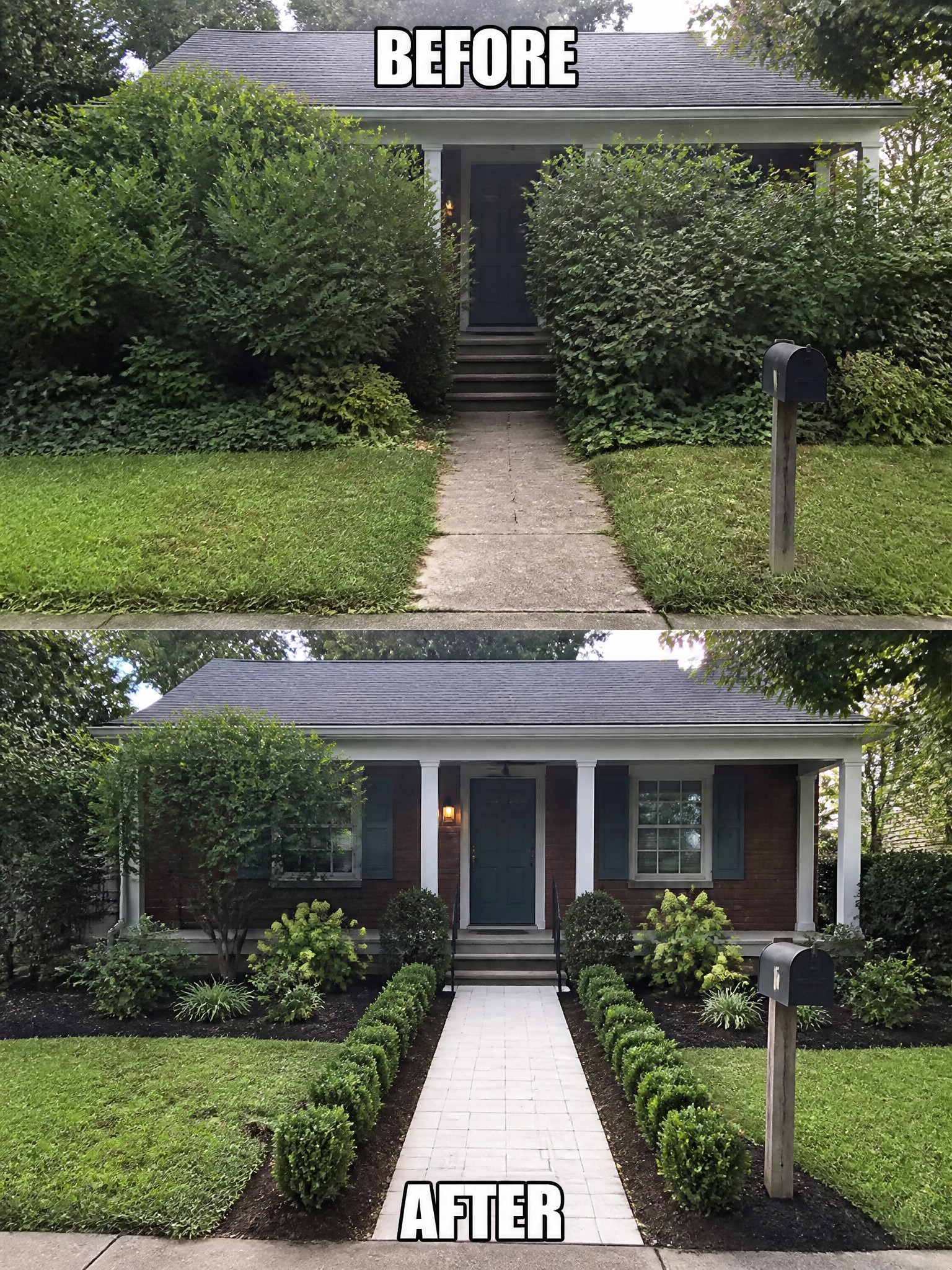
The main improvement came from cutting back the tall, wild bushes that crowded the front of the house and blocked the view. With those removed, the owners added low hedges and planting beds along both sides of the path, which gave the yard clear edges and made the whole space feel more open.
This works best on older properties where shrubs have grown past their original size. Focus first on removing anything that hides windows or narrows the walkway, then keep new beds simple with repeated plants and mulch so the layout stays easy to care for over time.
Turn An Overgrown Path Into A Deck For Seating
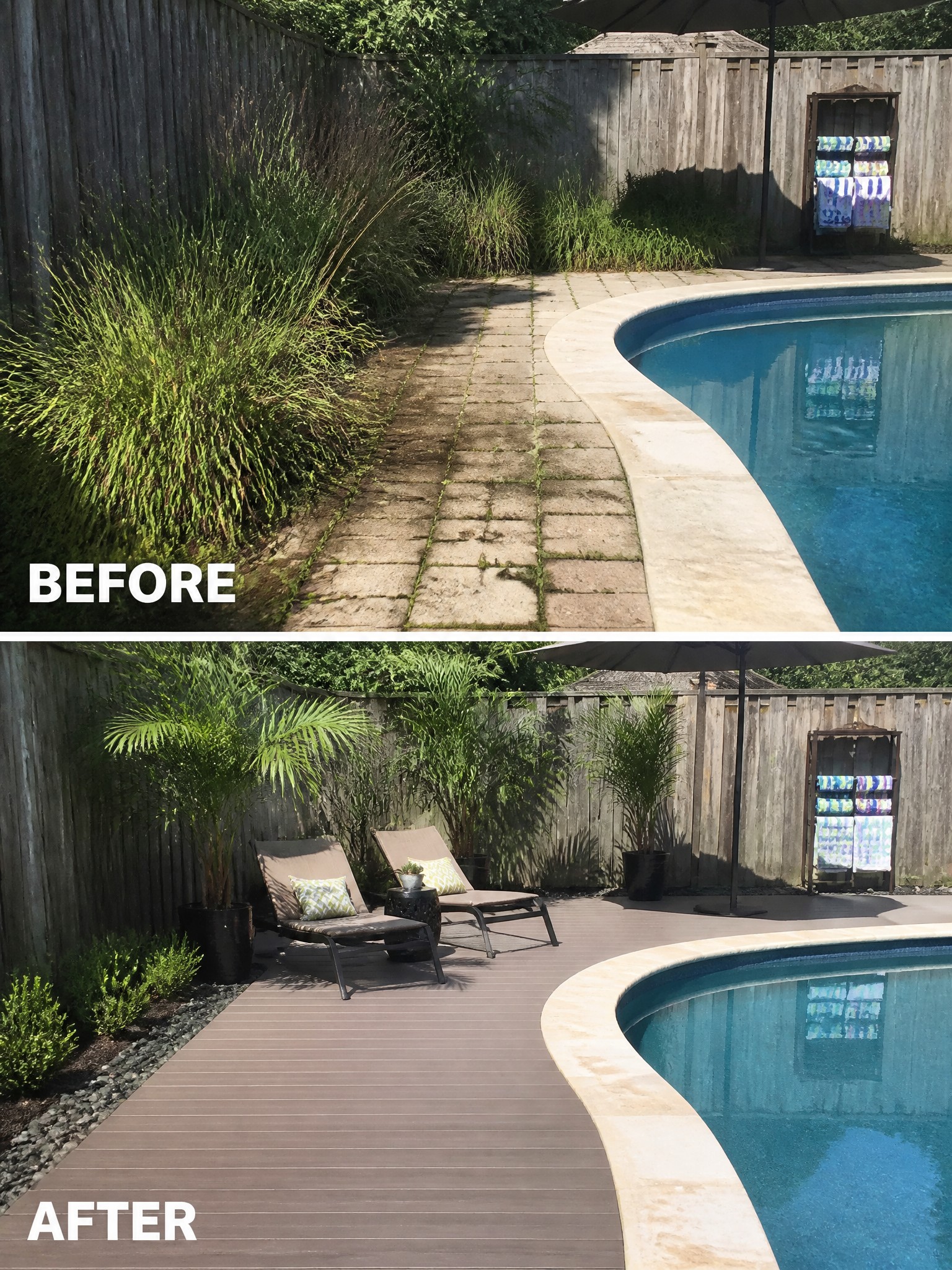
The main change here was clearing the tall grass and weeds along the pool and laying down a simple deck. That single step turned a narrow, messy walkway into a flat, usable surface where chairs could actually sit. The potted palms and small shrubs add some structure without taking over the space.
This approach works well around pools or side yards where grass grows unevenly and paths feel too tight for furniture. Start with the deck or pavers first, then add just enough seating and plants to make the area feel intentional. Keep the furniture scale modest so people can still walk past the pool without crowding.
Define Overgrown Edges With Gravel Beds
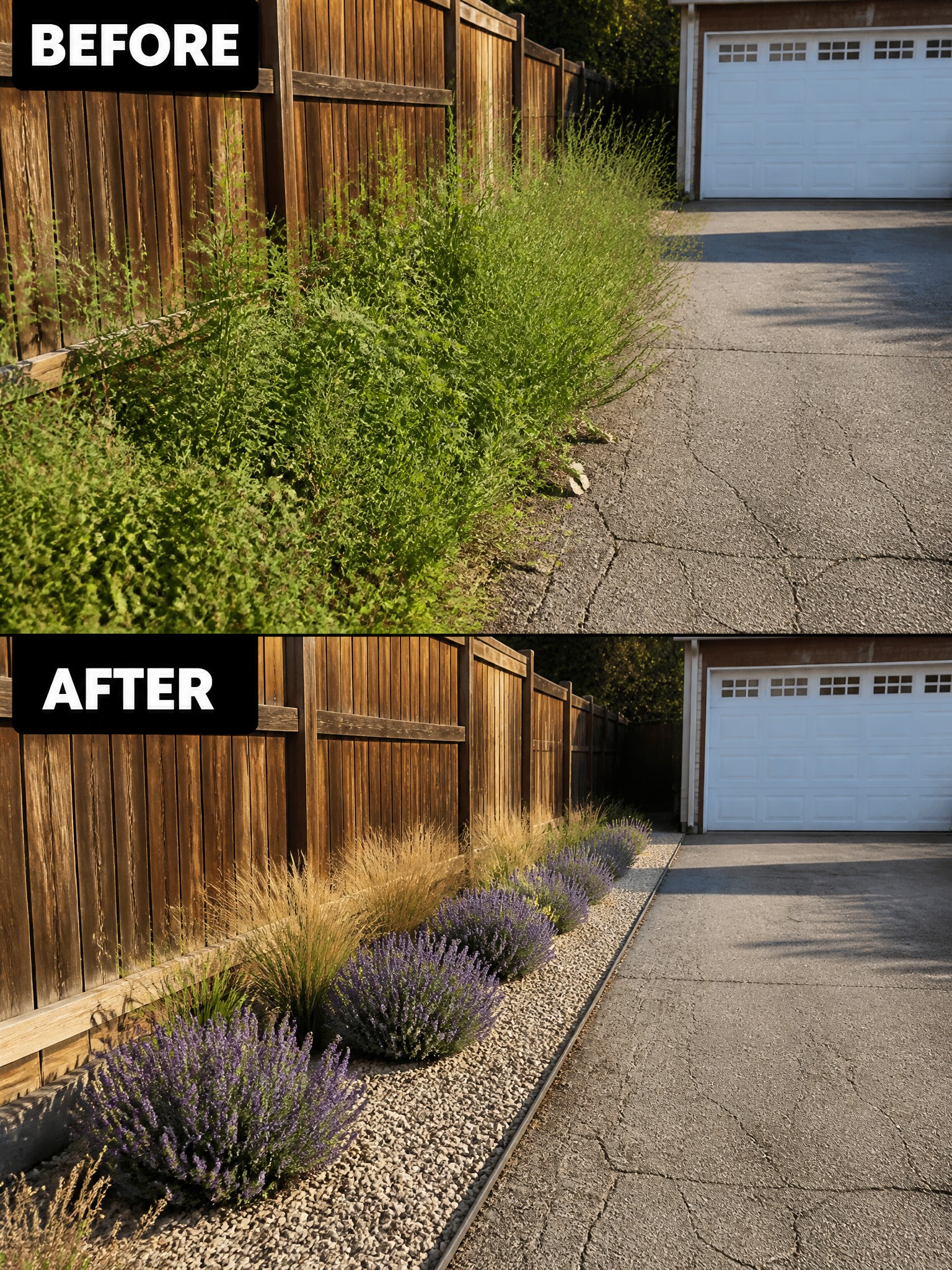
Clearing out tall weeds and adding a narrow gravel strip with clumps of grass and lavender turns a messy fence line into something that actually looks intentional. The straight edge keeps the driveway clear and stops the plants from spilling onto the pavement.
This approach works well along driveways or side yards where space is tight. Start by removing the overgrowth completely, lay down a simple gravel base, and choose a few repeating plants that stay low and need little water. It keeps the area looking neat without adding much to maintain.
Clear Overgrowth First To Create Usable Yard Space
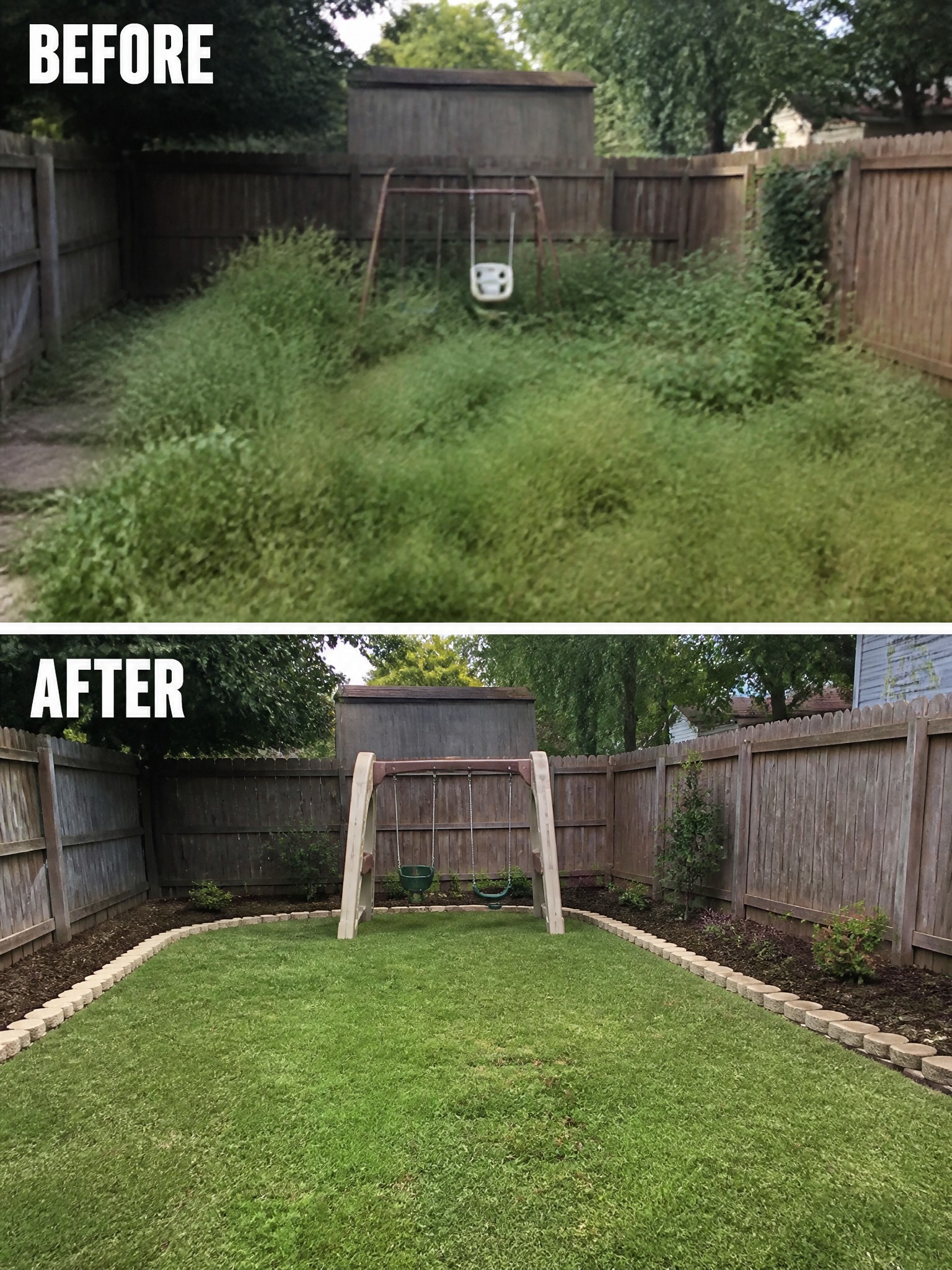
Many backyards stay unusable because thick brush and weeds take over the whole area. Clearing that growth first reveals the actual space you have, as seen with the swing set moving from being buried in tall plants to sitting on open grass.
This step works best in smaller yards where you want room to play or walk around without constant trimming. Do the full cleanup before adding edging or mulch, so the new lawn stays simple to maintain and actually gets used.
Create A Defined Fire Pit Area For Outdoor Use
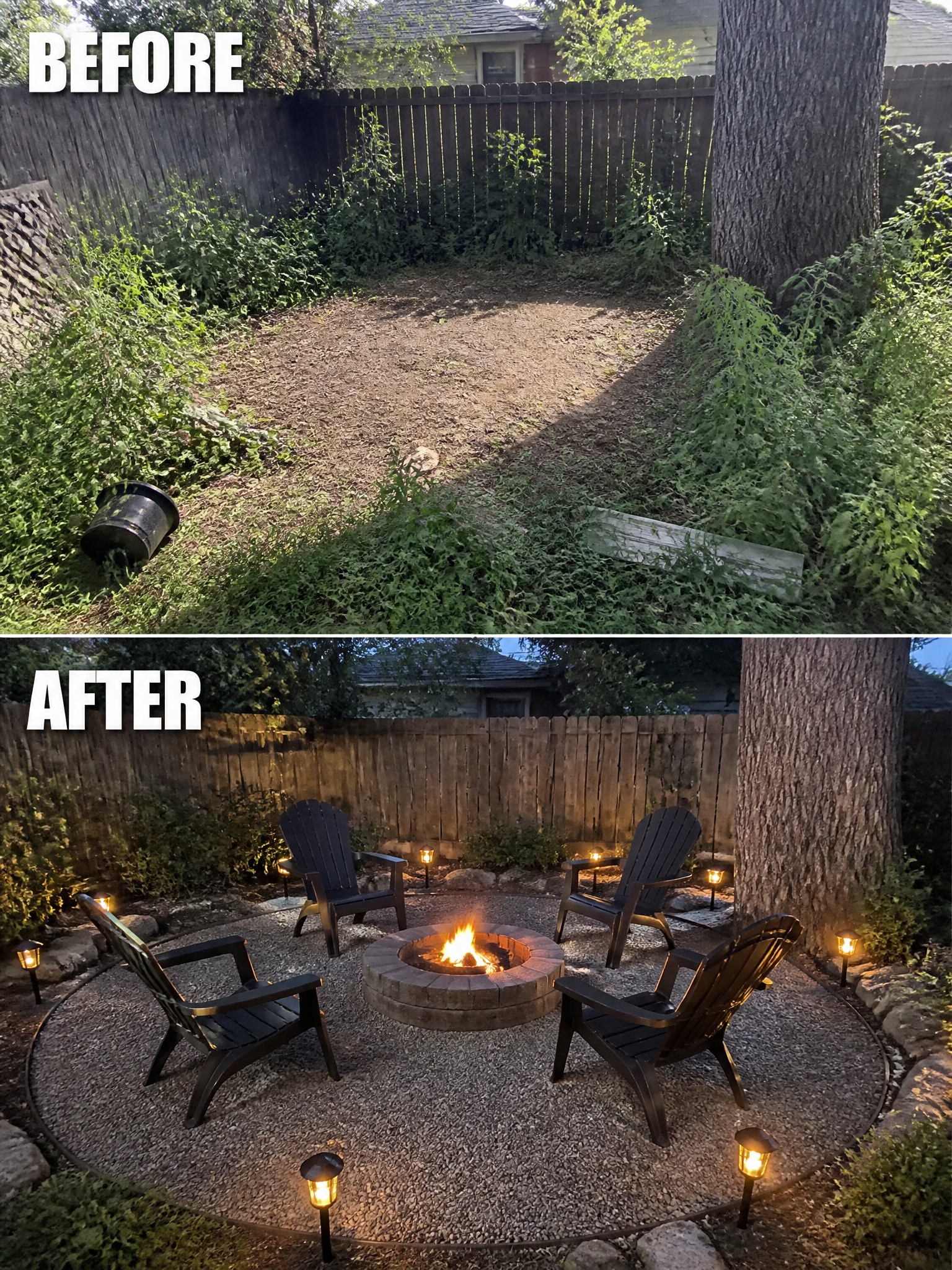
Clearing the weeds and laying down gravel lets you turn a messy patch of yard into one solid spot for sitting. The fire pit becomes the center, with chairs pulled close and a few lights marking the edge so the space feels finished instead of scattered.
This idea works best in smaller backyards where you want one main gathering place instead of trying to fix the whole lawn at once. Keep the circle simple, leave room to walk around the chairs, and choose weatherproof seating so it stays usable without constant upkeep.
Clear Overgrowth Before Adding Garden Beds
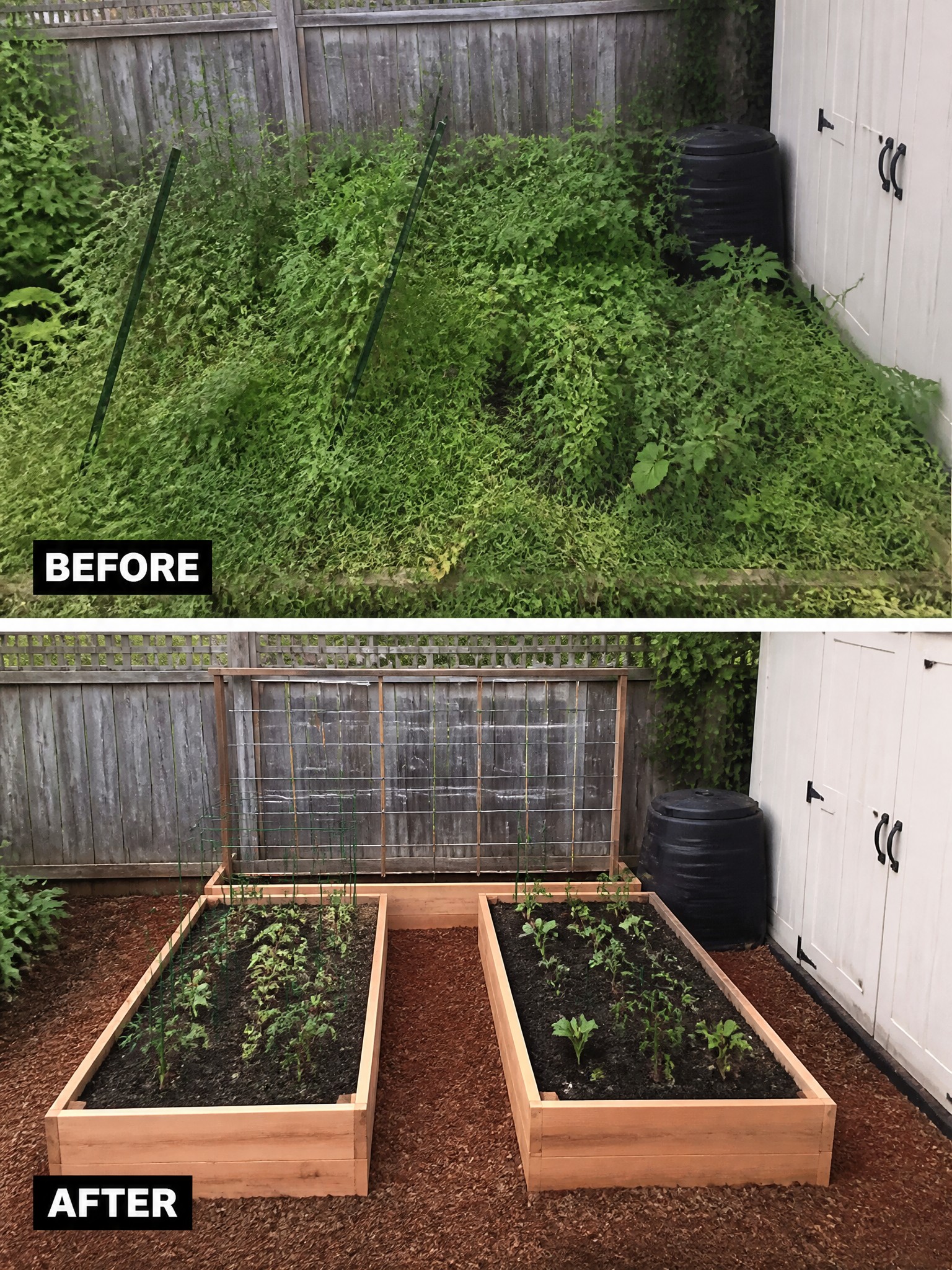
An overgrown backyard often feels unusable until the excess growth is removed. Clearing the thick layer of weeds and vines first made room for simple raised beds with basic wooden frames and wire supports. The result is a tidy space that can actually be walked through and worked in.
This approach works well in small yards or side areas where plants have taken over. Start by cutting everything back to bare ground, then decide on bed size and layout before adding soil or plants. Keep the beds narrow enough to reach across and use sturdy supports for anything that needs vertical growth.
Turn An Empty Patio Into A Seating Area
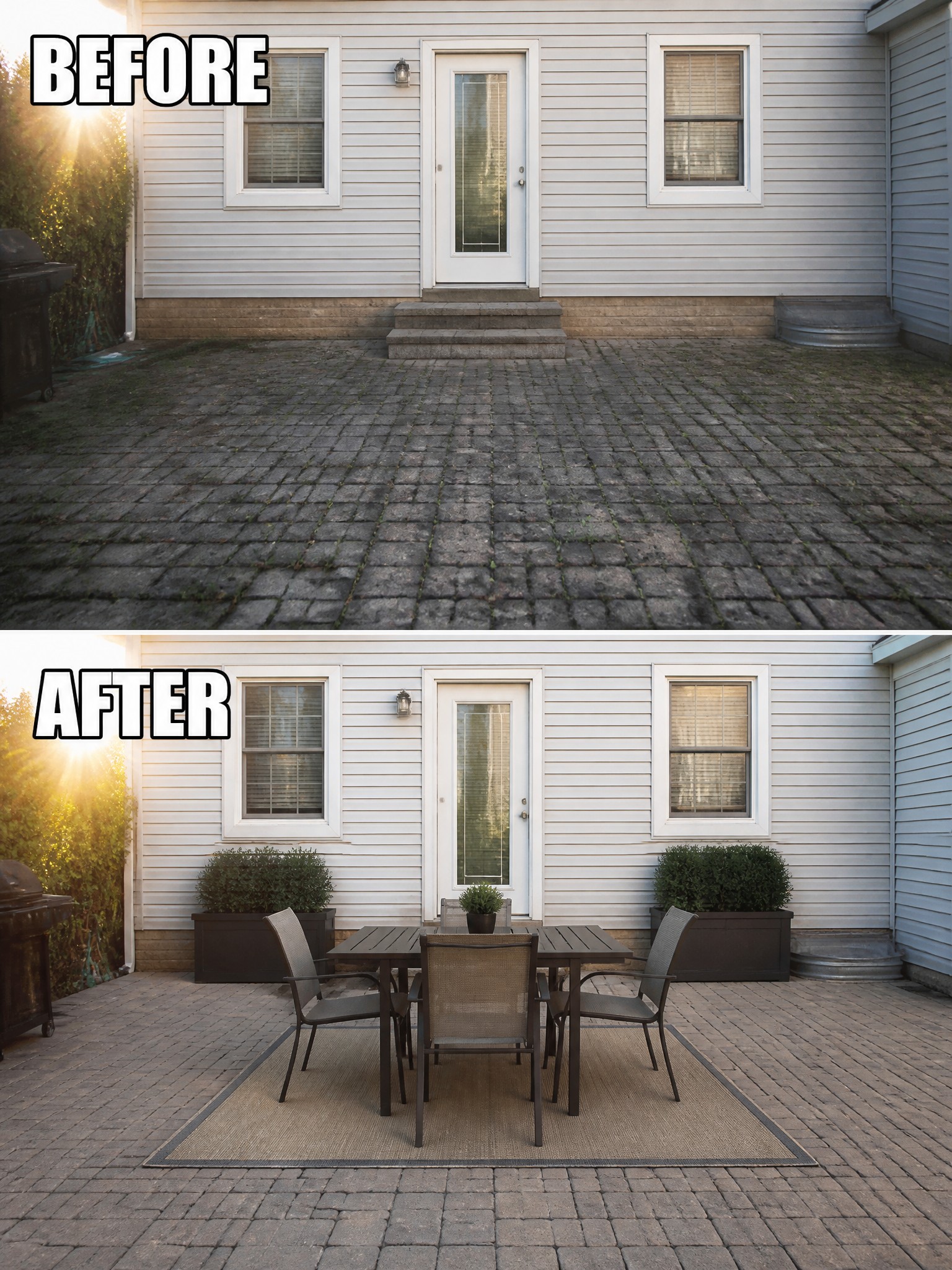
A bare paved patio often sits unused because nothing defines where people should gather. Placing a large outdoor rug under a dining set creates a clear zone that makes the space feel intentional and ready for use. The simple addition of furniture and flanking planters turns the open brick area into a spot people actually want to sit.
This idea works best on existing hard surfaces where you want function without new construction. Keep the rug and table in proportion so the seating feels balanced, and leave open space around the edges for walking. It suits backyards that already have a solid patio but need one focused area for meals or conversation.
Clear Overgrowth Before Adding Garden Structure
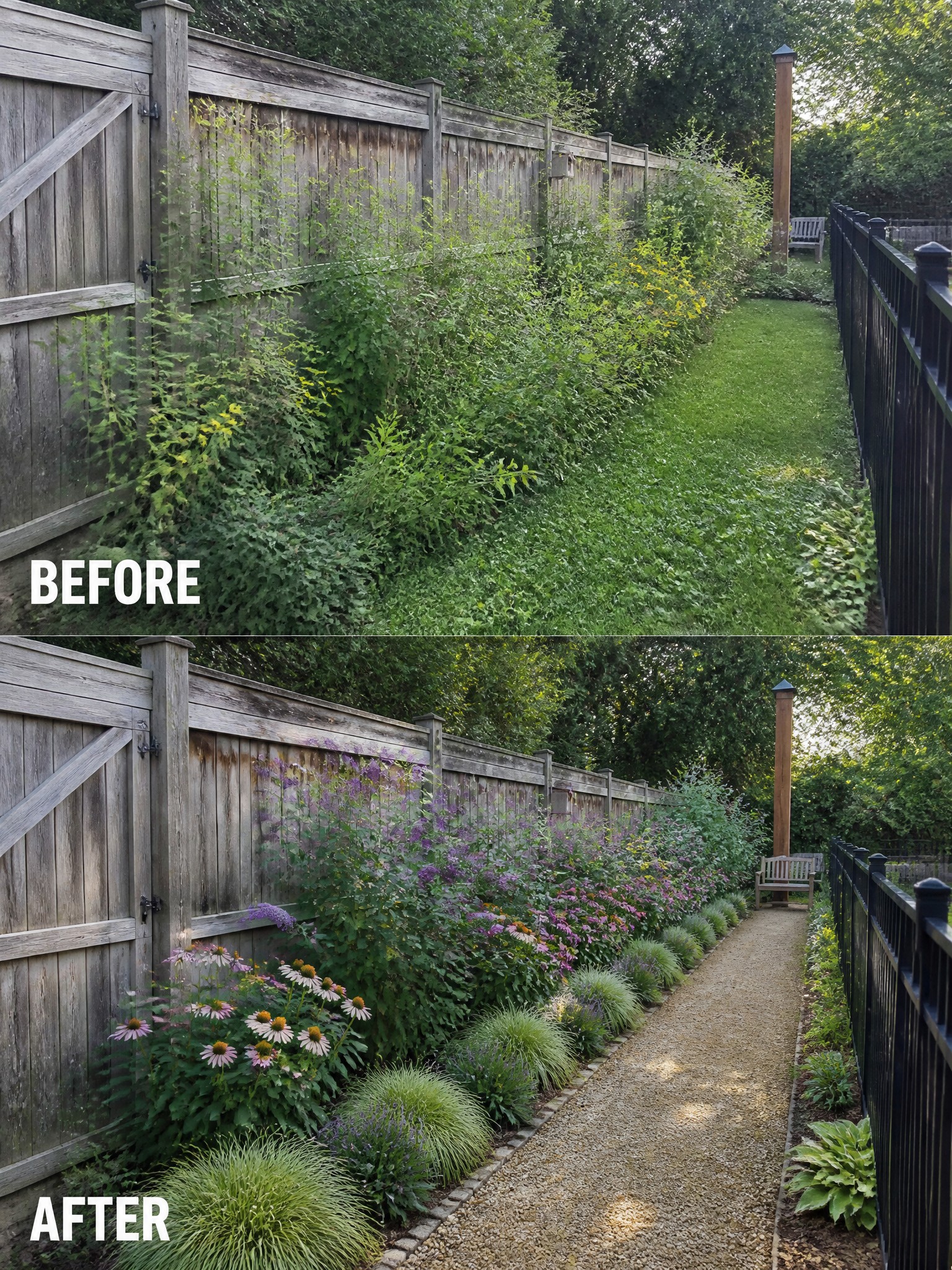
An overgrown fence line often makes a side yard feel closed off and hard to walk through. Removing the thick weeds and volunteer plants first opened up the space and let the new garden beds sit in a straight, manageable row along the fence.
Work from the ground up by clearing everything back to bare soil before you plant. Add edging and a simple path next so the beds stay defined and the area stays usable. This step works especially well in narrow yards where you need both planting and room to move.
Clear Overgrowth To Make Room For Simple Hardscaping
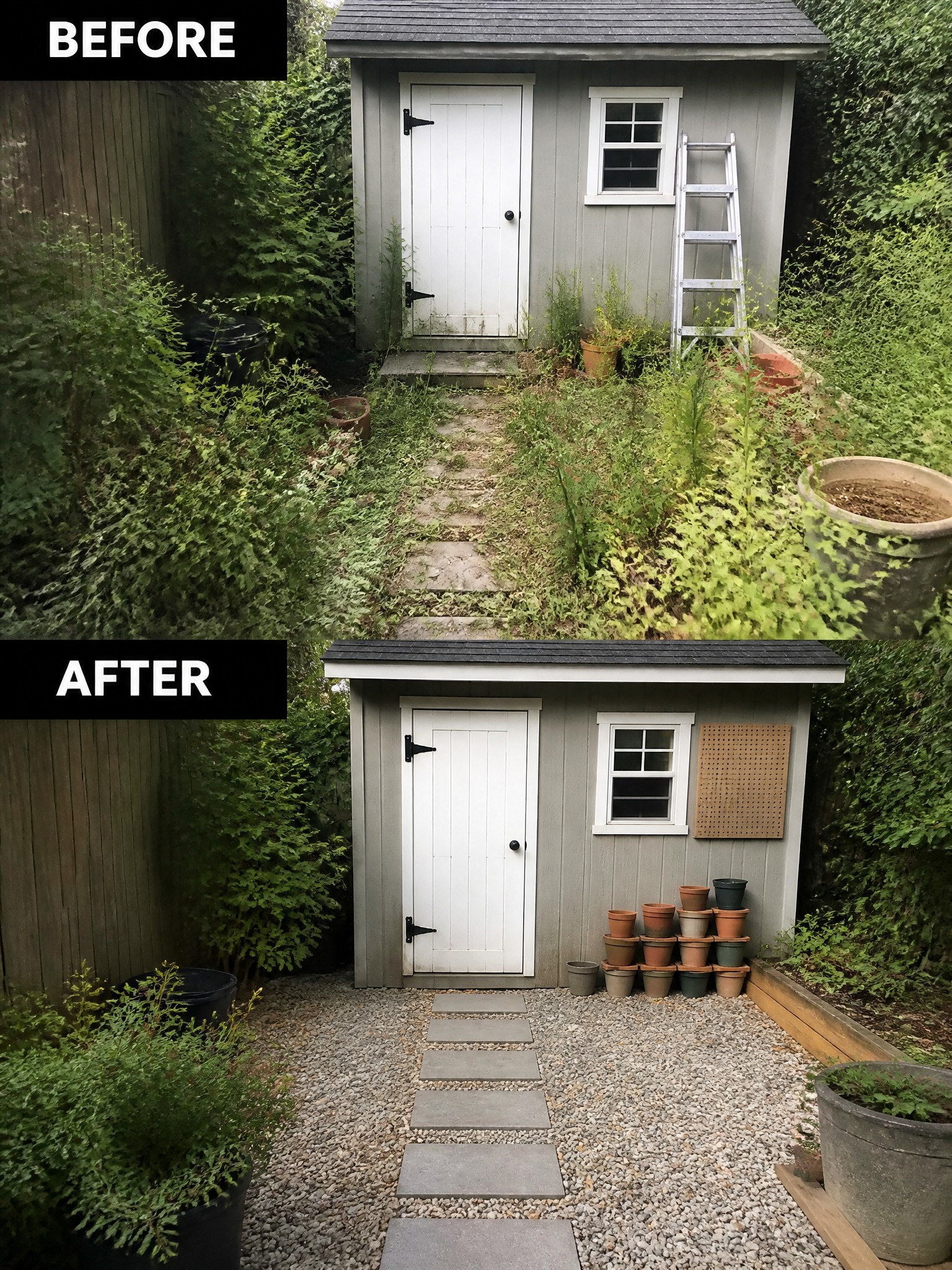
An overgrown yard quickly feels unusable when plants take over paths and crowd the edges of structures. In this case the before photo shows thick growth swallowing the ground around the shed, while the after shows the area opened up with a gravel base and a straight line of pavers that create a clear walking route.
The same approach works well in small side yards or behind sheds where regular mowing is difficult. Cut back the heaviest growth first, then lay landscape fabric and gravel to keep weeds down. A few pavers set into the gravel give the space shape without adding much cost or maintenance.
Clear Overgrowth Around Utility Areas First
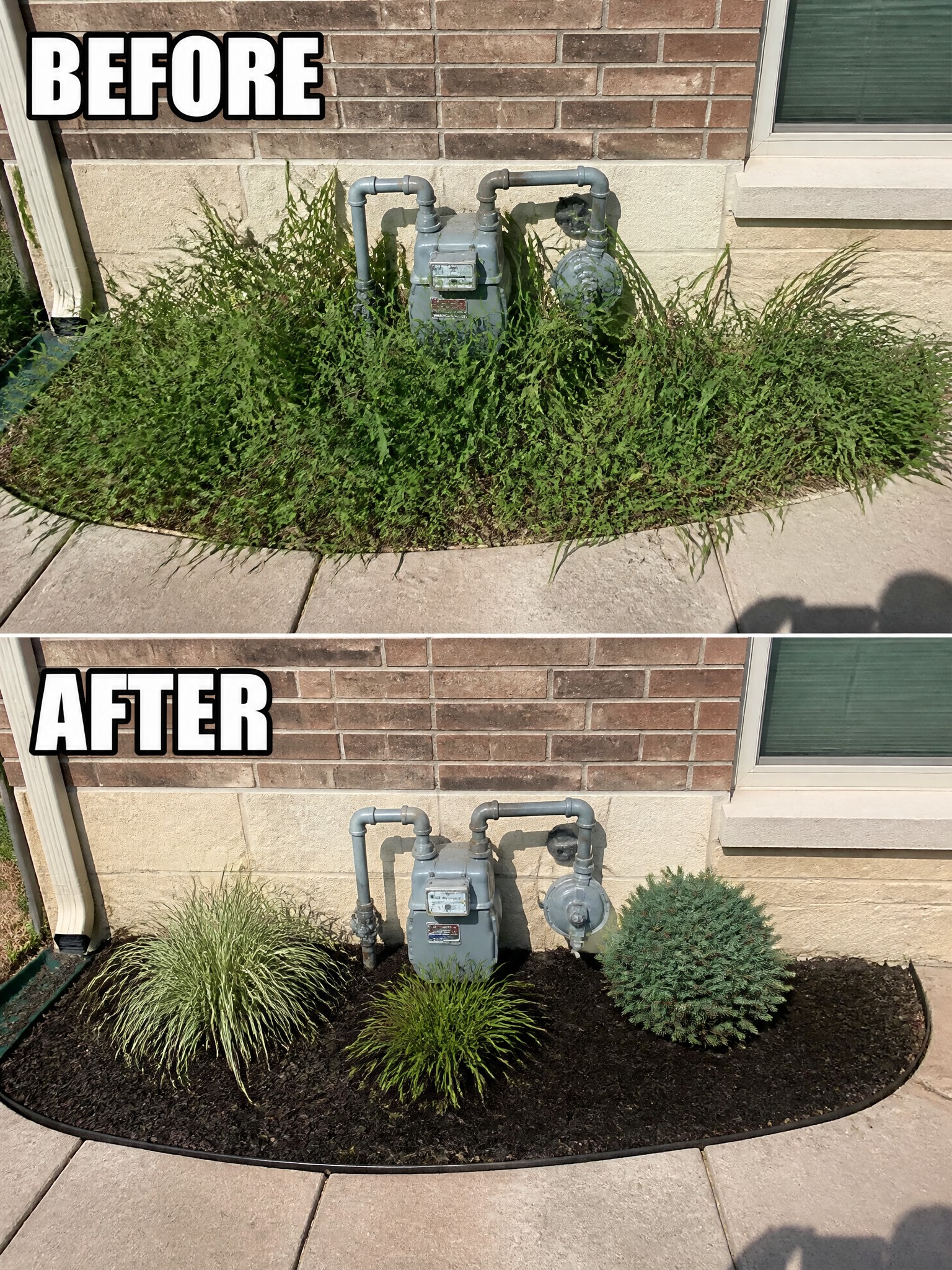
Overgrown weeds can hide utility meters and make the whole side of a house look neglected. Clearing the area and laying down mulch gives the space a finished look while keeping access easy for meter readings.
This approach works best on small strips of ground next to the house where full garden beds would get in the way. Start by removing the tall grass, add a simple border, and plant a few low shrubs or grasses that stay neat year-round. The result keeps the focus on the house instead of the mess.
Add Structure To An Overgrown Yard With A Simple Path
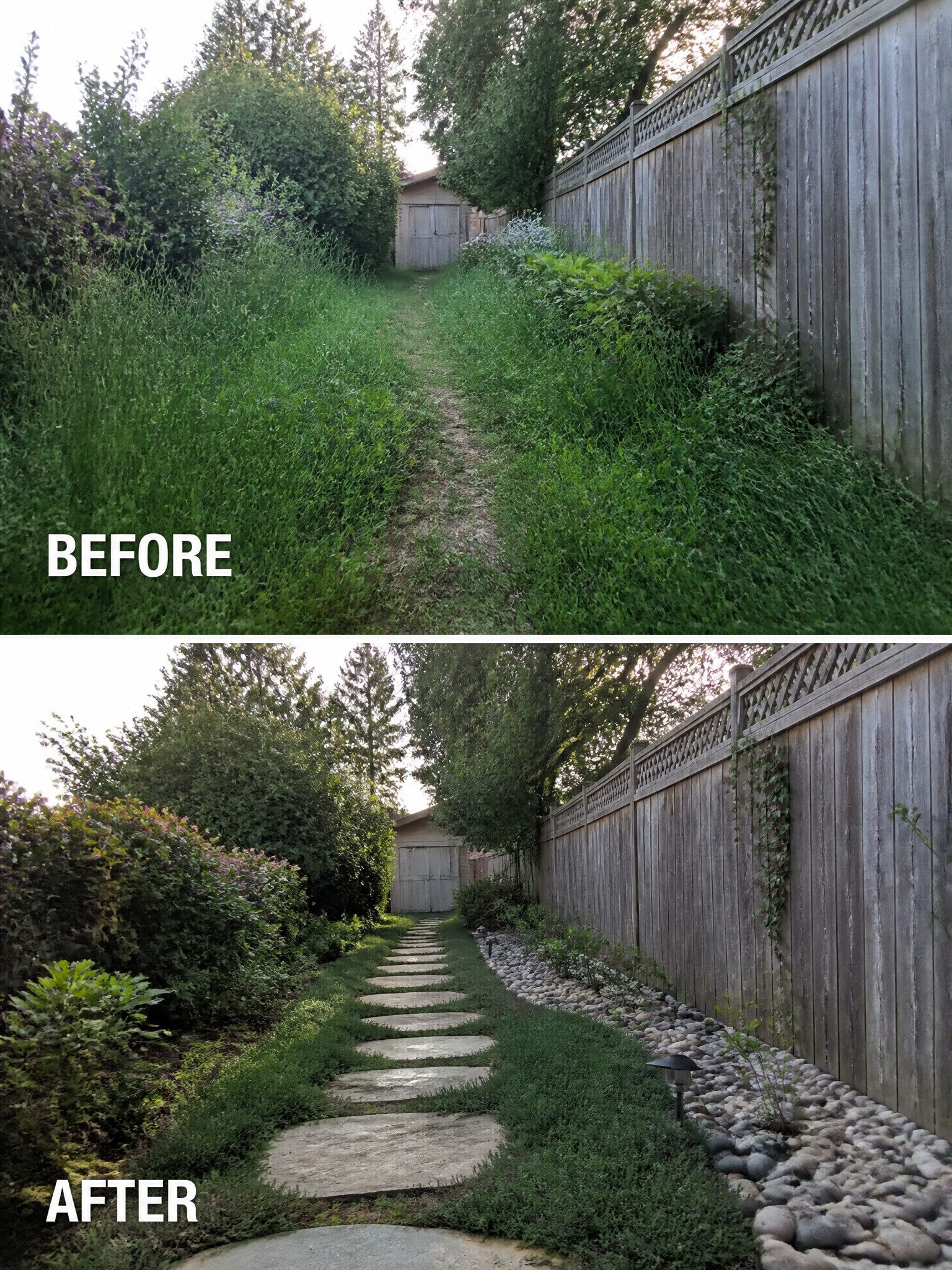
An overgrown side yard quickly turns into a spot no one uses. Clearing the tall grass and laying stepping stones with a gravel edge along the fence gives the space a clear route and makes it feel intentional instead of neglected.
This approach works best in narrow yards or side passages where the ground gets out of hand. Cut back the worst of the growth first, then set the path before adding any new plants. The stones keep foot traffic defined and the gravel helps hold the line against weeds.
Clear Overgrowth Before Adding A Path
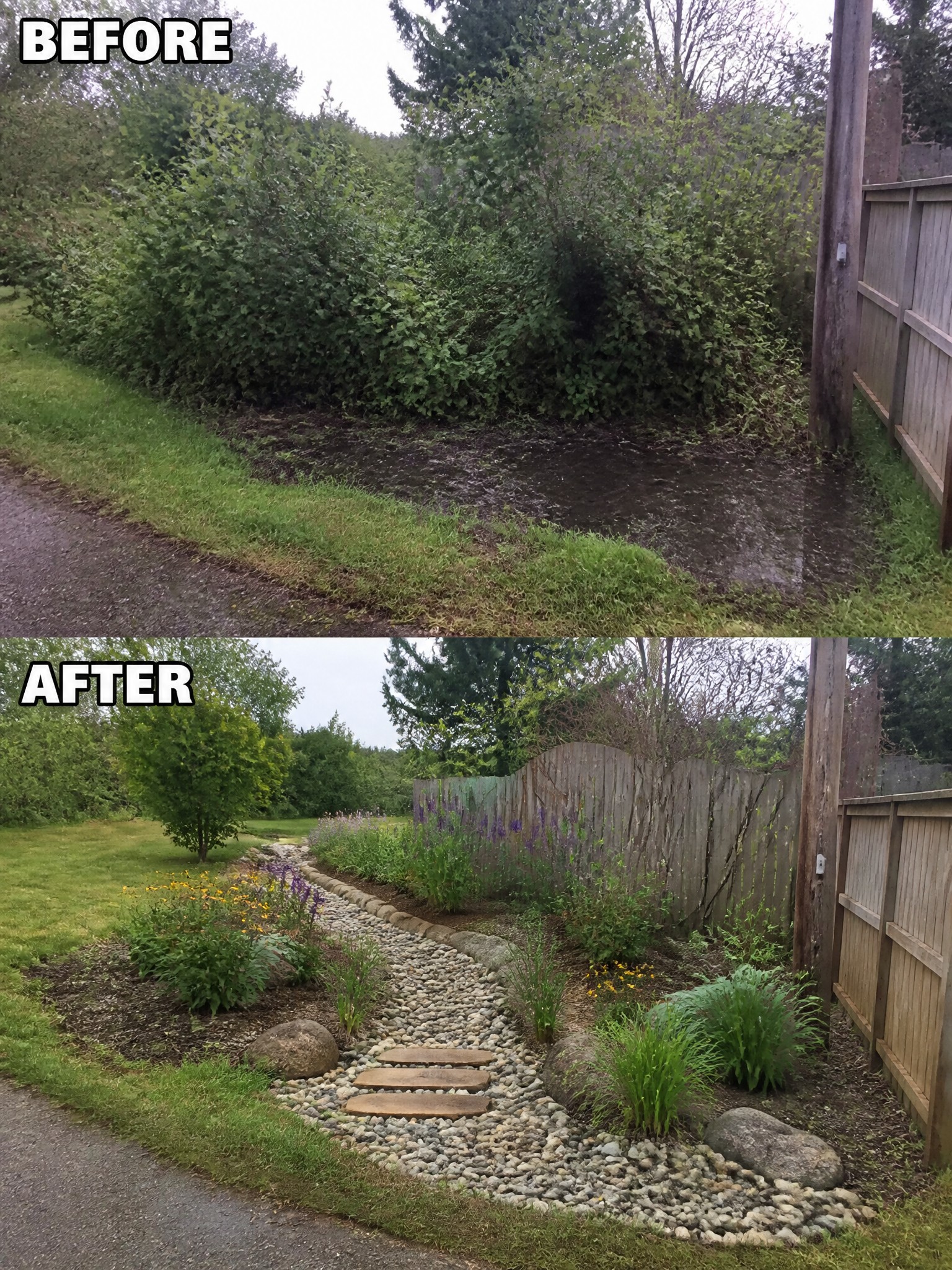
An overgrown side yard often turns into a muddy strip that no one uses. Clearing the thick brush and standing water first makes room for a simple gravel path with stepping stones and planted borders. That single change turns a neglected edge into a space that feels intentional and easy to walk through.
This approach works best along fences or property lines where space is tight. Focus on removing the heavy growth, then add basic edging and a few plants suited to the light and soil. It keeps the project realistic and leaves room to expand later if needed.
Frequently Asked Questions
Q: Where should I begin when the yard looks like a jungle? A: Clear a small section first to test your ideas. Focus on one corner or path so you see progress fast. This keeps the project from feeling overwhelming.
Q: How do I stop the weeds from coming back right away? A: Lay down a thick barrier like newspaper under any new mulch or soil. Water the area lightly after to settle everything.
Q: What if I want to add seating but the ground stays soggy? A: Build a simple deck platform on blocks instead of digging footings. It lifts the area above the wet soil. Add gravel around the edges to improve drainage over time.
