

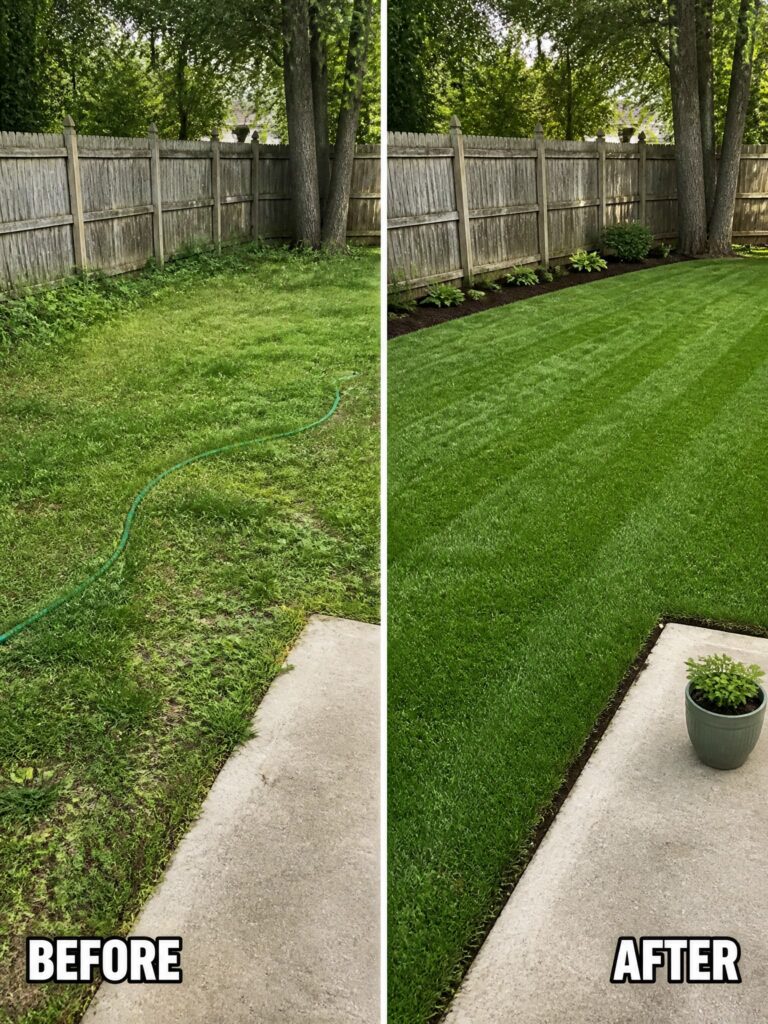
When a backyard gets overgrown the first thing that stands out is how the original layout disappears under layers of weeds and unchecked plants.
I have learned that starting with a thorough cleanup often reveals better spots for paths and seating than I had planned on paper.
That step changes everything.
From there adding structure through edging and a few key plants brings the whole area together in a way that feels intentional.
Over time these layers add up to a yard that actually gets used instead of just looked at from the window.
Define Fence Lines With Simple Mulch Beds
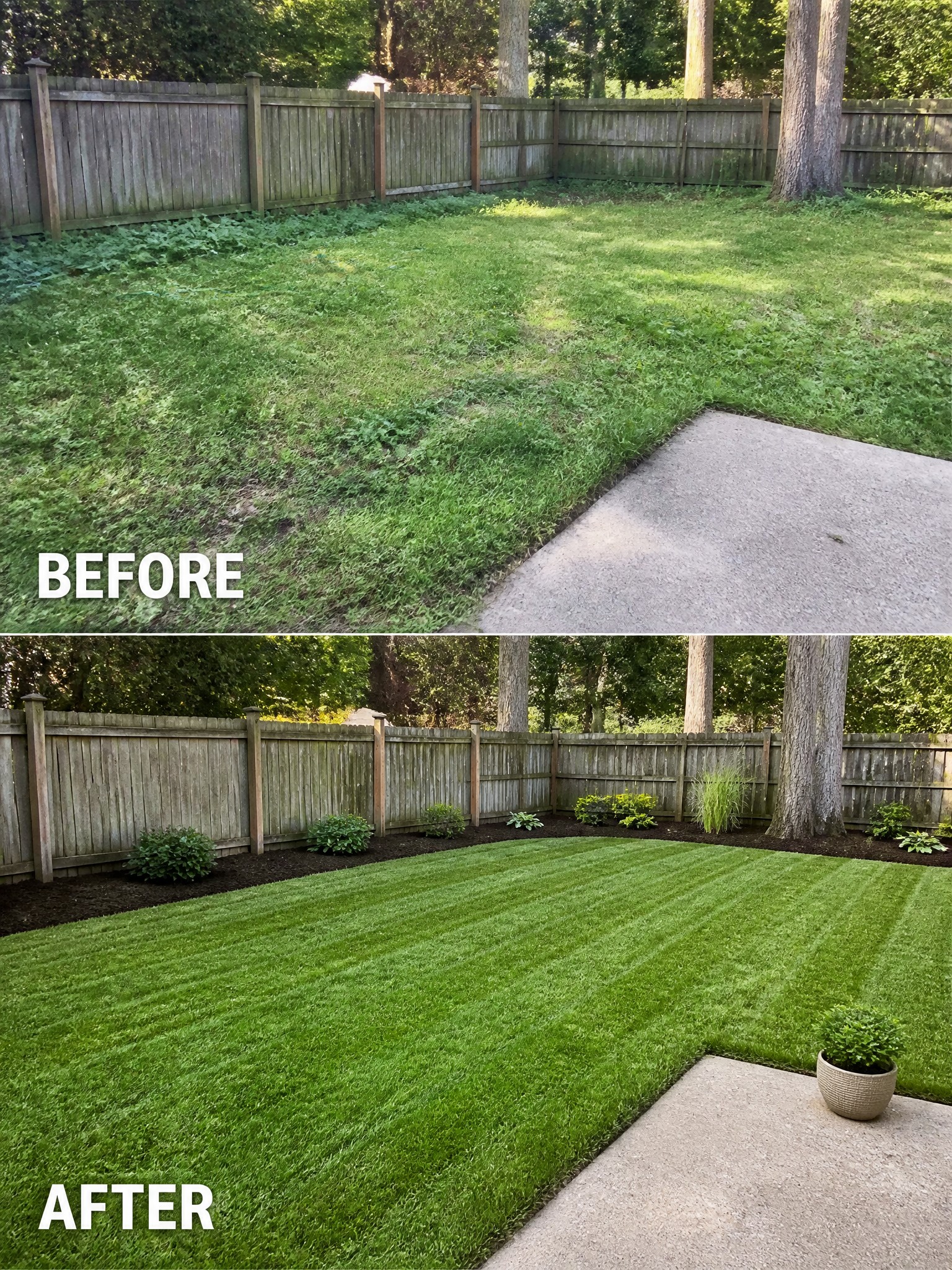
Clearing the messy growth along the fence line and adding a clean mulch border with shrubs makes the whole space feel intentional. The before photo shows how weeds and tall grass blurred the edge between lawn and fence, while the after shows a simple planted bed that gives the yard a finished shape without much added cost.
This approach works best when you tackle the perimeter first before worrying about the center of the yard. Focus on one or two beds along the fence or next to hard surfaces, keep the plant choices low and repeat them, and the rest of the lawn can stay simple. It suits homes where the backyard already has a fence or path and just needs better definition.
Create A Gravel Path Through Overgrown Growth
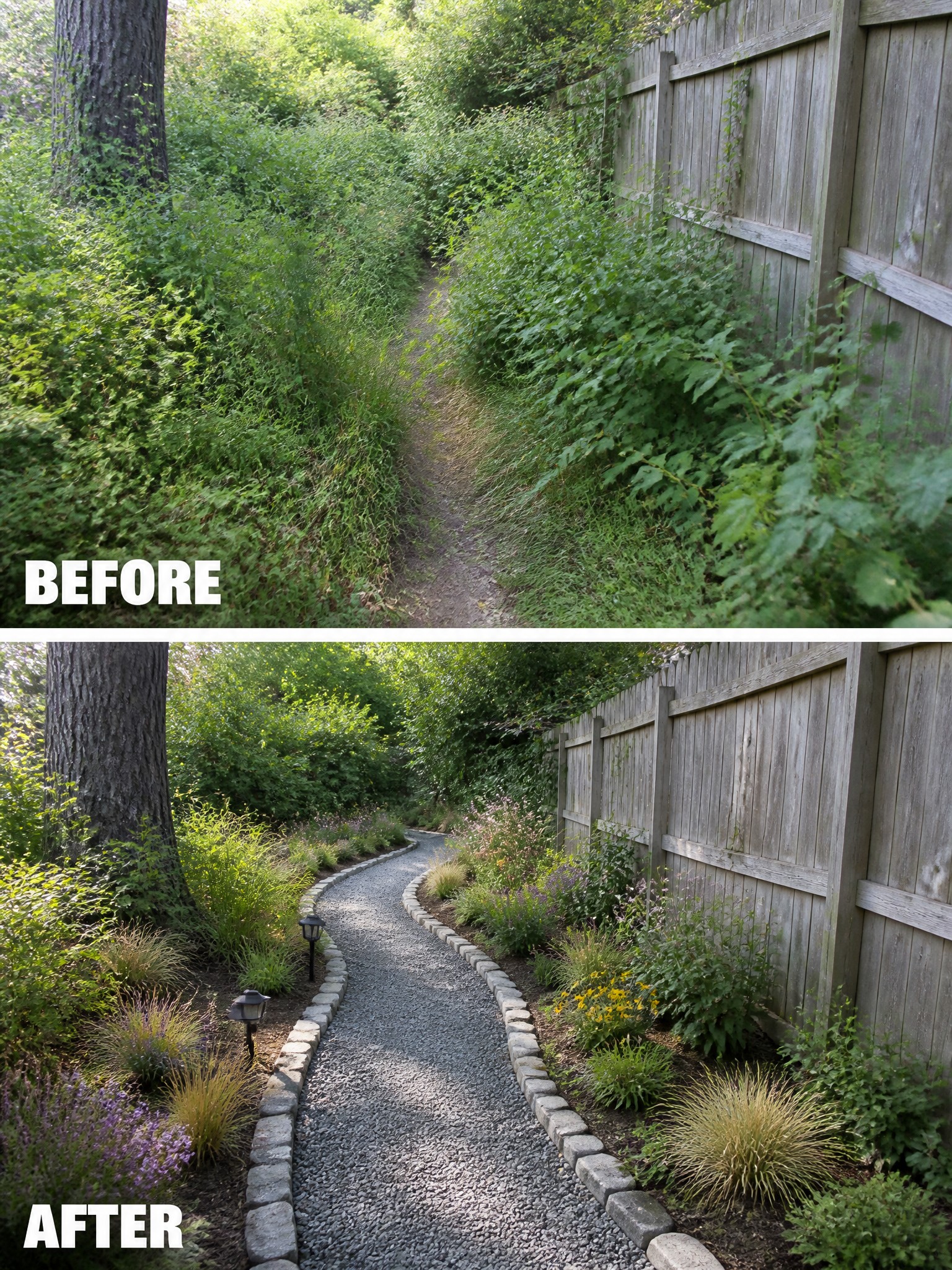
Clearing the thick growth along the fence and path made the biggest difference. Adding a gravel walkway with a low stone edge turned a narrow, messy trail into something that feels planned and easy to walk through.
This approach works best in shaded side yards or back corners where plants tend to take over. Start by defining the path and borders first, then fill in with tough, low-maintenance plants that suit the light conditions.
Turn An Overgrown Backyard Into A Fire Pit Area
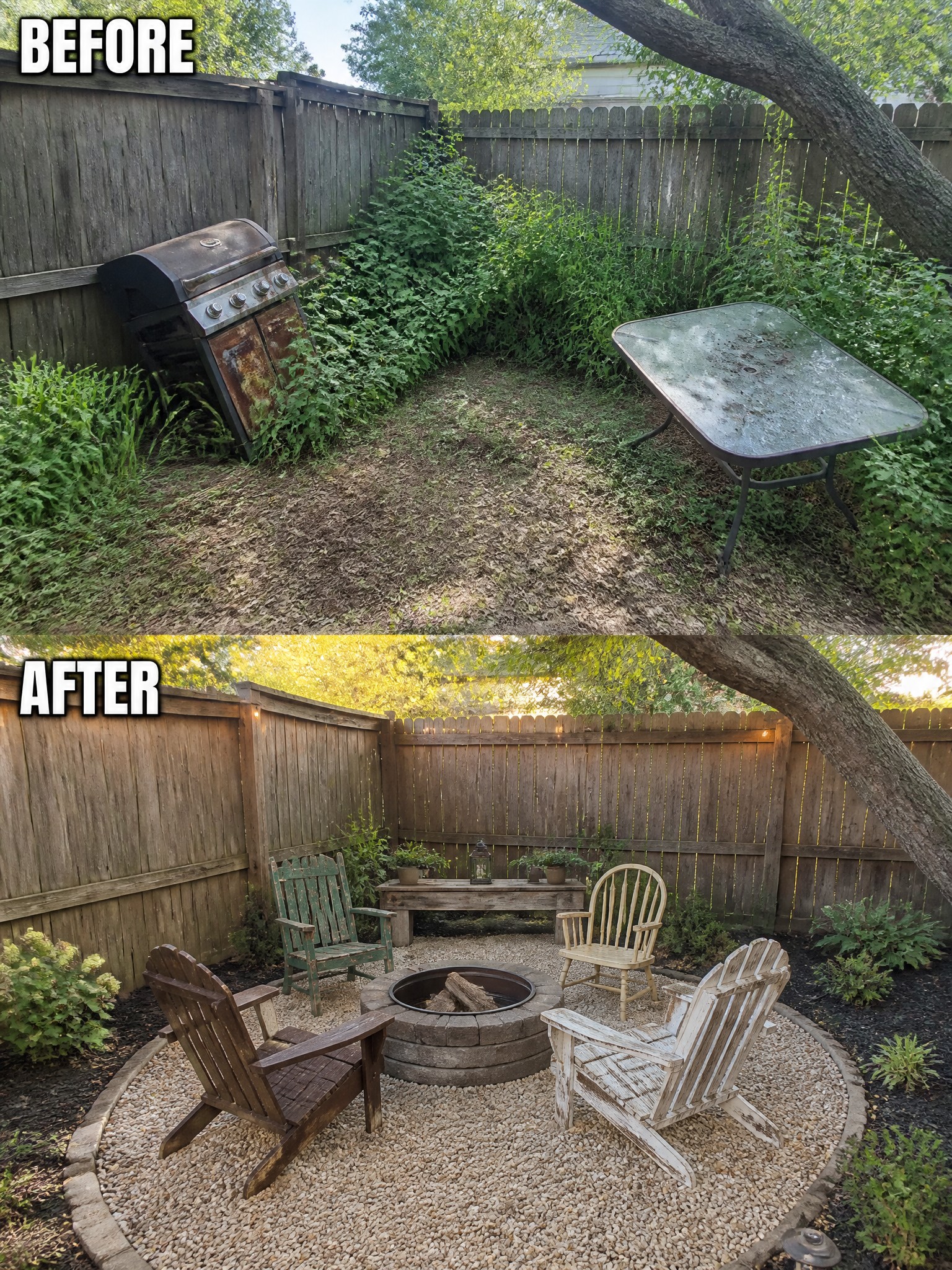
Clearing the weeds and junk first made the biggest difference here. Adding a gravel circle and a fire pit gave the space one clear purpose and turned bare dirt into a spot people actually want to sit in.
This works best in smaller yards that need one main gathering place. Keep the furniture simple and weatherproof, and make sure the seating ring leaves enough room to walk around the fire pit comfortably.
Clean Up Overgrowth Before Adding Planters
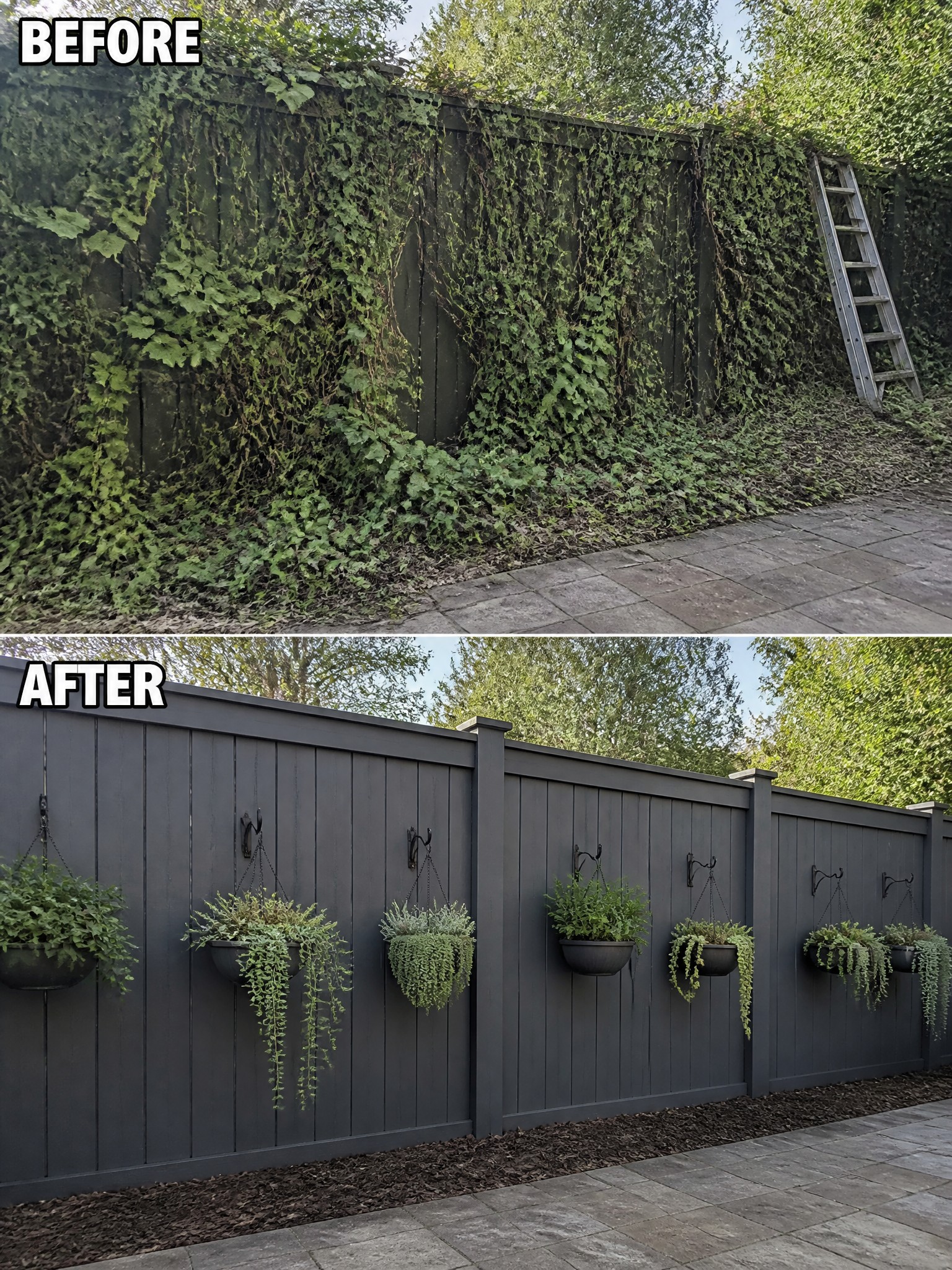
An overgrown fence can quickly make a whole backyard feel neglected. The simplest fix is to remove the heavy vines first, then add a row of hanging planters spaced evenly along the fence. This one change brings order without needing new structures or big plantings.
The same approach works on any fence that has become a wall of green. Start by clearing what is there so the surface stays visible, then hang planters at a consistent height and repeat the same style. Mulch along the base keeps the ground looking finished and helps the eye focus on the new arrangement instead of the old mess.
Define Foundation Beds With Stone Edging
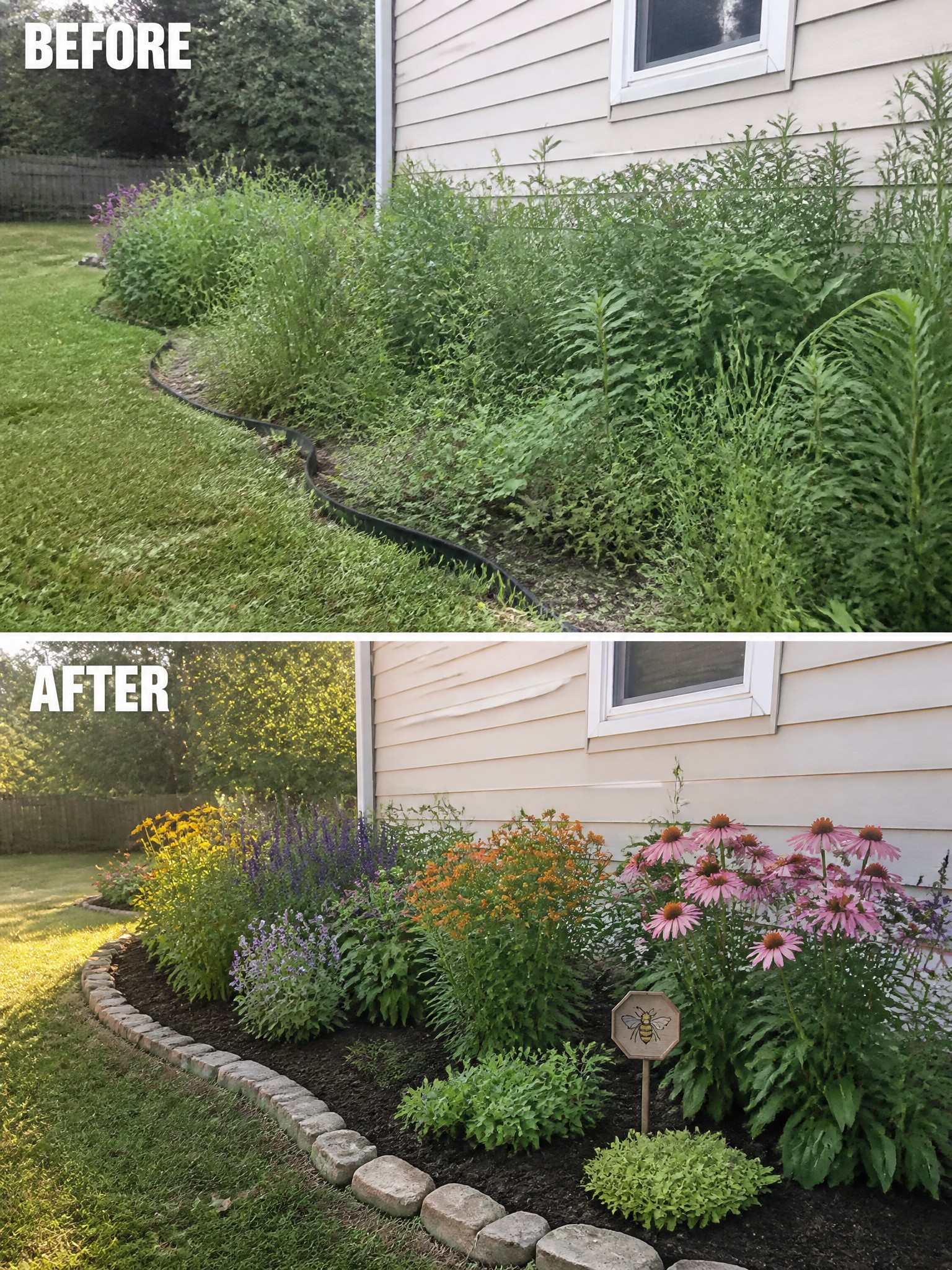
Many backyards have a messy strip of weeds and tall plants running along the house that makes the whole yard feel neglected. Clearing the overgrowth and adding a low stone edge turns that same area into a defined bed that looks planned instead of forgotten.
This idea works best on narrow foundation plantings or side yards where you want some color without constant weeding. Start with the cleanup and edging before choosing plants, and keep the bed a consistent width so it stays easy to mow around.
Add Structure To An Overgrown Slope
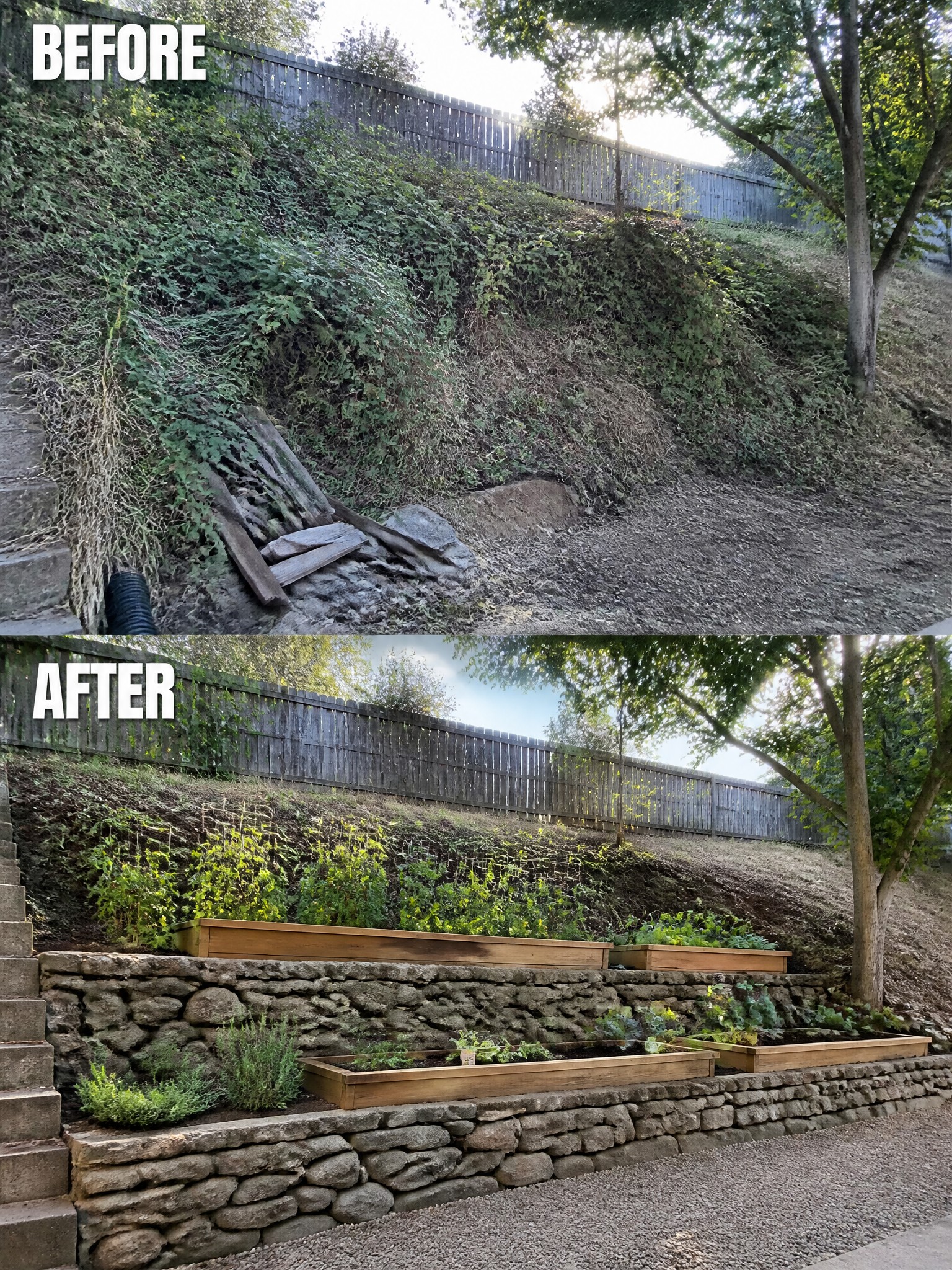
A steep, overgrown hillside can feel impossible to use until you add some basic structure. In this case, the before photo showed a messy slope covered in vines and debris. The after shows how stone retaining walls created flat terraces that support raised garden beds, turning the slope into something you can actually plant and maintain.
This approach works well on any backyard with a noticeable drop. Start by building low retaining walls to hold the soil, then add raised beds on the new flat areas. It keeps plants from sliding down the hill and makes weeding and watering much easier. Focus on the walls and beds first before worrying about the rest of the yard.
Add Stone Edging To Define An Overgrown Pond
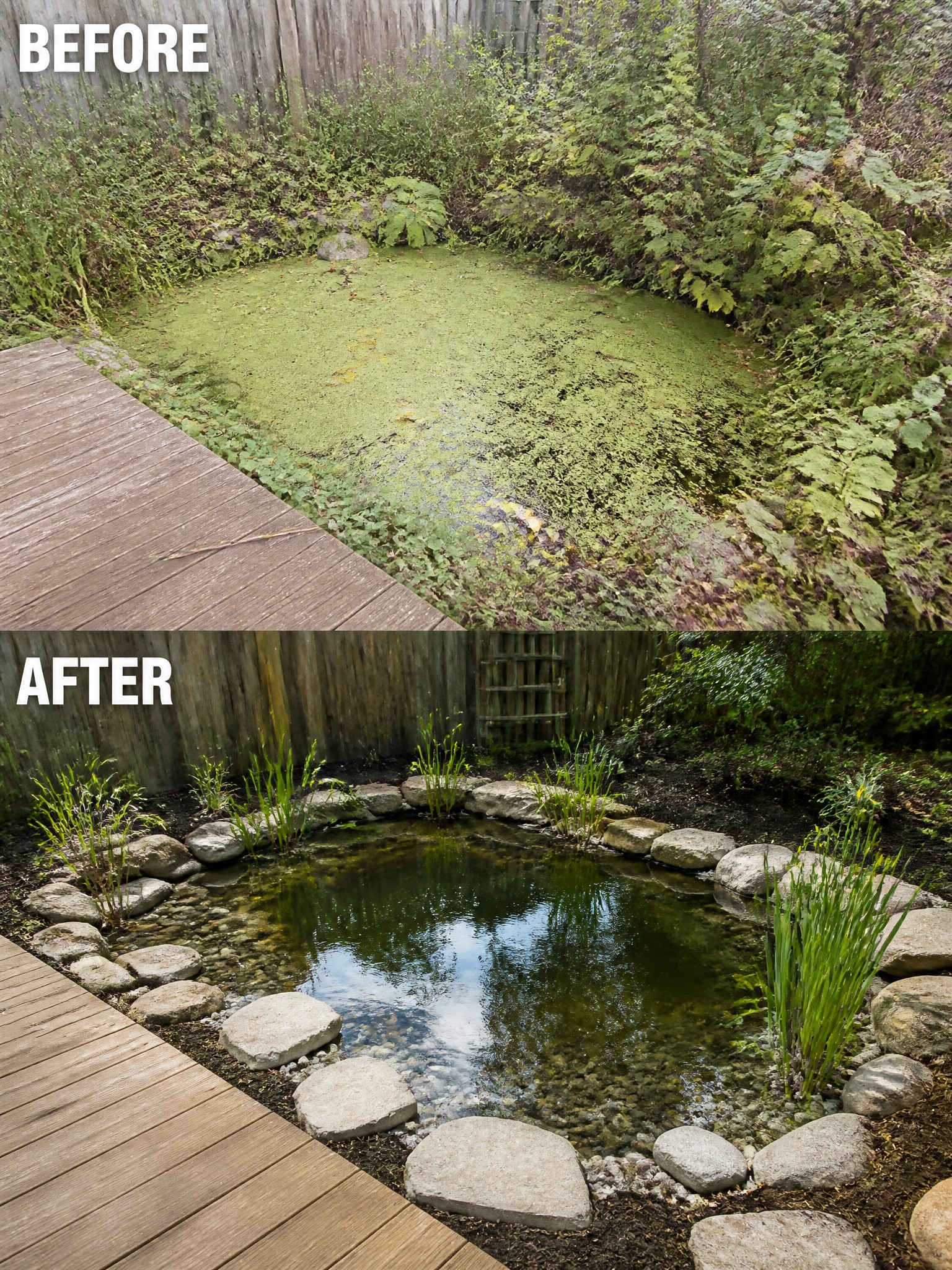
Cleaning up the thick algae and clearing back the wild growth around a neglected pond makes the biggest difference. Once the water is visible again, adding a simple ring of stones and a gravel base gives the whole feature a clear shape and stops the edges from looking messy.
This approach works best in small yards that already have a pond but have let it go. Start by removing the debris and algae so you can see the real outline, then use stones that sit flat and follow the curve. It keeps the project realistic and avoids the need for major digging or new construction.
Turn A Bare Patio Into A Simple Seating Area
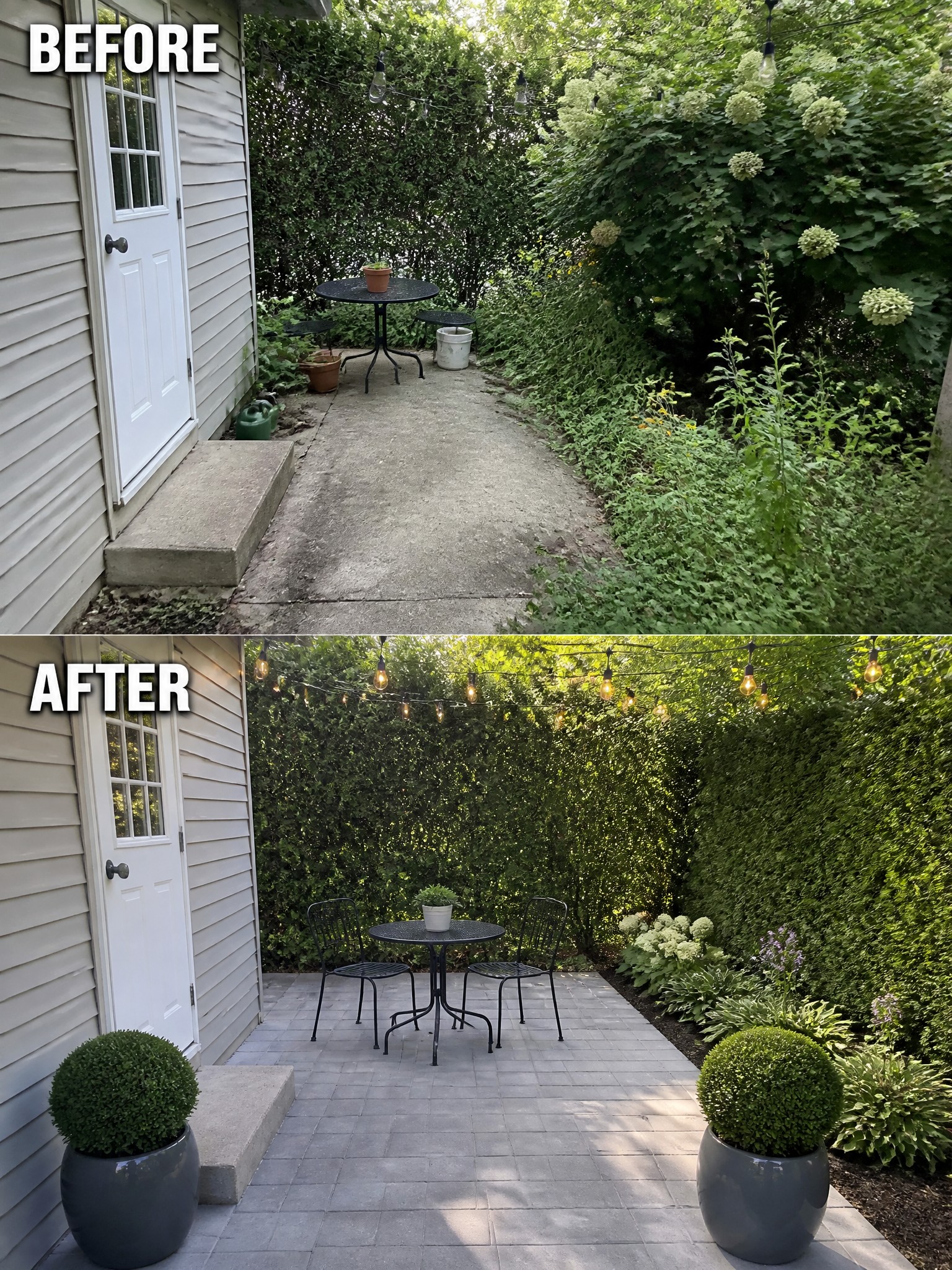
An overgrown concrete strip can feel like wasted space until you give it a clear purpose. In this case the fix started with laying pavers to create a level, finished floor, then adding a small table and two chairs so the area could actually be used for sitting.
The same approach works on any narrow side yard or back patio that currently just holds random pots and tools. Keep the furniture scale modest, run a string of lights overhead for evening use, and leave enough open floor so people can move around the seats without crowding. Once the seating zone is defined, the surrounding plants become background instead of the main problem.
Clean Up An Overgrown Backyard Before Adding Features
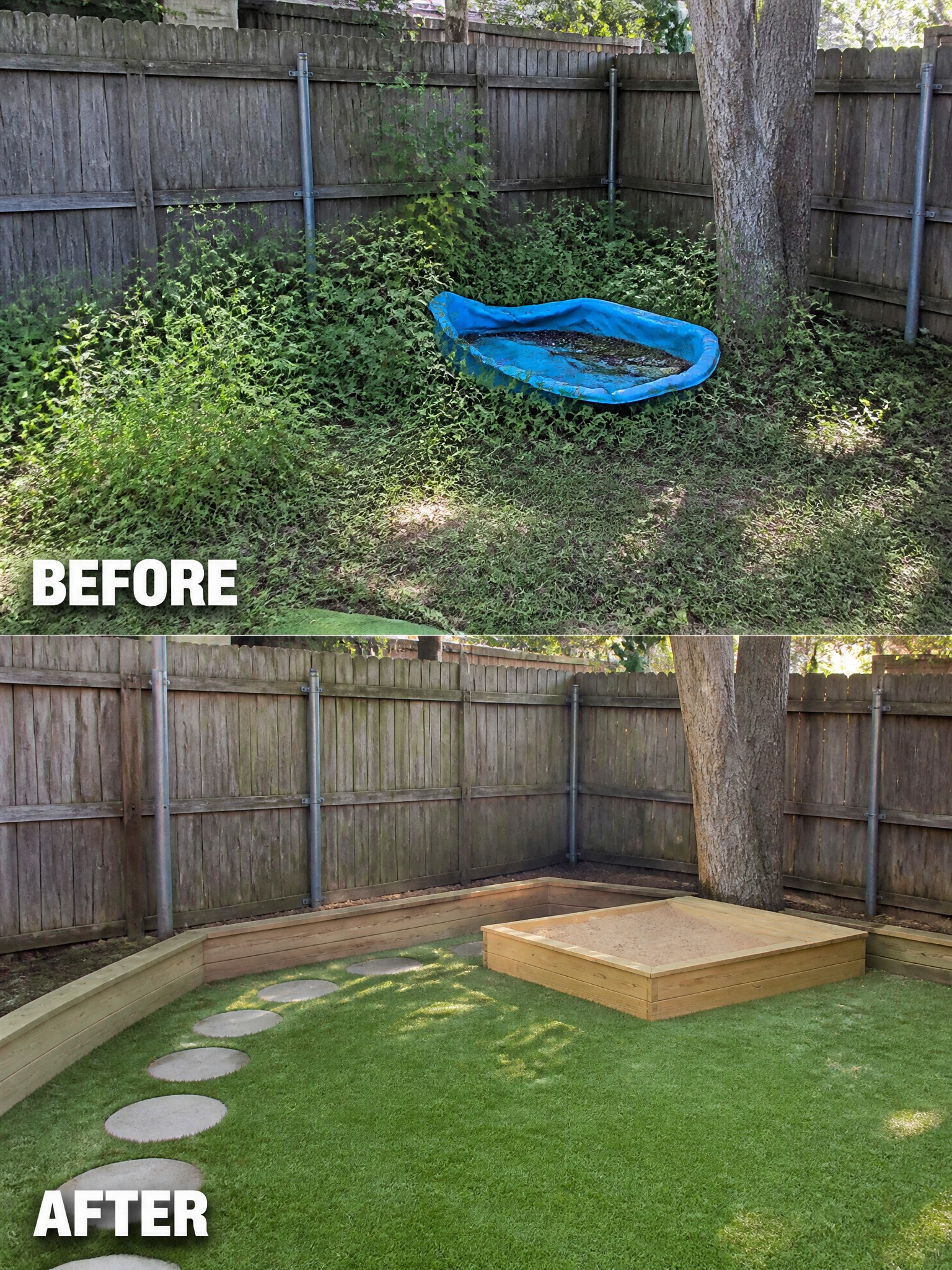
An overgrown yard often hides the real shape of the space. Once the thick weeds and debris are cleared, simple additions like a sandbox and a line of stepping stones can turn the area into something usable without needing a full redesign.
This approach works best when you want a low-cost way to make a small backyard feel planned. Focus on one main feature first, keep the lawn edges clean, and leave enough open grass for movement. The result feels open and practical instead of crowded.
Clean Up Overgrown Hedges Before Adding Seating
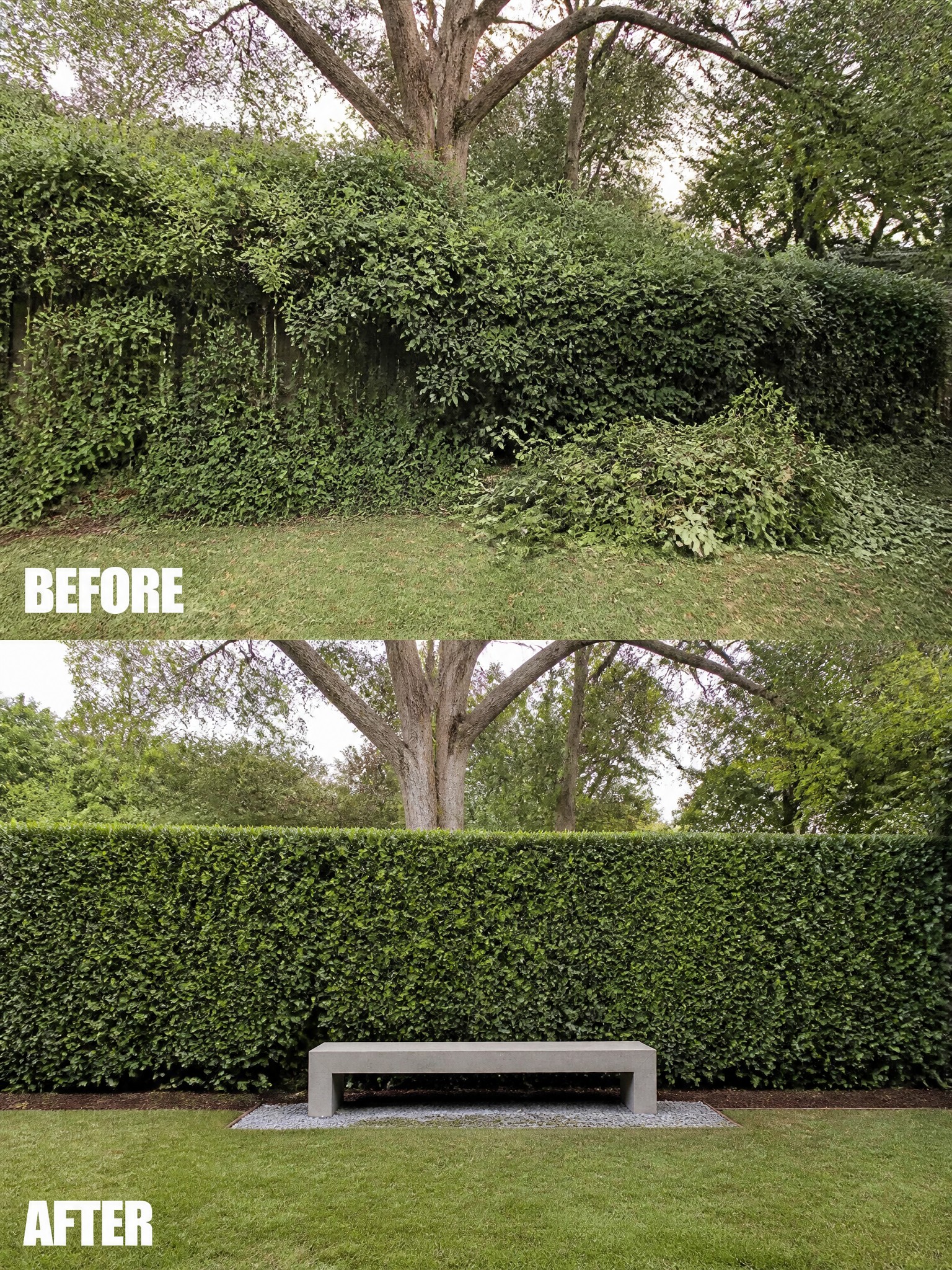
An overgrown hedge can quickly take over a yard and leave no clear place to sit. Trimming it back into a straight, even shape opens up the lawn and creates a clean backdrop. Once that is done, a simple bench placed on gravel gives the space a purpose without adding clutter.
This approach works best in yards where plants have grown wild along a fence or property line. Start with the trimming and edging first, then choose one solid bench that can stay outdoors year-round. Keep the gravel patch narrow so the lawn stays open for walking and mowing.
Turn An Empty Deck Into A Cozy Seating Area
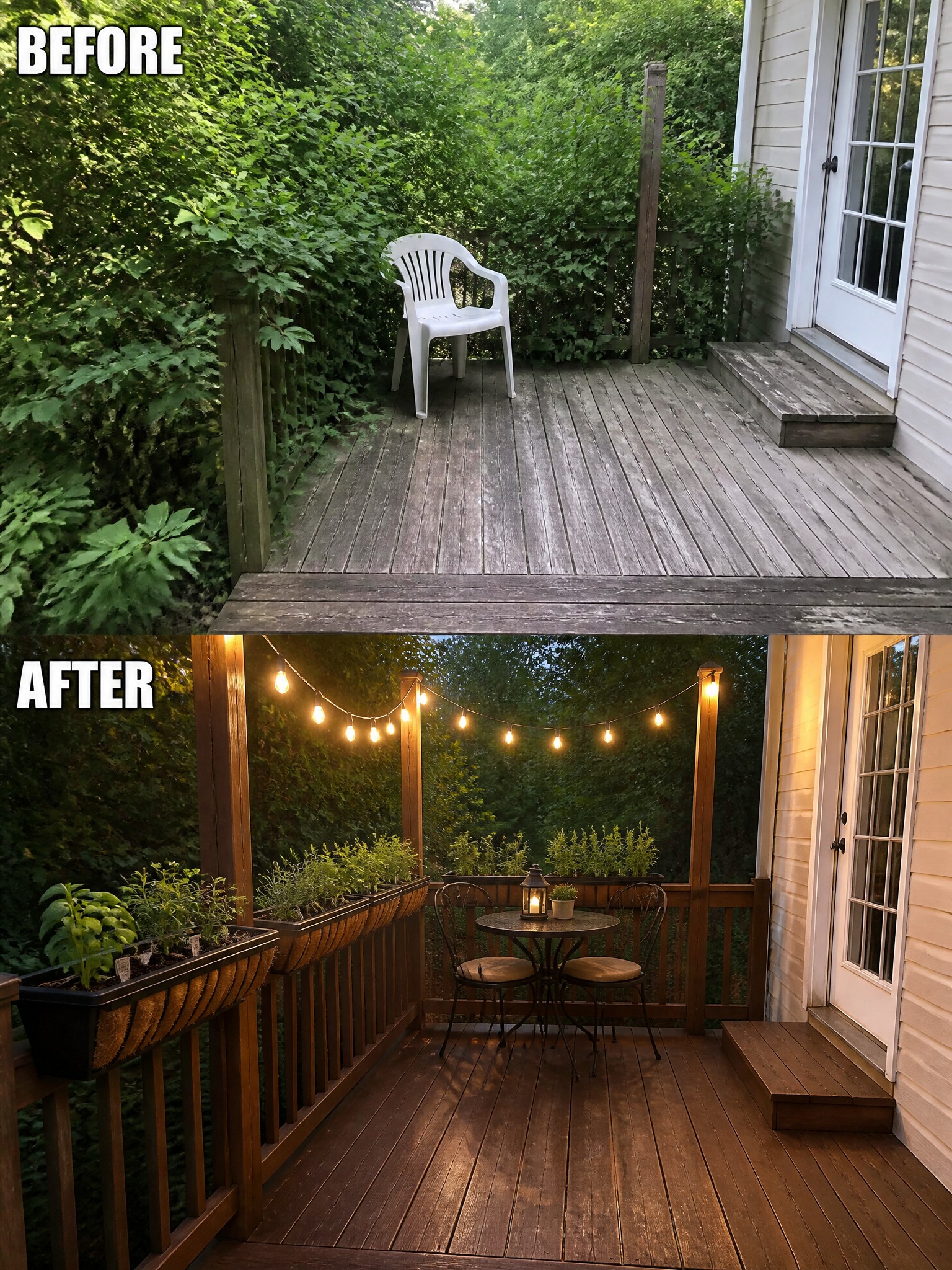
A plain deck with just one chair feels like wasted space. Adding a small table and chairs plus a simple string of lights turns the same area into a spot where people actually want to sit in the evening. The darker stain on the wood also helps the furniture stand out instead of blending into the background.
This idea works best on decks or patios that already have a roof or railings for hanging lights. Start with cleanup and one seating group sized for the space, then add the lights last so they highlight the seating rather than floating over empty boards. Keep the furniture lightweight so it can be moved or stored easily.
Add Raised Beds To Tame An Overgrown Border
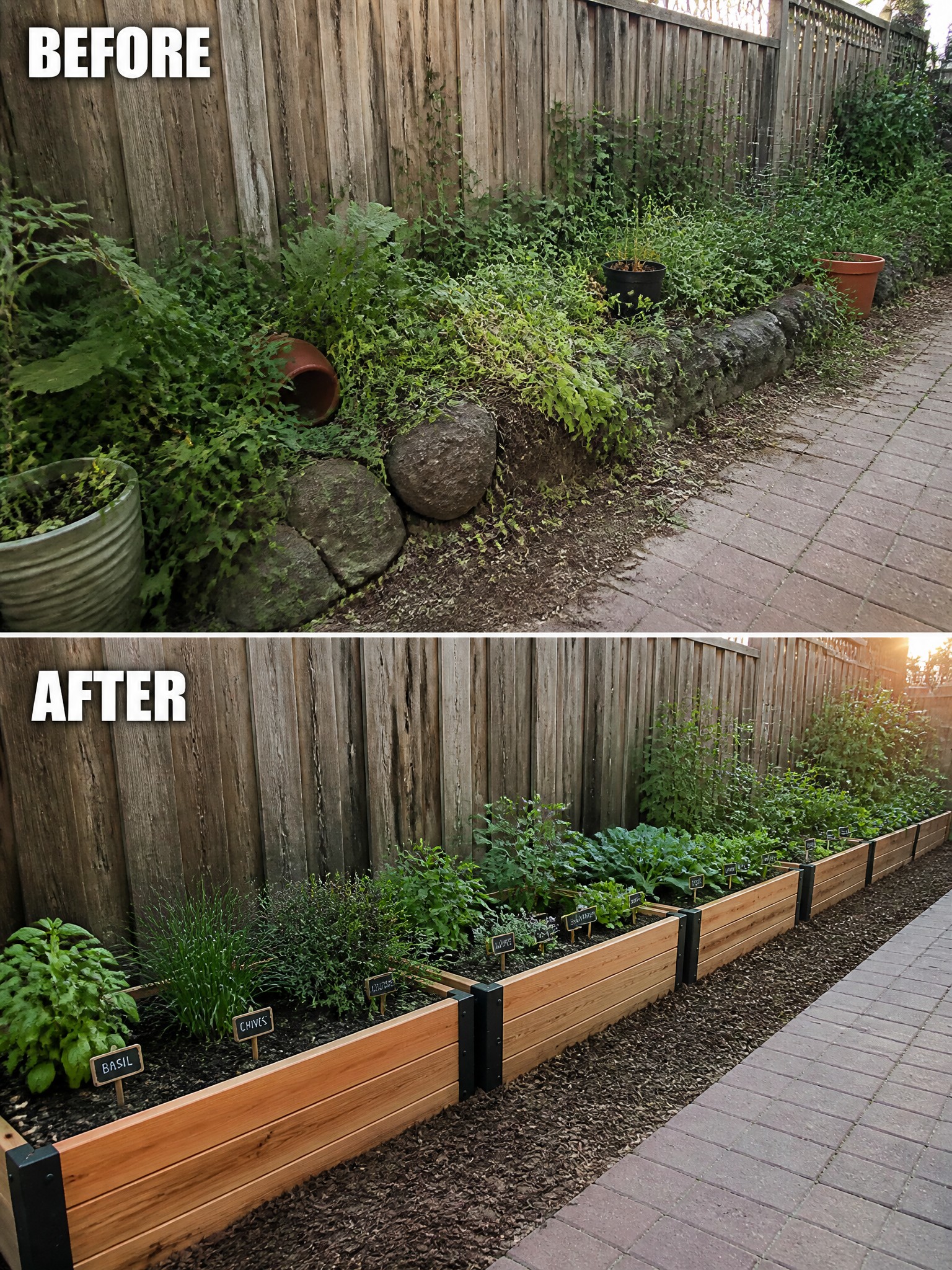
An overgrown strip along a fence quickly turns into a weedy mess that is hard to maintain. Adding raised beds gives the area clear edges and turns the space into something you can actually plant and keep tidy.
Raised beds work especially well along property lines or narrow side yards where the soil is poor. Keep the surrounding ground covered in mulch and plant in blocks rather than scattering things around. This approach suits most homes with a basic fence line and gives you usable garden space without a full yard overhaul.
Clean Up The Overgrowth Before Adding Storage
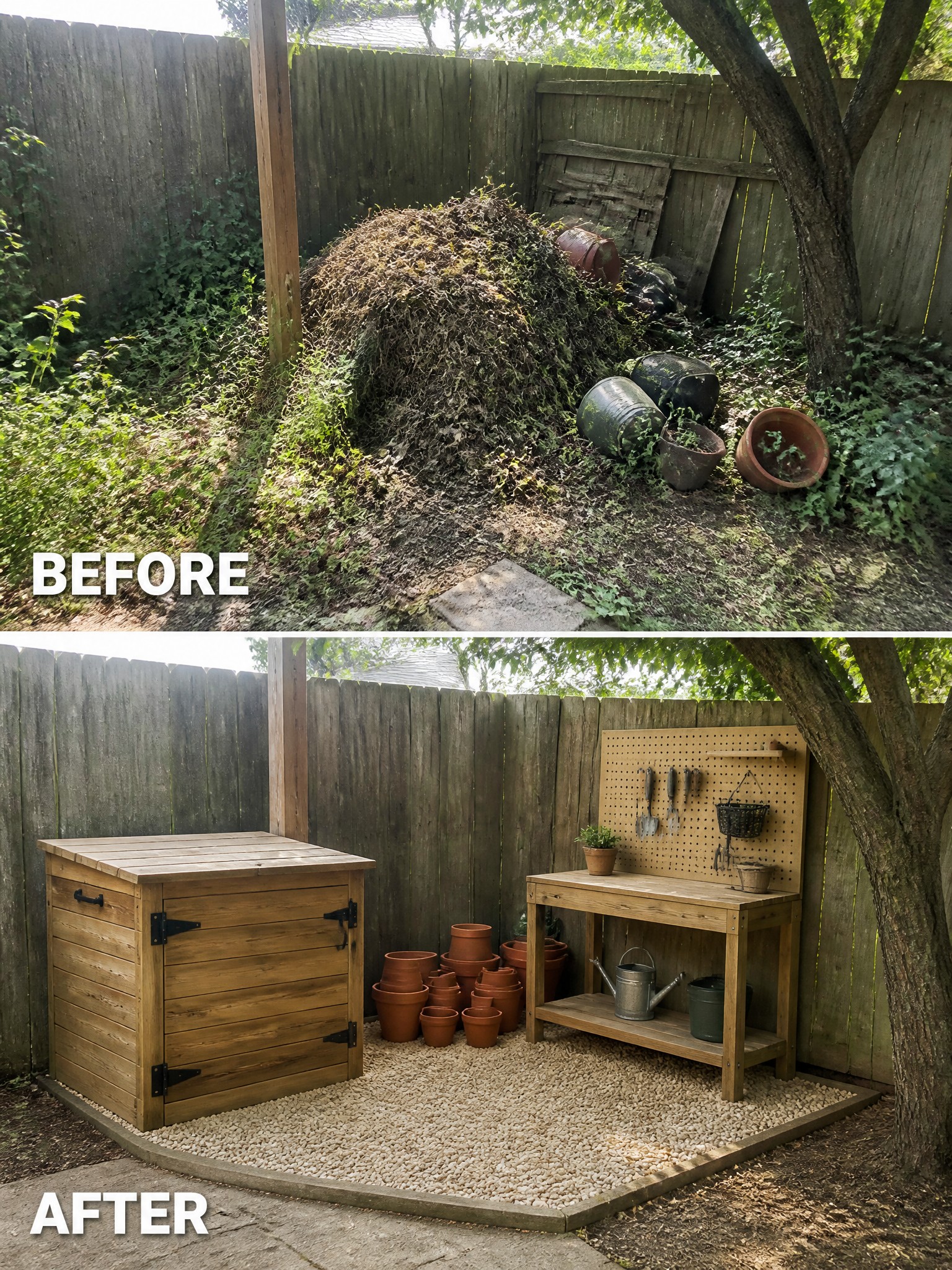
An overgrown corner full of debris and old containers makes the whole yard feel unusable. Clearing that first, then laying down gravel and adding simple wooden storage, turns the space into a workable garden area without needing a full redesign.
This approach works best in small side yards or back corners where you need both function and order. Start by removing the worst of the mess, then define the ground with gravel so pots and tools stay contained. A basic bin and bench keep everything in one spot instead of scattered around.
Shape An Overgrown Slope With Rocks And Gravel
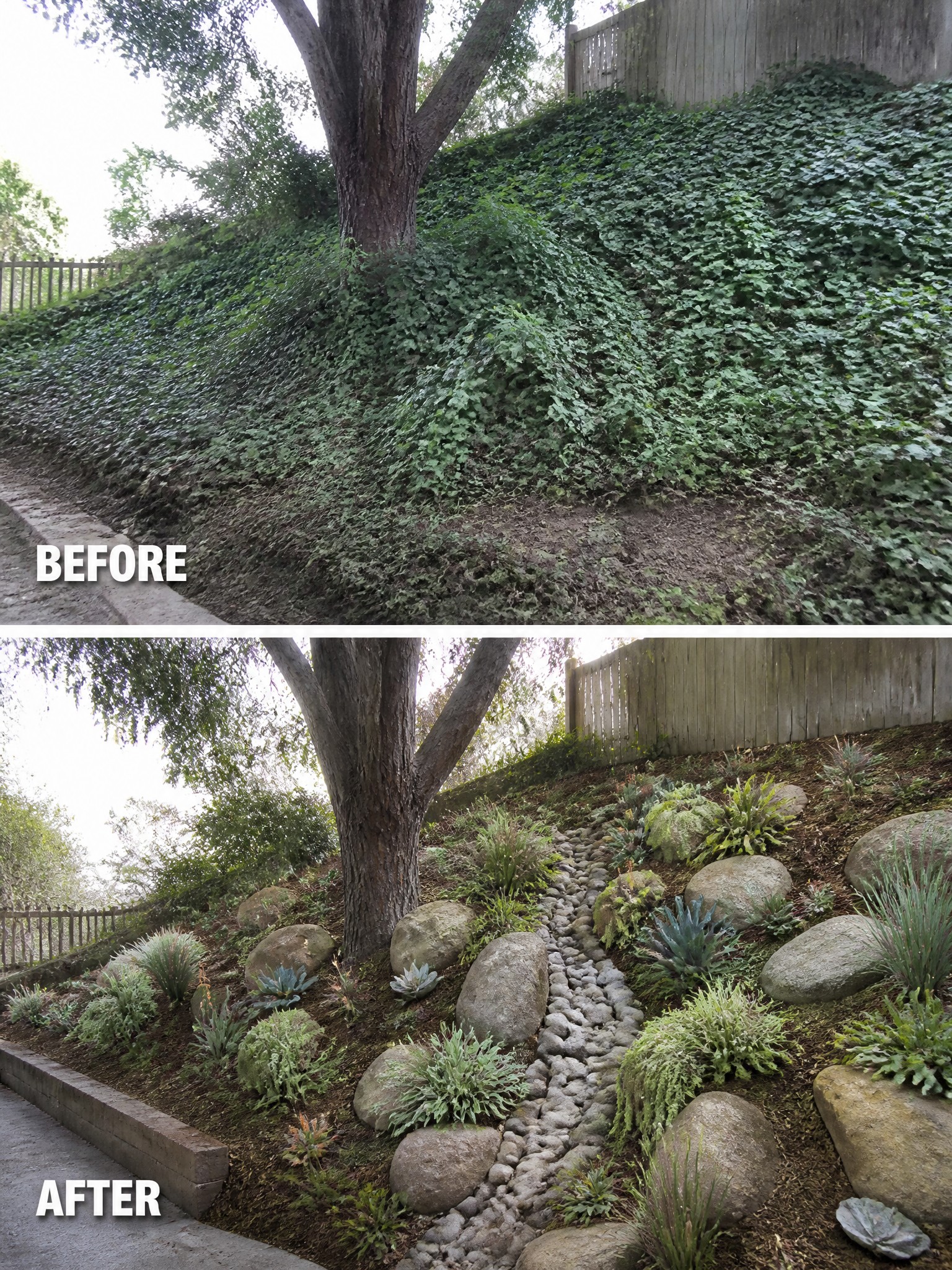
Clearing the heavy ivy first made the biggest difference here. Once the slope was cleaned up, adding large rocks, a gravel path, and grouped plantings gave the area shape and kept it from looking like a single mass of green.
This approach works well on sloped yards where everything blends together. Start by removing the overgrowth, then use boulders and gravel to create paths and separate planting zones. The rocks help hold the soil in place while the path makes the space easier to walk through and maintain.
Refresh An Overgrown Gravel Yard With Simple Landscaping
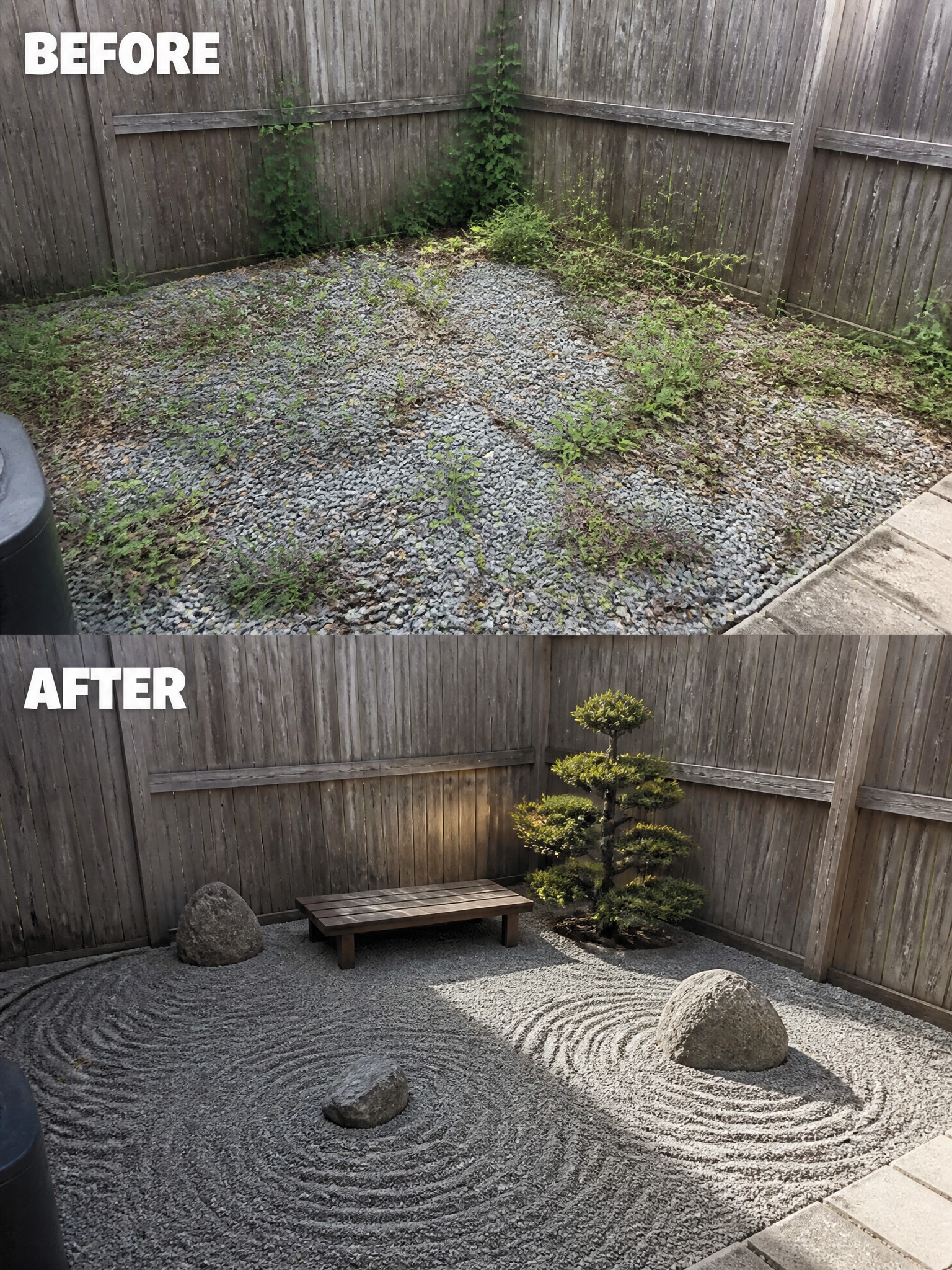
An overgrown gravel yard can feel messy and unusable until you clear the weeds and give it a clear layout. The simple switch to raked gravel with a few large rocks and a low bench turns the space into something calm and intentional instead of just a patch of neglected ground.
This approach works well in small yards where you want low maintenance. Start by removing the worst of the growth, then lay fresh gravel and rake patterns to keep the eye moving. A bench or a couple of shaped shrubs give the area purpose without crowding it.
Add Seating To Create A Poolside Lounge Area
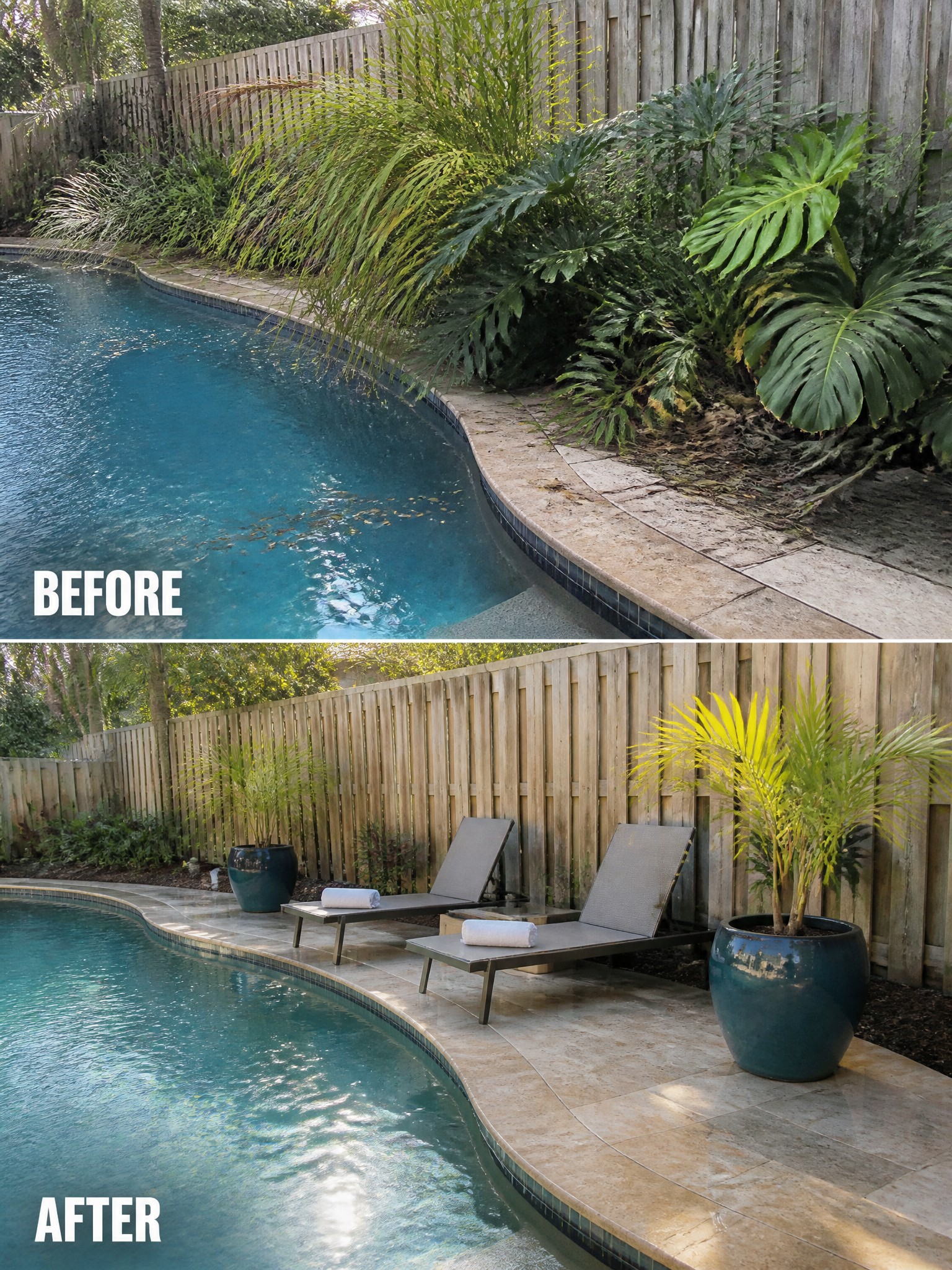
One simple way to make better use of a pool is to add a couple of lounge chairs right along the edge. The before photo shows the planting had grown wild and left no real place to sit. Once the overgrowth was cut back and two chairs plus a few large pots were added, the space became a spot people could actually use.
This idea works best in smaller backyards where the pool already takes up most of the room. Keep the furniture low and durable, and use big planters to soften the fence without blocking the path around the water. Start with cleanup before you add anything else so the seating feels intentional rather than crowded.
Add Structure To An Overgrown Grill Area
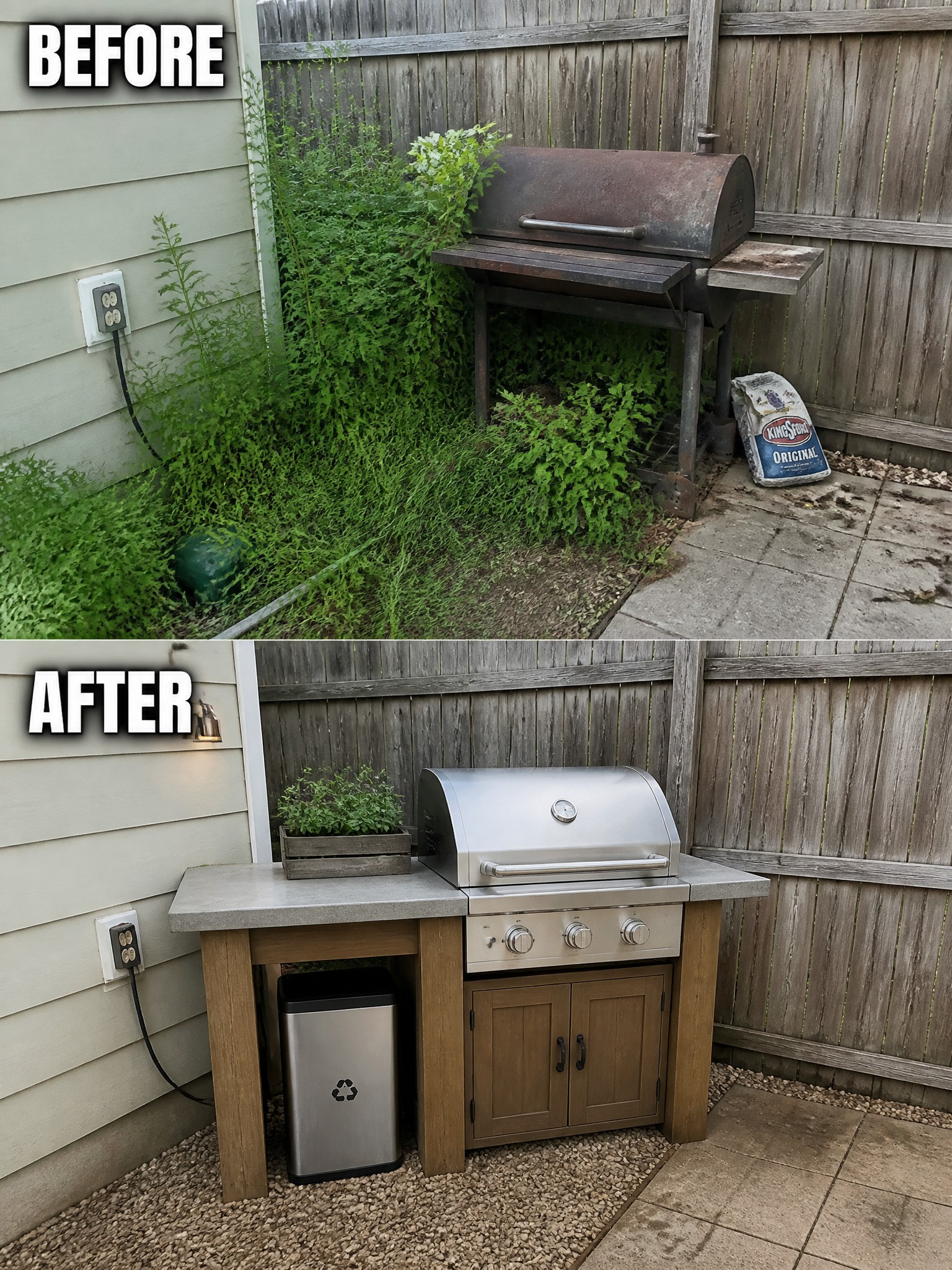
Clearing out the weeds and building a simple island around the grill turns a neglected corner into a spot that actually gets used. The new setup uses a basic wood frame with concrete tops to create counter space on both sides, plus cabinets and a spot for a bin underneath. This keeps the grill at the center without letting the rest of the area feel scattered.
The same idea works well in small yards where the grill sits against a fence or house wall. Start by removing the overgrowth first, then add a frame that fits the grill size and leaves room to move around it. Weatherproof materials and a gravel base help keep the area clean without much upkeep.
Clear An Overgrown Pond Before Adding A Simple Fountain
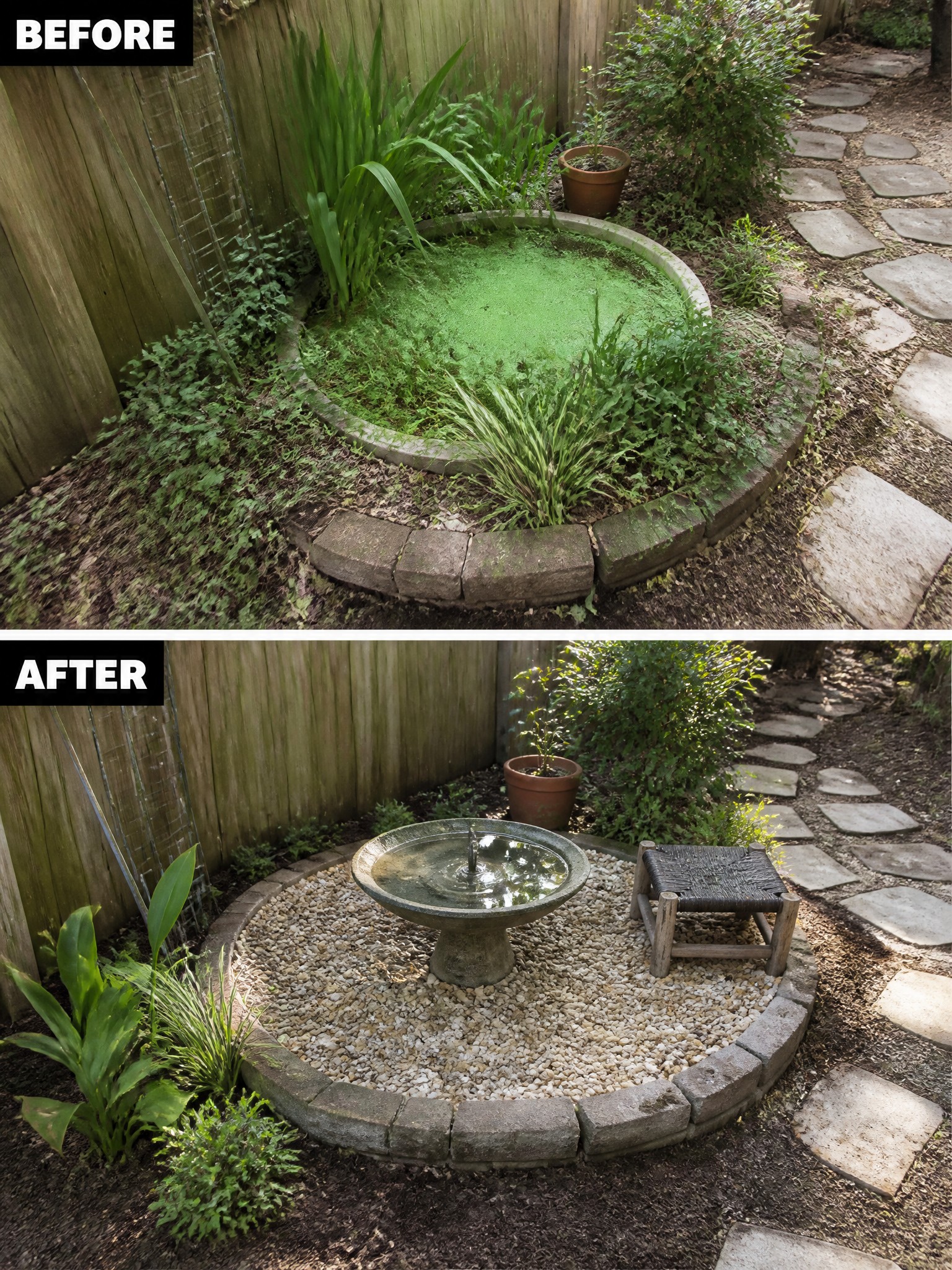
An algae-filled pond often becomes more trouble than it is worth in a small backyard. Clearing the water feature and replacing it with gravel creates a clean base that is much easier to maintain while still giving the space a focal point.
This approach works well in corners where you want structure without constant upkeep. Start by removing the old pond liner and plants, then lay gravel inside the existing border. Add one central fountain and keep extra planting minimal so the area stays open and usable.
Add Raised Beds And A Trellis To Control Overgrowth
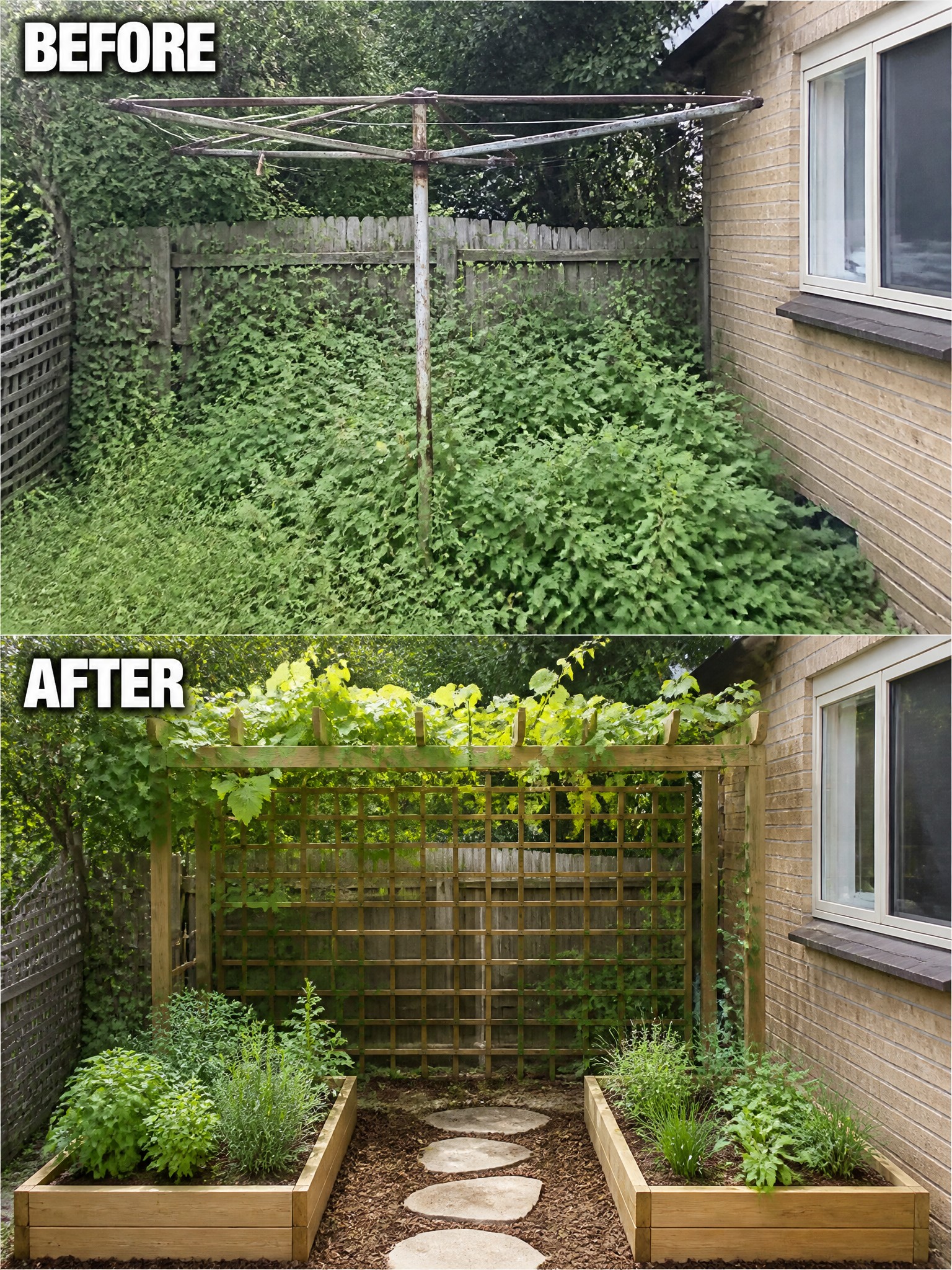
An overgrown yard often stays unused because there is no clear shape to work with. Clearing the thick vines and removing the old clothesline pole made room for raised beds and a simple wooden trellis across the back fence. Those two additions gave the space edges and height so plants had a place to grow without spreading everywhere.
This idea suits small backyards that feel wild rather than welcoming. Clear the worst growth first, then add a few raised beds and a basic vertical frame before planting anything new. The structure keeps the garden manageable and still leaves space to walk through.
Add Simple Shelves To Organize Outdoor Pots
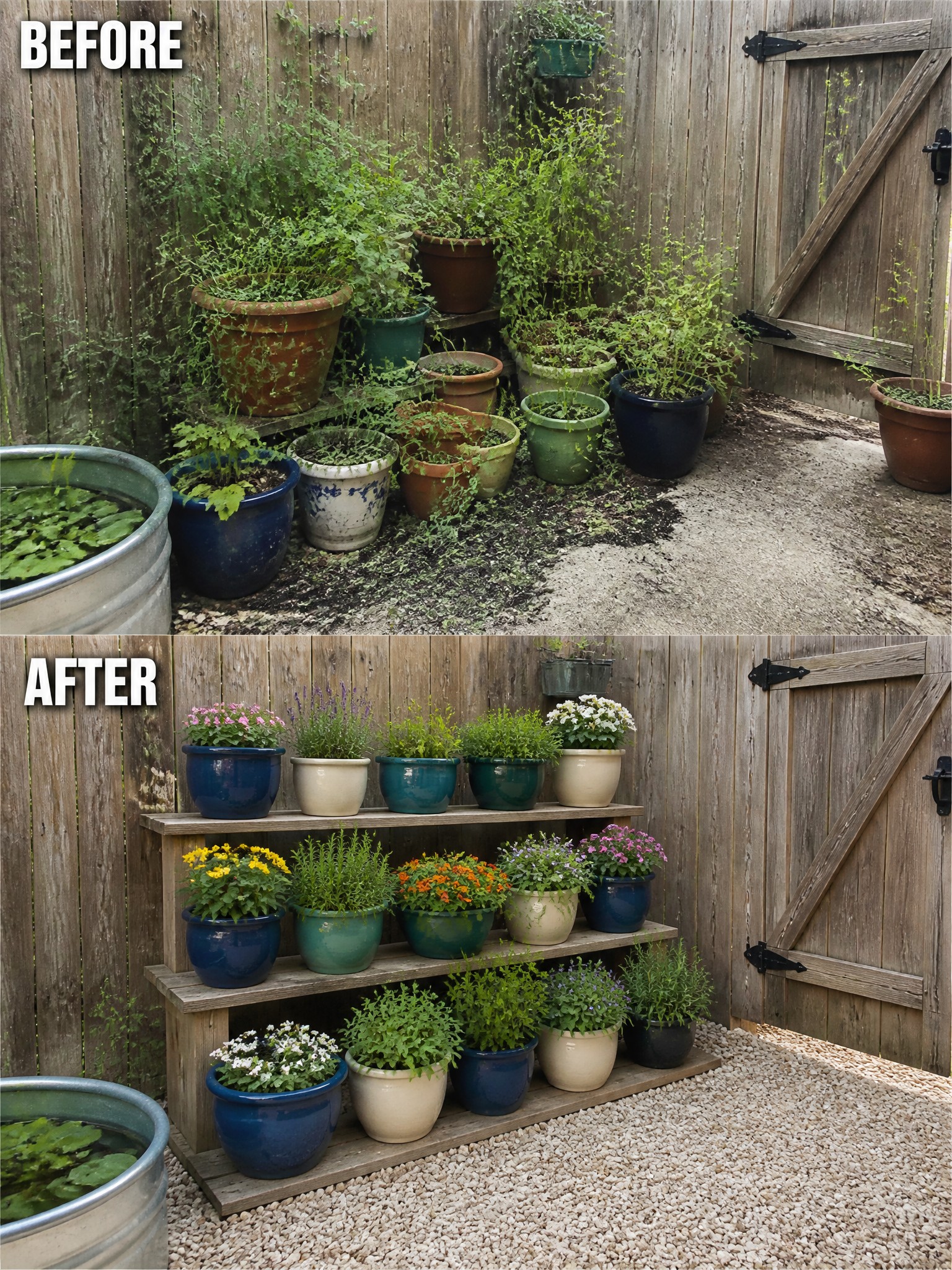
Scattered pots on bare ground tend to look messy fast, especially when plants start to sprawl. The change here came from building a few basic wooden shelves that lift the pots off the ground and line them up in rows. That one step turned the corner from a jumble into something that feels planned and easy to keep tidy.
This approach works well in small side yards or fence lines where space is tight. Start with sturdy shelves that can handle weight and weather, then set the pots in place by size or color. Gravel on the ground helps keep weeds down and gives the whole area a cleaner base without much extra work.
Define An Overgrown Slope With A Retaining Wall And Bench
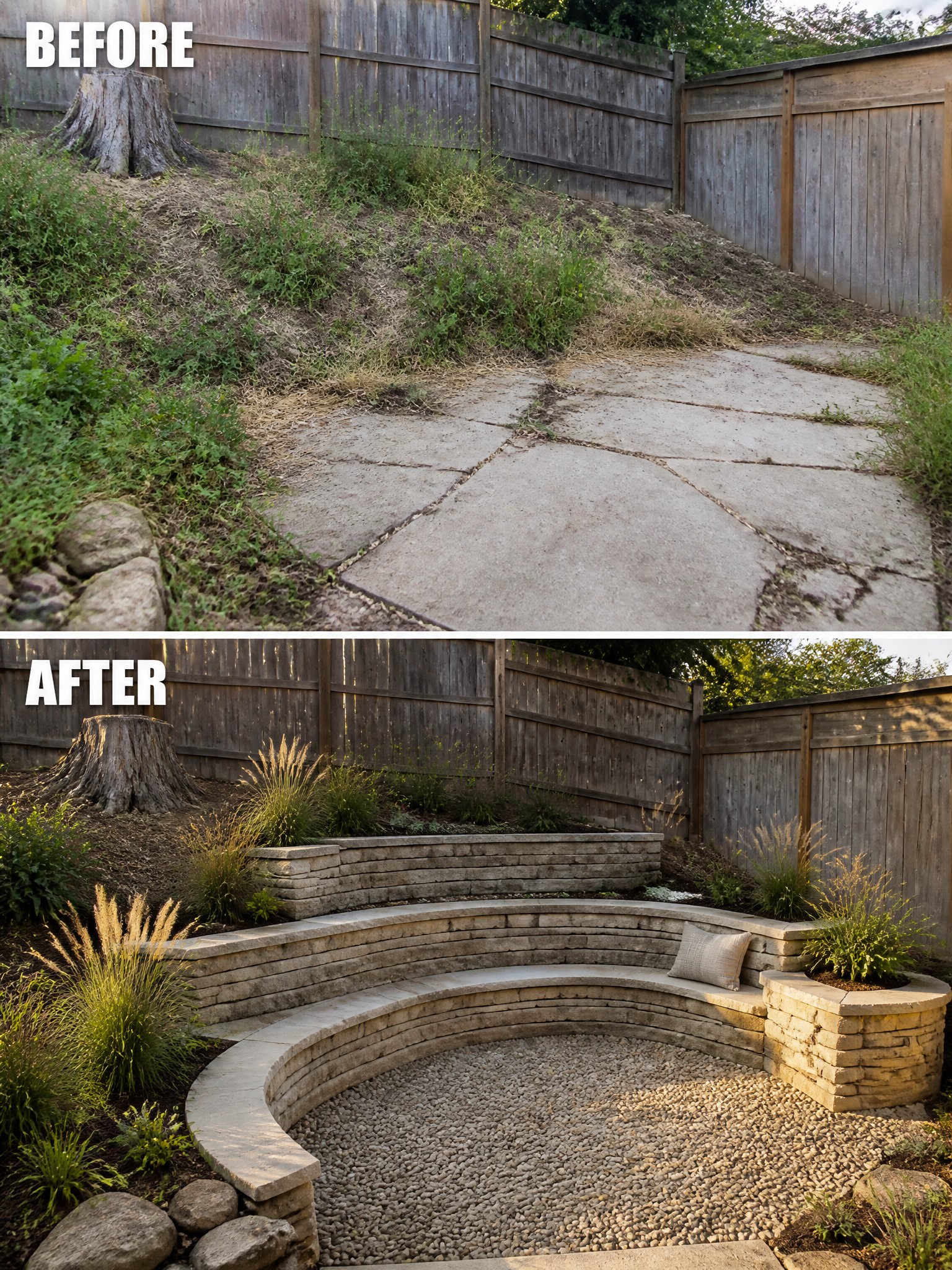
An overgrown slope with weeds and a cracked concrete path can make a backyard feel unusable. Adding a curved stone retaining wall and bench gives the area clear shape, holds the slope in place, and creates a simple gravel seating zone that feels intentional.
This idea works best on uneven or neglected yards where cleanup alone is not enough. Clear the overgrowth first, then focus on one main hardscape element like a low wall or bench to define the space. Keep plantings simple along the edges so the structure stays the main feature.
Frequently Asked Questions
Q: My backyard looks like a jungle and I have no clue where to start clearing it. A: Begin by raking up loose leaves and debris so you can see what you are working with. Then tackle one small section at a time with a mower or trimmer instead of trying to fix the whole space in a day. This keeps the job from feeling impossible right away.
Q: Can I pull off any of these makeovers without buying new plants or materials? A: Walk your yard first and look for spots where you can simply reshape what is already growing. Divide clumps of existing grass or ground cover to spread into bare areas. Add free mulch from local tree services to define paths and beds without spending anything.
Q: How do I keep the space from turning wild again a month later? A: Set a quick weekly habit of pulling weeds while they are still small instead of waiting for a big cleanup. Choose tough native plants that match your soil so they fill in and crowd out new growth on their own.
