

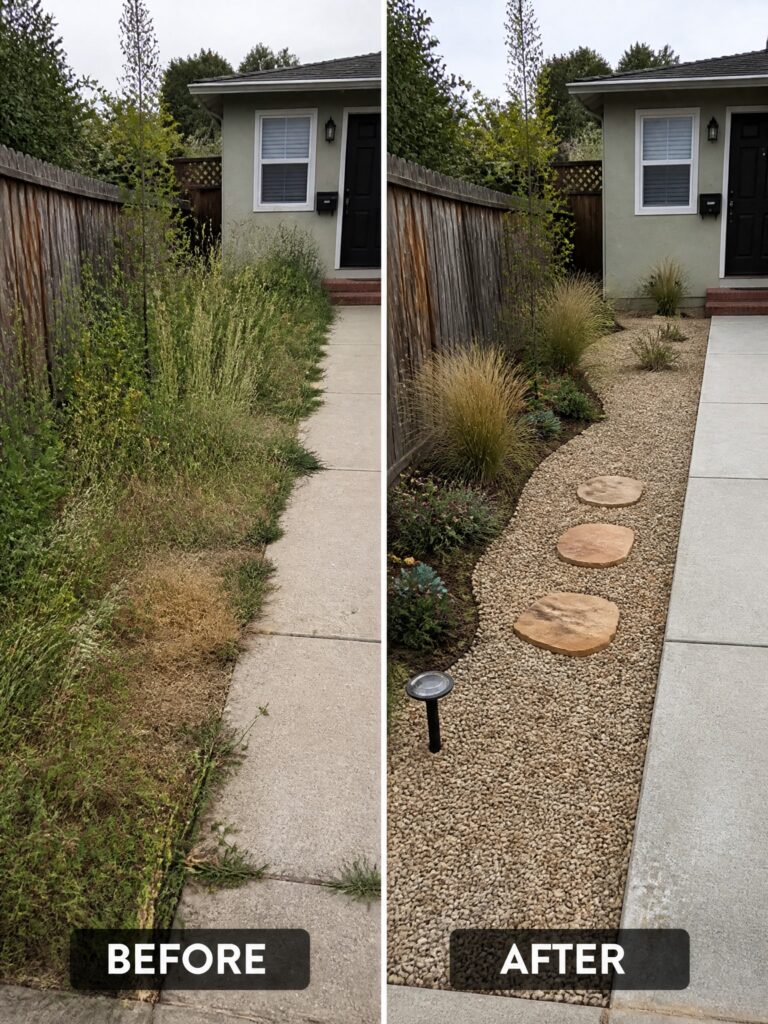
I have seen how an overgrown yard quickly starts to feel disconnected from the rest of the house when the grass and shrubs are left to spread unchecked.
Clearing the excess growth and redefining the main lines of the space usually makes the biggest difference in how the area feels day to day.
In my own experience, sorting out the basic layout and a handful of plants first tends to give better results than trying to add more features right away.
The changes often happen in layers, and it is satisfying to notice how the yard starts to look intentional again without needing a complete overhaul.
A couple of these approaches seem worth testing on a small section first.
Add Structure To An Overgrown Yard
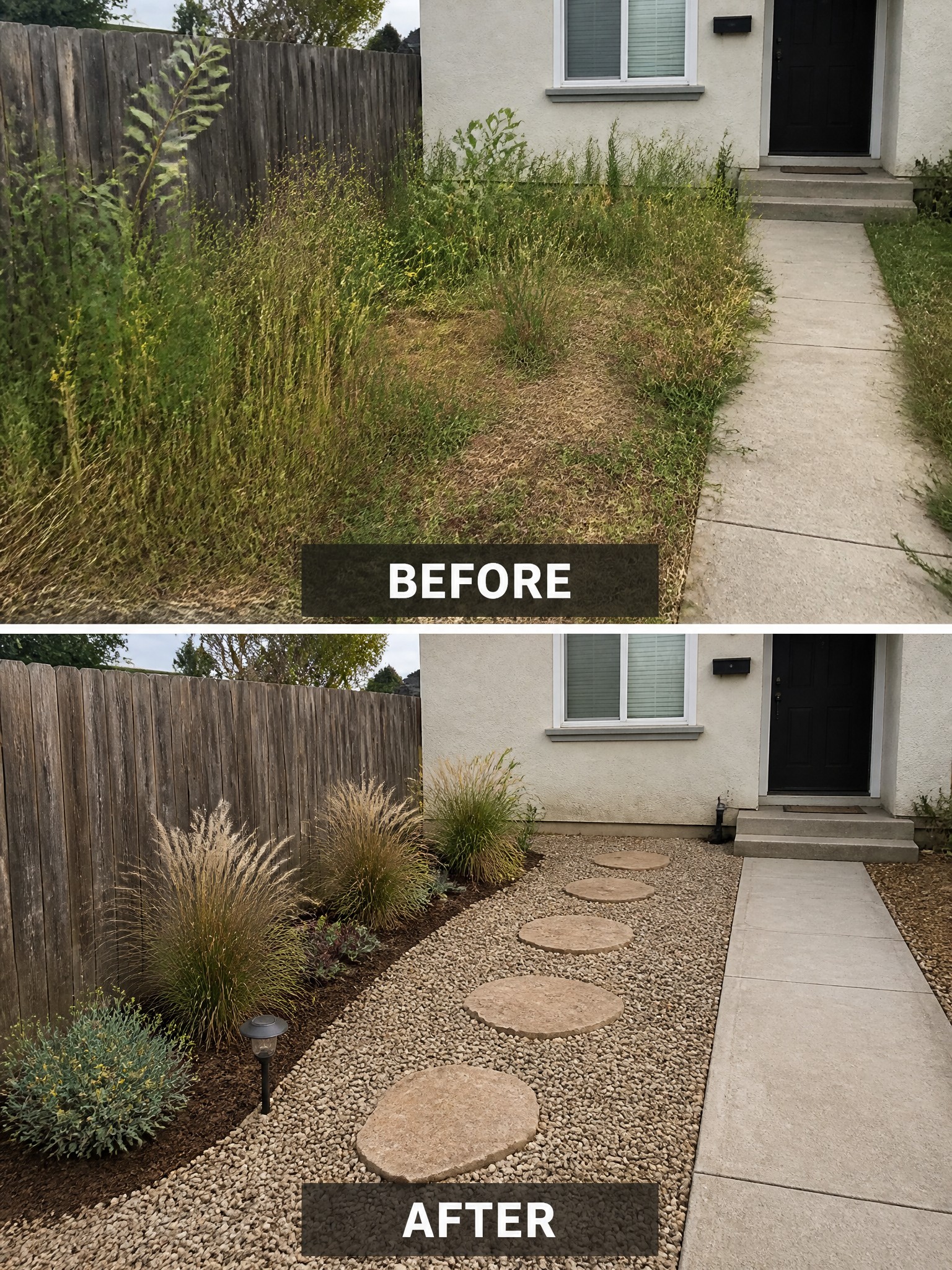
An overgrown strip of weeds and patchy grass next to the house can make the whole side of the yard feel neglected. Laying down gravel with a line of stepping stones gives the area a clear purpose and stops the weeds from taking over again. The change turns a messy patch into a simple walkway that actually leads somewhere.
This approach works well along the side of a house or in any narrow space where grass struggles. Start by clearing the weeds down to bare soil, then add a weed barrier before the gravel. Keep the planting light so the path stays the main feature instead of fighting for attention.
Clear Overgrowth Before Adding Garden Beds
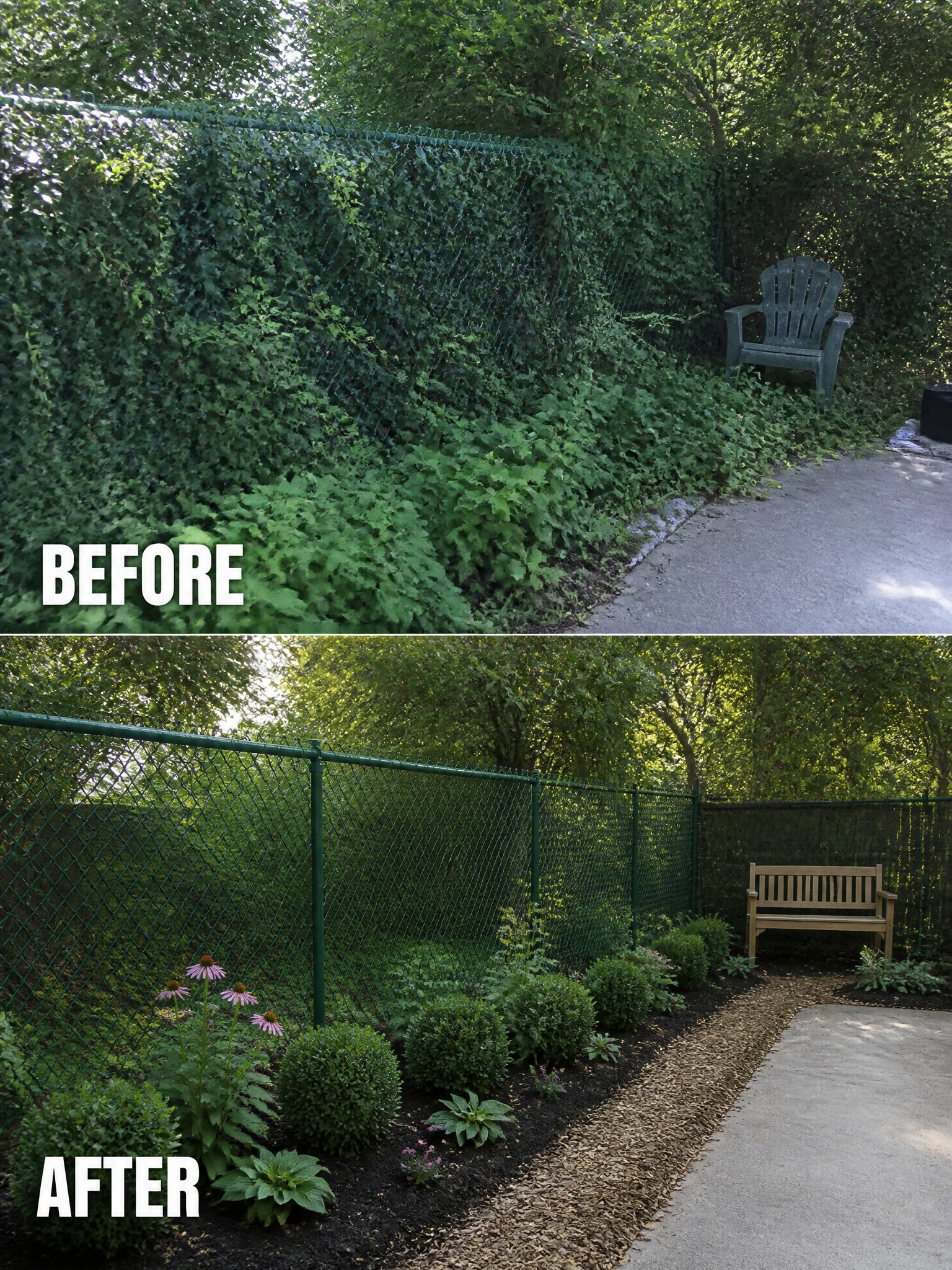
The main change here was cutting back the heavy ivy and weeds that had taken over the fence line. Once that growth was removed, a simple row of shrubs and flowers along the edge gave the space a clear shape and made the whole area feel more open and usable.
This approach works best when you start with cleanup rather than trying to plant around existing vines. Focus on one border at a time, use mulch to hold the soil and reduce weeds, and keep the plantings low enough that they do not block the fence or path. It suits older yards where the original layout is still there but hidden under years of unchecked growth.
Add Structure To An Overgrown Backyard
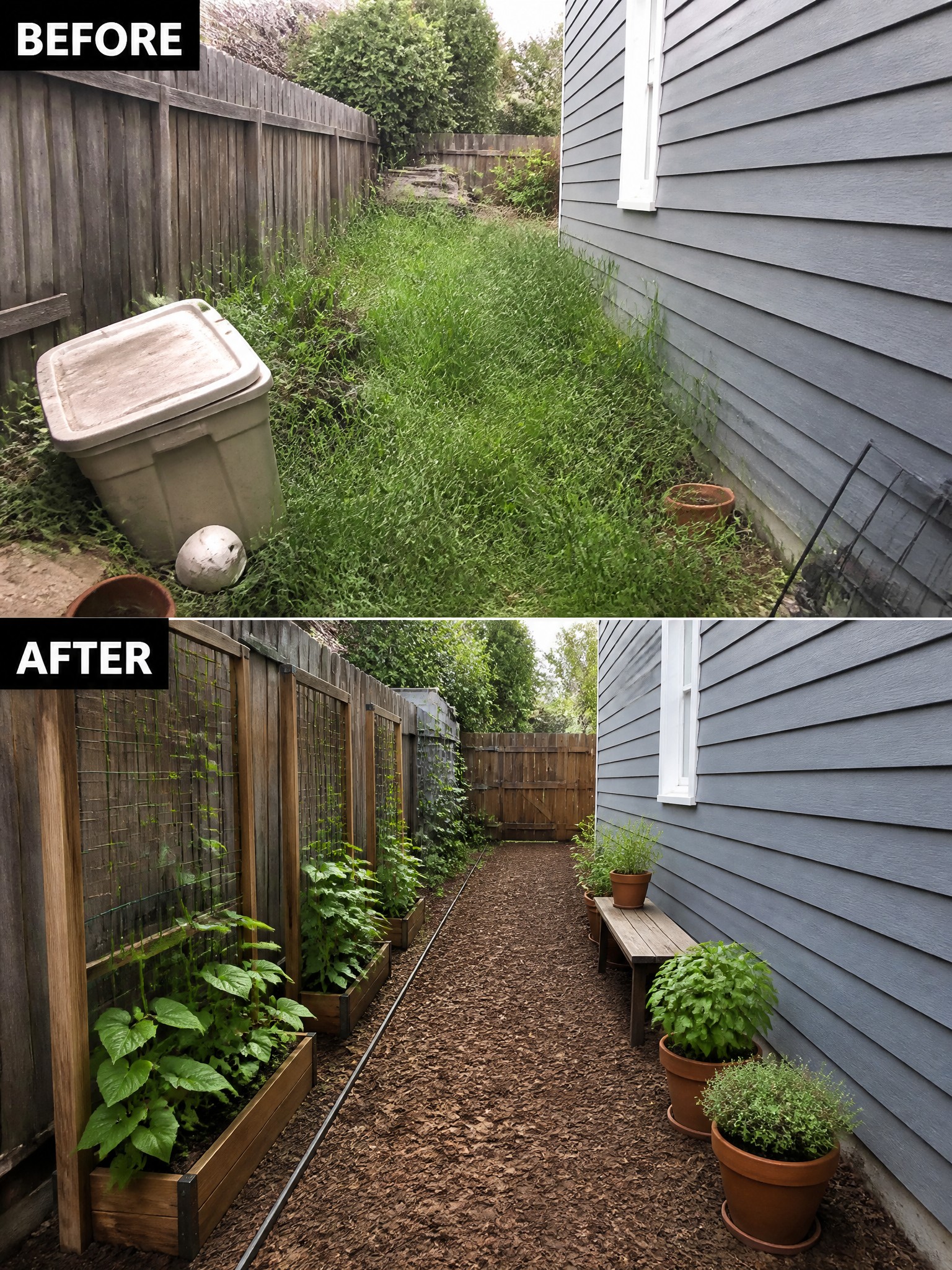
The main change here is clearing the tall weeds and junk first, then adding raised beds with trellises along the fence line and a thick layer of mulch over the ground. This gives the narrow side yard a clear purpose and makes it feel organized instead of neglected.
This approach works especially well in tight spaces between a house and fence. Focus on simple wood beds and mulch before adding too many plants. It keeps the area usable and easier to maintain over time.
Add Structure To An Overgrown Backyard
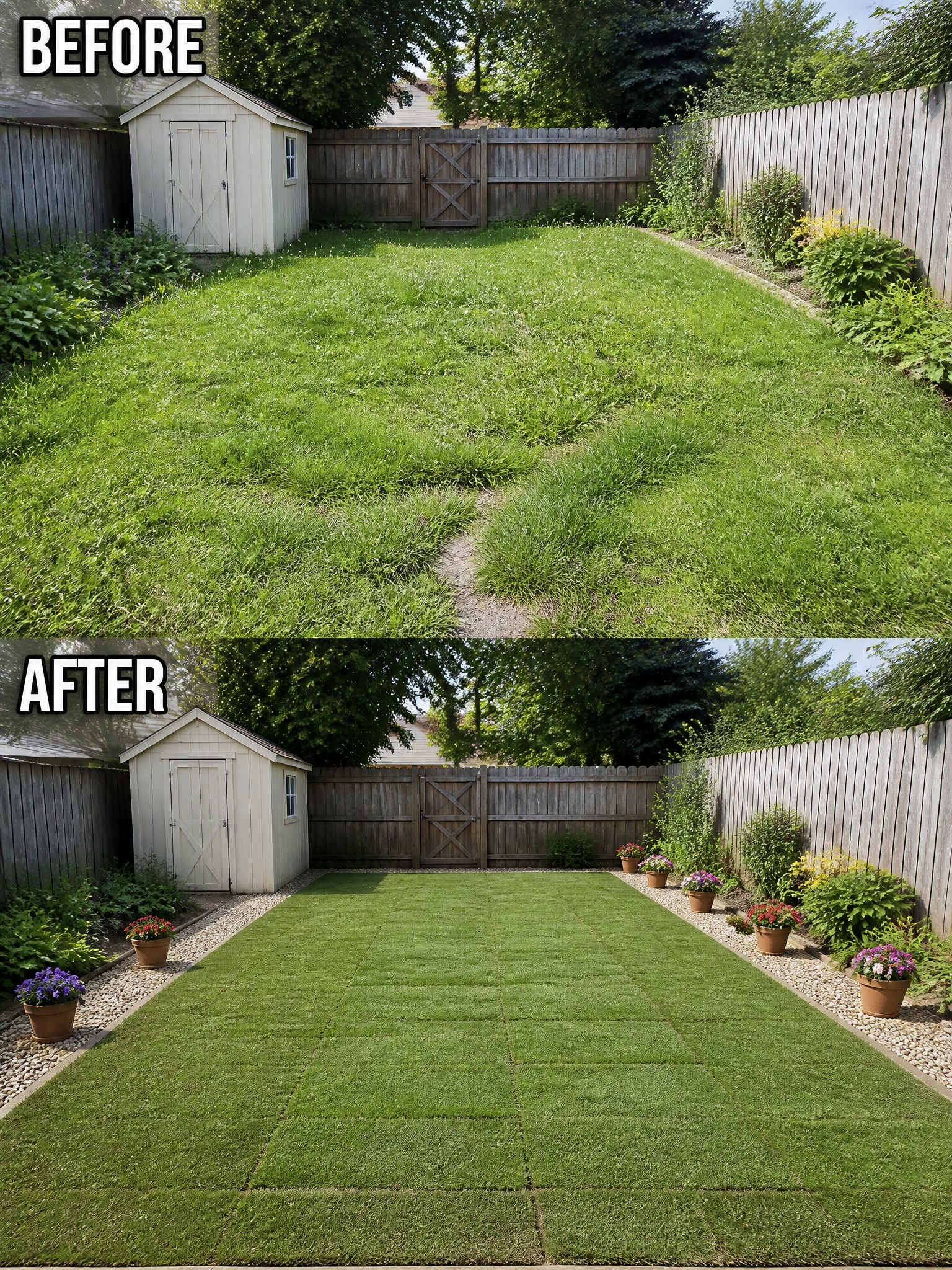
One simple way to fix an overgrown yard is to start with clear borders instead of adding more plants right away. The uneven grass was replaced with a neat rectangular lawn edged in gravel, which instantly made the space feel planned and easier to maintain.
This idea works best in smaller yards where you want a usable lawn without major construction. Mow and level the area first, then use gravel or mulch to define the edges. Adding a few pots along the border gives color and keeps the look simple.
Clear Overgrown Bushes Before Adding New Planting
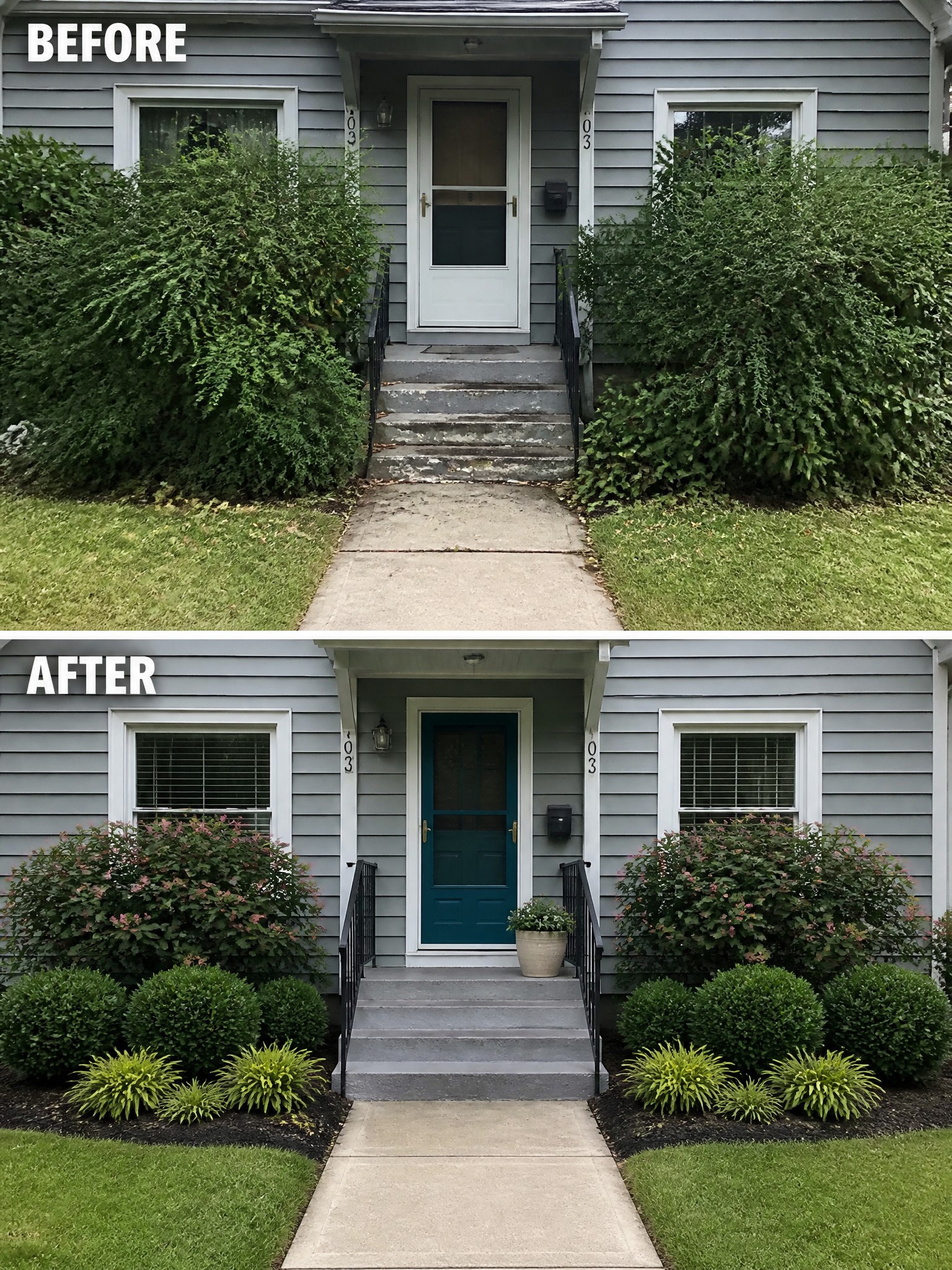
The before photo shows how tall, wild shrubs can swallow a front entry and block light from the windows. Once those were removed, the house felt more open and the walkway became the clear path it was meant to be. Replacing the overgrowth with smaller rounded shrubs and a few layers of lower plants gave the same area a tidy, finished look without crowding the foundation.
This approach works well on older homes where plantings have grown past their original size. Start by cutting back anything that touches the house or hides windows, then add a simple border of mulch and repeat a few plant shapes rather than filling every inch. Keep the beds narrow enough to leave room to walk and mow.
Add Structure To An Overgrown Backyard
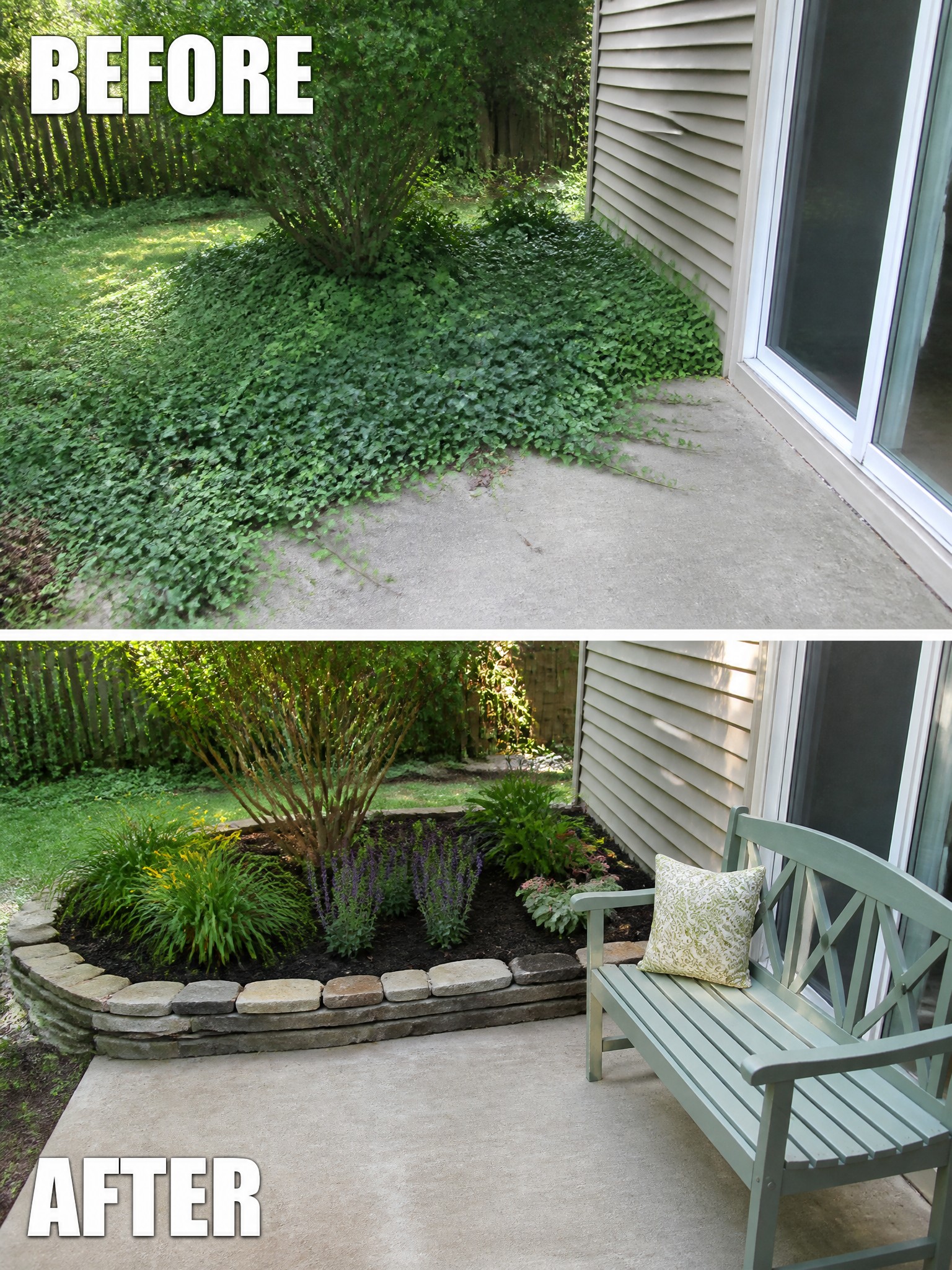
One of the simplest ways to fix a messy side yard is to clear the overgrowth first and then add a clear edge. Here the thick ground cover was pulled away from the concrete and replaced with a low stone border that holds the new bed in place and keeps everything looking neat.
This idea works best along the side of a house or patio where you still need walking room. Start by removing the plants that are spilling out, lay a simple stone or paver edge, and fill the bed with a few shrubs and perennials. Leave enough open space so you can add a bench or path without crowding the area.
Add Structure To An Overgrown Backyard
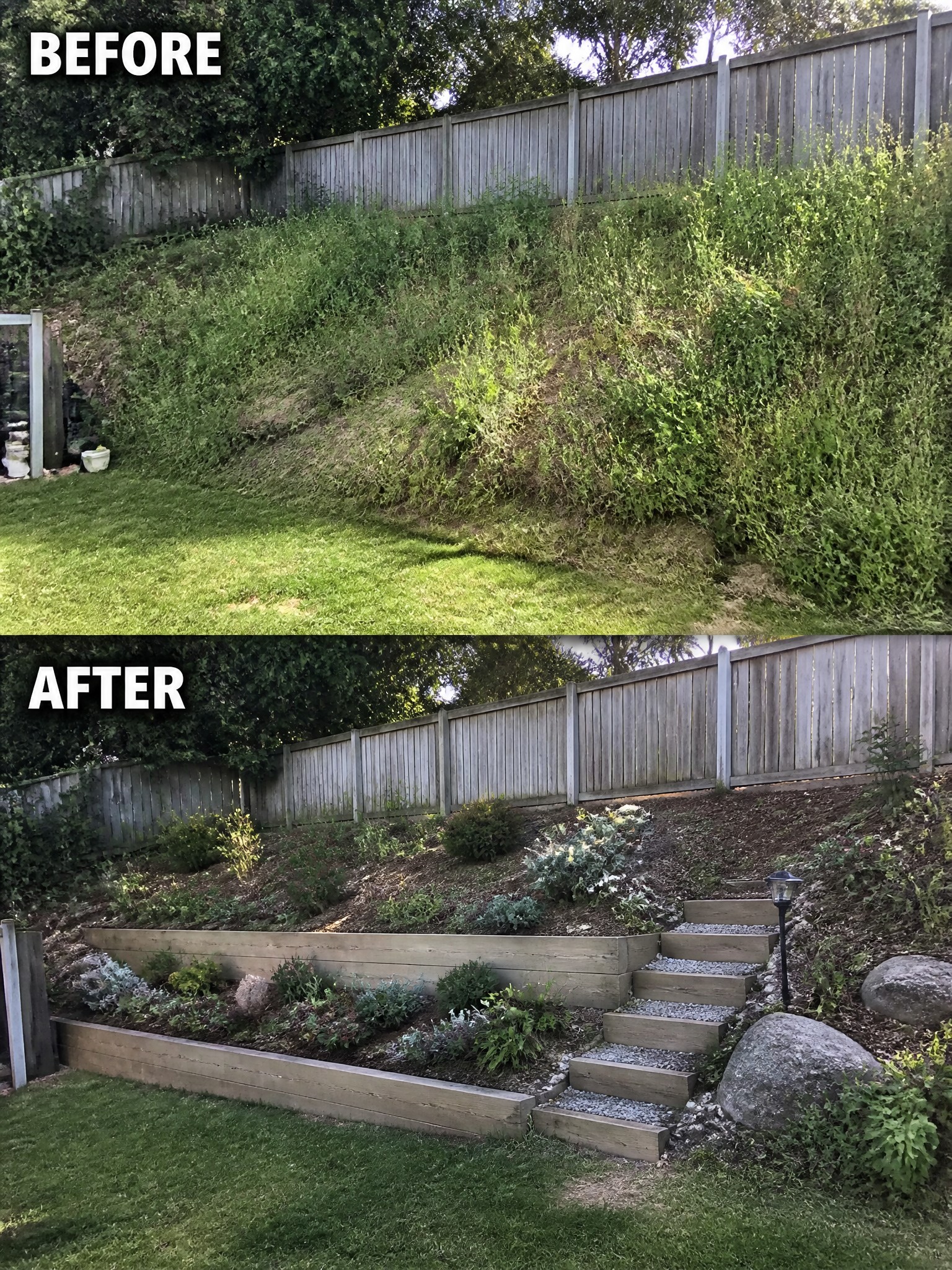
Many backyards start as a steep, weed-covered slope that feels unusable. Clearing the overgrowth and building simple terraced beds with retaining walls turns the area into something that can actually be planted and maintained.
This idea works best on sloped lots where the ground needs shaping first. Start with sturdy wood or stone walls to create level beds, then add gravel steps so the space stays easy to walk through. Keep the planting simple so the structure stays visible.
Add Structure To An Overgrown Backyard
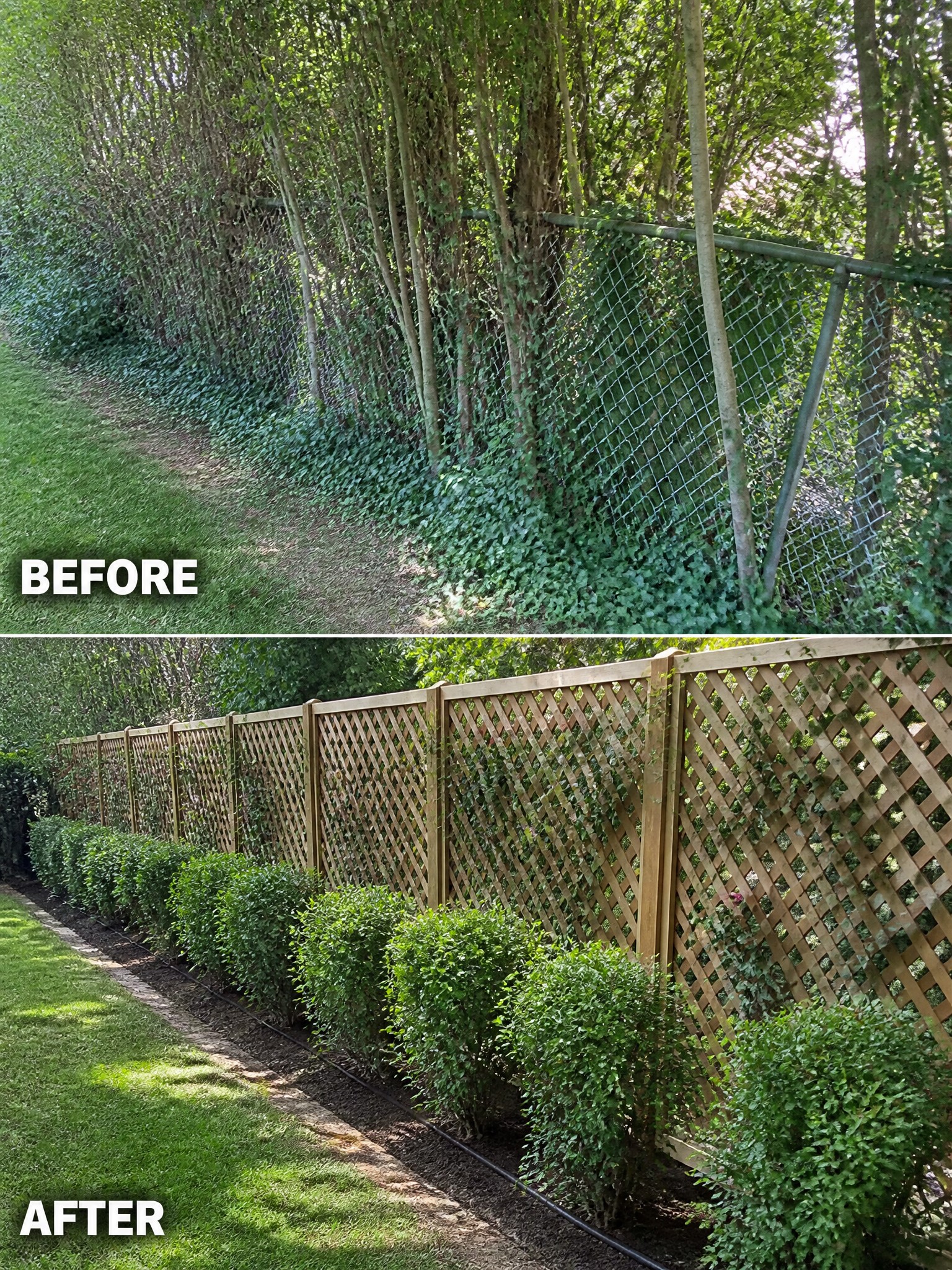
Replacing an old chain link fence with a wooden lattice one instantly gives the yard a cleaner outline. The addition of a straight row of shrubs along the base pulls everything together and stops the planting from looking scattered. This approach works because it deals with the mess first before worrying about anything else.
It suits long narrow yards where the fence line is the main visual boundary. Keep the shrubs low and repeat the same type for a simple look that still feels planned. Start with the fence and edging before adding any other features.
Add Borders To Create Structure In An Overgrown Yard
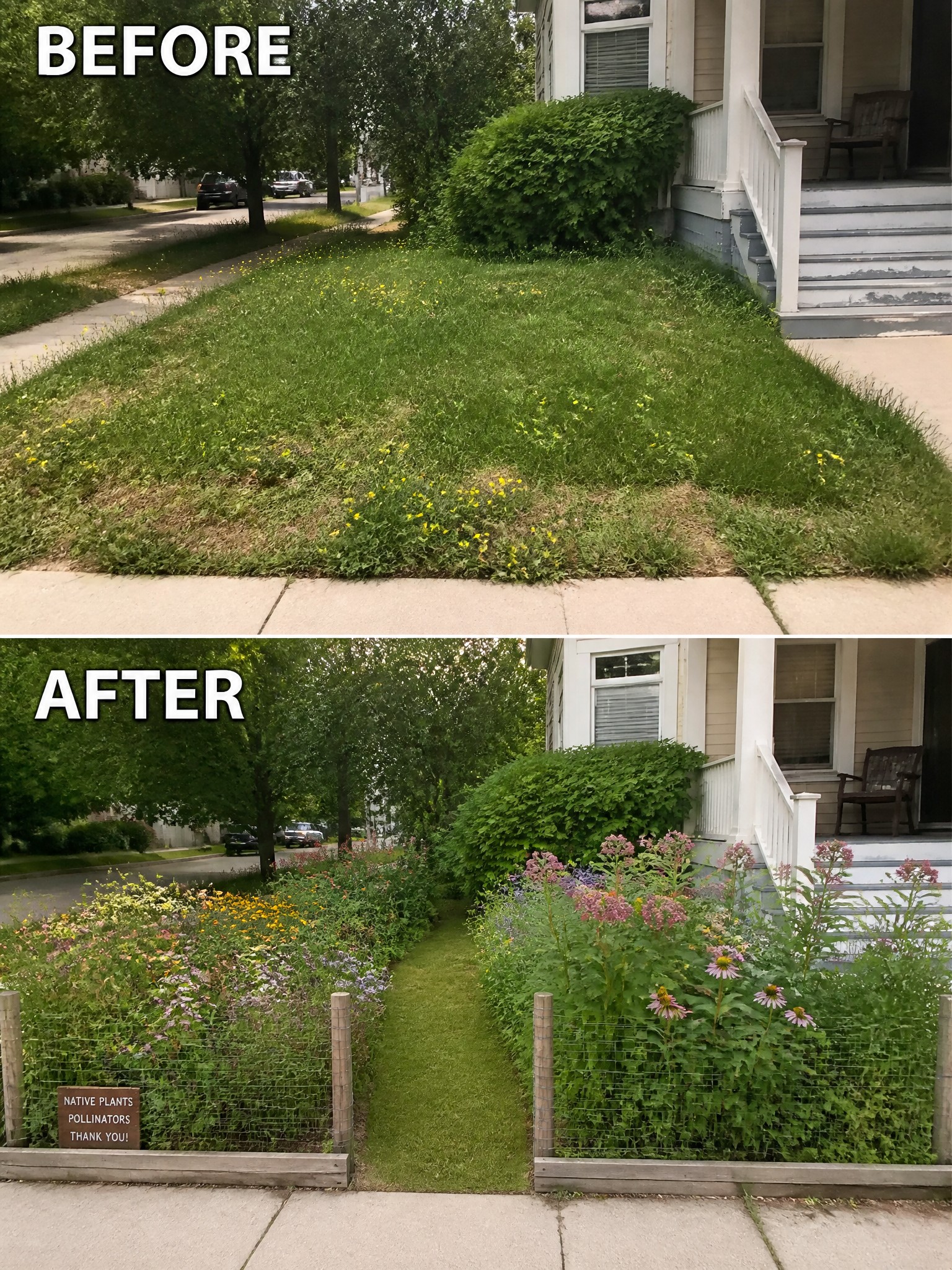
The main change here was clearing the weedy lawn and adding low wood and wire borders to form clear planting beds. This simple step turns a messy patch of grass into something that looks intentional and easier to maintain over time.
This approach works well in small front yards where you want to add color without losing open space. Start with the cleanup, then use basic fencing or edging to mark out beds along the sidewalk and house. Native plants fill in nicely and help keep the look low effort once established.
Turn An Overgrown Corner Into A Fire Pit Seating Area
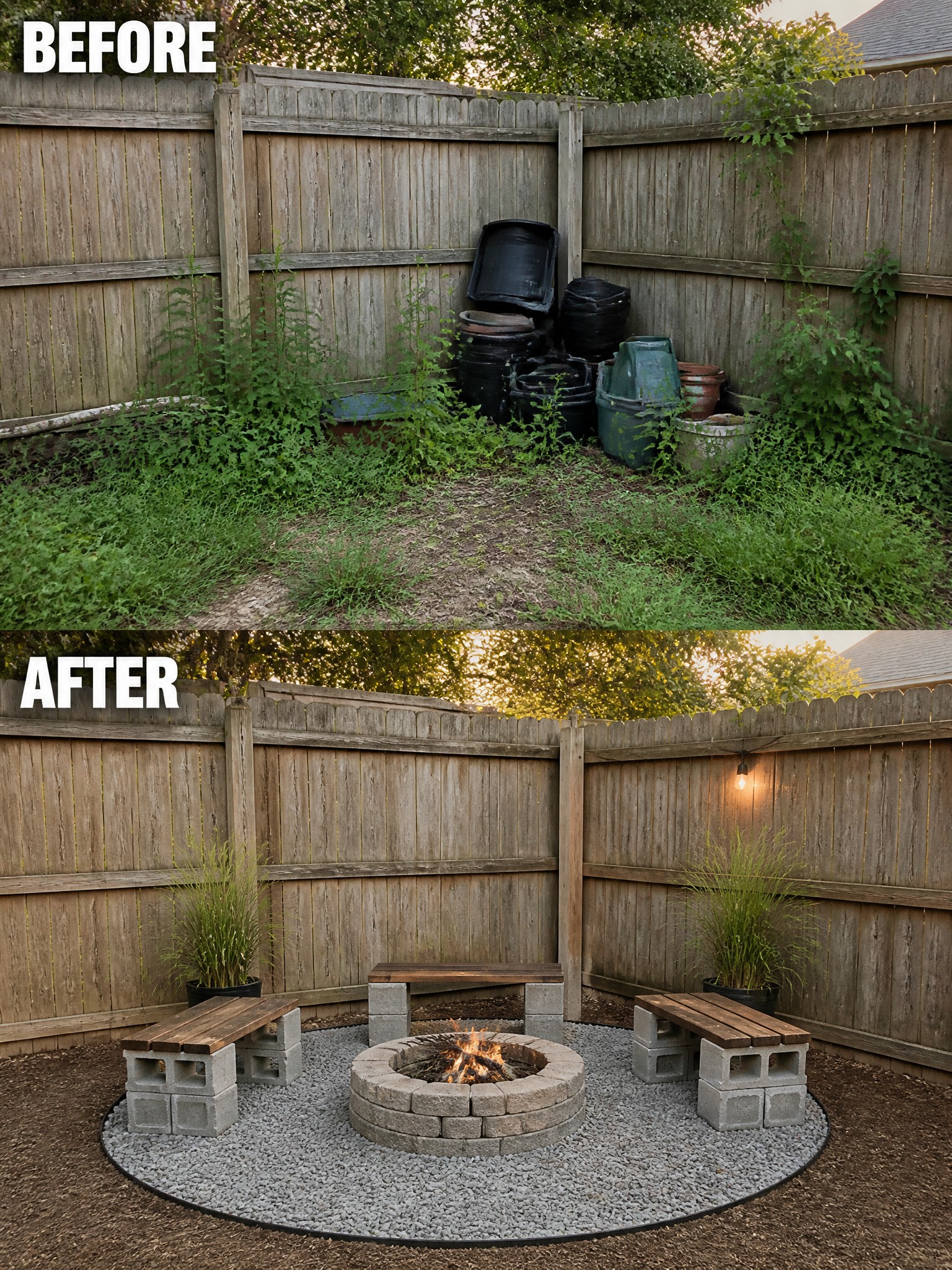
Clearing out weeds, dirt piles, and old containers first made the biggest difference here. Once the space was open, a simple gravel circle with a stone fire pit and three basic benches turned the spot into a place people actually want to sit. The cinder block bases keep costs low while the wood tops add a finished touch.
This works well in small or awkward backyard sections that never seem to get used. Start by removing whatever is piled up, then mark out a circle or square with gravel so the area feels intentional. Keep the furniture low and weatherproof so it can stay out year round without much fuss.
Turn A Bare Patio Into A Simple Seating Spot
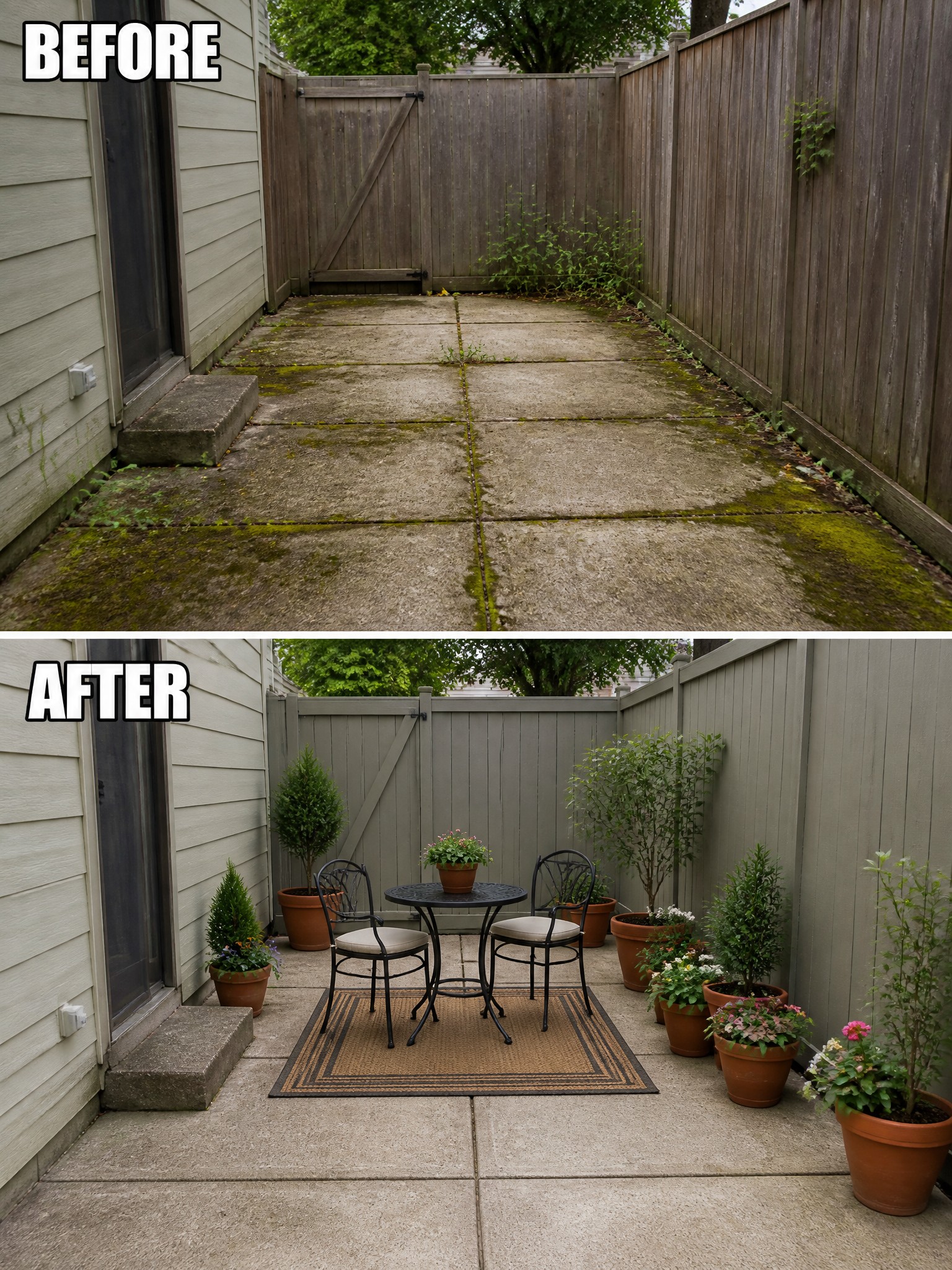
The biggest shift here comes from laying down one rug and adding a small table with chairs. That step turns plain concrete into a defined place to sit instead of just an empty slab covered in moss.
This idea works best in narrow side yards or small back corners where space is tight. Use a durable outdoor rug to mark the zone, keep the furniture compact, and fill in with pots so the area feels intentional without crowding the walkway.
Add Structure To An Overgrown Side Yard
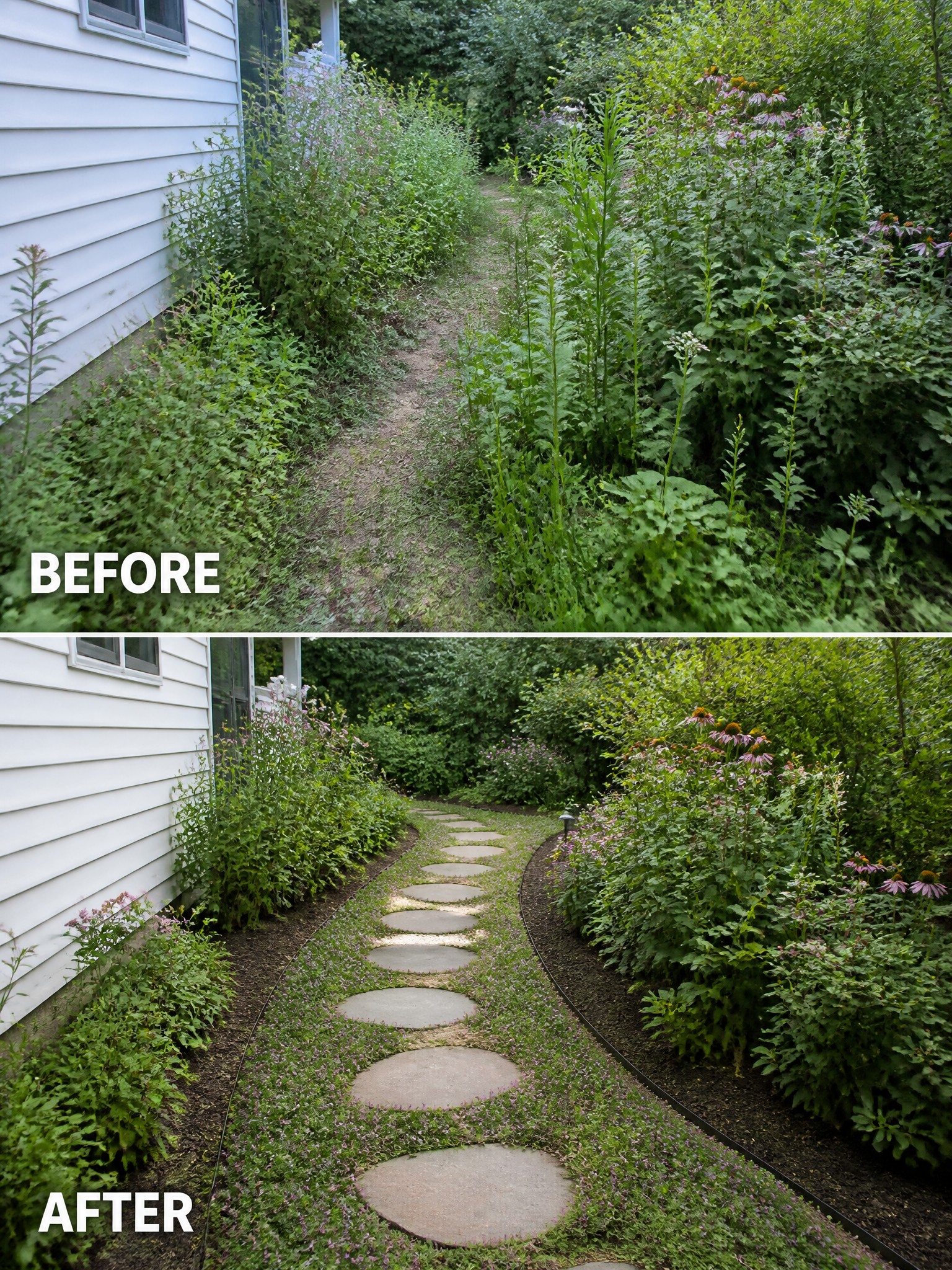
A side yard that has turned into a tangle of plants and dirt often feels unusable until you give it a clear path. Laying stepping stones and adding a simple edge turns the narrow space into something you can walk through comfortably while keeping the plants from taking over.
This idea works best on lots where the side yard serves mainly as a route rather than a seating area. Keep the path narrow but consistent, use edging to hold back the beds, and plant in repeating groups instead of letting everything sprawl. The result feels planned without needing a full redesign.
Add Structure To An Overgrown Backyard
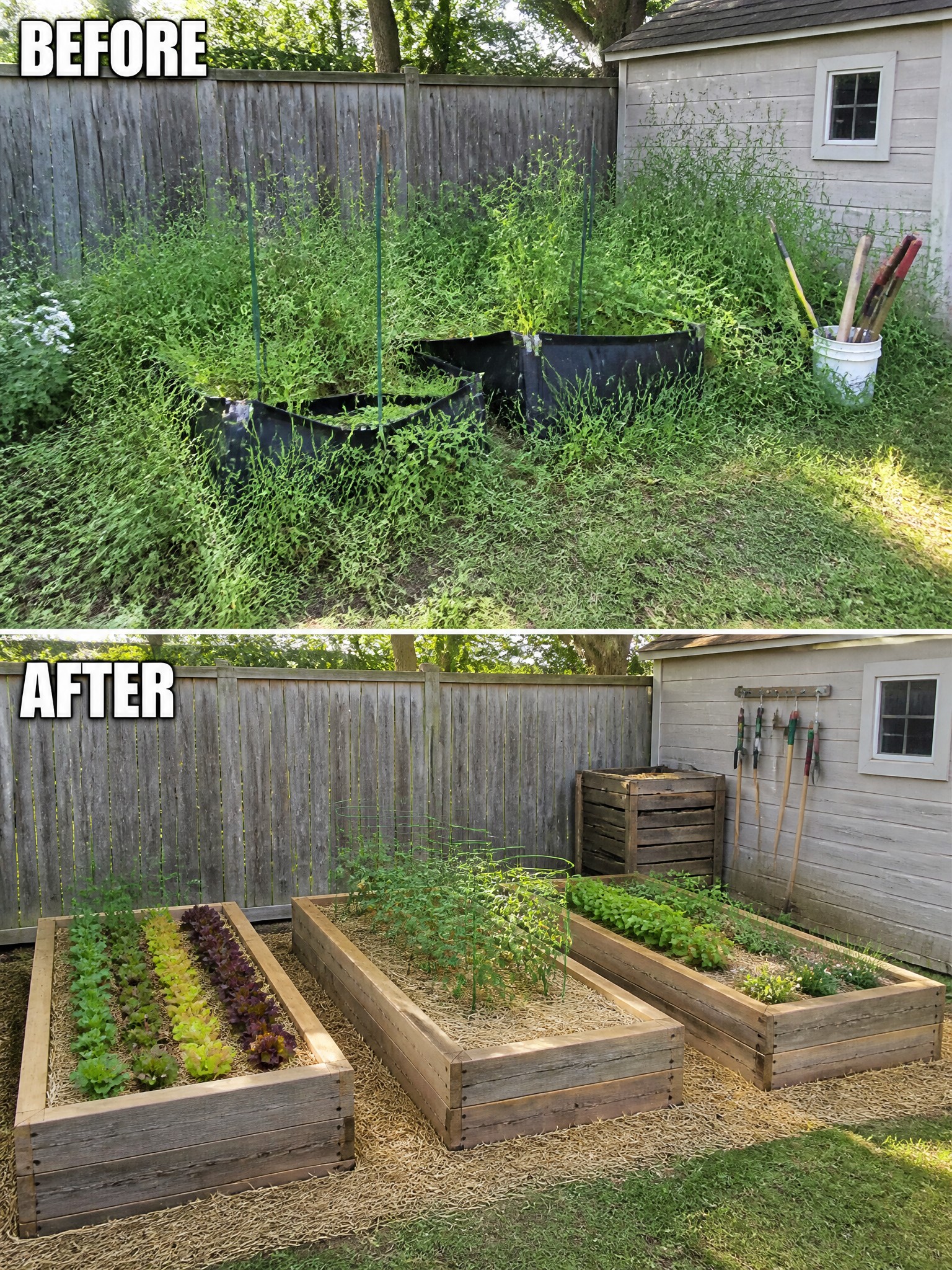
Clearing the mess first makes the biggest difference. The wild growth and broken beds were replaced with a few simple raised boxes, straight rows of plants, and mulch that keeps the ground from looking scattered.
Raised beds give a small yard clear edges and make planting and weeding much easier. They work well along fences or in corners where space is limited, and the mulch helps hold moisture while giving the whole area a finished look without needing fancy extras.
Add Edging To Straighten An Overgrown Path
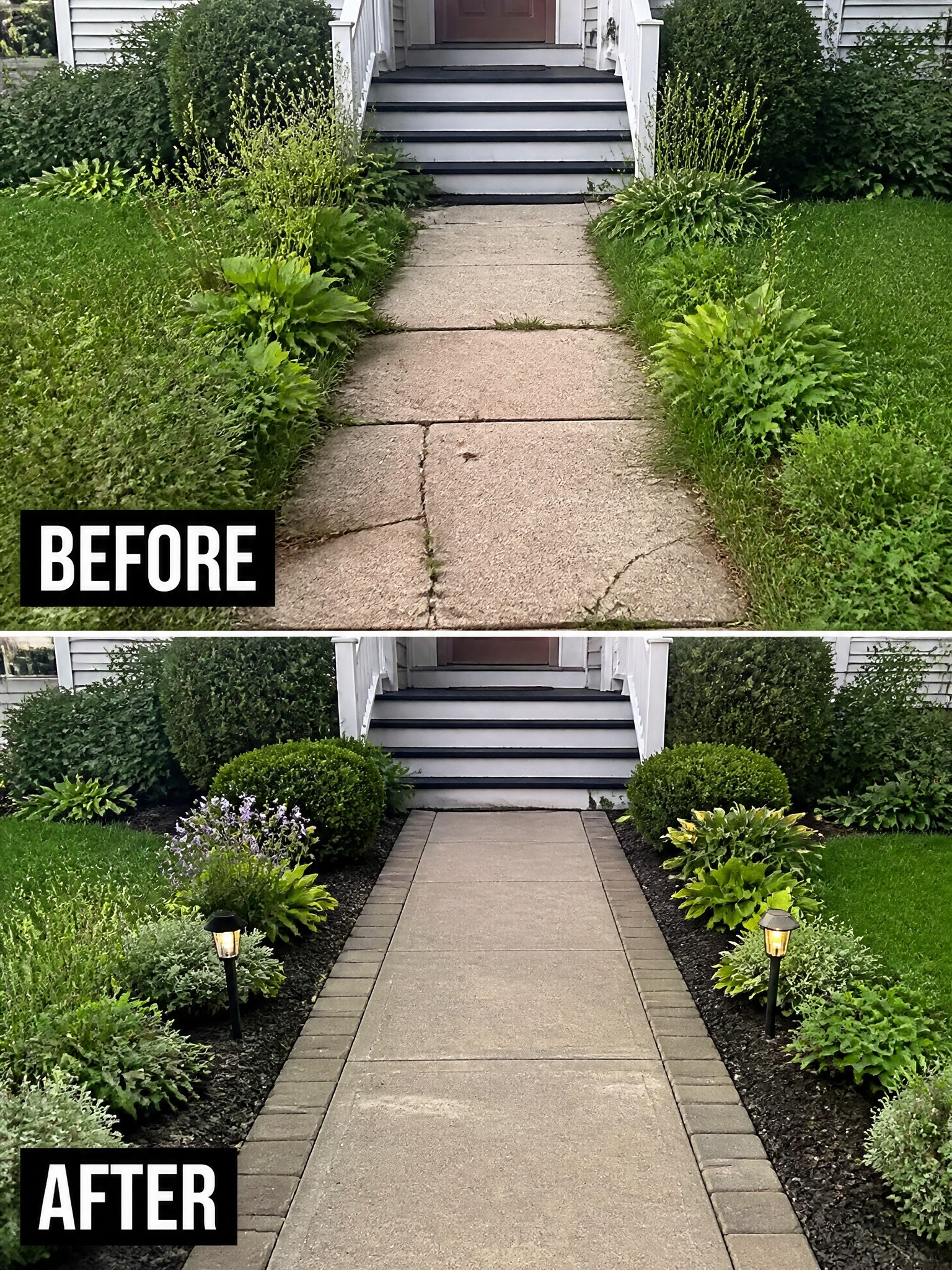
One simple way to fix a walkway that feels lost in the yard is to add clear edging along both sides. The before photo shows plants creeping right onto the concrete and making the path look narrow and messy. After the change, brick borders keep everything in place and give the walkway a finished look without any major construction.
This idea works best on straight paths that lead to the front door. Cut the plants back first, lay a basic border like brick or pavers, and add mulch in the beds so the edges stay sharp. Small lights along the sides are helpful at night but not required if you want to keep costs low.
Add Structure To An Overgrown Side Yard
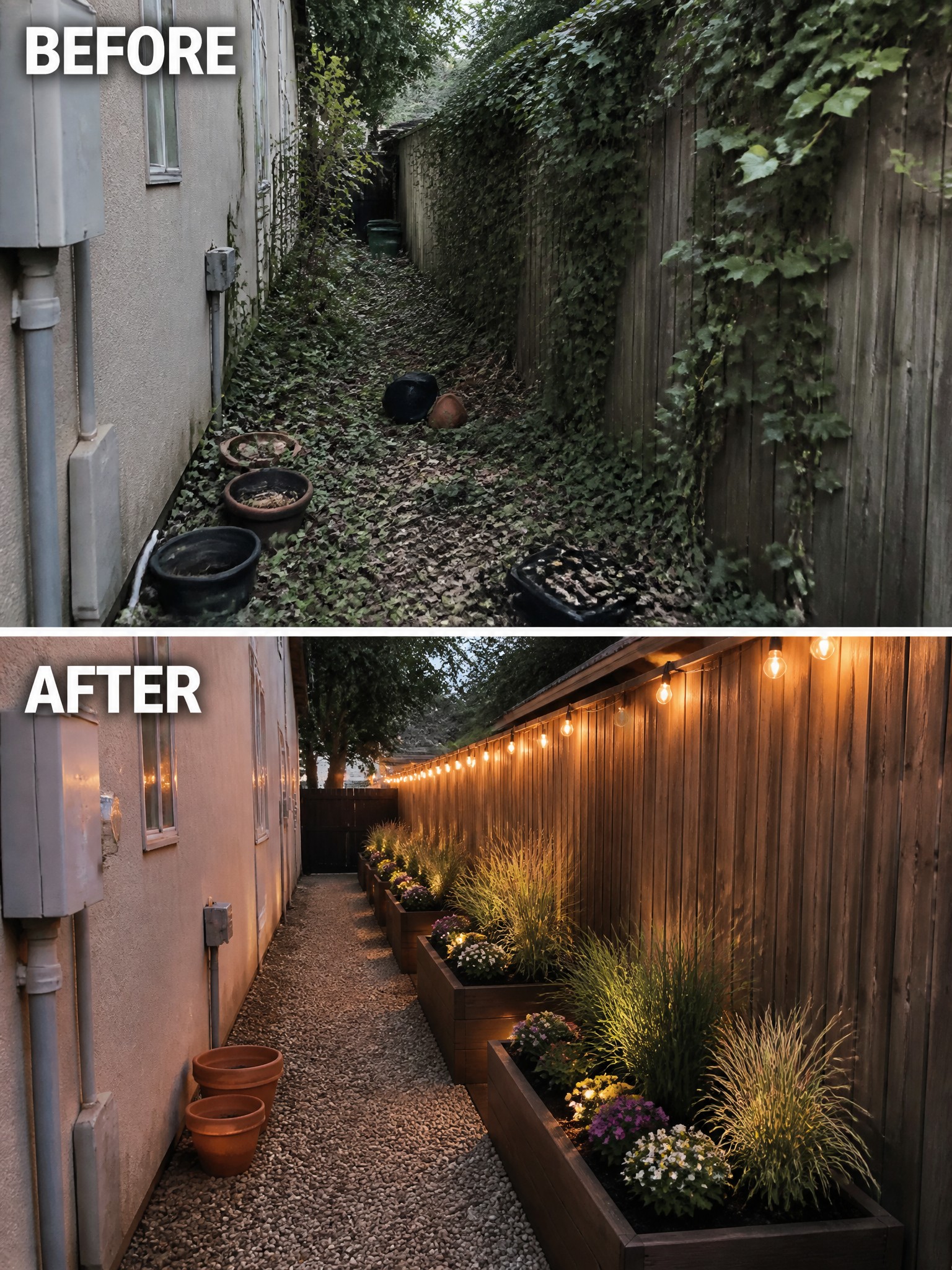
Clearing the overgrowth first makes the biggest difference in a tight space like this. Once the weeds and ivy are gone, a row of raised beds creates clear lines and turns the narrow strip into something usable instead of a forgotten gap between the house and fence.
Raised beds work well along fences because they keep soil contained and make planting simpler. Gravel on the ground keeps the path practical, and a basic string of lights brings the space to life at night without much cost. This approach suits homes with awkward side yards that never seem to get attention.
Add Structure To An Overgrown Backyard
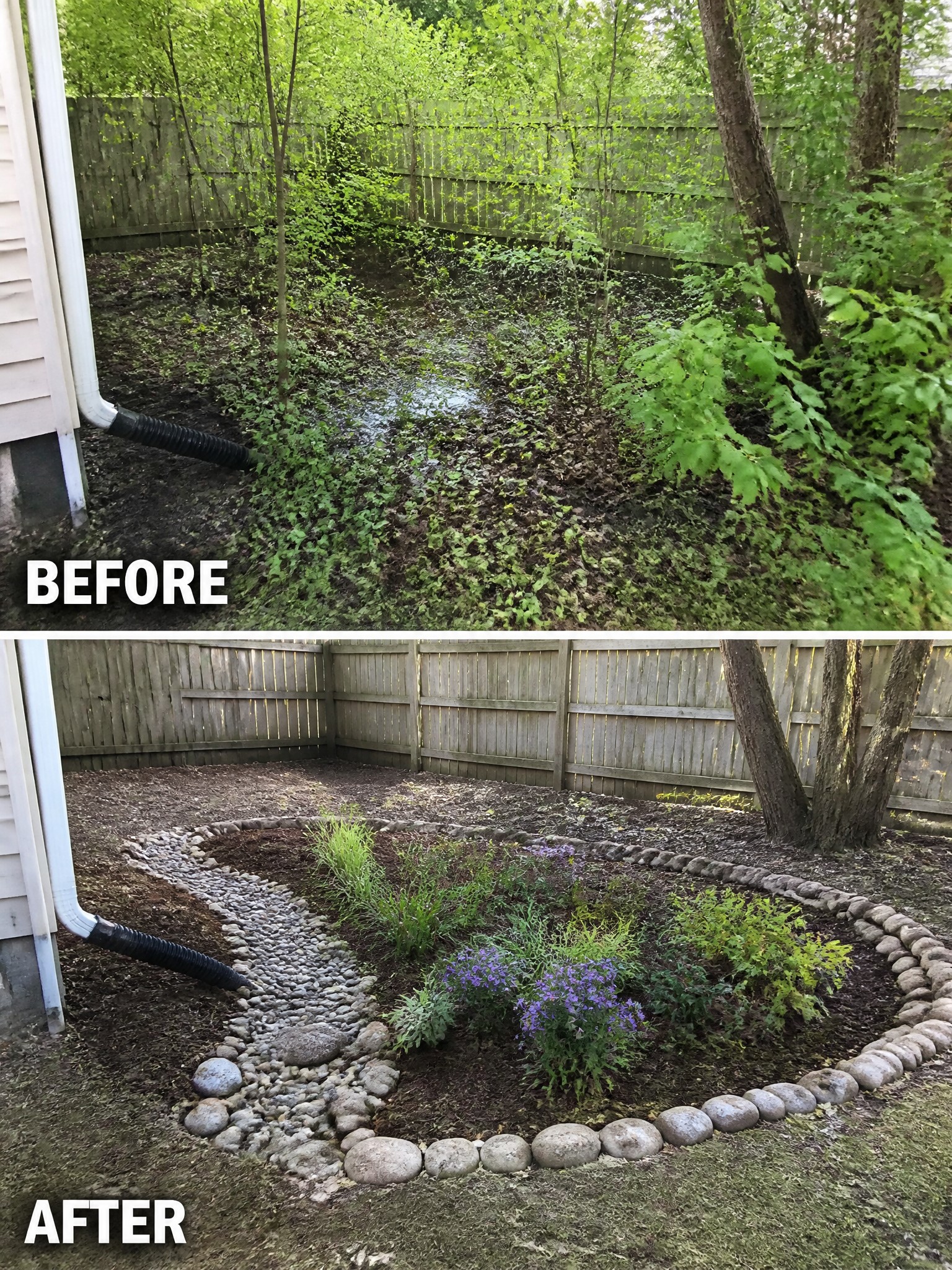
Clearing the weeds first made the biggest difference. Once the ground was cleaned up, a stone edge and a simple gravel path gave the space clear shape and kept the planting areas from looking scattered.
This works best in small yards where you want to stop the mess without spending much. Remove the overgrowth, mark out a few beds with inexpensive edging, then add plants. The result feels planned and stays easier to care for over time.
Add Simple Edging To Define Foundation Beds
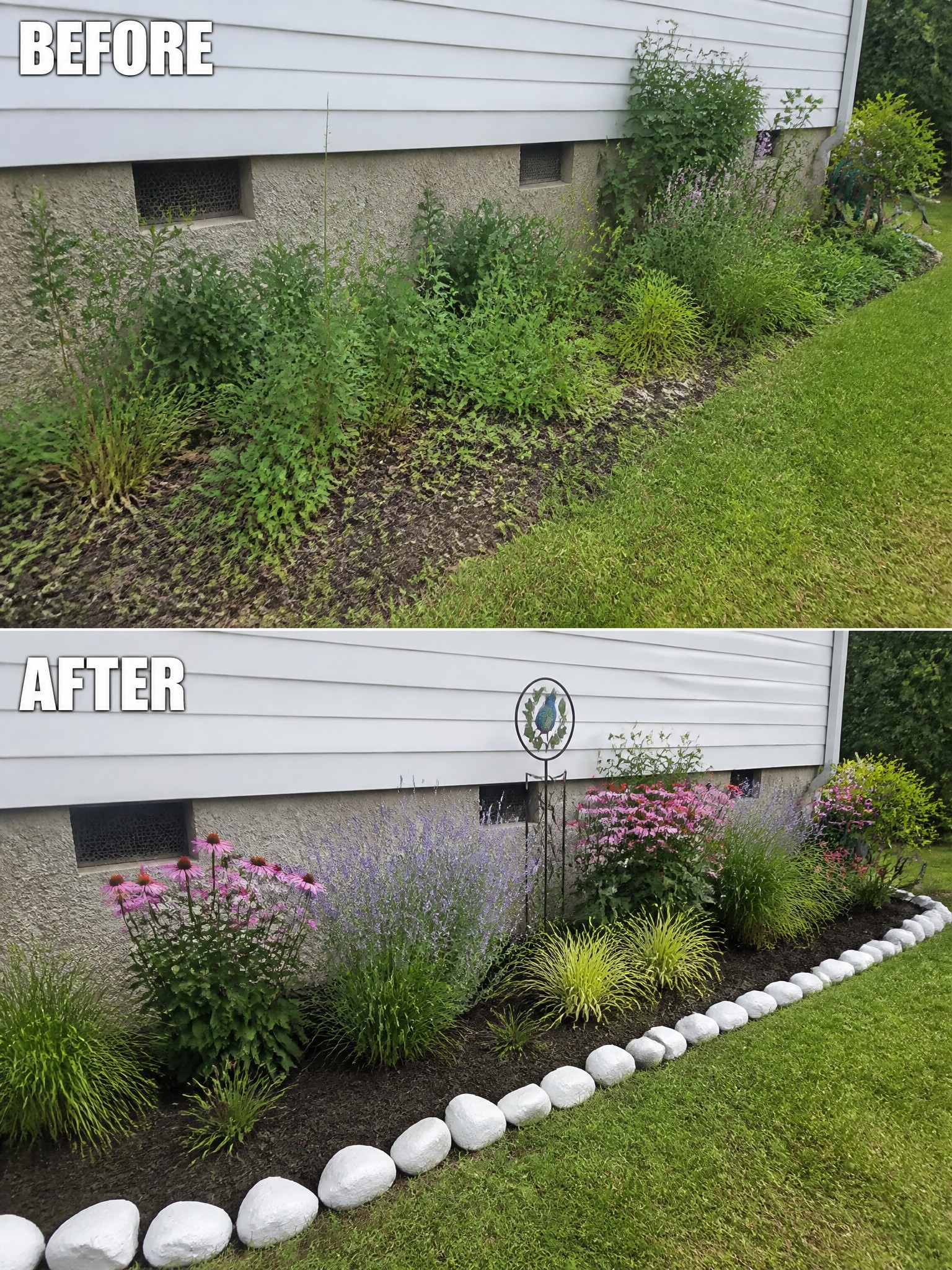
An overgrown strip along the house often looks worse than it is. Clearing the weeds and adding a clear border turns the same space into something that feels intentional instead of neglected. In this case the white stones create a clean line that separates the planting from the lawn and keeps everything looking tidy.
This approach works well on narrow beds next to the foundation where you want structure without a big budget. Start with cleanup and edging first, then fill in with a few reliable plants and mulch. The edging does most of the work to make the bed look finished even when the planting stays fairly simple.
Clear Overgrowth First Around The Front Steps
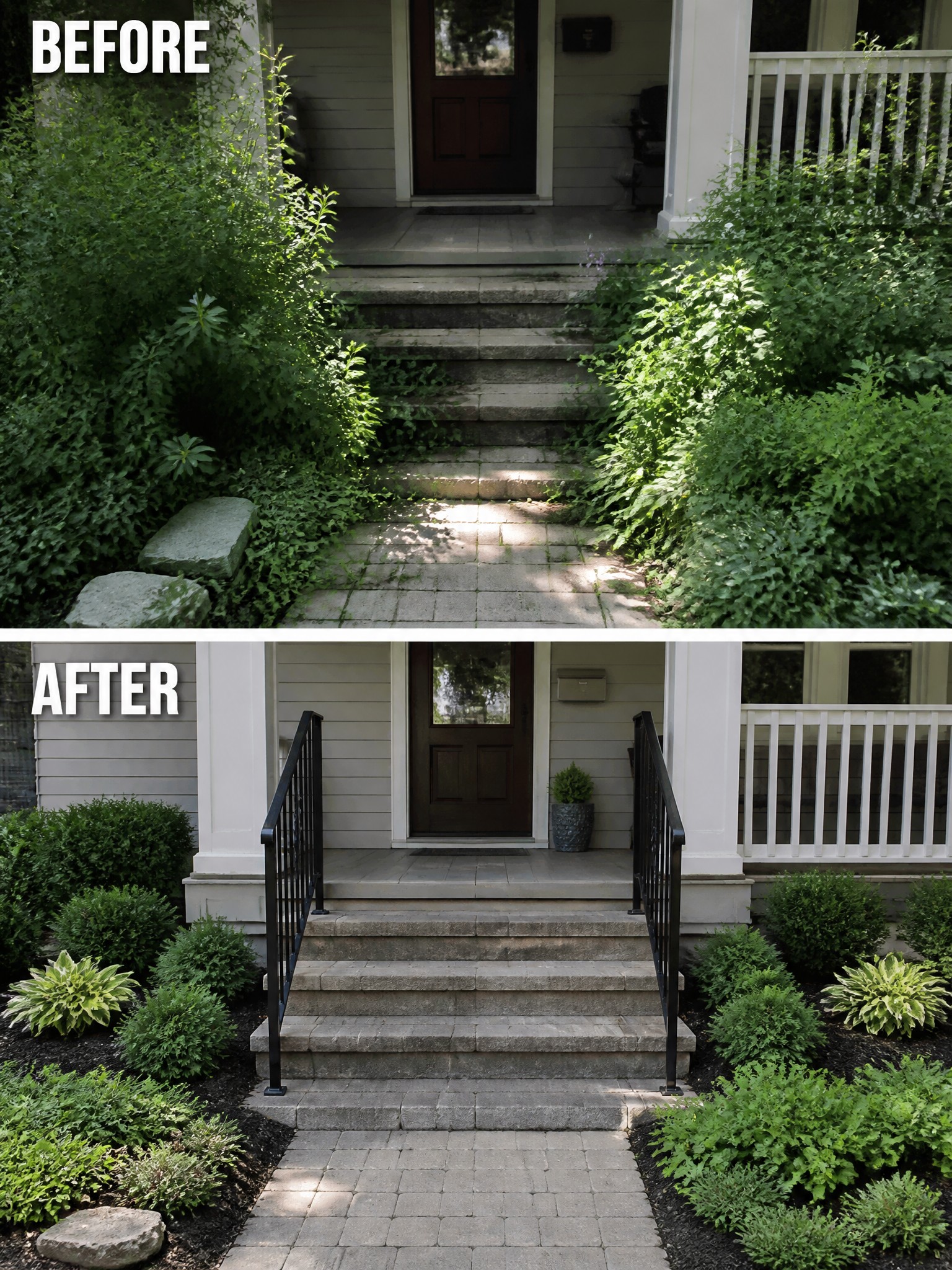
The main improvement came from cutting back the tall, wild bushes that had taken over both sides of the stairs. Once the overgrowth was removed, the path and steps felt open again, and there was space for lower, contained plantings along the edges.
This works best on older homes where shrubs have grown past the original layout. Cut everything back hard first, then add mulch and a few simple shrubs in clear beds. The result stays realistic and keeps the walkway usable instead of fighting the plants every season.
Clean Up An Overgrown Yard Before Adding Play Features
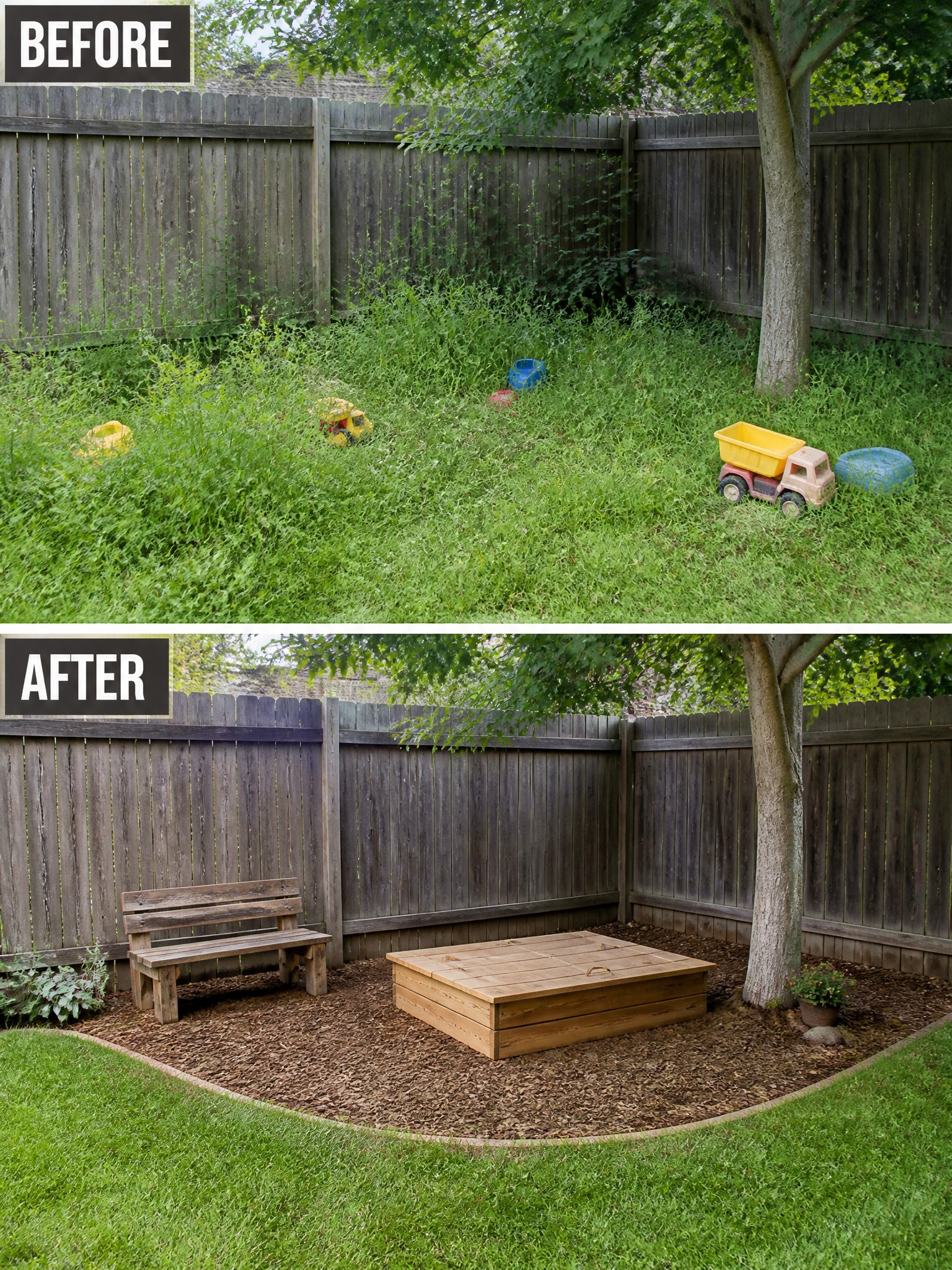
The main change was clearing the tall weeds and grass first, then covering the area with mulch to create a flat, usable surface. This simple step turned a neglected corner into a space where a bench and sandbox could actually be used.
The same idea works in small backyards where kids need room to play. Start with a thorough cleanup, lay down mulch to keep weeds down, and add just one or two durable pieces like a bench or sandbox. Keep extra planting minimal so the area stays easy to maintain over time.
Add Structure To An Overgrown Yard Border
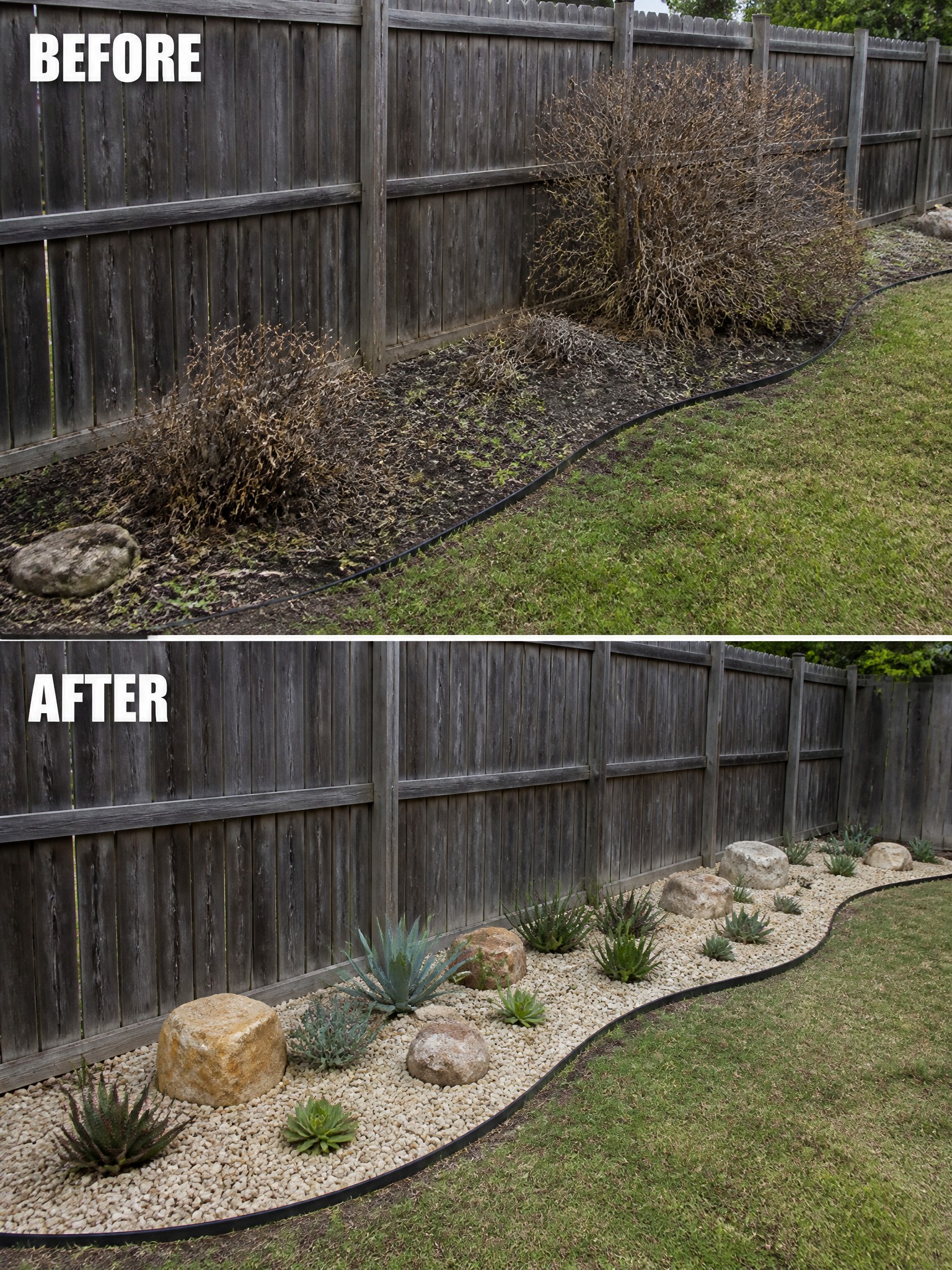
Clearing out the old growth first makes the biggest difference when tidying a fence line. The tangled shrubs and bare dirt give way to a simple gravel bed edged cleanly along the lawn, which instantly makes the whole area look planned instead of neglected.
This idea works best on narrow borders or side yards where you want low maintenance. Remove the messy plants, add solid edging, then fill with gravel and a few larger rocks before planting a handful of tough, compact varieties. It suits homes with basic fencing and limited space.
Clear Overgrowth First To Define Garden Beds
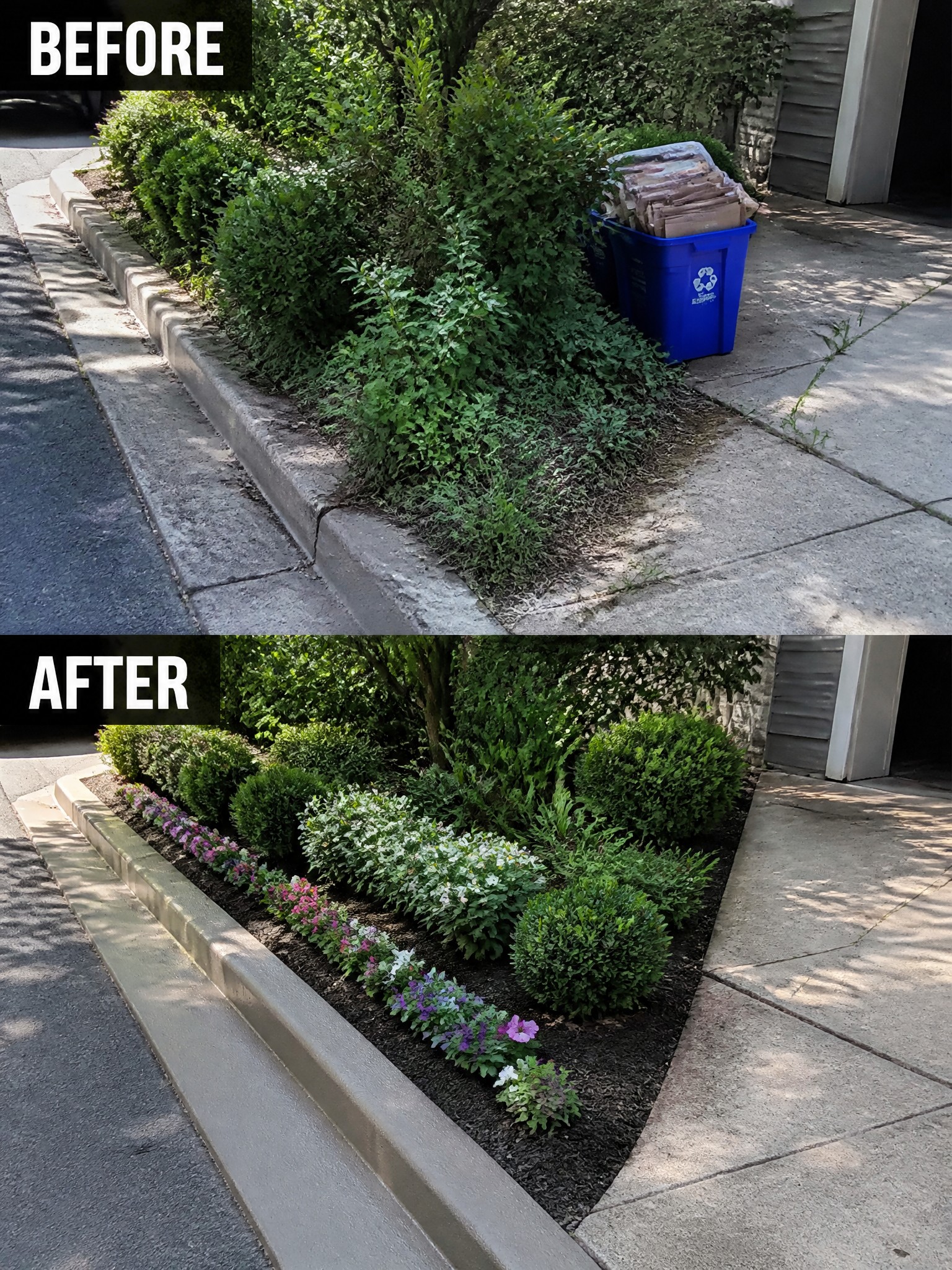
Overgrown beds often hide good structure, and the quickest way to improve them is to remove the excess first. Clearing out the mess lets you see the real shape of the space and gives room for mulch and a few simple plants to do the rest of the work.
This approach works well along driveways or walkways where beds tend to get neglected. Start by cutting back what is there, add a layer of mulch to keep weeds down and give the area a finished look, then plant in groups rather than scattering single plants. The result feels planned without needing a big budget or a full redesign.
Frequently Asked Questions
Q: How do I stop the yard from looking wild again a month later?
A: Focus on pulling the roots when you clear weeds so they do not sprout right back. Add a layer of mulch in the cleared spots to block new growth. Check the area every week and spot treat any new shoots before they spread.
Q: What if I only have a weekend to work on this?
A: Pick one section like the front path and clear that first. The ideas show how small fixes add up fast without needing the whole yard done at once.
Q: Can these ideas work if my yard gets a lot of shade?
A: Many transformations use plants that still look full after trimming in shade. Start by removing dead branches to let in some light then plant things like ferns that thrive there. The photos prove it works without full sun.
Q: How much should I budget if I want to keep costs low?
A: Stick to free mulch from local tree services and seeds from cheap packets. Reuse old pots or stones from around the house for borders. The realistic looks come from effort more than fancy supplies.
