

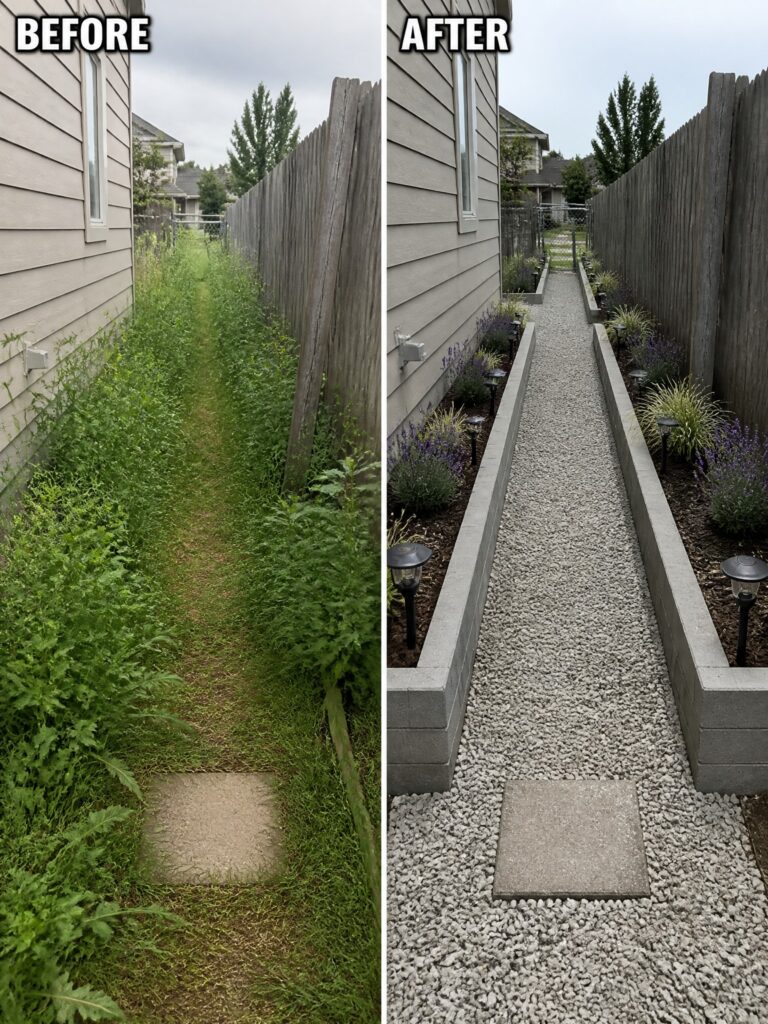
Gardens tend to lose their shape once the weeds and stray growth take over for a season.
Clearing the main lines first and setting a few firm borders usually brings back a sense of order without a big budget.
I always try basic edging and path fixes before I add any new plants because those steps show whether the layout works.
A few repeated plant shapes then help the space feel more settled instead of scattered.
Start small.
Add Defined Borders To An Overgrown Yard
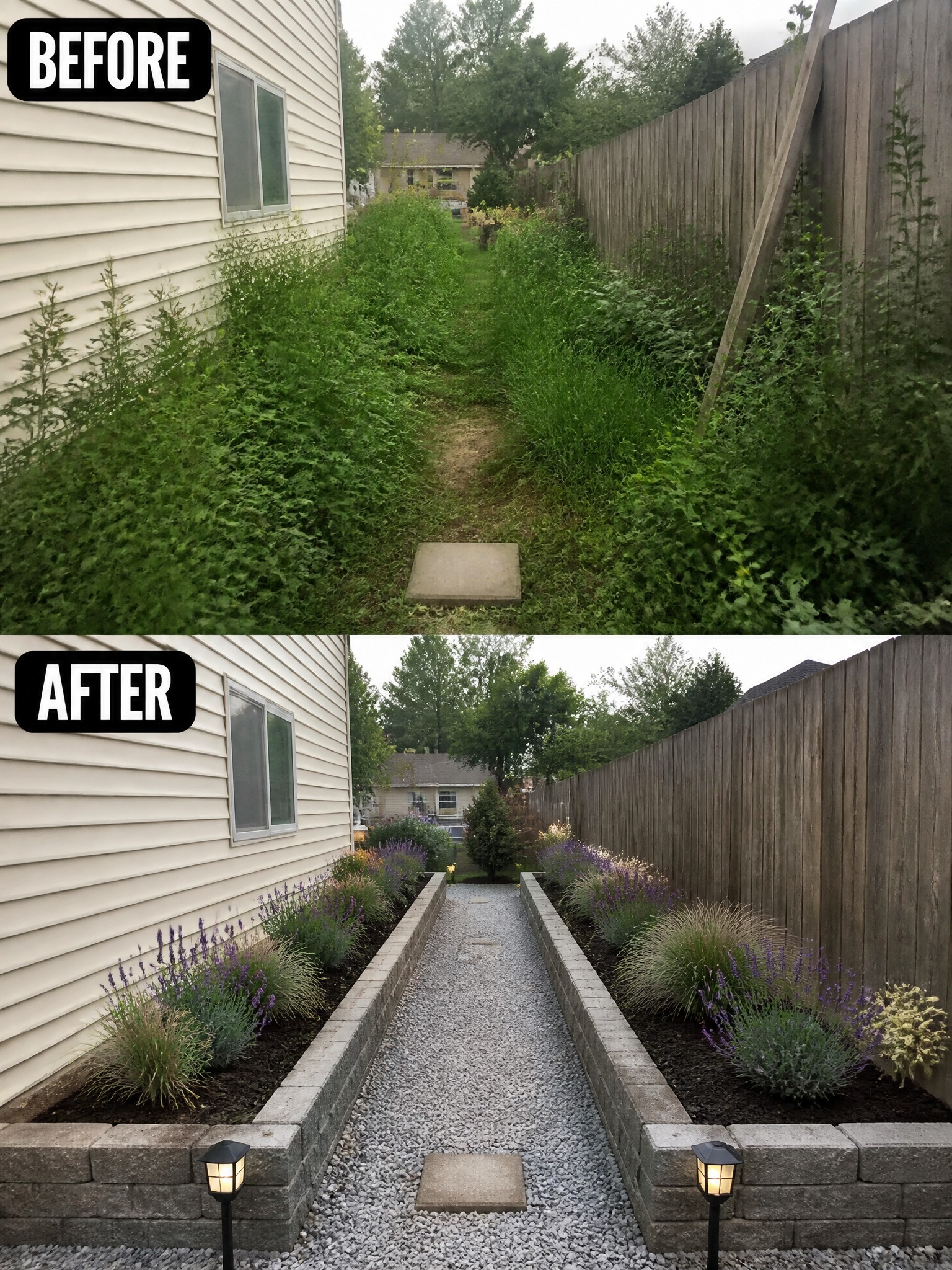
Clearing thick weeds and laying out raised stone borders with a gravel path turns a narrow, messy side yard into a space that feels intentional. The change comes from giving the area clear edges and a simple walking surface instead of letting plants sprawl everywhere.
This idea works best along the side of a house where you still need access but want something neater than dirt and weeds. Lay the borders and path first so the shape stays practical, then fill the beds with plants that stay contained and suit the light conditions.
Turn An Overgrown Backyard Into A Simple Outdoor Seating Area
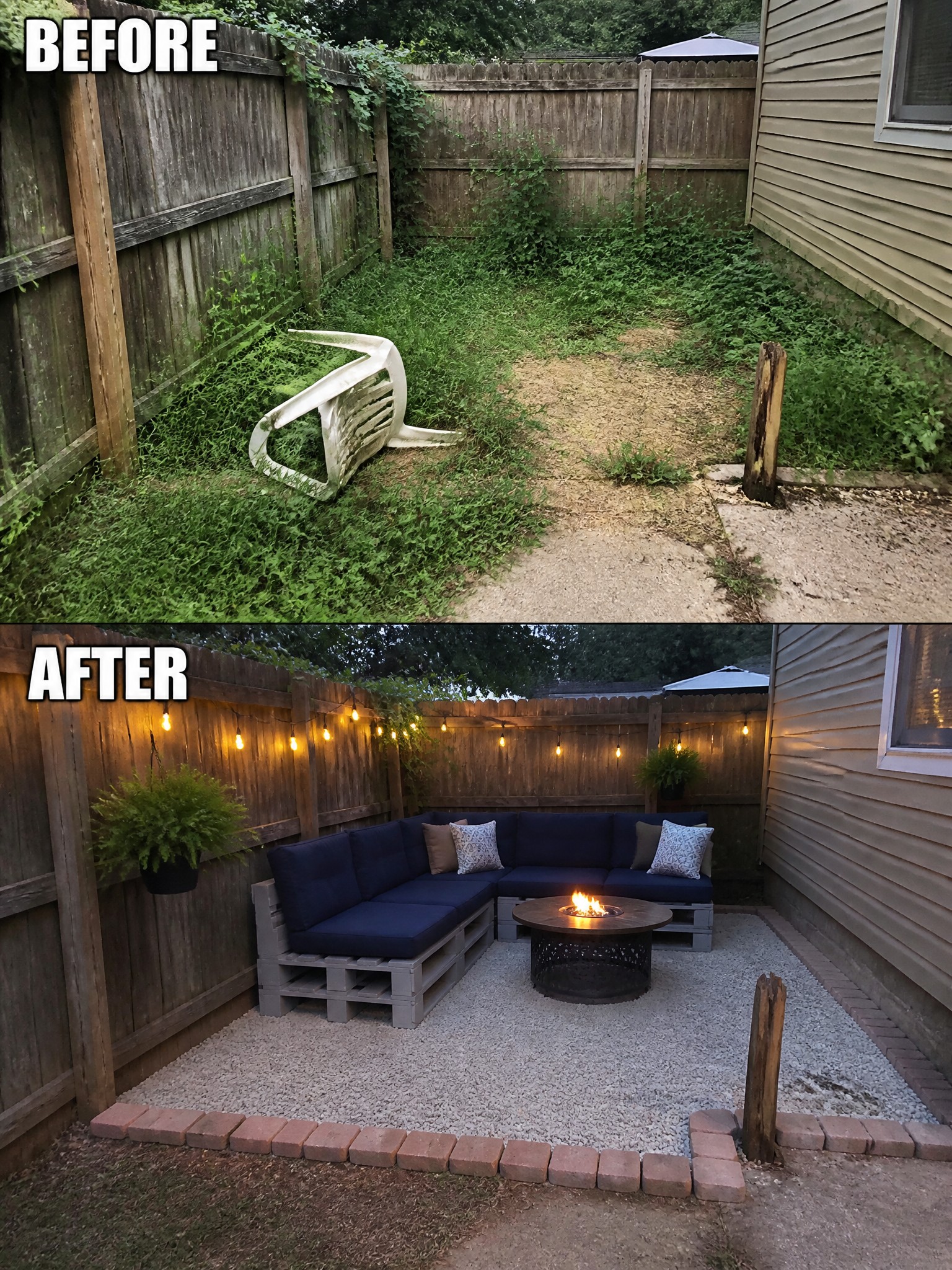
Clearing the weeds first makes the biggest difference. Once the ground is cleaned up, a layer of gravel creates a flat, usable surface that feels intentional instead of neglected. Basic pallet furniture and a fire pit then turn the space into somewhere you can actually sit.
This approach works best in small or narrow yards where you want one clear zone rather than trying to fix the whole area at once. Keep the furniture low and weatherproof, and add string lights only after the seating is in place so the focus stays on function.
Turn An Overgrown Border Into Defined Garden Beds
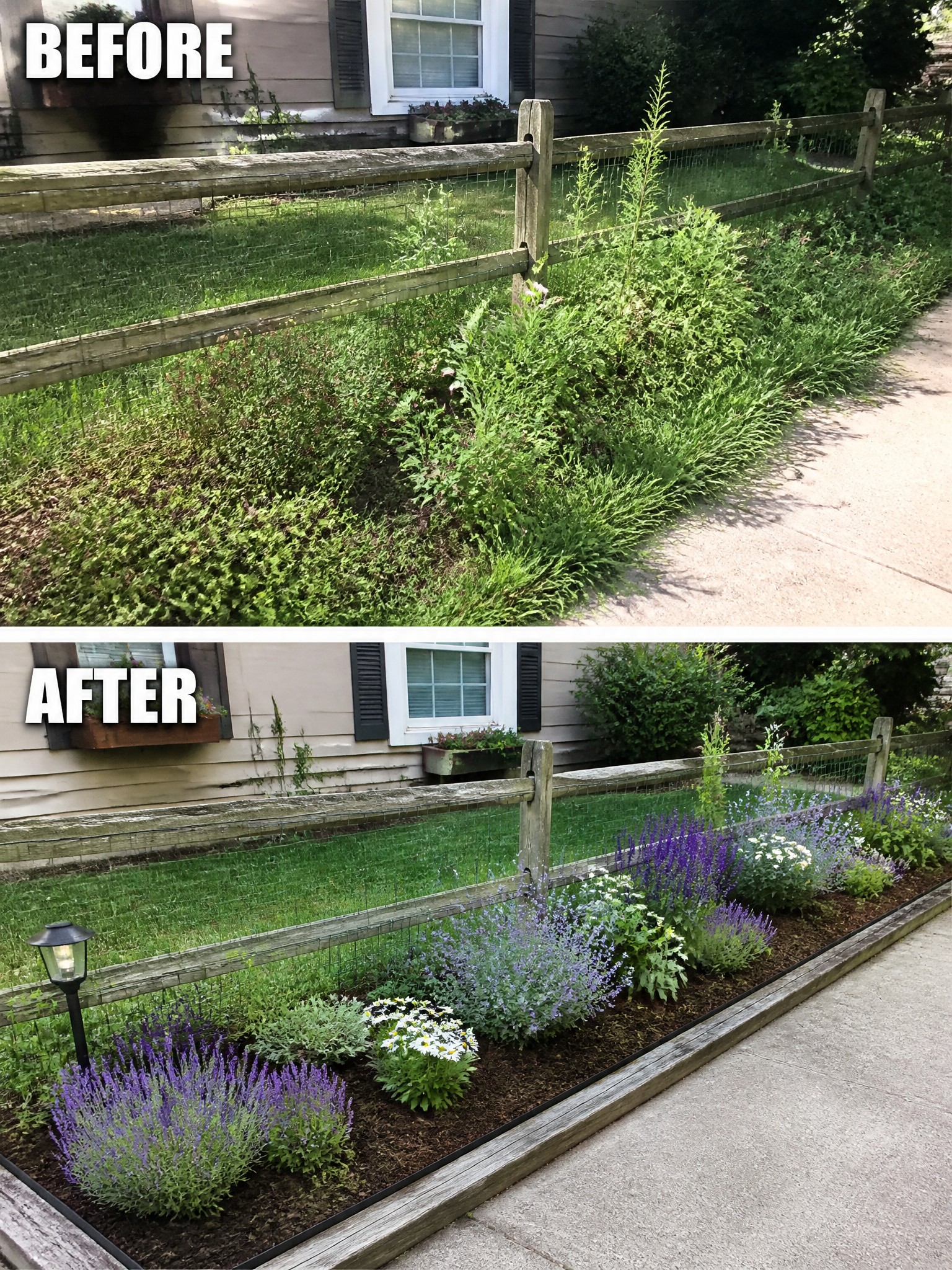
The main change was clearing the thick, messy growth along the fence first. Once that was gone, a simple wood edge and fresh mulch turned the strip into neat beds where the flowers could actually show up.
This idea works best in long, narrow areas next to paths or fences. Clean the space thoroughly before you plant, then add edging to hold the shape. Mulch keeps weeds down and gives the beds a finished look without much extra cost.
Add Structure To An Overgrown Yard

One of the quickest ways to improve an overgrown front yard is to give it clear lines before adding anything else. The before photo shows a worn dirt path cutting across dry grass with a messy hedge running along the side. In the after photo the path is replaced with stepping stones set into fresh lawn and the hedge is trimmed into a straight row with rounded shrubs planted in front.
This approach works well on small lots where the space needs to feel intentional rather than just open. Start by cutting back the hedge and laying a simple path that leads to the gate or door. Once those two elements are in place the lawn can fill in around them and the whole area starts to look planned without needing a full redesign.
Clear Overgrowth Before Adding Planters
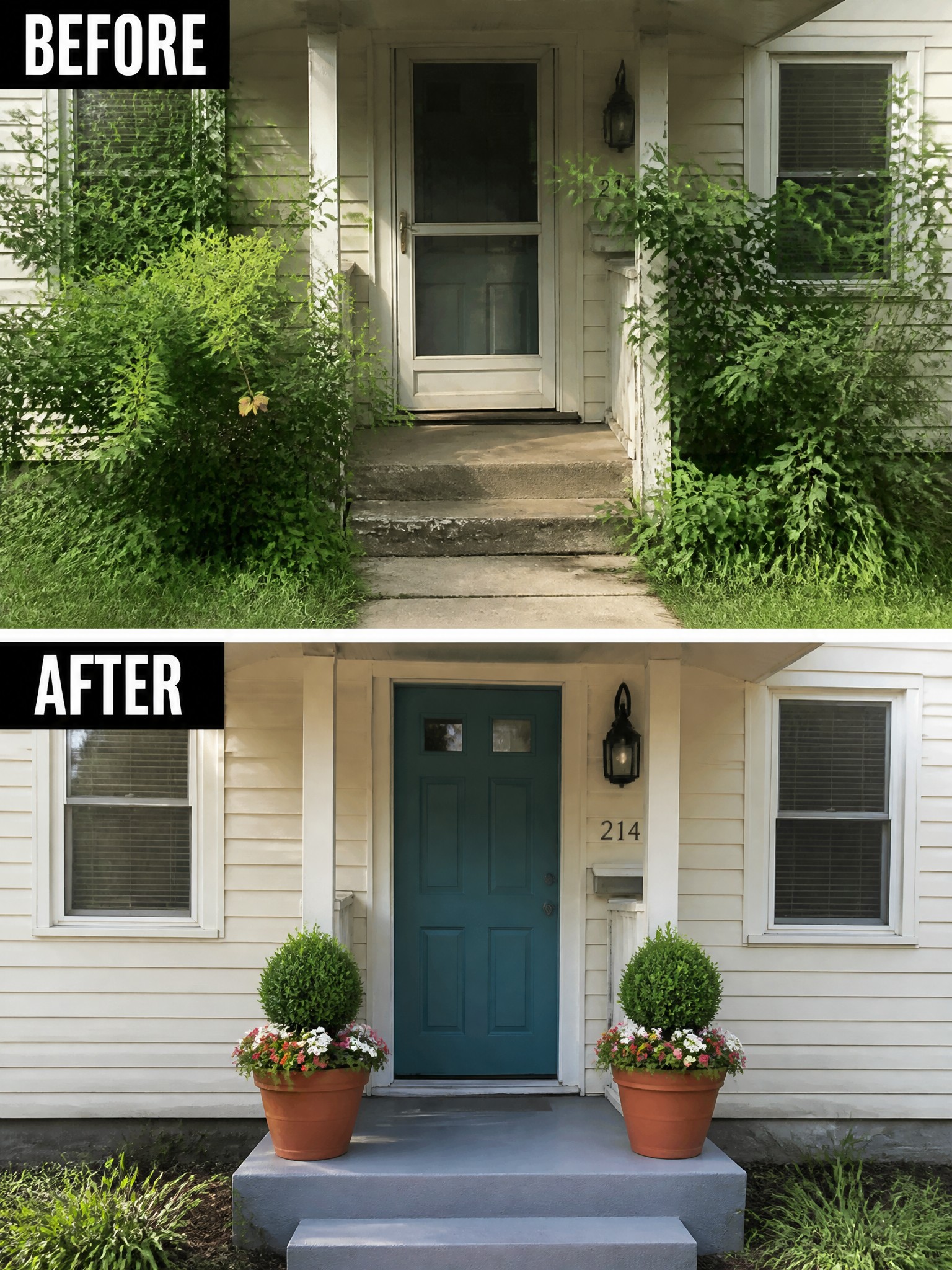
Overgrown shrubs can hide the front door and make even a simple house look neglected. Clearing them away first opens up the entry, lets the door color stand out, and gives the steps room to feel like part of the approach instead of an afterthought.
This works well on small front yards where space is tight. Start with the cleanup, then add two matching pots with seasonal flowers on either side of the door. Keep the planting simple so the entry stays easy to maintain and does not feel crowded.
Give An Overgrown Border Some Clear Structure
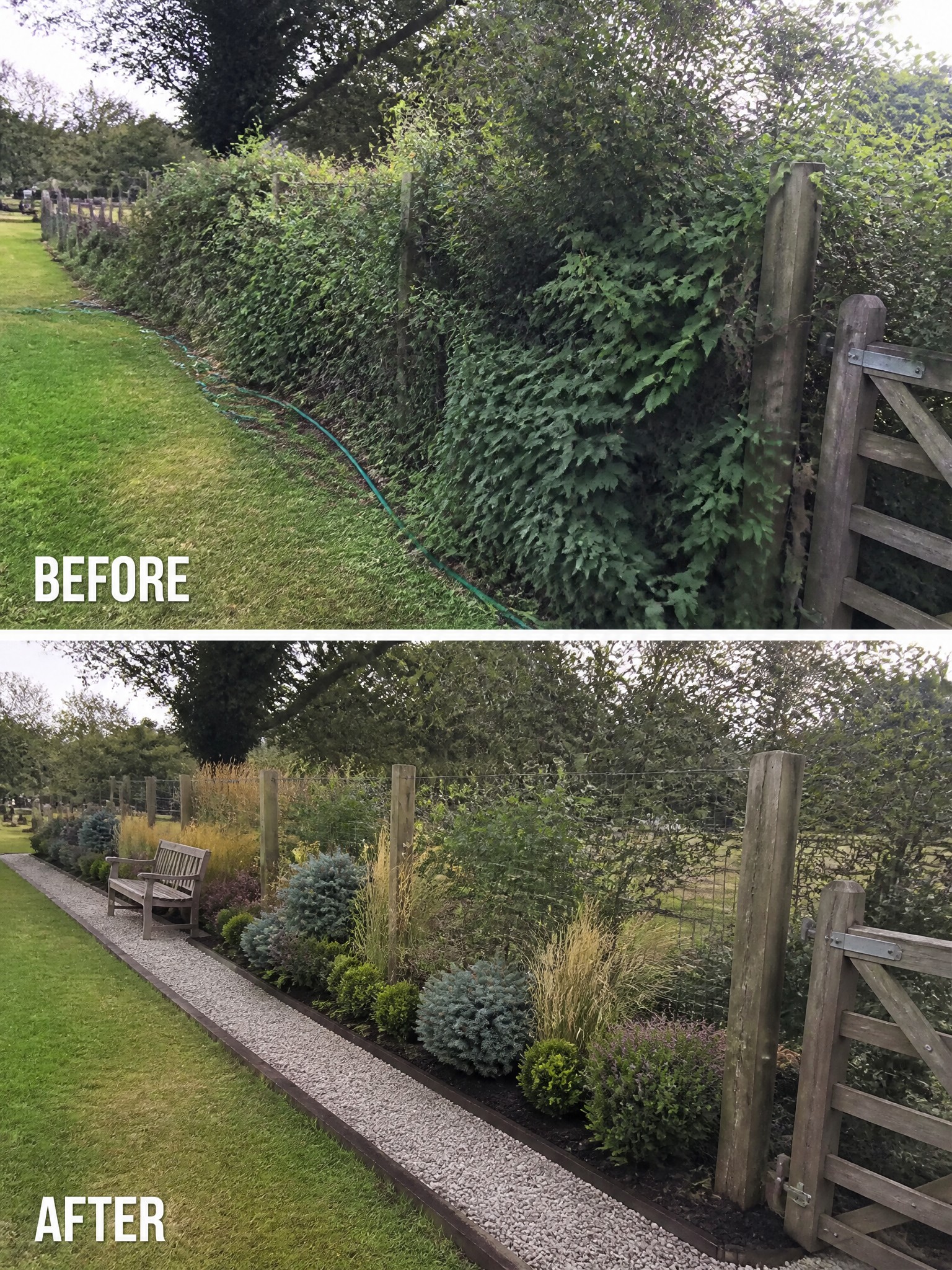
Clearing back the heavy vines first made the biggest difference here. Once the fence line was visible again, simple garden beds with gravel edging gave the whole strip a much more intentional shape and kept the grass from creeping in.
This approach works well along fences or property lines where growth has gotten away from you. Start with a solid cleanup, then add edging and a mix of low shrubs and grasses that stay manageable. It keeps the space looking planned without needing a full redesign.
Define Garden Beds To Organize An Overgrown Yard

One simple way to fix an overgrown garden corner is to add clear edges and fresh mulch so the space looks intentional instead of neglected. Here the wild plants were thinned out and the area was given low stone borders that create separate planting zones instead of one messy patch.
This idea works well in small side yards or back corners where growth has taken over. Start with a good cleanup, then add simple edging and mulch before planting a few structured plants in the middle. It keeps the garden looking cared for without requiring a big budget or major redesign.
Turn An Overgrown Slope Into Garden Beds
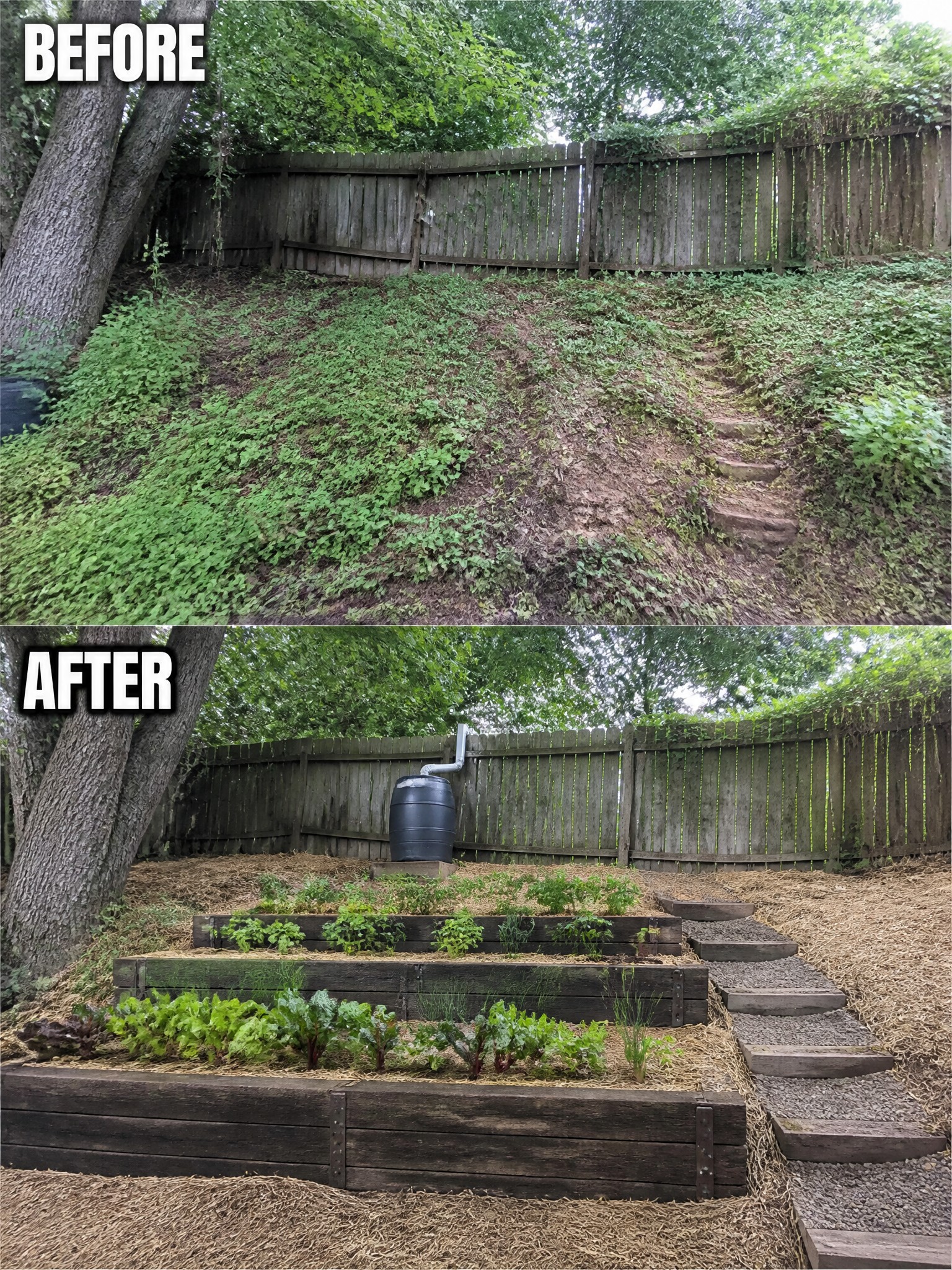
Clearing heavy overgrowth first makes the biggest difference on a sloped yard. The before photo shows a weedy hillside with no clear shape, while the after shows simple raised beds that follow the slope, mulch to hold everything down, and gravel steps that make the area easy to walk.
This idea works well on any backyard with a noticeable grade. Start with cleanup and basic timber or block beds before adding plants. Keep the beds narrow enough to reach across and leave space for paths so the garden stays practical instead of crowded.
Add Gravel Borders To Define A Garden Path
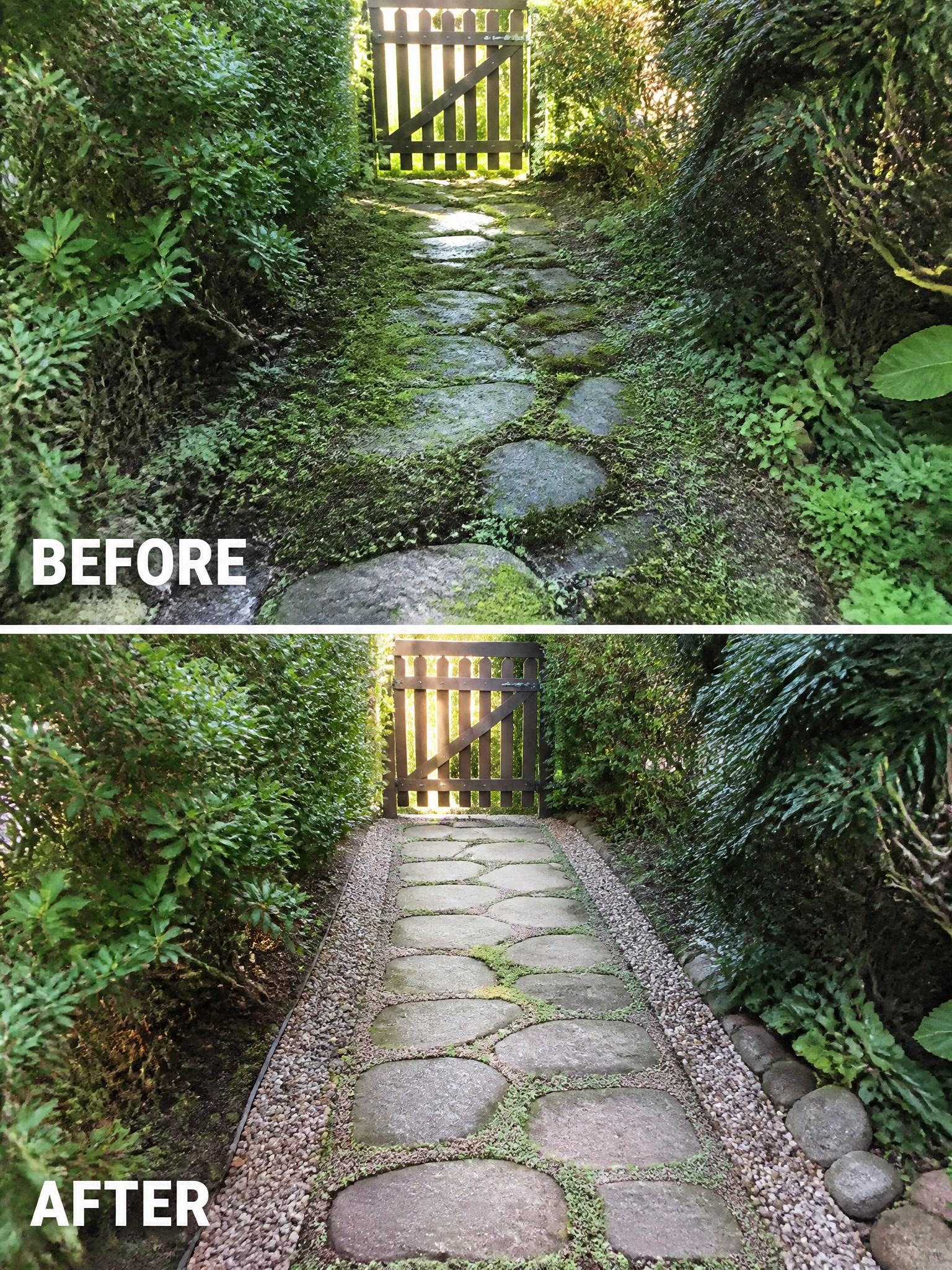
An overgrown path often looks messy because the edges disappear into the surrounding plants and moss. Adding a simple gravel border on both sides creates a clear line that makes the path feel intentional without removing the natural character of the garden.
This approach works well on narrow side paths or routes between dense planting. Start by clearing loose growth and weeds along the edges, then lay down a weed barrier and gravel to hold the shape. The result stays low maintenance and keeps the path usable even after rain.
Add Structure To An Overgrown Backyard
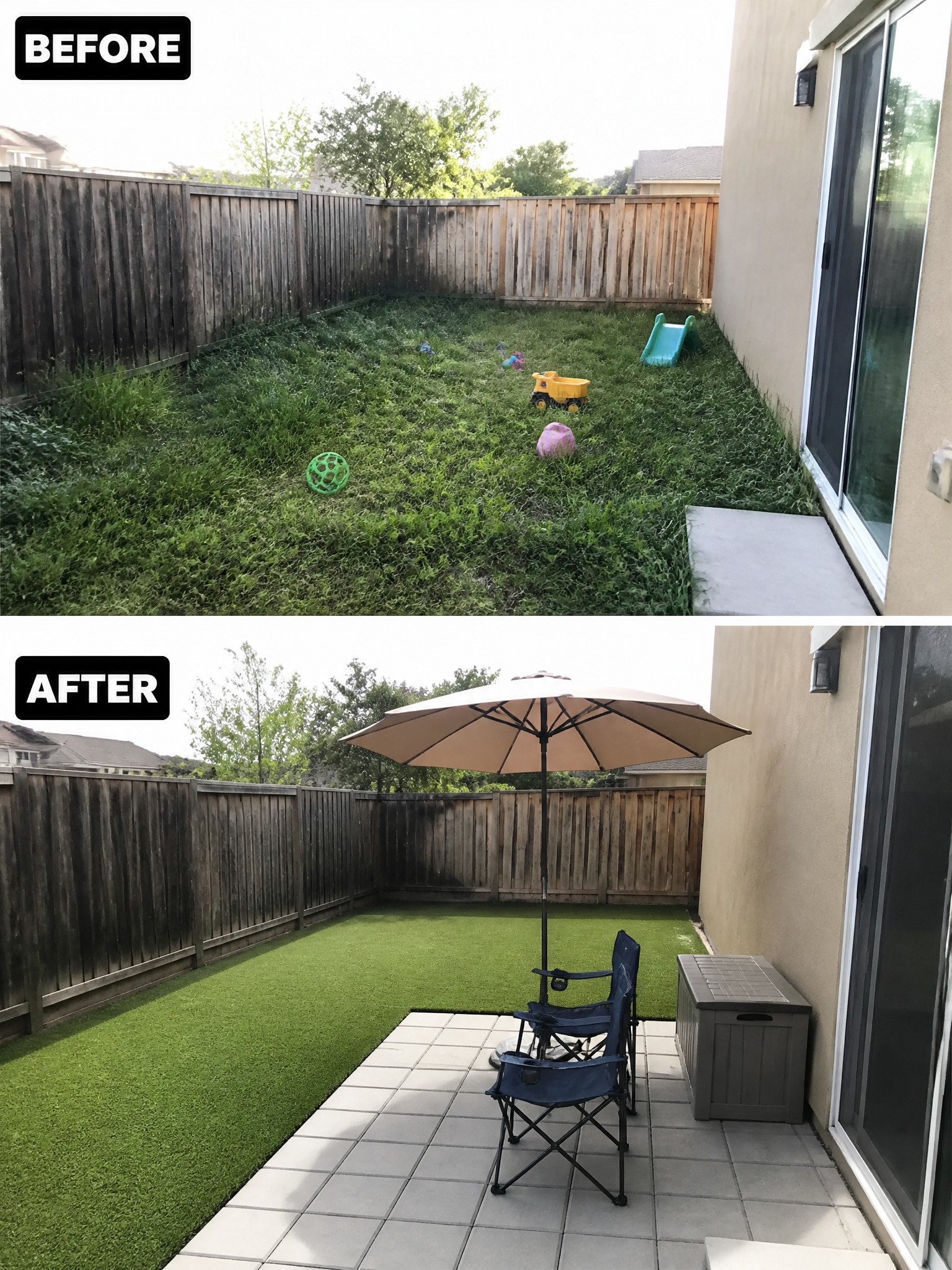
An overgrown yard often feels smaller and more chaotic than it really is. In this case the fix started with clearing the uneven grass and replacing it with a simple, even lawn surface. That single change opened up the space and made room for a small tiled patio with a couple of chairs and an umbrella.
The same approach works well in any compact backyard where the grass has gotten away from you. Focus first on getting the lawn edge straight and the surface usable, then add one shaded seating spot rather than scattering pieces around. Keep the furniture scale modest so the open lawn still feels like the main feature.
Add Edging To Shape Up Overgrown Beds

Clearing the thick weeds first made the biggest difference here. Once the area around the mailbox and steps was cleaned out, a simple wood fence border and fresh mulch gave the space clear lines and a finished look without needing a lot of new plants.
This approach works well along a front walk or near the street where you want the beds to look intentional. Start with cleanup and edging before adding flowers or lights so the shape stays easy to maintain over time.
Add Trellises To Organize Climbing Plants
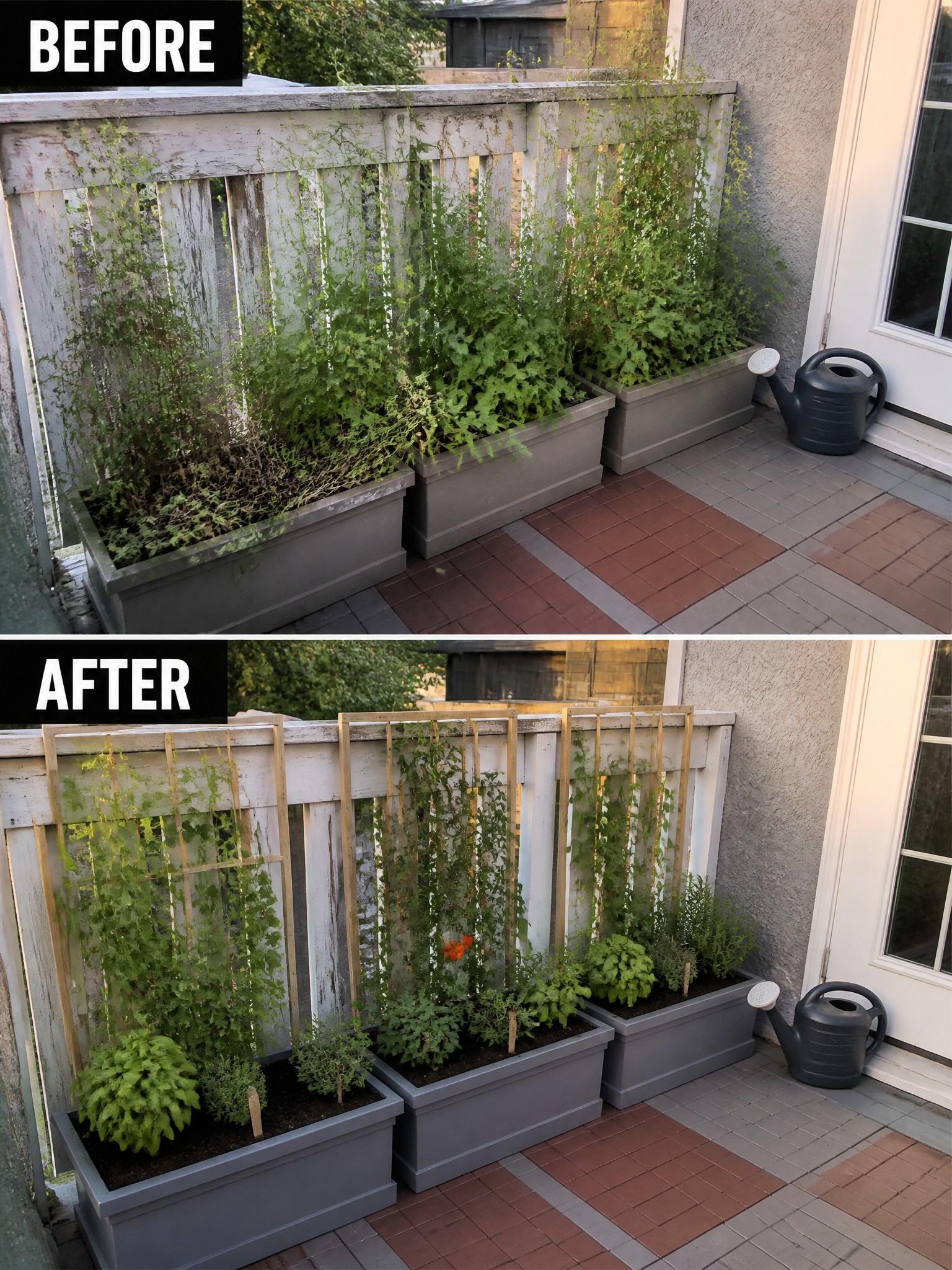
Overgrown vines can quickly take over planters on a balcony or patio and start to look messy. Adding simple wooden trellises behind the planters gives the plants something to climb, which keeps the growth contained and makes the whole area feel more intentional.
This approach works well on small outdoor spaces where you want vertical interest without crowding the floor. Use lightweight wood frames that match the railing style, secure them firmly, and guide the main stems as they grow. It is an easy step that turns a wild look into something more structured while still keeping the plants healthy.
Replace Overgrown Shrubs With Gravel And Low Plants
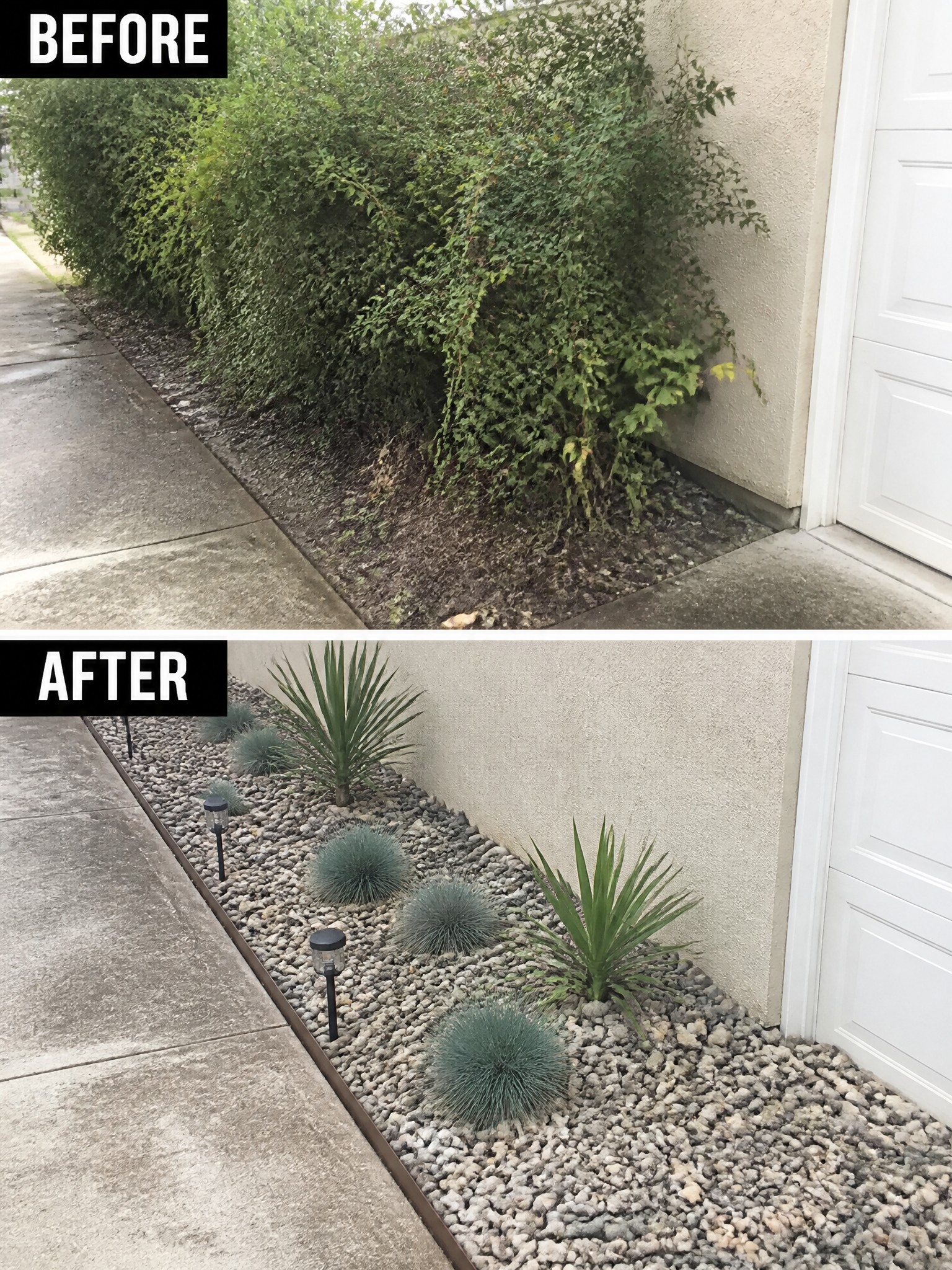
Clearing out a thick, messy border first makes the biggest difference. In this case the old shrub was removed completely, the soil was covered with gravel, and a few small plants were spaced out along the narrow strip. The result looks planned instead of neglected, and the gravel keeps the area from turning into a weed patch again.
This approach works well along house walls or sidewalks where space is tight. Start by removing whatever is overgrown, add a simple edge if needed, then use gravel as the main ground cover. Low plants like yuccas or ornamental grasses fill the space without blocking windows or walkways.
Add Structure Around A Large Tree
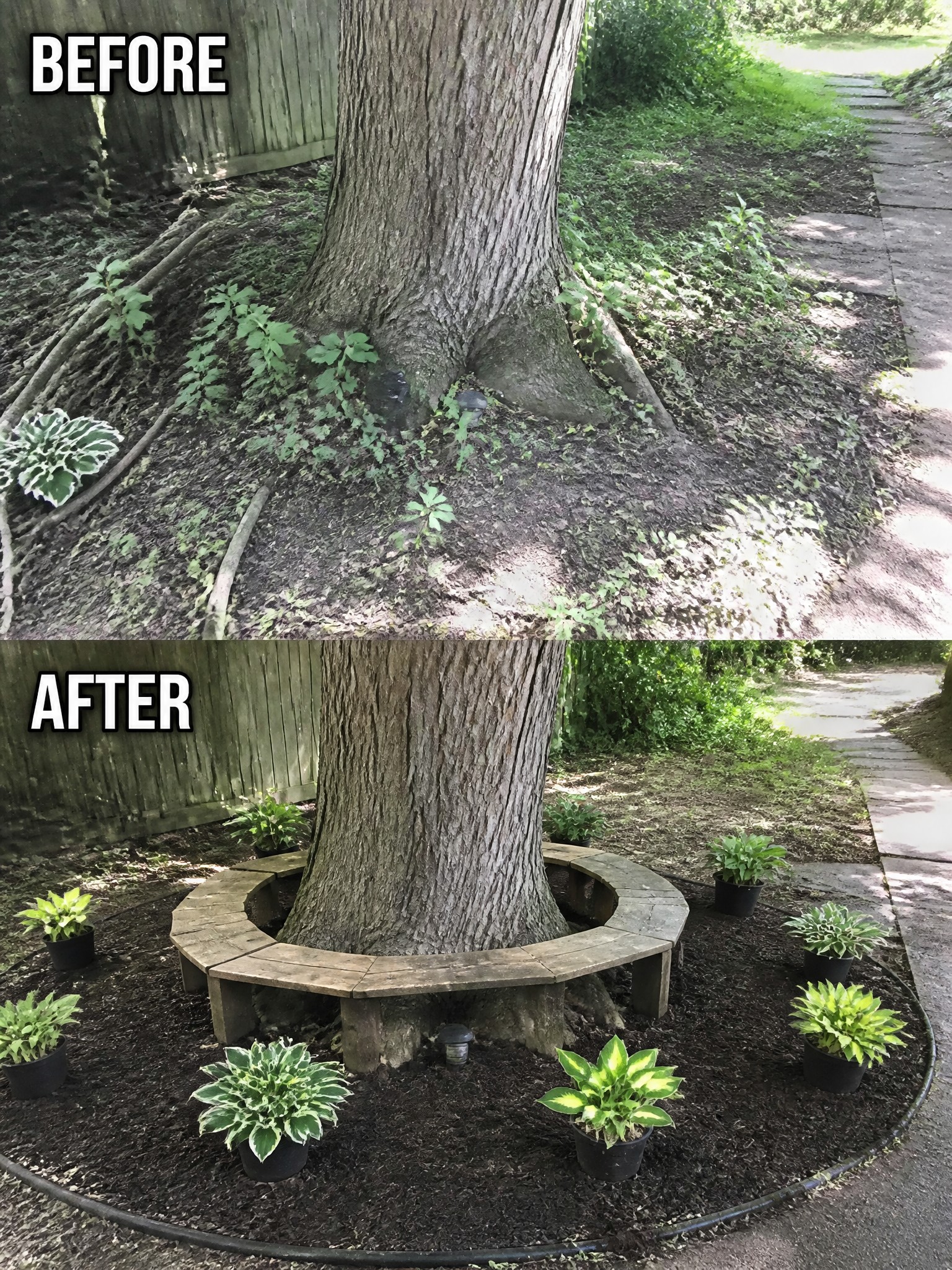
The main change here is installing a simple circular bench right at the base of the tree, then filling the ring with mulch and potted plants. That single addition turns a messy, root-filled patch into something that looks intentional instead of neglected.
This idea works well in any yard with a mature tree that leaves awkward space around the trunk. Start with a thorough cleanup and a layer of mulch, then add the bench and a few large pots. The pots keep planting flexible and let you move things if roots spread later.
Add Structure To An Overgrown Raised Bed
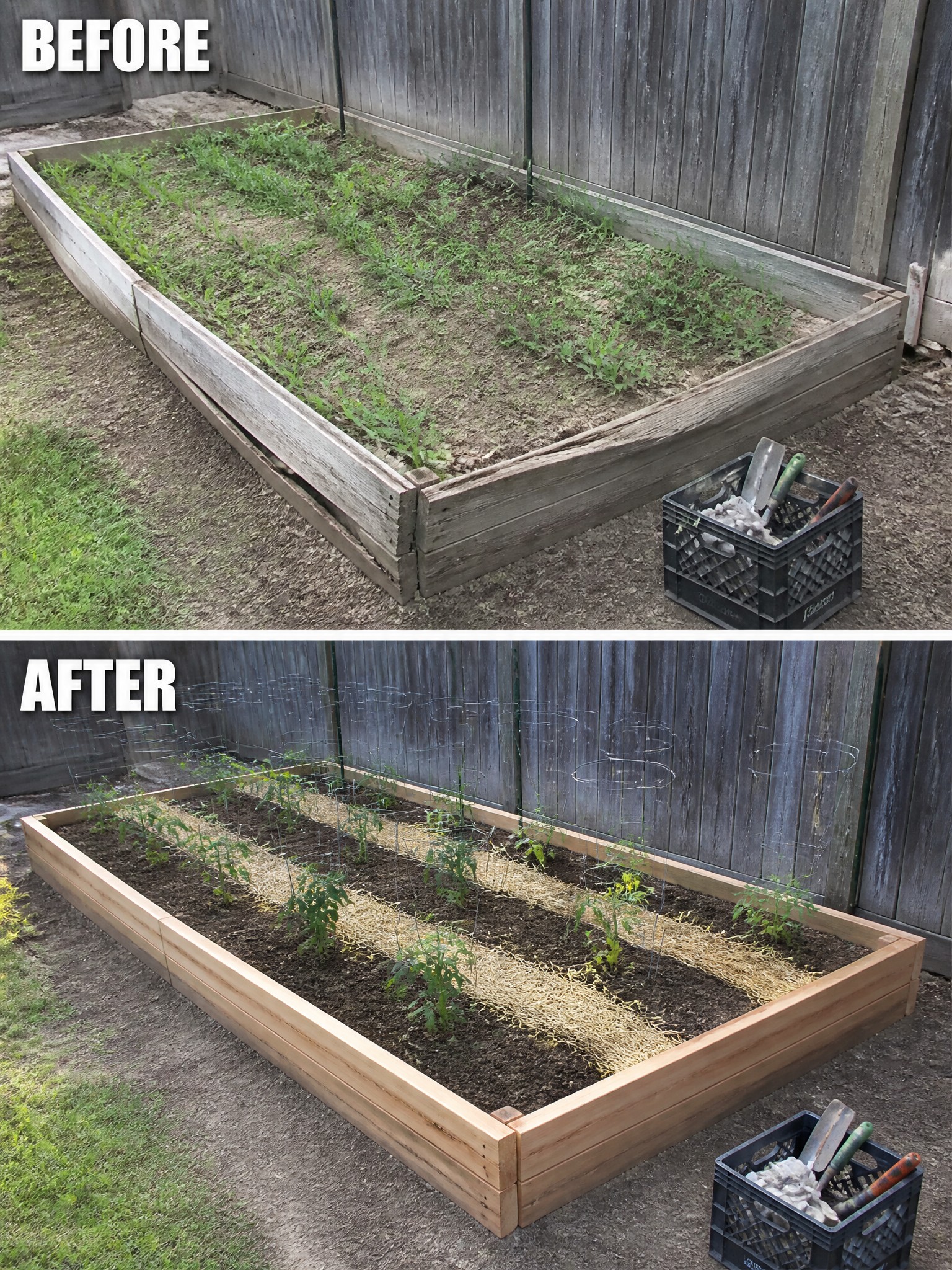
An overgrown raised bed tends to look messy because plants sprawl without clear lines or support. Adding simple wire cages and laying mulch between the rows gave each plant its own space and turned the bed into something that feels intentional rather than neglected. The wood also received a lighter finish, which made the whole structure look refreshed.
This idea works best in small yards where you want a productive garden without it feeling chaotic. Clear the weeds first, then set your rows and supports before adding mulch. It suits anyone growing vegetables who needs the bed to stay tidy and easy to maintain through the season.
Add Defined Edges To An Overgrown Pond Area
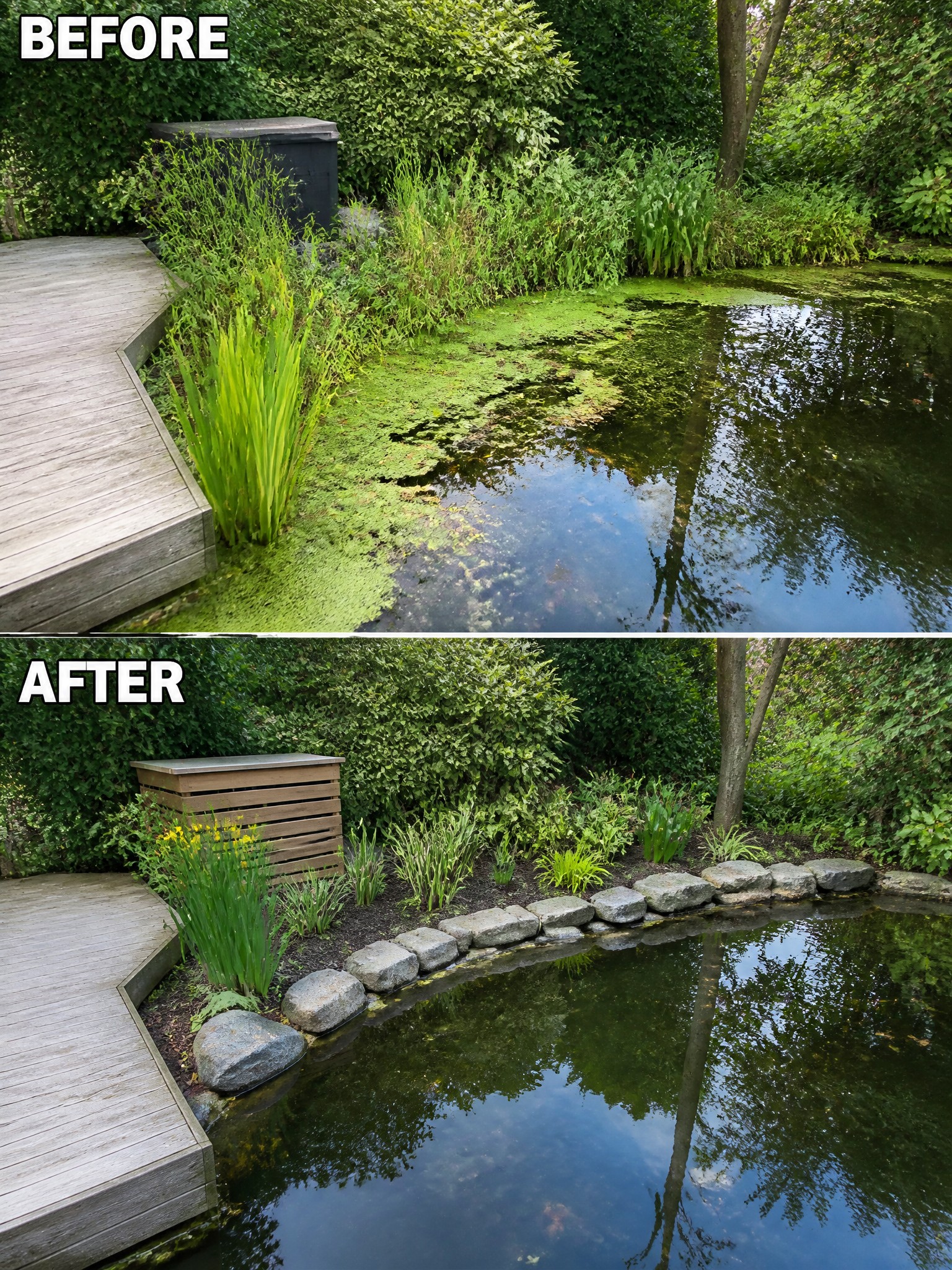
An overgrown pond often looks messy because there is no clear line between the water and the surrounding plants. In this case, the before photo shows heavy algae and plants spilling right into the water. The after photo shows how a simple row of stones creates a firm border that keeps the planting back and makes the whole area look intentional.
This approach works well on small backyard ponds or natural-looking water features where the edge has blurred over time. Start by clearing excess growth and algae first, then lay a low stone or brick edge that follows the shape of the water. Keep the planting simple behind the border so the edge stays visible and the space feels maintained rather than wild.
Add Structure To An Overgrown Slope
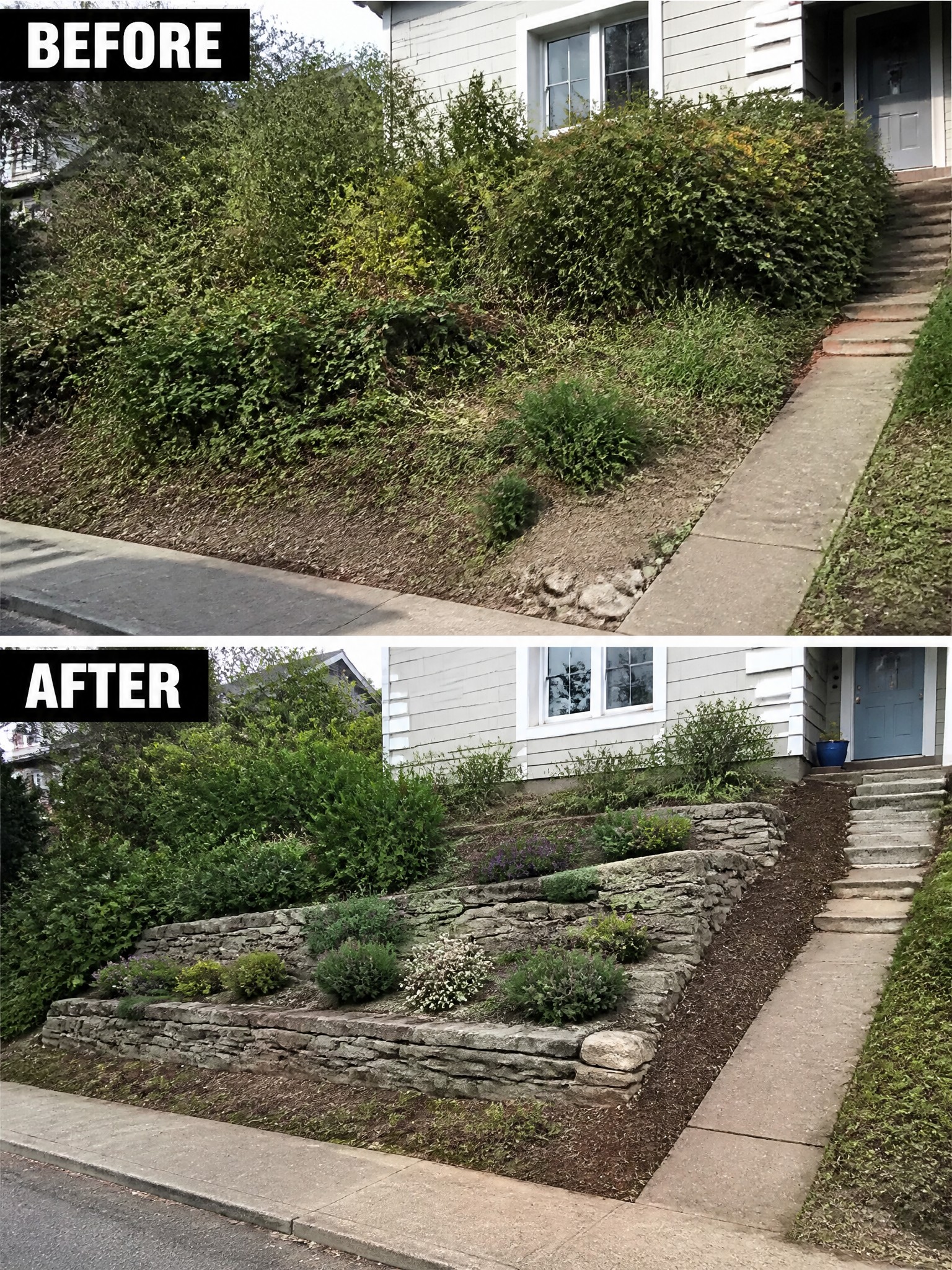
An overgrown slope often looks messy because there is no clear edge or level ground to work with. Adding low stone retaining walls turns the hill into a series of flat beds that hold soil and keep plants from sliding down. The result feels planned instead of neglected.
This approach works well on any yard with a noticeable drop. Start by clearing the worst of the brush, then build the walls in short sections so the slope stays manageable. Mulch the new beds right away to cut down on weeds while the plants fill in.
Group Matching Pots To Tidy A Small Porch
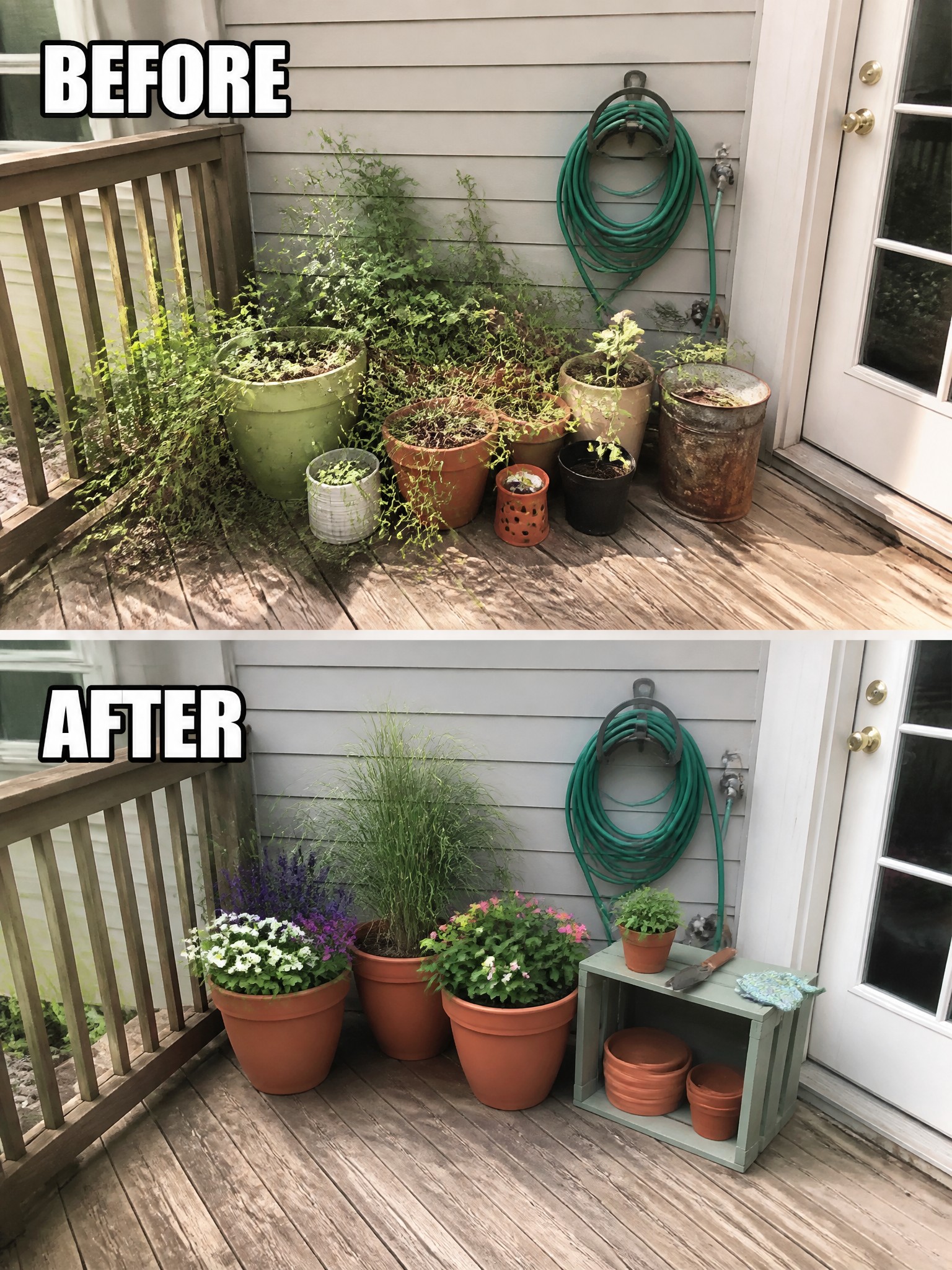
The before photo shows a porch covered in mismatched pots of all sizes, with plants spilling out in every direction. The after version keeps the same space but uses fewer, larger terracotta pots in a straight row, plus a simple crate to hold extras. This change makes the area look cared for instead of neglected.
Start by pulling out the weakest plants and keeping only the strongest ones. Then place three or four matching pots along the edge so the porch stays open for walking. The crate at the end adds storage without crowding the floor, and it works well on any small deck or entry where you want plants but do not want them to take over.
Add Structure To An Overgrown Front Entry
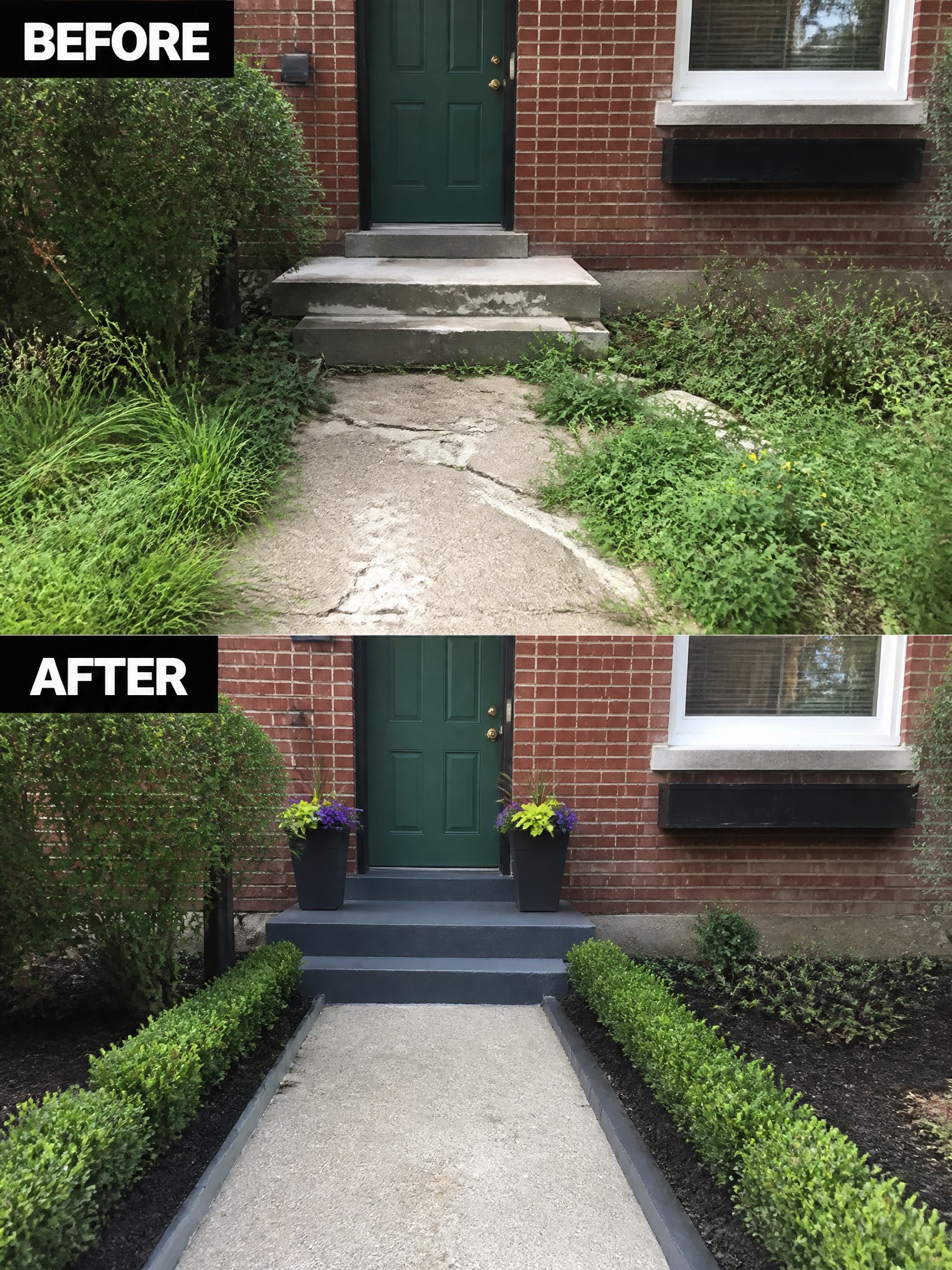
Clearing the overgrown plants and adding defined borders made the whole front path feel intentional. The messy ground cover was replaced with clean edging and mulch that keeps the beds in place and gives the walkway a clear shape.
This idea works best on small front yards where the path leads straight to the door. Cut back whatever crowds the edges first, then add a simple border and a few repeated plants so the space looks planned without needing a full redesign.
Frequently Asked Questions
Q: How should I start clearing the overgrowth without spending much?
A: Begin by cutting back the tallest weeds with basic tools like shears or a mower. Then layer cardboard and mulch over the cleared spots to smother what’s left. This keeps costs low while you plan the next steps.
Q: What can I use to mark out paths that feel planned?
A: Scatter some free wood chips from local tree services along the routes you walk most. Edge them with rocks you find on site or cheap pavers from a salvage yard. Walk the paths a few times to adjust before you commit.
Q: Do I need to replace all the old plants?
A: Keep the ones that still look healthy and just trim them into shape. They add instant structure without new purchases. Remove only the ones that block your new layout.
Q: How do I hide the messy edges around my garden beds?
A: Pile up leaves or grass clippings along the borders. They break down over time and blend everything together naturally.
