

I have noticed that roof patios tend to look promising in plans but then feel awkward once a table and chairs take up the center space.
Wind and sun angles often decide whether a dining setup stays comfortable through an entire meal or forces everyone inside after half an hour.
Usability comes first.
I usually walk the space myself and mark where feet will move before I decide on any new seating or planters.
A couple of the arrangements worth trying are the ones that keep the table near a sheltered edge so meals do not get interrupted by sudden gusts.
Use A Pergola Over The Dining Table
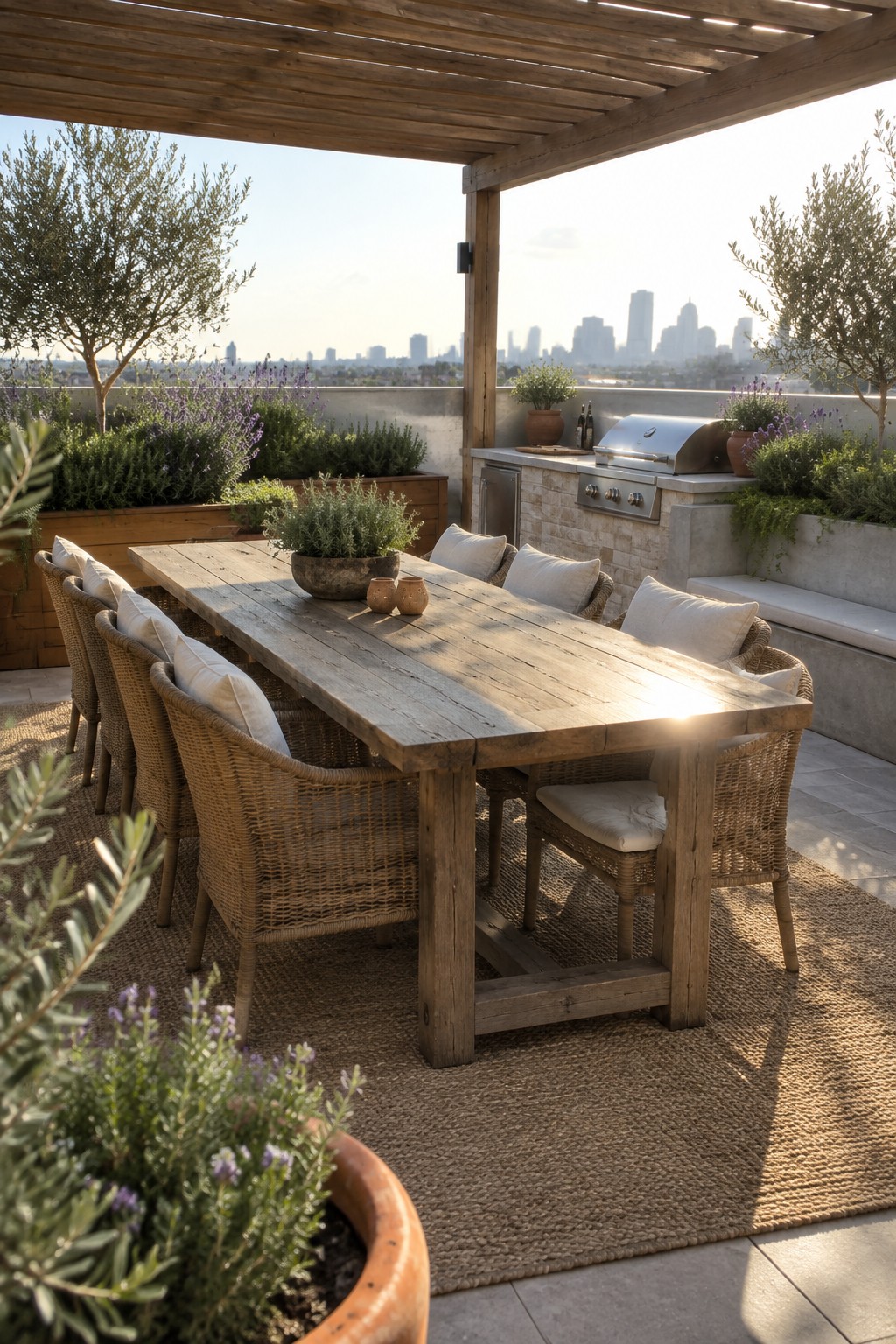
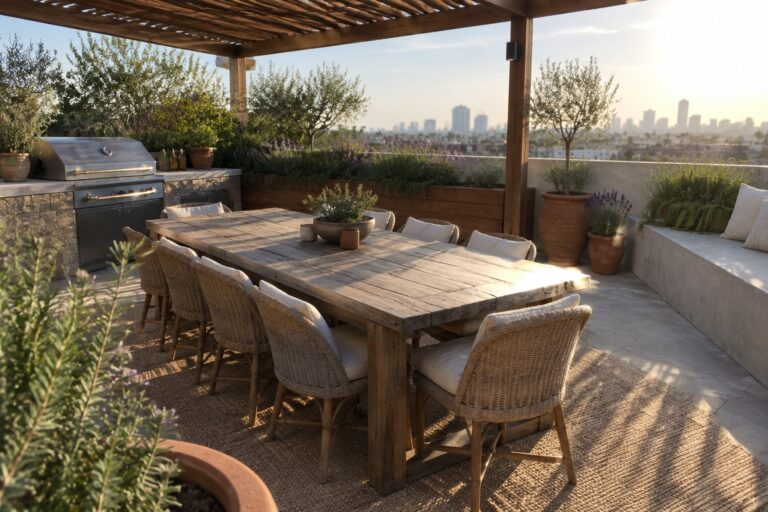
A pergola helps turn an open roof space into a clear dining spot. It adds just enough overhead structure to make the table feel anchored without blocking views or air flow.
This setup suits roof gardens best when the pergola lines up with an outdoor kitchen so meals stay in one zone. Keep the beams simple and let a few plants grow along the sides for extra shade later on.
Place a Fire Pit Next to the Outdoor Dining Table
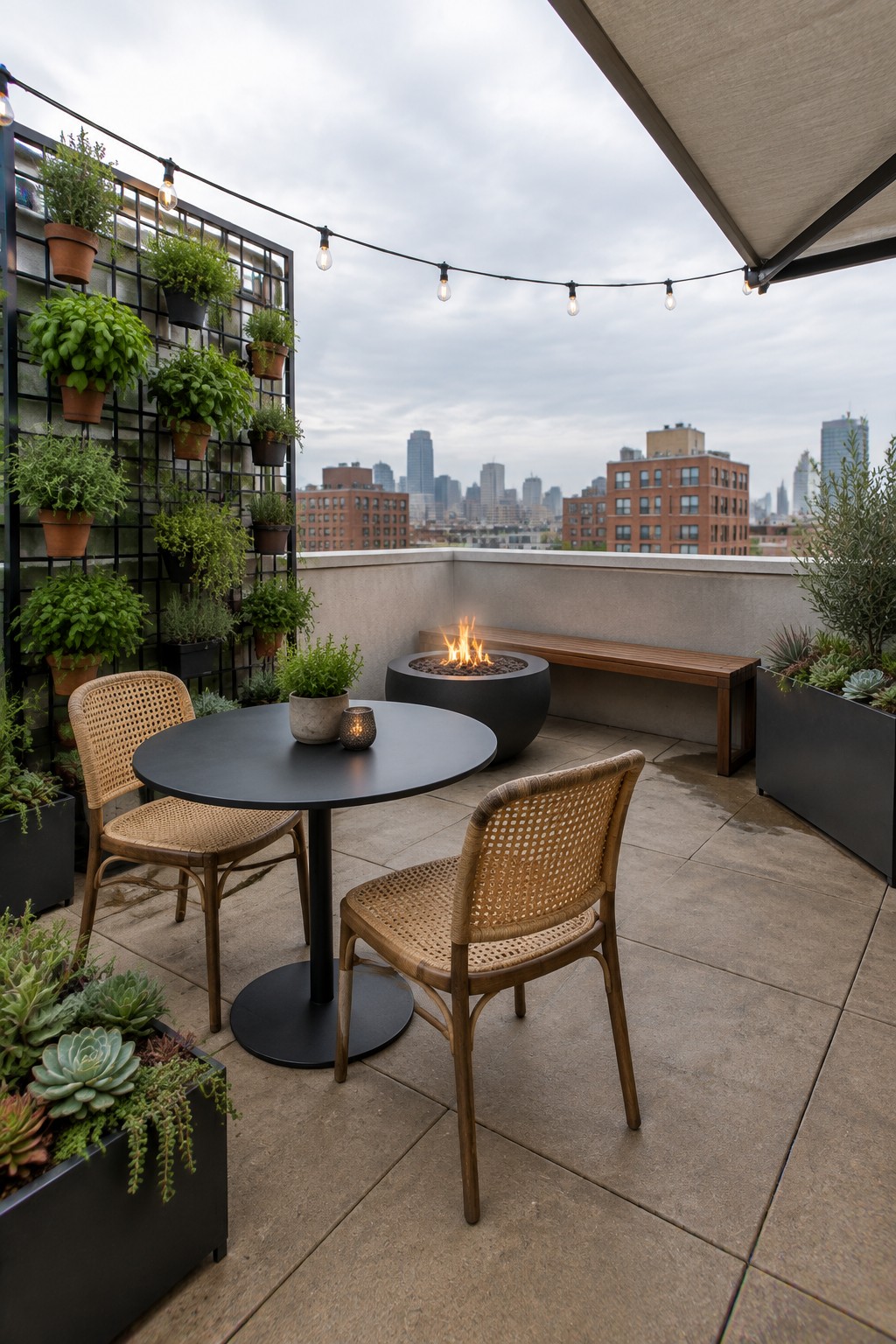
A fire pit placed right beside the dining table turns a simple roof patio into a space that works well into the evening. The warmth keeps people comfortable even when the temperature drops, and it creates one clear spot for both eating and lingering afterward.
This setup suits rooftops and small terraces where every zone needs to serve more than one purpose. Leave enough clearance around the table so chairs can move freely, and keep the fire pit at a height that does not block the view from the seats.
Grow Vines Over a Pergola for Outdoor Shade
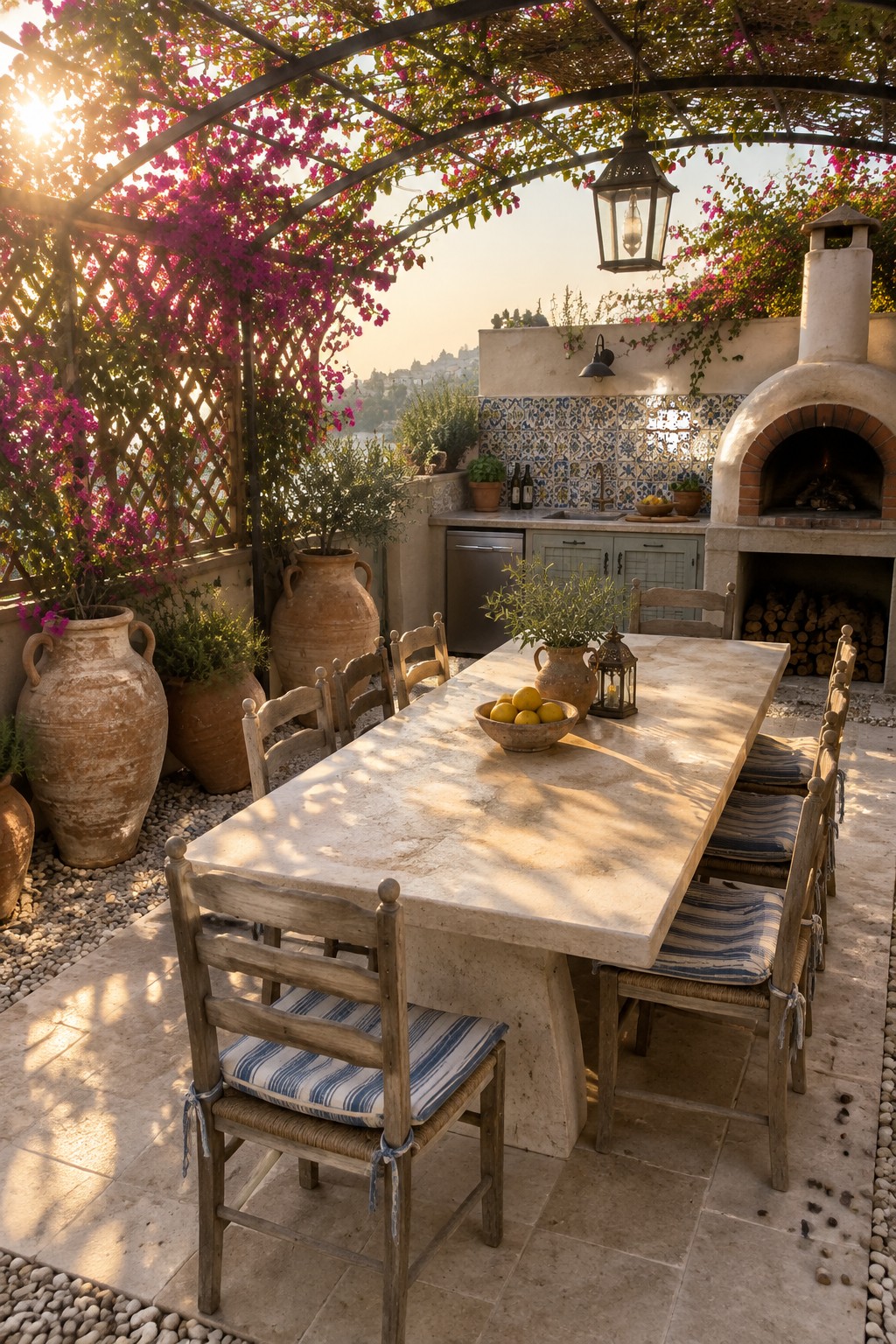
A pergola covered in climbing vines gives an outdoor dining area real shade without blocking the view or making the space feel closed in. The plants soften the structure and let light filter through in a way that feels comfortable during the day. It also ties the table area to the surrounding garden instead of leaving it exposed.
This setup works best in warm climates where you want protection from the sun but still like being outside. Use a sturdy table that can handle the weather and place it where the vines will eventually fill in. Keep the rest of the patio simple so the shade structure stays the main feature.
Long Table for Group Outdoor Dining
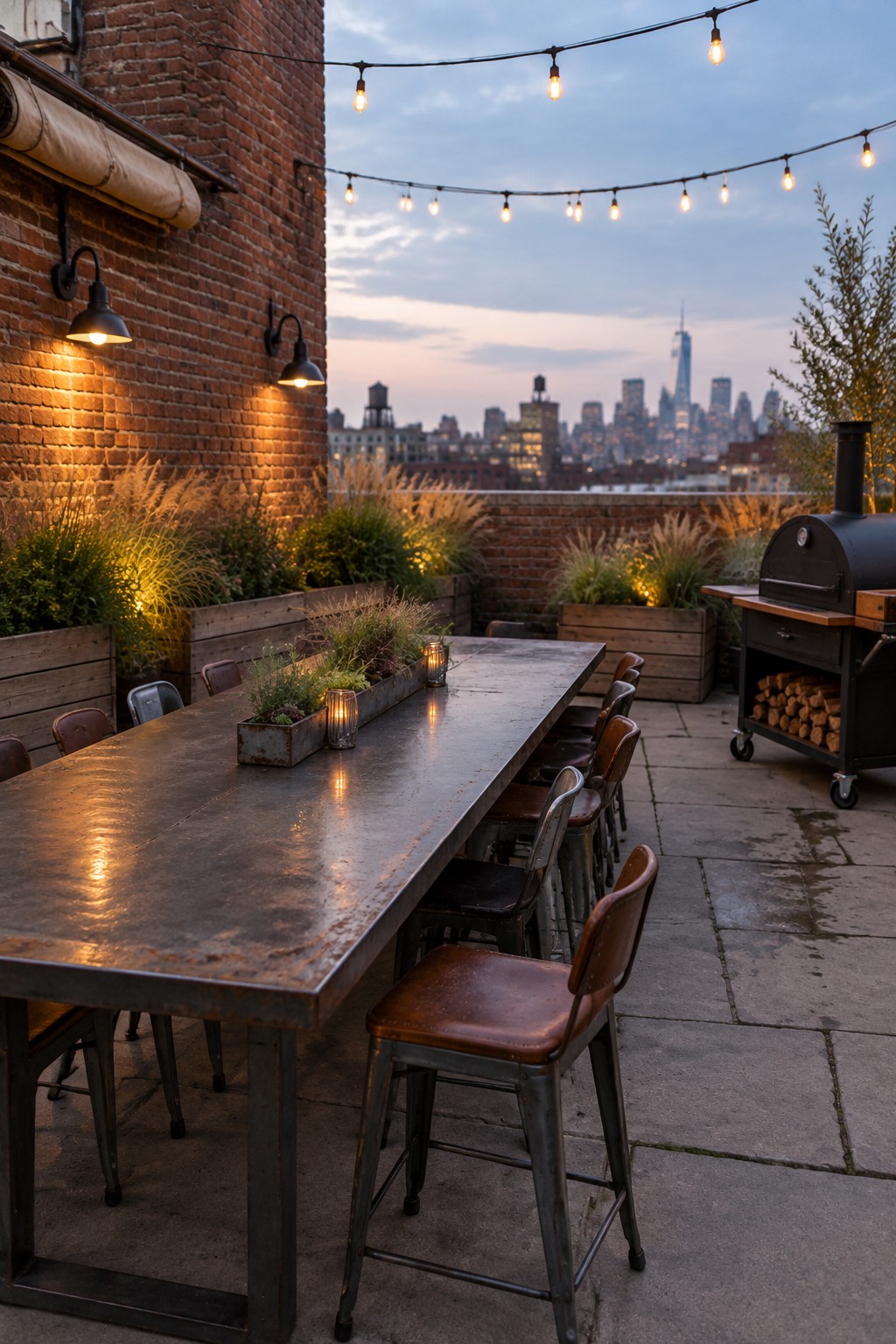
A long table turns a roof patio into a real spot for meals with friends or family. It gives everyone room to sit together without needing multiple smaller setups, and the simple metal style holds up well outside while keeping the look clean.
This works best on larger rooftops where you can leave space to walk around the ends. Pair it with basic overhead lights so the area stays usable after dark, and keep nearby planters low so they do not block the view or the seating flow.
Use Thatch to Shade an Outdoor Dining Table
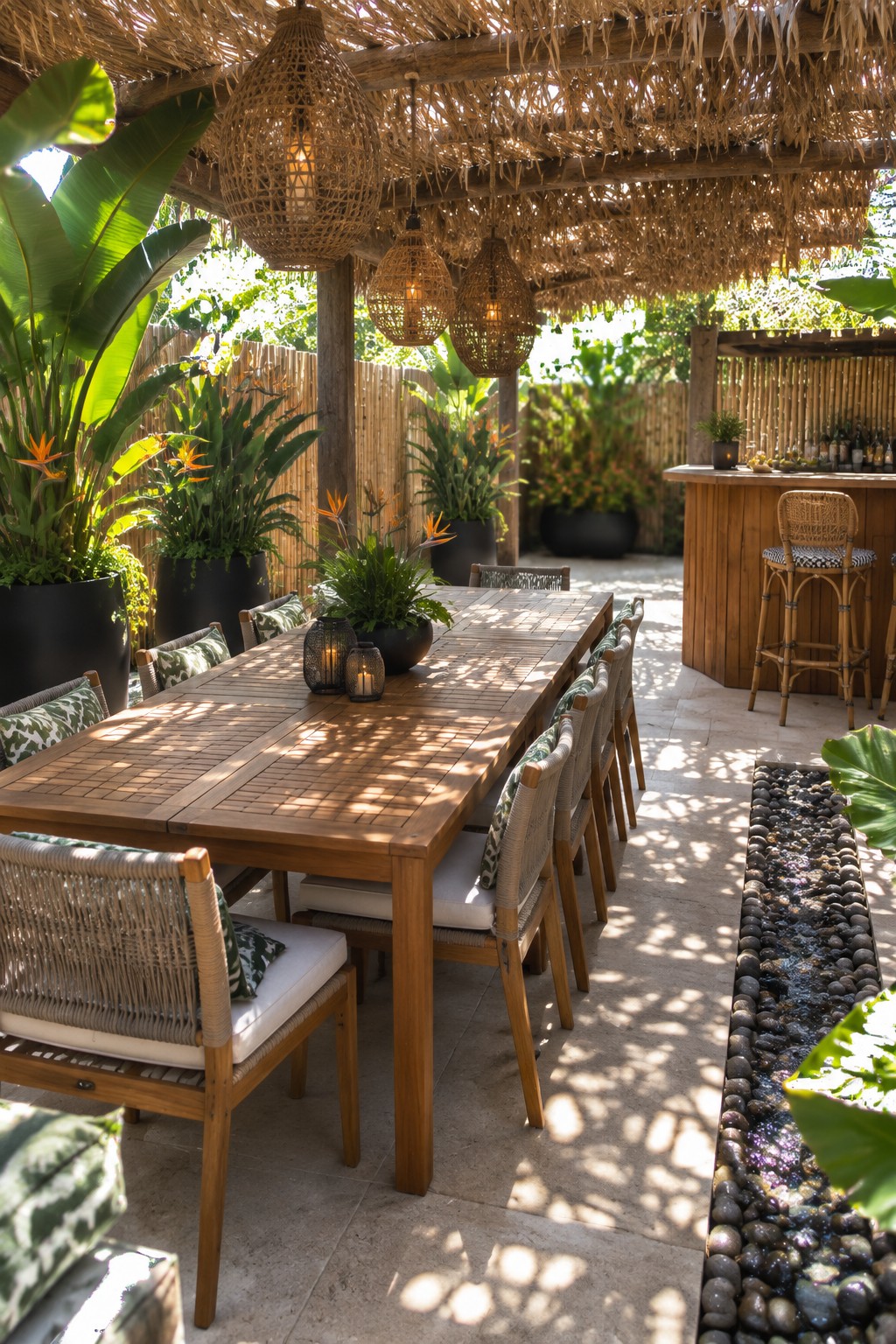
A thatched roof gives solid shade while still letting some light and air move through, which keeps an outdoor dining spot comfortable on warm days. It creates a clear dining zone without closing the space in, and the natural material blends easily with plants and wood furniture.
This setup works best on a roof garden or backyard patio where you already have room for a long table. Keep the rest of the area simple with basic seating and a few large pots so the thatch stays the main feature rather than competing with too many other elements.
Add Fabric Canopies Over the Table
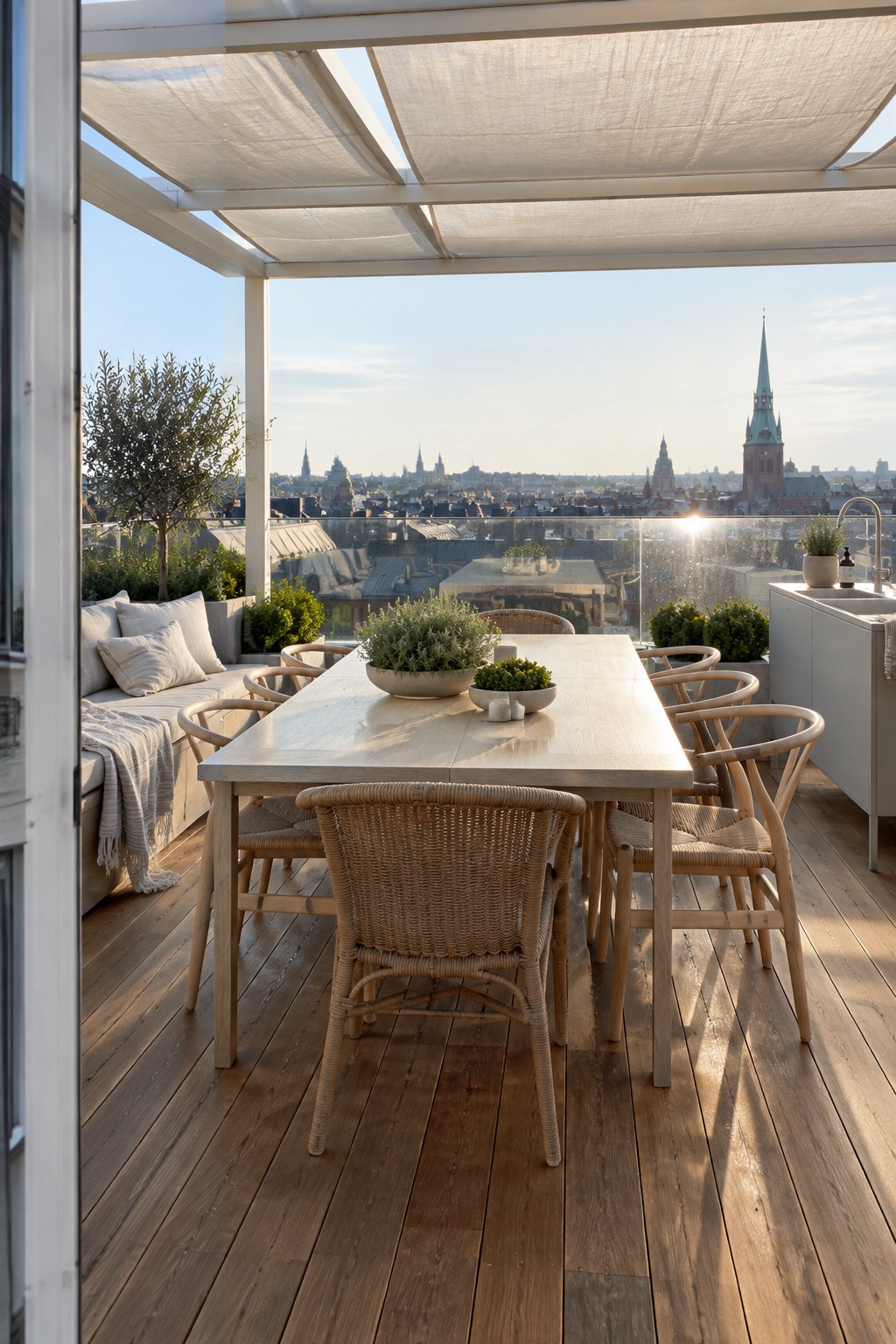
A roof garden patio often gets full sun for hours, which can make sitting down for a meal difficult. Fabric canopies stretched across a simple frame give steady shade while still letting some light through and keeping the open feel.
They work best on flat roof spaces where a solid roof would feel too heavy. Choose neutral fabric that matches the decking and furniture, and make sure the supports are secure against wind.
Use Floor Cushions Around a Low Table
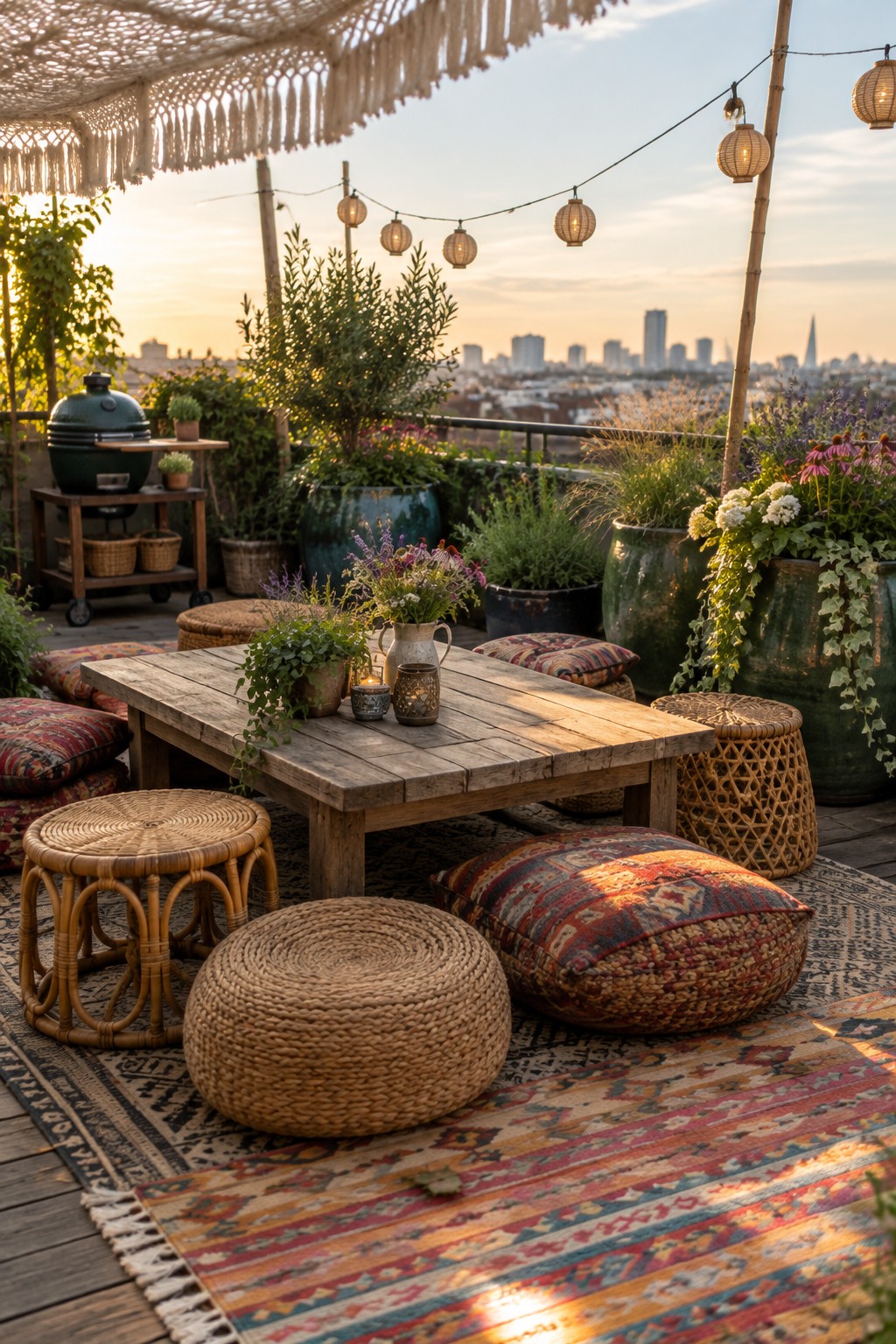
Floor cushions and low woven stools make a roof garden patio feel more relaxed for meals. They let people sit at different heights without crowding the space, and the setup works well when you want an easy spot to gather around one central table instead of lining up chairs.
This approach suits small city rooftops or terraces where full dining sets would feel too heavy. Choose weatherproof fabrics and rugs that can handle sun and rain, and keep the table height low so everything stays grounded and simple to rearrange.
Built-In Benches For Rooftop Dining Areas

Built-in benches make sense on a roof patio because they stay put and handle weather without much upkeep. The concrete construction matches the table and creates a solid seating zone that does not shift or need constant rearranging.
This approach works well on flat roof spaces or terraces attached to modern homes. It frees up floor area for walking around the table and pairs easily with an outdoor kitchen or planting wall nearby.
Built-In Bench Seating for Outdoor Dining
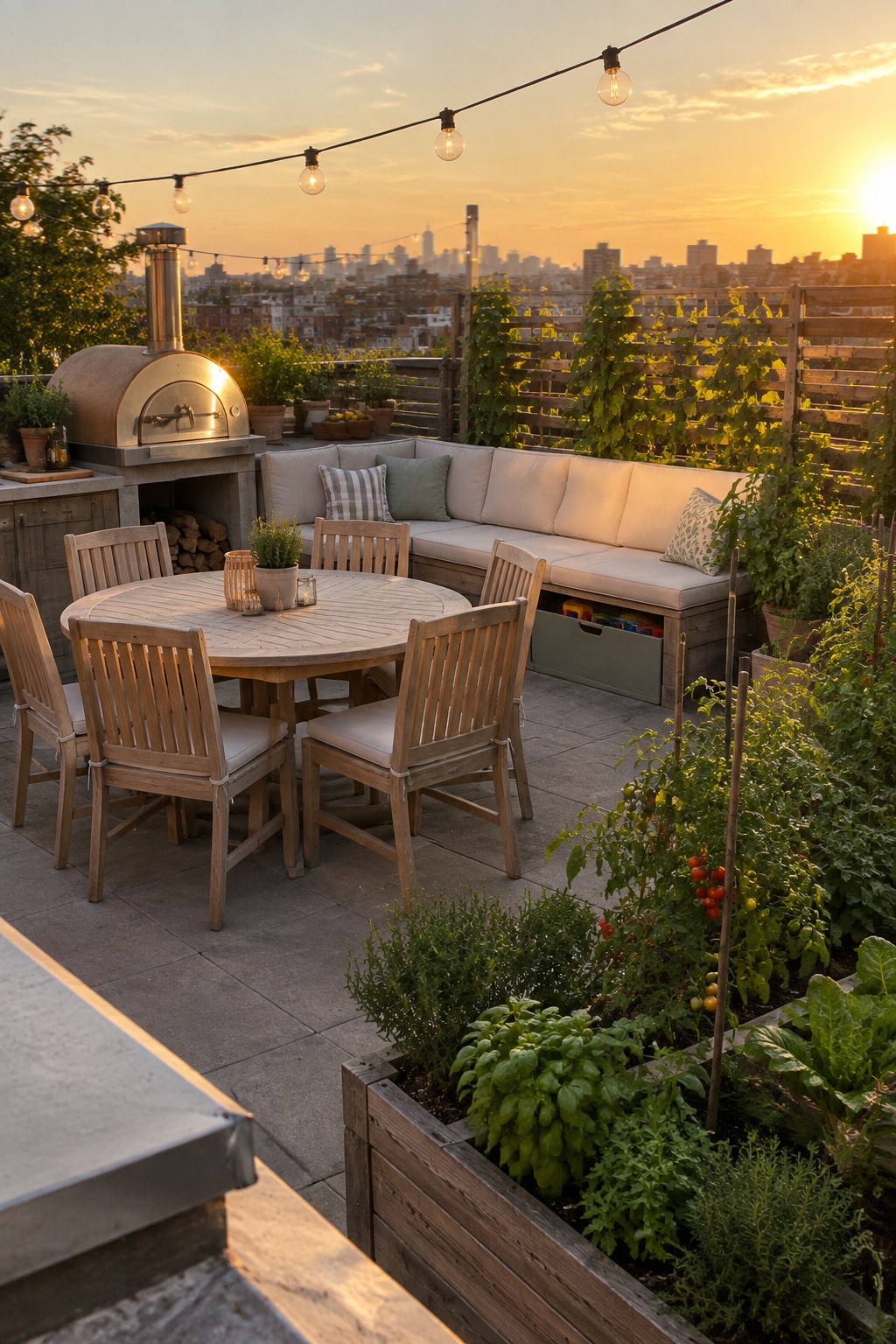
A built-in bench that wraps around part of a dining table makes good use of tight roof spaces. It gives you more seating than loose chairs alone while keeping the area open enough for people to move around the table. The storage drawer tucked under the bench is a simple touch that keeps cushions or small items from cluttering the floor.
This setup works best on rooftops or small terraces where every square foot counts. It suits city homes that want a real dining spot without crowding the space with too many separate pieces. Just make sure the bench height lines up with your table so the whole area feels comfortable for meals.
Center Outdoor Dining Around a Large Wooden Table
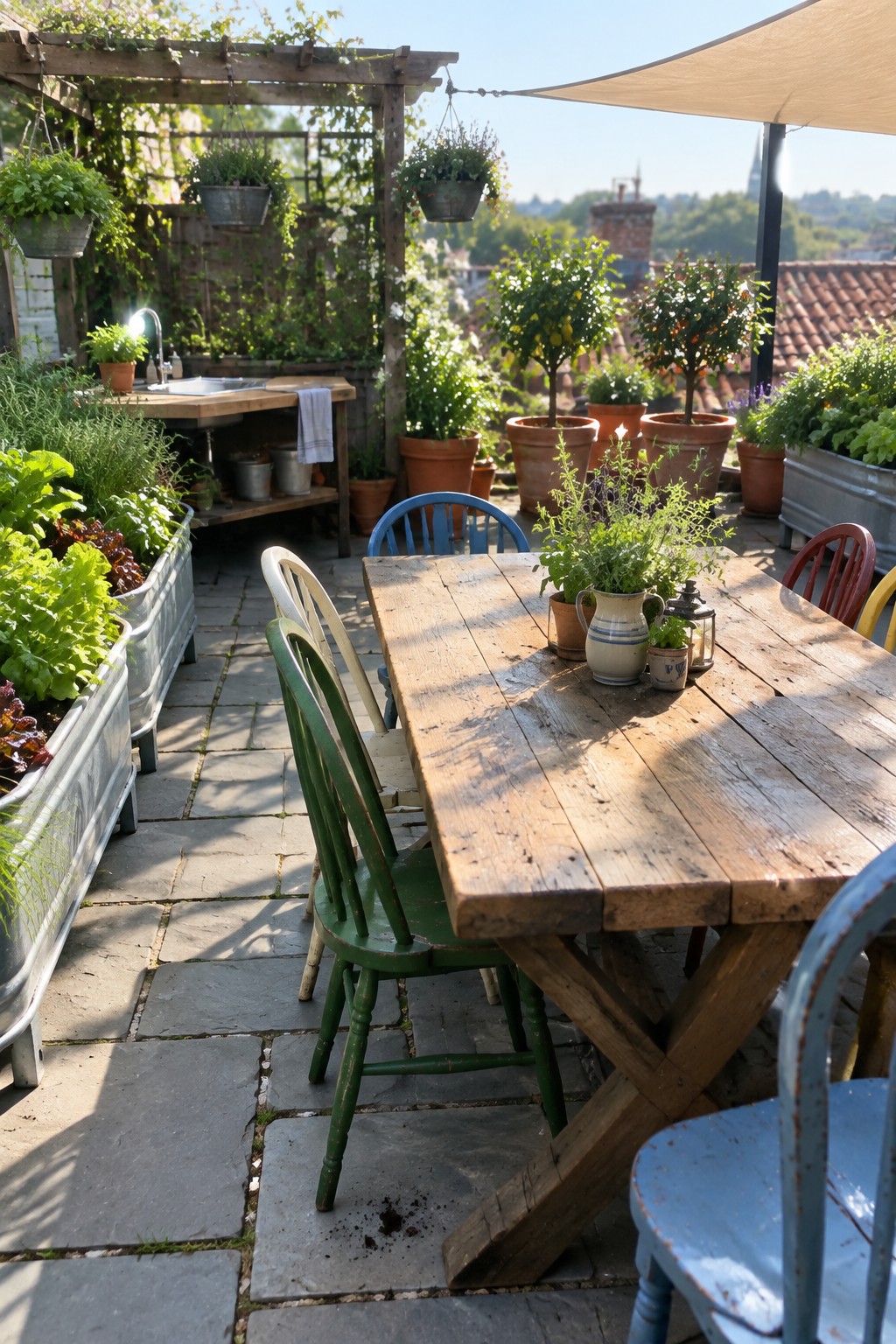
A big wooden table gives a roof garden patio real presence without trying too hard. It holds up to sun and rain, and the worn surface adds character that fits the casual setting.
Set the table in the middle of the space and add mismatched chairs around it. Fill the edges with pots and planters so the greenery feels like part of the dining area rather than an afterthought. This works best on rooftops with solid flooring and room to move around the table.
Pergola Adds Shelter Over the Table
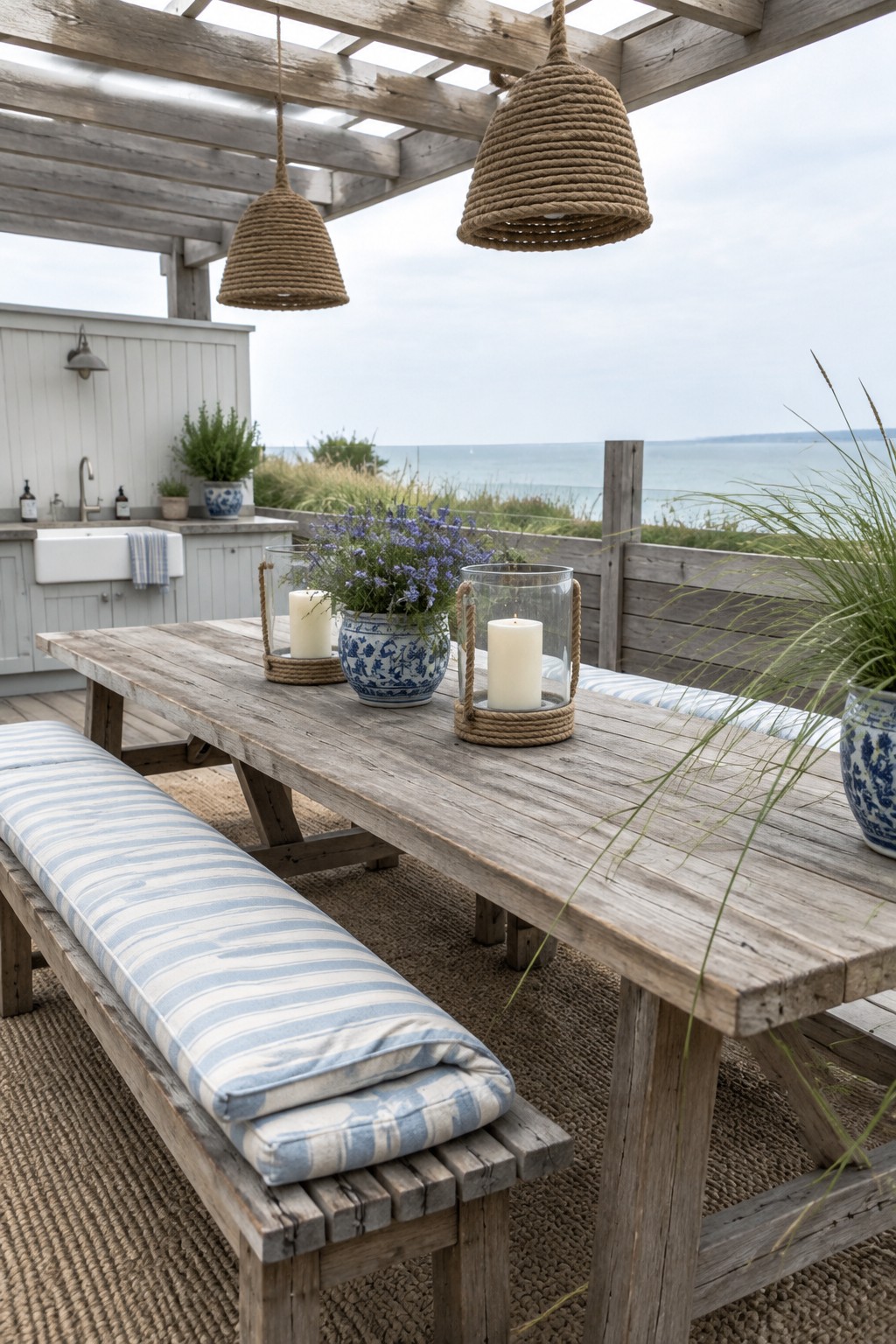
A pergola gives an outdoor dining area a clear sense of place without making it feel closed in. The open wood beams let in light and air while still marking the table as the main spot for meals. It works especially well on roof gardens or decks where you want some protection from direct sun but still want the view.
This setup suits homes with open outdoor space and a bit of exposure to weather. Keep the structure simple and pair it with basic hanging lights so the focus stays on the table and seating below. Avoid adding too many layers of fabric or heavy trim if you want it to feel relaxed rather than formal.
Greenhouse Dining Space on the Roof
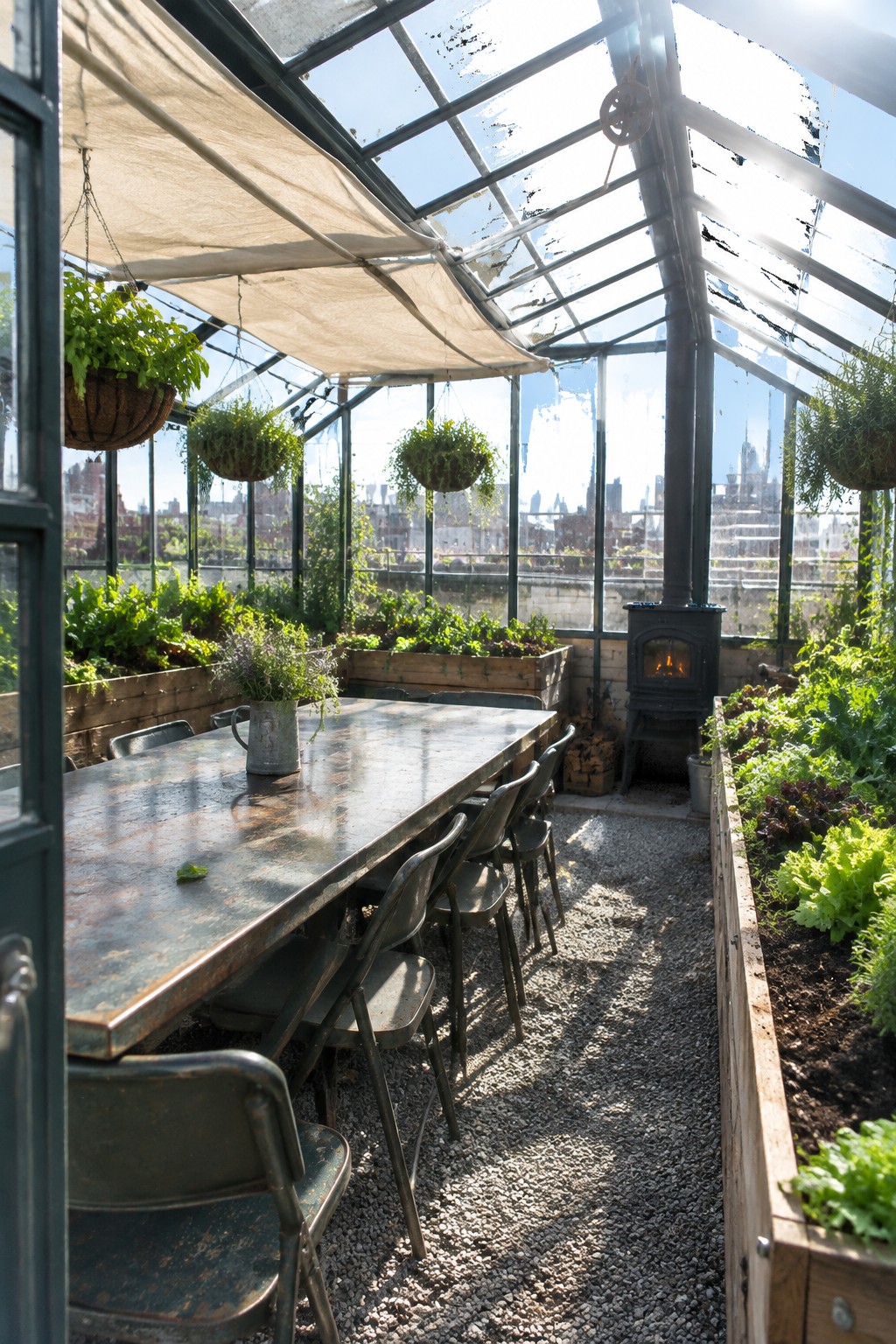
A glass-enclosed structure turns a roof garden into a place where you can eat outside even when the weather is not perfect. The long table and built-in planters make the space feel like an extension of the garden rather than a separate patio. The stove adds heat on cooler days, so meals do not have to stop when temperatures drop.
This setup works best on flat urban roofs where you want to grow food and dine in the same area. Keep the table simple and allow room to walk between the planters and seating. Make sure the glass is easy to clean and that there is good ventilation for warmer months.
Raked Gravel For Low Outdoor Dining

Raked gravel or sand under a low table keeps the dining area feeling open and calm on a roof. It works because the surface stays simple and lets the seating stay close to the ground without needing a full deck or heavy flooring.
This setup fits smaller rooftops or anyone who wants minimal furniture for meals outside. Place cushions around the table and keep other pieces light so the space stays easy to use and maintain.
Place The Outdoor Kitchen Next To The Dining Table
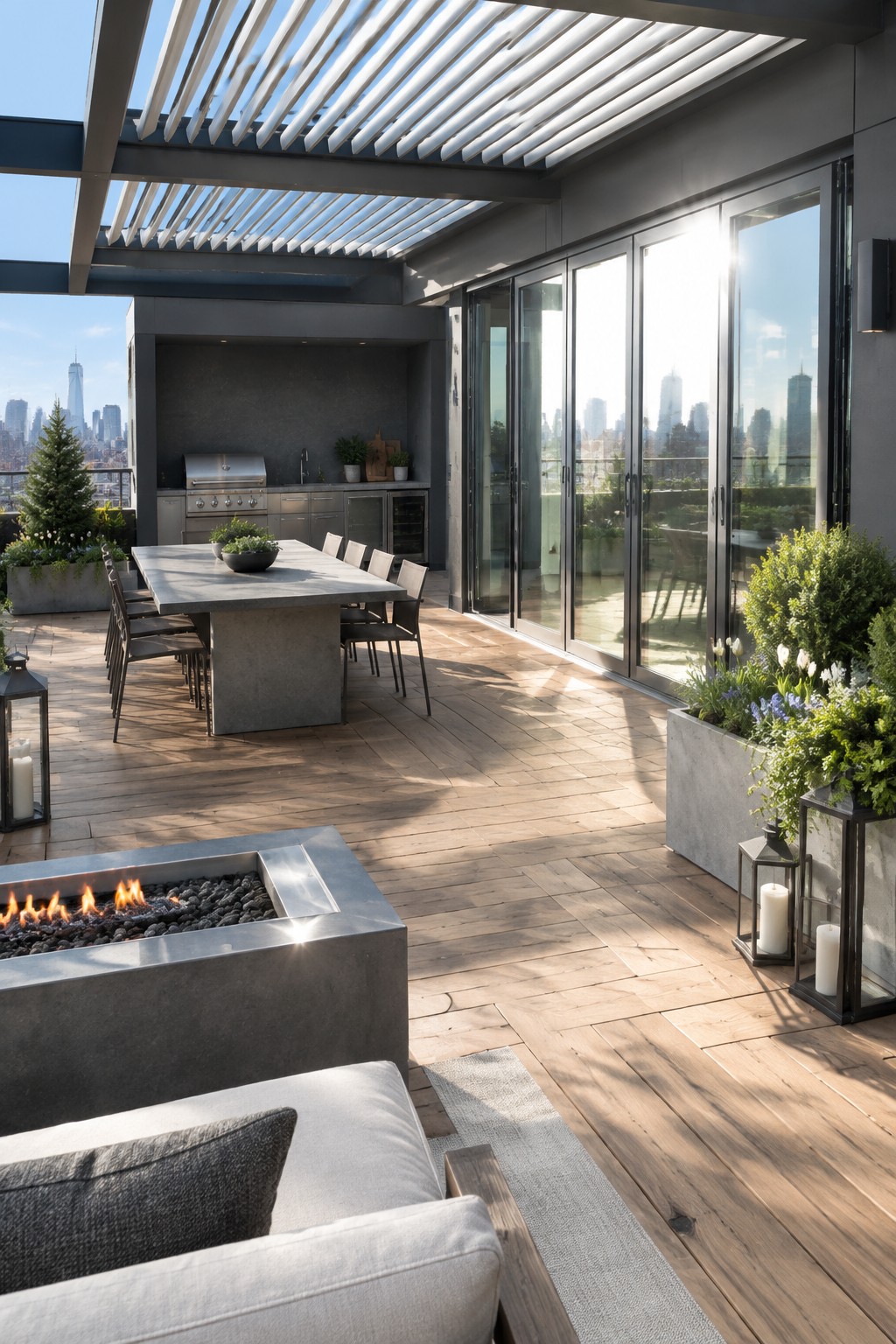
Many rooftop patios feel incomplete when the cooking stays inside. Putting a full outdoor kitchen just steps from the dining table keeps everything in one place and makes meals easier to manage.
This works best on larger flat roofs or terraces where you can zone the space without crowding. Keep the grill and counters facing the table so the cook stays part of the group instead of turning their back on everyone.
Use a Pergola Over Your Dining Table
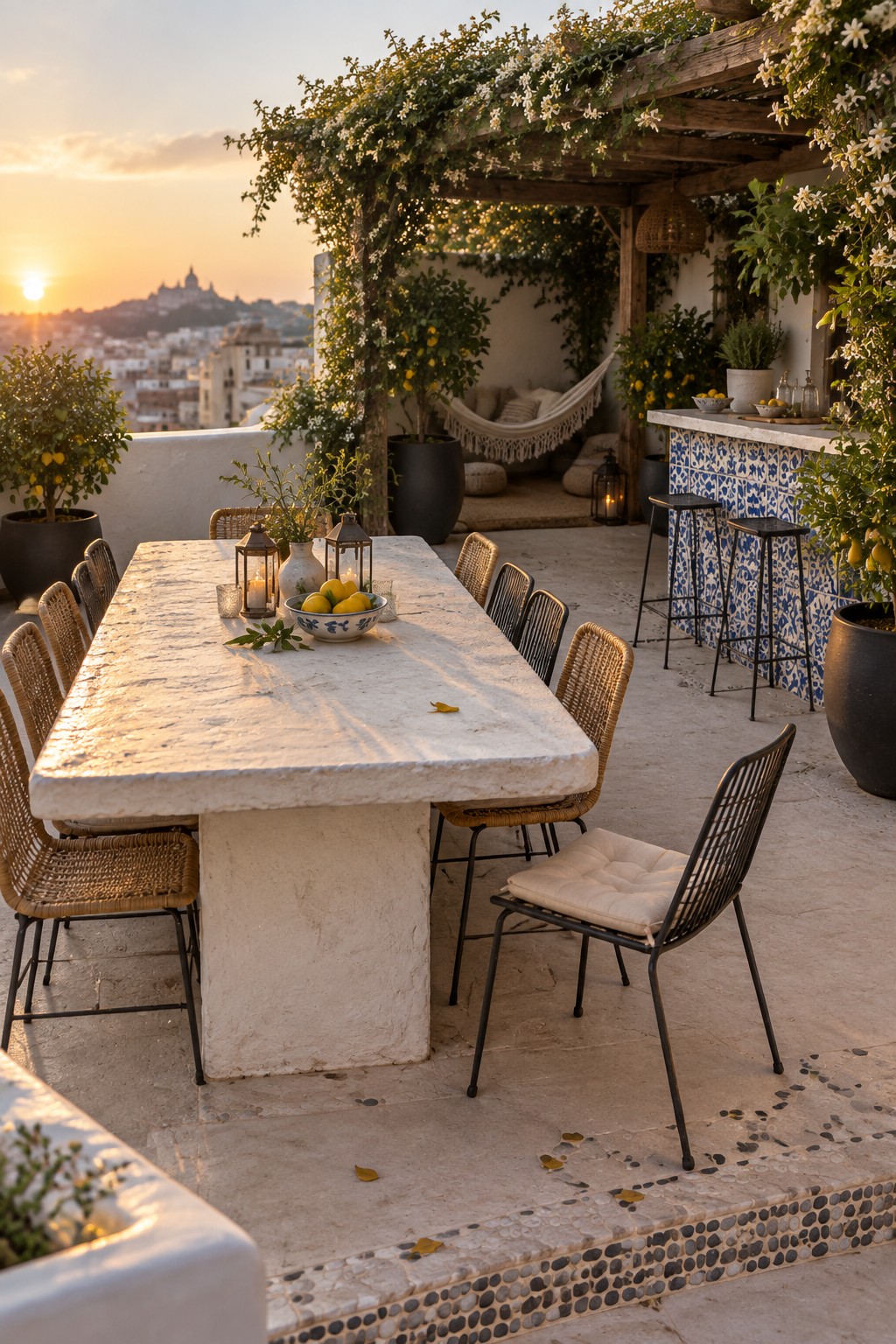
A pergola gives an outdoor dining spot some much needed shade and a bit of structure on an open roof. It turns the table into a clear gathering place instead of just furniture sitting in the middle of the terrace.
This setup works best on flat roof gardens or large terraces where sun can be strong. Keep the frame simple and let vines cover it over time so the shade gets better each year.
Fold Down Tables Keep Balcony Dining Simple
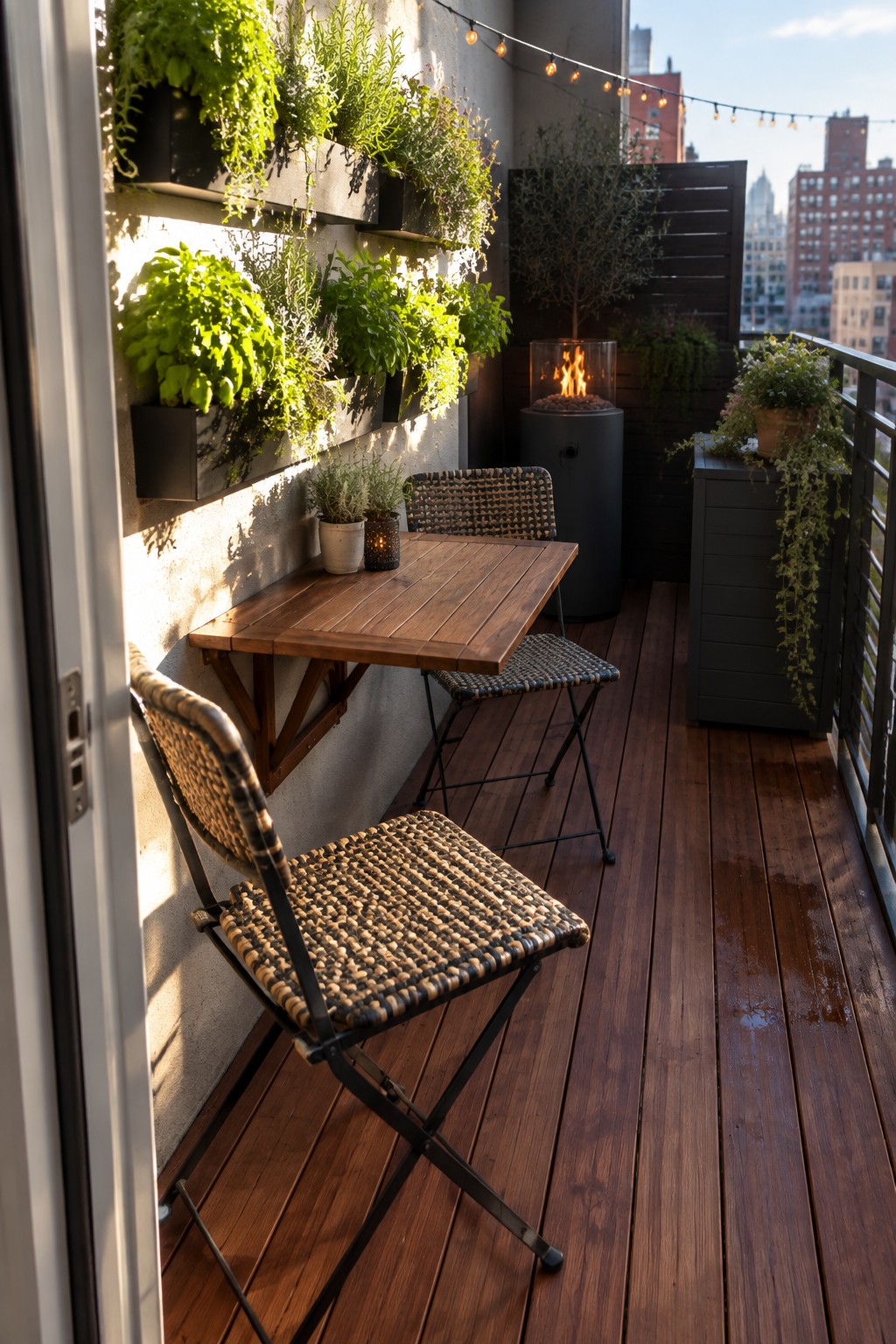
A fold down table mounted to the wall turns a narrow balcony into a workable dining area without eating up floor space. It stays flat against the surface most of the time and only opens when you need it, which keeps the walkway clear.
This setup suits small roof gardens or urban balconies where every inch counts. Use lightweight chairs that fold or stack, and keep the rest of the space open for movement.
Use a Long Bench With Your Outdoor Table
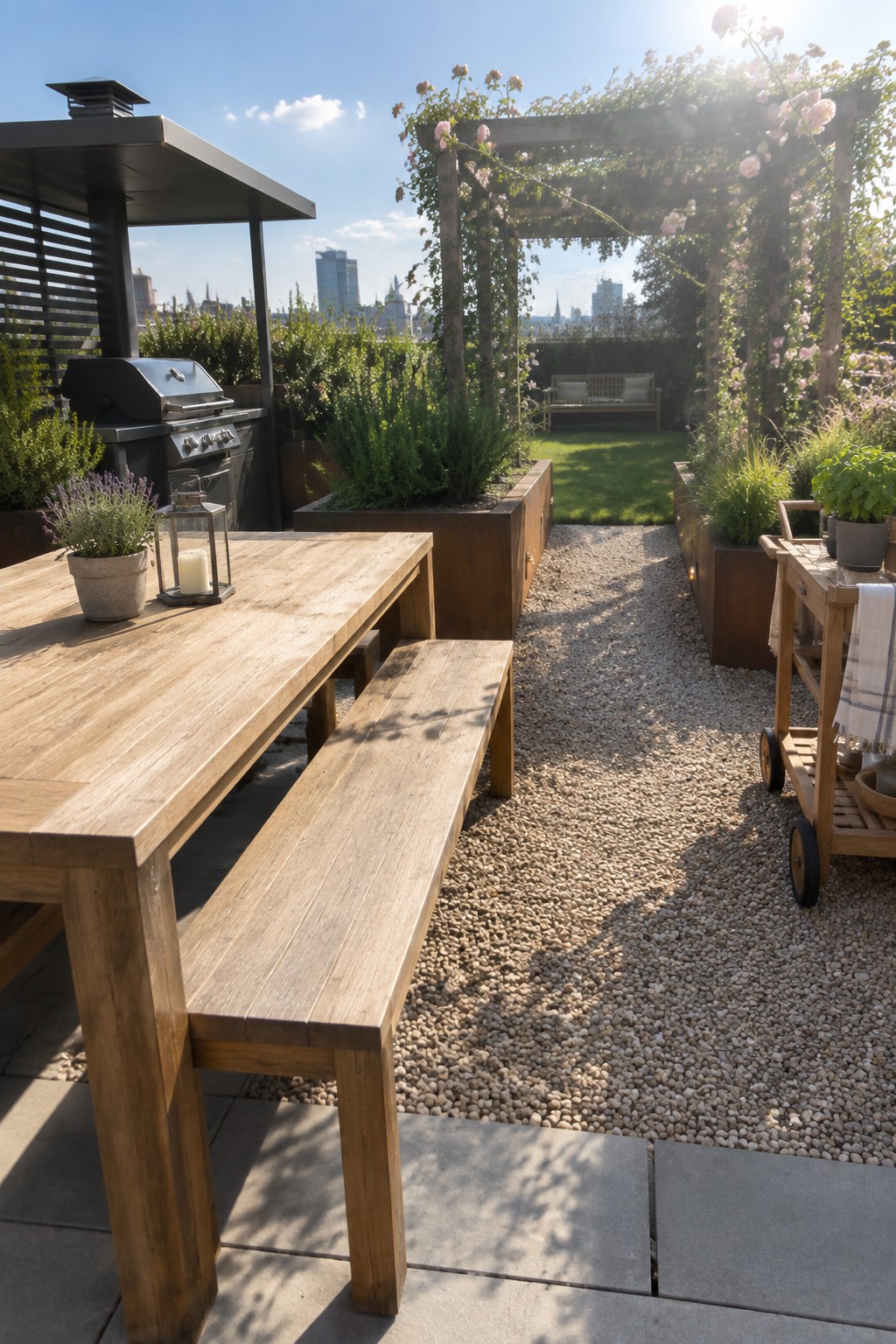
A long bench next to a sturdy wooden table makes outdoor dining simpler on a roof garden. It fits more people without crowding the space and keeps the setup clean and practical next to a grill station.
This works best on rooftops or terraces where you cook and eat in the same area. Treated wood holds up well, and the bench can be moved easily if you need to adjust the layout for different group sizes.
Round Tables for Rooftop Dining Areas
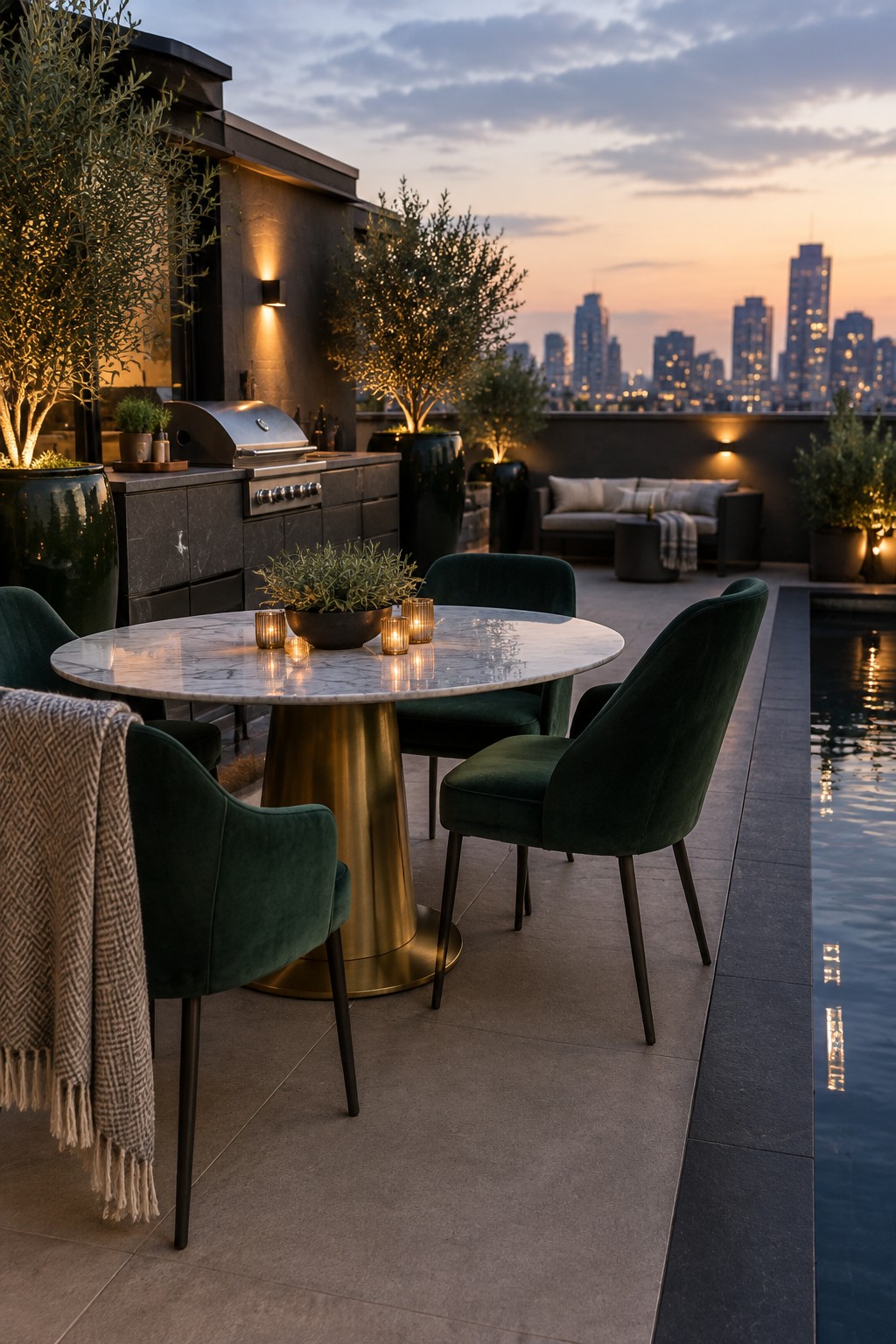
A round table makes sense on a roof garden because it lets everyone face each other without taking up too much floor space. The curved shape also helps keep pathways clear when you need to move around the grill or head toward the seating at the far end.
This setup works best on smaller terraces or rooftops where you still want room for four to six people. Pick a pedestal base so chairs can tuck in easily, and add simple candlelight in the center for evening meals. Keep extra chairs nearby in case guests arrive.
Long Table With Built In Bench Seating
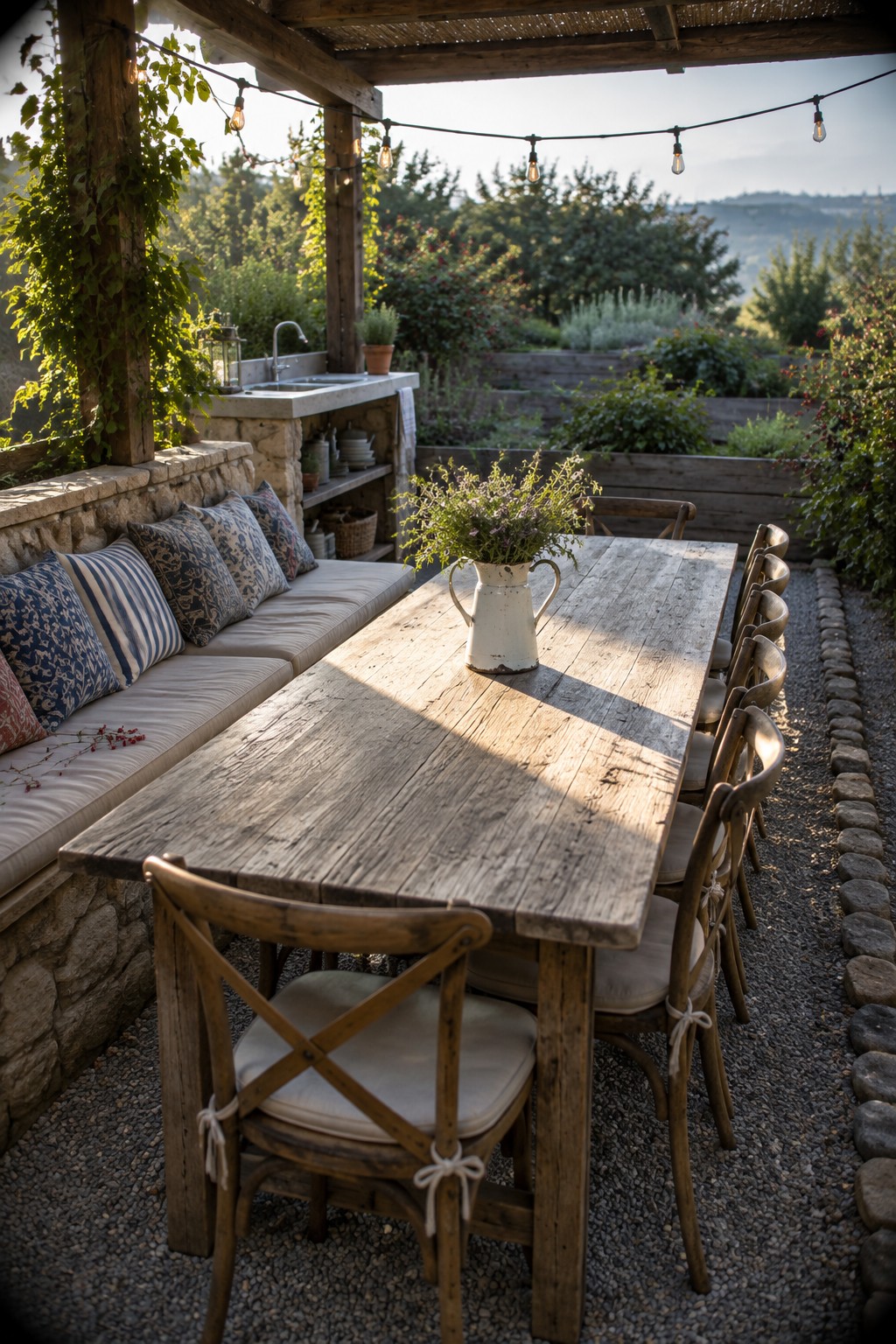
A long table gains real flexibility when you run a built in bench along one side. The bench takes up less floor space than a full row of chairs, so the seating area stays open and easy to move through even when the table is full.
This layout works best on a roof garden or patio that needs to handle groups without feeling cramped. Use simple cushions on the bench for comfort and keep the opposite side open for chairs so guests can slide in and out without rearranging anything.
Run A Long Table Beside The Pool
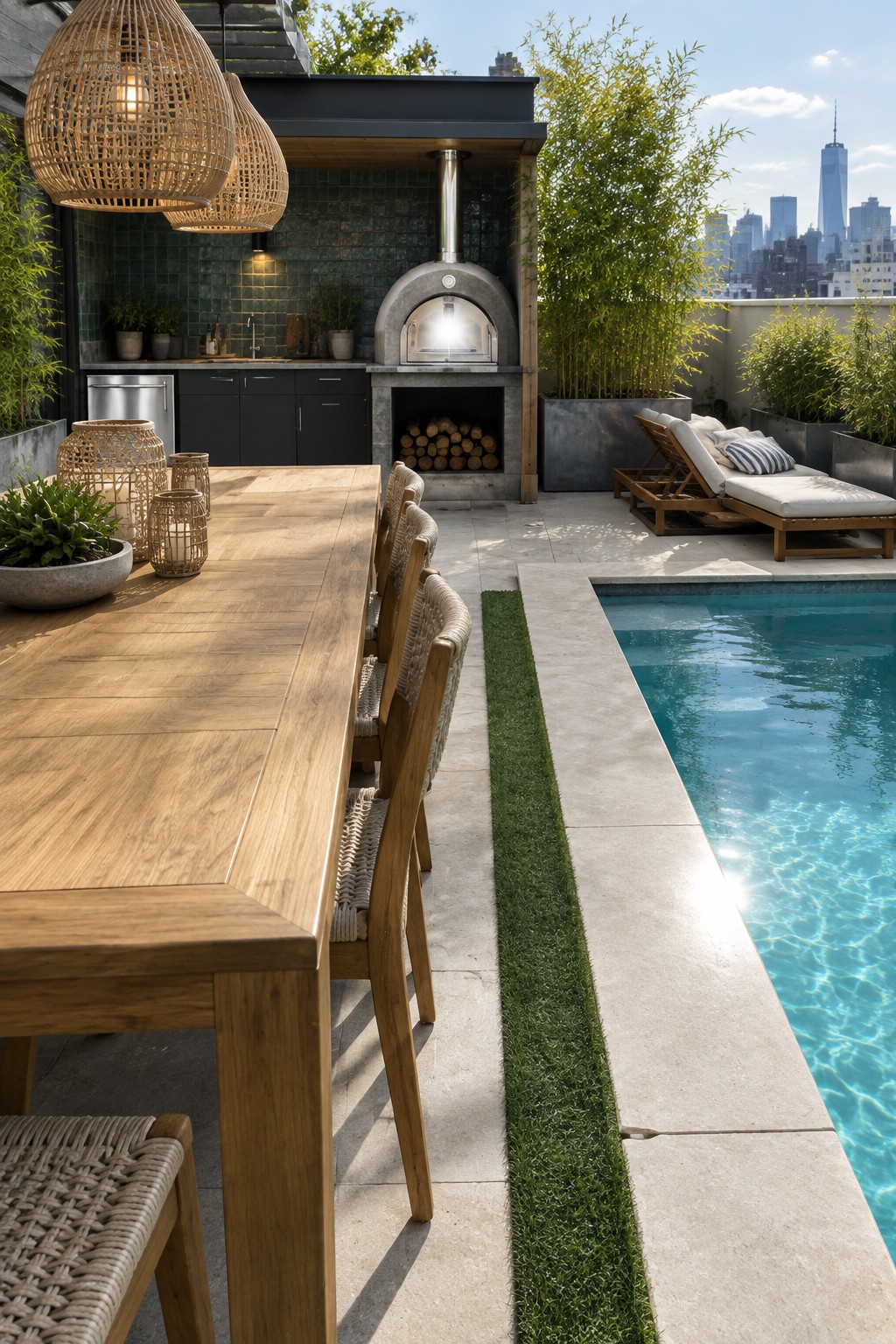
A long dining table works well on a roof garden because it gives the space a clear purpose without needing lots of extra pieces. Placing it right along the pool edge turns the patio into one flowing area where meals and time by the water happen together.
This setup suits urban rooftops that already have a pool or similar water feature. Keep the table simple in wood and line it up with the cooking spot so people can move easily between the two.
Frequently Asked Questions
Q: How do I keep the table from getting too hot in direct sun?
A: Pick a spot with some overhead shade from vines or a pergola. Move the table under that cover during peak hours. This keeps meals comfortable without extra gear.
Q: What plants hold up best next to a dining area?
A: Go for sturdy herbs like rosemary or thyme in containers. They smell great and survive occasional spills or bumps. Place them along the edges so they do not block the seats.
Q: Is it worth adding a small grill up on the roof?
A: Start with a portable one if space allows. Keep it away from the main table to avoid smoke during dinner.
Q: How often should I check the roof structure for leaks?
A: Look over the area once a season after heavy rain. Spot any wet spots early and fix them before they spread. This saves bigger repairs later.
