

I have noticed that roof terraces often end up underused when there is no clear way to sit and settle into the space.
Bench seating paired with planter walls tends to solve that by giving the area both structure and places to rest without needing extra furniture.
It makes the terrace feel more like an extension of the home.
I would want to try building a short run of seating first to see how the proportions work with the actual roof dimensions and sun patterns.
Over time that kind of integration keeps the space practical even as plants grow in and the seasons shift.
Bench Seating Built Into Planter Walls
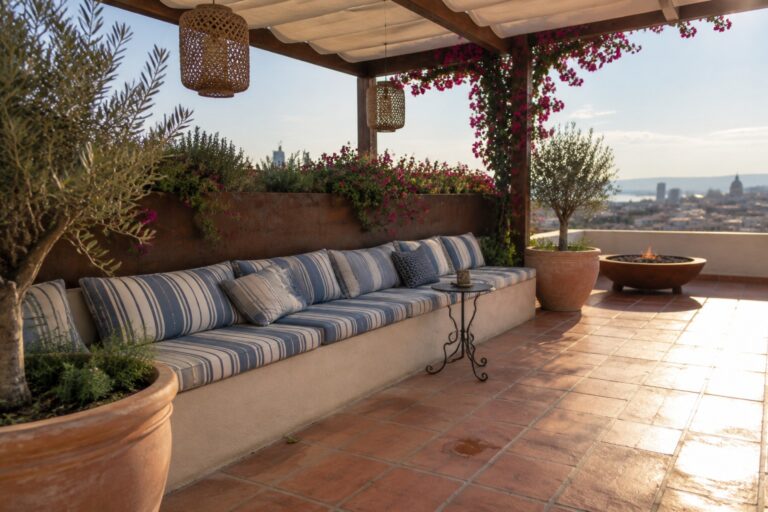
This setup makes good use of the edge of a terrace by turning the planter wall into the backrest for a long bench. It gives you seating without adding separate furniture that would crowd the space, and the plants right behind help soften the look.
It suits roof terraces and balconies where floor space is tight. Keep the cushions simple so they can stay out most of the year, and make sure the planter is wide enough for the roots to do well.
Long Bench Seating Along Planter Walls
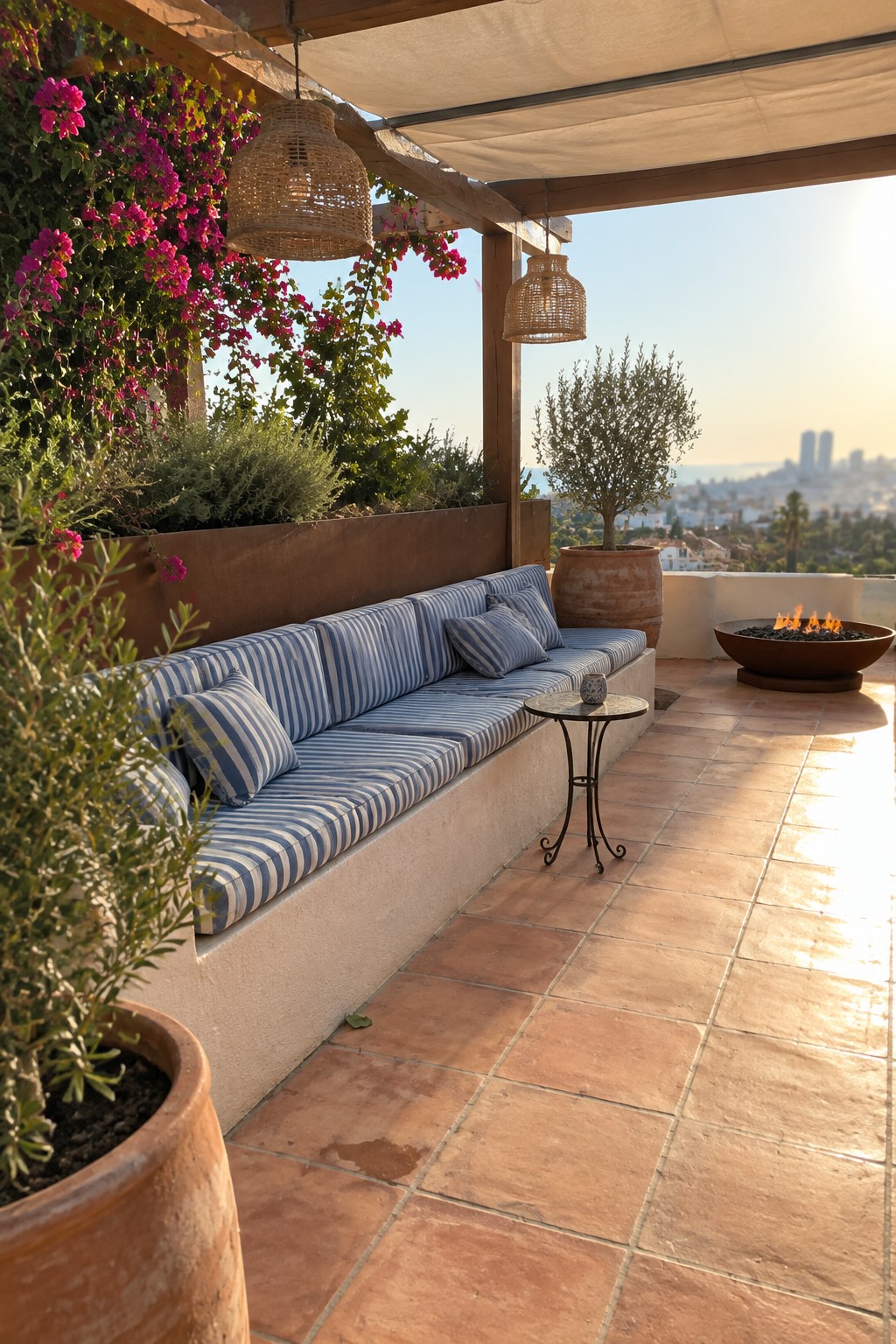
Running a bench along the back of a planter wall is a simple way to add seating on a roof terrace without crowding the floor. It keeps the space open while giving you a place to sit that feels tied into the planting rather than added on later.
This works best on terraces where you want both greenery and seating but do not have room for separate pieces. Keep the bench at a comfortable depth and make sure the planters are deep enough for the plants to thrive through the seasons.
Roof Terrace Bench Seating With Integrated Planters
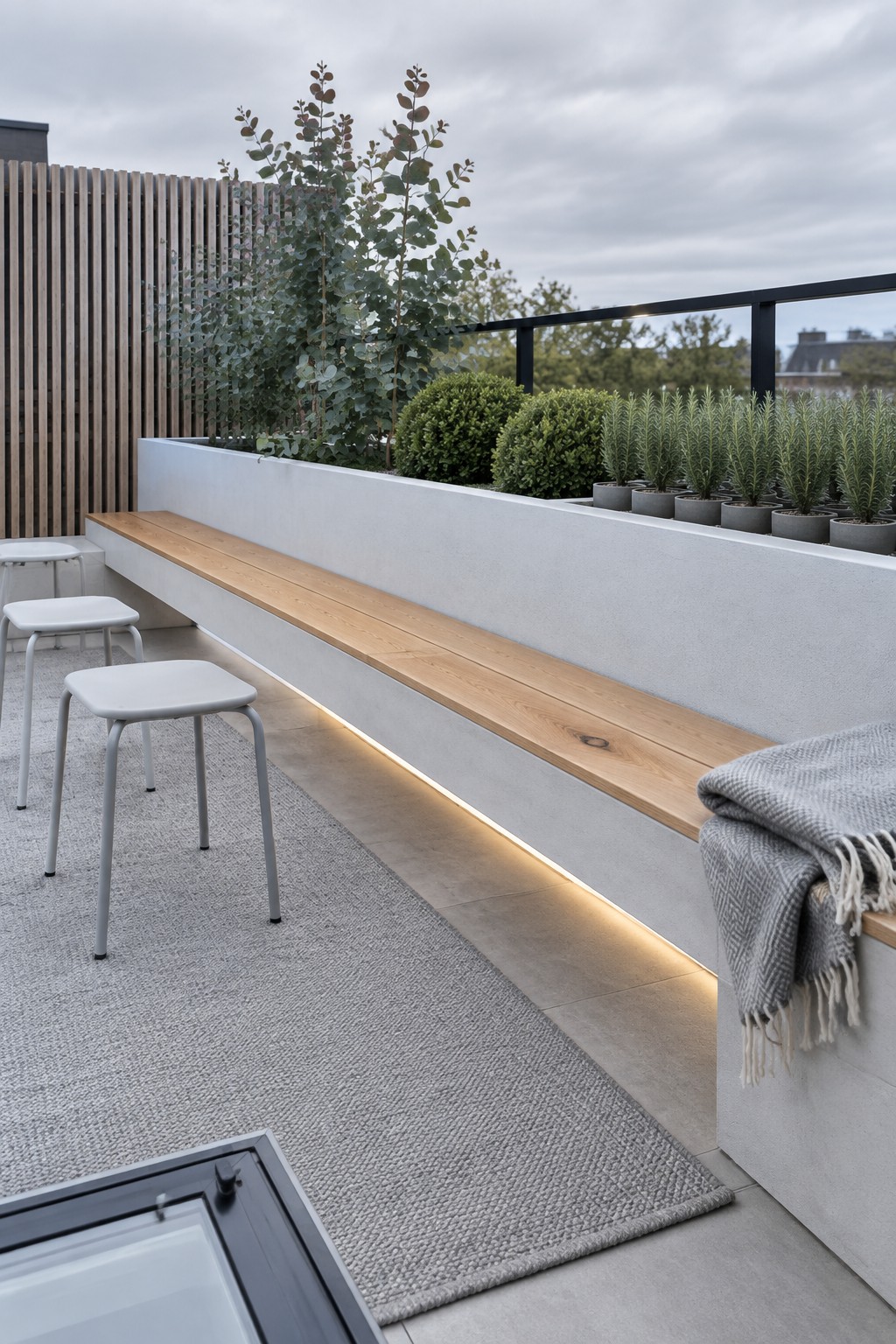
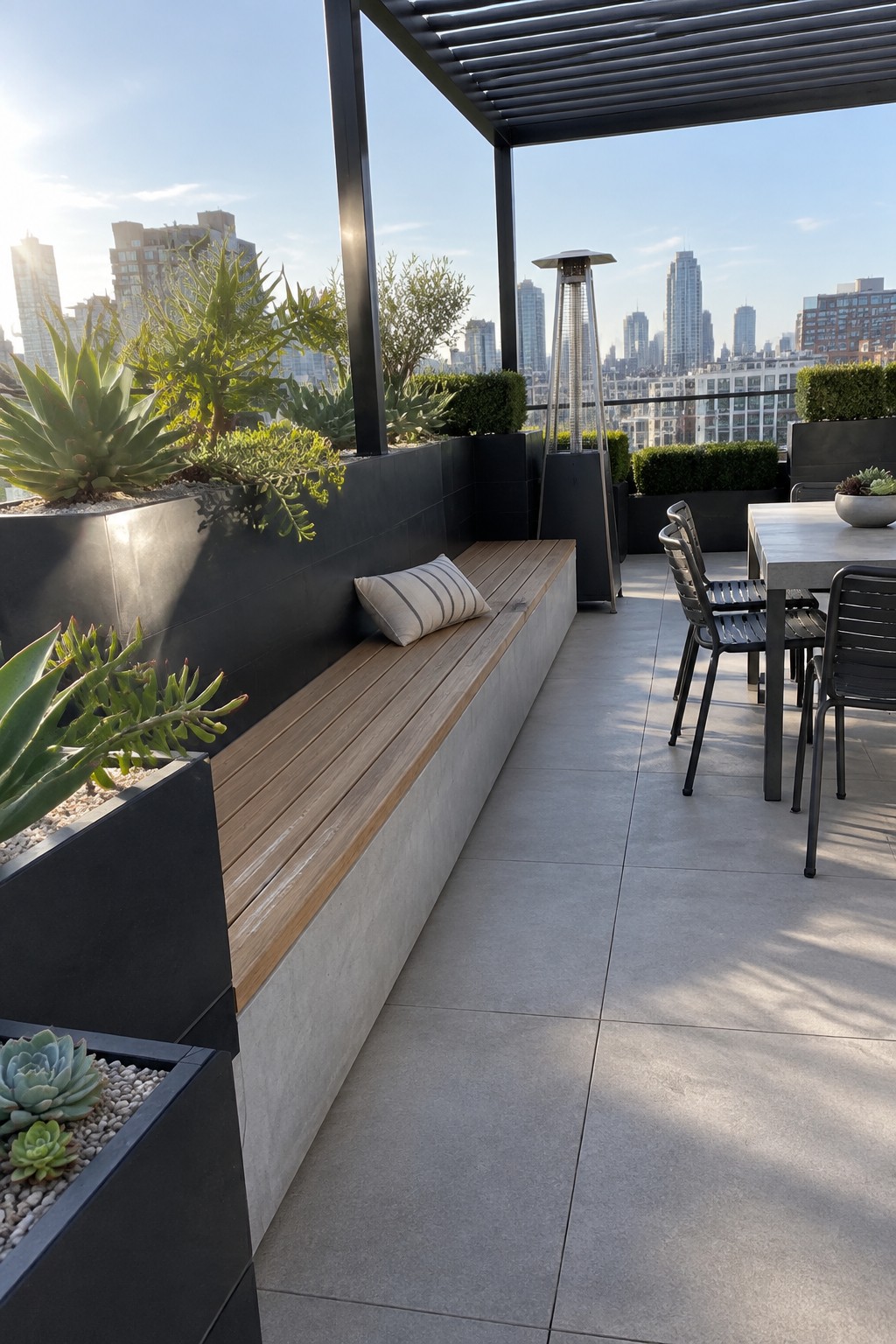
A long bench set right against the planter wall gives you seating without crowding the terrace floor. The plants sit at the right height behind it so they feel like part of the seating area instead of separate features.
This works best on roof terraces or balconies where every inch counts. Keep the bench simple with a wood top and add a low light strip along the base so the space stays usable in the evening without extra lamps.
Bench Seating Along Planter Walls
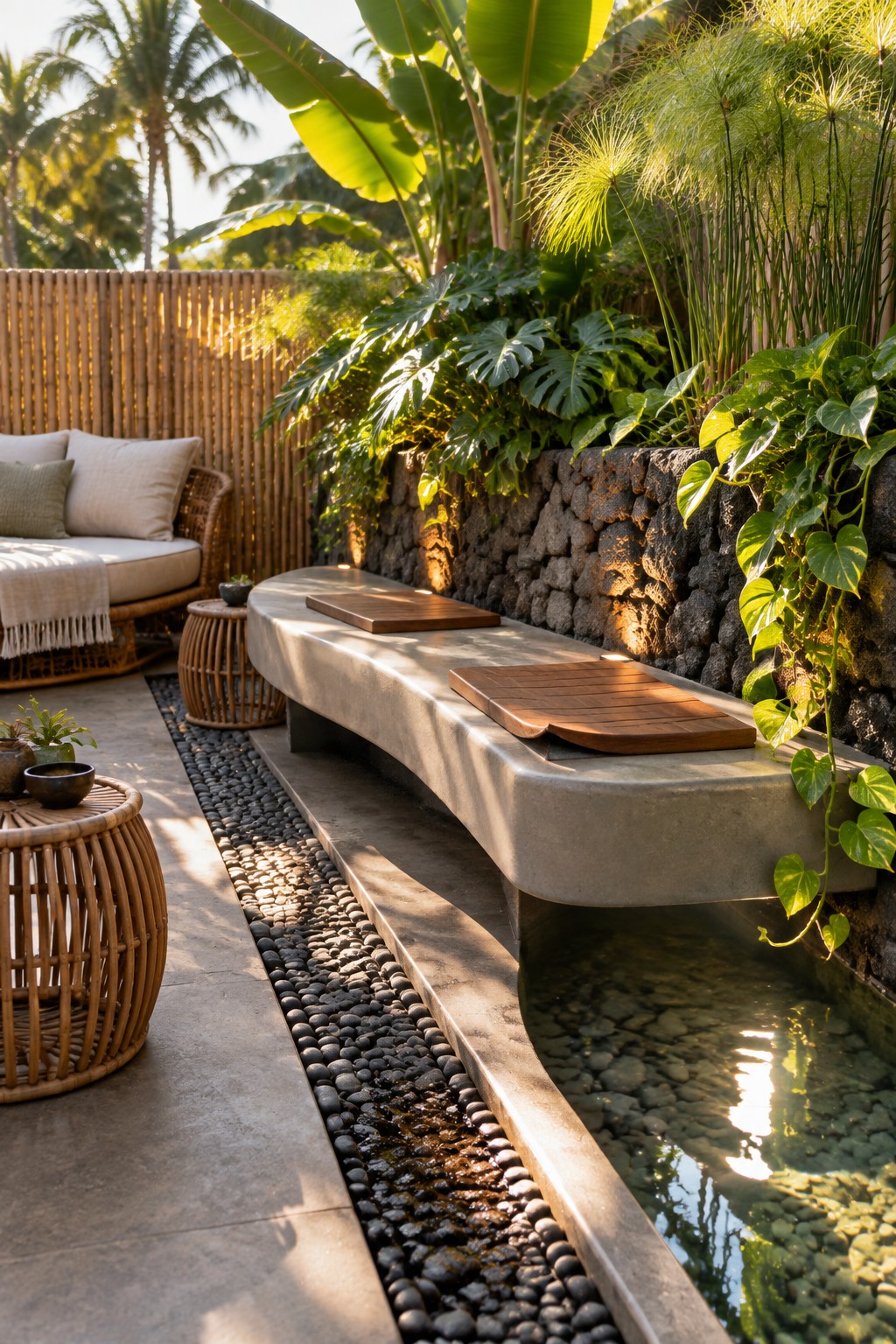
A long bench built right next to a tall planter wall gives a roof terrace a clear place to sit without taking up much floor space. The stone wall holds the plants and keeps the seating area feeling enclosed but still open to the rest of the terrace.
This setup works best on rooftops or balconies where you want seating and greenery in one move. Use a simple material like concrete for the bench so it holds up outside, and keep the planting dense enough to soften the wall without blocking light.
Bench Seating Along a Gabion Planter Wall
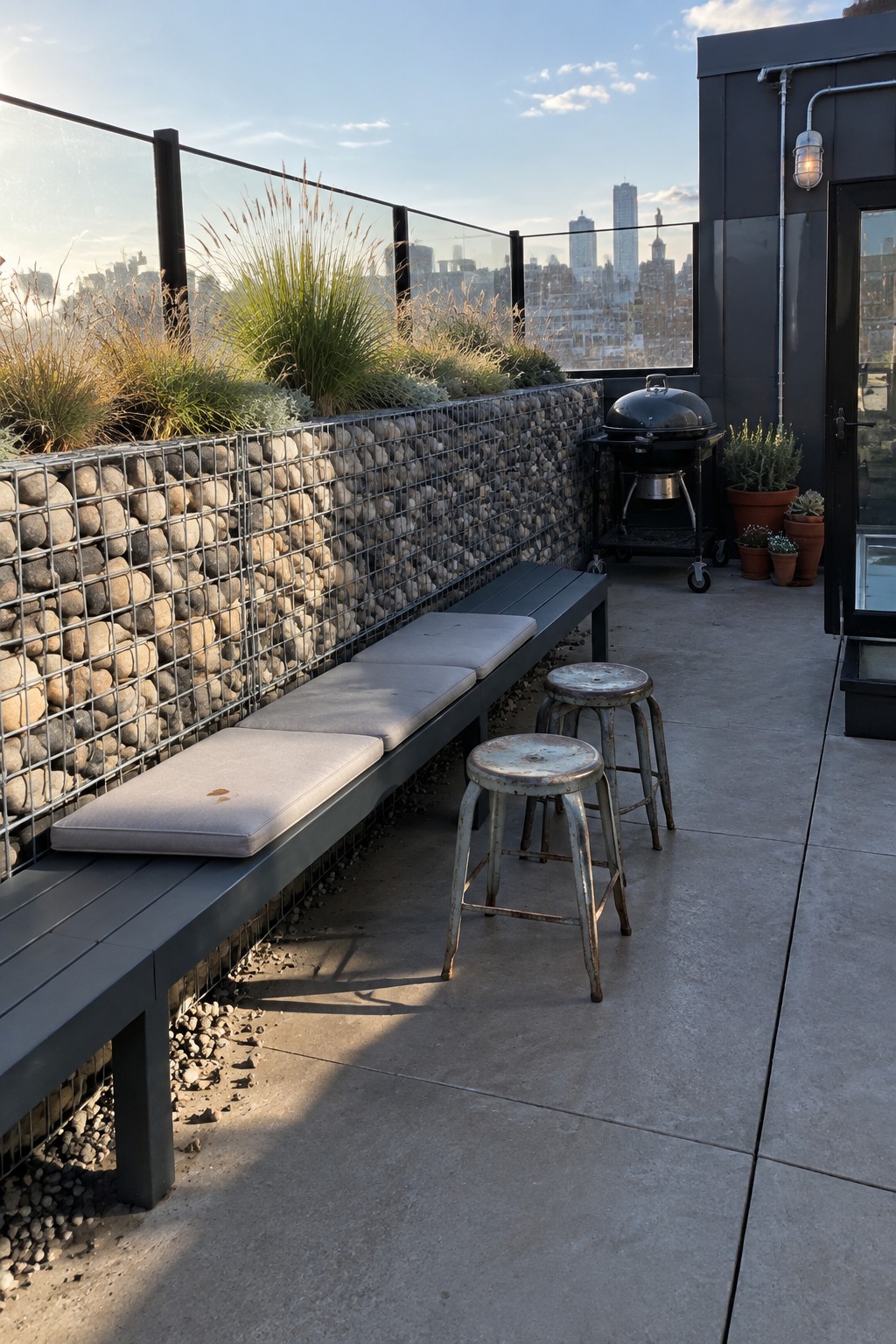
Running a bench right along a gabion planter wall turns the edge of a roof terrace into usable space without crowding the floor. The wire cages hold the soil and plants in place while the bench sits flush against them, so the greenery acts as a soft backrest.
This works best on smaller terraces where you need both seating and some planting. Keep the wall height in line with standard seat depth, and add cushions if people will stay out there for meals or evening use.
Bench Seating Backed By Planter Walls
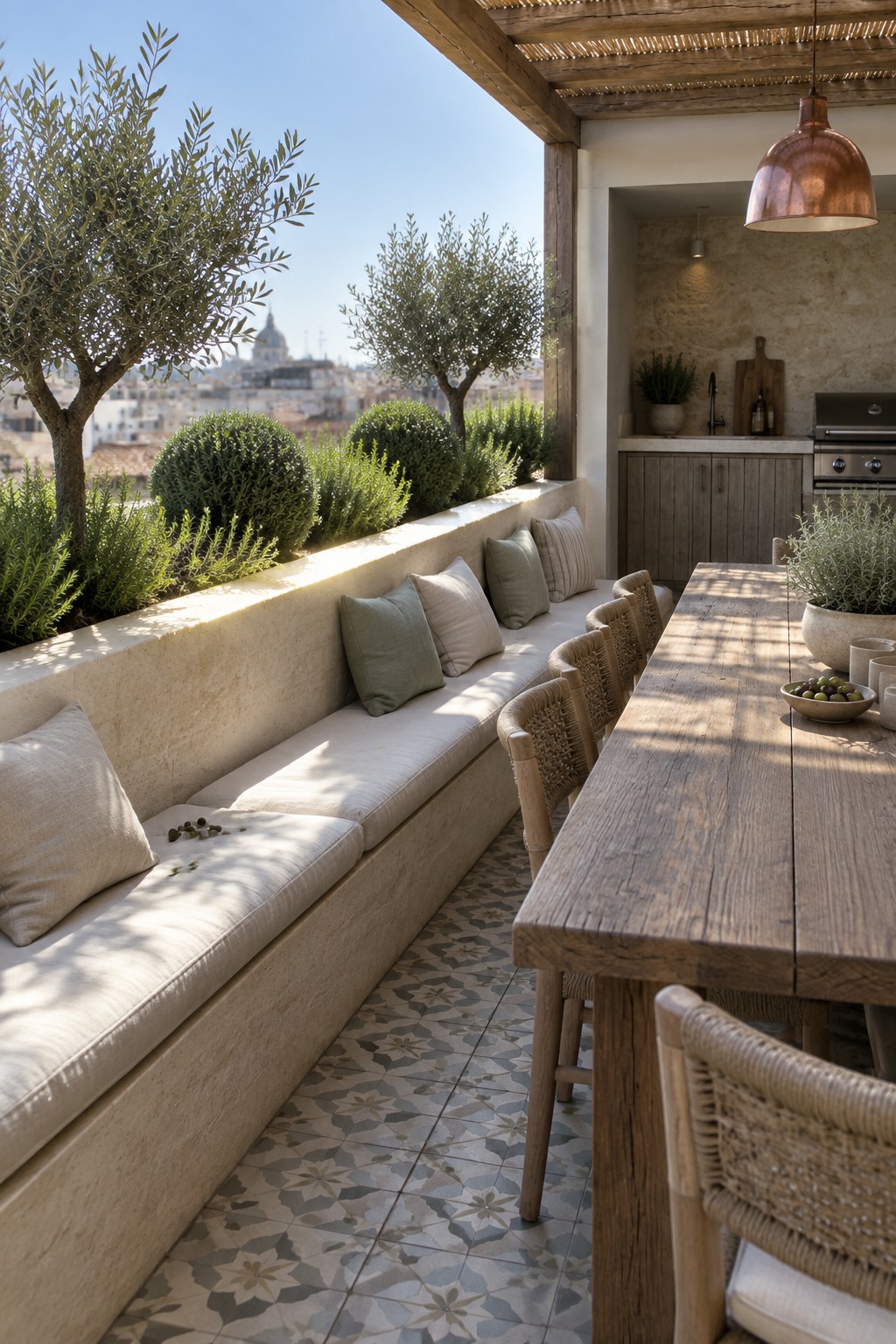
A long built-in bench that runs right against a raised planter wall gives a roof terrace both seating and structure in one move. The planter adds greenery at sitting height and creates a natural backrest, so the space feels settled without needing extra furniture or screens.
This setup works best on terraces where you want to keep the floor clear for dining or walking. Use a simple cushion on the bench and choose plants that stay tidy rather than ones that drop heavily. It suits homes with flat roofs and modest space, since the wall and bench share the same line.
Built-In Benches Along Planter Walls
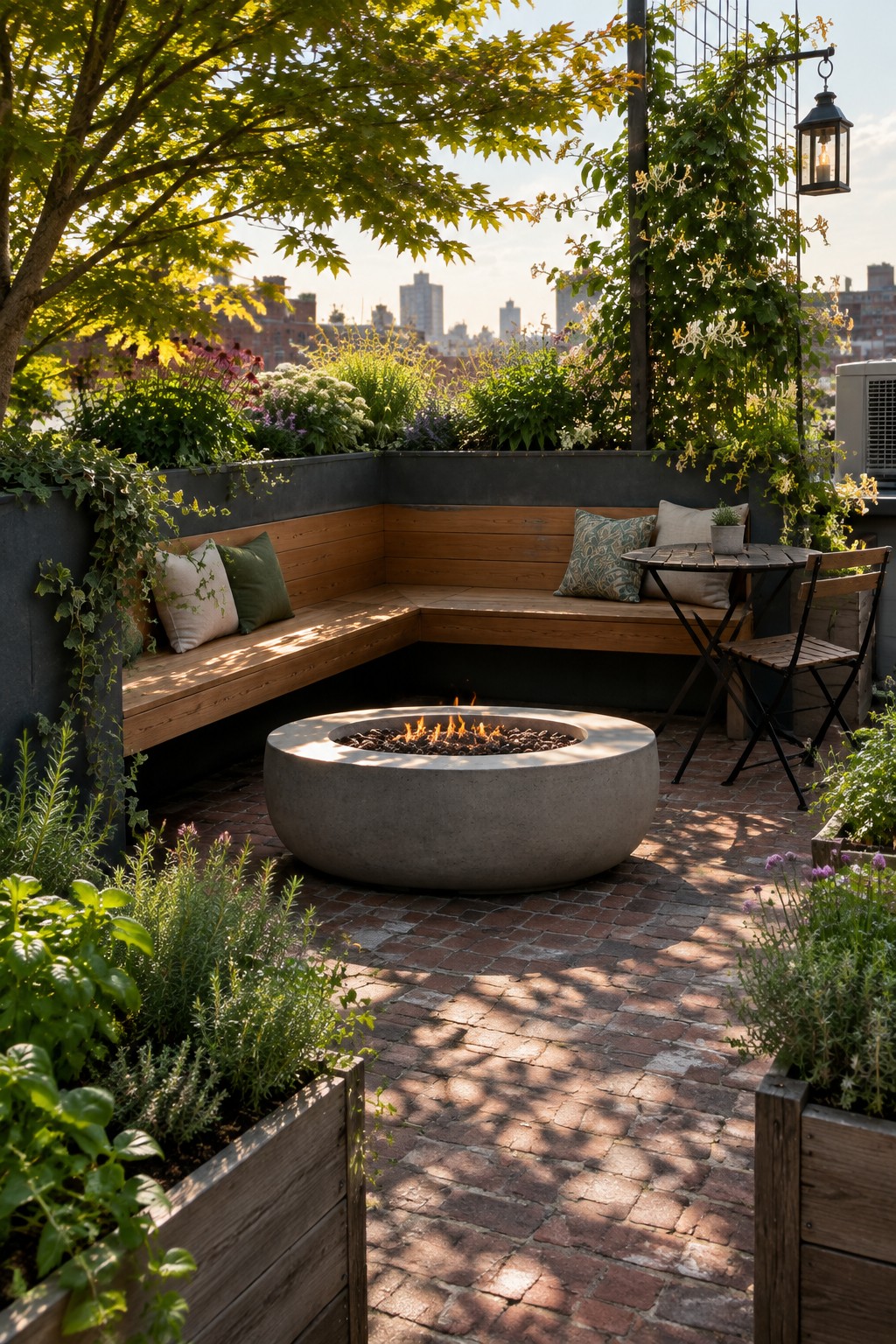
One idea that works well on roof terraces is running a built-in bench right along the back of the planter walls. It gives you plenty of seating without crowding the floor, and the plants behind it help soften the edges.
This layout works best on smaller terraces where you want to keep the center open for something like a fire pit. It suits city rooftops that need both seating and a bit of screening from the sides without adding extra furniture.
Built-In Storage Benches Beside Planter Walls
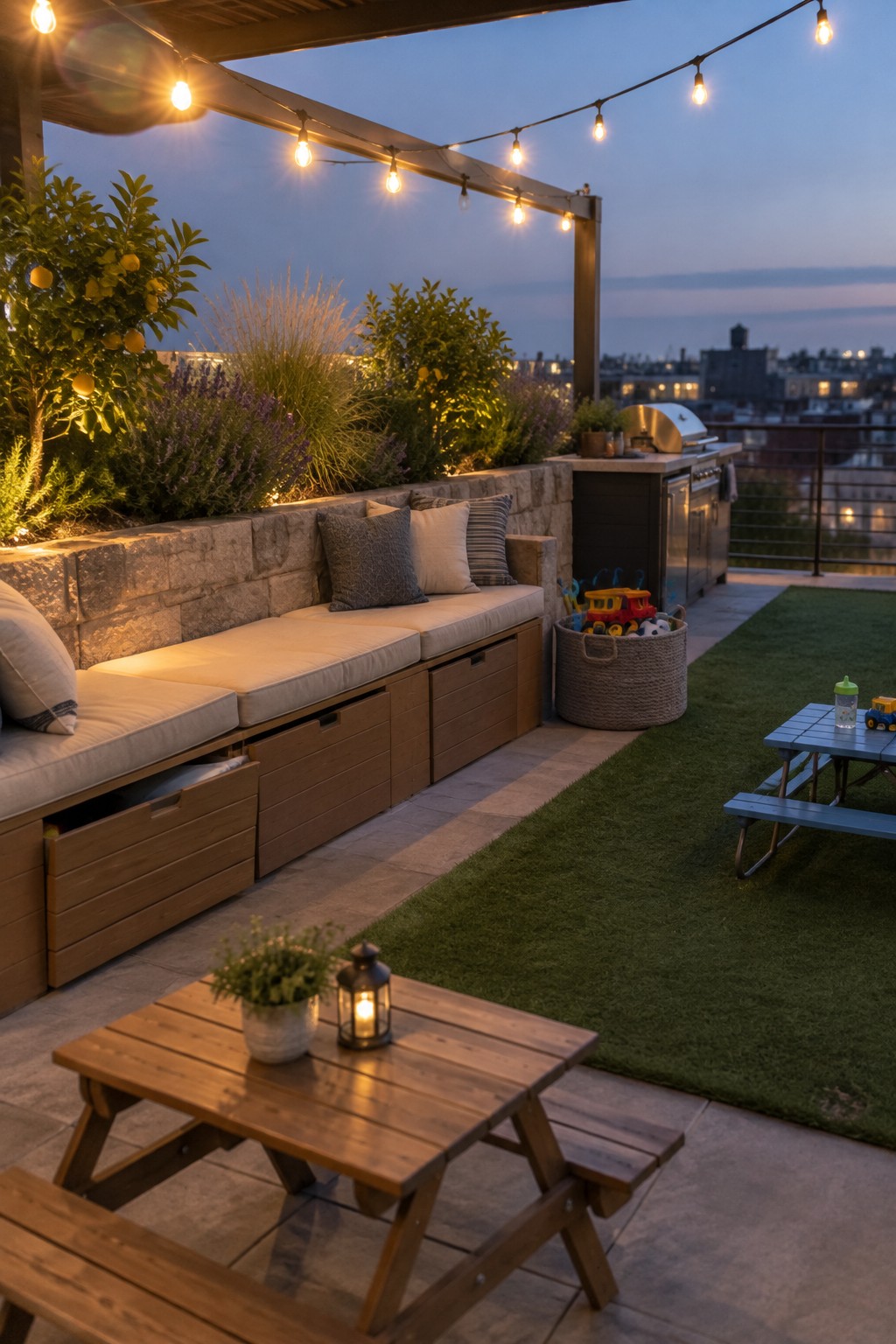
Built-in bench seating along a planter wall gives a roof terrace a place to sit without taking up extra floor space. The drawers underneath keep cushions, toys, or tools tucked away so the surface stays clear.
This works especially well on smaller terraces where loose furniture would crowd the area. It suits homes that already have raised beds or low walls since the bench can sit right against them and feel like part of the same build.
Built-In Bench Seating Along Planter Walls
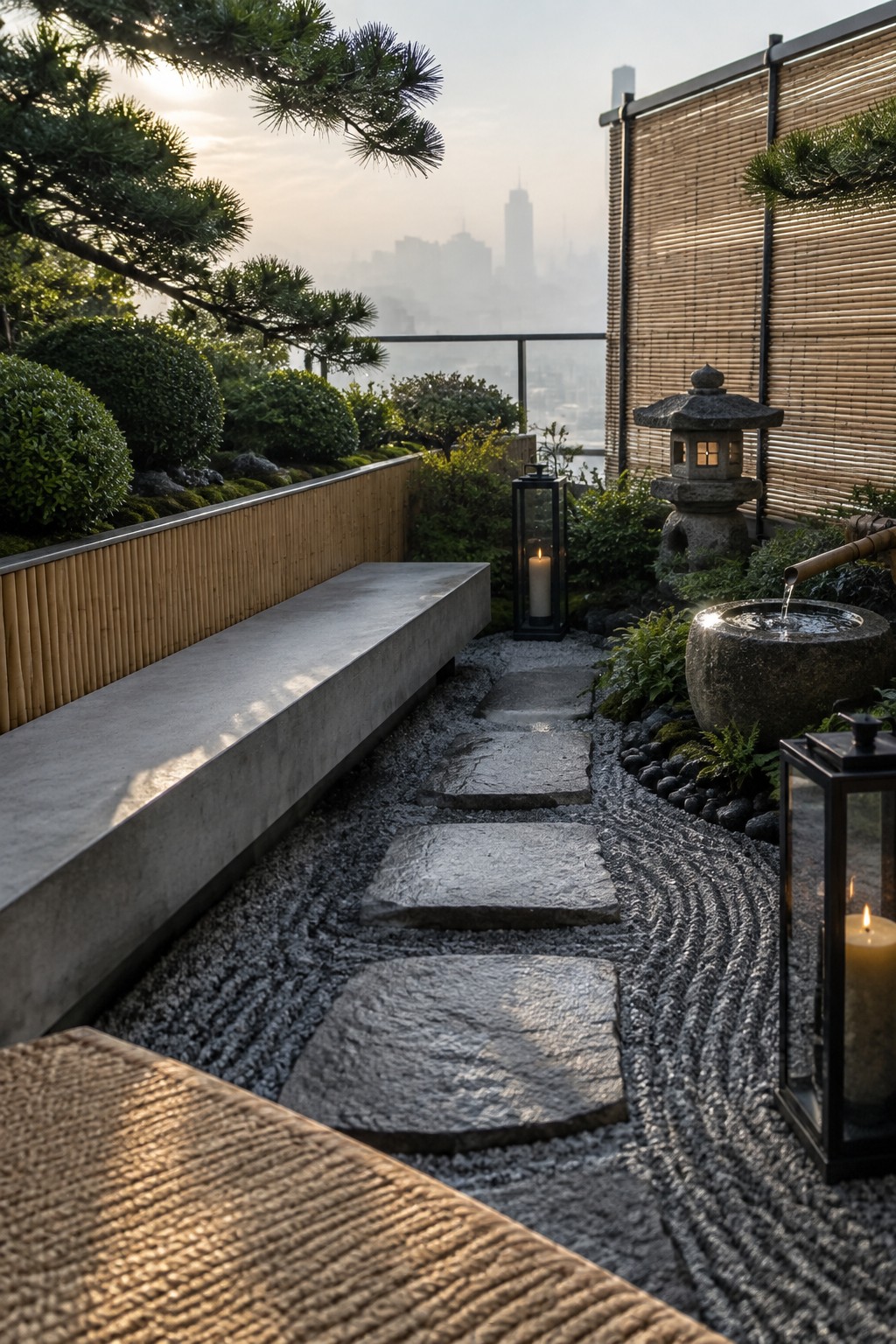
A built-in bench gives you steady seating without crowding the open floor on a roof terrace. It works especially well when it runs along a low wall that also holds plants, since the two features support each other and keep the space feeling orderly.
This approach suits city rooftops where you want both seating and a bit of screening. Keep the bench depth around 16 to 18 inches so it stays comfortable, and make sure the planter wall behind it is tall enough to hold soil but low enough not to block the view.
Bench Seating Built Into a Planted Wall
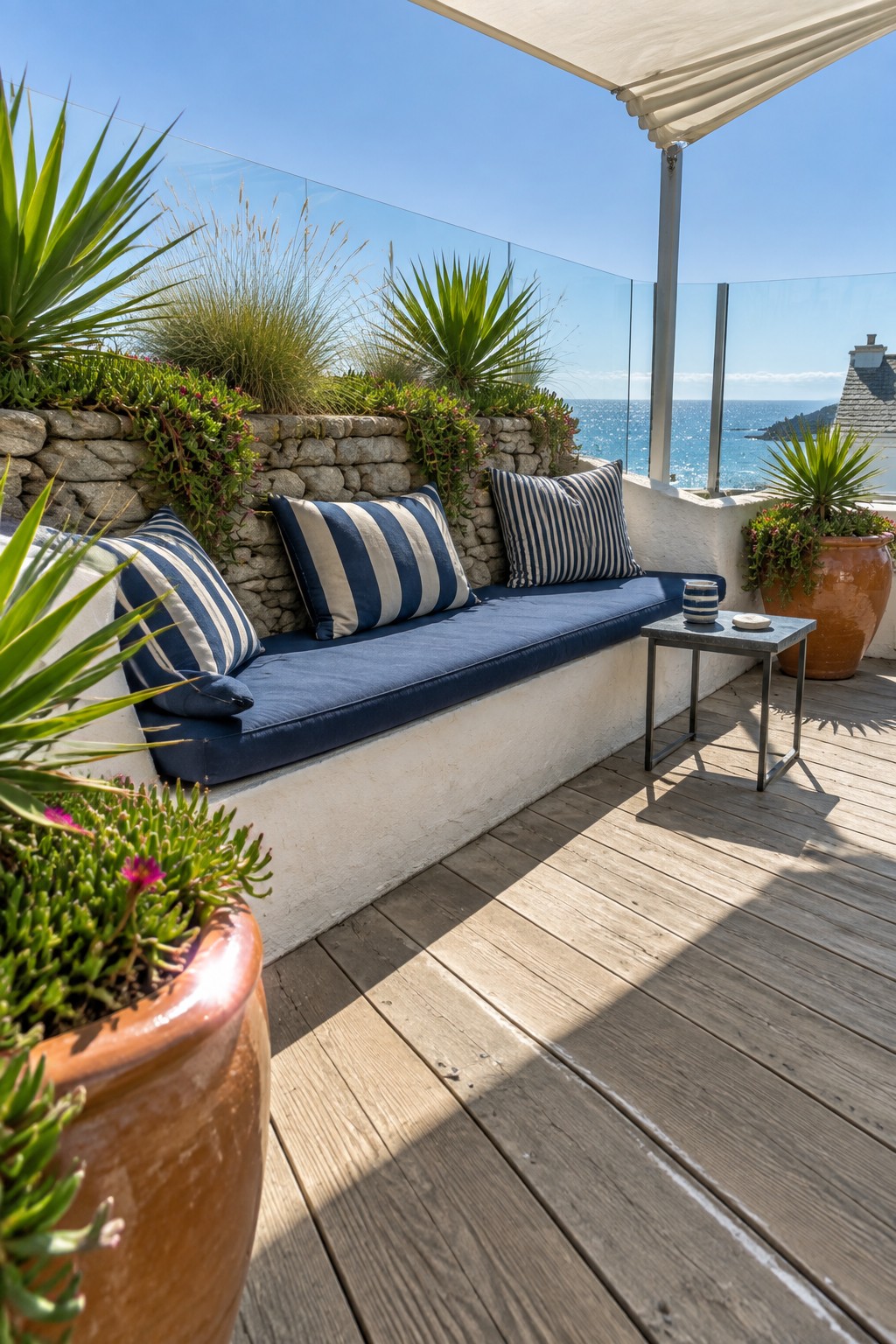
A built-in bench along a low stone wall with planting on top gives a roof terrace a finished edge without taking up extra floor space. The bench stays low and steady, and the greenery softens the wall while keeping the view open.
This setup works best on terraces that already have a solid edge or parapet. It suits homes near the coast or in windy spots, since the wall provides some shelter and the bench does not shift around like loose furniture.
Bench Seating Along Planter Walls With Privacy and Lighting
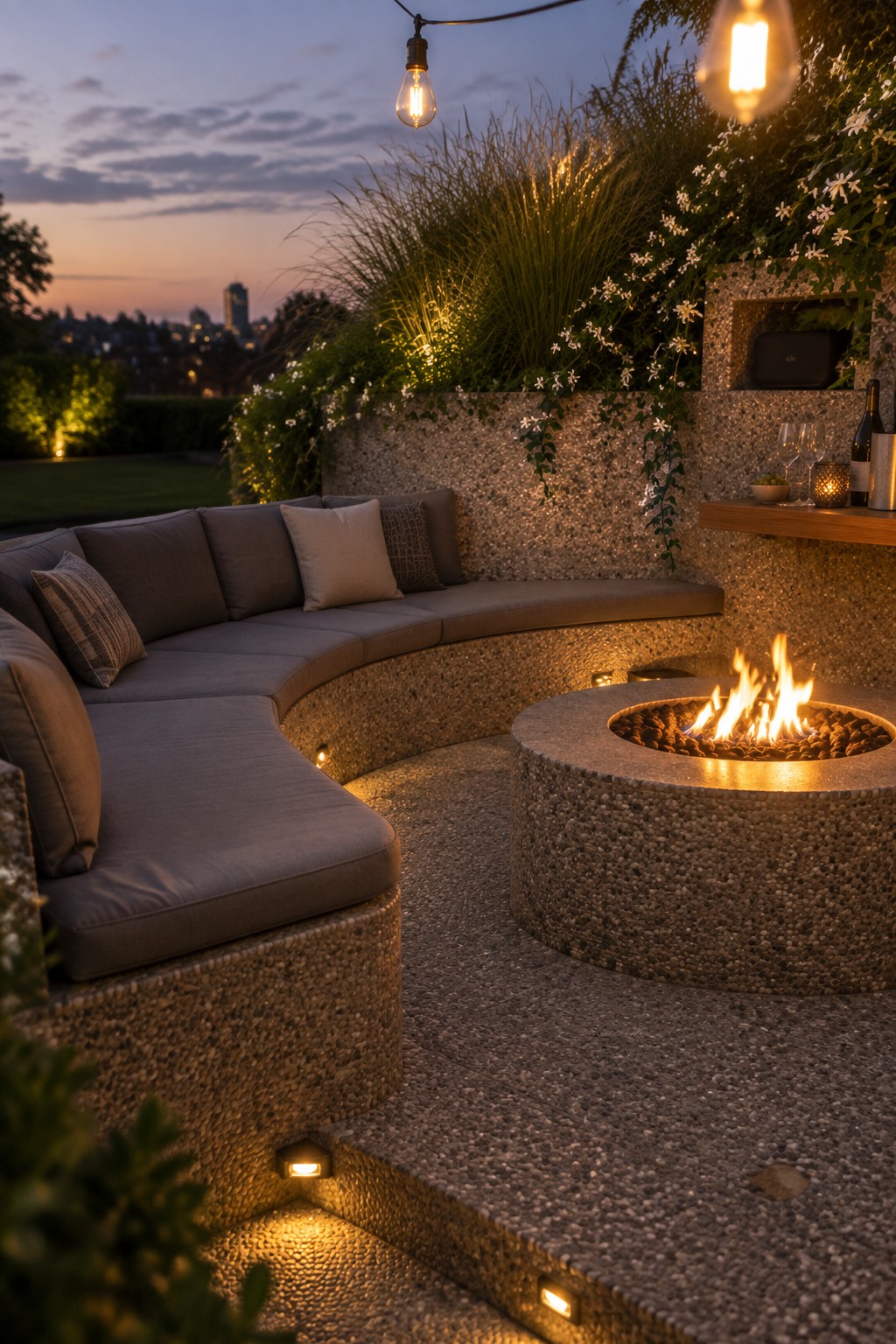
A built-in bench that follows the edge of a planter wall gives a terrace clear shape without adding loose furniture. The seating feels permanent and comfortable, and the wall behind it provides both privacy and a place to add lighting or plants right where people sit.
This layout works especially well on roof terraces that need to feel enclosed but not closed in. Keep the bench low and wide so it doubles as extra surface space, and choose a planter height that lines up with the back cushions. The fire pit can then sit in the open center without blocking the flow.
Wood Bench Seating Built Into Planter Walls
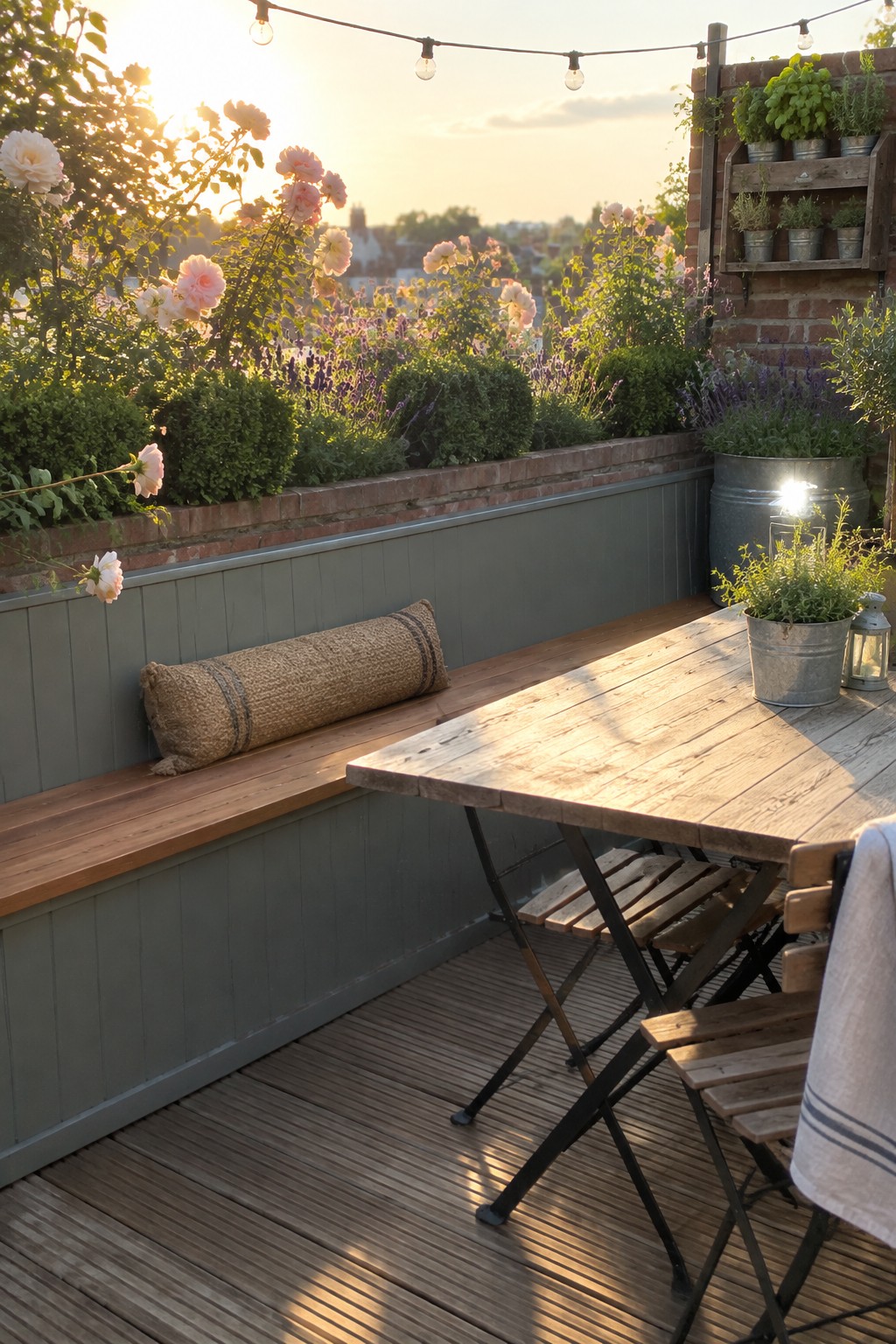
This approach keeps a roof terrace feeling open while still giving you plenty of places to sit. The bench runs right along the base of the planter wall, so the raised bed doubles as a backrest and the plants stay within easy reach.
It works best on smaller terraces where floor space is limited. Use a simple wood bench and let the planting spill over the top for a bit of shade. Just check that the wall is solid enough before you build against it.
Built-In Bench Seating With Small Trees and Shrubs
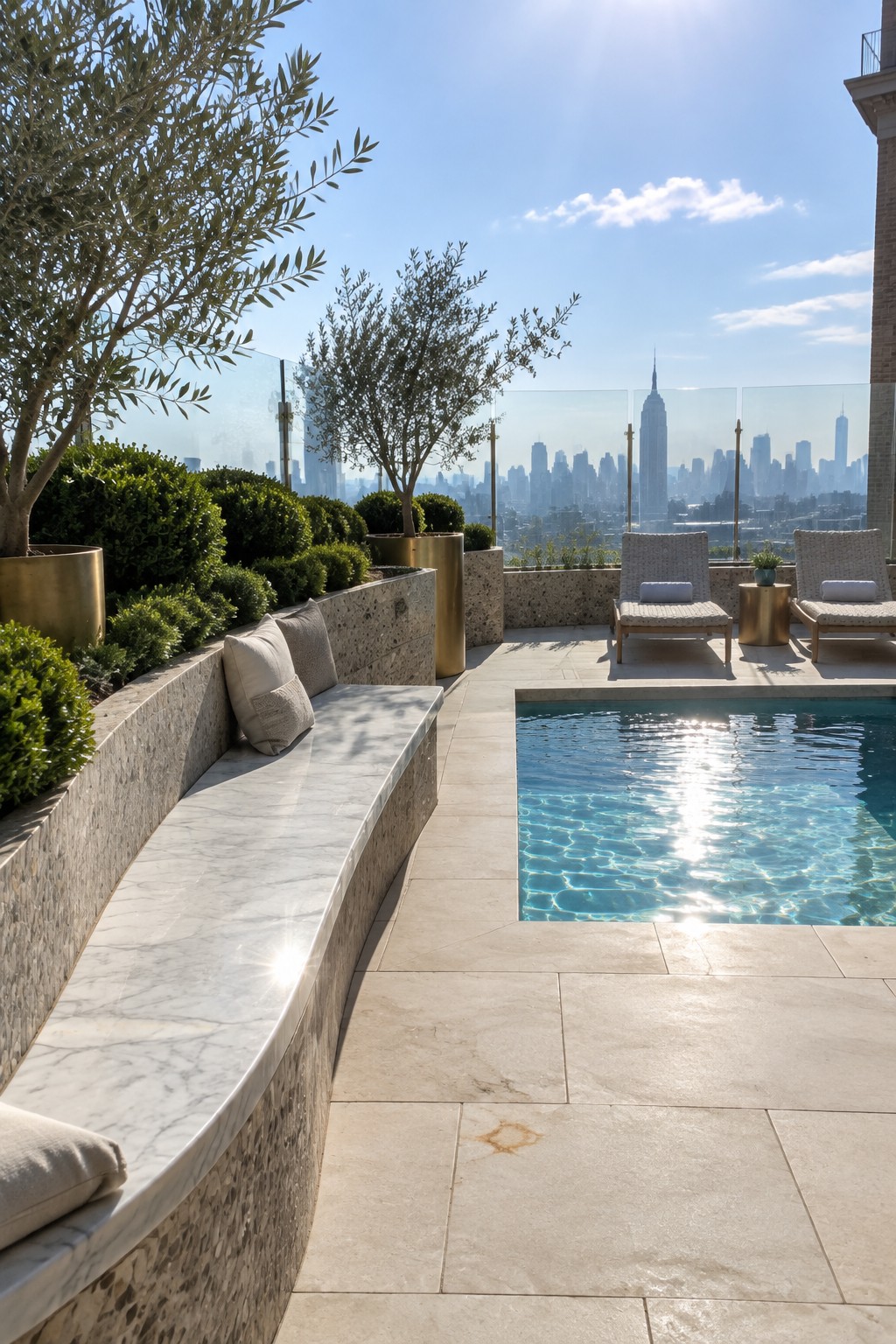
A built-in bench that runs right along a planter wall gives a roof terrace steady seating without taking up extra floor space. The setup feels solid because the bench and planters share the same structure, so the seating stays put even on a high, windy spot. It also keeps the area looking open since there are fewer loose chairs to move around.
This works best on urban terraces where you want a clean edge without blocking the view. Use it where the planters can hold small trees or shrubs for a bit of shade and privacy. Just make sure the bench material holds up to weather and that the curve follows the shape of your space so it does not feel forced.
Built-In Bench Seating Along a Living Wall
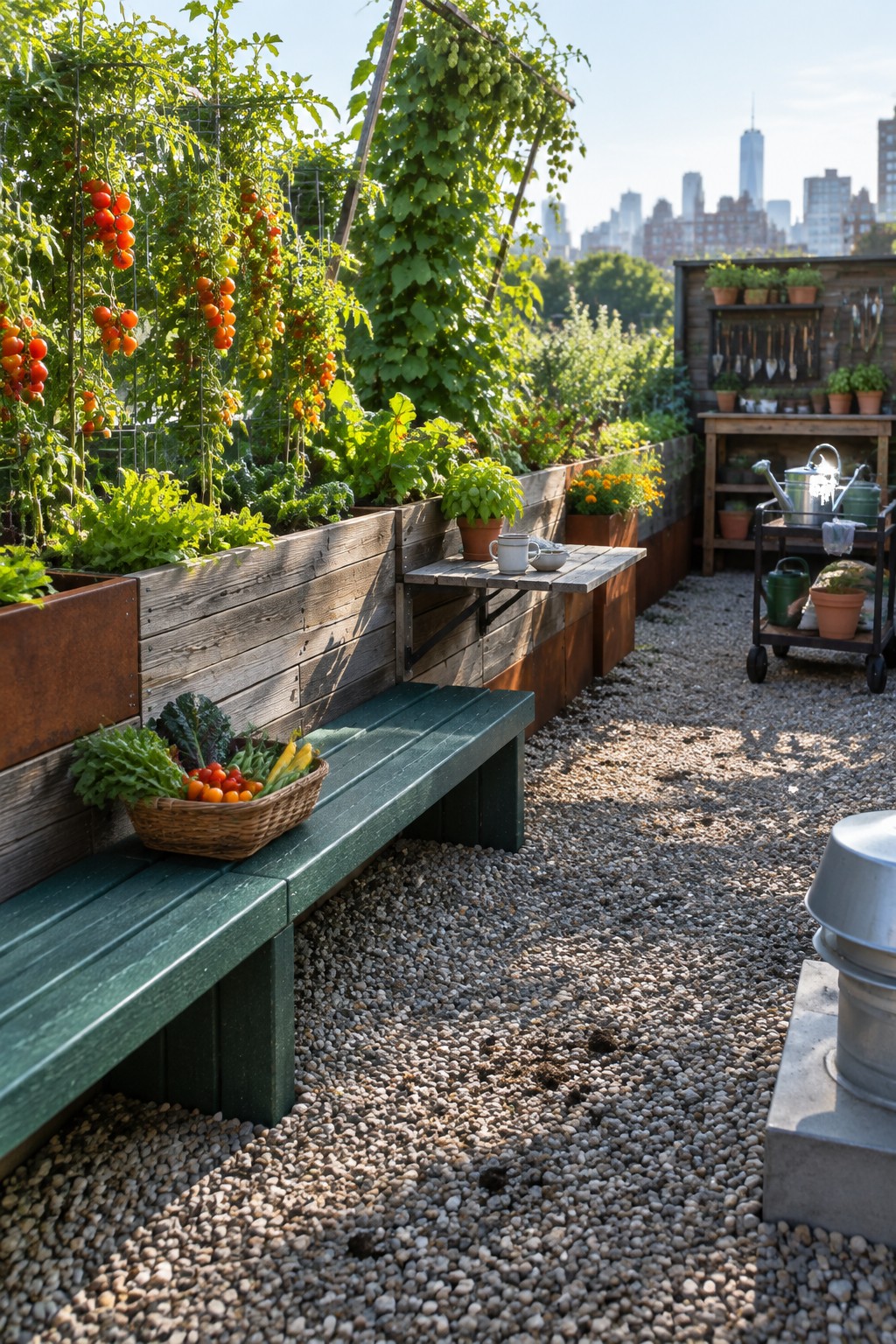
Running a bench right up against raised planters gives a roof terrace both seating and growing space in one simple line. It keeps the middle of the terrace open while turning the edge into something useful instead of just a boundary.
This works best on smaller or narrow terraces where every foot counts. Use a sturdy bench that can take weather and make sure the planters are deep enough for vegetables or herbs so the setup stays practical rather than purely decorative.
Built-In Bench Seating Along A Living Wall
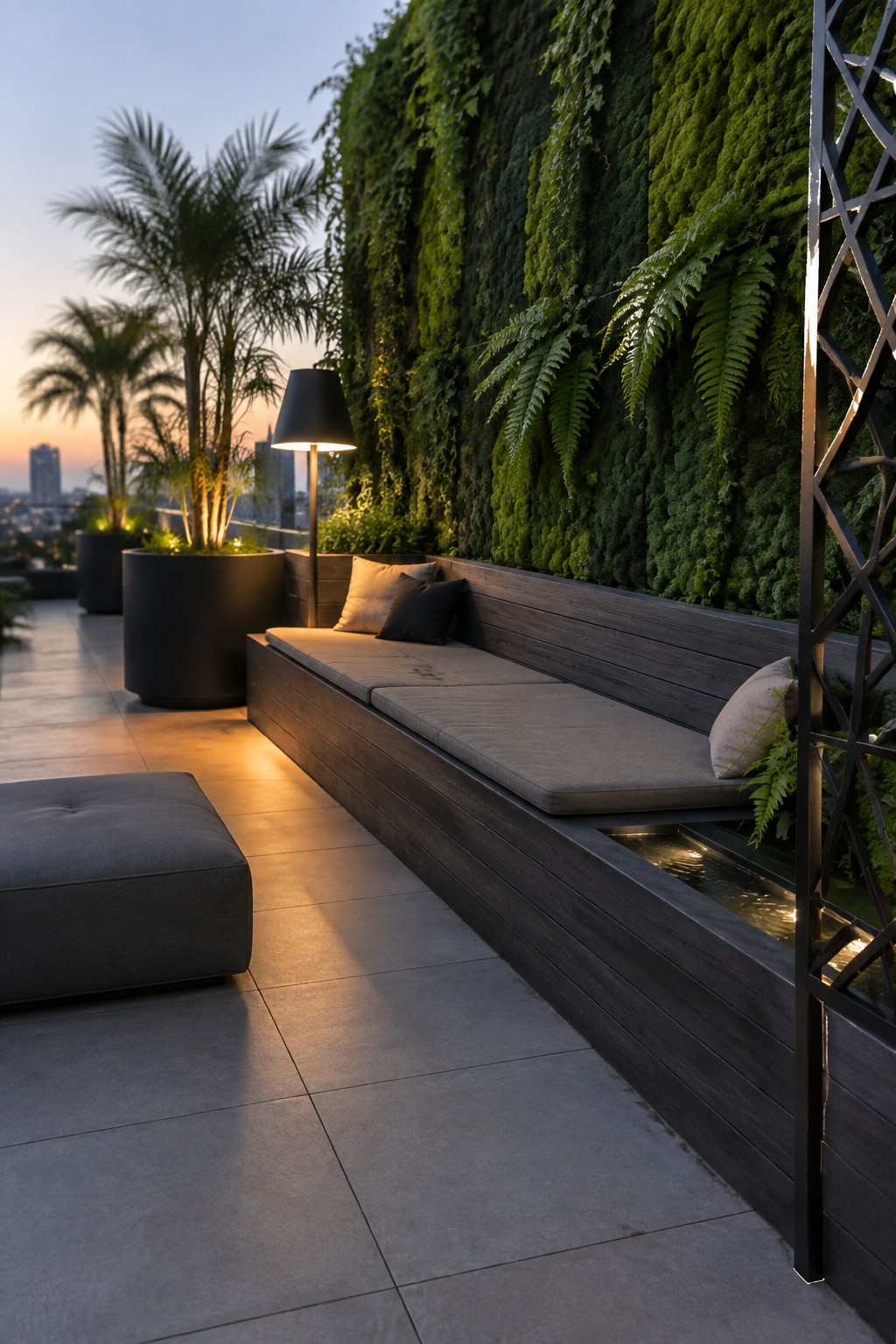
A built-in bench running the length of a green wall keeps seating simple and out of the way on a roof terrace. It gives you room to sit without adding extra furniture that would crowd the space or block the view.
This works best on terraces where you want low-maintenance seating that feels tied to the planting. Use weatherproof cushions and make sure the bench depth feels comfortable for long sits.
Built-In Bench Seating With Planter Walls
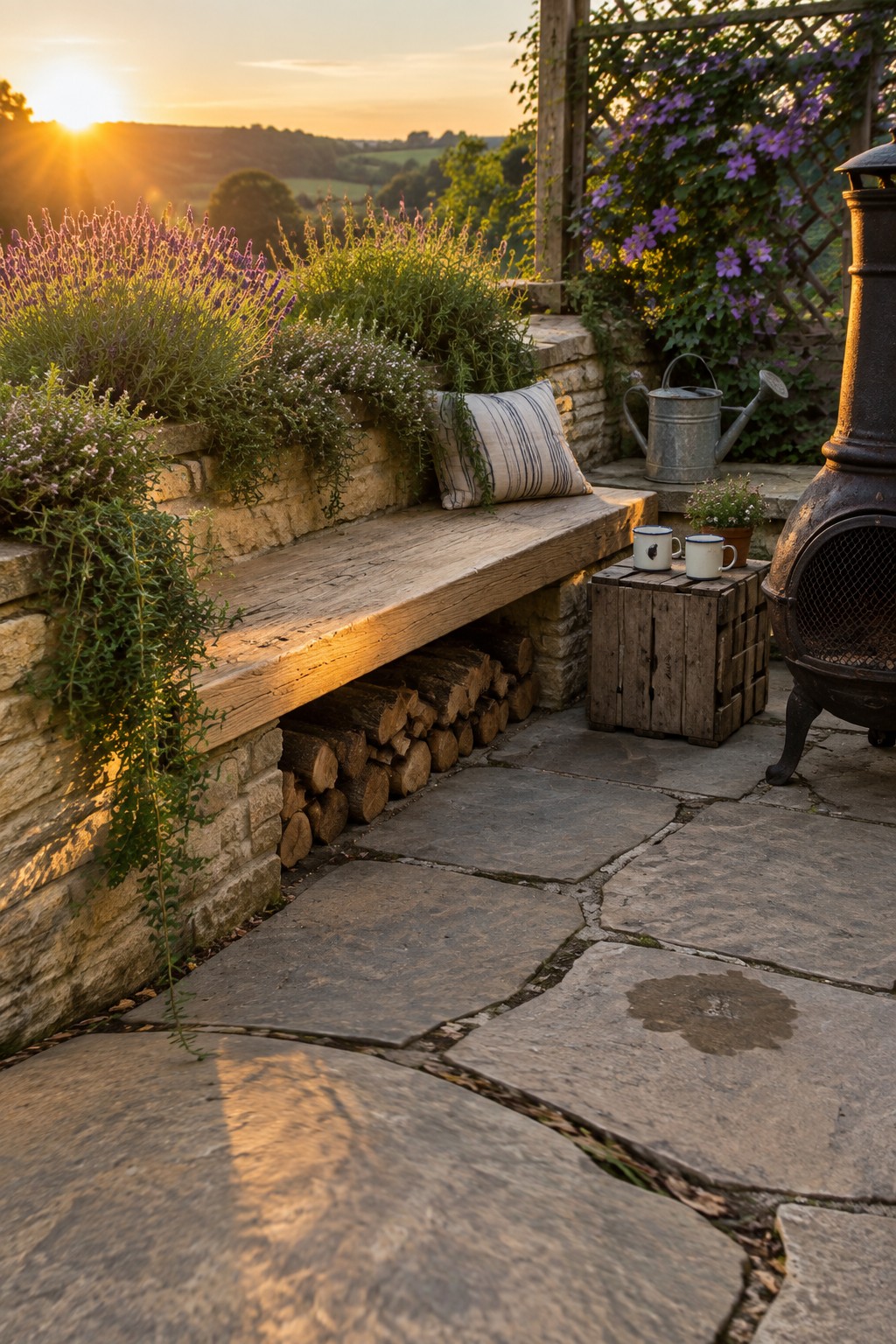
One practical way to make a roof terrace work harder is to build the seating into the same walls that hold the plants. This approach turns the edge of the space into both a place to sit and a planting area, which saves floor space and gives the terrace a settled look.
It suits homes where the terrace is modest in size or where you want low-maintenance structure. A simple wood top on the bench adds comfort while the stone or brick planters keep the whole setup solid and able to handle weather year after year.
Tiled Bench Seating Built Into Planter Walls
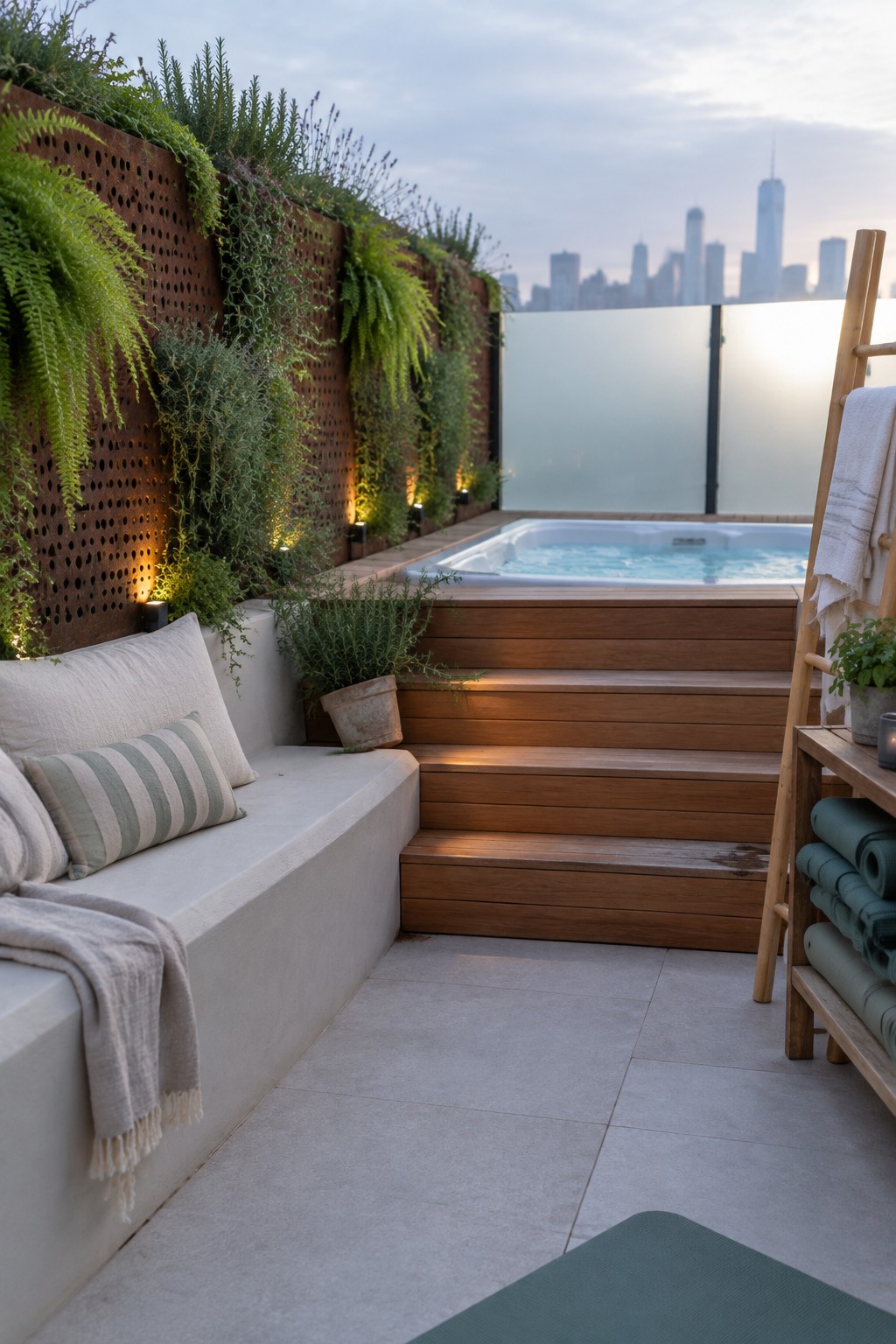
A built-in bench tucked right against a vertical planter wall gives a roof terrace a settled, usable spot without taking up extra floor space. The wall itself handles most of the visual weight, so the seating stays low and simple. Warm lights tucked into the planting keep the area comfortable after dark.
This setup works well on flat roof terraces where you want seating but do not want to crowd the deck with freestanding furniture. Use a durable material like concrete or wood for the bench and choose hardy plants that can handle wind and sun. Keep the bench depth around 18 inches so it feels comfortable without blocking the walkway.
Bench Seating Built Into Planter Walls
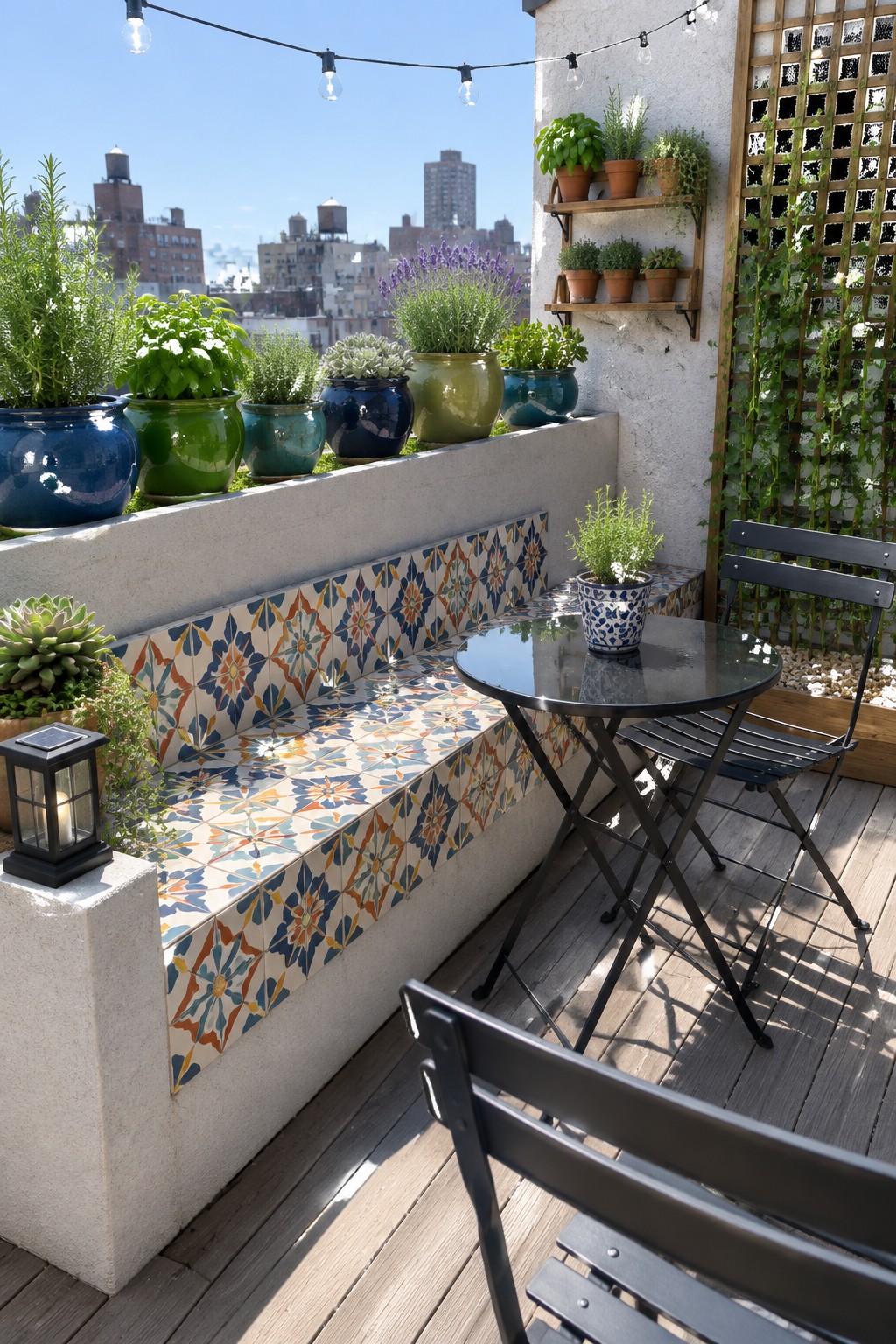
One simple way to make a roof terrace feel more usable is to build the seating right into the planter wall. The bench becomes part of the structure instead of something added later, which saves space and gives the plants a solid base. A tiled front on the bench also helps protect the wall and adds a bit of color without much extra work.
This setup works best on smaller terraces where you need seating and planting in the same area. Keep the bench height at a normal chair level and choose plants that can handle wind and sun. It suits city rooftops especially well since it keeps everything contained and low maintenance.
Concrete Bench Seating Along Planter Walls
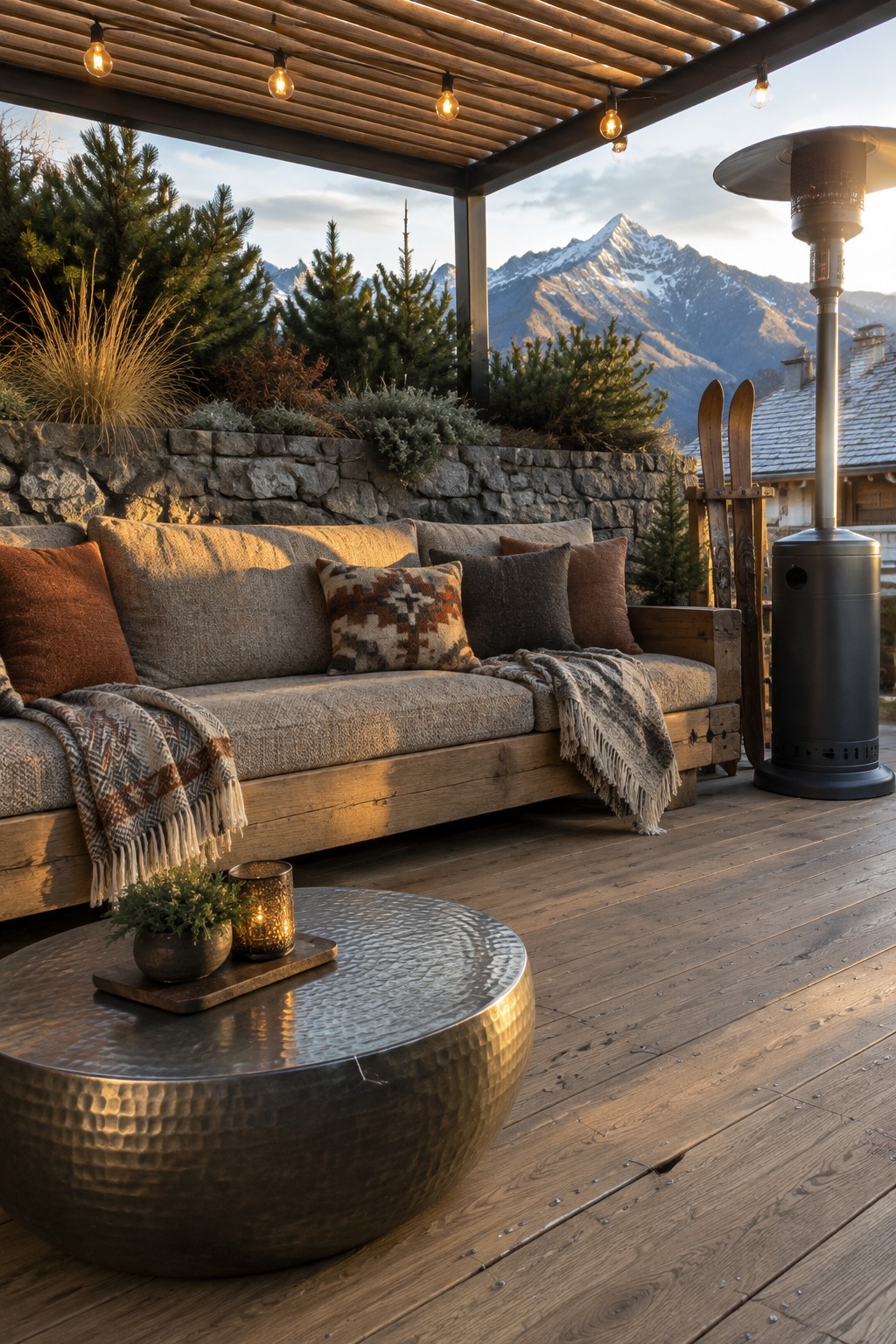
Building bench seating right against a planter wall gives a roof terrace a solid, finished look without crowding the space. The bench becomes part of the structure, and the wall behind it holds the planting that softens the whole area.
This works best on terraces where you want seating that stays put and does not need rearranging. Use a simple wood bench, keep the wall height low so views stay open, and choose plants that can handle wind and sun.
Built-In Bench Seating With Planter Walls
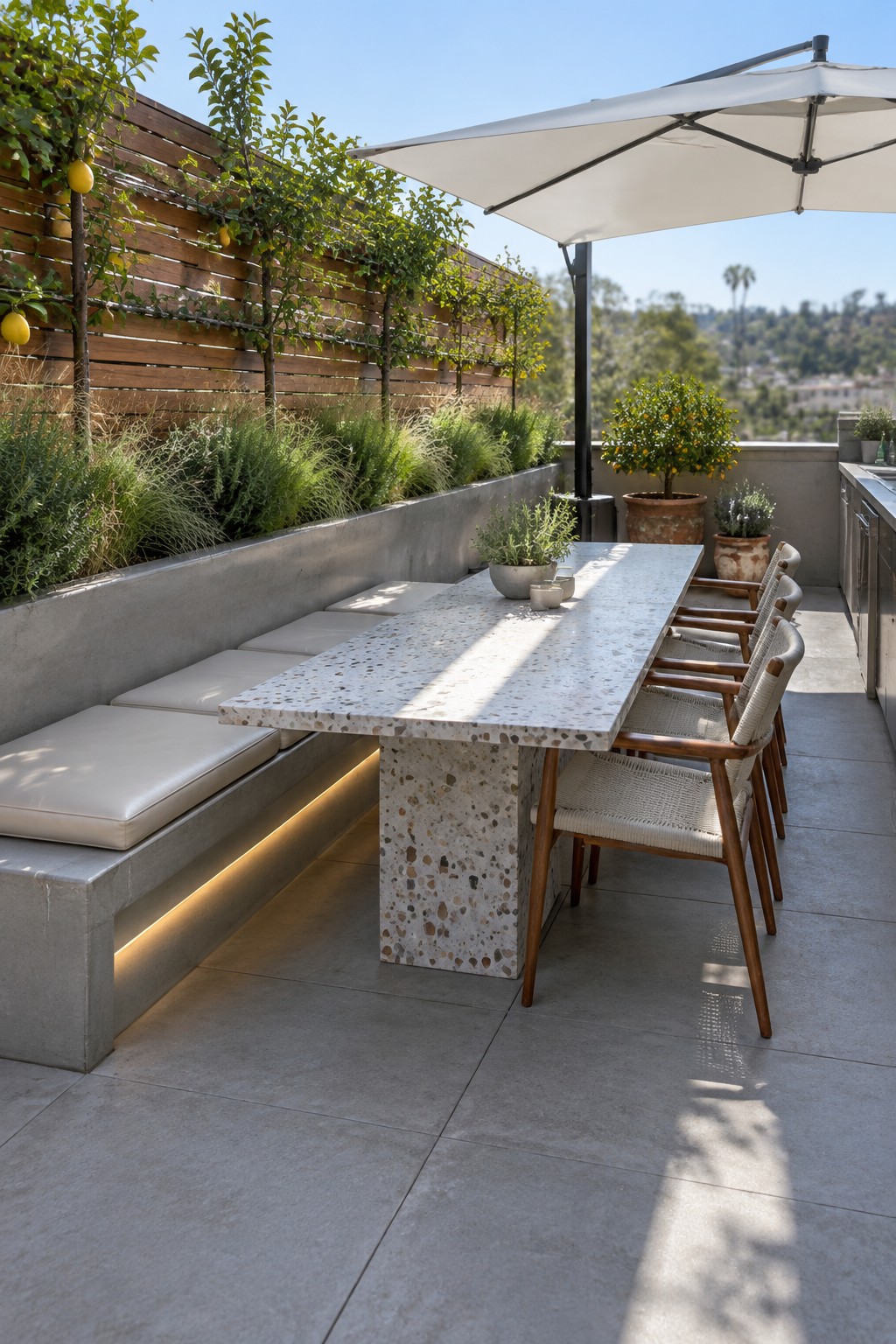
A built-in bench along a planter wall makes good use of the edge space on a roof terrace. It gives you seating without adding extra furniture that would crowd the area, and the wall behind it helps define the space while keeping plants close at hand.
This works best on terraces where you still want room for a table and extra chairs in the middle. Keep the bench depth comfortable for sitting and choose materials that hold up outside, like concrete with simple cushions. The planter wall can hold taller plants for a bit of privacy without blocking the view completely.
Durable Built-In Benches Along Planter Walls
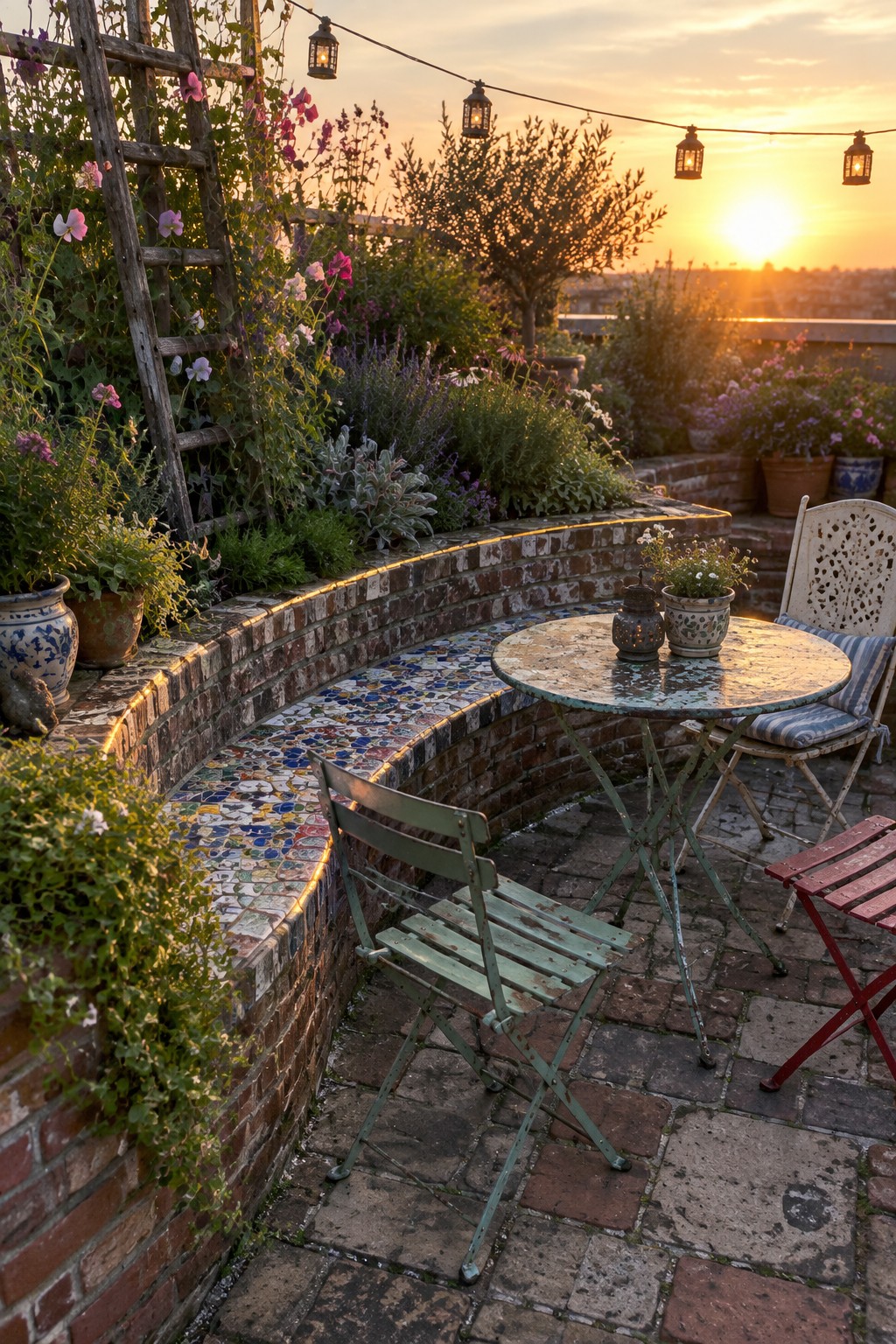
A low brick planter wall with a built-in bench gives a roof terrace useful seating without taking up extra floor space. The curve helps the bench follow the edge of the terrace and turns an otherwise plain wall into the main seating area. It works especially well on smaller rooftops where freestanding furniture would crowd the space.
This setup suits city terraces or any outdoor area where you want permanent seating that still leaves room to move around. Use weatherproof materials for the bench surface and keep the planting simple so it does not overwhelm the sitting area.
Built-In Benches With Integrated Planter Walls
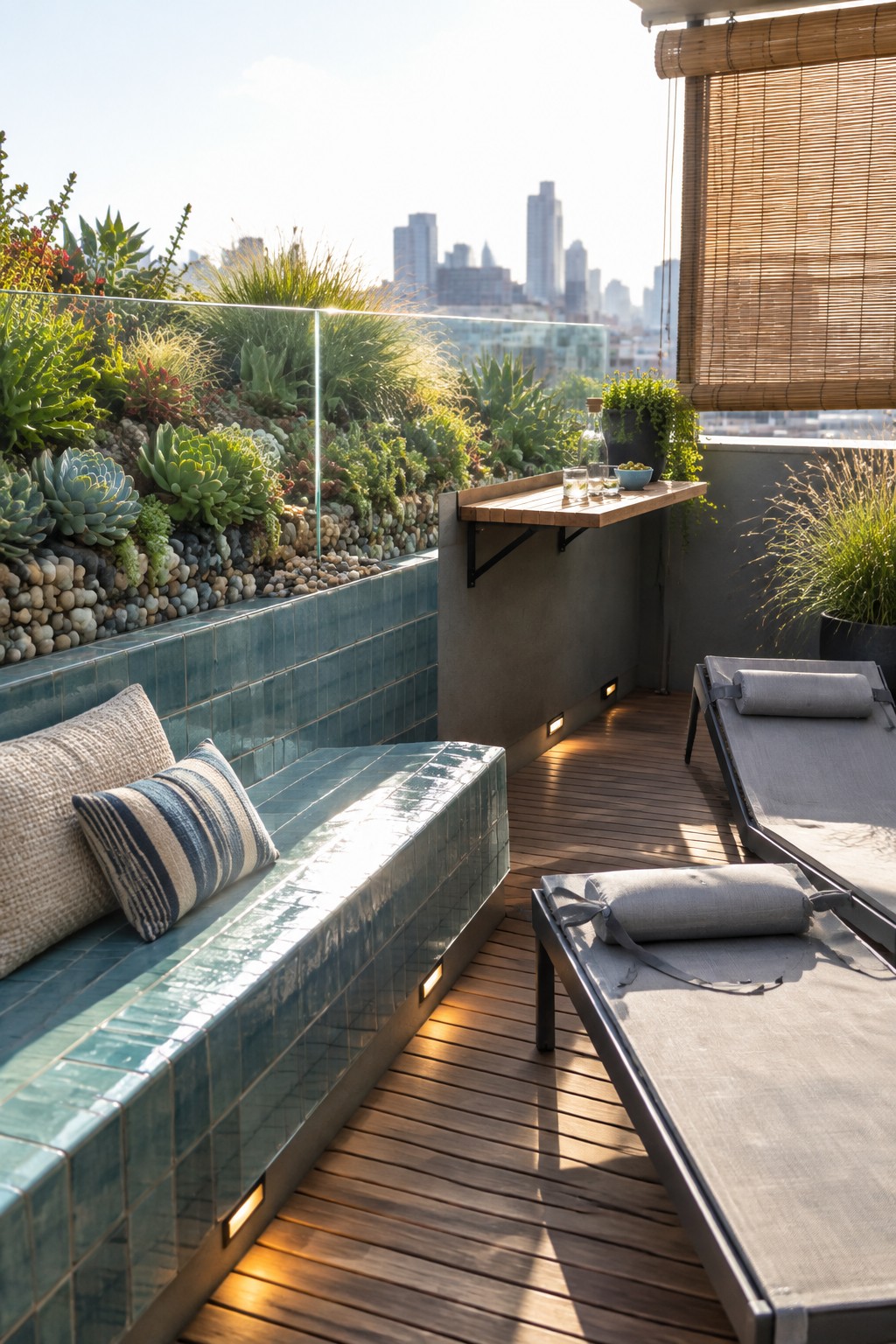
A built-in bench that sits right against a planter wall makes good use of the edge of a roof terrace. It turns what would be dead space into seating while the plants behind it add some privacy and softness without needing extra pots or furniture.
This approach suits smaller terraces or rooftops where floor space matters. Keep the bench simple and durable so it can handle weather, and make sure the planter is deep enough for the plants to stay healthy over time.
Built-In Benches With Planter Walls
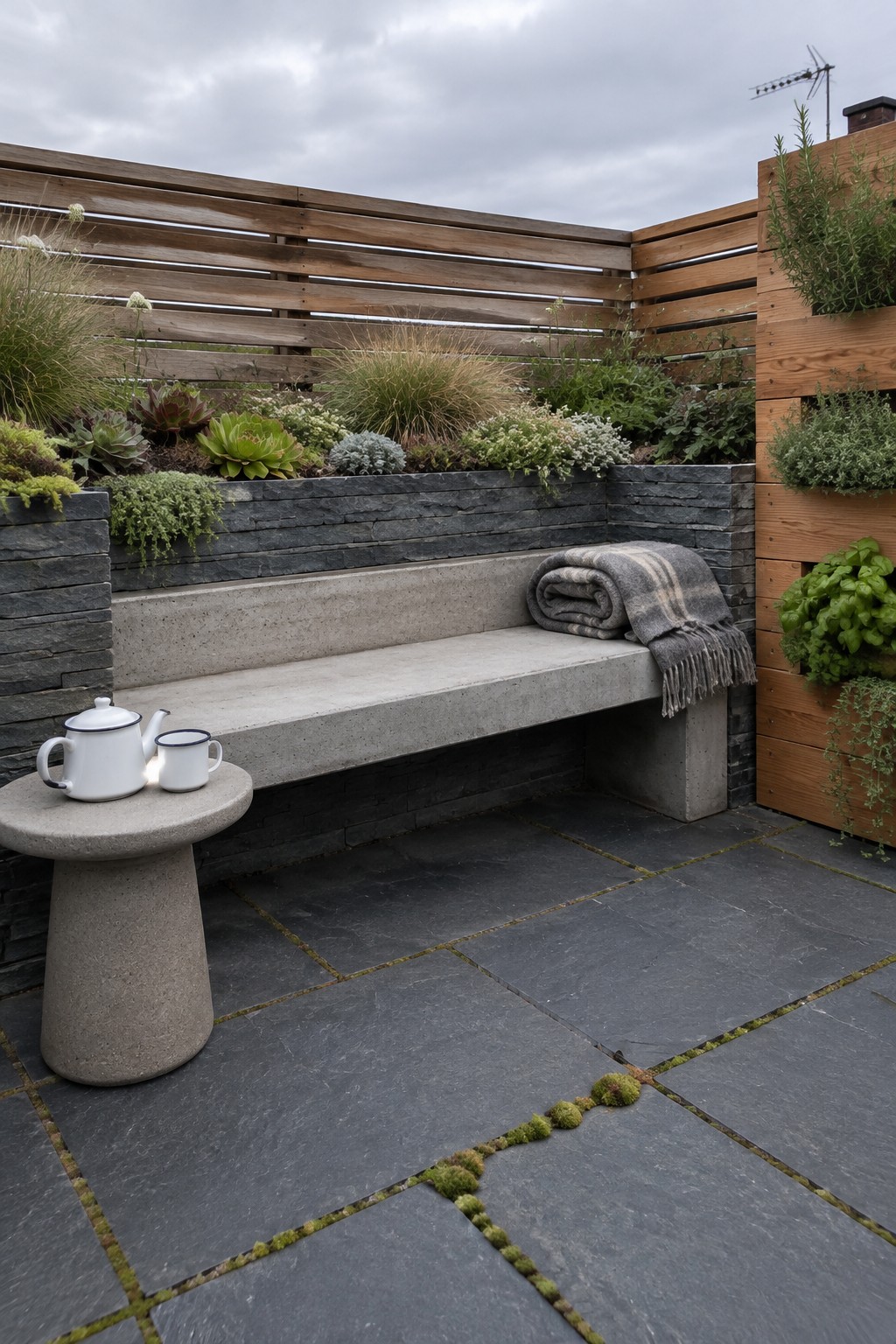
Many roof terraces feel more useful when the bench is built straight into the planter wall instead of added as a separate piece. It saves floor space and creates a clean edge that keeps the whole area looking organized.
This approach works best on smaller rooftops or balconies where you need both seating and planting without crowding the floor. Use durable materials like concrete or stone so the bench can handle weather and still look like part of the structure.
Bench Seating Along a Planter Wall
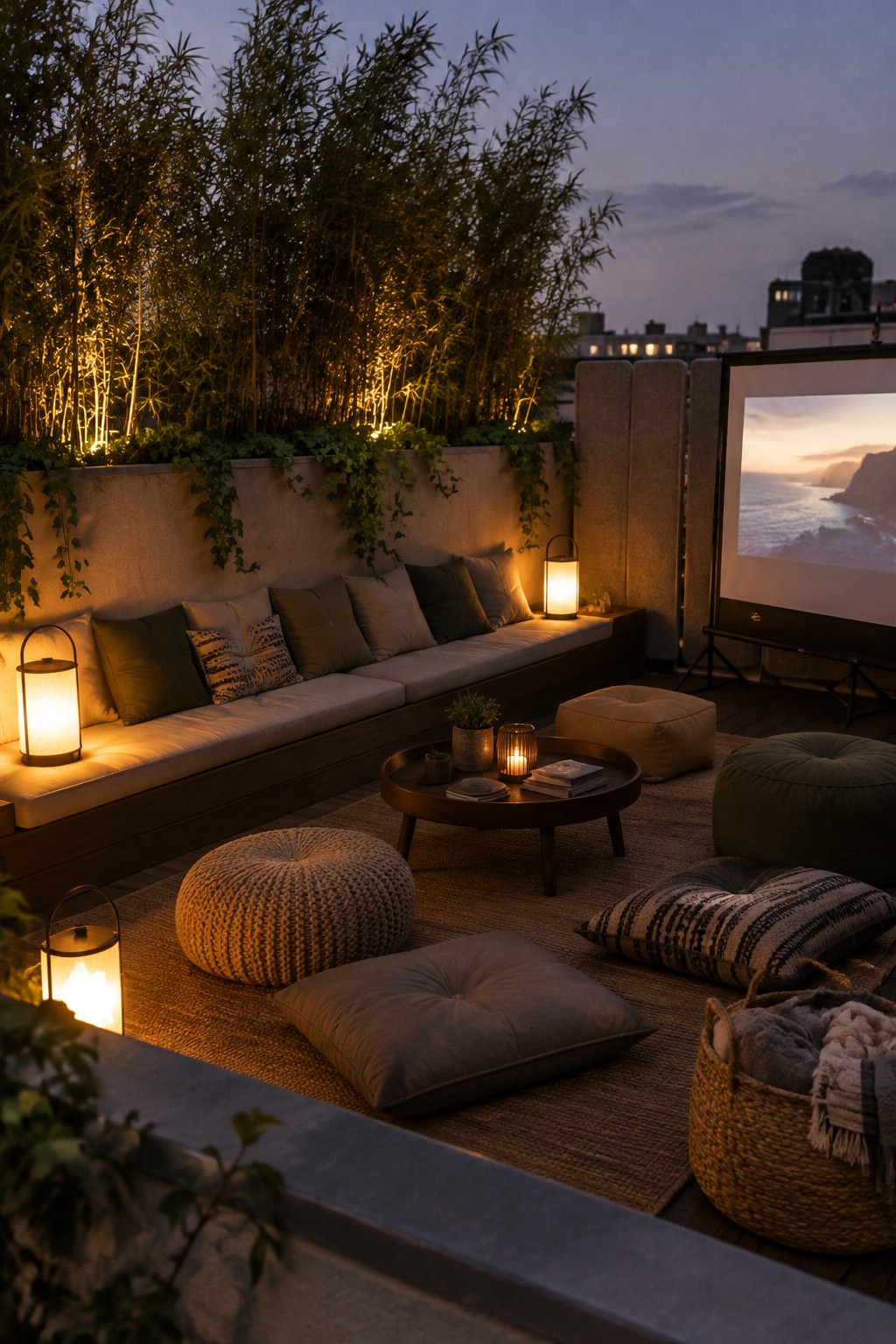
A built-in bench set right against a planter wall gives you a solid amount of seating without crowding the floor space on a roof terrace. The greenery softens the hard edges of the wall while low lights tucked into the planting keep the area usable after dark.
This works best on terraces that need a clear lounge zone without adding freestanding furniture that might blow around. Keep the cushions simple and add a low table in front so the space can shift easily from daytime lounging to evening use.
Frequently Asked Questions
Q: Should I build the benches right against the planter walls or leave some space?
A: Leave a small gap so you can water the plants without soaking the wood. This also lets air flow around the bench to prevent rot from trapped moisture.
Q: What kind of wood holds up best for benches next to planters on a roof?
A: Go with cedar or teak since they resist moisture well. You can treat them once a year to keep the color from fading in the sun.
Q: How do I make sure the planters don’t leak onto the roof below?
A: Line the inside with heavy plastic sheeting before adding soil. Check the drainage holes point away from the bench area so water runs off properly.
