

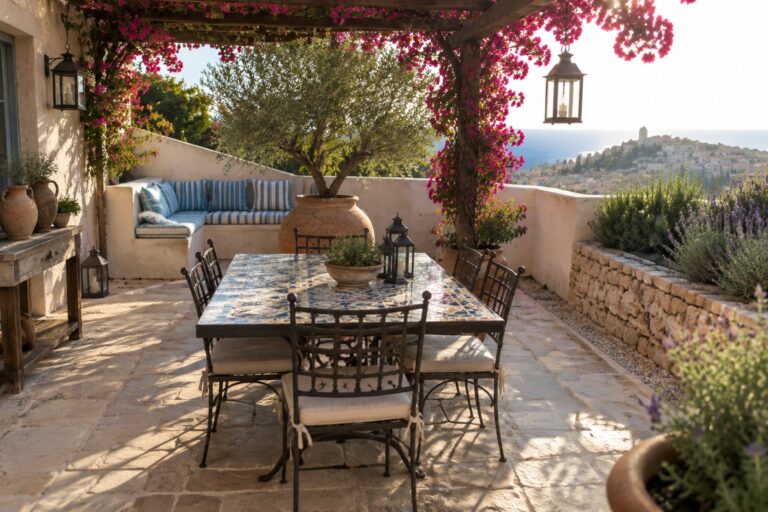
When I look at roof gardens the ones that feel right are those where the containers are placed so you can actually move around and enjoy the space without it feeling cramped.
Terracotta has a way of blending with the surroundings and handling the heat better than some other materials I’ve tried.
Not every pretty setup ends up being practical.
I’ve noticed that adding a few well-chosen pots can change how the whole area feels from the inside looking out too.
Some of these Mediterranean approaches using terracotta might be ones I test in stages rather than all at once.
Terracotta Pots Along the Terrace Edges
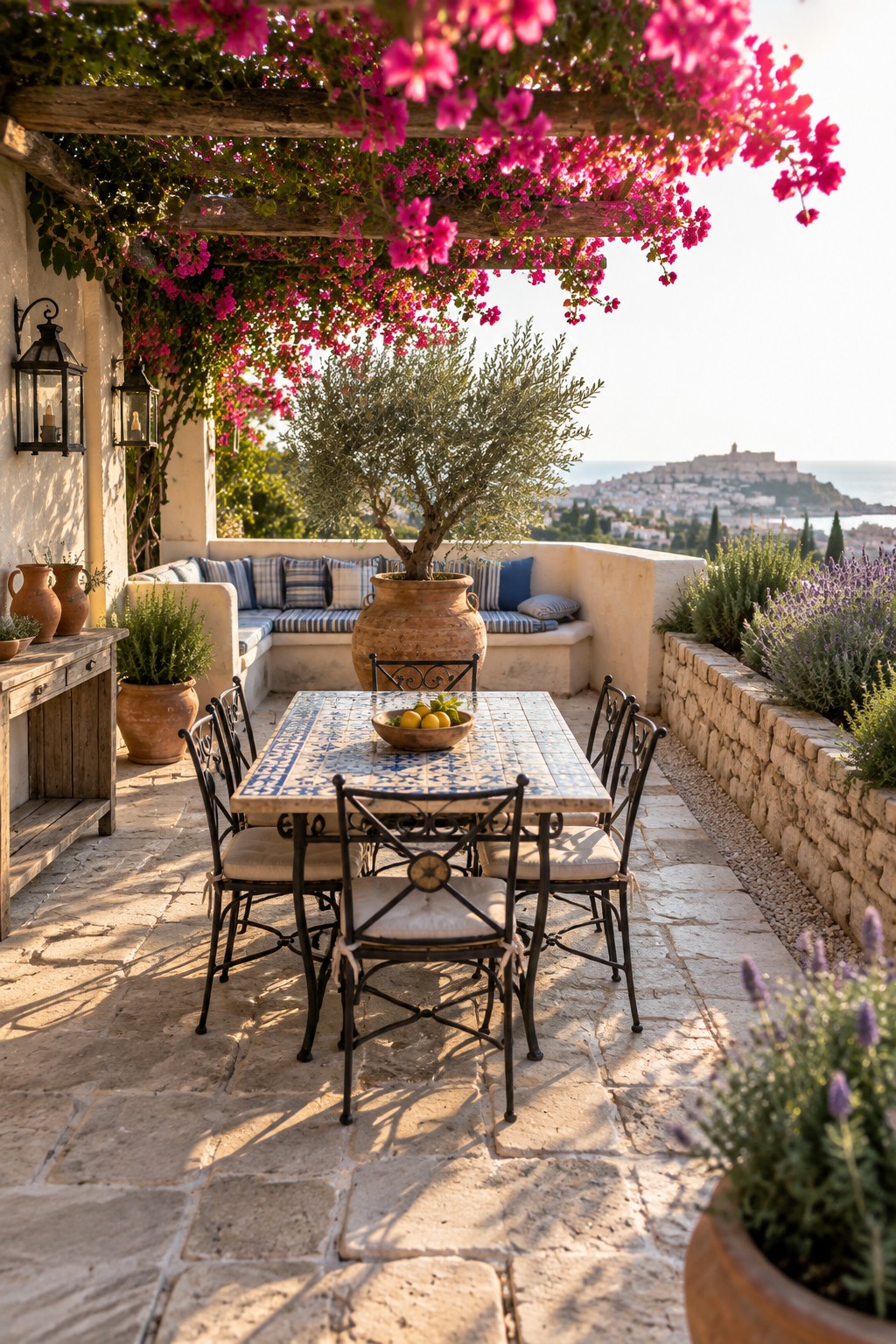
Terracotta containers work well on a roof garden because they add height and greenery right where people sit without needing built-in beds. In this setup the pots sit at the corners and along the open sides, keeping the dining table clear while still making the space feel planted and full.
Place the larger urns first to mark the edges, then fill in with smaller ones near seating or side tables. This works on most sunny terraces with stone floors, and it keeps maintenance simple since each pot can be watered and moved on its own.
Terracotta Pots Along the Patio Table
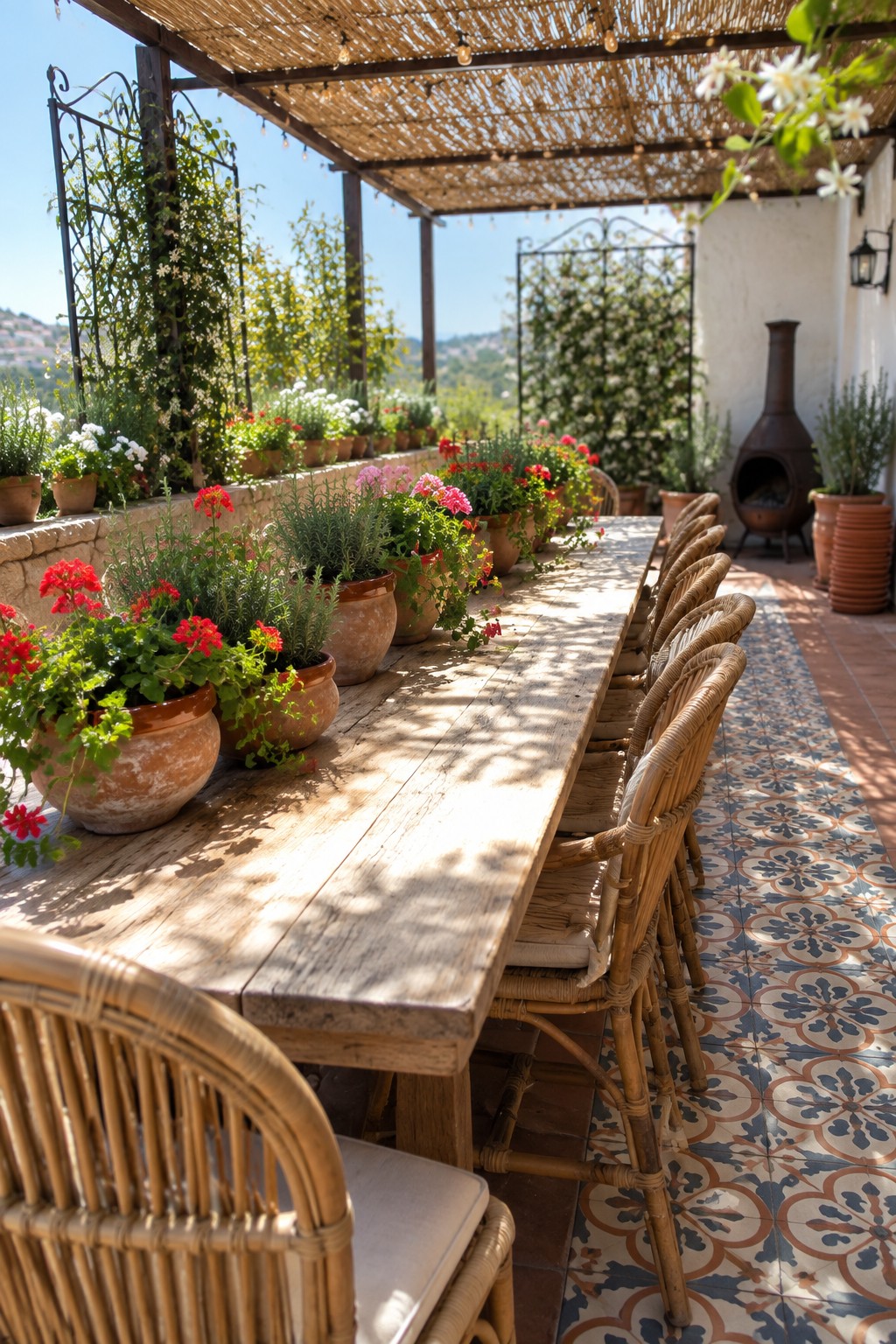
Placing terracotta containers in a long row right beside an outdoor table turns the whole seating area into a garden spot. The pots sit low enough to keep the view open while still giving plenty of color and greenery close at hand. This setup works especially well on roof terraces where space is tight and every inch needs to count.
It suits homes with warm climates and simple outdoor dining areas. Use a mix of herbs and flowering plants so the pots stay useful as well as pretty. Make sure the containers are heavy enough to stay put on windy days.
Wall-Mounted Terracotta Pots Free Up Floor Space
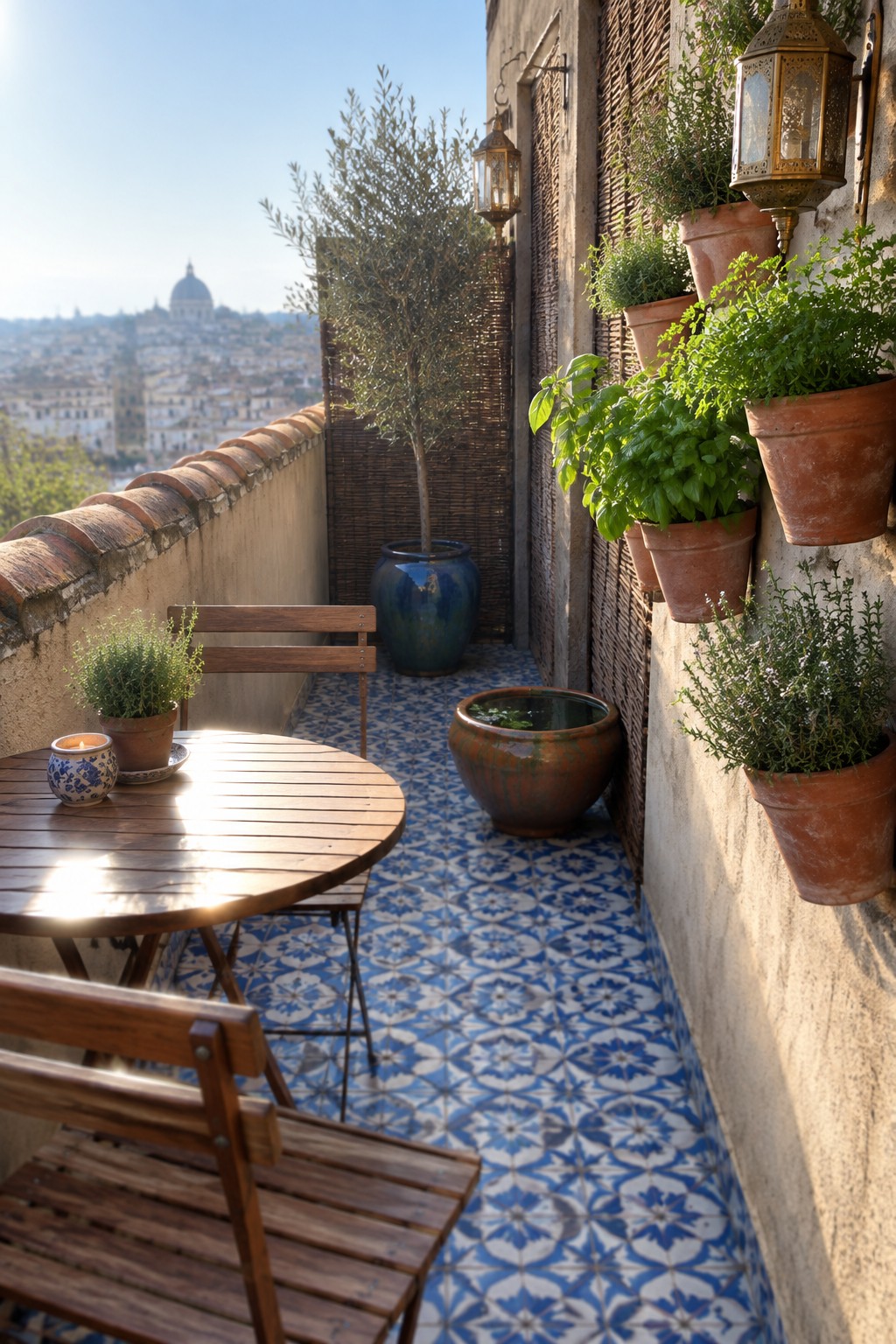
Many small roof terraces feel cramped once you add a table and chairs. Mounting terracotta pots directly on the wall solves that by moving most of the plants up and out of the way while still keeping plenty of greenery close at hand.
Place the pots at different heights along one side wall and fill them with herbs you reach for often. This setup works best on balconies or roof gardens with solid masonry walls and gives you an easy way to grow food without losing room to walk or sit.
Grouping Large Terracotta Pots on a Patio
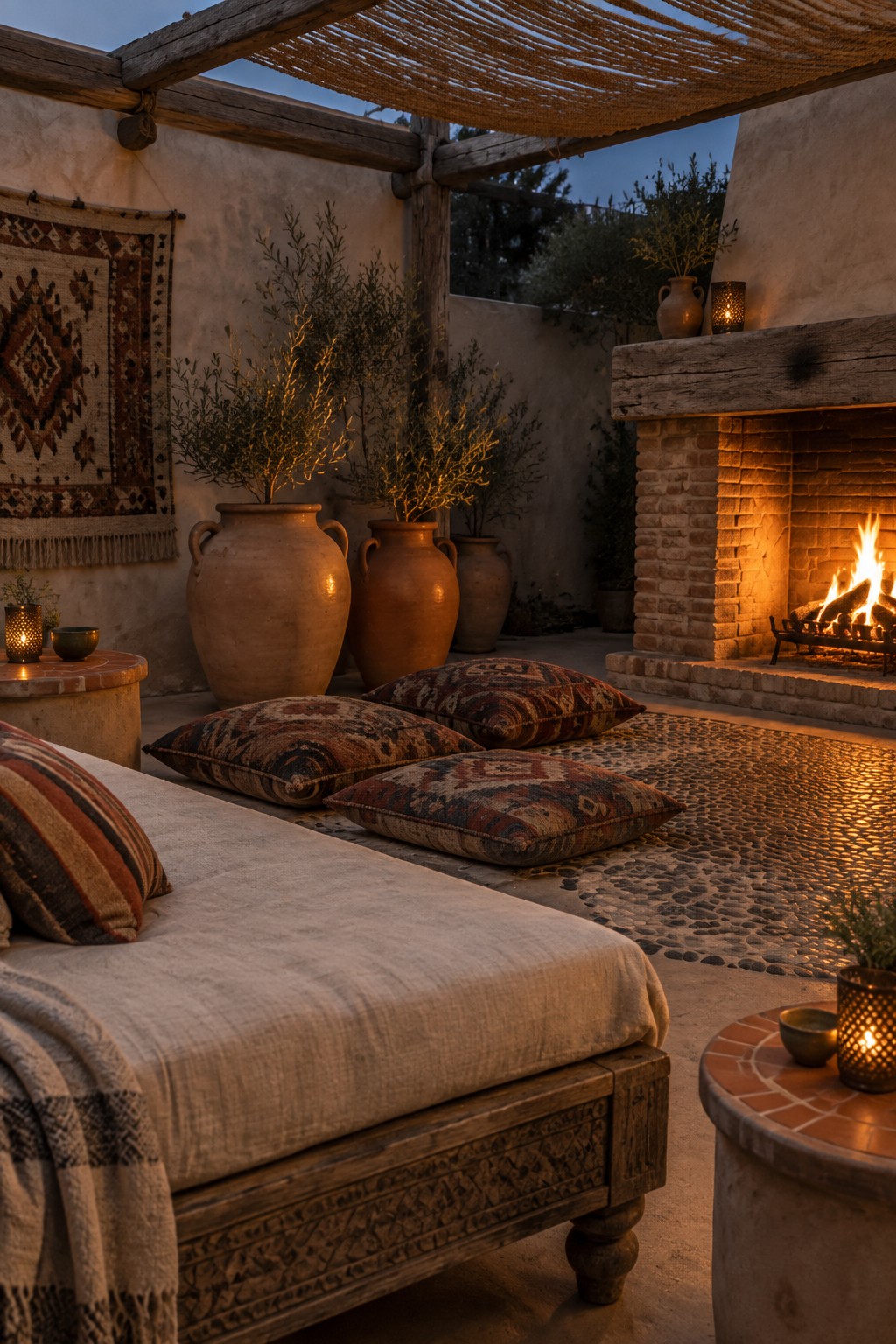
Large terracotta pots work well because they add height and a bit of softness without any permanent construction. They help break up the hard surfaces on a patio while still leaving the space open and easy to rearrange.
This approach suits a roof garden or terrace where you need movable plants that can handle sun and wind. Cluster a few different sizes together near seating so they feel like part of the layout rather than an afterthought. Keep the pots simple and let the plants do most of the work.
Terracotta Pots On A Roof Terrace
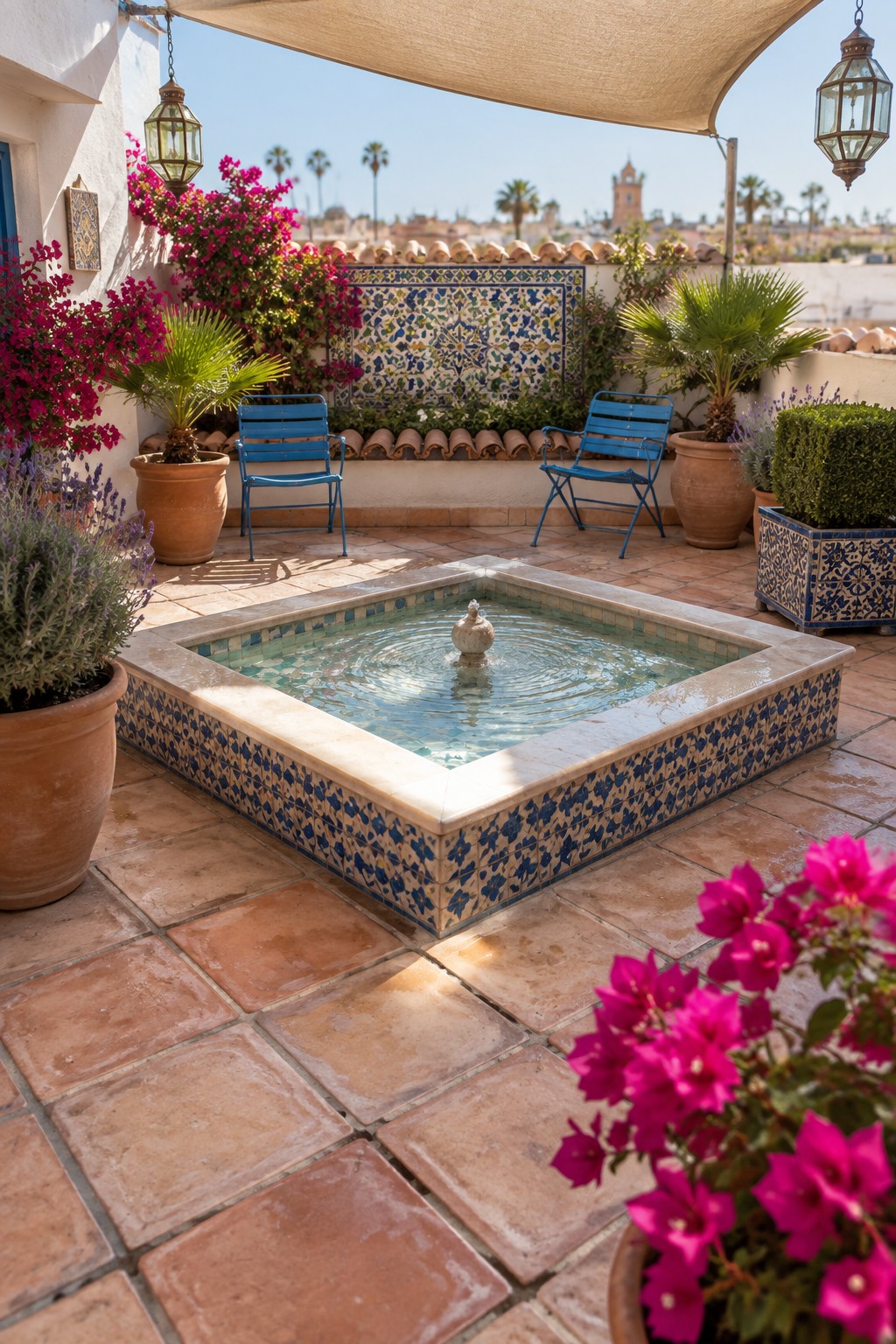
Terracotta containers work well on a roof garden because they let you add plants without building permanent beds. The pots can be moved around as needed, and they handle the sun and heat that come with an exposed terrace. Grouping a few different sizes keeps the space from looking too bare or flat.
Place the larger pots near the edges or corners to frame the area, then fill in with smaller ones for more color. This setup suits homes with tile floors and simple walls, and it stays practical since the pots drain well and do not add much weight.
Terracotta Pots with Tall Cypresses
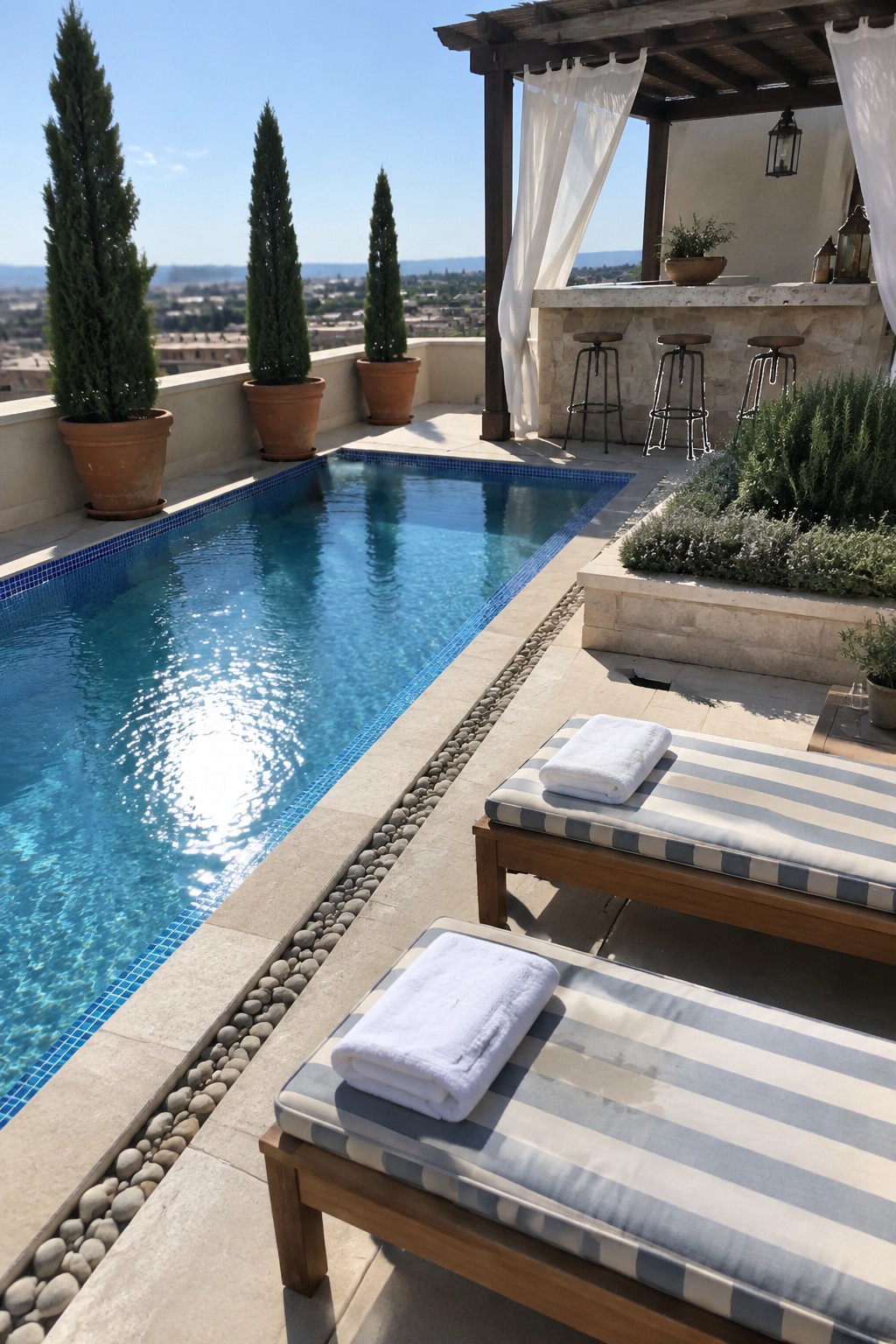
Placing tall, narrow trees in large terracotta containers gives a roof garden height and structure without crowding the space. The pots bring that classic Mediterranean look while the trees create a soft screen that still lets the view through.
This works best on sunny terraces where wind can be an issue, so choose wide, heavy pots and group them along the edge or near seating. They suit homes with open roof areas that need a bit of vertical interest without permanent planting beds.
Line A Roof Path With Terracotta Pots
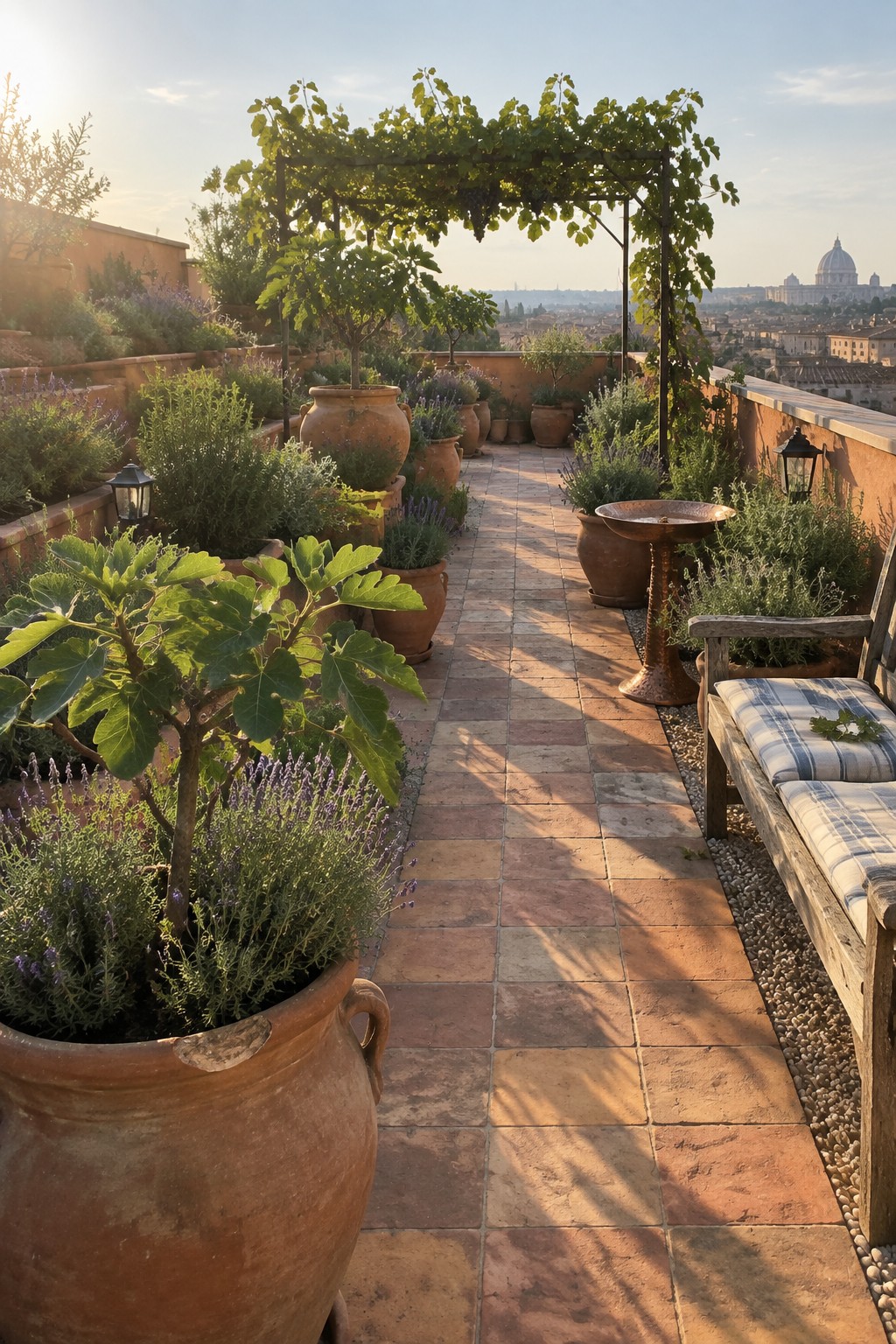
Terracotta containers make a roof garden feel more structured without needing built-in beds. Placing them in rows along both sides of a simple path turns the terrace into a defined walkway while still leaving plenty of room for plants to spill over.
This works best on flat roofs or wide terraces where you want easy access and good drainage. Use a mix of large and medium pots, stick to Mediterranean plants like lavender or small trees, and keep the path clear so the space stays practical for daily use.
Terracotta Pots Around the Bench
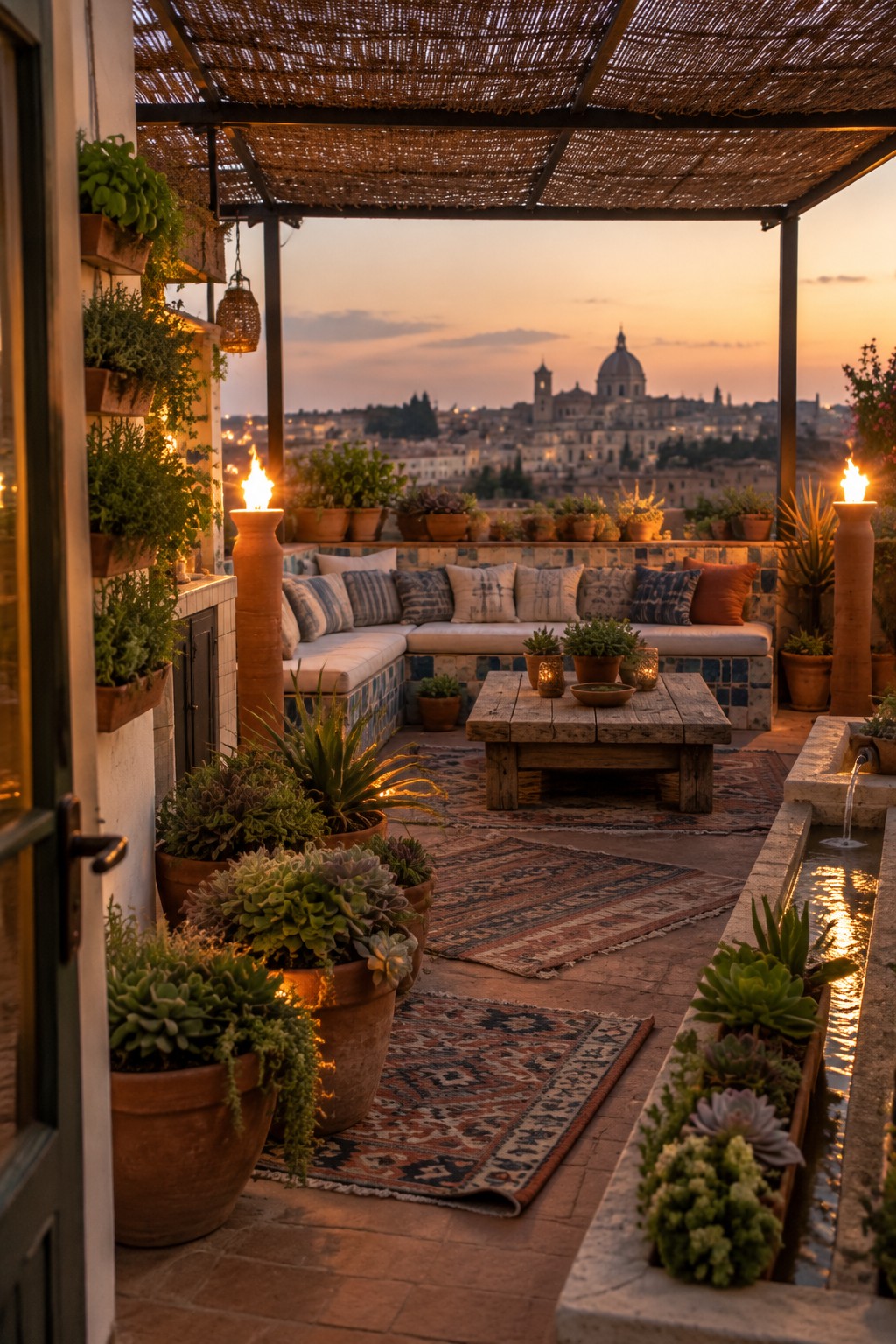
Terracotta containers work especially well when you place them right along the edge of a seating area. They add height and greenery without any construction, and the warm clay color feels right at home in a Mediterranean setting.
This approach suits roof terraces or balconies that get plenty of sun. Set the largest pots at the back near the bench and step smaller ones forward so the plants create a loose border without blocking the view or the walkway.
Terracotta Containers as Water Features
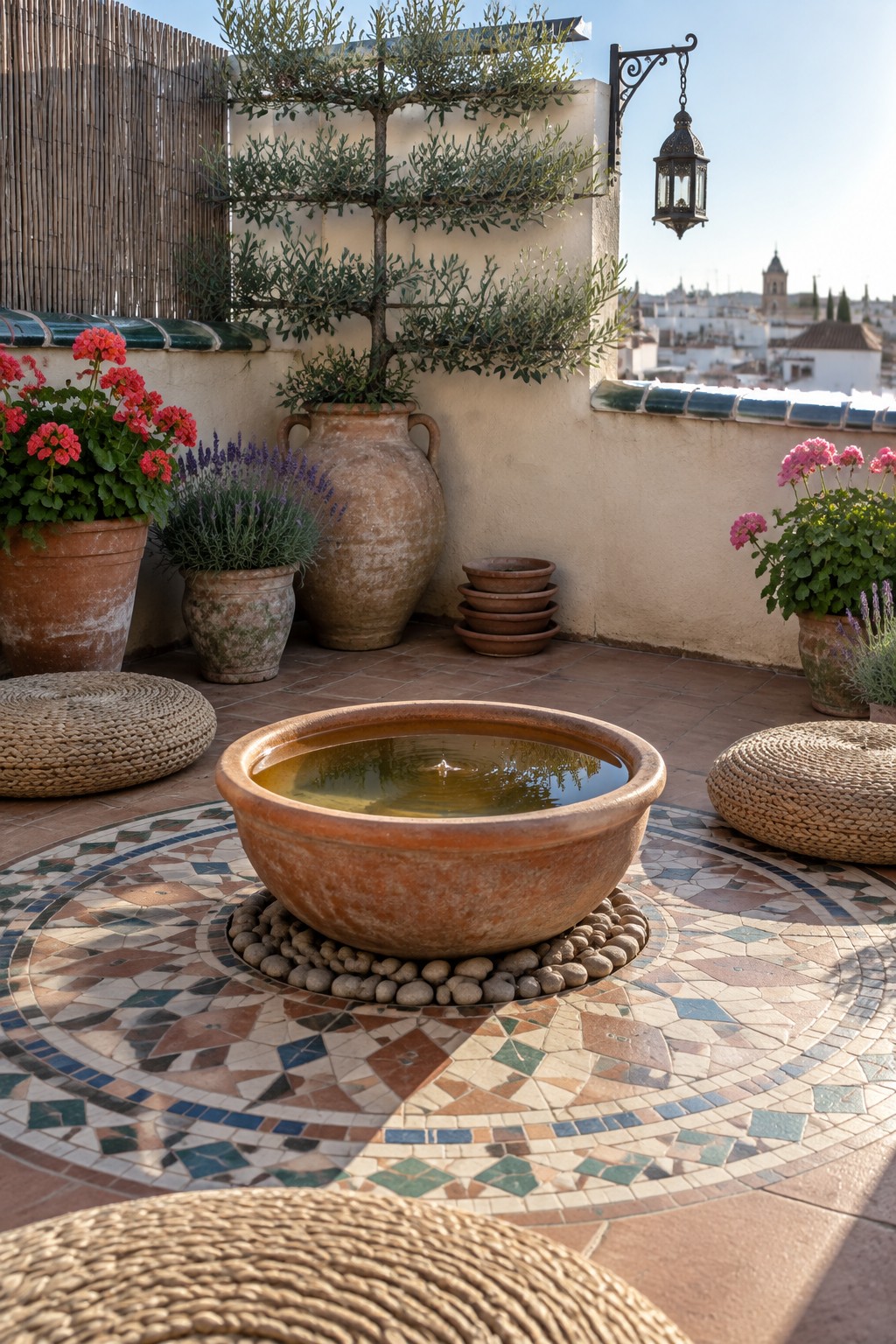
A big terracotta bowl filled with water works well as the main point on a roof terrace. It gives the space a quiet center without needing much else around it. The warm clay color pairs naturally with other pots and keeps the whole area feeling simple and grounded.
This setup suits small Mediterranean style terraces or balconies where you want one strong element instead of lots of scattered pieces. Place the bowl on a flat tiled area with a few smaller pots nearby. Just make sure the bowl sits level and the water stays clean so it does not become a maintenance chore.
Terracotta Pots For Roof Terraces
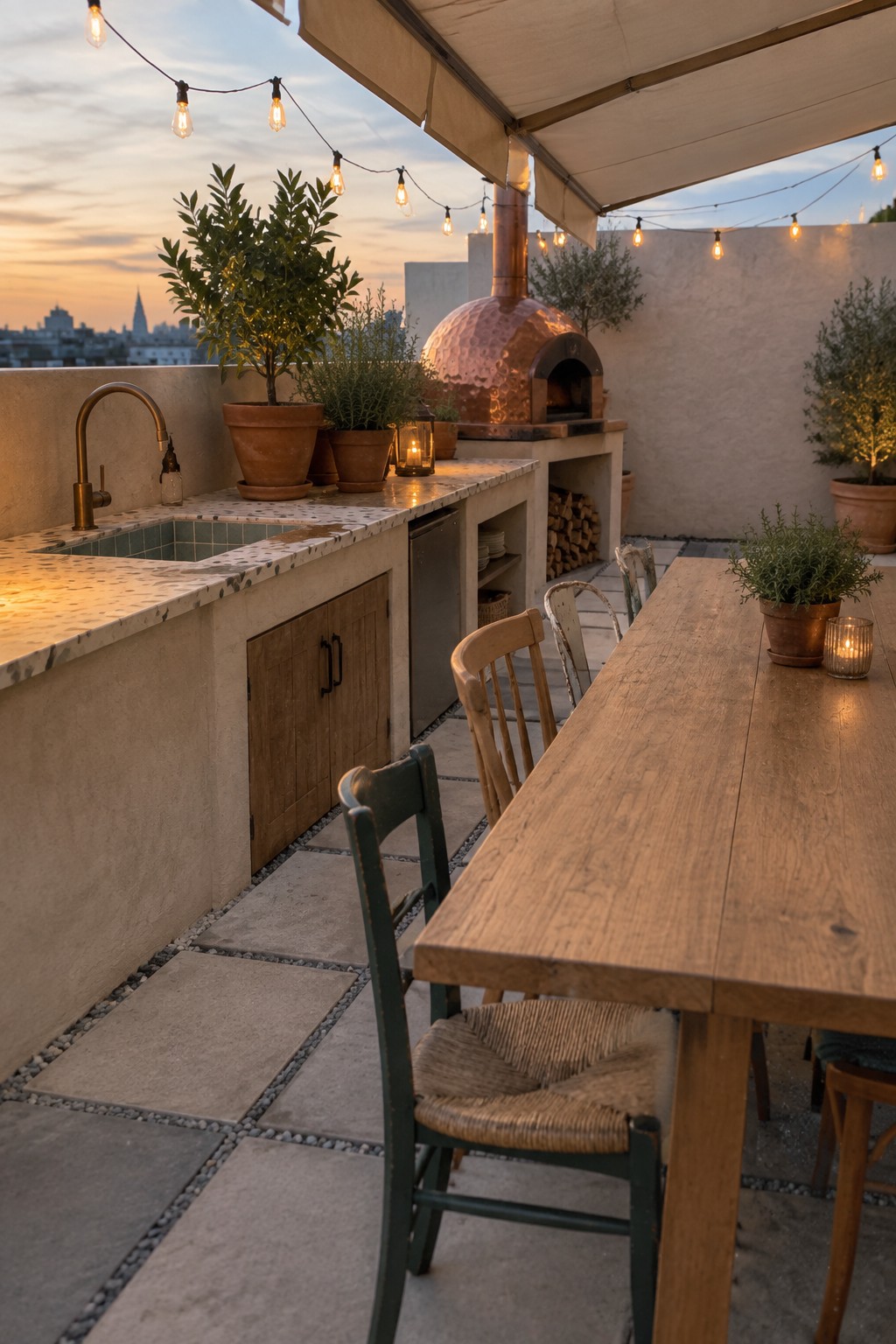
Terracotta pots give a roof garden that easy Mediterranean feel without much work. They stand up to sun and wind, and you can shift them around as the seasons change or when you want a different layout near the table or cooking area.
Place a few larger ones with olive trees or herbs along the edges or beside seating. This keeps the space open while adding greenery that matches the warm tones of the stone and wood.
Set Terracotta Pots on a High Wooden Shelf
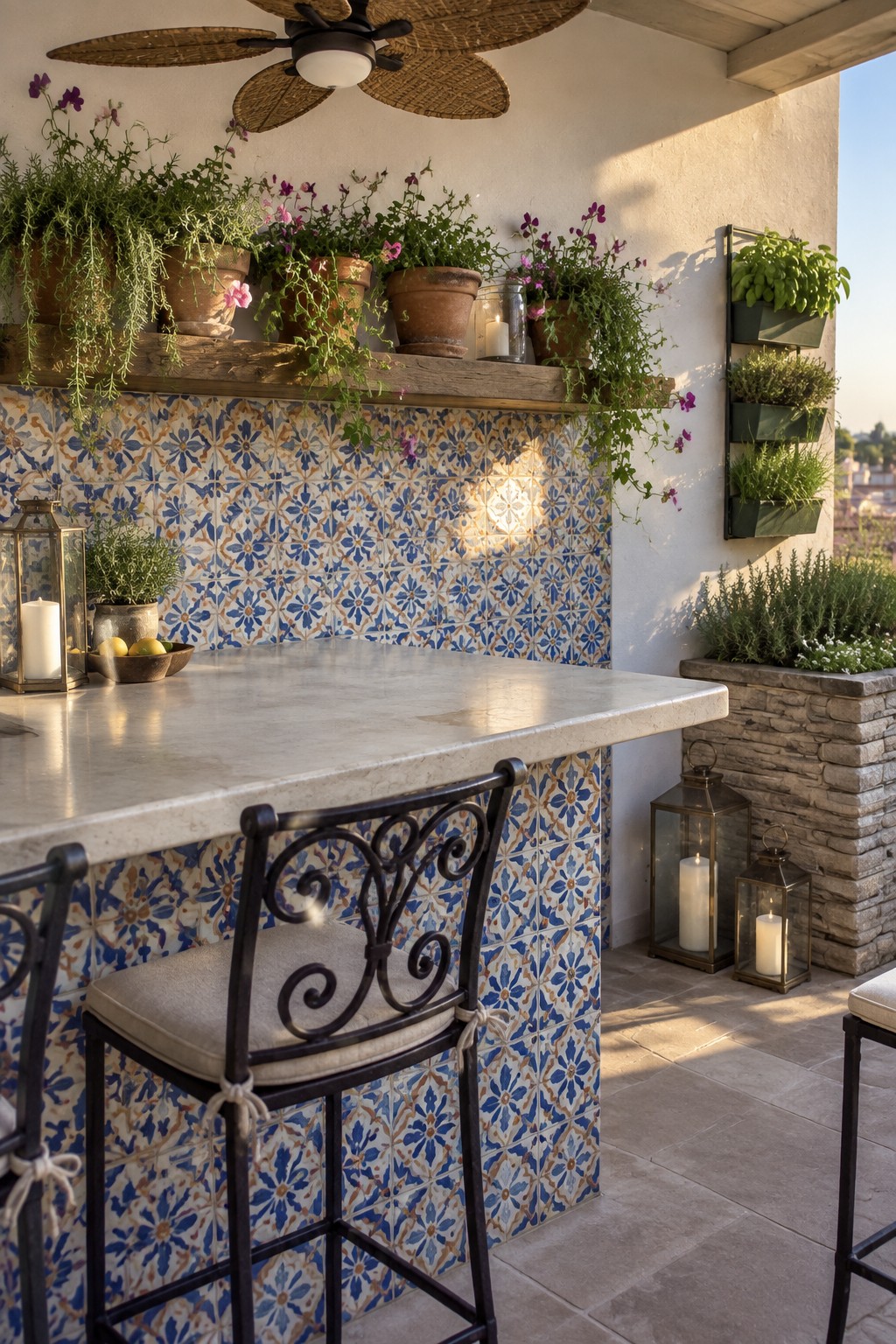
Placing terracotta containers on a wooden shelf above an outdoor bar keeps the counter clear while still filling the space with greenery. The pots sit at a comfortable height so the plants can trail down without getting in the way of seating or serving.
This works best on a roof terrace or patio where you want a simple Mediterranean look without a lot of floor space taken up by plants. Choose sturdy brackets, stick to lighter herbs and trailing varieties, and check that the shelf can handle the weight once the pots are watered.
Terracotta Pots Along The Terrace Edge
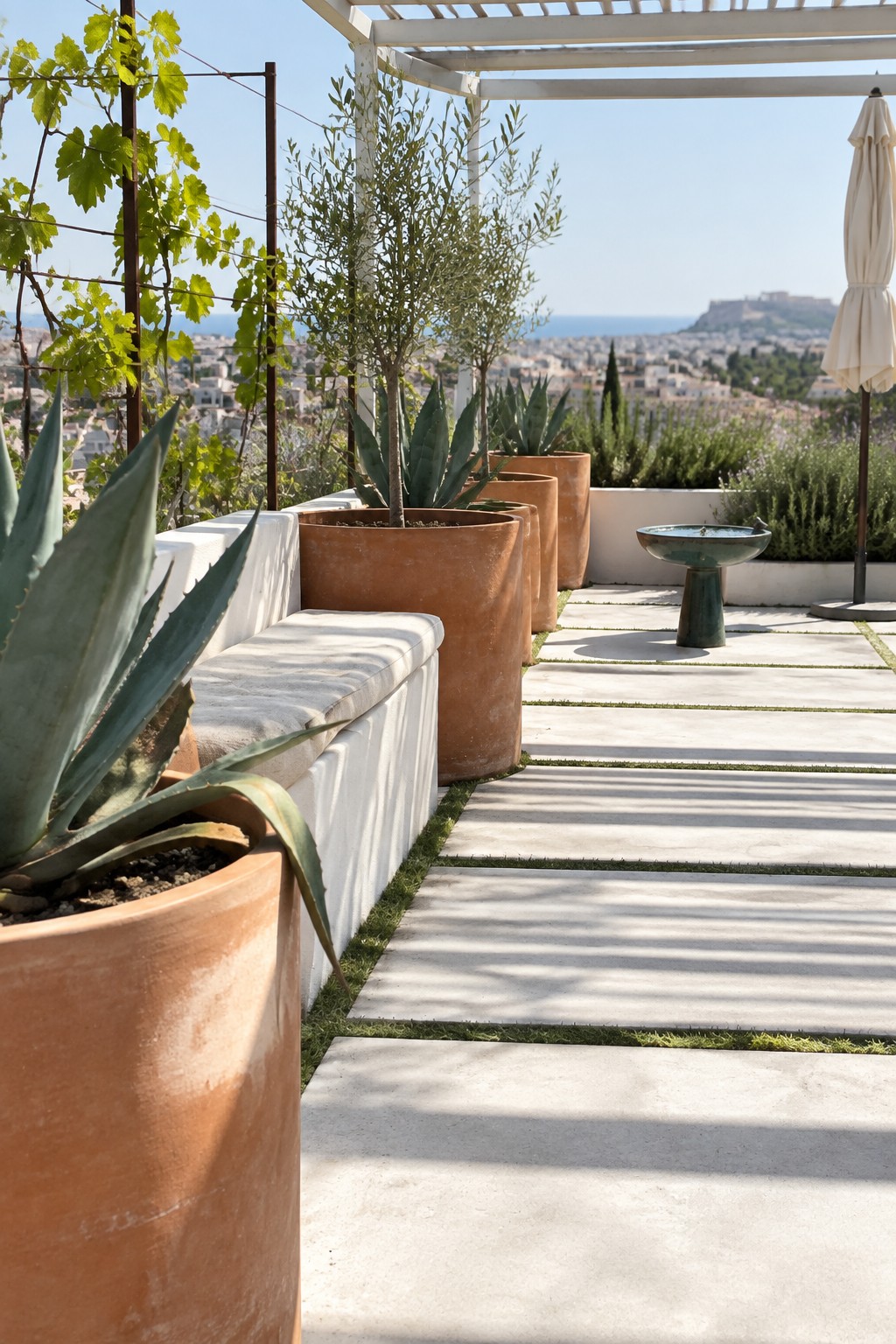
Large terracotta containers work well for marking the edge of a roof terrace. They give the space some structure while still letting the planting feel loose and natural. The warm color of the clay also fits right in with Mediterranean style without needing much else.
This setup suits homes with flat roofs or wide balconies where you want greenery that stays movable. Place the biggest pots near built-in seating so the area feels defined but not closed off. Mix a few sizes and keep the plants simple so nothing gets too crowded.
Terracotta Containers Along the Pool Deck
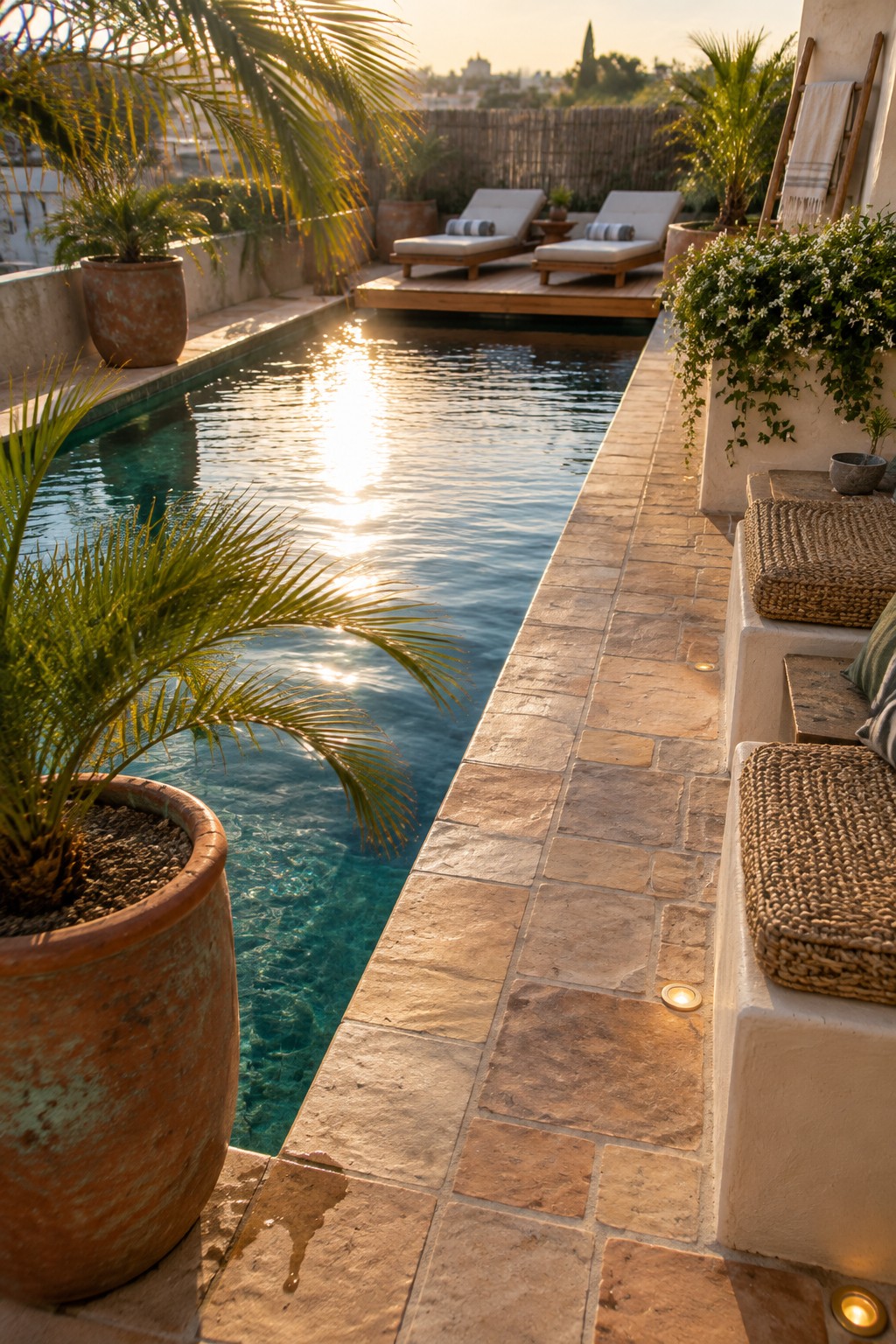
Large clay pots work well on roof terraces because they let you add plants without building permanent beds. The warm terracotta color pairs naturally with stone paving and keeps the look simple even when you group several sizes together.
Place the biggest pots near the water edge and smaller ones on the steps or seating walls. This setup suits homes with flat roofs and limited soil depth, and it makes watering and moving plants easier when the seasons change.
Terracotta Containers On A Practical Potting Table
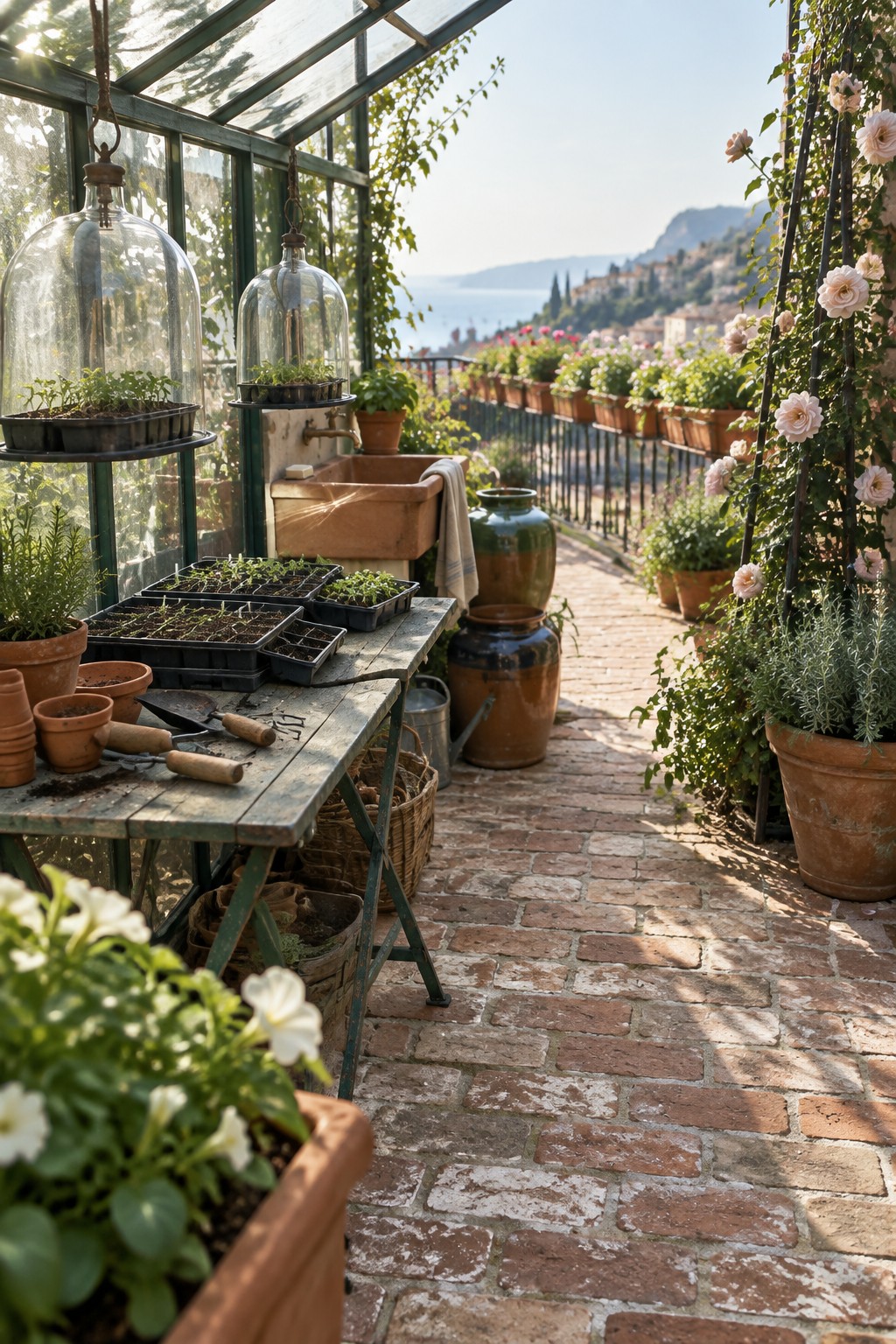
A potting table makes daily garden tasks easier on a roof terrace. It keeps seedling trays and small terracotta pots at a comfortable height so you can work without bending over constantly.
Place the table near a water source and group your containers by plant type. This setup suits sunny Mediterranean spaces where you start many plants from seed each season.
Gravel Makes A Good Base For Terracotta Pots
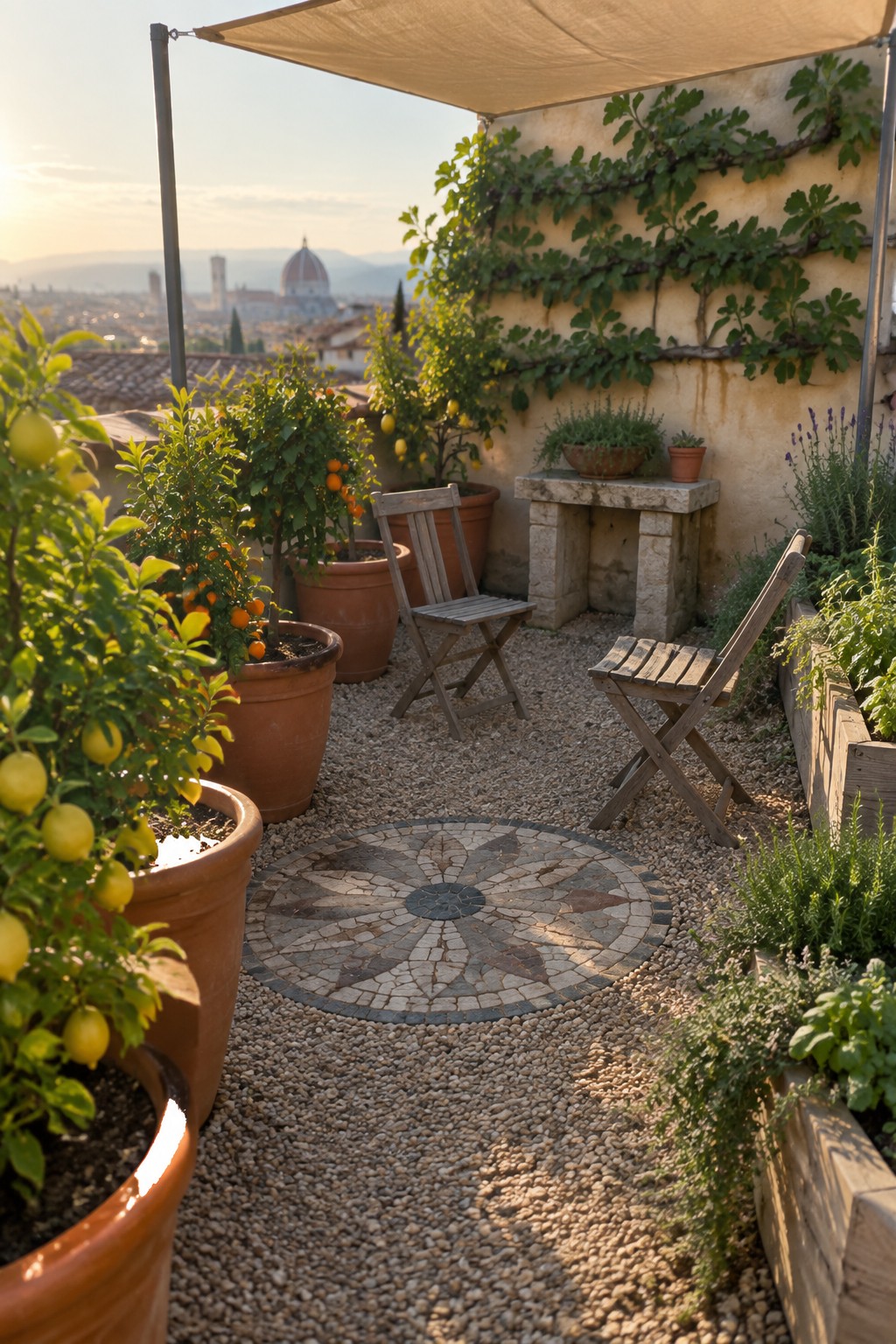
Many roof gardens use gravel under terracotta containers because it handles drainage well and keeps things simple. The loose surface also lets you move pots around easily when you want to change the layout or bring in new plants.
This setup works best on flat terraces or rooftops where you cannot add deep soil beds. Keep the gravel layer even and thick enough so water does not pool under the pots.
Terracotta Pots Around a Built-In Bench
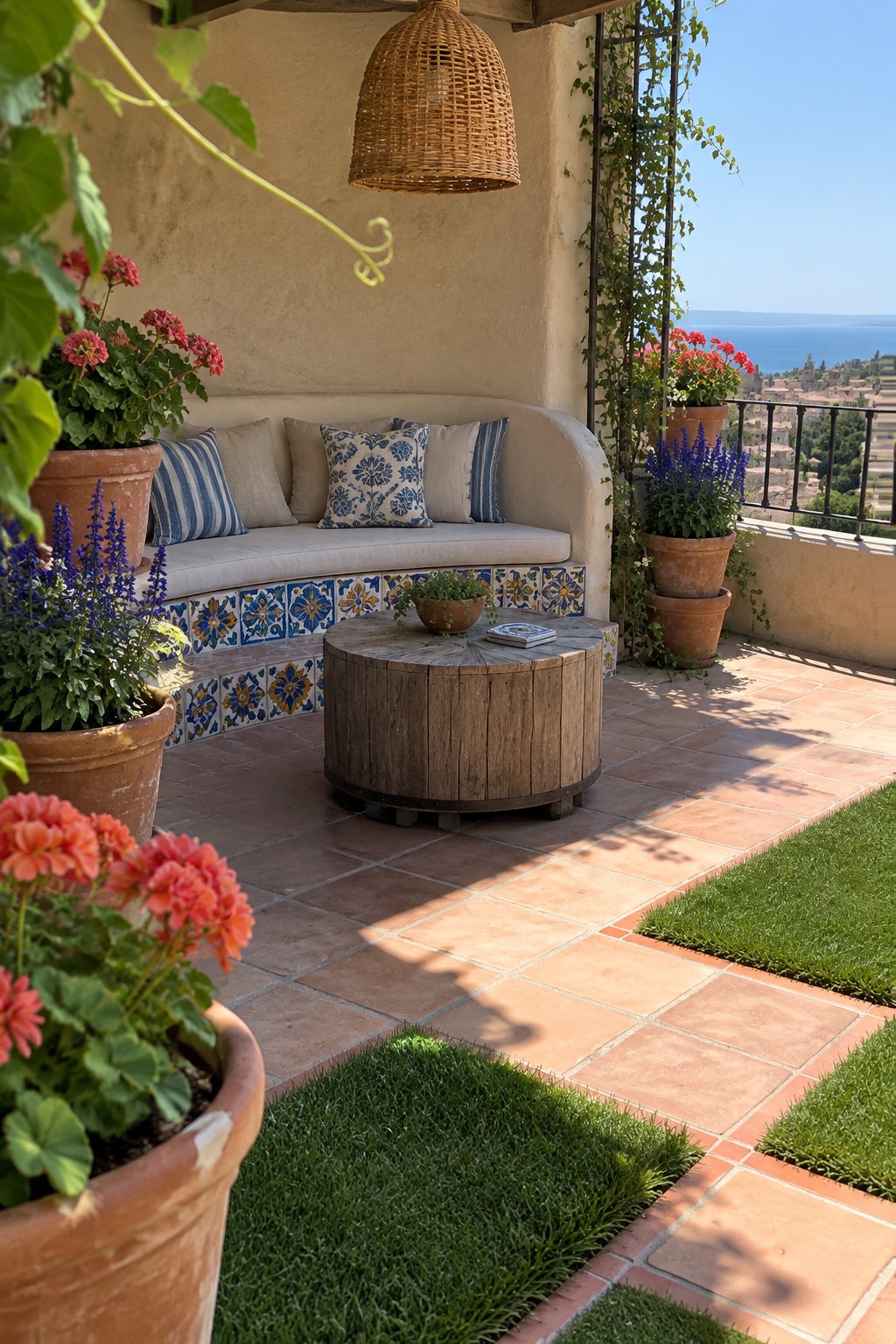
Terracotta containers give a roof garden that classic Mediterranean feel without needing permanent planters everywhere. They sit right against the bench here and let the plants spill over the edge in a natural way. The warm clay color also picks up the tones in the tile and the stucco wall.
Set the largest pots at the corners and use smaller ones in between so the planting feels layered but not crowded. This works best on terraces or balconies where you want greenery that can be moved or swapped out with the seasons. Just make sure the pots have good drainage and choose plants that handle sun and wind.
Terracotta Pots Around a Fire Pit
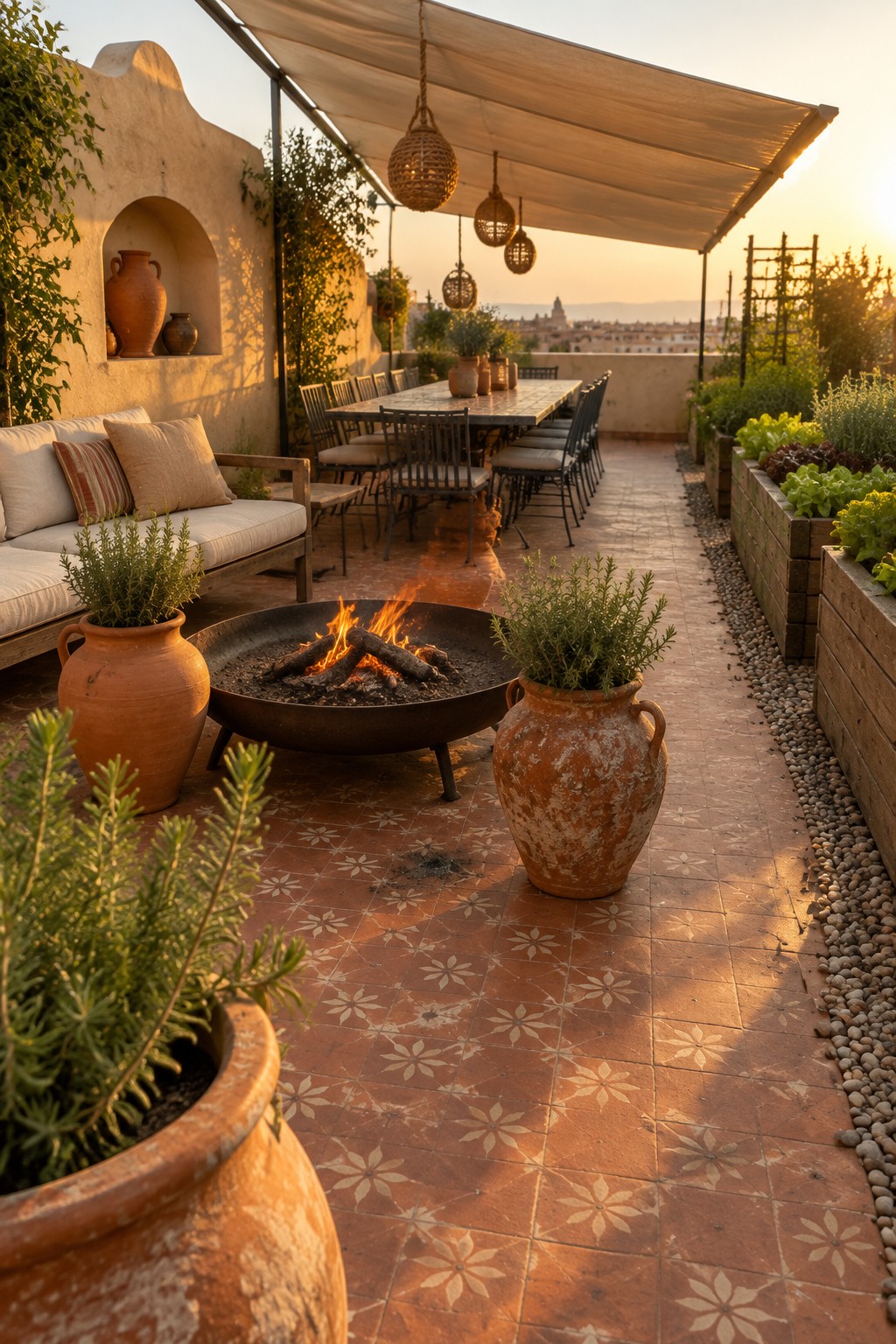
Terracotta pots give a fire pit area a grounded feel without adding anything heavy. The clay color picks up the warmth from the flames and keeps the space from looking too bare once the sun goes down.
Place two or three larger pots close to the seating but leave one side open for walking through. This works best on a roof terrace or patio where you want to mark the spot without building permanent edges.
Frequently Asked Questions
Q: How do I check if my roof can support the weight of these terracotta pots?
A: Test a few filled containers in one spot first. Spread them evenly instead of clustering everything together. This avoids putting too much stress in one area.
Q: What plants grow well in terracotta under full sun?
A: Choose drought tolerant options like thyme or olive trees in smaller sizes. They match the Mediterranean style and need less water overall. Repot every couple of years to keep them thriving.
Q: How often do I need to water during hot months?
A: Check the soil with your finger each day. Water when the top inch feels dry.
