

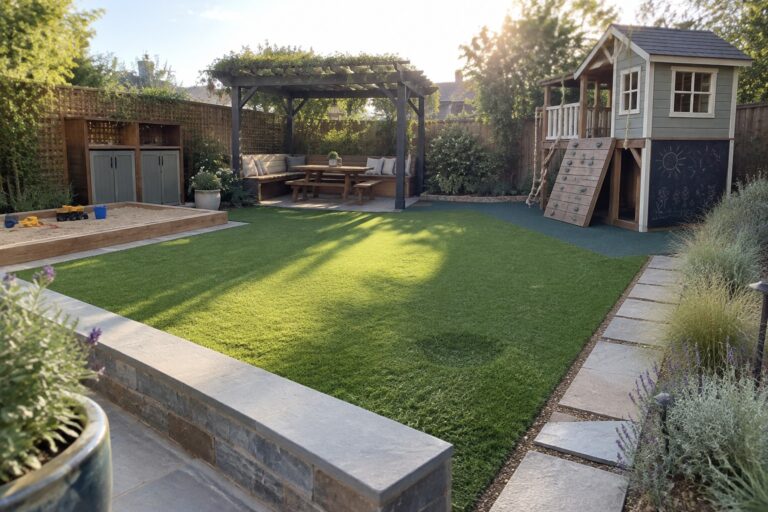
I have watched a few backyards fail because the lawn and play areas never quite connected in a way that felt natural to walk through.
Over time the best layouts seem to grow from simple decisions about where paths start and end and how much open grass stays usable after the swings and slides go in.
Some zones just work better when they are tested first.
In my own yard I noticed that edging around the play space kept the lawn looking intentional instead of like an afterthought once the kids started running through it daily.
Ideas that let the lawn remain the main surface while still carving out pockets for play tend to hold up better as seasons change.
Define Play Zones With Edging and Lawn Space
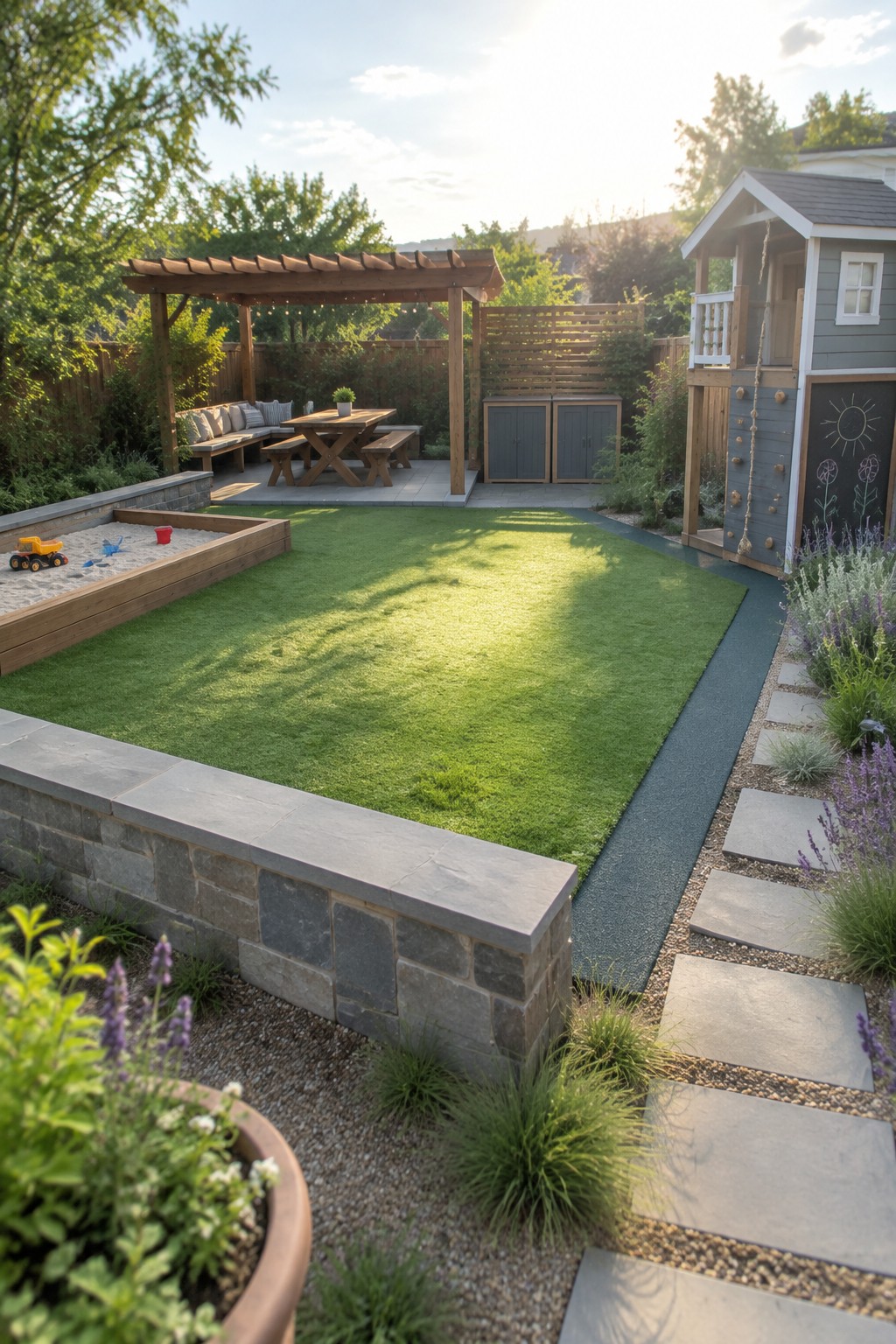
A big open lawn works better when you set aside clear spots for play instead of letting everything blend together. Stone edging and a simple path keep the grass area open for running while giving the sandbox and play structure their own space right next to it.
This setup works well in most family backyards because it keeps toys contained without needing a separate fenced section. Use the same edging material around both the lawn and the play area so the whole yard feels connected. Just make sure the path is wide enough for wheel toys and easy to mow around.
Create a Play Zone With a Covered Sandbox
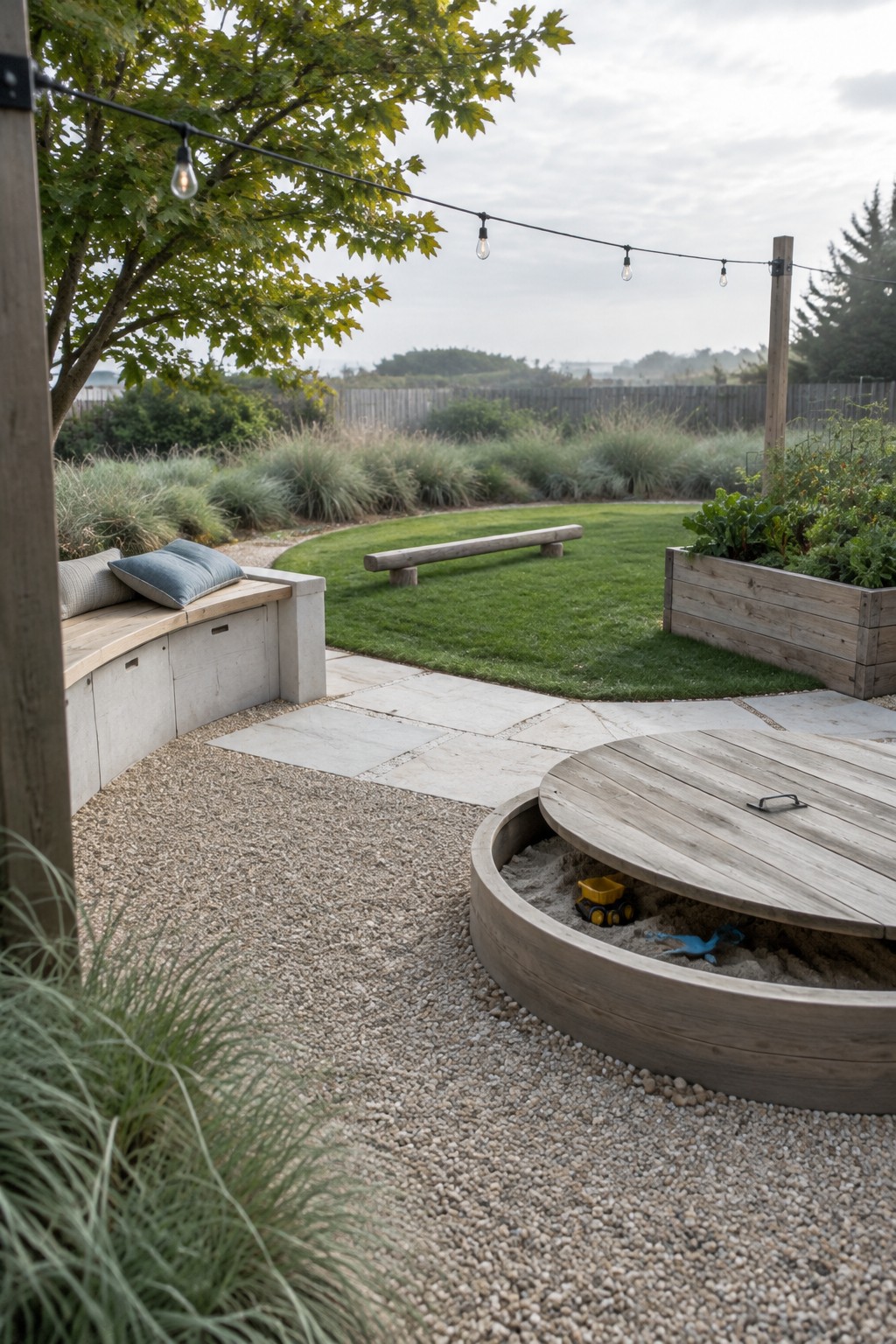
A covered sandbox works well when you want kids to have a dedicated spot for play without the sand spreading everywhere. The lid keeps the area tidy when it is not in use and turns the feature into part of the regular landscape instead of a separate toy zone.
This setup works best in backyards that already have gravel or stone paths because the sandbox can sit right into the hardscape. It suits homes with small children who need easy access to the lawn and garden beds without extra fencing or separate structures.
Adding Play Equipment Without Shrinking The Lawn
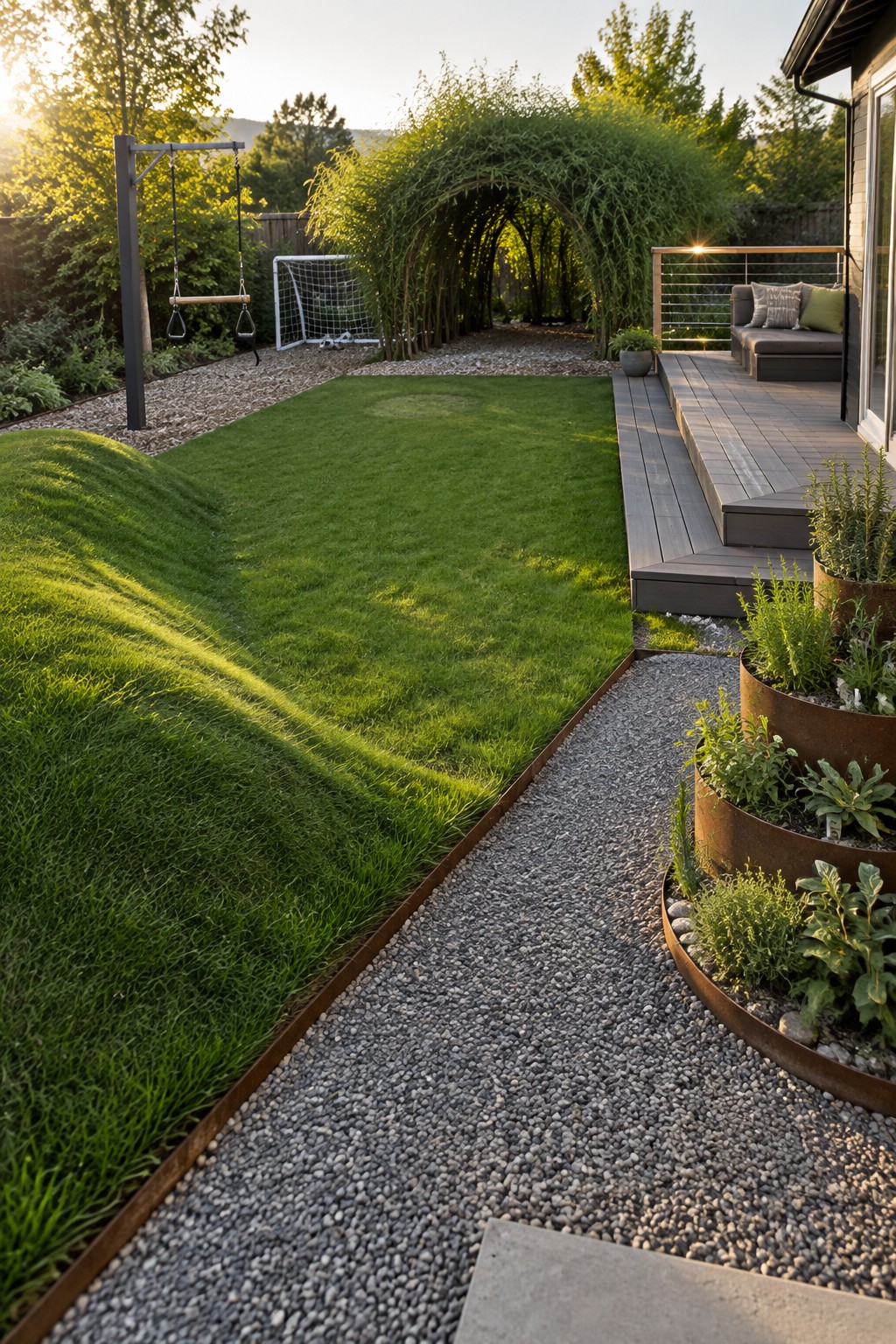
Many backyards lose their open feel once swings and goals get added, but this layout avoids that problem by keeping the main lawn clear. The equipment sits on gravel along the side, so the grass stays open for games and easy mowing.
This approach works best on medium to large lots where there is room along the edges. It keeps the space flexible for different ages and avoids the cluttered look that comes from placing everything right in the middle of the lawn.
Leave the Lawn Open Around Play Equipment
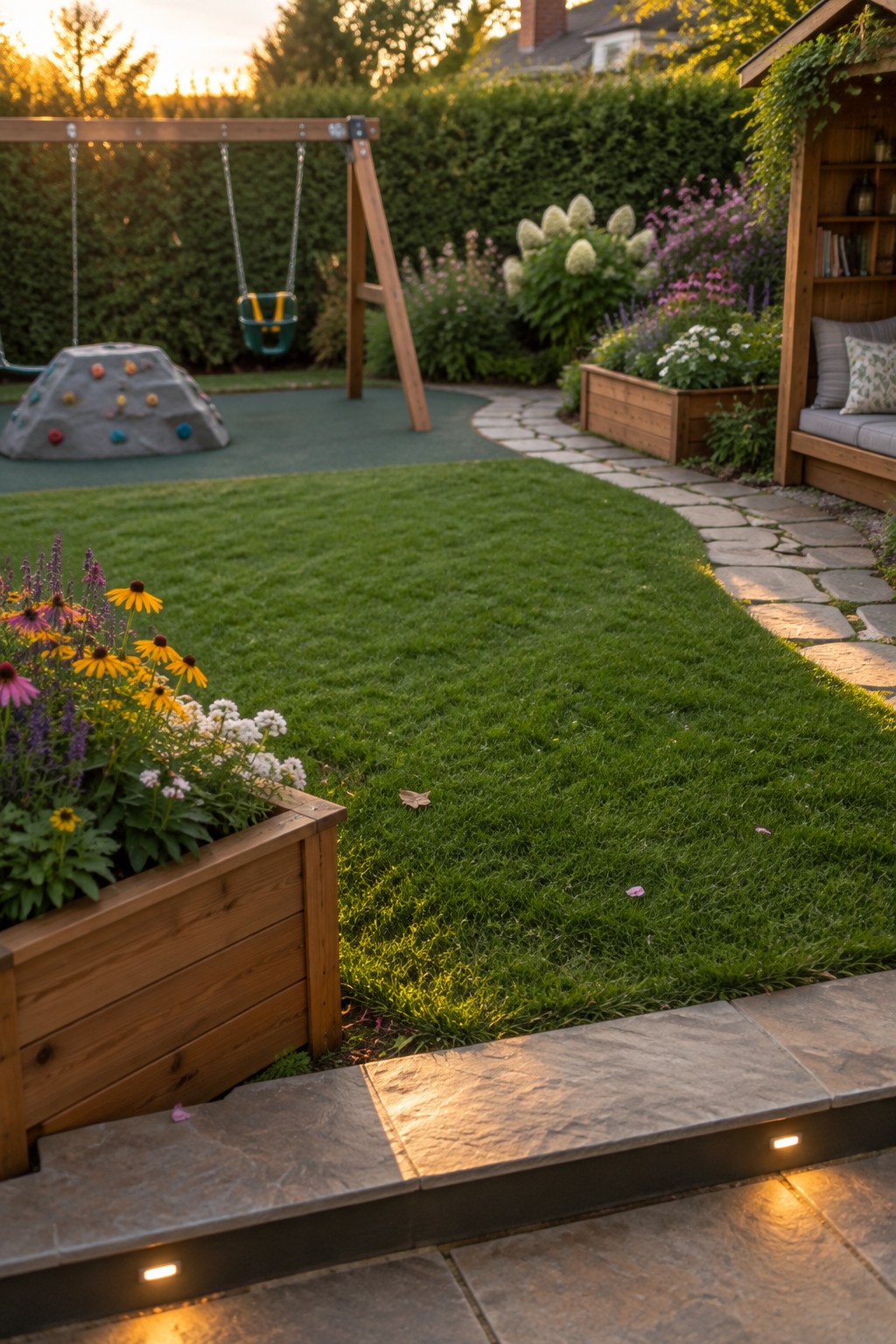
Placing swings and climbers straight on the grass gives kids a big area to run without extra surfacing or fencing. The open lawn in front of the equipment keeps the space feeling roomy and easy to mow.
Raised beds along the edges and a simple stone path help mark the play zone without crowding it. This layout works best in family yards that need both active space and some planting.
Add a Hopscotch Area to the Lawn
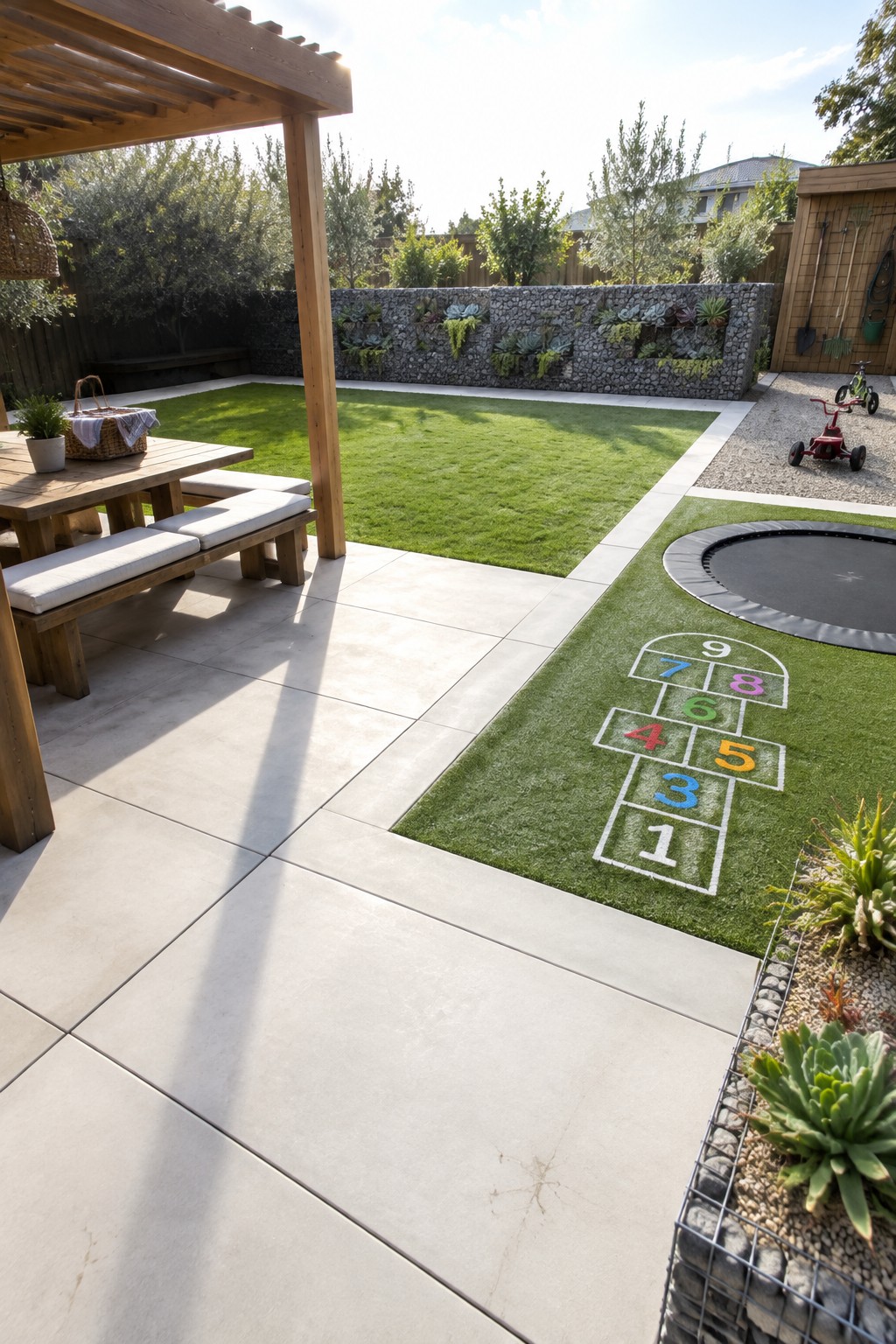
Painting a hopscotch grid onto a stretch of lawn or turf gives kids a built-in play spot that blends right into the rest of the yard. It keeps the space open for regular use while adding a simple game that does not need extra equipment or a separate structure.
This works well in backyards that already have a flat grass section next to paving or gravel. Use outdoor turf paint so the lines hold up through weather and foot traffic, and place the grid where it will not get in the way of mowing or seating areas.
Add a Sandbox Beside the Lawn

One simple way to make a backyard work better for families is to tuck a sandbox right next to the main lawn. It gives kids a clear place to play while leaving the rest of the grass open for running or games.
This setup works well when the sandbox sits close to seating or an outdoor kitchen so parents can watch without standing over it. It fits most medium yards and keeps the play area from feeling separate from the rest of the space.
Zone The Lawn For Separate Play Areas

Many backyards work better when the play area stays in one clear spot instead of spreading across the whole lawn. Rubber matting under the equipment keeps the surface safe and contained while the rest of the grass stays open for other uses.
This setup suits homes with younger kids who need a dedicated play zone but still want room to run elsewhere. Keep the matting edges low so they blend with the lawn and do not create a tripping point.
Winding Paths Keep The Lawn Open For Play
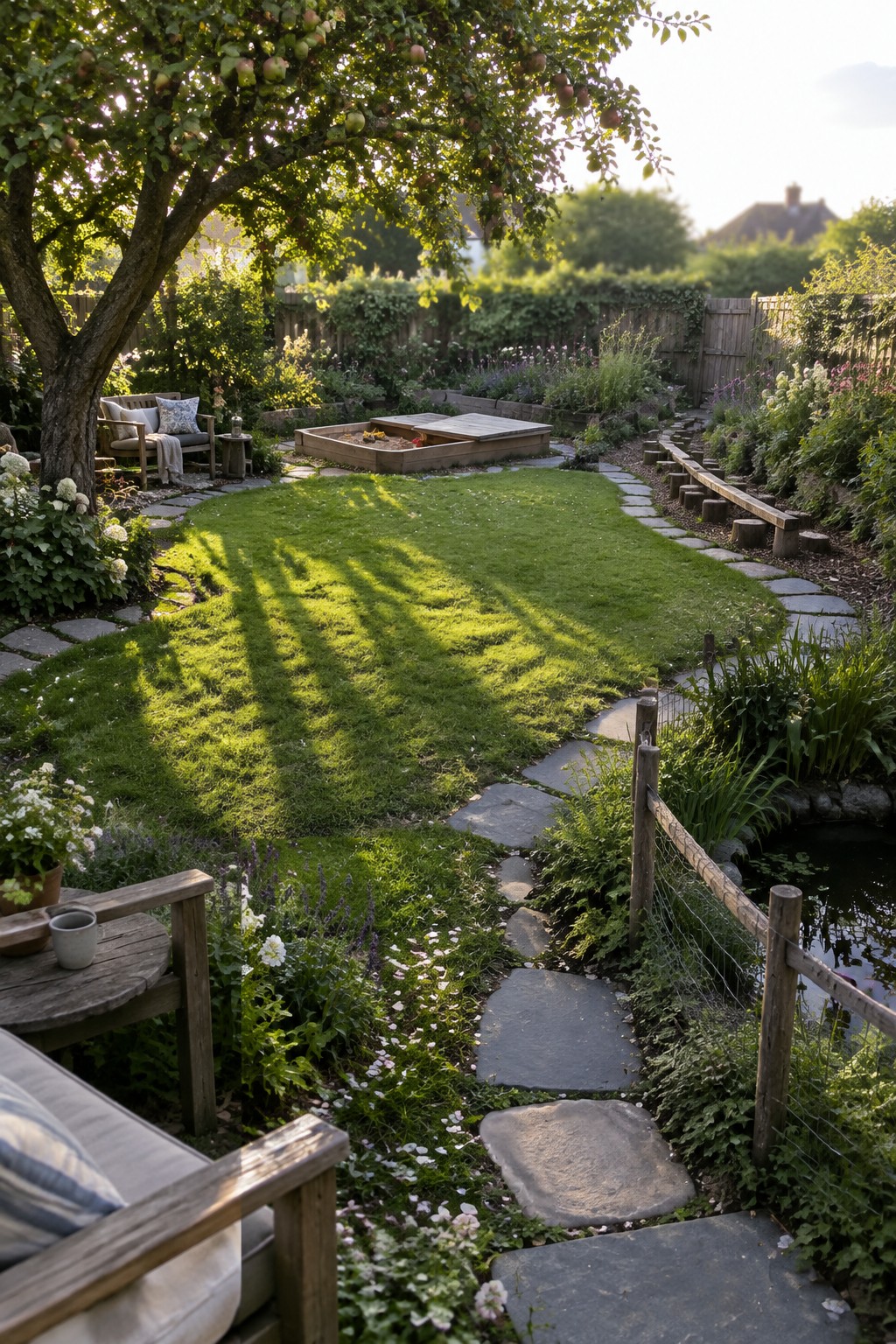
Stone paths that curve gently around the yard help connect different areas without cutting the lawn into small pieces. This layout leaves a big open space in the middle that works well for kids to run around while still giving easy access to garden beds and other features.
It suits family homes that want some planting without losing room for active play. Keep the paths made of large flat stones set in grass so they feel natural and do not dominate the space.
Zone The Yard With Mixed Lawn Surfaces
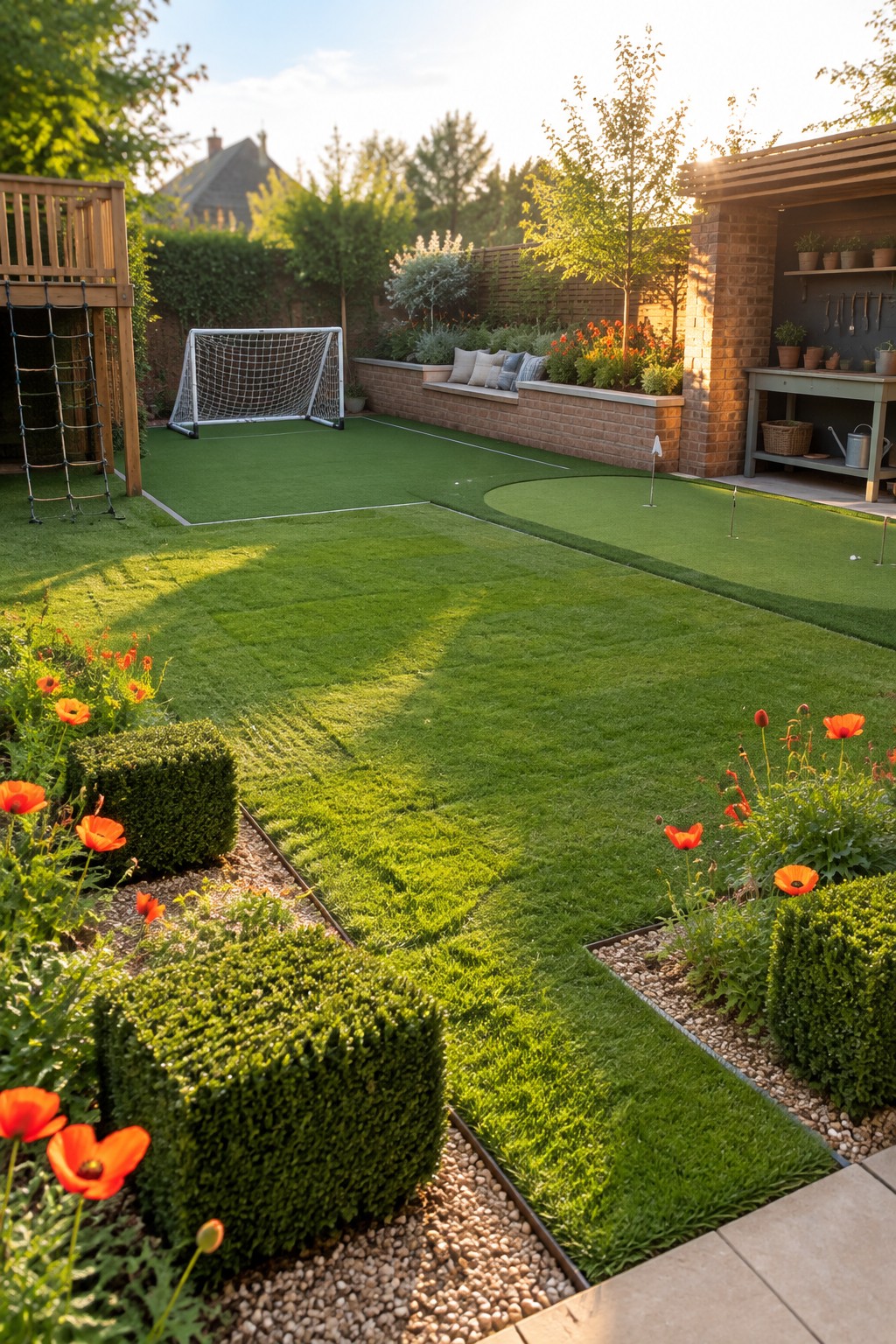
Mixing a main lawn with sections of artificial turf lets kids play hard without wearing out the grass. The turf holds up to soccer goals, putting practice, and constant foot traffic while the natural lawn keeps the rest of the yard soft and green. Low hedges and gravel edges keep the two surfaces from blending together and give the whole space a tidy look.
This setup works best in medium to large yards where one big lawn would take too much upkeep. Place the tougher turf near the house or in a corner for play equipment, then let the natural grass fill the middle. Just make sure the edges stay clean so mowing stays simple and the beds do not spill over.
Stepping Stones Create Kid-Friendly Paths
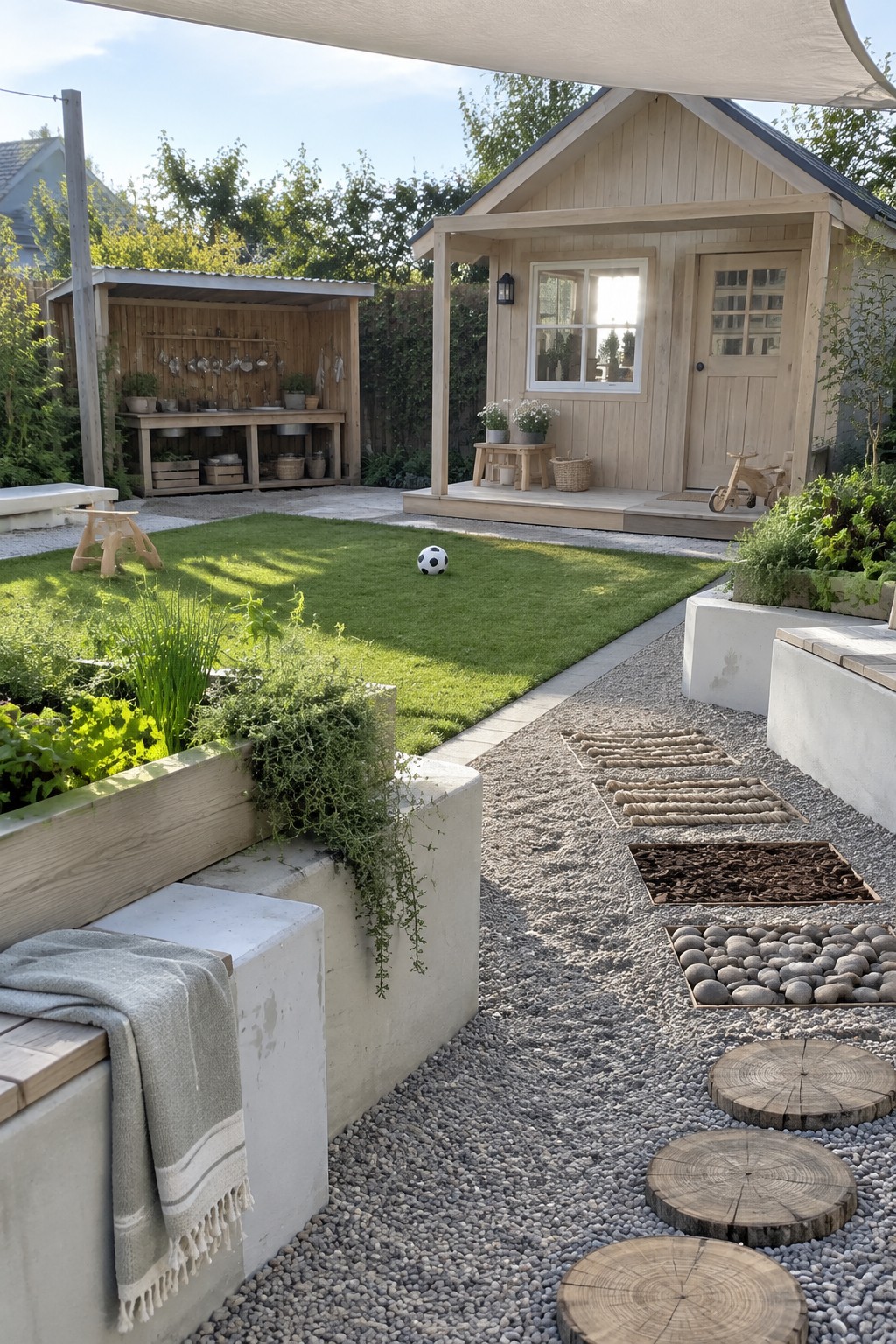
Stepping stones give kids a clear way to move around the yard without trampling plants or turning the whole space into mud. In a gravel area they keep feet dry and make it easy to reach the lawn or garden beds without a big paved walkway taking up play space.
They work best in family yards where you want some structure but still need open ground for running and games. Use simple rounds like wood slices or flat stones spaced for small steps, and keep the rest of the surface loose gravel or mulch so the area stays soft and low cost.
Stepping Stones Across the Lawn
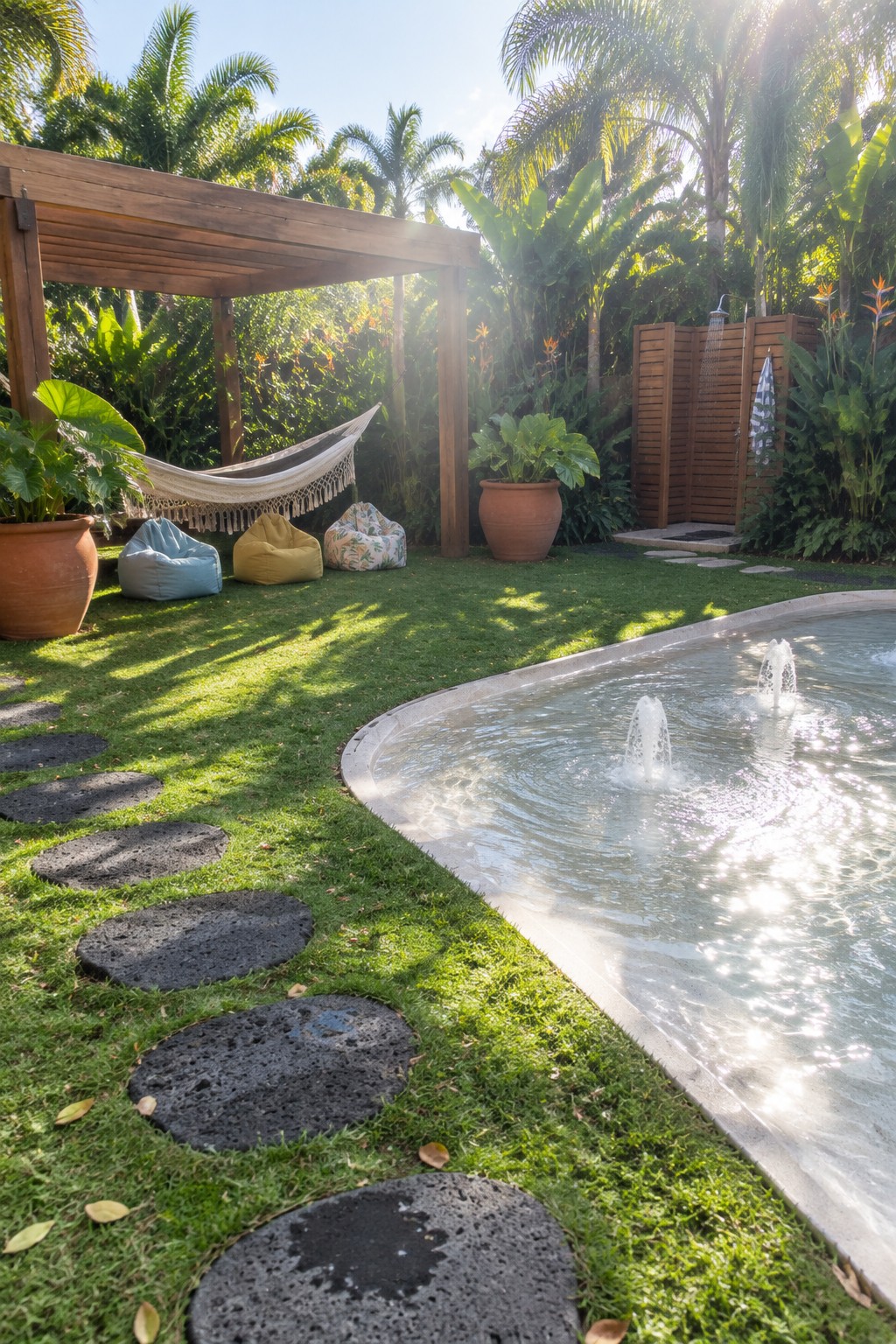
Stepping stones give kids a clear route to run or walk without turning the whole lawn into a muddy track. They also keep the grass looking better longer when the yard gets heavy use from play.
Place them in a gentle curve that leads toward the pool or main seating spots. This setup works best in medium to large yards where you want both open grass and defined walkways. Space the stones so adults and children can step comfortably without stretching.
Separate Play Areas With a Paved Path
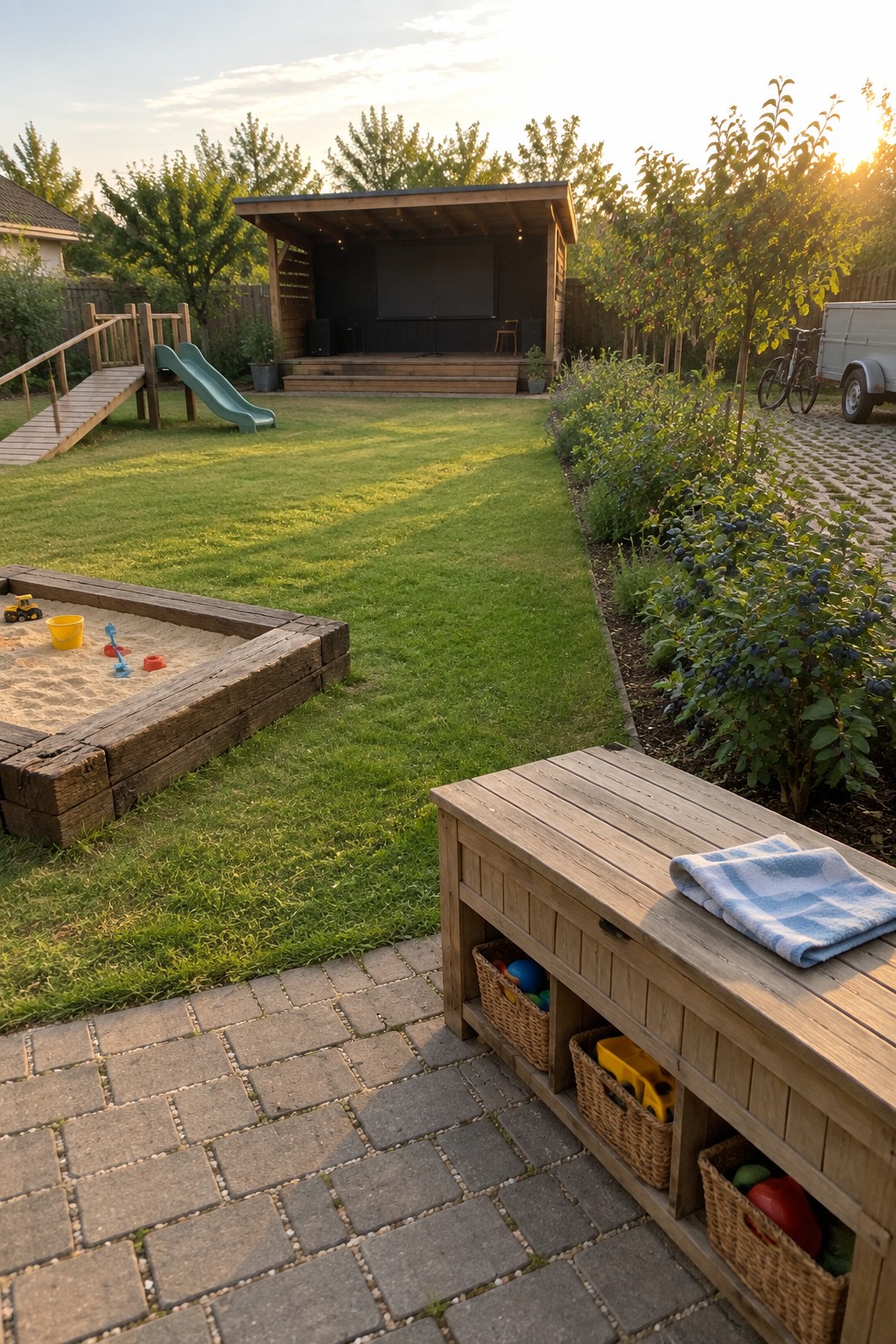
A simple paved path helps keep play zones from taking over the whole yard. It creates a clear edge that separates the open lawn from spots like the sandbox, so the grass stays open for running around while the toys stay contained.
This setup works best in backyards that have room for both active play and open space. Place the path along one side of the lawn and tuck storage or small structures right beside it to keep things tidy without crowding the center.
Add A Turf Play Area Next To Raised Beds

Many backyards work better when you set aside a small patch of lawn just for play. It gives kids a soft spot to run and kick a ball while keeping the rest of the space open for growing.
Place the lawn on one side and line raised beds along the fence or path. The change in ground cover makes the zones clear without needing extra walls. This works well in smaller yards where you want both active space and room to plant.
Add A Rope Net For Easy Kid Play
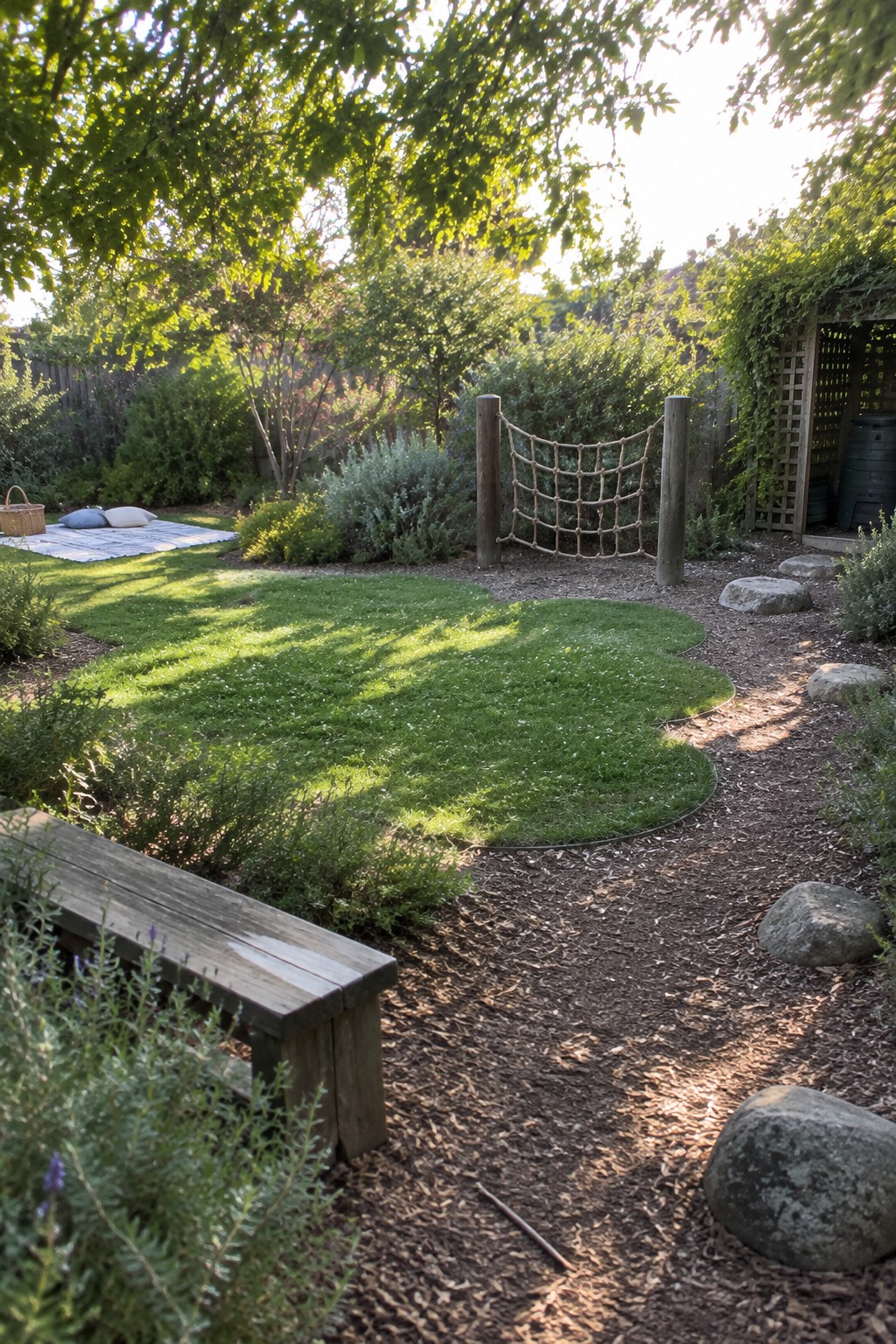
A rope net stretched between posts gives children a simple climbing spot that fits right into the garden without needing a big separate structure. It keeps the play area compact while leaving plenty of open lawn and paths around it for running and other activities.
This works best in yards with mixed lawn and mulch zones where you want active play close to the main garden beds. Position the posts on the edge of a path or lawn so the net stays visible from the house and does not block foot traffic.
Edge the Lawn to Separate Play Zones
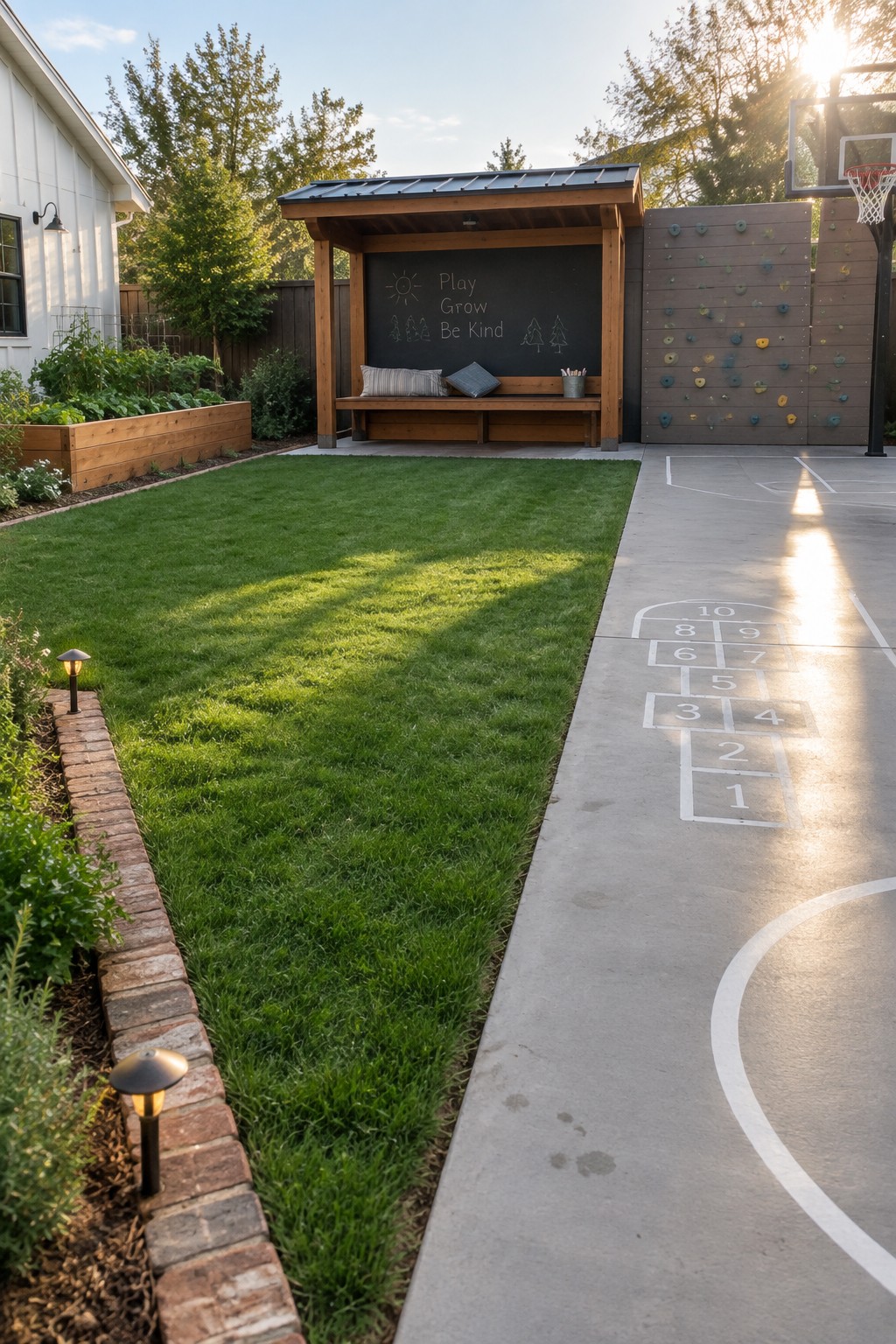
A simple brick border makes a big difference when you want both a lawn and a paved play area in the same backyard. It keeps the grass looking tidy and stops the two spaces from blending into one messy zone.
This setup works best in family yards where kids need room to run but also want spots for games like hopscotch. Try it along one side of the lawn so the concrete court stays clearly defined without needing extra fencing or walls.
Gravel Paths That Curve Around the Lawn
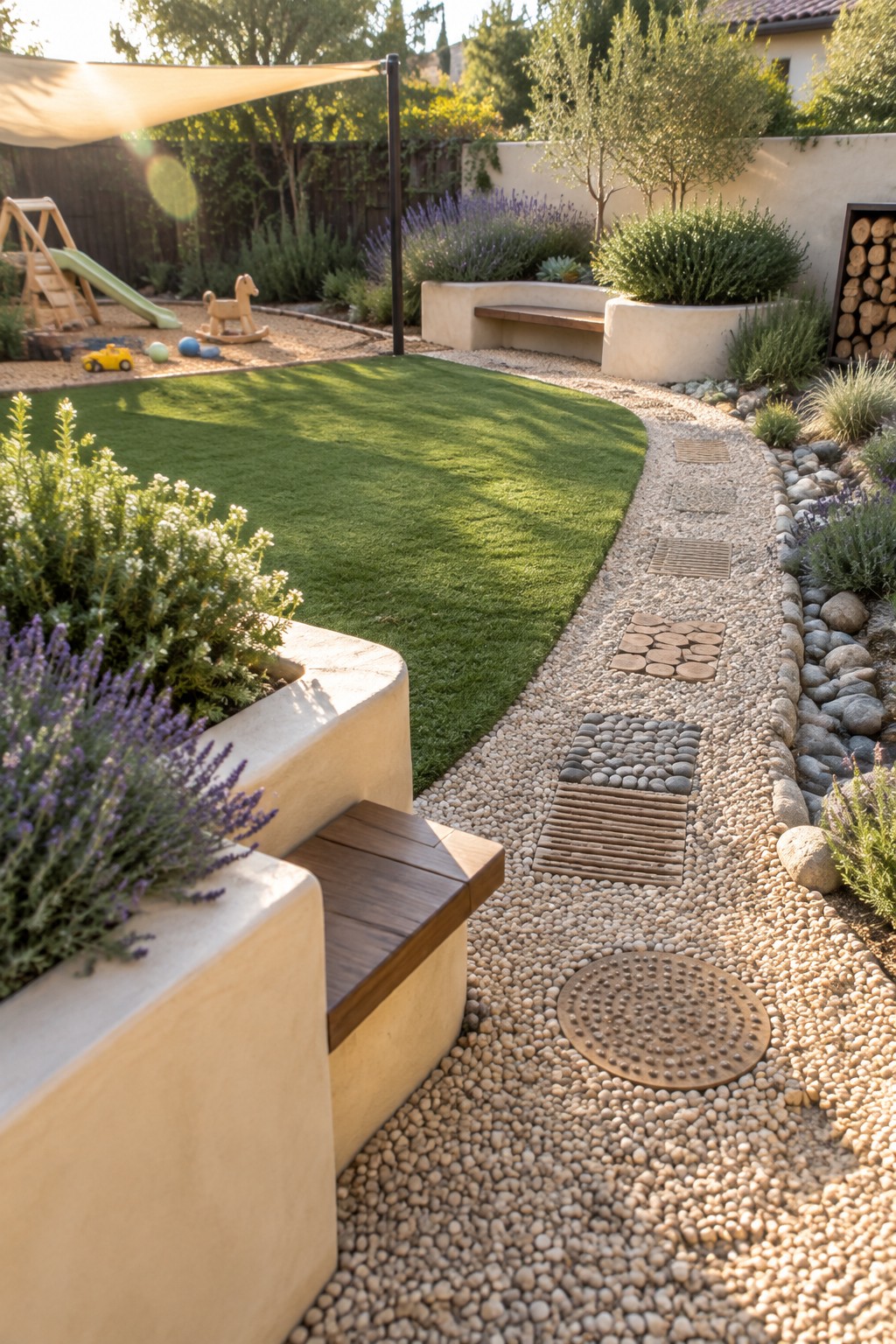
A gravel path that curves around the lawn keeps the grass open for play while still giving the yard clear structure. It lets kids run freely in the main area and makes it simple to walk between the lawn, seating spots, and planting beds without tracking dirt everywhere.
This kind of path works best in family yards that need both open space and some separation. Use a mix of gravel sizes and add a few grates or stepping stones in spots where water tends to pool. It fits homes with moderate backyard space and holds up well to daily use from children.
Define The Play Lawn With Raised Planters
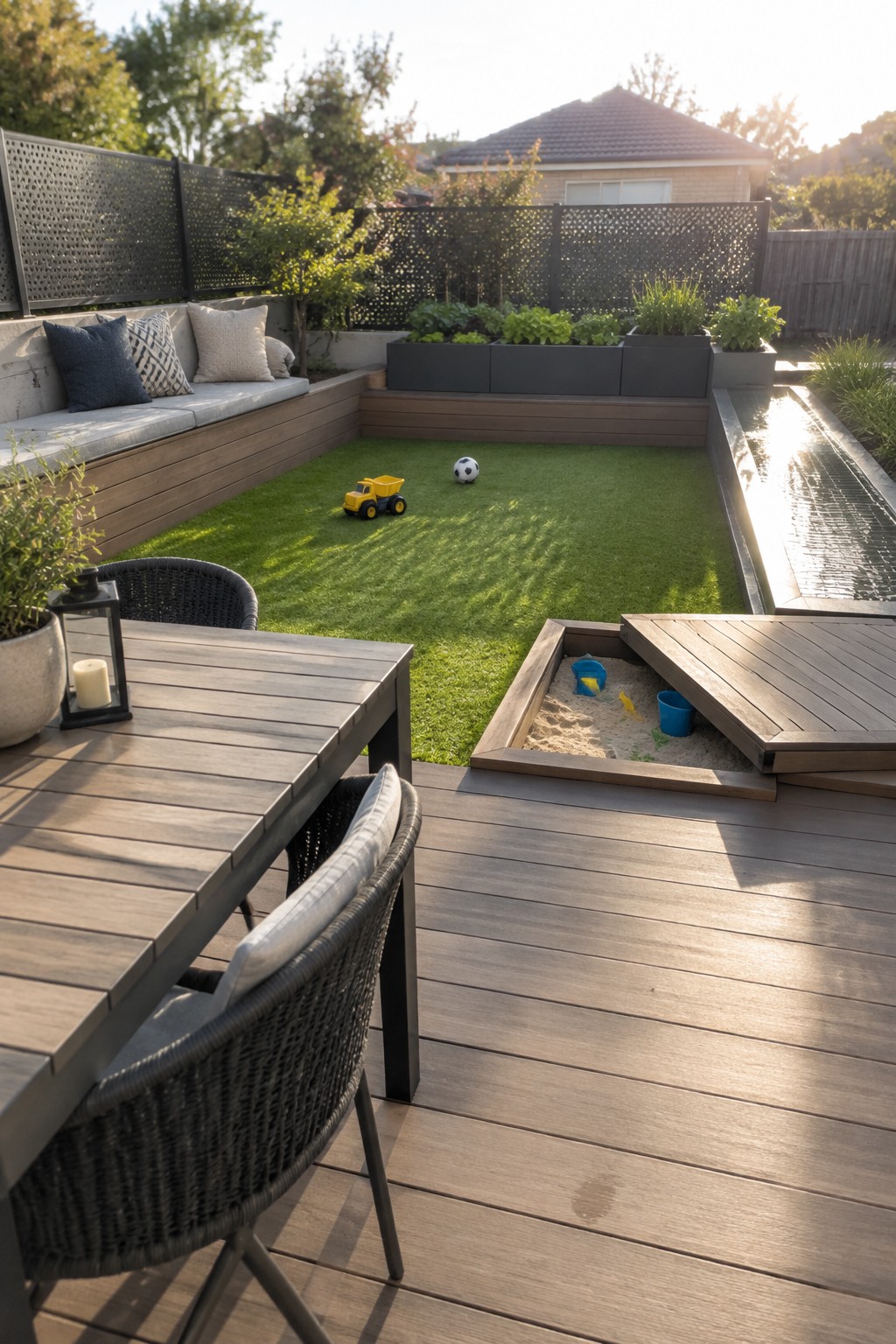
A central lawn gives kids room to run and play without the whole yard feeling scattered. Raised planters around the edges help mark off the space while adding some greenery that stays low maintenance.
This layout suits homes with young children because the beds keep plants safe from stray balls and the deck can hold extra play features like a sandbox. Just check that the lawn area gets decent sun and that the beds are sized so they do not crowd the play zone.
Stone Paths That Keep the Lawn Open

Stone paths work well in family yards because they give a clear way to move around without cutting across the grass. The irregular slabs here create a loose route from the house straight out to the main lawn, leaving plenty of open space for kids to run and play.
They suit most homes with a decent sized backyard and some planting beds around the edges. Keep the path width comfortable for walking and let it curve a little so it feels relaxed rather than too planned.
Create a Checkered Lawn Path
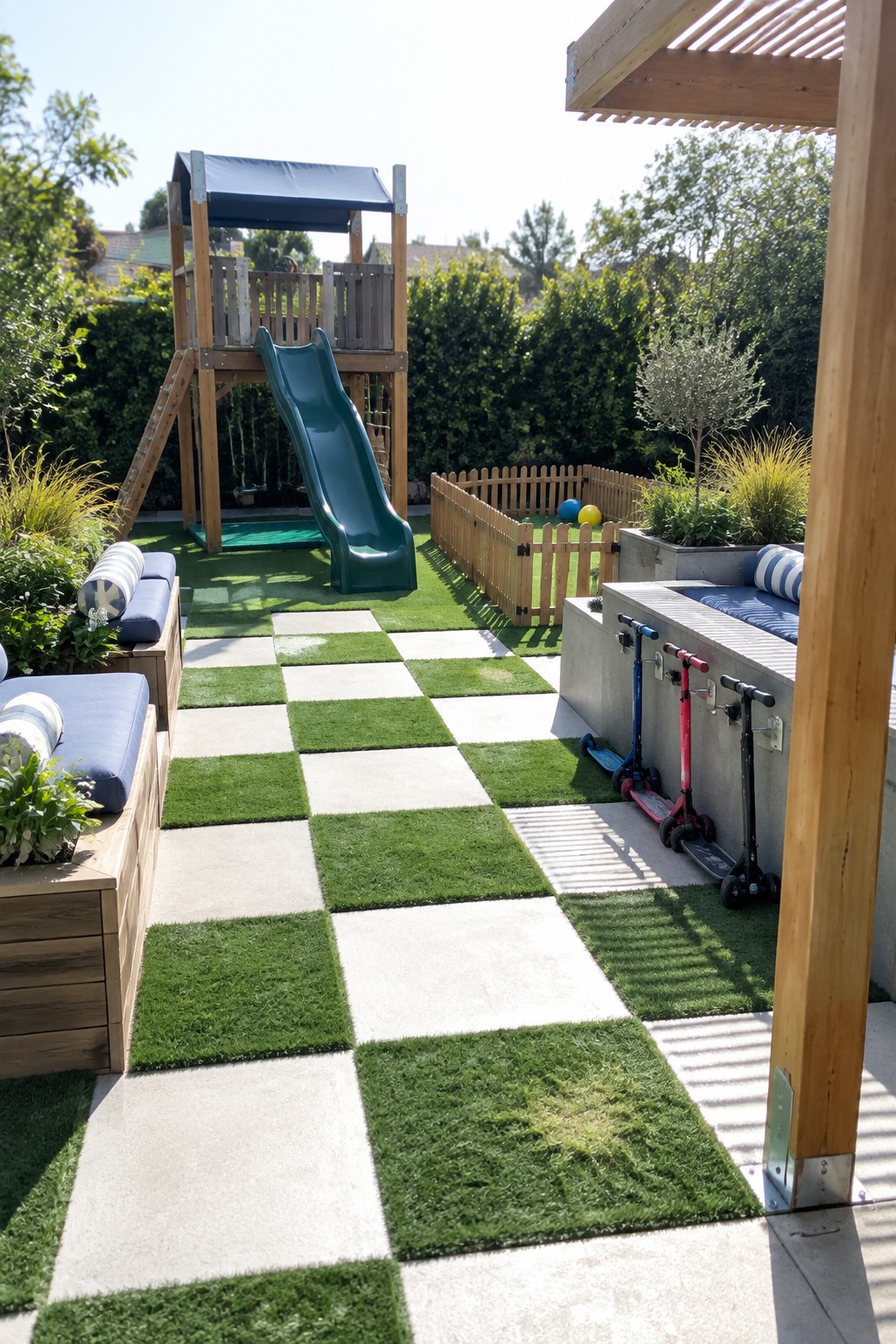
A checkered pattern of grass and pavers gives kids a clear route through the yard while keeping the lawn from getting trampled in one spot. It also breaks up a flat stretch of green without adding extra fencing or borders.
This layout works best in smaller family yards where you need to link seating areas to the play zone but still want room to run. Keep the pavers level with the turf so scooters roll across easily and the mower can handle the edges without extra trimming.
Stepping Stone Paths Keep Lawns Open for Play
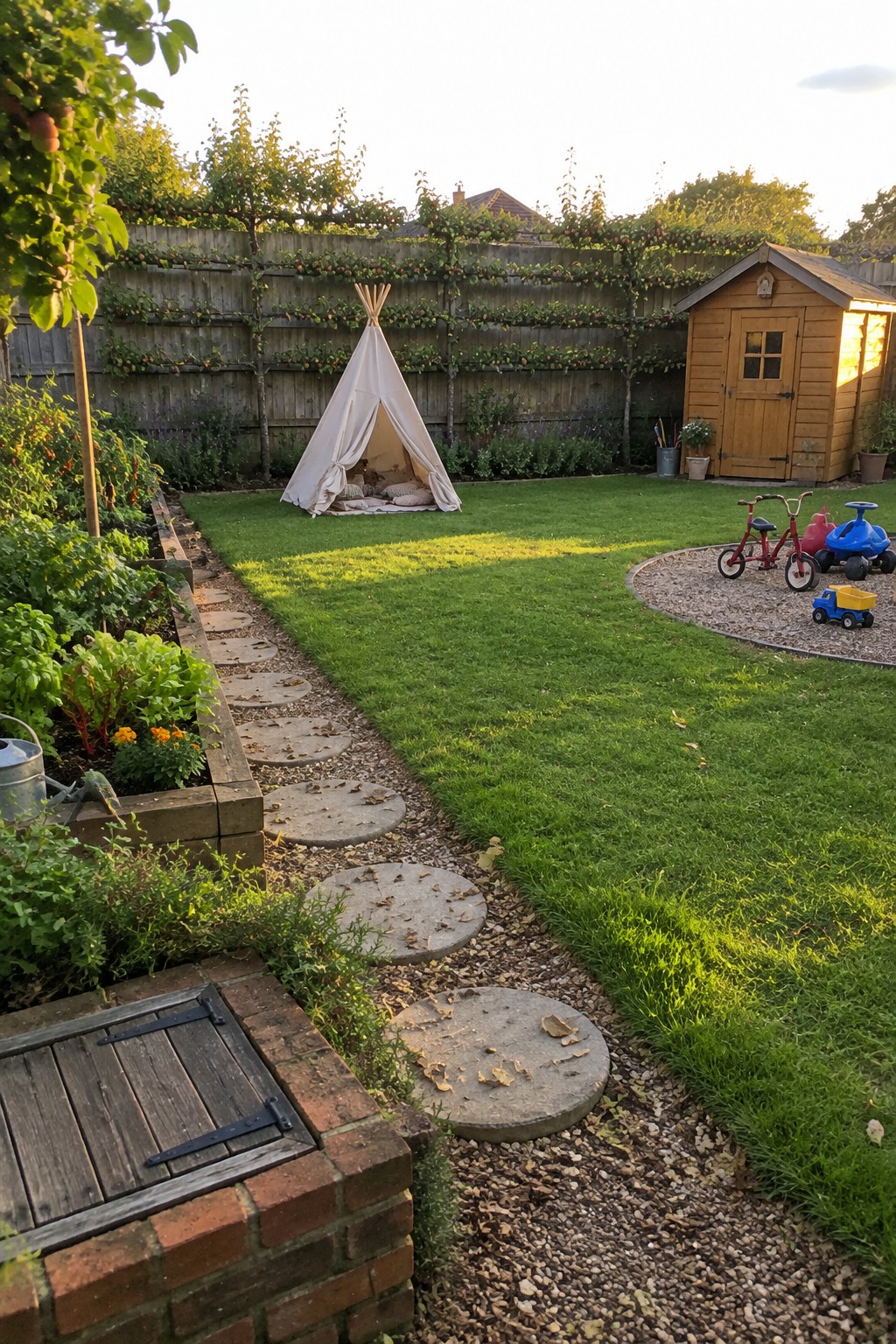
A stepping stone path gives you a solid route across the lawn without carving it up into separate sections. It keeps the grass looking like one big play area while still letting people walk through without turning the ground muddy or flat.
This layout works well in family yards where kids need room to run but adults also want easy access to garden beds or play structures. Space the stones a comfortable stride apart and keep them low so they do not get in the way of toys or games.
Artificial Turf for Family Play Lawns
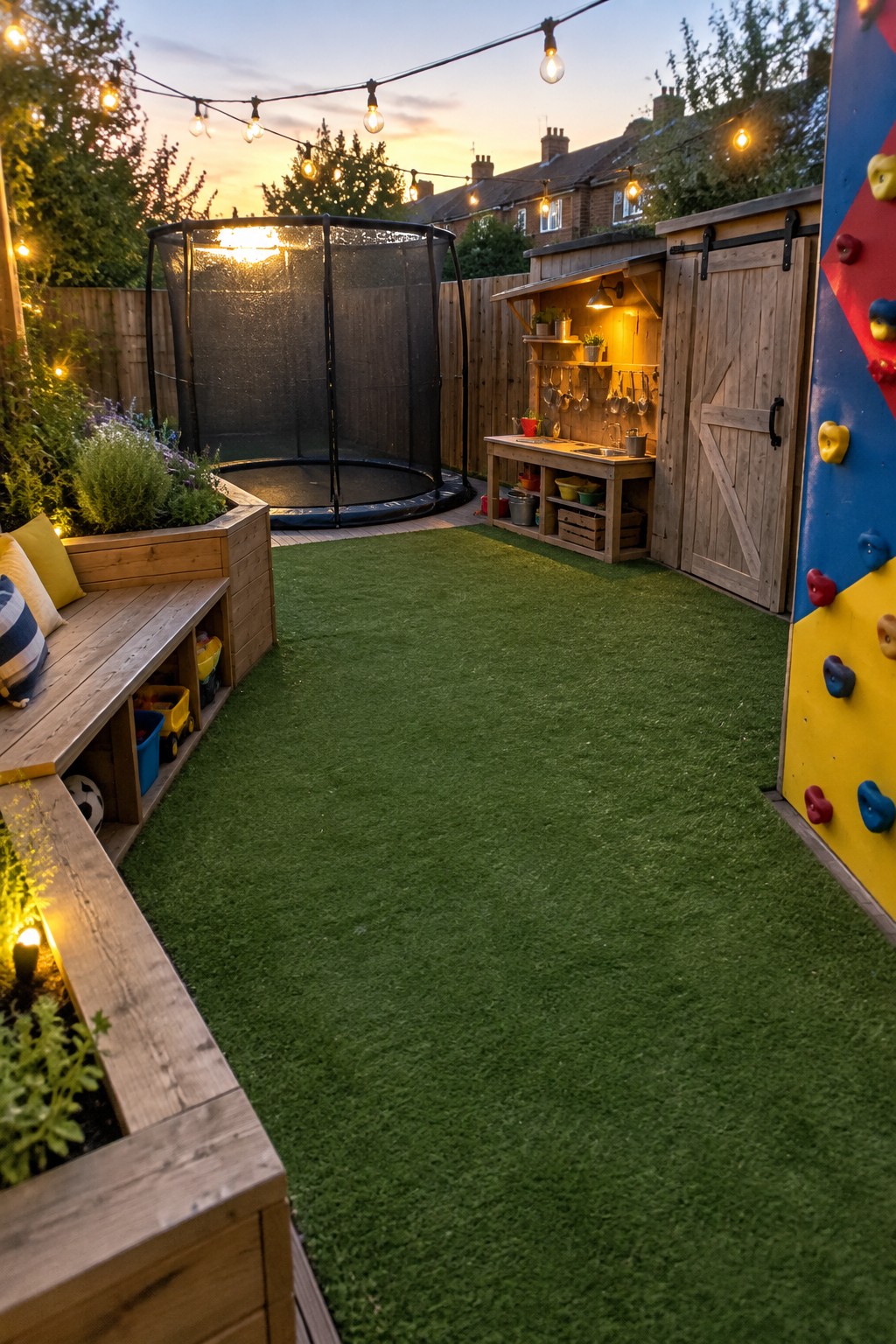
Artificial turf gives kids a soft surface that holds up to daily play without turning into mud. It works especially well in backyards that need both a lawn area and room for equipment like trampolines or climbing walls.
Place the turf in the center of the yard so play zones stay open and easy to reach. Raised beds around the edges add planting space and help define the area without taking away from the play surface. Just make sure the turf has good drainage underneath if the yard gets heavy use.
Add a Gravel Play Zone to Keep Toys Off the Lawn
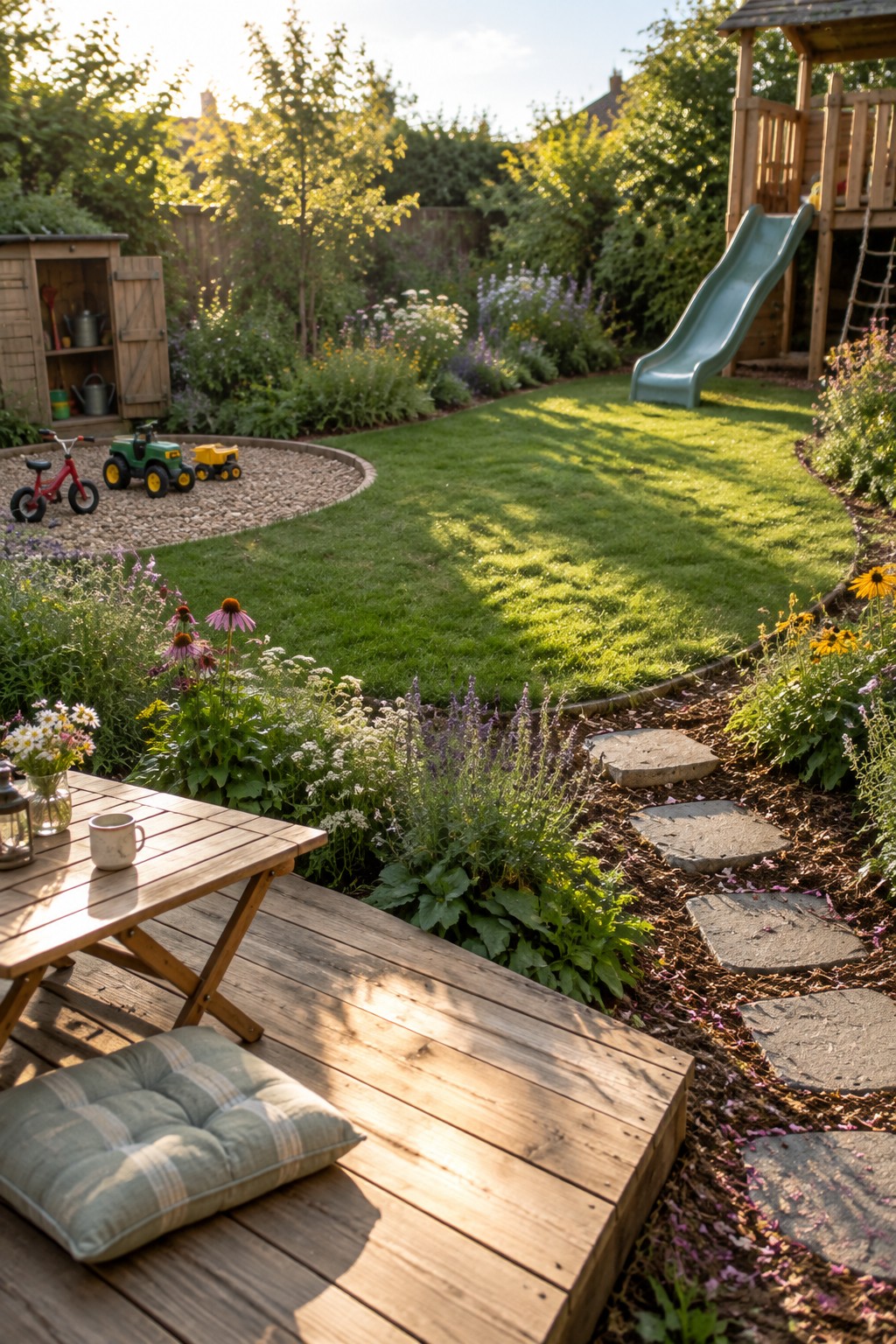
One simple way to manage kids’ gear is to set aside a small gravel section instead of letting toys spread across the whole lawn. The curved edge keeps the area contained while still letting it feel connected to the rest of the garden.
This setup works well in medium-sized yards where you want open grass for running but still need space for ride-ons and small equipment. Use low planting around the border to soften the look and help the zone blend in.
Gravel Paths Keep the Lawn Open for Play
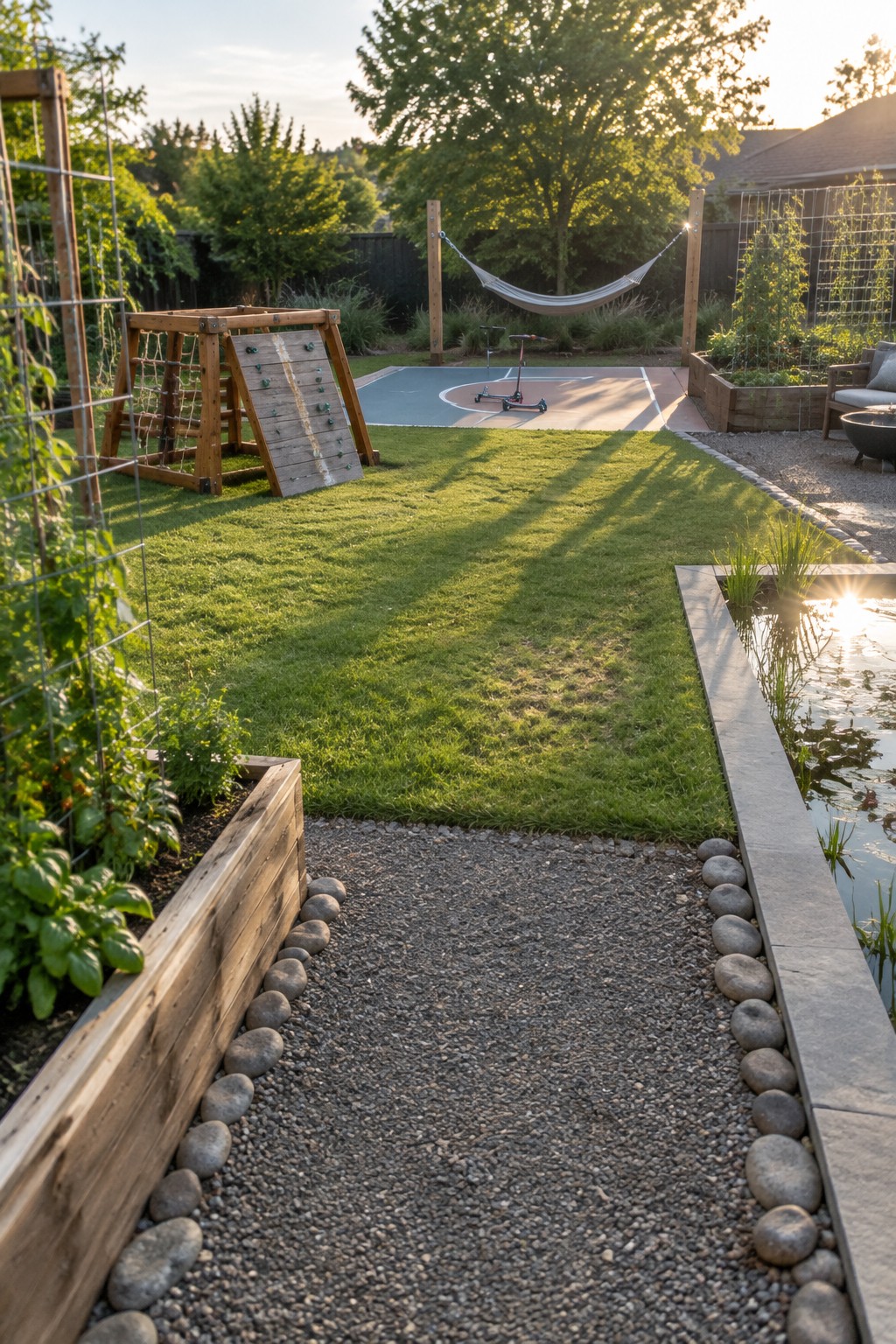
A gravel path with simple stone borders gives kids room to move around the yard without cutting across the grass all the time. It leaves the main lawn area wide and clear for games while still letting you reach the play structure or garden beds without tracking mud everywhere.
This setup works best in backyards that need both open space and easy access between zones. Keep the path narrow and along the edge so it does not break up the lawn too much.
Separate Play Zones With Edging

Many backyards work better when the play areas stay distinct from the open lawn. A simple border around the sand keeps things contained and makes cleanup easier while still letting kids move freely between zones.
This setup suits smaller yards or families who want room to run without sand spreading everywhere. Keep the edging low and match it to other hardscape details so the play zone feels like part of the garden rather than an add-on.
Frequently Asked Questions
Q: How can I keep the grass from wearing out in spots where the kids play every day?
A: Plant a tougher grass mix in those high traffic areas right from the start. Shift the play gear around every couple of months so the lawn gets time to recover.
Q: My yard already has a decent lawn. Can I add play zones without tearing everything up?
A: Work around what you have by carving out a corner for a simple mulch pit or low border. Lay down the new elements in stages so the rest of the grass stays untouched.
Q: What is the easiest way to keep kids from tripping where the lawn meets the play space?
A: Round off the edges with a gentle slope of soil and seed. That single change smooths the transition without adding extra materials.
