

I’ve found that backyard layouts work best when the patio sits in conversation with the surrounding beds and pathways instead of sitting apart from them.
Paver edges need to meet the soil and plantings in a way that keeps things tidy without creating awkward gaps that collect debris over time.
The pattern of the pavers can quietly direct how people move through the space once everything grows in.
Some approaches handle changes in level or sun exposure more gracefully than others because they account for how the yard actually gets used.
I would test the edging detail first in one section of my yard to see how it holds up before doing more.
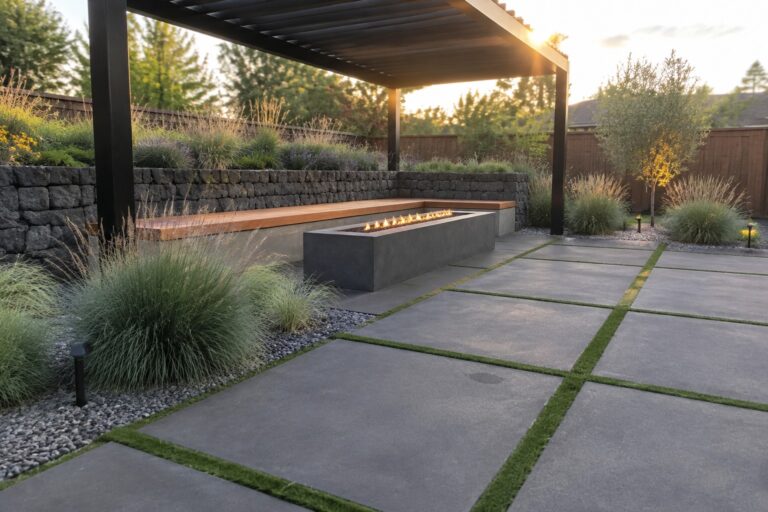
Pavers With Grass Joints

Many modern patios end up looking too solid and heavy once the pavers go down. Adding narrow strips of grass between the slabs breaks up the surface and keeps the space from feeling like one big slab of concrete.
This approach works best on fairly flat yards where you want a clean layout but still need a little green to tie the patio into the rest of the garden. The grass strips do need occasional trimming and watering, so they suit homeowners who are already maintaining a lawn nearby rather than those aiming for zero upkeep.
Circular Paver Patios Around A Fire Pit
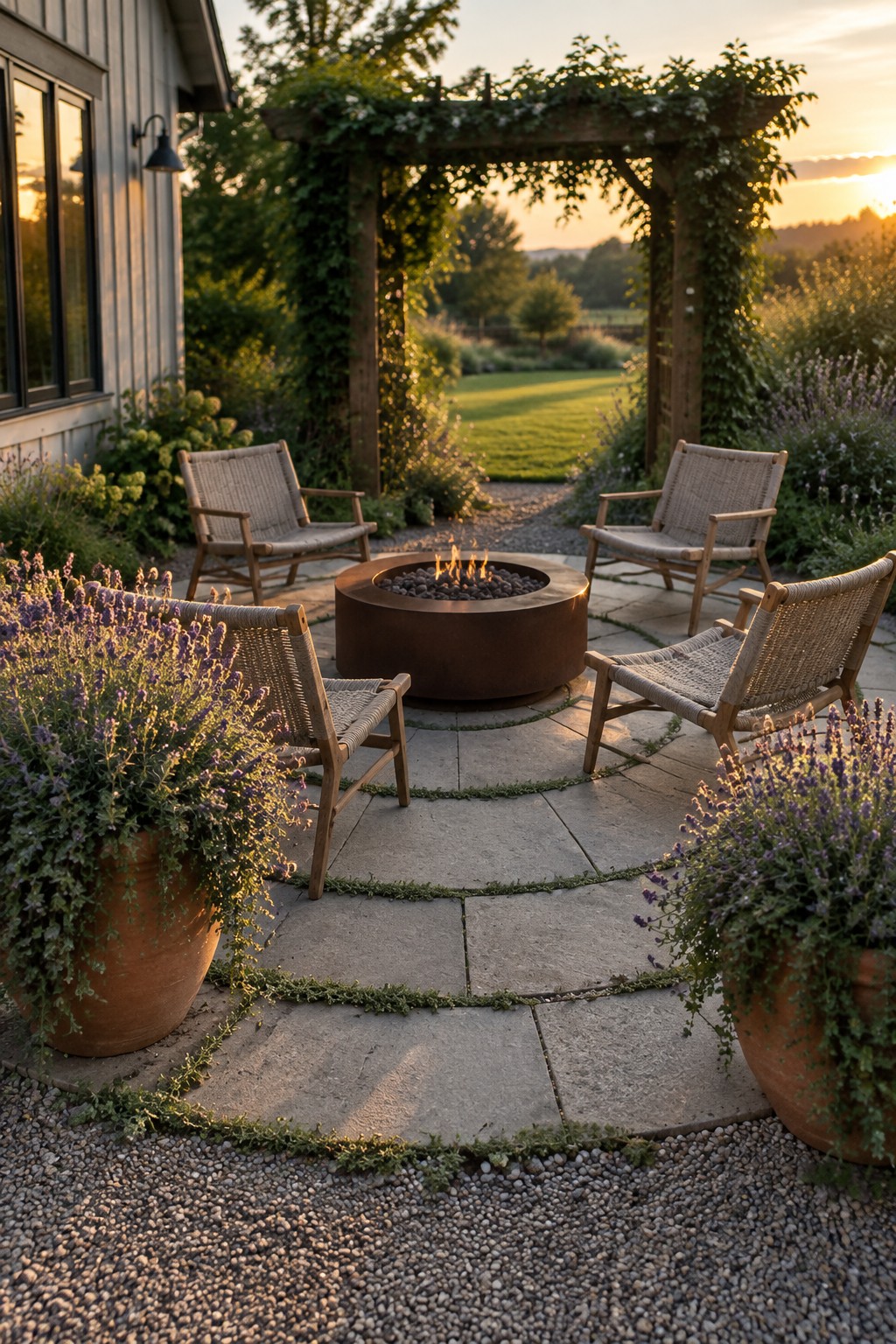
A round paver patio gives the fire pit a clear spot to anchor the seating without needing a big square slab. The shape keeps the chairs close enough for conversation while leaving room to walk around the edges.
This layout works best in medium backyards where you want the space to feel open but still contained. Place the fire pit in the center and keep surrounding plantings low so the circle stays the main feature.
Paver Patios With Edge Water Features
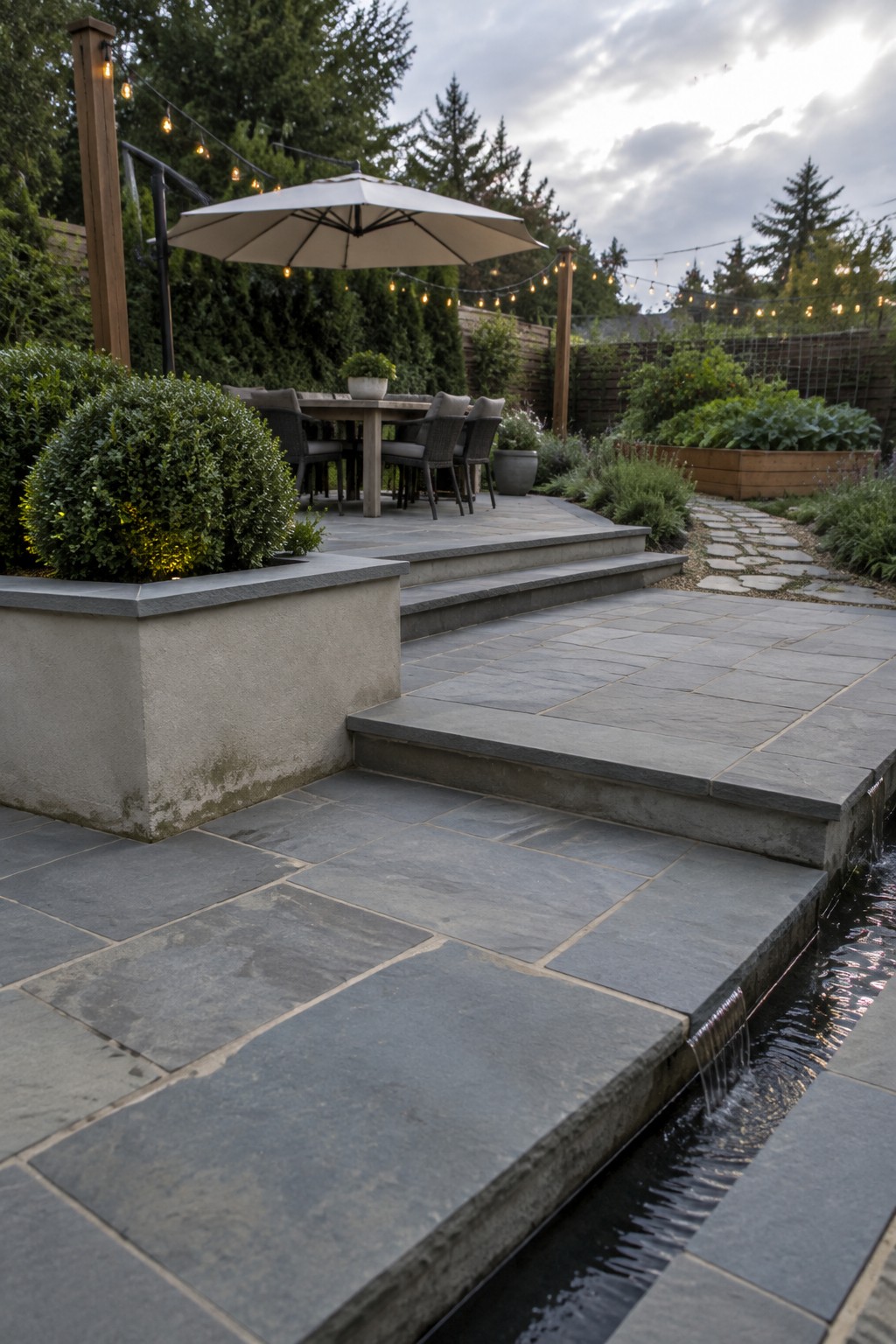
Many backyard designs use pavers to create wide, flat seating areas that feel connected to the rest of the yard. Adding a narrow water channel along one edge gives the space a quiet sound and a clean line that separates the patio from planting beds without needing extra fencing or walls.
This setup works best on level ground where you can run the water line along steps or the outer border. Keep the paver color consistent and choose a simple pump system that is easy to access for cleaning. It suits homes with modern landscaping where the goal is to keep the hardscape feeling open but still add some movement.
Built-In Open Storage for Outdoor Kitchens
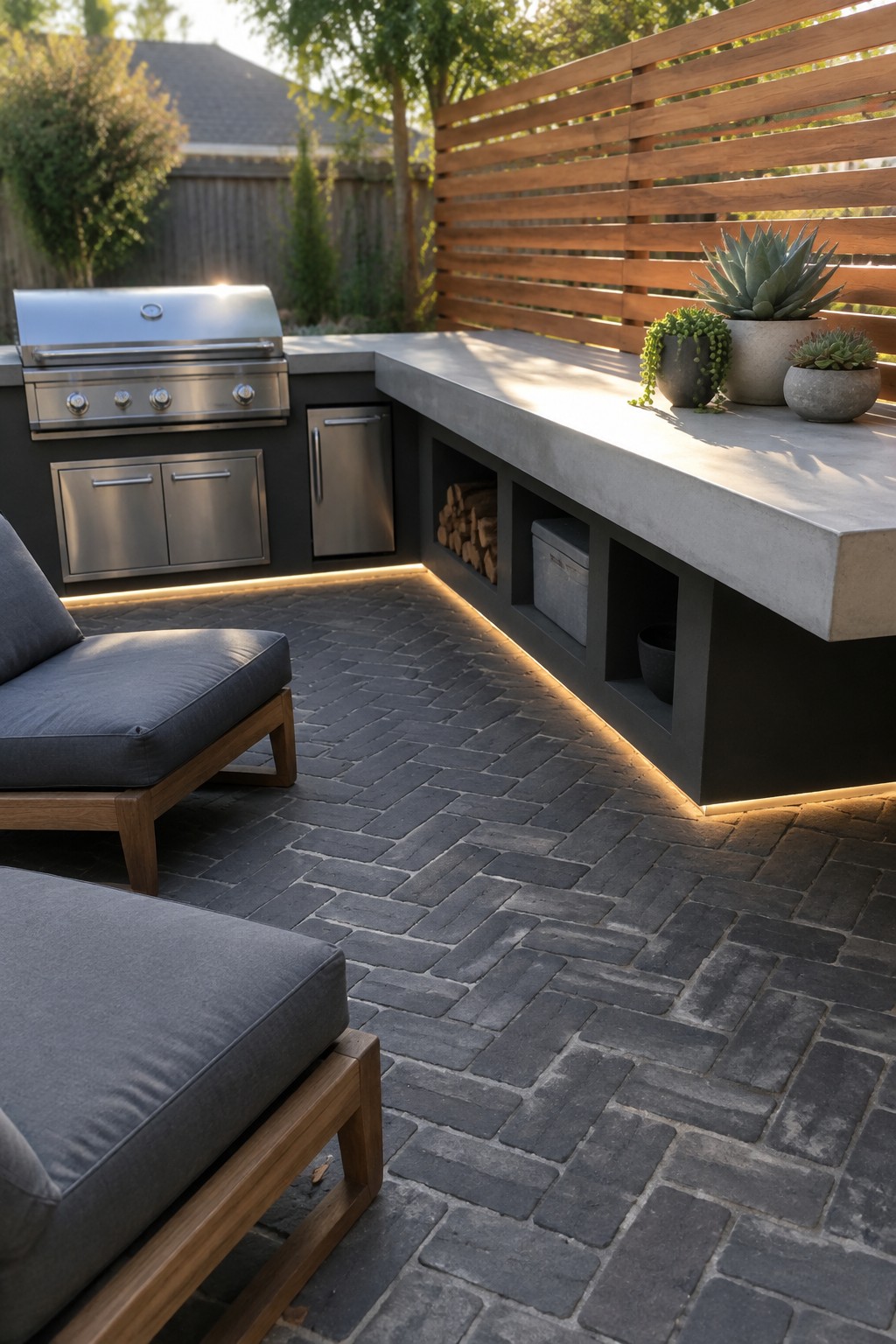
Open cubbies under an outdoor counter give you a place to keep firewood, bins, and smaller items without adding extra furniture to the patio. The setup stays simple and the space feels less cluttered because everything has a spot right where you need it.
This works well on a paver patio because the low storage stays out of the way of seating and traffic. It suits homes that use the backyard often for cooking or gathering, but it helps to keep the cubbies from getting too deep so things stay easy to reach.
Large Planters On Paver Patios
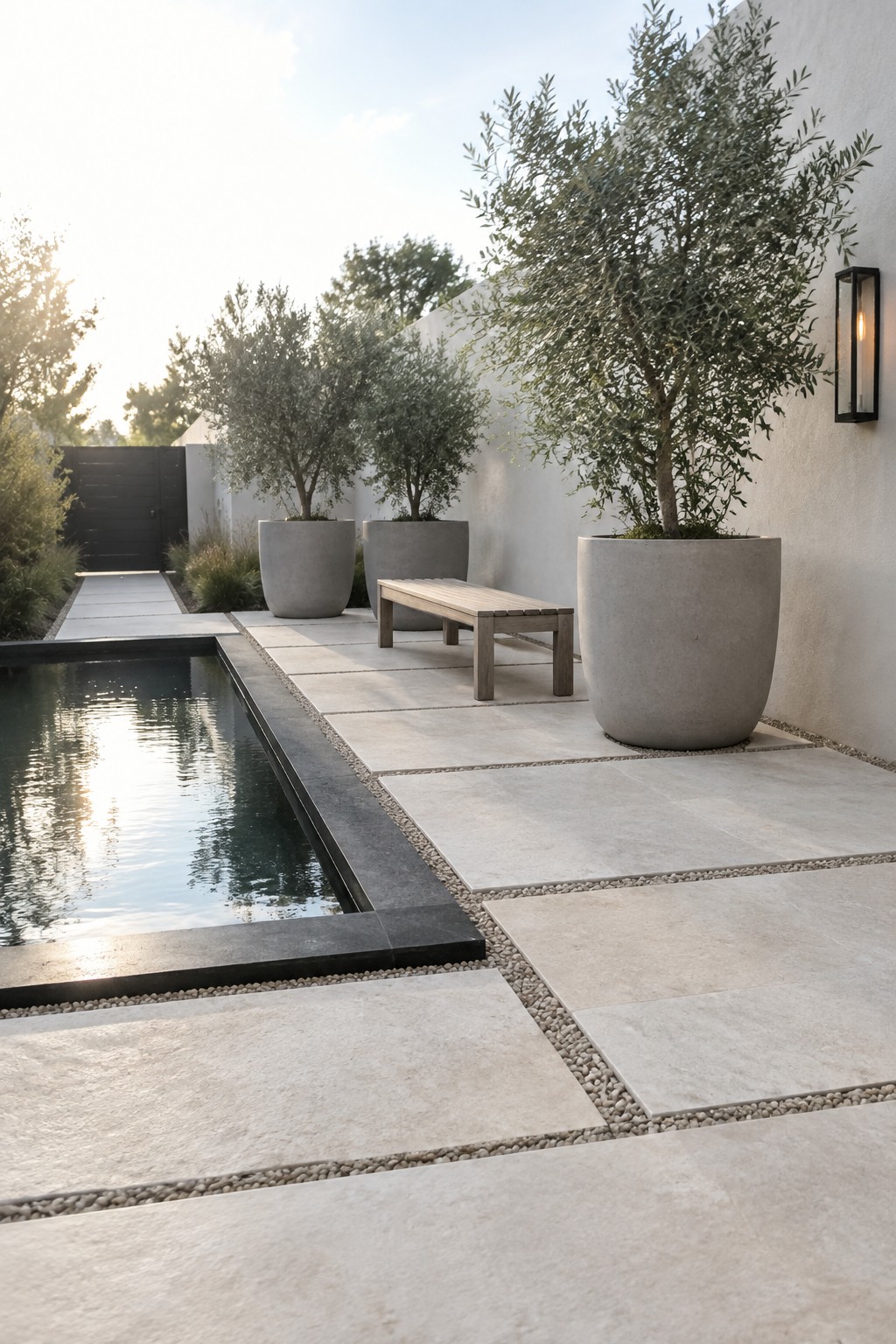
Large planters give you a simple way to add trees and height to a paver patio without breaking up the hardscape. They keep the surface open and easy to clean while still bringing in some softness and structure next to the pool or seating.
This approach works best in modern yards that want a clean look with minimal planting beds. Place a few oversized concrete pots along the outer edge and choose trees that stay in proportion to the space so the patio does not feel crowded.
Mix Pavers With Gravel Bands
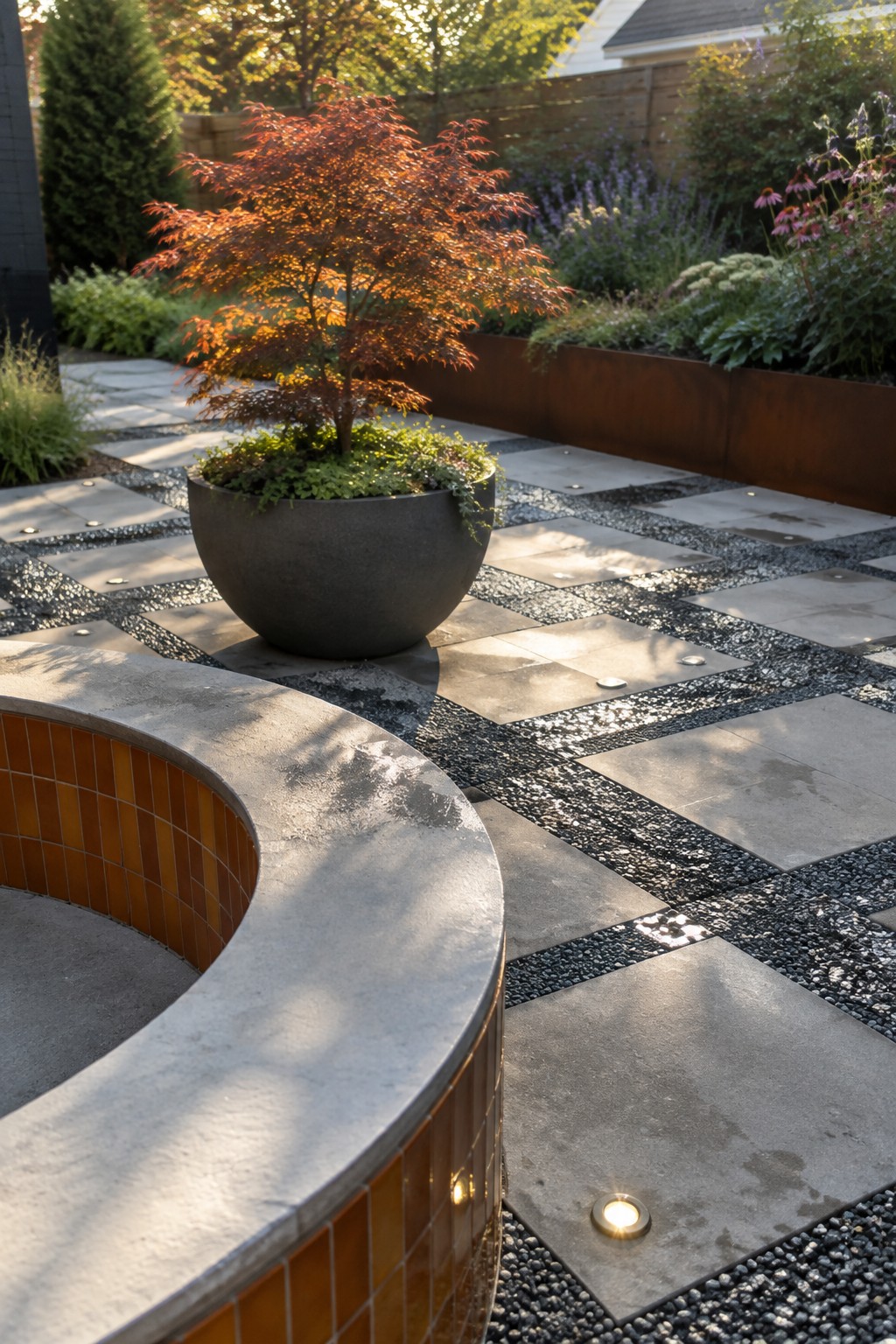
A grid of large pavers broken up by dark gravel bands gives the patio a clean modern feel without looking too formal. The gravel adds texture and helps with drainage so water does not pool on the surface. It also keeps the whole area from feeling too solid or heavy next to the garden beds.
This approach works well in smaller yards or along the edge of a larger lawn where you want the patio to blend into the landscape. Keep the gravel a dark neutral so the pavers stay the main focus and the pattern does not get lost.
Brick Paver Patios With Built-In Seating
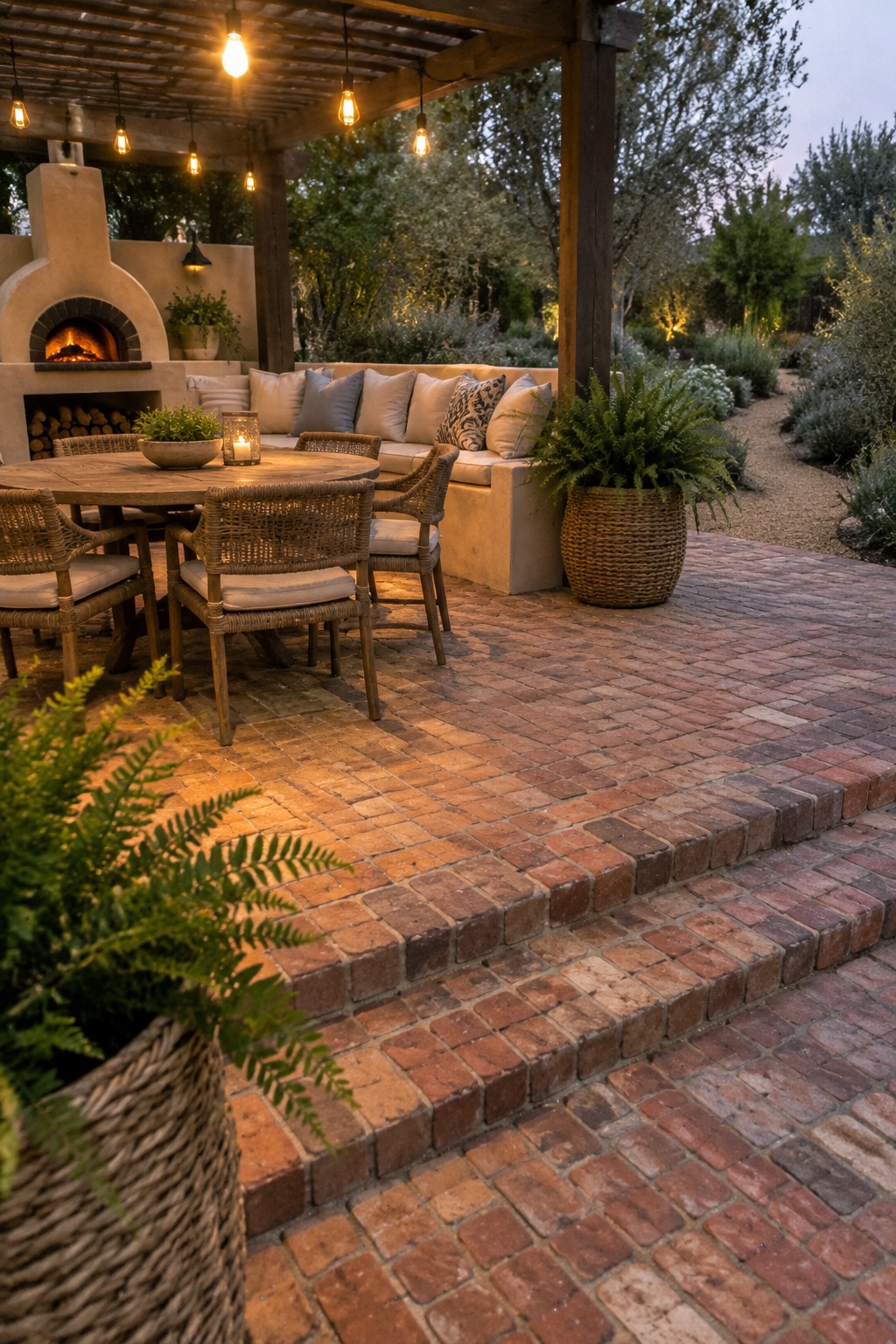
Brick pavers give an outdoor space a solid, lasting surface that handles daily use without looking worn down fast. In this setup the pavers run across the whole area and step up naturally to a low wall that doubles as seating, so the patio feels like one connected room instead of separate patches of hardscape.
This works best in backyards where you want room for both dining and lounging without adding too many freestanding pieces. Keep the paver color simple so it stays in the background and let the built-in bench carry the main seating load.
Paver Patios With a Planted Strip
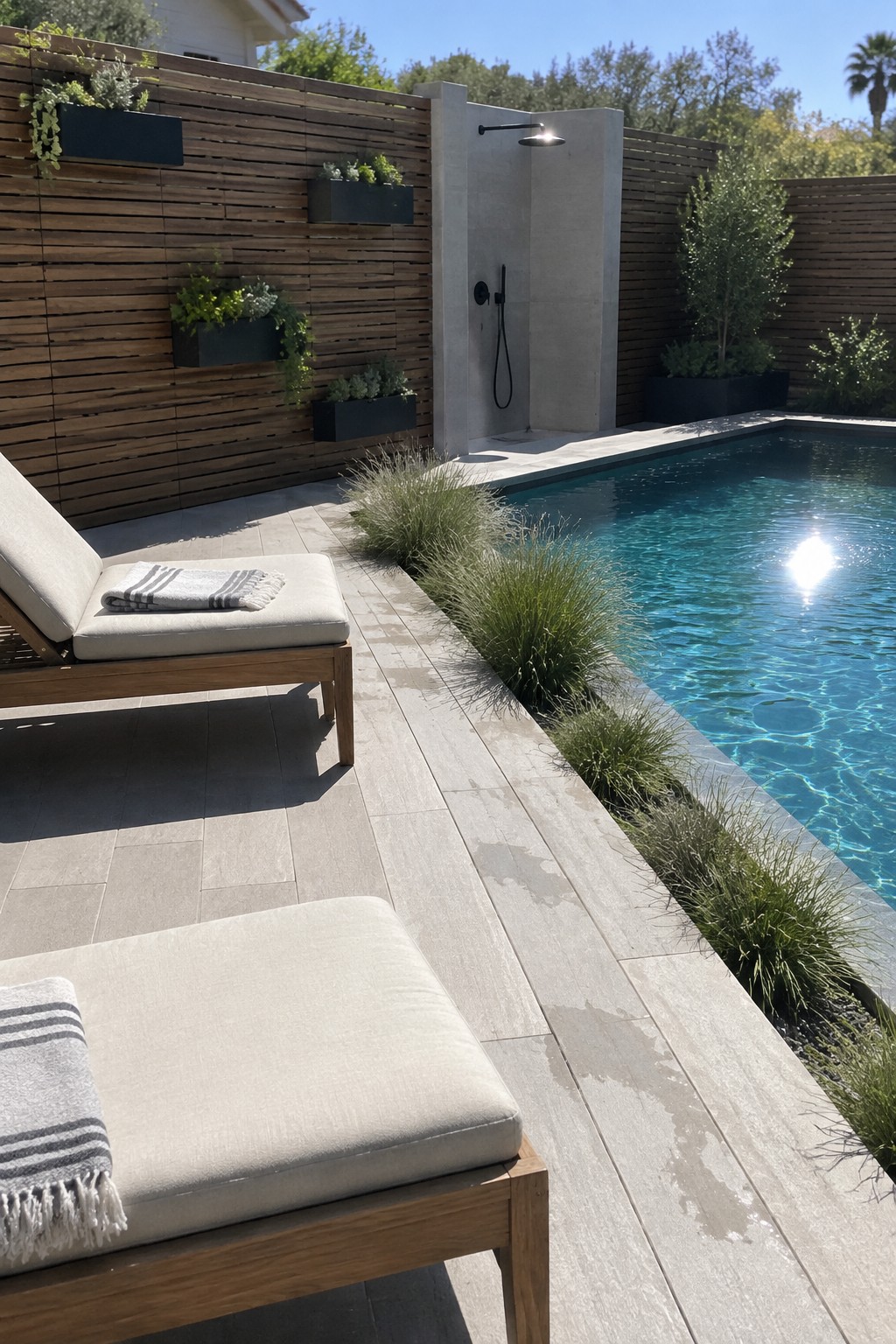
A simple run of light pavers works well when you keep a narrow band of plants right against the pool. The strip of grasses softens the edge without taking up much room and gives the water a cleaner look from the seating area.
This layout suits smaller backyards where the pool sits close to the house. Use the same pavers for the main patio and the pool surround so everything feels connected, and pick plants that stay low and need little trimming.
Pavers Set Into The Grass

Setting paver squares straight into the lawn gives you a solid surface without turning the whole yard into one big slab. The grid pattern defines a spot for the fire pit while still letting grass grow right up to the edges, so the space feels open and relaxed instead of overly finished.
This layout works well in backyards that already have a good lawn and just need a few defined areas for seating or walking. Keep the pavers level with the grass so mowing stays simple, and use them where you want a casual path or patio zone without losing the soft look of the surrounding turf.
Add An Outdoor Kitchen To Your Paver Patio
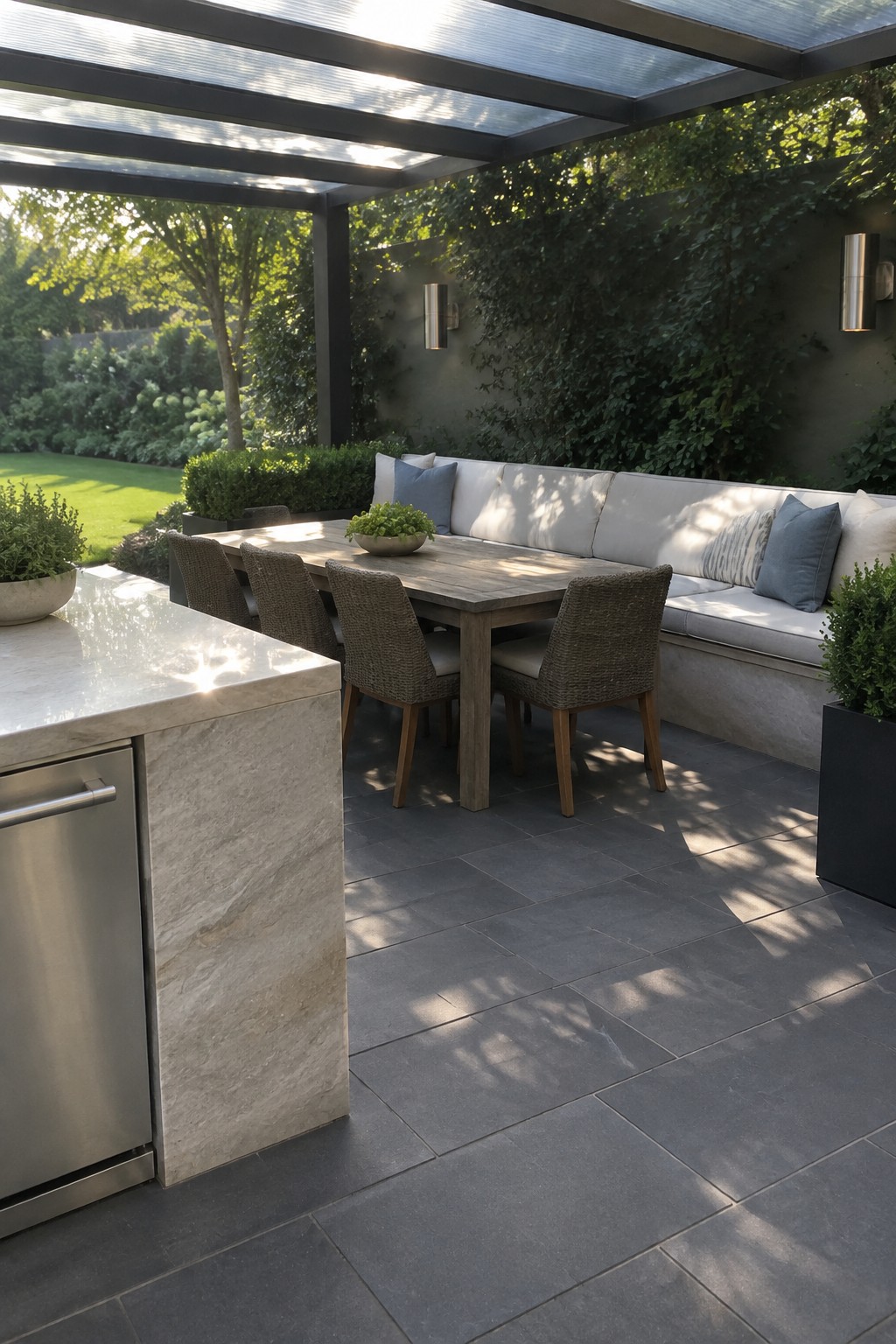
An outdoor kitchen on a paver patio turns the backyard into a place where cooking and eating happen right outside. The durable surface handles heavy use without wearing down, and it keeps the whole setup feeling connected to the rest of the yard.
This works best on homes with enough space for both a cooking zone and seating. Keep the kitchen counter simple and place the dining table nearby so the flow stays natural. Make sure the pavers sit level and drain well if you cook often.
Raised Planter Beds Along Paver Edges
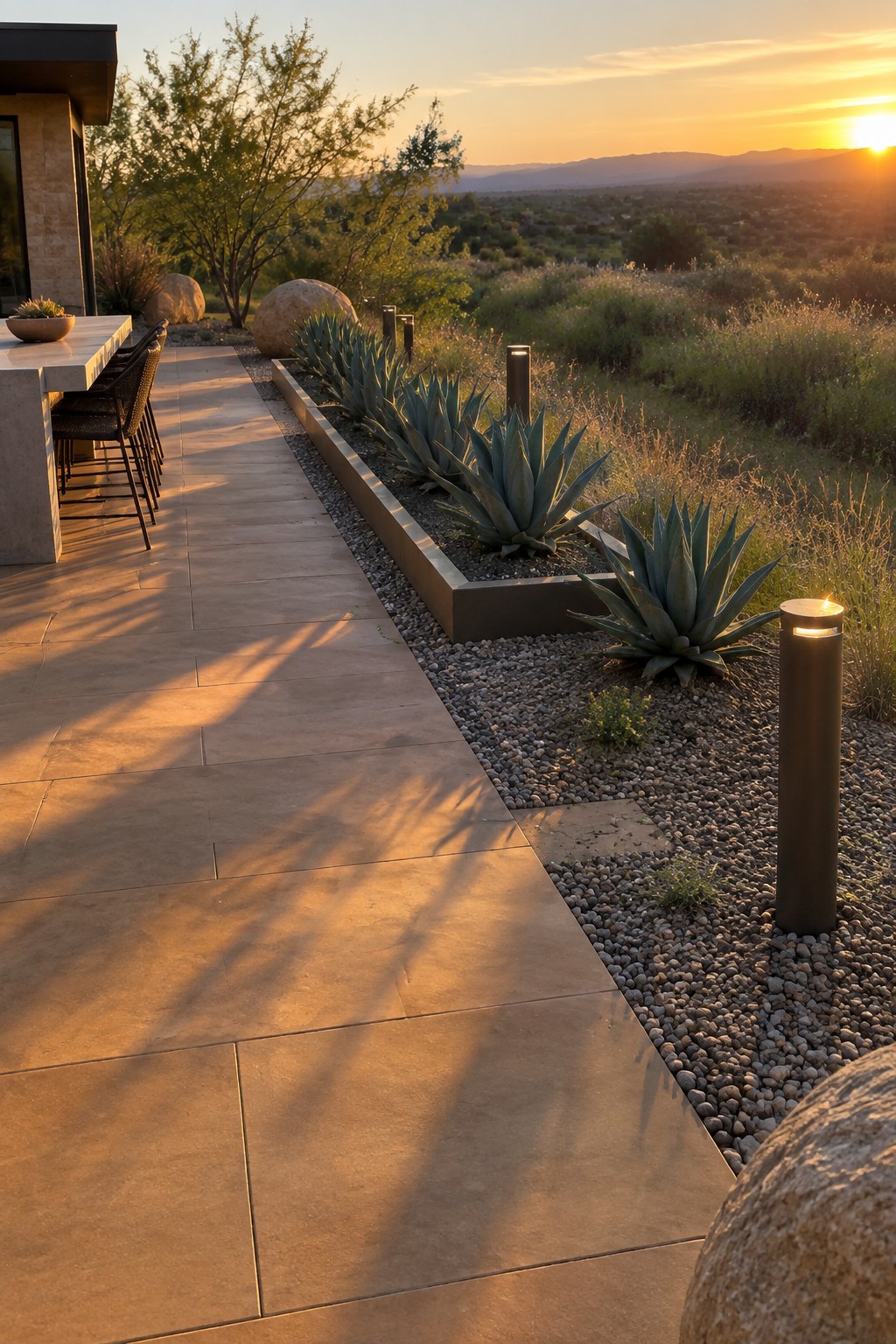
A raised planter bed running alongside a paver patio gives the whole area a clear boundary without needing a fence or wall. The bed keeps plants contained, adds height, and makes the transition from hard surface to garden feel intentional rather than abrupt.
This setup works best in dry or low-water yards where gravel mulch and sturdy plants like agaves can handle the sun. Keep the bed width narrow so it does not crowd the seating area, and match the bed height to the pavers for a smoother look.
Use Pavers And Gravel To Create Distinct Zones
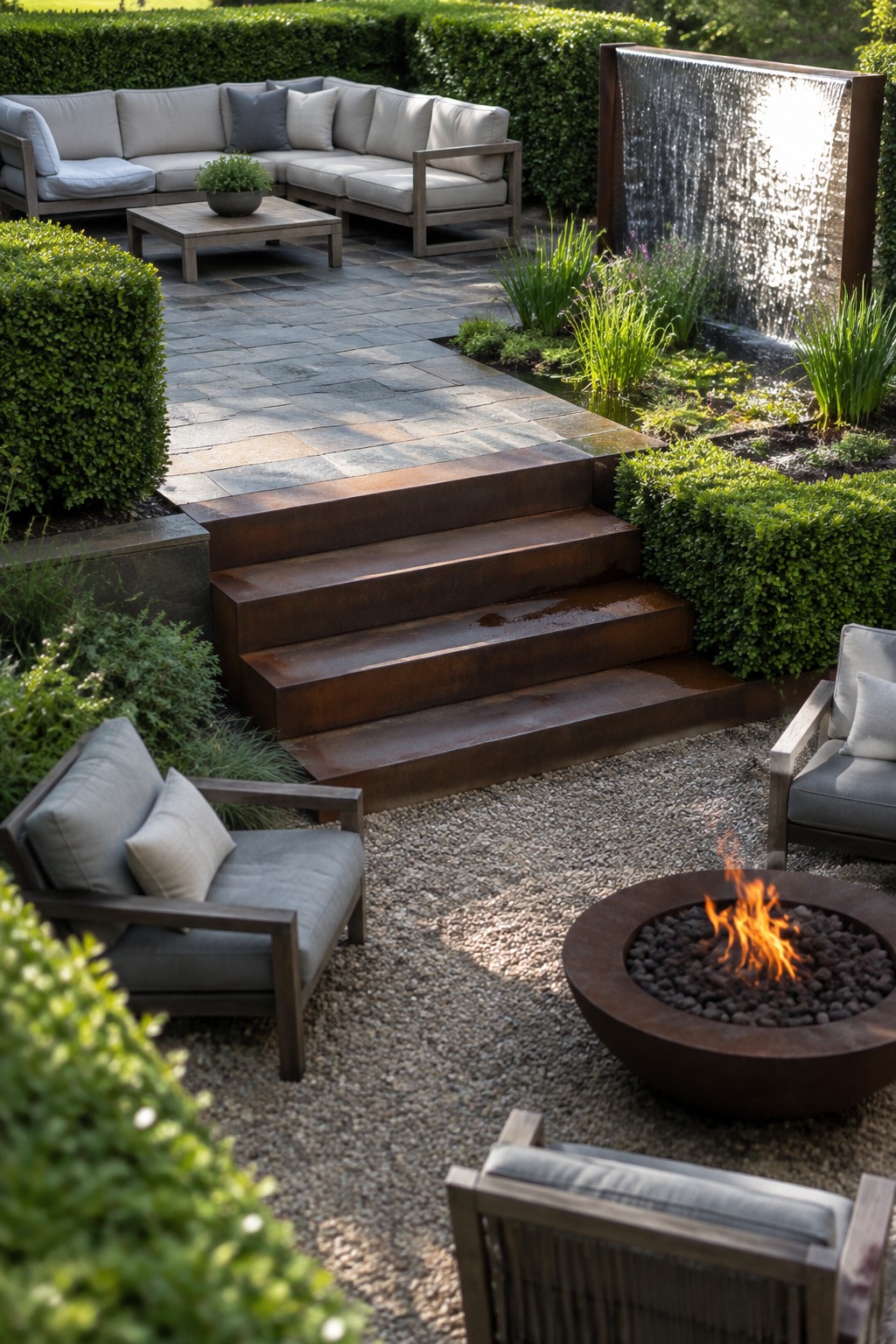
Mixing paver surfaces with gravel helps break up a backyard into separate areas without needing walls or fences. The pavers handle the main seating and traffic areas while the gravel gives a more relaxed spot for a fire pit and extra chairs. This keeps the space feeling open but still organized.
It works well on slightly sloped lots or when you want one area for dining and another for casual lounging. Just make sure the gravel sits a bit lower than the pavers so it stays contained and does not spill onto the main patio over time.
Stepping Pavers Through Gravel
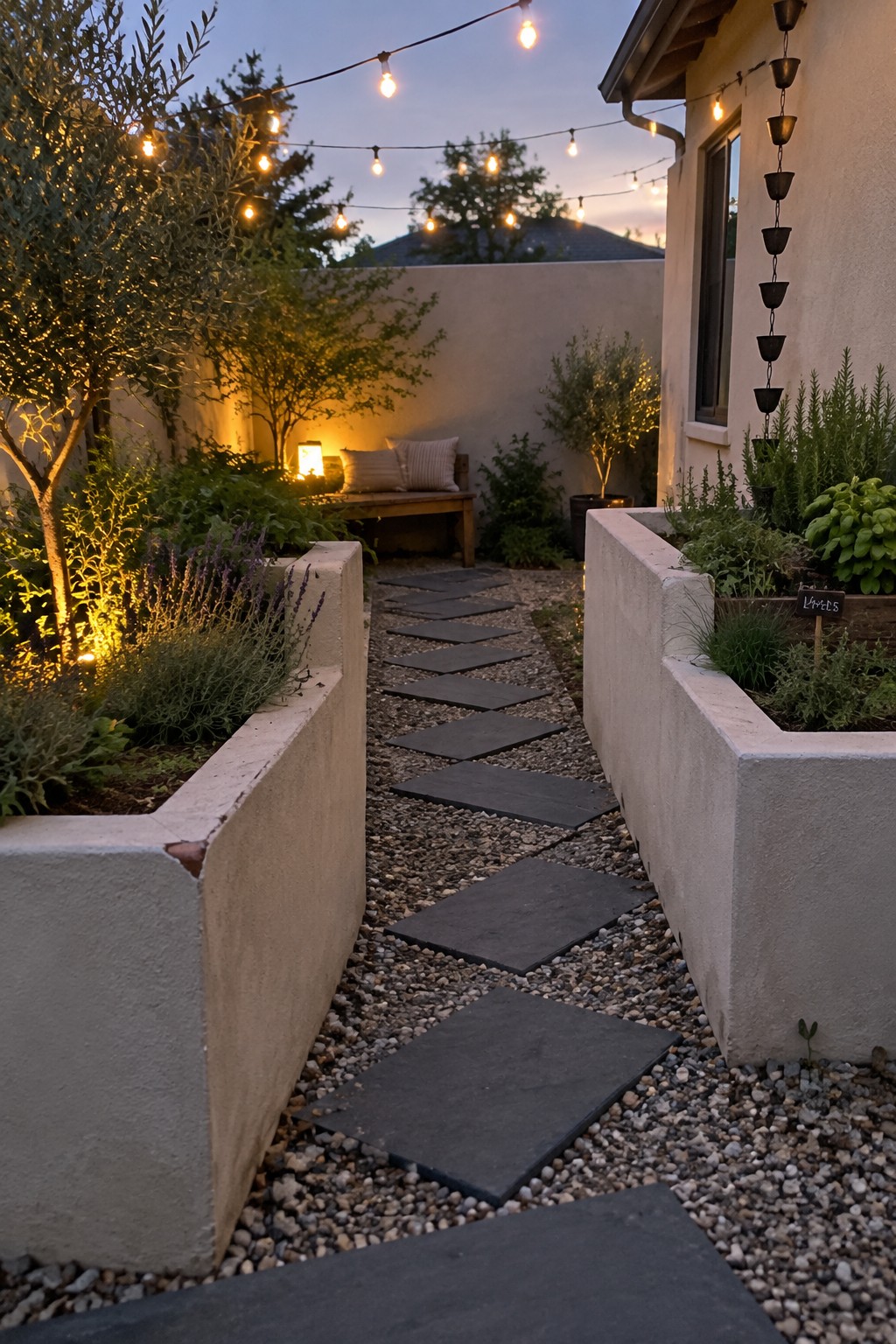
Laying flat pavers as stepping stones directly into gravel gives a path that feels relaxed but still keeps the route clear. It works especially well when you want something softer than a full patio yet more practical than just mulch or grass between planting areas.
This approach fits side yards or narrow garden spaces on modern homes. Space the pavers at a natural walking distance and keep the gravel layer thick enough for good drainage so the path stays usable year round.
Pavers With Ground Cover Between The Joints

Pavers laid in a grid often look too rigid on their own. Leaving narrow strips between them and filling those strips with low ground cover breaks up the surface and lets the patio feel more connected to the rest of the yard. The plants soften the edges without taking up extra space.
This works best in smaller contemporary backyards where you want a clean layout but still need some greenery underfoot. Keep the plants low so they do not interfere with furniture or walking paths, and choose varieties that tolerate light foot traffic if the area sees regular use.
Large Stone Pavers For Simple Patio Flow

Large stone pavers work well when you want a patio that feels open but still grounded. They create a flat surface that handles furniture and foot traffic without looking too rigid. In this setup the pavers sit level with the surrounding gravel and step up to a wood deck, so the whole area reads as one space rather than separate rooms.
This approach suits homes with modest backyards that still need room for seating and a fire feature. Keep the paver joints tight and let the gravel or low plantings fill the edges. Avoid adding too many small accents or the clean look can start to feel busy.
Outdoor Kitchens On Paver Patios
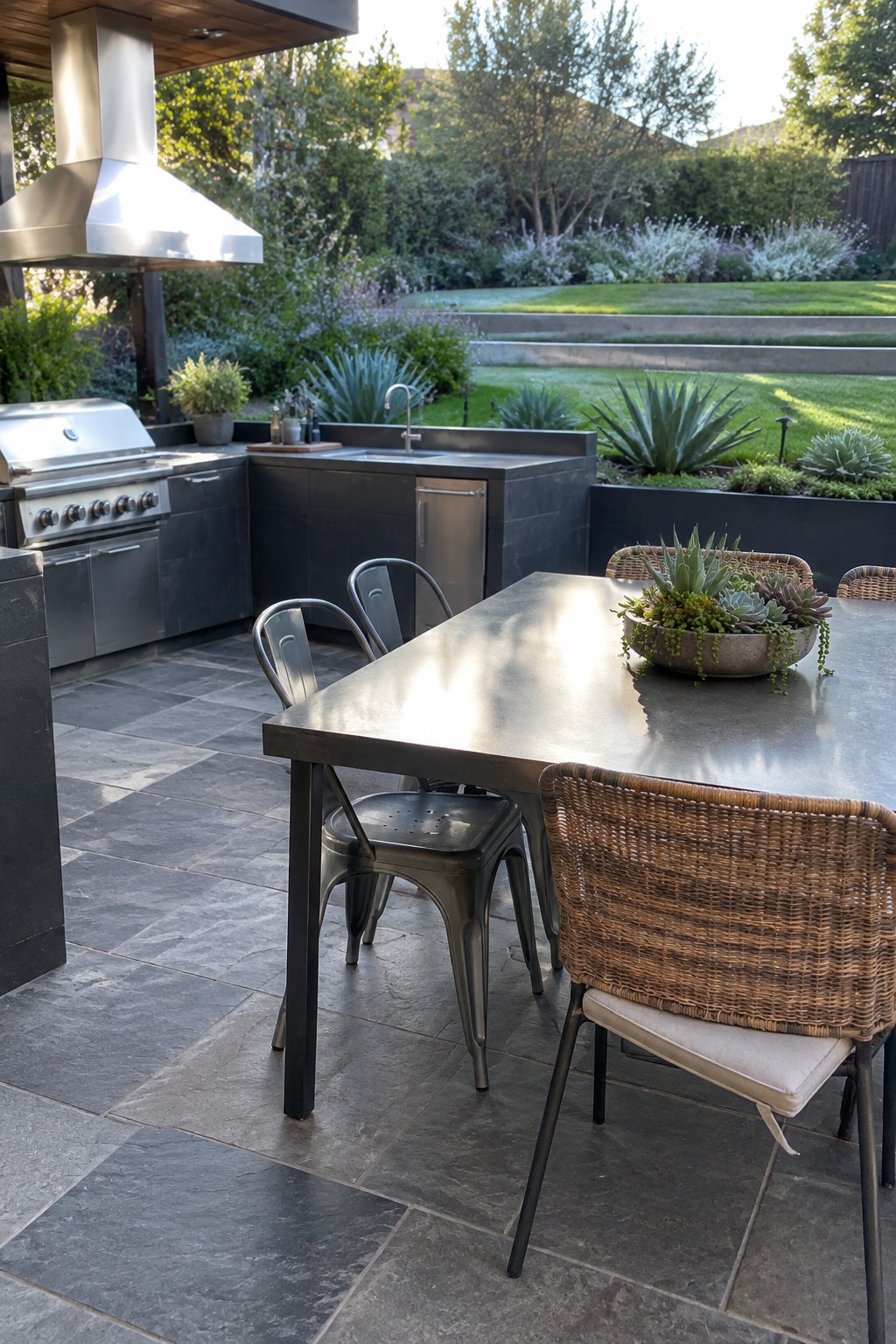
Many people find that placing an outdoor kitchen directly on a paver patio makes the whole space more practical. The hard surface stands up to spills, heavy foot traffic, and cooking messes without needing constant upkeep. It also keeps the cooking zone level with nearby dining spots so everything feels connected.
This setup works best in backyards where the kitchen needs to double as an entertaining area. Dark pavers like the ones in the photo give a clean base that holds up well and does not show every mark. Just make sure the pavers sit on a solid base so they stay even over time.
Paver Patios With Linear Fire Pits
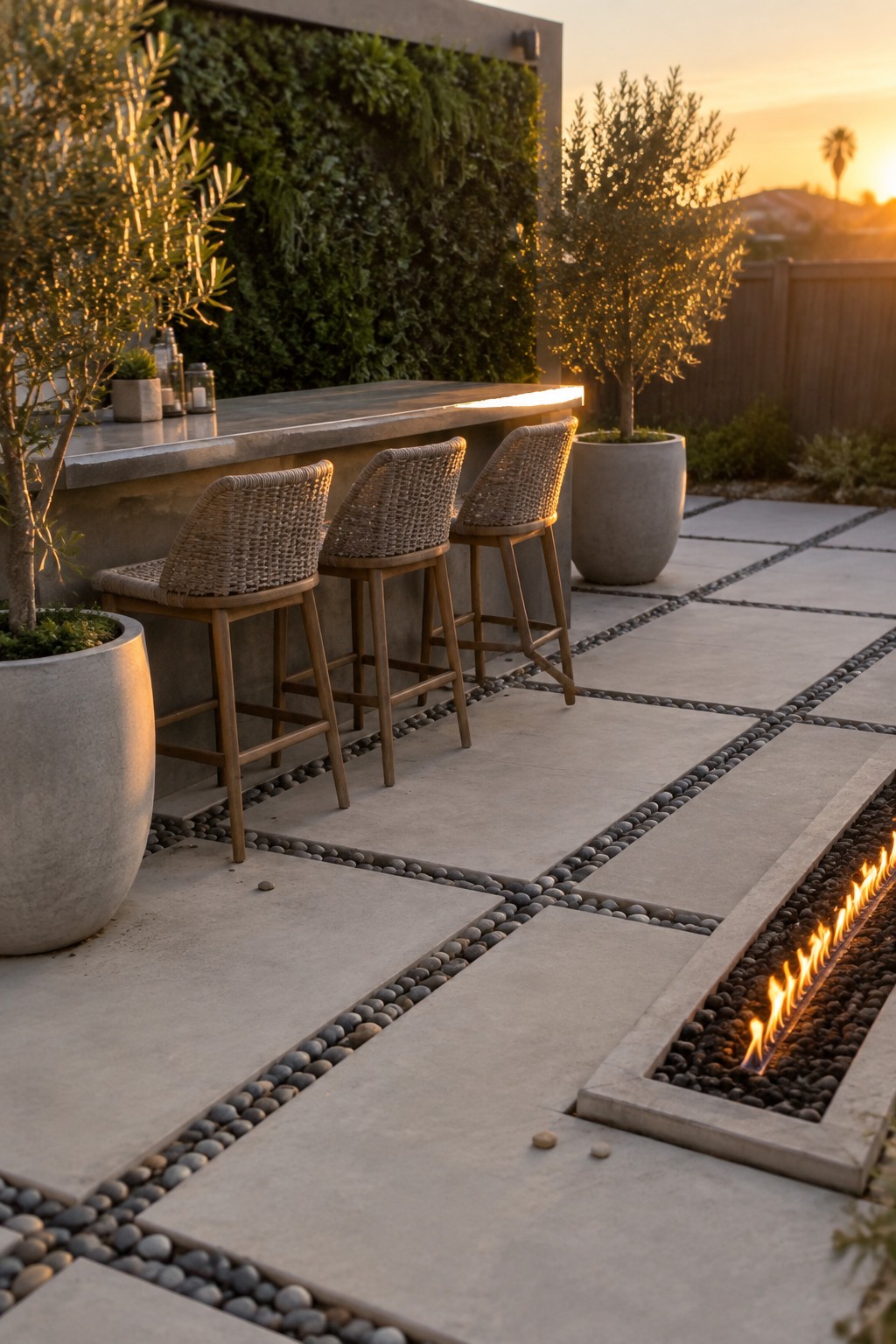
A linear fire pit set into the paver surface gives the whole patio a clear focal point. It turns an open area into a spot where people naturally gather, especially in the evening when the flames add light and warmth.
This works best on flat, modern backyards where the pavers already run in a grid pattern. Keep the fire channel narrow and level with the surrounding stones so it feels built in rather than added later.
Edging a Paver Patio With a Pond
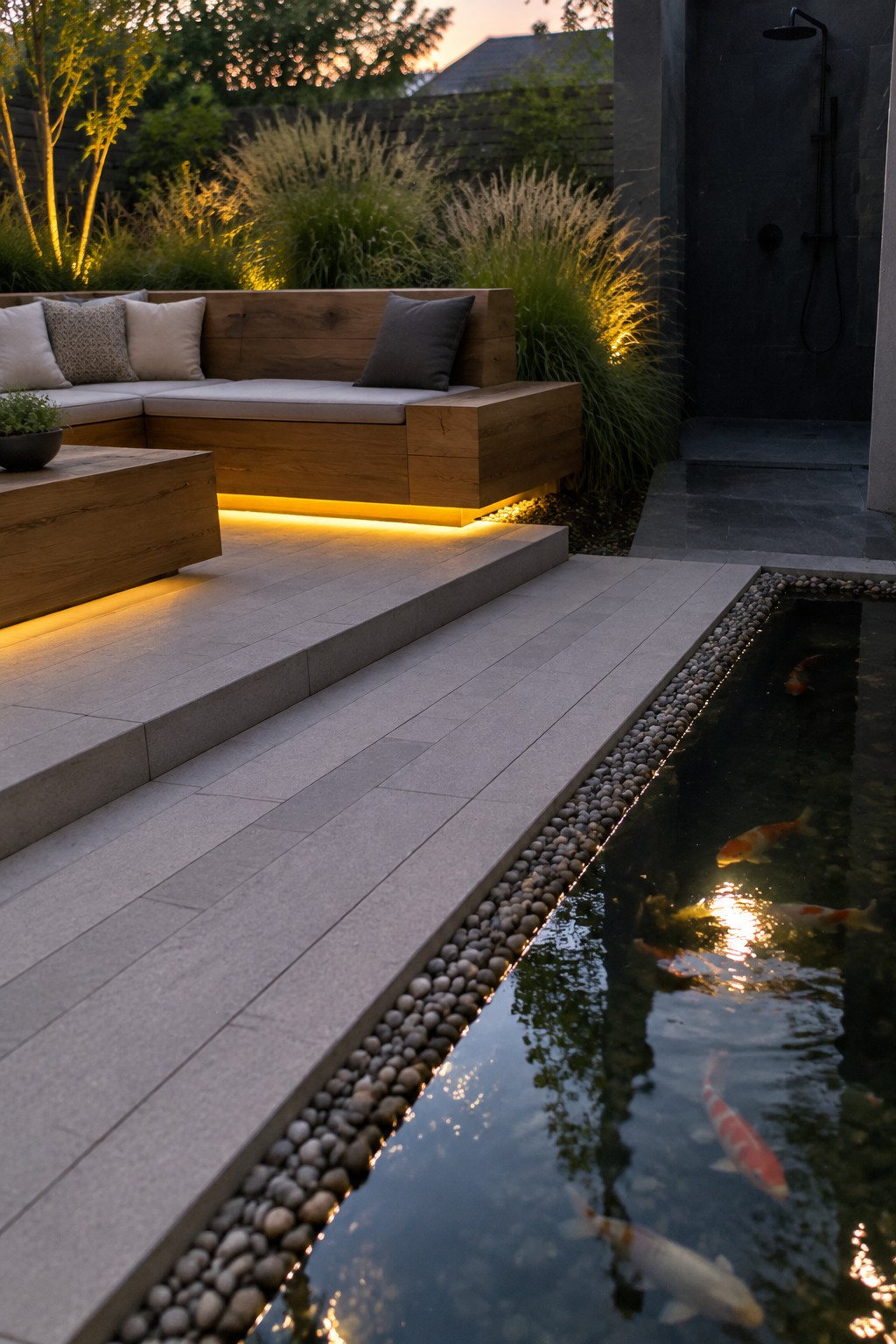
Many people like running a narrow pond right along the side of a paver patio. It gives the space a calm border that feels softer than a row of plants or a plain wall, and the water reflects light nicely in the evening.
This setup works best in smaller yards where you want to add interest without crowding the seating area. Keep the pond shallow, use pebble edging to blend it with the pavers, and choose fish that handle the local climate so the feature stays low maintenance.
Frequently Asked Questions
Q: How do I stop grass from creeping onto the pavers?
A: Lay a solid edge border around the patio. This blocks the roots from spreading in. Check it once a season and pull any strays by hand.
Q: Which plants stay low enough not to block the view of the patio?
A: Grasses and ground covers work well here. They add softness without taking over the space. Keep them a foot or two back from the edge.
Q: Can I build the patio myself?
A: Small projects work with a few tools and some help from friends. Bigger jobs save time and hassle with pros.
