

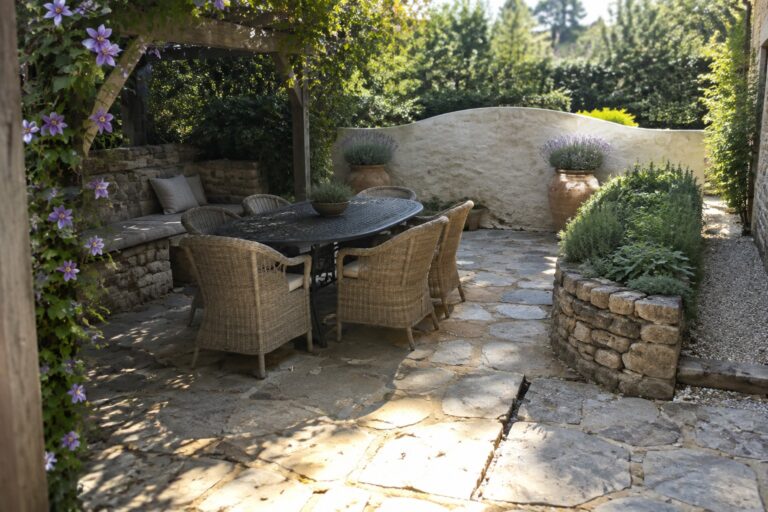
Over the years I’ve seen how natural stone edging can quietly shape a patio so it feels like part of the garden instead of something added on later.
The right layout keeps water from pooling near the house and gives the surrounding plants room to grow without taking over the seating area.
Maintenance drops when the edges are done right.
I usually start by walking the space at different times of day to see where the light hits and how the stones might cast shadows across the surface.
A few of these ideas stand out because they balance durability with a look that ages gracefully rather than fighting the weather.
Stone Walls As Natural Patio Edging
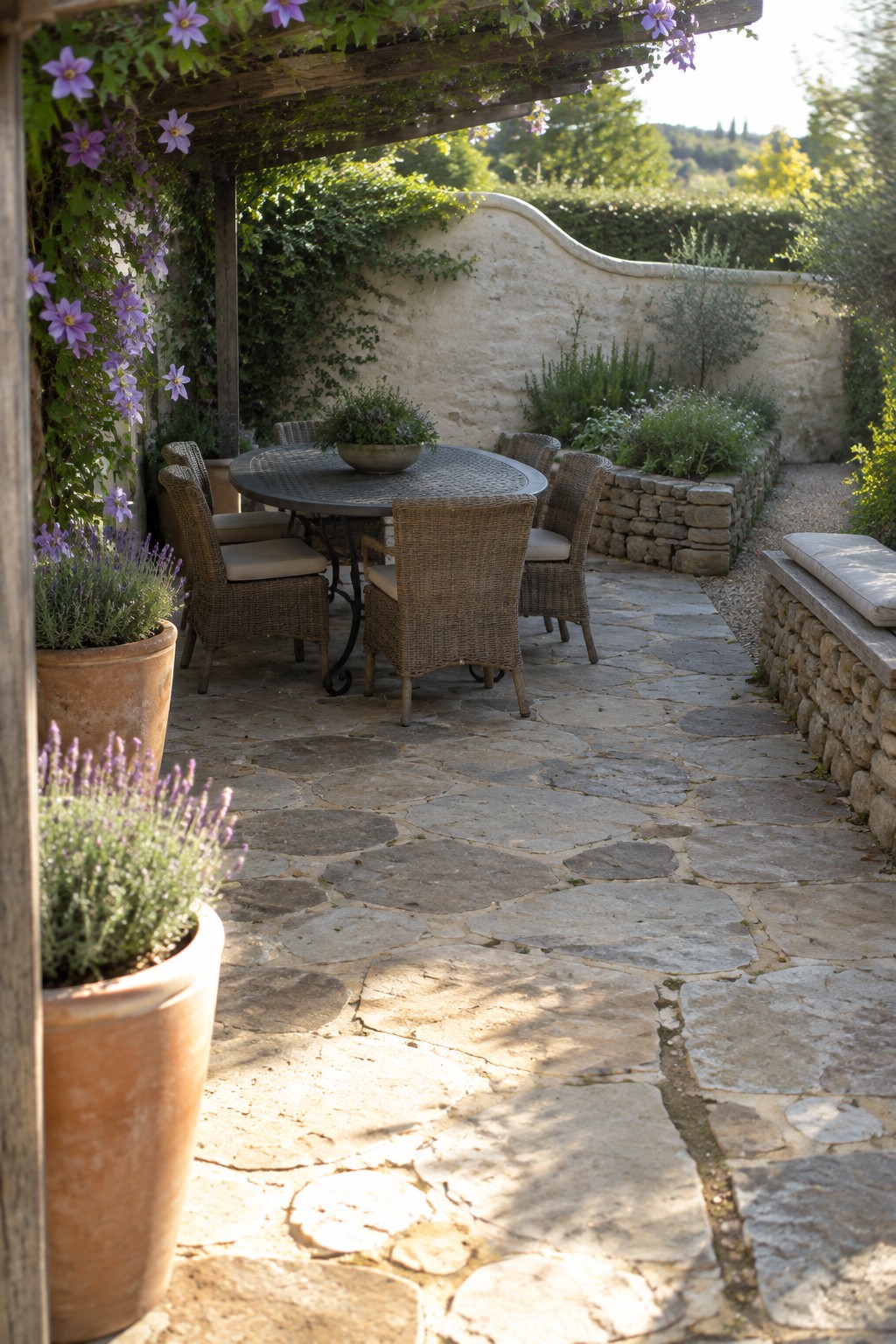
Natural stone walls make a simple and lasting way to edge a patio. They keep the gravel and planting contained while giving the whole space a settled look that blends with the surrounding garden.
This approach works best on slightly sloped sites or where you want to raise the beds a little for better drainage. Keep the wall height low so it does not block views, and choose stones that match the patio pavers for a quiet match.
Natural Stone Edging That Ties A Patio To The Garden
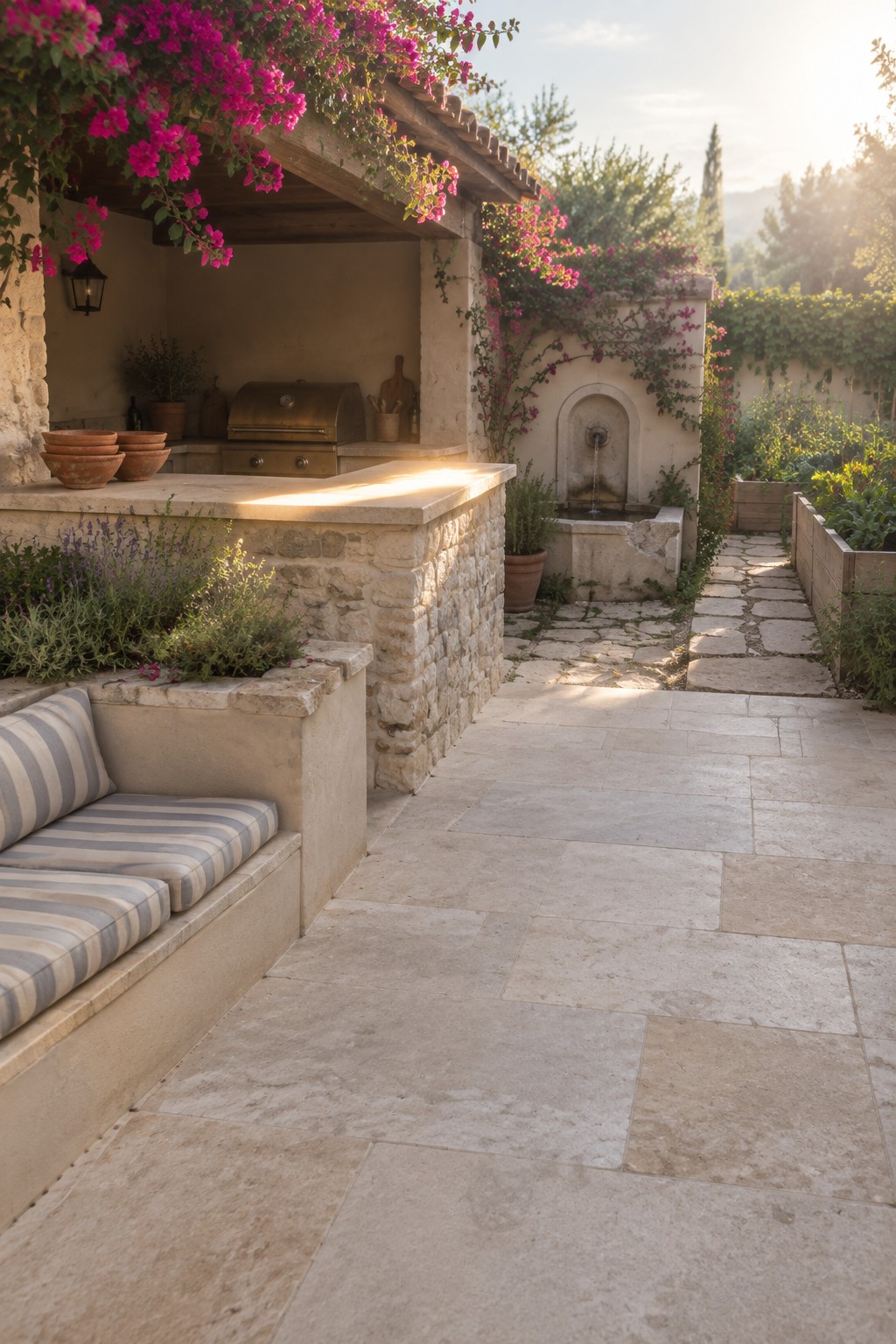
Natural stone edging works well when you want the patio to feel like part of the surrounding landscape instead of a separate surface. Using the same stone for the main patio and the borders around beds or paths keeps everything connected and gives the space a settled look over time.
This approach suits older homes or any yard where you already have stone walls or walkways. Keep the stone simple and let plants soften the edges rather than trying to match every line perfectly.
Natural Stone Edging for Pool Patios

Natural stone edging gives a pool patio a softer edge that feels more connected to the yard. The irregular shapes avoid a sharp line between the paved surface and the surrounding ground, which helps the whole area look like it belongs there instead of sitting on top of it.
This works especially well on homes where the outdoor space meets grass, gravel, or planting beds. Stick with the same type of stone for both the patio and the edging so the transition stays simple and low maintenance.
Natural Stone Edging Frames the Patio
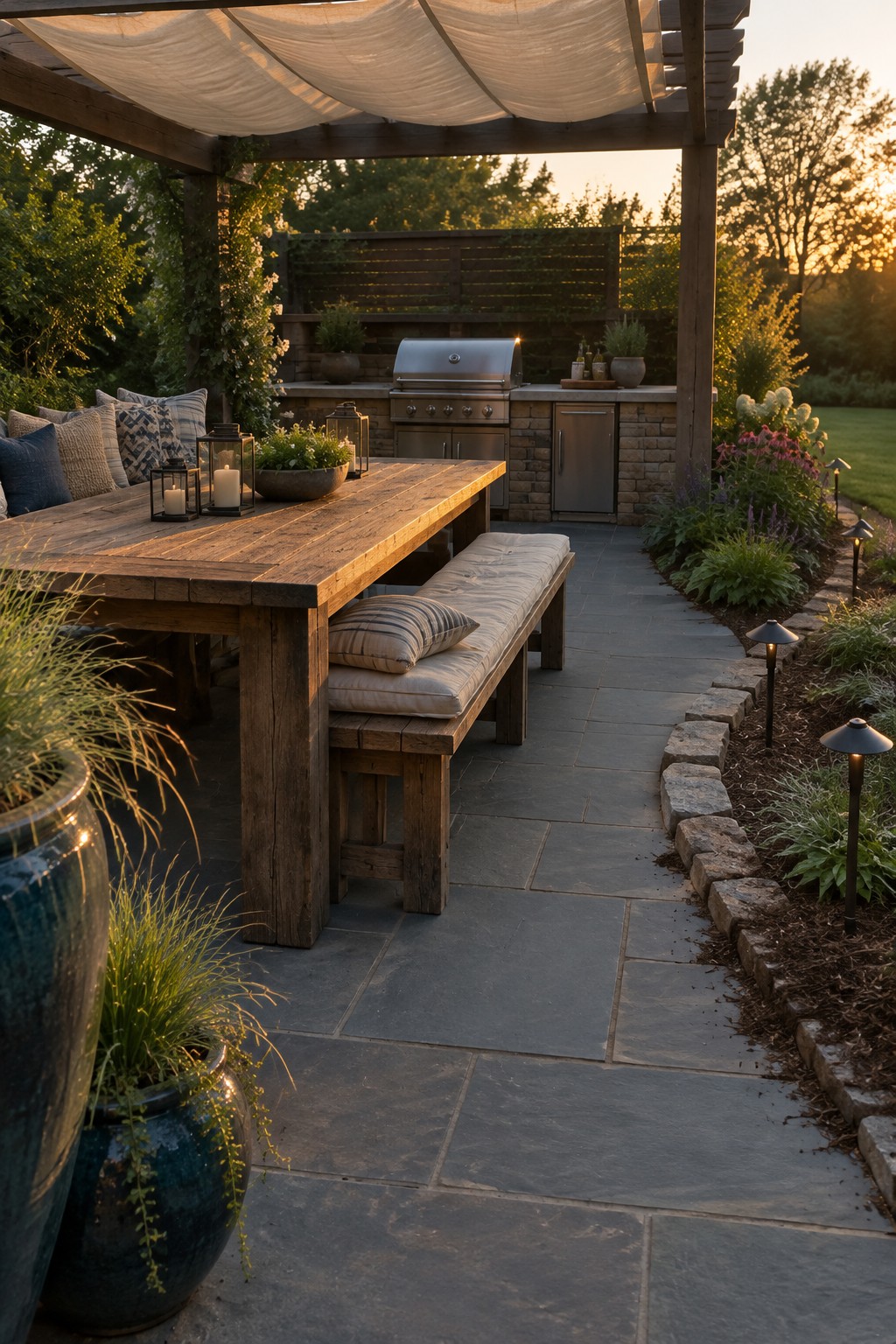
Natural stone edging gives a patio a finished border that holds up over time. It keeps the planting beds from spilling onto the walking surface and gives the whole area a clear shape without looking too formal.
This works well on patios that sit next to garden beds, especially when the edging matches the paver material. Keep the stones low so they do not interrupt the flow between the seating area and the lawn.
Gravel Edging Frames Stone Pavers
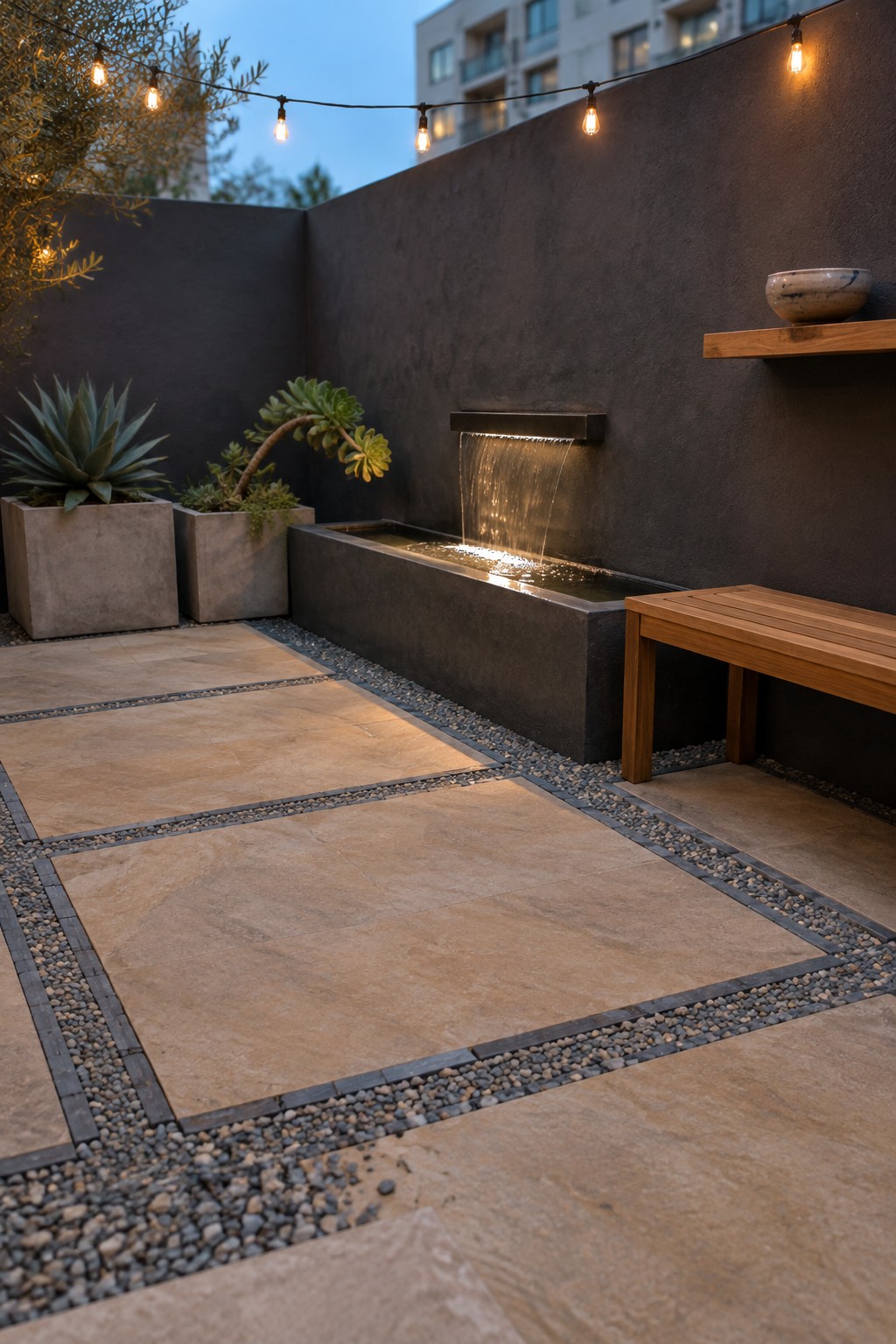
Gravel edging gives stone patios a finished look without adding extra structure. The small stones create a clear line around each large paver, which helps the whole surface feel more grounded and balanced.
This works best in compact outdoor spaces where you want a simple material change instead of a raised border. Keep the gravel layer thin and contained so it stays in place and does not track onto the main walking area.
Natural Stone Edging Around A Patio
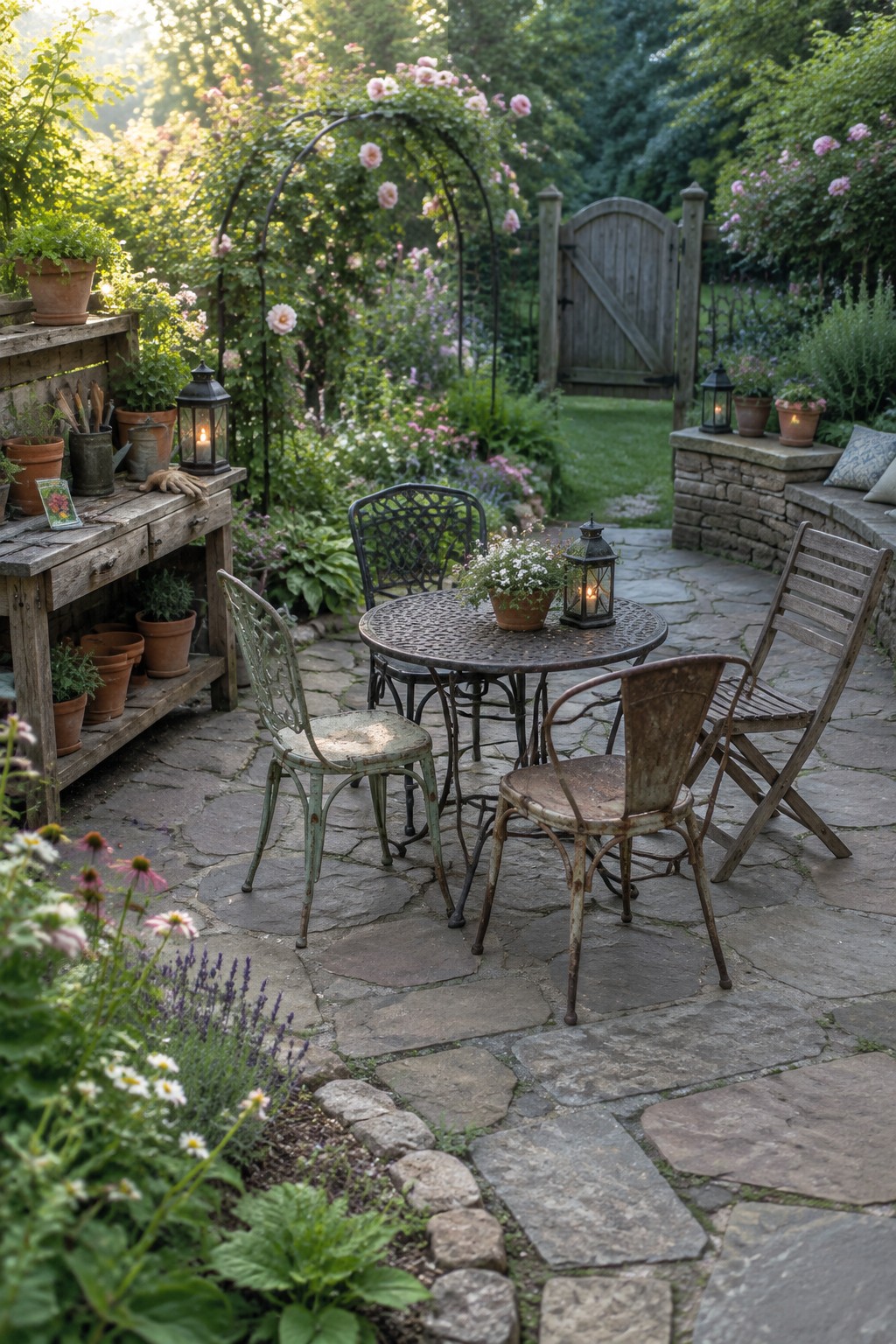
Natural stone paving looks better when plants are allowed to grow right along the edges instead of being cut back sharply. The uneven shapes of the stones create small pockets where flowers and herbs can settle in, which softens the whole surface and keeps the patio from feeling too rigid.
This approach works best in informal gardens or smaller yards where you want the hardscape to blend with the planting beds. Set the stones at a slight angle or leave small gaps during installation so the edging plants can spread without constant trimming.
Natural Stone Edging Around Ponds
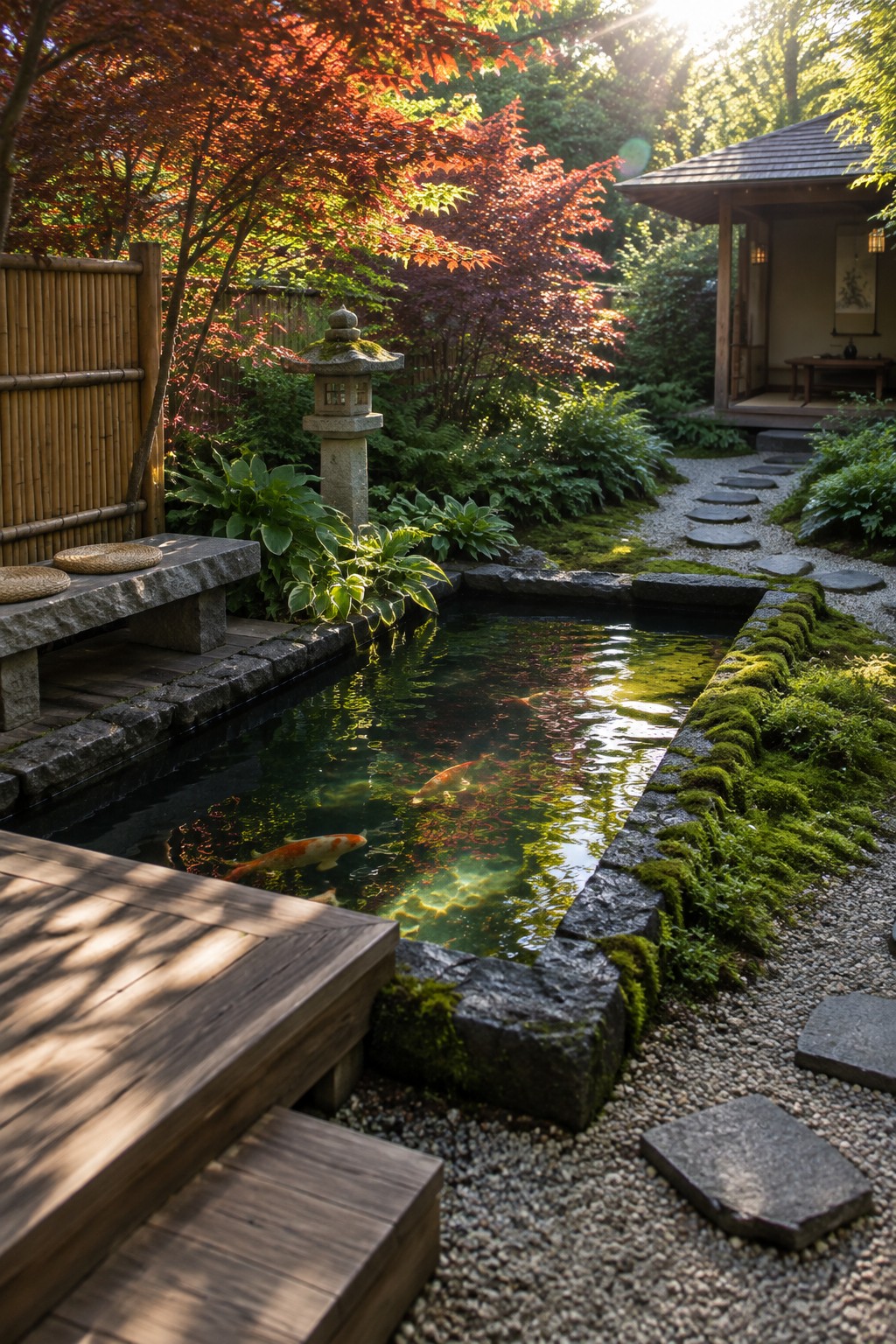
Natural stone edging helps a pond feel like part of the garden instead of a separate feature. The rough edges settle into the ground over time and give moss a place to grow, which softens the line between water and land.
This works best on smaller properties where you want a calm water area without a lot of upkeep. Match the stone to any nearby paths or walls, and keep the surrounding gravel simple so the edging stays visible but not overly neat.
Natural Stone Edging Frames Patio Garden Beds

Natural stone edging gives planting beds a clear border that holds up well over time. It keeps soil and mulch in place while letting the garden feel connected to the patio rather than separate from it. The rough texture of the stone also adds a simple contrast to the smoother paving.
This works best on homes where the patio sits right next to garden space. Set the stones at a consistent height so they double as low seating or a place to rest tools. Avoid thin or uneven pieces that shift after a few seasons.
Natural Stone Edging Shapes the Patio

Natural stone edging works well when you want the patio to feel settled into the landscape rather than just laid on top of it. The rough stones create a clear line that still allows the garden to meet the hard surface in a simple way.
This approach suits homes where the patio sits beside planting beds or open ground. Keep the stones low and let the plants grow right up to them so the edge stays visible but never harsh.
Natural Stone Edging to Define Patio Beds
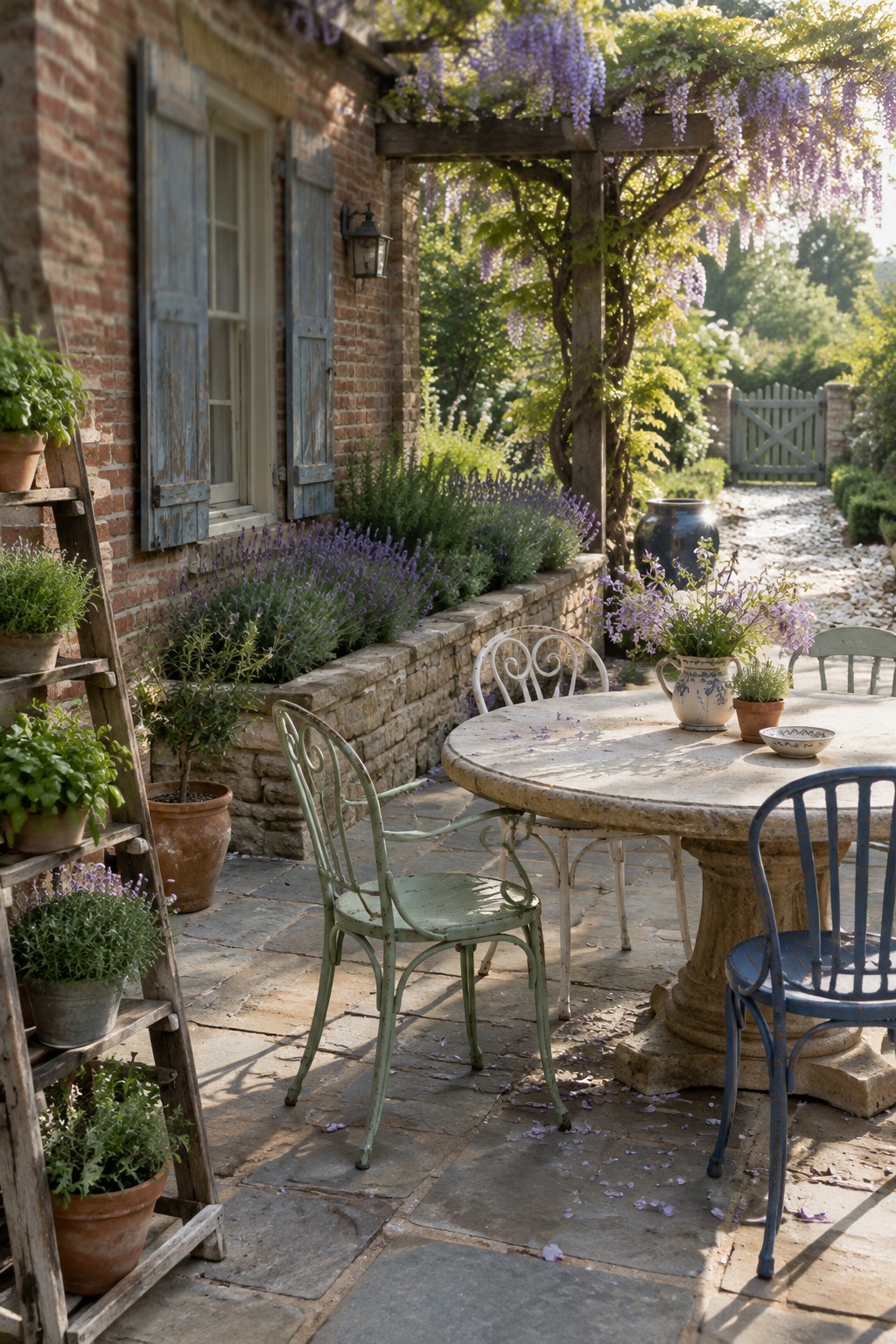
Low stone walls work well when you want to keep planting beds tidy right next to a patio without making the space feel closed in. The edge gives the garden a clear shape while still letting flowers spill over a bit, which softens the look of the hard surface.
This approach suits older homes or cottage style gardens where the stone can match existing walls or paths. Keep the wall low so it does not block views or make the patio feel smaller, and choose a stone that weathers to match the rest of the yard.
Natural Stone Edging Defines Patio Borders
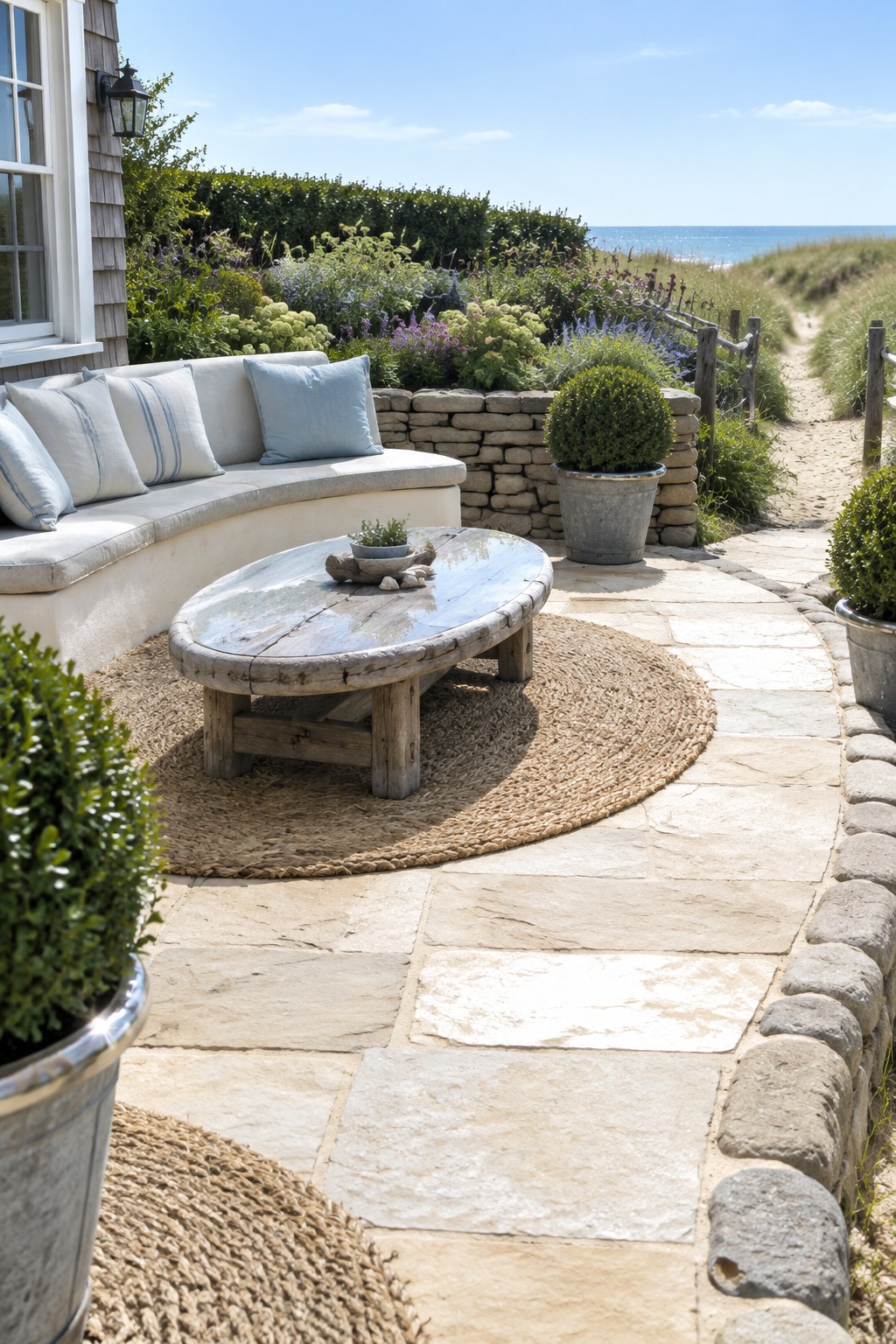
Natural stone edging gives a patio a settled look that feels part of the garden rather than just laid on top of it. The irregular stones follow the curve of the seating area and path, softening the edge between hard surface and planting without adding any extra structure.
This works best on homes where the patio sits right next to beds or a lawn. Lay the stones low and slightly uneven so grass or ground cover can grow up to them. It keeps the whole area easy to maintain while making the stone feel like it belongs there.
Stone Paths With Moss Between The Pavers
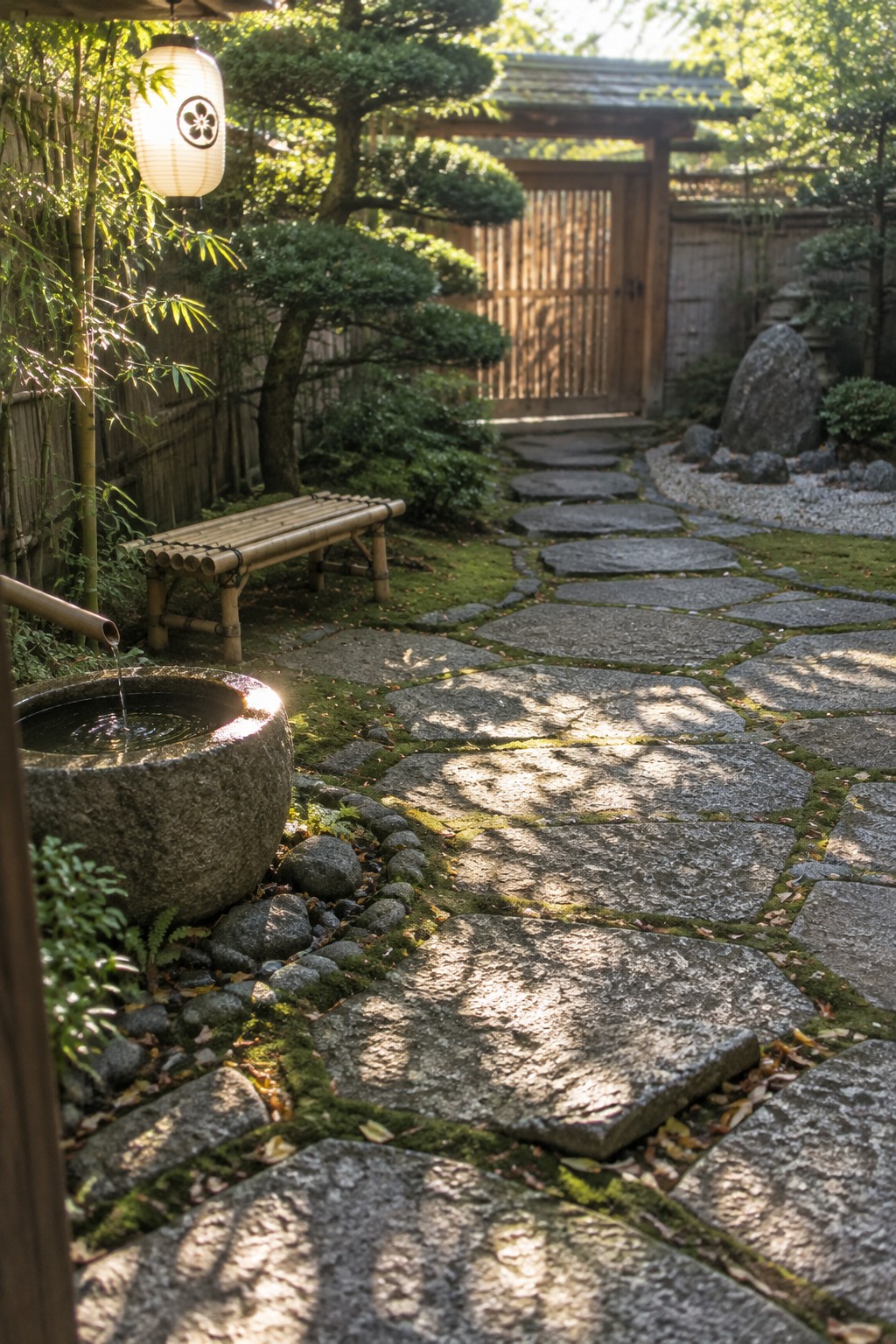
Many gardens feel more settled when the path is not too rigid. Large irregular stones set with moss in the gaps let the walkway sink into the landscape instead of sitting on top of it. The moss softens the look and keeps the path from feeling harsh against the plants.
This style works well in partly shaded areas where moss can take hold. It suits smaller side gardens or traditional layouts where you want a simple route that does not need much upkeep once it settles. Make sure the stones sit on a gravel base so water drains and the path stays level.
Stone Edging Frames Planting Beds

Stone edging works well because it gives planting areas a clear boundary without looking too formal. The stacked stone around the raised beds keeps soil in place and creates a neat transition between the gravel play area and the main patio surface. It also helps the garden feel more settled over time.
This approach suits homes with larger outdoor spaces where paths and beds need to stay distinct. Use the same stone for both edging and low retaining walls so everything ties together. Avoid mixing too many stone colors if you want the look to stay simple.
Using Natural Stone Edging Next to Gravel
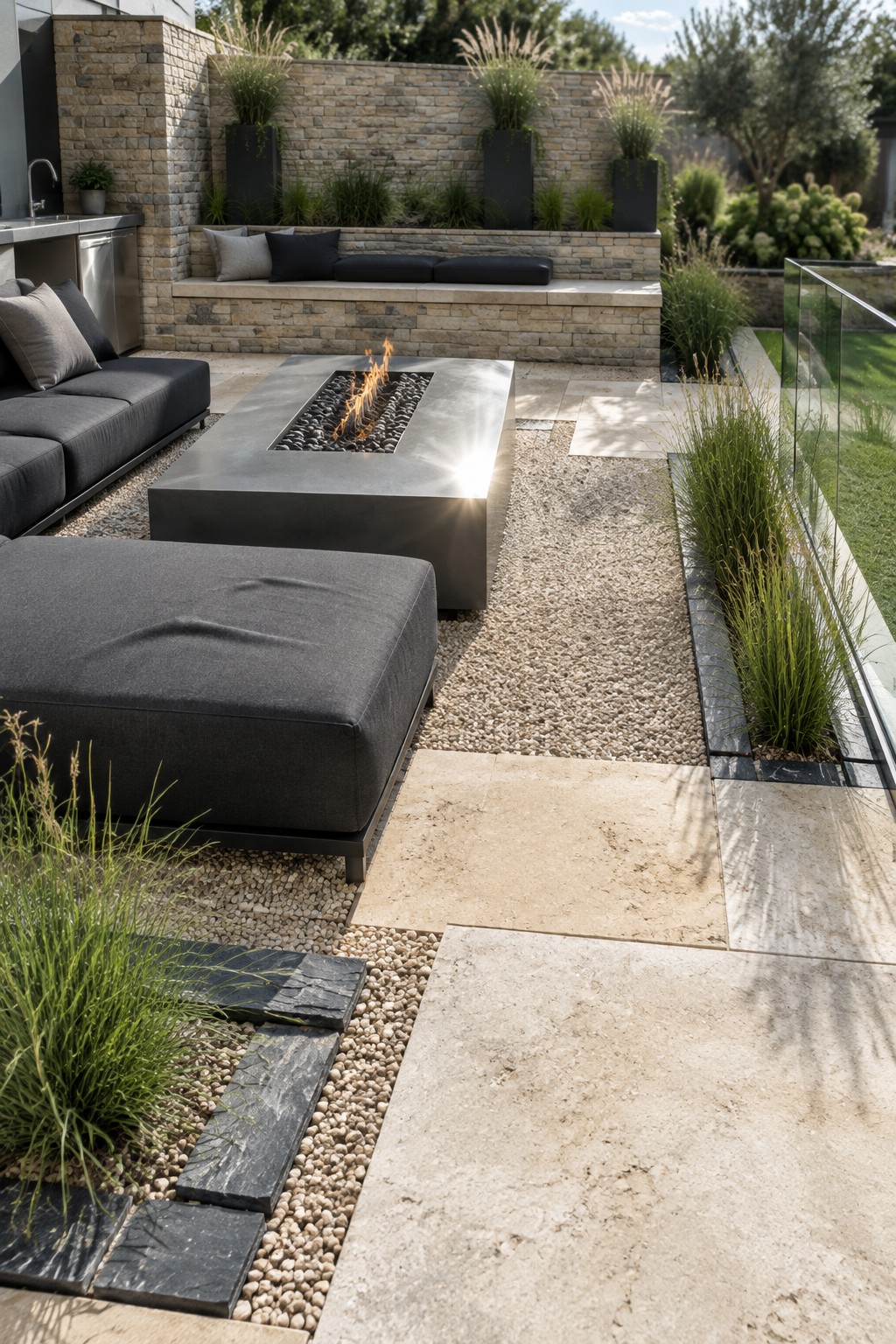
Natural stone edging gives a patio a finished look when gravel is used as the main surface. It keeps the gravel from spilling into the planting beds and makes the whole area feel more structured without adding a lot of hard lines. Many people like this approach because it works well with both modern and simple garden styles.
This setup works best on flat patios where you want low planting along the edges. Use a dark or gray stone that matches your pavers so the edging blends in rather than stands out. Make sure the bed is wide enough for the plants to grow without crowding the walking area.
Stone Edging Creates a Finished Patio Boundary
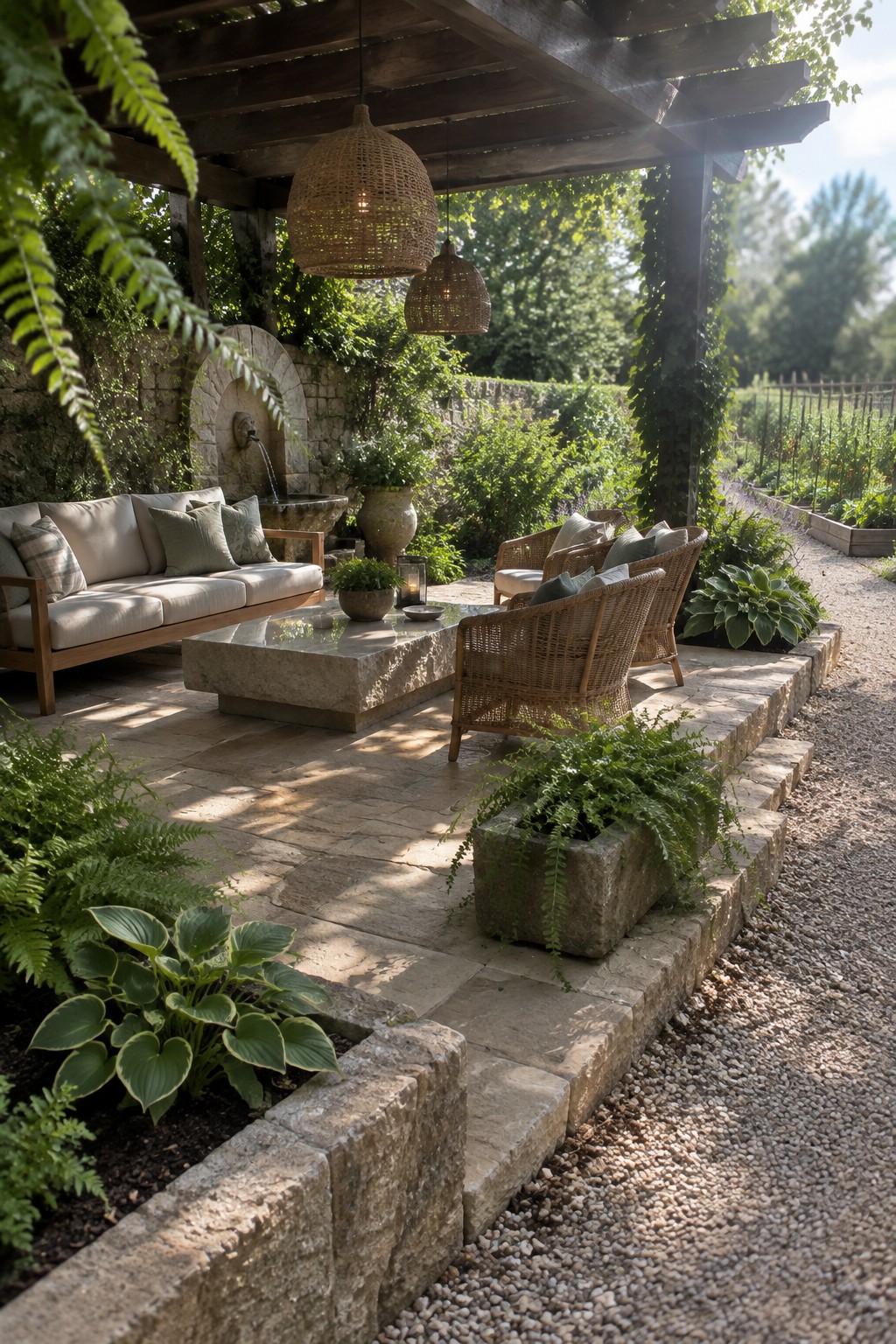
Natural stone edging gives the patio a settled look while keeping the planting beds in place. It works especially well when the patio surface and the borders use the same material, so everything feels connected without extra effort. The low stone walls also help hold soil and mulch where you want them instead of letting them spill onto paths or gravel.
This approach suits homes that already have stone walls or steps nearby. Keep the edging low enough that it does not block views of the plants, and match the stone color to the patio so the lines stay quiet.
Stone Edging Highlights Patio Steps and Borders

Stone edging works well because it gives the patio a clear boundary without making the whole space feel boxed in. The low profile lets the garden beds sit right up against the stone surface, so the transition from hardscape to planting stays simple and natural. It also helps keep mulch or soil from spilling onto the walking area.
This approach suits homes where the patio sits close to lawn or shrubs. Place the edging along the outer edge and steps, then add low lighting inside the beds if you want the lines to show at night. Avoid raising the stone too high or it starts to look like a wall instead of a border.
Stone Stepping Paths With Natural Rock Edging

Laying flat stone slabs into a gravel base creates a simple path that feels natural and easy to walk on. The rocks along the edges help hold everything in place and give the beds a finished look without adding extra materials.
This approach suits smaller yards or side gardens where you want to connect seating spots to planting areas. Keep the stones fairly large and set them level so they stay steady underfoot.
Use Natural Stone For Built-In Seating
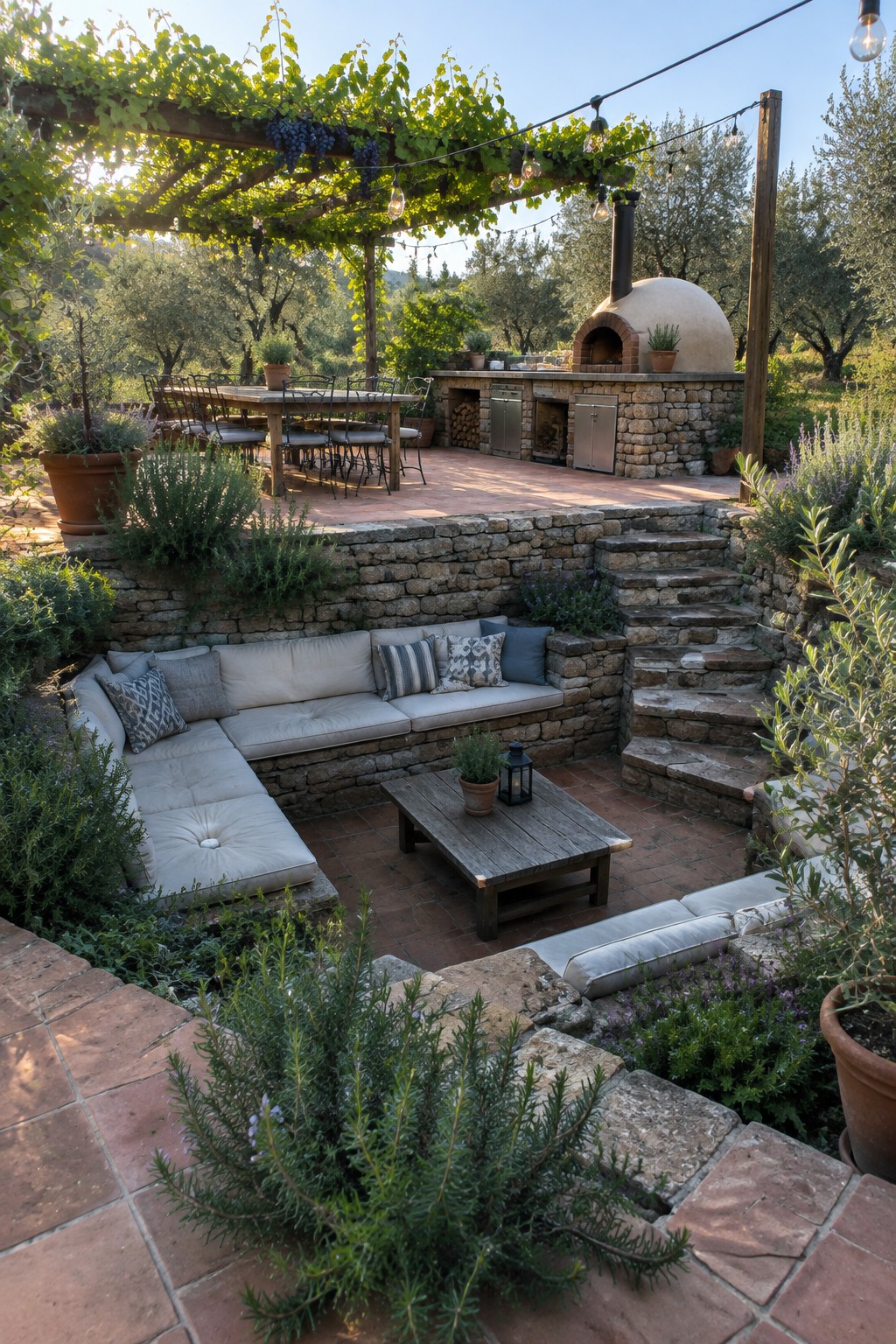
Building seating directly into stone walls gives a patio a settled look that loose furniture never quite matches. The walls become both structure and seating, which keeps the space feeling open while still providing plenty of places to sit.
This works best on sites with some slope or where you want to define zones without adding railings. Keep the stone simple and let the cushions do the softening. Just make sure the seat height feels comfortable before the wall goes up.
Stone Fire Pits Built Into the Patio
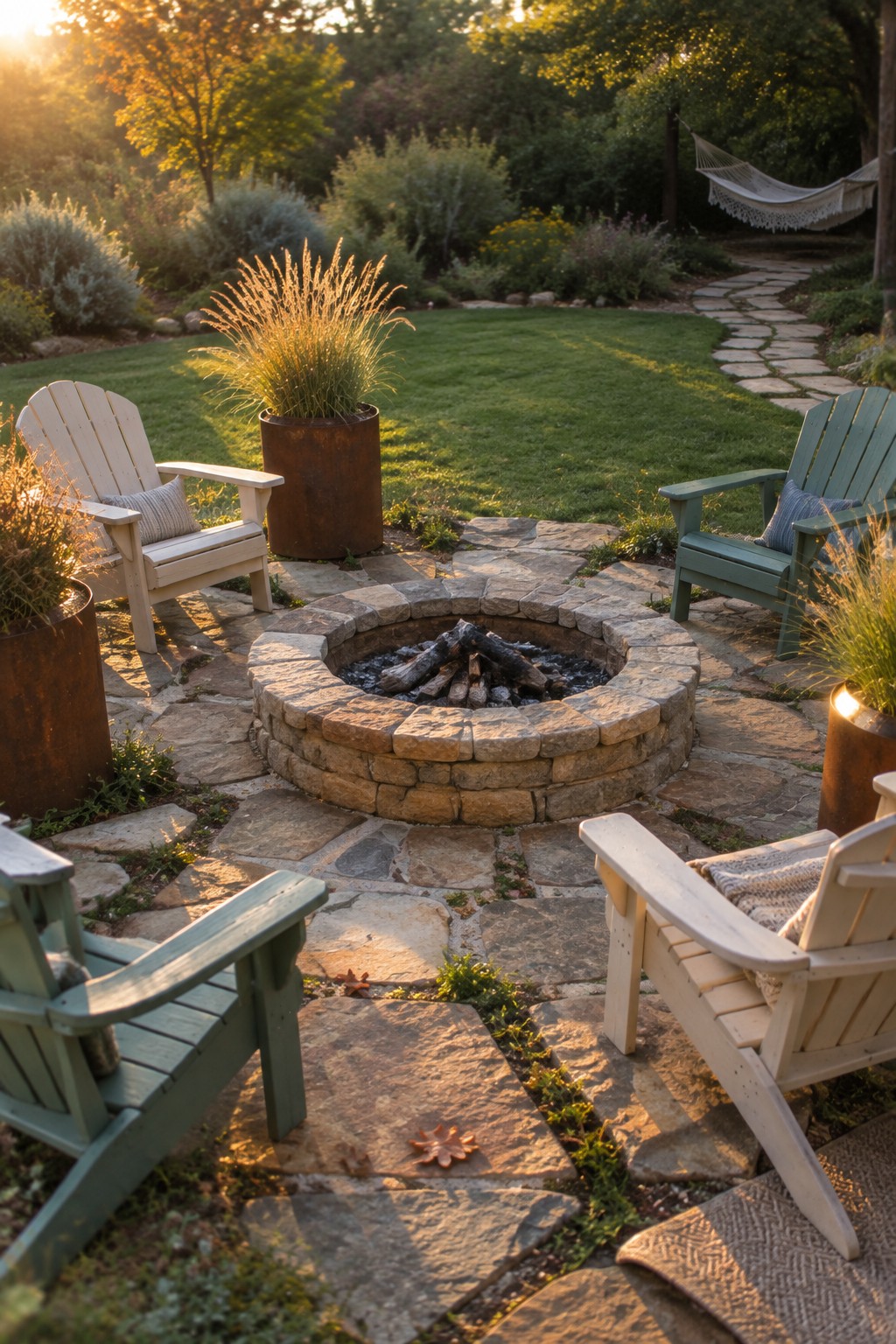
A fire pit made from the same stone as the patio surface creates a natural center point without breaking up the layout. The material match keeps the whole area feeling simple and connected, which works especially well when you want the seating to feel like part of the hardscape rather than something added later.
This approach suits homes with larger yards where the patio gets regular use in cooler months. Keep the surrounding stone edging low and let low plants soften the edges so the fire pit stays the main feature without needing extra structures.
Low Stone Borders Separate Patio and Pool Plantings
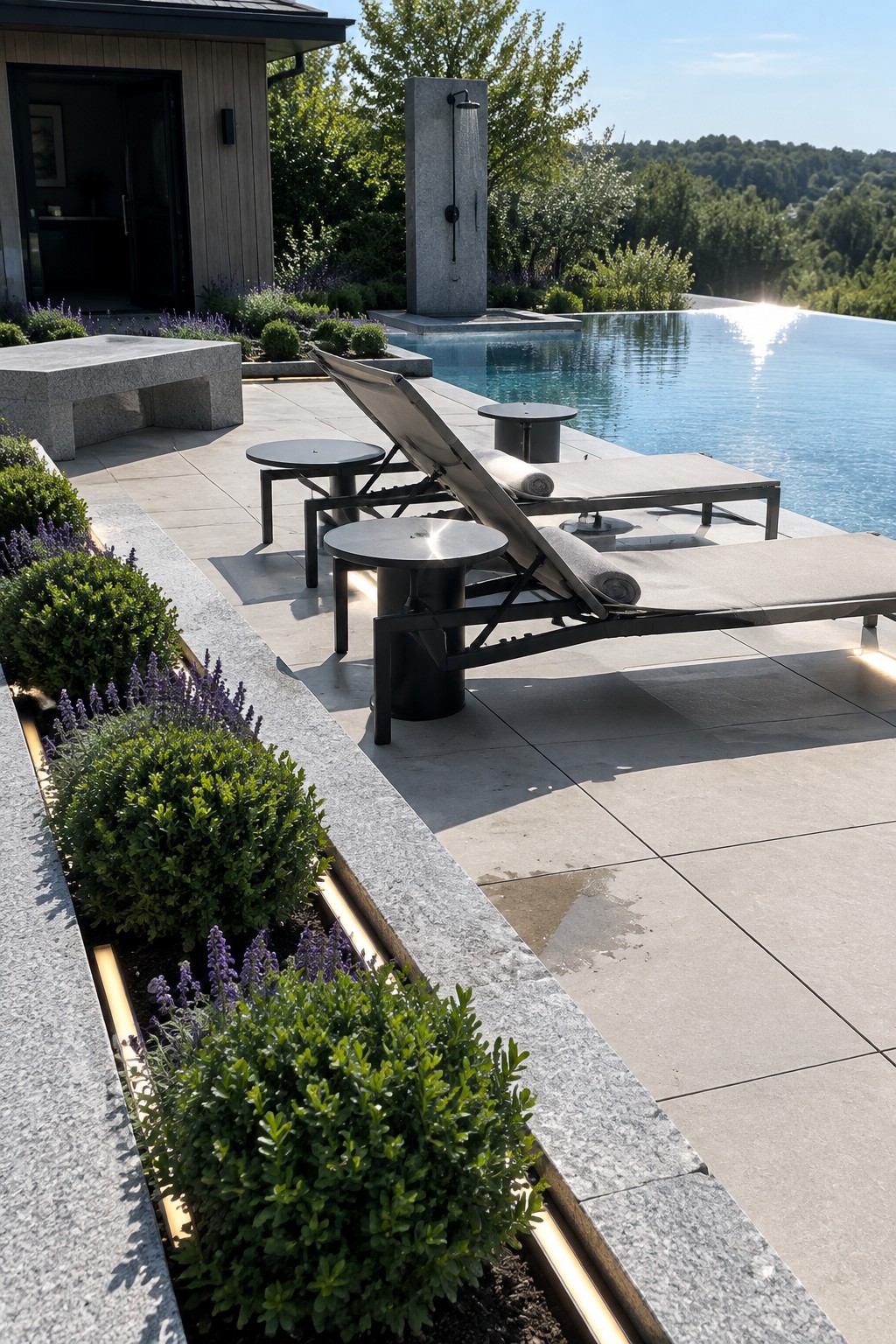
Stone edging works well because it gives planting beds a clean edge right where the patio meets the garden. It keeps the soil and plants from spilling onto the walking surface while still letting the greenery feel like part of the whole space. The low border also adds a bit of weight that makes the beds look intentional instead of just tacked on.
This approach works best on flat patios or pool decks where you want the landscaping to feel structured without building tall walls. Use the same stone as your patio or a close match so the edge reads as part of the hardscape rather than a separate feature. Just keep the border low enough that it does not block views or create a tripping point.
Frequently Asked Questions
Q: How do I stop the edging stones from shifting after a heavy rain?
A: Set them on a compacted gravel base at least four inches deep before you lay the stones. Pack soil firmly behind each one as you go. That simple step holds them steady through wet seasons.
Q: What plants pair well with natural stone edging without overwhelming it?
A: Go for low spreaders like creeping thyme or sedum right along the edge. They stay contained and let the stones show through. Trim them back once a season if they start to creep over.
Q: How do I clean moss off the patio without harsh chemicals?
A: Sweep the surface first, then scrub with a stiff brush and a mix of water and mild dish soap. Rinse it off and let the sun dry everything. Repeat every spring to keep buildup from returning.
Q: Can I install the edging myself if the ground slopes?
A: Yes, but dig the trench to follow the slope instead of forcing the stones level. Check the run with a string line every few feet. The stones will look natural and stay put.
