

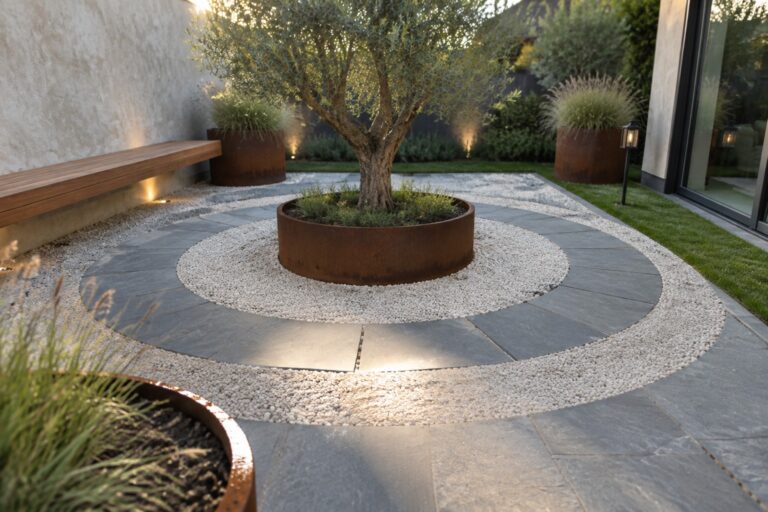
Over the years I have found that backyard layouts settle into something usable when the beds and paths follow clear shapes from the start.
I often notice how a few straight edges or gentle curves can keep the whole space from feeling scattered once the plants begin to grow and spread.
Simple forms hold up better than fussy details.
When I consider these patterns I picture how they would work with my own seating spot and whether the lines would still read clearly after a couple of seasons of growth.
I would probably test the edging and path ideas first to see how they shape daily movement through the yard.
Circular Paths for a Simple Garden Layout
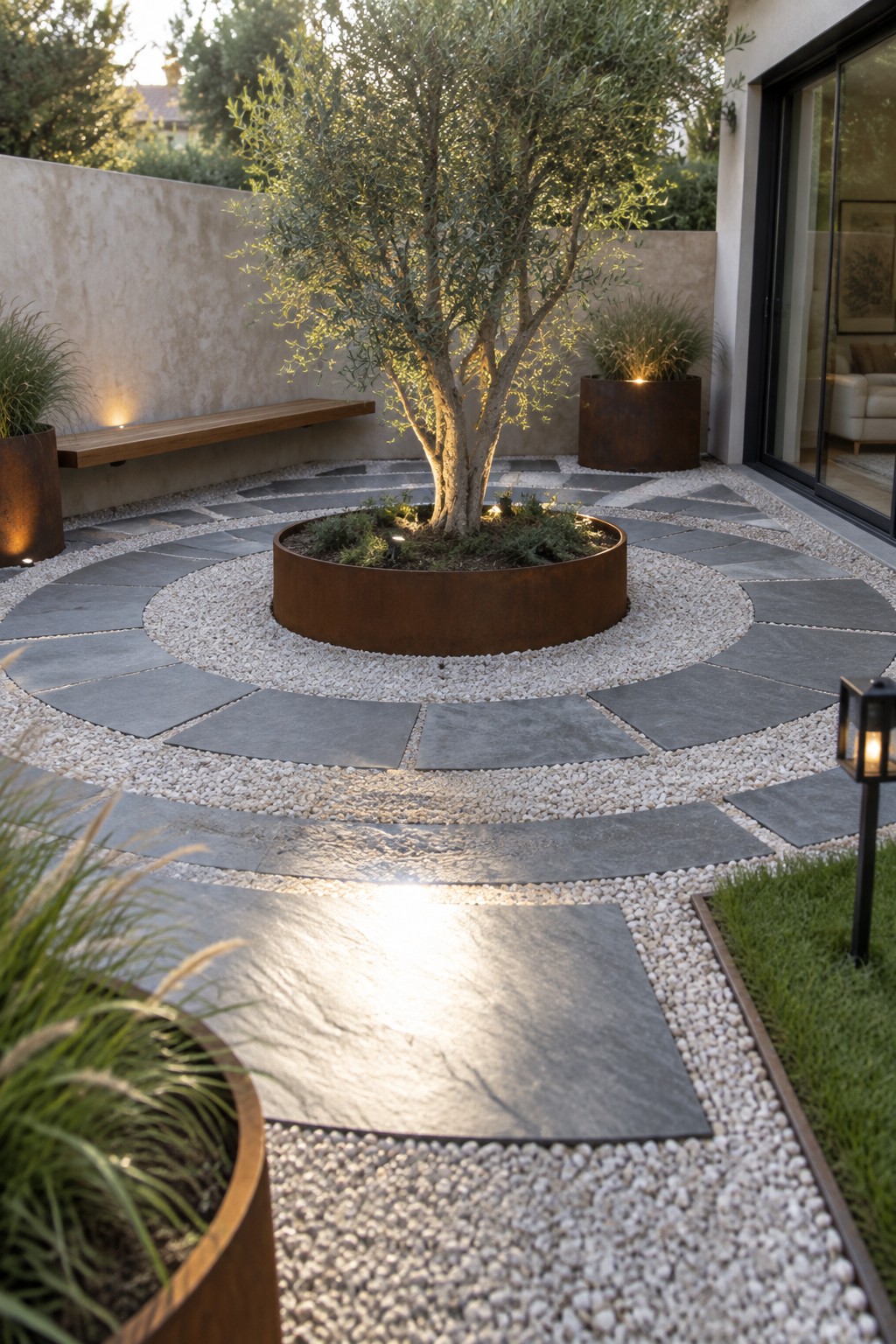
A circular layout works well when you want the yard to feel organized without looking stiff. The rings of gravel and stone create movement that leads the eye inward and keeps the whole space feeling balanced.
This approach suits smaller backyards or side gardens where you need a clear focal point. Use two or three materials at most and keep the rings evenly spaced so the design stays easy to maintain over time.
Grid Patterns Using Pavers And Grass
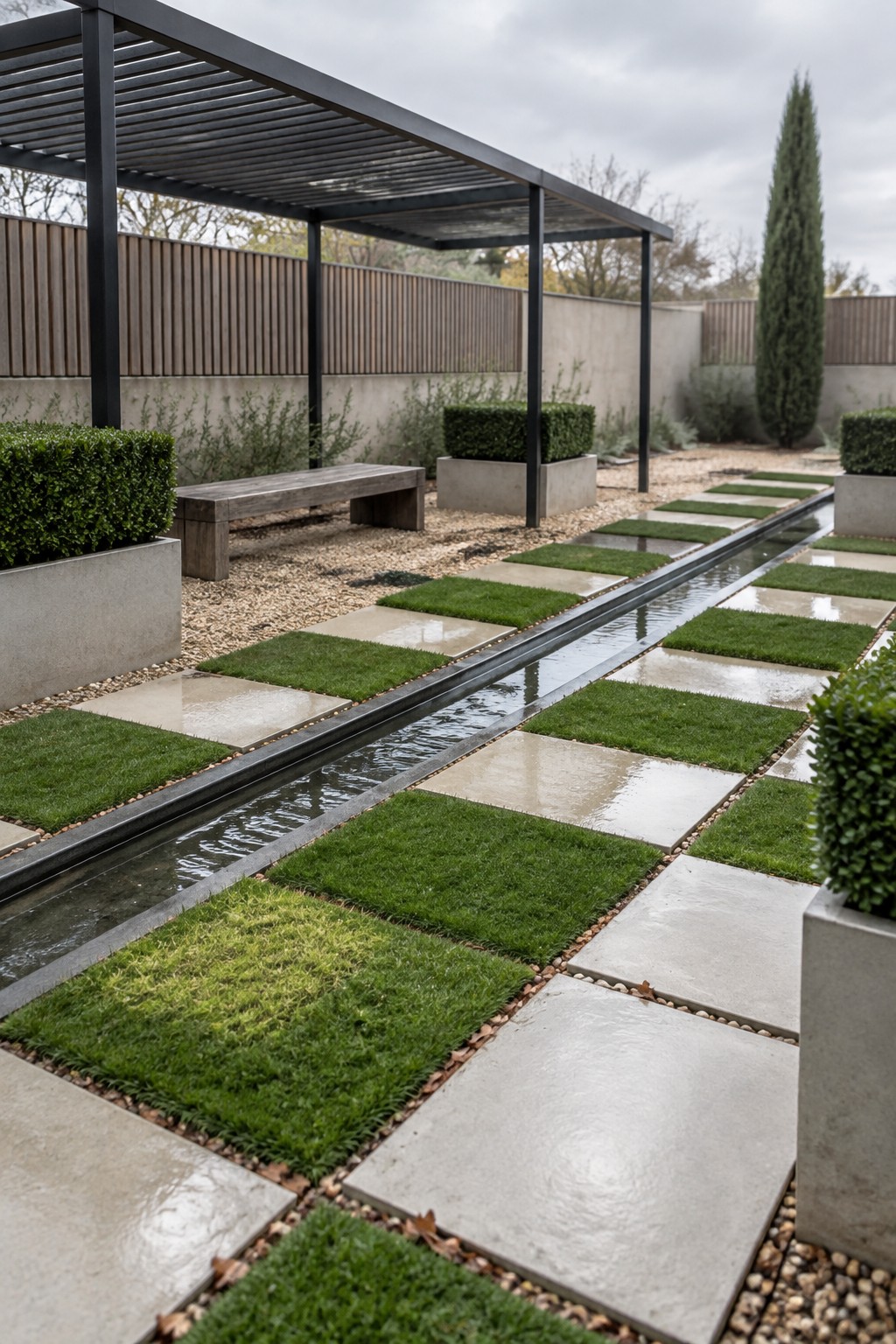
A simple grid of square pavers mixed with grass sections gives the ground a clean, ordered look without much fuss. The pattern repeats in a steady rhythm that feels calm and structured, and it works especially well when paired with a straight water channel running alongside.
This approach suits flat backyard spaces where you want defined walking areas but still like some green underfoot. It holds up best in smaller or medium yards with modern homes, and it keeps maintenance low as long as the pavers sit level and the grass gets enough sun.
Alternate Strips Of Gravel And Grass

This approach uses simple parallel bands of different materials to give the yard structure without adding clutter. The eye follows the lines naturally, which makes even a modest space feel organized and intentional. It works especially well when you want geometry that stays low to the ground.
Try it in a side yard or along the edge of a deck where you need a transition zone. Keep the bands roughly the same width and choose materials that drain well, like pea gravel next to turf or decomposed granite. The pattern stays neat with occasional raking and mowing, and it suits rectangular lots better than curved designs.
Curved Raised Beds With Seating
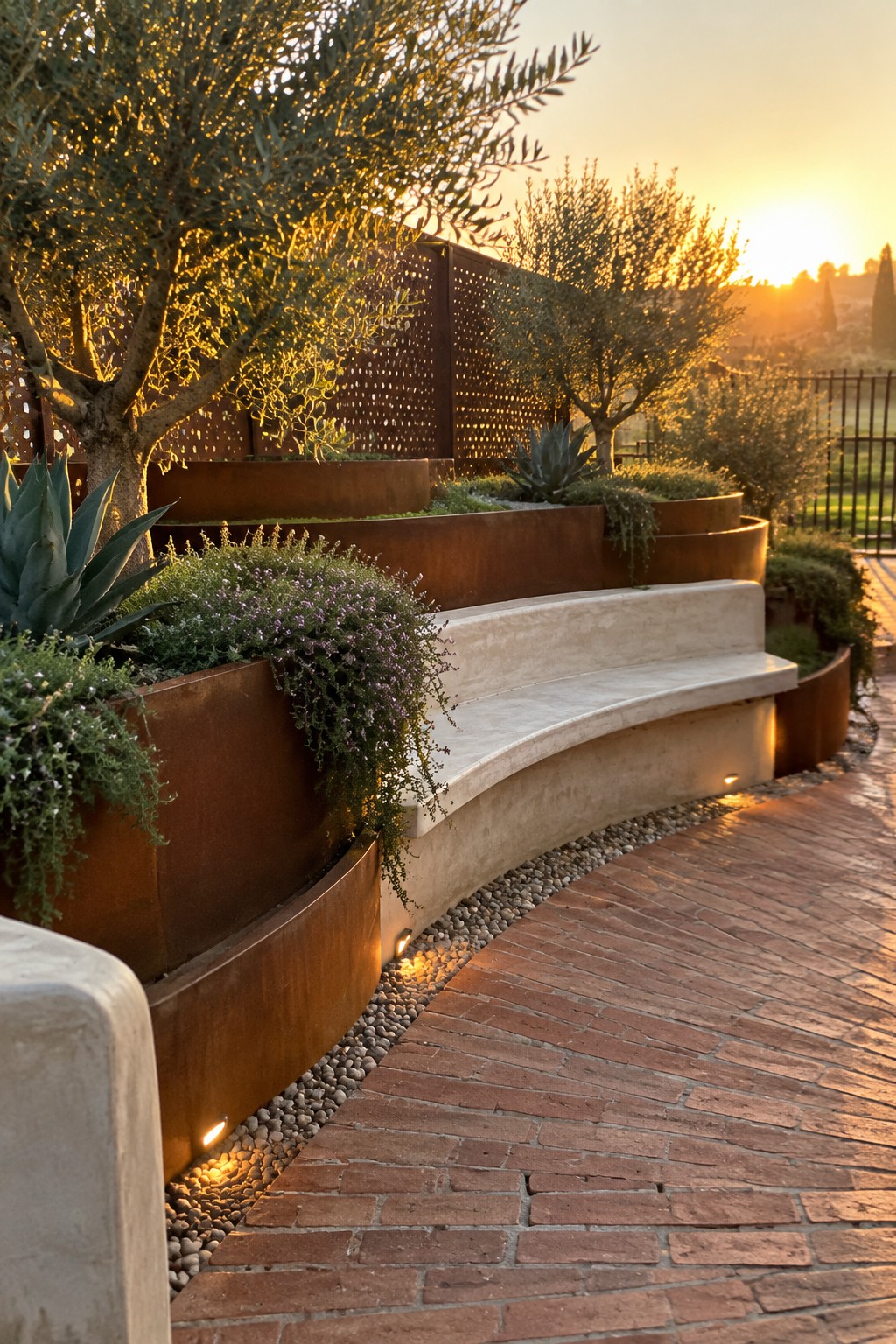
Curved raised beds give a garden a quiet sense of movement without needing lots of extra pieces. When the edge of the bed also serves as a seat, the whole layout stays simple and functional at the same time.
This approach works best along a path or beside a patio where you want a place to rest without adding separate furniture. Keep the materials limited to one or two tones, like metal and concrete, so the curves stay the main feature.
Square Pavers in a Grid Keep Things Clean
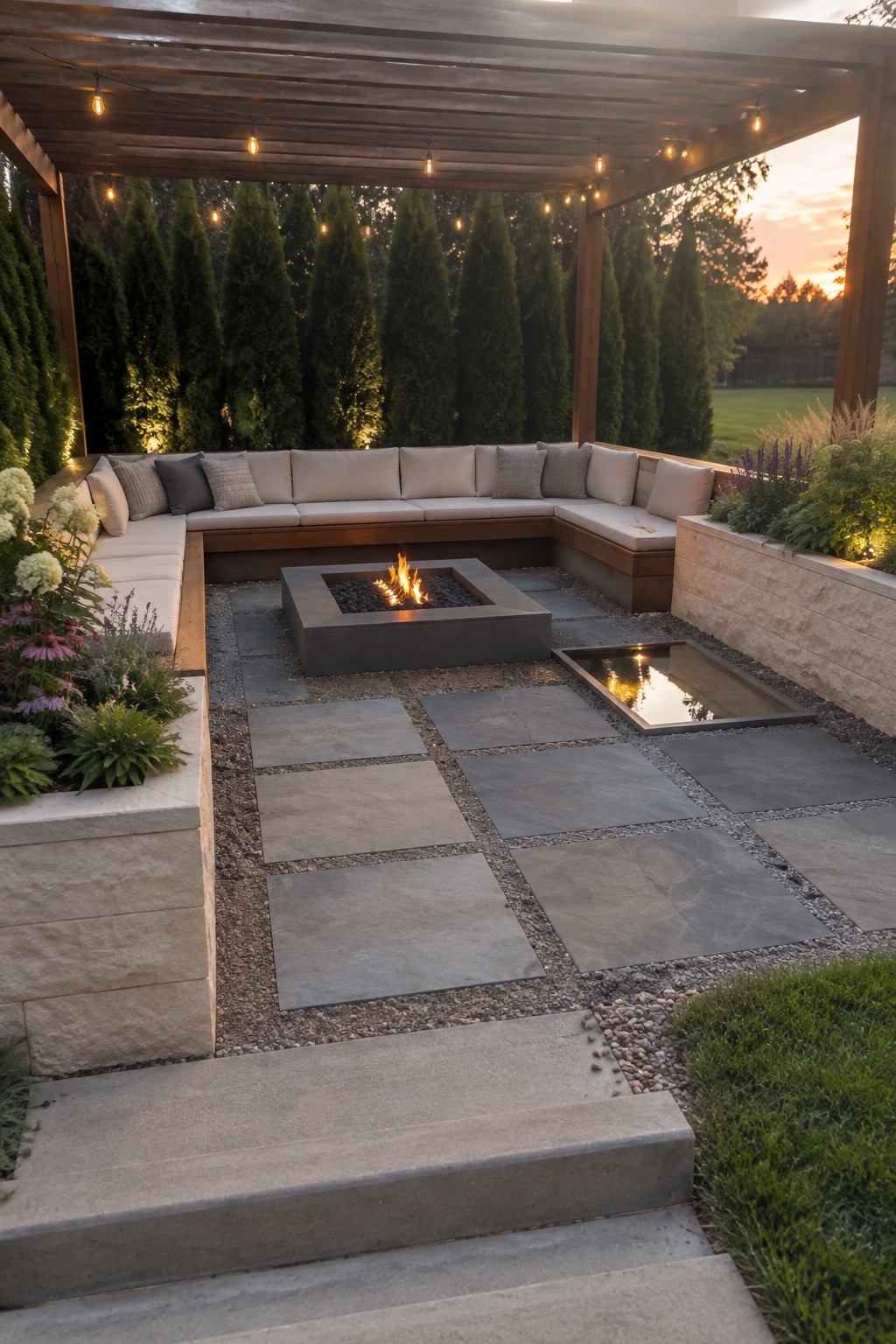
A simple grid of large square pavers gives the patio a steady, orderly feel that works well in a minimalist setup. The stones sit flat with gravel in between, so the surface stays level and the lines stay straight without extra edging or curves to maintain.
This layout works best in smaller yards where you want clear walking paths and an open center for seating or a fire pit. It pairs well with built-in benches along the edges and needs little planting to feel finished.
Use A Circle For The Main Seating Area
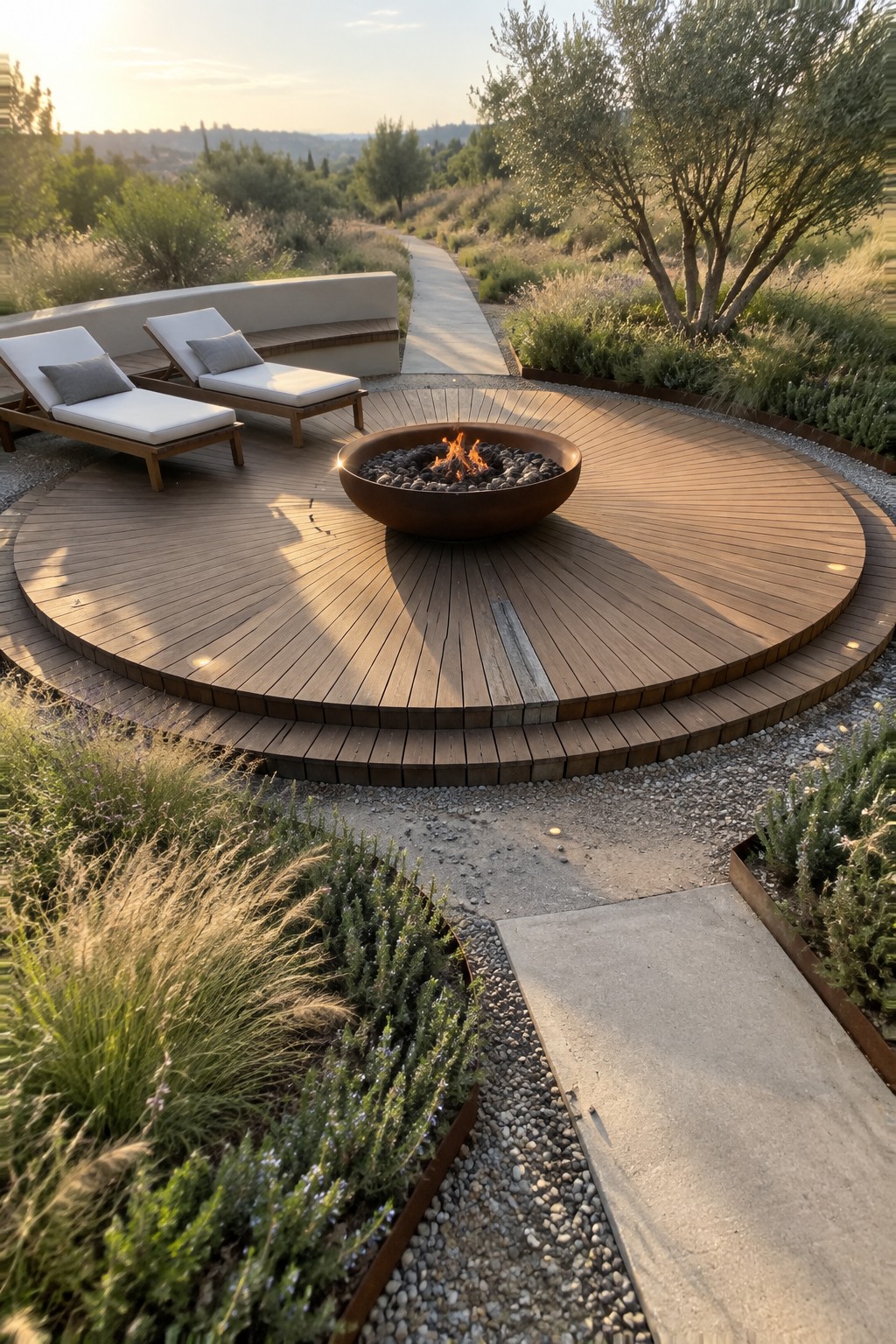
A round deck gives the backyard a clear center without adding extra angles or walls. The shape keeps the space open and makes it easy to walk around the fire area from any side.
This layout works best in yards that have room for a focal point but still need to connect with the surrounding garden. Keep the edges low and let the gravel and plants meet the wood so the circle feels like part of the landscape instead of a separate room.
Circular Platforms Create Simple Backyard Zones
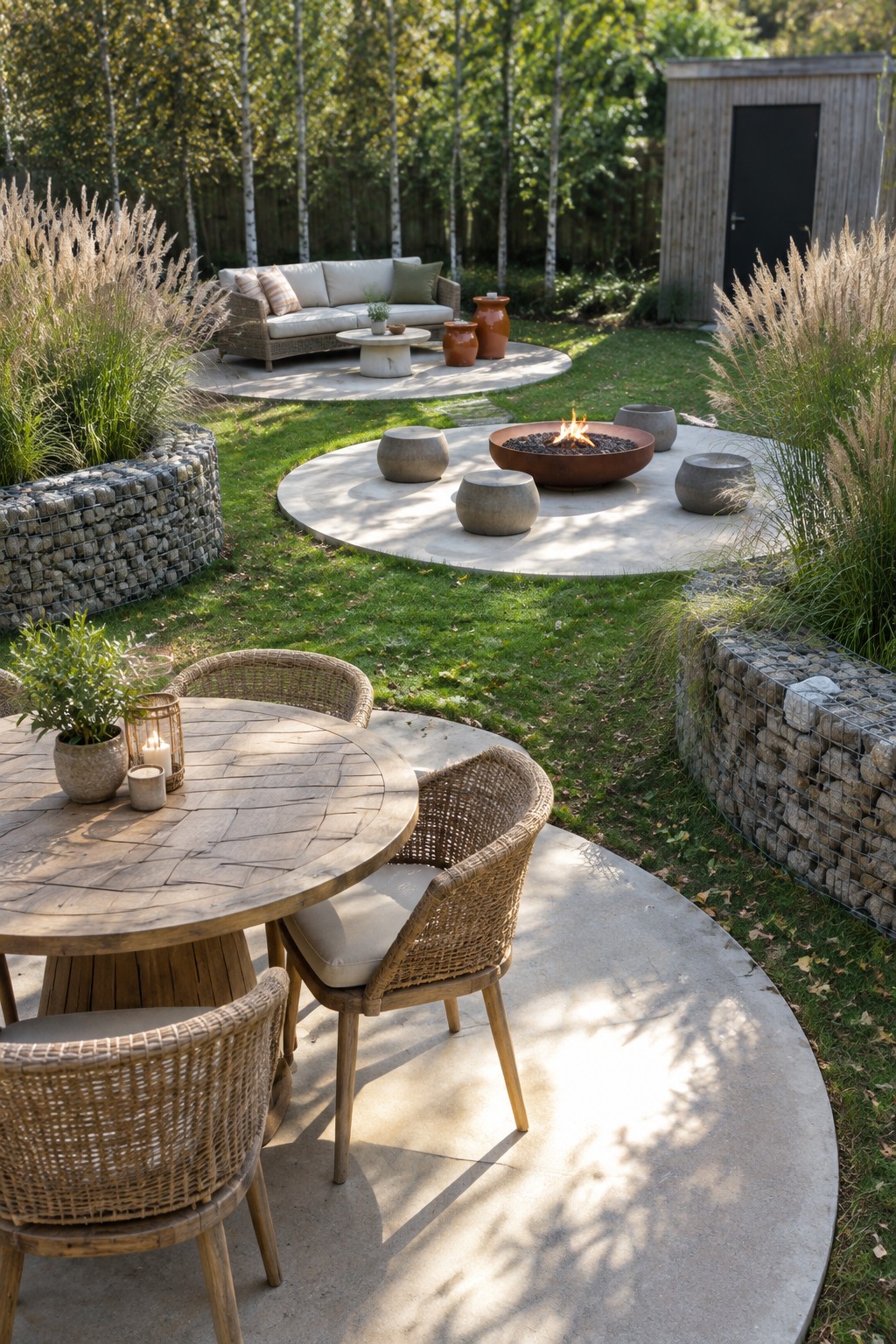
Circular concrete pads set into the lawn give you a clean way to mark off different areas without adding walls or fences. They keep the overall look open while still making each spot feel separate, whether you want a fire pit zone or a place for a table and chairs. The round shape works well because it feels natural against the grass and softens the layout compared to straight edges.
This approach suits larger yards where you need a few functional spots but want to avoid clutter. It works best on fairly flat ground and pairs nicely with simple planting around the edges. Keep the circles modest in size so they do not overwhelm the space or require too much concrete.
Stepping Stones Set in Gravel
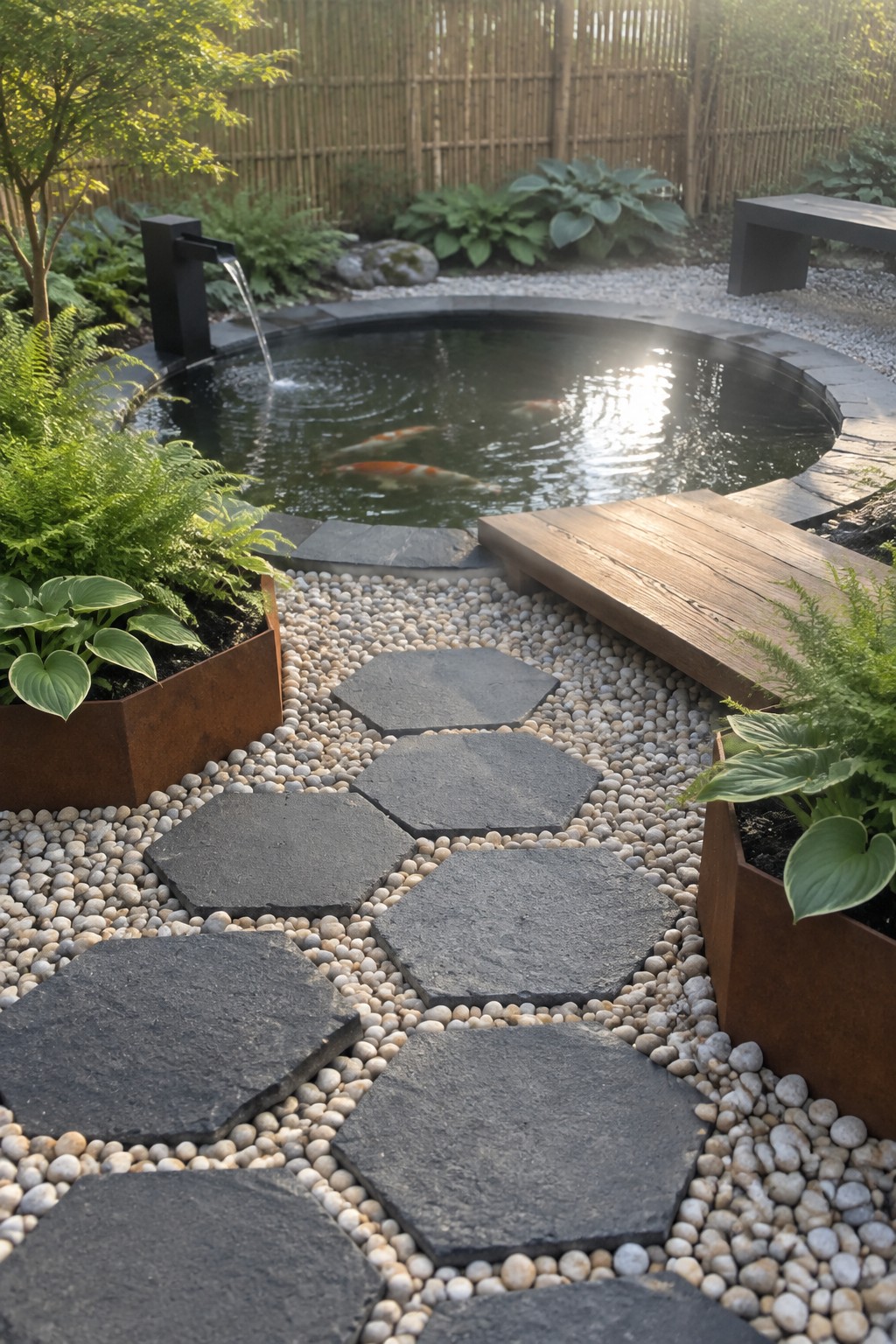
Stepping stones cut into simple shapes give a garden path a clean, steady line without adding clutter. The shape keeps the eye moving forward while the gravel softens the look and handles drainage.
This works best in smaller yards or side gardens where you want a clear route but still need room for planting beds. Use a single stone shape and keep the gravel light so the pattern stays quiet rather than busy.
Straight Paths With Geometric Planters
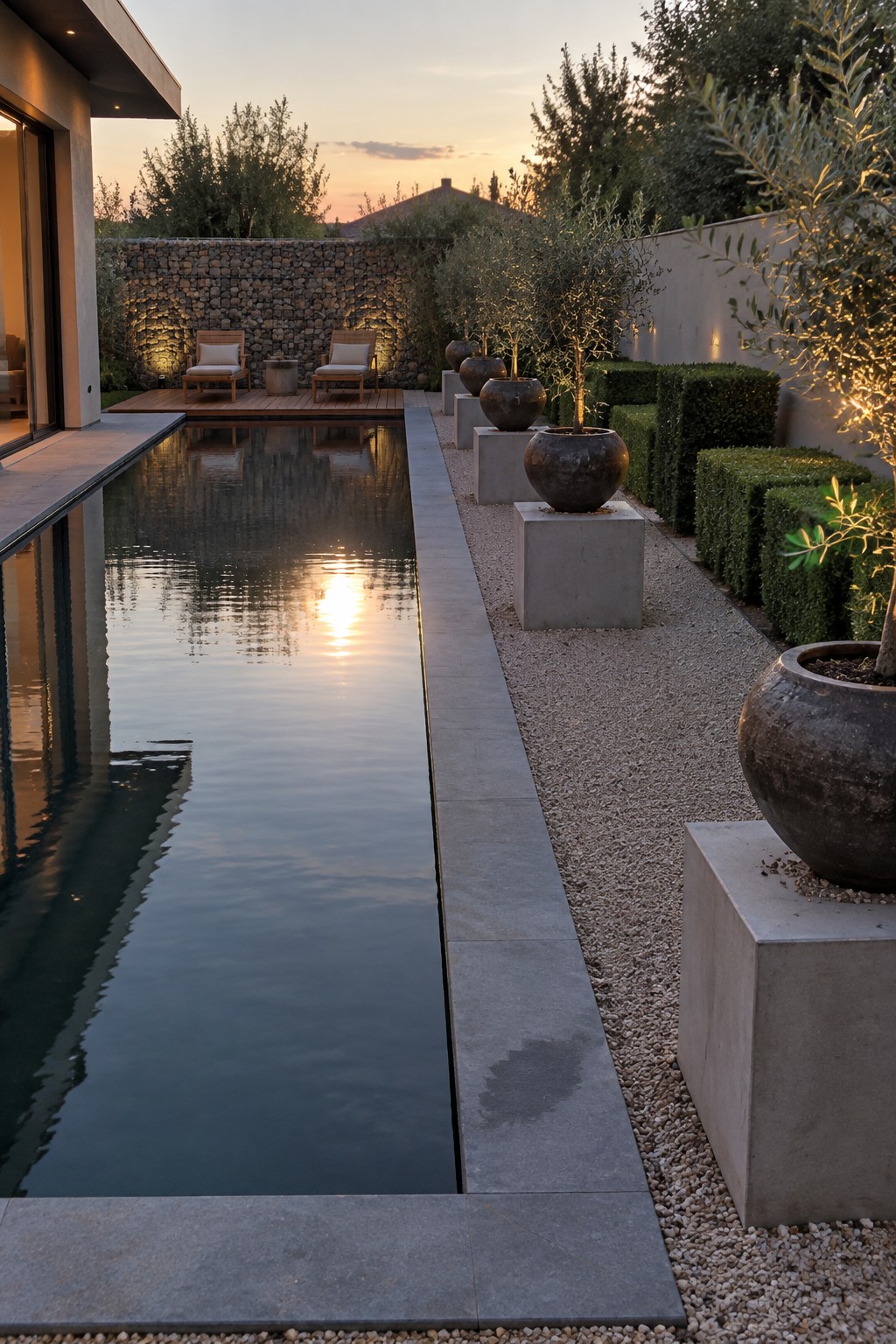
One simple way to keep a backyard feeling calm is to run a straight gravel path alongside the main feature and place square concrete blocks at regular intervals. The repeated shape gives the planting a clear order and stops the space from looking scattered.
This setup works best on long narrow lots or beside a pool where you want low maintenance structure. Choose matching pots and keep the plants limited to one or two types so the geometry stays visible.
Rectangular Raised Beds
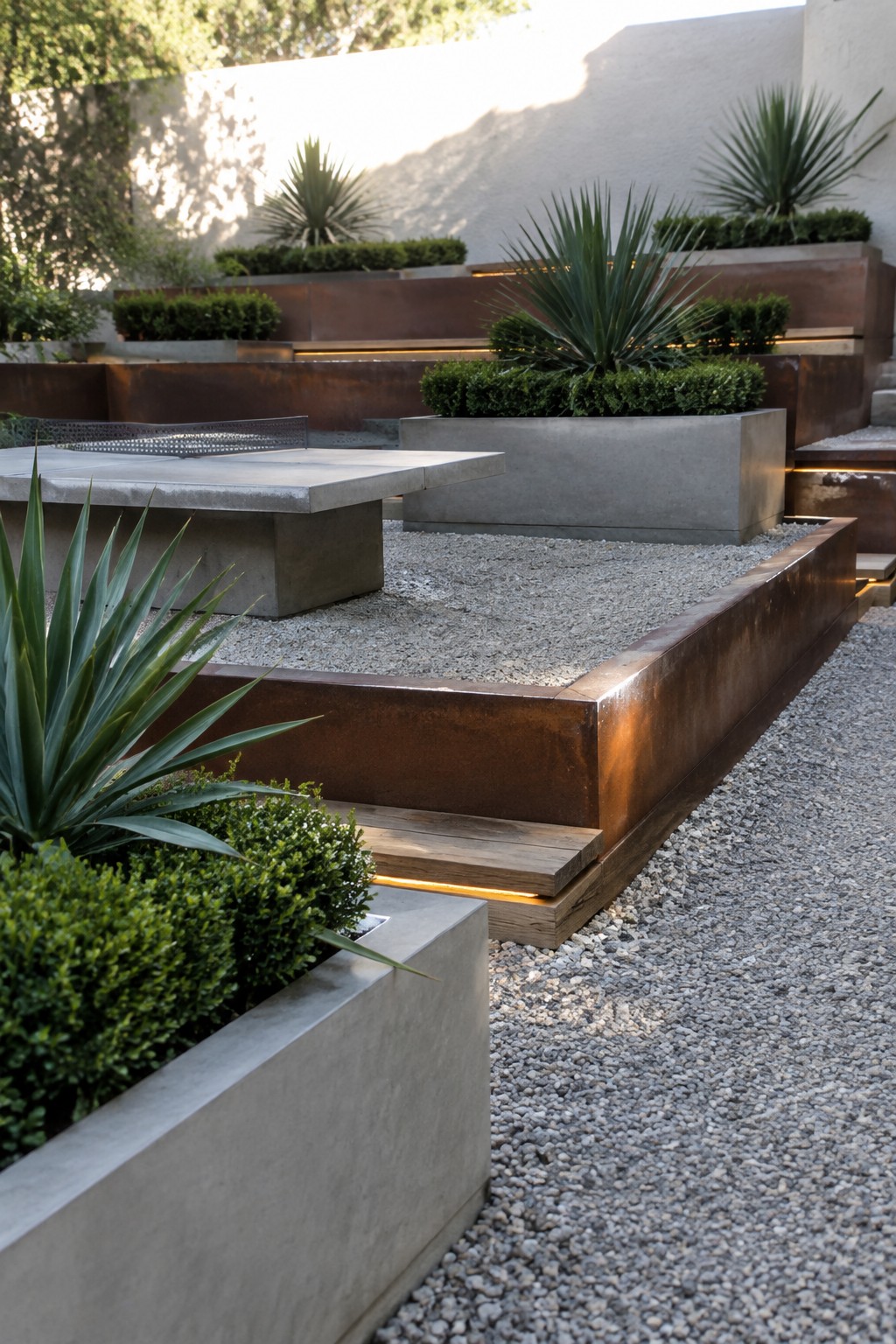
Rectangular raised beds bring a simple order to a backyard that feels calm and easy to keep up. The straight sides and flat tops let the plants stand out without any fuss, and the whole layout stays looking neat even after a busy season.
This approach works best in smaller yards or modern homes where you want clear shapes rather than soft curves. Mix a couple of materials for the beds and keep the ground between them simple so the rectangles remain the main feature.
Stepping Stones Across A Pond
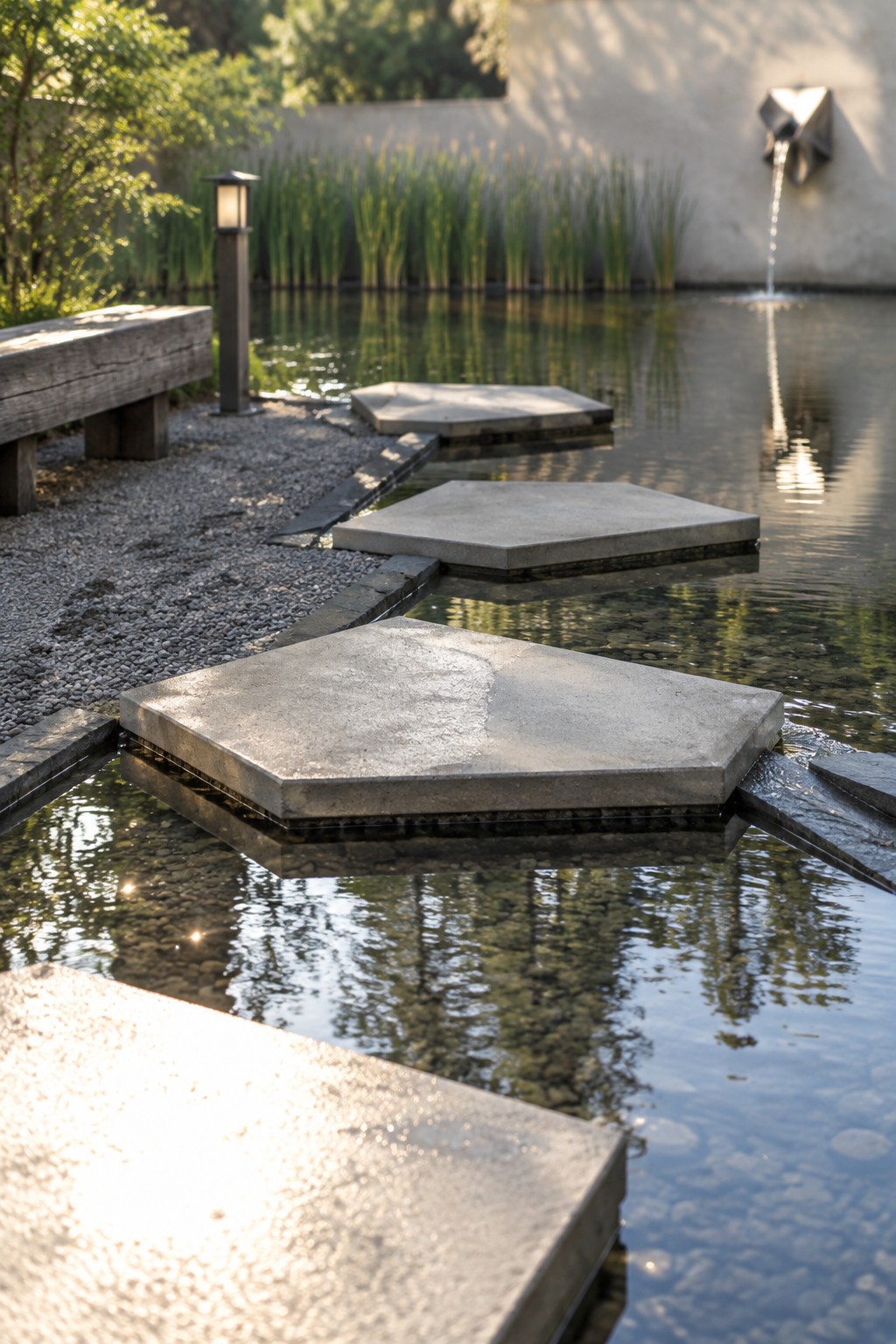
Placing simple geometric concrete slabs over water creates a direct path without closing off the pond. The flat shapes keep the layout clean and let the water stay visible on both sides, which works well when you want movement through the space instead of just looking at it from the edge.
This approach suits smaller backyards where you need to cross water to reach another part of the garden. It pairs best with gravel borders and low planting so the stones stay the main feature. Avoid crowding them with too many plants or curves, since the strength comes from keeping the shapes straightforward.
Geometric Raised Beds
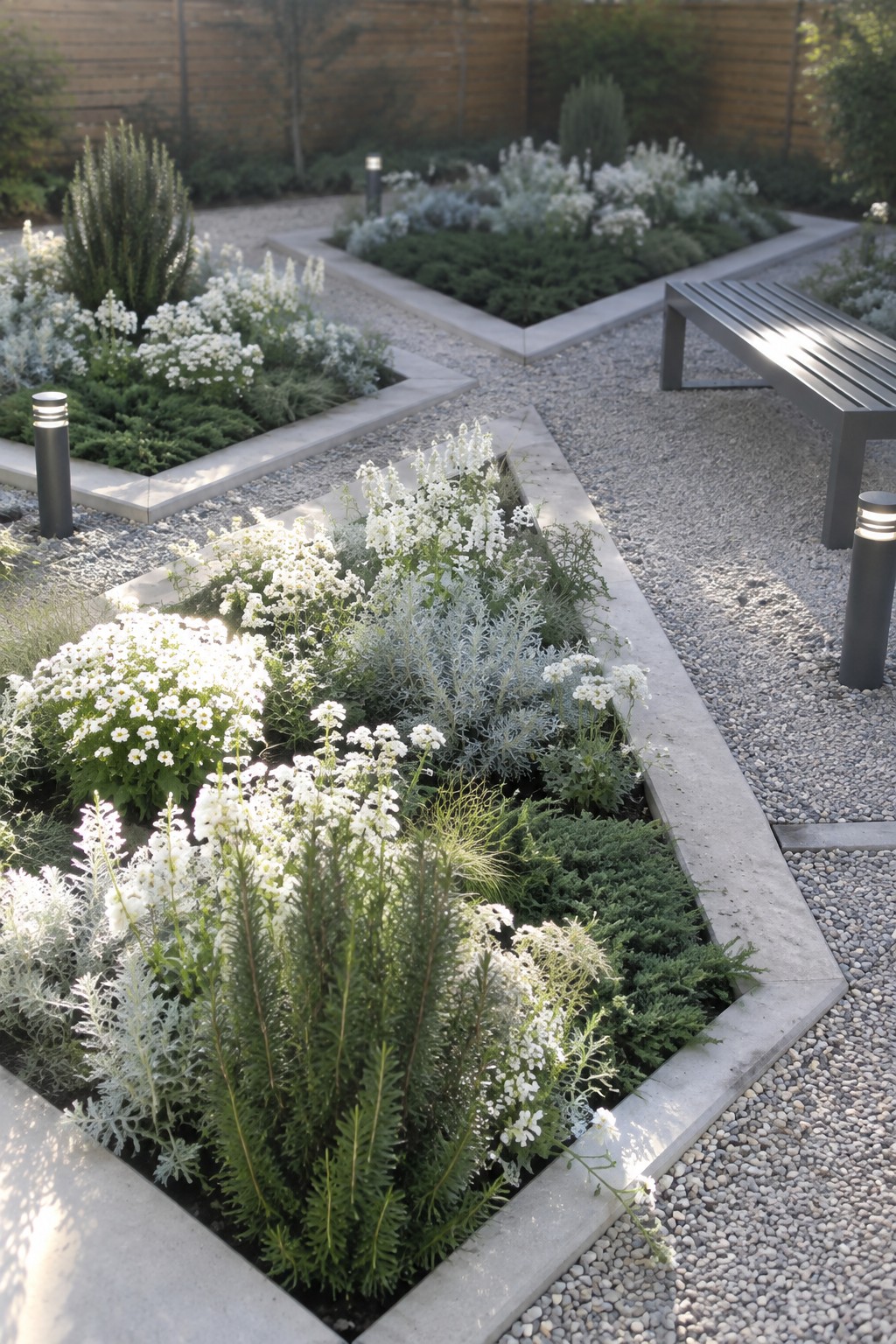
Raised beds with straight concrete edges give a backyard a clear, organized look even when the planting stays simple. The angled shapes break up the gravel space without needing lots of different materials or complicated layouts. Many people like this because it feels tidy and modern while still letting the plants do most of the work.
This approach works best in smaller or medium yards where you want low maintenance and easy mowing around the beds. Keep the edging low and the gravel light in color so the geometry stays visible. It suits homes that already have clean lines and pairs well with a limited plant palette of whites and greens.
A Round Patio Set In The Grass
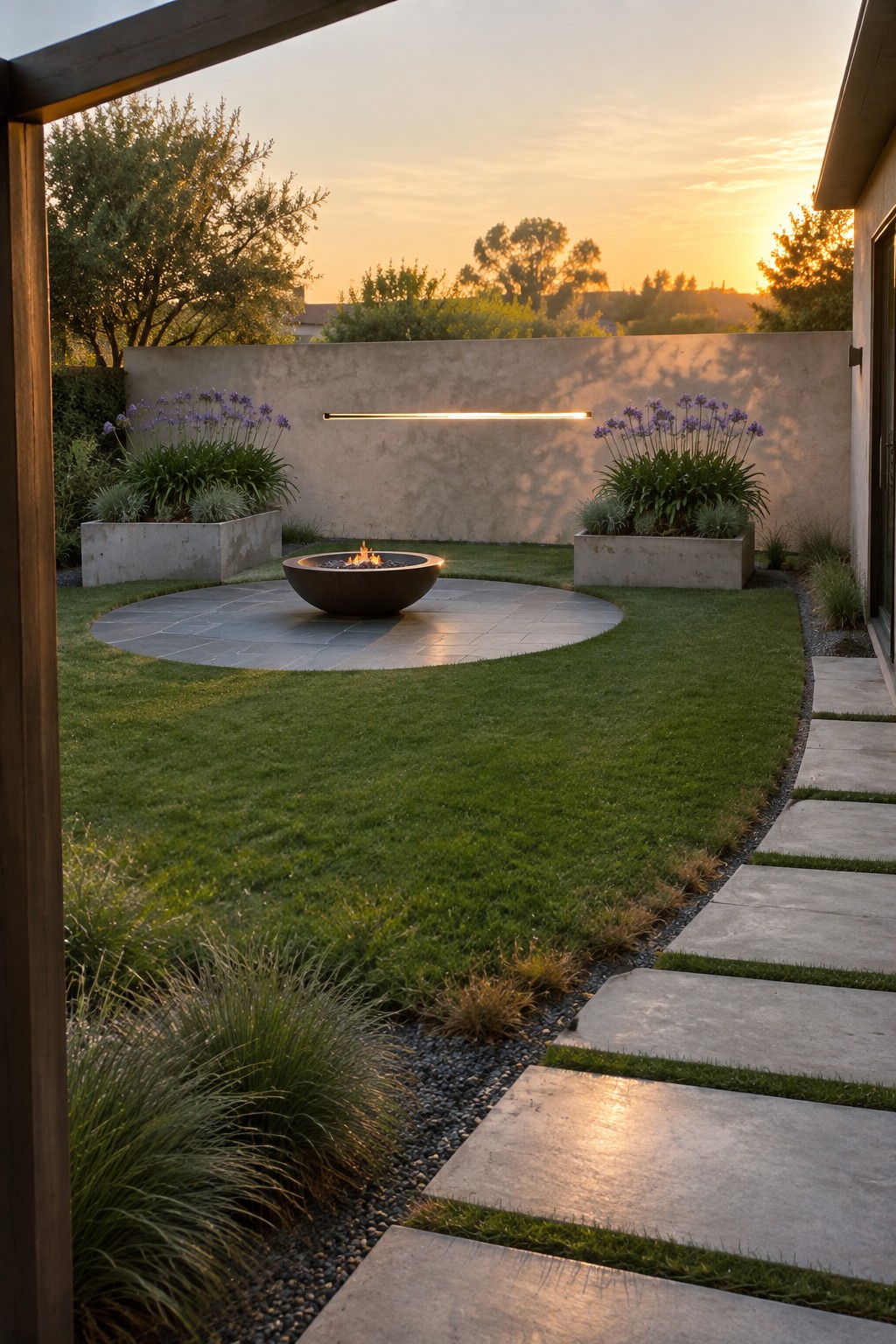
A simple circle cut into the lawn gives the fire pit a clear spot without needing walls or extra structures. The shape stands out against the straight edges of the planters and the path, and it keeps the whole yard feeling open and easy to walk around.
This works best in smaller backyards where you want one strong focal point. Keep the circle size modest so the grass still feels like the main surface, and use the same stone for any nearby stepping stones to tie the look together.
Grass And Gravel Striped Paths
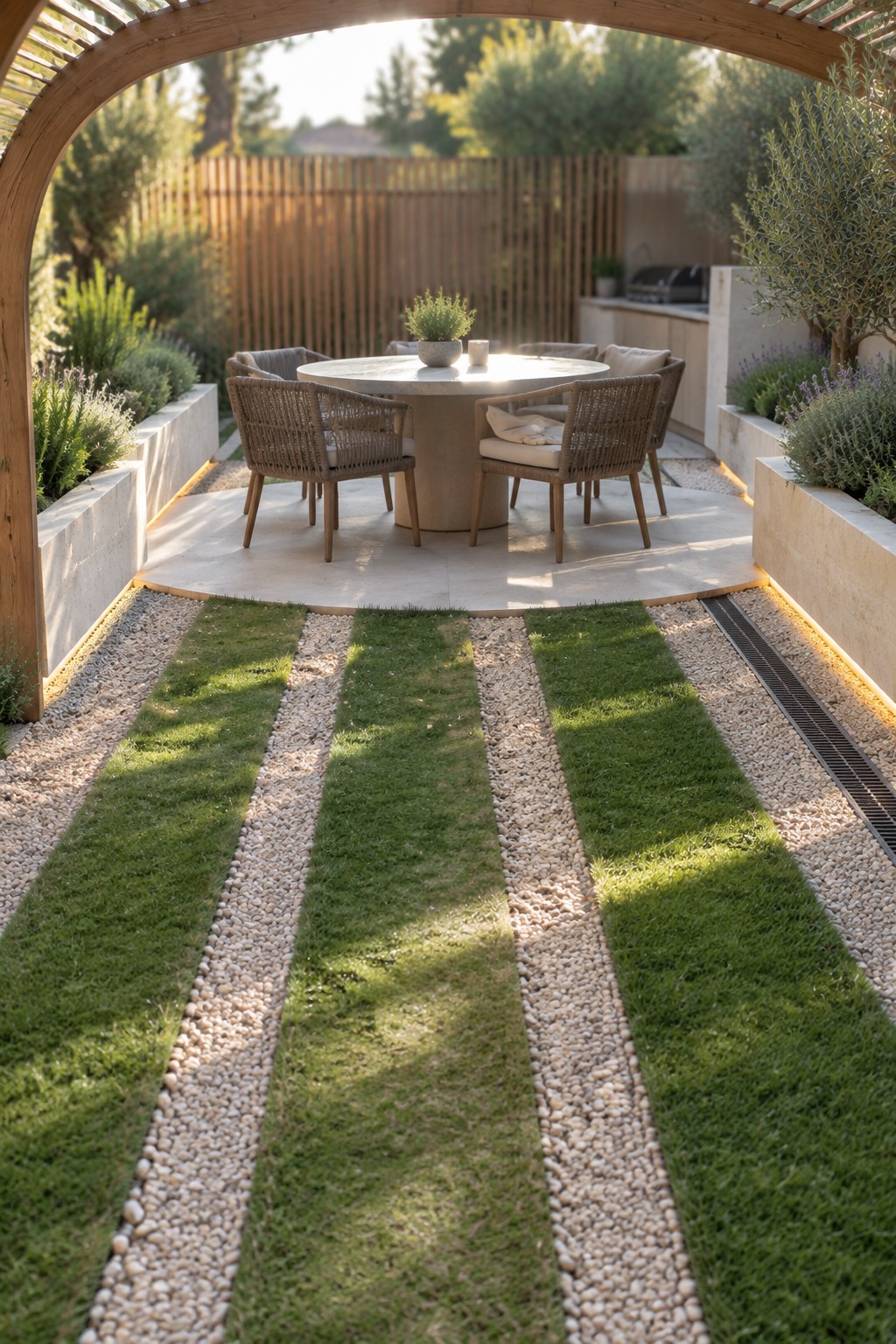
Alternating strips of turf and gravel give a backyard a clear, organized layout without needing lots of different plants or fancy features. The straight lines create rhythm and make the space feel bigger and more structured, which works especially well in minimalist designs.
This approach suits long or rectangular yards where you want a simple path that leads to a seating area. Keep the strips even in width and make sure the edges stay sharp so the pattern stays crisp over time.
Frequently Asked Questions
Q: How do I lay out circles and rectangles on uneven ground without them looking crooked? A: Pound in a few stakes and run string lines across the slope first. Level each section as you go so the shapes sit flat against the grade.
Q: What plants stay neat inside those geometric beds? A: Choose low growers like lavender or dwarf conifers that hold their shape. Trim them once or twice a year to keep the outlines crisp.
Q: Can I use gravel paths or will they blur the straight lines? A: Gravel works if you edge it with steel or wood. (But rake it back into place after heavy rain.)
Q: How much space do I really need for this to feel minimalist? A: Even a small patio corner can hold one strong circle or square. Keep the rest open so the geometry stands out.
