

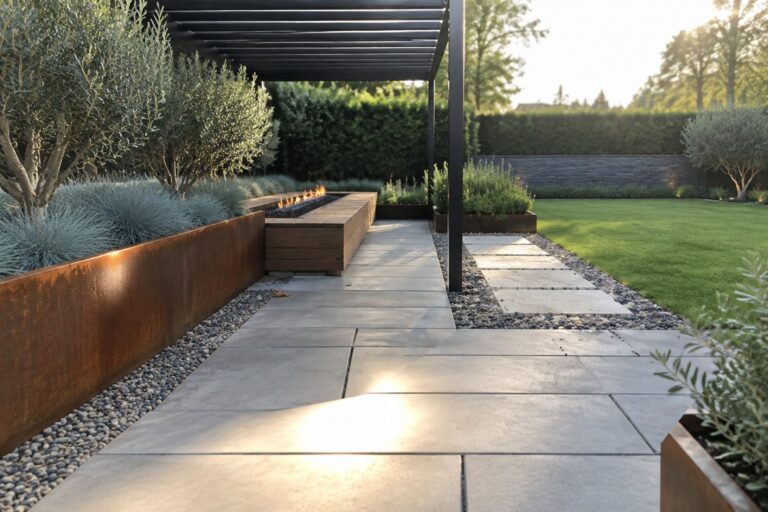
Backyard spaces tend to feel more settled when the hardscaping creates clear zones rather than scattered features.
I have found that clean lines work best when they guide movement without cutting off the softer planting areas around them.
Narrow paths create more problems than they solve.
Trying a simple edging idea in one corner first shows whether the scale fits the rest of the yard.
Over time these choices shape how the space grows and how comfortable it stays through different seasons.
Wide Stone Pavers With Gravel Joints
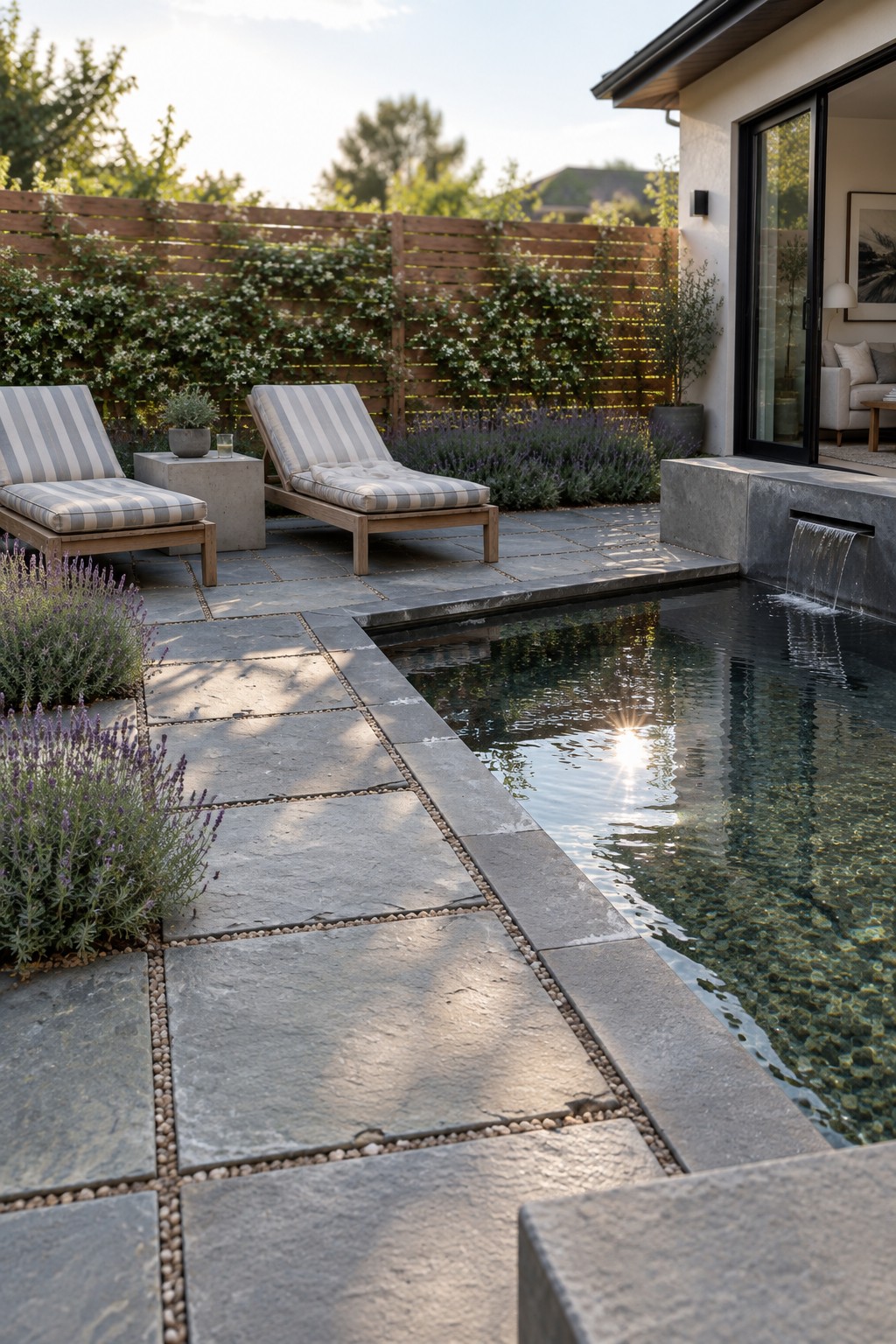
Large stone slabs laid with gravel in the gaps create a simple, structured look that holds up well in a backyard. The clean edges keep the space from feeling scattered while still letting some softness come through from the nearby plants.
This works best in modern yards where you want low maintenance and clear lines around a pool or seating area. Stick with bigger pavers so the pattern stays bold, and use a gravel size that stays put underfoot.
Pavers With Grass Joints Keep Things Clean
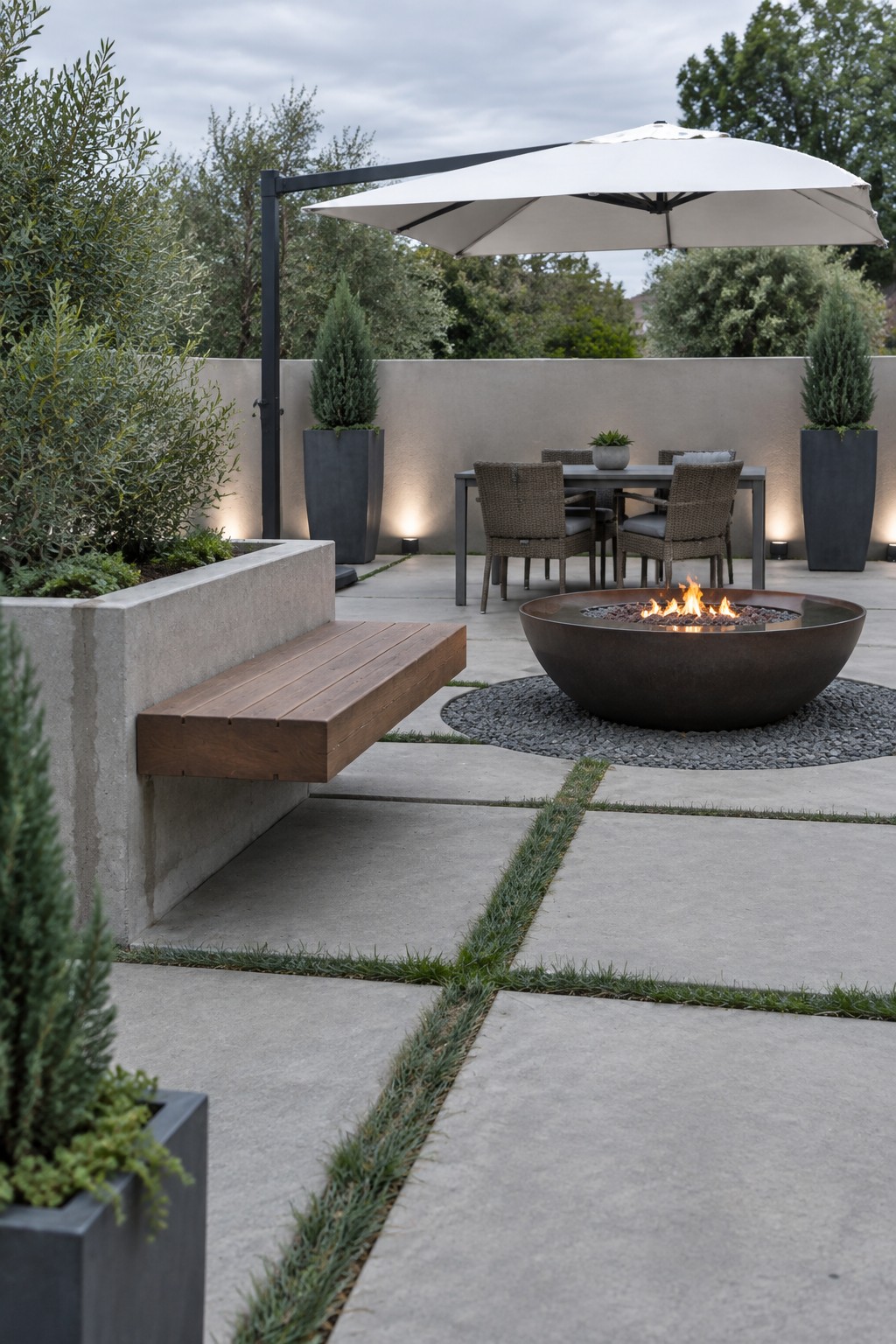
Large concrete pavers laid in a simple grid with narrow grass strips between them give an outdoor space clear shape without making it feel boxed in. The grass softens the hard lines just enough while still keeping the overall look neat and low maintenance.
This approach works best in flat backyards where you want to mark off seating areas or fire zones without adding raised edges or extra materials. Keep the grass strips narrow so they stay easy to mow and do not compete with the pavers.
Stone Coping Keeps Pool Edges Clean
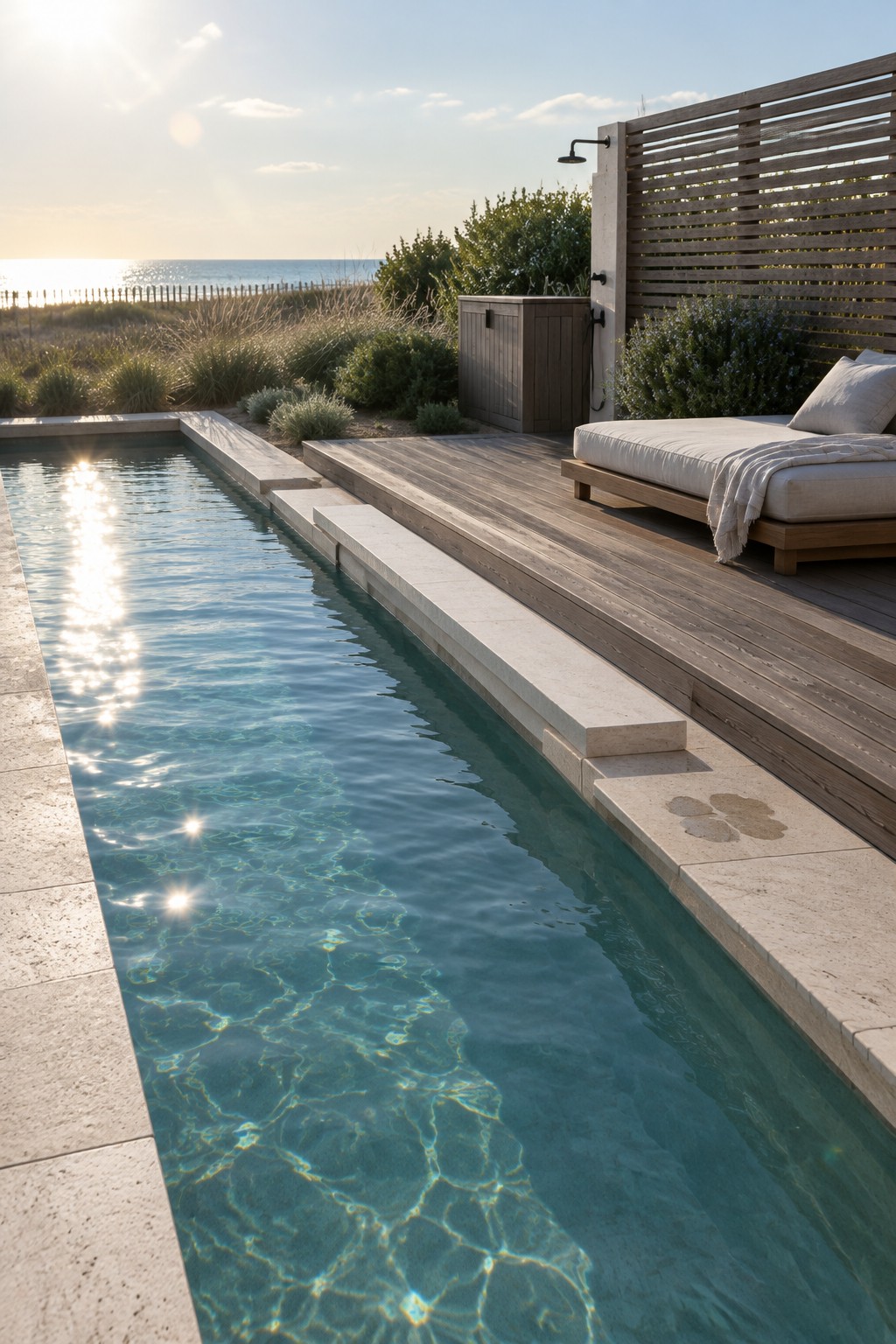
Stone coping gives a pool that sharp, finished look without adding extra layers or trim. It works especially well when the goal is to let the water feel like a natural extension of the yard rather than something boxed in.
This approach suits homes with narrow lots or modern landscaping where you want simple lines that last. Match the coping color to nearby paths or walls so the hardscape feels connected instead of scattered.
Concrete Retaining Walls That Create Planting Levels
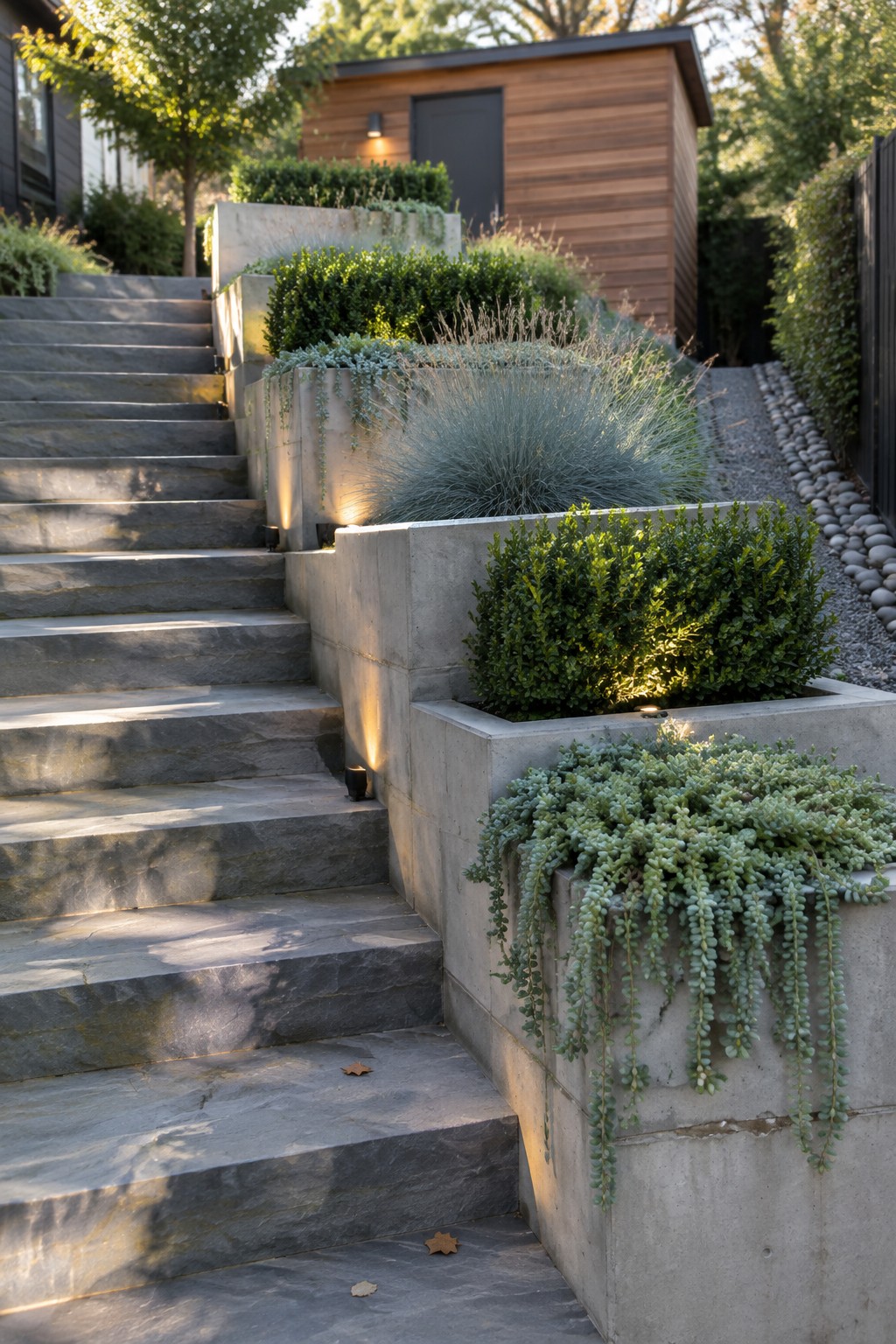
Many sloped yards end up with awkward transitions until concrete retaining walls step in to hold the grade and form flat planting areas. These walls turn a hillside into a series of clean beds that follow the stairs without looking forced.
They suit homes where the backyard drops away from the house. Keep the walls simple in finish and height, then fill the beds with a mix of shrubs and trailing plants so the structure feels part of the garden rather than separate from it.
Dark Tiles For A Clean Patio Base
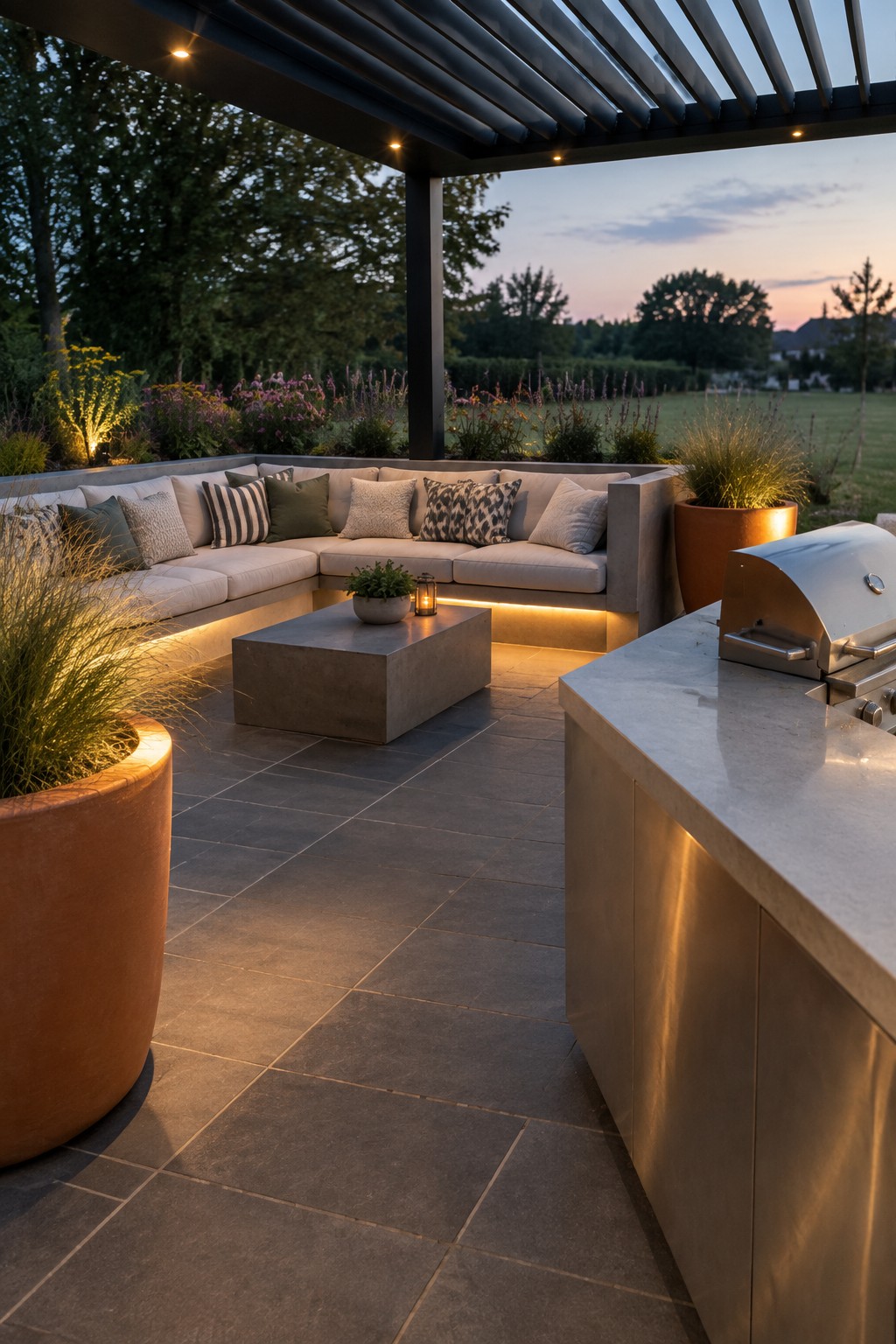
Large dark tiles make a good choice for a backyard patio because they create a simple surface that stays looking neat over time. The color helps hide dirt and the big format keeps the lines straight without too many seams showing.
This approach works best on patios that connect to a seating area or outdoor kitchen. It suits homes with open yards where you want the hard surface to feel calm rather than busy. Just check that the tiles handle weather well in your area.
Gravel Paths With Stone Edging
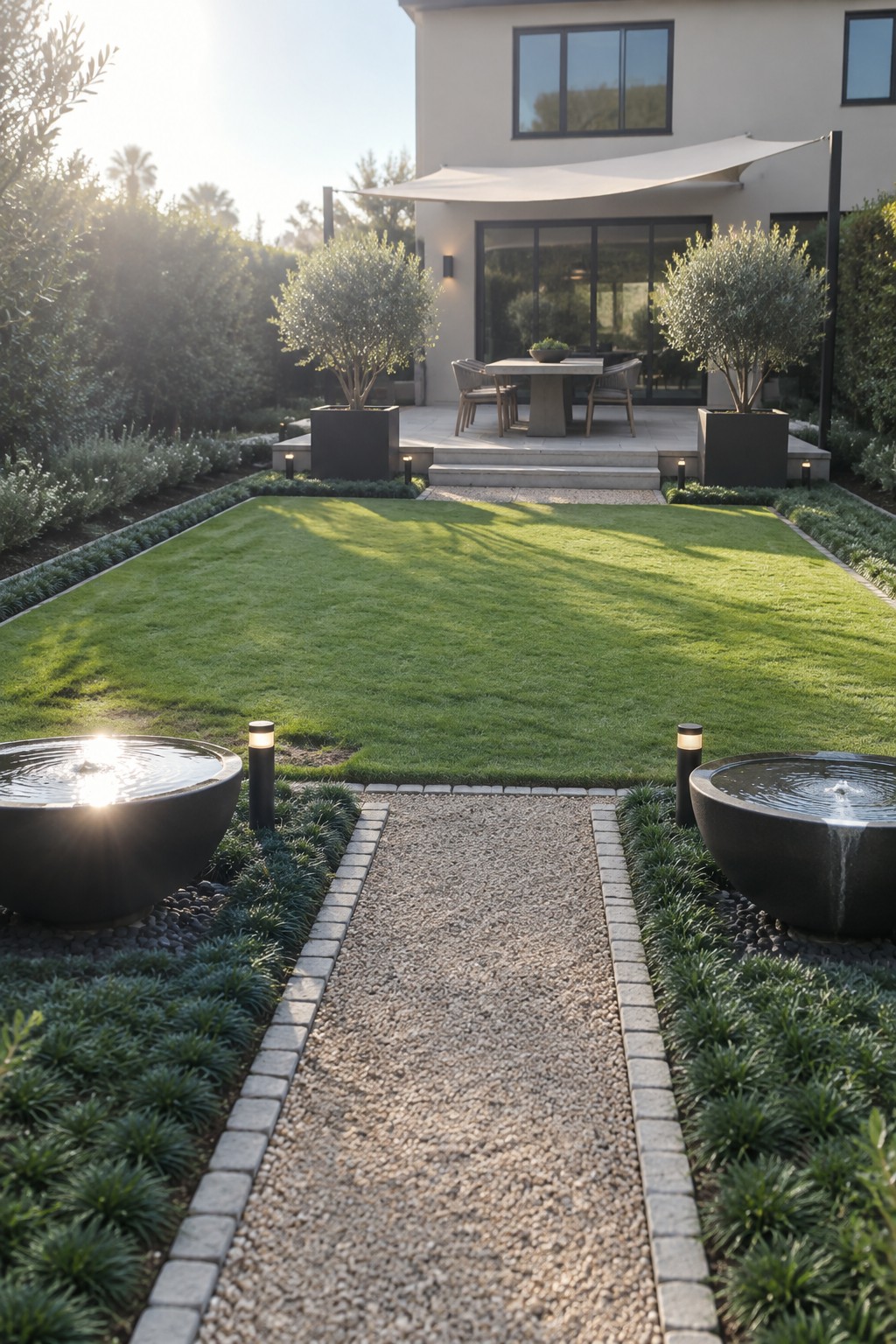
A gravel path edged in stone gives the backyard a clear structure that still feels relaxed. It breaks up the lawn into usable zones while keeping the overall look simple and open.
This approach works best on fairly flat yards where you need a low-maintenance walkway that can handle foot traffic. It suits modern homes that already use clean lines in the hardscaping and lets you add small features like bowl fountains along the edges without cluttering the space.
Zone an Outdoor Dining Area With Clean Hardscaping
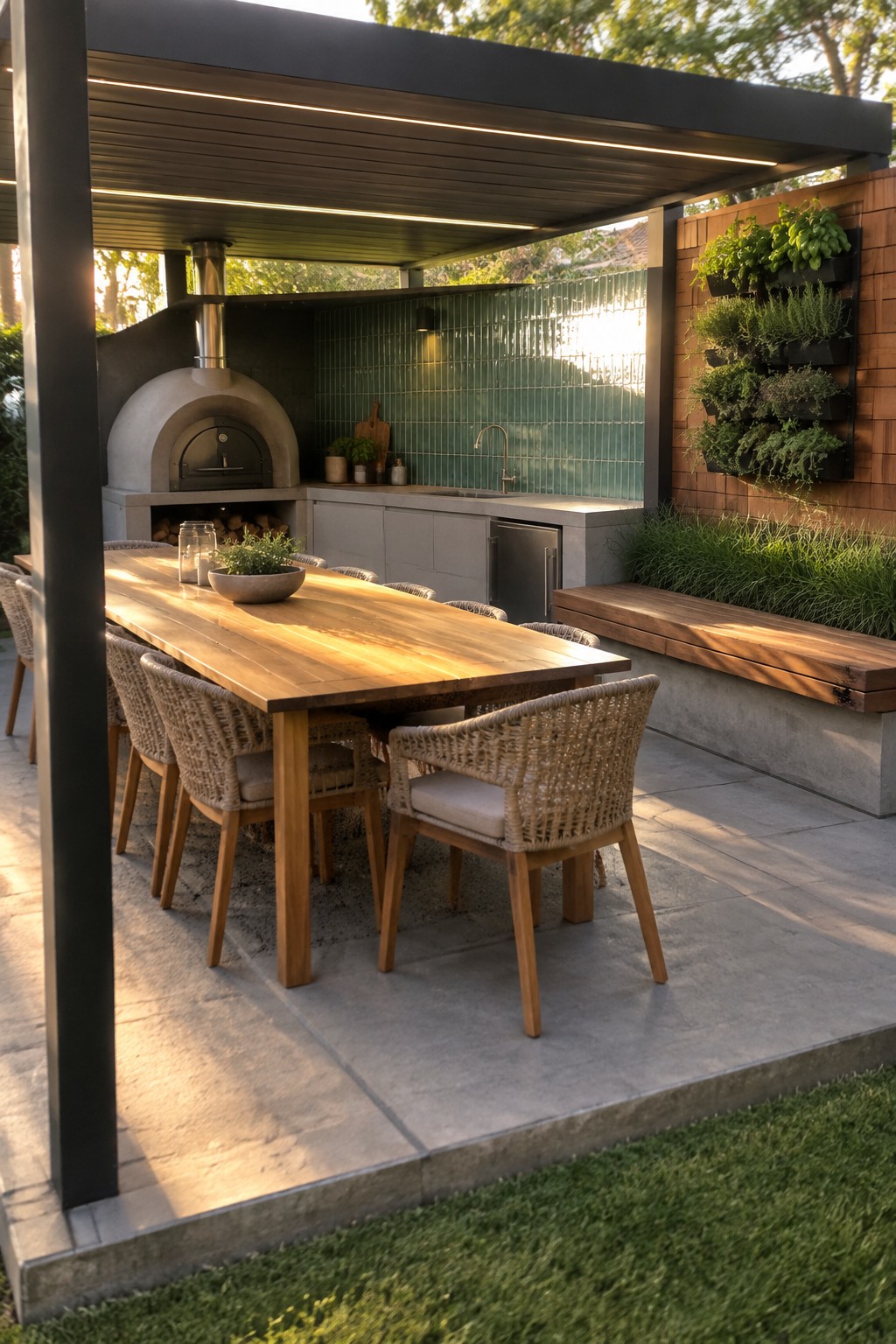
A covered structure over a dining table helps turn part of the yard into a real room. The flat concrete base and simple overhead beams keep the space looking neat instead of crowded, and they make the table feel like it belongs there instead of sitting out in the open.
This setup works best on a mostly flat backyard where you want regular meals outside without fighting sun or light rain. Keep the materials simple, match the bench and table to the beams, and let the planting stay along the edges so the hard lines stay clear.
Built-In Seating Along Hardscaped Walls
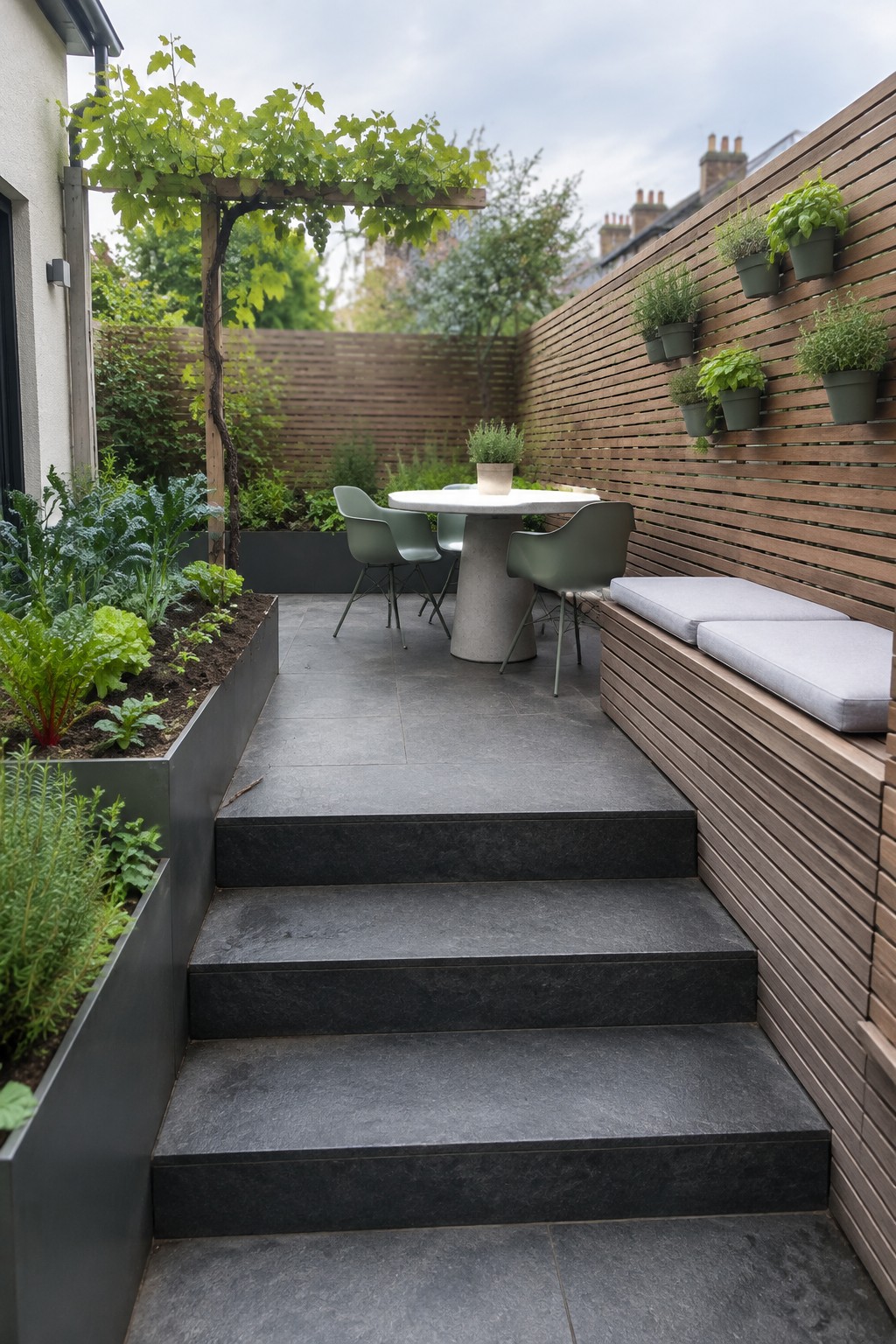
One simple way to keep a small backyard feeling organized is to run a built-in bench right along the edge of the hardscaping. The bench becomes part of the wall and the paving at the same time, so the space stays open without extra furniture cluttering the floor.
This works well on lots that slope or sit tight against a fence. Use the same wood tone for the bench and wall, then keep the paving and steps in one solid material so everything reads as one clean structure. Just watch the bench depth. Too wide and it starts to eat into the walkway.
Dark Hardscaping for Pool Areas
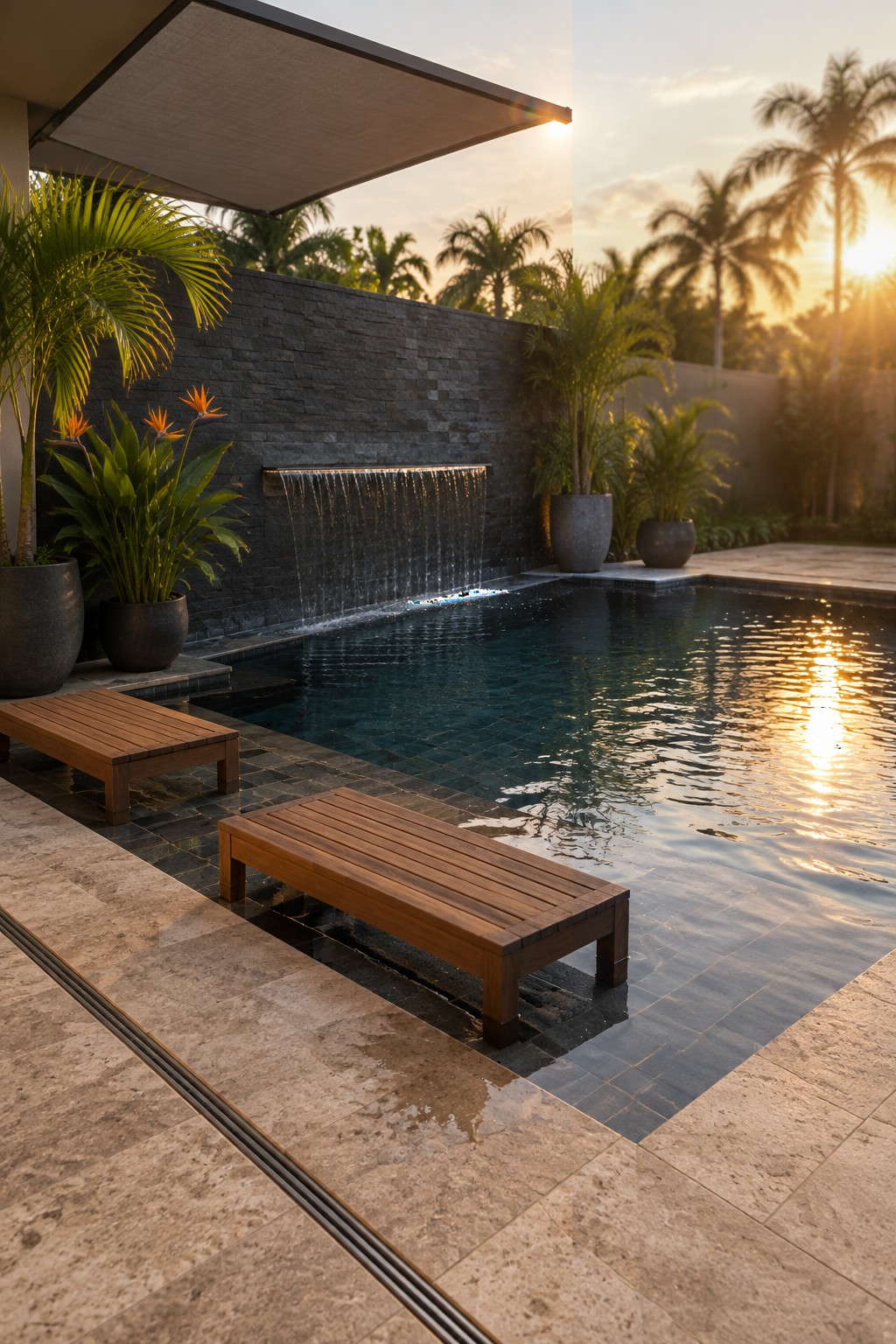
Dark tiles and stone walls give a pool a strong, grounded look that holds up well against water reflections and bright plants. The clean edges keep everything feeling structured instead of scattered, and the deep tones make the water stand out without extra decoration.
This approach works best on smaller or mid-sized yards where you want the pool to feel like part of the landscape rather than a separate feature. Keep the plantings simple and let the hard surfaces do most of the work. Just watch the heat buildup on dark materials in full sun.
Add Stone Edging Around A Bocce Court

A bocce court gives a backyard a clear purpose without needing a big lawn. The stone border keeps the sand contained and creates a sharp line that works well with the rest of the hardscaping.
This setup suits homes with enough open space for play but not a lot of time for upkeep. Match the edging material to nearby paths or walls so the whole yard feels connected rather than scattered.
Pergolas That Add Structure To Outdoor Patios
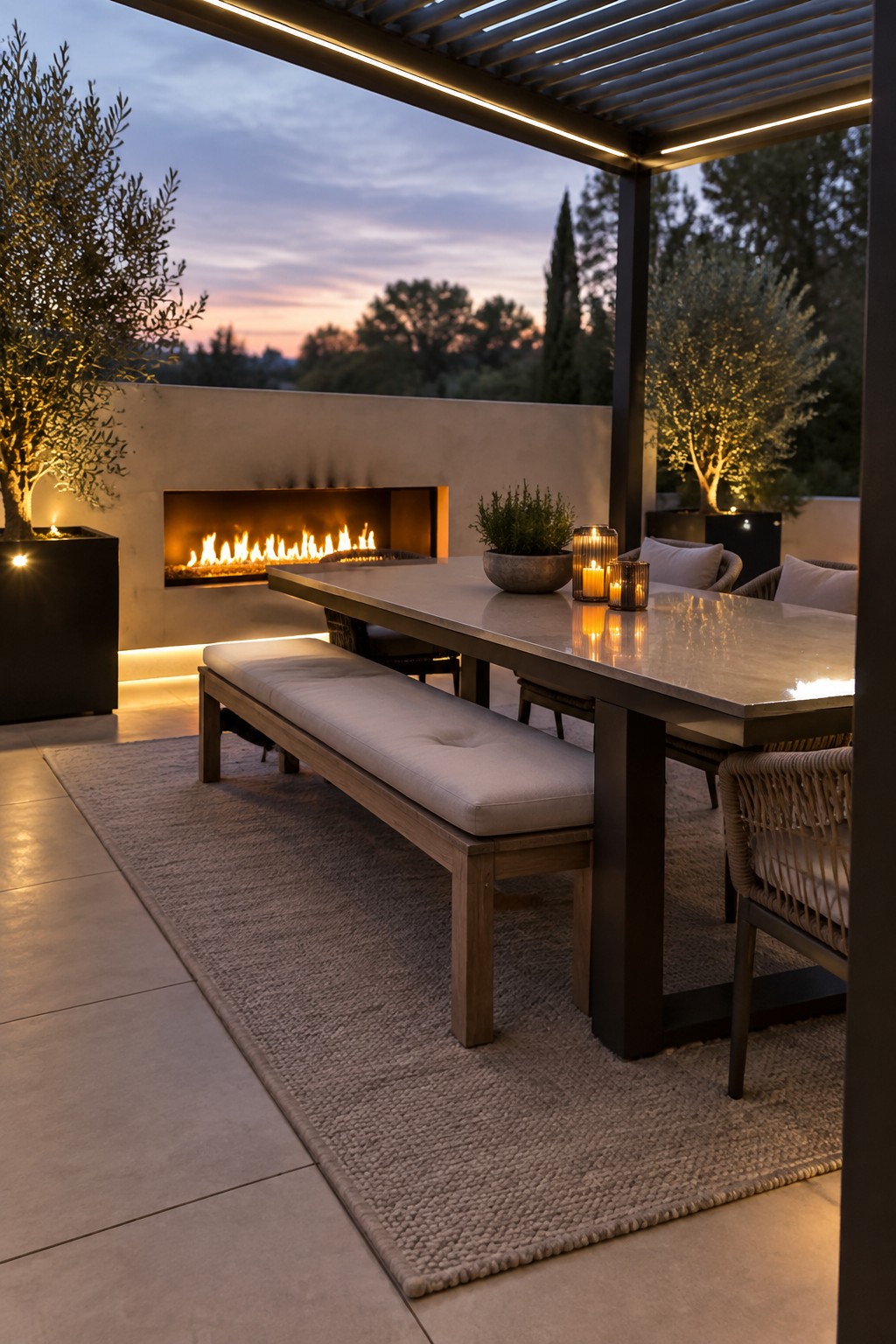
A pergola overhead gives an outdoor dining area a clear sense of place without needing walls or heavy enclosures. The straight lines and open slats keep the space feeling modern while still offering a bit of shelter and visual order above the table and seating.
This setup works best on patios that already have clean flooring and simple walls. It suits homes that want an outdoor room for meals without turning the whole yard into a formal space. Keep the furniture low and the lighting built into the beams so the whole area feels pulled together after dark.
Stepping Stones Through Grass
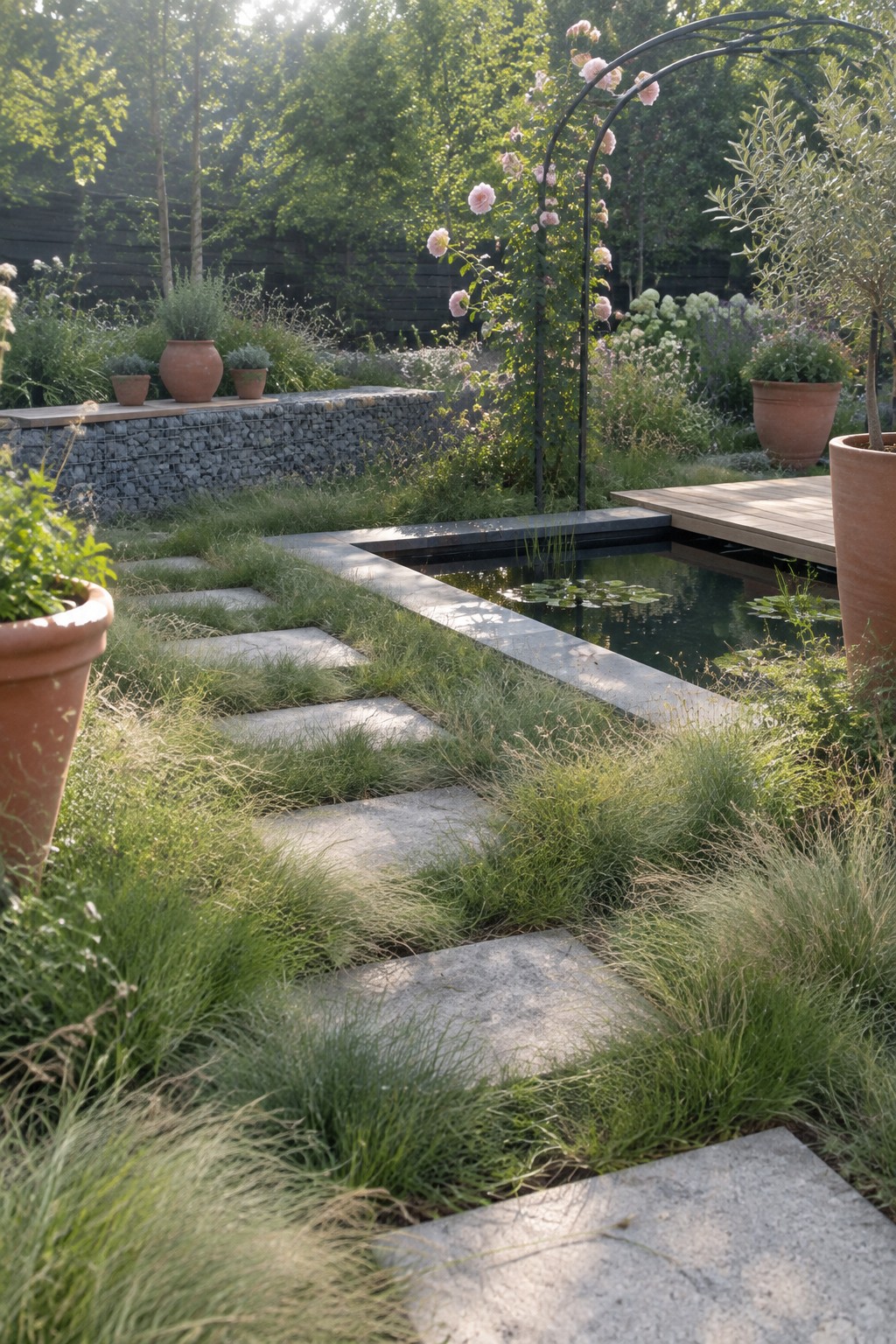
Stone paths set right into the lawn give a garden an easy way to move around without cutting up the space with big paved areas. The clean edges of the stones keep things looking tidy while the grass grows right up around them, so the hardscaping feels like part of the planting instead of something laid on top.
This works best in backyards where you want simple access to a pool or seating spot but still like a soft, planted look overall. Just make sure the stones are wide enough to walk on comfortably and set at a level that lets the mower pass over them without trouble.
Straight Decking With Stepping Stones
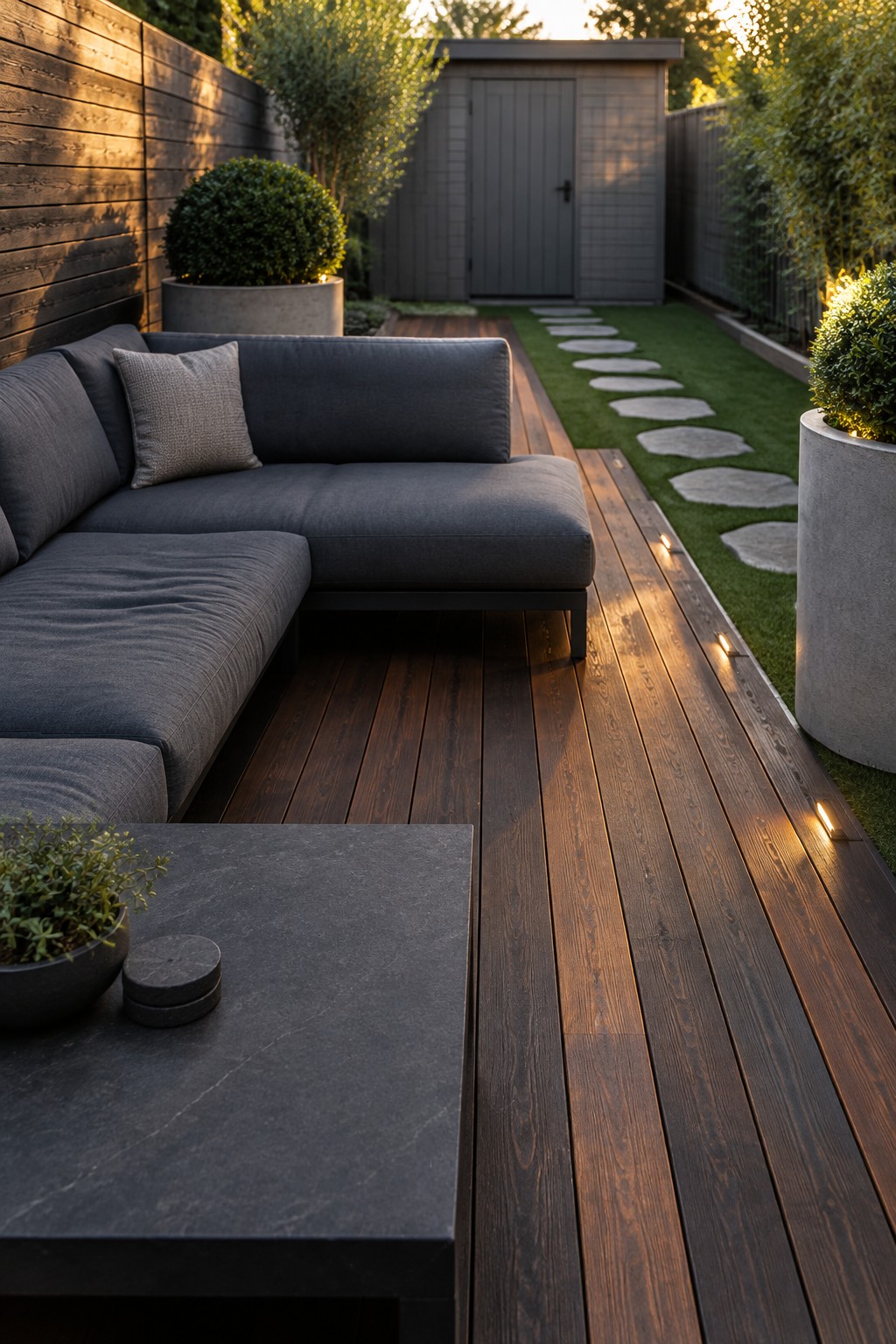
A long deck next to a simple stone path gives the yard clear structure without making it feel boxed in. The dark wood runs in one direction and the stones sit slightly offset on the grass, so the two materials guide movement while still letting the lawn breathe.
This works best in medium or narrow backyards where you need an easy walking route but do not want a full paved patio. Keep the deck finish and the stones in similar tones so the lines stay calm rather than busy.
Linear Water Channels For Clean Hardscaping
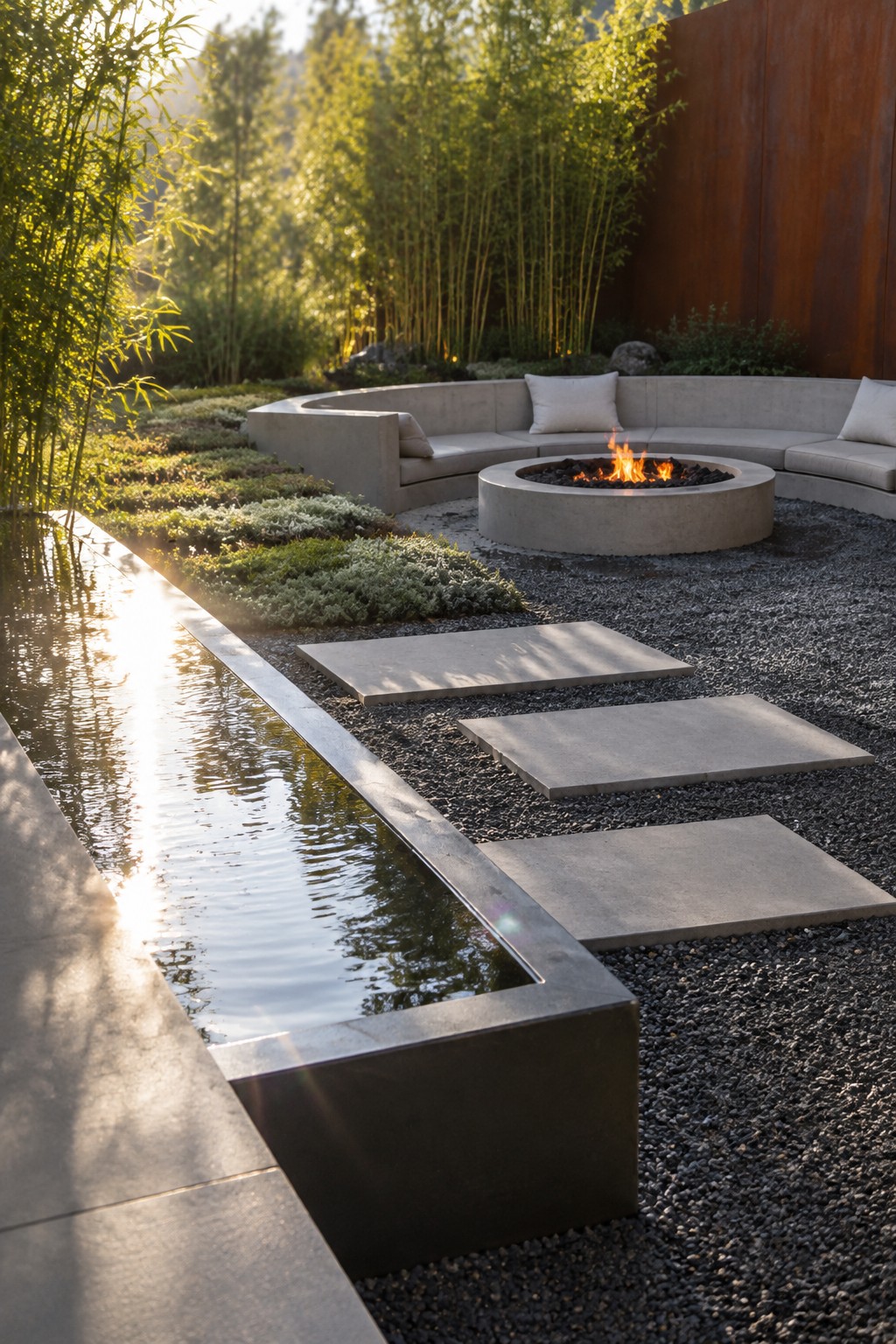
A long narrow water feature cut into the ground works well when you want hardscaping to feel structured without looking busy. It creates a clear line that guides the eye and keeps the surrounding gravel and plants from feeling scattered.
This setup suits modern backyards where the goal is simple geometry and low visual noise. Keep the channel narrow, use matching concrete edges, and let the water run parallel to stepping stones so the path stays easy to walk and easy to maintain.
Raised Beds Keep Planting Areas Tidy
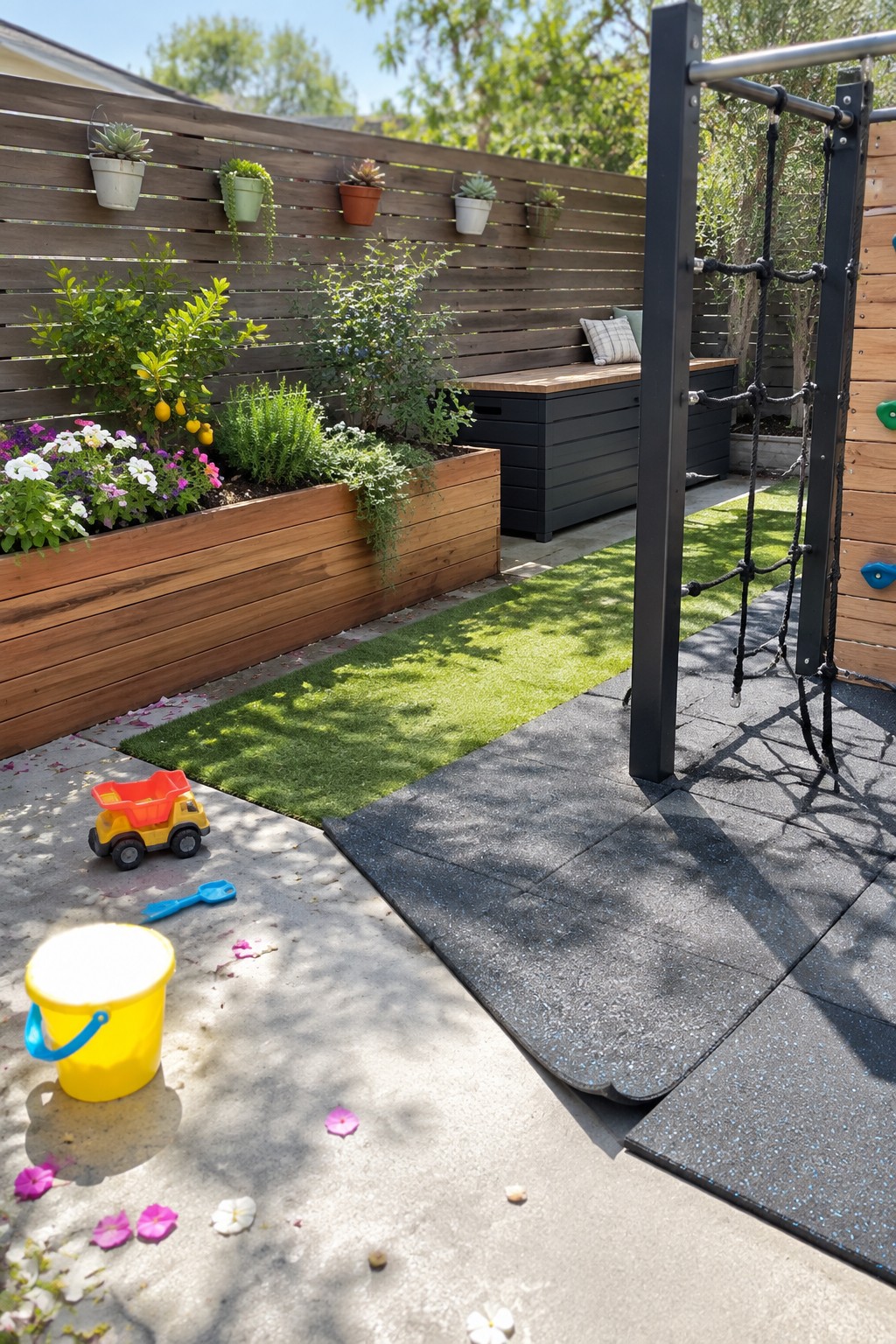
Raised beds give the garden clear edges that stay neat without constant trimming. They also let you add height and color along a fence while keeping the rest of the yard open for play or walking.
This layout works best in smaller yards or family spaces where you want planting without digging up the whole lawn. Choose rot-resistant wood and keep the beds a consistent height so the hardscaping around them stays simple and clean.
Stepping Stones Set Into the Lawn
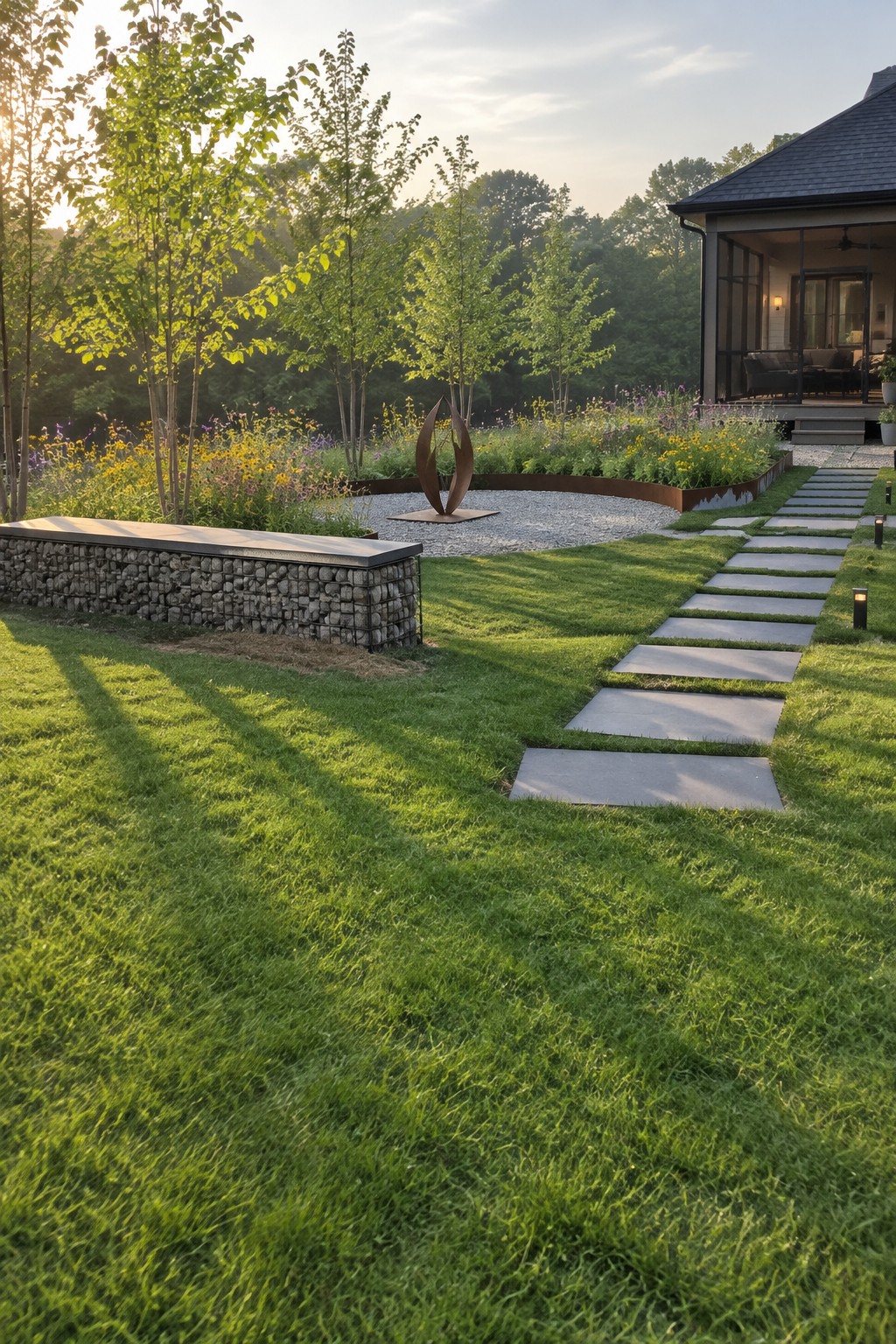
Stepping stones laid directly into the grass give a yard a clear route without covering everything in pavement. The large rectangular slabs keep the look simple and let the lawn stay the main surface.
This works best on bigger properties where you want to link the house to other garden spots. Set the stones level with the turf so mowing stays easy, and space them at a comfortable walking distance.
Raked Gravel Paths For Clean Backyard Lines
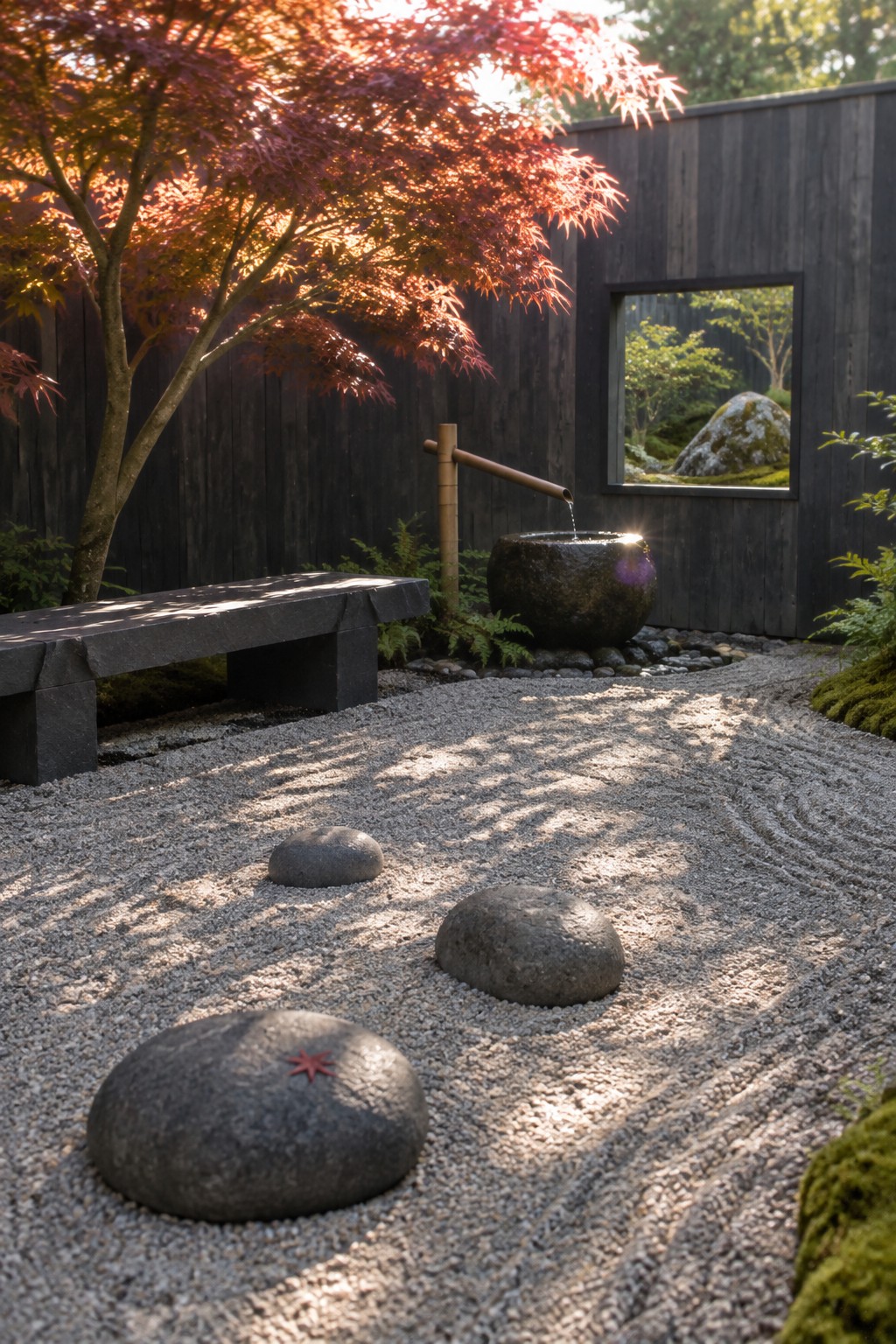
Raked gravel works well when you want structure in the yard without adding too many plants or features. The simple surface keeps the space looking open and easy to walk through while the raked lines add a quiet pattern that changes slightly each time you tend to it.
This style suits smaller backyards or modern homes that need a low maintenance ground cover. Use edging to hold the gravel in place and pick stones in tones that match your fence or other hard surfaces so the whole area stays cohesive.
Integrate Lighting Into Pool Decking
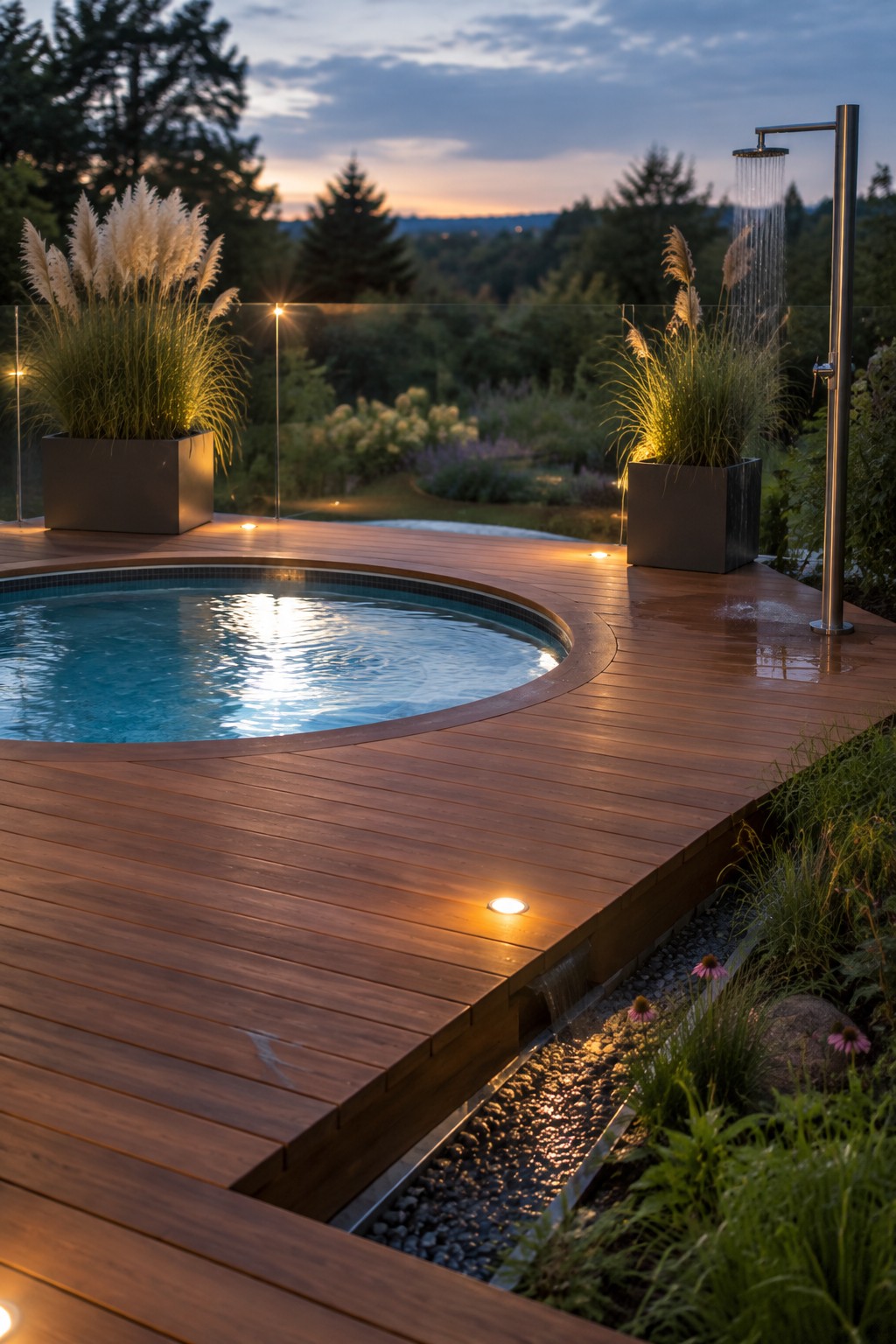
One way to keep a backyard pool area looking sharp is to build the deck right up to the water with lights set right into the surface. The inset lights mark the edge without adding clutter or extra fixtures that would break the clean line.
This approach works well on smaller yards or modern homes where you want the pool to feel like part of the deck rather than a separate feature. Just make sure the lights are rated for wet areas and spaced evenly so the path stays easy to see at night.
Concrete Benches As Landscape Dividers

A long concrete bench can do more than provide seating. It creates a sharp, clean edge that separates planting beds from the walking area, which keeps the whole layout looking organized without extra fencing or walls.
This works especially well in dry climates where you want low maintenance and strong lines. Place the bench parallel to a gravel path and let the planting beds sit slightly higher behind it. The bench then doubles as both a visual boundary and a place to rest while keeping the design simple and modern.
Frequently Asked Questions
Q: How do I keep the clean lines from getting overgrown by plants?
A: Trim shrubs and grasses right at the edge of the hardscaping every few weeks. Choose plants that stay compact instead of spreading ones. The straight borders stay sharp when growth stays controlled.
Q: What works best for a sloped backyard with these ideas?
A: Build low retaining walls in straight runs to create level zones. Use the same material for steps and paths so everything flows together. This turns the slope into usable space without losing the modern feel.
Q: Do I need to worry about weeds pushing up through the joints?
A: Lay a solid base of compacted gravel before installing pavers or concrete. Fill joints with polymeric sand that hardens after watering. But a quick spray of vinegar mix every spring knocks back anything that still tries to sprout.
