

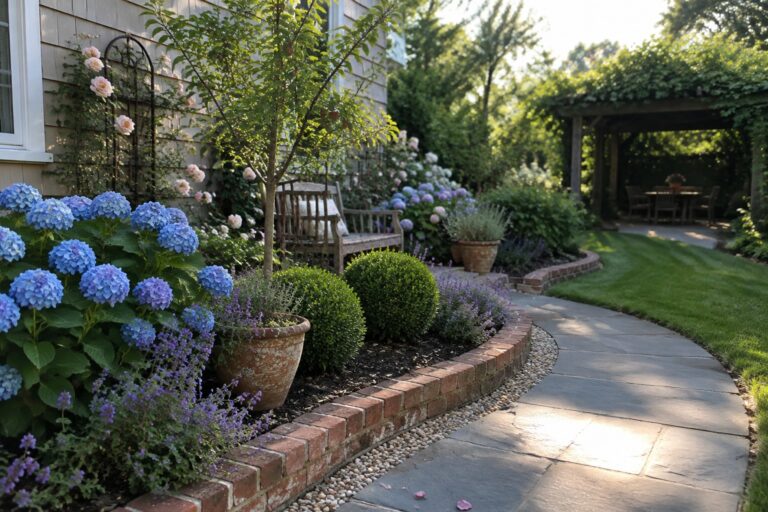
Over the years I have noticed that curved borders in a backyard tend to make the planting areas feel more connected to the open lawn rather than boxed off.
In my own attempts at reshaping beds I often start by laying out a hose to see how the line moves with the slope of the ground.
The curve matters more than I first expected.
Once the edging is set the plants seem to follow a more natural pattern that holds up better through the seasons.
A few of these setups look like ones I could adapt by adjusting the depth to fit the trees already in place.
Curved Stone Borders for Flower Beds
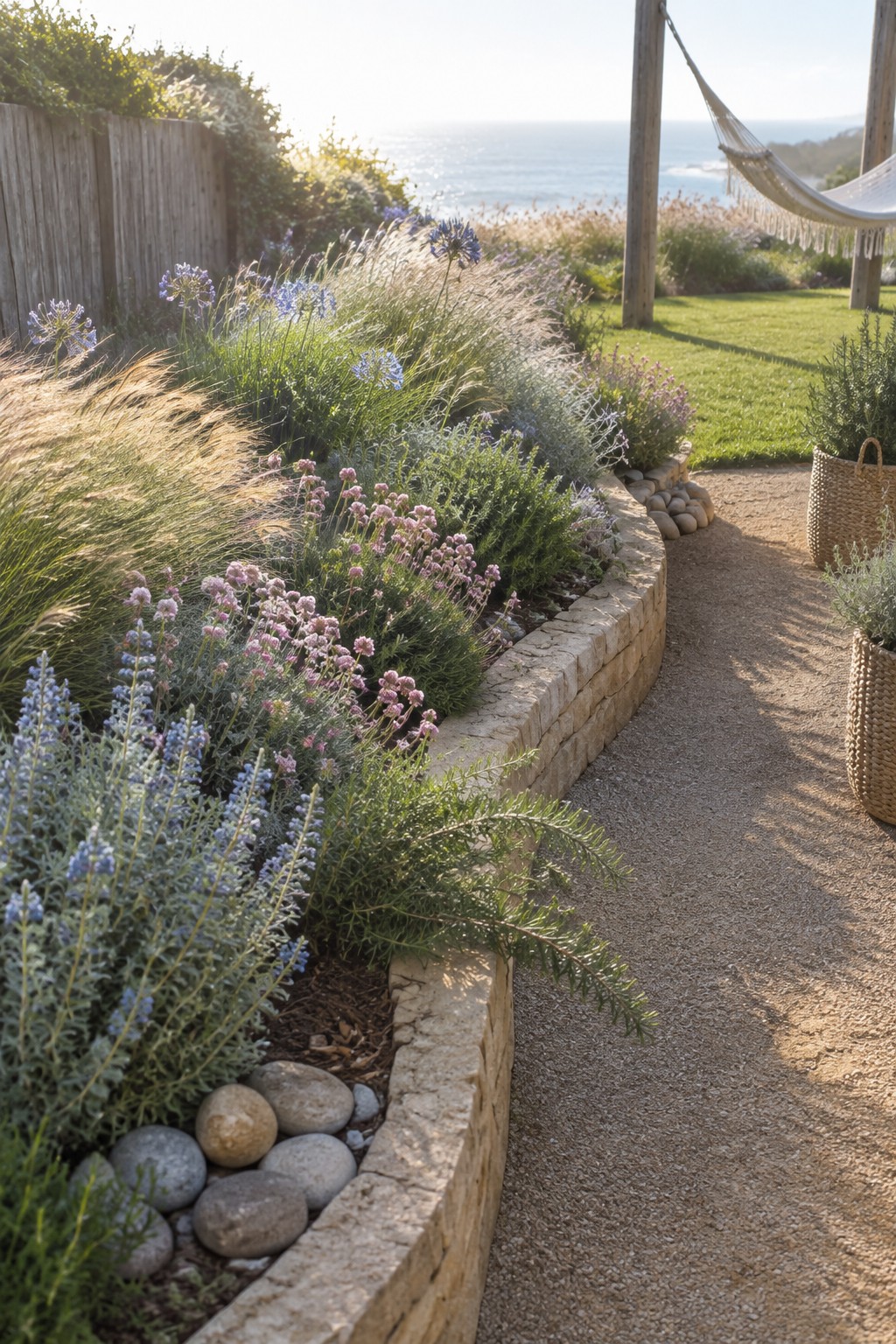
A low stone wall that curves along the edge of a flower bed softens the overall shape and helps the planting flow into the path. This approach avoids the stiff look of straight edges and lets the bed follow the natural line of the yard.
Stone works well here because it holds its shape over time and blends with gravel paths or sloping ground. It suits larger backyards where you want the garden to feel relaxed rather than formal, and the curve should stay gentle so it does not look forced.
Curved Metal Edging For Flower Beds
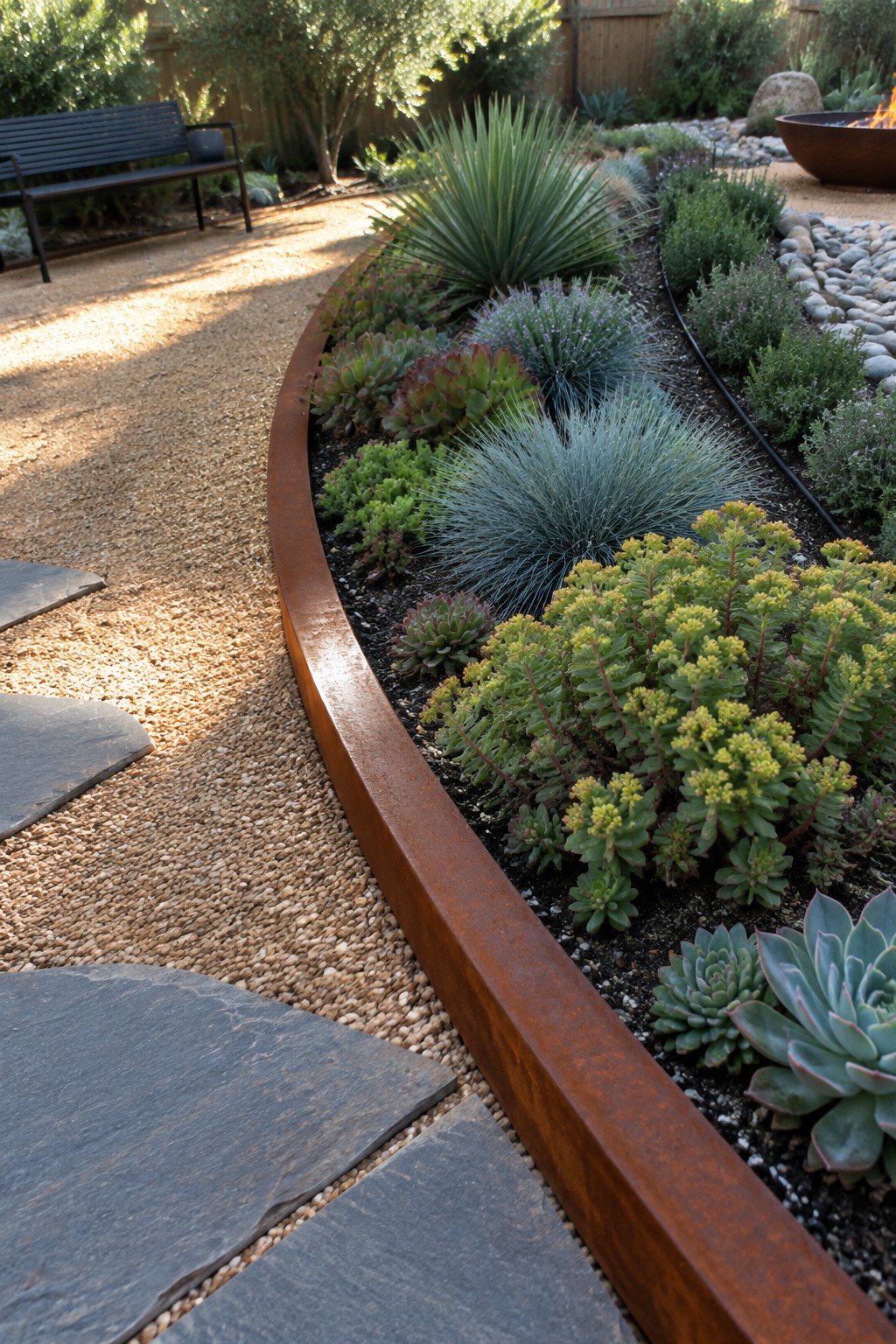
A gentle curve softens the look of a flower bed and helps it blend better with the rest of the yard. Metal edging keeps that curve clean and holds everything in place without the edge crumbling or shifting over time.
This approach works well along paths or near seating areas where you want the planting to feel natural but still tidy. It suits most home styles and holds up in different weather without much upkeep.
Curved Stone Edging For Flower Beds

Curved borders give a backyard garden a softer look than straight lines. The gentle bend lets the plants flow naturally and keeps the bed from feeling boxed in.
This works well along paths or near seating spots. Low stone holds the shape in place, holds the mulch, and gives you room to layer taller plants toward the back with lower ones along the front.
Curved Flower Bed Borders Along Lawns and Paths
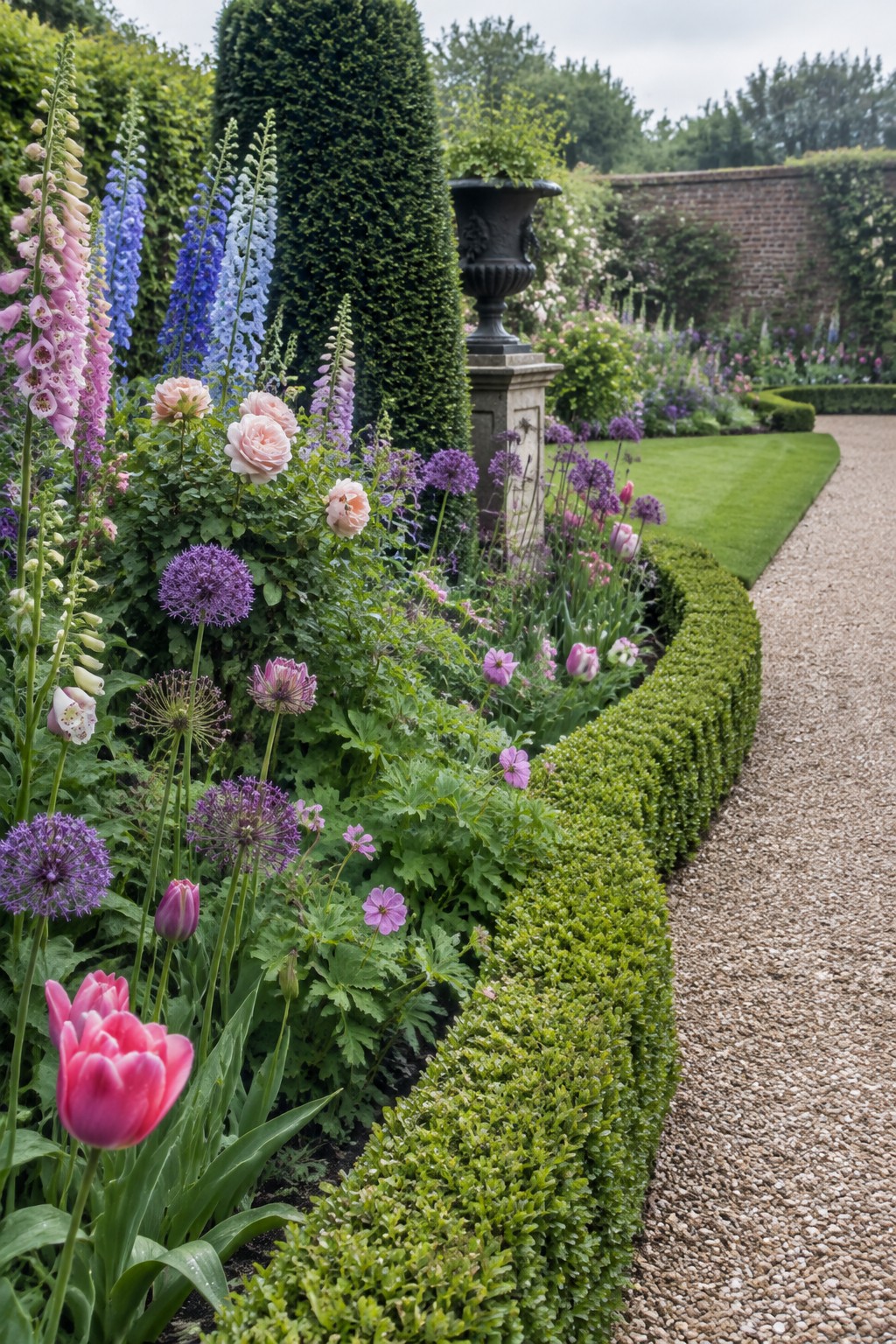
Curved borders help flower beds feel more natural next to a path or lawn. Straight edges can look stiff, but a gentle curve lets the planting follow the shape of the space and softens the whole layout.
This approach works best in a backyard where the beds run along a walkway or lawn edge. Keep the curve simple and wide enough for easy mowing and weeding, and use a low hedge or edging to hold the line.
Curved Flower Beds Around Patios and Fountains

Curved borders help flower beds blend more naturally with a patio instead of cutting straight lines that feel stiff. The low stone edging follows a gentle arc that softens the hard surface and lets the planting spill forward in a few spots without looking messy.
This approach works well in smaller backyards where the bed needs to wrap around seating or a fountain. Keep the curve wide and simple so the bed stays easy to maintain and does not fight the shape of the paving.
Curved Borders Make Flower Beds Feel More Natural

Curved borders work well because they keep the garden from looking too stiff or planned out. The gentle sweep lets plants spill over the edge a bit and gives the whole bed a softer shape that feels easier on the eye.
This approach works best along a path or next to a lawn. Lay out the curve with a hose or rope first so you can walk around it and make changes before you cut the edge. It suits most backyards and looks good with a simple mix of taller grasses and lower flowers.
Curved Flower Bed Borders Around Pools
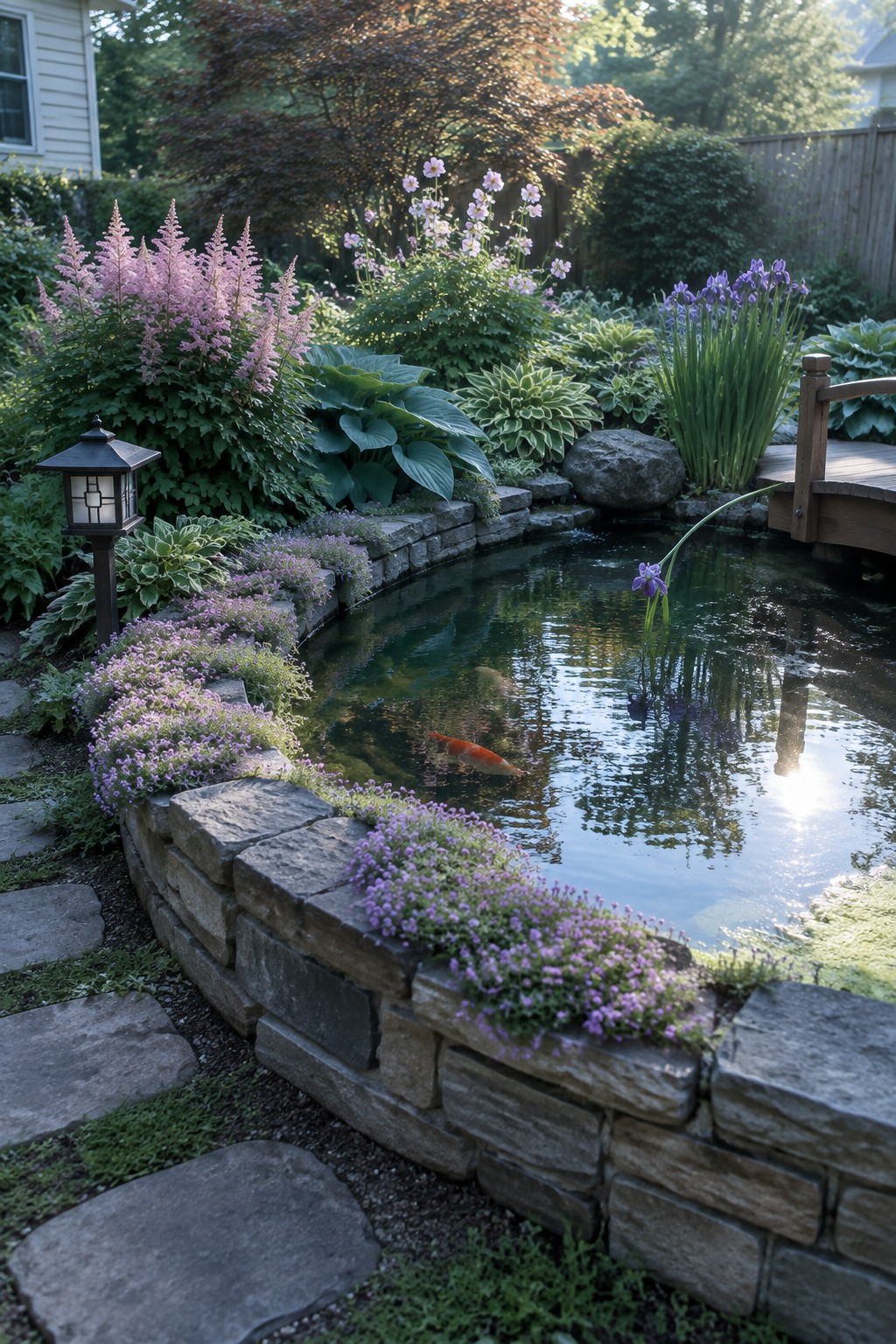
Curved stone borders give a garden a softer shape than straight lines ever could. They let the beds follow the edge of a pond or path without looking forced, and the low wall keeps everything tidy while still feeling natural.
This works best in smaller backyards where the curve helps the space feel bigger and more relaxed. Keep the stone height modest and let some plants tumble over the edge so the border blends into the planting rather than standing out.
Curved Borders For Flower Beds
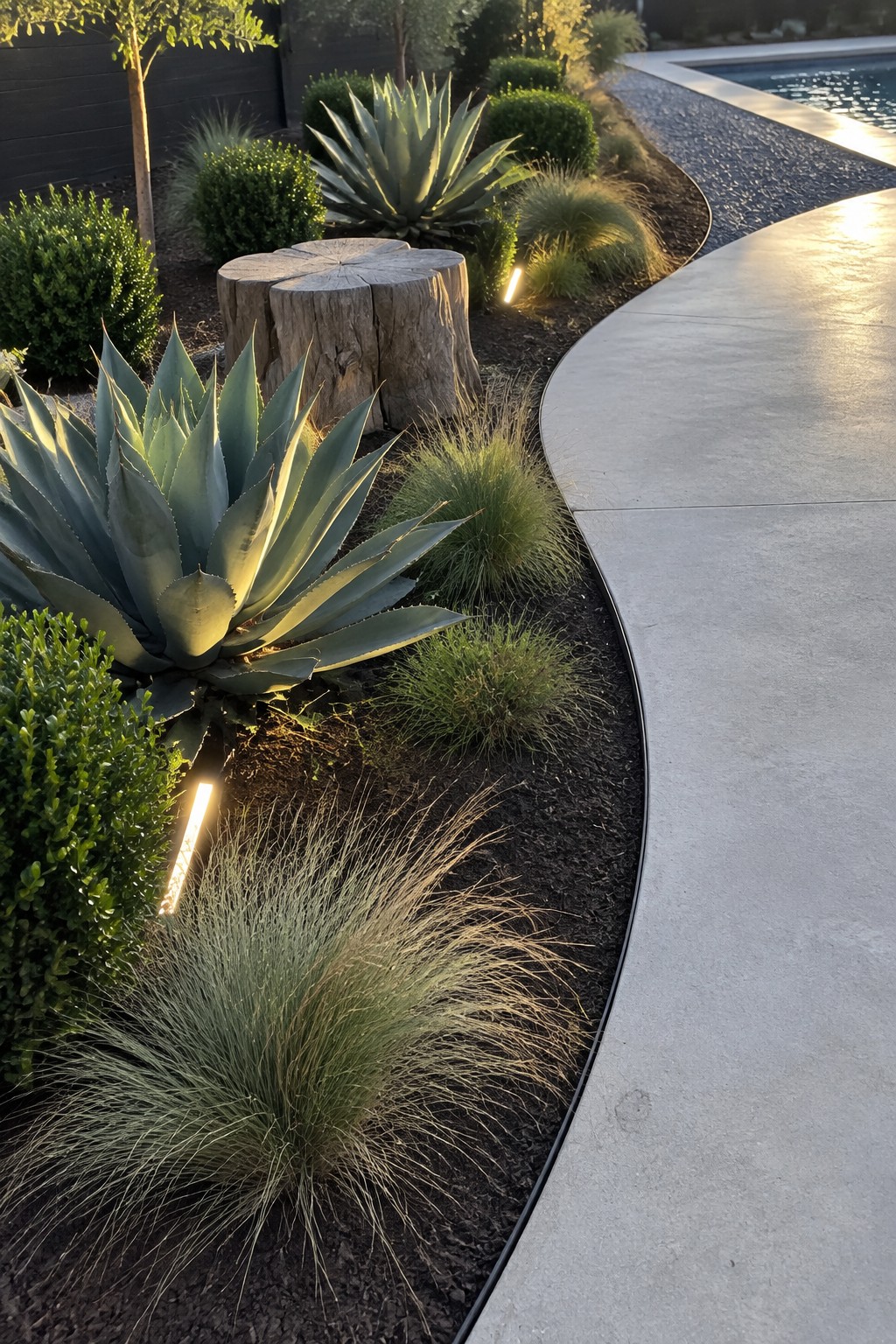
Curved borders give flower beds a softer look than straight lines. The gentle sweep lets the plants feel more connected to the rest of the yard instead of boxed in.
This works best along pools or long paths where the curve can be seen from the house. Keep the edging material low and clean so the shape stays clear and the mulch does not spill over.
Curved Brick Borders For Flower Beds
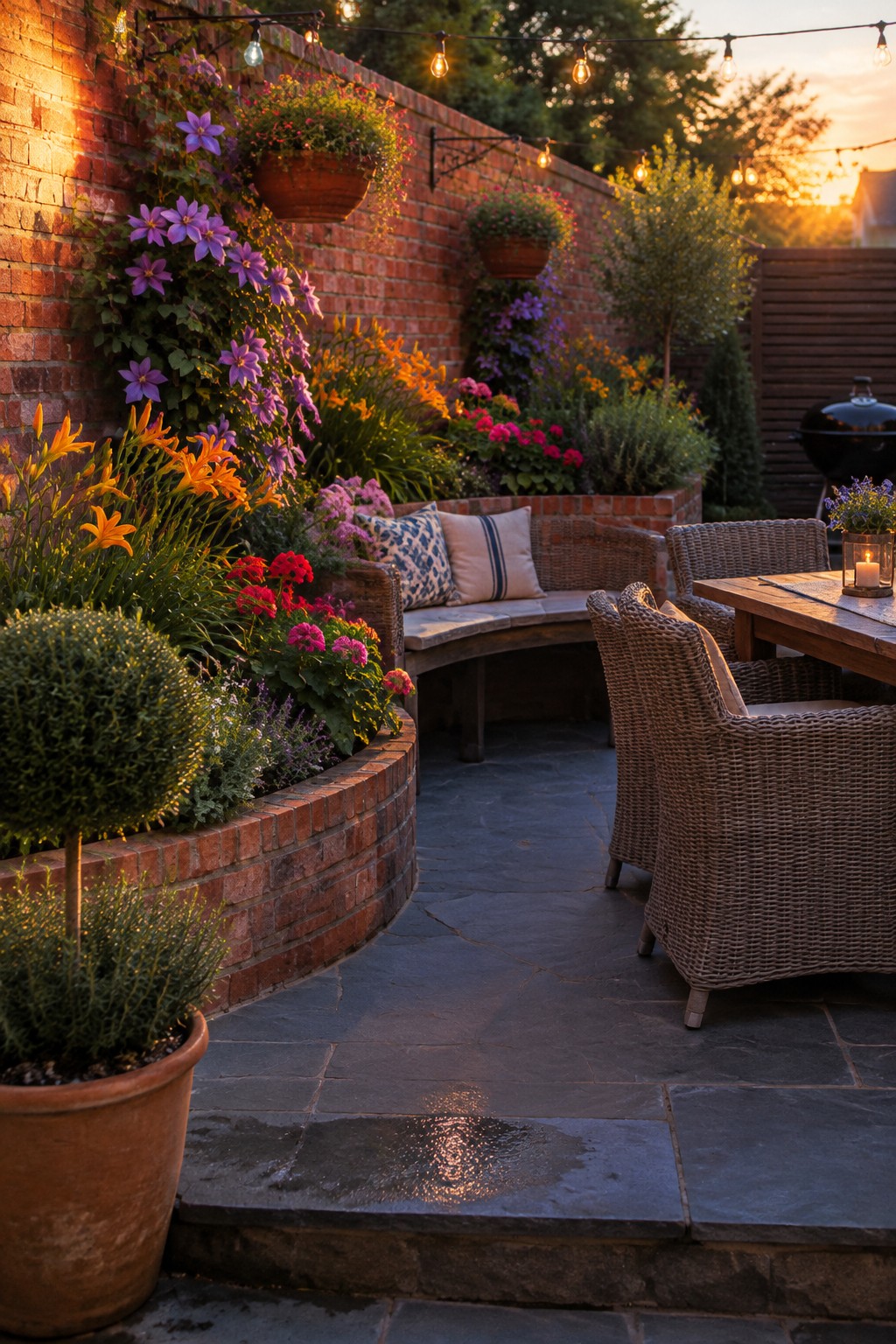
A curved brick border gives a flower bed a softer shape that feels more natural next to a patio. The gentle arc here helps the planting wrap around the seating without creating sharp corners that can feel stiff in a small yard.
This works well on homes where the patio sits right next to the garden. Match the brick to any existing walls or paths so the curve blends in rather than standing out as a separate feature.
Curved Borders For Raised Beds
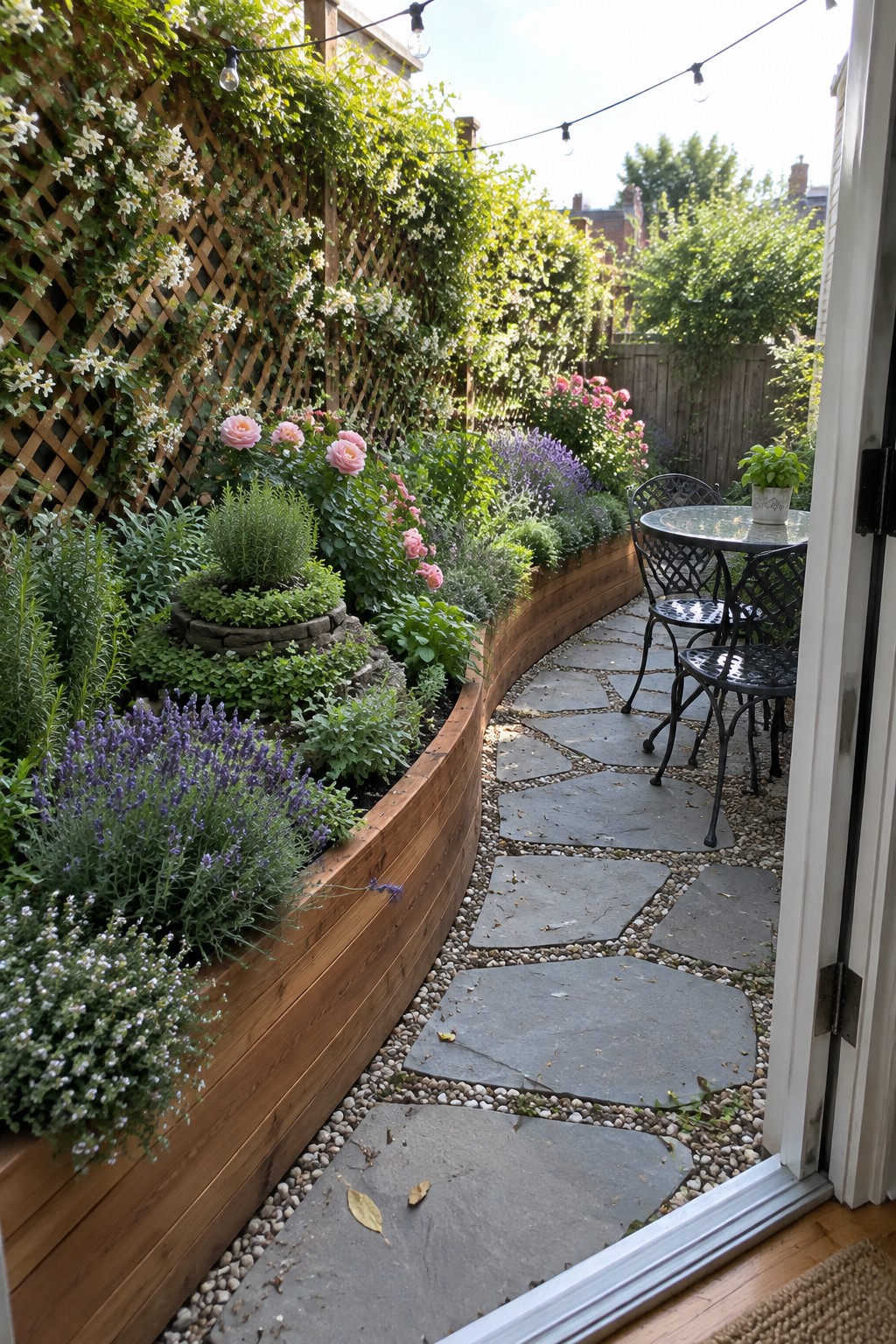
Curved borders help raised beds feel less rigid and more natural. The gentle sweep lets the planting flow along a path or seating area without sharp corners breaking the view.
This shape works especially well in narrower yards where a straight line would feel too boxy. Keep the curve simple so the edging stays easy to build and the bed still holds soil well.
Curved Stone Borders Along Pool Edges

Curved borders help flower beds feel more natural next to a pool or patio. The low stone edge here follows the water in a soft arc, which lets the planting look like it belongs instead of sitting in a box.
This shape works best in smaller yards where straight lines can feel tight. Keep the curve gentle, use the same stone all the way around, and let some plants spill over the edge so the border stays simple and easy to maintain.
Curved Borders on Tiered Beds
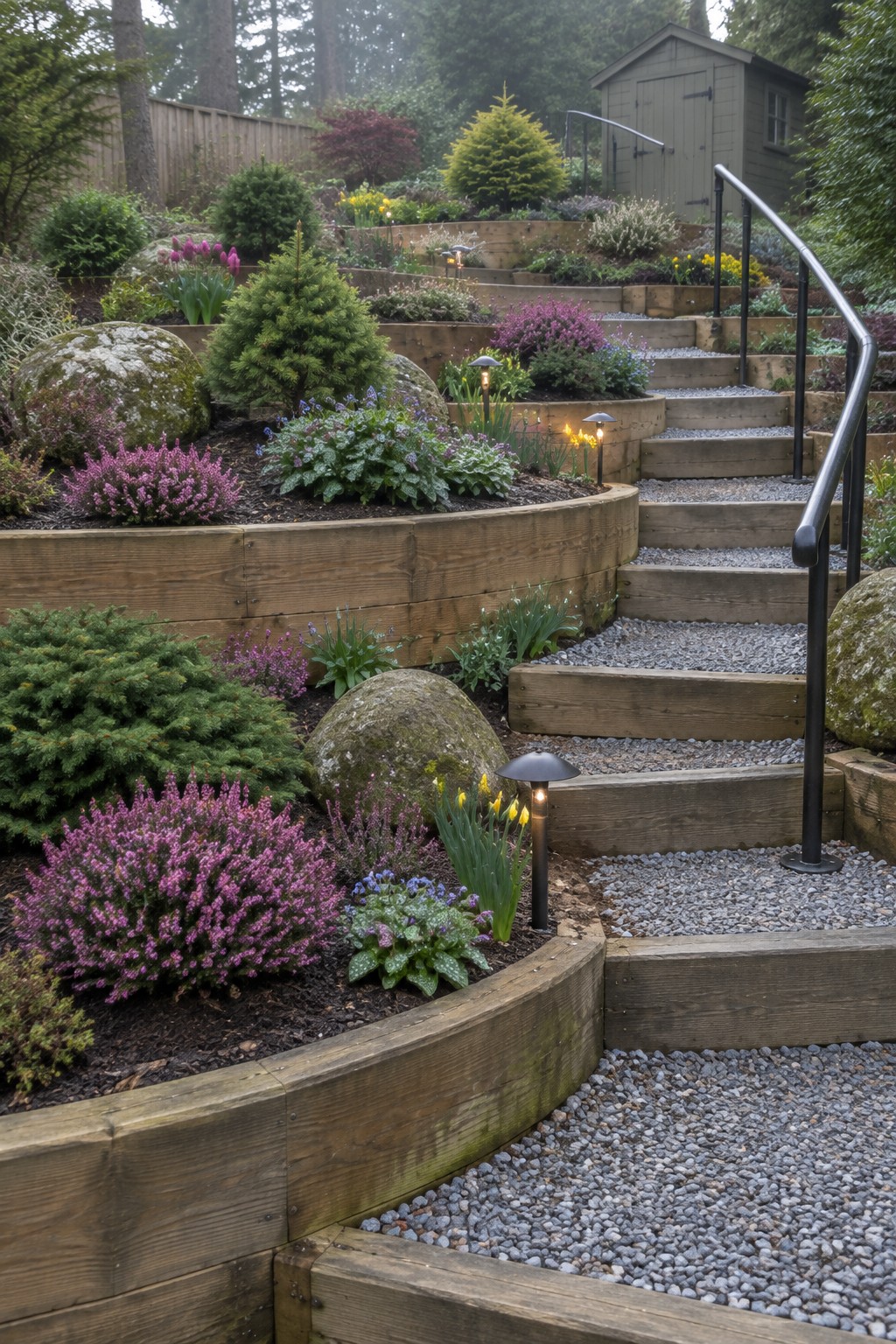
Curved borders give raised beds a softer shape that follows the slope instead of fighting it. The rounded edges help the whole layout feel more natural, especially when the beds step down a hillside with paths and stairs running through them.
This approach works best on yards that already have some grade to them. Keep the curves gentle so the beds still hold soil well, and pair them with simple edging like wood or stone that can handle the turns without looking forced.
Curved Brick Edging Along Backyard Lawns
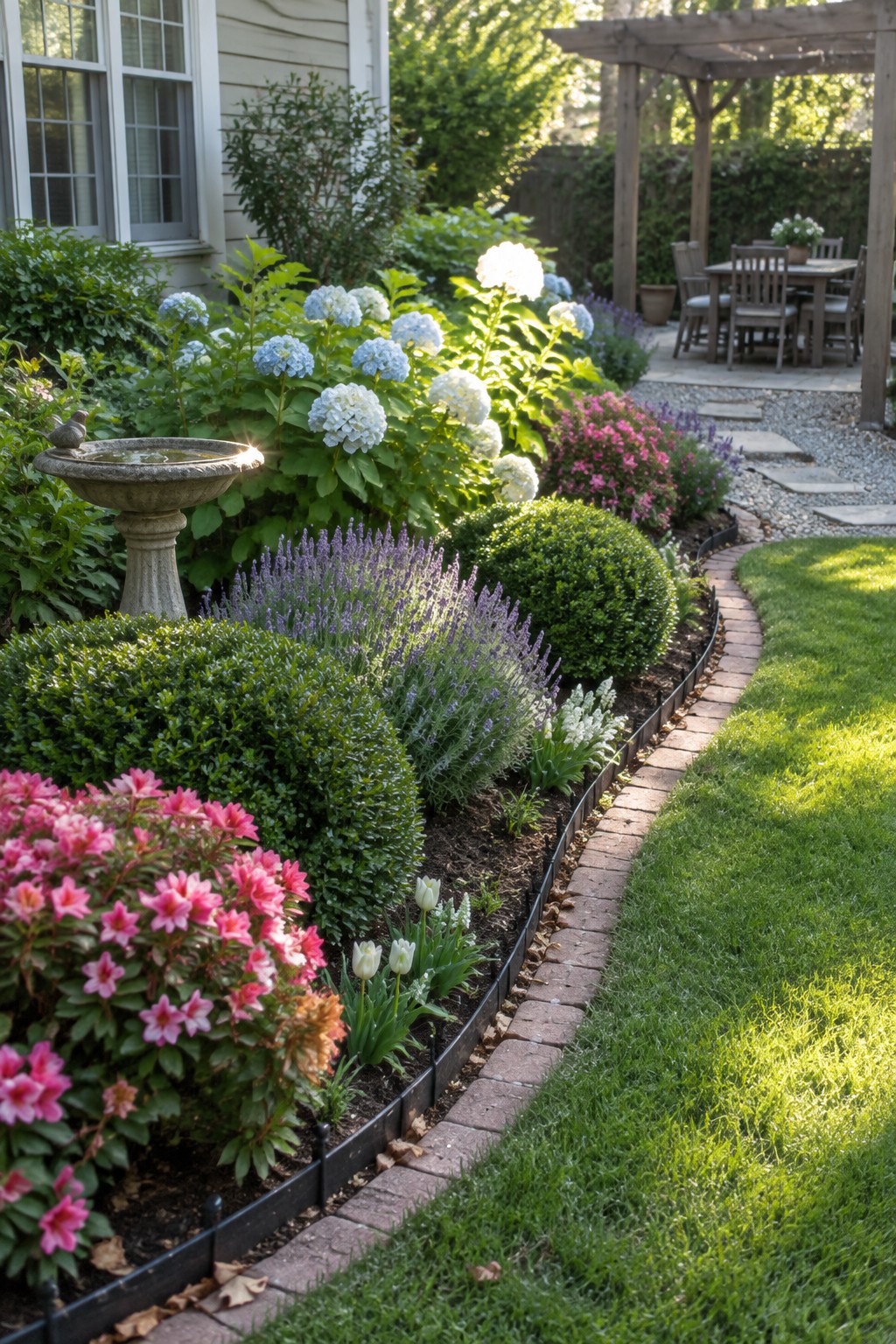
Curved borders help a flower bed feel more relaxed and connected to the lawn around it. Straight edges can make a garden look boxed in, but a gentle sweep lets the planting flow naturally and gives the whole yard a calmer look.
This approach works best along the side or back of a house where the bed can run for some length. Lay out the curve with a hose first, then use brick or metal edging to hold the shape. Keep taller plants toward the back and lower ones up front so the curve stays easy to see and maintain.
Curved Retaining Walls Shape Flower Beds

Curved stone walls let flower beds follow a softer line instead of running straight across the yard. The gentle bends help the beds feel more natural while still managing the slope and keeping soil in place.
This approach works best on yards that already have some grade. Use the same stone throughout and keep the curves wide rather than tight so the beds stay easy to plant and maintain over time.
Curved Borders Along The Path
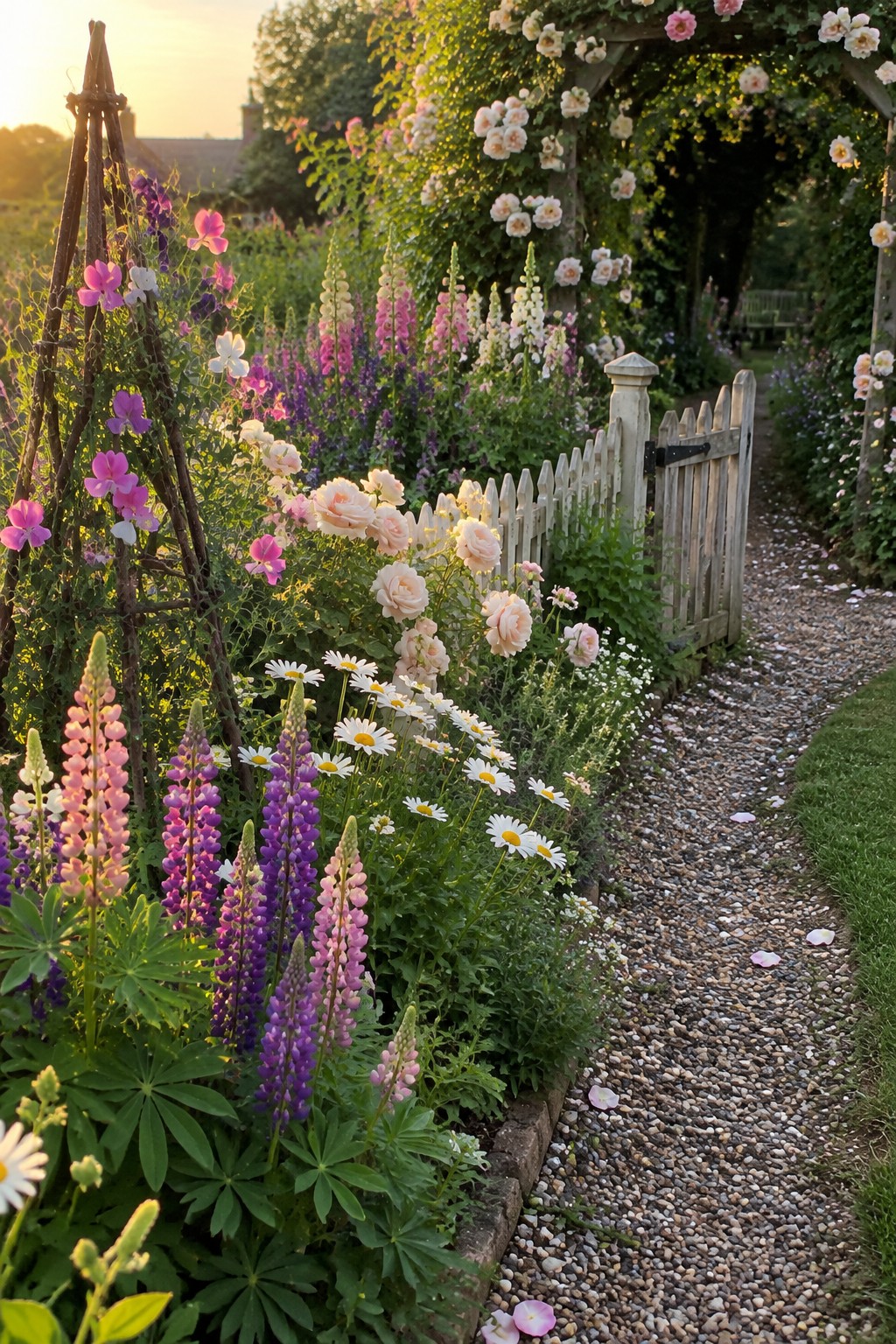
A curved edge gives the flower bed a softer look than a straight line would. It lets the planting follow the natural shape of the path instead of fighting it, and the flowers seem to spill forward in a relaxed way.
This works best in smaller gardens or cottage style yards where you want the beds to feel part of the walkway rather than separate from it. Keep the curve gentle so it still leaves room for the plants to layer without crowding the edge.
Curved Concrete Edging for Compact Backyards
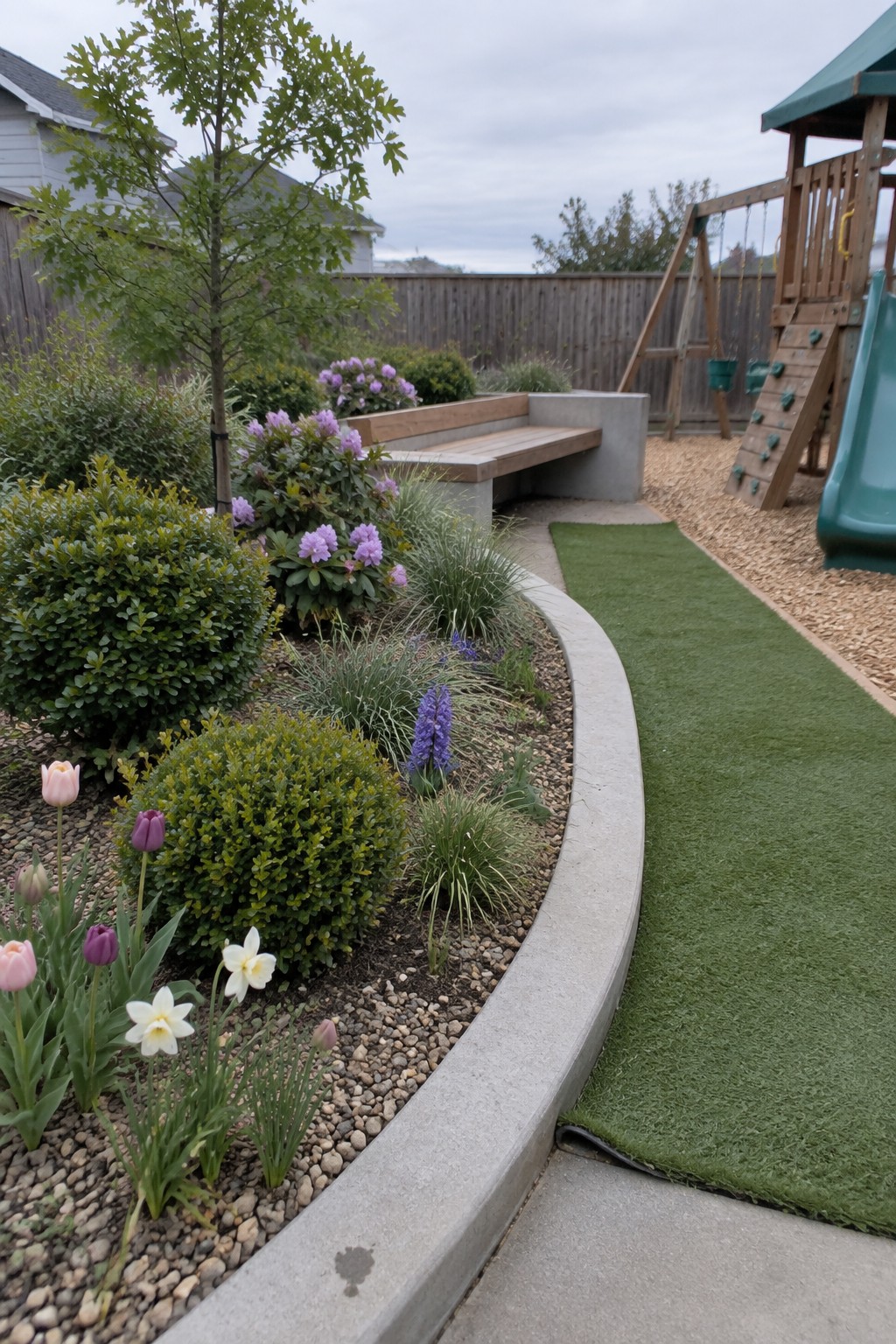
Curved borders help a flower bed feel less rigid and more connected to the rest of the yard. The gentle sweep avoids the boxed-in look that straight edges often create, and it lets the plants take center stage.
This approach works especially well in smaller backyards where you want to guide the eye along a path or around a seating spot. Keep the edging material simple and low so the curve stays the main feature.
Curved Concrete Flower Beds Along Gravel Paths

Curved borders help flower beds feel more relaxed than straight edges. They follow the shape of a path or wall without forcing everything into rigid lines, which makes the planting look fuller and more natural over time.
This works best in smaller yards or along gravel paths where you want the beds to guide movement. Keep the border material simple and low so plants like lavender can spill over the edge without looking messy.
Curved Borders That Follow the Edge
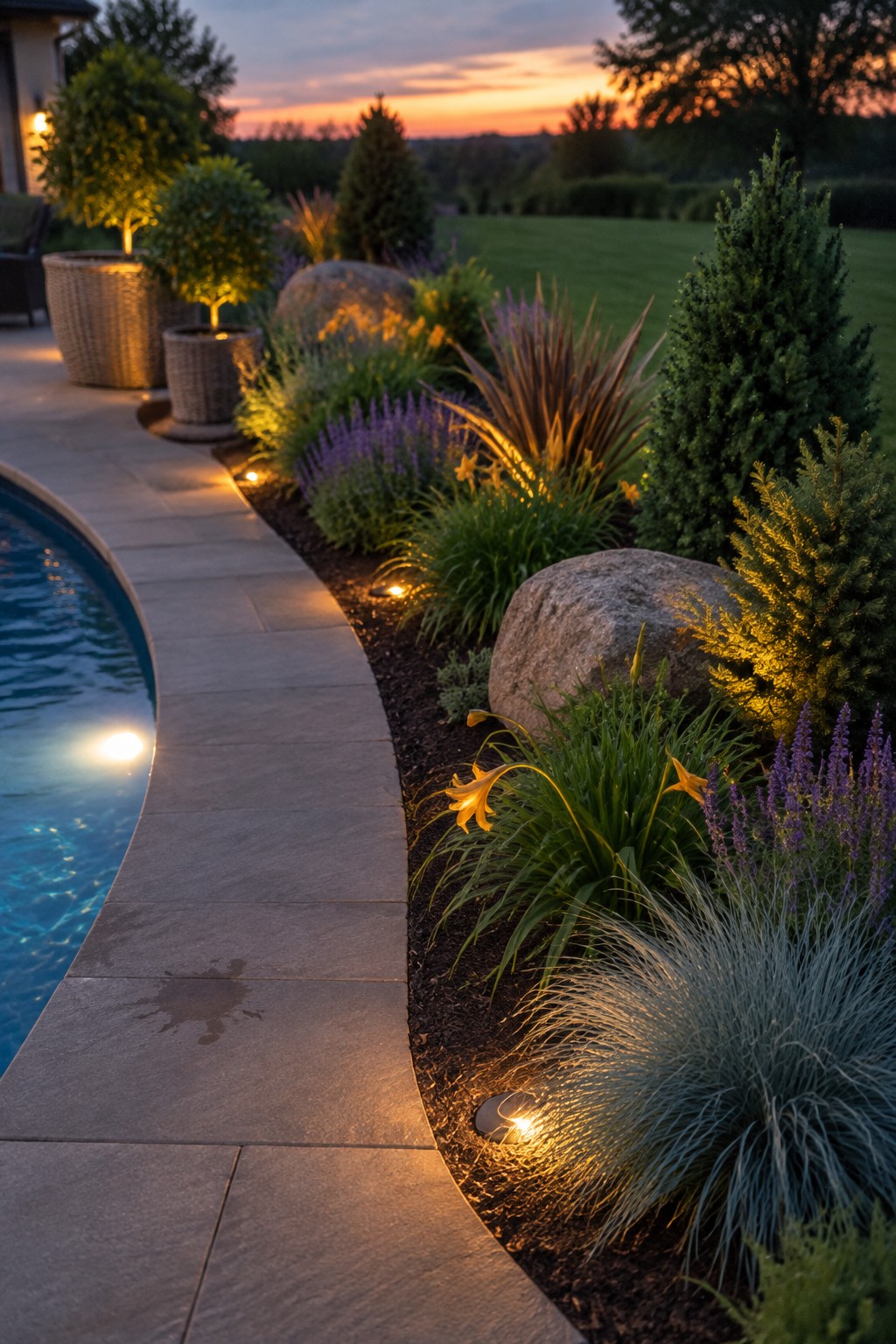
Curved borders work well when a flower bed runs along a hard surface like a pool deck. The soft line keeps the planting from looking boxed in and helps it feel like part of the yard instead of an afterthought.
This approach suits homes with existing curves in the patio or path layout. Keep the curve gradual so the bed stays wide enough for several layers of plants without crowding the edge.
Curved Borders For Raised Flower Beds

Curved borders on raised beds help the garden feel less stiff and more connected to the rest of the yard. The gentle sweep of the wood lets the planting areas follow the slope and path instead of cutting across them in straight lines.
This style works best on smaller or mid sized lots where you want the beds to look like they belong with the existing hardscape. Keep the curves simple and use thick lumber so the edges stay solid over time.
Curved Stone Flower Beds Along Water Channels
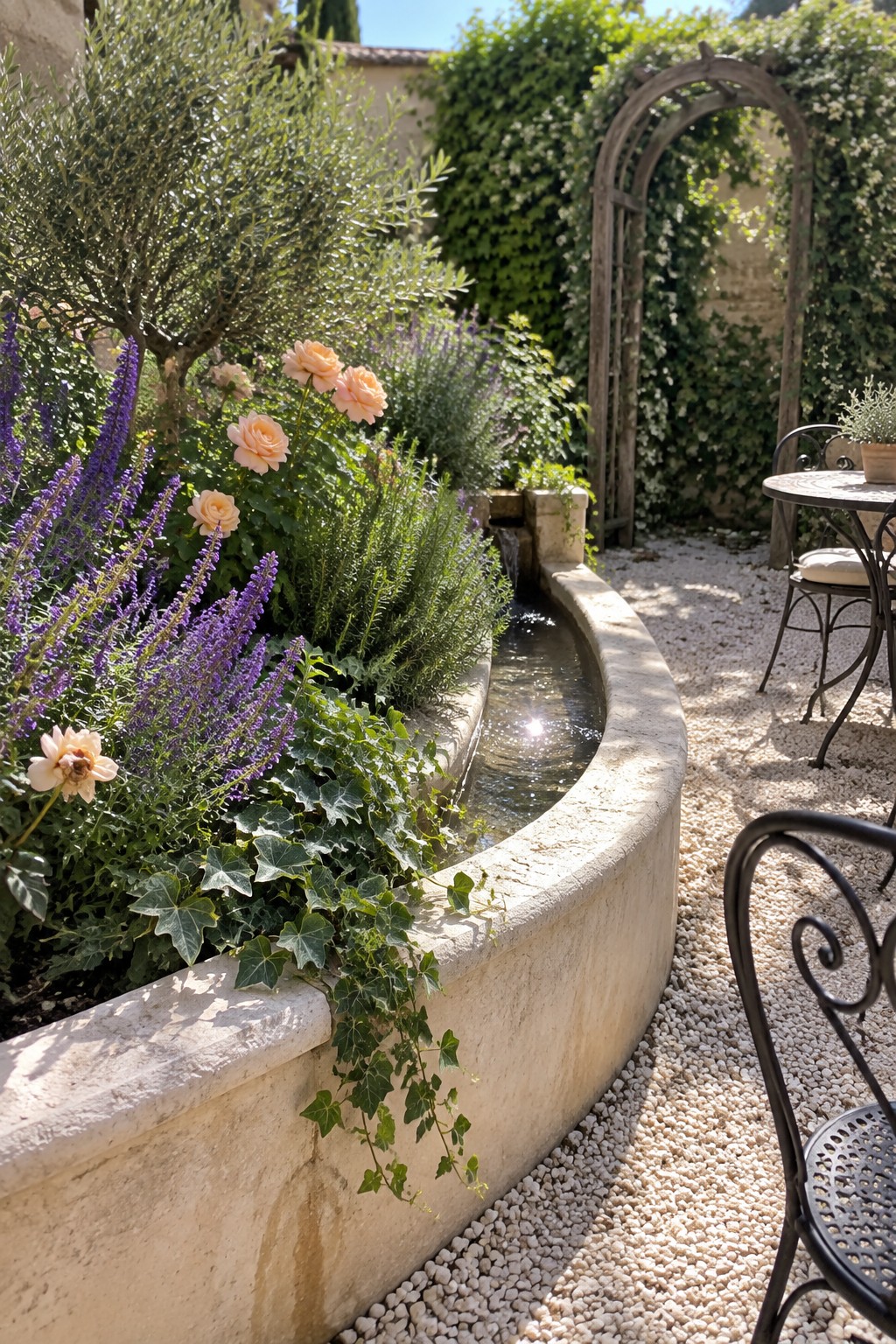
One way to make a backyard feel more relaxed is to let the flower beds curve instead of running in straight lines. The rounded edge here follows the shape of the water channel and helps the planting blend into the gravel area without sharp corners.
This approach works well in smaller yards or along pathways where you want the garden to feel natural. Stone holds up over time and gives the bed a clear shape while still allowing plants to spill over the edge a bit.
Curved Metal Raised Beds Around Patios

Curved borders give a backyard a softer look than straight lines. Metal edging holds the shape cleanly and lets the beds flow around a patio without looking forced.
This setup works well in smaller yards where you want planting to feel connected to the seating area. Keep the beds low and fill them with herbs or small flowers so the curves stay easy to see and maintain.
Large-Stone Curved Edging for Flower Beds
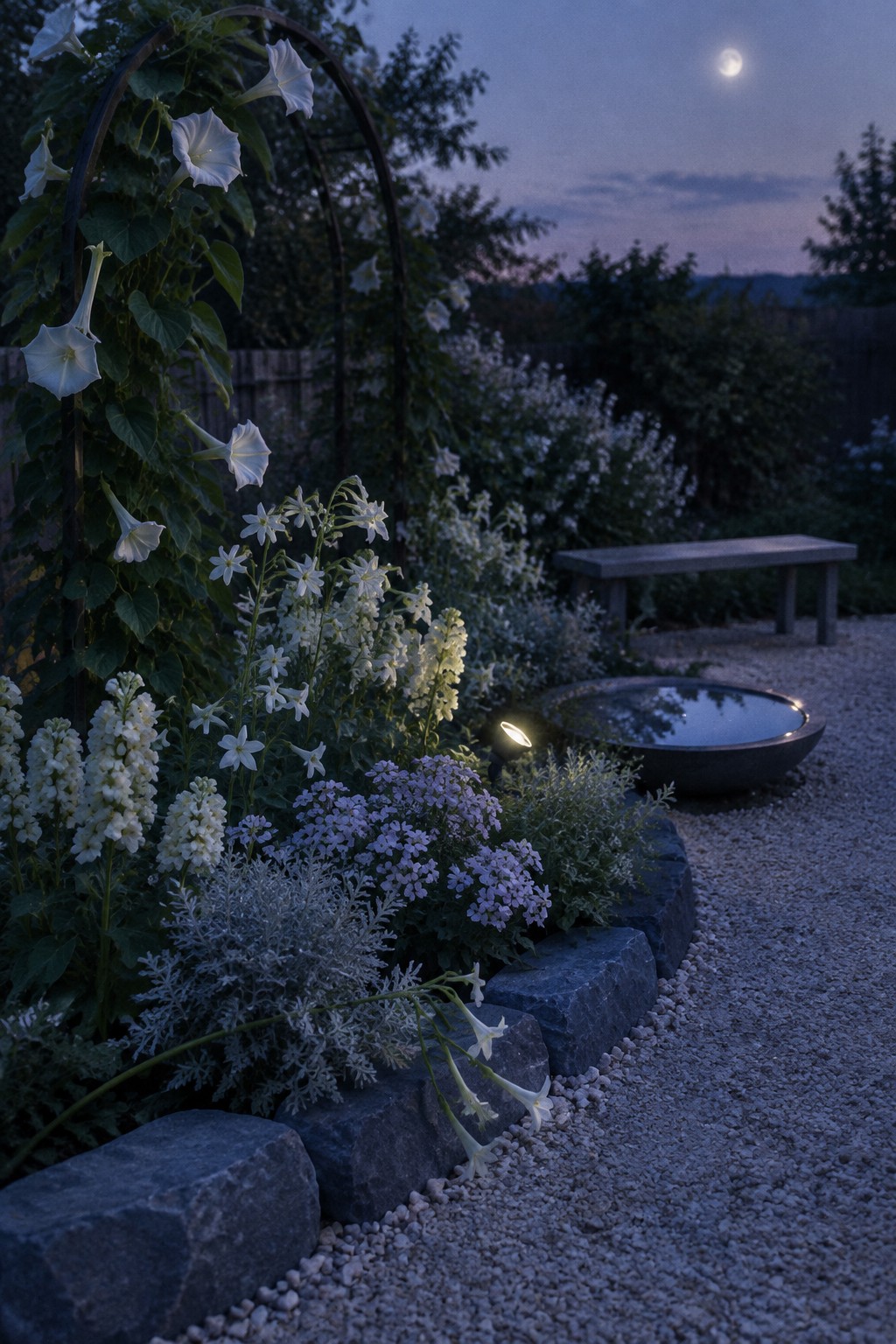
A gentle curve made with large stones gives a flower bed a relaxed shape that feels easier on the eye than a straight line. It lets the plants spill forward a little and keeps the whole bed from looking too formal.
This kind of edging works best in a backyard where the path already has some movement. Use bigger stones to hold the curve in place and keep the bed width fairly even so the plants do not crowd each other out.
Frequently Asked Questions
Q: How do I mark out the curves before digging? A: Lay a garden hose on the ground and adjust it until the shape flows nicely. Walk around it a few times to check the view from different angles. Then mark along the hose with spray paint or stakes.
Q: Which plants suit curved beds best? A: Pick flowers with soft shapes like hostas or daylilies that spill over the edges a bit. Mix in some taller ones in the middle to add height without breaking the curve.
Q: What if the soil is hard to dig into? A: Soften the ground first with water from a hose the night before. Use a sharp spade to slice along the curve in small sections.
Q: How can I stop grass from creeping back into the bed? A: Install a simple plastic or metal edging right after you shape the border. Make sure it sits a couple inches above the soil to block runners. Check it every month or so and pull any stray grass that pops up.
