

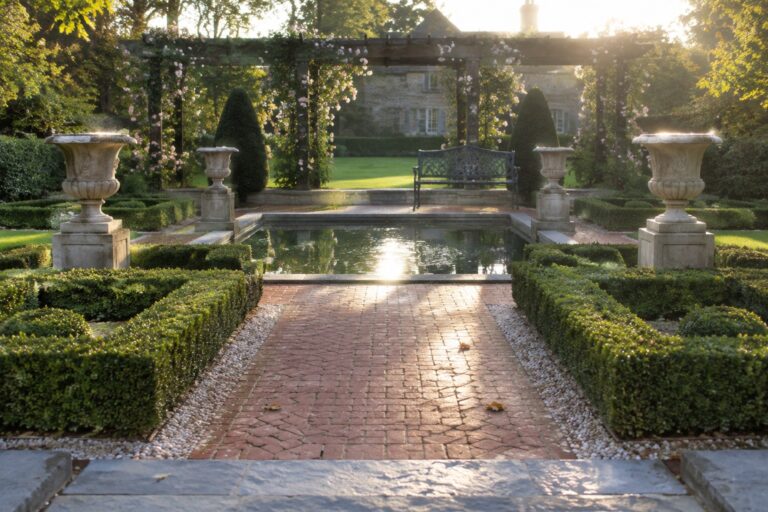
I often start by walking the yard to see where the natural lines already exist before adding any new beds.
Symmetry in planting beds can make a space feel intentional and easier to maintain once everything fills in.
The real test comes when you live with the layout through a full year of seasons and see how the structure holds up.
It rarely looks the same on paper.
I would try the ones with simple repeats before committing to anything more complex in my own space.
Symmetrical Beds Along A Central Path
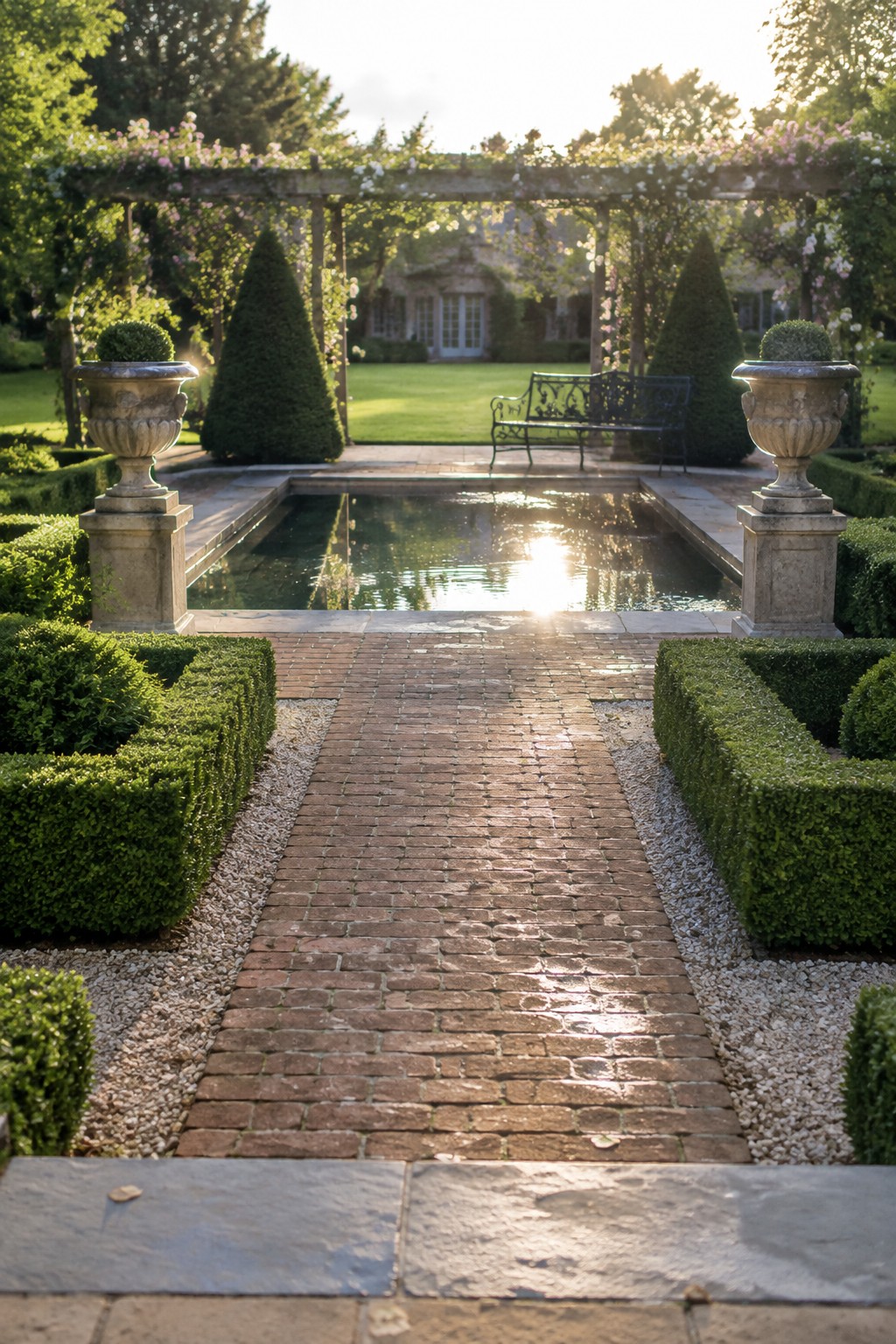
One simple way to give a backyard that formal look is to place matching beds on both sides of a straight path. The matching shapes and plantings keep the eye moving forward without any clutter or uneven spots.
This works best in open yards where you can run a clear line from the house or patio toward a focal point. Keep the beds the same width and use the same plants or containers on each side so the balance stays obvious even as things grow in.
Use Symmetrical Raised Beds to Frame Steps
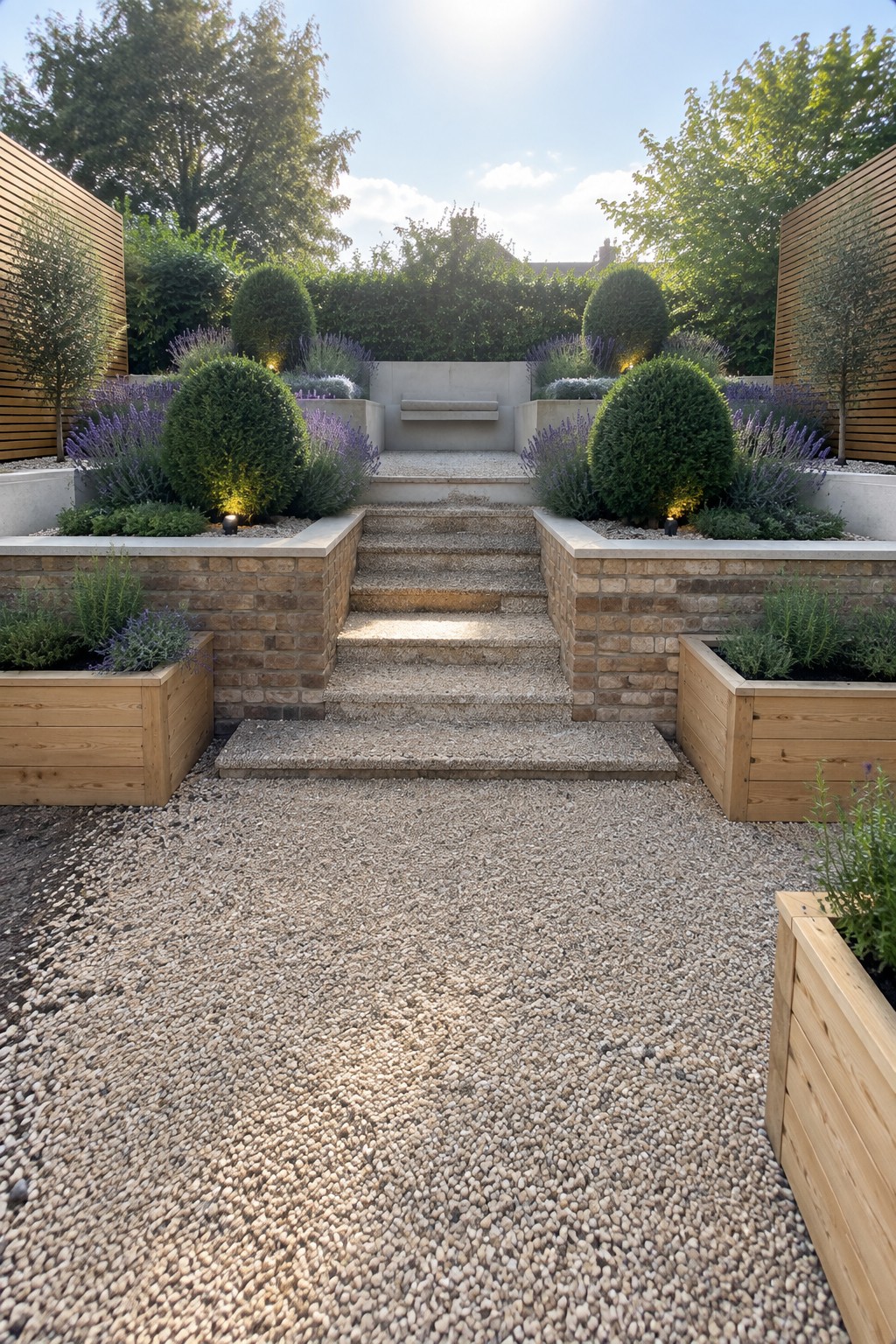
Symmetrical raised beds give a backyard a calm, ordered look without much extra effort. Placing matching beds on both sides of a central path or set of steps creates balance that feels deliberate and settled.
This approach works best on a gentle slope where the steps become the main line of movement. Keep the plantings simple and repeated so the shape of the beds stays the focus rather than a mix of colors and textures.
Symmetrical Beds For Formal Balance

Matching beds on either side of a central path help give a backyard a neat and orderly structure. The clipped hedges line up exactly across from each other, which keeps the layout simple and easy to maintain over time.
This approach works best in yards with a clear focal point like a fountain or bench at the end. Use the same edging plants and fill colors on both sides so the eye moves straight through the space without distraction.
Create Symmetry With Paired Garden Beds
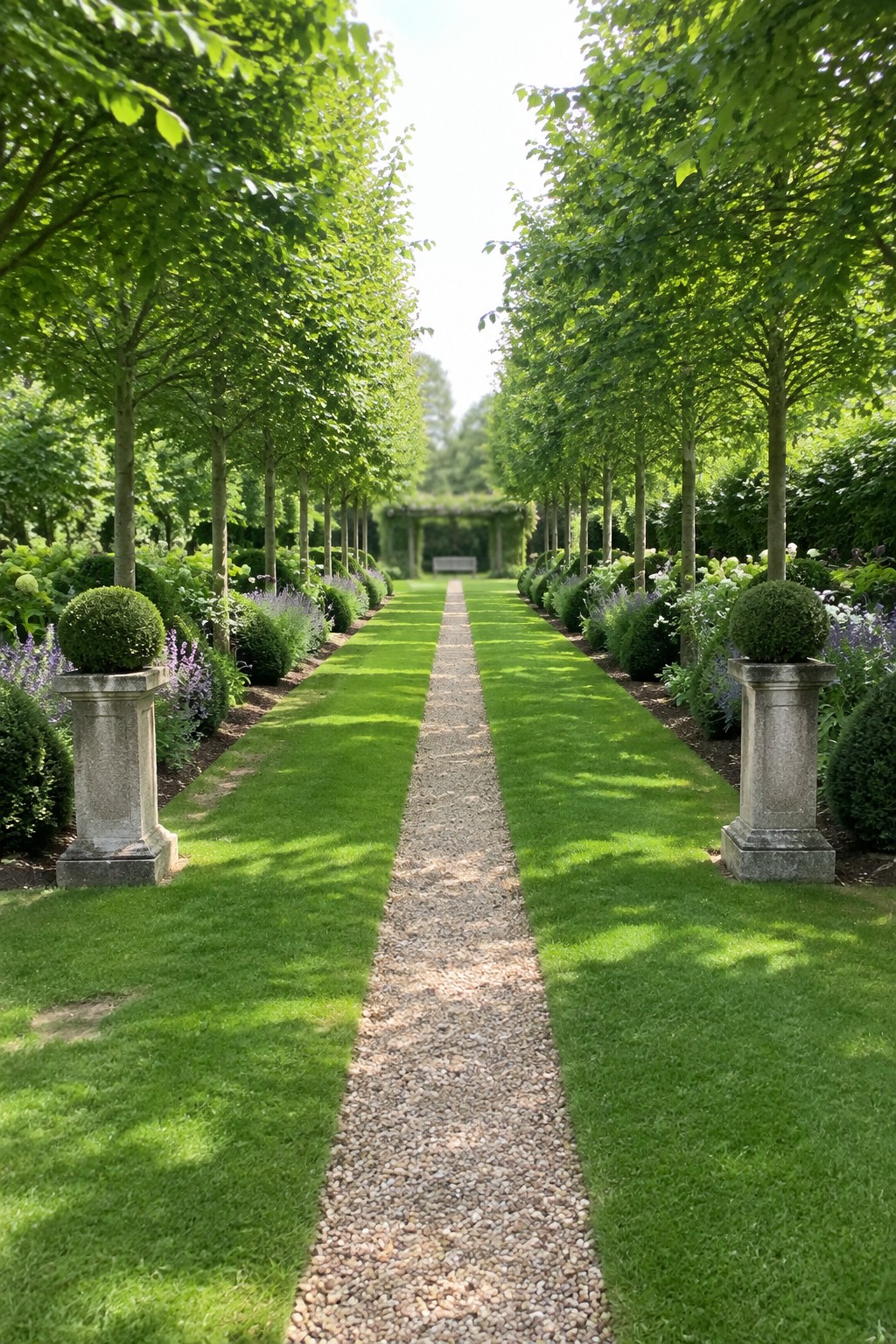
One simple way to give a backyard a formal feel is to mirror the same beds on both sides of a straight central path. The repeated shapes and spacing create balance that feels intentional without needing lots of extra detail.
This approach suits larger yards where you can run rows of trees or shrubs down the length. Stick with matching plants and clean edging so the symmetry stays clear even as the garden grows in.
Mirror Your Garden Beds For Formal Symmetry

Mirroring the beds on each side of a long central feature gives a backyard that calm, orderly feel many people want in a formal garden. The matching shapes and plants on both sides create balance without needing lots of different elements or constant changes.
This approach works best in open spaces where you can run a straight line from the house or patio outward. Keep the plantings simple and repeat the same shrubs, trellises, or edging on each side so the eye follows the center rather than jumping around.
Symmetrical Raised Beds Give A Garden Formal Structure
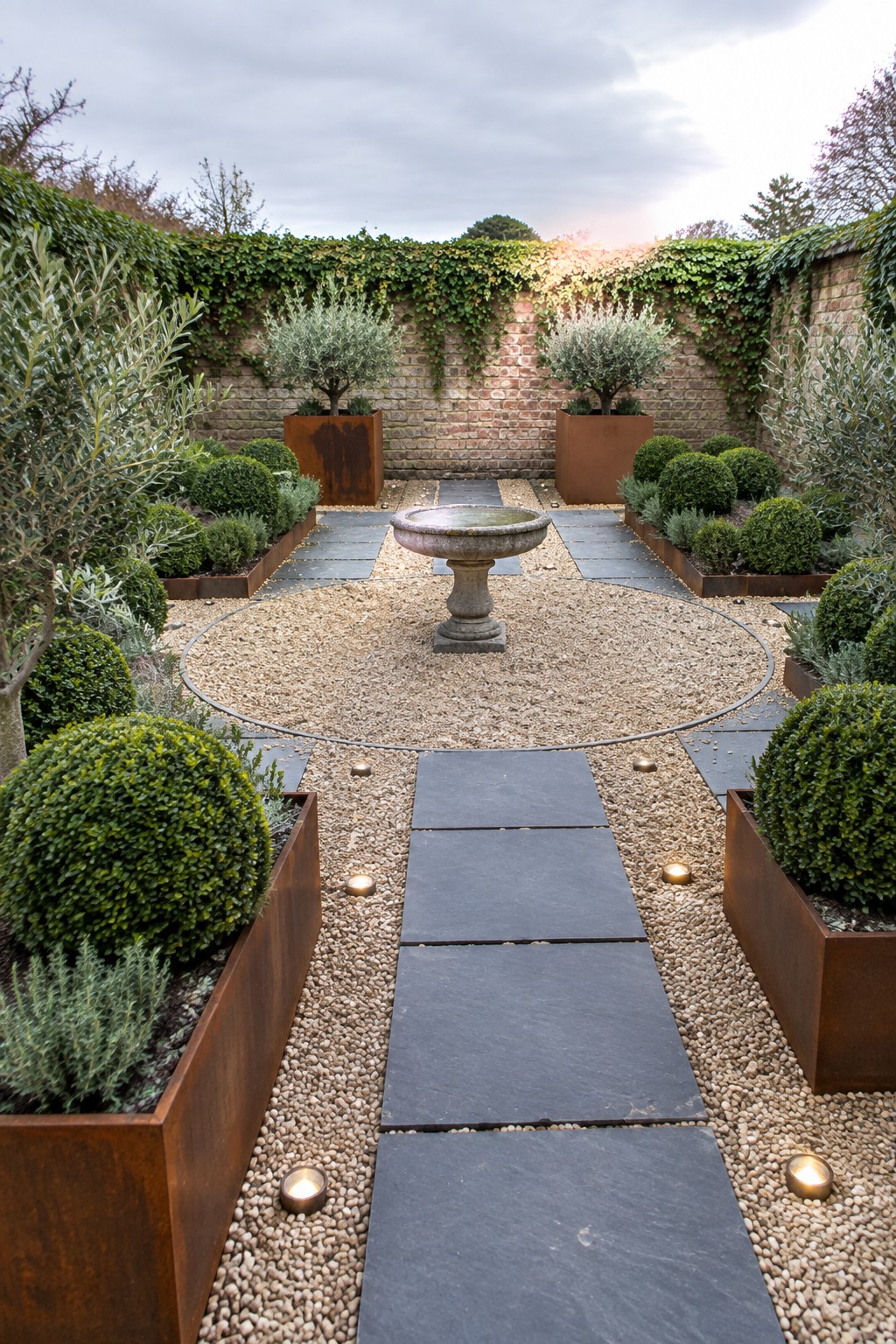
Matching raised planters placed on either side of a central path make a backyard feel orderly and balanced. The metal boxes hold the shrubs in place and keep the gravel from spilling onto the walkways, which helps the whole space stay neat with less work.
This approach suits smaller yards that need clear lines rather than loose cottage planting. Keep the same plants in each box and line them up evenly so the symmetry stays strong even as the shrubs grow.
Build Symmetry With Geometric Hedge Beds
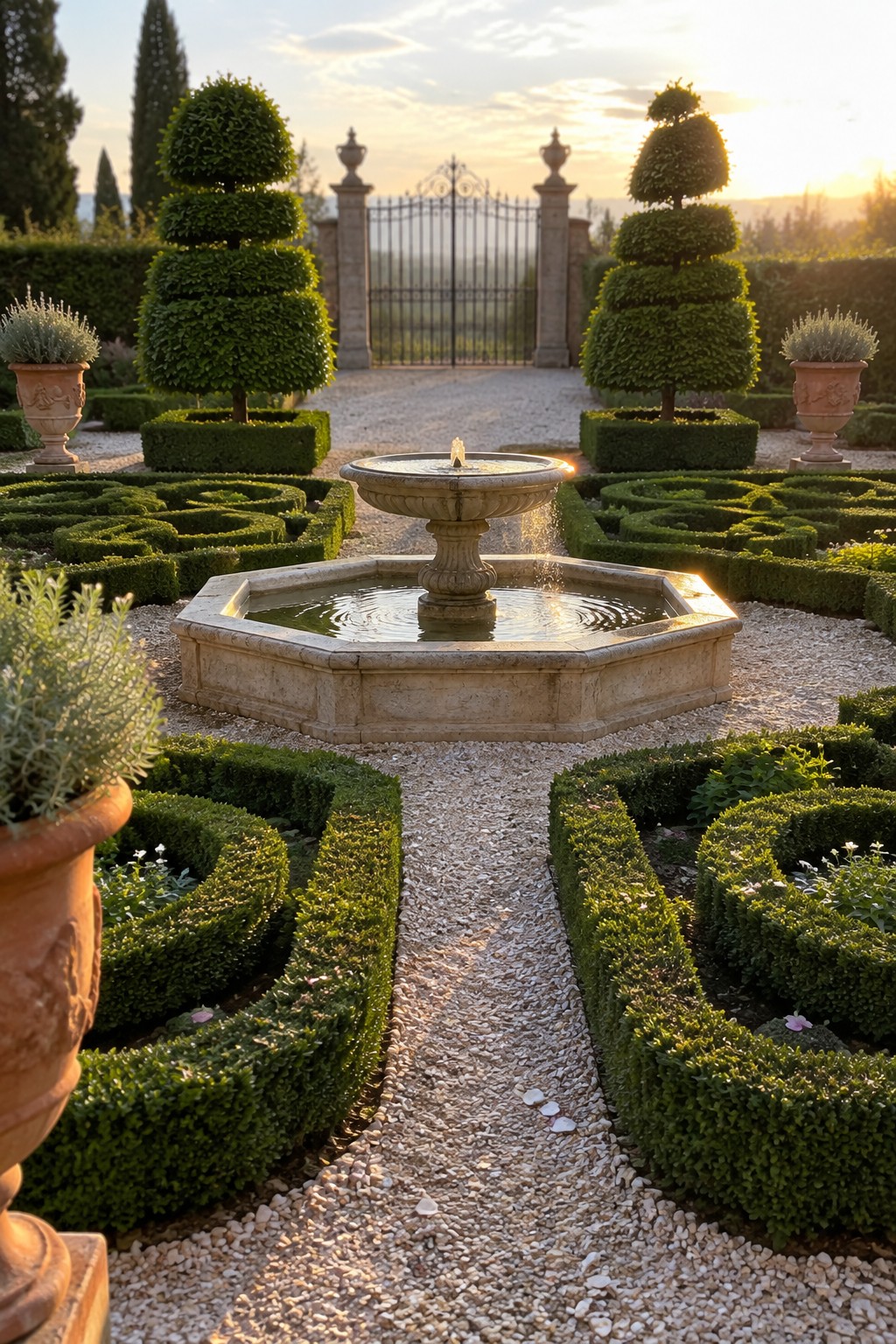
Symmetrical beds give a backyard that ordered, settled look without needing lots of color or extra decoration. When the shapes and plantings mirror each other on both sides of a path, the eye moves easily through the space and the whole garden feels intentional rather than scattered.
This works best in yards that already have a clear center line, such as a straight gravel path or a fountain placed in the middle. Use low, tightly clipped evergreens to keep the pattern crisp, and leave enough open gravel or lawn between the beds so the symmetry stays easy to see and maintain.
Symmetrical Beds Along the Steps
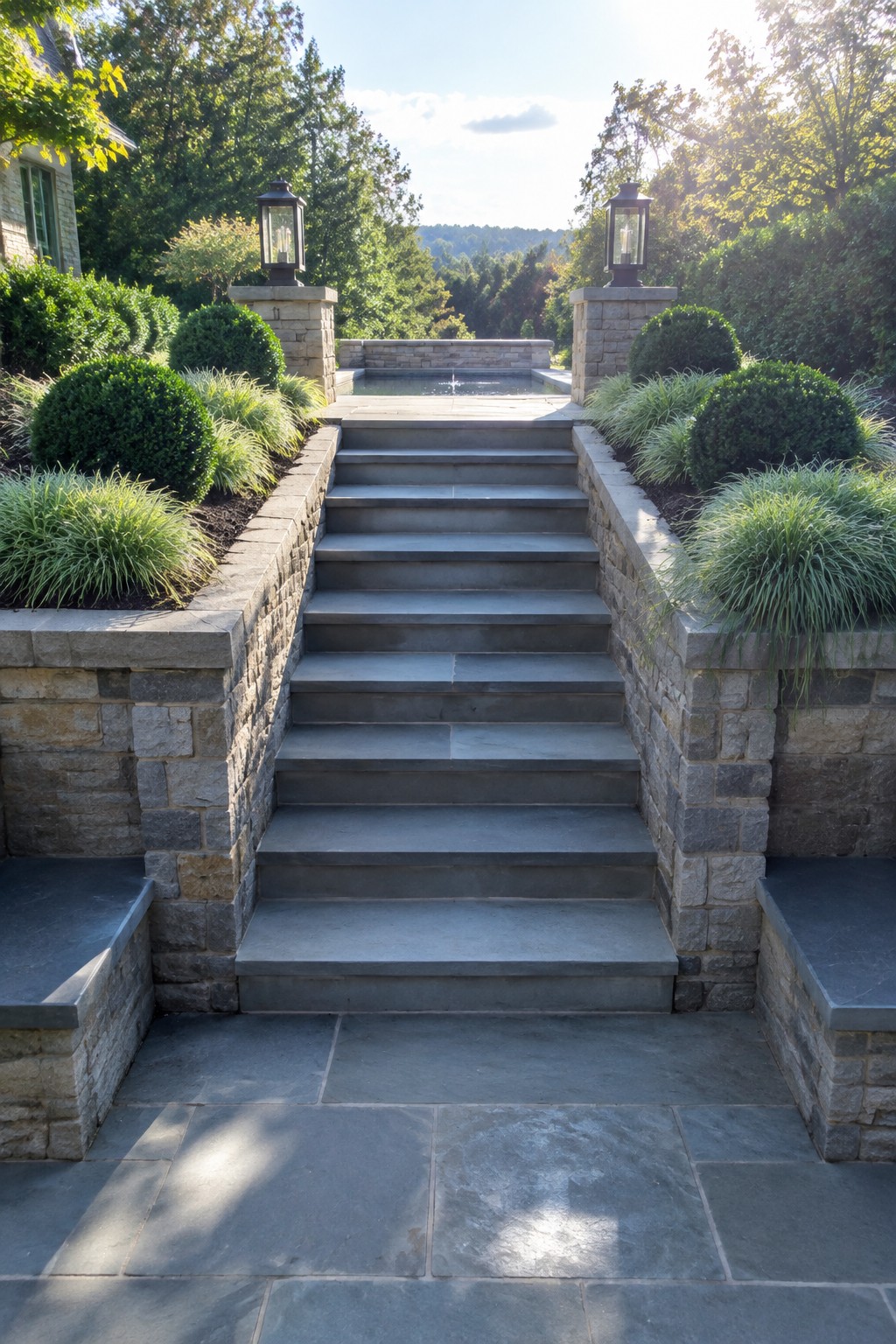
One simple way to give a backyard a formal feel is to place matching beds on both sides of a central set of steps. The repeated shapes and plants create a clear sense of order that holds up even when the garden grows in.
This layout works best on sloped sites where the stairs already create a strong line. Keep the beds narrow, use the same plant varieties on each side, and stick with low edging so the symmetry stays easy to maintain.
Symmetrical Beds Frame The Pool
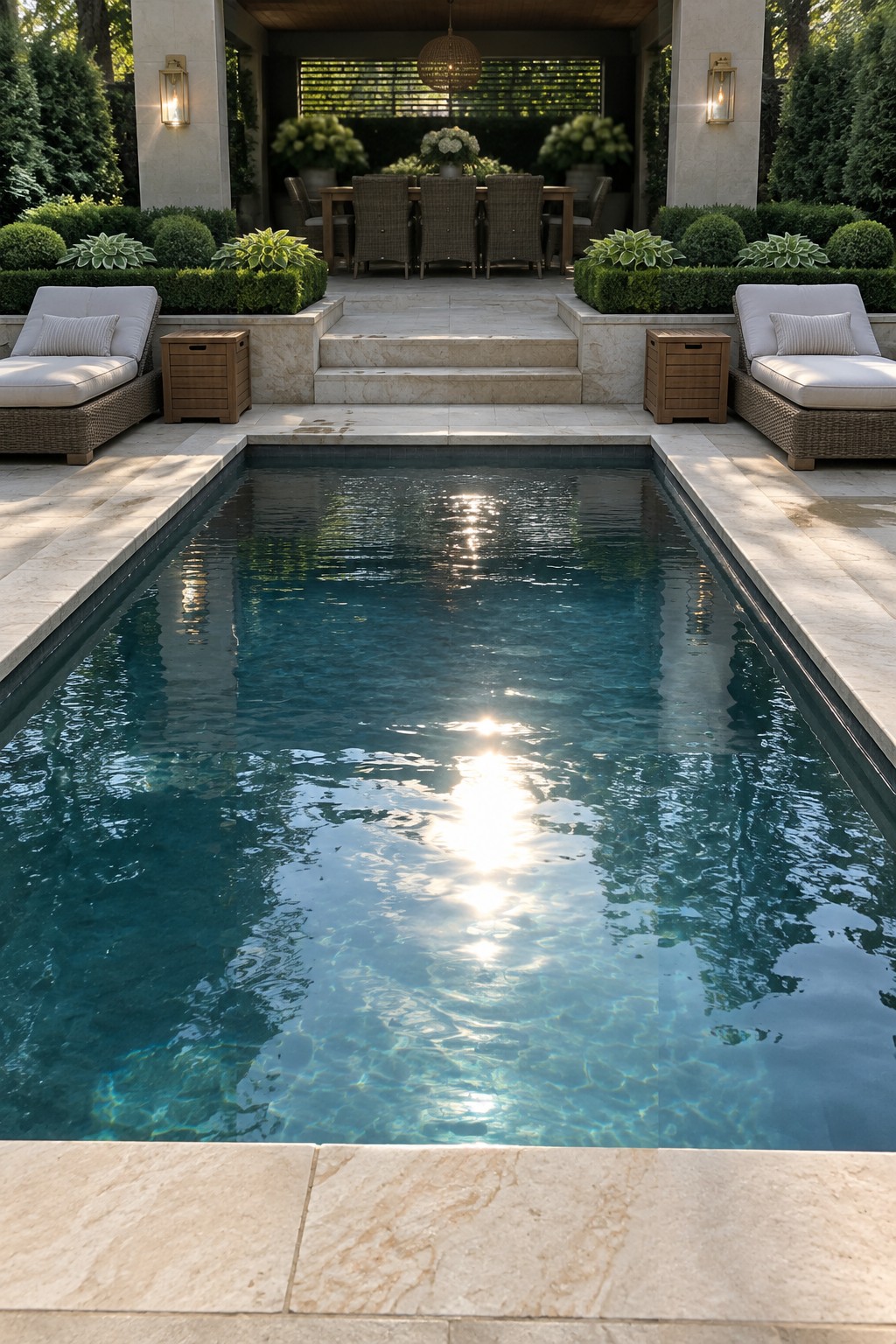
Symmetrical beds give a backyard a calm, ordered feel that works especially well with a pool. The matching plantings and seating on each side keep the eye moving straight down the length of the water without any one area pulling focus.
This layout suits homes with enough space to repeat the same bed size and plant choices on both sides. Stick with low shrubs or clipped evergreens so the symmetry stays clear and does not fight with the hardscape.
Plant Matching Beds on Both Sides of the Path
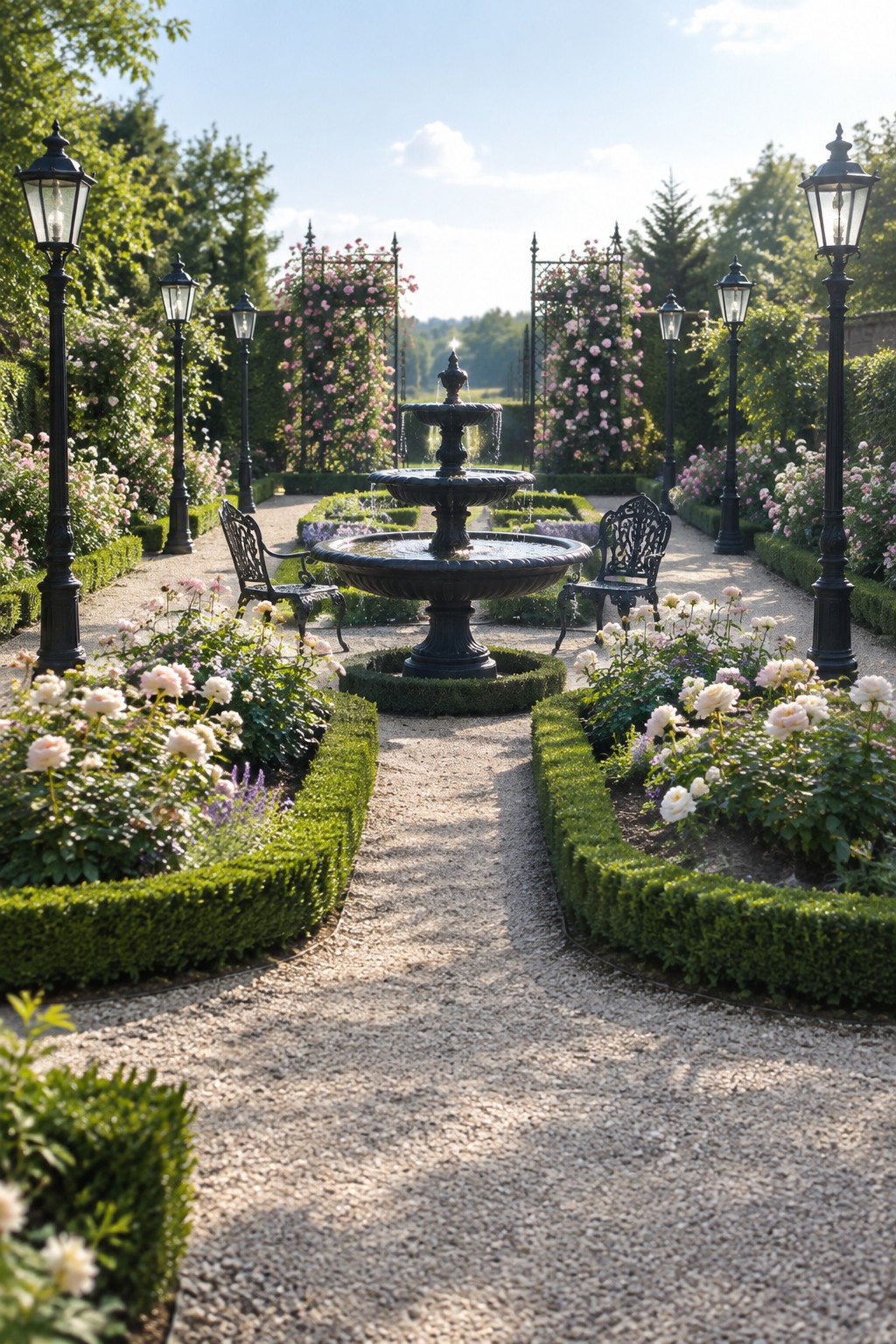
Placing identical beds along a central path gives a backyard that clean, balanced look that feels intentional. The matching shapes and plantings pull the eye forward and keep the whole space from feeling scattered.
This approach works best in yards with a fairly straight walkway and room for a simple focal point at the end. Stick to the same edging material and repeat the same plant groupings on each side so the symmetry stays obvious even as the seasons change.
Symmetrical Beds Along a Central Feature
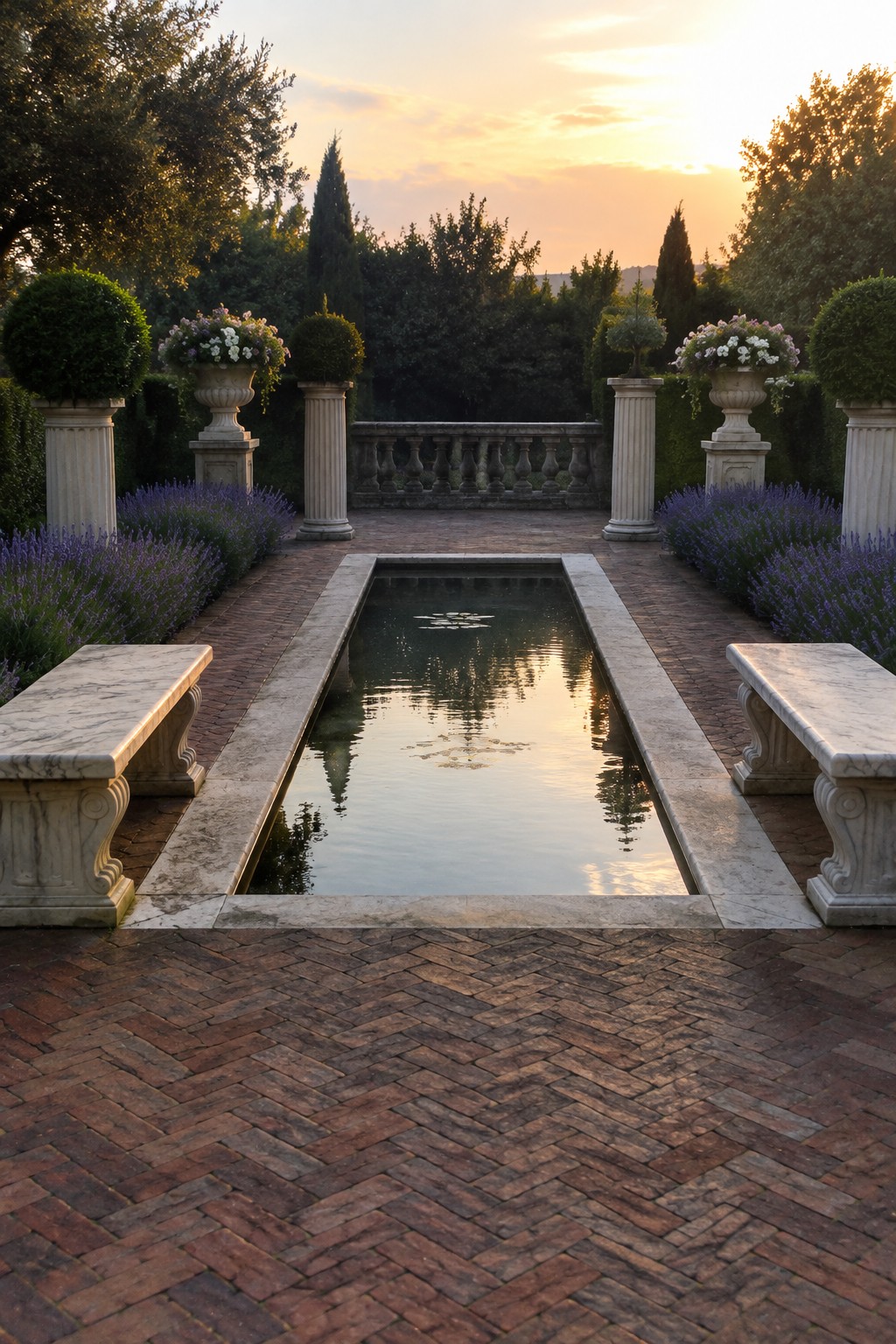
Many formal gardens use matching beds on either side of a long pool or path to create a clear sense of order. The repetition makes the space feel calm and intentional, especially when the beds hold the same plants and shapes all the way down the length.
This approach works best in yards that already have a straight central line to follow. Keep the plantings simple and the edges sharp so the symmetry stays easy to read. It suits larger lots where you want the garden to feel structured without adding too many different elements.
Symmetrical Beds For A Balanced Look
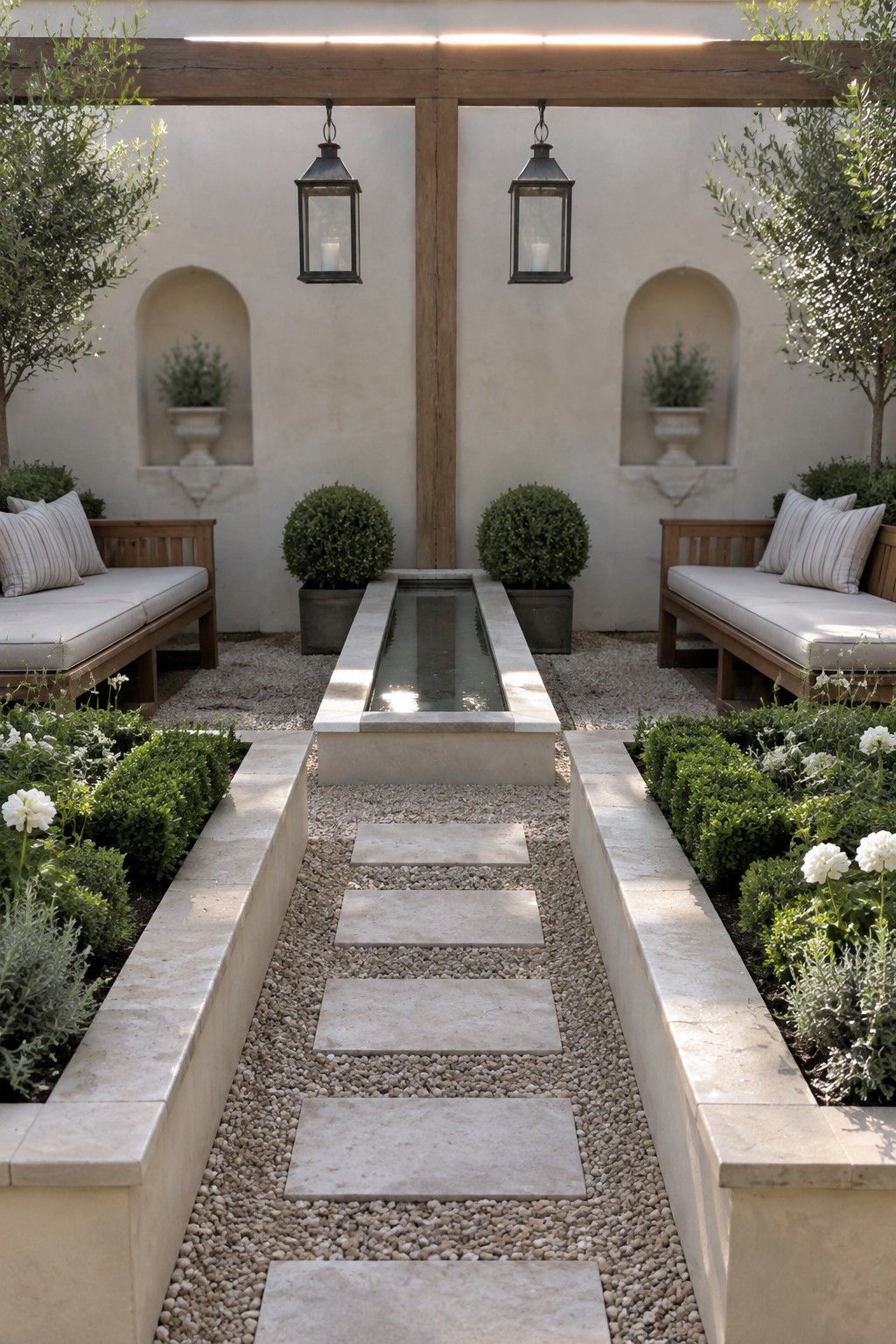
Symmetrical beds give a backyard that ordered, formal feel without making it stiff. When the shapes and plantings match on both sides of a central line, the whole space looks settled and intentional right away.
This approach works well in smaller yards where you want structure without crowding. Keep the beds the same width and depth, use the same edging material, and repeat a few key plants so the balance stays clear as things grow.
Symmetrical Beds Give the Yard Order

Symmetrical beds make a backyard feel calm and intentional. When the same plants and hardscape repeat on both sides of a central lawn or path, the eye moves easily toward whatever sits at the end, whether that is a fireplace or a seating area.
This layout suits homes with a bit of space to work with. Keep the beds the same width, use matching planters or edging, and choose plants that stay roughly the same size so the balance holds as the garden matures.
Match the Beds on Both Sides of the Path

One simple way to give a backyard a formal look is to run identical beds down both sides of a central path. The matching shapes and plantings create an immediate sense of order without needing a lot of extra features.
This works best in yards that already have a clear walkway leading to a seating area or structure. Keep the beds the same width and repeat the same hedge or border plant so the symmetry stays clean as the garden grows.
Symmetrical Beds For Formal Balance
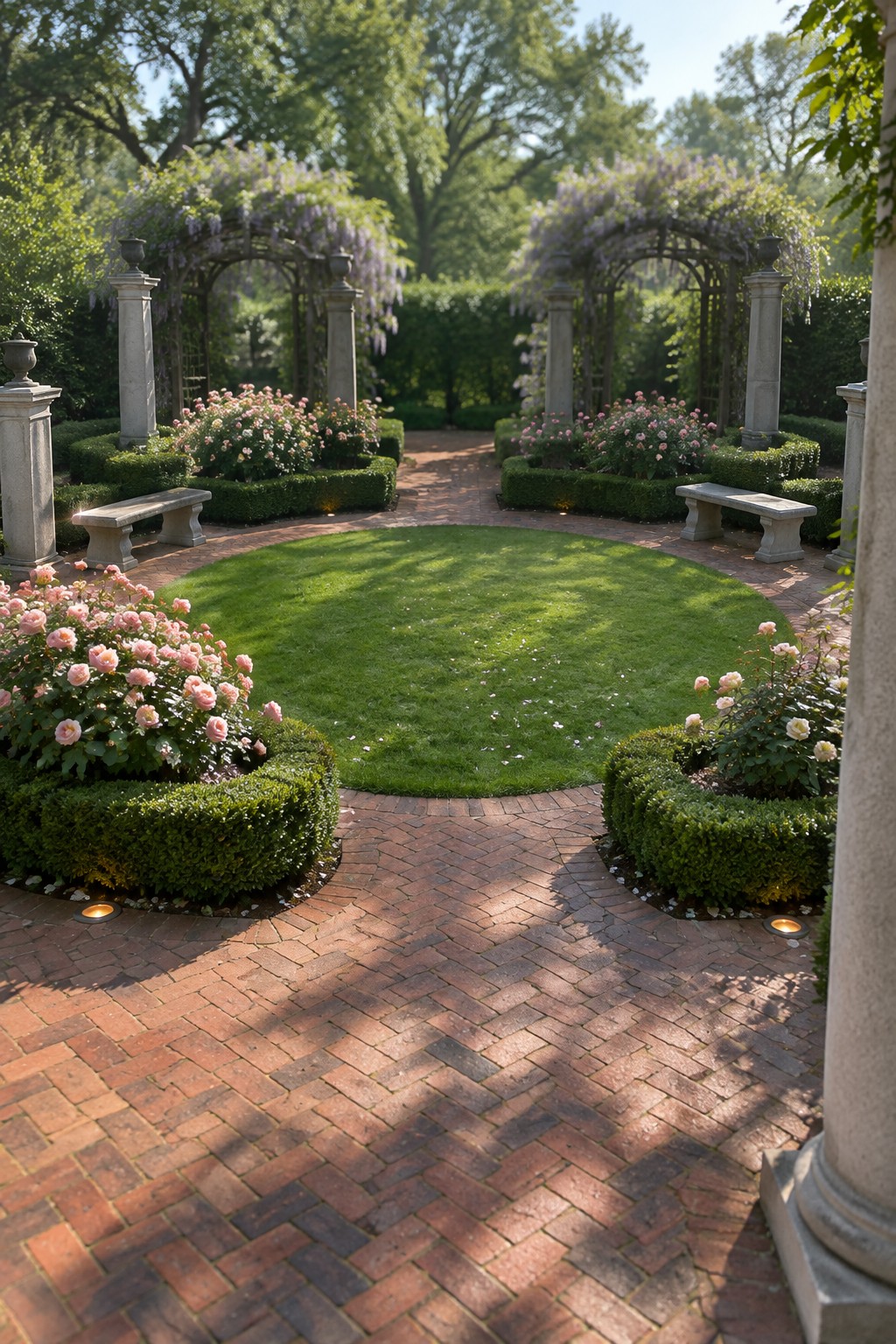
Symmetrical beds give a backyard that ordered, finished look without needing a lot of extra decoration. When the same shapes and plantings repeat on both sides of a path or lawn, the whole space feels calm and intentional rather than scattered.
This layout works best in yards that have room for a central open area, like a round lawn, with matching beds on either side. Keep the beds defined with low hedges and repeat the same flowers or shrubs so the symmetry stays clear even as the plants grow.
Symmetrical Beds Create A Formal Garden Feel

Symmetrical beds give a backyard that clean, balanced look many people want in a formal garden. When both sides match exactly in shape, plants, and edging, the whole space feels ordered and calm instead of busy.
Try this layout along a straight central path in a larger yard. Keep the beds the same size and fill them with the same low hedges and flowering plants so the eye moves evenly down the line without any one side pulling focus.
Matching Planters Create Symmetrical Balance
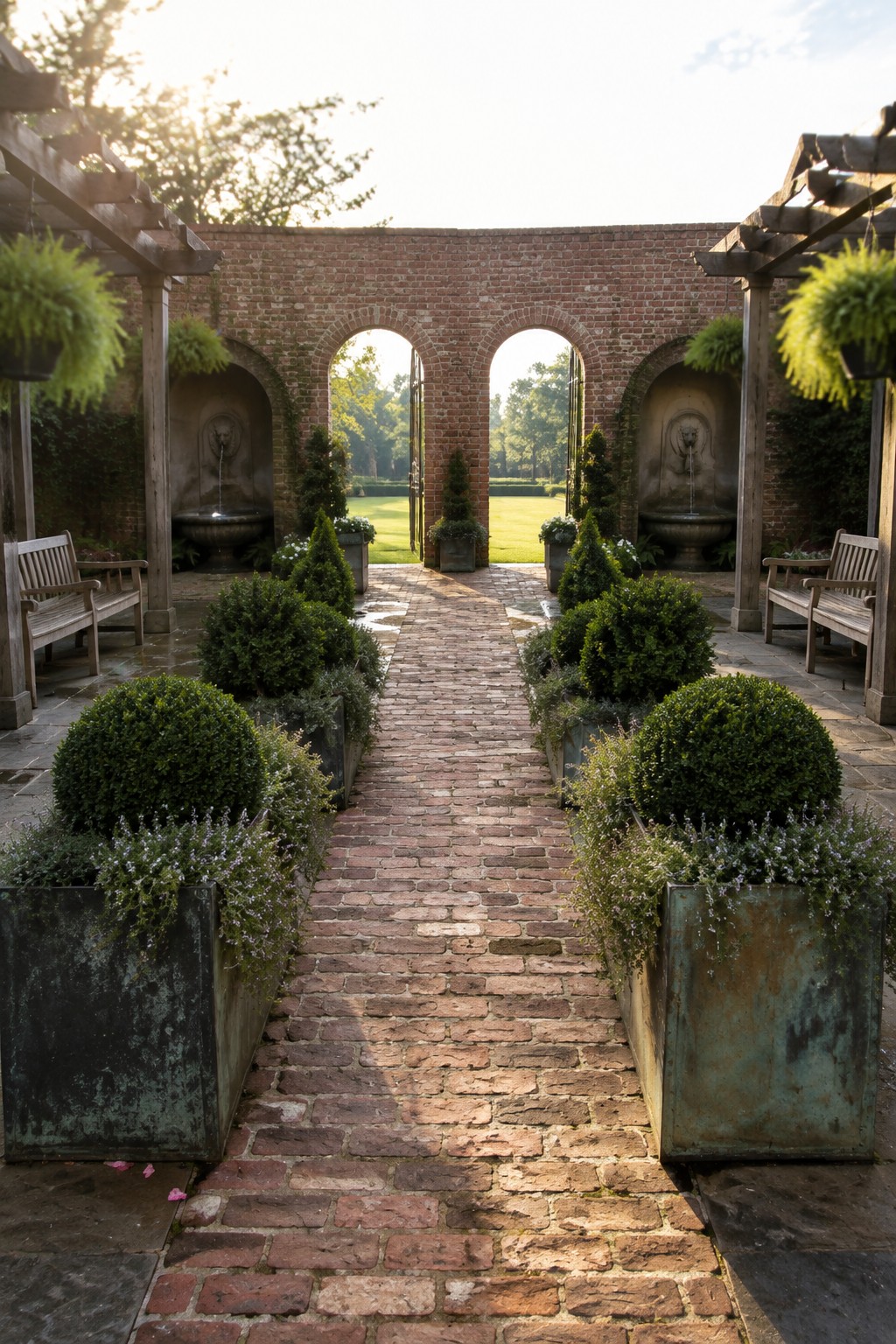
Placing the same containers on both sides of a path gives the garden a clear sense of order. The matching shapes and plantings keep the eye moving forward instead of jumping from one side to the other. This approach works especially well when the beds sit right against a wall or structure.
It suits homes with straight walkways or small courtyards where you want a polished look without high maintenance. Stick to the same planter style and repeat the same plant mix on each side so the symmetry stays obvious even as the plants grow.
Symmetrical Beds Along a Central Path
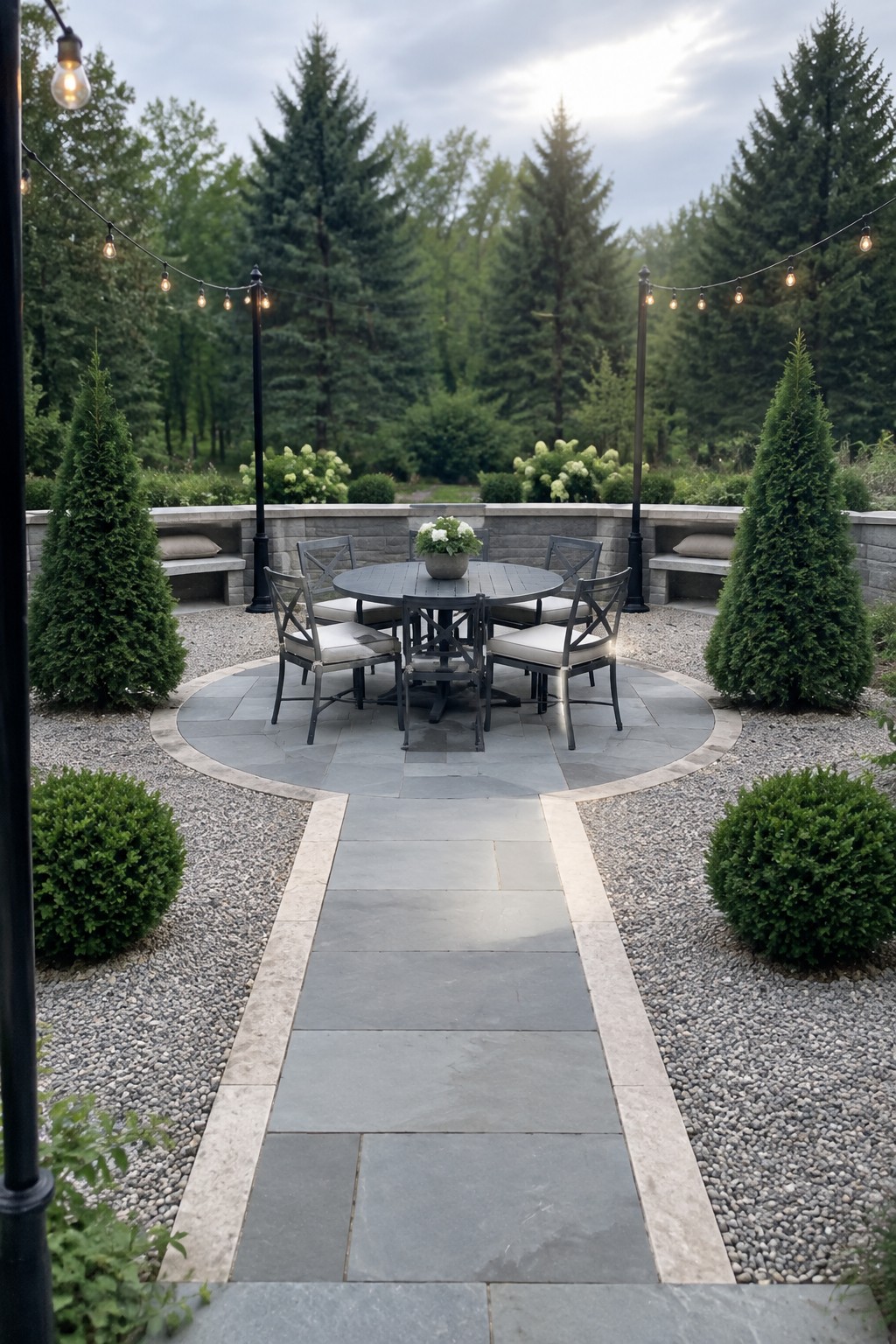
Symmetrical beds give a backyard that clean, balanced look many people want in a formal setting. Matching shrubs and small trees placed on either side of the path keep the eye moving forward without clutter or confusion.
This layout works best when the beds stay simple and repeat the same plants. Use low evergreens or rounded shrubs to hold the shape, and keep the path material consistent so the beds remain the main feature.
Symmetrical Beds Along a Stone Path
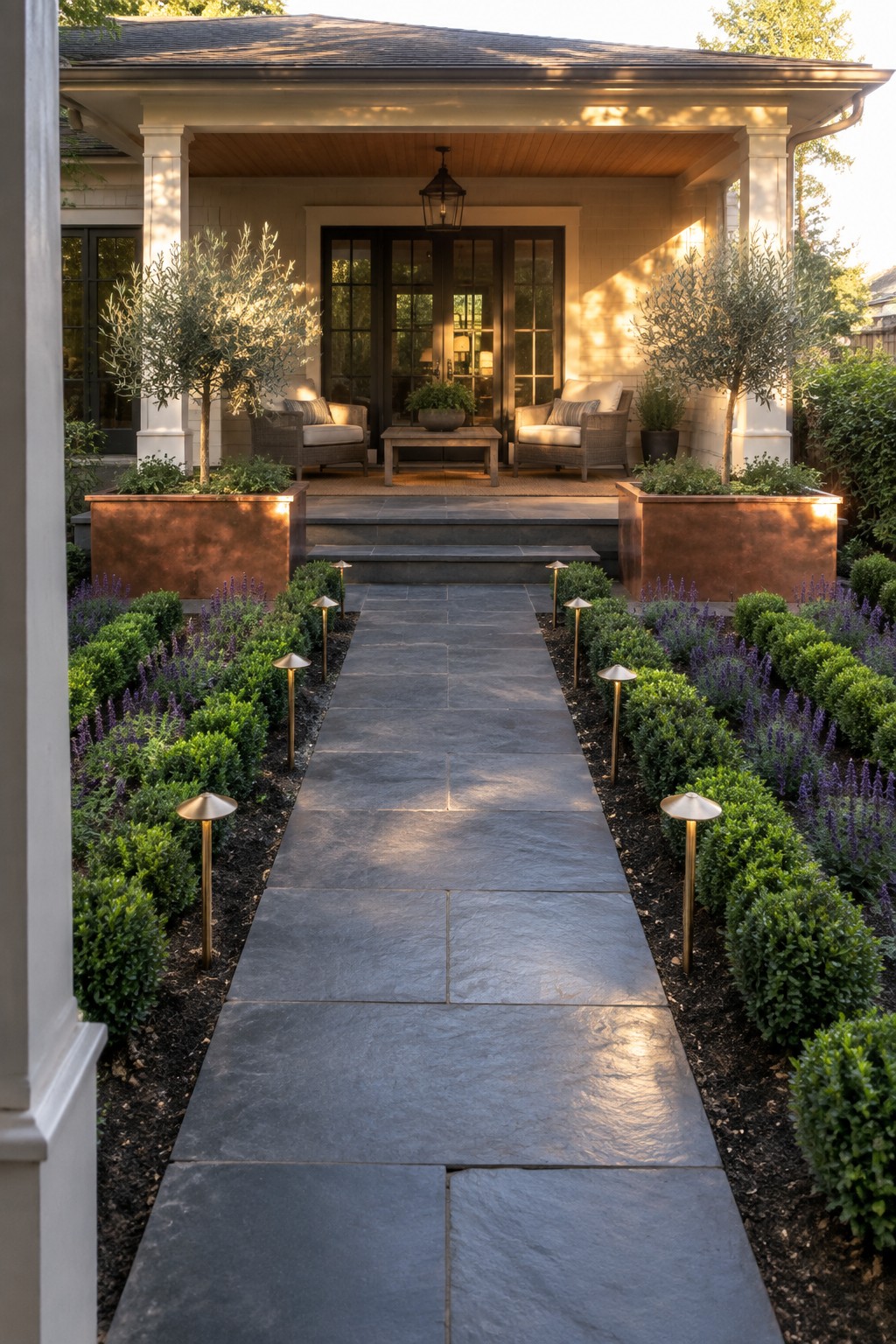
Symmetrical beds give a walkway a finished, orderly feel that works especially well in smaller backyards. Matching rows of shrubs and low purple blooms on each side keep the eye moving straight ahead without any single area taking over.
This layout works best on a straight run from the edge of the yard to the house. Keep the plants low and repeat the same mix on both sides, then add a few simple path lights so the balance stays visible after dark. Avoid letting one bed grow taller than the other or the whole effect starts to feel off.
Balance The Garden With Symmetrical Beds

Symmetrical beds bring a clear sense of order to a backyard. When the same shapes and plantings repeat on both sides of a central path, the space feels settled and easy to read even from a distance.
This layout works best in medium to large yards that can handle matching beds without crowding. Stick to simple evergreen shapes and repeat the same varieties on each side so the balance holds up as the plants fill in.
Symmetrical Raised Beds Along A Central Path
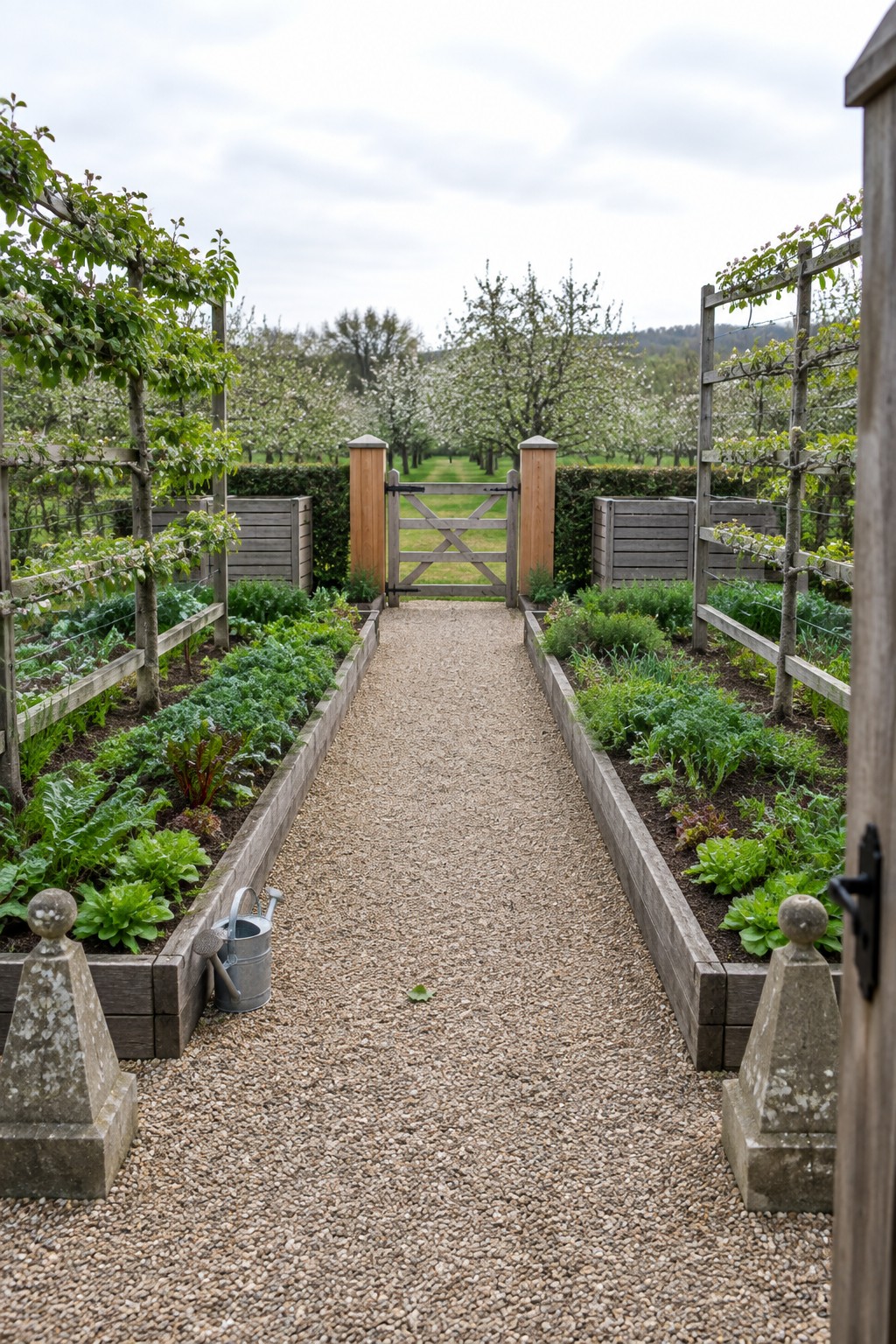
Symmetrical raised beds give a backyard that clean, balanced look that feels intentional rather than scattered. The matching beds on either side of the path create a strong sense of order, which works especially well when you want the garden to feel a bit more formal without needing fancy hardscaping.
This setup suits a long, narrow space where you need both growing room and easy access. Keep the beds the same width and plant them with similar crops or flowers so the eye moves smoothly down the path. Gravel underfoot keeps the focus on the beds themselves.
Symmetrical Raised Beds Frame a Central Pond

Matching beds on either side of a long water channel give a garden that orderly look without much fuss. Brick edging keeps the shape clean and lets the planting stay low and repeated. Boxwood domes with lavender along the front add just enough texture while keeping everything balanced.
This layout works best in a backyard with enough length to let the eye travel. Stick to two or three plant types and mirror them exactly. The beds need to stay reachable for trimming, and brick holds up well once it weathers.
Frequently Asked Questions
Q: How do I keep both beds trimmed to the same height without guessing? A: Run a string between two stakes across the middle of each bed before you cut. Trim everything to that line on both sides at once. This simple guide stops one side from drifting taller over the season.
Q: Can I mix in a few flowers without losing the clean formal look? A: Stick to the same low blooming plants in matching spots on each side. Replace them at the same time when they fade so the beds stay even. Skip anything that flops or spreads unevenly.
Q: What if one bed gets more sun than the other? A: Plant tougher versions of the same shrubs on the sunnier side to balance growth. Water the shadier bed a bit less so roots develop at similar rates. Check both sides monthly and swap any struggling plants right away.
Q: Do I need paths between the beds to show off the symmetry? A: Add a straight gravel or stone strip down the center. Keep it narrow so the beds read as one mirrored unit. And keep the edges sharp so the path itself stays part of the formal pattern.
