

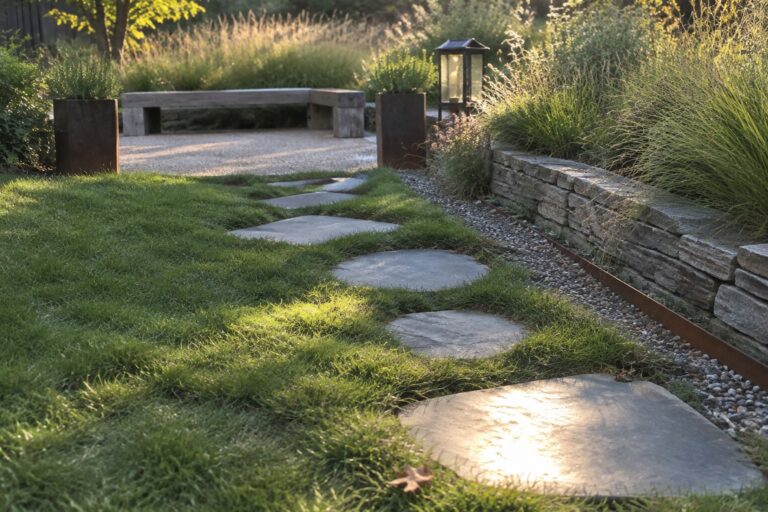
I have always noticed that a backyard starts to feel more like a real extension of the house once there is a clear way to walk through it without stepping on grass or mud every time it rains.
When I think about adding paths, the materials matter because stepping stones can settle unevenly if the ground is not prepared right, and that changes how comfortable the whole area feels over the seasons.
Some paths work better than others.
In my own yard I would try spacing them a bit wider in open areas and closer near plantings so the flow matches how people actually move from one spot to another.
Over time those choices add up and turn a simple backyard into something that holds together as a usable space rather than just a collection of separate features.
Stepping Stones Through Grass
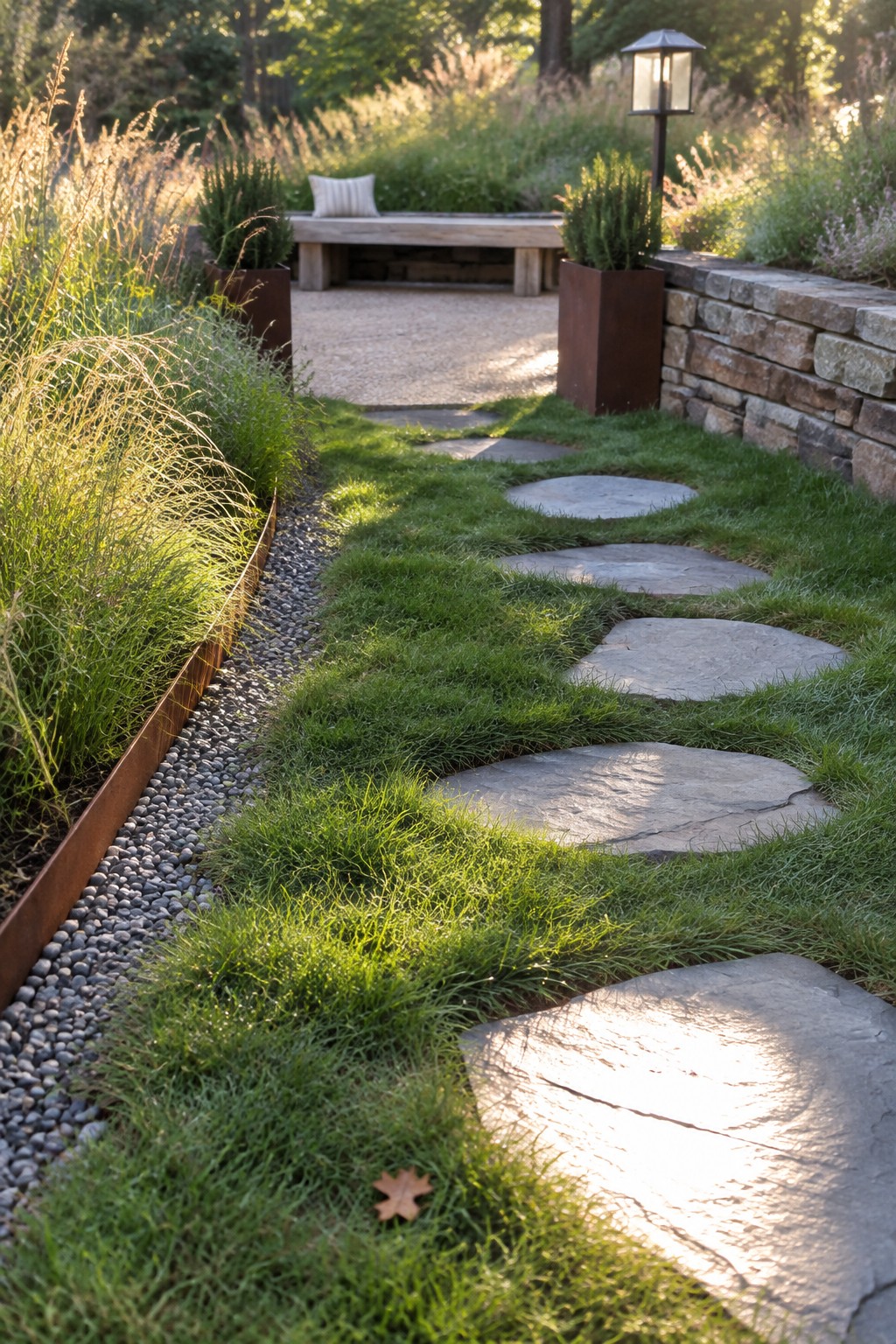
Stepping stones set right into the lawn give you a clear path without turning the whole yard into a hard surface. The grass grows right up to the edges, so the walkway feels like part of the garden instead of something added on top.
This layout works best in side yards or smaller back gardens where you want a simple route to a bench or seating area. Keep the stones fairly level with the grass for easy mowing, and add a narrow gravel strip along one side if you need to separate it from planting beds.
Stepping Stones Set In Moss
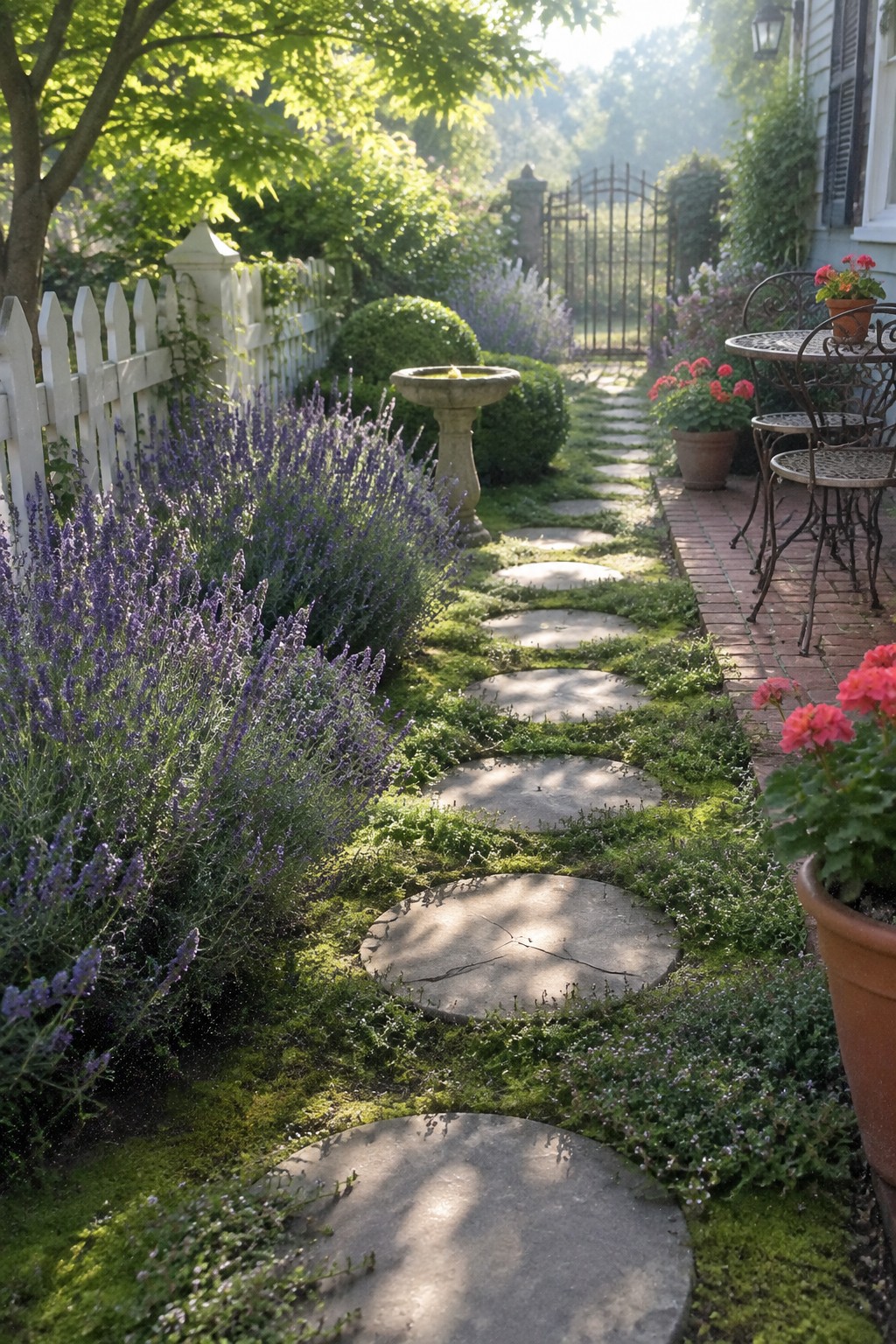
Stepping stones placed directly into moss create a path that feels soft and settled instead of rigid. The moss fills the spaces between the stones and gives the walkway a natural look that blends into the surrounding garden beds.
This works best in partly shaded areas where moss grows well without much effort. It suits older homes or cottage gardens, and the stones stay comfortable to walk on as long as they sit level with the ground.
Stepping Stones Through A Modern Gravel Path
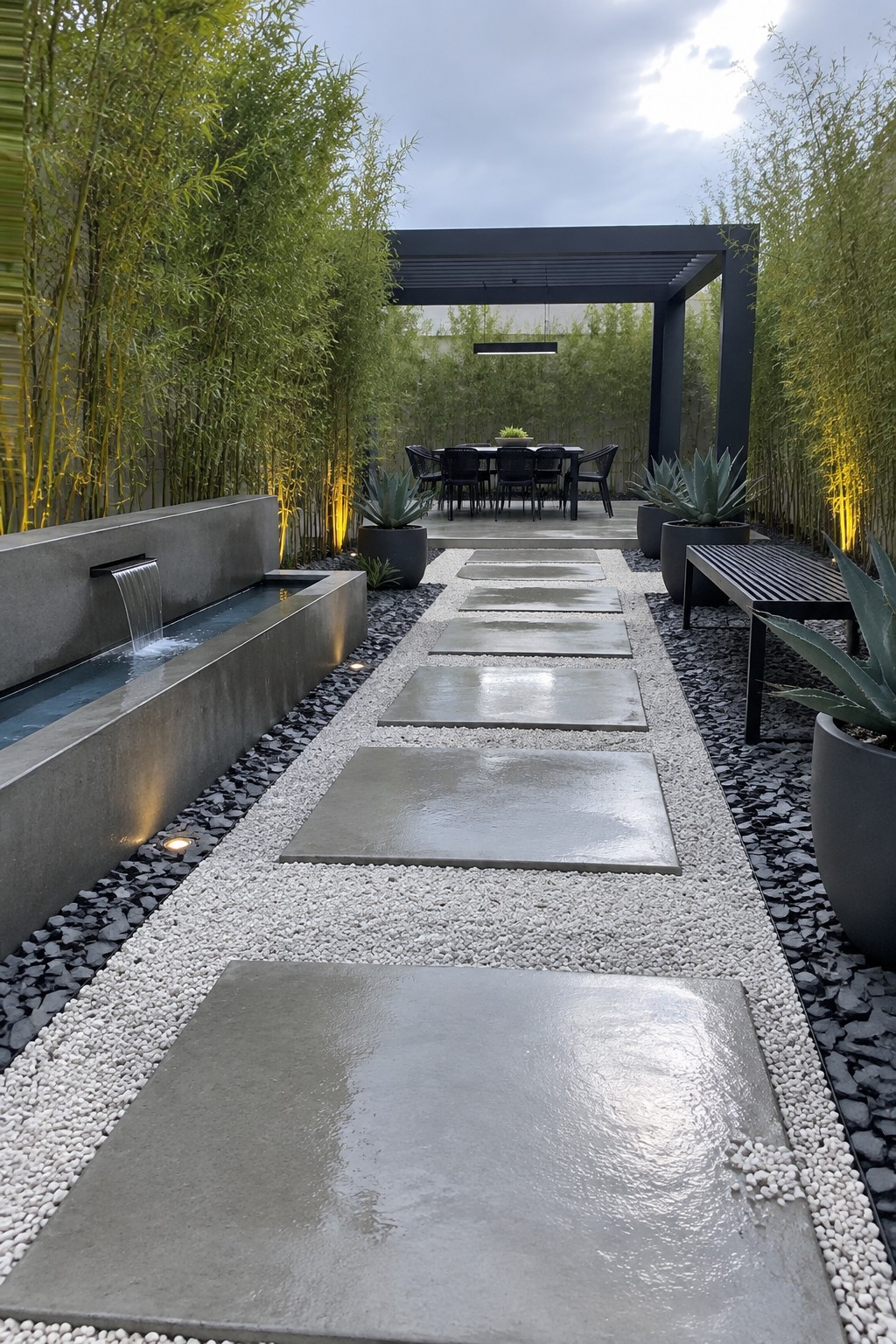
Stepping stones laid into light gravel give a path a clean look without turning it into a solid walkway. The gravel handles drainage well and keeps the stones from shifting much over time, which makes the whole thing feel simple to maintain.
This layout works best in smaller modern yards where you want a clear route without covering everything in concrete or pavers. Keep the gravel color light so the stones stand out, and make sure any nearby water features sit low enough that they do not splash onto the walking surface.
Round Stepping Stones Along A Gravel Garden Path

Stepping stones placed in gravel create a path that feels relaxed and blends right into the garden. The loose gravel helps with drainage and keeps the stones from shifting, so the walkway stays practical even after rain.
This layout works best in smaller backyards or side gardens where you want a simple route without pouring concrete. Keep the stones spaced for comfortable steps and add a low border like bamboo to hold the gravel in place over time.
Stepping Stones Set Into Grass
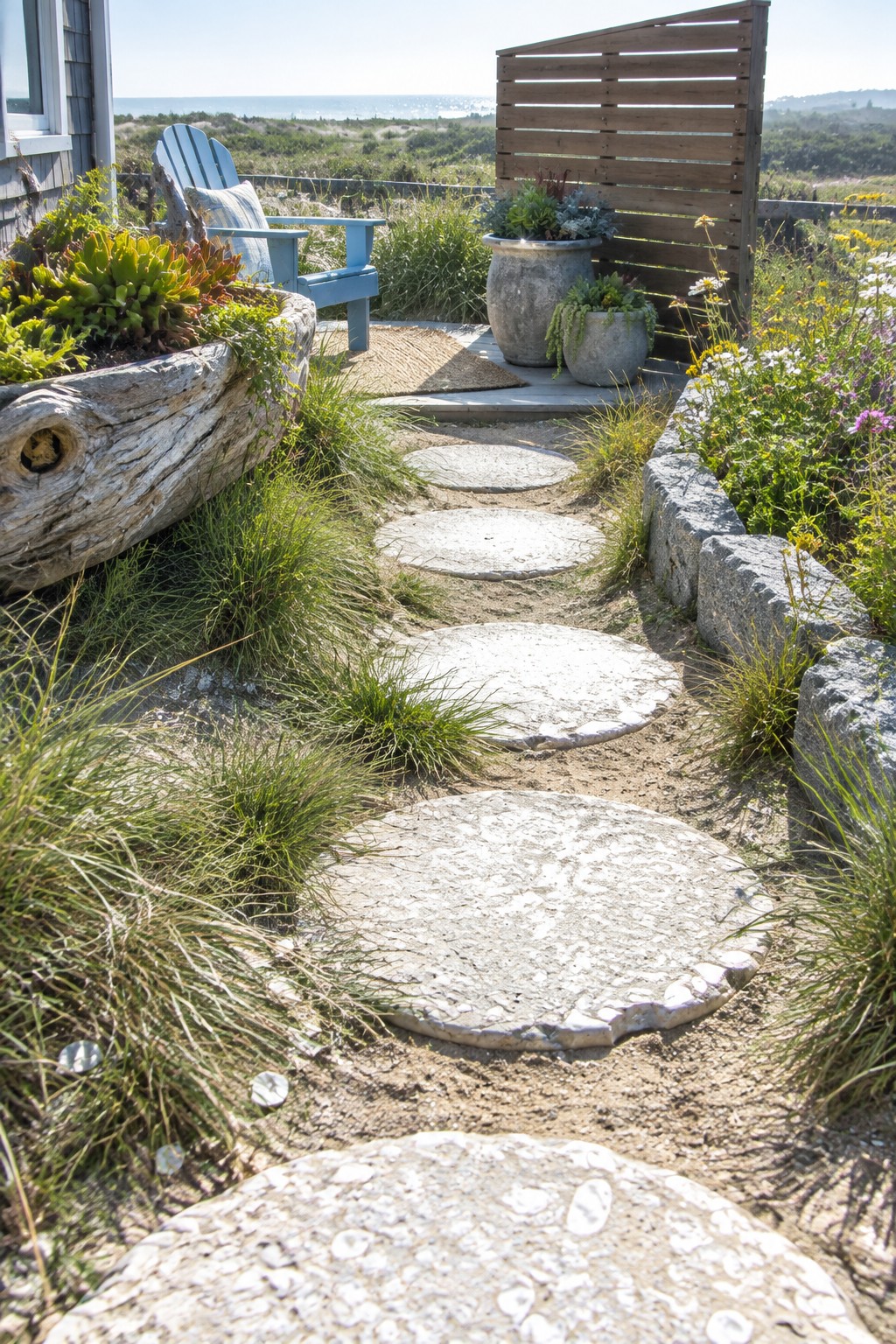
Stepping stones placed directly into the lawn create a path that feels casual and blends right into the surrounding garden. This approach works well when you want to connect different areas without laying a full walkway or dealing with drainage issues that come with solid paving.
It suits homes with informal yards or natural landscaping. Place the stones at a natural walking distance and keep the grass around them trimmed so the route stays clear. The stones also help avoid muddy spots after rain while keeping the overall look simple.
Stepping Stones Over Gravel
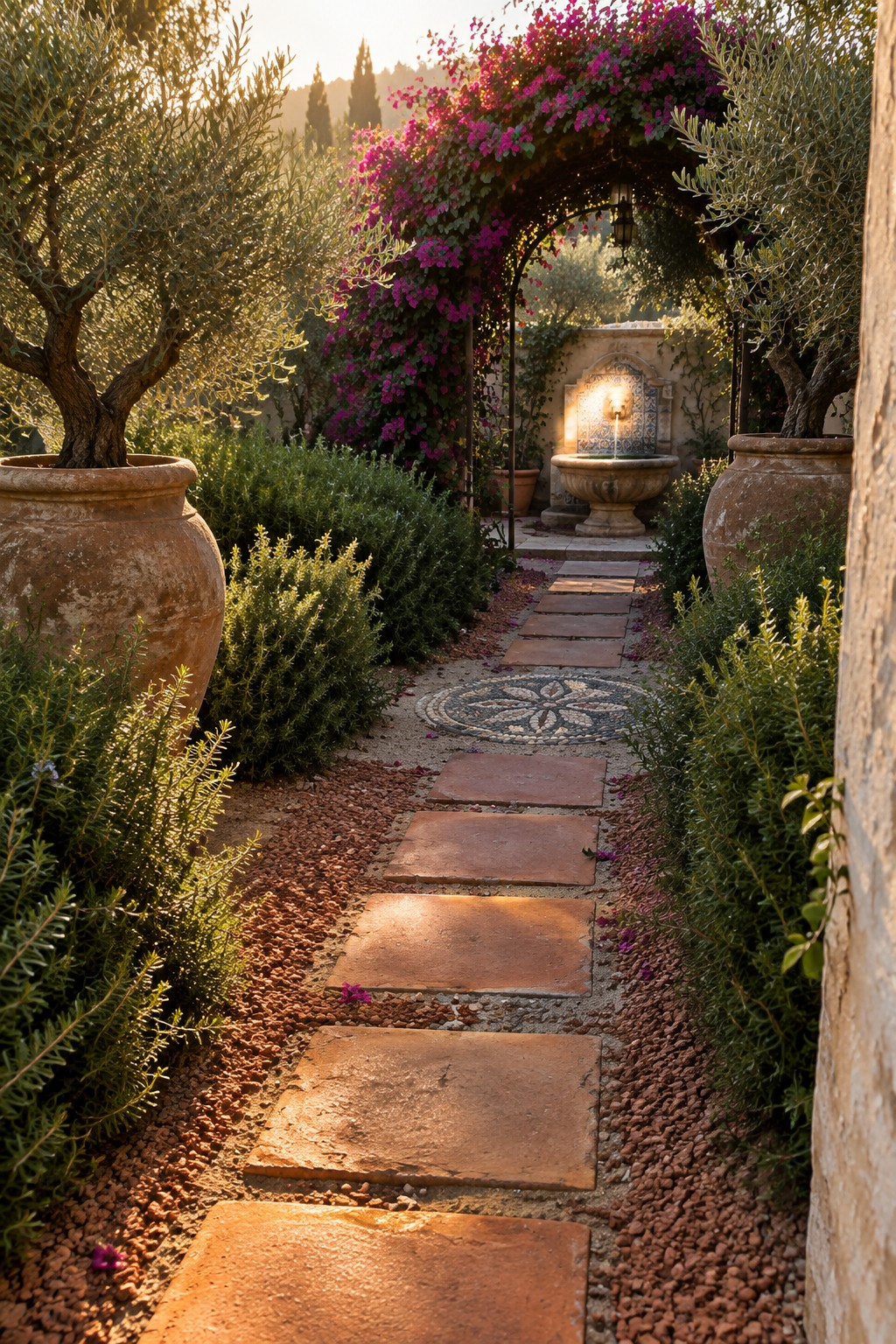
Stepping stones set into gravel make a path that feels easy and informal while still giving a clear way through the garden. The loose material keeps things from looking too rigid, and it drains well after rain.
This approach suits homes with Mediterranean or cottage style planting where you already use pots and low shrubs along the edges. Space the stones so each step lands comfortably in the middle, and keep the gravel layer thick enough to stay in place over time.
Mosaic Stepping Stones For A Garden Path
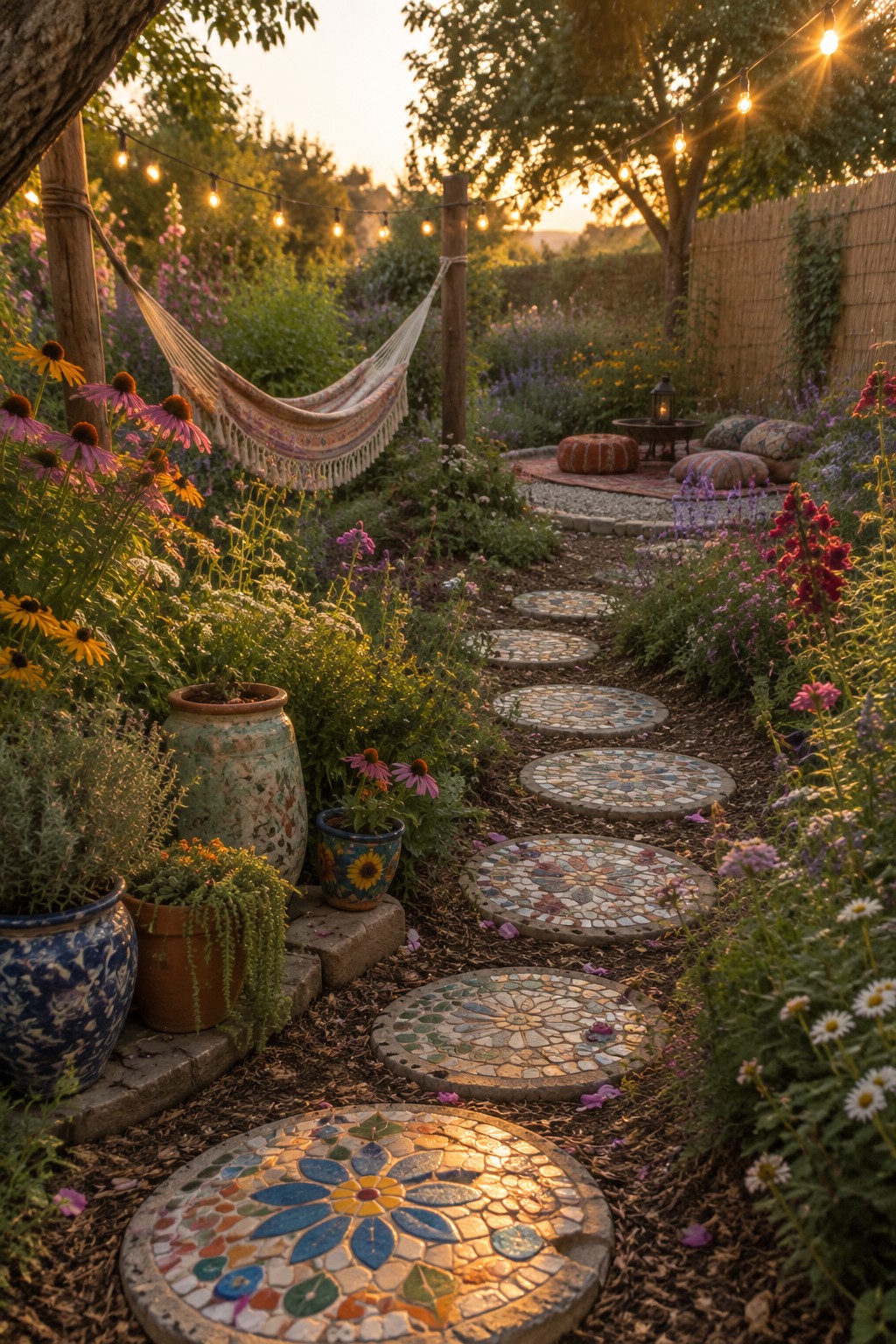
Mosaic stepping stones bring a bit of color and pattern to a simple garden path without making it feel too formal. They work well when the stones are spaced naturally so the surrounding plants can spill over the edges a little. The round shape and varied tile colors help the path feel more like part of the garden instead of just a walkway laid on top.
These stones suit smaller yards or cottage style gardens where you want the path to meander rather than run straight. Keep the surrounding beds loose and full so the stones sit among the flowers instead of standing out too sharply. Just make sure the surface stays fairly level for walking.
Stepping Stones Along A Poolside Lawn
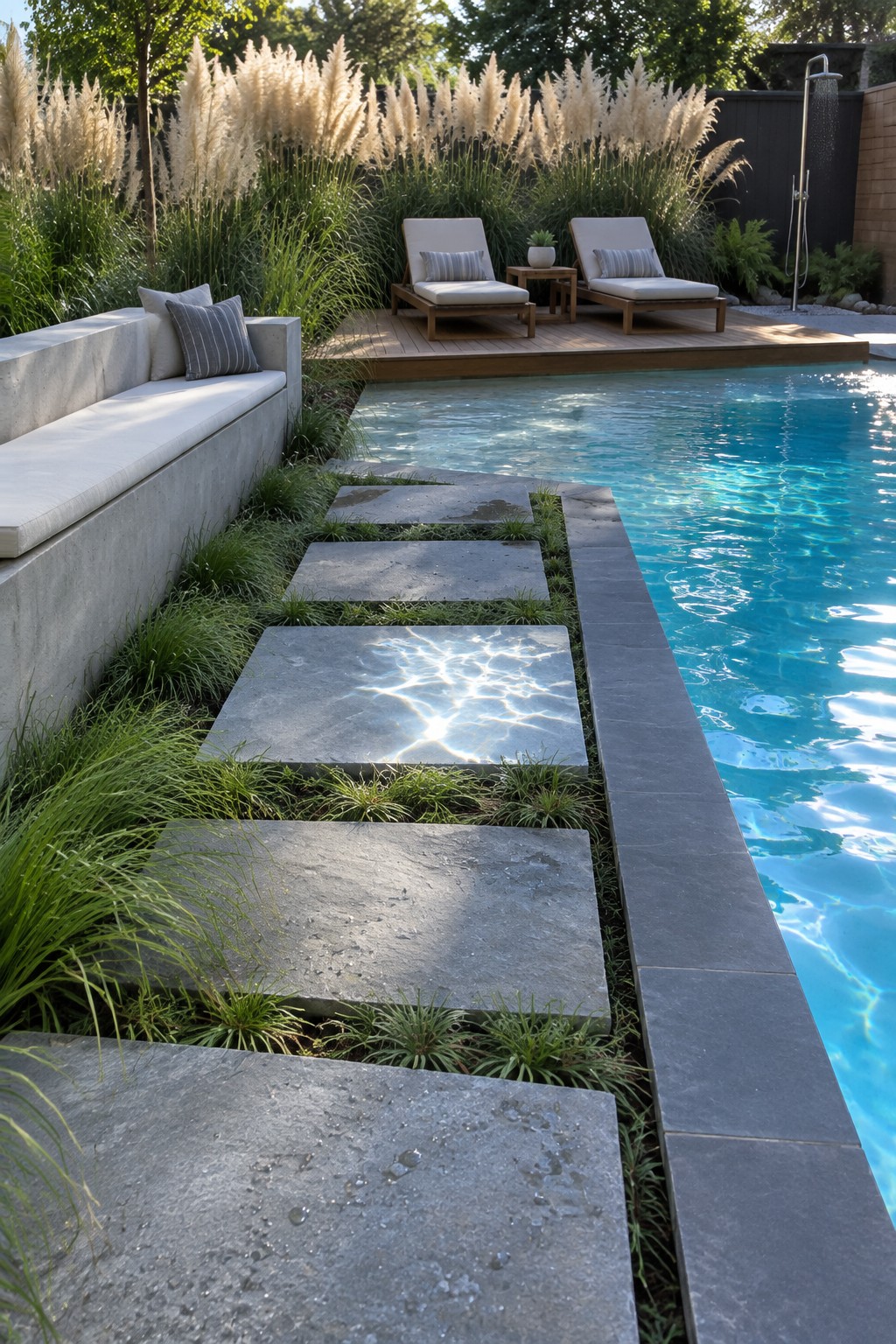
Stepping stones set into grass give a simple way to make a path without turning the whole area into hard paving. They keep the lawn feeling open while still giving a clear route to walk along the pool or through the garden beds.
This works best in yards where you want easy access but still like the look of plants and lawn around the edges. Space the stones so each step lands naturally and choose a size that feels stable underfoot.
Stepping Stones Through Low Planting Beds
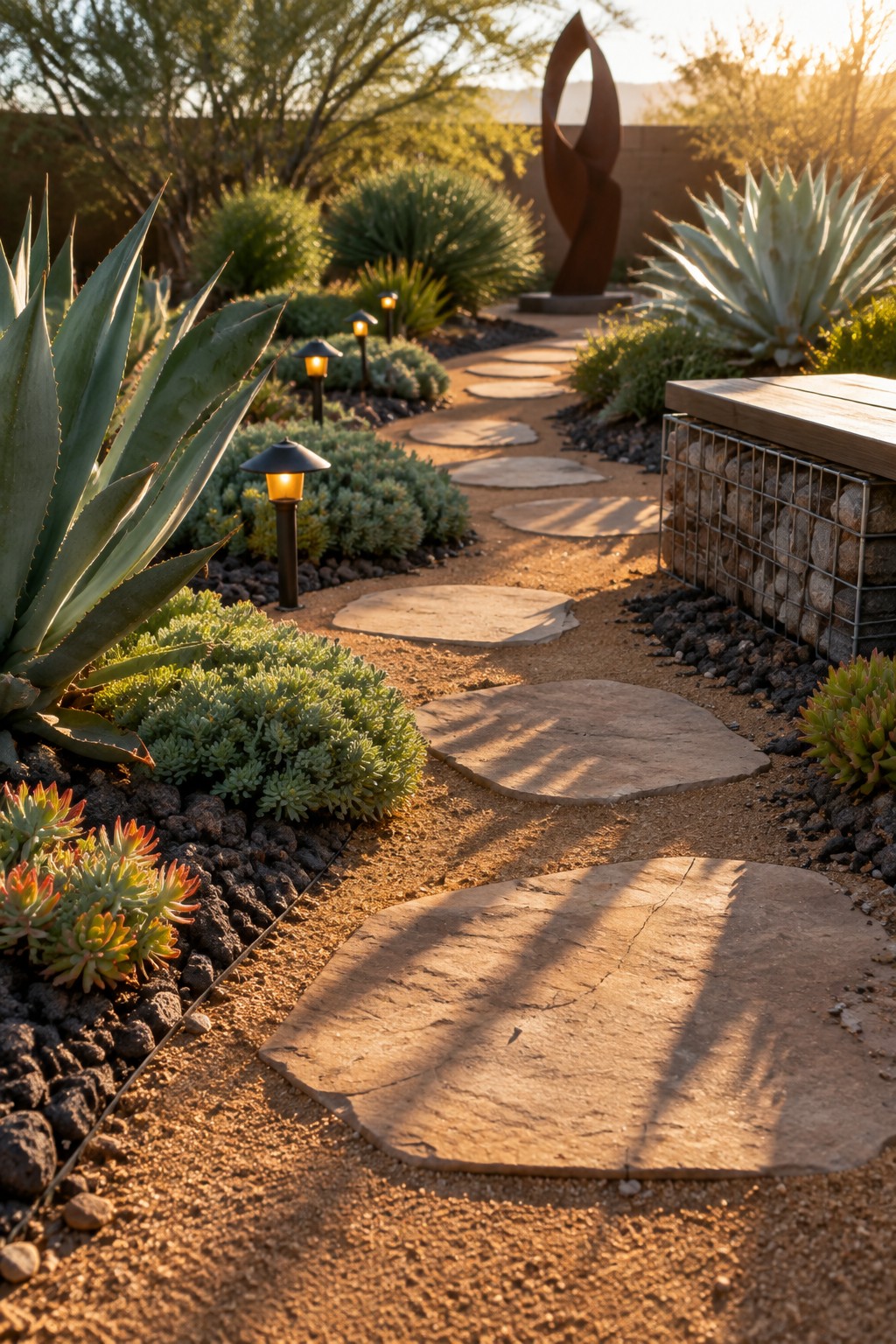
Stepping stones work well when they sit low and let the plants do most of the work around them. In this setup the stones are placed with just enough space between them to feel natural, and the surrounding succulents and ground covers soften the edges without hiding the path.
This approach suits dry-climate gardens or any yard where you want a path that looks settled rather than built. Keep the stones large and slightly irregular, set them into gravel or soil so they stay level, and leave room for plants to grow in close. Avoid tight spacing or formal borders if you want the same relaxed look.
Brick Paths Between Raised Beds
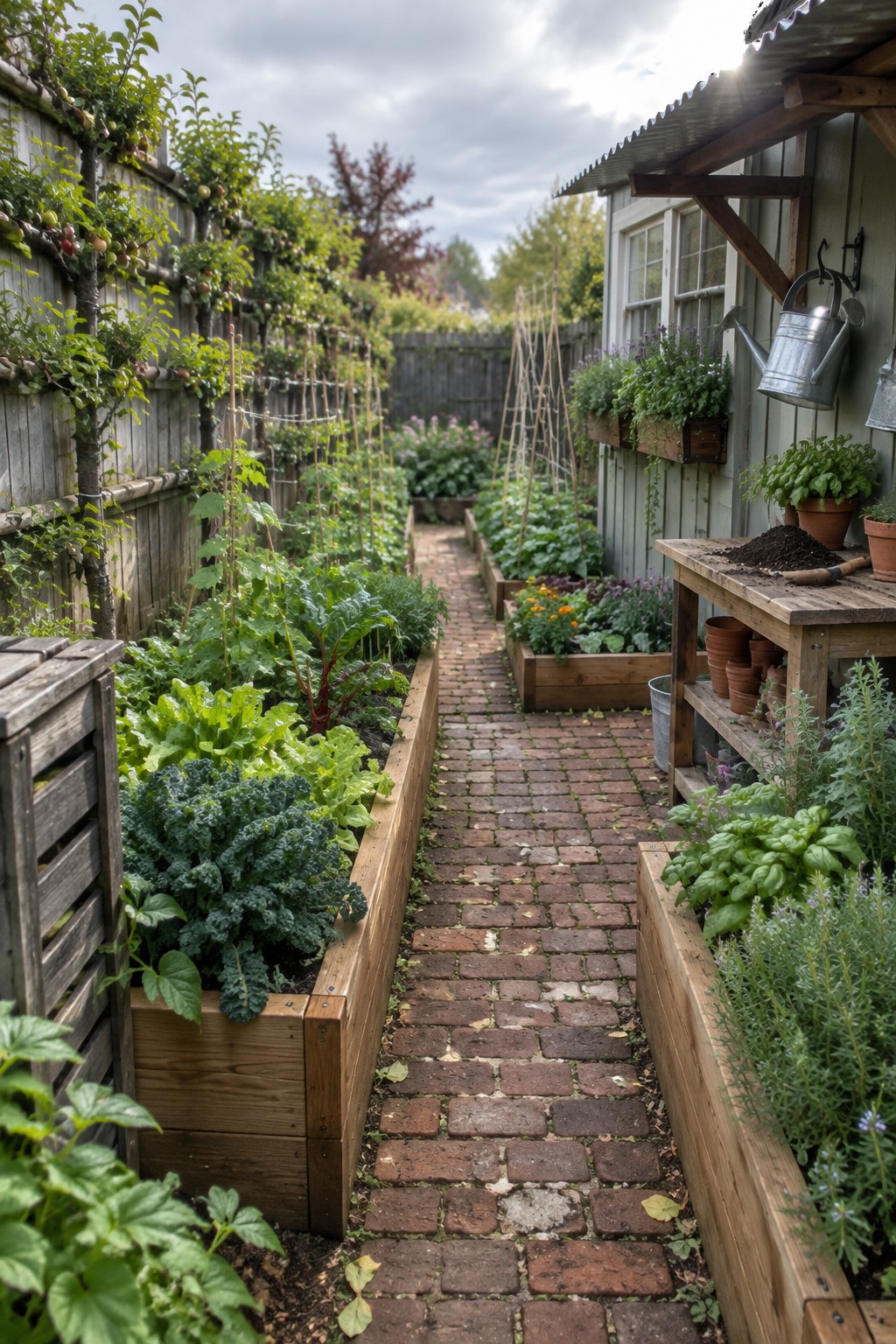
A brick path like this one gives you a solid, low-maintenance way to move through the garden without stepping on the beds. It works especially well when you have raised boxes on both sides, since the path keeps everything neat and makes watering or harvesting easier.
This setup suits smaller backyards or vegetable gardens where you want clear access without taking up too much space. Just keep the path narrow enough to reach both sides comfortably, and choose a material that drains well so it does not stay muddy after rain.
Stepping Stones That Sit Low In The Ground Cover
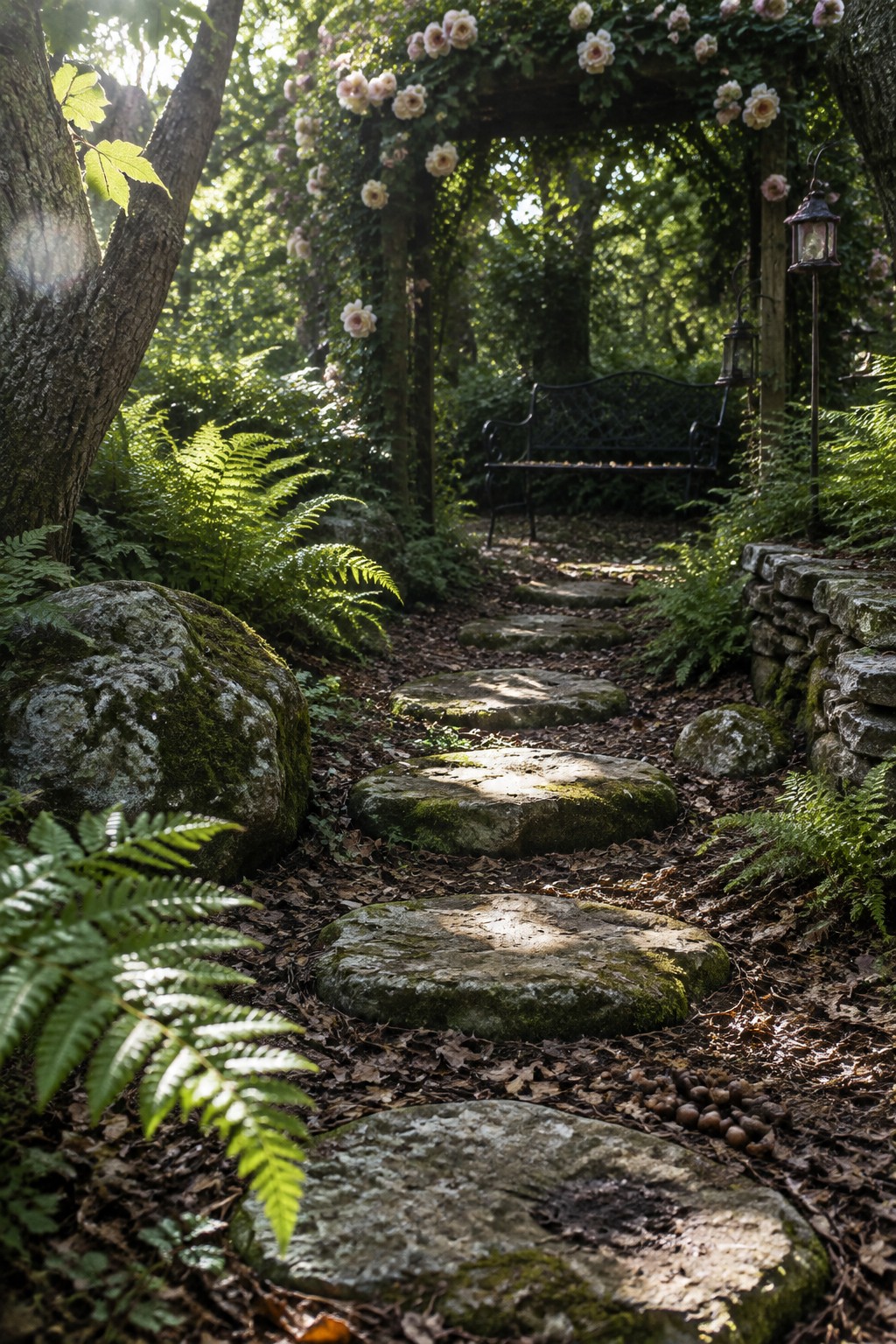
Stepping stones work well when they rest right on top of the existing leaves and soil instead of being set into a formal base. This keeps the path looking relaxed and lets the ferns and leaf litter stay in place around them.
It suits shady backyard gardens where the ground is already soft and covered. Space the stones so each step feels natural and pick sizes that vary a little so the whole path does not look too neat or forced.
Stepping Stone Path To An Outdoor Kitchen
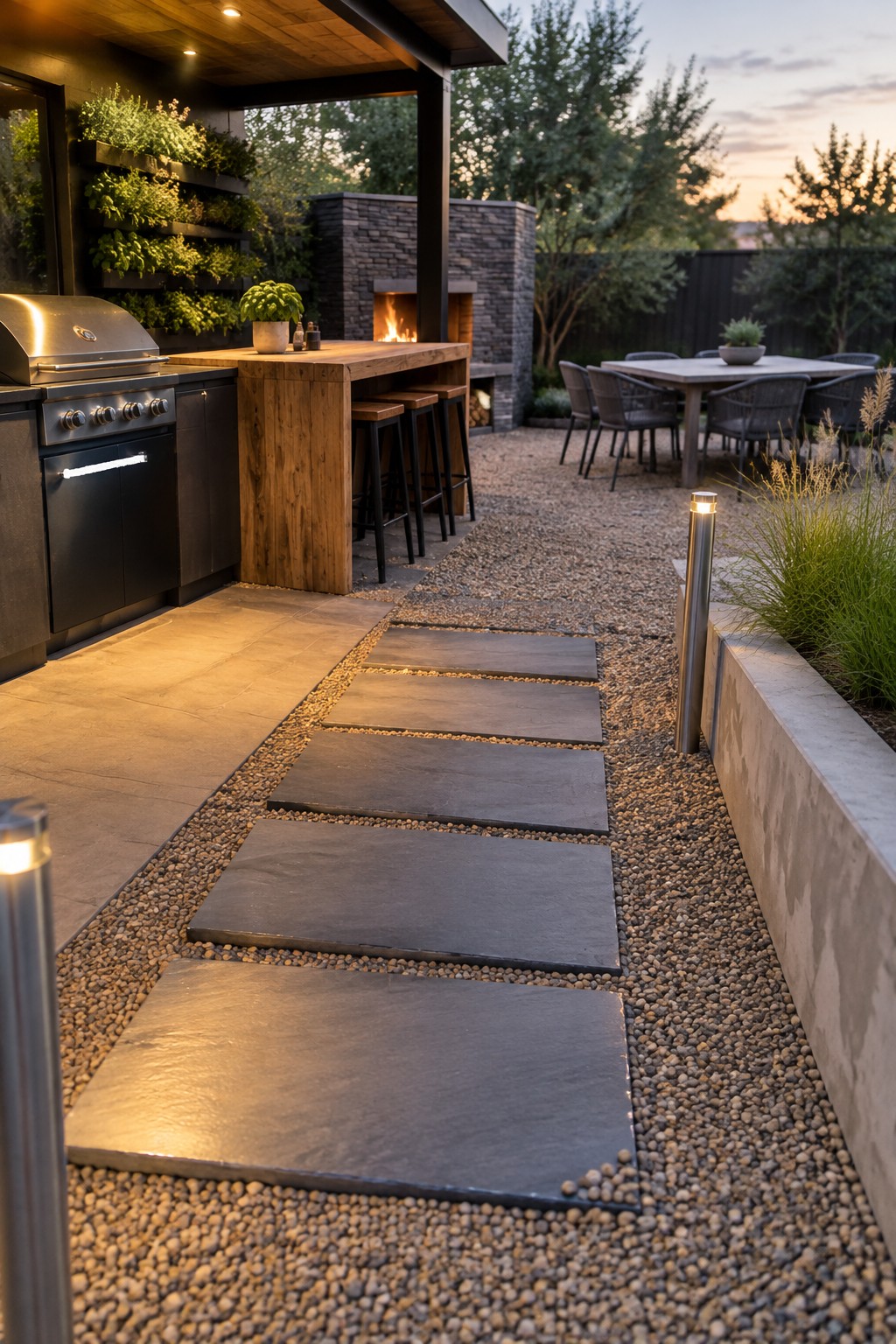
A path made with large stone slabs set into gravel gives you a clear walking route without covering the whole area in hard paving. It keeps the yard feeling open and lets rain drain away easily, which cuts down on puddles and mud.
This layout works best in backyards that need to link an outdoor kitchen or seating spot to another area like a dining table or garden. It suits most home styles as long as you keep the stones large enough to step on comfortably and space them evenly.
Bright Colored Stepping Stones
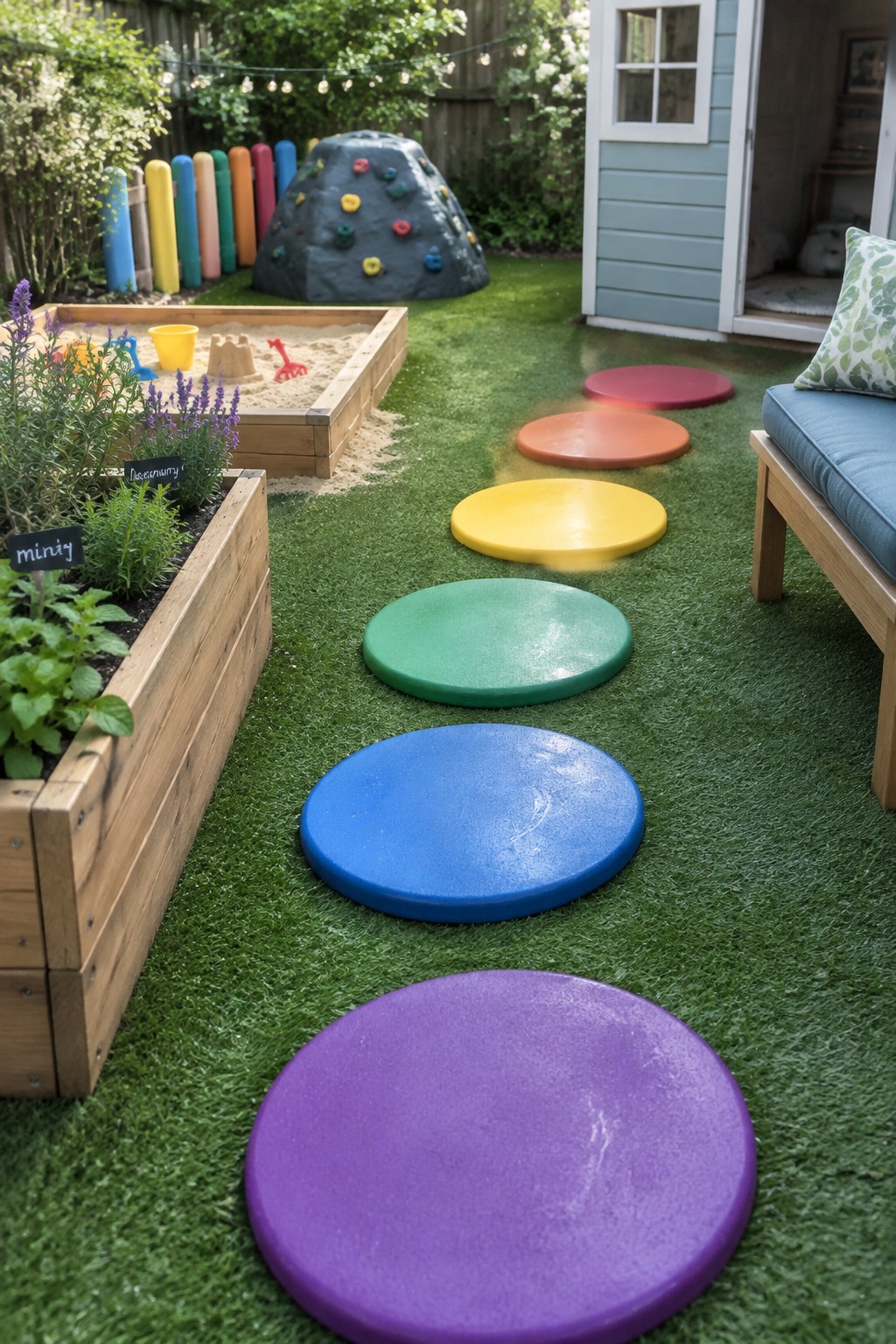
A line of big round stepping stones in solid rainbow colors can turn a plain stretch of lawn into a path that feels fun rather than formal. The strong colors stand out against the grass and give the route a clear direction without needing extra edging or complicated patterns.
This works best in family backyards where kids already play, since the stones are large enough to jump between and the colors make the path easy to follow. Keep the spacing even so adults can walk it comfortably too, and pair it with simple grass or turf so the stones remain the main feature.
Moonlit Stepping Stone Path With Gravel
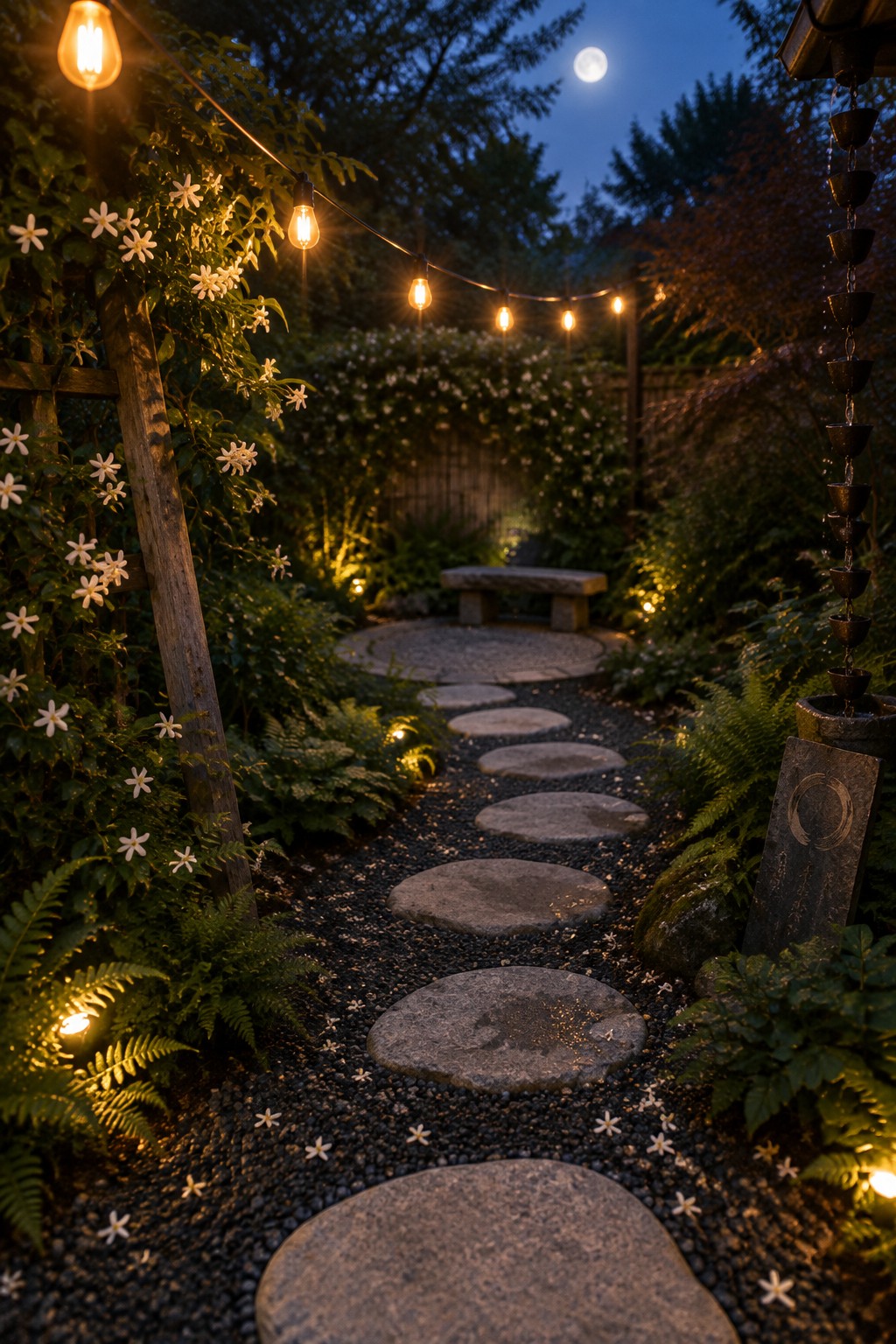
Stepping stones placed in gravel make a path that feels natural and simple to maintain. The gravel fills the gaps, helps with drainage, and keeps the stones from shifting over time.
This works well in backyard gardens or along the side of a house. Use larger stones so they feel steady underfoot and pick gravel that matches the look of your plants and soil.
Extend Your Path Across Water With Stepping Stones
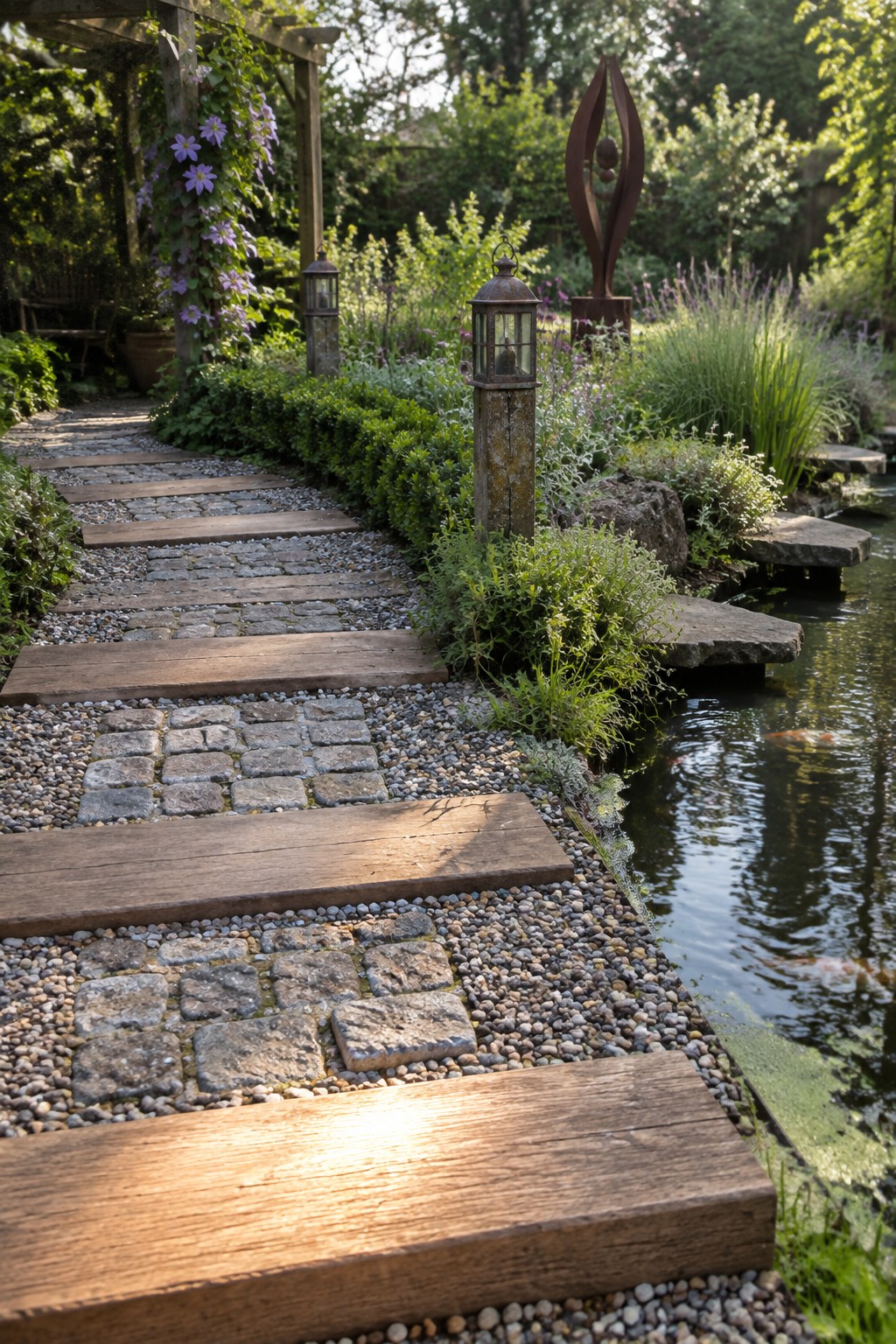
Stepping stones let a garden path keep going even when it reaches a pond. Instead of ending at the water’s edge, the walkway moves across on flat stones set just above the surface. This keeps the route simple and natural while adding a bit of interest without extra structures.
It works best in smaller backyards where you already have a water feature or room to add one. Space the stones evenly and keep the material similar to the rest of the path so the whole thing feels connected. Just make sure the stones sit stable and are wide enough for comfortable steps.
Frequently Asked Questions
Q: Should the stones sit flush with the ground or stick up a bit?
A: Set them slightly above the soil so grass does not grow over them. This also helps keep mud off the tops after rain. Walk the path a few times to check the height feels right underfoot.
Q: How do I stop the stones from shifting over time?
A: Pack the soil or sand firmly under each one before laying it down. Press down hard with your feet once it is in place. Check them after the first winter and reset any that moved.
Q: What size works best for a backyard path?
A: Stones about a foot wide give plenty of room for your foot. Pick a few bigger ones to mix in if the path feels too uniform.
