

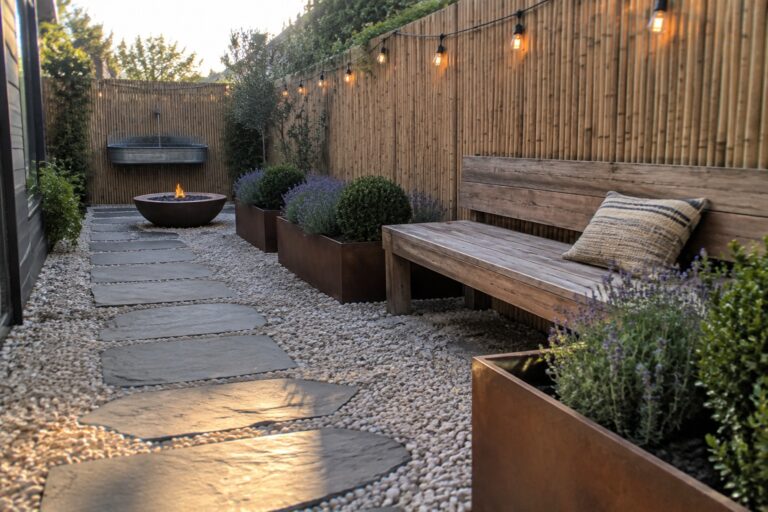
Narrow yards can quickly feel unusable when every inch gets filled without considering daily movement and flow.
I have noticed that a long narrow patio often works best when it supports one clear purpose rather than multiple competing ones.
Small adjustments make the biggest difference here.
Over time I have learned to test simple seating or a basic path before committing to larger changes in my own space.
This habit helps me spot which ideas will actually hold up once real life takes over the layout.
Stepping Stones Keep Narrow Yards Easy to Walk
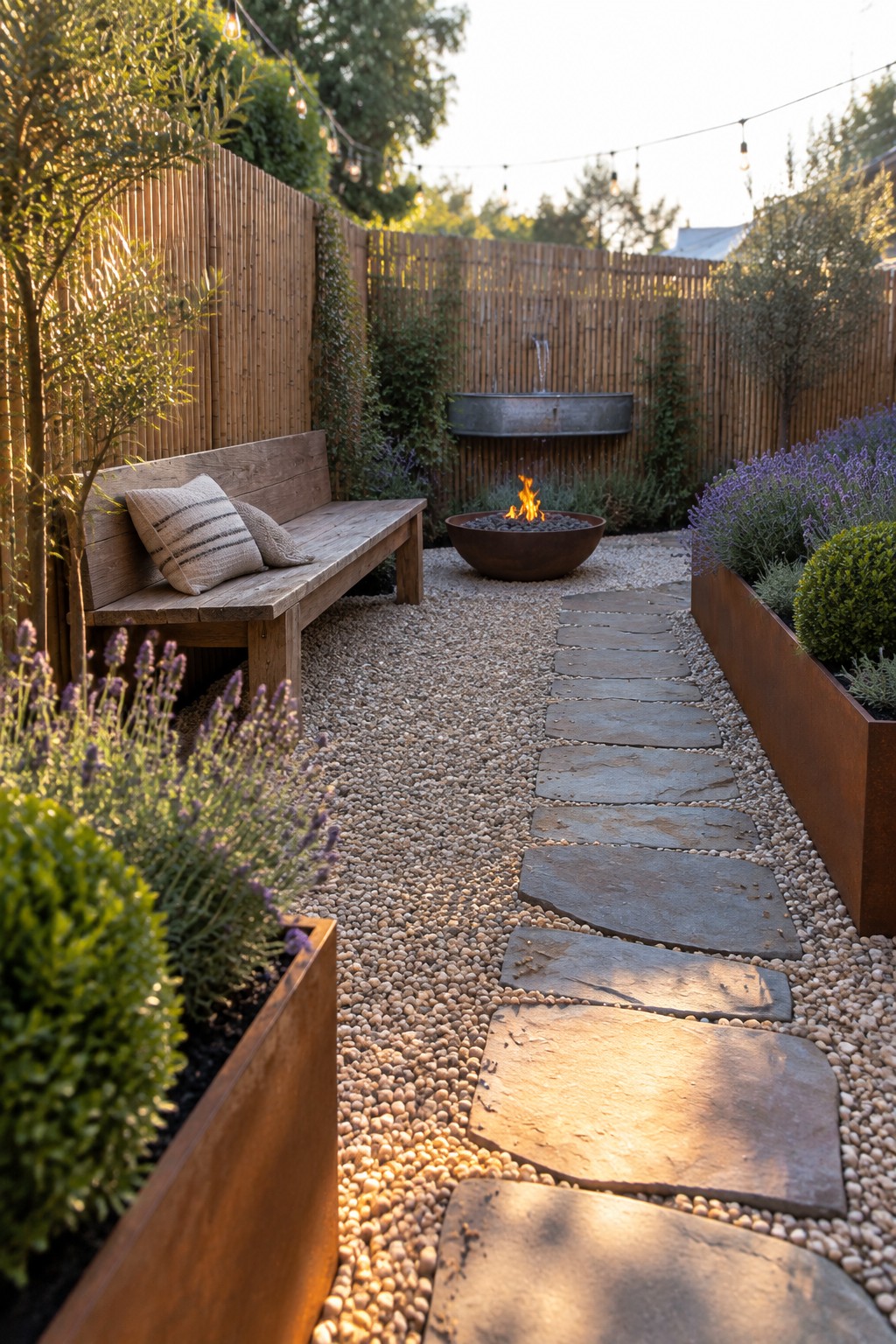
Stepping stones set into gravel give a clear route through a tight backyard without eating up much space. The path stays simple and lets the surrounding beds and seating stay close on both sides.
This layout works well in long, narrow yards where a full patio would feel cramped. Place the stones in a gentle line from the house toward a fire pit or bench, and use gravel to fill the rest so water drains easily and weeds stay down.
Built-In Benches For Narrow Patios
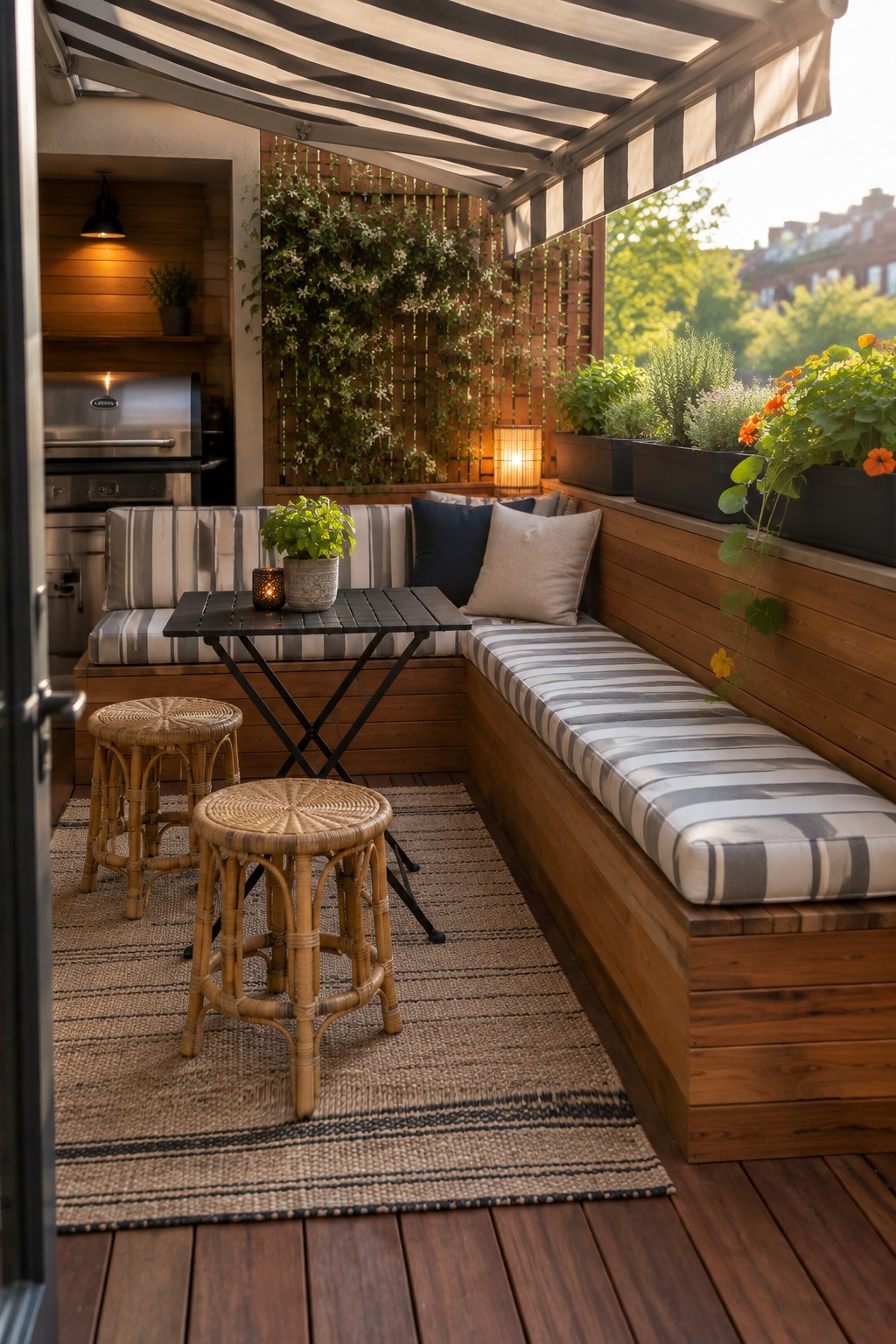
Built-in benches along the sides of a patio keep the middle of the space open. This setup gives you seating without crowding the floor with extra chairs, which helps a long, narrow area feel less cramped and easier to move through.
It works best on decks or patios that run alongside a house or fence. A simple folding table can sit in the center when needed and tuck away otherwise. The bench can also be built with a lift-up seat if you want hidden storage for cushions or tools.
Use a Long Narrow Pool in a Tight Backyard
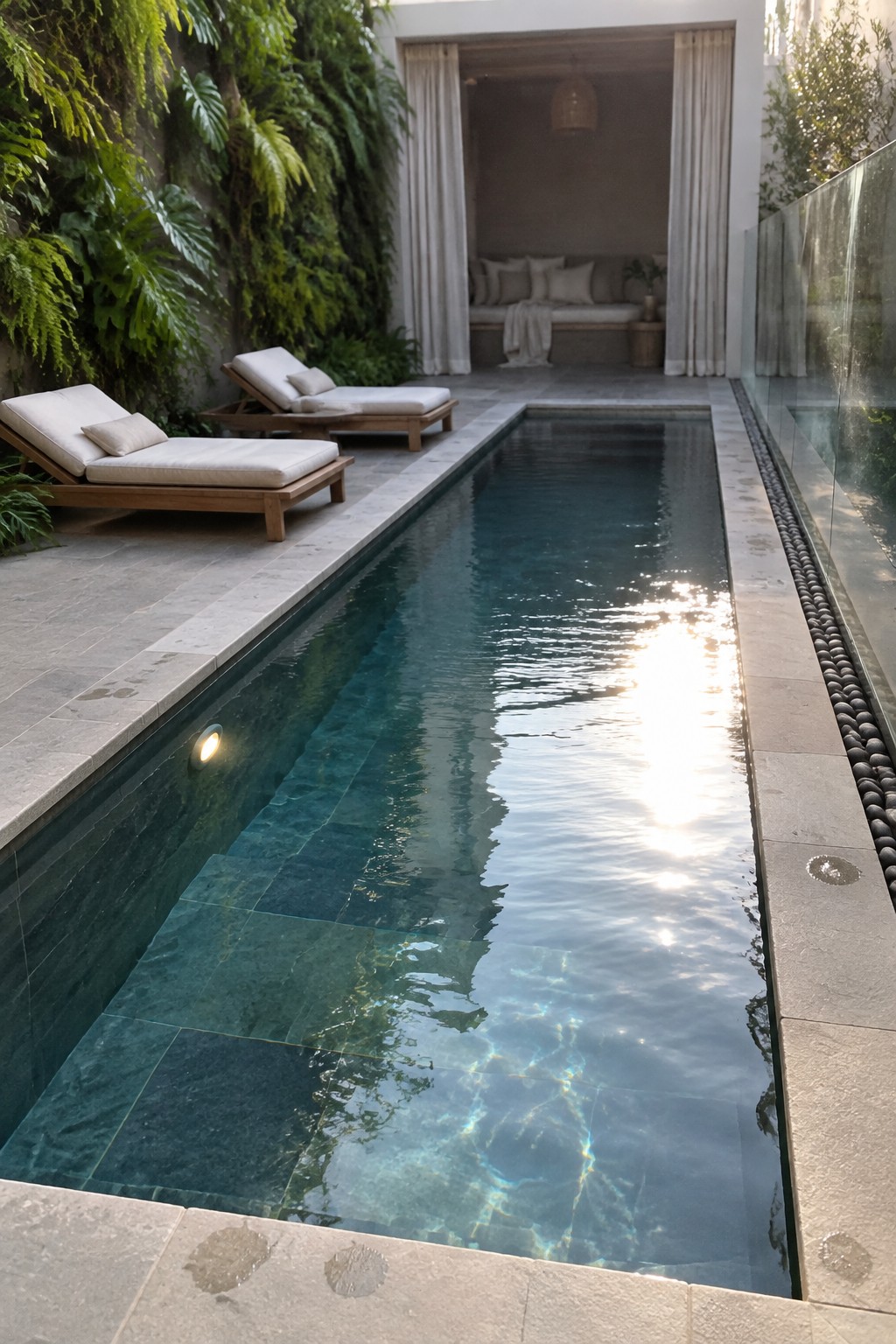
A long rectangular pool can turn a narrow yard into something functional instead of cramped. It stretches the available length and leaves room along the sides for seating without crowding the space.
Place the loungers directly beside the water so the layout stays simple and easy to move around. The far end can hold a small built-in bench area for shade or extra seating when the pool is not in use.
Wooden Planks Make Narrow Yards Easier to Use
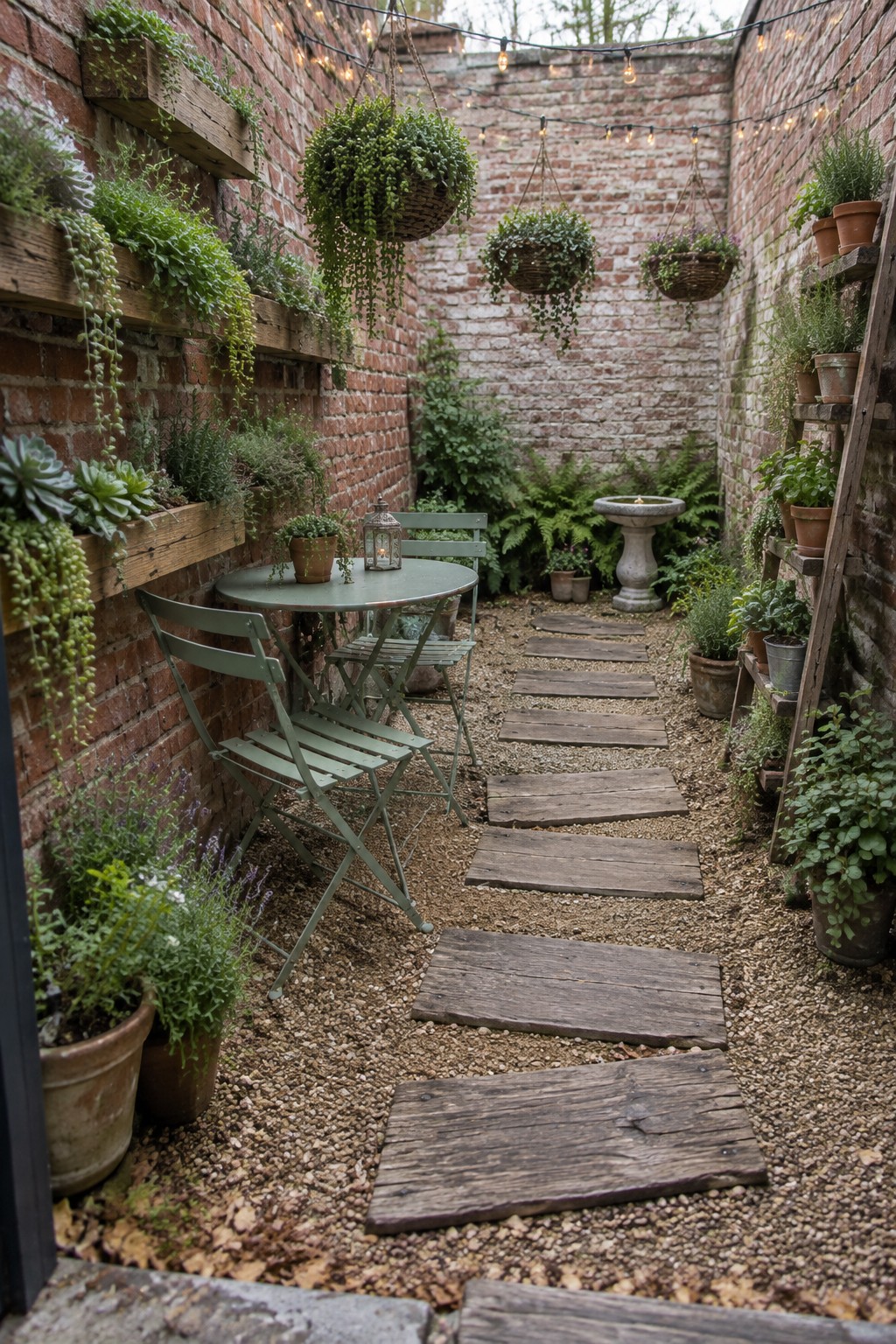
A path of wide wooden planks laid over gravel turns a tight strip of ground into something you can actually walk on without sinking or tracking mud. It keeps the space looking natural while giving you a clear route from one end to the other, which matters when the whole yard is only a few feet across.
This works well in side yards or long narrow lots where you still want room for a small table and chairs. Keep the planks a few inches apart so water drains, and let plants spill over the edges to soften the look. Just avoid making the path too wide or it will crowd the seating area.
Raked Gravel Paths For Narrow Yards

Raked gravel works well in narrow backyards because it creates clear paths without crowding the space. The simple pattern guides movement and keeps the area from feeling cluttered even when you add a few larger stones for stepping.
This setup suits small urban yards or side gardens where you need both function and calm. A low bamboo fence along the edge helps contain the look while still letting light through.
Define A Small Patio With A Climbing Rose Arch
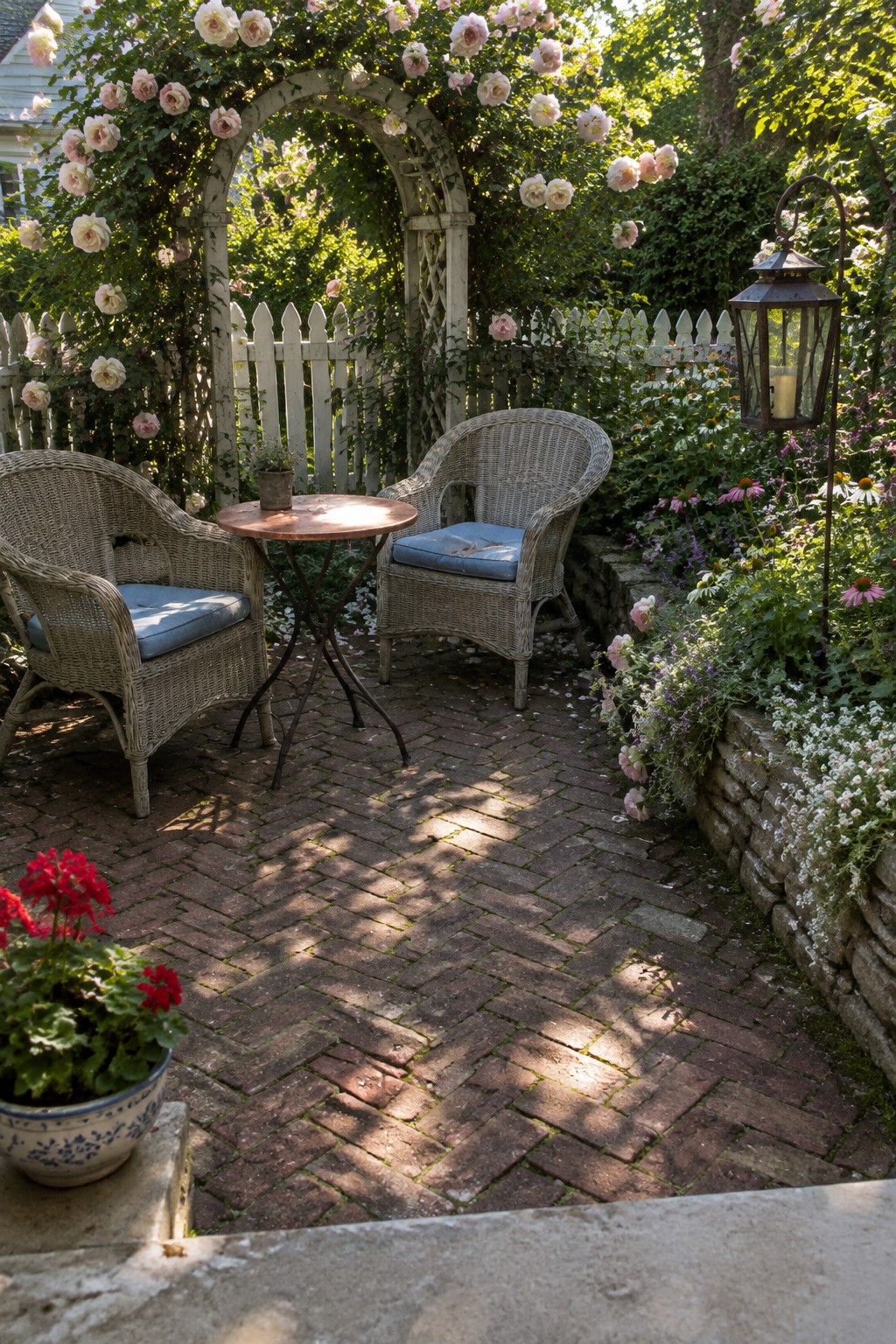
A simple arch covered in roses can turn a tight patch of ground into a real seating spot. It gives the space a bit of height and a sense of enclosure without needing big structures or wide open areas. The brick underfoot keeps things level and easy to maintain while the climbing plants soften the edges and add color overhead.
This setup works well in narrow side yards or small back corners where you want a place to sit without crowding the rest of the garden. Keep the furniture light and the table small so there is still room to move around the chairs. Make sure the arch is sturdy enough for the vines and place it so the seating feels tucked in rather than stuck out in the open.
Layer Rugs to Define a Small Patio
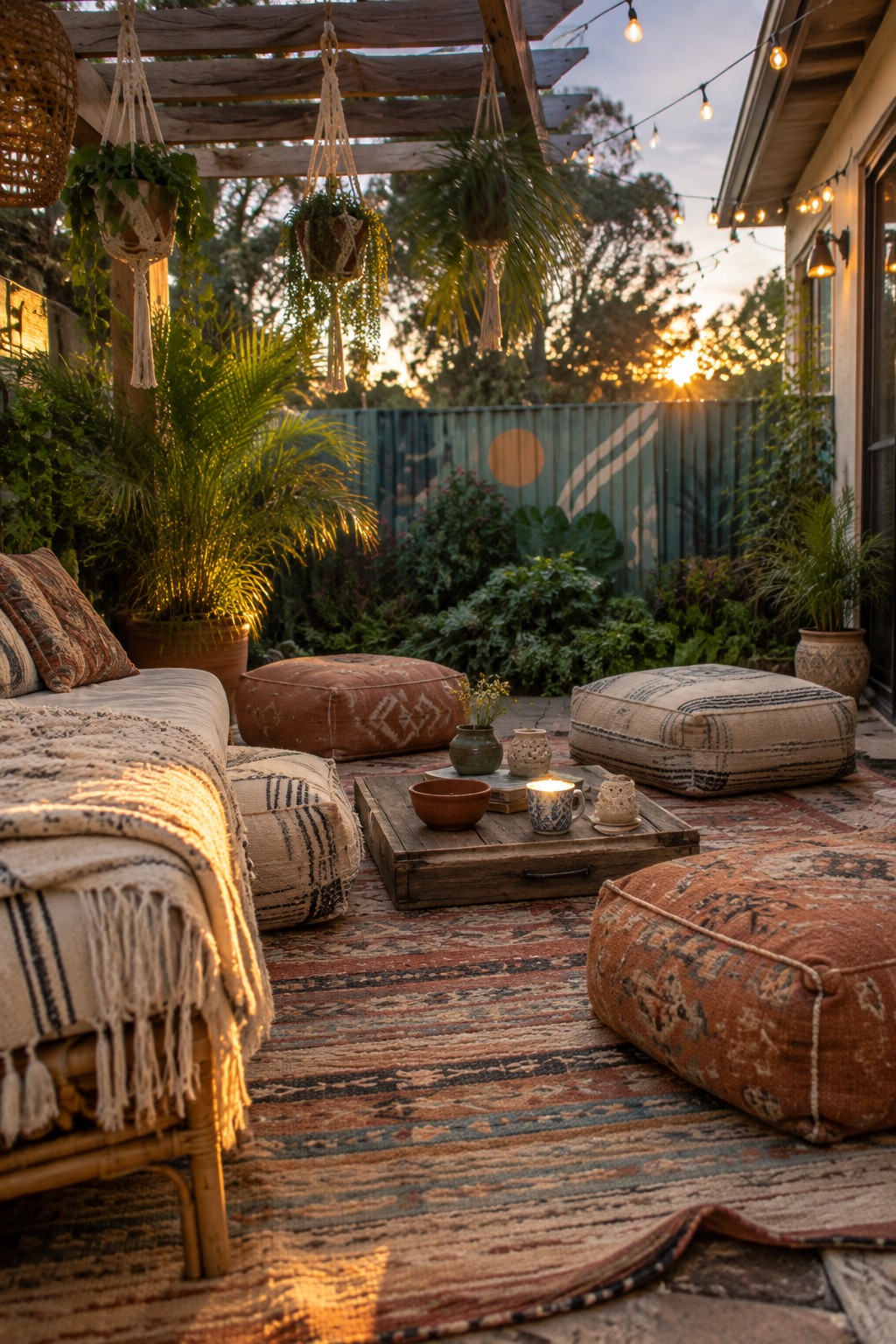
Layering rugs outdoors gives a compact patio a clear center without needing walls or big furniture. The overlapping patterns create a soft base that makes low seating feel more like a real room, even in a narrow yard.
This approach works best on patios that get steady use. Choose weatherproof rugs in similar tones so they blend rather than compete, then add simple floor cushions around a low tray table to keep the space open and easy to move through.
Line One Side With A Built-In Fire Pit
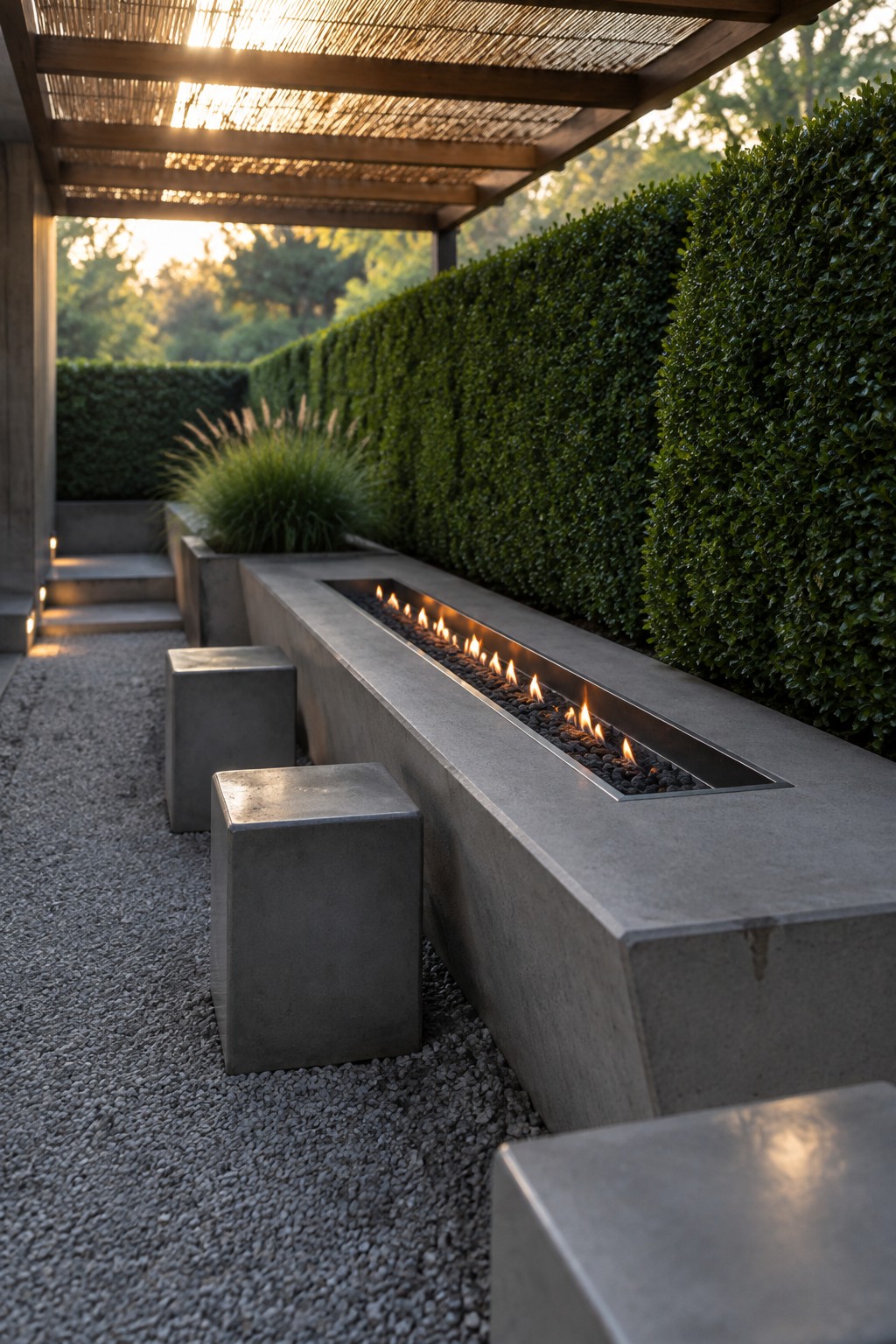
A long fire trough works well in narrow yards because it uses the length of the space instead of the width. It creates a clear spot to gather without blocking the middle or forcing big furniture into a tight area.
Place the feature against a hedge or fence and keep the seating simple on the open side. Gravel or low ground cover around it helps the whole layout feel open and easy to walk through. This approach suits small backyards that need one strong focal point rather than multiple separate zones.
Pebble Flooring for Narrow Outdoor Showers

Pebble stones make a good choice for outdoor shower floors in small yards. They let water drain right through without pooling, and the surface feels better under bare feet than smooth tile or concrete. The setup stays simple and does not need much width to work.
Place a linear drain along the edge where the floor meets the wall, then add a wood screen on one side for privacy. This works best in compact backyards where a full shower enclosure would feel cramped.
Raised Beds in a Row Make the Most of Narrow Yards
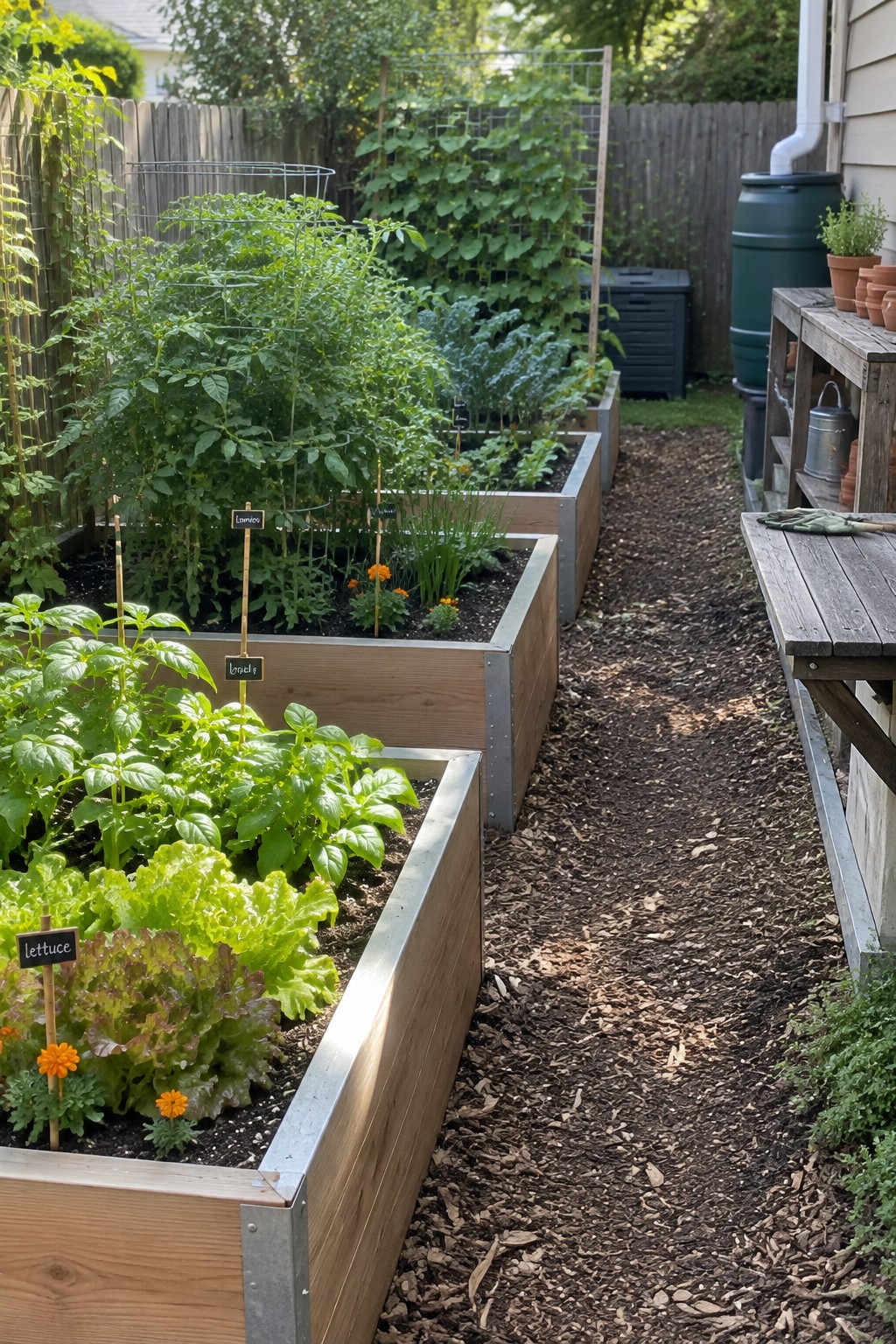
Long raised beds placed side by side give you plenty of growing room without eating up the whole width of a small yard. The straight layout keeps everything organized and leaves a simple path down the middle so you can reach both sides easily for watering and picking.
This setup works best on slim lots where a traditional garden would feel cramped. Stick with beds that are about the same width and leave enough space between them for a wheelbarrow or just comfortable walking room.
Use a Bench to Create Seating in a Narrow Yard
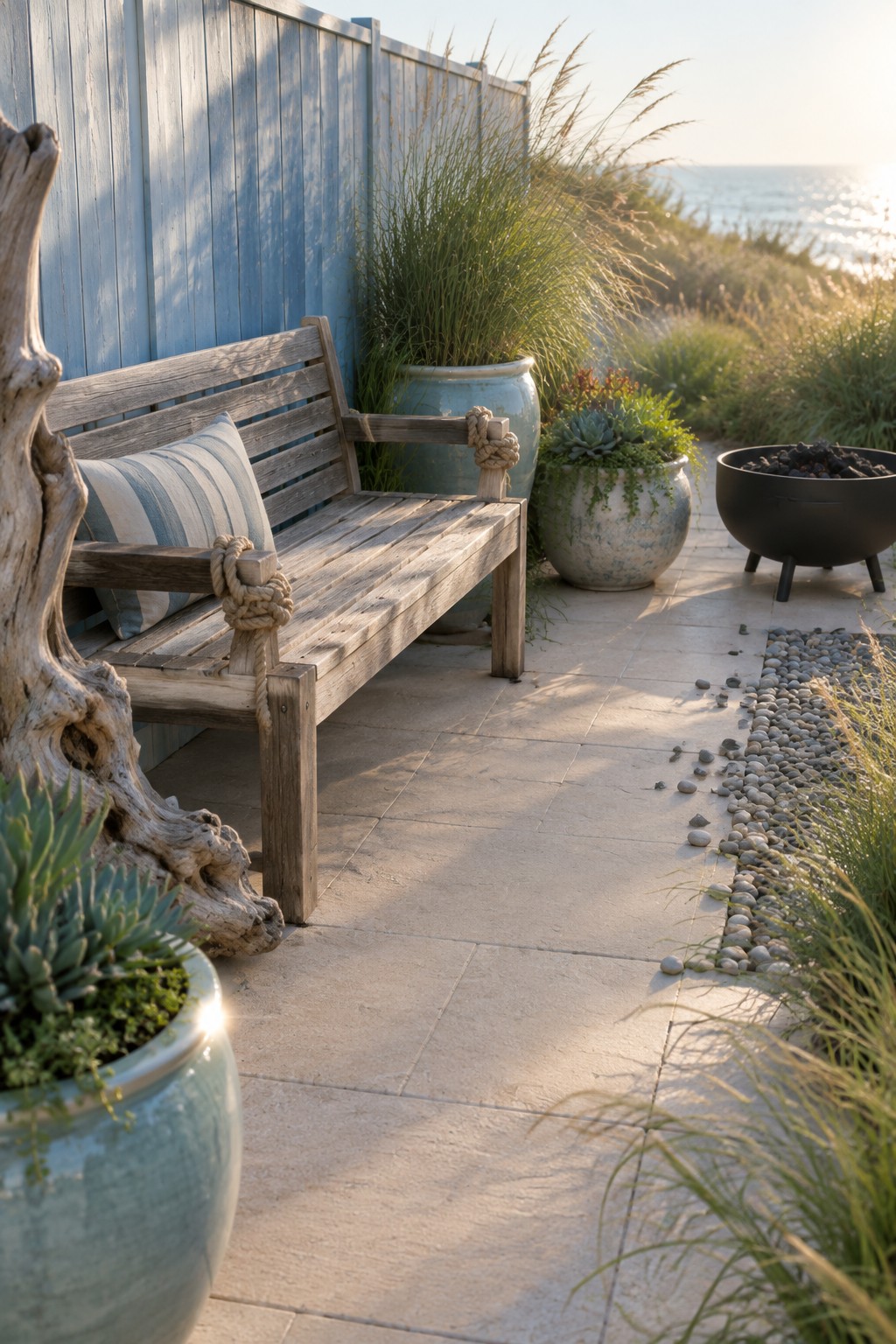
A simple wooden bench works well when you need seating but do not have room for a full set of chairs and tables. It sits neatly along the edge of a path or patio and still leaves plenty of walking space.
This setup suits long, narrow backyards best. Place the bench against a fence or wall, add a couple of large pots nearby, and keep the rest of the surface open so the area does not feel crowded.
Raised Planters Along Deck Edges
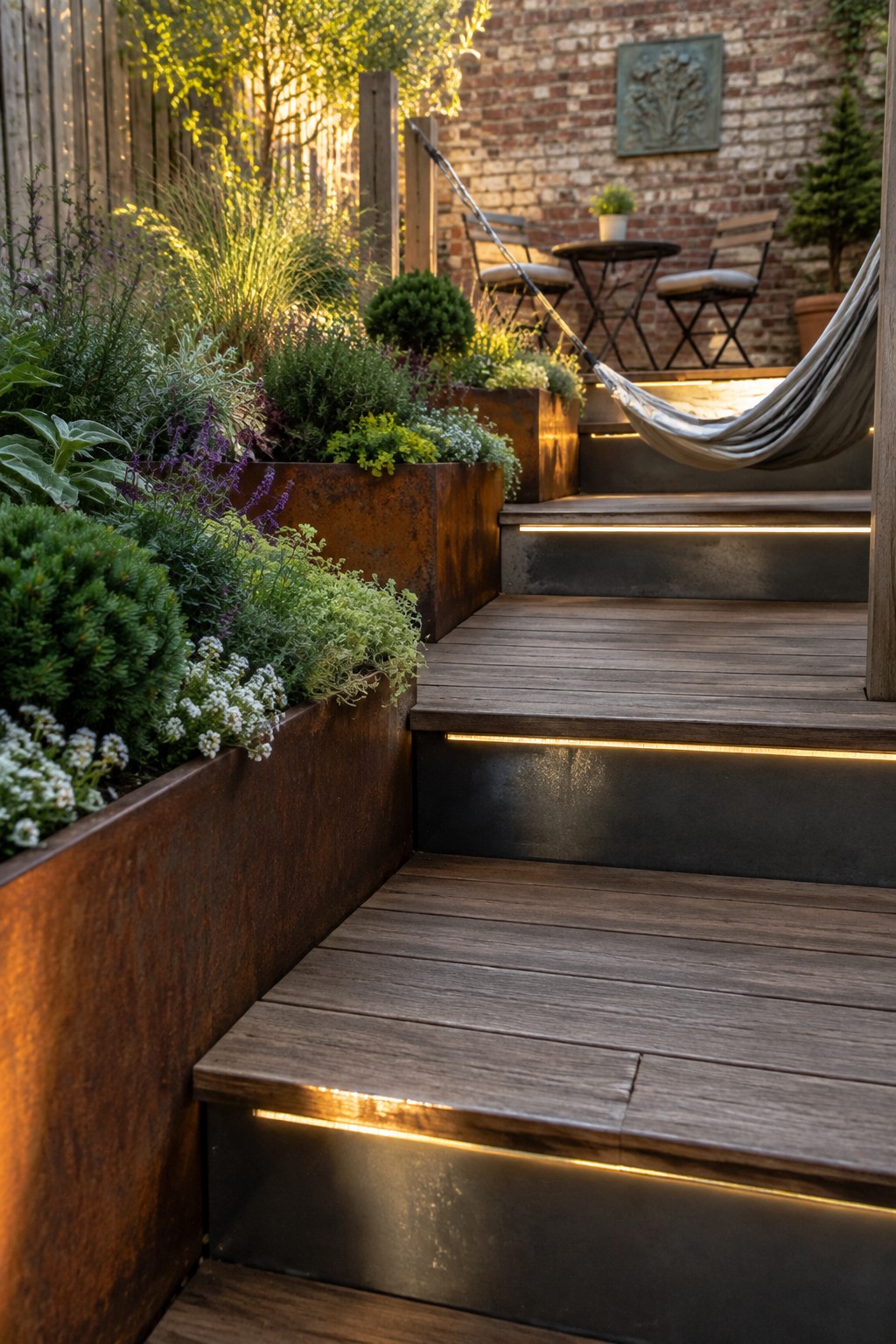
One simple way to add more plants to a narrow backyard is to run raised metal planters right along the sides of the deck. They hold a good amount of soil and let you layer shrubs, flowers, and trailing plants without losing floor space.
This setup works best on compact decks or patios where ground beds are not possible. The planters create a clear edge, keep things tidy, and give you room for seasonal changes. Just make sure the boxes are deep enough for the plants you want to grow.
Tuck Seating Under The Counter In A Narrow Outdoor Kitchen
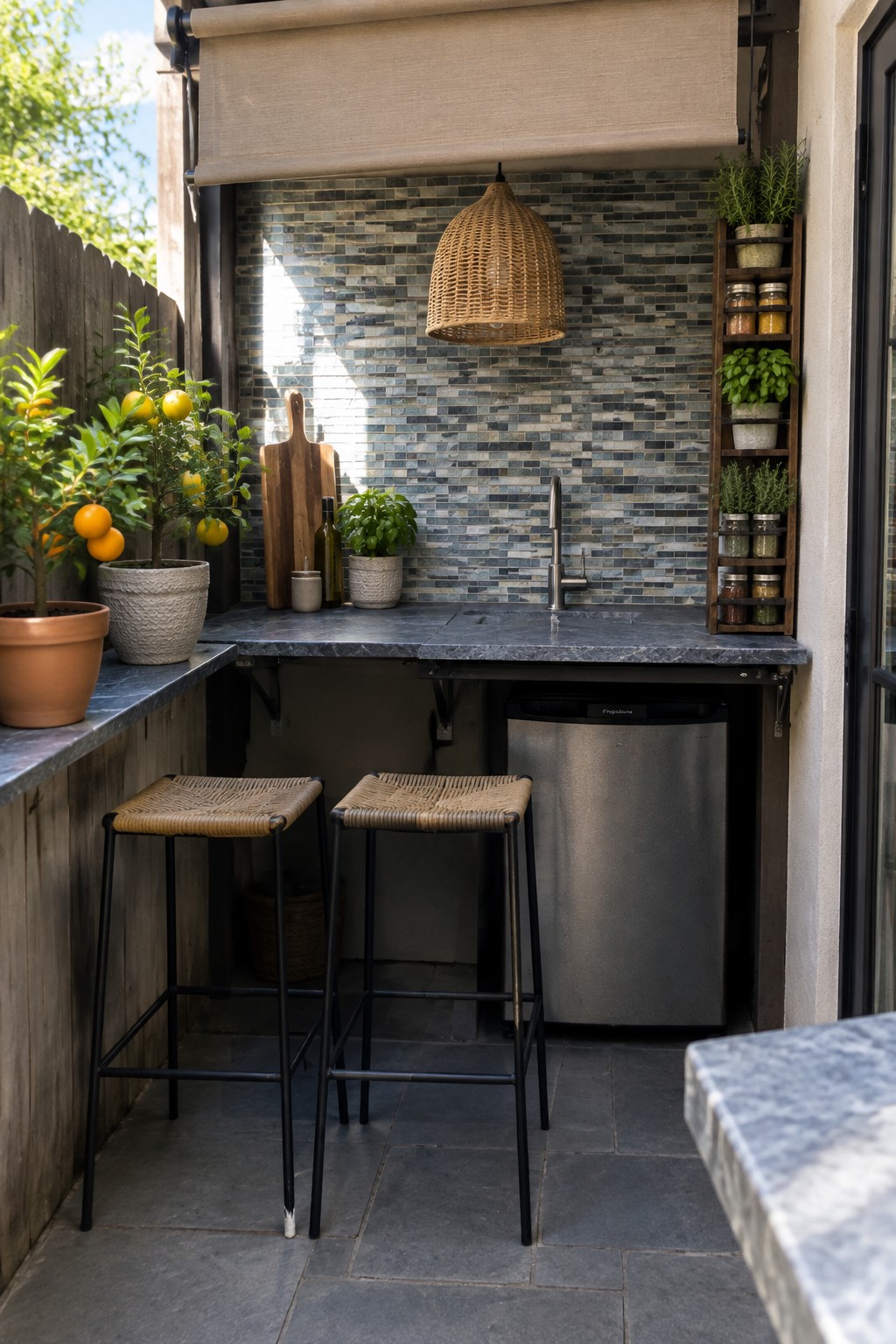
One of the easiest ways to keep a small backyard usable is to add seating that slides right under the counter when it is not needed. This setup lets you keep a couple of stools handy without losing floor space for walking through or moving around the sink and fridge.
It works especially well along a fence or side wall where the kitchen runs long and thin. Just make sure the counter overhang is deep enough for the stools to fit without sticking out into the path. Keep the rest of the area simple so the narrow space does not feel crowded.
Frequently Asked Questions
Q: How can I make my narrow yard feel bigger without tearing everything up?
A: Start by painting the back fence a light color. This reflects sunlight and pushes the space outward visually. Then add a few mirrors on the side walls to bounce light around.
Q: What plants work best along the edges without crowding the walkway?
A: Pick slim varieties like tall grasses or skinny evergreens. They grow up instead of out and need little trimming. Water them deeply once a week during dry spells.
Q: Can I fit a bench in a space only six feet wide?
A: Yes. Mount a simple bench to one wall and leave the opposite side open for walking. It gives you a spot to sit without blocking the path.
Q: How do I handle drainage in a long narrow yard that slopes?
A: Dig a shallow trench along the lowest edge and fill it with gravel. Run a perforated pipe inside to carry water away. This keeps the soil from washing out after heavy rain.
